Collaborative for Educational Services Emphasizes Lifelong Learning
Focus on the Future

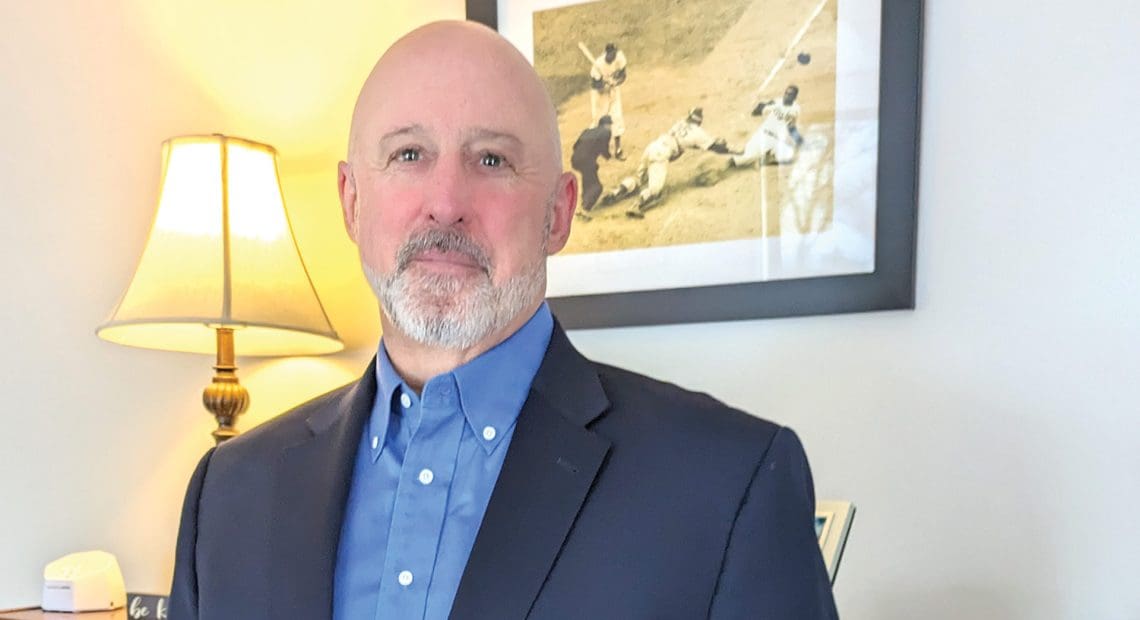
Executive Director Todd Gazda
“Everyone is a learner.”
Those are the words used on marketing materials for the Collaborative for Educational Services (CES), one of 24 such collaboratives in Massachusetts and arguably the most robust when it comes to programming.
“We’re kind of different than the other 23,” Executive Director Todd Gazda told BusinessWest. “The other 23 collaboratives really focus on special education and direct services to students — autism programs or behavior programs or programs for students with developmental delays, situations where their regular public school district doesn’t have the capacity to effectively meet their needs and they are looking an out-of-district placement.
“What happens is the districts get together and form a collaborative to pool resources and work in a manner that supports maximizing resources,” he explained. “One school district may be too small to apply for a grant, but if the collaborative pulls together three or four or five districts, then they can help coordinate what happens.”
CES does some of that too, and also runs two programs that provide direct services to students: HEC Academy, a special education school in Northampton, and Mount Tom Academy on the Holyoke Community College campus, which serves non-traditional students who, for whatever reason, are having difficulty succeeding in a regular public school setting and need more personalized instruction and support.
“We’ve seen incredible success for the students who attend both of those programs,” Gazda noted.
That said, he added, the Collaborative for Educational Services is much broader than that. For one thing, it runs statewide programs; as one example, for the past 15 years, it has provided all educational programming for the Department of Youth Services (DYS).
“So, for every youth lock-up in the state of Massachusetts, we run the schools. We hire the teachers, we do the curriculum, and it’s just like a regular public school setting.”
CES also provides special education in institutional settings, from DYS to Department of Mental Health programs to county houses of correction. Other statewide services include the Massachusetts Migrant Education Program, which connects migrant youth and their families with services and supports, and the Special Education Surrogate Parent Program, which connects special-education advocates with students whose parents, for whatever reason, aren’t in the picture.
“One of the areas that we’ve really gotten into recently is AI — how do we support districts as they seek to kind of adapt to AI and its use in schools and its use in instruction, and how do we effectively utilize it to support learning in the classroom?”
CES also does a lot of consulting and professional-development work statewide for teachers, schools, and districts, running the gamut from curriculum development to strategic planning.
“One of the areas that we’ve really gotten into recently is AI — how do we support districts as they seek to kind of adapt to AI and its use in schools and its use in instruction, and how do we effectively utilize it to support learning in the classroom?” Gazda explained. “That’s been a big area of growth for us.
“We’ve also done quite a bit of work helping districts navigate difficult conversations. There may be an incident in a school district that creates an emotionally charged atmosphere; we’ll go in and facilitate listening sessions and focus groups and pull people together to help bridge those differences so that people can have thoughtful conversations about their differences. We’ve been doing that work across the Commonwealth as well.”
CES also has an Early Childhood division that serves students “from cradle to career,” Gazda said — from pre-K education all the way up through internship programs to help link them to careers.
“Early Childhood, again, works statewide with school districts, helping them build more robust preschool programs and provide good services to their preschool students,” he explained, adding that other CES programs deal in community wellness, local food policy, and substance-abuse awareness and prevention.
Career Goals
One particularly robust element of the collaborative’s services is its workforce development programs.
“We partner with school districts, and they plan and implement a variety of workforce and career development programs for students — skills trainings, career development, helping students create and refine résumés, interviewing skills,” Gazda said. “These are all things we work on with our member districts to help students so, as they look to go into the workforce or prepare for a career, they have this skill set.”
One of those initiatives has been a paid STEM internship program, helping students prepare for careers in science, technology, engineering, and math. Since 2018, the program has placed 265 students in good-paying internships across 28 Western Mass. school districts.
“These are high-school kids who literally get paid to do work in businesses. It’s a leg up for the kids, but it’s also a leg up for local businesses, particularly those in the STEM fields, because it gives them an opportunity to train these students and generate a future workforce for them. It’s a win for everybody.”

While providing support for students in its local districts, as all such collaboratives do, CES also runs statewide programs.
Placements, typically for between 100 and 270 hours, are typically done over the summer when students have more time and opportunity. The fields include biomedical engineering, molecular biology, biotechnology, biochemistry, polymer science, neuroscience, oncology, nursing, and other fields within the STEM realm.
“They have paid stipends at the state minimum hourly wage or higher,” Gazda noted. “And they get training and support in researching, communicating, interview preparation, cover letter and résumé writing, and internship performance reviews. They gain professional and scientific experience, and they gain references to support college applications and job applications.”
The STEM program has grown from serving 30 students in 2018 to 69 last year, and 98% of participants complete their internships. Those results aren’t a matter of luck, Gazda said.
“There’s a lot of work that goes into matching the student with the employer in the correct field to get that kind of a completion rate. So it’s a good fit,” he noted, adding that, since 2018, the program has served 28 school districts in Western Mass., with 60 employers hosting student interns.
Funding has come from a variety of sources, but the biggest and longest supporter is the Massachusetts Life Sciences Center (MLSC), which supports internships of up to 270 hours.
“We can coordinate with MLSC to pay for 19 placements at UMass Amherst,” he said. “In 2024, the Massachusetts Executive Office of Education’s STEM-focused internship program funded 47 internships and a portion of our director’s salary. Community partners supported three internships, and a private donor in Hadley supported three internships. And we were able to secure private donor funding to support 41 students this summer with paid internships.”
Finding the finances to support this work is always a challenge, Gazda said.
“The problem is uncertainty at the federal level, which is leading to changes in state funding priorities,” he noted. “The Executive Office of Education is no longer offering funding under the STEM internship program, and the Massachusetts Life Sciences Center is reducing its support for student stipends as well. So this is where we find ourselves — in kind of a state of flux, funding-wise.”
CES, founded in 1974 and now the largest collaborative in Massachusetts by membership, geographic size, and revenue — around $39 million last year — gets funding from grants, contracts, and fees for service. But much of its money filters through the state or federal government in some way, meaning it’s vulnerable to the spending cuts happening in Washington`.
“If we run short, I can’t go back to a town and say, ‘we need more money.’ It just doesn’t work that way. We’ve got to earn and raise and generate revenue to support all of the different programming that we do to support our districts,” Gazda said.
“These are high-school kids who literally get paid to do work in businesses. It’s a leg up for the kids, but it’s also a leg up for local businesses, particularly those in the STEM fields, because it gives them an opportunity to train these students and generate a future workforce for them. It’s a win for everybody.”
“Typically, when you have a lot of grant-funded programs, there’s always a certain amount of trepidation about when that grant is going to end. Will you get another one? Will it be extended? And now, that’s kind of heightened by that additional question regarding anything directly from the federal government: are they going to cut it off with no warning?”
He certainly hopes not, noting that the internship programs have no real downside, for either the students or the businesses.
“The employer business partners who host school STEM interns enjoy the re-energizing benefits of mentorship and the additional support to complete certain projects. Employers are given a seat at the table in creating a pipeline of future researchers and workers,” he told BusinessWest. “Having an educated workforce is critical for our business community to thrive, and this is one vehicle whereby we can help make it happen.”
Revenue Questions
Gazda was superintendent of schools in Ludlow for nine years and has been working for 24 years in public education. Before that, he was an attorney, doing corporate litigation in New York City.
“I just came to the realization that wasn’t the job I wanted or the life I wanted to live. So I moved back home to Western Mass. and became an eighth-grade history teacher,” he recalled. “It was a little scary making that switch, but I’ve never regretted it once.”
The Ludlow district belongs to the Lower Pioneer Valley Educational Collaborative, the only other collaborative in Western Mass. It primarily runs special education programs, as well as a vocational school. “So it’s a slightly different type of collaborative and more in line with the other collaboratives across the state.”
At CES, Gazda has broadened his focus, applying lessons from the classroom and public school administration to an agency that is doing impactful work across a much wider playing field.
“It is a lot, and trying to keep all those moving parts going, particularly in this fiscal environment, has created challenges for the organization,” he noted, adding that the financial challenges aren’t new. “The pandemic really shook things up, and we’re seeing the results of uncertain finances in districts across the state where they’re being forced to adjust to declining student populations, less revenues, and increased expenses. So there’s a ripple effect that creates the system that we have to work within.”
Still, he remains optimistic, and focused on the work. “We continue to monitor the situation in order to be ready to respond to whatever happens to come next.”
In other words, keep on learning, always with an eye on the future.