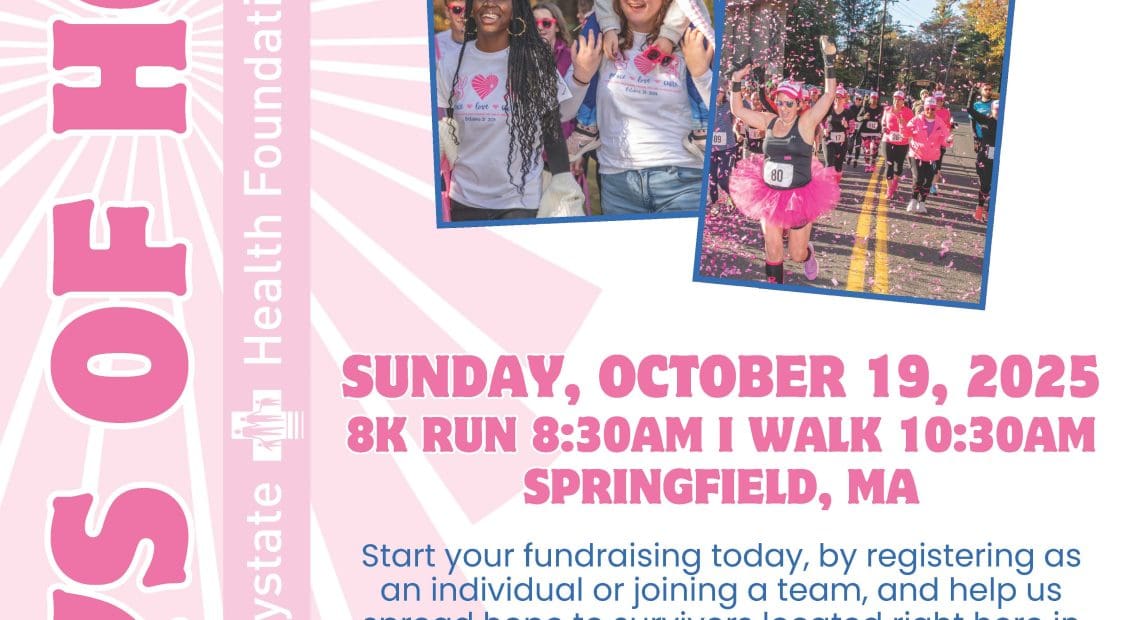
In partnership with the Baystate Health Breast Network and Baystate Health Foundation, the Rays of Hope Walk & Run raises funds to benefit research at the Rays of Hope Center for Breast Cancer Research, breast cancer programs and services, outreach and education, and awards grants to various community support programs and organizations right here in Western Massachusetts. Since 1994, Rays of Hope has been committed to improving the breast health of people in our communities with quality and compassion. The Walk & Run Toward the Cure of Breast Cancer has grown from 500 to over 20,000 participants and has raised over $17.7 million for our community. The event includes a 2- and 5-mile walk, 8K run, survivor ceremonies, and entertainment, creating a vibrant and memorable experience for all. Breast cancer survivors and supporters are encouraged to register as an individual or as a team to fundraise and help spread awareness for breast cancer care and resources located right here in Western Massachusetts. Please visit our website at www.baystatehealth.org/raysofhope to learn more about the event and to create a fundraising team! This is a great way to engage employees and customers while supporting a cause that is near to so many in our community.
Pink Power

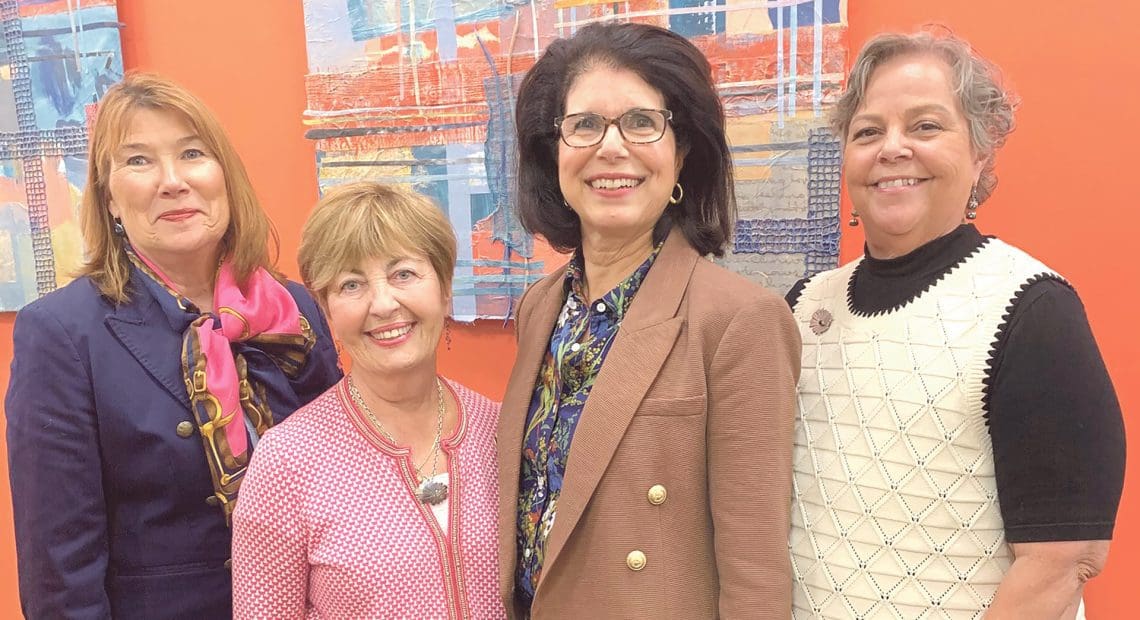
From left, Kathy Tobin, Lucy Giuggio-Carvalho, Dr. Grace Makari-Judson, and Michelle Graci.
Kathy Tobin calls it a “big pink hug.”
That’s one of the many colorful ways she and others referred to Rays of Hope, the comprehensive program to support those with breast cancer and raise money for research, services, and grants, culminating in the annual walk and run that will take place on Sunday, Oct. 27.
To Tobin, director of Annual Events and Giving for the Baystate Health Foundation, that hug conveys that Rays of Hope (ROH) is more than a series of fundraisers, more than a gathering, more than the Walk & Run Toward the Cure of Breast Cancer, which has, to date, raised more than $17.2 million and become a time when a community of survivors, family, and friends gathers, reunites, walks, and inspires others in this fight.
It’s a support network, if you will, for those fighting breast cancer and who have survived it.
“The walk is an event, but what has happened is that this has become a year-round organization of support,” she explained. “It’s about executing support services and being there for people who call us on our phone lines; they’ve just been diagnosed, and they don’t know what to do. Or it’s someone who doesn’t have the money for a breast prosthetic; can we help them? We support, through our grant program, other organizations that are in the trenches with survivors.
“We’re like a network that works year-round. We want to surround people with a diagnosis with what they need.”
“We’re like a network that works year-round,” she went on, adding that this what she and others mean when they say ‘big pink hug.’ “We want to surround people with a diagnosis with what they need.”
Dr. Grace Makari-Judson, co-director of the Rays of Hope Center for Breast Cancer Research, agreed, noting that there have been significant advancements in breast-cancer diagnosis, treatment, and delivery of services over the past 30 years, with Rays of Hope’s fundraising efforts helping to make many of them possible, especially a far more integrated delivery of care.
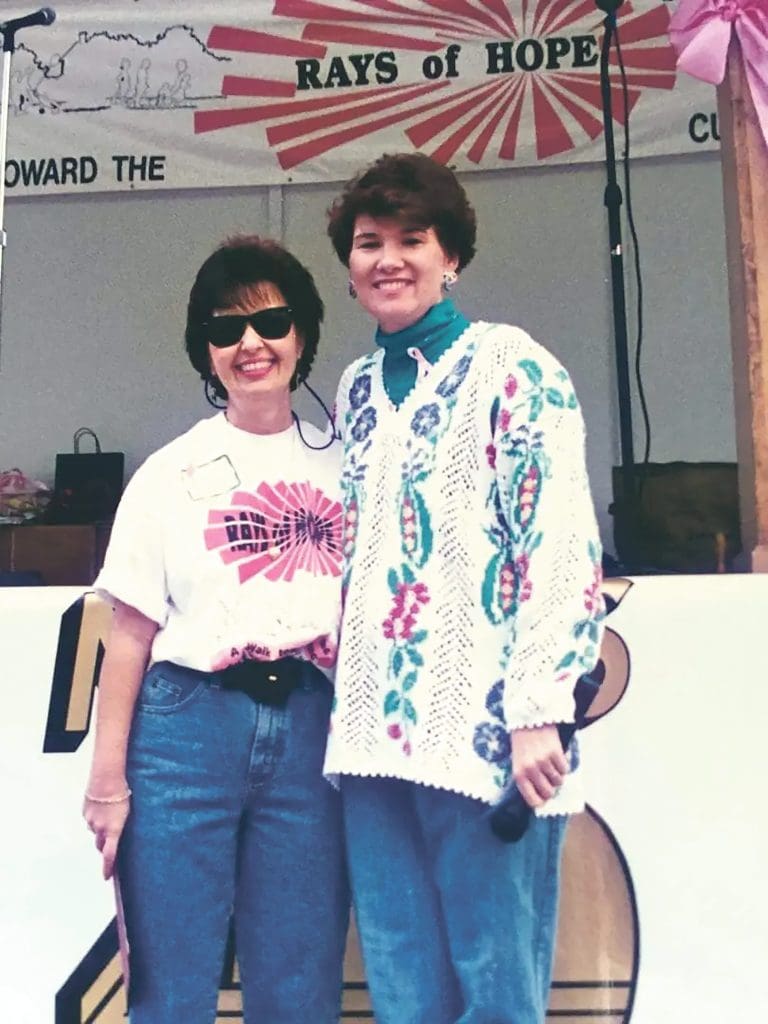
Lucy Giuggio-Carvalho (left) and Kathy Tobin at the first Rays of Hope walk in 1994.
“Before 1994, care was very much linear,” she explained. “A patient would have her mammogram and biopsy, and the mammogram was often in a hospital, beside people getting imaging for other illnesses, not for health management. Meanwhile, the biopsies were often done as surgical biopsies in the operating room, as opposed to outpatient biopsies that we do today. And if there was a new diagnosis of breast cancer, the surgeon would do their breast surgery in a complete vacuum, a complete void — just doing their thing.
“And after the surgery, they would send the patient to the medical oncologist, who would do their thing if they needed chemotherapy or hormone treatments,” Makari-Judson went on. “And when they were done with that, they would go next to the radiation oncologist, who would do their thing. It was very linear — and that was not optimal.”
Since its inception 30 years ago, Rays of Hope has been supporting individuals in their breast-cancer fights by walking with them on their cancer journey, literally, but also figuratively. Through the Baystate Health Breast Network, ROH supports research at the Rays of Hope Center for Breast Cancer Research; provides funding for state-of-the-art equipment, breast-health programs, and outreach and education throughout Baystate Health; supports patients and survivors; and provides grants for complementary therapies and cancer programs to community partners across the region.
All this is what Lucy Giuggio-Carvalho, a breast-cancer survivor, had in mind when she conceived the Rays of Hope walk back in 1994. Well, sort of.
Back then, she just wanted to do something to help those facing what she faced, and provide the kind of love and support she felt when faced with her own diagnosis.
She told BusinessWest she was thinking big back then, but couldn’t have imagined just how broad and impactful her concept would become.
“I wanted it to be an event from day one, but I never thought it would just go on and on, get bigger and bigger, and survive,” she told BusinessWest, noting, like Tobin, that it has become more than an event; it has become a powerful force for those battling the disease and looking for many different forms of support.
“There was no breast center at that time. You had to figure out who to see and what to do next. I already had a medical background, but I found it extremely difficult because you’re dealing with all the emotional aspects of having breast cancer.”
Three decades later, there is now also a Rays of Hope Endowment within the Baystate Health Foundation, through which the community can designate gifts that will perpetually support the mission.
For this issue and its focus on cancer care, we take an in-depth look at this big pink hug; how it has grown, evolved, and widened its impact; and where it can go from here.
Walking the Walk
“In 1993, I was 38 years old and diagnosed with stage-1 breast cancer. I felt overwhelmed, alone, and lost about how to proceed with treatment and life during and after breast cancer. I was on an emotional rollercoaster with many ups and downs. My family and friends came together to support me, and I realized the incredible power of love and support when facing breast cancer.”
That’s one of the many powerful passages in a message Giuggio-Carvalho wrote for the fall 2023 issue of Supporting Hope, a newsletter of the Baystate Health Foundation on the 30th anniversary of the walk and run.
Looking back — and ahead — she and others we spoke with said ROH continues to meet its mission and help ensure that no one facing breast cancer has to feel alone, overwhelmed, or lost. There will always be an emotional roller-coaster ride with ups and downs, but ROH can make that ride more manageable.
Looking back, Giuggio-Carvalho, who was named a Difference Maker by BusinessWest in 2011 for her efforts to launch Rays of Hope, said she started the program to help provide the region with all that was missing when she (an oncology nurse at the time) was diagnosed with breast cancer.

Walkers gather at Temple Beth-El before one of the past Rays of Hope events.
“There was no breast center at that time,” she noted. “You had to figure out who to see and what to do next. I already had a medical background, but I found it extremely difficult because you’re dealing with all the emotional aspects of having breast cancer.
“That, in itself, is one of the more remarkable things that Rays of Hope has brought,” she went on. “We have a team; we have a breast center where people can go. That was lacking at the time, and that’s what precipitated my idea to start a walk and raise money — I was in Boston and went to a breast center, where all the people met together and I was able to hear everyone’s opinion at the same time. I said, ‘this is what we need,’ and now we have it.”
Tobin agreed. “The way we took care of breast cancer was on the cusp of changing — Rays of Hope made it happen faster.”
Makari-Judson concurred, noting that perhaps the biggest, most-needed change was a shift toward a more team-based, integrated model for delivery of care.
“Today, we have a multi-disciplinary team; people communicate, and it’s very integrated, so that people get not only the best care, but the best care in the right sequence,” she explained, adding that the Baystate Health Breast Network was created to look at guidelines and ensure that people were being treated in a guideline-based, consensus-based approach.
There have been many other advances over the past 30 years, she said, adding that, prior to 1994, there were limited support services, limited educational materials, and no survivorship clinics or programs. ROH has helped make them all available, as well as other products and technology needed to provide comprehensive care.
“When we hear that budgets are tight and there isn’t money for something, that’s when we step in,” Tobin said. “Or if there’s something we can’t afford that capital year, we can sometimes provide the funding so we get it a little faster and we keep this region ahead of the curve.”
Steps in the Right Direction
Rays of Hope has been able to support services, research, and developments such as a tissue registry, as well as providing grants through fundraising that has also evolved over the years, adding events and programs such as Pink in the Rink, established by the Springfield Thunderbirds and staged each March.
As for the walk and run itself, it has continued to grow and evolve, said Michelle Graci, manager of Events for the Baystate Health Foundation, noting that COVID forced the actual event (but not the fundraising) to pause for two years, with turnout slowly building back to what it was pre-pandemic.
Last year, more than 20,000 people turned out, with the event raising more than $500,000, she said, noting, as others did, that the walk owes its success to the manner in which organizers listen to participants, adjust, and keep the event fresh and different, while also maintaining elements that have become synonymous with its mission.
These include a survivors’ photo, one that gets bigger each year, as well as a moment to reflect on those who have lost their battles to breast cancer. Overall, said all those we spoke with, the walk is intended to be a celebration — of survivors, the progress made in diagnosing and treating the disease, and the fighting spirit of those battling the disease and their many supporters.
“We celebrate life — this is not a downer,” said Tobin, noting that the gathering of walkers and runners in the parking lot of Temple Beth El in Springfield has become a tradition, an opportunity to renew acquaintances, swap stories, and show that there is strength in numbers.
Graci agreed. “Everyone just crowds into that parking lot, and there’s a lot of love, a lot of laughter, hugging, tears — happy tears, sad tears. It’s just a lot of giving, as Kathy said, a giant pink hug.”
And while the event continues to grow in size and impact each year, organizers have long understood the need to make sure the work of Rays of Hope continues for decades to come — and ensure that it will through the creation of an endowment, through the Baystate Health Foundation, to coincide with ROH’s 30th anniversary.
“This is now a place where people can put their money, and those who understand the importance of long-term planning will get that, and this endowment will only continue to grow,” Tobin said. “Based on the support we’ve received over the past 30 years, I’m confident that this fund will grow proportionately now that it’s in place.”
Overall, Rays of Hope has provided ample proof that a small group of people can accomplish big things and make a huge impact when they work together, Giuggio-Carvalho said.
And this, as much as anything else, is what is being celebrated each October as thousands of people gather to walk and run.