‘A Place, an Idea, an Inspiration’

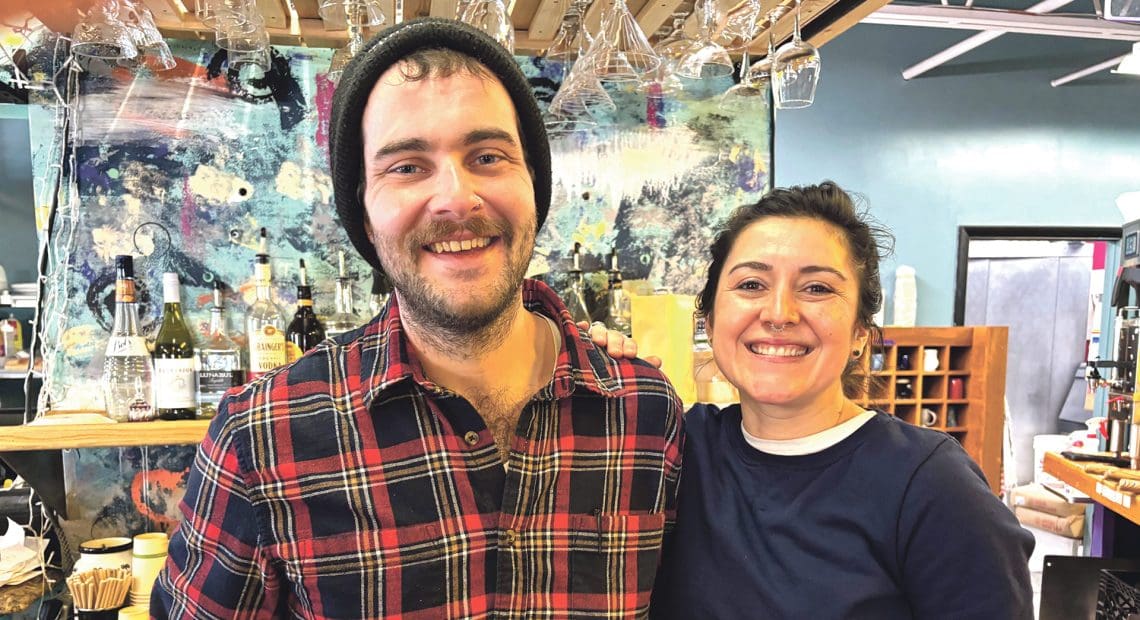
Tim and Andrea Monson, owners of Monsoon Roastery.
Technically, it’s a collection of old industrial buildings on Albany Street in Springfield in the shadow of the huge oil storage tanks that provide its name.
But Gasoline Alley is so much more, say the people doing business there now.
They describe it as a community, an incubator of sorts, a sustainable business collective, a place for events, and … well, did we mention community?
“It’s an amazing place,” said Andrea Monson, co-owner, with her husband, Tim, of Monsoon Roastery, one of several businesses now part of what’s called the Urban Food Brood, also described as an avant-garde culinary haven.
It was created, with the help of a MassDevelopment grant, by the Monsons; Teri Skinner, owner of Nosh Café and Restaurant; and Jack Wysocki, owner of Urban Artisan Farm — entrepreneurs who knew each other and were already partners of sorts.
The vision was to build a pandemic-proof business, a place for “community, collaboration, and culinary innovation,” said Monson, adding that, in recent years, like-minded individuals have joined the venture as tenants within the collaborative. These include the owners of Rumspringa Books, Corsella Butcheria, Forest Doe Botanicals, Journeys Lemonade, and Happy Man Freeze Dried, which, as name suggests, specializes in all things freeze dried, from smoothies to dog treats.
Monson described the assembled businesses as family, with each member taking on the many challenges of operating a business individually, but also collectively.
“It’s a family, and with any family, there’s conflict and resolution,” she explained. “We don’t give up on each other.”
“We each have our little part that we do that creates that magic that we have here.”
Skinner agreed. “It’s definitely an interesting community, and the best thing about it is the support that you have from your fellow partners or entrepreneurs that are working here,” she said. “Everyone in this place is a business owner, and that alleviates some of that pressure from being the sole business owner who has to do everything. We each have our little part that we do that creates that magic that we have here.”
The Urban Food Brood is a huge part of the broad picture at Gasoline Alley, but there is a diverse list of other tenants as well, including Chris Marion Photography, Street LXL Mixed Media Arts, FJR Towing, and many others.
Collectively, they are continuing a long tradition of entrepreneurship, innovation, and collaboration at this location.
Indeed, since 1990, more than 1,000 jobs have been created through more than 100 alumni companies, including Al’s Beverage Co., Marty’s Soda Mix, the Salon at Gasoline Alley, Mad Gab’s, the ReStore, and many others, said Joe Sibilia, founder and creator of Gasoline Alley, which he describes as “a place, an idea, an inspiration,” and so much more than a mailing address.
“Culturally, it’s a campus and culture that embraces the arts,” said Chris Marion, who started taking pictures as a side hustle years ago and eventually made it his career, and Gasoline Alley his home — a studio out of space that was formally a club for motorcycle police. “It’s a fun place to be. We all have our own businesses, but in a lot of ways, it’s like family.”
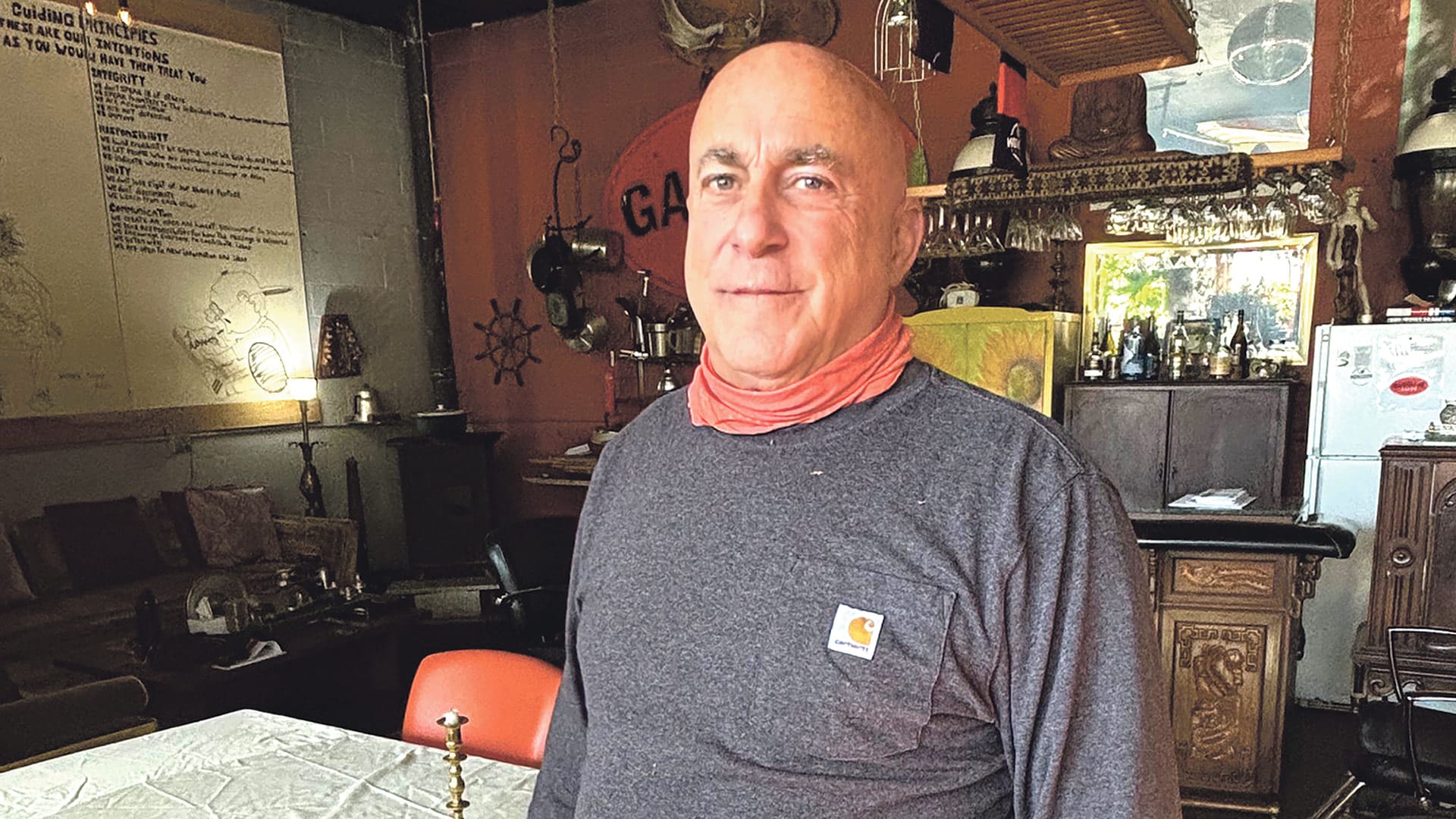
Joe Sibilia describes Gasoline Alley as an ever-evolving community of entrepreneurs.
Behind the ventures that now call Gasoline Alley and the Urban Food Brood home are entrepreneurs who are, as Skinner noted, learning from one another and often leaning on one another as they try to grow their ventures.
“What’s nice about being here is that, as a small business owner, I have the ability and opportunity to talk it over with other small business owners,” said James Brooks, owner of Happy Man Freeze Dried. “We’re always helping each other out; it’s a great environment to be in.”
For this issue, BusinessWest takes an in-depth look at a truly unique spot on the local business scene, a community of business owners who all contribute to the magic being created there.
Coming Together
Sibilia doesn’t really like to talk about himself or his various roles at Gasoline Alley.
He would rather put the focus on the businesses and the programs there — and that’s essentially what he’s done from the beginning. When pressed, he said he’s a landlord, yes, but he’s also a facilitator of sorts and a mentor to many, passing on advice to entrepreneurs and sometimes advising them that it might be best if they found something else to do.
He said Gasoline Alley has had a long history of not only incubating businesses and hosting them — sometimes for a dozen years or more — but also for supporting local police (there remains on site a stable where police horses are fed) and providing job training and life skills to young people.
“We had, for many, many years, young men between the ages of 15 and 20 who hadn’t graduated from high school, never held a job, some of them homeless or living with extended family, may or may not have been convicted of a crime, on a six-week job training program here — basically triage for the local thugs,” he said, adding that the program ran until COVID. “That was very rewarding.”
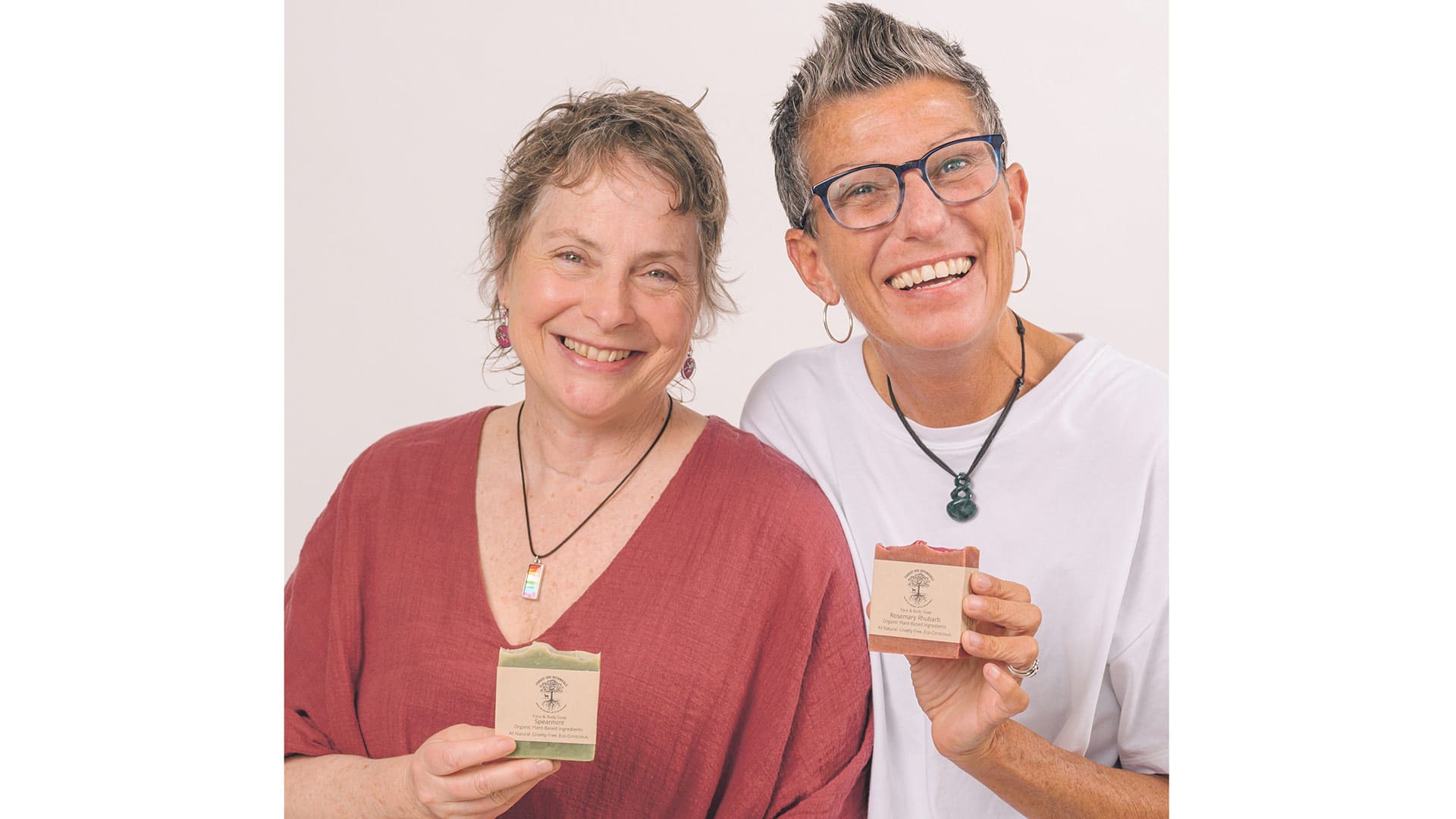
Kate Forest (left) and Missy Doe are co-owners of Forest Doe Botanicals, one of the many diverse and interconnected businesses at Gasoline Alley.
Sibilia is proud of Gasoline Alley’s strong track record for helping businesses get off the ground and get to the next level. The list of alumni also includes several other soda companies, the Springfield Journal, Todd Lemieux Design, Artifact Cider, and even state Rep. Athan (Soco) Catjakis. The list goes on and on, everything from a skincare salon and car detailing shop to photography and yoga studios and a car wash.
They’ve all called that relatively hidden slice of Springfield home. And now, it’s time for the current generation — an equally eclectic mix of businesses that live by one of Gasoline Alley’s credos, “to give value to that which has been abandoned” — to thrive.
“In nature, and in humanity, there is no waste,” said Sibilia, adding that another credo is for the businesses there to create a “learning community,” which is another tradition that continues today.
He referenced almost all the current tenants on a tour during which he emphasized everything from the diversity of the businesses to the many, often unlikely, success stories, such as FJR Towing, to the manner in which the businesses support one another and create a community.
Ventures like Forest Doe Botanicals. Founded by Kate Forest and her wife, Missy Doe, the venture specializes in a broad range of eco-friendly gifts, including plant-based body care — soaps, salves, face and beard oils, relaxation roll-ons, and body oils handcrafted with organic, vegan ingredients.
“Our mission is around self-care and planet care,” Forest explained. “We’re helping people be a little more eco-conscious about the products they put on their bodies, the products that they use that go off their bodies and down the drain and into our bodies of water and affect our marine life and go into our air and effect our breathing.”
“What’s nice about being here is that, as a small business owner, I have the ability and opportunity to talk it over with other small business owners. We’re always helping each other out; it’s a great environment to be in.”
The two started three years ago in Doe’s kitchen, dabbling in oils and shea butter, and eventually expanded into soaps and took their act on their road, transforming a 2016 Ford van into a home on wheels. On their travels, they met a soap maker, and “it snowballed from there.”
Like many, they frequented Gasoline Alley and the eateries in the Urban Food Brood — Nosh catered their wedding roughly 18 months ago — before making it their own business home.
“We walked into this space, and Teri [Skinner] said, ‘they’re bringing vendors in here,’” Forest recalled, referring to a space created when a wall was knocked down within the 5,000-square-foot complex that was home to the Urban Food Brood. “We asked if they would consider letting us come in with our production space and our retail space. Teri said, ‘let’s talk to Joe,’ and we signed a lease a week and a half later; it was pretty quick.”
The two set up shop last April, becoming the first tenants in the marketplace. Their large suite includes a production area and the retail space, and it was expanded into recently vacated space for an eco-conscious gift shop.
“It’s such a great community to be involved in,” Forest said of Gasoline Alley. “As we grow together, we become more like a family — it’s great to be a part of this.”
Food for Thought
Those sentiments were echoed by others we spoke with, especially in the Urban Food Brood — open Friday through Sunday — where things are generally humming.
Even within this small space, there are some intriguing stories about entrepreneurs finding a home — and finding their stride.
Like Brooks, an operating room nurse by trade who once made jerky but found it wasn’t a good business model, and who is perhaps better known as the ‘freeze dried guy.’
During the pandemic, he did some scrolling, came across the freeze drying process, and eventually decided he could create a business that would fit in nicely with the overall mindset at Gasoline Alley.
“It’s very much what Joe Sibilia wanted — there’s no waste at all, and the health benefits are off the charts,” he said as he showed off his space and his equipment.
Brooks noted that he freeze dries just about everything, from fruit to meats; from candy to those smoothies and dog treats. He was making some of the latter when he spoke with BusinessWest.
“It’s all chicken,” he said of the treats. “There’s no additives; there’s no preservatives. This machine will freeze the chicken livers to like 20 below zero, and over a period of time, it starts to heat back up … this vacuum pump turns on, and the water from the chicken collects on the cylinder on the inside. It takes out 96% of the water and holds 96% of the nutrients, so it’s shelf-stable.”
The smoothies are a recent addition to the stable, he said, adding that he makes them in a blender and then pours the mix into a mold, creating small squares that are put into a freezer and then the freeze drier, creating snacks that have become a best seller, with flavors such as mango, pineapple, banana, and more.
Brooks is a tenant, but he has also helped Sibilia build out some of the spaces at Gasoline Alley. And as he noted earlier, the businesses support one another in many different ways.
Skinner agreed, noting that she decided to expand into Gasoline Alley with a second location after a space became available — and some prompting from the Monsons and Wysocki. And while there were some logistical challenges and build-out issues, “now, it’s awesome.”
Skinner said that, while the businesses started the process of creating the intriguing overall environment at Gasoline Alley and its Urban Food Brood, the customer base that has emerged has certainly contributed to that ‘magic’ she described earlier.
“We have a really diverse base of customers,” she said, noting that, while the Urban Food Brood is open only three days a week, those days are busy, and the location has become a real destination for people living across the 413.
Andrea Monson agreed, noting that she and Tim explored Gasoline Alley at Wysocki’s advice — the two ventures crossed paths at a winter farmer’s market.
“Tim actually went first and, unbeknownst to me, signed a lease,” she recalled. “And then we both went to check out the space and meet Joe.”
They opened in 2019 and survived the pandemic through a delivery service and then a walk-up window on the Gasoline Alley property. “People would come in the rain and the snow; they’d order at one window and walk around and pick up at the other window.”
Through the MassDevelopment grant, they and their other partners embarked on what would be a three-year journey to create the Urban Food Brood, which, with its condensed schedule — a broad effort to address changing spending habits as the economy slowed — has become a bustling destination those three days of the week.
“On Saturday, it’s packed — there’s a line out the door,” she said, adding that the businesses take full advantage of a location just off several major highways. “We get a lot of people passing through, but we also have a large number of regulars.”
They come for the traditional offerings, but also special events like farm-to-fork table dinners on Thursday nights, where Skinner handles the food, Andrea Monson mixes drinks, and other businesses in the complex chip in as well.
“People come, and they spend three hours with us for a six-course meal,” she said, adding that Gasoline Alley has become a gathering spot for businesses and patrons alike, continuing a unique tradition at a place that is most certainly also an inspiration.