
Home Posts tagged Golf Business
Sports & Leisure

Steady Course

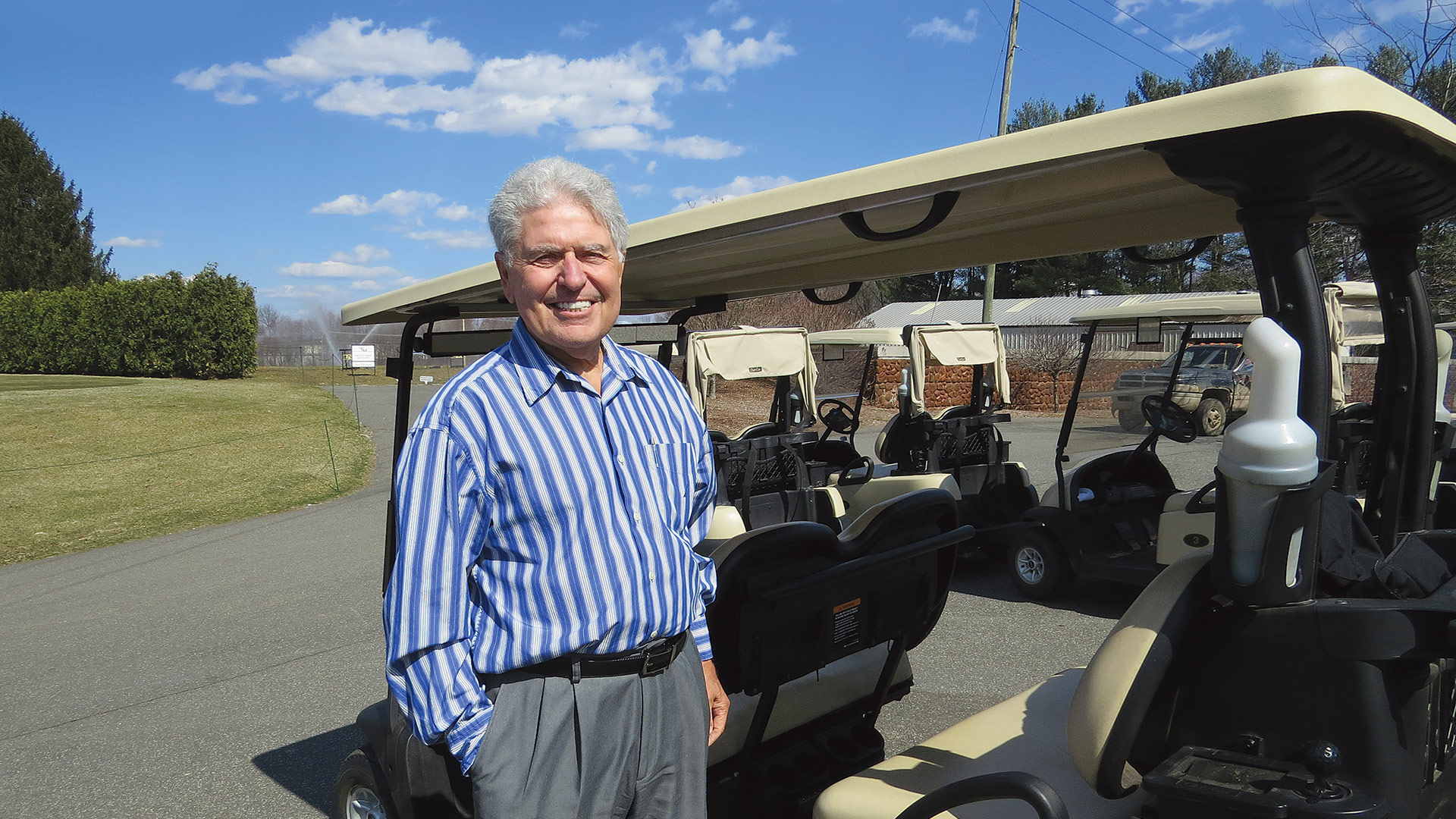
Ed Twohig Jr.

Ed Twohig Jr. says the game — and business — of golf are in relatively good health, although for many, it has become a nine-hole proposition.


Ed Twohig Jr. has been in and around the game of golf for more than 60 years now.

So he speaks from experience when he says that, while he’s seen the game healthier, it is, at the moment, in a comparatively good place.

By that, he meant people are getting into the game and, by and large, staying with it, despite its cost, degree of difficulty, and demands on time. Therefore, he said, the business of golf is relatively good, with courses faring well, but also related ventures, everything from the growing number of simulation facilities to retail outlets to the remaining practice and learning facilities, such as the Western Mass Family Golf Center in Hadley, where he provides lessons to a diverse mix of students, from middle schoolers to those pushing 80.

“Over the past few years, I’ve taught a lot of college and high school kids, both men and women, who want to get into the game.”

“Overall, the game is very, very healthy,” said Twohig, who grew up around the game as his father, Ed Sr., served as the pro at Amherst Golf Club, and Ed Jr. would later serve as the pro at the Orchards Golf Club and Springfield Country Club. “Over the past few years, I’ve taught a lot of college and high school kids, both men and women, who want to get into the game.”

Jesse Menachem, executive director and CEO of the Massachusetts Golf Assoc., agrees on the general state of the game and the business of golf. He said maybe the best measure of health and vitality of the game — the number of rounds played at courses across the Commonwealth — has continued to rise since a COVID-triggered surge in 2000, but there are other barometers as well.

“Rounds played, golfer engagement, wait lists at many of the private clubs, tee times that are still in high demand … these are all indicators that the health of the game is strong,” he told BusinessWest, adding that, while the total number of rounds is up only a few percentage points, the upward trend continues.

One of the best examples of the strong health of the game is the stunning turnaround at the Ledges Golf Club in South Hadley, which this year will mark its 25th anniversary. Once a losing proposition for the town and its taxpayers and an example of overreach when golf was booming in the late ’90s, it is now turning a profit and putting these proceeds back into the course, with effective results.

Mike Fontaine says the Ledges continued its growth trajectory in 2025 and is eyeing more of the same for the season ahead.

Mike Fontaine says the Ledges continued its growth trajectory in 2025 and is eyeing more of the same for the season ahead.

“We had another fantastic year in 2025 — we probably made $1.7 million, more than covering operating expenses for the town,” General Manager Michael Fontaine said. “And our goal is to do it again.”

Elaborating, he said ookings of outings is ahead of the solid pace set last year, and the course can afford to pick and choose which events it wants to host, another departure from the rough times years ago.

Still, there are challenges for those in the business, especially those who own and manage its courses, including a winter that has been unlike anything the region has seen in some time.

Indeed, despite some closures in recent years — Southwick Country Club, Hickory Ridge Golf Club in Amherst, and Elmcrest Country Club in East Longmeadow, for example — there is still considerable competition at a time of rising costs for everything from fertilizer to labor to gasoline for the carts.

“Rounds played, golfer engagement, wait lists at many of the private clubs, tee times that are still in high demand … these are all indicators that the health of the game is strong.”

Fontaine said he’s been getting some calls and visits from those managing other courses in the area essentially asking how the Ledges is doing all this. He said there’s no real secret, other than to provide a good product and essentially count revenue, not rounds — and price the product appropriately.

Elaborating, he said he believes many courses keep their prices lower than they should — probably a nod to all the competition in the area — and could go higher and still be competitive, not just with courses in this area, but in other markets as well.


Winter of Their Discontent

As he talked with BusinessWest by phone on March 13, Ted Perez Jr., the long-time pro at East Mountain Country Club in Westfield, paused on a few occasions to take calls to the pro shop. They pretty much told the story of a winter the likes of which the region hasn’t seen in maybe a decade or more.

“Yes … we’re open,” he told one caller, who then moved on to finding out just how playable the course was. “I just talked to a guy who made the turn … he said it’s … not bad out there.”

Not many courses in Massachusetts were open that day, but most of them were getting calls about when they would be, said Fontaine, who fielded a few himself. Like others we spoke to, he said this long, harsh winter should create substantial amounts of pent-up demand, which will help override what will likely be a later-than-usual start, probably the first or second week of April.

“That’s what we’re hoping for; it’s been a long, brutal winter,” he said, adding that some of the calls he’s getting are from people in the eastern part of the state, including the Cape, where courses can generally open earlier. But not this year.

Overall, he said the Ledges logs a good number of rounds involving people outside this area code, including the Hartford and Worcester areas, where golf is somewhat more expensive.

“We draw from everywhere — Albany, Worcester, Boston … our biggest is probably Connecticut, and I think it’s mostly because we’re a little cheaper,” he said, adding that the course’s rate of $75 with a cart on weekend mornings (the price drops later in the day) is better than what can be found in those other markets.

He’s not sure what impact rising gas prices might have on all this, but for now, golfers are willing to travel to save a few bucks — if the product and experience are good.

“I don’t think they figure the gas bill into the equation — it’s just grab your three buddies, get in the car, and go have a good round of golf in South Hadley, have a burger, and head home,” he said, adding that this equation could work for others as well if they maintain the quality of the product and market it effectively.

Overall, many courses did well in 2025, said Menachem, adding that they were helped by generally good weather — there was a stretch where it rained at least one weekend day for 10 straight weeks in the spring — as well the opportunity to open early and stay open into December.

They won’t have that luxury this year, he went on, adding that, despite considerable melting in early March, snow still covered many tracks. Meanwhile, the large amounts of snow will leave courses wet and in need of time to dry out, firm up, and clean up.

But he expects this late start to be overcome by pent-up demand.

“Given the climate of golf and the demand we’ve seen and continue to see, players are going to be ready and willing,” he said. “It might be a shock to the system for these courses to get prepared on short notice, but once they open, they should do well.”

Meanwhile, other aspects of the golf business are reporting growth as well, especially the simulation facilities, which provide a hedge against New England winter weather and provide opportunities to practice year-round.

“Anecdotally, it seems like more facilities are opening by the week,” he said, adding that there have been several new additions in and around Boston, including facilities that are focused on food and beverage as much as they are on golf. “And it’s serving as a nice complement — keeping clubs in people’s hands throughout the year.”


Going for the Green

It was the spring of 1983 when Perez took over the pro shop register from his father, Ted Perez Sr., who essentially designed and built East Mountain Country Club himself in 1963. With 43 years under his belt, he’s seen all kinds of winters — or ‘non-winters,’ as he calls what the region has seen more of in recent years — and he’s seen the game ebb and flow as well.

He remembers the halcyon days in the late ’90s and early 2000s after Tiger Woods arrived on the scene, when East Mountain was averaging roughly 50,000 rounds a year. He also remembers 2008 and the years that followed, when the course averaged about half that number, and the overall outlook was quite bleak.

“These days, it’s nowhere near 50,000 rounds, but it’s much better than it was,” he said, adding that it was during those down times that East Mountain started diversifying, if you will, using its banquet facilities for everything from comedy nights to bands to pro wrestling matches to bring in revenue and help pay the bills.

“We get 150 people in here for the wrestling — they have some food and some drink and watch some wrestling,” he said, adding that there is another such event scheduled for later this spring.

The venue is still used for a variety of revenue-producing purposes, he said, but, overall, golf is doing better than it was, and the outlook remains bright.

Twohig agreed, but noted that, despite healthy interest in the game, challenges such as its cost and time demands remain. So he’s seeing some fundamental changes.

“I believe that, for the majority of players, it’s going to be a nine-hole sport because of the time element,” he explained. “If you look at the clubs and the leagues … it’s all nine holes. People get their golf in, but they’re not spending their whole day there; there are too many options in the world now.”

Meanwhile, golf doesn’t have to mean nine or 18 holes on a course, he said, adding that many now enjoy practicing or playing courses on a simulator or simply hitting balls at the few remaining driving ranges in the area.
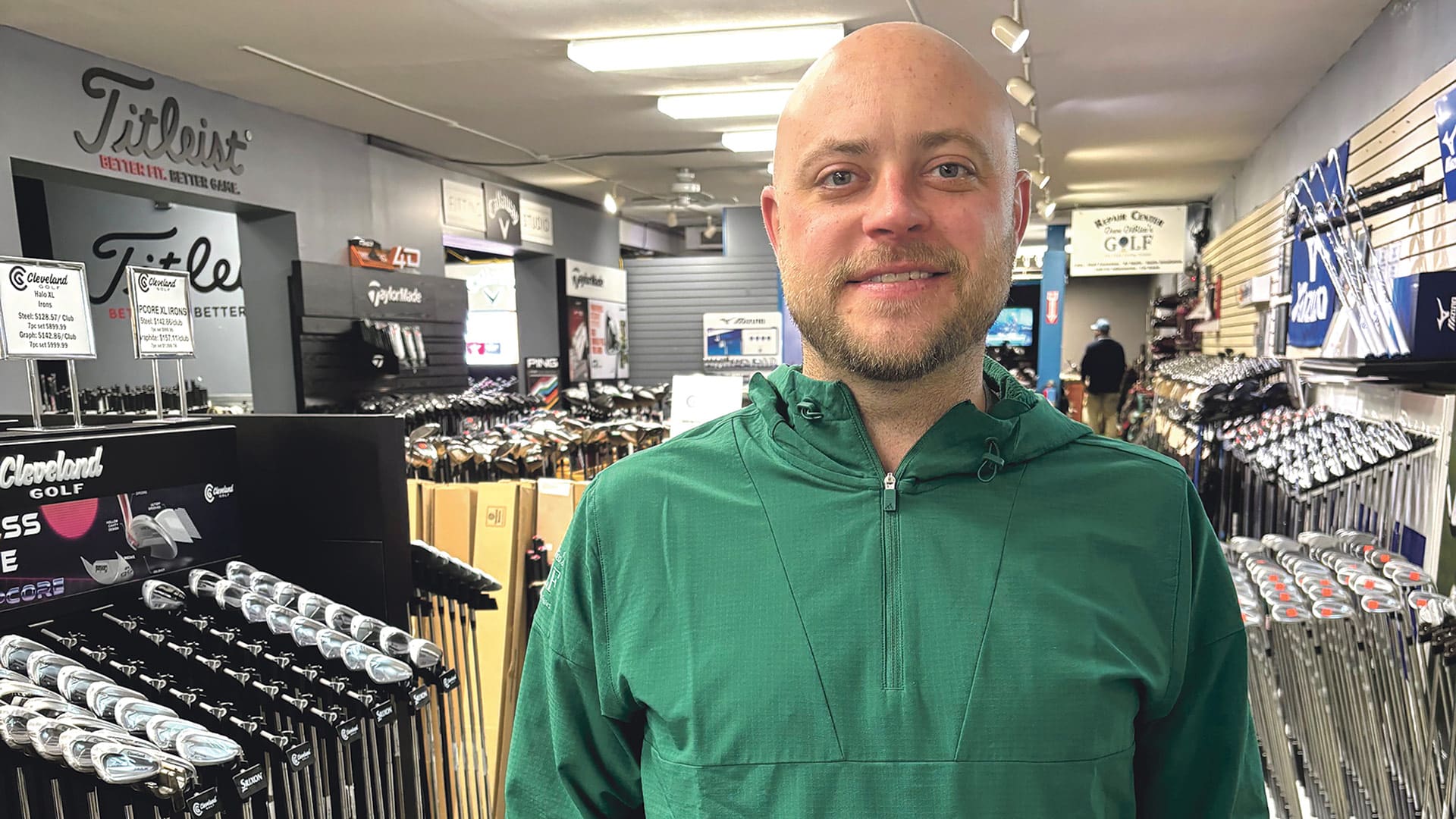
Drew Michael says golf has maintained the momentum generated during the pandemic, drawing new players of all ages.

Drew Michael says golf has maintained the momentum generated during the pandemic, drawing new players of all ages.

Drew Michael, store manager at Dave DiRico’s Golf in West Springfield, which features several simulators, agreed, adding that the surge in interest in the game since COVID is reflected in many aspects of his business.

That includes equipment sales, he said, adding that, in some respects, technology has helped make the game easier for many, and the winter and early spring months are generally the time to check out what’s new, whether it’s clubs, balls, shoes, or training aids.

And, like Twohig and others we spoke with, he said the sport — and the many businesses related to it — are maintaining the momentum gained during COVID.

“We’re seeing a lot of younger players, 25 to 35, and we’re seeing an uptick in women playing as well — those are the two fastest-growing categories,” he said. “It’s not quite like the book during COVID, but there’s still a lot of momentum with golf retail.”

He attributes this to the game gaining more exposure through everything from YouTube to TGL (Tomorrow’s Golf League), a high-tech, indoor, team golf competition that has succeeded in capturing the attention of many younger fans.

“You don’t have to tune in to CBS on a Sunday afternoon to watch a golf tournament,” Michael said. “YouTube is really big, TGL is gaining viewers, and you can watch any way you want — on your phone, computer, TV … all this is creating a wider audience.”

And it’s translating into more people getting into the game — and, in many cases, staying with it. Challenges remain, but golf seems to be a good place regionally, and on a steady course.
Sports & Leisure

Diversity, Revenue Streams Are Key to Clubs’ Success

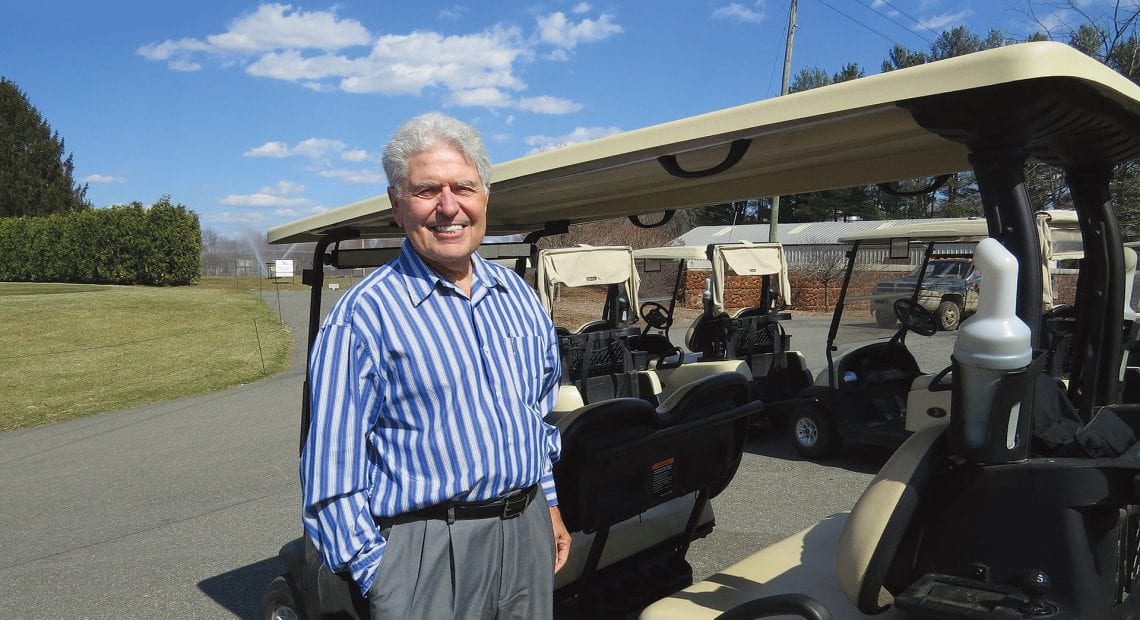
Attilio Cardaropoli displays one of the new four-passenger carts

Attilio Cardaropoli displays one of the new four-passenger carts at Twin Hills Country Club, one of many steps taken to make the game more enjoyable.

The golf business has never been entirely about golf. There has always been a need a diversity in the form of food and beverage, weddings and other events, and even cross-country skiing in the winter. But at a time when clubs are being challenged by declining play and rising expenses, the need to create revenue streams and put all their facilities to use has never been greater.

The ‘10-year challenge.’

That was the social-media phenomenon that started in early January and fizzled out … maybe in mid-January. You remember. Everyone was posting photos of themselves from then and now in an effort to judge who fared best over the ensuing decade.

People did it. Internet companies did it. If Twin Hills Country Club in Longmeadow did it, it would certainly have fared well against like facilities. Indeed, a decade ago, it was almost a casualty of a changing golf business and a new subdivision in a town that hadn’t seen one built in decades.

But Attilio Cardaropoli, a Twin Hills member who thought the club’s day hadn’t yet come, bought it and commenced writing a remarkable turnaround story. There were 85 members when he acquired it; now there are north of 300, and the number is holding steady. Back then, the course was tired and needed a facelift; same for the clubhouse. He’s done all that work and continues to make improvements every year inside and out, a formula that is certainly working.

“We keep making improvements — every year, we designate some area that needs some attention and improvement, and we continue to do that,” he explained. “Our members like to come in every season and see something new that’s been added on. It’s been a big factor in our success.”

But not many golf operations would have fared nearly as well with the 10-year challenge. The past decade has been a continuation of challenging times that peaked with the Great Recession and improved only slightly in the intervening years.

The story has been told many times. It’s about a falling level of interest in the game, especially among young people, families putting their time and money into avenues that don’t include the local country club, some closures among the area’s large roster of courses, and intense competition among the courses that remain for a shrinking pool of golfers.

And then, in the summer and fall of 2018, the story got even worse, as seemingly relentless rain, a lot of it coming on all-important weekends, erased days from the calendar, robbing clubs of revenue they couldn’t recover.

Dave DiRico, seen here with his son-in-law, Drew Michael

Dave DiRico, seen here with his son-in-law, Drew Michael, says both public and private courses must be diverse operations with a number of revenue streams.

“We had nine rainouts on Tuesdays, and it rained quite a few Saturdays and Sundays, too,” said Ryan Hall, head pro at Springfield’s two municipal courses, Franconia and Veterans, referring to both leagues and daily-fee golf. And with such washouts, a club loses more than greens fees — there’s also cart rentals and food and beverage.

“And people aren’t going to go out and play twice as much the next week,” said Hall, adding that this revenue is essentially lost.

As the 2019 season commences — thankfully early for the clubs able and willing to welcome players in early April or even late March — many challenges remain, said Hall and others we spoke with, but so does a high level of determination to find solutions to the current problems in the golf industry.

Some of them don’t necessarily involve golf, although they relate back to it some ways.
Indeed, diversification and securing new revenue streams are a huge component of the success formula for any club today, public or private, said those we spoke with. This means everything from the 19th hole — many clubs are redoing them and retooling menus at the same time — to more special events, from Mother’s Day brunches to cruise nights to weddings and banquets.

Meanwhile, on the golf side, the driving forces, as always, but especially in this climate, are providing value to existing customers, generating repeat business, and trying to grow the pie by attracting new players, especially when it comes to women and young people.

In some respects, Hall said, a large number of people now in their 20s, 30s, and early 40s are not involved with the game because they were not actively introduced to it and encouraged to play it. The industry seems intent on not making this same mistake with today’s young people.

Indeed, it is being more aggressive in getting them on the course through programs like the PGA Junior League, which creates teams of young people who practice together and play against teams from other area courses in an effort to introduce them and ease them into a game they can play into their 90s.

Springfield’s municipal courses have not participated in the program to date, but Hall plans to change that because of the program’s proven success in generating enthusiasm for the game.

“We just have to get golfers out there,” he explained. “We have to get these young kids to start to understand the game a little bit; it starts at the junior level, and if we can start to develop those skills a little bit and develop a love for the game at that age, we can grow the game.”

For this issue and its focus on sports and leisure, BusinessWest talked with a number of area club owners and operators and pros to gauge what the 2019 season holds. In most all respects, it holds more of what’s been seen over the past decade, which means still more grinding things out.

Course of Action

As he offered BusinessWest a quick tour of Twin Hills to highlight the latest changes and improvements, Cardaropoli stopped by the first tee. There, he asked one of the attendants to bring around one of the new four-passenger golf carts the club put into operation last year.

The majority of the club’s golfers make a point of walking, he noted with a discernable dose of pride, adding quickly that, for those who want or need a lift, the new carts have proven to be quite popular, especially with young families.

“Dad can go out with two or three kids, and they can all ride together,” he said, adding that, while this was the constituency everyone had in mind when the carts were ordered, others have taken a liking to them as well.

Ryan Hall says it’s imperative for those in the golf business to grow

Ryan Hall says it’s imperative for those in the golf business to grow the market by encouraging young people to take up the game.

“Older members are saying that this is a way they can be more sociable — they like them, too,” said Cardaropoli, adding that they are also popular with some playing in the many charitable tournaments hosted by the club, especially those where pace of play is generally slow and four people driving around in the same cart hunting down golf balls won’t slow things down any further.

In many ways, these four-passenger carts are an example of how Twin Hills, and all clubs, are reacting to changing forces around them. They’re responding with strategies to perhaps bring more people into the game and also make it more enjoyable.

And it’s all necessary because, unlike 20 years ago, as Tigermania was sweeping the country and clubs merely had to open the register and point to the first tee, now they have to work at it — and work pretty hard.

Assessing the situation, Dave DiRico, owner of DiRico’s Golf & Racquet in West Springfield, a course pro for more than 30 years, and a close observer of the region’s golf market (for obvious reasons), said the laws of supply and demand have certainly caught up with the golf industry — nationally and also locally.

In short, there’s more supply than current levels of demand would dictate. That’s great for people looking for tee times, but not for course owners facing ever-climbing expenses for everything from personnel to fertilizer and an ultra-competitive market where raising prices is essentially not an option.

All this has led to a thinning of the herd. In late 2017, Southwick Country Club was sold to a residential real-estate developer, and houses are now taking shape along the old fairways. And in Amherst, Hickory Ridge Country Club has closed and will become a solar farm.

These developments certainly benefit the courses remaining in those respective areas, said DiRico, noting that Agawam’s four public courses, Wesfield’s three, and the two remaining in Southwick all picked up some business from the closure of Southwick Country Club. Likewise, remaining courses in Amherst and neighboring Belchertown stand to benefit from Hickory Ridge’s demise.

But the market is still saturated with both public and private courses, he went on, adding that, to be successful, operations must focus on the total experience and not just 18 holes — although that’s a big part of it. And they have to put all of their facilities to work generating revenue.

This is nothing new, really — it’s always been this way — but in this environment, such diversity takes on heightened importance.

“A lot of clubs are doing functions now — weddings, showers, whatever they can book,” said DiRico. “That’s a big part of supplementing their revenue; they need to do those things.

“You need food and beverage,” he went on. “That’s a big revenue center. Years ago, many of the courses didn’t have elaborate food and beverage operations; now they’re adding them because they’re so important.”

Elaborating, he said such amenities enable clubs to book more tournaments because they can handle not only the golf but the networking, dinner, and awards presentation that come after — one-stop shopping that tournament organizers desire, and often demand.

Franconia has historically lost some events and been able to handle only the golf side of many tournaments because it didn’t have a facility on site, said Hall, adding that this will change this year with the addition of a large pavilion built late last year.

It’s a simple structure that is not enclosed, but still, it will enable tournament organizers to stage a dinner on site, rather than forcing participants to drive to the nearby Elks lodge or an area restaurant. And Hall said he can already see the impact in the number of events he’s booking this offseason.

“Having that pavilion is going to help us a great deal — we’re really growing that outside tournament business already,” he told BusinessWest. “People are excited about it, and they want to take advantage of it.”

Going for the Green

Looking back on his first 10 years of ownership at Twin Hills, Cardaropoli said a number of factors have contributed to the club’s turnaround.

He listed everything from some good fortune in the form of some private clubs moving to a semi-private format (Crestview and nearby Elmcrest, for example) and some struggles at other clubs, to strict policies at Twin Hills regarding assessments (there are none) and rate structures — the only real deals are given to long-standing members.

“A lot of clubs are doing functions now — weddings, showers, whatever they can book. That’s a big part of supplementing their revenue; they need to do those things.”

But the real keys have been continuous investments in all aspects of the property, from the course itself to the banquet rooms to other facilities.

Like the pool area, which is currently being expanded to create a larger play area for children, said Cardaropoli, who pointed out the ongoing work while offering his tour.

Meanwhile, on the course, work will start soon on the second and 11th holes — drainage, bunker work, and more — following improvements made last year to the seventh and eighth holes to enlarge the greens, reposition bunkers, and remove dozens of trees, a step taken to help improve drainage and even speed up play.

“Every year, we have a course designer come in and help us renovate the golf course, and every year we end up doing complete renovations on several holes,” he explained. “This past year, we removed 225 trees from the golf course, which makes it a lot healthier and able to dry up quicker after we have rains.”

Ongoing improvements are needed to retain members and attract new ones, he went on, adding that investments in the banquet facilities have also opened the door to additional bookings of weddings and other events, key revenue generators that help enable Twin Hills to avoid the assessments that have plagued other clubs.

And while private clubs are a breed apart in the golf industry, a focus on the customer and providing value are needed at all clubs, said DiRico, who noted, again, that the equation must involve more than just golf.

“To be more successful, clubs have to be more universal in what they provide,” he told BusinessWest. “And that’s not just for public golf, but private golf as well. The private clubs have to do a better job of keeping the families there — they have to be value-added facilities, and by that I mean that it’s not just golf anymore.”

But golf is the foundation for most of those other revenue streams, said those we spoke with, so it’s imperative to bring new players into the game. And the obvious focal point is young people, said Hall, adding that the PGA Junior League has enjoyed a great deal of success in this realm.

“You take kids and create teams — in Springfield, we could probably have one to three teams of maybe 12 kids — and you give them practice once a week, and then we set up matches against other clubs,” he explained, adding that the team format and scramble mode of play (everyone goes to where the best shot came down and plays from there) help ease people into a game that is in many ways daunting and even scary.

“You get kids who may be intimidated by golf because they don’t want to play off their own ball or be by themselves, so you play that scramble format and as a team against other kids their age,” Hall went on. “You develop their skills that way, and this is imperative to growing the game.”

Imaginative Strokes

DiRico said that, despite all the rain last year — or maybe in part because of it — he had his best year since he opened his store eight years ago.

He theorizes that people who couldn’t play focused at least some of those energies on buying new equipment and accessories for when they could play. It’s just a theory, and he listed several more solid reasons why business was so good in 2018 and the first three months of 2019.

These include everything from the store’s fitting services — no one should play clubs off the rack anymore — to the hot new drivers that everyone wants.

Whatever the reason, that side of the golf business is apparently holding its own. The rest of it? It’s as challenging as ever, as any club taking the 10-year challenge can attest.

George O’Brien can be reached at [email protected]