

Home Posts tagged Massachsuetts
Opinion

Opinion

By Penni Conner

Eversource commends the Department of Public Utilities for listening to customer concerns about affordability and taking the difficult action on Feb. 28 to order a reduction in the proposed 2025-27 Energy Efficiency and Decarbonization Plan. This is the most immediate step the state can take to provide long-term rate relief to customers and ensure that the pace of the energy transition in Massachusetts is affordable and attainable.

To be clear, we are steadfastly committed to the Mass Save programs, which are essential to meeting the Commonwealth’s decarbonization goals and provide significant benefits to customers and the state as a whole, but this winter’s higher-than-normal natural-gas bills make a revision to this plan imperative at this time.

This is how the collaborative process is intended to work — a wide variety of diverse stakeholders come together to develop a plan aimed at achieving Massachusetts’ ambitious clean-energy targets, and that plan then receives a thorough regulatory review to ensure all aspects of the program respond to customer needs and strike a balance between meeting statewide climate goals, establishing program affordability, providing robust access for customers, and enhancing reliability.

We appreciate the invaluable collaboration of the wide variety of diverse stakeholders on the Energy Efficiency Advisory Council who unanimously supported the proposed plan, as well as the Massachusetts Department of Energy Resources, the Attorney General’s Office, and countless other community, business, and labor stakeholders who provided their input through this process — and we look forward to our continued work together to deliver the nation-leading energy-efficiency programs that reflect our broad support of efforts to reduce greenhouse-gas emissions, improve air quality, and advance electrification while also driving down energy usage for customers.

At the same time, this winter’s bills have posed serious challenges and concerns for our customers that reinforce the critical need to maintain affordability and reliability as top priorities in our collective pursuit of the Commonwealth’s energy transition. We will be closely reviewing this order with those priorities top of mind as we work collaboratively to develop a revised plan that best serves all customers and communities.

Massachusetts has been number one in the nation for energy efficiency under previous plans that had lower budgets for these programs, and we’re confident that we can keep the Commonwealth at the national forefront of energy efficiency and decarbonization with a revised plan.

Moving forward, we’re as committed as ever to the collaboration and hard work that will be required to provide impactful, long-term rate relief to customers while also advancing a clean-energy future that addresses climate change. Energy efficiency is just one of many important pieces on that broader path to decarbonization, and collective buy-in is essential for the various solutions that will be needed to achieve our shared goals, including addressing the region’s energy-supply challenges.

Along with a 10% reduction to the total bill through the local distribution adjustment charge that Eversource proposed late last month, customers began seeing lower rates effective March 1. Total estimated bill impacts through the off-peak months for customers as a result of these adjustments are not yet available and will be provided in upcoming regulatory filings. 

Eversource encourages customers to take advantage of the many options available to help them manage their energy bills with financial assistance, flexible payment plans, and energy-efficiency programs.


Penni Conner is executive vice president of Customer Experience and Energy Strategy for Eversource.
Features

Holyoke’s 150th

By Penni Martorell

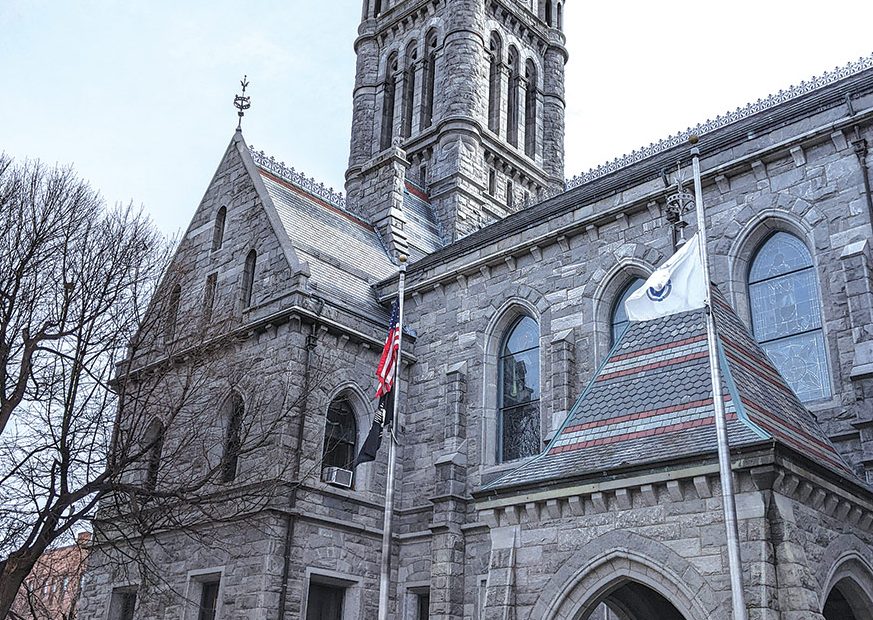
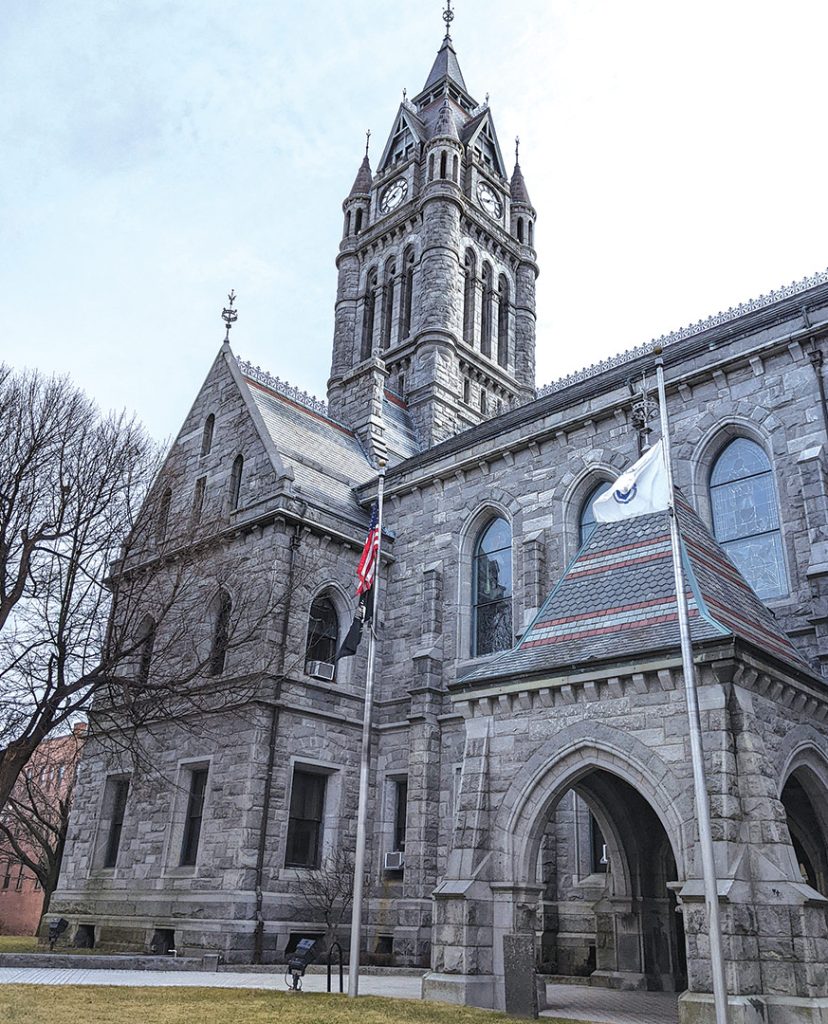
Happy anniversary, Holyoke! 2023 is the sesquicentennial, or more commonly called the 150th anniversary of the incorporation of the city. It is our good fortune that we, the citizens of Holyoke, will, at long last, will hold an official dedication ceremony for Holyoke’s City Hall, a structure that is not only of notable architecture, but also a fundamental component of Holyoke’s past, present, and future and the foundation of our community.

In a July 1876 article, the Holyoke Transcript reported:

“There ought to be public spirit enough in this city to appropriately dedicate this noble building. There seems to be a small faction opposed to it, but they should not be allowed to present a fitting dedication by those whose money has been spent in the construction of the finest hall in New England.”

That’s right, Holyoke City Hall was never dedicated upon its completion. Apparently, that small faction held out, and other circumstances derailed the building’s official dedication. So, it is only appropriate that we take time now to dedicate this magnificent building as it has stood in service to Holyoke for a century and a half. The official dedication will take place on Thursday, April 6.

Most of the story about City Hall is documented in Holyoke Annual Reports and a lengthy, detailed, unsigned article in the Saturday morning edition of the July 1, 1876 Holyoke Transcript. And as history so often reveals itself in layers, there are likely many more stories about the building. So here is some background information and details about the construction.

The total financial outlay to build this magnificent building, when all was said and done, was $372,000 in 1876. (Additional research done by the Historical Commission indicates that final cost was closer to $500,000 at the time.) In any case, in today’s money, that would be more than $10 million.

The town of Holyoke was established by an act of Massachusetts Congress Chapter 71 and signed into law On March 14, 1850 by Gov. George Nixon Briggs. The town’s first board meetings were held in rented meeting halls like Chapin Hall, Parsons Hall, and the Exchange Hall. A separate selectmen’s office was rented starting in 1861. The largest financial challenges for the town at that time were fees to West Springfield in relation to the contract of separation.

Constructing a building of this size and character was not an easy task, nor was it inexpensive. Delays and contractual issues increased the amount of time and money it took to complete this monumental undertaking. Unfortunately, division arose early on deciding where the building should be located. More delays arose during the building of City Hall and were memorialized in Holyoke’s Building Committee reports.

Fortunately, the city’s incorporation in 1873 brought about the reorganization of elected officials and, most importantly, new Building Committee members who acted quickly and effectively to get the construction work back on track … but it wasn’t a smooth process.

In October 1874, the new Building Committee contracted H.F. Kilburn of New York to serve as architect under the supervision of Watson Ely of Holyoke. In order to facilitate the completion of the building in a timely manner, Ely ordered that everyone that had moved into the unfinished building vacate the building and then closed City Hall during the winter of 1874.

Charles Attwood was the original architect who created the Gothic Revival and Romanesque Revival structural plan in 1871. However, many others contributed structural and decorative details, including local builder Casper Ranger, John Delaney, Ecclesiastical Stained Glass Works, Watson Ely, Henry Kilburn, Kronenberger and Sons, Filippo Santoro, Serpentino Stained Glass, and Samuel West.

Beyond the granite exterior walls, stone steps and pavers, and slate roof, other building materials include random ashlar, galvanized iron, glass, lead, marble, wood, brick, sheet metal, and copper.

One of the most important historical and stately features of Holyoke City Hall is the looming clock and bell tower. The imperial tower stands 225 feet high and houses a bell that weighs nearly 5,000 pounds. The clock’s face is composed of two-inch-thick Belgium milk glass. Sadly, the clock was inoperable and the bell was silent for decades. Thanks to Friends of City Hall, David Cotton, and a team of volunteers, the clock was restored after completing hundreds of hours of repairs, and on July 4, 2018, the clock was lit up and began keeping time again after almost 30 years.

But back to City Hall itself. As of July 1876, it had not been dedicated, and research has not found any indication it was ever dedicated. It’s time to remedy that.


Penni Martorell is Holyoke’s city historian and curator at Wistariahurst.