Firm Commitment
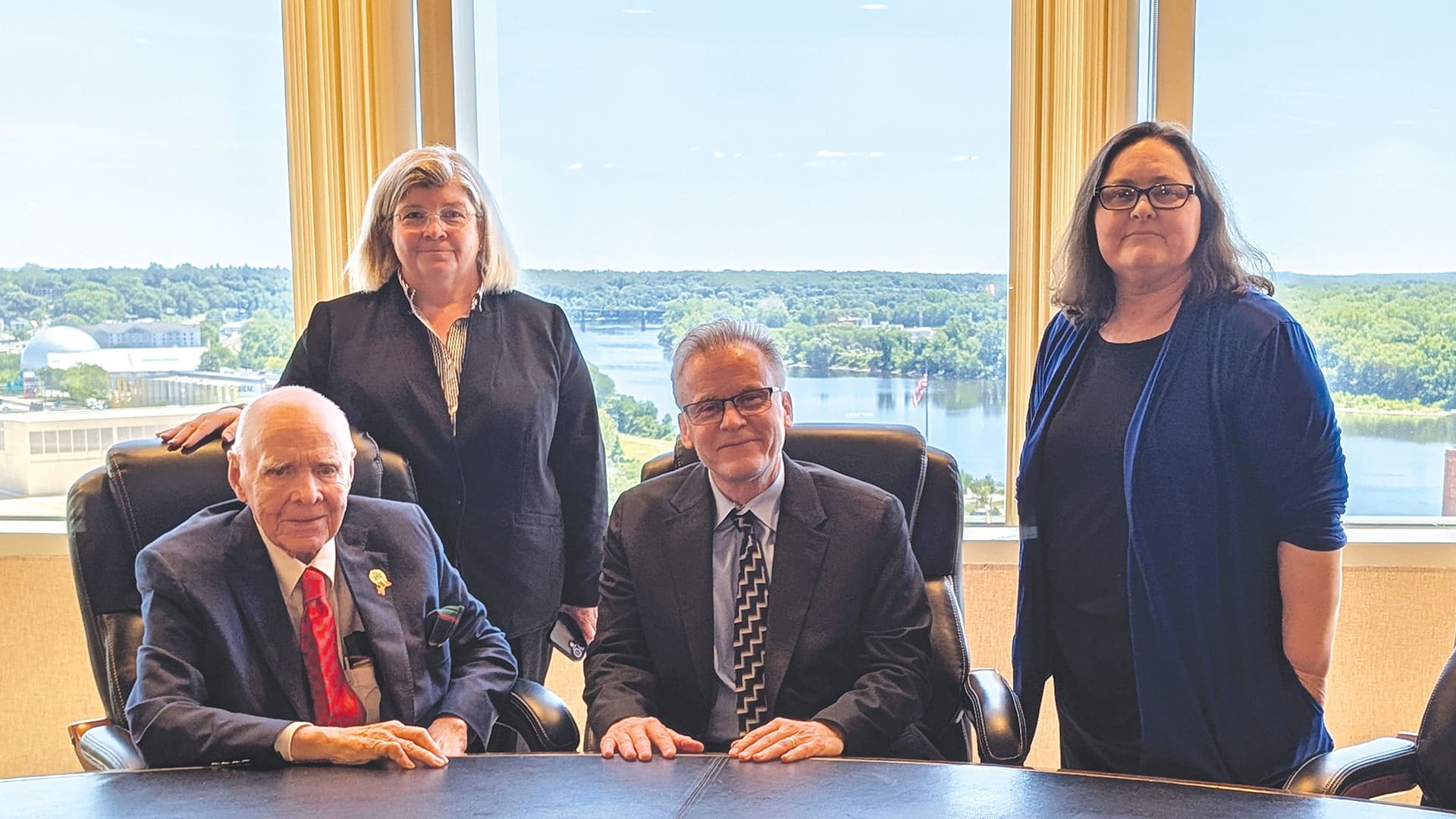
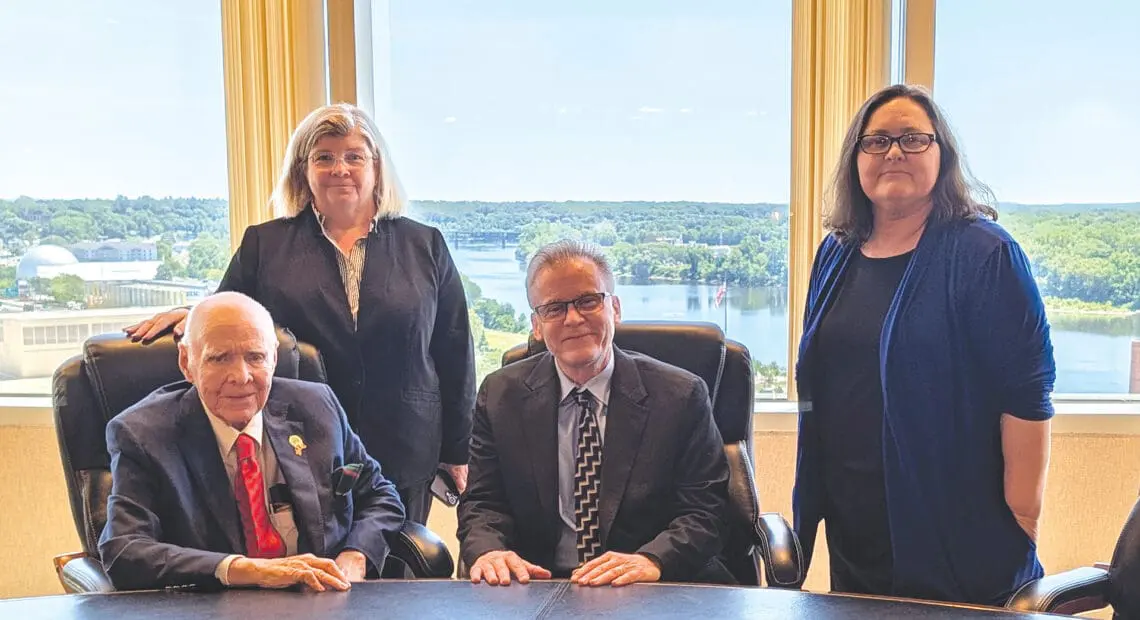
From left: Frederick Sullivan, Meghan Sullivan, Gordon Quinn, and Layla Taylor.
Early in 2000, on one of her first days on the job at Sullivan, Hayes & Quinn, Meghan Sullivan visited a lead smelting and refining plant in New York, one of the firm’s clients.
Her father, Frederick, the founding partner who co-created the firm in 1976, asked the plant manager to give her a tour.
“I thought, all right, I’m going to go walk around the plant. And all of a sudden, I’m being sized up for the respirator mask for my face,” said Meghan, now managing partner. “I was in there climbing ladders to look down into smelters, and when I came out, I asked, ‘why did you make me spend three hours doing that?’ And he said, ‘so you understand.’
“It was a wonderful learning moment — that we are obligated to understand a client, more than just what their statement of purpose is when they file their incorporation, and to have as broad an experience as possible, so we can picture it when our client calls and says, ‘this is the issue we have today.’ We’re able to understand it and picture it so that we can give relevant advice, not just something out of a book that’s theoretical.”
And plenty has changed in the 50 years since Frederick Sullivan and Dick Hayes hung a shingle in Springfield. As the firm reflects on this milestone year, its attorneys also recognize the many changes that have emerged in labor and employment law over a half-century.
“When I joined the firm in 1990, there was no Family Medical Leave Act. The American Disabilities Act came online later in the year I joined,” Partner Gordon Quinn said. “The whole concept of sexual harassment in employment, was still a novel legal claim. And there’s been an explosion of laws that have happened since then.
“Just look at the leave laws,” he went on, citing not just the federal Family and Medical Leave Act, but Massachusetts’ Earned Sick Time and Paid Family and Medical Leave laws. “It’s become a much more challenging environment for employers because of this mushrooming of laws.”
“We’re able to understand it and picture it so that we can give relevant advice, not just something out of a book that’s theoretical.”
Frederick couldn’t have predicted all of that, but said he fell in love with this area of the law at at an early age and found someone equally enthusiastic when he met Hayes, and the rest is history — a constantly changing, evolving history.
In the beginning, he said, the primary focuses were union organizing, collective bargaining, strikes, and wage and hour issues, all working on behalf of the employer, as remains the case today. “But we have seen great changes within the discipline. And we were able to stay abreast of it — and try to stay ahead of it.”
“We’re all nimble,” Partner Layla Taylor said, and that goes for tools of the trade as well as ever-changing laws and regulations. “One of the things I’ve appreciated since I’ve been here is, whenever there’s a new technology or there’s a new thing that we need to adopt, we’re pretty quick to adopt it. We all recognize that we need to be able to speak with the same tools as our peers.”
The firm is also deeply collaborative, Quinn said.
“If I have an issue or a question about immigration law, I know I’m going to be talking to Layla. Or if there’s something that could involve a criminal issue, I’ll talk to Meghan. If it’s a really heavy-duty labor law issue, I’ll talk to Fred. We all have open-door policies, and we’re all in constant communication. We talk to each other.”
“We always looked upon ourselves as the partners of the entrepreneur, trying to accomplish what the entrepreneur sought, but to do it in a lawful way, in a way that was really the right way when it came to employees.”
And not only at formal meetings, he added. “We just go into each other’s offices. If it’s a complex issue, I’ll say, ‘have you handled an issue like this before?’ And that’s invaluable. We’re not all cubbyholing in our offices. We all interact with each other, ask each other questions. And I’ve found that very rewarding. I’ve always felt secure in the advice I give, not only from the research I do, but also being able to talk to people and work it out and think about things from a different perspective.”
Proactive Strategy
The partners emphasized that their roles don’t stop with actual issues that arise, and the negotiation and/or litigation that follows. That’s where experiences like the lead plant tour come in — Sullivan, Hayes & Quinn prioritizes understanding a client’s business inside and out, so they can identify potential employee issues and legal landmines that might arise, before it’s too late.
“As much as everyone wants to avoid litigation, we all feel very fortunate that we consistently have clients who are just inclined to do what they’re supposed to do — to do the right thing and be fair,” Meghan said. “So that’s nice, when we come in and navigate situations that can feel very complex. We also know that our clients are partners with us in trying to make sure that the way that they’re treating their employees is the way that they would want to be treated, or would want their own family members to be treated.”
Quinn agreed. “A typical question might be, ‘we have an employee, and there’s an absentee issue there.’ We try to be proactive, obviously, to help them navigate those laws to avoid what we call landmines — a misstep that could lead to costly litigation and vast defense costs. So the proliferation of all these laws — and that’s just in the leave and absence area — have made it a lot more interesting for us, and a lot more challenging for our clients.”
From the very beginning, Frederick said, “going back to the days of Dick Hayes and myself, we always looked upon ourselves as the partners of the entrepreneur, trying to accomplish what the entrepreneur sought, but to do it in a lawful way, in a way that was really the right way when it came to employees, because that went to the question of productivity, too.
“So it’s been an interesting 50 years, with the people that we’ve met. We’ve worked with casinos. We’ve worked with convents. We’ve worked with zoos, hospitals, colleges, museums, public sector employers in schools and towns … just about every type of employer. And we’ve met wonderful people along the way who basically wanted to do the right thing. They wanted to be successful, and they realized there is a real art to managing people.”
Meghan said she enjoys the educational aspect of the job, as it applies to helping companies understand how — and why — to do the right thing.
“I love doing trainings. Whether I’m presenting to college professors or third-shift factory workers, I know that I have an ability to take this abyss of legal compliance and make it understandable.
“Every employment law, just like every labor law, gets presented as if it’s an employer’s obligation and an employee’s right,” she went on. “But frequently, they’re mutual rights and mutual obligations. So I love that part of the work that we do, where we get to go into this diverse set of workforces with vastly different types of jobs and talk about what it means to be an employee or a supervisor and the fact that it is mutual.”
And she understands the limits of legal consulting, especially when it runs into bottom-line issues. “I very much appreciate when we are dealing with people who want to do the right things. But we know they can’t just do everything that someone demands because every budget is only so large, and they need to have the ability to make payroll after that.
“But when we help a client navigate a murky situation, and the result of it is satisfactory to the employer, but also satisfactory in a way that that employee-employer relationship is not completely disturbed or that doesn’t lead to a massive morale issue, that’s always a happy day. To resolve a situation artfully means considering the bigger picture of what it means to be a manager or a supervisor, and you still need a workforce that wants to continue.”
Never a Dull Moment
Whether it’s working with issues of discrimination and harassment, wage and hour, labor relations, workplace safety, or any number of other employment matters, the constant evolution of workplace laws is, on a personal level, very intellectually fulfilling, Taylor said.
“If you’ve been doing this long enough — and all of us here have been — you start seeing the history of the American workforce, and how that evolves. And it’s a really fascinating thing.”
Indeed, the team brings plenty of institutional knowledge to work every day; Taylor came on board in 2003, the most recently of the four.
“Not only has there been a proliferation of laws, but the administrative agency involvement in the legal process has evolved,” she said. “And now we’re starting to see emergent things that we hadn’t seen before. AI is one of them — and the impact that’s having on the workplace. So, intellectually, you’re not going to get bored because there’s always going to be something new.
“Sometimes we’ll start with a client from its business inception, so we’re looking at compliance; we’re looking at getting things right from the start,” Taylor added. “But sometimes we’re actually helping clients at the end of their life, in their succession planning and how that’s going to work. We get involved with purchase and sale. We get involved with reductions in force. It’s a really fascinating thing we do. Every day we come in, it’s a little bit different.”
“I’ve always felt secure in the advice I give, not only from the research I do, but also being able to talk to people and work it out and think about things from a different perspective.”
Frederick praised not only the experience of his team, but their creativity.
“It takes creativity, it takes foresight, it takes anticipating where the judicial boards are going to be going, how people are going to be thinking. And 99% of the professionals are routine in their approach: the law says yes, the law says no,” he explained. “I think what has made the people who have worked for this firm different is that they are creative in how to accomplish what should be accomplished.”
That’s part of why so many clients are long-term — including the firm’s very first client, a third-generation metallurgy enterprise, which is still on board.
“It’s very rewarding, working with the variety of clients that we have, not just private sector, but public sector as well,” Quinn said. “And when you have public sector clients in towns and cities and schools, they have another layer of laws that regulate how they interact with their employees. Whether it’s collective bargaining or dismissal decisions or disciplinary decisions, being able to work with them and guide them through that process is … well, they say variety is the spice of life. And we see a lot of variety here.”