
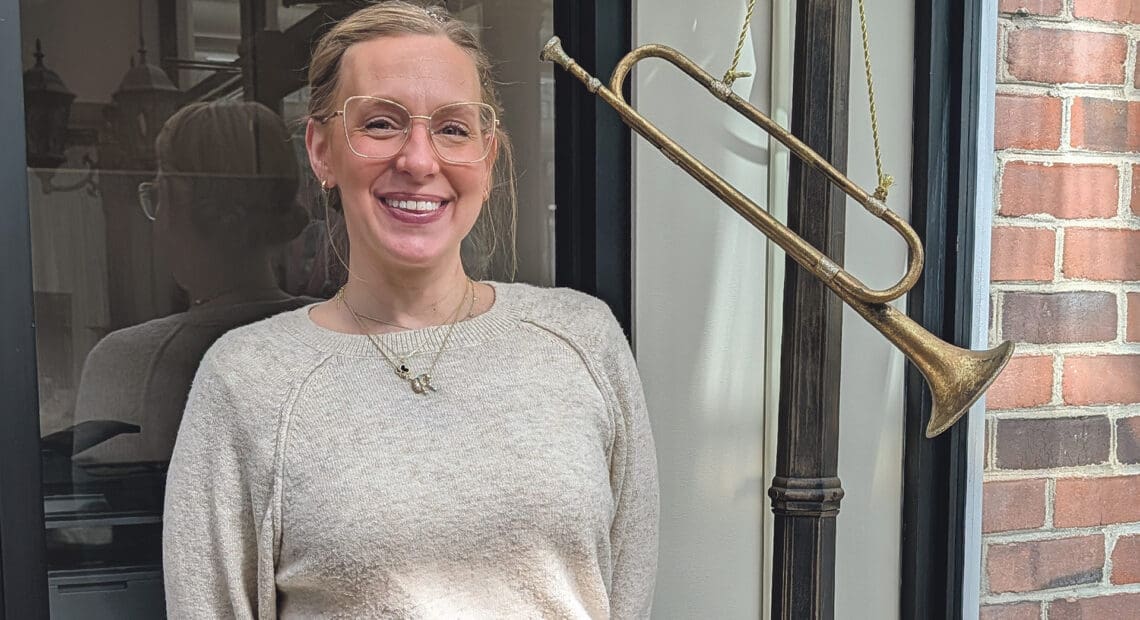
Heather Caisse-Roberts Leads the SSO with Passion, Purpose
Orchestrating Change
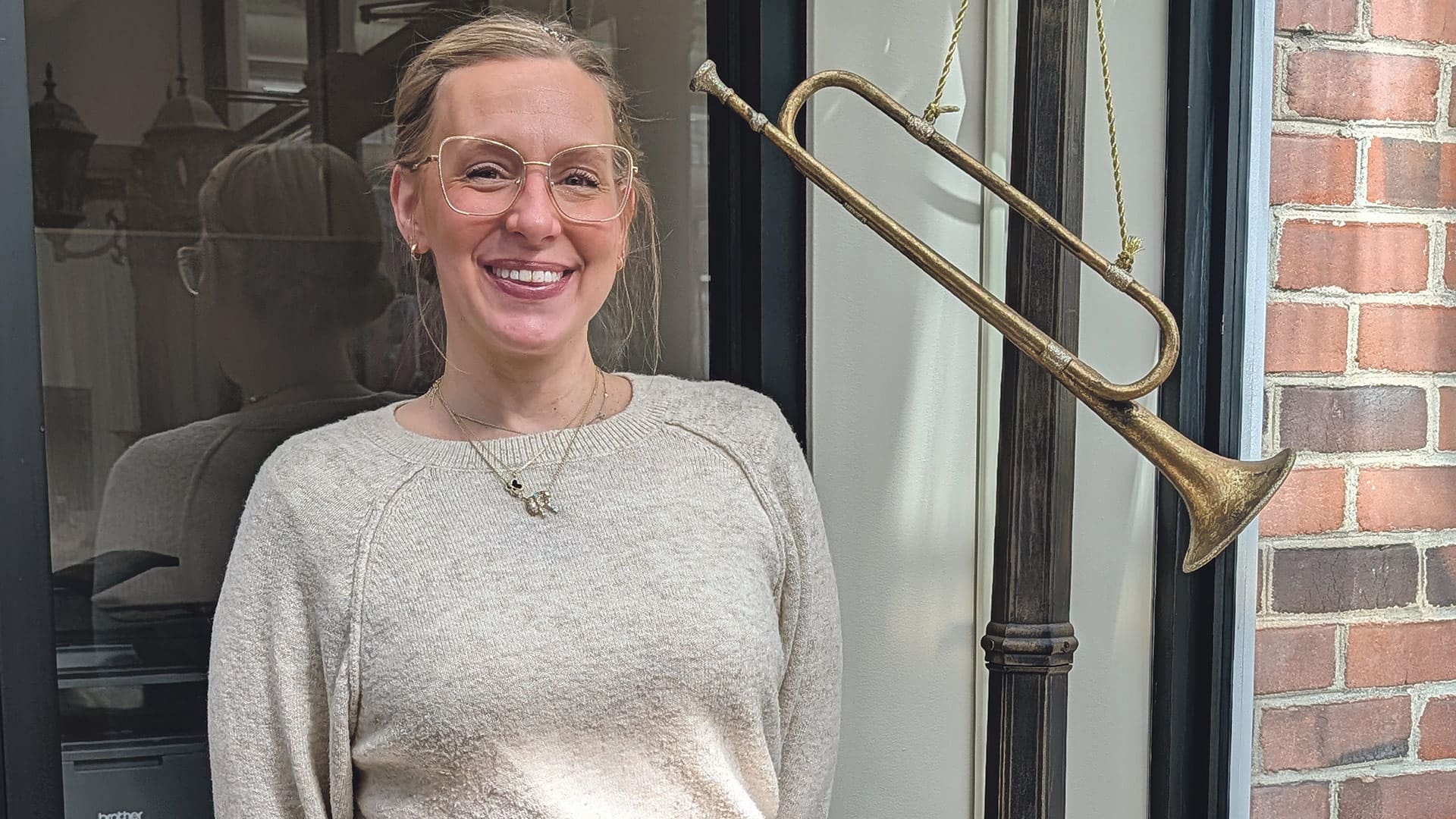
Heather Caisse-Roberts
Heather Caisse-Roberts never gets tired of seeing people enjoy the symphony.
“I think one of the most gratifying things for me has been watching individuals’ perception of the symphony change,” she told BusinessWest. “I’ve been able to see young children go into Symphony Hall for the first time and think they’re in a castle; they’re truly taken out of the world that they’re living in. And I have seen 80-year-olds walk into Symphony Hall for the hundredth time and still get their breath taken away.
“I don’t think you get that anywhere else,” said Caisse-Roberts, who was named president and CEO of Springfield Symphony Orchestra (SSO) last summer. “Like I’ve said a million times over, music is so powerful. It is so innately important to me. So, to be able to put it back into the world is something that I feel honored to do. This is a dream job for me. Every day, I wake up and am excited to come here. It’s a beautiful thing. I’m really lucky.”
Caisse-Roberts came on board in 2022 as previous President and CEO Paul Lambert’s first hire; he retired from that role this past October. Over those post-pandemic years, she has held a series of senior leadership roles, from development and grants associate to chief development and operations officer to, most recently, chief operations officer.
“I’ve been able to see young children go into Symphony Hall for the first time and think they’re in a castle; they’re truly taken out of the world that they’re living in. And I have seen 80-year-olds walk into Symphony Hall for the hundredth time and still get their breath taken away.”
Across Lambert’s tenure, during which time two labor agreements with musicians were completed, Caisse-Roberts played a key role in driving the strategic growth and sustainability of the organization, overseeing the areas of development and grants, sponsorships, box office, office administration, and marketing.
“Paul was brought on board right after COVID — actually, it was still here, and had started to come back to life a little bit again. We were in the middle of the negotiations with musicians,” said Caisse-Roberts, whose jobs before the SSO included a decade at American International College and a short stint at New England Public Media (more on those later).
“Paul came here because he had such a love and passion for this. We had worked together briefly at NEPM, and when I was at AIC, I had worked with him at the Basketball Hall of Fame for events. He was like, ‘any chance you’d want to come and maybe help write a grant or two or do a little fundraising?’”
She was certainly interested. “I love music. I mean, I love it. I am not blessed with the talent to play an instrument. But if I can’t do that, at least I’m able to put it back into the world on some level. But so I said yes.”
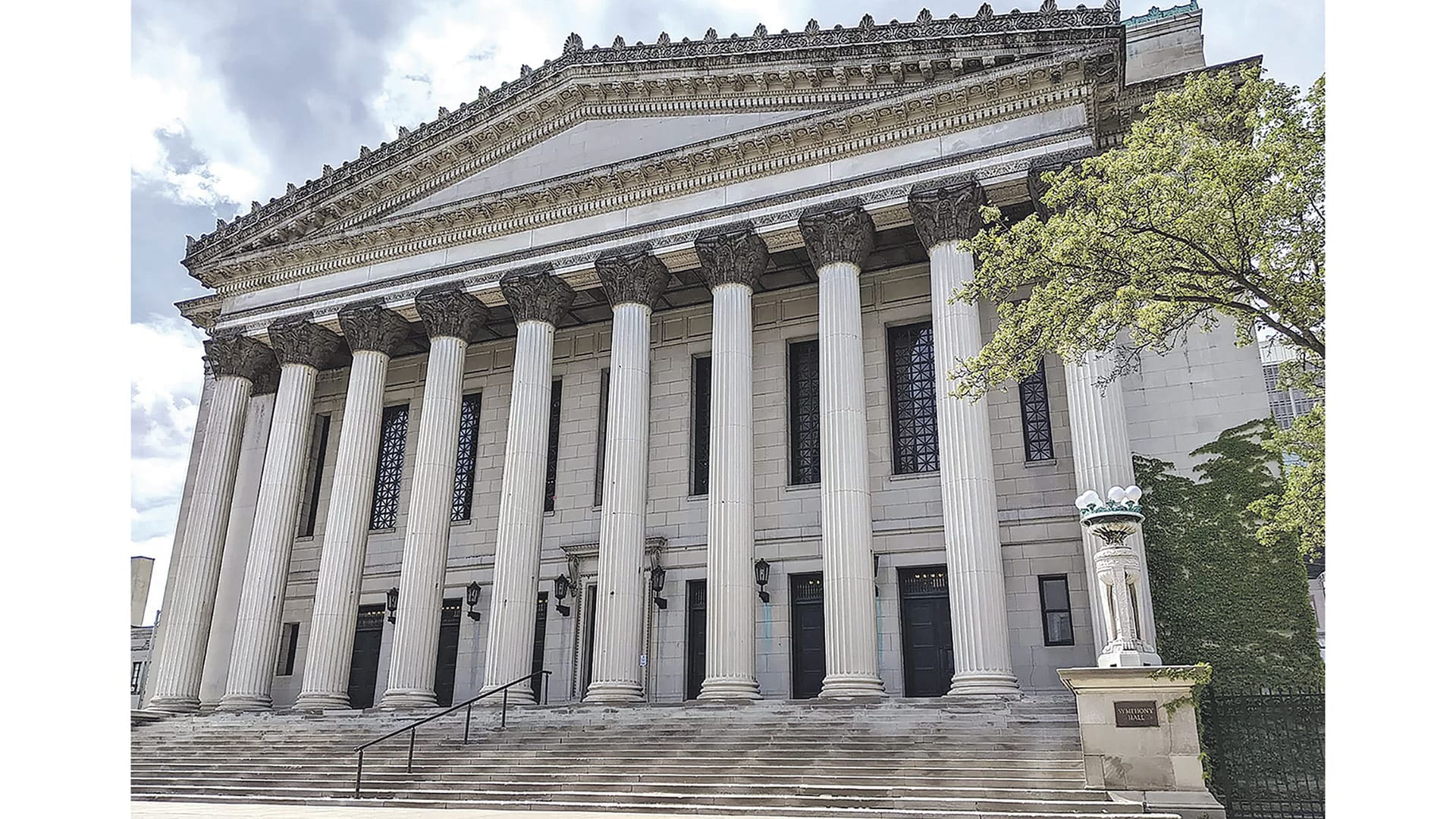
Symphony Hall in downtown Springfield hosts about nine SSO concerts each season.
A part-time role became a full-time one, and Lambert — a long-time veteran of the Hall of Fame who had come on board to provide the SSO with some stability and leadership at a critical time — eventually started talking with her about a succession plan. And Caisse-Roberts was enthusiastic about the opportunity, bringing to her new role an expansive vision.
“The symphony is important for a million reasons: economically, artistically, culturally. It’s an outlet for people. Music has so many proven benefits on top of what it can bring into the city. So we’re just trying to educate people about that,” she told BusinessWest, adding that one goal is to help people understand that a symphony concert is for everyone.
“One of the goals I have is to make our symphony in Springfield the most accessible symphony in New England over the next five years. Because music changes people, and it changes communities.”
“I think there’s been a long-standing assumption about what the symphony is and what you have to be to go to the symphony. You look back, and it was always black tie and top hat and very fancy. One of the goals I have is to make our symphony in Springfield the most accessible symphony in New England over the next five years. Because music changes people, and it changes communities.”
Changing with the Times
One major undertaking in Caisse-Roberts’s early tenure is an ongoing search for a music director, a position the SSO hasn’t filled since Kevin Rhodes served in that role from 2001 to 2021.
The next music director — finalists will conduct one concert each during the 2026-27 season, and a director will be chosen in 2027 — will serve as the SSO’s principal conductor while driving the artistic vision of the SSO, and also participating in the organization’s long-standing education programs and building bridges with schools, universities, and cultural organizations with the aim of growing audiences and inspiring the next generation, among other roles.
That vision, Caisse-Roberts said, will continue to honor traditional symphonic music while embracing innovation in the concert programming as well.
“There is a lot of new music out there. There are a lot of new composers. There are also really beautiful, updated ways to play traditional pieces,” she explained, citing, as one example, a concert in January that incorporated Motown and the Philly Sound.
“So, not a typical classical concert, right? But we had a full house, and no one was on their phone. People were up and dancing. We had an actual love train going through the aisles at Symphony Hall. There were little kids singing, people ballroom dancing together. It was one of those moments where I took a step back and was like, ‘wow. This is what the world needs.’ So we have to keep figuring out how to do that.”
A typical show — the SSO schedules about nine of them at Symphony Hall each season — will offer both traditional compositions and pieces by modern composers, and Caisse-Roberts admits that not all long-time concertgoers appreciate that expansive vision equally.
“Change is scary. I get feedback constantly in both directions. I get feedback from our very traditional patrons that they are just appalled that a screen came down and we had a video experience along with the music, for example. And then I hear from a family who had their two kids in the house, and were like, ‘this was the most incredible way to introduce our children to symphonic music.’
“It’s not about ‘classical’ or ‘pops’ — it’s just a way to introduce them to this type of music. It’s about access,” she reiterated. “We don’t live in 1955 anymore. If we think we do, we’re not going to survive.”
Also key to the survival of symphonies in general is cultivating the next generation — of both patrons and musicians. That’s why the SSO maintains a youth orchestra program, in which 115 young people currently participate in three groups of varying skill levels.
“I would love to keep seeing that grow — this commitment to putting art back into the world is something that we need to cherish and expand upon hugely,” she said. “They should be the musicians that are playing on our stage in the next 10, 15, 20 years.”
In addition to each group rehearsing throughout the year and performing their own concerts, young musicians were also able to perform side by side with the SSO at Symphony Hall during its season opener last fall.
“That was the coolest thing ever. I cry a lot because I’m an emotional human, but seeing the two generations next to each other was incredible.”
Caisse-Roberts noted that kids don’t get the music education they used to in school, and they’re growing up in a much more fragmented media landscape, with fewer shared experiences.
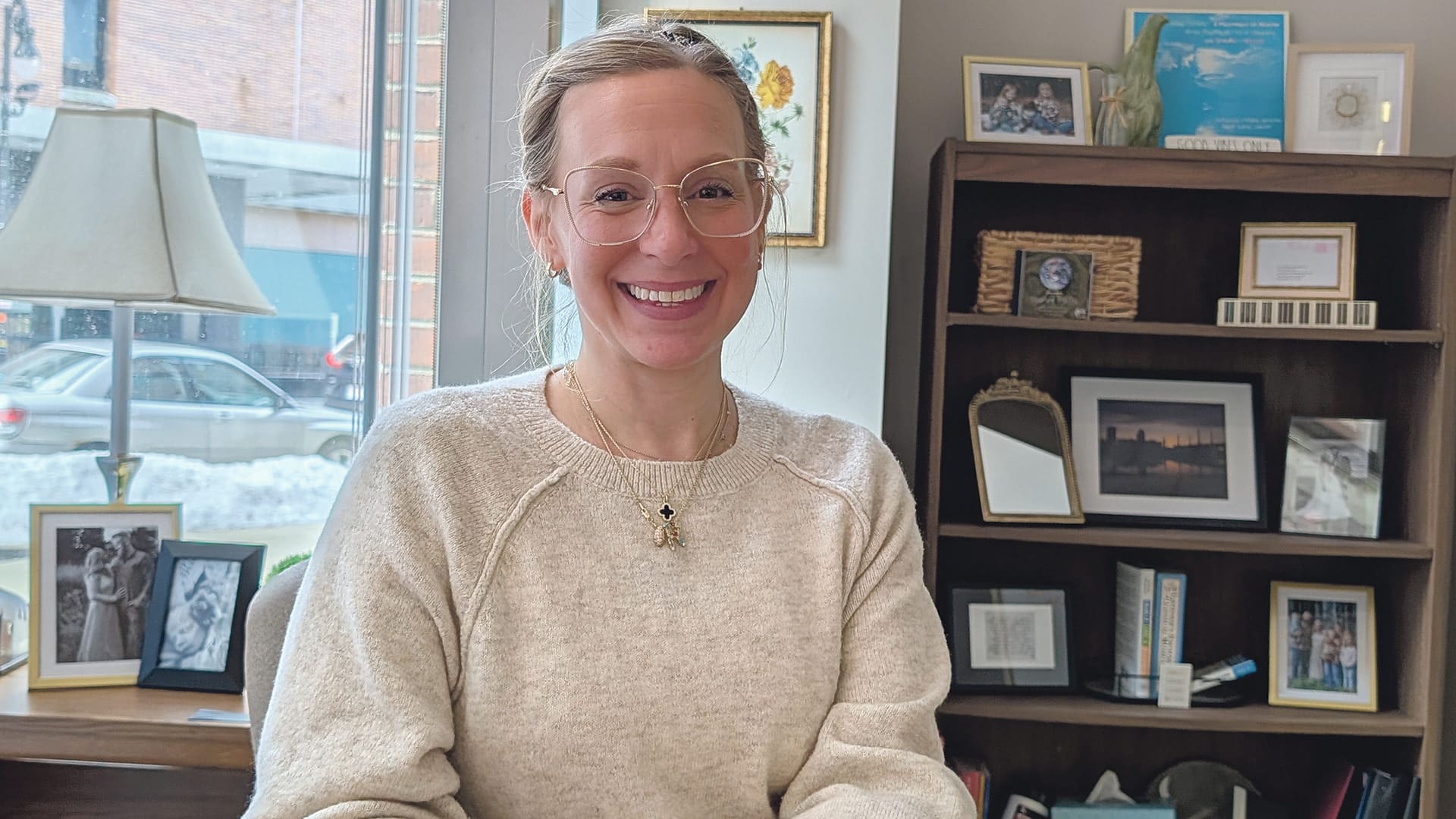
Heather Caisse-Roberts says the symphony’s importance to Greater Springfield is both cultural and economic.
“They’re not being introduced to music the way we all once were, the way our traditional concertgoers once were. Sitting and listening to a symphony was something you did with your family. Now, you can listen to whatever you want, whenever you want, by yourself on your phone. So we have to teach people that this is an experience and teach them about these different types of music.”
She also touted community partnerships, such as with the MGM HCC Culinary Arts Institute, whose culinary students cater SSO events, as well as the nonprofits whose work is boosted at the start of shows. But another type of partnership is essential to the symphony’s very survival — the businesses, organizations, and individuals who financially support the SSO’s work.
“Ticket sales don’t even touch the costs of a concert. That’s such a common misconception in the arts world in general,” Caisse-Roberts said. “So the community support is so important, whether that’s corporate, individual, foundation, all of the above. Every little bit of support helps us — sharing a post on Facebook so more people might buy tickets, or coming to a concert and bringing someone who’s never been to one, or buying an ad for our program, or maybe backing one of our concerts.
“So many cities have lost their symphonies. The fact that Springfield has one is something that people cannot take for granted — because when it’s gone, it’s gone. It won’t be back.”
“I mean, we have so much that we’re doing,” she went on. “We have a large group of youth students that are on scholarship because they are unable to pay, and they would never be able to experience this if we couldn’t provide support. So we’re very grateful.”
Impactful Work
That said, Caisse-Roberts noted, “we’re going to be heavily focused on sustainability over the next three years, which means we will probably be out asking for support. So many cities have lost their symphonies. The fact that Springfield has one is something that people cannot take for granted — because when it’s gone, it’s gone. It won’t be back.”
And that would be a blow not just culturally, but economically.
“We’re trying to get people to understand that it’s more than just the Brahms or the Mendelssohn. It’s the experience, it’s community, and it’s helping support our city,” she said. “Every time somebody comes downtown, they’re eating at a restaurant, staying at a hotel, parking in a parking garage, stopping at the casino. We’re not blind to any of that. We are trying to build up this really strong partnership base in Springfield because, if we don’t do this together, none of us succeed. I feel very strongly about that.”
Caisse-Roberts is no stranger to fundraising and development. As noted earlier, prior to the SSO, she worked at American International College for about a decade, first in alumni relations and events, and later as executive director of Institutional Advancement. Her stewardship work with alumni yielded significant growth in alumni engagement and landed one of the largest-ever single donations to the college. She also worked closely in supporting the grant director to secure Title III funding and develop scholarship funds to help AIC students continue their education.
More recently, she was senior director of Development at New England Public Media, where she focused on overseeing the nonprofit organization’s fundraising efforts, including grants, on-air fundraising campaigns, and planned and major giving programs. She also served as development director for the Young@Heart Chorus, reflecting her passion for music and its power to connect communities.
All this work represented a shift in what she wanted from her career. After teaching elementary school in Vermont early on, then working overseas for a while, she moved back to Western Mass. hungry to work for hyper-local, community-based organizations that make an impact in Western Mass. She certainly realized that ambition at AIC and NEPM, and is still passionate about it — and about the power of music in general — today at the SSO.
“I hope people will continue to get to know us more because we can’t exist without the world around us supporting us,” she said. “It’s only way we can succeed.”