Home Posts tagged chain
Features Special Coverage

Hammer Down

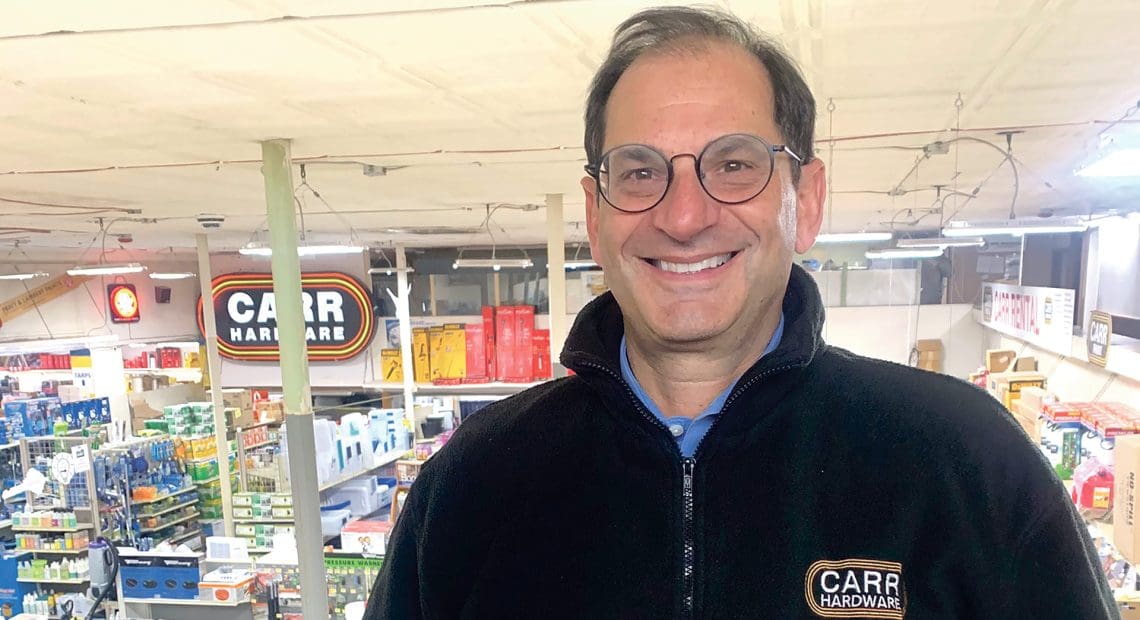
Bart Raser looks over the Carr Hardware location on North Street in Pittsfield.

Bart Raser looks over the Carr Hardware location on North Street in Pittsfield.

While he admits to practically growing up at the Carr Hardware store in Pittsfield, working beside his father, Marshall, during the summer and school vacations, Bart Raser says he had no real interest in living in the Berkshires or making the family business a career.

That all changed when, while he was working in Boston and studying for his MBA, his father became ill with cancer. Raser came home — meaning to the store on North Street — for what he thought might be several months.

“Instead, I kind of fell in love with it and never left,” he said. “It’s a good business. It’s been fun … and it’s still fun. It’s great when you can wake up and love what you do every day.”

Indeed, working beside his father, who was very active in the business until recently (and until he was in his mid-90s), Raser has helped write the latest chapters in an intriguing story that began almost a century ago when Sam Carr put his name over a hardware store that would soon become, and always has been, an institution as much as a place to buy paint, nails, and, more recently, a leaf blower.

An institution that has not only been part of the fabric of the community — in Pittsfield and now several other cities and towns where it has locations — but a force in those communities, with Raser and many of his employees getting involved on many different levels.

“If it wasn’t for our community, we wouldn’t be here, so we support a ton of organizations, we encourage our people to get involved, and we supply our people with the time, and the money if it’s needed, to get involved.”

“It’s a big part of our culture — we’re a community business,” he said. “If it wasn’t for our community, we wouldn’t be here, so we support a ton of organizations, we encourage our people to get involved, and we supply our people with the time, and the money if it’s needed, to get involved.”

As for the business itself, it has evolved and expanded its reach — moving into equipment rentals and a strong online component, and adding stores across Berkshire County and then beyond, with a location in Avon, Conn.

And there are certainly opportunities for more of this expansion, said Raser, especially as Baby Boomers move into retirement and look to sell some of the remaining small, independent stores still to be found in the region.

Bart Raser and his father, Marshall

Bart Raser and his father, Marshall, have grown Carr Hardware to a six-location chain (and counting) over the past 30 years.

“The challenge in our industry is there’s a lot of folks who own hardware stores who are late in their careers, and their kids have no interest in working the kind of hours that are required in retail today,” he explained. “And the business is not easy — it’s capital-intensive, the margins are tight, the competition is tough … you have to work hard.

“So there are plenty of opportunities today, and there are probably more coming,” he went on, adding that plenty of people are looking for such opportunities. “There are a lot of folks who want to buy these stores.”

With that, Raser — who now has his own children working summers and vacations doing everything from making deliveries to assembling grills — effectively summed up the state of this industry as well as the challenges and opportunities facing this nearly century-old business. For this issue, BusinessWest talked at length with him about all that and much more.


A Lightbulb Went Off

As he walked through the Pittsfield store with BusinessWest, Raser passed a row of snow throwers, an item that was in short supply and very hard to get at the height of the pandemic, but not so much the past few years.

“We have plenty of them … it hasn’t really snowed in two years,” he said with a voice that blended frustration with hard reality and an inability to do anything about it. “Let’s hope that changes this winter.”

Weather is just one of the myriad issues and challenges confronting those in the hardware business, a sector that, like many others in retail, has undergone tremendous change over the past few decades, in everything from the scope and nature of the competition — Sam Carr didn’t have Home Depot, Walmart, or Tractor Supply to contend with — to how business is done and what is sold or rented, from baby chicks in the spring to bounce houses.

“There’s all kinds of competition, and that competition has changed over the years,” he explained. “When I first came back, Sears was the big competitor, and that’s certainly evolved. Meanwhile, online is a huge competitor, Home Depot, Walmart, local chains — Rocky’s and Aubuchon — and the independents; there are several of them in the Berkshires.”

Like all Pittsfield-based businesses, this one had to cope with the downsizing of GE in the early ’90s and the huge impact it had, and still has, on the city’s central business district. And, like all retail businesses, this one faces the challenge of finding enough talent for its stores.

“The challenge in our industry is there’s a lot of folks who own hardware stores who are late in their careers, and their kids have no interest in working the kind of hours that are required in retail today.”

Before getting to all that, let’s go back to the beginning.

Calvin Coolidge was patrolling the White House when Sam Carr, a North Adams native who was working for someone else in the hardware sector, decided to go into business for himself. He started in a storefront just a few blocks down North Street, and eventually moved his venture into what had been a Sears Roebuck location, and before that a car dealership, at 547 North St., and the Carr name has been over the door ever since.

In 1962, Marshall Raser, who was already in the hardware business in Quincy with his brothers, met Sam Carr and decided to expand, if you will, into the Berkshires.

“My dad bought Carr Hardware, his brothers stayed in Quincy, and he ran Carr Hardware; together, they were all partners,” Raser noted, adding that the expansion into other Berkshire-area communities began in the ’80s with locations in Lee and Great Barrington. Eventually, what would become a chain had a presence in North Adams as well, before the venture moved into other area markets.

Including Avon in 2019, a Connecticut expansion that certainly wasn’t planned.

“I went in to buy their fixtures, and I walked out with the keys,” he said, referring to a store that was closing its doors, only to open again with a new name over the door. The search for fixtures was prompted by Carr’s purchase of an independent store in Longmeadow and the need to relocate it to make way for a Big Y expansion, a move that brought the chain to Enfield, Conn., a store that would close after seven years of operation.


Nailing It Down

As he talked about the company’s past expansion efforts — and also what might happen in the future — Raser referenced the attrition rate in this business, which has grown steadily higher over the years, even within his own family; indeed, in addition to the Enfield store, which suffered from a poor location, a store in Great Barrington operated by his cousins eventually failed, to be replaced by one opened by Bart and Marshall Raser.

employees take part in downtown Pittsfield’s annual spring cleanup

As part of Carr Hardware’s long tradition of being involved in the community, employees take part in downtown Pittsfield’s annual spring cleanup.

To survive and thrive these days, hardware ventures need several key ingredients, he said, starting with size. Indeed, chains have an enormous advantage over single, standalone stores when it comes to buying power and economies of scale, Raser said, adding that this is one reason why he is continually looking for expansion opportunities.

Meanwhile, a diverse portfolio of products and services is another must, he noted, adding that the company’s equipment- and event-rental business is a good example of such diversity.

“Rental is an important part of our business now,” he said. “If you had told my dad or Sam Carr that we would be renting bounce houses and cotton-candy machines, they’d think we were crazy, but it’s a great part of our business.”

The same can be said for small-engine repair and even the sale of chickens, which started in three of the stores several years ago and remains brisk.

Meanwhile, a large, effective online presence is also a must, and Carr has achieved that as well.

“It’s such a small part of our total volume, but it’s such a fast-growing piece; it grew by more than 100%,” he explained, adding that, while there’s a large volume of returns, consumers are becoming ever-more comfortable with buying hardware online.

Still, when it comes to most projects and products, consumers still need advice, which is why in-store service from qualified experts is another key to success, and Carr features that as well.

As for size, as he noted earlier, Raser said he’s continually looking for growth opportunities, but they have to make sense, and he isn’t looking to grow just for the sake of growth.

“I’ve walked away from far more than I’ve bought,” he said of stores that come on the market, adding that everything has to be right with an acquisition candidate, from the location to the condition of the store to the price, obviously.

“In many cases, people value their business for more than it’s really worth; with these small businesses, there are emotional connections, and they’re multi-generational,” he noted. “We have a lot of things we look at when considering an acquisition, and the biggest is culture, but the metrics have to make sense as well.

“We’re willing to go where there’s opportunity,” he went on, when asked where the company might go next. “But ideally, we would like to fill in the map; it would be great to have something between Great Barrington and Avon.”

Meanwhile, in the communities where it already has a presence, the company makes getting involved a huge part of its culture.

As Raser noted earlier, this is a top-down proposition. He has served, and continues to serve, on a number of different boards, and the company not only encourages employees at all levels to get involved, it gives them the wherewithal — the time off and whatever else they need — to do so.

“If they’re passionate about being a volunteer firefighter, or they want to coach a soccer team, or get involved in Little League, whatever their passion is, we really encourage them to do that,” he told BusinessWest. “And we’re happy to help them support the organization — that’s our starting point.”

It’s just one of many traditions, carried on for almost 100 years now, that promise to continue for decades to come.
 

Restaurants Special Coverage

Chain of Events

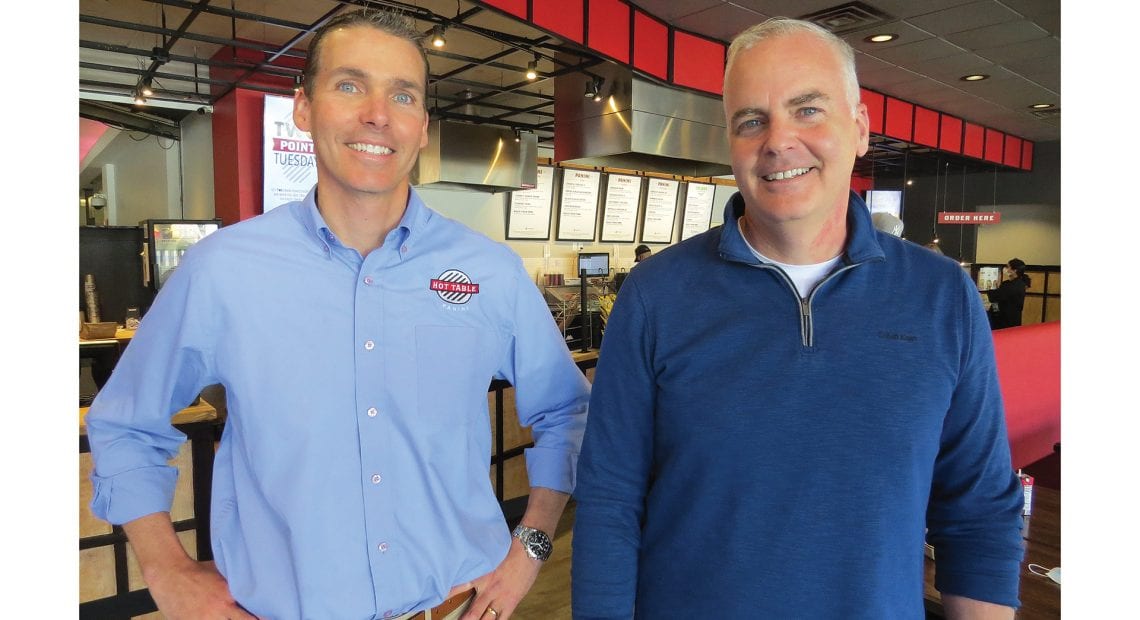
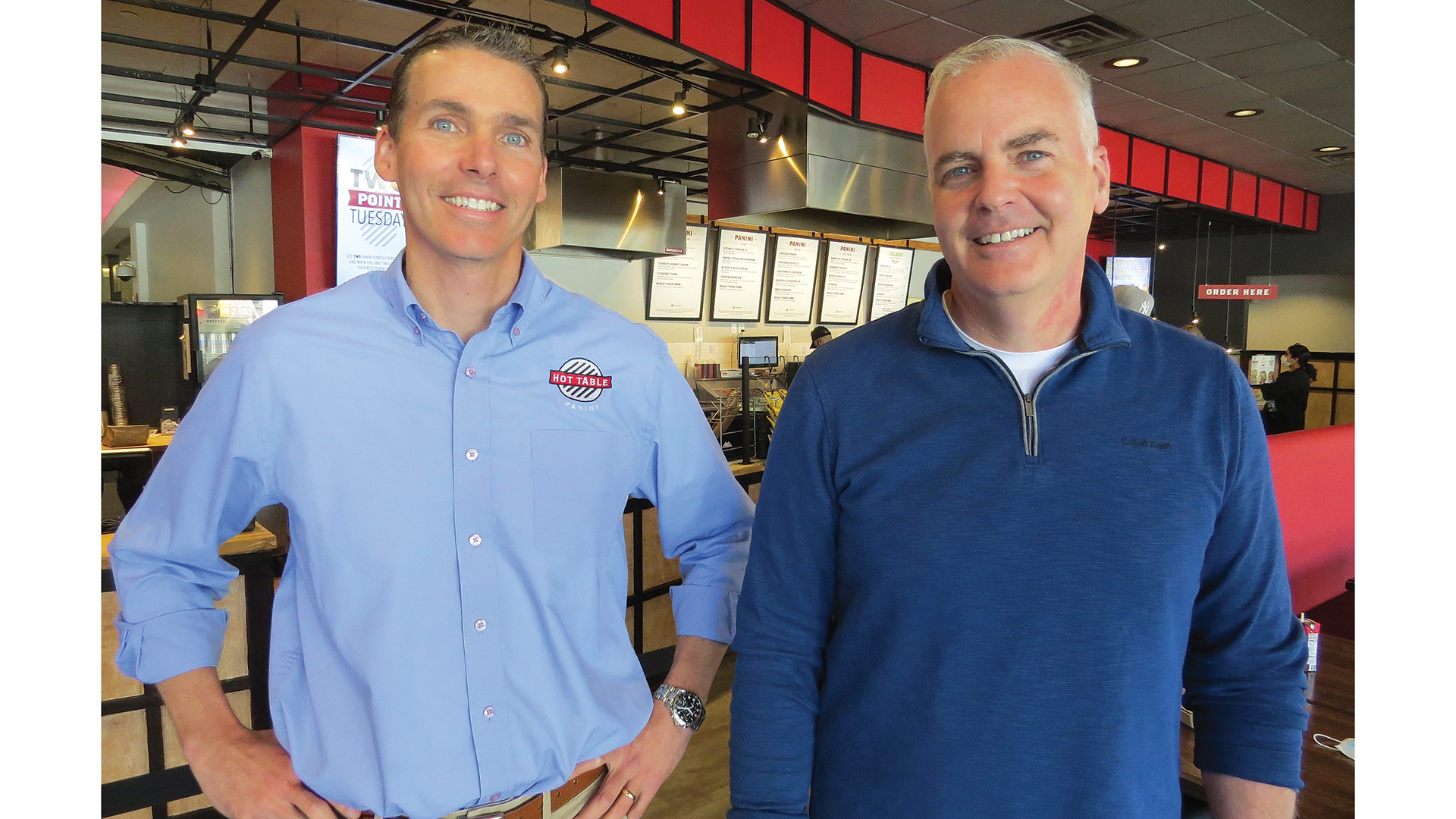
John (right) and Chris LaVoie at Hot Table’s location in Tower Square.

John (right) and Chris LaVoie at Hot Table’s location in Tower Square.

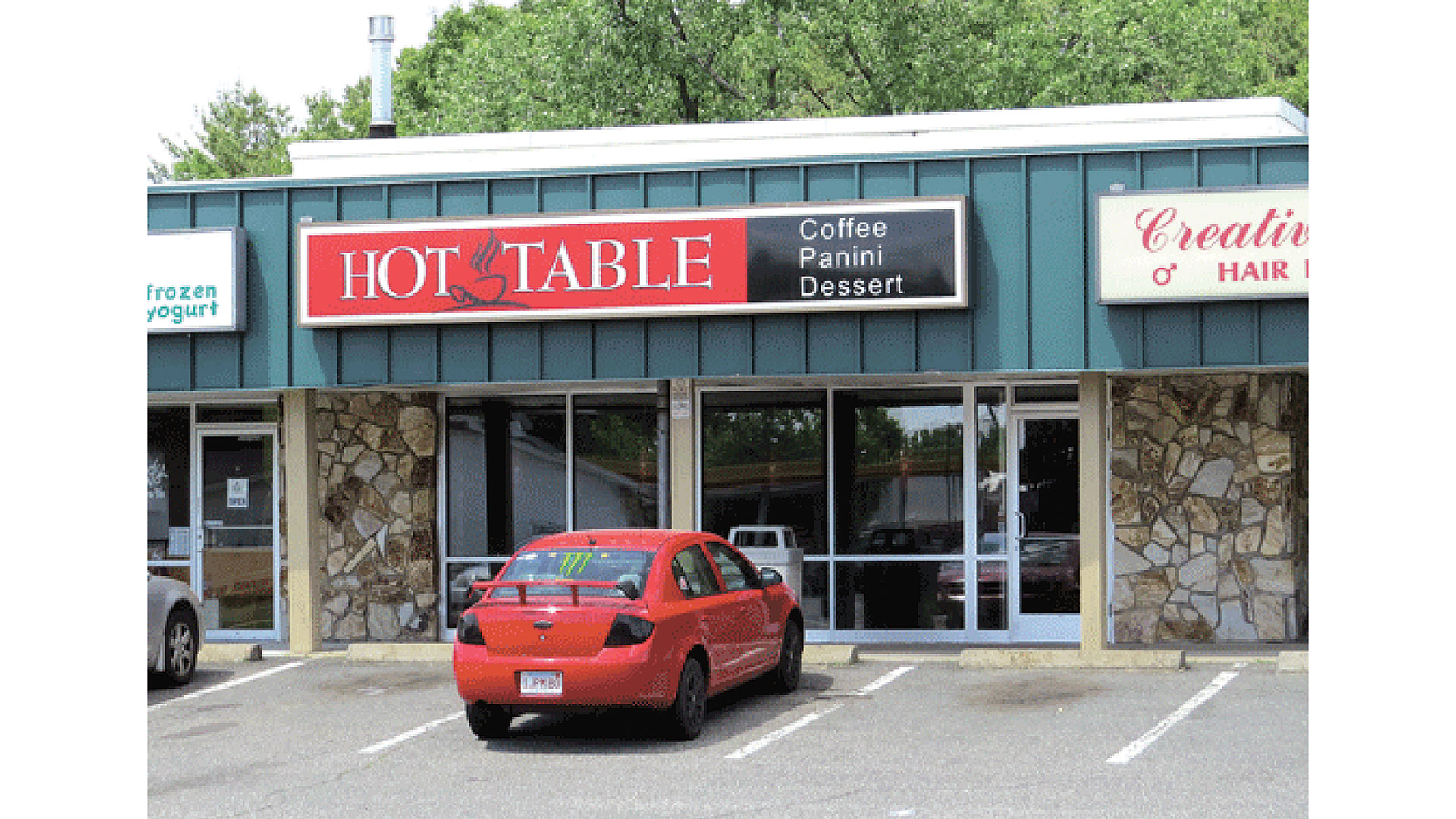
Hot Table, now a chain of panini restaurants, started humbly in 2007 with a small location in the Breckwood Shoppes in Springfield. The brand has come a long way since then, and in many different ways. There are now seven locations, with plans for four more to open this year or early next, including the first free-standing facility. After that … well, the partners talk of having perhaps 50 stores by the end of this decade. What they do know is that growth will be controlled — and strategic in nature.

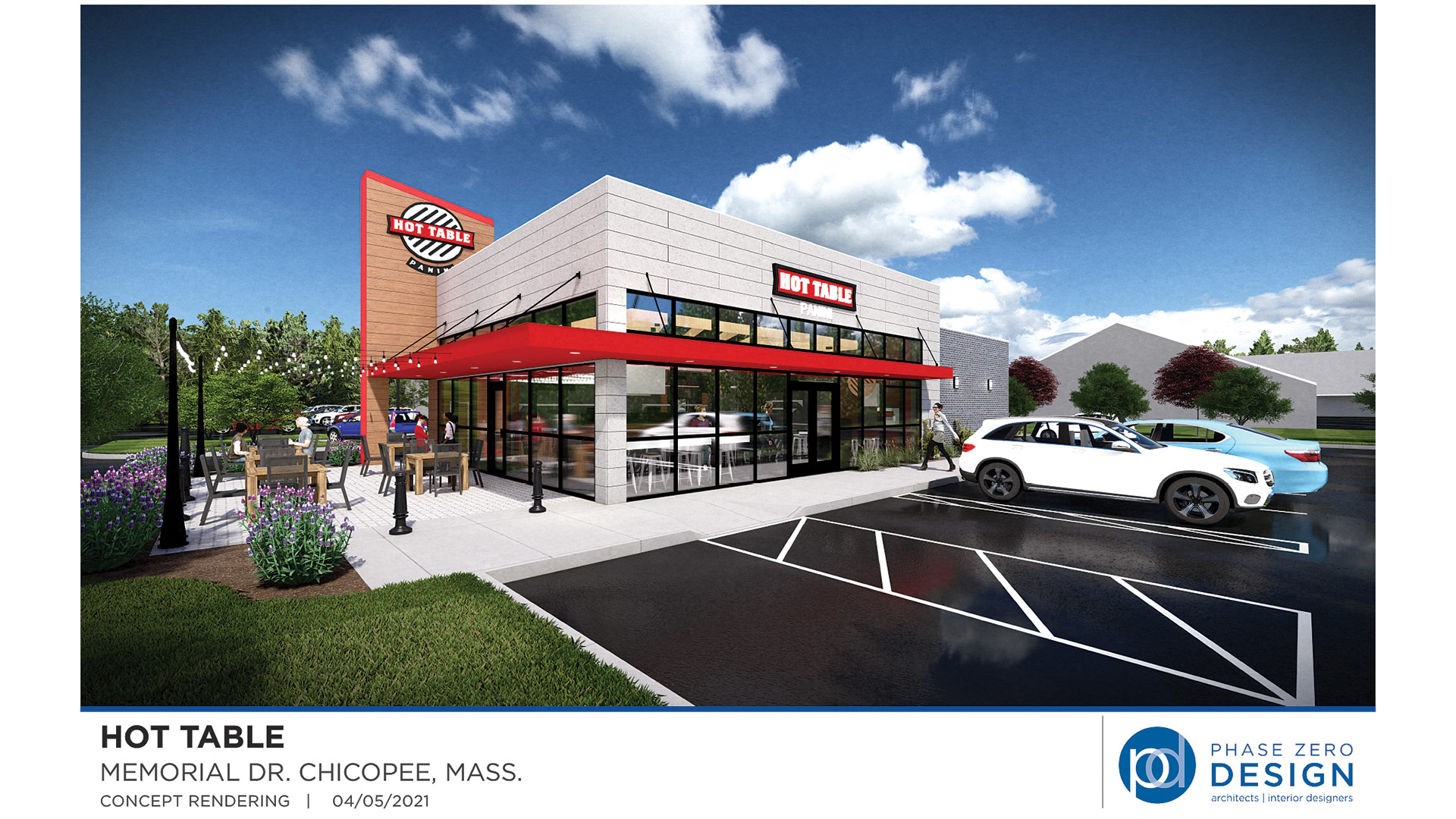
John DeVoie gestured toward an array of architect’s renderings of Hot Table’s first free-standing facility, complete with a mobile pickup window, planned for Memorial Drive in Chicopee, and said, “that’s our future.”

He then corrected himself and said, “well … that’s a big part of our future.”

Indeed, the future takes a number of shapes and directions for this growing chain of panini restaurants. Indeed, while construction is due to start on that Chicopee location later this year or early in 2022, work will begin before that on new locations within shopping malls in Framingham and West Hartford, with an additional location planned for a development, blueprinted by Pride Stations owner Bob Bolduc, to reshape the land inside the jug handle off turnpike exit 3 in Westfield with Hot Table and Starbucks.

Overall, this chain, which started with one small restaurant in the Breckwood Shoppes across Wilbraham Road from Western New England University and now has seven locations, has aggressive plans to add four more restaurants by the end of this year and reach perhaps 50 by the end of this decade.

“For the most part, we’re keeping our efforts focused on New England,” said John, who launched the chain with his brother, Chris, and another partner in 2007. “And over the next 10 years, we want to become a well-known, regional brand.”

This brand is striving for a mix of free-standing facilities like the one in Chicopee and more locations leased in retail centers, and, overall, a “balanced portfolio,” said Chris, adding that the goal is measured growth.

“We’re very excited to grow, but we want to grow the right way,” he told BusinessWest. “We don’t want to add overhead and layers of management just to support a few more stores; we want to be very strategic about how and where we expand.”

Overall, with four new stores on the drawing board, 2021 is certainly shaping up as a milestone year in the company’s history, one that will take it to new markets and in new directions. This growth and territorial expansion come at a time when many restaurants have been fighting to merely survive the COVID-19 — and some haven’t. Hot Table itself was hit hard initially.

“In March and April, when the pandemic hit, we weren’t sure we had a company — we had an 80% plunge in revenue,” John recalled. “We had the same ‘what the heck just hit us?’ experience that just about everyone in the restaurant business did.”

But within the fast-casual category within this sector, many chains bounced back quickly and have enjoyed success since, said John, adding that many have benefited from the takeout nature of most business and also from an added delivery component.

Hot Table invested in an app that enables consumers to order from the menu and arrange delivery through Grubhub or another provider, said John, adding that the technology served to introduce the brand to new audiences.

An architect’s rendering of Hot Table’s first free-standing location

An architect’s rendering of Hot Table’s first free-standing location, slated for a parcel on Memorial Drive in Chicopee.

“That was a silver lining for us,” he explained. “We had a lot of folks discover us who might have just been at home ordering from a third-party platform, who had never been in one of our stores.”

And this is just one of the ways the pandemic has actually benefited Hot Table, he went on, adding that it has made real estate both more available and more affordable.

So much so that the company, which has long considered Boston far out of its reach when it comes to real-estate prices, is being encouraged to take a good look at the Hub.

Whether this chain can actually attain a Boston address for one its locations is one of the many questions that will be answered over the next several years. For now, the company is focused on 2021, and all that it has on its plate — literally as well as figuratively.

For this issue and its focus on restaurants, BusinessWest talked with the brothers DeVoie and third partner Rich Calcasola, based in Charlotte, N.C., to get a sense for where this brand can go next and how big the portfolio can become.


Ingredients for Success

As he referenced those architectural renderings of the Chicopee site, John DeVoie pointed to what could become the ‘golden arches’ for this chain. That would be the tall red signage, or marquee, with what has become the company’s brand — a stylized slice of panini bread with grill marks running across it, with the words ‘Hot Table’ over it.

It’s not really possible to put such large, pronounced signage on the existing locations within shopping plazas, he said, adding that the new look represents another breakthrough for the company and an opportunity to not only sell more paninis, but grow its brand.

“When you build your own building, you have the opportunity to think about what your brand says on the outside — what is the golden arch for us?” he noted. “And it’s a long way from our origins at the Breckwood Shoppes.”

By that, he meant not just the marquee, but the free-standing store concept, locations on both ends of the state, aggressive plans to add four stores in just over a year, and ongoing talk about where to go next.

“For the most part, we’re keeping our efforts focused on New England. And over the next 10 years, we want to become a well-known, regional brand.”

But before talking more about the present and future, let’s recap how we got here.

Our story begins in 2006, when John and Chris, both successful in corporate sales, decided they wanted to make money for themselves, instead of someone else, and started to focus on the restaurant industry.

Blending vast amounts of experience with taking corporate clients with a healthy appetite for entrepreneurship out to eat, they started shaping a concept for the growing fast-casual category of eatery, and followed the advice of their sister, who told them about a dining model she encountered on a trip to Italy — cafés of sorts called tavola calda, which translates, literally, to ‘hot table,’ and their parents, who suggested a made-to-order panini concept.

For their first location, the two chose the Breckwood Shoppes, which they knew well because they both graduated from Western New England. The site wouldn’t attract any of the huge players in the fast-casual arena — Chipotle, Chick-fil-A, Panera Bread, Shake Shack, and others — because of the demographics of the surrounding area, but for them, it worked.

It blended the college crowd — students, professors, staff, and administration alike — with a thickly settled neighborhood, large traffic volume, and visitors to other shops in the plaza.

The large players in smart casual wouldn’t have gone where Hot Table went next — Tower Square in downtown Springfield, in 2009 — either. But the brothers, enticed by the large population of office workers in surrounding towers and an attractive offer from then-owner MassMutual, decided to roll the dice. And they essentially rolled a ‘7.’ Indeed, the site has become a popular lunchtime destination — even moreso with recent arrivals such as Cambridge College and UMass Amherst Center at Springfield — and has even thrived during the pandemic without most of those workers and students.

“We’re pretty close to last year’s numbers, overall,” said John, comparing 2020 with 2019. “What’s happened is that this has become a delivery hub for people in West Springfield, Chicopee, and other cities and towns.

“With the new model of how we do business — we have more than 30,000 users of our app, which allows people to order and then utilize a third-party platform for delivery — our business model shifted,” he went on. “So now, we’re way above pre-pandemic sales levels overall.”

After Tower Square, the DeVoie brothers, now partnering with Calcasola, have been focusing on where the large players in fast-casual have put down stakes. In fact, the strategy has been to follow them — on the theory that their research into where to locate is certainly solid — and, in doing so, create more of a critical mass of quality eateries, which creates dining destinations.

“In March and April, when the pandemic hit, we weren’t sure we had a company — we had an 80% plunge in revenue. We had the same ‘what the heck just hit us?’ experience that just about everyone in the restaurant business did.”

This was the case with the company’s next locations — in Enfield (2012) and Glastonbury, Conn. (2014), Route 9 in Hadley (also 2014), Marlborough (2017), and Worcester (2019). And that’s also the case, to one extent or another, with the Chicopee (there’s a Chick-fil-A right next door), Framingham, Hartford, and Westfield locations.

“People just drive there to eat, and you get in the rotation,” Chris said. “When Chick-Fil-A and other competitors came to Enfield, our sales went up.”


Location, Location, Location

When asked about the chain’s ‘formula’ when it comes to identifying markets they want to be in and then locations within those markets, the partners said it involves a blend of science and intuition, but mostly critical masses of traffic, retail, diners, and, yes, competitors.

All these ingredients are found in Hadley, said Calcasola, noting not only the large college population (there are four colleges within a few miles of the store’s location on Route 9), but also a host of fast-casual competitors and a large and growing cluster of retail that draws people from three counties.

Most of these same essentials can be found in Worcester, in the chain’s site in the the Trolley Yard, a mixed-use development that is also home to Starbucks, Chipotle, Sprint, and other national brands. Indeed, Worcester boasts seven colleges and a growing business base, said Chris, noting that it benefits greatly from being within easier commuting distance from Boston.

Meanwhile, in Marlboro, there are no colleges, little retail, and a less-dense population than in other communities the chain calls home. But there are a number of office parks and hotels, said John, adding that this was the store most impacted by the pandemic — although it, too, has rebounded.

An architect’s rendering of Hot Table’s first free-standing location

The Hot Table chain has come a long way since the opening of its first location in the Breckwood Shoppes in Springfield.

In Chicopee, Memorial Drive has been transformed into a retail destination over the past decade, said Chris, noting that the changes have caught the attention of Chipotle, Buffalo Wild Wings, and Chick Fil-A, which made that the address for its first (and still only) location in Western Mass.

Meanwhile, the Framingham store now under construction and set to open in June is in Shoppers World, a large retail complex boasting 27 stores, including Chick-Fil-A, Olive Garden, TGI Fridays, and Chipotle.

“That whole area is called the Golden Triangle,” said John, referring to the retail district in Framingham and Natick. “And it’s the number-one retail destination in metro Boston. So it’s kind of a big jump for us, but our business model now supports that.”

By ‘big jump,’ he meant, among other things, the rates for the property being leased, which was also the case in West Hartford and a spot in Corbin’s Corner next to Shake Shack, although, as noted earlier, the pandemic has eased some of the sticker shock, while also creating some opportunities as stores — and restaurants — went out of business.

“There are more opportunities in the form of spaces becoming available,” said Calcasola. “Meanwhile, the asking price dropped in some locations, including West Hartford; we’re still paying a good amount of money, but not what they were advertising it for a year and half ago.”

As to the question of where the chain might go next, there are many ways to answer it.

For starters, the company wants to go where those major brands listed several times above are going. In fact, that’s usually the first question being asked, said Chris, noting that, as Hot Table ponders whether to expand into Rhode Island, the presence of other chains is a key consideration.

“We’re pretty close to last year’s numbers, overall. What’s happened is that this has become a delivery hub for people in West Springfield, Chicopee, and other cities and towns.”

“We’ll ask if there are Chick Fil-As and Chipotles around,” he told BusinessWest. “Wherever they’re going, that’s where we want to be. We want to compete with the nationals.”

Availability of real estate is another issue, said John, adding that the company has long sought to be on Riverdale Street in West Springfield, specifically the stretch south of I-91, but has not been able to secure a location because of exclusivity clauses secured by some competitors. Meanwhile, price remains an issue in some areas, including Boston, although the pandemic, as noted, might bring that city into reach.

“We have a consultant that we work with. Before the pandemic, he said, ‘guys, don’t even bother going into Boston; it’s crazy — don’t do it,’” said John. “The last meeting we had with him, he said, ‘you may want to think about exploring opportunities in Boston.’”


Pressing On

When and if the company goes down that road remains to be seen. For now, its principals, as noted, have other things on their plate.

Lots of them.

Indeed, this will be a year when Hot Table takes giant strides toward becoming that established brand the partners want it to be, a year when that image of the panini top with the grill marks on it becomes known in new markets and in new ways, like that sign on the property in Chicopee.

That location isn’t the future — but it is a big part of the future, with additional growth and territorial expansion on the menu.

As John DeVoie said, this company has come a long way from the Breckwood Shoppes — and in all kinds of ways.


George O’Brien can be reached at [email protected]