
‘Weird’ and ‘Confusing’

“Confusing.”
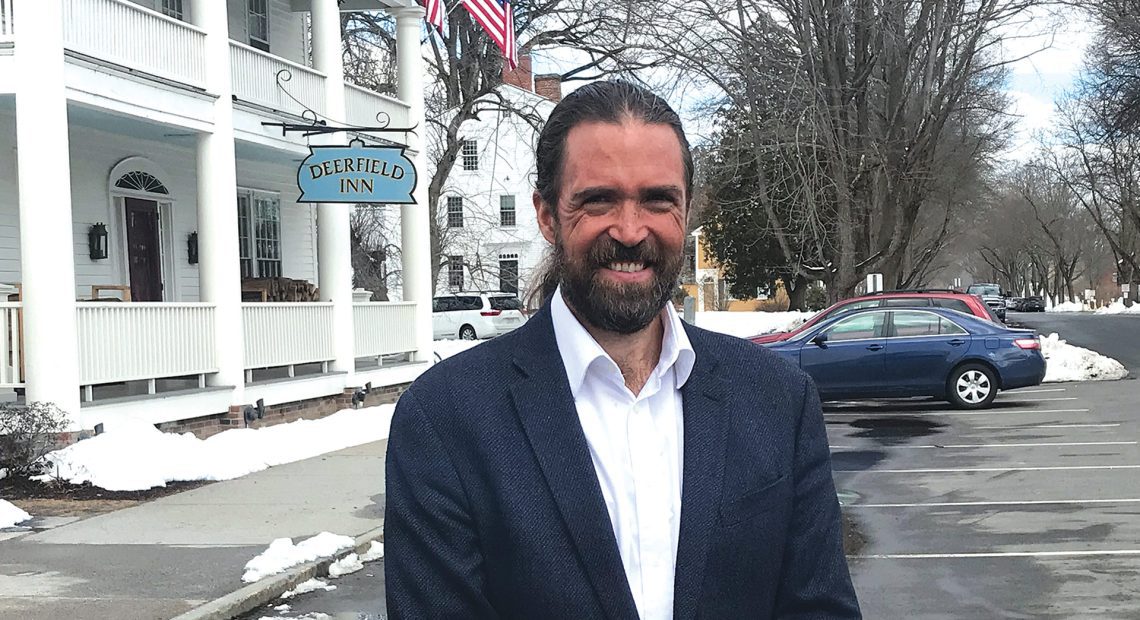
That’s the one word that Kevin Lynn, executive director of MassHire Springfield Career Center, chose when asked to describe the current jobs market and put into perspective what he’s seeing and hearing.
Elaborating, he referenced the center’s job fair at the Basketball Hall of Fame on Oct. 6, the latest of dozens of such events in recent years. In the weeks leading up the fair, organizers were worried about having a critical mass of companies seeking applicants — a nod to a slowing in overall hiring across the 413. But then, over the final few days of registration, there was a rush to sign up.
“We had 64 businesses — we literally did not have room for another company — and that was very surprising to us,” Lynn said.
Meanwhile, on the job seekers side of the equation, organizers were expecting what they’d seen in recent fairs — anywhere between 200 and 350 people — or maybe a few more. Instead, 617 turned out.
“That’s both good and concerning — that’s the busiest job expo we’ve had since before COVID,” he noted, adding that, while the numbers generate confusion on some levels, on another level, they make sense, because some sectors are hiring, but also still struggling to find talent with the requisite skills. Meanwhile, a variety of factors, from tariffs to turmoil in Washington, are leaving many people with jobs feeling less certain about the security of those jobs, and this helps explain the fair’s large turnout.
Allison Ebner
“They’re feeling like there’s enough uncertainty around … they’re hearing about layoffs with the larger companies and AI taking jobs — and there’s so much buzz about all that, the job market seems unstable.”

“I’ve talked to people who say they’re in businesses that are seeing a slowdown, and people are getting a little concerned,” said Lynn, listing manufacturing in that category, and adding that, overall, the pendulum has swung, and what was a buyers’ (job seekers’) market maybe as late as nine months ago has now shifted to employers, with an abundance of candidates for many positions and, overall, fewer job opportunities.
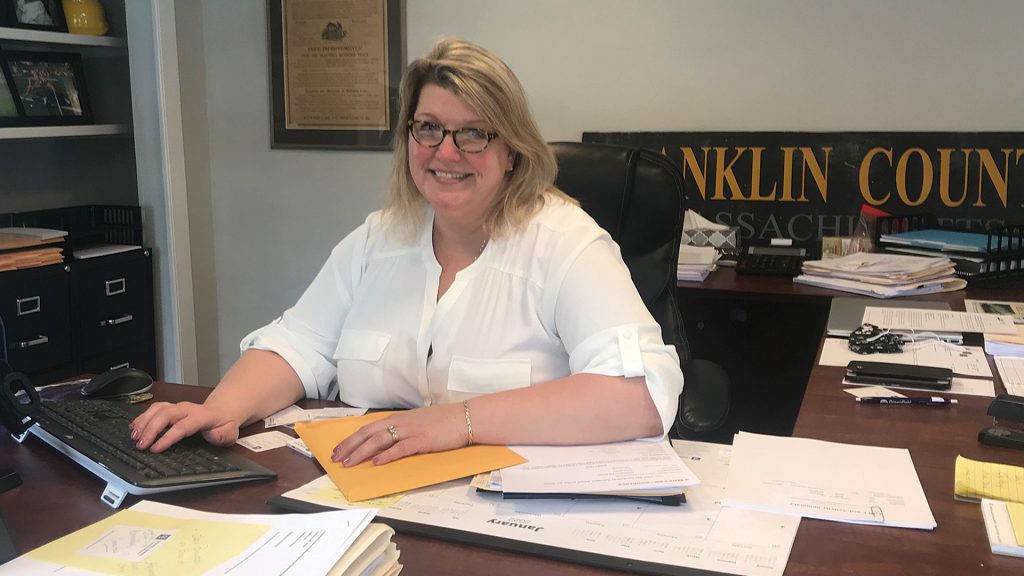
Allison Ebner, president of the Employers Assoc. of the NorthEast, agreed, but noted that the higher levels of uncertainty and anxiety — in Washington, the job market, and everywhere else — are key contributors to the latest trend (and buzz term) in employment circles: ‘job hugging.’
“Folks are staying put; they’re giving their job a hug,” she explained. “They’re feeling like there’s enough uncertainty around … they’re hearing about layoffs with the larger companies and AI taking jobs — and there’s so much buzz about all that, the job market seems unstable.
“People are feeling a sense of volatility and continuous change, and when you feel like that, you look for some personal anchors, and for a lot of people, their job is their personal anchor,” she went on, adding that this is a fairly recent phenomenon dating back to last spring or early summer. “Everything in the world is changing, and they want to keep something consistent, and maybe it’s their job.”
But just because people are staying put in many cases that doesn’t mean they’re necessarily happy or that they aren’t looking, Ebner went on, adding that wages are stagnant after a period of upward movement in the years after COVID, and, in some cases, companies — especially smaller ones — are making do with fewer or the same number of employees, which often adds up to more work.
Overall, she had her own word for the current job market — ‘weird’ — meaning that there are many forces pushing and pulling at people and businesses (from tariffs to general uncertainty to AI) that are creating a confusing landscape.
Nicole Polite
“Companies are running a little bit leaner, so they may not have the capacity to train like they used to, so they need someone who already has the skill base to come in and hit the ground running a little faster than before.”

As for AI, it is impacting everything from job availability in some sectors — everything from hospitality to computer technology — to candidates being overlooked because they don’t have those skills.
“It’s definitely a skill set that they want to stay ahead of,” said Nicole Polite, CEO and founder of the East Longmeadow-based MH Group, adding that this is part of a larger trend she’s seeing toward skill-based hiring rather than focusing on whether someone has a requisite degree.
“The degree requirement isn’t as strong as it once was, and employers are really focusing on the skill base,” she told BusinessWest. “And the reasoning for that, in many cases, is the ability to train. Companies are running a little bit leaner, so they may not have the capacity to train like they used to, so they need someone who already has the skill base to come in and hit the ground running a little faster than before.”
Hire Powers
Lynn told BusinessWest that the job fair, as it played out, presented an accurate snapshot of what’s happening in the employment market — at least when it comes to the companies turning out to recruit and the makeup of that crowd of 617 people.
With the former, there were businesses across the spectrum, he said, but certain sectors were better-represented, including healthcare (although much of it is on the lower end, with CNAs and home health aides), area schools, and the broad realm of government, where there are jobs — with water and sewer operations and public works departments, among other realms — but fewer takers, especially among the younger generations.
“They don’t see any future in it,” he said, adding that many area cities and towns are struggling to fill such jobs.
As for the job seekers, or those simply exploring options, there was a good cross-section, said Lynn, noting that there were professionals, “people in suits — which we haven’t seen a lot of lately,” as well as a mix of young people, some mid-career types, and “significant amounts of gray hair.”
Kevin Lynn
“Part of the problem is that the people doing the hiring are much younger than the people looking for work, and they don’t have a clear understanding of the skill sets that the older worker brings.”

This diversity points to the across-the-board nature of a softening job market and the restlessness of those with jobs, but also the plight of older workers.
“There’s a lot of ageism that people have to deal with,” he explained. “And part of the problem is that the people doing the hiring are much younger than the people looking for work, and they don’t have a clear understanding of the skill sets that the older worker brings.
“One of the best things about older workers is they show up every day, and they’re very task-oriented — you can plug them in, and they’ll just go,” he went on, adding that this attribute is often overlooked amid perceptions that older workers struggle with technology. “There are all these assumptions being made that often don’t let the older worker get past the first cut, the résumé screening.”
As for those at the other end of the spectrum — recent college graduates and those wrapping up degrees — the overall job market remains solid, but some areas have slowed, said Cheryl Brooks, associate provost, Career and Professional Development at UMass Amherst, who put jobs in technology, life sciences, and, understandably, the federal government at the top of that list.
Tiffany Appleton, associate director of Employer Relations for the university’s Office of Career Development & Professional Connections, agreed, noting that jobs with the federal government are fewer in number than many other sectors, but they cross many degree programs at the school.
“It’s a bigger number that many people would think,” she told BusinessWest. “I know there were a number of people from the class of 2025 who had offers they had accepted for government jobs early in the spring of 2025, and by the time they graduated, those offers had been rescinded. They had to restart their job search, and many of them have been successful with finding jobs elsewhere.”
Brooks said it will be early next year before she has hard data on how the class of 2025 has fared, but anecdotally, she believes it has fared well, with those notable exceptions, and also with lingering questions about whether some international students will be able to obtain OPT (optional practical training, a temporary work authorization for F-1 student visa holders in the U.S. directly related to their field of study) or work visas.
As for this fall and the class of 2026 and beyond, she said turnout among employers at job fairs staged at the school, such as those for engineering, life sciences, and building and construction technology, is down slightly (8% to 10%, by her estimate) from previous years, but companies are turning out in good numbers, looking for both employees and interns.
Appleton concurred. “The vast majority of employers I’m talking to are still moving forward with their recruitment plans,” she noted. “They’re actively coming to campus, posting jobs, interviewing and extending offers to start after graduation.
“There’s only been a little bit of a decline, and if there’s a decline, it’s more like, instead of hiring 20 students into this entry-level job, they’ll hire 15 — and I haven’t seen much of that.”
The AI Factor
Overall, job seekers across the board are seeing fewer opportunities, at least in some sectors, as companies cope with uncertainty, tariffs and threats of tariffs, and other forces by being “more careful” in their hiring, Ebner said.
This phrase applies to both the numbers of people being hired and the skills they bring to the table, noted Polite, adding that, overall, companies are taking their time — because they have it, whereas they were far more under the gun a few years ago — and sharply focused on getting it right.
“They’re fine-tuning what they’re looking for,” she went on. “And since demand has changed in terms of the job seeker pool, they’re able to have more leverage and recruit in a different manner than they did post-pandemic.
“We saw post-pandemic that employers had positions they needed to fill immediately,” Polite continued. “This didn’t allow them the capacity to do some of the more intensive skill-set requirements that they’re doing now. So it’s definitely a different market in terms of what they’re looking for — and holding the line for.”
This is one of many forces contributing to job hugging, said Ebner, adding that this trend is both good and bad for employers.
“Even though people may not be jumping ship as quickly as they had been over the past few years, people are still unhappy where they are,” she noted. “They are looking, they’re out there, they’re seeing what’s out there, so it doesn’t necessarily mean that people are staying put and they’re more productive.
“It means they’re staying put, their job search is probably quieter, but they might be looking,” she went on. “Depending on their industry and whether they feel they might have more exposure to a layoff or job reduction — depending on whether they’re being impacted by tariffs or AI — they might be a little more motivated to search.”
As for AI, it is one of the more powerful forces impacting the job market and the plight of job seekers. In the broad realm of computer technology, for example, some jobs are being lost to AI, but others are being, created, Brooks said.
“It’s like a net-zero in terms of overall jobs, because it’s changing a bit,” she explained. “Some of the jobs are going away, but others are being created. It’s hard to parse out exactly what the numbers are, but we’re definitely seeing a decline this year, and who knows if that will level off this year.”
Ebner agreed. “Software development … that was the hottest gig in town 10 years ago, 15 years ago,” she said. “And now, AI is doing a lot of that work.”
Meanwhile, AI is having a growing impact on other sectors, including hospitality.
“Go visit the McDonald’s at Bradley Airport — there are no people,” Ebner said. “There are people making your food, but there are no people at the counter; it’s all kiosks. These are the pockets where we’re seeing technology replace people.
“But most industries are looking at how they can bring AI in, not to replace the people, but to use it to enhance the work that humans are doing,” she went on, adding that AI skills are increasingly becoming a determining factor is whether a candidate can land a specific job.
“The phrase you hear now is, ‘AI won’t replace all the people, but it will replace people who don’t have AI skills,’” Ebner explained, adding that this new reality crosses the broad employment spectrum.
Both Lynn and Ebner said their agencies offer training in AI and that, overall, there are an abundance of opportunities to gain these skills, and job seekers need to take full advantage of them.
Polite agreed. “I often talk to people during the interview process and ask them what training they’ve had in terms of AI and make sure they stay in front of it,” she noted, “because AI is here for the long haul, so we have to adjust to it.”