
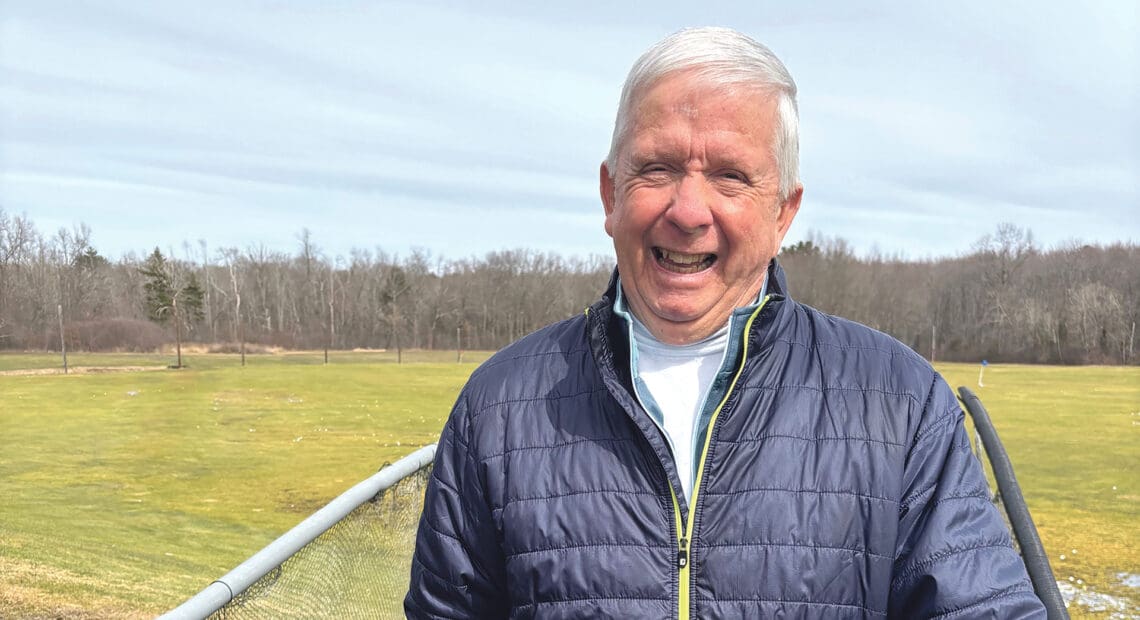
Steady Course

Ed Twohig Jr. says the game — and business — of golf are in relatively good health, although for many, it has become a nine-hole proposition.
Ed Twohig Jr. has been in and around the game of golf for more than 60 years now.
So he speaks from experience when he says that, while he’s seen the game healthier, it is, at the moment, in a comparatively good place.
By that, he meant people are getting into the game and, by and large, staying with it, despite its cost, degree of difficulty, and demands on time. Therefore, he said, the business of golf is relatively good, with courses faring well, but also related ventures, everything from the growing number of simulation facilities to retail outlets to the remaining practice and learning facilities, such as the Western Mass Family Golf Center in Hadley, where he provides lessons to a diverse mix of students, from middle schoolers to those pushing 80.
“Over the past few years, I’ve taught a lot of college and high school kids, both men and women, who want to get into the game.”
“Overall, the game is very, very healthy,” said Twohig, who grew up around the game as his father, Ed Sr., served as the pro at Amherst Golf Club, and Ed Jr. would later serve as the pro at the Orchards Golf Club and Springfield Country Club. “Over the past few years, I’ve taught a lot of college and high school kids, both men and women, who want to get into the game.”
Jesse Menachem, executive director and CEO of the Massachusetts Golf Assoc., agrees on the general state of the game and the business of golf. He said maybe the best measure of health and vitality of the game — the number of rounds played at courses across the Commonwealth — has continued to rise since a COVID-triggered surge in 2000, but there are other barometers as well.
“Rounds played, golfer engagement, wait lists at many of the private clubs, tee times that are still in high demand … these are all indicators that the health of the game is strong,” he told BusinessWest, adding that, while the total number of rounds is up only a few percentage points, the upward trend continues.
One of the best examples of the strong health of the game is the stunning turnaround at the Ledges Golf Club in South Hadley, which this year will mark its 25th anniversary. Once a losing proposition for the town and its taxpayers and an example of overreach when golf was booming in the late ’90s, it is now turning a profit and putting these proceeds back into the course, with effective results.
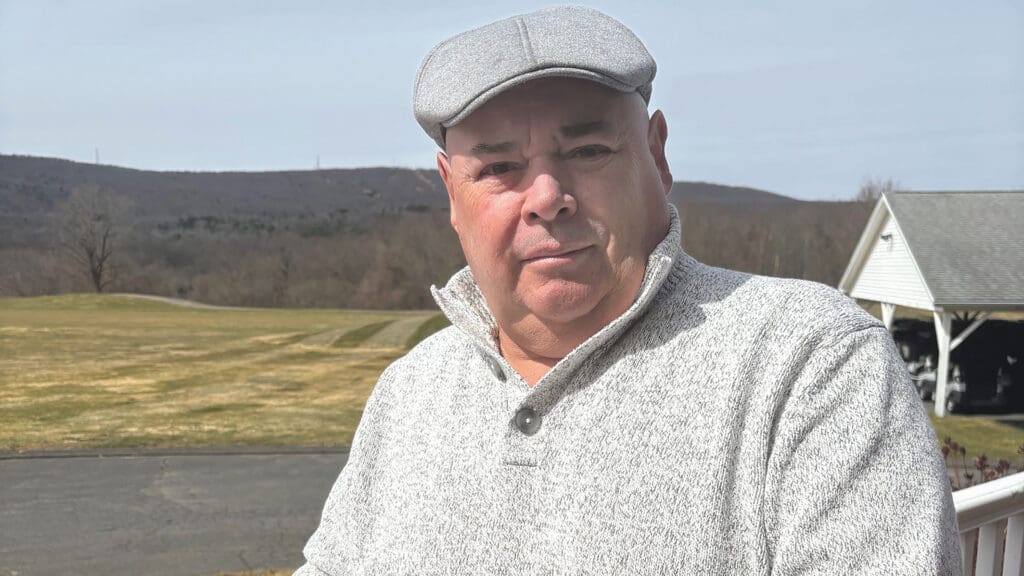
Mike Fontaine says the Ledges continued its growth trajectory in 2025 and is eyeing more of the same for the season ahead.
“We had another fantastic year in 2025 — we probably made $1.7 million, more than covering operating expenses for the town,” General Manager Michael Fontaine said. “And our goal is to do it again.”
Elaborating, he said ookings of outings is ahead of the solid pace set last year, and the course can afford to pick and choose which events it wants to host, another departure from the rough times years ago.
Still, there are challenges for those in the business, especially those who own and manage its courses, including a winter that has been unlike anything the region has seen in some time.
Indeed, despite some closures in recent years — Southwick Country Club, Hickory Ridge Golf Club in Amherst, and Elmcrest Country Club in East Longmeadow, for example — there is still considerable competition at a time of rising costs for everything from fertilizer to labor to gasoline for the carts.
“Rounds played, golfer engagement, wait lists at many of the private clubs, tee times that are still in high demand … these are all indicators that the health of the game is strong.”
Fontaine said he’s been getting some calls and visits from those managing other courses in the area essentially asking how the Ledges is doing all this. He said there’s no real secret, other than to provide a good product and essentially count revenue, not rounds — and price the product appropriately.
Elaborating, he said he believes many courses keep their prices lower than they should — probably a nod to all the competition in the area — and could go higher and still be competitive, not just with courses in this area, but in other markets as well.
Winter of Their Discontent
As he talked with BusinessWest by phone on March 13, Ted Perez Jr., the long-time pro at East Mountain Country Club in Westfield, paused on a few occasions to take calls to the pro shop. They pretty much told the story of a winter the likes of which the region hasn’t seen in maybe a decade or more.
“Yes … we’re open,” he told one caller, who then moved on to finding out just how playable the course was. “I just talked to a guy who made the turn … he said it’s … not bad out there.”
Not many courses in Massachusetts were open that day, but most of them were getting calls about when they would be, said Fontaine, who fielded a few himself. Like others we spoke to, he said this long, harsh winter should create substantial amounts of pent-up demand, which will help override what will likely be a later-than-usual start, probably the first or second week of April.
“That’s what we’re hoping for; it’s been a long, brutal winter,” he said, adding that some of the calls he’s getting are from people in the eastern part of the state, including the Cape, where courses can generally open earlier. But not this year.
Overall, he said the Ledges logs a good number of rounds involving people outside this area code, including the Hartford and Worcester areas, where golf is somewhat more expensive.
“We draw from everywhere — Albany, Worcester, Boston … our biggest is probably Connecticut, and I think it’s mostly because we’re a little cheaper,” he said, adding that the course’s rate of $75 with a cart on weekend mornings (the price drops later in the day) is better than what can be found in those other markets.
He’s not sure what impact rising gas prices might have on all this, but for now, golfers are willing to travel to save a few bucks — if the product and experience are good.
“I don’t think they figure the gas bill into the equation — it’s just grab your three buddies, get in the car, and go have a good round of golf in South Hadley, have a burger, and head home,” he said, adding that this equation could work for others as well if they maintain the quality of the product and market it effectively.
Overall, many courses did well in 2025, said Menachem, adding that they were helped by generally good weather — there was a stretch where it rained at least one weekend day for 10 straight weeks in the spring — as well the opportunity to open early and stay open into December.
They won’t have that luxury this year, he went on, adding that, despite considerable melting in early March, snow still covered many tracks. Meanwhile, the large amounts of snow will leave courses wet and in need of time to dry out, firm up, and clean up.
But he expects this late start to be overcome by pent-up demand.
“Given the climate of golf and the demand we’ve seen and continue to see, players are going to be ready and willing,” he said. “It might be a shock to the system for these courses to get prepared on short notice, but once they open, they should do well.”
Meanwhile, other aspects of the golf business are reporting growth as well, especially the simulation facilities, which provide a hedge against New England winter weather and provide opportunities to practice year-round.
“Anecdotally, it seems like more facilities are opening by the week,” he said, adding that there have been several new additions in and around Boston, including facilities that are focused on food and beverage as much as they are on golf. “And it’s serving as a nice complement — keeping clubs in people’s hands throughout the year.”
Going for the Green
It was the spring of 1983 when Perez took over the pro shop register from his father, Ted Perez Sr., who essentially designed and built East Mountain Country Club himself in 1963. With 43 years under his belt, he’s seen all kinds of winters — or ‘non-winters,’ as he calls what the region has seen more of in recent years — and he’s seen the game ebb and flow as well.
He remembers the halcyon days in the late ’90s and early 2000s after Tiger Woods arrived on the scene, when East Mountain was averaging roughly 50,000 rounds a year. He also remembers 2008 and the years that followed, when the course averaged about half that number, and the overall outlook was quite bleak.
“These days, it’s nowhere near 50,000 rounds, but it’s much better than it was,” he said, adding that it was during those down times that East Mountain started diversifying, if you will, using its banquet facilities for everything from comedy nights to bands to pro wrestling matches to bring in revenue and help pay the bills.
“We get 150 people in here for the wrestling — they have some food and some drink and watch some wrestling,” he said, adding that there is another such event scheduled for later this spring.
The venue is still used for a variety of revenue-producing purposes, he said, but, overall, golf is doing better than it was, and the outlook remains bright.
Twohig agreed, but noted that, despite healthy interest in the game, challenges such as its cost and time demands remain. So he’s seeing some fundamental changes.
“I believe that, for the majority of players, it’s going to be a nine-hole sport because of the time element,” he explained. “If you look at the clubs and the leagues … it’s all nine holes. People get their golf in, but they’re not spending their whole day there; there are too many options in the world now.”
Meanwhile, golf doesn’t have to mean nine or 18 holes on a course, he said, adding that many now enjoy practicing or playing courses on a simulator or simply hitting balls at the few remaining driving ranges in the area.
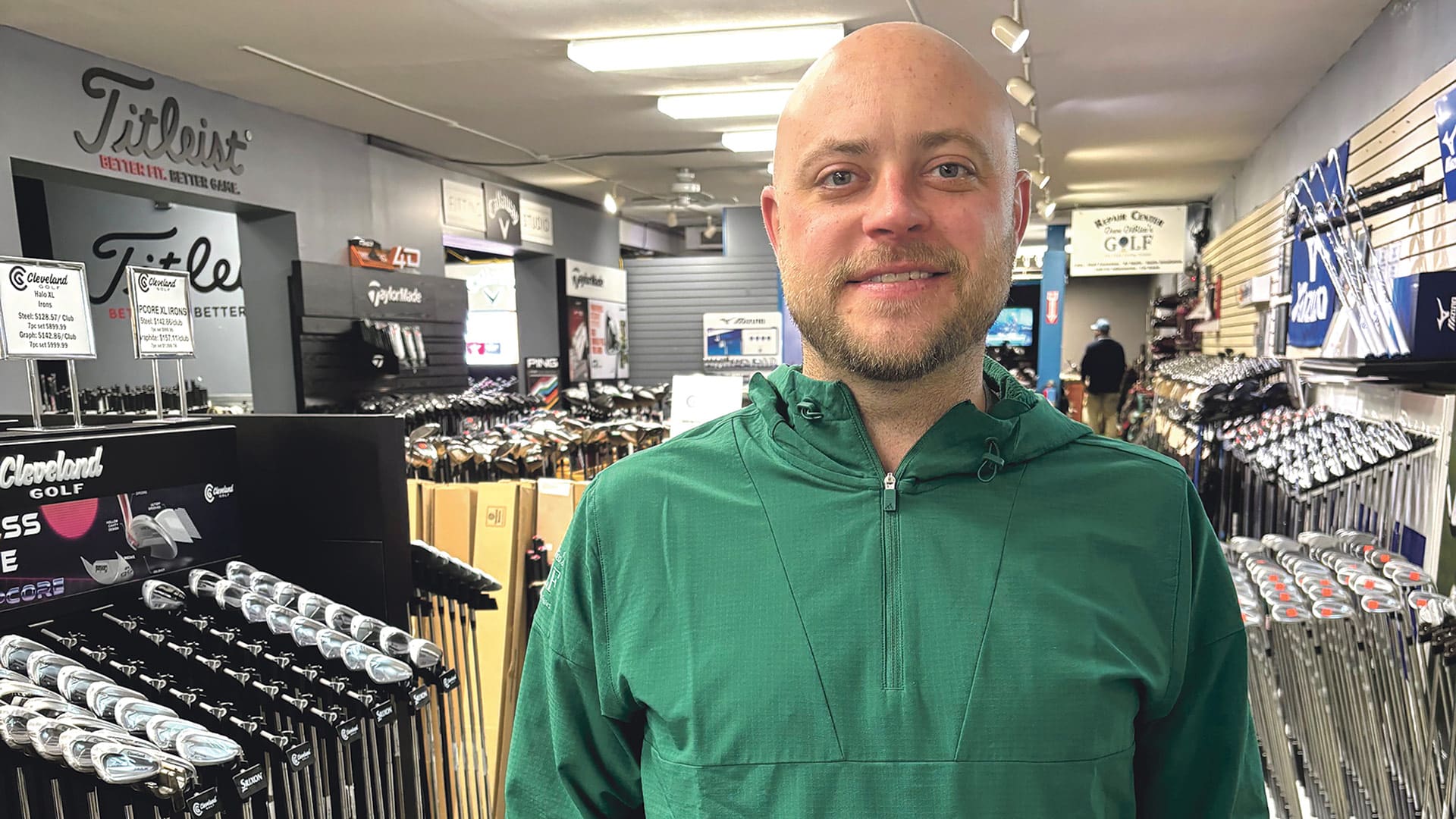
Drew Michael says golf has maintained the momentum generated during the pandemic, drawing new players of all ages.
Drew Michael, store manager at Dave DiRico’s Golf in West Springfield, which features several simulators, agreed, adding that the surge in interest in the game since COVID is reflected in many aspects of his business.
That includes equipment sales, he said, adding that, in some respects, technology has helped make the game easier for many, and the winter and early spring months are generally the time to check out what’s new, whether it’s clubs, balls, shoes, or training aids.
And, like Twohig and others we spoke with, he said the sport — and the many businesses related to it — are maintaining the momentum gained during COVID.
“We’re seeing a lot of younger players, 25 to 35, and we’re seeing an uptick in women playing as well — those are the two fastest-growing categories,” he said. “It’s not quite like the book during COVID, but there’s still a lot of momentum with golf retail.”
He attributes this to the game gaining more exposure through everything from YouTube to TGL (Tomorrow’s Golf League), a high-tech, indoor, team golf competition that has succeeded in capturing the attention of many younger fans.
“You don’t have to tune in to CBS on a Sunday afternoon to watch a golf tournament,” Michael said. “YouTube is really big, TGL is gaining viewers, and you can watch any way you want — on your phone, computer, TV … all this is creating a wider audience.”
And it’s translating into more people getting into the game — and, in many cases, staying with it. Challenges remain, but golf seems to be a good place regionally, and on a steady course.