

Generational Impact

Country Bank team members help high-school seniors navigate a Credit for Life Fair.
Jodie Gerulaitis’s title at Country Bank is first vice president, Community Relations. But before that, she was a Financial Education officer for the institution — a role for which she still has a passion.
“My job was offering financial education to our communities,” she said, noting initiatives like Savings Makes Sense, a partnership forged in the late 1990s with local schools — eventually about 40 of them — in which the bank collected deposits and students could engage in banking activities right at school.
These days, that program has morphed into Money School, a series of financial-literacy resources in public schools that include books, workshops, and five annual Credit for Life fairs that involve about 2,000 seniors from 13 different high schools.
The fair, a Massachusetts-based program that many banks participate in, asks students to role-play a 25-year-old, visiting about a dozen booths and making financial choices based on their career and salary goals.
“Some students get a salary or a credit score they weren’t expecting, and they also learn to understand needs versus wants,” Gerulaitis said, adding that the students also get a dose of reality; at one booth, they might get a bonus at work or an unexpected expense. “Do they want to take vacations? Is that important to them? Do they want to own a pet? These are choices you and I make every day, and we’re bringing it to the students.
“The students who wind up with a low credit score or a low salary and are struggling, they’re going to learn the most,” she added. “They see how difficult it is to get where they want to go. Can they afford a house, or do they need a roommate to split expenses? It’s a really eye-opening experience, and they need to experience this stuff now, so they don’t make bad choices later.”
Two years ago, the United Way of Pioneer Valley started partnering with middle- and high-school students in Springfield and Holyoke to teach basic financial-literacy skills to young adults before they start interacting with finances for real, President and CEO Megan Moynihan said.
Megan Moynihan
“It’s so very important — if you don’t understand how to take care of yourself from a financial perspective, how can you become successful?”

“We want them to create a basis to be financially successful before they go out into the real world,” she noted. “Many of these students may not have access to learning about financial independence through their families. They didn’t learn about the importance of saving and credit and preparing a budget as a child. Some of the students we work with have zero idea going into these classes. The goal is to give them a basis, a skill set to prepare them for the real world.”
The United Way’s financial-literacy programs go well beyond young people; it launched an initiative called Thrive almost a decade ago, which helps individuals across all age groups achieve financial security through education and other resources.
“Personal financial education is huge — it’s a huge gap for so many individuals,” Moynihan said, noting that the partner agencies the United Way funded would refer to Thrive people who needed the service.
“Our partner agencies let us know about individuals who needed support. We would do one-on-one coaching with those individuals, typically follow them for an entire year, helping them with budgeting, helping them set goals for raising their credit score. Many did not even have bank accounts, so we brought in individuals from the banks to set up simple checking accounts, direct deposit, and credit cards to create credit. Others would learn how to fix their credit score, how to consolidate credit, the importance of reducing expenses, and more.”
Around 2020, the United Way switched to a more direct-service model, and now Thrive services are offered to any client of the nonprofit who needs them, typically people who access services from one of the United Way’s service centers in Springfield, Chicopee, and Holyoke.
“Individuals come in needing help with food insecurity or mental-health support, and we can also help them with personal-finance training; every individual who comes through our doors has access to Thrive financial education,” Moynihan explained. “We also partner with other nonprofits on a classroom-style, six-session financial-education series.”
Serving about 450 people at any given time through its youth programs, human-service agencies, and workplaces, Thrive impacts families in ways that can be generational, she noted.
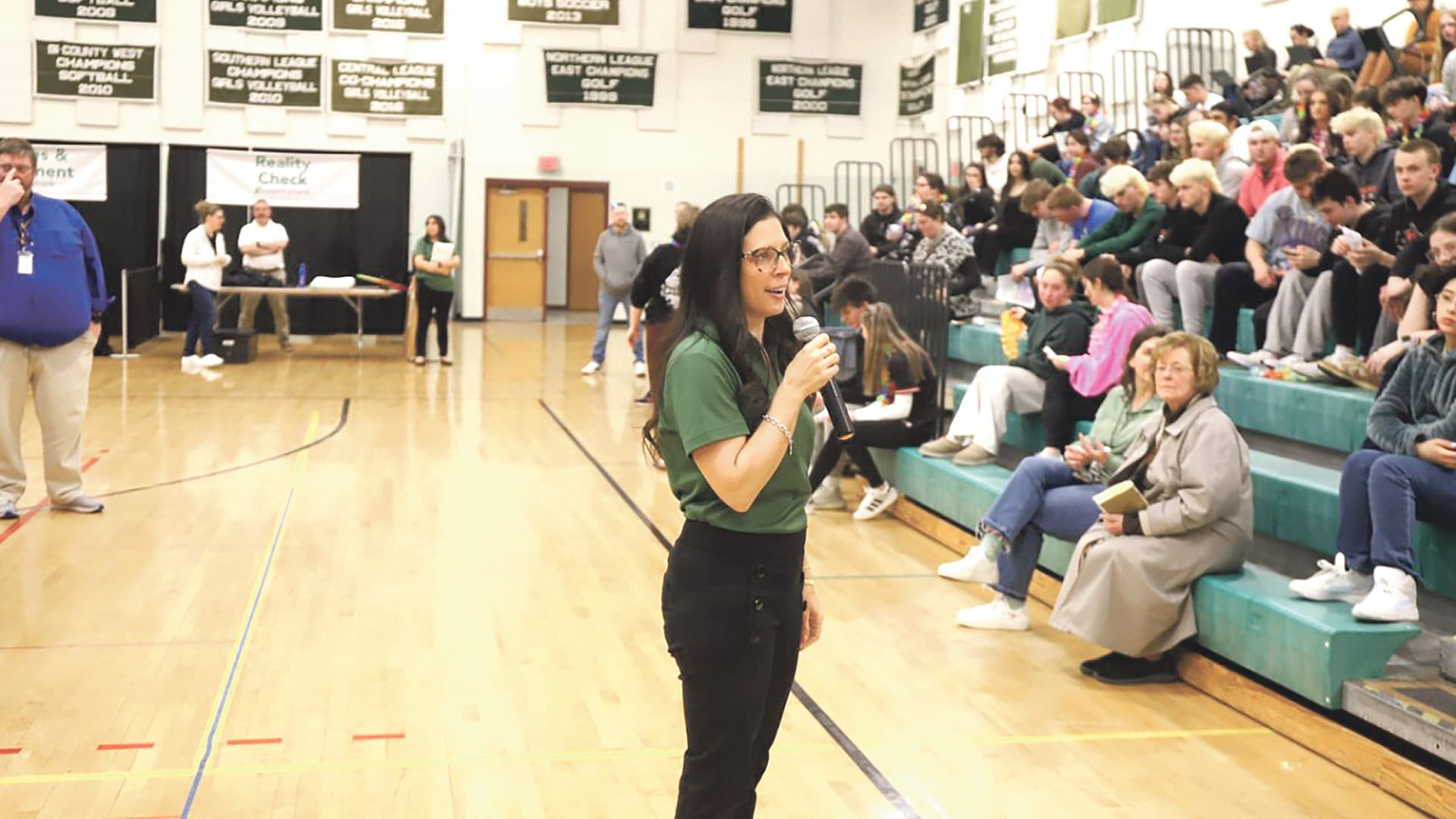
Jodie Gerulaitis says the financial-literacy skills students develop now will benefit them later, no matter what college or career path they choose.
“It’s so very important — if you don’t understand how to take care of yourself from a financial perspective, how can you become successful?”
For this issue’s focus on banking and finance, BusinessWest talks to several area professionals involved in financial-literacy efforts about those impacts, and the various forms these programs take.
Lifetime Financial Journey
Springfield Partners for Community Action is another local organization offering financial-literacy education through a series of different free workshops, from basic financial literacy to first-time homebuying and property management.
“They all consist of a little bit of financial literacy. We dive deep into budgeting, credit, debt management, banking, and investing,” said Gabriel Ortiz, a housing councilor at Springfield Partners, noting that the workshops average around 28 people each. Some are one-session workshops that run six to eight hours, often featuring speakers from the banking and financial-services world, while the first-time homebuyer workshop is a two-part series.
“We have a lot of professionals that have been in that industry for a lot of years, and they give their expert analysis of what the process is and how to get people where they need to go, watching out for predatory lending, things like that.”
Meanwhile, the basic financial-literacy session is a good idea for people looking to establish some credit and start saving for the future, Ortiz added.
“In Springfield, probably one out of four residents live in poverty. Springfield has seen inflation, and potential tariffs will make it harder for households to manage their budgets. As a local financial advisor, we’re trying to give some helpful tips and help people regain control of their finances, stick to a budget, and cope with today’s economic challenges.
“We want to help people transition from poverty to a more equitable future,” he went on. “By establishing generational wealth, buying homes, and establishing some credit, that’s definitely going to help families down the road.”
Having offered financial-literacy programs since 1996, Gerulaitis noted, Country Bank has seen those initiatives take on a life of their own.
“These programs make a difference. Sometimes parents are not in the financial situation they expected themselves to be in, and I’ve found the grown-ups at home sometimes don’t talk to kids about money. Maybe they’re embarrassed about their financial situation.
“So, whether they come from a wealthier background or not — really, all walks of life — these programs empower students to make the decisions themselves. After all, if the parents aren’t having these conversations, who is?”
“In Springfield, probably one out of four residents live in poverty. Springfield has seen inflation, and potential tariffs will make it harder for households to manage their budgets. As a local financial advisor, we’re trying to give some helpful tips and help people regain control of their finances, stick to a budget, and cope with today’s economic challenges.”
Sherleen Crespo, vice president, branch manager, and mortgage specialist at Westfield Bank, who is being honored as one of BusinessWest’s 40 Under Forty this spring, said this reality — and the opportunity to start the conversation — is one of the reasons she loves being in banking.
“Sometimes financial literacy starts in the home, but not everyone has access to that,” she said. “Parents try their best, but they may not know as much as they should. And that lack of education affects people.
“Now, schools are very much involved in financial literacy. They invite me in, and that’s something that we didn’t have when I was growing up,” Crespo added. “It’s super important. It’s planting a seed toward breaking these generational cycles. The more we can educate people, the more that they’ll be able to grow.”
Gerulaitis agrees, and has anecdotal evidence to boot.
“I run into students after they’ve been through the programs — at the grocery store or a restaurant — and they say, ‘thank you, thank you. I got my first job, and a lot of what you said makes sense now.’ They put it into practice. That’s why we hit them when they’re seniors. Whether they’re going into the workforce or college, these skills are necessary at all levels. You can see the impact later on.”
And it’s not just high-schoolers; Country Bank targets educational programs throughout the community, from college students to senior centers. She’s even read age-appropriate books about money to preschoolers.
Bridging the Gaps
Moynihan said the United Way has a Thrive program that goes into workplaces, helping coach employees on the best ways to navigate financial struggles. In fact, three staffers are certified as financial coaches in the workplace, and they come at their roles from a mentorship perspective.
“We’re not giving you this information and saying, ‘now go figure it out yourselves.’ We’re setting you up with a mentor to walk you through these programs that will support you not just in your financial education, but on everything else that impacts your life.”
Another Thrive coach is a social worker, “so he understands the full scope of the needs of our clients — not just help with financial literacy, but so many other underlying issues that need to be addressed in the classes,” she went on. “We work with individuals to understand and identify the other areas where they need support so they can become financially stable.”
Every individual doesn’t need the same level of support, or the same educational components, she noted; some need close hand holding to get through it, and others just need to learn about different modalities to budget, save, and make good financial decisions.
“You don’t know what you don’t know, but it’s one of those things where it can be very difficult to ask for help. They might be ashamed,” Moynihan said. “So we move at the speed of trust. It can take time to build a relationship with an individual to become comfortable talking about this.”
The United Way is also part of the Bridges to Prosperity program through Springfield WORKS, a state-funded pilot program tasked with overcoming the ‘cliff effect,’ a phenomenon whereby the increased income from securing a job isn’t enough to offset public benefits while unemployed.
“It’s a first-in-the-nation approach that pairs cash payments to employed individuals over a two-year period with financial coaching and workforce training to bridge the gap between being on state assistance and being fully, gainfully employed,” Moynihan said. “So far, it’s working wonderfully.”
At the same time, the need for financial education continues, and Gerulaitis wishes it started at a younger age for everyone. She’s part of a committee that has advocated in Boston for state-mandated financial-literacy education in schools, trying to make Massachusetts the 27th state to mandate that as a graduation requirement.
Meanwhile, she added, Country Bank is doing as much as it can by offering free financial education.
“Even if it’s just one class, these schools love to partner with us. They feel they’re able to offer something to students as a benefit. Not all of them have personal-finance classes,” she said. “So, we’ve done a lot of programs. We want to provide as many free resources as we can to the community and guide them through their financial journey.”