Connecting Past and Present
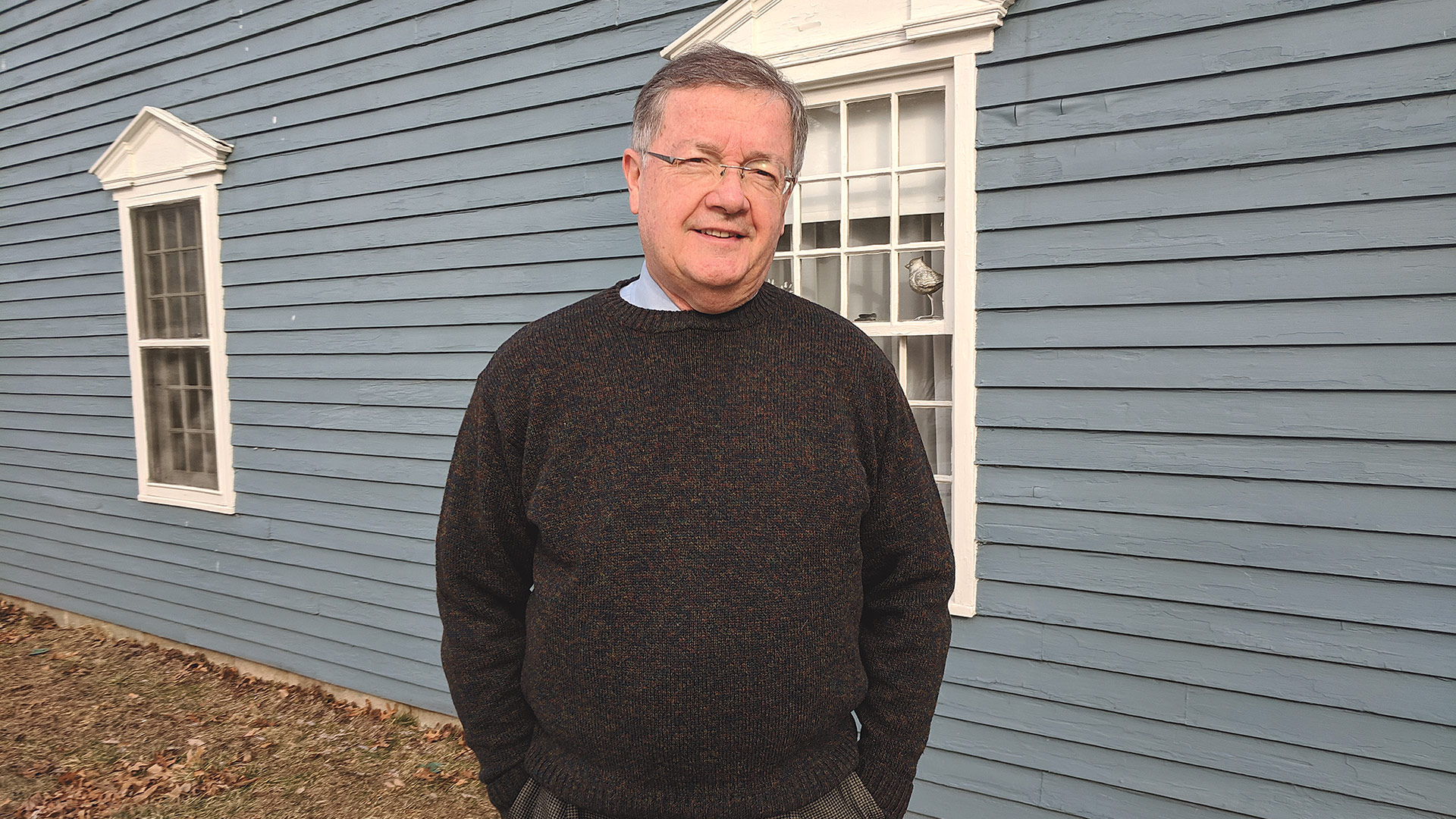
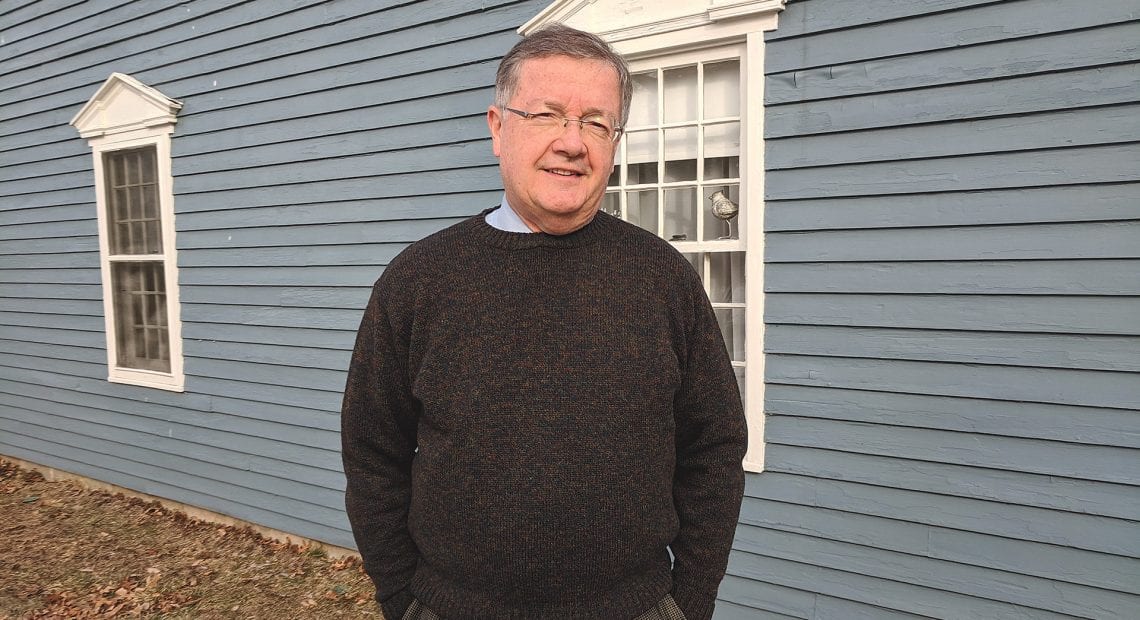
Philip Zea says Historic Deerfield paints an often-surprising picture of a large swath of the region’s cultural history.
It’s a grand reopening more than 200 years in the making.
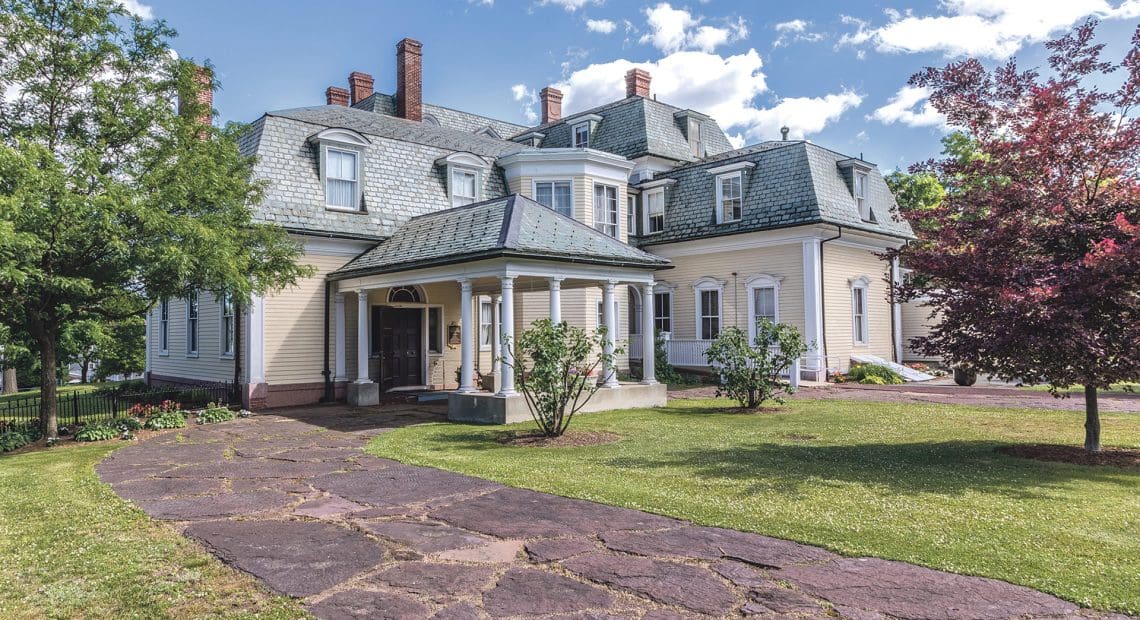
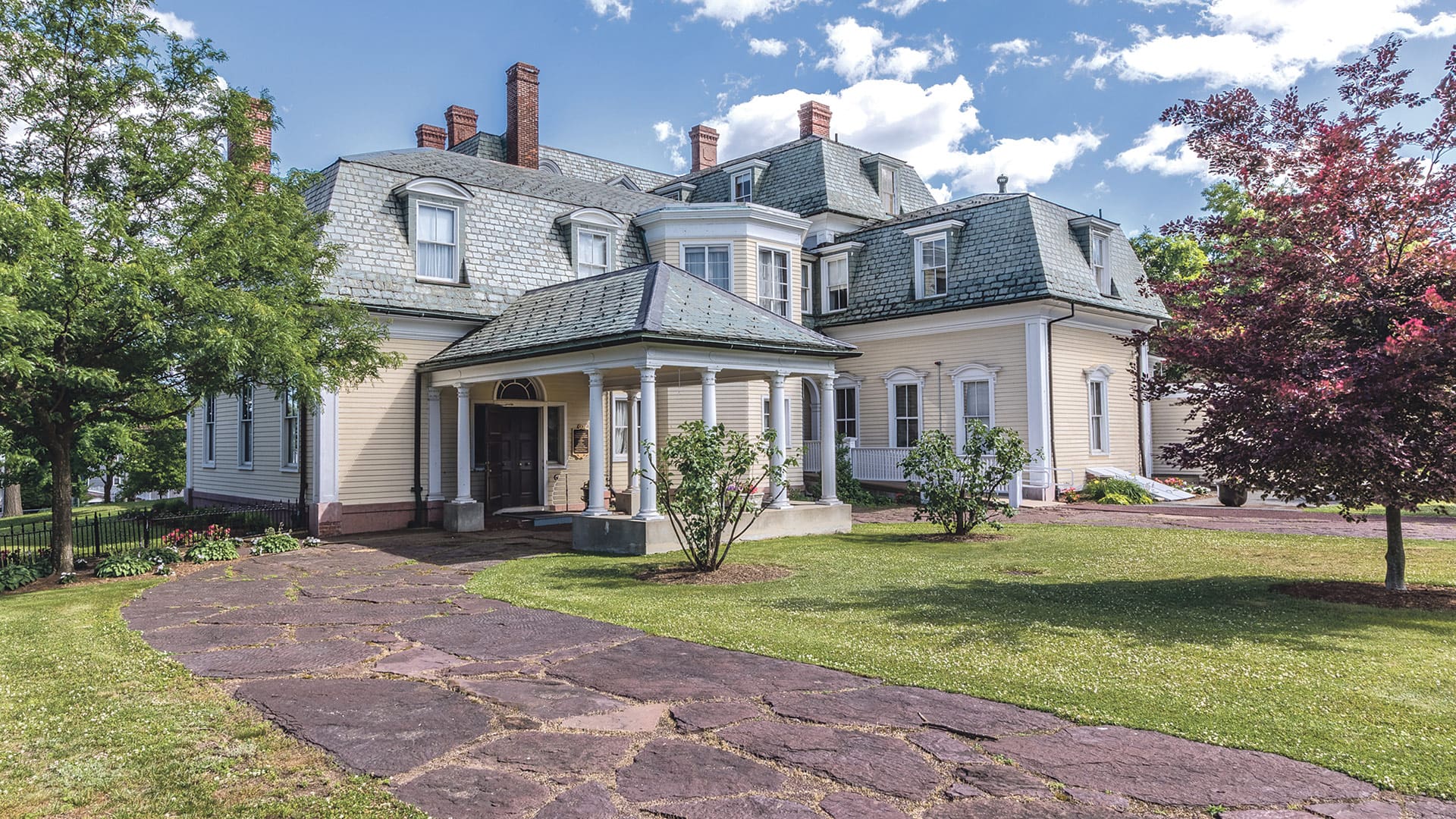
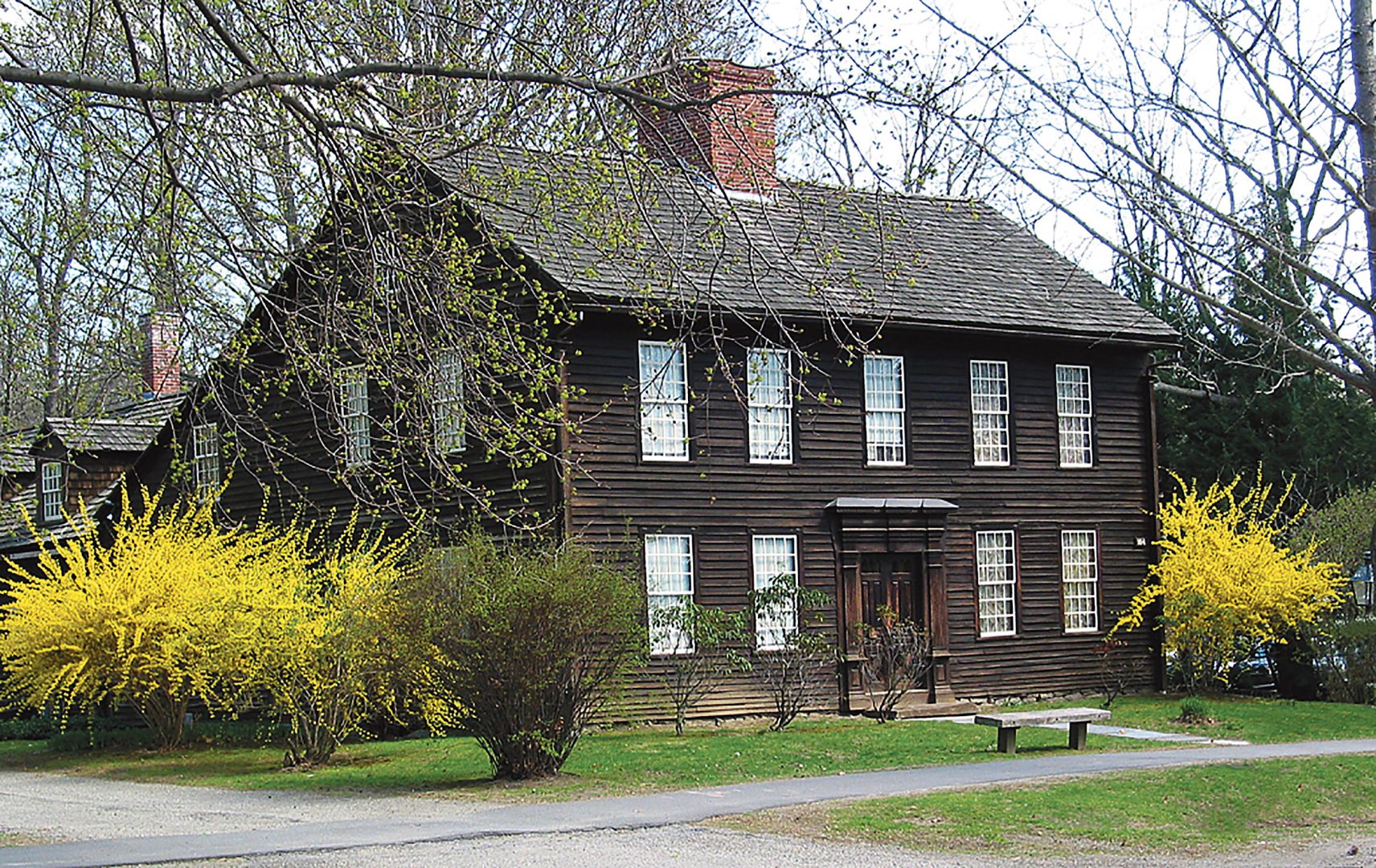
Specifically, it’s a house in Deerfield, built in 1795, that operated as a tavern for roughly a decade.
“We know a lot about it, and because most Americans today travel, we thought it would be great to show the public how people back then lived, not when they were at home, but when they were out and about,” said Philip Zea, president of Historic Deerfield, the living-history museum that comprises more than 50 buildings on or near sleepy Old Main Street.
“Believe it or not, our tranquil street here, north and south, back in the day, was the equivalent of Interstate 91,” Zea went on, adding that Old Albany Road connected with the 18th-century equivalent of the Mass Pike, making Deerfield a sort of crossroads of New England, frequented not only by locals, but by travelers.
Refurbishing that tavern — it will open later this year — is the latest capital project undertaken at Historic Deerfield to expand the scope of the history the museum aims to convey across its 110 acres, he told BusinessWest. “We want to tell that story, what the country was like when it was on the move — not today, but in the 1790s and a little bit later.”
Upstairs from the tavern is a big assembly room that quickly became the largest public space in town, so the tavern keeper drew income from renting that space, for court proceedings, auctions, and balls. Deerfield Academy was founded in that room in 1797.
Zea can share countless historical details like that one in this complex that includes 28 houses built in the 1700s and another 14 that predate 1850. “The skyline is intact, if you will.”
“When people feel the need to know more about the past, we need to be more inventive about how we share it.”
So is business at Historic Deerfield, which opened to the public 71 years ago and has continued to evolve its programs and exhibitions to keep visitors returning and, crucially, keep attracting new generations at a time when it’s not always easy to turn young people on to history.
Knock, Knock
That ‘71 years’ may be an official statistic, as Historic Deerfield was indeed begun in 1947, and its first museum house, the Ashley House (built in 1733), opened its doors to visitors in 1948.
Yet, the street was a sort of unofficial museum well before that. The local library has correspondence, from the 1830s, from two Mount Holyoke College students who wanted to head north and visit Deerfield’s houses, which even then were old. One homeowner charged them a dime to come in and see the house. “That’s the business of history,” Zea laughed.
And it’s often significant history, he went on. During the early Colonial wars, Deerfield was the northwestern point of English settlements in the region, so while people lived and farmed there, it was also a military outpost. Around the time of the American Revolution, the town was an organizational point for troops moving north and west. The week before Benedict Arnold and Ethan Allen took Fort Ticonderoga in 1775, Arnold was in Deerfield, buying beef for the army. “That’s real history,” Zea said. “It happened right here.”
For decades, families, school groups, and others have trekked to Deerfield for both its palpable history and its reflection of a quintessential new England village, Zea said. “If someone visits New England, they might go to Fenway Park, or get a lobster in Maine, but if they want a feel for what it was really like long ago, they’ll come here.”
That’s true of Old Sturbridge Village as well, but he doesn’t believe Historic Deerfield is really in competition with that complex, because often visitors want to check out both sites. We’re quite different. They’re interpreting 1830s New England life; it’s all about process and how people made their livings. Rather than focusing on a specific time, we’re one-stop shopping if you want to look at history from the 1770s, or even earlier, to today. If you want to be in a place and feel the expanse of history, this is the place you want to come.”
To keep visitors returning, the museum — which boasts 61 full-time and 115 part-time employees — needs to make it relevant, and that’s not always easy.
“The apex of this kind of museum in America was back around the Bicentennial. That’s when the biggest crowds went to places like this. That was about patriotism, about the roots of the country, the roots of American democracy,” he explained.
“That’s still important,” he went on, “but when people feel the need to know more about the past, we need to be more inventive about how we share it. It’s not always political history; it’s not always military history. What we do here is more about the history of culture in the Connecticut River Valley and the roots of small-town America in a place like Deerfield.”
Even the colors of the houses tell a story. Today, paint colors cost pretty much the same, but back in the 1700s, blue pigment was derived from cobalt, which was expensive. “So, if you could paint your whole house blue, it was like parking a fancy car in the driveway.”
Maintaining the condition of the museum houses and other structures — and expanding the activities within them — accounts for some of Historic Deerfield’s $7.7 million annual budget, bolstered partly by a $49 million endowment and the 1,317-member Friends of Historic Deerfield, which supports the museum through annual gifts from individual and corporate donors.
“We’re finding ways to move forward on the programmatic front, as well as historic preservation,” Zea noted. “One of our problems is, we’ve got a pretty good-sized physical plant, a lot of which is old, by the nature of the place, so historic preservation is important for us; it’s part of our mission and part of our responsibility that requires a fair amount of cash to keep going.”
The other key is to expand the audience because, obviously, the more people who come, the better — both for the museum and the region at large.
“Deerfield’s a little different from other museums in that, while we charge admission to our buildings, it’s a gateless museum. You can come to Old Deerfield, walk around, have a great time, and I don’t get into your wallet,” said Zea, who used to work at Colonial Williamsburg in Virginia, which operates under a similar structure on a larger scale. “But visitors, even visitors we really can’t count, are important not only to us, but to the regional economy, because we draw a lot of people to Franklin County.”
Lens to History
To keep drawing them, Historic Deerfield continues to expand both its programs and the physical space in which to present them. In the latter case, the organization recently purchased the home of 19th-century artist James Wells, built during the 1760s and known as Elmstead, to expand public programming and storage.
As for those programs, one ongoing lecture series, “Native Voices: Rediscovering American Histories,” which began with a well-attended event in January and continuing on Feb. 24 and March 24, aims to reframe the experience and perspectives of indigenous peoples into broader American narratives.
Then, on April 13 — the day that kicks off daily operations after the weekends-only winter schedule — Historic Deerfield will host its annual Patriots’ Day festivities, featuring a military re-enactment group from Connecticut and discussions about the impact of the Revolution on the people of Deerfield.
All of it, said Laurie Nivison, the museum’s director of Marketing, is intended to make history relevant to those who want to learn about it.
“With today’s audience, it’s telling the story and encouraging people to think about how it relates to their life and how their life might connect to one of the families who lived in the houses here,” she told BusinessWest. “When we bring people to come [give presentations] here, we want them to make that connection as well.”
Those connections can be powerful, Zea said, and visitors interact with the history in different ways. “Part of what a place like this peddles is nostalgia — what was it like then, or imagining how they did this and that. So, a big part of our constituency doesn’t want anything to change because that’s the nature of nostalgia.
“But then, there’s an equal part of our constituency that wants to learn more, learn different things, look at Deerfield in different ways,” he went on. “And there are so many ways to do that here because, while Historic Deerfield is a great institution, Old Deerfield is a great place in history. And we’re a sort of lens to that.”
Joseph Bednar can be reached at [email protected]