Ready for the Storm

From water backups, ice dams, and snow runoffs in the basement to windstorms, fires, and floods that can cause much more damage, Beth Pearson has seen it all.
“We have a tremendous amount of experience with these events and have helped educate clients on snow and water-related coverages,” said Pearson, president of Pearson Wallace Insurance in Amherst and Pittsfield. “Then we get involved in the claim remediation and act as a liaison between the company, the carrier, and the client, and make sure it’s an easy process to expedite the claims payouts.”
That process may be a more common one in the coming years, while premium costs creep ever-higher, due to a combination of climate change and more severe weather events, inflation impacting labor and supply costs in the construction world, and insurance carriers basing their rates on what they expect to happen next.
“No area of the U.S. is immune to the impacts of climate risk,” Mark Friedlander, director of Corporate Communications at the Insurance Information Institute, told Bankrate recently. “Whether it’s hurricanes, wildfires, severe convective storms, tornadoes, floods, hailstorms, straight-line winds, or damage from heavy snow or ice accumulation, every county in every state is vulnerable to a multitude of risks.”
“The cost of a loss to a business or a home far outweigh the premium. So it’s important to understand what the replacement cost is. You might want a more expensive premium, but one that will respond to what you need if there’s a loss of business or personal assets.”
That said, the cost of prevention is much preferable to the cost of rebuilding, Friedlander added. “It’s essential that policyholders own their risk. This means they need to assess the risks they face where they live and determine what insurance coverage is essential to be financially protected from losses.”
Pearson agreed. “The premiums are becoming a more expensive budget item for both businesses and personal finances,” she told BusinessWest. “That’s unfortunate, but still, the cost of a loss to a business or a home far outweigh the premium. So it’s important to understand what the replacement cost is. You might want a more expensive premium, but one that will respond to what you need if there’s a loss of business or personal assets.”
That said, Pearson’s agency works with a large number of carriers. “One customer’s policy went from $3,000 to $12,000, and she wanted an alternative option. We found one that lowered it to the original $3,000 cost she was paying. There are options out there.”

Alex Bennett
“We come at this from an educational standpoint. It’s complicated, so we sit with every client, and we try to relate the information so they understand what a standard deductible is and how it applies in different claim scenarios.”
Alex Bennett, vice president of Business Development at Pearson Wallace, agreed. “Every carrier has different rates, and they set rates depending on a lot of different factors.”
One recent change due to climate trends has been a remapping of flood zones in Massachusetts and elsewhere, Bennett noted.
“That has changed a lot of the landscape of flood insurance, with the determination that water tables are rising and more floods are popping up,” he explained. “From an agency level, we try to let clients know that certain flood zones are changing, and floods are becoming more and more drastic in terms of actual water flow.”
They also explain that home-insurance policies don’t typically cover flood loss from groundwater, and that clients should consider that additional coverage, just as they would consider additional coverage from, say, earthquakes — which some policyholders do, even though such events aren’t common in the Northeast.
“They might come from the West Coast, where they experienced an earthquake, or a relative did,” Pearson said. “It’s not a standard coverage; it has to be endorsed in the policy. You don’t see a lot of East Coast activity, but it is available coverage if you want to add it.”
Wind damage is far more common, Bennett added, and wind deductibles can be different from other deductibles. In the case of named storms and other factors, the deductible is typically a percentage of the property’s value, which can catch policyholders off guard.
“We come at this from an educational standpoint,” he said. “It’s complicated, so we sit with every client, and we try to relate the information so they understand what a standard deductible is and how it applies in different claim scenarios.”
Ounce of Prevention
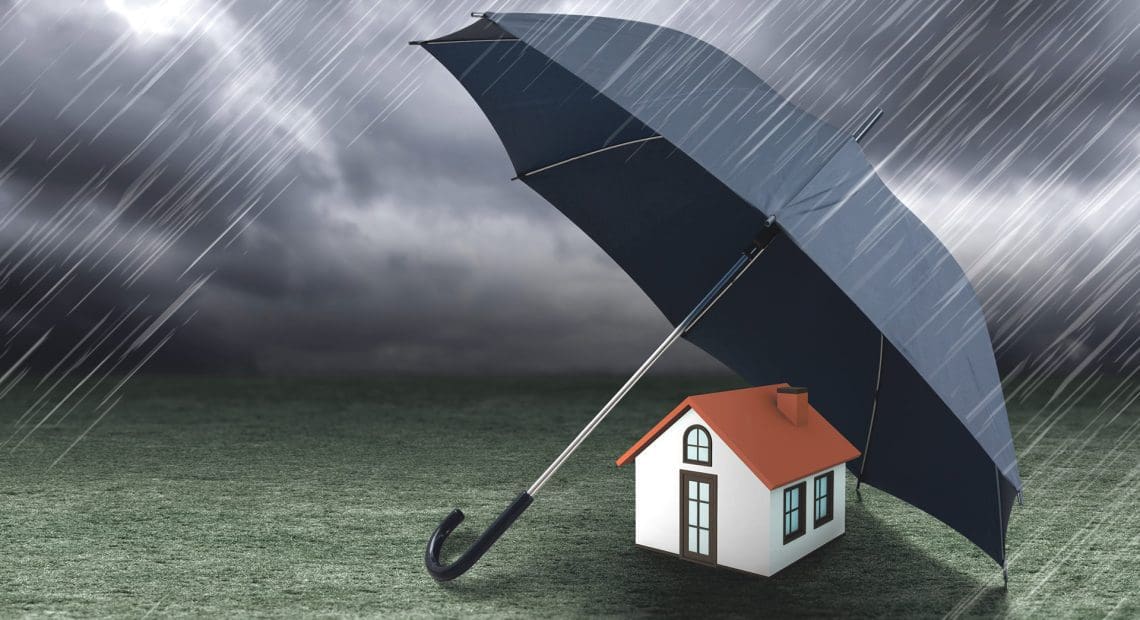
The other side of protecting property from weather damage — or at least mitigating the impact of that damage — is the broad realm of storm preparedness.
Lisa Eugin, manager of Marketing and Administration at Encharter Insurance in Amherst, recently prepared a checklist of considerations for businesses to protect their assets from severe weather. They include:
Develop a storm-preparedness plan. Identify the types of severe weather most likely to affect one’s area and evaluate how these weather events could impact business operations; compile a list of emergency contacts, including local emergency services, utilities, insurance companies, and key employees; designate evacuation routes and ensure all employees are familiar with them; and establish a reliable communication system to keep in touch with employees, suppliers, and customers during a storm.
“Do you have a proper replacement cost on your home or business? Five years ago, if you bought a home for $500,000, it might cost $400,000 to $500,000 to replace it. Today, it might be $1 million.”
Secure your physical assets. Regularly inspect buildings for vulnerabilities and repair any damage to roofs, windows, and doors to withstand severe weather; install protective measures like storm shutters, reinforced doors, and impact-resistant windows, as well as sandbags and flood barriers to prevent water intrusion; invest in a backup generator to keep critical systems running during power outages, and move valuable equipment and inventory to safer locations, while elevating sensitive items off the ground to protect them from flooding.
Safeguard your data. Perform regular backups of all essential data and storing copies in multiple locations, including off-site and cloud storage; and implement robust cybersecurity measures to protect against data breaches, which can become more common during chaotic situations.
Prepare your employees. Conduct regular training sessions and emergency drills so employees know what to do in the event of a storm; provide emergency kits for employees that include first-aid supplies, flashlights, batteries, water, and non-perishable food; and develop a remote work plan that allows employees to work from home if the business premises are unsafe or inaccessible.
Review your insurance coverage. Verify that the business insurance includes coverage for natural disasters relevant to the area, such as floods, hurricanes, and tornadoes; purchase business-interruption insurance to cover lost income if the business is forced to close temporarily due to storm damage; and make sure any policy covers damage to or loss of inventory and equipment.
Stay informed. This may include subscribing to weather alerts from reliable sources such as the National Weather Service (NWS) and local news channels, and utilizing resources from government agencies such as FEMA for the latest information and preparedness tips.
Conduct post-storm recovery. Conduct a thorough assessment of any damage to the property and assets, documenting the damage with photos and notes for insurance claims; implement a business-continuity plan to resume operations as quickly as possible; and provide support and resources to employees affected by the storm to help them recover and return to work.
“Even if you haven’t been in contact with the agent or carrier, first mitigate the losses,” Pearson added. “For instance, if a window is blown out, cover it up with plywood to prevent further damage.”
Bennett also emphasized basic preventive measures like winterizing one’s home, checking the roof and gutters, making sure the pipes are insulated, sealing doors and windows, checking the heating system, having a generator on hand, and preparing an emergency kit that includes essential food, medications, blankets, flashlights, and batteries.
“Something I talk about almost every single day is taking photos of your home — inside, outside, the garage, your possessions — maybe once a year,” he added. “If there was a total loss, if you were asked if you know everything you have in your home, most people would say no.”
Pearson also stressed the importance of business-interruption coverage, in case the business needs to be relocated or business income needs to be replicated during a shutdown.
“It’s really important for the clients to sit down with us to make sure there is coverage available and that it’s adequate enough,” she said, adding that both home and business owners need to understand the value of totally replacing a structure. “Do you have a proper replacement cost on your home or business? Five years ago, if you bought a home for $500,000, it might cost $400,000 to $500,000 to replace it. Today, it might be $1 million.”
Weather or Not
When a storm is on the horizon, Pearson Wallace often issues notifications to clients about the timing and expected severity, and the agency encourages property owners to carefully document damage after the event to ease claims processing.
“We work through the mitigation of claims and losses. We have conference calls with the carrier and advocate on the client’s behalf,” Pearson said. “A lot of agencies don’t offer that advocacy opportunity. But working with claims representatives is a tough go, particularly when you’ve had a loss and you’re focused on the loss. Having a claims-process advocate is important.”
And will continue to be important, Bennett added.
“Most carriers at this point are preparing their rates for the future based on continued extreme weather events. Whether it’s the West Coast, East Coast, Florida, regardless where you’re located, most carriers and most reinsurance companies are preparing for more extreme weather,” he told BusinessWest. “That’s a direct correlation to the change in weather patterns we’re seeing.”