413 Gives Partnership Expands Nonprofit Grant Opportunities
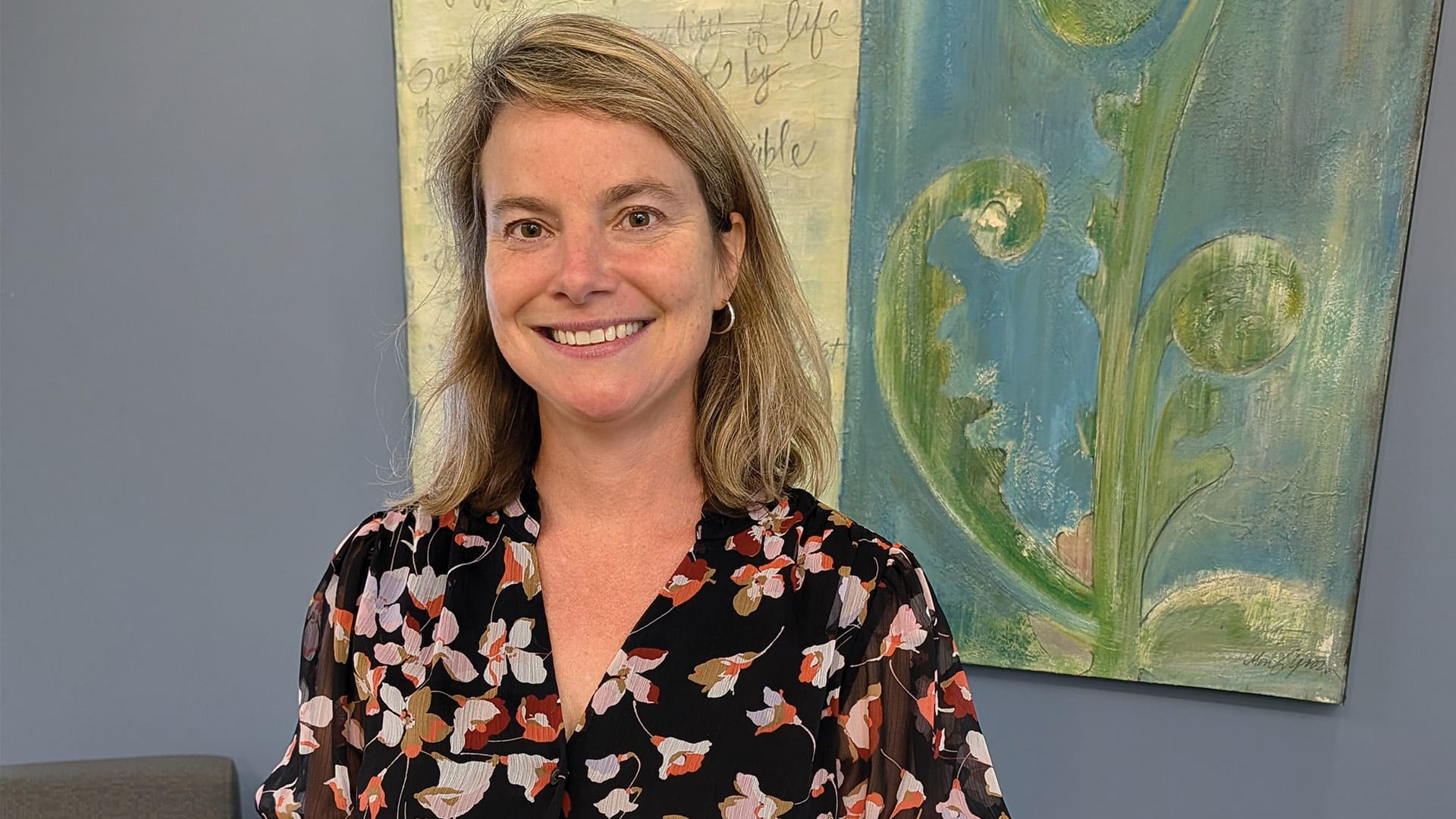
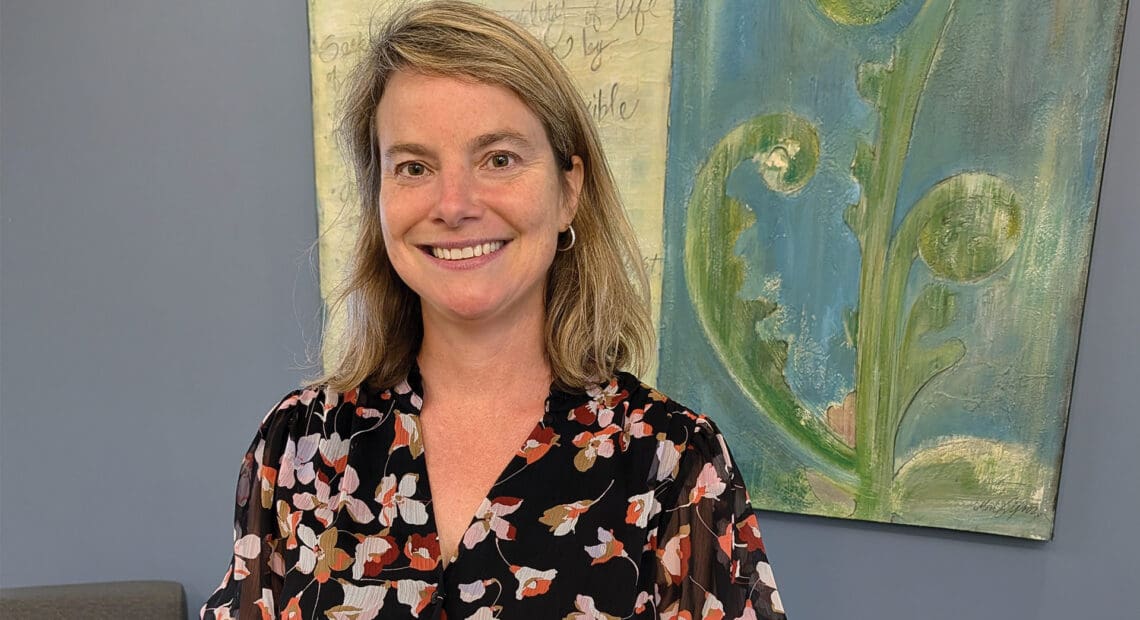
Community Foundation of Western Massachusetts President and CEO Megan Burke
Time of Need
It started with a $1 million donation — that turned out to be not nearly enough.
But the Community Foundation of Western Massachusetts was deeply appreciative of the gift — and how it not only met many needs, but highlighted so many more, President and CEO Megan Burke said.
“We were really fortunate to receive this big, anonymous donation from a donor who has been following all of the federal policy changes and impacts and recognized that nonprofits are struggling, and wanted to make some funding available to us to grant out to nonprofits,” she told BusinessWest. “Essentially, the ask was, ‘can you distribute a million dollars in a couple of months?’ And we were like, ‘yeah, we would love to do that. That’s what we’re made for.’”
So the foundation opened an application process in April for what it called a Community Resilience Grant to distribute the $1 million.
Megan Burke (left) visits Wales Community Pantry, a recent grant recipient, and its board chair, Annette Farrington.
“We shared what it was for. We made a very simple application that said, ‘if you’ve been impacted by federal funding cuts, or maybe federal policy changes have created more demand for your services, and you don’t necessarily have the funding — so there’s either less funding coming in or more demand — let us know what the impact is.’ And that’s how we worked to distribute that million dollars.”
The problem was, the foundation received $7 million in requests, Burke went on. “So for every single dollar we had to give away, we could have given away seven. And we did our best with the community reviewers who were part of the process to figure out where the greatest needs were, and try to meet those needs.”
That’s a daunting challenge to be sure, but it also highlighted the need for a new partnership between the Community Foundation of Western Massachusetts, Berkshire Taconic Community Foundation, and New England Public Media (NEPM), called 413 Gives.
“We decided it would be great to work collaboratively to inspire folks to support one another in this community,” she explained, noting that the central thrust was a day of giving on June 11, with plans to make it an annual event, although people can give to the effort at any time. NEPM collected $63,000 on the event day, but donations afterward have brought the total close to $100,000, and organizers hope to build awareness and momentum to swell that figure going forward.
“We really wanted to focus on those nonprofits who have been impacted by federal policy changes and federal funding cuts, and call on folks in the community to support their work,” Burke reiterated. “Working with New England Public Media, we kind of spotlighted some nonprofits in the community that have been impacted by those changes. So, in addition to raising money, we also had the opportunity to raise visibility about the work that nonprofits do and the strains they’re under. I personally have heard from lots of nonprofits in the community that thought it was really useful, and they were able to get more attention for the work they’re doing.”
Eighty percent of the money raised by 413 Gives will be distributed to nonprofits in Hampden, Hampshire, and Franklin counties, with the rest earmarked for Berkshire County.
The money will be distributed proportionally based on population, with 20% of the funds raised going to the Berkshires and 80% going to the Community Foundation of Western Massachusetts to impact Hampden, Hampshire, and Franklin counties. NEPM is not keeping any of the money, essentially donating its efforts on behalf of the two foundations and the nonprofits they support.
“It’s rare that someone says, ‘we just want to do this, and we’re not going to keep a penny of it,’” Burke said. “But with public media, they saw how their own funding was impacted last year, and how the community stepped up and helped them out. And they had a big platform to be able to ask for that help. So they wanted to pay it forward to other nonprofits who haven’t necessarily had the opportunity to get that support.”
Wave of Requests
The recent $1 million round of Community Resilience Grants were distributed to Alianza DV Services, All Farmers, Amherst Community Connections, Amherst Mobile Market, Amherst Survival Center, Franklin County Community Meals Program, Franklin County Dial-Self, Gardening the Community, the Gray House, Greater Springfield Senior Services, Grow Food Northampton, Hilltown Community Development Corp., Hilltown Youth Performing Arts Program, Holyoke Food and Equity Collective, It Takes A Village, Jewish Family Service of Western Massachusetts, Just Roots, Lorraine’s Soup Kitchen and Pantry, Manna Community Kitchen, Massachusetts Fair Housing Center, Northampton Survival Center, OneHolyoke Community Development Corp., the Praxis Project/Pequoig Farm, Rachel’s Table of Western Massachusetts., Revitalize Community Development Corp., Safe Passage, Stone Soup Cafe, Transhealth, and Wales Community Pantry.
Last September, nearly half of the 250 nonprofit organizations that applied for the Community Foundation of Western Massachusetts’ Flexible Funding Grant reported they had experienced the ripple effects of cuts to intermediary agencies, loss of multi-year support, equity retrenchment, and rising administrative loads. Of the 178 organizations that applied for this spring’s Community Resilience Grant, 147 reported that the impacts of federal funding cuts had already arrived, disrupted services, and strained budgets, while 41 indicated that significant impacts were still on the horizon.
“This $50,000 grant is not just funding; it is a lifeline at a moment when we needed one most,” said Nancy Boyle, interim associate director for the Franklin County Community Meals Program, which provides more than 25,000 free meals annually and serves more than 2,800 households in Franklin County across its meal sites and pantry. “This grant arrives as we are doing the hard, necessary work of strengthening our organization with skilled leadership, tightened systems, and a renewed commitment to the communities we serve.”
With only 29 recipients out of 178 applicants, “we had to let the rest of the folks who applied know that we couldn’t fund their requests,” Burke said. “But with 413 Gives Day, we’re going to be using the funds that we get from New England Public Media to go back to that list and say, ‘who else who already applied was next on that list, that, if only we had more money, we would have given them some funds as well?’ And we’ll essentially reach out to them; they won’t have to apply again or do any additional work. That will allow us to get that money out pretty quickly.”
No date has been set for next year’s 413 Gives event, although she said one possibility is April 13, playing off the 413 theme.
“We definitely would love to have this be an opportunity where the community comes together every year, and we can think of different ways to support nonprofits through that,” Burke added, noting that there’s a wide variety of applicants, in terms of the work they do. “We’re working hard to distribute funds in each of the three counties, and across a wide range of issues. So many different sectors have been impacted by the federal policy changes and the funding cuts.
“So while we could have gone even broader, we’re really thinking about food security issues, housing challenges, and at least a couple of grants for organizations that serve immigrants who may need legal assistance or other kinds of services. Some organizations are having additional costs related to security issues — for example, the LGBTQ community — and trying to make sure that their folks are safe,” she went on. “So it’s a whole gamut of essential needs that we’re trying to cover, in addition to thinking about the geographic distribution.”
Rising Frustration
Burke said she shares the frustration of nonprofits who have been dealing with a wave of funding cuts over the past year and a half, noting, again, that the majority of grant applicants have either had felt an impact are anticipating one.
“We were really concerned that we would see a number of nonprofits closing and not being able to continue. And while there’s been a little bit of that, I think what we’ve seen more of is particular programs or project areas having to close because they’re no longer funded, or maybe grants that nonprofits were expecting from the federal government aren’t coming through, so they’re not able to add on something that they were going to add on.”
But Western Mass. has a certain built-in resiliency, she added, as the majority of nonprofits in the 413 are on the small side, and those tend to rely less on federal funding than larger nonprofits.
On the larger side, she explained, “the Public Health Institute of Western Massachusetts — an amazing organization that does incredible work — secured a really significant federal grant with the city of Springfield to do a whole range of different things to improve health in Springfield, and that funding didn’t come through. So they had all these program areas they were planning to work on, and some they’d even started because they’d already signed a contract, and then the money didn’t come through, which is terrible,” she explained.
“But I think, for the smaller nonprofits in the region, it’s not necessarily so much that they were expecting federal funding and it didn’t come through, but they’re seeing folks whose SNAP benefits have been impacted, or eligibility requirements are changing, and the food pantries are seeing an increase in folks.”
Burke mentioned a recent visit to Wales Community Pantry, which, she learned, has experienced a significant spike in families needing assistance. “So some of this is actual cuts, but a lot of it, I think, is just nonprofits trying to figure out how to meet rising demand.”
Equally important, though, is the work of raising awareness — and that’s a crucial element of 413 Gives.
“It’s really important, I think, for folks to make sure our government knows there’s an impact happening. And if this isn’t what people want to see happening, people have to get involved and speak up,” she said.
“I’m not saying anything partisan here — I’m just saying being engaged and speaking up is really, really important,” she went on. “Because we can’t fill all the holes. The anonymous donors out there who are super generous — they’re incredibly important, and it certainly helps people in the here and now. But in the long run, there are things that our government needs to take care of.”