Home Posts tagged Megan Burke
Features Special Coverage

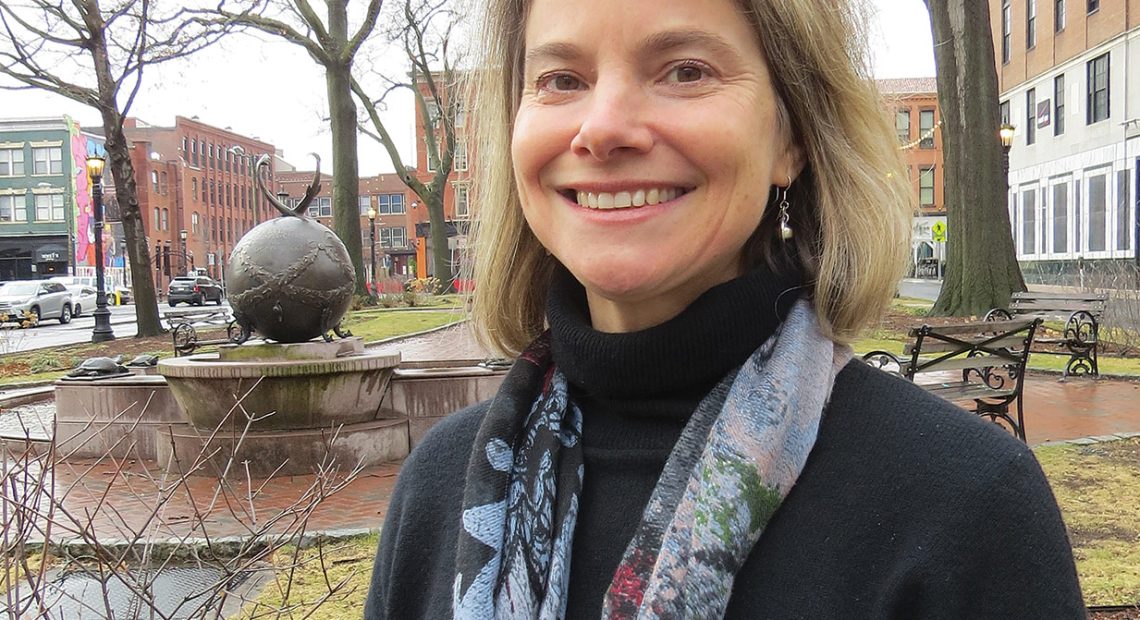
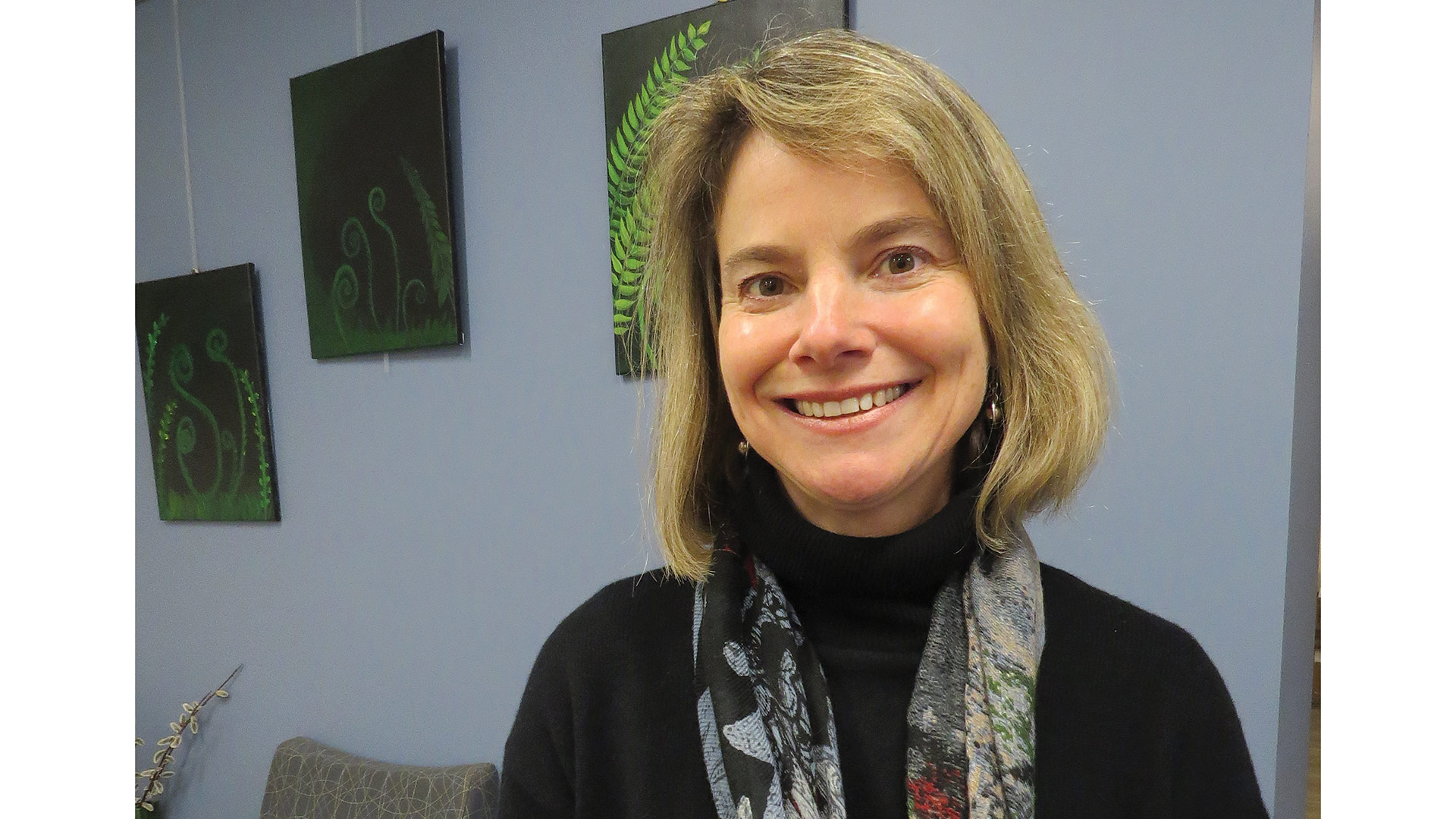
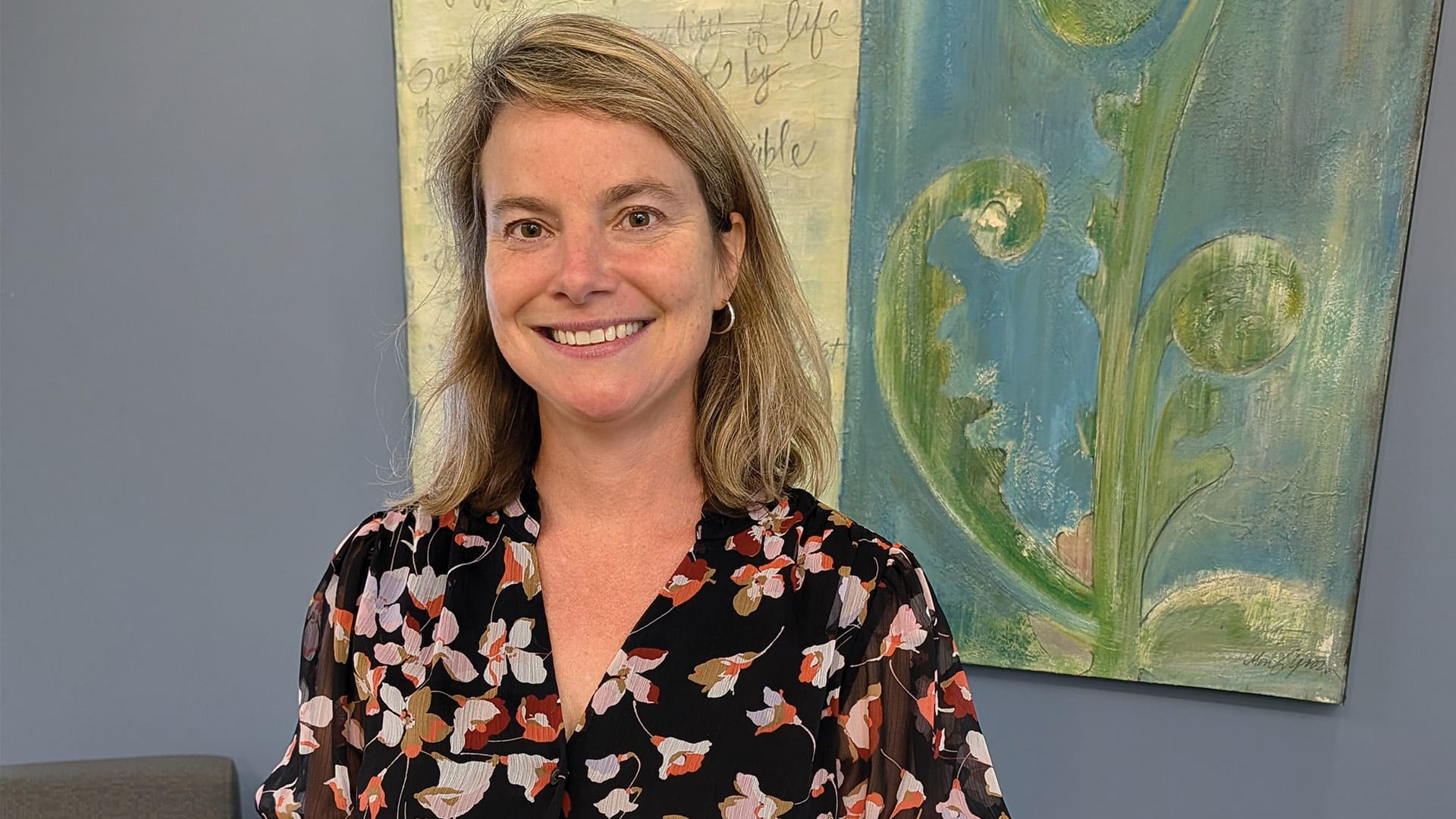
Community Foundation of Western Massachusetts President and CEO Megan Burke

Time of Need

It started with a $1 million donation — that turned out to be not nearly enough.

But the Community Foundation of Western Massachusetts was deeply appreciative of the gift — and how it not only met many needs, but highlighted so many more, President and CEO Megan Burke said.

“We were really fortunate to receive this big, anonymous donation from a donor who has been following all of the federal policy changes and impacts and recognized that nonprofits are struggling, and wanted to make some funding available to us to grant out to nonprofits,” she told BusinessWest. “Essentially, the ask was, ‘can you distribute a million dollars in a couple of months?’ And we were like, ‘yeah, we would love to do that. That’s what we’re made for.’”

So the foundation opened an application process in April for what it called a Community Resilience Grant to distribute the $1 million.
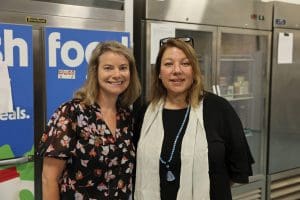
Megan Burke (left) visits Wales Community Pantry, a recent grant recipient, and its board chair, Annette Farrington.

“We shared what it was for. We made a very simple application that said, ‘if you’ve been impacted by federal funding cuts, or maybe federal policy changes have created more demand for your services, and you don’t necessarily have the funding — so there’s either less funding coming in or more demand — let us know what the impact is.’ And that’s how we worked to distribute that million dollars.”

The problem was, the foundation received $7 million in requests, Burke went on. “So for every single dollar we had to give away, we could have given away seven. And we did our best with the community reviewers who were part of the process to figure out where the greatest needs were, and try to meet those needs.”

That’s a daunting challenge to be sure, but it also highlighted the need for a new partnership between the Community Foundation of Western Massachusetts, Berkshire Taconic Community Foundation, and New England Public Media (NEPM), called 413 Gives.

“We decided it would be great to work collaboratively to inspire folks to support one another in this community,” she explained, noting that the central thrust was a day of giving on June 11, with plans to make it an annual event, although people can give to the effort at any time. NEPM collected $63,000 on the event day, but donations afterward have brought the total close to $100,000, and organizers hope to build awareness and momentum to swell that figure going forward.

“We really wanted to focus on those nonprofits who have been impacted by federal policy changes and federal funding cuts, and call on folks in the community to support their work,” Burke reiterated. “Working with New England Public Media, we kind of spotlighted some nonprofits in the community that have been impacted by those changes. So, in addition to raising money, we also had the opportunity to raise visibility about the work that nonprofits do and the strains they’re under. I personally have heard from lots of nonprofits in the community that thought it was really useful, and they were able to get more attention for the work they’re doing.”
Eighty percent of the money raised by 413 Gives will be distributed to nonprofits in Hampden, Hampshire, and Franklin counties, with the rest earmarked for Berkshire County.

The money will be distributed proportionally based on population, with 20% of the funds raised going to the Berkshires and 80% going to the Community Foundation of Western Massachusetts to impact Hampden, Hampshire, and Franklin counties. NEPM is not keeping any of the money, essentially donating its efforts on behalf of the two foundations and the nonprofits they support.
“It’s rare that someone says, ‘we just want to do this, and we’re not going to keep a penny of it,’” Burke said. “But with public media, they saw how their own funding was impacted last year, and how the community stepped up and helped them out. And they had a big platform to be able to ask for that help. So they wanted to pay it forward to other nonprofits who haven’t necessarily had the opportunity to get that support.”

Wave of Requests

The recent $1 million round of Community Resilience Grants were distributed to Alianza DV Services, All Farmers, Amherst Community Connections, Amherst Mobile Market, Amherst Survival Center, Franklin County Community Meals Program, Franklin County Dial-Self, Gardening the Community, the Gray House, Greater Springfield Senior Services, Grow Food Northampton, Hilltown Community Development Corp., Hilltown Youth Performing Arts Program, Holyoke Food and Equity Collective, It Takes A Village, Jewish Family Service of Western Massachusetts, Just Roots, Lorraine’s Soup Kitchen and Pantry, Manna Community Kitchen, Massachusetts Fair Housing Center, Northampton Survival Center, OneHolyoke Community Development Corp., the Praxis Project/Pequoig Farm, Rachel’s Table of Western Massachusetts., Revitalize Community Development Corp., Safe Passage, Stone Soup Cafe, Transhealth, and Wales Community Pantry.

Last September, nearly half of the 250 nonprofit organizations that applied for the Community Foundation of Western Massachusetts’ Flexible Funding Grant reported they had experienced the ripple effects of cuts to intermediary agencies, loss of multi-year support, equity retrenchment, and rising administrative loads. Of the 178 organizations that applied for this spring’s Community Resilience Grant, 147 reported that the impacts of federal funding cuts had already arrived, disrupted services, and strained budgets, while 41 indicated that significant impacts were still on the horizon.

“This $50,000 grant is not just funding; it is a lifeline at a moment when we needed one most,” said Nancy Boyle, interim associate director for the Franklin County Community Meals Program, which provides more than 25,000 free meals annually and serves more than 2,800 households in Franklin County across its meal sites and pantry. “This grant arrives as we are doing the hard, necessary work of strengthening our organization with skilled leadership, tightened systems, and a renewed commitment to the communities we serve.”

With only 29 recipients out of 178 applicants, “we had to let the rest of the folks who applied know that we couldn’t fund their requests,” Burke said. “But with 413 Gives Day, we’re going to be using the funds that we get from New England Public Media to go back to that list and say, ‘who else who already applied was next on that list, that, if only we had more money, we would have given them some funds as well?’ And we’ll essentially reach out to them; they won’t have to apply again or do any additional work. That will allow us to get that money out pretty quickly.”
No date has been set for next year’s 413 Gives event, although she said one possibility is April 13, playing off the 413 theme.

“We definitely would love to have this be an opportunity where the community comes together every year, and we can think of different ways to support nonprofits through that,” Burke added, noting that there’s a wide variety of applicants, in terms of the work they do. “We’re working hard to distribute funds in each of the three counties, and across a wide range of issues. So many different sectors have been impacted by the federal policy changes and the funding cuts.

“So while we could have gone even broader, we’re really thinking about food security issues, housing challenges, and at least a couple of grants for organizations that serve immigrants who may need legal assistance or other kinds of services. Some organizations are having additional costs related to security issues — for example, the LGBTQ community — and trying to make sure that their folks are safe,” she went on. “So it’s a whole gamut of essential needs that we’re trying to cover, in addition to thinking about the geographic distribution.”

Rising Frustration

Burke said she shares the frustration of nonprofits who have been dealing with a wave of funding cuts over the past year and a half, noting, again, that the majority of grant applicants have either had felt an impact are anticipating one.

“We were really concerned that we would see a number of nonprofits closing and not being able to continue. And while there’s been a little bit of that, I think what we’ve seen more of is particular programs or project areas having to close because they’re no longer funded, or maybe grants that nonprofits were expecting from the federal government aren’t coming through, so they’re not able to add on something that they were going to add on.”

But Western Mass. has a certain built-in resiliency, she added, as the majority of nonprofits in the 413 are on the small side, and those tend to rely less on federal funding than larger nonprofits.

On the larger side, she explained, “the Public Health Institute of Western Massachusetts — an amazing organization that does incredible work — secured a really significant federal grant with the city of Springfield to do a whole range of different things to improve health in Springfield, and that funding didn’t come through. So they had all these program areas they were planning to work on, and some they’d even started because they’d already signed a contract, and then the money didn’t come through, which is terrible,” she explained.

“But I think, for the smaller nonprofits in the region, it’s not necessarily so much that they were expecting federal funding and it didn’t come through, but they’re seeing folks whose SNAP benefits have been impacted, or eligibility requirements are changing, and the food pantries are seeing an increase in folks.”

Burke mentioned a recent visit to Wales Community Pantry, which, she learned, has experienced a significant spike in families needing assistance. “So some of this is actual cuts, but a lot of it, I think, is just nonprofits trying to figure out how to meet rising demand.”
Equally important, though, is the work of raising awareness — and that’s a crucial element of 413 Gives.

“It’s really important, I think, for folks to make sure our government knows there’s an impact happening. And if this isn’t what people want to see happening, people have to get involved and speak up,” she said.

“I’m not saying anything partisan here — I’m just saying being engaged and speaking up is really, really important,” she went on. “Because we can’t fill all the holes. The anonymous donors out there who are super generous — they’re incredibly important, and it certainly helps people in the here and now. But in the long run, there are things that our government needs to take care of.”
Business Talk Podcast Special Coverage

We are excited to announce that BusinessWest has launched a new podcast series, BusinessTalk. Each episode will feature in-depth interviews and discussions with local industry leaders, providing thoughtful perspectives on the Western Massachuetts economy and the many business ventures that keep it running during these challenging times.
Go HERE to view all episodes

Episode 148: February 6, 2023

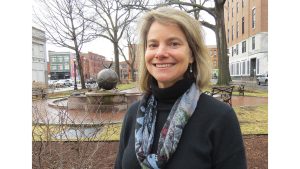
George Interviews Megan Burke, president and CEO of the Community Foundation of Western Mass.

Megan Burke says listening to the BusinessTalk podcast featuring Katie Allan Zobel, president and CEO of the Community Foundation of Western Mass., certainly helped her when she interviewed to succeed Zobel in that position. Now, she’s in that job, and it’s her turn to be the guest on the podcast. She talks with BusinessWest Editor George O’Brien about everything from her varied background to her vision for the community foundation moving forward. It’s all must listening, so tune in to BusinessTalk, a podcast presented by BusinessWest and sponsored by PeoplesBank.


Sponsored by:

Also Available On

Features Special Coverage

Opening the Doors Wider

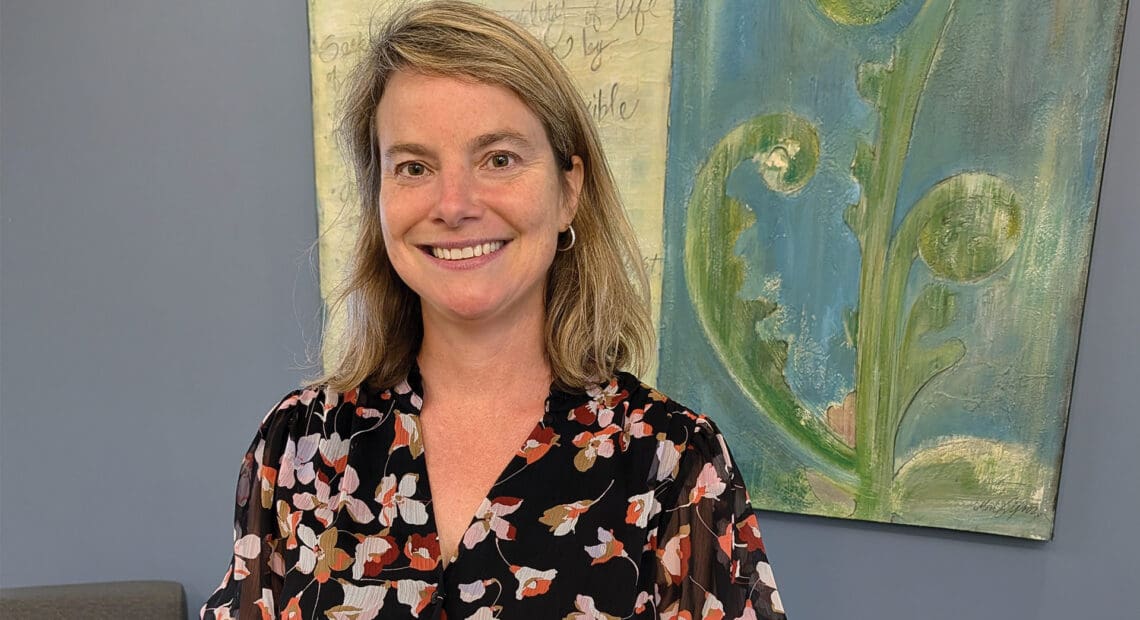
Community Foundation President and CEO Megan Burke

Community Foundation President and CEO Megan Burke

Megan Burke was taking a walk through downtown Springfield on a Sunday morning not quite a year ago, and found herself on Bridge Street, passing by the offices of the Community Foundation of Western Massachusetts (CFWM).

She stopped, looked in, and became immersed in what she was seeing, while also not quite believing her eyes.

“I looked in the conference-room windows, and I saw the papers lining the walls detailing their strategic-planning process and all their priorities for the next year,” she recalled. “And I actually took some photos, sent them to my boss in Hartford, and said, ‘look at how transparent the Community Foundation of Western Mass. is; we need to be more like this.’

“There were no secrets — they just put it right out there,” she went on. “I took pictures, I took notes … I said, ‘hey, they’re moving to the same database system we use, but more importantly, these are things they’re prioritizing for the community.’”

The ‘we,’ in this case, was the Hartford Foundation for Public Giving, which Burke was serving as director of Community Impact Grantmaking. The amazing transparency she observed that morning was and is just one of the things Burke admired about the Community Foundation of Western Mass., and which she had come to respect from afar — or not really that far at all, depending on your take; she’s a resident of West Springfield.

And that helps explain why, when the agency’s long-time president and CEO, Katie Allan Zobel, announced in the spring of 2022 (just a few weeks after Burke’s walk in downtown Springfield) that she would be stepping down at the end of the year, Burke became interested in the position, at the same time she was being recruited for it.

After several rounds of interviews, during which she would see and hear more things that impressed her, Burke was tapped to fill Zobel’s very large shoes, thus beginning an intriguing new chapter in a career marked by more than two decades of work in nonprofit management, philanthropy, fundraising, and advocacy, with a particular focus on equitable access to economic opportunities and human rights.

Her career has included work on issues ranging from advancing LGBTQ+ rights in a Latin American country, Nicaragua, to continuing efforts to ban landmines globally, to the challenge of leveling the playing field between those in urban and suburban communities in Northern Connecticut.

“I looked in the conference-room windows, and I saw the papers lining the walls detailing their strategic-planning process and all their priorities for the next year. And I actually took some photos, sent them to my boss in Hartford, and said, ‘look at how transparent the Community Foundation of Western Mass. is; we need to be more like this.’”

Summing it all up, Burke said it has been invigorating and rewarding work, which she is anxious to take to the 69 communities served by the Community Foundation of Western Massachusetts.

In a wide-ranging interview with BusinessWest just a few days after she began work in those offices on Bridge Street, Burke said her broad goal is to build on all that’s been accomplished over the past several years to take CFWM well past check writing and into a role as convener and catalyst for positive change.

“I really want to spend at least the next three months getting to know the folks who are involved in the Community Foundation and who’s not involved, and opening our doors even wider,” she explained. “And listening to people — I have a lot to learn. I think I bring a lot to the job, but I have a lot to learn from the community about what they think is important and what they believe we should be doing better.”

She said the Hartford Foundation has been able to mobilize resources and support efforts to more equitable economic and social mobility, and one of her goals is to amass similar forces and create momentum on that same front in Western Mass.

“In both Hartford and Springfield, and in pockets of the regions more generally, success for people is often more closely correlated to the zip code in which they were born than their own talents, creativity, and hard work,” she said. “And I think that’s where the experience I have is relevant to thinking about how we can change that together — not just the Community Foundation, not just our nonprofit partners or our donors, but all residents of the region.”


Questions and Answers

Burke recalls that it “almost felt like I was cheating.”

That’s almost.

In the run-up to the first of her interviews with CFWM for the president’s position last September, she noted that Zobel was the most recent guest on BusinessTalk, the weekly podcast hosted by this writer. She listened to the episode, not once but twice, and heard Zobel talk in vague terms about what might come next for her career-wise — and, in far more specific terms, about the many new programs and initiatives she and her staff introduced during her tenure, everything from Valley Gives to Valley Creates.

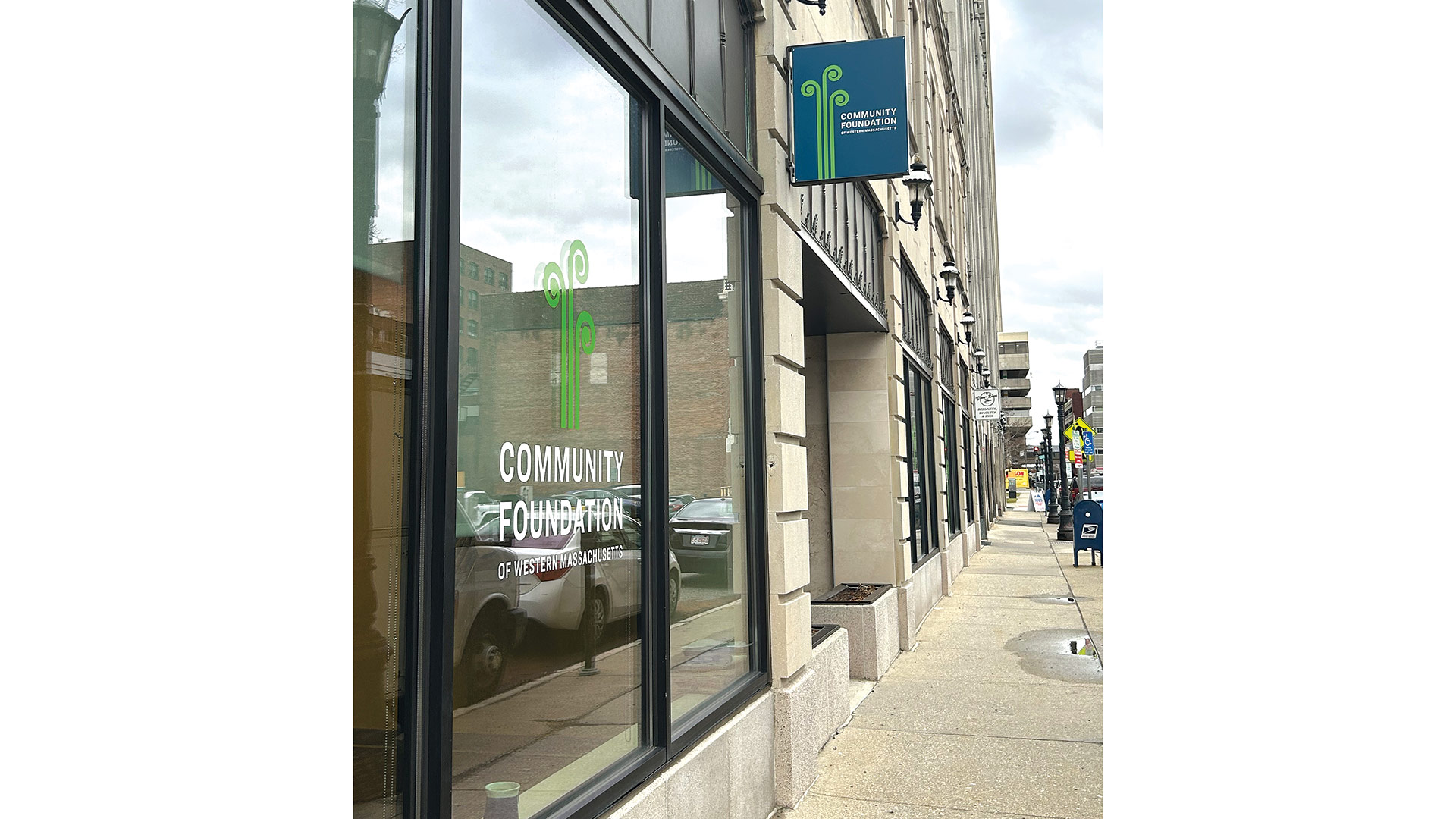
the windows of the Community Foundation offices on Bridge Street

Megan Burke was amazed by the transparency she witnessed when looking in the windows of the Community Foundation offices on Bridge Street. It’s a tradition she intends to continue.
Staff Photo

“It was such a helpful interview,” she recalled. “I was able to get a sense of what she felt was important and what she thought were some of the great successes here.”

Whether listening to the podcast had any impact on her performance during that interview is a subject for debate (Burke already knew a great deal about the Community Foundation, as we’ll see), but what isn’t — according to those doing the interviewing — is that Burke is a logical successor to Zobel, and this position is a logical next step for someone who has spent a career working to advance diversity, equity, and the inclusion of diverse perspectives.

It’s a career that has taken her from New York to Nicaragua to Hartford, and to remote-working opportunities long before they became the norm.

Our story starts with Burke — who earned her bachelor’s degree in political science at Wellesley and a master’s degree in international relations at Yale — working for the Ford Foundation in New York, where she served as program officer, U.S. Foreign and Security Policy, Governance & Civil Society.

In 2007, she and her family moved to Nicaragua for what she called “a different pace to her work” than what she found in New York. There, she worked first for the nonprofit Centro de Estudios Internacionales, where her efforts supported the emerging LGBTQ+ movement and the development of a nationwide campaign to advance human rights.

“My role was to support various representatives of the movement to create a platform for them to come together and establish some advocacy priorities and to really be a go-between with the funder to make sure of the direction it was moving in, and to really track the impact of the work,” she explained. “For me … I had not worked on that particular issue before; it was incredibly eye-opening. It was very humbling to be working in a second language and be the least articulate person in the room.”

“During my time there, we announced a new strategic focus on dismantling structural racism and promoting more equitable economic and social mobility. And while that work is by no means easy, it’s incredibly important, and I spent the past few years with a great team trying to figure out how to make that happen.”

Burke worked for the group for roughly three years, eventually transitioning to a new role with the Nobel Peace Prize-winning International Campaign to Ban Landmines. She started working as a researcher in Latin America — Nicaragua was a country impacted by landmines from the war in the 1980s — and eventually became executive director of the campaign.

She was still in that position when she returned to Western Mass. nearly a decade ago, eventually to ease herself out of that role — while also downsizing the organization, as more countries addressed the problem of landmines.

“It’s kind of nice to be involved in something where we could see steady progress and say we were working ourselves out of a job; it’s not often that you get to say that,” she noted. “Every year I worked there, the casualty rate declined.”

In some respects, leading a coalition to ban landmines is a world apart from work with a local foundation, she said, but in Burke’s estimation, the work is very similar.

“Sometimes people say, ‘how did you go from this international work focused on advocacy at the U.N. and traveling around the world to working for a local foundation?’” she noted. “My feeling on that is that every issue is a local issue somewhere, and what we were really trying to do at the international level is raise up local issues that were impacting people in mostly post-conflict countries, and get international attention to redistribute resources — not totally unlike what a foundation does to help those with the greatest need.”


Vision Statement

In 2017, Burke joined the Hartford Foundation for Public Giving as senior Community Impact officer, a position with a broad job description, one that included everything from work creating career pathways to efforts promote civic engagement through grants and training to increase voter engagement and participation in the 2020 Census.

In September 2020, she became director of Community Impact Grantmaking, leading the foundation’s strategic grantmaking — there was an annual budget of $25 million to $30 million — to advance equitable economic mobility and address systemic racism in Greater Hartford.

“During my time there, we announced a new strategic focus on dismantling structural racism and promoting more equitable economic and social mobility,” she explained. “And while that work is by no means easy, it’s incredibly important, and I spent the past few years with a great team trying to figure out how to make that happen.”

Not long after Zobel announced that she would be stepping down from her position, Burke received a call from a search firm to gauge her interest in the position.

It was quite high, she said, and for all the reasons she mentioned earlier — from the agency’s transparency with its goals and plans for the future, as evidenced by the uncovered windows facing Bridge Street, to its rapid and highly effective response to COVID, marked by a deep commitment to helping the region’s struggling nonprofits, along with many other successful programs in realms ranging from the arts to education.

Summing it all up, Burke said that, while she loved her work with the Hartford Foundation for Public Giving, the only thing she might like more is a chance to similar work closer to her home, something this opportunity at the Community Foundation provided her.

Still, while those on the other side of the interview table had questions for her, she had some for them, and the answers — especially with regard to a willingness to broaden efforts in the realm of equity — would ultimately determine whether this would be the right fit for her.

“I wasn’t sure where they were in terms of their own strategic vision to promote equity and opportunity,” she explained. “And I know that when you take on work like that, it’s important that everyone has bought in, feels that it’s important, and sees the value in that work.

“You never have a situation where every stakeholder is 100% all in from the very beginning,” she went on. “But from other areas of my work, I’ve seen what happens when there is great resistance, and it makes it really, really hard. I didn’t know if there was resistance, but I also didn’t know how much buy-in there was. So in many of my early conversations, I really tried to get a sense — ‘is there a serious commitment to moving this forward?’ And I got a resounding ‘yes’ from everyone I spoke to.

“It was clear that the commitment runs deep,” she continued. “And that excited me.”

Elaborating, she noted that, while Greater Hartford and Greater Springfield are different in some respects, they are similar in most, especially when it comes to disparities that exist between the urban centers and the more rural and suburban areas, and the manner in which those inequities impact opportunity.

“When everyone has an opportunity to fulfill their own potential, I think everyone wins,” she went on. “When people are held back due to the circumstances of their birth, I think everyone loses.”

Burke started at the Community Foundation on Jan. 18, the day of a scheduled board meeting. She joked that this would be the first and only time she would be at such a meeting with the primary mission of simply watching and listening.

Although she still has a lot of that to do in general, and with a number of different constituencies, she noted that she has already embarked on what she calls a “listening tour.”

Its underlying goal, as she stated earlier, is to enable her to learn about the region and the issues facing those living and working here and to generate some momentum on the broad issue of economic and social mobility and making it more equitable.

“We don’t plan to change our broader strategic vision — I think it’s a great vision,” she said. “And promoting equity and opportunity is not something that’s going to happen overnight; I think there’s a huge commitment to that, and I was brought on to help figure out how to make sure we can operationalize that as effectively as possible.

“I have to listen,” she said in conclusion, “and make sure I’m building on what’s already happening here that’s great.”


Bottom Line

When asked what she likes to do when she’s not working, Burke offered a hearty laugh as she said, “take walks in urban areas.”

She also likes to hike in more rural settings, partake in yoga, be a good ‘dog aunt,’ and keep up with friends scattered across the region and around the world.

What she really likes, though, is to work with others to address what she called “seemingly intractable problems” — meaning everything from inhumane weapons to access to healthcare and education for LGBTQ+ residents of Nicaragua to food insecurity for residents of Greater Hartford.

Throughout her long career, it has been her mission to take doors and open them wider to enable more to pass through. With her latest assignment with CFWM, the setting has changed, but that mission hasn’t.