Features

Lots to Celebrate

Angela and Ted Chagnon (front, second and third from left) and the leadership team at Valet Park of America

Angela and Ted Chagnon (front, second and third from left) and the leadership team at Valet Park of America


When Ted Chagnon started his own business in 1990, he had big goals, but there were times, early on, when operating in seven states — from New England to Florida — and employing more than 1,250 people may have seemed like a dream too far.

But that’s precisely the growth trajectory Valet Park of America celebrated when it marked 35 years in business last month.

“It was kind of slow growth at first,” Chagnon said, recalling that his first two valet clients were Yankee Pedlar restaurant in Holyoke and Hotel Northampton, and other small businesses followed. It took two years before the company landed its first major client, Baystate Medical Center, and over the next several years, other large clients followed, particularly in the medical realm, from UMass Medical Center to MetroWest Medical Center in Natick and Framingham.

“Around 2005, we started adding ski resorts, locations in Albany, some locations in Connecticut, and we started to build some momentum. It was tough because we didn’t have any resources in the beginning.”

Initially focused on valet parking only, the business later expanded into parking management, operating lots and garages, and then other transportation services.

“That was simply because a lot of our clients, whether it’s a medical facility, a college, a casino, or a ski resort, sometimes need more than just valet; they need parking management services or transportation for guests, patients, or even transporting employees off site,” Chagnon explained. “Sometimes you’re moving the employees to off-site parking garages and parking lots when you run out of space.”

The company operates in a wide geographic footprint, from Buffalo, N.Y. to Boston, as well as in Vermont, Connecticut, Rhode Island, Virginia, and Florida. “We’re in Virginia as of last year, and we’ve been in Florida for five years now, and we’ve really grown tremendously there.”

Many employees have been with Valet Park of America for decades, some more than 30 years. Some of those are family, and Chagnon called this a family business; his wife, Angela, is senior vice president, with responsibilities in client relations, human resources, payroll, auditing, and marketing, and other relatives work in leadership positions as well.

“It’s so important to remember what those frontline people are doing out there, with the weather, and the circumstances, and the vehicles, and the hectic days. It can be stressful at times, and to have somebody in here who understands that and appreciates that is huge.”

“My sister was one of the founders. My niece runs our payroll department. My brother runs our fleet management and quality control department. So we are very much a family-run and owned and operated business,” he said.

But he also attributes this employee loyalty to a culture of opportunity, where someone can start by parking cars and eventually move up as other opportunities arise.

“As we grow, we have to hire more people, more regional managers, and it’s nice that we can promote from within. Many worked for us during college and came on board full-time right after college. I don’t think many of them thought they were going to have a career in parking, but then they stayed with the company. In fact, some of their kids are in college now and working for us.”


Getting Behind the Wheel

The Chagnons initially operated the company from home, then moved into an office at 191 Chestnut St. in Springfield, where Valet Park of America is still headquartered today.

“Then we kind of grew,” he said, but it was very gradual growth until about 20 years in, when both the roster of clients and the company’s geographic reach started to create more noticeable momentum. “Then you start becoming a bigger company, with different challenges. But one of the biggest, I think, has been keeping the mentality of a family-run and owned business and maintaining that culture.”

Angela agreed. “I think that just came naturally to Ted and me. I love seeing somebody that starts off as an entry-level valet attendant, and now they’re in the payroll department, or they’re helping me in the accounting department. It’s very rewarding to know that we can do that for them. Anytime we have an opening in the office, we post internally. I love to bring somebody up who knows us, who knows the business, who knows our culture, who appreciates what those frontline employees do.

“That’s the biggest factor for me,” she added. “I’m more internal; we’re more support staff on the back end, and it’s so important to remember what those frontline people are doing out there, with the weather, and the circumstances, and the vehicles, and the hectic days. It can be stressful at times, and to have somebody in here who understands that and appreciates that is huge. It makes a difference, I think, to the frontline employees when they see that. I’ve parked cars. I know what’s happening.”

With the company’s growth, Ted said he’s competing with a number of national firms, and dealing with the sorts of economic shifts that any industry faces — and, like many of them, he relies on a diverse client mix to weather those trends.

Angela and Ted Chagnon launched their enterprise 35 years ago last month

Angela and Ted Chagnon launched their enterprise 35 years ago last month

“During COVID, which was unusual, colleges got shut down; they’re doing well now, but they’re finding some fiscal restraints. Hospitals right now are finding some fiscal restraints as well; there have been some cuts there. And restaurants, in some cases, with inflation, have had to cut back, and valet services might be something that’s cut,” he explained.

“But we’ve expanded to ski resorts and casinos and still have medical facilities, colleges, and independent parking lots. So we have a wide range of industries that we service,” he added. “So we do well; one industry might be seeing some cuts or finding some fiscal restraints, and something else might be flourishing. And some states might be doing better than others. It’s never completely smooth sailing.”

The pandemic, as Chagnon noted, was indeed unusual, and particularly challenging, as colleges, casinos, and ski resorts shut down and hospitals cut way back on visitor traffic.

“We had to evolve and adapt, and we had to lay a lot of people off, but here’s what we did: we went back to our hospital clients especially and said, ‘is there anything you need us to do? You don’t need us to transport anyone. You don’t need any parking services, but what can we do for you?’

“And as things progressed, we ended up staffing a lot of COVID testing sites. We were greeting people, lining up the parking, queuing them up, checking them in. That rolled into screener services at a lot of facilities where you would come in and we’d check your temperature, and we’d ask you an array of questions pertaining to travel and things like that before you could enter the hospital. We’d register you. Because the hospitals were short-staffed, and we had a lot of people that had been working with us for a long time, and we wanted to retain them.”

Two scenes from last month’s 35th anniversary celebration, a family-friendly event that drew about 500 people.

Two scenes from last month’s 35th anniversary celebration, a family-friendly event that drew about 500 people.

It was a time of pivoting and resilience for most businesses, he noted.

“Everyone just said, ‘what do we need to do to keep the lights on?’ Because we still had bills to pay, mortgages and insurance and leases on vehicles. You still had to charge through that and make it happen. So we were fortunate that we had a decent number of people that were willing to do that,” he continued. “I was here at work every day just fighting through those challenges. It was a difficult time.”


Shifting into the Next Gear

With the pandemic well in the rear view — literally and figuratively — Valet Park of America continues to grow its services and footprint while maintaining that culture the Chagnons value. Last month, the company marked 35 years with a family-oriented celebration in its expansive parking lot, featuring inflatables, rock climbing, cornhole, face painting, and other activities.

“That brought about 500 people here — about 200 employees and all their kids and their spouses — and it was a very much a family environment for everyone to celebrate,” Ted said.

The event also individually recognized employees who had been with the company for 15, 20, 25, 30, and 35 years. “We wanted to start with the fifth year, but we had over 150 employees that were here more than five years and a large number of employees over 10 years, and would have been here for two days celebrating each one of them individually,” he said.

“We take pride in our employees’ tenure and the environment that we provide for them,” he added. “It’s a company that can’t run on its own. You can’t have just one person or two people running it. You need a large, supportive team behind you.”

The company also invests in plenty of training for its employees, he told BusinessWest. “We do a lot of training year-round for all our staff because we feel it’s important to make sure that they’re educated, that they know the business, and it gives them opportunity to advance.

“And it helps maintain our culture, too, because we’re in the people business, any way you look at it. We might be in the parking business, we might be in transportation, but it takes people to provide those services, and our employees are really our greatest asset.”

That culture extends to community involvement in many ways as well, supporting organizations like the USO, Jenna’s Blessing Bags, and the various foundations of the company’s medical clients — not to mention encouraging employee volunteerism with nonprofits and charitable events, like the annual UMass Cancer Walk. And those efforts are multiplied across the company’s seven states.

Looking ahead, Chagnon said Valet Park of America will continue to grow smartly and innovate in a number of ways — like its adoption some years ago of automation in the parking process at many sites.

“It’s a company that can’t run on its own. You can’t have just one person or two people running it. You need a large, supportive team behind you.”

“We distribute magnetic parking gates and started building our own entrance and exit payment kiosks for parking garages and parking lots. We kind of branched off into that a little bit to try to be a multi-faceted service provider for our clients.

“We try to control costs for them, provide a very good service, evolve, and adapt to their needs as a vendor or partner. And I think we do that well,” he continued. “Every year we see growth, and it’s primarily because of the services that we provide and the quality that we provide and a lot of good referrals.”

Angela agreed. “Our culture is so important to us, and it always has been. It’s something we focus on every year when we talk about our goals. We make sure to maintain, as best we can, communication and relationships with all the employees as we continue to grow,” she told BusinessWest. “And we have seen that nice, steady growth … obviously minus the COVID years.”

“We’re just looking forward to the next number of years,” Ted added. “Hopefully we have quite a few ahead of us.”

Accounting and Tax Planning

The Unseen Superhero

By Tanzi Cannon-Eckerle, Esq.


Most likely, nobody dreams of growing up and becoming a compliance officer. Hollywood has yet to greenlight Compliance: The Movie, and you’re unlikely to see glossy magazine profiles of the world’s top compliance chiefs (though wouldn’t that be a page turner?). Still, in the narrative of modern business, the compliance program is the unsung superhero — quietly saving the day, one avoided disaster at a time.

Why, you might ask, does your company even need a compliance program? Isn’t it just a bunch of paperwork, long-winded training sessions, and rules that seem designed to stop you from having fun? Well … kind of — but it is also so much more. The reality is far more entertaining — and, in the long run, far more profitable. Let’s unpack the reasons with wit, wisdom, and a few hypothetical examples that might hit closer to home than you’d expect.


The Wild West Without Compliance

Imagine a company called AutoToastBot, the world’s fastest-growing supplier of smart toasters, run by a CEO who believes rules are for “other people.” Employees are encouraged to be creative — so creative, in fact, that the accounting team once tried recording sales made to imaginary customers in Neverland. Human resources operates like a game show, where every new hire spins a wheel to determine their salary. Marketing’s latest campaign involves sending unsolicited bread samples to every mailbox in the country, leading to the Great Pigeon Stampede of 2025.

Tanzi Cannon-Eckerle“A compliance program is a structured set of internal policies, procedures, and controls designed to ensure that a company and its employees follow laws, regulations, and ethical standards. Think of it as the operating manual for not accidentally (or intentionally) landing your company on the evening news.”

Unsurprisingly, the government takes notice. Regulators descend. Fines are levied, lawsuits filed, and soon the only thing rising faster than the company’s bread is its legal bill. The story of AutoToastBot ends not with a bang, but with a whimper — and a cautionary tale about why compliance isn’t just a buzzword, but a business necessity.


What Is a Compliance Program, Anyway?

A compliance program is a structured set of internal policies, procedures, and controls designed to ensure that a company and its employees follow laws, regulations, and ethical standards. Think of it as the operating manual for not accidentally (or intentionally) landing your company on the evening news.

A proper compliance program typically includes:

• Clear guidelines on what’s allowed and what’s not;

• Training sessions to educate staff (yes, even those who think they know everything);

• Mechanisms for reporting and addressing violations; and

• Periodic reviews and updates to keep up with new regulations.

In short, it’s about building an organizational immune system to detect, prevent, and respond to business risks before they become full-blown crises.


Example 2: The Vendor Who Wasn’t

SirTechalot prides itself on speed. In the rush to launch a new product, the procurement team skips the vendor due diligence. The chosen supplier, BestParts4U, offers unbeatable prices and an address suspiciously similar to a parking garage. Months later, the company receives counterfeit parts, and customers post photos of exploding gadgets. Oops. The company’s new product is promptly banned from the market, and its CEO becomes intimately familiar with legal counsel.

A compliance program requires vendor vetting to ensure suppliers are real, reputable, and not just a front for creative entrepreneurship.


The Real Value (Beyond Avoiding Jail Time)

Even when the value of a good compliance program is clear, the implementation and continued execution of it can seem drab, dull, a fun sucker … yes, many employees see compliance as the ‘fun police’: “You can’t do this. You mustn’t do that. Please don’t build a zipline from the roof to the parking lot.”

While it may seem like compliance dampens creativity, the truth is that a good compliance program doesn’t stifle innovation — it guides it. Imagine trying to play a sport with no rules. The strongest players would dominate, injuries would soar, and chaos would reign. Rules, like those in compliance, create a level playing field. They keep the game fun for everyone (and out of court).

Of course, avoiding handcuffs and headlines is a good incentive, but the value of compliance goes deeper. It presents significant strategic value for forward-thinking organizations. A well-structured compliance program can:

• Enhance reputation: Nobody wants to do business with a company known for shortcuts or scandals. Compliance builds trust.

• Build employee morale: People thrive in environments where expectations are clear and fair. Compliance fosters a culture of integrity.

• Reduce risks: By proactively identifying and mitigating risks, companies can avoid costly fines, sanctions, and litigation.

• Create competitive advantage: Companies that anticipate and address risks don’t just survive — they outpace competitors mired in litigation and scandal.

• Promote sustainability: Long-term growth depends on responsible, legal operations. Compliance isn’t just a cost; it’s an investment.

• Attract investment: Investors are increasingly scrutinizing compliance and governance structures before committing capital.


How to Build a Compliance Program Without Losing Your Sanity

The good news? Compliance does not require a PhD in legalese or a taste for endless PowerPoints. Here’s how to get started.

First, leadership must be committed to compliance and must walk the walk. Remember, compliance works best when it’s embedded in the company’s culture, not tacked on like an afterthought. The next steps are to:

• Appoint a compliance officer or team (preferably someone who enjoys reading fine print);

• Map out the legal and ethical requirements for your industry;

• Draft clear policies, in plain language (bonus points for humor);

• Create regular, interactive training — think quizzes, scenarios, even the occasional game show;

• Set up anonymous reporting channels for concerns; and

• Review and update your program regularly to keep pace with new laws and business changes.


Some Key Areas of Compliance

• Data privacy and protection: In the age of digital everything, regulators have turned the spotlight on how businesses handle personal info. Companies must have robust security measures and transparency in their data practices.

• Anti-bribery and corruption: With laws like the U.S. Foreign Corrupt Practices Act and the U.K. Bribery Act, it’s all about keeping it clean. These regulations demand businesses whip up comprehensive training and auditing systems to deter any shady dealings.

• Environmental compliance: Sustainability is the new black. From emissions standards to waste management protocols, businesses are now expected to be green warriors, adhering to environmental regulations with gusto.

• Employment law and workplace practices: Fair hiring, anti-discrimination, and occupational safety regulations are the guardians of a positive work environment. Think of them as the cool kids ensuring every workplace is just and safe.

• Financial reporting and anti-money laundering: Accurate financial reporting and vigilance against money laundering are not just about ticking boxes. They’re the bedrock of maintaining investor and public confidence, making sure the financial ship sails smoothly.


The Compliance Program: Everyone’s Secret Superpower

In the end, a compliance program is less about red tape and more about creating a workplace where everyone knows the rules — and the reasons behind them. It prevents disasters, protects reputations, and empowers companies to grow with confidence.

So, the next time someone suggests that compliance is boring, remind them of AutoToastBot’s Pigeon Stampede, or SirTechalot’s exploding gadgets. A compliance program may never win an Oscar, but it will help your company survive to see another business day — and that’s a story worth telling.


Tanzi Cannon-Eckerle is the principal attorney at General Counsel by Cannon, PLLC, a fractional general counsel law firm that focuses on labor, employment, and business law. She is also a certified workplace investigator, compliance professional, and equity and inclusion officer. For more information about workplace investigations or to seek legal assistance on business matters or labor and employment concerns, schedule a free, 30-minute consultation by emailing [email protected], or visit gcbycannon.com and fill out the ‘Contact Us’ form.

Accounting and Tax Planning

Online Fraud on the Rise

By Dan Werme and Terra Carnrike-Granata


We’re all aware of the many ways scammers are working to defraud individuals out of their hard-earned money. But small businesses continue to be in the crosshairs of today’s online criminals.

The Federal Trade Commission highlights a wide range of fraudulent schemes targeting businesses, including scams involving fake invoices and unordered merchandise, online listings and advertising, credit card processing and equipment leasing, tech support, altering online reviews, bank and business impersonation scams, and the list goes on.

In its 2024 Internet Crime Report, released earlier this year, the FBI showed that business email compromises resulted in $2.77 billion in losses to businesses. Phishing or spoofing scams, defined by the FBI as “the use of unsolicited email, text messages, and telephone calls purportedly from a legitimate company requesting personal, financial, and/or login credentials,” were the cause of $70 million in losses. Other scams, like tech support and personal data breaches, resulted in losses exceeding $1.4 billion.

In all, businesses and individuals lost a record $16.6 billion to cybercriminals last year, and projections are that scams driven by artificial intelligence (AI) could result in as much as $40 billion in losses by 2027.

Terra Carnrike-Granata

Terra Carnrike-Granata

Dan Werme

Dan Werme

“In all, businesses and individuals lost a record $16.6 billion to cybercriminals last year, and projections are that scams driven by artificial intelligence (AI) could result in as much as $40 billion in losses by 2027.”

Protecting your company’s valuable financial assets starts with internal security; a few simple steps can go a long way in protecting your business from external threats. Your business should:

• Trust but verify whenever you receive a request for payment or invoice changes from customers, vendors, or partners. It is important to make direct contact using a trusted phone number to confirm the instructions aren’t coming from a scammer.

• Implement good computer security practices. It’s essential to establish and maintain basic security procedures and controls for your business, and to update and distribute these to all employees regularly.

• Safeguard your information. Some simple steps include installing commercial antivirus software on all computers, ensuring those programs are updated regularly, and installing spyware detection programs.

• Educate your employees. A robust security program, combined with awareness of warning signs, safe practices, and responses to a suspected takeover, is crucial for protecting your company and its customers.

• Protect your online environment. Do not use unprotected internet connections. Encrypt sensitive data and keep your computer up to date with the latest virus protections. Use complex passwords and change them periodically.

• Partner with your bank to prevent unauthorized transactions.

• Pay attention to suspicious activity and react quickly. Look out for unexplained account or network activity, pop-ups, and suspicious emails. If detected, immediately contact your financial institution, stop all online activity, and remove any systems that may have been compromised. Keep records of what happened. And never share one-time pins, especially if you receive a call from someone claiming to be your financial institution. Banks don’t ask that.

• Understand your responsibilities and liabilities. The account agreement with your bank will outline the commercially reasonable security measures required for your business. You must understand and implement the security safeguards in the agreement. If you don’t, you could be liable for losses resulting from a takeover.


What to Do After an Incident

Despite taking these critical steps, businesses can sometimes be victimized by cybercriminals. In such cases, immediate action is crucial to help limit the damage or loss.

In the event of a cybercrime incident, several steps should be taken. First and most important, cease all activity on your computer system immediately, contact your bank, and change your online banking passwords. Other actions include opening new accounts, filing reports with local police and the FBI’s Internet Crime Complaint Center, and keeping meticulous records of events around the hack.

If you’ve lost your business’s credit or debit cards or checks, contact your bank.

If you think you’re being scammed through email, remember that financial institutions will never ask for personal information or account access credentials in an email. Don’t click on any links or respond to the message — delete the email and check your computer for spyware or other malware and contact your bank.

Identity theft can impact businesses as well as individuals, and there are several ways to know if you have been victimized. They include notices or emails telling you that your account information has been updated or that your information may have been compromised, bills or collection calls for accounts you’ve never opened, unknown accounts or inquiries that appear on your credit report, or an unexpected denial of a credit card application. If you suspect your identity has been stolen, contact your bank and place a fraud alert on your credit report by contacting one of the three major credit bureaus: Equifax, Experian, or TransUnion.

In our increasingly digital world, threats abound, with the growth of AI-based scams exponentially increasing those threats. NBT Bank’s Business Fraud Information Center provides a full range of resources and information to help keep your business secure. We work to provide up-to-date fraud information and alerts to help ensure your business won’t be one of the thousands victimized by scammers.

Dan Werme is regional president of Massachusetts for NBT Bank, which serves commercial and retail banking clients at locations in North Adams, Pittsfield, Lee, Great Barrington, South Egremont, and Sheffield. Terra Carnrike-Granata is senior director of Information Security at NBT Bank, where she designs and implements sophisticated controls to prevent loss and mitigate risk, while also developing innovative ways to educate consumers and businesses on cyber threats.

Commercial Real Estate

The Next Chapter

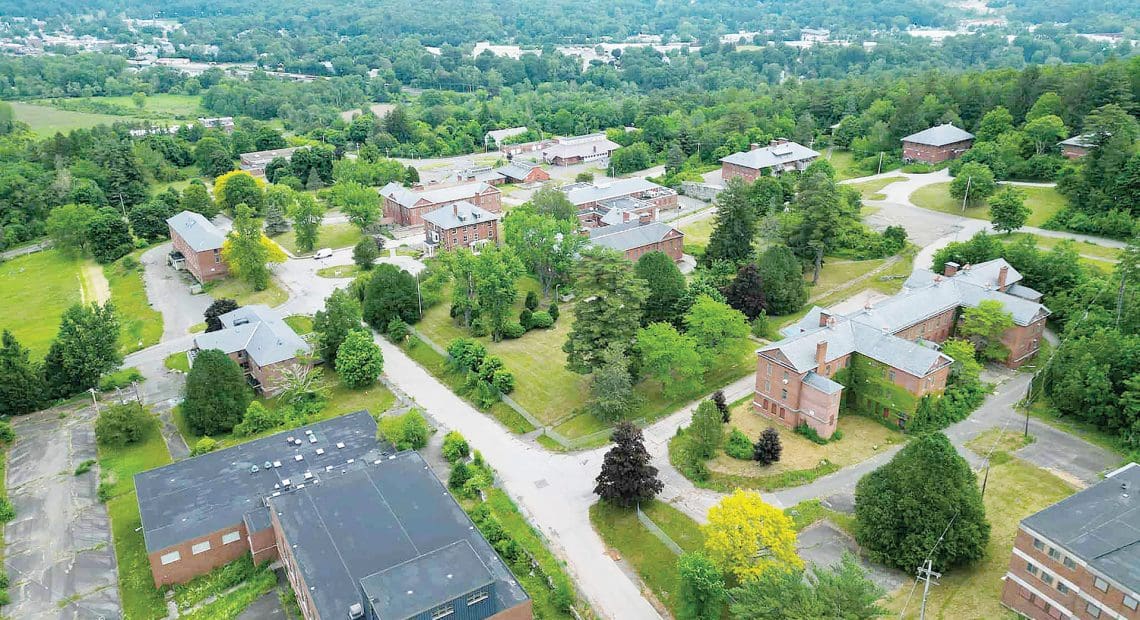
An aerial view of the Monson Developmental Center campus.

An aerial view of the Monson Developmental Center campus.


When Jeff Daley first pitched the Westmass Area Development Corp. board on the concept of redeveloping a portion of the former Monson Developmental Center (MDC) campus, it wasn’t a hard sell, necessarily.

“But it was a sell,” said Daley, the agency’s president and CEO, and for several reasons.

“It’s an imposing site, and there’s a ton of work that has to be done,” he said of the 100-acre parcel, which essentially sits between two mountains, with very little of what would be considered flat land. “And there’s a lot of money that has to be invested just to make the site developable again.”

But Daley was able to sell his board on the concept — a commitment from the state to provide a $9 million site readiness grant to the agency, as well as an accompanying reversion clause, certainly proved to be a turning point in the sales process — and late last month, the Commonwealth officially conveyed the property to Westmass, touting the transaction as part of ongoing efforts to utilize existing properties to build more housing in a state where there is a strong need for it.

And with that transfer, Westmass, in partnership with the state’s Division of Capital Asset Management and Maintenance, will commence work to create what will be known as the Village at Sawmill Brook.

The brook runs through the middle of the property, said Daley, adding that the name was chosen to reflect the rural nature of the community, and a ‘village’ is what is intended, with both residential and commercial development planned.

This is a village that will take shape over the next 10 to 20 years, he noted, adding that the first steps in the process involve demolition of almost all of the 14 existing buildings on the site — one structure, a recreation center at MDC, might be salvaged — as well as environmental remediation and infrastructure improvements.

Demolition is slated to begin early next year, and actual building will likely commence in maybe three years, Daley said.

Exactly what will be built remains to be seen, he told BusinessWest, as well as a gathering of about 100 Monson residents at a recent meeting of the Monson Board of Selectmen, noting that the site, and the market, will likely determine what shape this village will take.

“It’s an imposing site, and there’s a ton of work that has to be done. And there’s a lot of money that has to be invested just to make the site developable again.”

There will be housing, and probably several forms of it, with subdivisions, senior housing, veterans’ housing, and other options under consideration.

One of the first steps in the process will be creation of a master plan for the site to determine how many of those 100 acres can be developed, and in what ways.

“We’re in discussions with several of the groups that do housing for veterans,” Daley noted. “We’ll also talk with folks who do assisted living projects around the area to see if there’s a need for that in the Monson area.”

The next phase of the MDC project will involve demolition of the buildings on the campus

The next phase of the MDC project will involve demolition of the buildings on the campus, most of which are in an advanced state of deterioration.

There could also be senior affordable housing, similar to what has been created at another Westmass property, Ludlow Mills, he went on, adding that single-family homes, condos, duplexes, and fourplexes could also be in the mix. There will also be commercial elements, he said, such as retail businesses with residential units on the upper floors of buildings, in keeping with that ‘village’ concept.

“Right now, it’s a blank slate,” he noted, adding, again, that need and market conditions will likely dictate how the site is redeveloped.

Before any development can take place, the site needs to be cleared and infrastructure improved, a massive undertaking involving everything from the demolition of existing buildings, some of which are quite large, to replacement of a bridge that provides access to the site, for which the state has approved $5 million in funding.

The total cost of site preparation work is expected to approach and perhaps exceed $20 million, said Daley, adding that the state will work with Westmass to identify additional funding sources to advance the development.

Overall, the project represents a different kind of challenge for Westmass, but in many ways it is similar to the Ludlow Mills in that it involves extensive demolition and redevelopment of cleared sites.

“This is what we do … this is where Westmass shines,” Daley explained. “We take older properties and figure out what we can do with them, and I thank the governor and her team for trusting us and supporting us with the financial resources to do this. But once it’s down, cleaned, and demoed, it’s up to us to put together a really good, solid development plan that will benefit Monson.”