Home Archive by category Women of Impact (Page 3)

Women of Impact

Women of Impact 2018

Executive Director, HCS Head Start Inc.
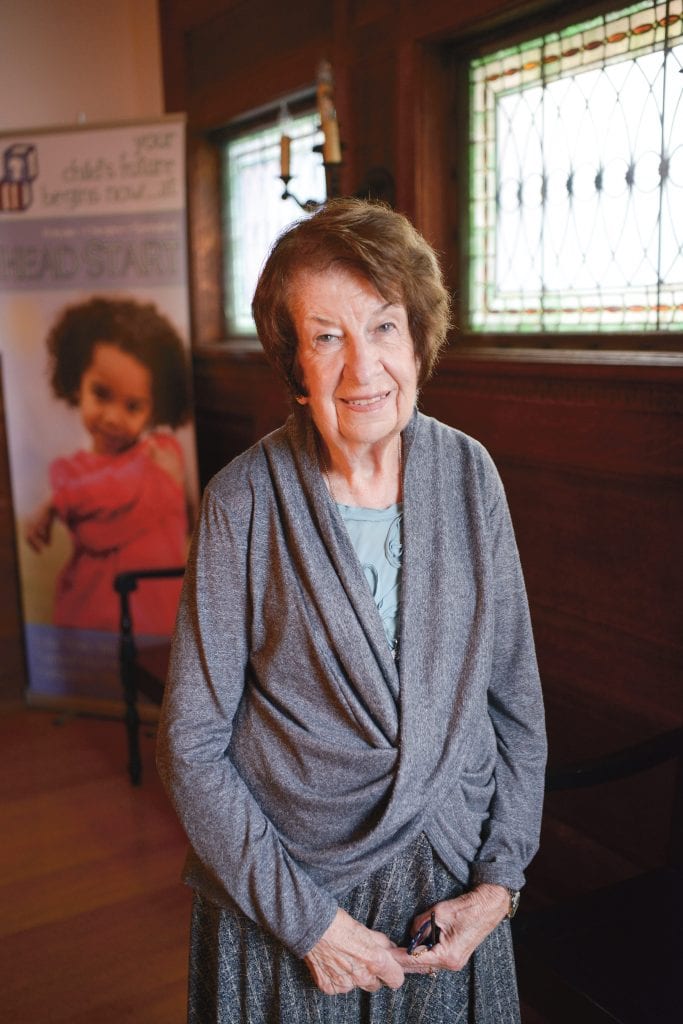
Photo by Dani Fine Photography

She’s Spent Her Career Giving Children a Solid Head Start

It’s called the Goodhue House — because it was built in the early 1890s by local contractor Charles Goodhue as his primary residence — but most know it as the Putnam mansion, the home to Springfield Mayor Roger Putnam until the 1950s.

Whatever name it goes by, the property at the corner of Central Street and Madison Avenue was and is one of the largest private residences ever built in Springfield.

Today, it’s the headquarters building for HCS Head Start Inc., and Janis Santos, executive director of that agency for nearly 40 years, often has to pinch herself to make sure this is really home. That’s because her involvement with Head Start goes back almost to the very beginning, when the organization was created as part of President Lyndon Johnson’s multi-faceted War on Poverty.

In those early days, the digs were much, much different.

“We were a federal agency, and back then, you couldn’t use federal funds to pay rent,” she explained. “So we had to find space that was given in-kind or free, so we were in places like church basements. When I started a Head Start in my town of Ludlow in 1973, we were in the basement of the Ludlow Boys & Girls Club.”

But as she talked with BusinessWest and later offered a tour of the Goodhue House, pointing out such things as the former master bedroom (now the conference room), what once were servants’ quarters, and a large room that once housed a music conservatory, Santos said that much more has changed over the past four decades or so than the accommodations.

And she has been at the forefront of, and a catalyst for, practically all of it, becoming what those who have worked with her over the years — directly, as an employee, or indirectly, as a state legislator or municipal official in one of the communities served by HCS Head Start — call a true pioneer in the field of early childhood education.

“Janis has led the charge, ensuring that children from vulnerable backgrounds have access to high-quality early learning, and has helped to legitimize and professionalize the field,” said Susan Gosselin, chair of the HCS Head Start board of directors, who began her teaching career at that aforementioned facility in Ludlow; Santos was her supervisor. “She began teaching at a time when the greater public viewed her career as babysitting, and today early education is a highly valued profession, and there is a better understanding of brain development and the importance of the early years.

“Her unwavering advocacy over the past four decades at the local, state, and national levels has helped bring attention to this issue,” Gosselin went on, “and has helped change the perception of early childhood education.”

These days, Santos admits she’s frequently asked about retirement and whether she’s ready for it, and noted that her answer is always a quick and firm ‘no.’ If anything, she’s probably picking up the pace a little (if that’s possible) and doing more of that aforementioned pinching.

“Janis has led the charge, ensuring that children from vulnerable backgrounds have access to high-quality early learning, and has helped to legitimize and professionalize the field.”

Indeed, recent initiatives, ones that make the Goodhue House rather old news, include a partnership with MGM Springfield that culminated in the opening this fall of the $4 million MGM Head Start Child and Family Center on Union Street. And in September, she presided over the groundbreaking ceremonies for an ambitious, state-of-the-art Educare School for preschool-aged children, a $14 million facility slated to open next year.

Meanwhile, she’s working on the front lines of efforts to improve access to preschool and increase the salaries for preschool educators, necessary steps, she said, toward better preparing children for school — and all that will follow (more on that later).

Santos, who said she had a few very important mentors while she was young, including an English teacher who insisted on calling students by their last names — hers was Johnston, and her teacher called it out several times a day as she implored her charge to work harder and reach higher — now counts mentoring as a large part of her job description, especially when it comes to employees.

This role comes naturally because, in most all respects, she has been where they are — as a young early-education teacher struggling to do that work while raising children at home — and is now (serving as an innovative, entrepreneurial administrator) where they want to be.

When asked about what she tells those she manages and mentors, she summed it up quickly and effectively.

“I tell them that change is important — if we don’t change, we won’t succeed,” she explained. “When there are new ways of doing things, new curriculum, always be thinking outside the box.

“I also tell them, when you look at a child, look at that child individually; they’re not like the child sitting next to them,” she went on. “Find their strengths and what their needs are; every child, every person is different.”

Janis Santos has always followed her own advice, and that’s why, for a half-century now, she’s been a true Woman of Impact.

New School of Thought

Santos calls it “management by walking about.”

That’s been her style throughout her career, and while those four words sum it up pretty well, we’ll let her elaborate.

“If you want your staff to trust you, you’ve got to be out there with them,” she explained, referring to the classroom, but also every office carved out of the many unique spaces at the Goodhue House. “I read … I love to read to kids in the classroom, or I might sit and have lunch with them. I also like to bring in area mayors and other officials to read; we’re a community program, and I want people to know what we do.”

And while she’s an administrator now and has been for decades, she says that, in her heart, she will always be a teacher and takes on that role in many different ways now, inside, but mostly outside, the classroom.
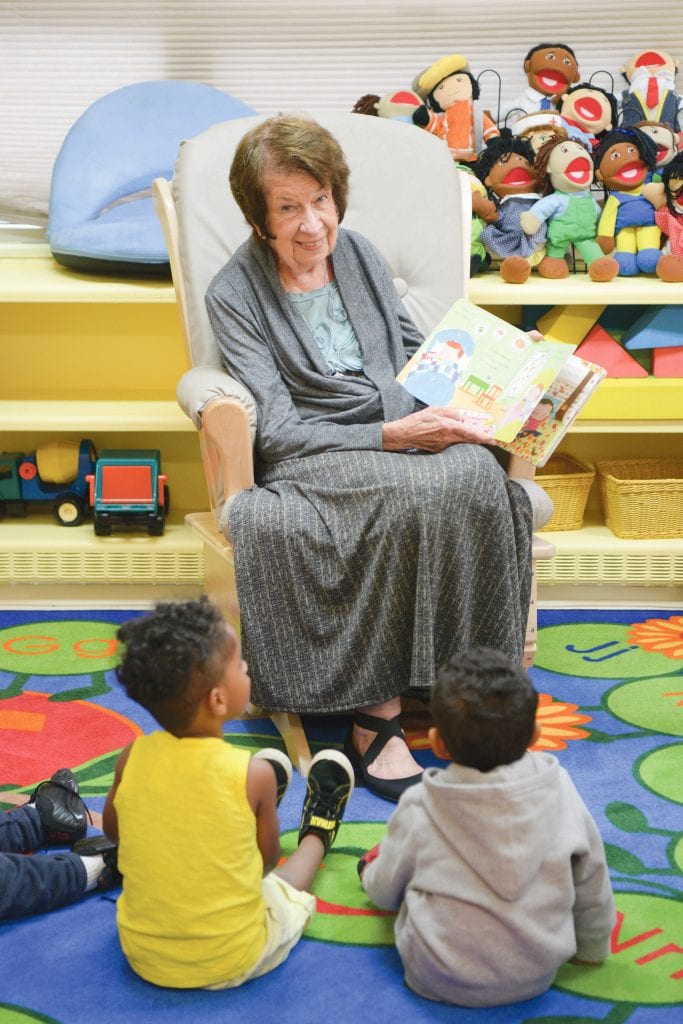
Janis Santos likes to say she “manages by walking around,” which includes regular sessions where she reads to children.

Janis Santos likes to say she “manages by walking around,” which includes regular sessions where she reads to children.

This has been her MO since she started with Head Start back in 1973, managing a small facility in Ludlow that, as she noted, was located in the basement of the Boys Club. In 1979, she was hired as executive director of Holyoke-Chicopee Head Start, and has presided over profound growth; indeed, the agency now has 17 sites and provides early education to more than 1,000 children, making it the second-largest Head Start in the Commonwealth.

Holyoke-Chicopee Head Start expanded into Springfield in 1996 when, after the agency that was running the Head Start in that city lost its federal funding because it wasn’t complying with regulations, it successfully bid for that license. And with that contract came a directive to find better space, she recalled, adding that a Realtor eventually brought her to the Goodhue House for a look.

Actually, Santos was one of the Head Start leaders who pushed legislators to change the laws on the books and thus enable the agency’s facilities to move out of church basements, and that’s just one example of her leadership efforts within the organization.

Indeed, she has served as chairperson of both the Massachusetts Head Start Assoc. and the New England Head Start Assoc., and was a member of the National Advisory Panel for the Head Start 2010 Project in Washington, D.C. in 1999. She also served as vice chair of the National Head Start Assoc. board from 2007 to 2014.

As she talked with BusinessWest about the organization, where it’s been, where it is today, and where it hopes to go in the future, Santos relayed some of the thoughts on those very subjects that she had left with the Rotary Club of East Longmeadow a few days earlier, a talk she gives to a number of groups over the course of a year.

During that quick speech, as she called it, she described Head Start as a holistic agency, one that focuses on children, obviously, but also parents, and therefore families.

Supporting just the children but not the others is unproductive, she said, adding that, overall, Head Start emphasizes everything from the health and nutrition of all members of a family to helping parents attain their GEDs so they can join the workforce.

“I told members of that Rotary Club that there’s a perception out there that low-income parents don’t want to work — they want to stay home and collect welfare, that sort of thing,” she said. “In Head Start, we know that’s not exactly true. We have many young parents … many of them have dropped out of school; we help them get their GED.

“I tell them my story,” she went on, referring to those young parents. “I was a teen parent, I went to college at night, I had three children at home. I tell them that they, too, can succeed. They can do as I did — they just need someone to believe in them and be there for them and mentor them.”

Class Act

Over the years, Santos has been that someone to believe in others and to mentor them, especially staff members at Head Start.

They are the lifeblood of the organization, she said, adding that, overall, while she’s seen a great deal of progress at Head Start and the larger early-education realm during her career, there is still a great deal of work to do in terms of making this field attractive to young people, especially men.

“Historically, this has been a field dominated by women, in large part because of the low wages paid,” she said, adding that men are needed because so many young children don’t have a father figure in their lives.

“Finding male teachers is very hard,” she explained, adding that retaining them is equally challenging. She related the story of one male teacher who resigned just a few days earlier; he loved what he did but couldn’t afford to keep on doing it, said Santos, adding that he left to become an apprentice with what she described as a sprinkler company.

“My heart was broken,” she said, adding that the young man wrote her a beautiful letter explaining his course of action and the reasons for it. “How sad is that? His heart is in early childhood teaching, but he just can’t afford to stay in this field.”

That story, and many others like it, make it clear that, while much progress has been made since Head Start was created, there is still a long way to go. In short, while many people no longer regard early childhood education as babysitting, people in the field are still paid as if they were babysitters.

“How can we get that perception to go away that these teachers don’t work hard?” she asked rhetorically. “We have children that have challenging behaviors, we have children with serious health problems; these early years are critical, and they are challenging. Taking care of one preschooler is a big job — when you have 20 of them in a classroom and there’s one other teacher, it’s a very big job.”

Suffice it to say that Santos is fighting hard to bring salary levels higher, and she will continue that fight. She told BusinessWest that legislators have passed several modest increases recently and remain champions of early education, but continued improvement is still the top priority within this industry.

“Her unwavering advocacy over the past four decades at the local, state, and national levels has helped bring attention to this issue and has helped change the perception of early childhood education.”

And while she said there have been many achievements of note since the early ’70s — for her and the early-education community — she’s always focused on the future, not the past.

And the future is represented in those two new projects in Springfield — the MGM Head Start Child & Family Center and the Educare school, both of which help show how far early education has come since it was still considered babysitting and classrooms were carved out of church basements.

View to the Future

While offering that tour of the Goodhue House, Santos made a number of stops — the second-floor porch with a commanding view of the city, the sitting room shaped like the bow of a ship (Mayor Putnam was in the Coast Guard), the elaborate front door, the grand staircase, and much more.

Yes, Head Start has come a long way since it was occupying donated space in church basements — in ways far beyond the mailing address of its facilities.

Janis Santos has been instrumental in achieving all of that, and while she’s proud of what’s been accomplished, she’s always looking toward what’s coming around the next bend, at what challenges remain to be addressed, at what new trails can be blazed.

That’s what true pioneers — and Women of Impact — do, and she has certainly set a high standard for others to follow.

George O’Brien can be reached at [email protected]
Women of Impact 2018

President & CEO of the Community Foundation of Western Massachusetts

Photo by Dani Fine Photography

This Administrator is the Region’s ‘Convener of Choice’

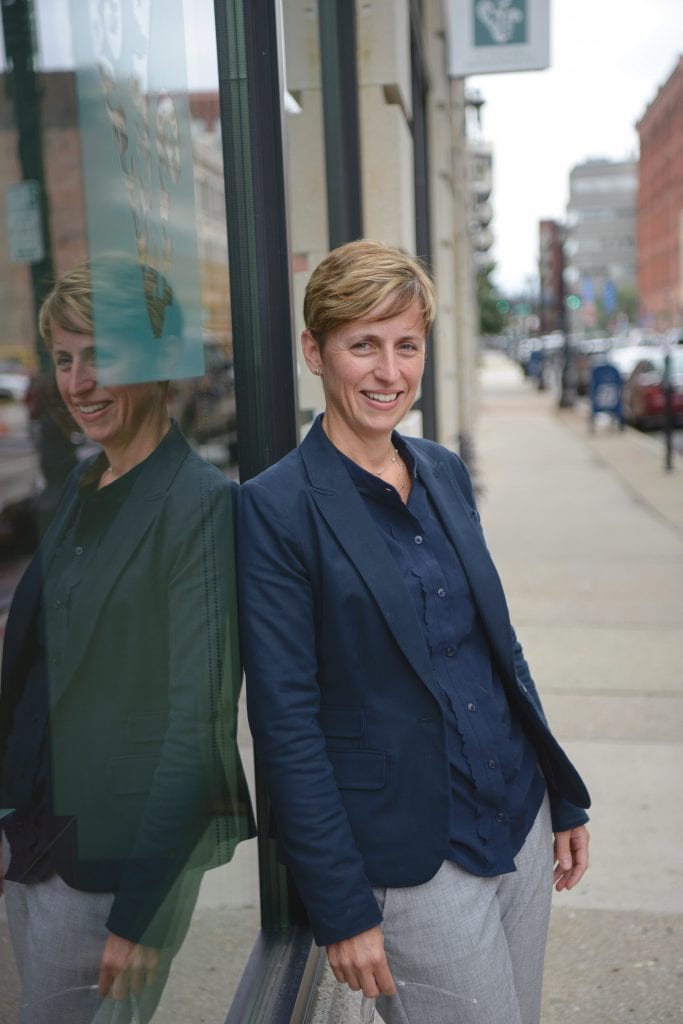
Katie Allan Zobel admits that, if pressed, her children would have a difficult time explaining to others what she does for living — not that she hasn’t tried to put it all into context.

The quick, easy answer is that she is president and CEO of the Community Foundation of Western Massachusetts, and in that role, she oversees an agency that facilitates philanthropy to the benefit of residents and nonprofit agencies in Franklin, Hampden, and Hampshire counties.

Again, that’s the easy answer. But Zobel doesn’t stop there, and shouldn’t, because there are many layers to her work that do make it difficult to articulate — to a child or even most adults.

“It’s a long-term proposition, what I’m doing, and it’s hard to explain,” she said, “because there’s not a daily, concrete ‘this is what I’ve made, this is what I’ve produced.’ It’s all so long-term, and it’s a total team effort — it’s not something I do on my own.”

Indeed, beyond the title on her business card, Zobel is, above all else, a connector and collaborator, or what Ralph Tate, retired managing director of Standish, Ayer & Wood and chair of the board of trustees for the Community Foundation of Western Massachusetts, calls the “convener of choice” for business and nonprofit leaders across this region.

He also described Zobel as an innovator, leader, and a reader, too — she volunteers for Link to Libraries at the Edward P. Boland School in Springfield — and in all those roles, she’s taking the Community Foundation far, far beyond an organization that awards grants and scholarships, although it does that, too.

“Katie is one of the Pioneer Valley’s most strategic, engaging, and respected leaders due to her expertise in philanthropy, intimate understanding of regional needs, and well-established relationships with a diverse set of community partners,” Tate said. “She brings honesty, integrity, authenticity, and humor to her daily interactions, and commitment and dedication to improving the quality of life in the Valley, and to fostering innovation in leveraging the foundation’s assets to those in need.”

Slicing through a long list of accomplishments and ongoing initiatives, Zobel is working to make the foundation — and individuals’ philanthropy — more effective and more impactful. Put another way, through innovation, perseverance, and a great deal of that convening described earlier, she’s working with others to take the art and science of philanthropy in this region to a higher plane.

And to bring these thoughts into perspective, she mentioned a new initiative called Western Mass. Completes.

“Katie is one of the Pioneer Valley’s most strategic, engaging, and respected leaders due to her expertise in philanthropy, intimate understanding of regional needs, and well-established relationships with a diverse set of community partners.”

This is an initiative involving the 10 area colleges and universities being attended by the largest numbers of Community Foundation scholarship winners, Zobel explained, and it is designed to help improve what she called alarmingly high numbers of first-year college students who don’t make it back for a second year, let alone to the podium on commencement day.

“It’s becoming a crisis,” she noted, adding that the percentage of non-returnees is perhaps as high as 30% nationally. “And we’re partnering with these colleges to understand how our scholarship students are faring. Are they graduating at similar rates? We’re using this cohort model to understand what practices these schools are using to get these students to completion, to get their degree.”

In short, the program is designed to help the foundation not only send students to college, but see them through to graduation day, and it’s merely one example of how the ever-humble Zobel says she is working to lead the Community Foundation into, and on the cutting edge of, a period of change in philanthropy.

“We have a very strong foundation — we’ve spent the past 26 years building trust and our reputation, creating extensive networks up and down the Valley, understanding the communities, and connecting with those who can be generous,” she explained. “And we’re at an inflection point; over the past few years, I’ve been trying to prepare the organization to go around that next curve and come out stronger.”

Initiatives in this broad realm include adding new members to the team at the foundation, introducing and growing the hugely successful Valley Gives program, and even moving the foundation’s office from high in Tower Square to a street-level suite of offices on Bridge Street, where it is more visible — and also a key cog in efforts to revitalize the downtown area.

“I like to say that I’m putting all the building blocks in place so by the time the next decade arrives, we’ll be in a position to meet that inflection and grow and be more effective for the community,” she told BusinessWest.

Her success in assembling these building blocks, and in making the Community Foundation an ever-more powerful connector and collaborator, helps explain — to Zobel’s children and everyone else — why she is truly a Woman of Impact.

Checks and Balances

While Zobel graduated from Boston College with a degree in English, she quickly gravitated toward philanthropy. Soon, it became a career.

She held positions with WGBY and Amherst College — where she led the alumni fund to a record participation rate in 1996 — before eventually joining the Community Foundation in 2004.

Since becoming president and CEO, she has led the organization to growth that can be measured in a number of ways, while fostering a mindset that places a much greater emphasis, on, well, measuring.

That’s because this is what donors, and society in general, are demanding these days, she said, adding that, increasingly, groups and individuals want to see results from their philanthropy.

“We’re in this era of big data, where we can access data more readily than we have in the past,” she explained. “And this data is important because philanthropy is changing; we all want to know if our investments, our donations, are having an impact.”

To that end, the Community Foundation is using innovation, as well as its ability to convene and collaborate, to help ensure that those philanthropic investments have more of an impact.

Examples abound and include Valley Gives.

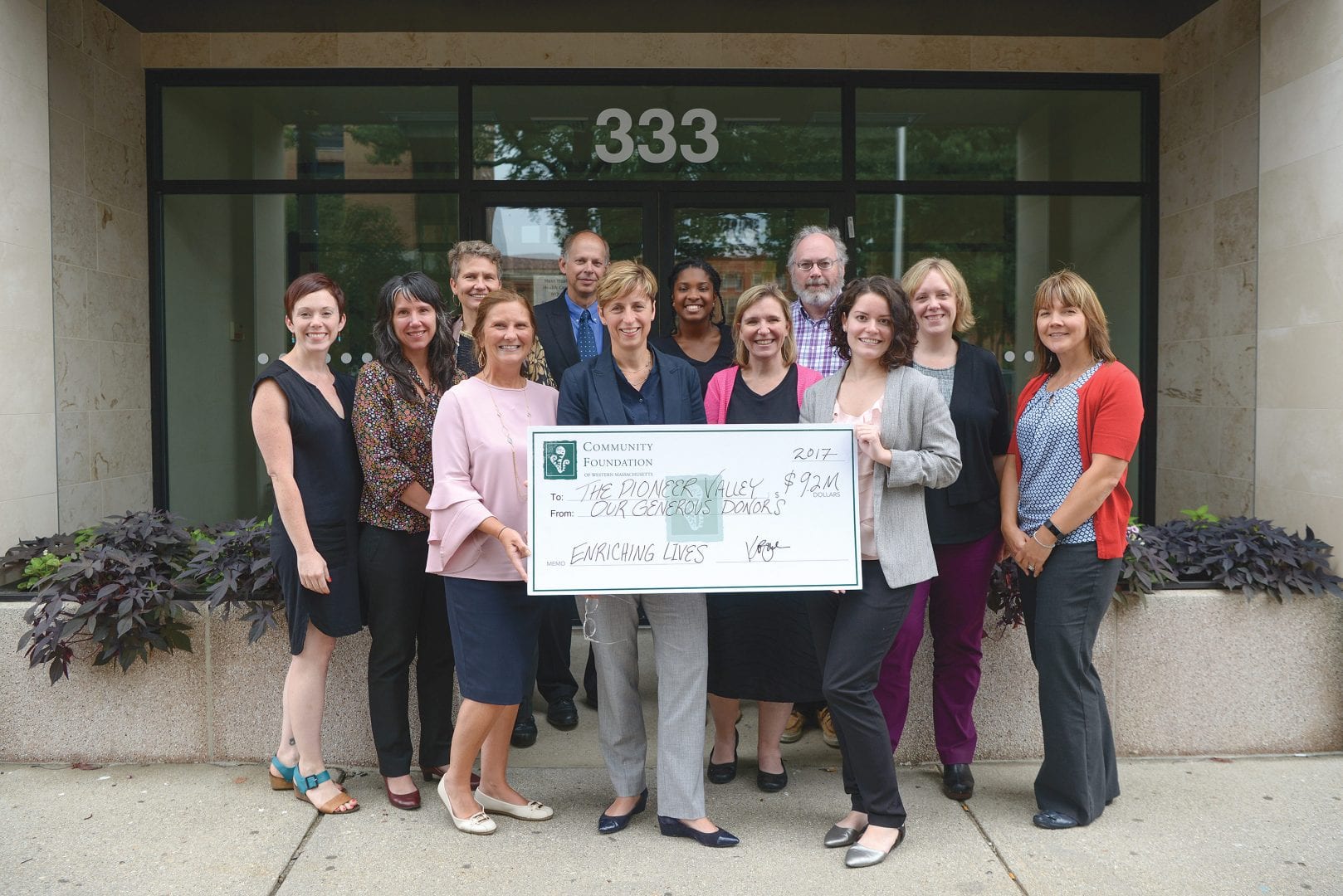
Katie Allen Zobel displays a symbolic check showing the results from the first several years of Valley Gives, one of many initiatives she has helped introduce.

Katie Allen Zobel displays a symbolic check showing the amount of total grants and scholarships the Community Foundation of Western Mass. granted out to the community in fiscal year 2018.

“This was a three-year pilot program to see if we could be a more generous region, if we could help nonprofits tell their stories in the digital age,” Zobel explained. “Could we help the donors who care about the community to connect with organizations that are doing good work that they might not have heard about before?”

The answer to all those questions is ‘yes,’ and the three-year pilot has become a six-year pilot, a program that has raised more than $10 million for more than 800 nonprofits over that short span.

“We helped, we enabled … we didn’t raise any money ourselves,” she went on, adding that this is just one example of how the foundation has used innovation to not only assist nonprofits and those they serve, but also better understand the needs of this region.

This discussion brings Zobel back to that notion of putting building blocks in place to make the foundation a more effective, more impactful (there’s that word again) force within the region.

She said there are many of these blocks, including people (she’s still adding more members to the team), technology, such as online donations, for example, and, as noted, the right space.

In Tower Square, the foundation served the community, but it wasn’t really a part of it, she explained, adding that the address on Bridge Street, and the community space that is part of that facility, is a far more appropriate location from which to carry out its mission.

But there are other building blocks as well, she went on, listing, among other things, a better understanding of community needs and the forging of strong collaborations.

“We know we can’t do this alone,” she explained. “And I’m a big fan of partnerships, so I’ve developed really trusted relationships with the Davis Foundation, the MassMutual Foundation, the Beveridge Foundation, UMass, and many others.”

Coming Together

Through these collaborations and partnerships, the Community Foundation has taken a lead role in several pilot programs and new initiatives, including something called Honors to Honors.

This is a program whereby low-income students, most all of them first-generation students, from the area’s community colleges can transfer to the Honors College at UMass Amherst, and perhaps become better positioned to graduate with a four-year degree.

Statistics show that first-generation students are even less likely to finish college, said Zobel, adding that Honors to Honors is another initiative aimed at creating more impactful giving.

“We know we can’t do this alone. And I’m a big fan of partnerships, so I’ve developed really trusted relationships with the Davis Foundation, the MassMutual Foundation, the Beveridge Foundation, UMass, and many others.”

And it’s also another example of how the foundation is responding to the changing times within the broad realm of philanthropy and demands for results from one’s giving.

“We’re in a culture that asks questions and demands answers,” said Zobel, adding that this mindset has brought her and the team at the Community Foundation to ask more questions themselves. And those related to the success rates of scholarship recipients comprise just one example.

Those are important questions because getting a young person onto a college campus is no longer the goal — not that it ever was.

“We all know how powerful a college degree can be — it can break the cycle of poverty,” she explained. “It opens doors that couldn’t be opened otherwise, and it leads to a skilled workforce. By giving a scholarship, that led to assumptions that everyone who received one graduated; we know that’s not the case.”

More questions about this region’s needs, as well as its many assets and potential growth areas, has led to another intriguing initiative involving the foundation, this one focused on the arts community, called ValleyCreates.

Indeed, the Community Foundation of Western Mass. is one of five community foundations to be awarded a $500,000 grant from the Boston-based Barr Foundation for a pilot program to help nurture the arts and creativity sector in the region.

“This was an interesting new endeavor for us,” Zobel explained. “We were given a list of what they thought were about 58 arts organizations in the three counties, and we knew there were a lot more than 58.

“We went out looking, and put together an advisory board to help us look, and we found more than 225 organizations in these three counties,” she went on, adding that many of these are small and had never reached out to the foundation for support before, in part because they didn’t have the capacity to do so.

As a result of this learning experience, the foundation is responding in a number of ways, including training sessions to help these organizations focus on capacity building and specific issues and challenges like marketing, fundraising, and board governance, as well as the creation of an innovation grant to support arts and creativity.

Meanwhile, a request for proposals is being readied for an arts hub — a digital clearinghouse that connects arts organizations across the Valley so they can share information and potential opportunities.

The two-year program is another example of those building blocks, and also of Zobel’s efforts to build a stronger, more far-reaching, more impactful Community Foundation and a better-connected region.

On-the-Money Advice

As she talked about these various initiatives, Zobel said they are very much a work in progress, a story with many chapters still to be written.

Still, much has been accomplished already, and Zobel has established herself as a Woman of Impact, even if her children would have a hard time putting into words what she does day in and day out.

She offered this explanation that might help a little — or a lot.

“I work every day with people who want to make the world better,” she said, adding that, in the most basic of terms, it’s her job to help them do that.

And she’s very, very good at it.

George O’Brien can be reached at [email protected]
Women of Impact

The Inaugural Women of Impact Awards

BusinessWest has consistently recognized the contributions of women within the business community and has now created the Women of Impact awards to honor women who have the authority and power to move the needle in their business; are respected for accomplishments within their industries; give back to the community; and are sought out as respected advisors and mentors within the field of influence.  Nominees can be high-level executives, entrepreneurs, leaders of a non-profit organization, business owners, volunteers, or mentors: any inspirational woman, at any level in her career, who is doing remarkable things.

Nominations are now closed for 2018, but you may submit a nomination for 2019 consideration.

The 2018 Women of Impact honorees  will be announced and profiled in the October 29 issue of BusinessWest and  will be honored at the Women of Impact Luncheon Awards on Thursday, December 6, 2018 at the Springfield Sheraton Monarch Place Hotel.

Click here to view nomination information, requirement, and to submit your online nomination form.

For sponsorship information contact:
Kate Campiti 413.781.8600 (ext. 104) [email protected]
Kathleen Plante 413.781.8600 (ext. 108) [email protected]

Event Information
Date: Thursday, December 6, 2018
Time: 11 a.m.-1:45 p.m.
Location: Sheraton Springfield, One, Monarch Place, Springfield, MA 01144
Tickets on Sale: October 1, 2018; Price $65/person; $650/table of 10
For more information: Call (413) 781-8600 x100 or email at [email protected]

Sponsored by:


Women of Impact

Women of Impact

Women of ImpactThe name was chosen very carefully.

Actually, it was the last word that demanded the most time and attention, for reasons that will become obvious.

BusinessWest decided recently, after much consideration, to launch a new recognition program (yes, we already have several) to honor a specific segment of the local population.

Women.

More specifically, women making an impact in and on this region. Hence, Women of Impact. BusinessWest is currently accepting nominations for this honor HERE, and those who score the highest in the eyes and minds of three judges will be honored at a luncheon in December (date and venue to be determined).

More on all of that in a few minutes.

Fast Facts

What: The inaugural Women of Impact Awards

When: Nominations are due Aug. 3. The awards luncheon will be in December, date and venue to be determined.

Why: To recognize women who are making an impact in this region.

For More Information: Go HERE.

But first, why a special recognition program for women? Why not call it ‘People of Impact’ and honor anyone who fits that description? We asked that question ourselves. Kate Campiti, BusinessWest’s associate publisher and sales manager, provides a synopsis of the answer.

“We decided to create a special program recognizing women because, after careful consideration, we decided that this region needed one and that BusinessWest was the right organization to do it,” she explained. “While women have certainly made great strides over the past several decades, and many women have made great achievements and broken through that proverbial glass ceiling, doing so remains a stern challenge for many.

“We want to recognize those who have broken through,” she went on. “But, more specifically, we want to honor those who are making full use of their time, talents, and considerable energy to impact this region and improve quality of life for those working and living in this region.”

Elaborating, Campiti said ‘Women of Impact’ was chosen as the name for the program because, while nominees can be from the world of business, they can also be from other realms, such as the nonprofit community, public service, law enforcement, education, social work, the mentorship community, a combination of all these — any inspirational women on any level.

Nominations for this honor, due on Aug. 3, should be written with one basic underlying mission: To explain why the individual in question is, indeed, a woman of impact. Nominations should explain, when applicable:

• How the nominee has made impactful accomplishments or contributions that have positively influenced business or the community;

• How the nominee demonstrates unwavering passion and commitment for an issue that has made a difference in the lives of others;

• How the nominee has influenced other women through her actions and contributions;

• How the nominee exemplifies qualities of spirit, service, compassion for others, or professionalism to achieve accomplishments, and how she may have overcome adversity in order to give back to the community;

• How the nominee has applied innovative thinking to push the boundaries and find new and better ways to do things; and

• How the nominee has consistently demonstrated exceptional and progressive leadership.

For more information, go HERE.

“BusinessWest has consistently recognized the contributions of women within the business community,” Campiti said. “The Women of Impact Awards honor women who move the needle in their companies, are respected for their industry accomplishments, serve as mentors to other women, and give back to the community.”