Home Posts tagged 50 Years
Building Trades Special Coverage

Golden Opportunity

From left, Heather Roy, marketing and communications specialist; D’Lynn Healey, project executive; Bryan Hughes, president; and Ed Ackley, general superintendent.

From left, Heather Roy, marketing and communications specialist; D’Lynn Healey, project executive; Bryan Hughes, president; and Ed Ackley, general superintendent.

Bryan Hughes says Western Builders has marked its 50th anniversary in several different ways — from a gathering of employees and their families at a local restaurant,to postings on social media celebrating both employee and company milestones, to a new, temporary logo marking the occasion.

And there’s more to come, with a larger gathering slated for September at the company’s Granby headquarters for employees, clients, subcontractors, and more.

But in many ways, it’s been business as usual for this construction firm, which is not the same thing as business as it was done in 1975, or even 2005.

“In decades past, business was generally done with a handshake,” said Hughes, who took over as company president in 2022. “And the new way of delivering a project is more managerial in a sense; when people come to Western, they’re paying for a partnership in solving problems, forecasting challenges, and addressing them.”

Creating more value for clients is just one of the focal points for Hughes and the leadership team at Western, a subsidiary of the O’Connell Companies.

“In decades past, business was generally done with a handshake. And the new way of delivering a project is more managerial in a sense; when people come to Western, they’re paying for a partnership in solving problems, forecasting challenges, and addressing them.”

Overall, the company is in a growth mode — let’s call it a controlled growth mode — fueled by several factors, but especially the region’s (and the state’s) housing crisis. Indeed, many of the firm’s current projects involve initiatives to address an extreme shortage of housing, especially within the affordable category. These include:

• Phase 2 of South Holyoke Homes, a modular construction project led by the Holyoke Housing Authority that features single-family homes and duplexes;

• Baskin West Main Residences, a 105-unit, mixed-income apartment complex being undertaken by Brisa Builders Development;

• Amethyst Brook Apartments, an affordable housing community in Pelham being undertaken by Home City Development; and

• An expansion of Clinical & Support Options’ Friends of the Homeless campus on Worthington Street in Springfield, a 23,974-square-foot facility that will provide critical shelter and supportive housing to individuals experiencing chronic homelessness.

Meanwhile, several projects completed recently involve housing — everything from East Gables, an affordable housing project on Northampton Road in Amherst undertaken in collaboration with Valley CDC, to Aspen Heights, a student housing apartment facility, also in Amherst.

The housing crunch is not a problem that will be solved quickly or easily, said Hughes, adding that this reality should provide ongoing growth opportunities for a firm that has made its mark in that arena.

“The way the crisis is described to us by local, state, and federal officials is that it will be a never-ending challenge to overcome,” he noted, adding that, as the Commonwealth and local agencies ranging from Way Finders to Home City Development address the crisis, Western will have opportunities to not only do more work in the 413, but expand its service radius as well.

Among the many projects in the Western Builders portfolio is renovation work at the Naismith Memorial Basketball Hall of Fame. (Photo by Red Skies Photography)

Among the many projects in the Western Builders portfolio is renovation work at the Naismith Memorial Basketball Hall of Fame. (Photo by Red Skies Photography)

“We definitely have a local edge, with local subcontracting partners and local relationships and clientele — that’s why we’re Western Builders, because we typically stay in Western Mass.,” Hughes explained. “But part of the future vision of the company is to push the limits there a little bit, because the housing crisis isn’t limited to Western Mass.

“Moving forward, we want to grow the company at a comfortable clip — we want to be able to sustain our methods and our confidence in ourselves,” he went on. “But I think we’re ready to take on more.”

Any firm marking 50 years has survived many kinds of challenges, and that’s true of Western as well, which has weathered downturns and a Great Recession, but also a pandemic and ongoing workforce issues, including the need to replace the many talented workers approaching, or already at, retirement age.

Like other firms, it is taking a proactive approach to the problem, as we’ll see, promoting the trades and getting young people involved early, giving them a taste of the work as well as the financial rewards and relative stability of the sector.

For this issue and its focus on the building trades, we’ll look at the first 50 years for Western Builders and what will likely come next at a time when some golden opportunities are emerging.


Firm Commitment

Tracing the history of the firm, D’Lynn Healy, project executive, said it was created by O’Connell to work with the company’s development group and also with local private colleges and development companies.

And from the beginning, diversity, in all its forms, has been perhaps the company’s strongest suit.

Indeed, while it’s perhaps best known for wood-frame construction — as seen in projects ranging from phase 1 of Glenmeadow in Longmeadow to transformation of the former Yankee Pedlar in Holyoke into a PeoplesBank branch; from River Mills Assisted Living in Chicopee to restoration of the historic Gaylord mansion on the Elms College campus — it has worked with stone and steel as well.

Indeed, the portfolio includes projects like Way Finders’ new home in downtown Springfield, the Educare early learning facility, also in Springfield, and renovation work on the Naismith Memorial Basketball Hall of Fame, including refurbishment of the sphere, which involved removing thousands of fiberglass panels and resurfacing them, but also extensive interior renovations.
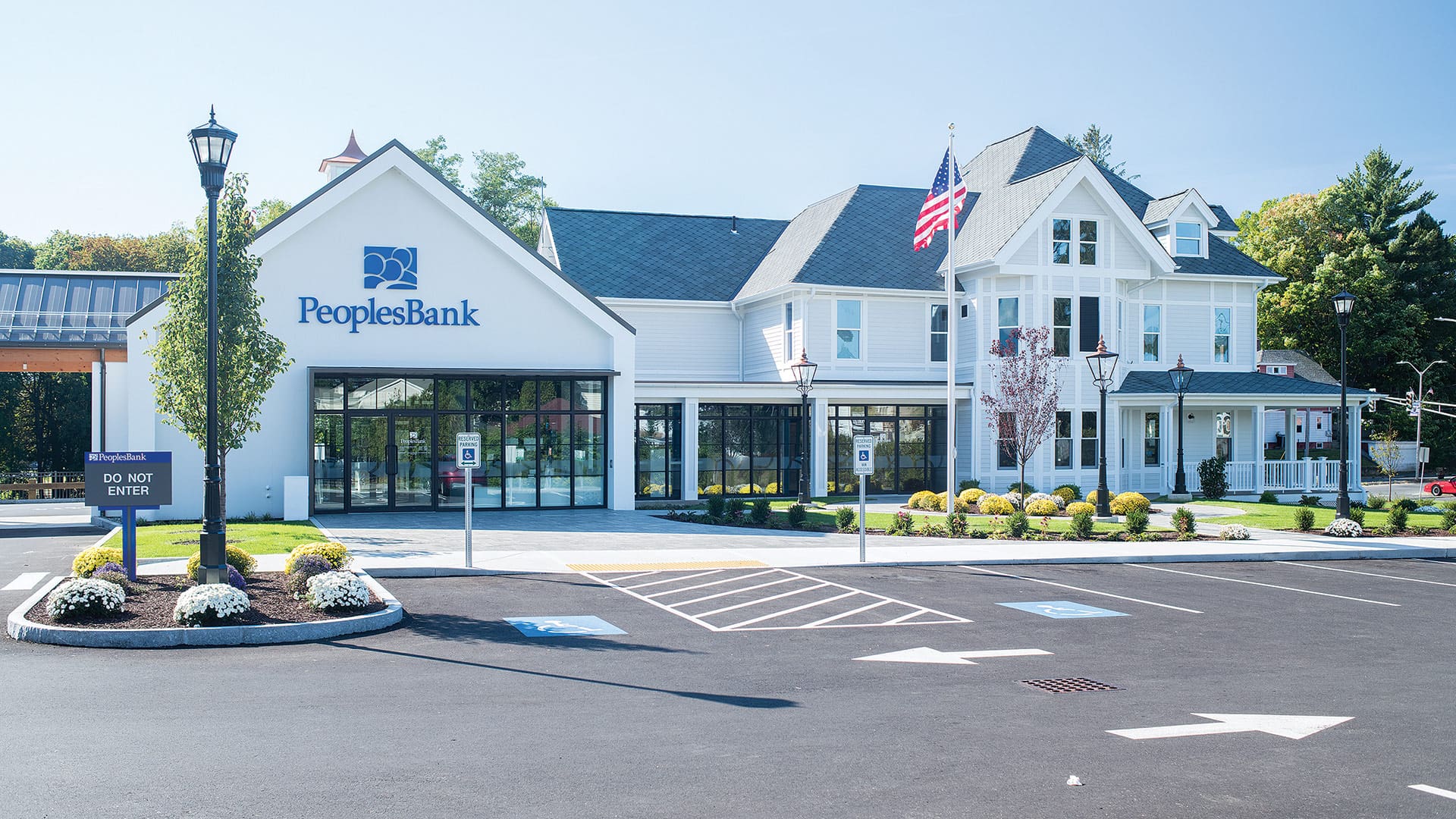
The PeoplesBank branch in the former Yankee Pedlar in Holyoke. (Photos by Red Skies Photography)

The PeoplesBank branch in the former Yankee Pedlar in Holyoke. (Photos by Red Skies Photography)

Work in the Health Sciences building at American International College (right) showcase the diversity of projects in the Western Builders portfolio. (Photos by Red Skies Photography)

Work in the Health Sciences building at American International College (right) showcase the diversity of projects in the Western Builders portfolio. (Photos by Red Skies Photography)

Beyond diversity with materials, the company has worked in several sectors, including public and private clients, new construction as well as renovations, such as at Elms College, and different realms, everything from housing to the new Phoenix Academy Public Charter School at the Springfield Technology Park, to emergency renovations to the Courniotes Building at American International College (AIC) after a fire there.

“Our focus can remain in housing, but we want to emphasize diversity,” Hughes said. “We’ve won some hard-bid projects for public work, which has helped us diversify in our project types. We’re back at some institutions, like AIC and Smith College, building on existing relationships.”

Signature projects over the past five decades, and there are many, include work with O’Connell Development to build a new 152,000-square-foot, LEED-certified manufacturing facility and corporate headquarters for L3Harris Integrated Mission Systems/KEO, formerly Kollmorgen, at the site of the former Northampton State Hospital; the Educare facility, considered state-of-the-art in that sector; the work at the Hall of Fame; the new Girls Inc. headquarters in Holyoke, located, ironically, in the former home of the O’Connell Companies; and the Holyoke Crossing retail facility in Holyoke, another project where O’Connell Development was the client.

Today, Western is doing far less for O’Connell and much more with a growing list of clients, many of them involved with housing, including Way Finders, Valley CDC, Home City Development, and others.

A common denominator is repeat business, said Healey, adding that clients such as Way Finders, American International College, PeoplesBank, and others have turned to Western for several different undertakings.

“A lot of clients are repeat clients that we’ve worked with,” she explained, adding that one of the firm’s strengths is relationship building. “When these clients have another project, they reach out to us.”

And much of this repeat business stems from the firm’s ability to create value and effectively manage projects, as Hughes mentioned earlier.

“It used to be … construction was definitely a ‘work-harder industry,’” Healey explained. “Now, we’ve finally acquiesced and realized that we have to work smarter and not just harder. You have to be strategic, and you have to plan — you have to make sure that you have everything lined up before you start working.”


Building Relationships

As noted earlier, housing has become a major focal point for Western over the past few decades as need grows and agencies take imaginative steps to address it. And the company has several projects in this realm in various stages of development.

Amethyst Brook should be fully occupied by the end of this month; the projects in Chicopee (Baskin West Main Residences) and Springfield (expansion of the Friends of the Homeless complex) are in early-stage work, while the Holyoke initiative is moving toward completion, with the Holyoke Housing Authority now running commercials urging people to enter the lottery to purchase those homes.

That Holyoke project represents a first — working with modular construction, said Hughes, adding that it has been a learning experience.

“Boxes are prefabricated in Pennsylvania and shipped to Holyoke and put together as side-by-side townhomes,” he explained, adding that the process significantly streamlines the timeline for construction.

“It’s nice to see an emphasis on the trades. You see commercials about it, you hear the unions talk about it, the non-unions talk about it … anyone in the trades can be, if they want to apply themselves, as successful as someone who wound up with a giant college loan that they have to pay back and may or may not be able to work in the field they trained for.”

Meanwhile, many initiatives, including one of the buildings at Amethyst Brook as well as East Gables in Amherst, involve what’s known as passive housing, a voluntary standard for energy efficiency in a building that has surpassed LEED as the cutting edge in that realm.

“There are more passive houses in development and pre-construction because that’s the popular trend moving forward with energy efficiency and sustainability, which is what clients want,” Hughes said. “But there’s also a code aspect — client developers need to meet the Massachusetts Stretch Energy Code, which is one of the most stringent in the country.”

Beyond housing and the growth opportunities it presents, the company has been focused on relationship building — continuing long-standing partnerships and forging new ones — and also on perhaps the biggest issue facing this sector — maintaining a workforce.

Indeed, since arriving at Western, Hughes said one of his priorities has been to generate interest in the field among the younger generations.

He cited several initiatives, including work with Dean Tech High School in Holyoke, hiring co-op students to work for the company part-time at job sites while also attending school.

“It’s been cool to see that youthful excitement about construction,” he said, adding that, by exposing young people early to the lifestyle and opportunities the trades create, the firm is helping to put more future workers into the pipeline.

Ed Ackley, the company’s long-time general superintendent, agreed.

“The workforce is aging, and it’s retiring out,” he said. “So one of things we’ve been doing is trying to attract young people as project managers and assistant superintendents in hopes that they can gain experience, so by the time they become a super, they’re as effective as the seasoned personnel we have now.

“It’s nice to see an emphasis on the trades,” Ackley went on. “You see commercials about it, you hear the unions talk about it, the non-unions talk about it … anyone in the trades can be, if they want to apply themselves, as successful as someone who wound up with a giant college loan that they have to pay back and may or may not be able to work in the field they trained for.”

And, unlike jobs in many other fields that face uncertain futures with advancing technology, including AI, those in the trades are relatively secure, Hughes told BusinessWest. “You can’t ask ChatGPT to build a masonry wall.”


Features

Deep Dive

Ted Hebert says his story has been one of being knocked down and always getting back up.

Ted Hebert says his story has been one of being knocked down and always getting back up.


As Teddy Bear Pools & Spas marks its 50th anniversary this year, it’s safe to say most in the business community have read — in this publication and others over the years — Ted Hebert’s story of humble beginnings, perseverance through severe challenges, and current status as not only one of the region’s venerable business owners, but a strong supporter of area nonprofits.

But ask him what the milestone means, and he says, “I don’t see the significance of 50 years.”

That’s not because he lacks gratitude or perspective on his career — he certainly has both — but for him, when he thinks about the work itself, he’s actually been doing it for closer to 60 years, starting as a gofer at a pool store at age 14.

“That developed over about three years. I started to become a pool installer. The above-ground pool would be dropped off at someone’s house, and my late friend Kenny and I would go and build a pool. Back then, we used to hand-dig the above-ground pool. We used to wheelbarrow the dirt into the backyard. We’d even do two pools a day. We’d work from maybe 6, 7 in the morning to 8, 9, 10 at night. I remember working on pools in the dark.”

His own work is, obviously, much less physically strenuous now, but those early years gave Hebert an appreciation for his employees that he’s quick to express.

“I guess I don’t realize the reality of 50 years because I don’t have a job. This isn’t work for me. I mean it sincerely. My employees are my extended family,” he said, noting that some have been with him for decades, and some are second-generation team members.

“Many times, people will say to me, ‘I can’t wait to retire.’ But I do not work — I love what I do. I’m not here for the money. Teddy Bear Pools is my home away from home. I get enough free time, but in May and June, I try to be here almost seven days a week because I want to see my customers.

“I’ve achieved every goal that I could ever think of. I’ve achieved fantasies. I’ve been on top of the mountain. But I’ve also been on the very bottom, with betrayal by close friends, people that I trusted, people in my wedding party. I’ve had a lot of really low points in my life.”

“I built someone’s pool 30, 40, 50 years ago, and now their kids are coming in,” he added. “I call every customer that buys an above ground-pool, a spa, or even a liner, and I call to thank them personally.”

That gratitude extends to his own journey, which has seen both highs and lows (more on that later), but has also been marked by hard work, dogged persistence, and faith.

“I’m a survivor,” he said. “I think, being in business, you need to be a survivor. A lot of people can’t. It’s a challenge, but if you’re up to the challenge, it’s going to be very exciting.”


Into the Deep End

Hebert has told the story of how he wanted to become a doctor, but didn’t have the money for medical school, so he eventually started his own pool company from the carport of his parents’ home. Although the original name he chose for his business was Custom Pools by Ted, his mother suggested he use his childhood nickname of ‘Teddy Bear,’ a play on the French pronunciation of Ted Hebert.

By 1976, Teddy Bear had grown enough to allow Hebert to rent a former car-wash bay on Memorial Drive in Chicopee and turn it into a storefront. When the property was foreclosed upon three years later, he purchased a run-down former car dealership in a dilapidated building on East Street in Chicopee, which remains his address today.

The East Street store wasn’t always surrounded by display pools, as this photo from around 1980 shows.

The East Street store wasn’t always surrounded by display pools, as this photo from around 1980 shows.

In the early years, the business grew steadily, but he suffered two major setbacks during the 1980s in the form of employee betrayal and mismanagement. The first event occurred in 1986 when an audit undercovered $1.2 million of money and goods not accounted for, and the second took place while he was on his honeymoon in 1987. When he returned, he found an additional $200,000 of money and goods missing.

“I’ve been embezzled twice, but I never went bankrupt,” he recalled. “I went back to church, and I prayed to God to help me through this. I worked seven days a week, living at home with my mom. I was like 35. It took me a few years, but I paid off everybody.”

Those times have instilled in him an appreciation for the success that followed.

“I’ve achieved every goal that I could ever think of. I’ve achieved fantasies. I’ve been on top of the mountain. But I’ve also been on the very bottom, with betrayal by close friends, people that I trusted, people in my wedding party. I’ve had a lot of really low points in my life.”

And with that appreciation of his journey, Hebert was even more determined to redirect his own success back on his community. In 2022, he was honored by BusinessWest as a Difference Maker, for his many years of giving back to the community, not just by writing checks to nonprofits (though he does a lot of that), but by sitting on boards and volunteering at fundraising events.

He and his wife, Barbara — who, it should be noted, is an equal partner in all this community service — give time and money to many different types of organizations, but have a special place in their hearts for animal welfare. For example, as a longtime supporter of Second Chance Animal Services (whose CEO, Sheryl Blancato, was also named a Difference Maker this year), Teddy Bear hosts two rabies and parvo vaccination clinics each year for the nonprofit, helping hundreds of pet owners access free or very low-cost services.

Barbara Hebert said some of their civic work hits close to home, as with their support of Camp Words Unspoken, a program for kids who stutter — an issue Ted overcame in his youth, and that Barbara still sometimes struggles with.

“We’re not saying that you have to do as much as us, but if everybody gave a little bit, it would make the world a better place.”

“Between the company and our personal ability, it’s nice to just give back,” she said. “We’re not saying that you have to do as much as us, but if everybody gave a little bit, it would make the world a better place. There are people we know that don’t take the time. They say they’re too busy. We are too, but we make time.”

Ted said his mother, who grew up humbly in the Great Depression, instilled in him a love for identifying needs and meeting them.

“It feels great to give. Whether it be money or time. I can’t explain it. I just love giving to people. So we have the opportunity to sponsor teams, sponsor golf tournaments, be involved in local charities, award scholarships for different programs.”

In recent years, the couple established Ted and Barbara Hebert Charitable Ventures, a 501(c)(3) entity, through which they also give to charity.

“We want to give away our money to help others — furry friends and people young and old — while we’re alive,” Ted said. “It’s not like we have millions of dollars, but we have more money than the average person. So we’re very blessed and very humbled to give some of that money away while we’re alive. We love it.”


A Story Worth Telling

Hebert has also done plenty of motivational speaking over the years — again, quite the accomplishment for someone who once fought a stutter — though he likes to use the term ‘inspirational speaking’ instead.

“I cannot motivate you. In my opinion, motivation is from within,” he said. “But I want to inspire you. If I can inspire you, that motivation may come awake. When I used to do speaking, people would say, ‘you’re an inspirational speaker. You inspired me to do things.’

“And that’s my goal in life: to inspire people to do better for all people, all living creatures, to make this a better world — starting with your family, then in your community, your country, and the world. Because time is infinite. I don’t know when it started or when it’s going to end. My life on this earth is a speck of time. And I’m hoping to make it a better place. Because I will die, and I hope I have more pluses than minuses.”

Teddy Bear Pools & Spas has certainly experienced more of the former, despite challenges ranging from the aforementioned employee betrayals to a number of economic downturns that tend to dampen the sales outlook for luxury items, including pools.

“If you’re going to be in business, you’d better have thick skin, you’ve got to have perseverance, and you’ve got to plan ahead,” Hebert said. “I’ve always put money away for rainy days in the business.

“But I’ve been very blessed and lucky,” he added. “It’s like a boxer getting knocked down. I won a lot of championships. But I’ve been knocked down many times, and instead of quitting or throwing in the towel, I got back up.”

These days, he still shows up in the ring — er, the store — most days, simply because he enjoys running this business that has defined his life, and he enjoys helping customers and supporting employees.

“I’m only as good as my employees; they’re your greatest asset or your greatest liability,” he said. “I know it sounds common, but I try to treat people like I want to be treated. And I’ve been blessed.”

Home Improvement Special Coverage

A Lifetime of Lessons

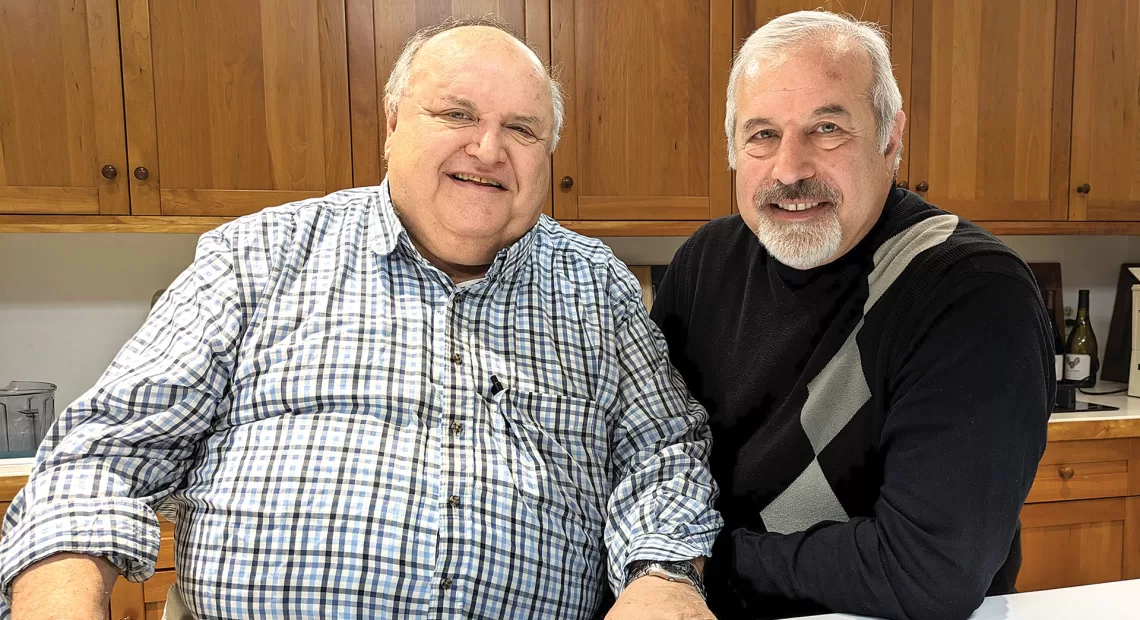
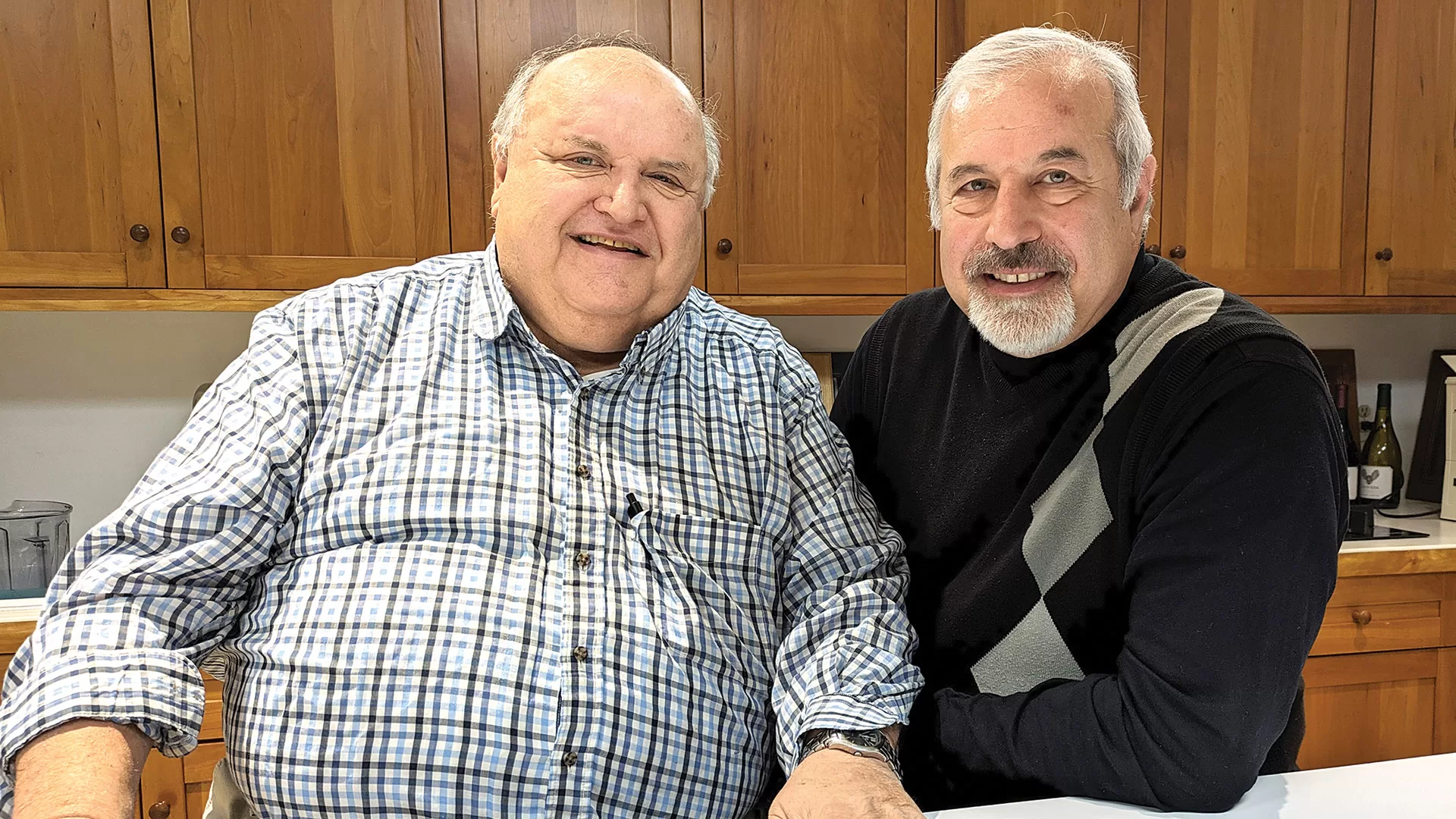
Curio and Frank Nataloni

Curio and Frank Nataloni

One great thing about opening a business, Curio Nataloni said, is that no one can lay you off.

Oh, sometimes businesses fail, but entrepreneurship means everything is in the owner’s hands, which can be scary, but has mostly been rewarding — for more than 50 years.

After returning from service in Vietnam in the early 1970s, “I was working on construction, and I kept getting laid off,” Nataloni told BusinessWest just a few days after his company, Kitchens by Curio, celebrated a half-century in business. So he took a cabinetry job for a homeowner in Longmeadow, and after some solid word of mouth in the neighborhood — resulting in other kitchen projects — even after his former employer summoned him back, he decided he’d rather venture out on his own.

“I did most of the bathrooms and kitchens that have ever been remodeled on that street; it was all referrals,” he said. “Did I make a lot of money? No. But I never got laid off again. That’s the bottom line. And that’s what my goal was.”

From there, he opened a showroom in Ludlow, which was open from 1 to 9 p.m. each day. “The next morning, if I sold anything, I would go out and install it — vanities and stuff like that. And that’s how I got started. Then I got another helper, and I kept on being consistent.”

Consistent enough to weather an economic downturn in the mid-’70s that saw 14 businesses in the kitchen sector shut their doors in a single year.

“I did the best I could,” Nataloni said. “I didn’t waste any money. A lot of people that would get some money, they’d go buy a new car. I didn’t buy a new car; I just reinvested in the business. Because that’s what it’s all about. Having a business is just like having a fire. You always have to put another log on.”

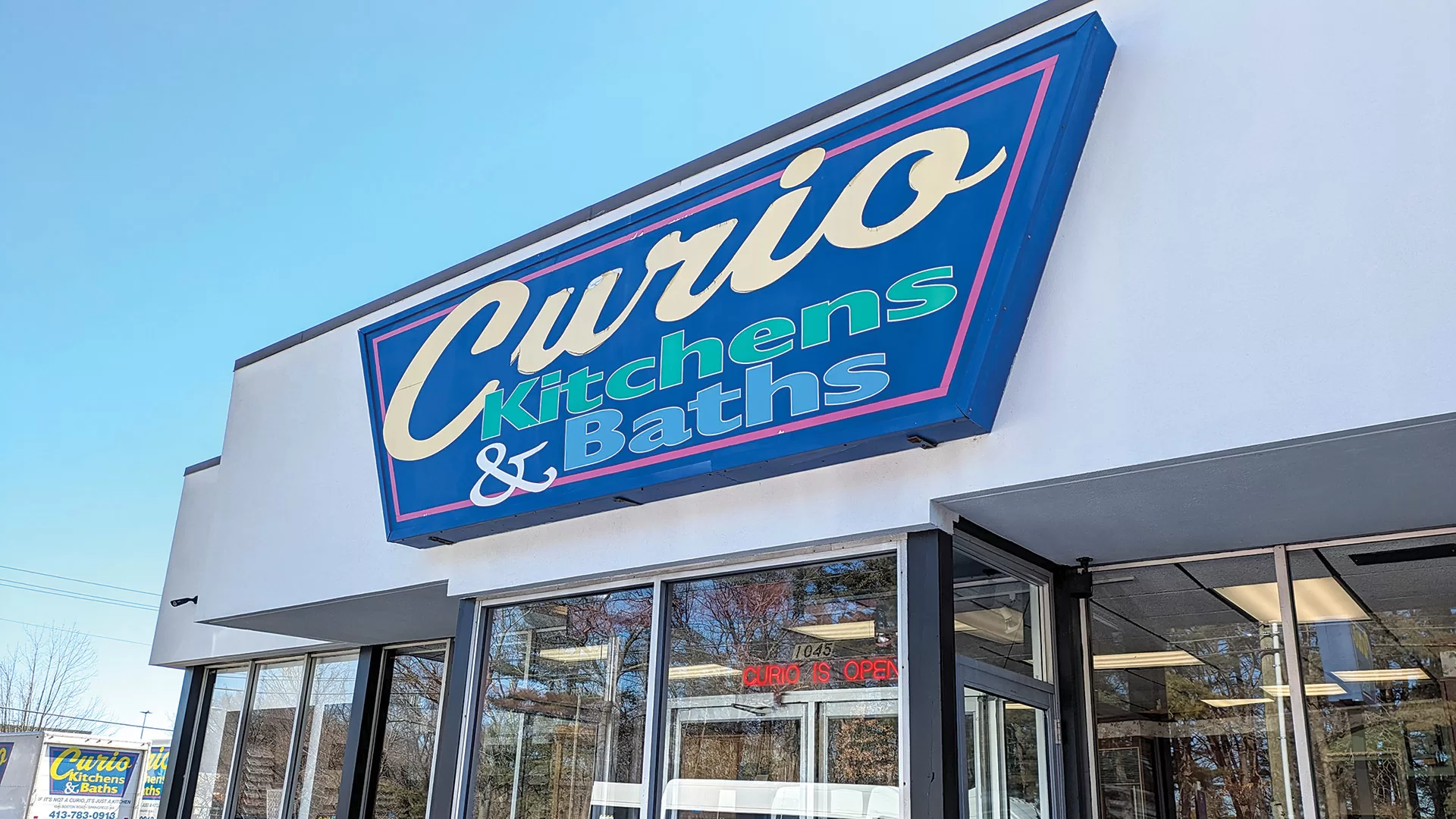
After 10 years in business, in 1984, Nataloni moved to his current location on Boston Road in Springfield. Around the same time, his brother, Frank Nataloni, who had worked with Curio part-time during summers, came on board full-time, and the two of them have steered Kitchens by Curio to consistent sales and growth for the next four decades, joined in recent years by Curio’s son, Michael Nataloni, who intends to continue to lead and grow the company whenever his father and uncle decide to take a step back.

Early on, Frank said, “cabinets were our core product. Prior to the big boxes, we would do a fair amount of retail sales, but most of it was install sales and renovation; that was the core part of the business and still is. Then, as the big boxes became more prevalent, our contractor business sort of started to disappear, so we just focused on doing our renovation work.”

Frank became one of the few designers in the area who is not only a certified kitchen designer (CKD), but also a certified bath designer (CBD). He also taught interior design classes at Bay Path University (then Bay Path College). Among the duo’s accolades, they are five-time national award winners in the CKD competition, two-time CKD award winners (Maytag and Wilson Art), and recipients of House Beautiful’s Kitchen of the Year honor.

Kitchens by Curio

Kitchens by Curio moved from Ludlow to its home on Boston Road in Springfield about 40 years ago.

“My grandmother taught me a lot of good practices that I still use to this day,” Curio said. “Our concept is very simple: it’s better to make a little bit every day than make a killing once every three months. That means you’ve got to be fair to the customer on price, and you’ve always got to deliver quality.”

Fifty years of success suggests that philosophy has been a sound one.


All in the Family

Like his uncle, Michael Nataloni worked on and off at the family business during his youth, and decided to make a permanent switch after working in college athletics for a decade and deciding that wasn’t for him.

“It wasn’t as fun as it had been,” he told BusinessWest. “So I was looking around at different things. I’ve always been kind of hands-on, and I’ve been doing stuff like this my whole life, so it was a good fit. I came back and I said, ‘wow, this is a great time. I’m going to get out of college athletics at the end of the year, and I’m going to get into this at the beginning of the year.’”

That year was 2020, and as soon as he arrived at Kitchens by Curio full-time, the world shut down.

But it didn’t stay closed in the home-improvement business, which took off in a big way once people started spending more time at home for work, school, and, well, everything.

“The timing was good,” Frank said. “Our business grew quite a bit after the pandemic. And there was no new construction, but there was a lot of renovation. And that always has been our strong suit, so it really played into our strengths.”

As for Michael, “he really doing every facet of the business. Right now, when we get to the end of a project, he’s like our ace reliever; he comes in and finishes any fine details. And he’s great with clients. I mean, we’re trying to find someone who doesn’t like him,” Frank continued. “He has a good attitude, and he wants to do a good job. And he’s always coming up to me saying, ‘well, what about if we do this?’ He’s trying to figure out different ways to do the work.”

Michael agreed that he takes a forward-thinking approach to his burgeoning career.

“Our concept is very simple: it’s better to make a little bit every day than make a killing once every three months. That means you’ve got to be fair to the customer on price, and you’ve always got to deliver quality.”

“One phrase that I’ve never liked is when anybody tells me, ‘well, this is the way we do it; this is the way it’s always been done.’ Well, that’s fantastic. But the world has changed. We’re not still flipping through magazines; we’re on the internet. And you have to follow that progression.”

The business uses a website called Houzz to help identify what customers are looking for, and even customers who walk in for the first time tend to have done plenty of their own online research — or watched a lot of HGTV — so they arrive with more specific ideas than customers in decades past.

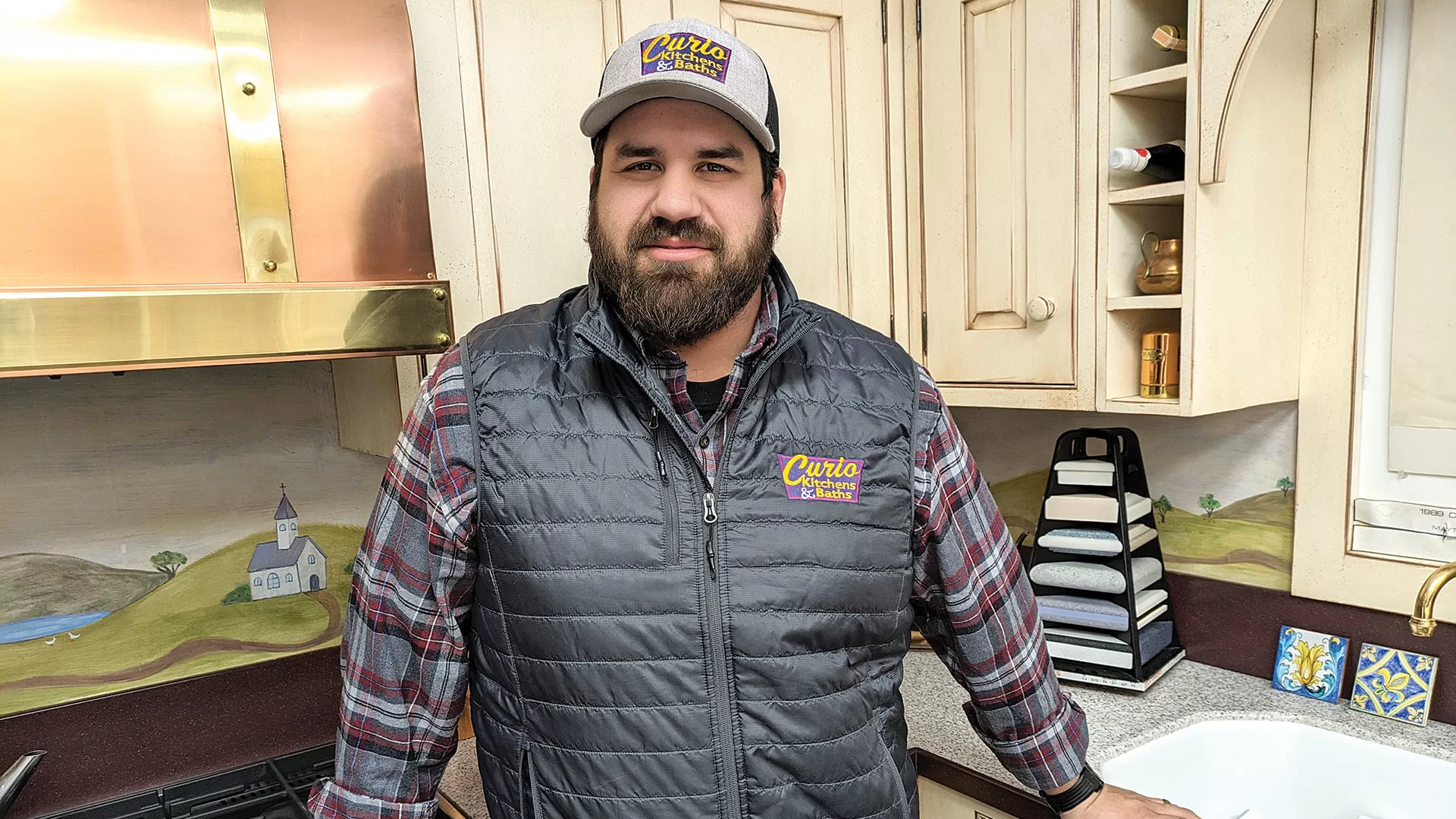
Michael Nataloni

Michael Nataloni brings new perspectives and an openness to change to his developing second-generation leadership role.

Meanwhile, the brothers secured a contract to be the only kitchen and bath designer in New England with access to ProKitchen Oculus VR software, with the ability to change cabinet door styles and finishes, flooring, countertops, wall colors, and more in virtual-reality glasses.

“We can put people in the Oculus glasses, and they can walk through their kitchen,” Frank said. “It’s amazing. So we’ve invested in technology.”

Michael appreciates such developments. “You’ve got to be ahead of things. You can’t always be focused on the rearview mirror. So I try to envision down the road and ask, ‘OK, how can we move stuff around, display new things, include certain things that can move us forward and help with sales?’”


Change and Consistency

But Michael emphasizes more than forward thinking; he was also quick to acknowledge that trust is a key element in a successful home-improvement business.

“That’s one thing that I always stress with customers, even at the first meeting. I say, ‘this is a relationship. If you don’t trust me, the job’s never going to work.’”

Once that relationship is built, he added, most customers have no problem going out and leaving the crew at the house.

“Once you reach that point, you know it’s going to be a good fit and everyone’s going to be happy, and that’s the name of the game,” Michael went on. “If you do a good job for a customer, that customer’s going to tell 10 people. If you do a bad job, that customer is going to tell everybody.”

Curio also stressed that trust element. “The only thing we can do is give people a plan, a contract, and a sample of what the kitchen’s going to look like. So in reality, it comes back to people trusting you, and when they place that trust in you, you can’t shortchange them. So regardless of what we do, whether we make money or we lose money, the job has to be done right, period. That’s it.”

Clearly, these are values that have remained consistent over 50 years, even as styles have shifted dramatically in flooring materials, cabinet and appliance colors, and dozens of other elements.

“A lot has changed over the years,” Frank said. “When my brother founded the company in ’74, he was building cabinets in our parents’ basement part-time. The technology has significantly evolved, particularly with appliances. Styles have changed dozens of times over the years, and some of them are starting to come back again. But the two things that never changed were our dedication to quality and customer service.”

Education

A Class Act

Janis Santos

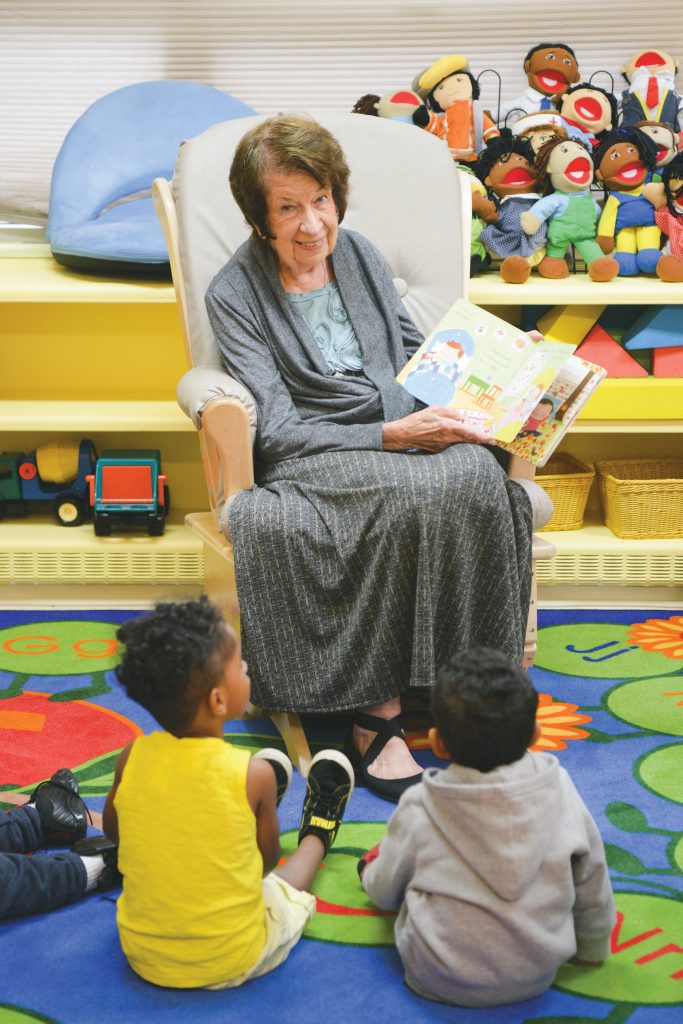
Janis Santos has spent nearly a half-century as an administrator, but she never lost her enthusiasm for being in the classroom and reading to children.

During the early, and darkest, days of the pandemic, Janis Santos recalls, she considered it vitally important to remain positive and find ways to permit her positive attitude to trickle down to every employee and every facet of the Holyoke Chicopee Springfield Head Start operation.

And so, in her daily communications with staff, she would include quotes designed to inspire and uplift others at a time of unprecedented challenge. She borrowed quotes from many, but leaned heavily on Fred Rogers (better known to most as Mister Rogers) — whom she described as a hero for the way he forcefully drove home the message about how very young children learn through play — and also the poet Maya Angelou.

From the latter, there was one passage she remembers using more than a few times: “I’ve learned that people will forget what you said, people will forget what you did, but people will never forget how you made them feel.”

But as powerful and effectual as those words were, it was probably some from Santos herself that helped propel her staff through those tumultuous times. 

When asked to recall and paraphrase, she said, “everyone needed to hear that we’ve been through things before, maybe not as bad as this … but we do this for children. Why are we here? What is our purpose? We’re committed and dedicated to America’s most vulnerable children. We have a big challenge to face — we need to keep the children safe and their families safe — so let’s do it together.”

Those comments are quite poignant because they sum up not only what Santos was saying at the height of the pandemic, but what she’s been saying — and doing — during a remarkable, nearly half-century-long career in Head Start that will come to a close — officially, but not in reality — on Dec. 31.

Indeed, from the time she opened a Head Start facility in the basement of the Boys & Girls Club in Ludlow in 1973, she has been dedicated to the country’s, and this region’s, most vulnerable children. But just as important, she’s been dedicated to those who work with and on behalf of those children, working tirelessly to stress the importance of early-childhood education and lobby for appropriate wages for those at the front of the classrooms.

“I will stay connected to Head Start; I’ve devoted my life to advocating for America’s most vulnerable children, and I will continue to do that.”

And, in what could only be considered irony, the pandemic that tested her mettle as no other challenge during her long career has helped reinforce that message and bring it home in ways that seem destined to bring real change to the landscape.

“During COVID, when there was a lack of childcare and no place for parents to leave their children when they went to work, it became a point of focus,” she explained. “The public finally saw that this is important; they saw how important these facilities are to parents, employers, and the economy.”

But while COVID-19 enlightened many on this topic, it also brought attention to another aspect of this profession that has been a career-long priority for Santos — the need to raise the salary levels for preschool educators.

Indeed, at a time when employers in every sector of the economy are struggling to retain workers being tempted by higher wages and better benefits elsewhere, the problem is especially acute in early-childhood education.

“This year, I’ve lost 15 Head Start teachers to public schools,” she noted, adding that, while it has always been a challenge to recruit people to this profession and retain them, at this critical juncture, it is even more so.

As noted, Santos will be retiring at the end of the year, but not leaving the scene when it comes to advocating for early-childhood education and those who provide it.

“I will stay connected to Head Start; I’ve devoted my life to advocating for America’s most vulnerable children, and I will continue to do that,” she said, adding that, while continuing those lobbying efforts, she plans to write a history of Holyoke Chicopee Springfield Head Start.

It’s a rich history, obviously, and Santos, named a Woman of Impact by BusinessWest in 2018, had a hand in most of it. For this issue and its focus on education, BusinessWest talked at length with Santos about her career, the changes that have come to early-childhood education, and the changes she believes still need to come.


School of Thought

By now, most people in the region know at least some of what we’ll call the Janis Santos story. Most versions begin when she was a mother of three enrolled in night classes at Holyoke Community College, with the dream of being a preschool teacher.

It was there, and then, that a young man in her class who was from Holyoke Chicopee Springfield Head Start encouraged her to start a facility in Ludlow. She did, eventually opening the Parkside Learning Center in that aforementioned basement of the Boys & Girls Club, in 1973. But as she would eventually learn, nothing about getting that facility off the ground — from securing the space to securing the funding — was going to be easy.

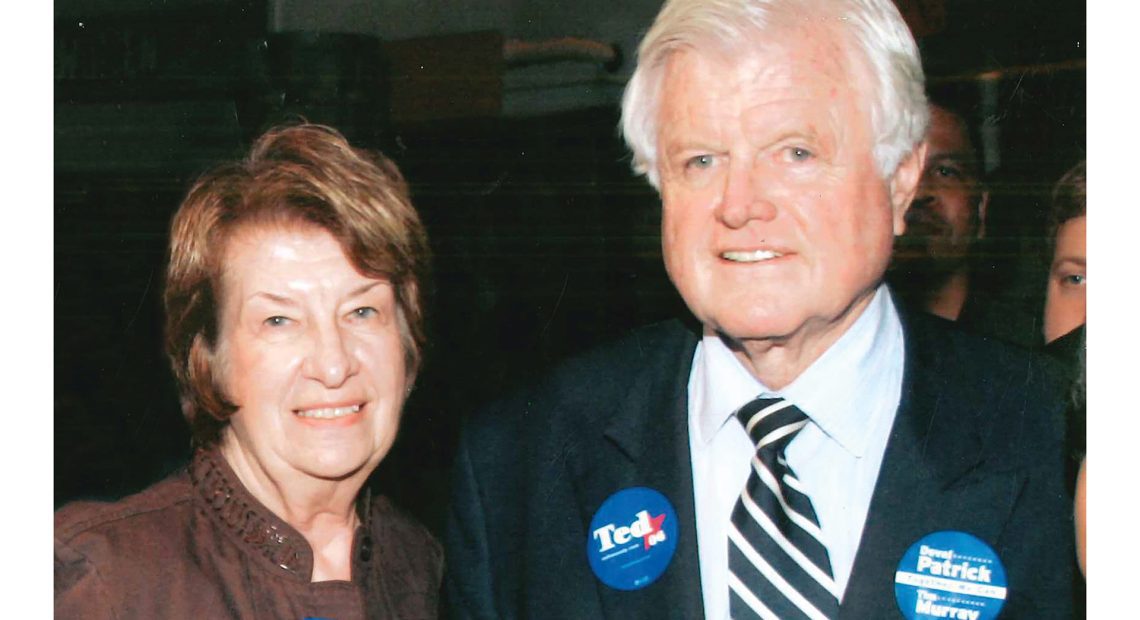
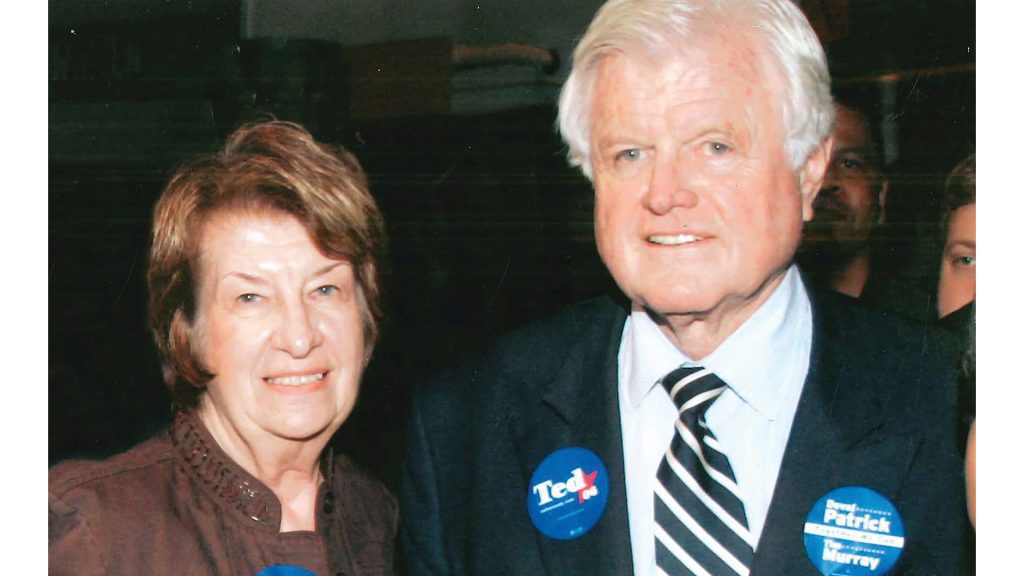
Janis Santos, seen here with the late Sen. Edward Kennedy

Janis Santos, seen here with the late Sen. Edward Kennedy, has spent a lifetime preaching the importance of early-childhood education.

She recalls that Head Start was struggling financially as an organization and was not able to actually pay her a salary.

“They offered me $18 a week in Commonwealth Corp. money, and I took it,” she recalled. “I had no benefits, no nothing, and I took that for about three years until my site started to generate some income.”

But what she also learned, rather quickly and much to her dismay, was that there wasn’t much respect within the community, and within the broad realm of education, for what she was doing with her life and her career.

“The perception was that we were babysitters out there, and I felt that people just don’t understand that these are critical learning years for children,” she said. “And the other piece is that children in that age group learn through play; some of my friends would visit and say, ‘why don’t you become a real teacher and go teach kindergarten?’”

Instead of listening to that advice, she spent a lifetime convincing others that she was a real teacher and that early education was vital to young people, their families, and society in general.

“The perception was that we were babysitters out there, and I felt that people just don’t understand that these are critical learning years for children, Some of my friends would visit and say, ‘why don’t you become a real teacher and go teach kindergarten?’”

“I was determined to change those perceptions,” she said. “I wanted people, and educators, and the community to know the importance of those years.”

She would become the director of Holyoke Chicopee Springfield Head Start in 1979 and also go on to serve on the National Head Start Board of Directors for 14 years, which gave her the opportunity to not only advocate for the nation’s most vulnerable children, but make the case for early-childhood education.

Over the years, she would meet three American presidents and lobby countless elected officials on the importance of pre-K and the need to improve the wages of those in that profession. She has pictures of herself with then-U.S. Sen. Edward Kennedy, then-U.S. Sen. Hillary Clinton, U.S. Rep. Richard Neal, several governors, and many other elected leaders.

But as important as her time with those elected leaders has been — and it has been vitally important to moving the needle on early-childhood education — Santos said the most valuable time she spent was with children in the classroom and with teachers and other staff members as a mentor.

She has taken on that role with countless individuals over the years, including the woman chosen in a national search to be her successor at HCS Head Start, Nicole Blais.

To say these two go way back is an understatement. Indeed, Santos was Blais’s preschool teacher in Ludlow in the ’70s.

Santos said she has been working with Blais during the transition, and has some pointed advice for her based on nearly 45 years of being in that job — and also advice provided by those who mentored her.

“One of them told me, ‘you have to take a bold, respectful approach,’ and I’ve never forgotten that,” she told BusinessWest.

She has some other advice for as well — to follow her lead when it comes to taking risks, something one needs to do to succeed as a leader.

“I’m a risk taker,” she told BusinessWest, referring to everything from that first gambit in Ludlow, the one that paid her $18 a week, to her partnership with MGM Springfield on a new facility in Springfield, to her involvement in the new Educare program that opened in 2019. “You can’t sit back; you have to go out there and take risks, and that’s what I tell those that I mentor. I tell them, ‘if you don’t take risks, you will not succeed.’”


Learning Experiences

“Play is often talked about as if it were a relief from serious learning.  But for children, play is serious learning.”

That’s one of those quotes from Mister Rogers that Santos used to help encourage and inspire staff during the darkest times of the pandemic.

It’s more than that, though. It’s one of the pillars on which early-childhood education is built and one of the critical points Santos has spent a career trying to drive home to a wide range of constituencies.

With a little help from COVID, there is a now a better understanding of the importance of early-childhood education and perhaps better odds for universal pre-K to become policy in this country.

In the meantime, most have stopped referring to early-childhood educators as babysitters. And at a time when Santos is being honored by a number of groups for her many accomplishments, that is probably the biggest.


George O’Brien can be reached at [email protected]