Home Sections Archive by category Building Trades

Building Trades

Building Trades


Outside the Classroom

What does a career in solar energy actually look like?

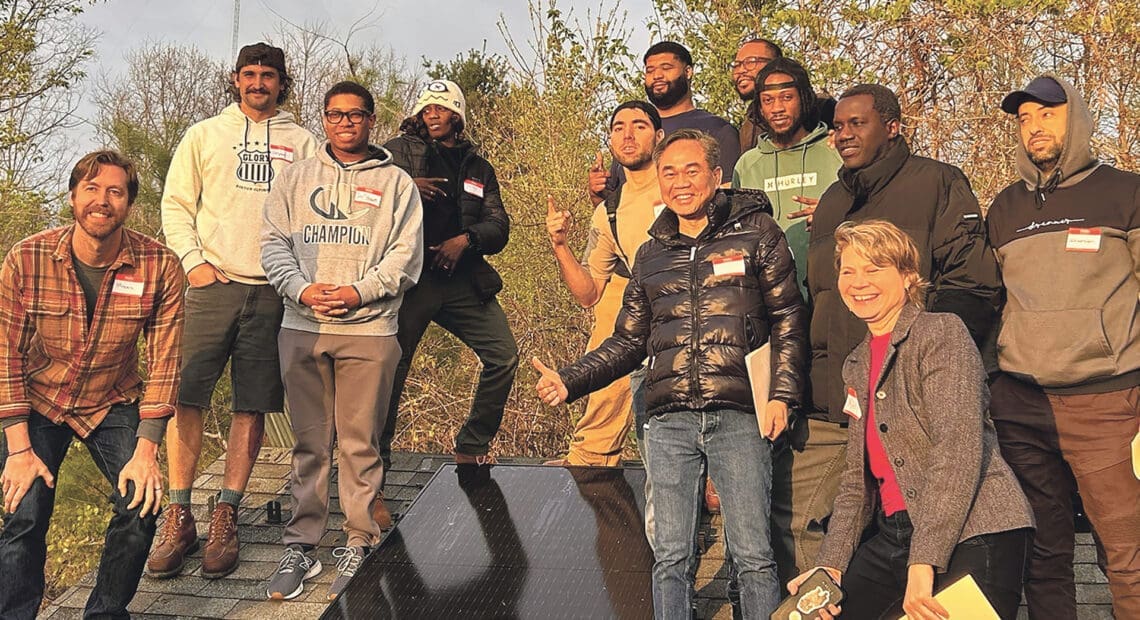
That question moved from abstract to tangible when a group of Holyoke Community College students in HCC’s clean energy training program visited PV Squared Solar’s headquarters and warehouse in Greenfield for an evening of hands-on learning and career exploration in the solar industry.

The visit was designed to give students a practical look at what working in solar actually entails, from installation work and electrical systems to team dynamics and long-term career pathways.

PV Squared offered HCC students exposure to the roof mock-ups used to simulate solar installations.

Students heard from PV Squared team members, including Pablo Revelo, master electrician; Alex Peterkin, president of the board of directors; and Kate Carter, team manager, who shared insights into the skills, training, and mindset needed to build a career in the trades.

“This kind of experience is where everything starts to click,” Carter said. “Students can see the tools, the systems, and the teamwork involved, and begin to picture themselves in those roles.”

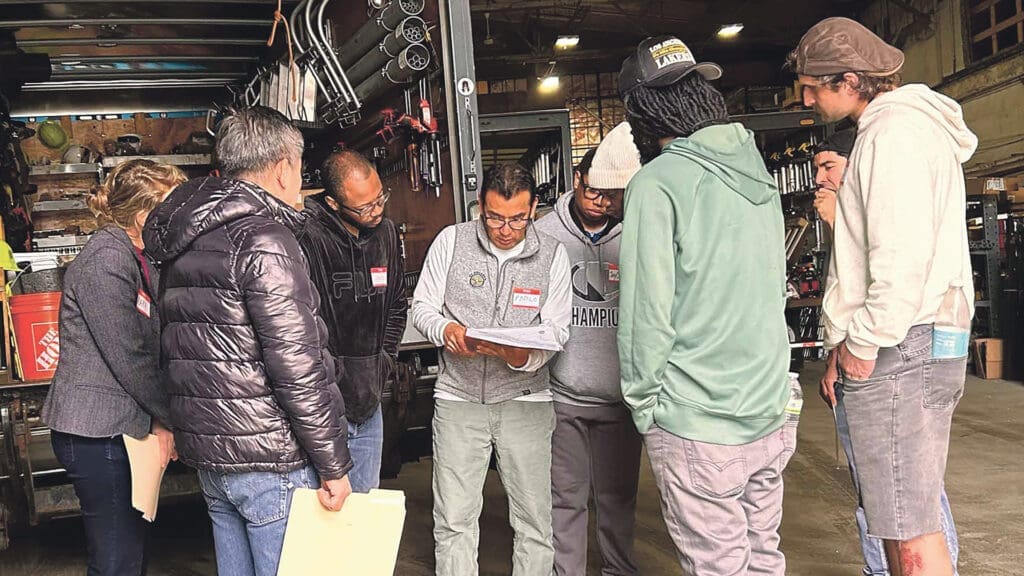
The evening’s agenda included a walkthrough of the company’s warehouse and training areas, where students explored electrical training setups and system components, roof mock-ups used to simulate real installations, the tools and equipment used daily by solar crews, and the layout and function of installation trucks and warehouse operations. Demonstrations included safe ladder setup, equipment handling, and a look inside the box trucks that crews rely on in the field.

“This kind of experience is where everything starts to click. Students can see the tools, the systems, and the teamwork involved, and begin to picture themselves in those roles.”

Revelo, who works closely with installation teams, emphasized the importance of connecting technical training with real-world application.

“There’s a lot that goes into a solar installation that people don’t always see,” he said. “It’s physical work, it’s technical work, and it’s collaborative. But it’s also incredibly rewarding to build something that lasts and contributes to clean energy.”

For one evening, the students’ classroom extended into a working environment. Tools, trucks, electrical systems, and team dynamics all became part of the learning experience.

Programs like HCC’s clean energy training initiative are essential to building the future workforce, but classroom learning alone can only go so far, PV Squared’s leaders noted. This visit was designed to bridge that gap.

This visit is part of a growing relationship between PV Squared and Holyoke Community College, focused on creating clear, accessible pathways into the clean energy workforce. As demand for solar continues to grow across Western Mass., workforce development is becoming just as important as project development, Carter said.

“Workforce development doesn’t happen in a classroom alone. It happens when students can step into a real environment, ask questions, and see what the work actually looks like day to day. That’s how confidence is built, and how pathways into the trades become real.”

 “It’s physical work, it’s technical work, and it’s collaborative. But it’s also incredibly rewarding to build something that lasts and contributes to clean energy.”

During the visit, students also learned that careers in clean energy extend beyond installation alone. The solar industry includes a wide range of roles, including electrical and installation trades; system design and engineering; project management and operations; and sales, customer experience, and administrative support. This broader view helps students understand not just how to enter the field, but how to grow within it.

Students explored a wide range of hands-on activities, from equipment to how installation trucks are laid out.

During the visit, students also learned about what PV Squared looks for in employees, including curiosity, reliability, teamwork, and a willingness to learn, as well as the benefits of working within a 100% worker-owned cooperative.


For many students, this was also their first exposure to a structure where ownership is shared among employees, meaning the people designing, installing, and maintaining systems are also invested in the long-term success of the company.

“Worker-owned cooperatives are a powerful force for good in our communities,” Peterkin said. “They create meaningful jobs, build local accountability, and keep the benefits of clean energy rooted right here in the places we live. That’s exactly the kind of foundation we need for the green future we’re working toward.”

He added that, for students considering long-term careers, that structure offers appealing elements, including stability, shared responsibility, and a direct connection between work and impact.

“As the clean energy economy continues to expand, partnerships between educational institutions and local employers are playing an increasingly important role in building a skilled and resilient workforce across Western Massachusetts.”  

Building Trades Cover Story

Marking a Milestone

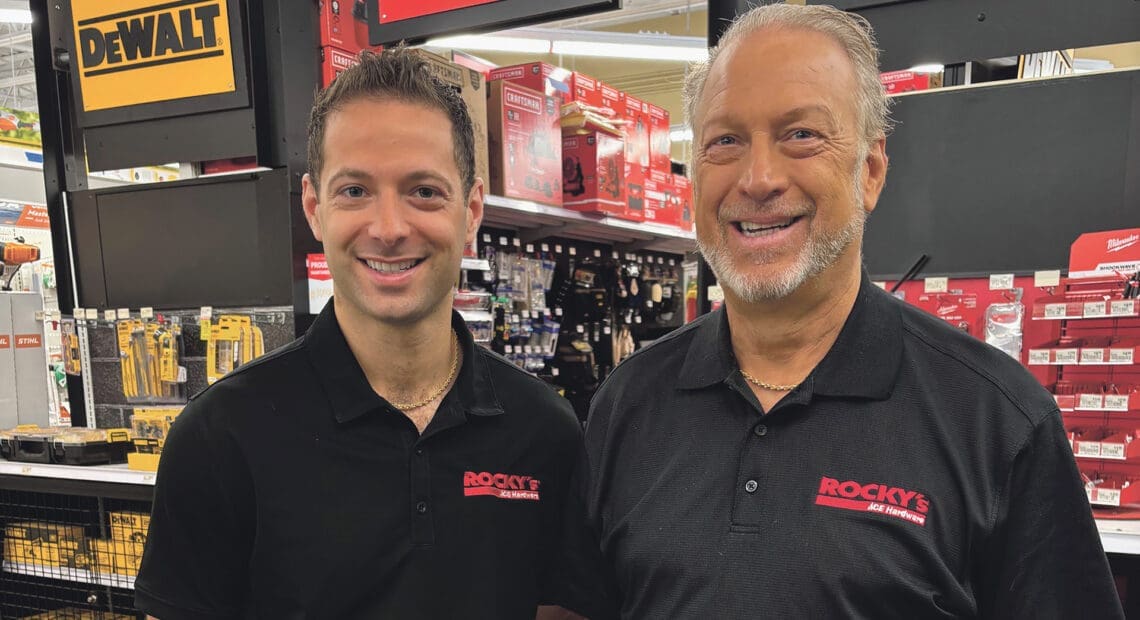
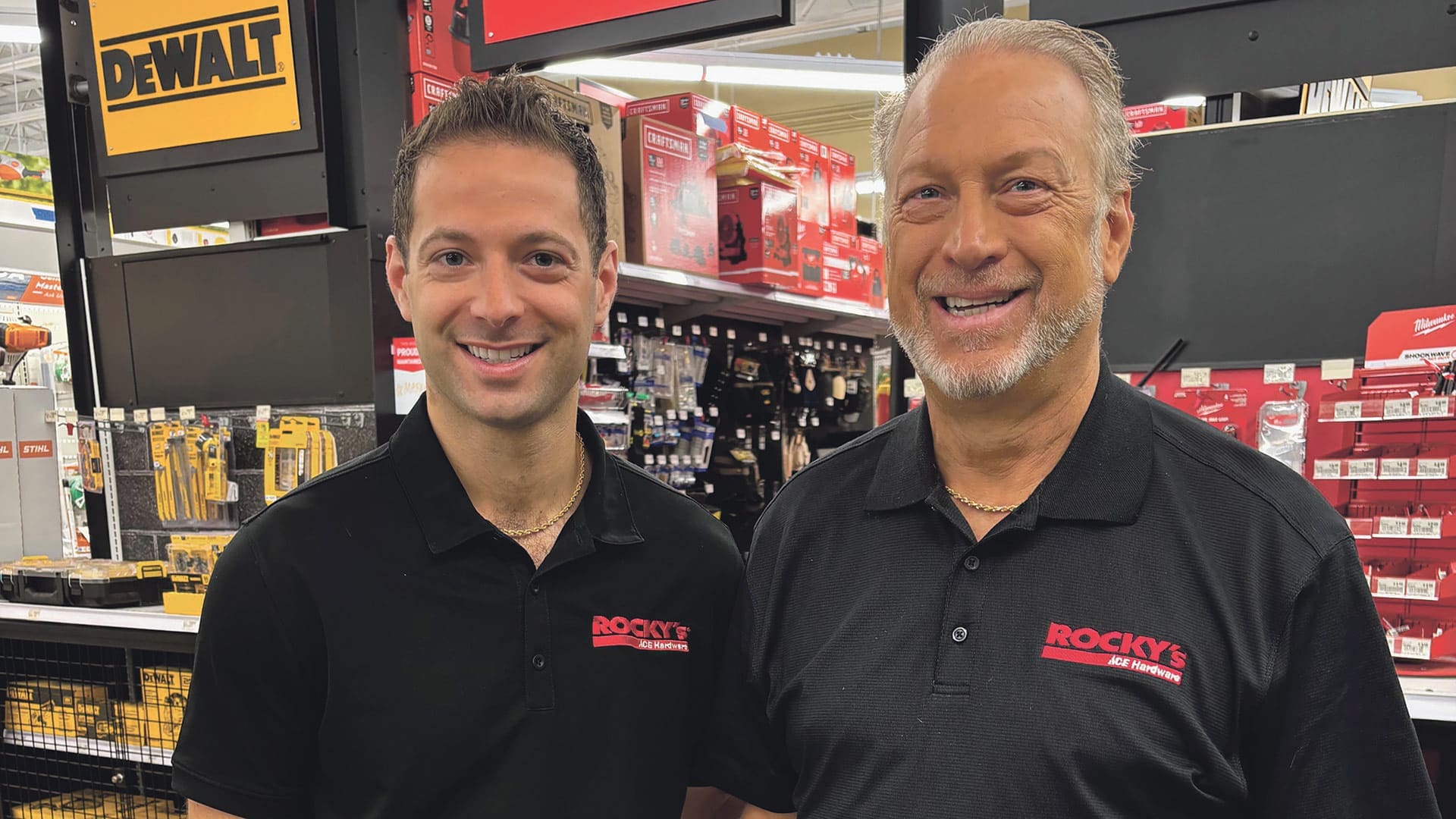
Johnny Falcone (left) and Rocco Falcone

For the Rocky’s Ace Hardware chain, there are many numbers of significance to consider.

Let’s start with 100. That’s the round-number anniversary the family business that started in downtown Springfield is celebrating this year.

But there’s also 52 — the number of stores in the chain. (It was 50 before two recent additions in Kennebunk, Maine and Manchester, Conn.) And also nine, the number of states in which you will now find the Rocky’s chain — five of the New England states (there are none in Vermont) as well as Ohio (which boasts 10 stores), New Jersey, Pennsylvania, and Florida.

There’s also the number four, connoting the number of generations of the Falcone family that have been involved with managing the chain, with the fourth being led by John ‘Johnny’ Falcone, who carries the all-encompassing title of ‘director of growth.’

“In our industry, there are a lot of senior folks like myself who don’t have families ready, willing, or able to take on the family business.”

Indeed, quite a bit goes with that designation, especially the numbers just mentioned and what they will be in five, 10, or 20 years.

There has been a wave of consolidation in the hardware business over the past few decades as the small, independent store that almost every city or town could boast has given way to larger chains, especially as Baby Boomers, many with no succession plans in place, moved into retirement, a process accelerated, in many cases, by COVID.

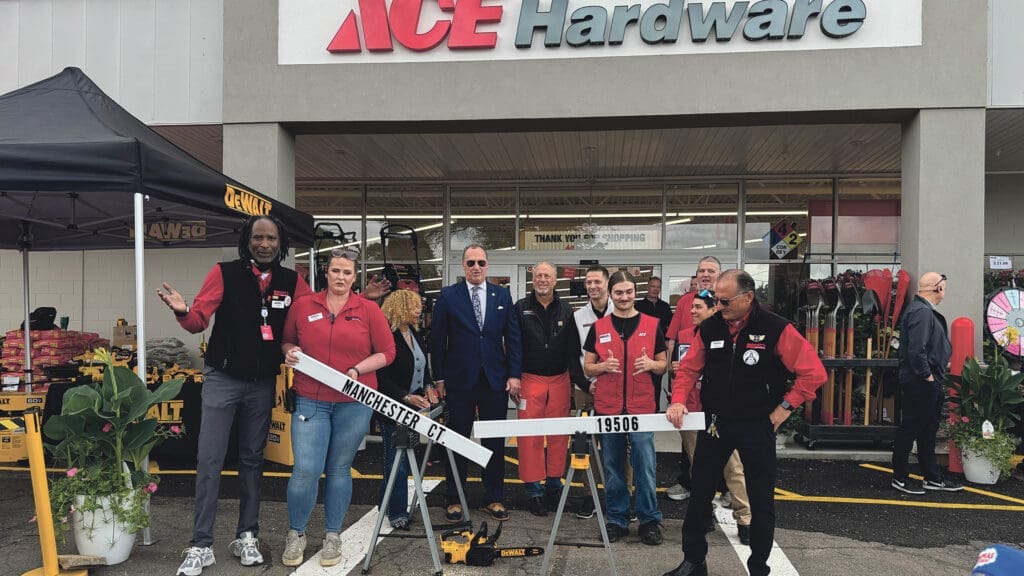
Instead of cutting a ribbon, officials chainsawed a board to mark the opening of the Rocky’s in Manchester, Conn, one of the latest additions to the chain.

“In our industry, there are a lot of senior folks like myself who don’t have families ready, willing, or able to take on the family business,” said Rocco Falcone II, third-generation owner of Rocky’s and the one who has been instrumental in much of the company’s expansion, even if he didn’t take the same title as his son. “So we’re still seeing opportunities for acquisitions for that reason.”

Beyond growth in the number of stores, the company is looking ahead to the next 100 years, with an eye toward anticipating and embracing change, and keeping its focus where it has always been: on the consumer.

“Every decision we want to make is with the consumer in mind,” Johnny said. “We think about our customers and the options they have when they want to buy. When we look at growth for this business, it has a lot to do with allowing the customer to choose the method with which they want to buy that item or help them with their project — whether that’s buying in store, online, on a mobile app, through third parties like DoorDash, or other apps that are out there — and then meeting them in the method they want to receive that product, whether it’s picking it up themselves, having someone deliver it, or having someone assemble it for them.

“It’s really reinventing what convenience means,” he went on. “Fifteen or 20 years ago, convenience meant a neighborhood hardware store; today, convenience means so much more when it comes to technology, especially with how consumer behavior has changed. So for us, every one of our decisions is made with the customer in mind; we’re working hard at redefining what convenience looks like in the digital world.”

“Every one of our decisions is made with the customer in mind; we’re working hard at redefining what convenience looks like in the digital world.”

For this issue, we take an in-depth look at the first century in the history of the Rocky’s chain and what will come next for what can only be called a retail institution — in this region and now far beyond it.

Changing with the Times

For those not familiar with the Rocky’s story — and by now, most are — it begins in 1926, when Rocco’s grandfather (also named Rocco), who saved some money while selling newspapers in front of the Paramount Theater and, later, working at Zundel’s Hardware in downtown Springfield, decided to go into business for himself.

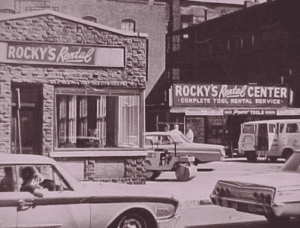
Equipment and tool rentals were a big part of the Rocky’s success formula for decades.

He started with a small hardware and tool rental business, with the latter half thriving because, at that time, many people could not afford to own equipment.

The company remained on Main Street for decades, but as the population moved out from downtown (and in many cases out from Springfield), the company went with it, eventually adding hardware and rental locations in other parts of the city, such as Breckwood Boulevard, before moving its headquarters and flagship hardware store into a former sawmill on Island Pond Road in the ‘60s. 

In the ‘70s, the company, now under the leadership of Rocco’s father, Jim, expanded to a seven-store chain and joined the Ace Hardware cooperative to leverage national buying power. It also eventually eased out of the rental business while also adding paint and wallpaper, and transitioning into home centers, with lumber, building materials, kitchens, baths, doors, and windows — and larger stores to accommodate all that.

With the arrival in the ‘90s of Home Depot, which took much of that business, the company, now with Rocco at the helm, transitioned again, to maintenance and repair as well as lawn and garden supplies — and smaller stores, with the outside lumber yards on Island Pond Road and the Agawam store converted to garden centers.

“People will shop at Rocky’s not for price, but for value, and the combination of the national brands that we feature and the service, knowledge, and advice we can give. That’s a value that brings people back.”

This evolutionary process has continued, as has expansion of the chain across this state and into other states, with more of the same projected in the years to come as new opportunities continue to arise.

Rocco Falcone noted that there are still smaller, independent stores doing business, but far fewer than a few decades ago, especially in this region, which has seen many familiar names disappear from the landscape, with Manchester Hardware in Easthampton, which closed in 2021 after being in operation for 125 years, being one of the latest.

There are more independent stores in other regions and other states, he said, adding that Rocky’s will get calls on a steady basis gauging interest in acquisitions, and the company has let it be known that it’s interested in further expansion — if the fit is right.

“A good source of referrals are the owners of the stores we’ve bought,” he said. “That’s how we ended up with the store in New Jersey; a fellow from Pennsylvania said, ‘my buddy in New Jersey, who’s only 20 minutes away even though it’s in a different state, is ready to sell.’”

And while there are a few acquisition opportunities remaining in the 413, most of them are in other markets, Rocco said, citing those recent additions in Maine and New Jersey as examples of where growth is happening for this company.

“We want to fill in the map,” he told BusinessWest, referring to both gaps between states and gaps between stores in states where there is already a presence. “Between New Jersey and Pennsylvania and up the Connecticut coast is a great place to look; the I-91 corridor would be nice.

“There are still more opportunities in Worcester … we just can’t find good locations,” he went on, adding that the company’s longer-term goal is to cluster stores in the Worcester market, as it has in the 413, with locations in Springfield (two), East Longmeadow, Agawam, Westfield, South Hadley, and Ludlow. “We could have eight stores in that [Worcester] market, but we only have one or two now. And then we can move up the coast of Maine and into New Hampshire; there’s a lot of opportunity there.”

What’s in Store?

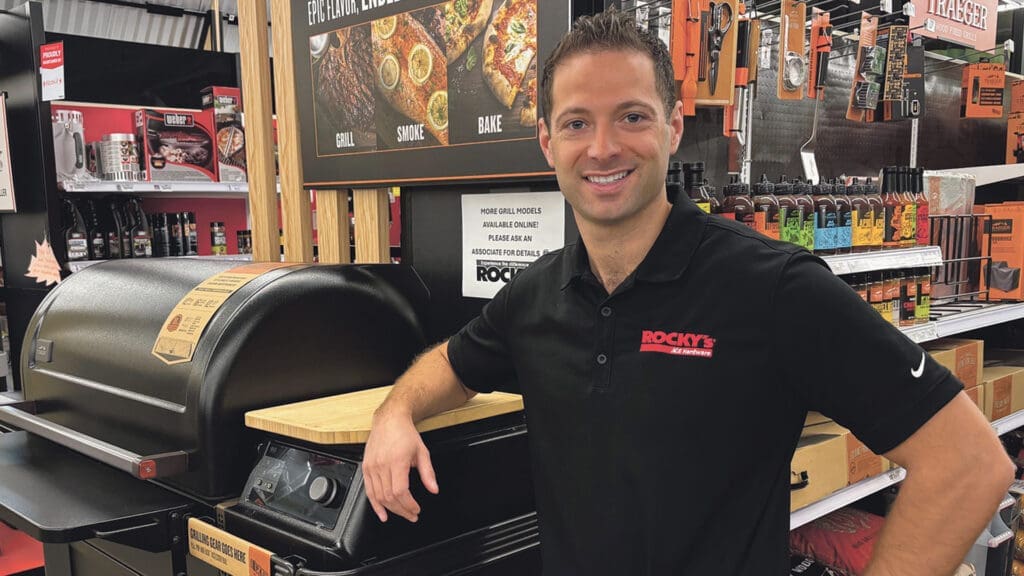
Johnny Falcone says Rocky’s continues to adapt to a changing retail landscape and “reinvent what convenience means.”

Continued growth makes sense for many reasons, especially the economies of scale that come with larger numbers, Rocco said, adding that, as with banks, insurance agencies, and other types of businesses, size is certainly an advantage.

Meanwhile, the company continues to adjust and react to that need to continually reinvent convenience, as Johnny Falcone described it.

That includes growth of the company’s online business, which includes the DoorDash option for smaller items and company-coordinated delivery of larger products like grills, serving as an effective complement to the brick-and-mortar stores, which will always be needed in this business.

“The retail space is not going away,” Rocco said. “The online component just brings the product closer to the customer rather than being in an Amazon warehouse 500 miles away.”

While coping with changes on the retail spectrum, Rocky’s, like all businesses, is adapting to a new workforce landscape as well. Indeed, while many young people are still landing their first or second jobs with the chain, many of those patrolling the aisles have gray hair, said Rocco, noting that this has been the trend over the past several years, especially at the company’s Florida stores, but also in other markets, including this one.

It’s a reflection of changing demographics — fewer young people — but also a desire among many seniors to stay active and remain in the workforce, often on a part-time basis.

“They don’t want to work full-time, they want a purpose, they want to come in and be helpful, which is one of our core values,” Rocco said, adding that these older staff members serve as mentors to the younger men and women learning the hardware business.

And many of those young people are staying with the company, he said, noting that, with 52 stores and growing, there are ample opportunities to advance and move into management positions.

 As for those core values, they are being re-emphasized and reinforced — such as at the company’s recent Leadership Summit at the Marriott in downtown Springfield — as Rocky’s turns 100. Other values, Johnny said, include ‘helpful,’ ‘responsible,’ ‘caring,’ ‘excellence,’ and ‘fun.’

That’s not an acronym, but rather an operating philosophy, he said, and one that separates the company from its competitors, especially the large, big-box variety.

“We all focus on ‘helpful,’ especially the customer-facing employees, as the most important value, because that’s really what sets us apart from our competition,” he told BusinessWest. “People will shop at Rocky’s not for price, but for value, and the combination of the national brands that we feature and the service, knowledge, and advice we can give. That’s a value that brings people back.”

As for the 100th anniversary, the company will be marking that milestone in many different ways, from a kickoff at the Leadership Summit to several ‘hometown days’ events coinciding with holidays this spring and summer, as well as a larger celebration in October, including promotional sales.

Mostly though, Rocky’s will be doing what it’s been doing for the last century — changing, adapting, growing, and, well… being helpful.

Building Trades

Something to Build On

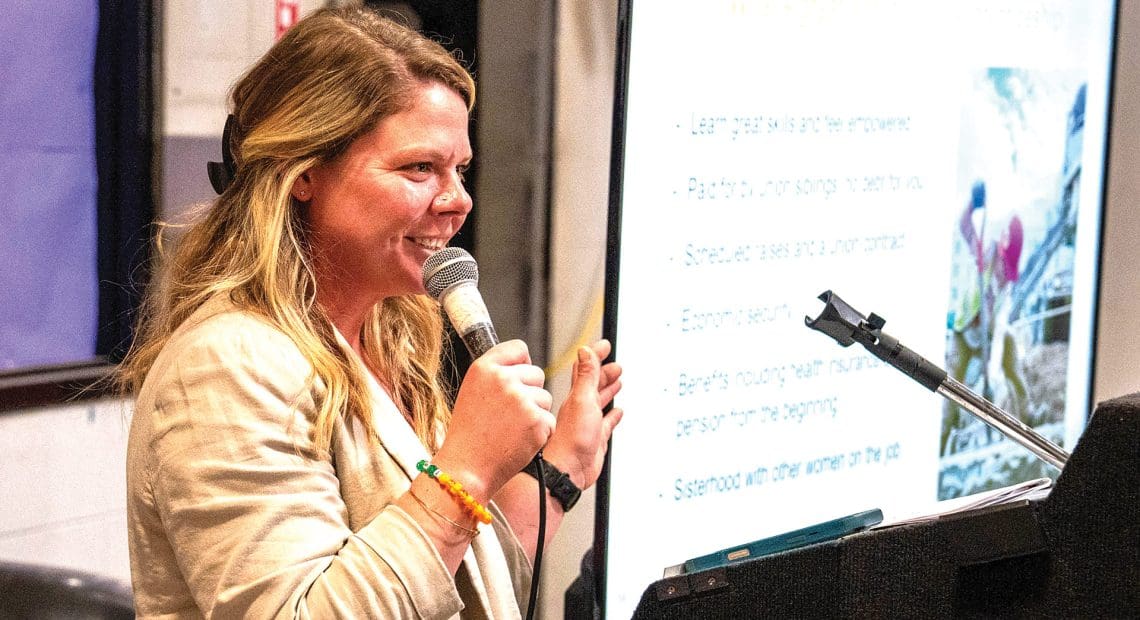
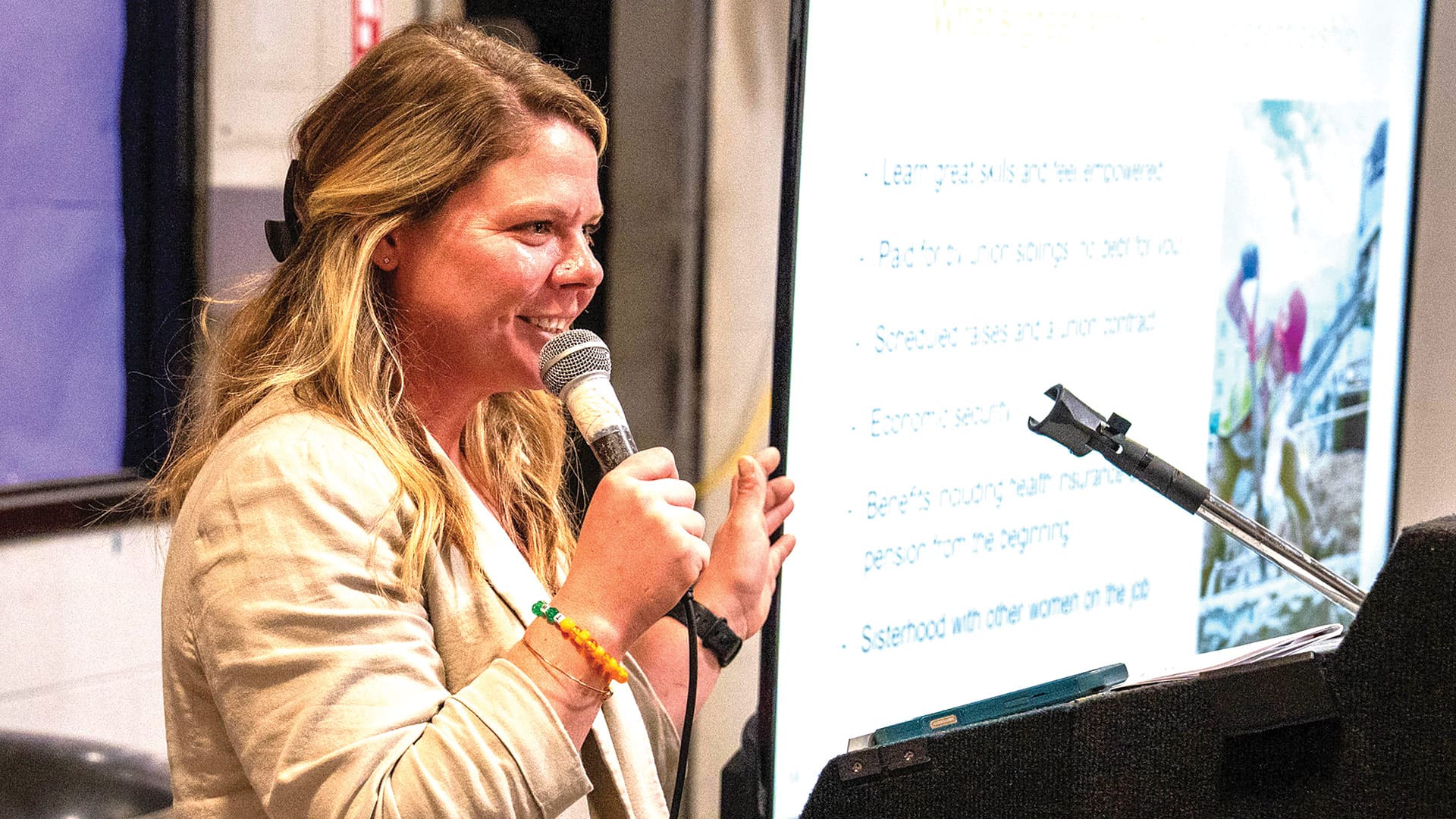
Laborers Local 596 member Chelsea Fenton

Laborers Local 596 member Chelsea Fenton shares the benefits of union apprenticeship and details her experience with students during a workshop at the recent Girls in Trades Conference.


On Nov. 20, students from 19 schools across Berkshire, Hampden, Hampshire, Franklin, and Worcester counties gathered in Holyoke to explore life-changing opportunities in the union construction industry at the 10th annual Massachusetts Girls in Trades (MA GIT) Conference and Career Fair.

These events are designed to help young women build confidence, gain hands-on knowledge, and envision themselves in careers they may never have considered before.

“Being part of Massachusetts Girls in Trades has changed my outlook completely,” said Kennedy Landers, a Worcester Tech Construction Academy student. “It’s lifted my hopes of being a girl in the trades and given me reassurance that I can do this — and that there are other girls like me.”

Massachusetts building trades unions train the vast majority of the state’s construction apprentices — 74% of all registered apprentices statewide. They also provide opportunities for those historically underrepresented in the trades: 80% of all apprentices of color and 88% of all registered tradeswomen train through union programs. Today, one in 10 union apprentices in Massachusetts is a woman, a number that continues to grow.

In total, 356 students attended this year’s western conference held at Dean Tech High School. This year’s event launched the new MA GIT alumni network, connecting graduates with mentorship and career support as they enter into the trades.

For Jaylene dos Santos, the conference represents the heart of the organization’s mission. “As the chair of the Massachusetts Girls in Trades Student Leadership Council, I have seen the positive change that we make every single day,” she said. “Our resources and support allow students to feel empowered as they enter the construction and construction-related trades. I’m incredibly proud of the work we do to build safe, inclusive spaces for all learners.”

At this year’s event, students heard directly from dos Santos as well as Holyoke Mayor Joshua Garcia and Massachusetts Building Trades Unions President Frank Callahan.

“Union apprenticeship programs are the foundation of an inclusive, world-class construction workforce here in Massachusetts. Women now comprise over 11% of all union building trades apprentices in Massachusetts, tripling the national average and representing a twofold increase since 2012,” Callahan said. “Each year, the union building trades provide a pathway to a rewarding career, with industry-leading wages and benefits, free training and skills development, the highest safety standards, and opportunities for advancement.”

In anticipation of the 2025 conference, Franklin County Technical School student Cameron Jacques said, “I’m really looking forward to this event. It’s a chance to learn not only about my own trade, but also about so many others — and to see how women can continue to thrive in a workforce that’s often male-dominated.”

Her classmate Alison George shared her energy. “I’m excited to explore all the new opportunities this conference will have to offer me,” she said. “It’s inspiring to know there are so many women in these careers, ready to share their experiences.”

The event connects girls enrolled in career and technical education programs with tradeswomen, union apprenticeship programs, and industry leaders. Each year, the conference aims to empower the next generation of tradeswomen, encouraging them to pursue high-paying, debt-free careers that build both communities and futures.

For many of these students, a career in the trades offers a debt-free path to the middle class. With starting wages of $18 to $22 per hour that rise to $35 to $55 per hour over the course of a two- to five-year apprenticeship, event organizers noted, these programs create life-changing opportunities, building skills, stability, and a more inclusive workforce.

Building Trades Special Coverage

Sustainable by Design

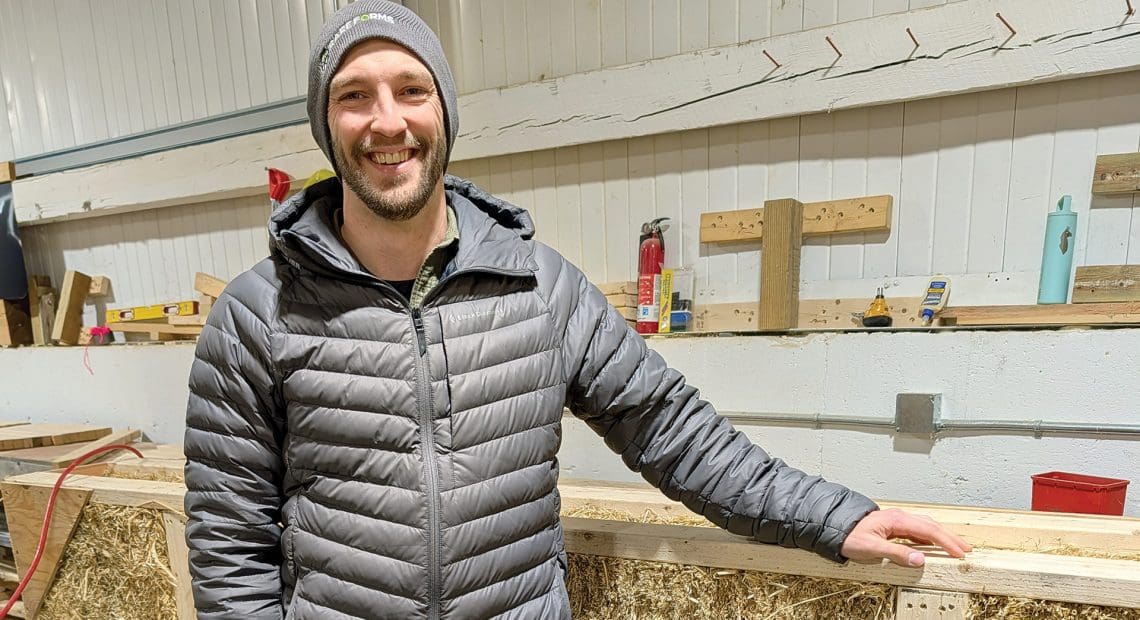
President Greg Bossie

President Greg Bossie


Greg Bossie jokes that negative ideas around building with straw starts in childhood.

“We all grew up with the Three Little Pigs,” he said. “So people have a lot of misconceptions about the viability of straw as a building component.”

But no one’s huffing, puffing, and blowing houses down that are constructed or renovated by Rare Forms, a unique, mission-driven construction company that Bossie launched in 2020.

At the heart of the business model are what’s known as seed straw panels, which are assembled to form the exterior of a house or business.

“I really felt that I wanted to push further into a values- and mission-based structure, particularly around the use of bio-based building materials and internal structure.”

“We build a wood frame, so they are structural. We build it in a steel jig table, and then the straw gets compressed with a pneumatic press,” he explained. “So there’s no binder, there’s no lime or cement or anything like that in it. It’s just compressed straw, which performs really well in terms of the comfort and insulation of a structure.”

And straw is not hay, he added, knocking down another one of those misconceptions. “Straw is just the woody stalk of the grain plant, which could be wheat, rye, oat, rice, any grain that has a woody stalk. We use rye from Plainville Farm in Hadley.”

He explained that the hard, compressed straw, wrapped in a sealed panel, has the same base molecular structure as wood, and is not prone to decomposition, partly because of the way it’s airtight, yet ‘vapor-open,’ allowing any water entering the structure to exit quickly, preventing moisture damage.

The straw panels are also fire-resistant, whereas foam insulation is flammable, he added.

“Lots of people worry about fire, justifiably. But compressed straw, when compressed in a panel, behaves like timber, which means that, when exposed to fire, it chars on the outside and protects its inner core. With a straw panel, we can get a one- or two-hour fire rating, so it’s actually far less fire-prone than, say, any fluffy insulation that allows air movement, because you need oxygen movement to fuel fire, and when you’ve got this incredibly compressed structure that doesn’t allow any air movement through it, it’s really fire-resistant.

“Straw-based building systems have been used for millennia,” Bossie noted. “But actually encasing straw — compressing straw into a wood frame and panelizing it in this way — is really an innovation of the last maybe 12 years or so. It’s a combination of two well-worn building technologies — wood frame and straw bale building combined into one system.

Compressed straw panels, like those in this home under construction, are both structural and insulating.

Compressed straw panels, like those in this home under construction, are both structural and insulating.

“That allows us to utilize the advantages of off-site construction methodology, meaning that we can do all of this in a climate-controlled environment,” he went on, while walking BusinessWest through the shop where bales of hay are stacked, ready to be compressed and panelized.

“One of the risks of traditional straw bale building, particularly in our climate, is that, during construction, it can be exposed to a lot of moisture. Straw panels allow us to work in a controlled environment,” he noted. “We can compress the straw into these wood panels, wrap those panels in weather-resistant barriers, and then install them on site in a relatively short period of time, so that we can limit any potential water exposure during that time. Roof panels tend to take a little bit longer than wall panels, but we can basically assemble this high-performance envelope very quickly.”


Building a Passion

Bossie went to school for architecture and worked in that field for a number of years, but when he moved to Massachusetts from California in 2011, he ended up co-owning a company called Stone Soup Concrete, which specializes in concrete countertops. Later, he was project manager for a design-build company working in the residential sector.

“That got me into building science and high-performance building. But I really felt that I wanted to push further into a values- and mission-based structure, particularly around the use of bio-based building materials and internal structure.”

That idea became Rare Forms, which was just Bossie at first, actually doing the construction before the company started to grow; it now totals about a dozen employees.

“Operational carbon is really important; it adds up over the lifetime of a building. But all of that embodied carbon happens now.”

“We were doing residential design-build, primarily retrofit and addition work to start, and then got into doing some new construction homes,” he explained. “And then, a year and a half ago, we actively pushed into the straw panel aspect of things, which had been my goal for quite a while.

“Straw panels allow us to build homes and additions that actually store more embodied carbon than they emit in the construction process,” he went on. “The construction industry has been focused on what we call operational carbon for a long time, which is energy usage — and trying to reduce our energy usage — and we’ve made incredible strides with that over the last 30 years or so.

Greg Bossie says it was important to him to launch a mission- and values-driven company.

Greg Bossie says his company’s values extend to environmental impact, homeowner health, community support, and more..

“But in the last 10 years — really, the last five to seven years — people started to seriously look at embodied carbon and realize that, in the current state of climate crisis, operational carbon is really important; it adds up over the lifetime of a building. But all of that embodied carbon happens now. And lots of buildings get built in such a way that they have an incredibly high embodied carbon footprint.”

What Rare Forms does, Bossie explained, is use bio-based building materials to substantially reduce or even invert the embodied carbon aspect of building, while also maintaining high building performance and the low energy usage. Another motivation is better indoor air quality, meaning greater comfort and health for building occupants.

“There’s a lot of asthma issues that are caused by building materials from all the foams, so we’re trying to build with completely foam-free assemblies wherever possible, which, in new construction is very achievable; with retrofits, it can be a little bit more difficult with older structures.”

While the straw to create the wall panels is sourced from Hadley, the company’s roof panels are insulated with a product called TimberHP, a wood fiber insulation product manufactured in Madison, Maine, from waste timber from that state’s sprawling timber industry.

In short, “we think about sustainability pretty holistically,” Bossie told BusinessWest. “There’s the materials side of things, which is choosing what you build the house out of. There’s also the waste management, doing as much selective deconstruction as possible, meaning saving fixtures, finishes, any building materials you can, keeping as much out of the landfill to begin with as possible, either saving materials for use in the project or donating those materials.”

Meanwhile, the company works with local sawyers to source timber locally, and also strives to reduce transportation emissions. For example, while Rare Forms mainly works in the 413, it’s currently working on a project in Peru, Vt., and has come up with a way to lessen travel impact on the environment.

“Our team meets here at the shop, and they carpool in one vehicle up there. They stay overnight during the week and then drive back so that we don’t have a team of four people each taking individual vehicles two hours each way every day,” he explained. “Trucking building materials is an incredibly high emissions aspect of building.”


Mission Driven

The seed panel system was designed by New Frameworks in Essex Junction, Vt., one of three founding member companies — Rare Forms and Building Integrity in Columbia, Mo. are the others — in the Seed Collaborative, a partnership that aims to create a broad network of companies using local materials to build carbon-positive systems.

“The function of buildings is to provide shelter for people. Ultimately, I think that how we relate to other human beings is what defines our lives. How we take care of each other is what defines the value of a society. How we shelter people defines our culture of care.”

“We share the methodology of manufacturing straw panels, as well as other shared services — we’re sharing marketing services and business consulting services, and trying to consolidate a lot of the infrastructure of each individual business to make this endeavor more accessible from a business perspective, and also to help make the kits and panels themselves more affordable, so these homes can be more accessible to middle-class homeowners,” Bossie explained, adding that the Seed Collaborative will continue to expand across the U.S., starting with the next set of partners in Colorado, Maryland, and Washington.

Rare Forms has also carved out a niche in prefabricated accessory dwelling units (ADUs), tiny homes that blend efficiency, sustainability, and aesthetics. The company recently won an award in an ADU design competition staged by the North Adams Partnership and AARP.

Greg Bossie says Rare Forms essentially combines two well-worn building technologies, wood frame and straw bale building, in innovative new ways.

Greg Bossie says Rare Forms essentially combines two well-worn building technologies, wood frame and straw bale building, in innovative new ways.

“The state is really inclined to push ADU expansion right now; it’s one way that we can increase housing density and available housing units,” he noted. “We have a housing affordability and availability crisis, and ADUs are one way that we can increase housing density in existing neighborhoods without substantially impacting the character of those neighborhoods.

“It is, unfortunately, a really expensive way to do that,” he admitted. “The cost per housing unit for ADUs is high because you’re taking essentially all of the infrastructure that you need for a 1,500- or 3,000-square-foot house and compacting it into, say, a 600- or 900-square-foot house. You’ve still got all the utilities, all the electricity, all your mechanicals and plumbing and kitchen and bath. So the cost per square foot for an ADU tends to be substantially higher than for a larger house. But we’re working hard to find ways to make them accessible to middle-class homeowners.”

The company’s values extend beyond building materials and environmental impact; they include work in the community as well. Rare Forms donates 1% of all its revenue each year to nonprofit organizations, including the Hitchcock Center for the Environment, the Connecticut River Valley Conservancy, Leave No Trace, the Venture Out Project, and Community Involved in Sustaining Agriculture.

“We focus on both donating monetarily to local organizations and also using our space to help build communities,” he noted, which includes hosting events focused on everything from building science to promoting women and people of color in the trades.

From a broader perspective, “it’s about people,” Bossie said. “The function of buildings is to provide shelter for people. Ultimately, I think that how we relate to other human beings is what defines our lives. How we take care of each other is what defines the value of a society. How we shelter people defines our culture of care.

“And I wanted to — both personally and from a business perspective — really invest in building something that can care for people, both in terms of what we build and how we build it and how we build the business as well, making sure that we are investing all of our resources back into the people that are here, employees of Rare Forms, but also our trade partners, our clients.”

So when Bossie calls Rare Forms a mission- and values-based business, he’s got a lot on his mind.

“I like people,” he said. “I also have three daughters, and, while I don’t spend a lot of time thinking about legacy, the way that I want to define the success of my own life is — like a lot of people, I think — can I leave the world a little bit better for my kids than I found it?”

Building Trades

Things Are Heating Up

Owner Matthew Abelli

Owner Matthew Abelli

It had been a long few years for Matthew Abelli and his wife — years marked by job changes, a frustrating journey toward parenthood, and years of health issues that culminated with a tumor in his brain.

But Abelli has emerged from all that with a positive diagnosis, a healthy daughter, and his own growing business, Matt’s Pellet Stove Service.

He told BusinessWest about all of that, starting at the beginning — the very beginning, when he was being raised by a divorced mom whom he described as strong-willed and tough.

“She was very do-it-yourself, hands-on, and I picked up a lot of that with her,” he said, recalling how he once repaired a broken toaster for her with a screwdriver and a dose of youthful common sense. “She loves telling that story.”

After studying in the electrical program at Smith Vocational and Agricultural High School in Northampton, Abelli worked in — and was laid off from — an electrician job during the Great Recession, then found himself spending more than 10 years with an HVAC company, installing, servicing, and repairing pellet stoves, wood stoves, and gas appliances, eventually departing around 2017.

“But I kept doing it, whether it was for friends, family, odd jobs, refurbishing units — it’s a big passion of mine,” he noted.

“I was starting to get headaches at work — to the point where I’m like, ‘this is weird.’ You know how sometimes you stand up and your eyes take a second to adjust? Well, I’d do that, but it would take a minute to adjust. And then I would lose my peripheral vision sometimes.”

After a stint as a maintenance technician for Pride, which he found neither challenging or enjoyable, Abelli applied for and eventually secured a custodial job with Barnes Air National Guard Base in Westfield, which he supplemented by working a second maintenance job with Highland Valley Elder Services in Northampton.

And then COVID hit — and so did a major health scare.

“I was starting to get headaches at work — to the point where I’m like, ‘this is weird.’ You know how sometimes you stand up and your eyes take a second to adjust? Well, I’d do that, but it would take a minute to adjust. And then I would lose my peripheral vision sometimes.”

On his wife’s insistence, he got a CT scan that revealed a small blockage and buildup of spinal fluid. The surgery to repair it couldn’t be done locally, so he went to Tufts in Boston. Because of COVID restrictions, his wife couldn’t be with him, which was upsetting, but the surgery was a success — for the moment, anyway.

“When I came back, I felt like a million bucks because I didn’t have that pressure,” he recalled. “They said, ‘come back in a year.’”

The couple did, in January 2022, and an MRI revealed that the blockage seemed a lot larger — in fact, it had tripled in size and was now classified as a brain tumor. Because of the risks of surgery in that location, including blindness — it was very near the optic nerve — Abelli opted for powerful oral chemotherapy and radiation treatments that led to cranial swelling, which was treated with potent steroids.

On top of that stress, his wife, Jennifer, discovered she was pregnant, the culmination of years of trying. Amid all that, an HVAC position came up at the base, which Abelli had wanted. Weakened by his various treatments, he wound up interviewing with sunglasses on because light hurt his eyes.

He got the job, though he continued to struggle with the effects of chemotherapy, while his wife managed her pregnancy. Meanwhile, both were diagnosed with COVID at one point in 2022. But as the year drew to a close, the tumor was shrinking, and Jennifer gave birth to a healthy baby girl, Grace.

Matthew Abelli says he takes pride in keeping pellet stoves clean and safe.

Matthew Abelli says he takes pride in keeping pellet stoves clean and safe.

That’s a lot to experience in a short time. But Abelli was about to make another big change.


Home and Hearth

Specifically, he had never lost his passion for working with pellet stoves, and there came a time in 2023 — when Grace was about 6 months old — when Abelli decided he needed another source of income. So he started picking up cleaning and service jobs, and eventually registered Matt’s Pellet Stove Service as a business in 2024.

Today, he has built a clientele of about 200 regular customers, mainly by hustling for references, social media marketing (he has dozens of five-star reviews), and word of mouth.

“I would go to any place that had pellets. I had this whole spiel: ‘look, I’m factory trained, I can do this, I can do that. I’m not going to step on your toes, but if you have overflow or something you don’t service, I’ll take that on.’ Just anything to get my name out there as somebody doing this in the area. Because there aren’t a lot of people my age who do it. It’s a lot of older guys that are getting out of it.”

And that has created solid opportunity to grow. He works at Barnes on weekdays and devotes weekends to pellet stoves — during the busy winter season, he’s also servicing stoves after work during the week — and envisions a time, in the future, when the pellet stove operation becomes a full-time job, perhaps with a growing team of employees. But even then, he sees himself working in the field.

“I love doing the work, and I would always probably be a part of it, but there’s something comforting about having well-trained people to do the job while I do some of the logistics stuff. I think that would be ideal,” he told BusinessWest.

“My biggest thing is safety,” he added. “Anybody’s house I’m going into, I would hope that I would treat it like my own. I know that’s cliché to say, but it’s very true. And if I see something that somebody else did wrong, I’m going to tell the customer, and I’m going to do everything I can to fix it, to do it right. Because, at the end of the day, my name is on that.”

That commitment has been reflected by comments customers have left on town forums and online review sites, he said. And he’s become involved in the community in other ways, donating to local organizations both on his own and through volunteer efforts at Barnes.

Abelli’s footprint with the pellet stove business covers much of the southern part of the Pioneer Valley and into Connecticut, with Westfield being his busiest city.

He’s also encouraging young people to seek careers in the trades. Earlier this spring, he visited Putnam Vocational Technical Academy in Springfield and spoke with students in the HVAC department.

“I talked to them for about an hour and had a lot of good feedback,” he recalled. “I had kids come up to me at the end, saying, ‘I’d like to check that out.’ So that would be another pool to pick from if I needed a kid to help out.”

Like most trades these days, the career opportunities for young people are plentiful, he added. “Especially in this area, there’s enough work for everybody.”


Grace in the Journey

There’s certainly enough work for Abelli right now, and plenty of potential for growth ahead. He’s especially gratified with his current path having come off a lengthy, often painful health issue that has essentially resolved, and a long struggle for parenthood that culminated in an appropriately named child — because he and Jennifer feel like they’ve needed plenty of grace to get to this point.

“Sometimes you think it’s never going to end. That’s the hardest part. It’s the unknown,” he said of those struggles. “I always get a little emotional just talking about it. We’re not completely religious, but I feel like it was … something. Sometimes the timing just feels that way.”

Building Trades

The Camera Doesn’t Lie

Francis and Rocio George say their use of body cameras is unusual in the cleaning industry, and a strong selling point.

Francis and Rocio George say their use of body cameras is unusual in the cleaning industry, and a strong selling point.


It’s called time theft.

That’s a common problem in service industries, and it essentially refers to workers not spending the time they promised on a job.

Thanks to a proprietary technology called QCam, Skyview Cleaners is cutting down on wage theft — and creating the type of trust with clients that its owners, married couple Francis and Rocio George, believe sets their Springfield-based business apart.

“We’re actually incorporating technology into a legacy industry,” said Francis, who came out of the IT world and was looking for something different after an industry contraction back in 2022. “I have a couple of friends that used to be tech sales guys just like me. And all of a sudden, I see their LinkedIn update — one’s running a porta-potty company, one has a lawnmowing company. All they’re really doing is taking a legacy industry and making it more efficient with tech.”

In Skyview’s case, QCam is a body camera mounted to the worker’s belt when he or she visits a residential or commercial property on a contracted cleaning visit. This footage is shared with clients so they can see the work — and how long was spent completing it.

“In janitorial and cleaning, there aren’t very many tech-forward people, and that gave us a market opportunity,” Francis said. “We don’t consider ourselves in the cleaning business — we’re in the quality control business. And we needed some system to ensure quality.”

The second phase will be live-streaming jobs for clients, and the third will involve an AI assist to identify anomalies for someone watching several different feeds come in.

“For most clients, you’re doing the same thing week over week,” Francis explained. “So we can basically standardize some sort of a time metric, and an alert can go off to the internal quality control manager if the clean significantly diverts from that.”

Rocio said one of the main complaints from customers in the maintenance business is that cleaners don’t always do the job they promised.

“There is a gap in the industry. There is no quality control. We promise these things to the clients, but then, how do we make sure our employees do their job when no one is watching them?

“Right now, we’re just a janitorial company implementing a little bit of tech to differentiate ourselves and compete better, but I do have a vision for the future where this type of technology becomes commonplace.”

“That’s why we implement the QCam. If the client has any complaint at all, we invite them to look at the footage and see,” she went on. “It’s basically to ensure quality control. We also implement this only if the client gives us permission. It’s opt-in; we don’t just record the whole thing without our client’s permission. And we only share the videos with the client.”

Francis said he has not come across another cleaning company in the region that uses cameras like Skyview does, but that may not be the case in the future.

“Right now, we’re just a janitorial company implementing a little bit of tech to differentiate ourselves and compete better, but I do have a vision for the future where this type of technology becomes commonplace.”


Early Challenges

When the couple met five years ago, they were living in New York; Francis was working at tech startups, while Rocio, a native of Paraguay, was studying English. They moved to Western Mass. when she was accepted at Mount Holyoke College, where she studied psychology and recently earned her degree.

“I was working remotely, doing tech sales, so it was an easy move,” Francis recalled. But his career was derailed by industry contraction and, in his case, working for an enterprise that got put out of business by ChatGPT.

“It sucked at the time, but it became a cool story later on,” he said. But not without significant challenges.

First, he worked with a friend selling solar installations door-to-door, using his severance from the IT world and unemployment funds to get the commission-only solar business going. But it failed “catastrophically,” he said.

“When that blew up, we were looking down the barrel of a loaded gun — overdrawn bank account, no money, a baby on the way, rushing to get on EBT and cash assistance.”

That was only last year. Rocio was still studying full-time — and also, eventually, adjusting to life as a new mom — and didn’t have a work permit yet. “I was in the middle of my status being changed from international student to getting my green card, so I couldn’t work.”

It took an emotional toll, Francis said. “I was dealing with all of the shame that comes with being a failed provider, at least in my eyes, and she’s trying to pull me out of that. Meanwhile, she’s dealing with the sheer terror of her provider not being able to provide, so we were both trying to console each other.”

But they had an idea. Rocio’s brother was in the cleaning business in California, so Francis, after studying the potential of such an enterprise, started going door-to-door, picking up the first few commercial and residential clients in what would become Skyview Cleaning.

“The whole past year was just a journey of building up enough income to to get off EBT and cash assistance and all the stuff that kept us afloat. I’m pretty thankful we’re in a state like this where we had access to that stuff,” he said, adding that a microgrant through the Latino Economic Development Corp. in Springfield was a lifesaver, as was a significant contract with Wyckoff Country Club. “That really saved us during a questionable period.”


Looking Ahead

While they also clean residential properties, the couple’s main niche is small (6,000 square feet and under) commercial properties.

“That’s a healthy zone for sure,” Francis said. “With any large commercial and residential, it’s a pretty aggressive race to the bottom. You’re quickly getting to these razor-thin margins.

“We have significantly better margins, and part of the reason is because, with QCam, we’re minimizing risk,” he continued. “For small or medium-sized businesses who are going to drop a couple grand a month on cleaning, they can’t really risk that not being done. A restaurant owner can’t arrive in the morning and have three hours of cleaning work that wasn’t done.”

As noted earlier, he believes wearable tech like QCam will become more commonplace in a number of industries.

“I think cameras in public, with phones everywhere, have culturally engineered the acceptance of being filmed, just by virtue of going outside,” he noted. “I think this is going to be one of the industries that adopts what we’re doing now, especially as companies have to crack down on time theft.

“I mean, when you look at the stats, billions are lost in the U.S. alone because of time theft. And with corporate America tightening the belt, they’re really going to have to figure out how to recapture some of that and make sure employees are out there doing what they say they’re going to do.”

While the Georges work in the field alongside three employees, they envision a time when they can grow the client base and employee roster and take on much less of the physical work themselves. But for now, they’re happy with their early trajectory.

“We did have a really rough start — having a baby while I was still in school, when we didn’t have money,” Rocio said. “But I feel it’s a blessing that we went through all that because we get to appreciate what we have, and we get to work together and create something unique.”

It’s a lesson in resilience anyone can emulate, she added. “No matter how hard your situation is, if you really want to change your circumstances, you can do it. When we didn’t have money last year, it was really hard, and I would never want to go back to that time in my life, but here we are, stronger than ever. We’re visionaries, we’re entrepreneurs, and I’m really grateful for what we’re creating.”

Building Trades Special Coverage

Golden Opportunity

From left, Heather Roy, marketing and communications specialist; D’Lynn Healey, project executive; Bryan Hughes, president; and Ed Ackley, general superintendent.

From left, Heather Roy, marketing and communications specialist; D’Lynn Healey, project executive; Bryan Hughes, president; and Ed Ackley, general superintendent.

Bryan Hughes says Western Builders has marked its 50th anniversary in several different ways — from a gathering of employees and their families at a local restaurant,to postings on social media celebrating both employee and company milestones, to a new, temporary logo marking the occasion.

And there’s more to come, with a larger gathering slated for September at the company’s Granby headquarters for employees, clients, subcontractors, and more.

But in many ways, it’s been business as usual for this construction firm, which is not the same thing as business as it was done in 1975, or even 2005.

“In decades past, business was generally done with a handshake,” said Hughes, who took over as company president in 2022. “And the new way of delivering a project is more managerial in a sense; when people come to Western, they’re paying for a partnership in solving problems, forecasting challenges, and addressing them.”

Creating more value for clients is just one of the focal points for Hughes and the leadership team at Western, a subsidiary of the O’Connell Companies.

“In decades past, business was generally done with a handshake. And the new way of delivering a project is more managerial in a sense; when people come to Western, they’re paying for a partnership in solving problems, forecasting challenges, and addressing them.”

Overall, the company is in a growth mode — let’s call it a controlled growth mode — fueled by several factors, but especially the region’s (and the state’s) housing crisis. Indeed, many of the firm’s current projects involve initiatives to address an extreme shortage of housing, especially within the affordable category. These include:

• Phase 2 of South Holyoke Homes, a modular construction project led by the Holyoke Housing Authority that features single-family homes and duplexes;

• Baskin West Main Residences, a 105-unit, mixed-income apartment complex being undertaken by Brisa Builders Development;

• Amethyst Brook Apartments, an affordable housing community in Pelham being undertaken by Home City Development; and

• An expansion of Clinical & Support Options’ Friends of the Homeless campus on Worthington Street in Springfield, a 23,974-square-foot facility that will provide critical shelter and supportive housing to individuals experiencing chronic homelessness.

Meanwhile, several projects completed recently involve housing — everything from East Gables, an affordable housing project on Northampton Road in Amherst undertaken in collaboration with Valley CDC, to Aspen Heights, a student housing apartment facility, also in Amherst.

The housing crunch is not a problem that will be solved quickly or easily, said Hughes, adding that this reality should provide ongoing growth opportunities for a firm that has made its mark in that arena.

“The way the crisis is described to us by local, state, and federal officials is that it will be a never-ending challenge to overcome,” he noted, adding that, as the Commonwealth and local agencies ranging from Way Finders to Home City Development address the crisis, Western will have opportunities to not only do more work in the 413, but expand its service radius as well.

Among the many projects in the Western Builders portfolio is renovation work at the Naismith Memorial Basketball Hall of Fame. (Photo by Red Skies Photography)

Among the many projects in the Western Builders portfolio is renovation work at the Naismith Memorial Basketball Hall of Fame. (Photo by Red Skies Photography)

“We definitely have a local edge, with local subcontracting partners and local relationships and clientele — that’s why we’re Western Builders, because we typically stay in Western Mass.,” Hughes explained. “But part of the future vision of the company is to push the limits there a little bit, because the housing crisis isn’t limited to Western Mass.

“Moving forward, we want to grow the company at a comfortable clip — we want to be able to sustain our methods and our confidence in ourselves,” he went on. “But I think we’re ready to take on more.”

Any firm marking 50 years has survived many kinds of challenges, and that’s true of Western as well, which has weathered downturns and a Great Recession, but also a pandemic and ongoing workforce issues, including the need to replace the many talented workers approaching, or already at, retirement age.

Like other firms, it is taking a proactive approach to the problem, as we’ll see, promoting the trades and getting young people involved early, giving them a taste of the work as well as the financial rewards and relative stability of the sector.

For this issue and its focus on the building trades, we’ll look at the first 50 years for Western Builders and what will likely come next at a time when some golden opportunities are emerging.


Firm Commitment

Tracing the history of the firm, D’Lynn Healy, project executive, said it was created by O’Connell to work with the company’s development group and also with local private colleges and development companies.

And from the beginning, diversity, in all its forms, has been perhaps the company’s strongest suit.

Indeed, while it’s perhaps best known for wood-frame construction — as seen in projects ranging from phase 1 of Glenmeadow in Longmeadow to transformation of the former Yankee Pedlar in Holyoke into a PeoplesBank branch; from River Mills Assisted Living in Chicopee to restoration of the historic Gaylord mansion on the Elms College campus — it has worked with stone and steel as well.

Indeed, the portfolio includes projects like Way Finders’ new home in downtown Springfield, the Educare early learning facility, also in Springfield, and renovation work on the Naismith Memorial Basketball Hall of Fame, including refurbishment of the sphere, which involved removing thousands of fiberglass panels and resurfacing them, but also extensive interior renovations.
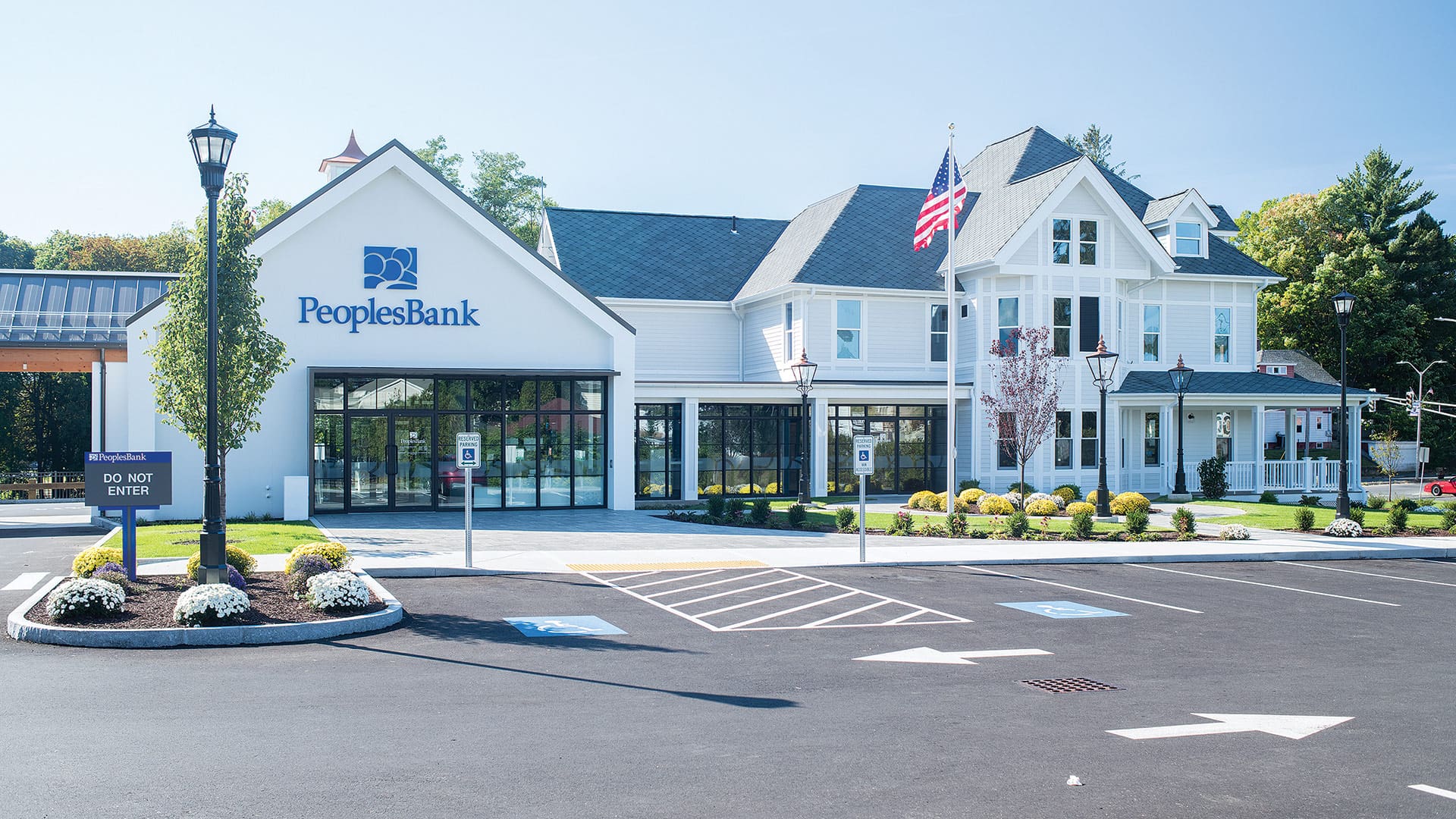
The PeoplesBank branch in the former Yankee Pedlar in Holyoke. (Photos by Red Skies Photography)

The PeoplesBank branch in the former Yankee Pedlar in Holyoke. (Photos by Red Skies Photography)

Work in the Health Sciences building at American International College (right) showcase the diversity of projects in the Western Builders portfolio. (Photos by Red Skies Photography)

Work in the Health Sciences building at American International College (right) showcase the diversity of projects in the Western Builders portfolio. (Photos by Red Skies Photography)

Beyond diversity with materials, the company has worked in several sectors, including public and private clients, new construction as well as renovations, such as at Elms College, and different realms, everything from housing to the new Phoenix Academy Public Charter School at the Springfield Technology Park, to emergency renovations to the Courniotes Building at American International College (AIC) after a fire there.

“Our focus can remain in housing, but we want to emphasize diversity,” Hughes said. “We’ve won some hard-bid projects for public work, which has helped us diversify in our project types. We’re back at some institutions, like AIC and Smith College, building on existing relationships.”

Signature projects over the past five decades, and there are many, include work with O’Connell Development to build a new 152,000-square-foot, LEED-certified manufacturing facility and corporate headquarters for L3Harris Integrated Mission Systems/KEO, formerly Kollmorgen, at the site of the former Northampton State Hospital; the Educare facility, considered state-of-the-art in that sector; the work at the Hall of Fame; the new Girls Inc. headquarters in Holyoke, located, ironically, in the former home of the O’Connell Companies; and the Holyoke Crossing retail facility in Holyoke, another project where O’Connell Development was the client.

Today, Western is doing far less for O’Connell and much more with a growing list of clients, many of them involved with housing, including Way Finders, Valley CDC, Home City Development, and others.

A common denominator is repeat business, said Healey, adding that clients such as Way Finders, American International College, PeoplesBank, and others have turned to Western for several different undertakings.

“A lot of clients are repeat clients that we’ve worked with,” she explained, adding that one of the firm’s strengths is relationship building. “When these clients have another project, they reach out to us.”

And much of this repeat business stems from the firm’s ability to create value and effectively manage projects, as Hughes mentioned earlier.

“It used to be … construction was definitely a ‘work-harder industry,’” Healey explained. “Now, we’ve finally acquiesced and realized that we have to work smarter and not just harder. You have to be strategic, and you have to plan — you have to make sure that you have everything lined up before you start working.”


Building Relationships

As noted earlier, housing has become a major focal point for Western over the past few decades as need grows and agencies take imaginative steps to address it. And the company has several projects in this realm in various stages of development.

Amethyst Brook should be fully occupied by the end of this month; the projects in Chicopee (Baskin West Main Residences) and Springfield (expansion of the Friends of the Homeless complex) are in early-stage work, while the Holyoke initiative is moving toward completion, with the Holyoke Housing Authority now running commercials urging people to enter the lottery to purchase those homes.

That Holyoke project represents a first — working with modular construction, said Hughes, adding that it has been a learning experience.

“Boxes are prefabricated in Pennsylvania and shipped to Holyoke and put together as side-by-side townhomes,” he explained, adding that the process significantly streamlines the timeline for construction.

“It’s nice to see an emphasis on the trades. You see commercials about it, you hear the unions talk about it, the non-unions talk about it … anyone in the trades can be, if they want to apply themselves, as successful as someone who wound up with a giant college loan that they have to pay back and may or may not be able to work in the field they trained for.”

Meanwhile, many initiatives, including one of the buildings at Amethyst Brook as well as East Gables in Amherst, involve what’s known as passive housing, a voluntary standard for energy efficiency in a building that has surpassed LEED as the cutting edge in that realm.

“There are more passive houses in development and pre-construction because that’s the popular trend moving forward with energy efficiency and sustainability, which is what clients want,” Hughes said. “But there’s also a code aspect — client developers need to meet the Massachusetts Stretch Energy Code, which is one of the most stringent in the country.”

Beyond housing and the growth opportunities it presents, the company has been focused on relationship building — continuing long-standing partnerships and forging new ones — and also on perhaps the biggest issue facing this sector — maintaining a workforce.

Indeed, since arriving at Western, Hughes said one of his priorities has been to generate interest in the field among the younger generations.

He cited several initiatives, including work with Dean Tech High School in Holyoke, hiring co-op students to work for the company part-time at job sites while also attending school.

“It’s been cool to see that youthful excitement about construction,” he said, adding that, by exposing young people early to the lifestyle and opportunities the trades create, the firm is helping to put more future workers into the pipeline.

Ed Ackley, the company’s long-time general superintendent, agreed.

“The workforce is aging, and it’s retiring out,” he said. “So one of things we’ve been doing is trying to attract young people as project managers and assistant superintendents in hopes that they can gain experience, so by the time they become a super, they’re as effective as the seasoned personnel we have now.

“It’s nice to see an emphasis on the trades,” Ackley went on. “You see commercials about it, you hear the unions talk about it, the non-unions talk about it … anyone in the trades can be, if they want to apply themselves, as successful as someone who wound up with a giant college loan that they have to pay back and may or may not be able to work in the field they trained for.”

And, unlike jobs in many other fields that face uncertain futures with advancing technology, including AI, those in the trades are relatively secure, Hughes told BusinessWest. “You can’t ask ChatGPT to build a masonry wall.”

 

Building Trades

Safety First


As the weather warms up and people spend more time outside getting their yards and homes ready for the summer, it’s important to keep safety in mind before taking on that next project, especially when dealing with electricity. Eversource is reminding customers that working around electric lines or equipment can be dangerous or even fatal if proper precautions aren’t taken.

“Safety is something we think about every day; it’s part of our daily workflow and is ingrained in all that we do,” Eversource Vice President of Safety Ken Bogler said. “Our crews work around electric equipment in all kinds of weather conditions and receive extensive training to make sure any repair, upgrade, or maintenance work is done as safely as possible. We want to make sure our customers are armed with the information they need so they can remain vigilant and take the necessary precautions when around electric equipment.”

“We want to make sure our customers are armed with the information they need so they can remain vigilant and take the necessary precautions when around electric equipment.”

Customers should always assume power lines are live. Anyone planning to work outside with ladders or power tools should know exactly where electric equipment is located, know what it’s touching, and have a plan to avoid it. Even a quick brush against an energized wire can cause serious harm.

Eversource encourages all customers to keep these additional safety tips in mind throughout the year:


Outdoor Safety Tips

• Don’t touch anything or anyone that’s touching a downed wire.

• Stay as far away as possible from downed wires and fallen trees that could have wires caught in them. Broken power equipment can feed electricity directly into the ground, charging the ground.

• For anyone in an accident with a car or other vehicle near a downed power line, stay in the vehicle until an Eversource worker or first responder says it’s safe to exit.

• Call before you dig. Call 811 or (888) 344-7233 at least three days prior to digging so that utilities can mark underground wires, cables, and pipelines.

• Keep kites, Mylar party balloons, model planes, and drones far away from power lines.

• Always store electrical equipment indoors and never use corded power tools in wet or damp conditions.


Indoor Safety Tips

• Avoid touching any bare wires, faulty appliances, or electrical outlets; always assume a wire or electrical appliance is energized.

• Cover unused wall outlets with plastic safety caps to protect small children and pets; consider installing tamper-resistant receptacles if your outlets do not currently have them to prevent foreign objects, other than electrical plugs, from being inserted into the outlet.

• Never overload outlets by using multiple adapters or power strips as this can cause overheating and fire.

• Regularly check wires and extension cords for signs of wear and replace those that are frayed or cracked.

• Keep an all-purpose fire extinguisher on every floor of a home; never attempt to put out an electrical fire with water.

• Install outlets with a ground fault circuit interrupter in rooms where water and moisture are present.

• Unplug appliances while cleaning or repairing them.


Building Trades

Food for Thought

Big Y has been making significant strides in enhancing its stores across the region. Since 2022, the company has celebrated the grand reopening of 26 remodeled stores, which align with the company’s broader strategy to focus on sustainability and modernize retail spaces to create a more enjoyable shopping experience for both customers and associates.

The new store design incorporates modern elements to inspire guests and reflect each store’s local community. The remodeled stores have been strategically laid out to benefit both shoppers and associates, streamlining operations and creating a more pleasant environment, said Maggie D’Amour, senior manager of Environmental Social Governance.

“Whenever we remodel or build new stores, we always try to upgrade to energy-efficient equipment, motors, refrigeration systems, etc.,” she explained. “Big Y’s commitment to sustainability and community-focused design is evident in these remodels. As we continue to invest in our stores, we aim to meet customers wherever they are, providing a modern, highly connected shopping experience.”

These energy-efficiency-focused upgrades across Connecticut and Massachusetts have included high-efficiency rooftop and refrigeration systems, interior and exterior LED lighting (95% of stores), light-dimming systems, Energy Star-certified equipment, building energy-management systems, night curtains or glass-door retrofits on open refrigerated cases, high-efficiency motors, capture and utilization of waste heat, cycling anti-sweat heaters, waterless urinals, low-flow water controls on sinks, and energy-efficient hand dryers.

“Big Y’s commitment to sustainability and community-focused design is evident in these remodels. As we continue to invest in our stores, we aim to meet customers wherever they are, providing a modern, highly connected shopping experience.”

As a result, the stores are now saving 9.3 million kilowatt-hours of electricity annually, the equivalent of reducing greenhouse-gas emissions by removing 840 gasoline-powered vehicles from area roads for a year.

In addition to the remodeled stores, Big Y also installed a 1.4-megawatt solar array on the rooftop of its Fresh and Local Distribution Center in Springfield. The installation is comprised of 3,100 solar panels, and the renewable energy generated by the system will offset about 70% of the distribution center’s electric requirements.

Expanded in 2021, Big Y’s Fresh and Local Distribution Center provides local farmers and food producers with an efficient, one-stop location that saves them time and money as they don’t need to deliver to individual stores. In addition to supporting communities, farms, and other small businesses, it saves travel time, thus cutting down on greenhouse-gas emissions. It also serves as a hub for all fresh fruits and vegetables throughout the year.

Over the past three years, there has been a company-wide effort to be earth-friendly, with initiatives demonstrating a commitment to expanding solar-energy adoption and addressing environmental challenges. Overall, these changes have reduced the company’s total energy consumption by more than 17,800,000 kilowatt-hours.

The new solar panels are in addition to more than four megawatts of ground-mounted and rooftop arrays installed at several store locations. The company also participates in more than 10 community solar-array projects, creating solar production equivalent to annual C02 emissions from 5,142,780 gallons of gasoline consumed, 8,893 homes’ electricity use for one year, or 105,814 barrels of oil consumed.

Food waste is another major initiative for the grocery chain. Throughout the year, Big Y makes daily donations of meat, fresh produce, and bakery products, along with grocery, frozen food, and dairy items, to four food banks within its two-state marketing area. These donations not only help keep food waste out of landfills, it also helps maximize access to nutritious food and other resources that support food security for those at risk of hunger.

Building Trades Special Coverage

Energy for Change

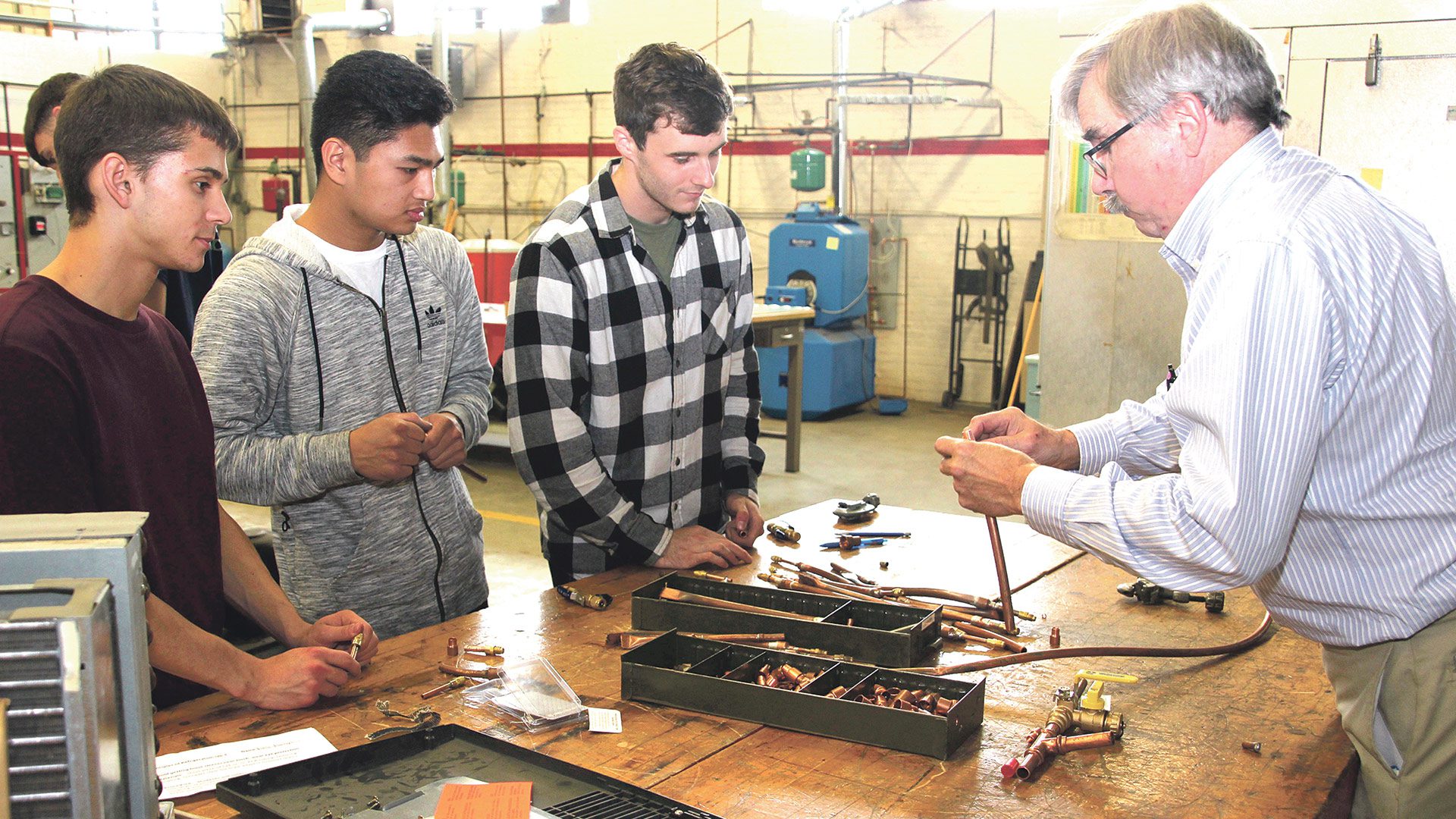
Professor William Halloran teaches HVAC students at STCC.

Professor William Halloran teaches HVAC students at STCC.

Dr. Fahad Khan said the HVAC program at Springfield Technical Community College (STCC) has been around since the 1960s.

“Many in the field around here went to STCC at some point,” said Khan, a professor in the college’s Engineering department. “It’s a legacy program.”

It’s also a program that has seen plenty of change and evolution over the years — which has only accelerated in the past decade or so.

Take, for example, an associate degree added in 2019 that focuses on building automation and control systems. Or advances in fuel, such as the emergence of biodiesel.

“Things have evolved a lot since the 1970s; boilers have improved in efficiency,” Khan said. “We still have to use combustion; some people hope that, in the next 10 years, we won’t need to use combustion for heat, but that’s probably too optimistic.”

But changes are already emerging, said Scott Cernak, owner of Western Mass Heating, Cooling & Plumbing in Haydenville.

“The big change in the past few years is the initiative to convert people from fossil fuels to heat-pump technology, or anything electric-driven.”

“The big change in the past few years is the initiative to convert people from fossil fuels to heat-pump technology, or anything electric-driven,” Cernak said, citing a broad push among government leaders in Massachusetts to move toward decarbonization through climate-technology investments and programs like Mass Save.

“People who have the money and care about the environment enough to do it are going to heat pumps — whole-house conversions, partial conversions, a lot of it driven by Mass Save rebates and tax incentives as well. It’s been about a decade-long push, but especially strong over the last two to three years.”

A heat-pump conversion can cost to to three times more up front than replacing one fossil-fuel system with another, he noted, which is why those rebates and incentives are so critical. And the Mass Save program recently committed to a three-year plan in which rebates will not decrease.

“There’s been a lot of training for our sales and estimation staff, manufacturer trainings, climate-initiative trainings from Mass Save,” Cernak added.

In addition, “it’s been a different mindset for people heating their homes. With fossil fuels, it’s very easy to make heat, it’s very efficient, and people feel that warmth right away. Heat pumps are different. You’re harnessing electricity through the heat-pump system, and the heat isn’t as profound as the fossil-fuel heat. So there’s a level of adjustment for the homeowner. And you also need to make sure the house has good-enough infrastructure to support it.”

Scott Cernak

Scott Cernak says a focus on indoor air quality and a move away from carbonization (in the case of heat pumps) are two major ongoing trends in the HVAC world.

While heat pumps have replaced carbon fuels in many residential and commercial systems, Khan said, the efficiency remains a work in progress.

“They have improved in terms of coefficient of performance, with how much heat you can extract from the outside to the inside. That varies depending on the temperature outside,” he added, explaining that, at very low temperatures, heating costs can rise dramatically. “With heat pumps, you can end up paying a lot of money between December and February.”

One way to combat that, he added, is with water-to-air geothermal heat-pump systems that draw on the stable temperature of the earth’s ground or water sources to provide efficient heating and cooling.

The other big shift in the HVAC world in recent years has been an emphasis on indoor air quality, which was certainly accelerated during the COVID years, but had taken root even before then, Cernak said.

“Indoor air quality has become a focal point in our business as well. A lot of people with allergies and sensitivities have embraced air scrubbers or electronic air cleaners because of all the ancillary benefits. They do kill bacteria and viruses, such as coronavirus. It won’t prevent you from getting sick out in the wild, but it can help you in your own home.”

“These guys are not going to be outsourced anytime soon. You’re not going to see a robot come into the house; somebody has to do the work. An engineer can be outsourced, but who’s going to install and cut metal and lay down the ductwork and do the wiring? Somebody has to do it.”

While technologies continue to advance, Khan said, the state is also focusing on incentives for weatherizing houses, making them more efficient in terms of heat loss and gain. “We’ll still rely on combustion, at least for the next 10 years.”


Priming the Pipeline

With business split about 75% residential and 25% commercial and industrial, Western Mass Heating, Cooling & Plumbing handles all aspects of that name, from installation and retrofitting to new construction and service, Cernak said. “We’ve had a steady incline since our inception in 2020 — we’ve tripled our sales and doubled our workforce.”

That employee growth is impressive in itself, at a time when all building trades are struggling with retention as retirements outpace new talent in the pipeline.

“We’ve seen challenges, especially at first. But we have a strong training program,” Cernak said. “It’s been relatively easy to hire young talent coming up from the trades. They’re not ready to run their own jobs yet, so we’re training them extensively to bring them up into our workforce. The growth has to come from within.

“For a young kid coming out of high school or college, bringing them up to speed usually takes one to three years, depending on the position,” he explained, adding that internal training has been very effective in bolstering his workforce.

Fahad Khan

Fahad Khan says STCC is equipping students to take the first steps into an HVAC field that needs young talent.

Cernak said the question of whether to go to a four-year college or enter a training program in the trades is one each young person needs to make based on their interests and needs.

“But what I can offer is, we pay for training, and you start making money immediately. Even in an internship, you’re making a livable wage, and then there are frequent increases, good benefits, and it’s satisfying at the end of the day, knowing that, by providing heating or cooling or plumbing, you’re providing comfort, safety, and efficiency in someone’s home.”

Khan also recognizes the need to bring more young talent into the world of HVAC.

“There is a vacuum in this field, as a lot of folks are retiring, or have taken early retirement since COVID. We’re trying to fill the gap.”

While STCC also offers a two-year degree program in HVAC, he explained, the one-year certificate program starts with the basics, and “by the time you finish, you’ve gotten your feet wet. You’ll still require some in-field training; you’re not going to hit the road and start fixing stuff. You’ll want to shadow somebody. But we have a lot of success covering all the bases, so, by the end of the year, you can start training in an internship.”

It helps, he said, that the state offers funding for businesses to take on interns for six months.

“It helps the employer, so they don’t have to carry the burden of training somebody and paying them, and it also helps the students with training hours, and gives them a chance to see if they really want to do it or not.”

Many do, of course, and the pay is a factor; HVAC professionals can make $55,000 after a year, or up to $75,000 or more if they go into automation and control, Khan said.

“These guys are not going to be outsourced anytime soon. You’re not going to see a robot come into the house; somebody has to do the work. An engineer can be outsourced, but who’s going to install and cut metal and lay down the ductwork and do the wiring? Somebody has to do it.

“So it’s a good area to be in, with a lot of job security, and it’s not going anywhere soon,” he added. “We can diagnose things faster, make things more efficient, but in the end, somebody’s got to go into the house for the actual repair.”


Changing Environment

The statewide push toward climate and energy innovation aren’t slowing down, and will continue to impact the worlds of construction and HVAC.

In a speech last month to the New England Council, Gov. Maura Healey cited figures from a UMass Donahue Institute report suggesting that the $1.3 billion her administration wants to invest in climate technology over 10 years would result in $16.4 billion in new economic activity and as many as 7,000 new jobs.

The state spending figure includes $400 million in bond authorizations for capital projects, $300 million in tax incentives, and $300 million to support the Massachusetts Clean Energy Center’s operations, as well as an expansion in eligibility for existing offshore wind tax credits that could cost up to $350 million.

At the same time, the Center for EcoTechnology in Florence — which has been at the forefront of innovation when it comes to energy efficiency and climate impacts for almost a half-century — expects to dramatically expand its work, President and CEO Ashley Muspratt recently told BusinessWest.

“The work we do ultimately rolls up to reducing carbon emissions and shepherding in all of the benefits that come with that,” she said. “Carbon reduction can allow for a better lifestyle in terms of cost savings, health benefits, energy independence, and a more comfortable, better livelihood. We could be tackling this crisis while also paving the way to a better way of life.”

And where there’s a will, innovation will follow.

“The technology is advancing tremendously. It has been forever, but especially the past few years. And that trajectory will probably continue as manufacturers learn new technologies to heat and cool homes efficiently,” Cernak said. “The next change is a new refrigerant which is more environmentally friendly and has a wider range of capability. By 2025, every manufacturer will be affected by that.

“It’s ever-moving,” he added. “We have administrative staff people who are always keeping up with regulations and changes and Mass Save incentives and tax incentives and manufacturer trainings. There are a lot of moving parts, but it all makes it better for the consumer.”

Building Trades

Beyond Four Walls

By Emily Thurlow

The Newman Catholic Center

The Newman Catholic Center at UMass Amherst is among PDC’s notable recent projects.

One of Nick Shaink’s earliest memories with Professional Drywall Construction Inc. was working as a laborer for the buildout of the Target store at the Holyoke Mall. As a teenager, he worked with the Springfield-based commercial drywall contractor on weekends and on summer breaks.

Now, more than two decades later, the firm is undertaking larger-scale projects, like a 900-room dormitory at the University of Connecticut, and Shaink is co-owner and vice president of PDC Inc.

While the company’s name reflects its origins in drywall, PDC offers services in structural metal framing, finish carpentry, acoustical ceilings, wood framing, plastering, toilet partitions, and more. Most recently, the company landed a job that solely involves installing metal panels on the exterior of a building.

“We’re starting to get work that’s not our traditional scope of work — it’s our expanded scope of work,” co-owner and President Ron Perry said.

Founded in 1994 by John Kendzierski, PDC has been affiliated with the local carpenters’ and laborers’ unions since 1997.

Over the course of Shaink’s career with PDC, he’s held nearly every job — from carpenter and general superintendent to vice president of Operations. A native of Connecticut, he had aspirations of running his own business and eventually relocated to Hampshire County.

Perry, who has been with the company for eight years, was previously a construction manager for two decades. In that prior capacity, he often hired PDC for construction projects, which is how he met Shaink. Over time, Perry learned that they shared similar ambitions. After Shaink approached Perry about going into business together, the pair purchased the company in 2018.

“I’ve always wanted to own a business; that’s always been a dream of mine,” Perry said. “So when this opportunity came up, it was something that I couldn’t pass up.”

Since then, the business has expanded its footprint into Connecticut, opening an office in Norwalk in 2018, and into New York, with an office in Malta in 2021. The multiple locations support each other, Perry said.

While PDC’s Springfield headquarters is handling some of the larger projects, such as the interior framing, insulation, and drywall for UConn’s hockey arena, its Malta location is currently working on a Starbucks at Rivers Casino & Resort Schenectady. For now, the decision remains to take the growth pattern a little slower at the company’s newest office.

“I’ve always wanted to own a business; that’s always been a dream of mine. So when this opportunity came up, it was something that I couldn’t pass up.”

“We want to make sure that we build the right team. We want to make sure that we have the right manpower, instead of taking the giant job out in New York where we could potentially fail,” Perry said. “We’re starting a little slower and trying to grow responsibly there.”


Piecing It Together

Over the years, PDC has built a name for itself in renovation and new, large-scale construction projects for retail, medical, and educational organizations in Massachusetts, Vermont, New Hampshire, and Connecticut. The company also has a bonding capacity of up to $100 million.

Notable structures that PDC has had a hand in include the Bone & Joint Institute at Hartford Hospital, Baystate Medical Center’s Hospital of the Future expansion, Taconic High School in Pittsfield, and Wahconah Regional High School in Dalton.

PDC owners Nick Shaink (left) and Ron Perry

PDC owners Nick Shaink (left) and Ron Perry say they want to keep growing the company gradually and smartly.

The company has also worked on more than 30 projects at UMass Amherst in the last 15 years, Shaink said, from its striking design of Isenberg School of Management to the UMass Design Building and the Newman Catholic Center.

At the campus’s Old Chapel, the company installed pre-fabricated, structural cold-formed metal framing, sheathing, and roof blocking on the building’s exterior, and installed framing walls and drywall on the interior. Workers also installed soffits, which is the underside of part of an architectural structure like an arch.

Work also included the installation of wood stairs, acoustical ceiling tiles, and acoustical plaster systems.

“Our goal is to try to do as many of the things we’re good at under one contract. It gives us more control over costs. It gives us more flexibility … it gives us more work on that job, as contracts are a little bigger,” Perry said. “We’re able to do more work with less — that’s why we want our jobs to be bigger. We want to do a bigger scope of work.”

Drywall — a staple in modern homes and buildings in the U.S., also referred to as wallboard or plasterboard — is made of two paper boards with gypsum, a gray or white soft sulfate mineral, in the middle.

The prototype for the invention was patented by Augustine Sackett in 1894, according to the National Inventors Hall of Fame. However, it wasn’t widely accepted as a building material until the 1940s.

Taking the art of drywall a step further in customization, PDC uses a unique method to mill a perfect corner, called ‘origami.’ Much like the Japanese art of folding objects out of paper, PDC’s approach enables its employees to shape a piece of drywall to fit a space more efficiently at the Springfield shop beforehand. Instead of using three separate pieces of drywall to make a column, they can use one piece of drywall, fold it, and glue it together in the desired angle, then install it in one piece.

By using this method, Perry explained, the drywall is not only a durable solution, but it is also a more efficient one, as the profiles are pre-fabricated in the shop. “It makes our lives in the field less complicated. It’s efficiency in the field.”

And, as with most contractors, time and scheduling are of the utmost importance.


Leveraging Growth

About a decade ago, the annual drop in temperature also meant a drop in projects. But for the past five years, PDC hasn’t really slowed with the changing of the seasons, Perry said. “It doesn’t ever stop.”

In the months leading up to COVID-19, the company secured a number of jobs, which helped carry it through what were some trying times for other organizations. Despite the uncertainty, Shaink said the company’s workload never really slowed down.

Fortunately, even as businesses across all sectors, especially in the construction realm, have battled persistent workforce shortages, labor has not been much of an issue at PDC, as the company continues to fluctuate between 280 and 300 employees.

The main obstacle during the pandemic — and it’s still an issue — is supply-chain issues for materials. The variety of metal studs the company uses for projects has traditionally been available within a week or two. But in the post-pandemic world, those same metal studs are taking up to eight weeks to arrive. That delay impacts the schedule, which in turn impacts the company’s ability to forecast as accurately as it would like.

“When that lead time is eight weeks and you’re buying material that’s eight weeks away, and it comes, and it turns out you don’t have enough — that’s eight more weeks,” Perry said. “And guys standing around is what costs us the most amount of money.”

One of the hardest-to-get products has been insulation. At one point, insulation, which was typically available within a few weeks, took up to nine months to arrive. In an effort to overcome such delays, Perry said PDC purchased multiple truckloads of insulation in advance and then had to find a place to store it all, hoping the job would still come to fruition.

“It’s complicated to forecast,” he said. “It’s a risk of where to put so much money.”

As for future projects, PDC has been awarded the construction of the new Holyoke Veterans Home. The 350,000-square-foot facility will include a chapel, outdoor gardens, and a pavilion for physical and occupational therapy, as well as outdoor events.

PDC will be tackling the interior and exterior framing, installation of medical headwall systems, drywall installation, and finishing. Once completed, the $483 million project will house 234 long-term-care beds for the medically vulnerable veteran population. Work is slated to begin in the fall of 2024.

In the meantime, both Shaink and Perry still have their sights set on growth, and they’re not getting hung up on a particular volume of work, but rather focusing on sustainability.

“We want to grow the business to be as big as we can and as profitable as we can,” Perry said. “I’d rather do a little bit less work, and make the margins that we need to be sustainable, than to try to take on additional risk and maybe not make as much money. We’re finding that balance between growth and profit.”

Building Trades Special Coverage

It Runs Hot and Cold

Fifth-generation president Ted Noonan

Fifth-generation president Ted Noonan says the company continues to grow and diversify its products and services.


Going back nearly 135 years, Ted Noonan says, the company now known as Noonan Energy has been defined by ambition, innovation, entrepreneurship, diversification, and, perhaps most importantly, the willingness — and ability — to adapt to changing times.

And these qualities continue to describe Noonan today, he said, noting that the company started by his great-great-grandfather in 1890 as an ice-delivery venture continues to evolve and create new business opportunities.

Indeed, Noonan, which moved on from ice after the advent of refrigeration and morphed over more than a half-century into a leading provider of oil and HVAC services, has added two new divisions in recent years, electrical and plumbing services, that give it the ability to provide more services to existing and potential customers — and intriguing growth opportunities.

“We added these new divisions because there was so much synergy with our other services,” he explained. “We were constantly needing an outside plumber or an outside electrician to pull permits and do work, so we said, ‘since we’re hiring one all the time, why don’t we just bring one on and create a new division?’”

The plumbing division was added in 2011 with the hiring of master plumber Mark Gadourey, and the electrical unit was introduced in 2018 with the addition of master electrician Daniel Rollend, said Noonan, adding that both continue to grow, as do other aspects of the broad operation.

“We were constantly needing an outside plumber or an outside electrician to pull permits and do work, so we said, ‘since we’re hiring one all the time, why don’t we just bring one on and create a new division?’”

“We’ve had some nice growth in both of those divisions over the past five to 10 years, and on the service and installation side as well,” he told BusinessWest, noting that the company installs everything from oil tanks and oil burners to air-conditioning systems, heat pumps, and mini-splits, while also undertaking home-energy audits and creating comfort plans. “We have a whole host of … everything.”

As fifth-generation owner, Ted Noonan continues many traditions, if they can be called that, of the owners who came before him. Being entrepreneurial is one of them. Growing up in the business and learning all aspects of it first-hand is another — Noonan recalled riding with the delivery men in his youth and unwinding hose. And filling in, especially in a pinch, is yet another.

“I still drive today when we get really busy in the winter,” he said. “I enjoy it … I always say that it’s therapy for me; I get out of the office, I shut my phone off — or try to — and make deliveries. I’ve pretty much done every territory we handle, so if we get a couple of call-outs in the winter, I’ll step in.”

Mostly, though, he is involved in short-term and long-term planning, creating additional opportunities, and exploring new avenues for growth and expansion. He noted that a trend toward consolidation within the industry, one that has fueled the dramatic growth of this company over the past 50 years, continues, especially as the Baby Boomer owners of smaller oil-delivery and HVAC service companies move into retirement.

Ted Noonan (right) and his father, Ed

Ted Noonan (right) and his father, Ed, have continued traditions of innovation laid down by T.F. Noonan back in 1890.

“We’re still looking at acquisition opportunities and expansion opportunities, while also keeping an eye on what might create great synergy from a diversification standpoint,” he noted, adding that, at present, the company is focused on “shoring up” those new divisions and growing those aspects of the business.

For this issue and its focus on the building trades, BusinessWest takes an in-depth look at Noonan Energy, exploring its rich history, the continuing of a tradition of entrepreneurship, and the question of what might come next.


Freeze Frame

Flashing back more than a century to company lore that he is well-versed in and relates often, Noonan marveled at how the venture known as T.F. Ice Dealer (named for his great-great-grandfather, Timothy F. Noonan) cut huge blocks of ice from Lake Massasoit (Watershops Pond) in Springfield and, using sawdust as an insulator, kept it relatively cold all through the year for delivery to customers in the Greater Springfield area.

And he continues to be awed by the insulating properties of sawdust.

“We’re still looking at acquisition opportunities and expansion opportunities, while also keeping an eye on what might create great synergy from a diversification standpoint.”

“We have a small barn at our house, and we have sawdust for the horses,” he noted. “You’ll go two months after cold weather, and if we’re digging in the sawdust, we find snowballs. And that always brings me back to how this company started.”

While some things haven’t changed — like sawdust’s ability to keep ice cold — the Noonan company certainly has. Its history is told through a huge photo display in the lobby of the company’s offices on Robbins Road, in the shadow of a 2-million-gallon oil tank. That lobby is also home to an oil-delivery truck circa the 1930s — it was rescued several years ago, refurbished, and painted with the Noonan colors (green and white) to resemble trucks the company had on the road 80 or so years ago.

Providing a quick history lesson, Noonan said the company, while it has remained in the same family, has changed names a few times and added new products and services on a consistent basis.

The first name change came in 1911, when T.F. decided to put ‘Massosoit Lake Ice Company’ over the door and on the side of the horse-drawn wagons. He would sell the company to his son, Edward J. Noonan, in 1923. The entrepreneurial second-generation owner would add kerosene and home heating oil to the products delivered by the company, additions that would prompt a name change to Massasoit Lake Ice and Fuel Co.

Second-generation owner Edward J. Noonan inaugurated the company name Massasoit Lake Ice and Fuel Co.

Second-generation owner Edward J. Noonan inaugurated the company name Massasoit Lake Ice and Fuel Co.

By 1939, with refrigeration chipping away at the ice business, Ed Noonan diversified by opening a gasoline station at the corner of King Street and Eastern Avenue in Springfield, one that also sold paint and wallpaper, which many of those facilities did at that time.

In 1958, Ed Noonan sold the business to two of his sons, Timothy and William, who ran a company that would take the name Noonan Oil Co. Inc., a venture that would slug its way through the oil embargo in 1973 and manage to expand sales and develop new markets. Timothy would become sole owner in 1981.

“We see a bright future … it’s going to be different, certainly, than it was five, 10, or 50 years ago, but everyone is always going to need warming and cooling, and we’ll be there to provide it.”

His son, Ed, would launch his own career in the business by acquiring Palmer Coal and Oil in 1973, while his father continued to grow Noonan Oil. (The two companies were in friendly competition for several years.) Ed Noonan doubled the size of his company with the acquisition of Leonard Oil Co. of Monson in 1978 and continued to grow with other acquisitions, including Dulude Oil Inc., Palmer Oil Co., City Oil in Springfield, Marquis-Rivers in Holyoke, and Tinco Fuel in Ludlow.

He would eventually put all those brands under one name, Noonan Energy, in 1985, and in 1985, Noonan Oil Co., still owned by Ed’s father, Tim, would become part of Noonan Energy as well. In the ensuing years, many other smaller oil-delivery and service ventures would be acquired, including Better Heat Inc., Bolduc Fuel, Royal Heating, National Heating, Canary Oil, Hampshire Oil, Hillside Oil, Davis Fuel Co., Hadley Fuel Co. … the list goes on.

Ted Noonan, Ed’s son, joined the company in 1998, became its president in 2009, and was named a member of BusinessWest’s Forty Under 40 class of 2017.


Hot Takes

During his tenure, one during which Tim has remained active with the business, Ted Noonan has continued his father’s tradition of aggressive acquisition of smaller fuel-oil and service businesses.

In 2011, the company acquired the assets of Whiteley Fuel Oil Co. in Chatham; in 2011, it purchased Ray Kelley & Son of Palmer; in 2013, it acquired East Springfield Oil Co; and, most recently, it added Borsari Oil of West Springfield, Chudy Oil in Three Rivers, and Westfield Fuel to the fold.

All these acquisitions give the company something very much needed in this day and age — size, said Noonan, adding that they also give it a presence in several different markets across the region.

Indeed, the Noonan footprint, or service and delivery area, now stretches to the edge of the Berkshires to the west, several of the border communities of Connecticut to the south (penetrating further into the state is difficult, Ted said), into Franklin County to the north, and into Worcester County to the east. With that acquisition of Whiteley Fuel Oil, it also serves a dozen communities on Cape Cod. Locations in the 413 are in Springfield, Westfield, Amherst, and Palmer.

Noonan Energy is known for heating and HVAC services

Noonan Energy is known for heating and HVAC services, but has become a player in electrical and plumbing work as well.

Beyond these acquisitions and the accompanying territorial expansion, the company has achieved additional growth though expansion of its product and service portfolio, said Noonan, adding that, in addition to the new plumbing and electrical divisions, the company also added a home-energy audit division under the leadership of his sister, Kara Noonan, in 2012.

He said these new divisions, and especially the plumbing and electrical units, were natural additions that came about as need became evident, especially as plumbers and electricians retire in large numbers, and as customers looking for those services continued to ask people from Noonan — who were delivering oil, servicing a boiler, or installing central air conditioning — if they knew a good plumber or electrician.

After years of offering referrals if it could, the company made the entrepreneurial decision to change its answer to those questions to ‘yes … that’s us; we can handle that.’

“It’s similar work to what we do, and it’s a niche we can fill,” Ted Noonan said, adding that the ability to give that answer puts the company in a position to offer a portfolio of services that few, if any, of its many competitors can match. Noonan said many still just deliver oil, while others will also handle installation and service of HVAC systems. Meanwhile, some handle plumbing and HVAC, but not electrical or oil delivery. But very few cover all those bases.

The new divisions enable the company to further diversify and better position it for a future where there will certainly be less dependency on fossil fuels, said Noonan, adding that the company is already making strides in that direction through steps such as the blending of biodiesel and traditional heating oil to create bioheat, continually increasing the blend so it is less carbon-intense.

“We see a bright future … it’s going to be different, certainly, than it was five, 10, or 50 years ago, but everyone is always going to need warming and cooling, and we’ll be there to provide it,” he said, adding that the ability to change with the times — and sometimes see around the corner and anticipate what’s coming next — has kept Noonan viable since Benjamin Harrison was patrolling the White House.

And these qualities will continue to serve it well into the future.


Building Trades

Super Bowls

Michael Preli works on the lathe

Michael Preli works on the lathe in his basement in Suffield.


Michael Preli’s career has been one of constant advancement — not necessarily in title or income, but in job satisfaction. And he’s a long way from where he started, in the auto-body field.

“My father is a frame technician for auto body. And I always thought that’s what I wanted to do,” Preli told BusinessWest. “So I started working in a body shop when I left school. I did that for a couple of years.”

What he didn’t expect was that he’d come to like wood more than metal.

Auto-body work “didn’t bring me the satisfaction I thought it would,” he recalled. “Metal is cold and dirty and dusty — like, the dust sticks to you.”

Meanwhile, his rented house, on the same property he worked at, needed some improvements, including a new door. He did the job himself, even though he had never done any woodworking.

“I got a lot of satisfaction from it. My boss came over and looked at it and said, ‘wow, you did a really nice job on this.’ I said, ‘oh, thanks.’ And that stuck with me for a while. So, when an opportunity came up to do framing for houses, I took it, and I left the world of auto body. Thank God.”

These days, Preli owns his own home-based business in Suffield, Conn., Cellar Dweller WoodTurning, creating and selling a host of artful pieces, including plates, bowls, urns, and decorative pieces. But it took a couple more steps to get there, as we’ll see.

Starting with framing, which he characterized as work with “a lot of brute force, not a lot of finesse. I always gravitated toward the jobs that took more patience, and my overseers saw that and placed me there.”

“It got my wife motivated, too, because she could see that, with a young child, I had an opportunity to do something from home instead of going back to work.”

Indeed, Preli started focusing on finish work, such as crown molding, fireplace mantles, door frames, doors, and windows. “I did that for many years, along with remodeling and renovating. And then I got into doing furniture, which took more patience and required more solitary-type work.”

Even through the decade he spent making furniture out of a rented shop, he never saw himself in woodturning, a craft that uses a wood lathe and hand-held tools to create symmetrically shaped pieces. “I thought I loved making furniture. But now that I’ve stepped away from it, did I really like doing furniture? I mean, I felt like I did.”

He switched gears, however, after his landlord passed away, and he lost his shop and moved all his tools back home, returning to commercial finish work while he and his wife, Kathryn, decided to start a family; their son was born in 2019.

“I was still working very hard, but my wife’s a doctor. She makes way more than I’ll ever be able to make. So she was going to continue working, and I planned to stay home until the kid was old enough to talk, and then go back to work.”

Then a pandemic struck, and that changed everything.


Crafting a Career

Specifically, it forced Preli to be home even more than he had planned to, and introduced a hobby into his life.

In some ways, he said the isolation many people faced during COVID was a blessing to his own household. “We even got COVID — we got colds and got over it — but it gave me a chance to put my tools down for the first time ever. This was the first time ever I hadn’t been working. I mean, I dropped out of high school young to work. Now I was home with my boy the whole time. It was wonderful. That’s when I picked up woodturning, just as a hobby.”

Showing off the lathe in his basement, Preli noted that “it’s a specific type of woodworking. The only thing I can do on that machine is round work, and that’s what I got into.”

Soon, the hobby started filling the Prelis’ kitchen with bowls and other items.

“I always undervalue my work, but my wife was like, ‘man, this stuff is coming out great.’ I’d been giving out a lot of stuff, giving gifts to my family. And of course, they said, ‘yeah, thanks, Mike, it looks great.’ But they’re my family. I could have given them anything, and they would say that.”

items Michael Preli sold

These are some of the items Michael Preli sold at the recent Suffield Summer Fair.

What convinced Preli that they weren’t just being polite was a craft-selling event at a local Tractor Supply Co., where his wife decided to set up shop.

“I said, ‘don’t do it, Kathryn. You’re going to spend the whole day there. It’s hot out. Don’t bother,’” he recalled. “She said, ‘I’m going to do it.’ She set herself to it, and she made a killing. We sold so much stuff. I didn’t think anyone would buy anything, but we sold a lot. It gave me some inspiration, and it got my wife motivated, too, because she could see that, with a young child, I had an opportunity to do something from home instead of going back to work.”

After all, he said, commercial finish work can be a six-days-a-week gig, and they both preferred Michael to be mainly home during that time.

“It’s nice to know that something I made with my hands is going to be the object of beauty beauty in someone’s home for a long time.”

“So it just worked out great,” Preli said. “And slowly, we started doing these craft fairs, and the revenue was good. We made it happen. My wife takes care of all the logistics for these shows and fairs.”

Those events take place most weekends and are the main sales source; online sales haven’t been so robust, and Preli believes that might be partly because he sells tactile items that people want to touch — and are far more likely to buy once they do.

“Plus, online, there are so many options,” he said. “I’m not the only guy selling wood bowls there; there are thousands and thousands. And shopping online, you want to save money, so you gravitate toward something less expensive, maybe not the best quality … but to each his own. We do very well in person.”

Michael Preli

Michael Preli says he was surprised when his creations first met an eager reception with buyers.

He enjoys talking to customers, especially when he hears what they plan to do with the items they buy. “I don’t know what anyone would ever do with some of these things I make, but they buy them. And it gives me some ideas, too. It’s nice to know that something I made with my hands is going to be the object of beauty beauty in someone’s home for a long time.”

When he started out, Preli worked with a number of different finishes, but most people gravitated to his half-epoxy, half-wood hybrid pieces that boast a smooth, shiny finish, so that’s the work he focuses on. “People love this stuff. They sell almost instantly.”


Joy in the Journey

While Preli didn’t think of woodturning during his framing or furniture-making days, he said the trajectory seems natural now; essentially, as his work became finer in scope, he loved it more.

“I get a lot of joy from it. My wife is proud of me. My family is proud of me. I have time for my son. I’m very happy with it.”

He said many people come home from work and spend time with their hobby, but he feels like the Cellar Dweller business is a hobby-like experience: something he does for fun that also generates income.

“That thing you’re compelled to do, I get to do that every day,” he said. “And it requires such a high level of concentration and patience. Everything melts away; it’s very much tunnel vision. I get to do that, and I’m so lucky.

“I keep it small, and I would say it’s a good life,” he continued. “The stress from doing commercial work, competing, bidding, dealing with different people — you know, some people aren’t as pleasant as others — and just being stuck in traffic and shopping for stuff at Home Depot … that’s all gone. It’s a relief.”


Building Trades Special Coverage

Current Events

President Jeff Goodless

President Jeff Goodless

Early on, Jeff Goodless knew life wasn’t easy in the world of electrical contracting.

But he also knew his family had built a strong reputation in the field since 1945, so it was always on his mind to one day enter the family business.

“I went to Northeastern University for five years,” he said, studying electrical engineering and business management there in the 1970s and taking advantage of NU’s well-known co-op work programs. “Everybody said, ‘why did you go to the co-op school?’ But I wanted to go through the experience of actually working and doing real interviews, knowing I was coming here, just to have that experience.

“I came back here and thought I was going to take a month off, and my father said, ‘you can have a day off,’” he went on. “So I came right to work, right out of college.”

He knew that was a good decision and knows it even more now, almost a half-century later, with Goodless Electric marking 78 years in business, still serving clients in the residential, commercial, and industrial sectors, just like his father, Leon Goodless, and uncle, Irving Goodless, did from the start.

Irving launched the business behind his parents’ home in Springfield, and his brother Leon joined in 1957, when the firm took the name Goodless Brothers Electric Co.

They did quite a bit of moving in the first few decades, Jeff said, to Riverdale Road in West Springfield, Worthington Street and then Winter Street in Springfield, then to the current location at 100 Memorial Ave. in West Springfield, alongside the Route 5 rotary at the Memorial Bridge. Irving retired in 1977, Irving retired in 1977, around the time his nephew came on board part-time. Jeff moved into a full-time role around 1982 and eventually took over the firm’s leadership.

“Everybody went into computer technology. That’s really what happened; they all went into IT, computer technology, and they weren’t going through the electrical programs. But now, I think the classrooms are filling up again.”

“Believe it or not, the type of work has stayed the same, although maybe on a larger scale later,” Jeff told BusinessWest. “But even way back when, they always did residential, industrial, and commercial work. They ran maybe three, four, six guys.”

At its heyday, Goodless said, the company was running about 90 workers, where now, it boasts about 20, keeping them busy with projects ranging from parking-lot maintenance and upgrades, generator services, and fire-alarm systems to lighting retrofits, swimming pools and hot tubs, and residential and commercial service upgrades, just to name a few.

“There’s a lot of jobs with UMass Amherst, a lot of state work, some city work, fire stations, DPW facilities, a little bit of everything. A lot of work for the housing authorities throughout the years, too,” he said. “We don’t do new homes, but I do additions and a lot of repair work. Out of our service department, we run about four vans, and we roll basically 24 hours a day.”

Goodless Electric celebrated its 75th anniversary in 2020

Goodless Electric celebrated its 75th anniversary in 2020, a major milestone for any company.

As the firm celebrated 75 years in business in 2020, an emerging pandemic posed serious challenges, especially since it was performing work at the Holyoke Soldiers’ Home, where COVID killed 84 residents.

“I couldn’t get my people to go up there, and I couldn’t really blame them,” Goodless recalled. “People didn’t want to work; people were scared. I had an outbreak in my office. It was challenging.”

What made a difference, he said, was the federal Paycheck Protection Program, which poured funds into businesses to keep their teams employed. “We took advantage of that; it was so helpful. We used it right. We used it responsibly. We kept guys going. In fact, we didn’t have to let anybody go through the pandemic at all.”
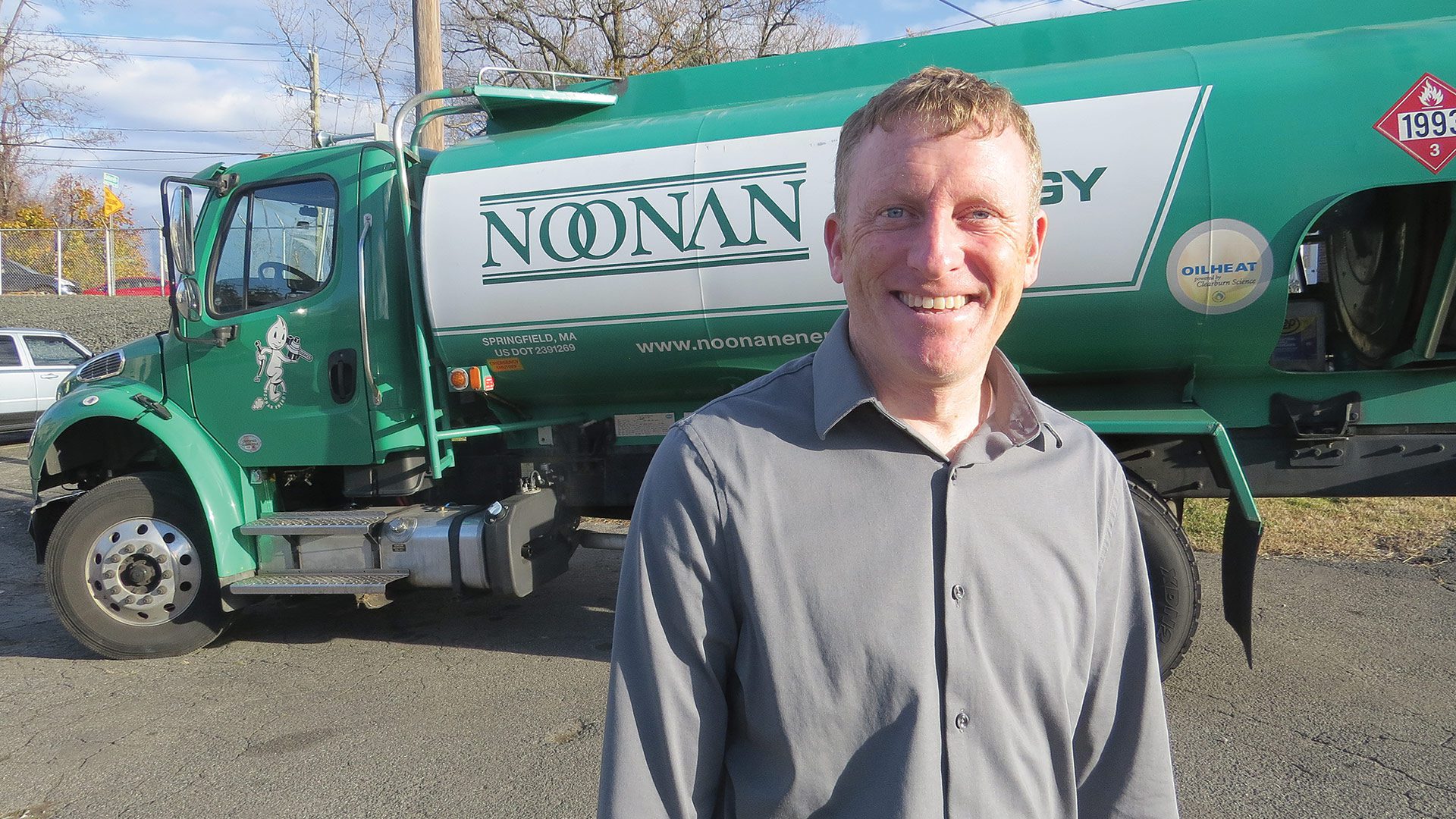
“I tell them, ‘if you work hard, if you work diligently, you can have anything you want. The sky’s the limit if you want to work.”

The economic ripple effects from the pandemic — particularly higher costs and supply-chain issues — still resonate, however. Goodless was able to stock up on things like 100-amp and 200-amp panels to keep housing projects moving, but said customers are still shocked to hear it might take nine to 10 months to get switchgear in.

“We say it over and over again: we’re not the chef; we’re the waiter. We don’t make the stuff,” he said. “It’s still a very difficult message to get through, though.”


The Next Generation

Goodless said the company’s reputation for fast response and competitive bids has helped it earn multiple awards for customer service.

At the same time, though, growth is challenging at a time when building trades of all kinds are beset with a talent drain.

“The workforce situation is awful,” he said. “You can get people, but it’s very hard to get good people in. But I’ve been pretty fortunate; I’ve been able to pick up a few people along the way during the past couple of years, and I’m working on a third one right now.”

Part of the issue has been the pipeline of new, young talent not keeping up with the pace of retirements, but Goodless said that might be changing.

Jeff Goodless’ first projects

This wall represents some of Jeff Goodless’ first projects for clients in the late ‘70s.

“Over the years, we noticed a huge decline in the electrical trade,” he said, referring to the programs young people were choosing to study. “Everybody went into computer technology. That’s really what happened; they all went into IT, computer technology, and they weren’t going through the electrical programs. But now, I think the classrooms are filling up again.”

He’s gleaned as much through conversations with teachers at the trade schools in Springfield, Westfield, Holyoke, and others, who say students are more serious than before about entering the electrical field and other trades. Part of the reason may be the talk of graduates of four-year colleges entering the workforce with six-figure debt and a cloudy career path.

“A kid in a trade, they’ll pay their dues and go through the program, and at the end, you can make well over 100 grand a year. And you’re going to do your side jobs like everyone does and make another 25 grand,” he said. “I tell them, ‘if you work hard, if you work diligently, you can have anything you want. The sky’s the limit if you want to work.’”

And work hard Goodless has over the past four-plus decades, outlasting many former clients whose companies are no longer in business. And it’s work he relishes.

“Everybody will have something different to say,” he noted when asked what he enjoys about running this 78-year-old business. “I love going after a bid, going over the numbers, and winning the bid. That gives me a thrill. My second-biggest thrill is going out and doing the buys.”

He’s also got his eye on making sure Goodless Electric continues to be a force for many years to come, even after it moves past family ownership.

“I always think about what I’m going to do with this business as I’m getting older. My ultimate goal is to turn it over to the employees, or half to the employees and maybe sell the other half, something of that nature,” he said. “I just want to keep the business going, keep the name going.”

Building Trades

Generation Next

Nicole Bercume

Nicole Bercume stands outside one of her current projects in Hadley.


When Ron Bercume passed away in 2021, his daughter, Nicole Bercume, said there was never a doubt that she would pick up the mantle of leadership in Bercume Builders, the company he started almost 40 years ago.

But it was a winding road that brought Nicole to that point, along which she settled in Florida, got married, built a law career with her husband, Andrew Bass, had kids, and returned home to Hadley.

Before her father succumbed to pancreatic cancer in October 2021, Bercume was already helping him build the final seven homes in a 28-home development in North Hadley called Shattuck Estates and Sapphire Estates; when he passed away, she stepped in and worked with the company’s longtime subcontractors to finish the job. By that time, she had already decided to stay on and continue Ron’s work.

“My dad had created such a fantastic company,” she told BusinessWest. “It would be a shame if it didn’t continue.”

Today, those 28 large homes on Crystal Lane, Indian Pipe Drive, and Nikki’s Way stand as the last success story in Ron’s career and the first in Nicole’s new one. Beyond that development, she is currently building her third house on a lot on Colony Drive, right across Shattuck Road, with a goal of creating a constant flow of residential projects, and even expanding the business beyond her father’s traditional focus on Hadley and Amherst.

“My dad had created such a fantastic company. It would be a shame if it didn’t continue.”

“Forty years is a long time,” Bercume said as she and Bass took BusinessWest on a walking tour of the development. “My parents started it together right when I was born, and they just went from there. Once I got older, I realized how talented of a businessman and builder my dad was. It’s not just that he would build homes; this was all wooded land, so he would design the actual subdivision. He would design the roads, and that takes a lot of skill.”
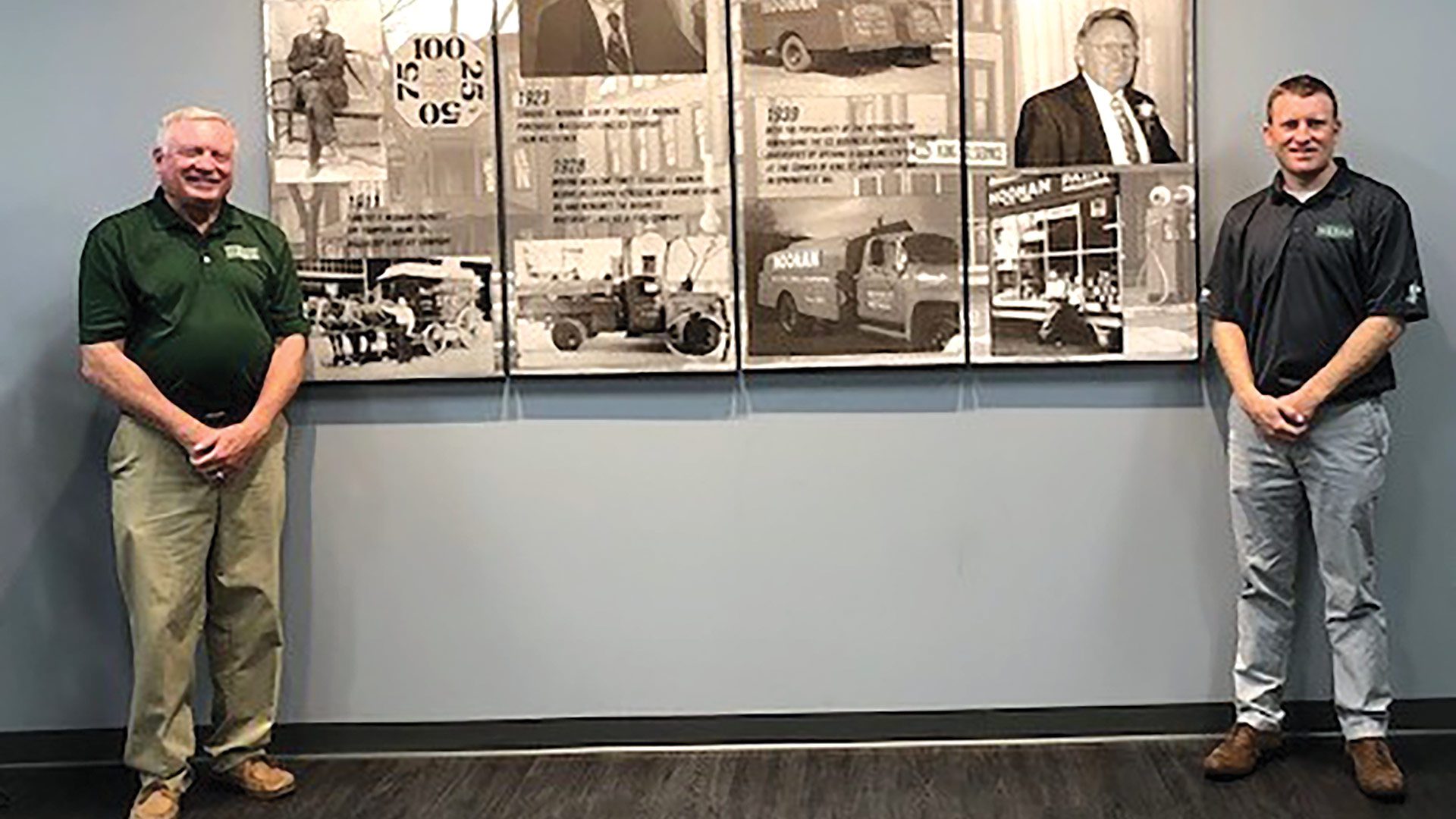
When he died at age 81, “he was still plugging away,” she added. “He always loved to work. All his subs worked for him for a long time. All the guys have known me since I was little, and I was very lucky to have learned from my father.”


Winding Path

Bercume had interest in the family business, but in her early 20s, the timing wasn’t right. “He was still working aggressively, and at that point, he was doing everything himself, so there wouldn’t have been a substantial role for me.”

So she went to college and law school in Florida, met Bass, and moved back to Hadley in 2015 and passed the Massachusetts bar. She started working at a firm in Northampton, while Bass started his own firm; in 2019, they bought a building on Route 9 in Hadley, which today houses Bass/Bercume Law Offices. Bercume handled the firm’s real-estate practice, while Bass handled the litigation practice.

Bass started out in consumer-protection work, particularly around Massachusetts’ lemon law. “That was really strong, so I started doing those cases all over the state; they mostly went to litigation because the dealerships wouldn’t resolve the cases, so that’s how I got into litgation,” he recalled. “After I got rolling, I got into construction litigation because Nicole’s dad had a lot of cases, so litigation became my core focus.”

Nicole Bercume and Andrew Bass

Nicole Bercume and Andrew Bass live in the 28-home development in Hadley that Nicole’s father started and she completed after his death.

Cases in that realm include land-use issues, contracts, and purchases of land; at one point, Ron settled a notable case with Tofino Associates of Hadley over a roadway issue in the Amherst Hills development near the Belchertown line.

Bass was recently recognized by Lawyers of Distinction as one of the top 10% civil-litigation attorneys in Massachusetts. Meanwhile, over the past couple years, Nicole was transitioning away from the practice into her new role leading Bercume Builders. “My father did teach me everything; once we had our kids and moved back here, that’s when he taught me everything.”

Ron typically built large homes with “classy, simple interiors, not a lot of clutter,” Nicole said, noting that homes in the new development start at 3,000 square feet, and typically feature open floor plans, high-end appliances, and maple flooring — and each was built in just four months. After her third house on Colony, she said she’s on the cusp of buying more land to develop a subdivision like the Shattuck/Sapphire project.

Woman’s Work

At a time when it’s still uncommon for a woman to lead a building firm (see related story on page 25), Bercume doesn’t particularly care if people question her abilities, noting that the subs who worked with her father for, in some cases, decades know what she can do — and they know she’s committed to her father’s values.

“My father really had such a great process. Even if you didn’t like my dad, you definitely respected him because he was an astute businessman, and he was just on top of it.”

“My dad’s greatest skill was that he had good taste; he picked out all the plans himself. People always say you know when a home is a Bercume home because they’re attractive and clean and classy-looking,” she said. “Construction defects were never an issue for him because, the second there was a problem, my dad, who could never sit still, would take care of it.

“He always did higher-end homes for whatever the era was,” she continued. “He liked big homes; the bigger he could build, the more fun it was for him.”

And when she got her Massachusetts construction license and reaffirmed her working relationships with those longtime subs, she knew it would be fun for her, too.

“My father really had such a great process. Even if you didn’t like my dad, you definitely respected him because he was an astute businessman, and he was just on top of it. All his subs respected him, and that transferred to me nicely. He taught me a lot, so I know what to expect from everyone, and it was very fluid.”

It’s just another way Bercume Builders has been a generational success story — one that occupies Nicole’s earliest memories, when she’d visit Ron at job sites. “And now, our three kids are always on the job sites with us.”

Because it’s never too early to introduce them to the family business.

Building Trades

Building Trade

Chicopee Mayor John Vieau joins, from left, Revitalize CDC Executive Director Colleen Loveless; Director of Programs Ethel Griffin; and Moyah Smith, board clerk.


On Sept. 29, Revitalize Community Development Corp. (CDC) brought its #GreenNFit Neighborhood Rebuild to Chicopee. About 100 volunteers worked on four homes on one block, all in one day. Two of the four homes are owned by U.S. Air Force military veteran families.

“We are so grateful to the city of Chicopee for welcoming us with open arms and supporting our initiative to help make homes safe and healthy for those in need,” said Colleen Loveless, president and CEO of Revitalize CDC, noting that the work the volunteers and building contractors tackled included replacing rotted porches and steps; repairing accessible ramps, roofs, and decks; installing a new shed, windows, storm doors, and gutters; power washing; painting; and yardwork.

Contractors and volunteers get to work.

Contractors and volunteers get to work.

The work was supported financially and with volunteers from American Red Cross and the Chicopee Fire Department, the city of Chicopee, Baystate Health, Berkshire Bank, Blue Cross Blue Shield of Massachusetts, the Center for Human Development, Country Bank, Go Graphix, the MassMutual Foundation, M&T Bank, Ondrick Natural Earth, PeoplesBank, Rocky’s Ace Hardware, TD Bank, and Westfield Bank.

“Our #GreenNFit Neighborhood Rebuild goal is to work on hundreds of homes in targeted neighborhoods, clean up vacant lots, improve playgrounds, and create community gardens,” Loveless said. “Revitalize CDC focuses on making meaningful improvements on homes to help reduce energy use, save money, and create a safe, healthy, and sustainable living environment for our residents and the community.”

Improvements have included installing or retrofitting HVAC systems to allow for oil-to-natural-gas heat and solar conversions; new roofs; energy-efficient windows, doors, and appliances; water-saving plumbing fixtures; electrical upgrades; mold remediation, lead abatement, and pest control; interior and exterior painting; and modifying homes for aging or disabled homeowners, such as building exterior access ramps.

Since Revitalize CDC’s inception in 1992, the organization has repaired and rehabilitated more than 1,100 homes with the help of 10,000 volunteers, investing $42 million into Western Mass. In the past year, Revitalize CDC completed 72 home-repair projects on the homes of low-income families with children, elderly citizens, military veterans, and people with disabilities.

The organiation’s JoinedForces, in partnership with businesses, civic organizations, and other nonprofit agencies, provides veterans and their families with critical repairs and modifications on their homes.

Building Trades Special Coverage

Making the Circuit


High-school students train at Elm Electrical as part of its summer First Step Futures program.

High-school students train at Elm Electrical as part of its summer First Step Futures program.


Over the summer, three cohorts of high-school students attended four-day training seminars, two in June and one in August, at Elm Electrical in Westfield.

Monday through Wednesday, the students received instruction and training in the state-of-the-art Elm University multi-media classrooms and hands-on lab. Thursday, the final day, was Challenge Day, when students applied what they learned and completed a project board challenge. Elm project managers evaluated their work, offered feedback, and got to know the students.

It was, no doubt, an enriching experience for many. But First Steps Futures, as Elm calls it, is more than a summer camp. It’s a program, to be repeated each summer, with an eye firmly on the future of the electrical industry.

“This is a great opportunity to showcase and utilize our training facility, expose kids to the electrical field, as well as instruct our current and future workforce,” instructor Paul Asselin said. “At the same time, we can get them excited about the field and see what the kids can do. Do they follow our strict safety protocols? Do they ask questions? Do they work well with others? Is their work accurate? Do they have a positive attitude? This gives us a snapshot of what they’d look like as potential co-op students on the job.”

The students, in grades 10-12, were recommended by their teachers or Elm employees to attend the free training seminar. Some were, indeed, invited back as co-op students, to get a better look at the field, and give Elm a better look at what they can do.

“This program also gives kids who don’t attend a technical school the chance to see if the electrical field is something they may be interested in pursuing,” Asselin added. “Oftentimes, students who go to a traditional high school think it’s too late to go into a trade. We make sure they know there is still an opportunity to pursue a career in the field.”

“Oftentimes, students who go to a traditional high school think it’s too late to go into a trade. We make sure they know there is still an opportunity to pursue a career in the field.”

The Elm University classrooms and lab weren’t created with young people in mind, however; they’re used year-round as Elm’s in-house training facility. Employees who want to become licensed electricians can opt into the company’s four-year apprentice program, working their jobs Monday through Thursday and then, every other Friday, attending school at Elm University for free, as an alternative to night school.

“We started our own training because we weren’t happy with the training we were getting, the conventional way of going two nights a week, three hours a night; most of these night classes are in a classroom setting and don’t have a hands-on component. They get what they need to pass the test, of course, but the hands-on component makes a big difference because that’s what their supervisors see out in the field. That’s what they need out in the field.”

In short, Elm has created a way to cultivate a pipeline of young talent at a time when older electrical workers are leaving the trade faster than they can be replaced. It’s a trend being observed in all construction trades, in fact, and it sometimes requires innovative solutions.

“We can complain like everyone else or do something about it, and we’ve chosen to do something about it,” Asselin said, noting that the effort and financial investment are paying back in the quality of workers the company is putting into the field. “It’s apparent it’s working.”

Jean Pierre Crevier, co-owner of M.L. Schmitt Inc., a 99-year-old electrical contractor based in Springfield, agrees that companies need to stay connected to the potential pipeline of young talent. He does so by participating in the interviewing process of the Joint Apprentice Training Committee of the Local 7 International Brotherhood of Electrical Workers, bringing new students into apprenticeship programs. “I was pleased with this year’s turnout — we had a lot of great candidates to choose from this year.”

Putnam Vocational Technical Academy teachers

Putnam Vocational Technical Academy teachers Michael Poole (far left) and Charley Jackson (far right) and senior students are joined in the electrical shop by M.L. Schmitt’s Bobby Williams (back left) and Pete Coppez (back right).

But he also does so with efforts like a recent partnership between M.L. Schmitt, Exposure, and two local electrical manufacturers, Legrand and Fidelux Lighting, to provide donations to the Putnam Electrical Shop at Putnam Vocational Technical Academy in Springfield.

The Putnam Electrical Shop works on a fixed budget, and donations like this give them additional supplies and equipment for student lessons, said teacher and master electrician Charley Jackson. “I share my work experience and testimony with my students, and it really helps them with their desire to learn. Our recent visit from M.L. Schmitt and donation of supplies really encouraged our students to keep pushing.”

The materials that the school received include low-voltage and line-voltage training kits, a variety of light fixtures, blueprints, surface raceways, disconnect switches and more. More donations are expected to take place this fall, and M.L. Schmitt has hired many Putnam graduates over the years.

“We’ve been conditioned to think you have to have a college degree to have a successful career after high school,” Crevier said. “But a lot of people struggling with college and looking at alternate solutions can make really good money in the trades. I know borderline geniuses who don’t have a really strong formal education behind them, but they can use their hands, and they’re virtual artists, interpreting visual drawings to see what the designer’s intent is. It’s a great career path.”


Mind the Gap

The workforce issue isn’t unique to electricians. A recent survey by Associated General Contractors of America (AGCA) found that, overall, construction firms are still struggling to recruit employees. Ninety-three percent of respondents say they have open positions that they’re trying to fill, and 91% indicate they are struggling to fill at least some of these roles. This issue is particularly pronounced among craft positions, which make up the bulk of construction work on job sites.

At the same time, AGCA reported, more companies are waking up to the fact that the future of the construction industry lies in youth, which is why firms are increasingly taking steps to engage younger generations. Fifty-one percent of survey respondents say they’ve gotten involved in career-building programs at the high school, college, and technical-school level in order to encourage students to consider a career in construction.

Jean Pierre Crevier

Jean Pierre Crevier

“But a lot of people struggling with college and looking at alternate solutions can make really good money in the trades. I know borderline geniuses who don’t have a really strong formal education behind them.”

It’s a task facing serious headwinds. Tallo, an employment and scholarship platform geared toward younger workers, issued a report in the spring analyzing survey responses from more than 29,000 high-school and college students about the brands, industries, and career paths they desire. In a ranking of 22 industries, construction attracted the interest of just 16.7% of respondents; only forestry ranked lower. In contrast, 76.5% want to work in technology.

What those who are looking at the trades are finding, however, is opportunity. According to the U.S. Bureau of Labor Statistics, electrician jobs are expected to grow by 9.1% from 2020 to 2030, higher than the 7.7% growth rate projected for all occupations. The increase in demand is largely driven by an increase in devices, buildings, and vehicles that rely on electricity; from 2021 to 2022 alone, total electricity consumption in the U.S. is expected to grow by 1.4%. Meanwhile, as noted earlier, Baby Boomers are retiring at a faster rate than members of Gen Z are choosing careers in the trades.

“I was one of those people who went to a private high school, four-year college, got a bachelor’s degree in marketing, sat behind a desk every day, and decided it wasn’t for me and turned to the trades,” Crevier told BusinessWest. “I decided I was one of those visual people; I like to work with my hands, see my accomplishments at the end of the day, and be proud of what I did.”

One of his pitches to young people is that, particularly for those who enter a union apprentice program, they’ll get paid to learn a career path, rather than go into debt. “Instead of investing tens of thousands, hundreds of thousands, into an education, you’re actually getting paid to learn, paid in the field, as you go to night school, at least on the union side.”

Bobby Williams, a purchasing officer at M.L. Schmitt, graduated from Putnam and is gratified to see more of its students become the future of his field. “Without our young, upcoming electricians, we won’t have a future workforce of skilled tradesmen and women.”

Which is why Jackson is gratified by the continued connection betweeen Putnam and area businesses. “These donations and visits from M.L. Schmitt let our students know they’re included,” he said. “It certainly motivates and keeps them encouraged about entering the trade.”

Michael Poole, who chairs the Electrical Department at Putnam, added that the donation gives students an opportunity to see and work with specialty items that they would otherwise not be able to afford. “It also shows them that the community cares about their future success in the electrical trade. I am grateful, and I know that our students are as well.”

 

First Steps on a Rewarding Path

Still, Asselin noted, with the manpower shortage, vocational schools can only put out so many students, which is why programs like Elm’s First Steps Futures, is so important, as the company brings in young talent who might otherwise have never thought electrical work was something for them.

“I’ve got them for four days, so I get a pretty good idea what kind of student and what kind of employee they may be. It was really eye-opening for us to see the quality of some of the students out there,” he said. “Some kids who go to a traditional high school or some other alternative school think they can’t go into a trade because they didn’t go to trade school. That’s not the case. Companies like ours will train them both in the classroom and hands-on. We have that ability to get them up to the same level as, say, a vocational student that went through a three-year vocational program.”
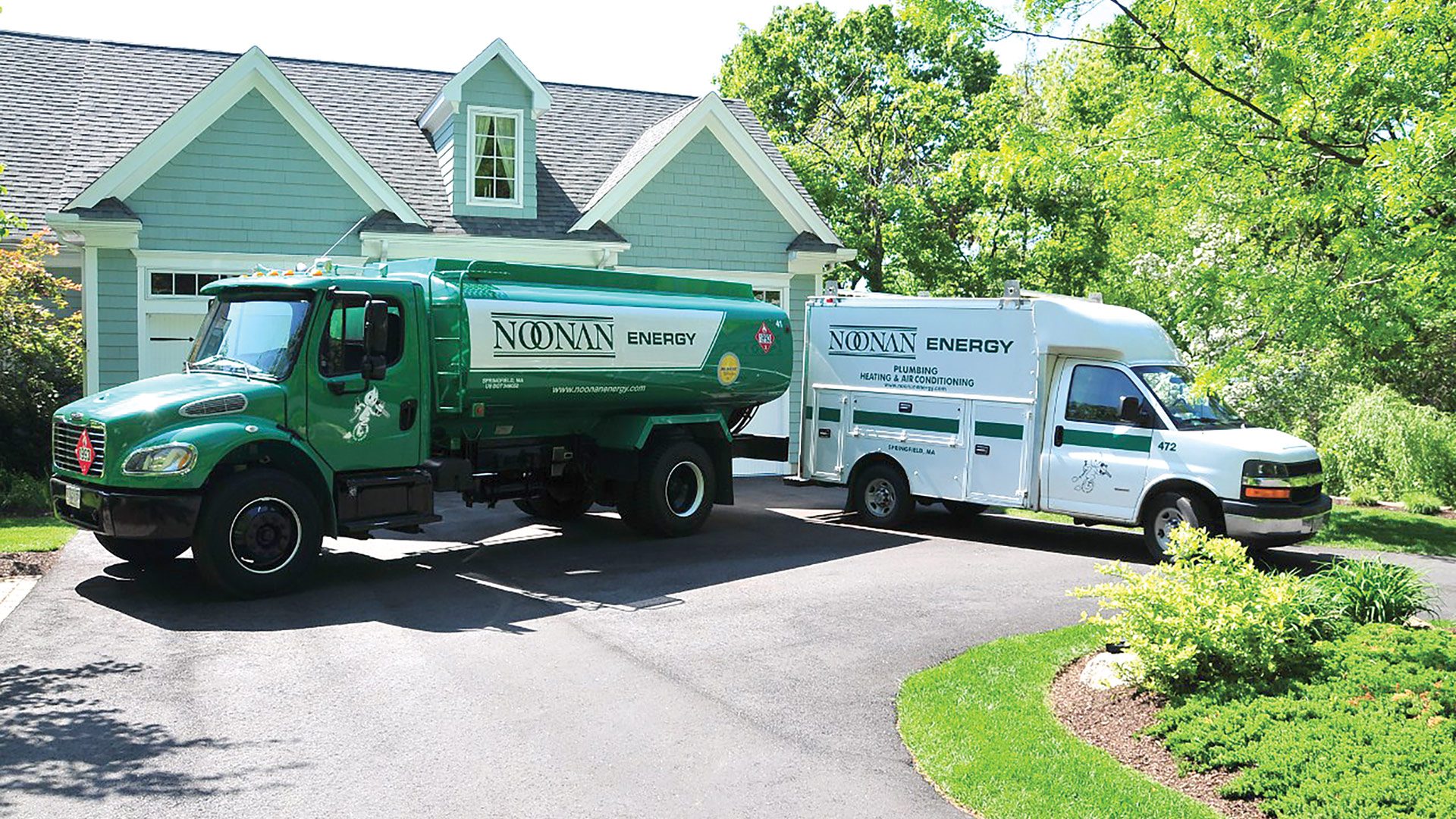
Moving forward, Asselin said Elm might open the week-long program to veterans looking to get into a trade. “It’s a different way to approach the problem.”

But Elm University itself, where current employees skill up for better career opportunities, has been a crucial element, he added. “This is what we should have done a long time ago. We kind of had our hand forced because certain jobs require traveling, guys are out of town for a week, and it’s hard to be in school during the week and also be at work. Now, they can travel during the week and get back for class.

“This is a great option for those who don’t want to have to go to night school,” he added. “In four years, students will be ready to sit for their exam to be licensed electricians. Adding our First Steps Futures program to our Elm U program really allows us to groom our future workforce from the very beginning.”

Offering young people pathways into a career is important, but so is showing them how much satisfaction can be found in the work.

“Really, it’s a tangible thing. I tell students, there is a tangible output from what you do,” Crevier said, adding that he tells students about area jobs his company has worked on, from Union Station to the light and visual displays at Thunderbirds games to hospitals, which rely on electrical networks to save lives. “These things might last decades or hundreds of years, and people will always see the product of what you did. Kids today have never thought about that aspect before.

“We can all find people,” he added. “It’s a matter of finding qualified candidates who have the initiative, the drive, and the desire to differentiate themselves and be leaders. Too many people in the workforce today are complacent to show up and participate and don’t want to do more.”

But Schmitt, a company that’s been around for 99 years and doesn’t plan on going anywhere, won’t always have Crevier and his team at the helm, so a job there, as at many companies, is a chance to grow into higher roles.

“We’re not going to be here for 30 years, but we’re looking at the next 30, 40, 50 years, and even beyond that,” he said. “There’s always an opportunity for the right individual.”

At a time when electrical and all other building trades are scrambling to find talent and restock an aging workforce, it’s just one more factor that might draw a Gen-Z student to a career he or she might never have considered before.


Joseph Bednar can be reached at [email protected]

Building Trades Sections

Flush with New Ideas

Craig O’Connor says bathroom makeovers by Affordable Bath

Craig O’Connor says bathroom makeovers by Affordable Bath can include deep soaking tubs, which are growing in popularity.

It’s one of the most important rooms in the house — resale-wise, and otherwise. And yet, many people live with something that’s been outdated for 20 years or more. New materials, products, and techniques provide an array of creative and often-affordable options for giving the bathroom a new life.


A bathroom makeover can be functional and involve a simple update, or turn the space into a spa-like retreat with recessed lighting, a heated floor, a spacious tiled shower with multiple shower heads and built-in benches, or a deep soaking tub where the water vibrates in response to soft music.

The choices are almost limitless, and thanks to new materials and technology, there are solutions for every budget that result in a fresh, clean, updated look.

“The two rooms that affect resale value the most are the kitchen and the bathroom; they tend to be most expensive to remodel, but are also the most important,” said Jason Cusimano, owner of Bathfitter of Western Mass. in Greenfield, which specializes in customized acrylic tub liners, wall systems, and shower-to-bath conversions.

Jim Belle-Isle agrees. “The bathroom is the first thing people see in the morning and the last room they see before they go to bed,” said the owner of BathCrafters in Chicopee, which also specializes in custom acrylic tub liners, wall systems, and conversions.


The two rooms that affect resale value the most are the kitchen and the bathroom; they tend to be most expensive to remodel, but are also the most important.”


Affordable Baths Inc. in Springfield, meanwhile, does complete makeovers that begin with gutting the entire room. The existing footprint can be replicated, or the room may get an entirely new design, which allows a homeowner to be as creative as their budget and imagination allow.

“Many people are suffering with bathrooms that have been outdated for 10 or 15 years; they wait to remodel until they are ready to put their house on the market, but if you are going to spend the money, you should do it at least a few years before you sell so you can enjoy it,” said Craig O’Connor, owner of Affordable Baths, adding that a remodeled bathroom adds instant equity to a home.

Local bath remodelers say the majority of their clients are 35 and older, and are remodeling or making changes because the room is outdated or has problems due to mold and mildew. Baby Boomers also make up a large part of their business, and those who plan to stay in their homes often want the bathtub converted into a spacious shower stall with grab bars, a seat, and recessed soap holders.

“Twenty years ago, we did one shower conversion for every tub makeover. Now the ratio is one-to-one,” Cusimano said as he spoke about the growing trend. “The bathroom usually has a small footprint, but eliminating a tub can make the space seem amazingly larger.”

Trends and styles come and go, but white fixtures are the most popular, followed by neutrals that include beige and gray. Although many remodeling shows on TV feature bathrooms with intricate tiles and daring designs in shower stalls, grouted seams require maintenance, and most New Englanders want surfaces that are easy to clean and prefer wall surrounds or large, block-style tiles.

For this edition and its focus on home improvement, BusinessWest explores options offered by local remodelers that range from complete makeovers to less-costly renovations that include relining and resurfacing tubs, sinks, wall tiles, and bath surrounds, extending their life and giving them a clean, updated look.

Changing Trends

O’Connor’s Springfield showroom contains tiles, vanities, showerheads, shower stalls, faucets, lighting, countertop samples, flooring, and everything else needed for a complete bathroom remodel. The typical cost of a job in New England is $14,000, but Affordable Bath can usually do a complete remodel for $10,000, as long as the footprint isn’t changed. However, the price rises if people choose costly options such as heated floors, custom tile bath surrounds, or vanities larger than 36 inches.

The room is gutted down to the studs, and the remodeling takes a week or two to complete. It can be inconvenient for homeowners who have only one bathroom, but the new bath or shower is ready for use by the end of the first week, and clients are offered Porta Potty units.

Gunmetal-gray-colored vanities are growing in popularity, but most people choose shades of brown, and quartz countertops are replacing granite; the material is slightly more expensive, but doesn’t require maintenance and resists stains.

O’Connor told BusinessWest that many people whose master bathrooms have Jacuzzi tubs are eliminating them or replacing them with deep-soaking or claw-foot models.

Jim Belle-Isle

Jim Belle-Isle says BathCrafters can install a new bathtub liner and wall system in one or two days to give the room an updated look.

Claw-foot tubs come in cast iron, which retains the temperature of the water for long periods of time, or acrylic, which weighs less and is a good choice for second floors.

Some Baby Boomers and seniors are also looking toward the future and choosing walk-in tubs.

“The surfaces are heated, and the jets can be positioned to hit the knees, hips, or lower back,” O’Connor said, adding that roll-in showers with fold-down seats and grab bars are another option that eliminate the need to step over a wall to bathe.

“We’ve created bathrooms that range from a basic remodel that meets practical needs to spaces that provide the comfort of a private, spa-like retreat,” he continued, noting that the company recently remodeled a master bathroom and installed an oversized Jacuzzi tub and separate shower with multiple showerheads, custom tiles, a built-in bench, and a frameless glass exterior.

Although a complete makeover is the ultimate choice, there are many options for people who don’t need or want that option or can’t afford it. They include having a custom-made acrylic tub and liner installed over the existing one. The liners usually have lifetime warranties, and the entire job can be done in about two days and enhanced with a new sink with fancy faucets and a new toilet.

“We have more than 1,000 acrylic molds that fit every cast-iron or steel tub, along with multiple designs and colors,” Cusimano said, adding that bronze or brushed nickel drains or overflows are popular and an average job costs $3,000 to $4,000, although prices for tub-to-shower conversions range from $1,000 to $7,000, depending on factors that include how much plumbing is required and whether the homeowner wants built-in seats and other high-end features.

He told BusinessWest that acrylic is a very high-end plastic and far more durable than old bath surrounds that tend to be made of fiberglass. The material is easy to clean, and the finish never wears off, as acrylic is not a coating.

Many bathrooms remodelers are called upon to change have baby-blue or pink tubs and fixtures, and tiles that were also used as wainscoting and were popular in the ’40s and ’50s.

The tiles are often removed before a new wall system is put in place, and water damage caused by small cracks in the tiles or grouting behind them is repaired.

“There can be hundreds of seams in a tiled bathroom where water can get in,” Cusimano said, adding that some people have no idea that this has been happening.

Most tub liners and wall systems need beading where the edges meet, but new barrier materials are infused with mildicides and antimicrobial additives.

The wall systems Bathfitter uses don’t come in pieces, but are custom-made after taking measurements with a laser. They extend from the edge of the tub or shower to the ceiling, and the corners are bent so there are no seams inside the tub.

Soap dishes and corner caddies can be added, along with acrylic on the ceiling, and bowed rods are gaining popularity as they make the area seem more spacious.

BathCrafters also makes custom tub liners that are formed to fit perfectly over existing tubs, and if tile walls are in excellent shape, Belle-Isle said, they can be covered with acrylic liners, which reduces the cost of removing them. In addition, tile wainscoting in dated colors can be covered with tile-shaped acrylic.

“The biggest decision they have to make is whether they want a shower door. It does pose a maintenance issue, but some people want glass doors without metal frames,” he noted.

Although tub surrounds come in many colors and designs, neutral palettes allow people to change the look of the bathroom in the future without having to spend a lot of money. “People can get creative with floor tile, vanity tops, and paint colors,” Belle-Isle said, adding that he often reminds customers that it is much easier to redo a floor than a tub and surround.

“Remodeling can cost a lot, but the main issue in a bathroom is usually the tub or shower. Many don’t want to completely gut the room, but they do want a look that is modern and doesn’t require much maintenance, and we can provide that,” he continued, adding that everything he installs is customized to fit.

Miracle Method of Ludlow offers another option that is the least expensive choice but completely updates the look of a bathroom, tub, or shower area and extends the life of existing tubs and showers that are scratched, chipped, or contain outdated colors. After the tub or wall surround is professionally cleaned, a high-end coating is applied, which contains a bonding agent that fuses with the old surface.

Owner Jim Kenney says the entire process takes five to six hours and cures overnight. Prices start at $585 for a standard bathtub, and sinks, countertops, and tiled walls can also be sprayed.

“We can change the entire color scheme and use the same acrylic on tile walls, which will give the room a fresh new look and bring it up to date,” he explained.

In addition, Miracle Method does step-through cutaways in bathtubs that turn them into shower stalls and are popular with seniors. “We cut a 24-inch wide step into the side rail so it is easier to get into,” Kenney explained, adding that he leaves five inches on either end of the cutaway and can install grab bars and apply a non-slip surface to the floor before the coating is sprayed onto it. The cost of this makeover with grab bars is about $1,450, and it is a growing part of his business.

Modern Look

Bathrooms are used on a daily basis by homeowners as well as their guests, and can reflect a person’s decorating style or simply serve as a functional room that meets basic needs.

But the look and age of the tub, sink, toilet, and walls can make it a place to avoid or one that is enjoyable to visit, Belle-Isle said. “When the environment in a bathroom is pleasant, it makes a big difference in a person’s overall mood.”

Building Trades Sections

Scaling New Heights

Fran Beaulieu

Fran Beaulieu says it’s a challenge to attract young workers, but those with a passion for the home-improvement trades can build gratifying careers there.

From the time his father first hung out a shingle — and then installed a whole lot more of them — Fran Beaulieu says the secret to this 50-year-old company’s success is almost too simple to be true.

“The key here is we outwork everyone,” he said. “We’re here at 7, we’re open on Saturdays, we’re always on top of it, always focused on every job. We outwork everyone. It sounds corny, but it’s true.”

That legacy of hard work began in the mid-’60s, when Fran’s father, Phil Beaulieu, a French-Canadian immigrant, arrived in Western Mass. looking for a job, and found one at Fisk Rubber in Chicopee, which later became Uniroyal.

At one point, Fisk’s unionized workers went on strike, and while on strike, the elder Beaulieu met a couple fellow French-Canadians who hung siding, and went to work for them.

Decks are among the many home-exterior projects tackled by Phil Beaulieu & Sons.

Decks are among the many home-exterior projects tackled by Phil Beaulieu & Sons.

“They would go out on Saturdays and on Sundays after church and knock on doors to generate work,” Fran said. “The first time he did that, he got three jobs, and he never had to look back.”

Beaulieu officially launched his home-improvement business in 1967, gradually adding other skills beyond siding, from roofing to window and door installation. His son Al came on board in 1984, and Fran followed in 1988, eventually taking Phil Beaulieu & Sons Home Improvement to new heights.

“My brother and I have been operating the business since 2008,” Fran Beaulieu said, noting that the company recorded $1.8 million in gross sales that year, but $7 million last year. “We are, from what our supply houses tell us, by far the largest exterior remodeler in the area, but we’ve done it quietly — 90% comes from past customers and referrals.”

That testifies to high levels of customer satisfaction, he went on.

“As soon as you call here, we don’t drop the ball; we make an appointment and show up on time. Unlike a lot of home-improvement companies in the area, we aren’t about marketing; we’re about the trade. My brother and I, and the key guys here, are all about the trade and the craft. If that’s where our focus is, we don’t have to worry about what the competition is doing.”

Today, Phil Beaulieu & Sons specializes in all manner of exterior home improvement — tackling about 600 projects a year — including roofing, siding, windows, doors, decks, and masonry, with occasional light interior work related to an exterior project, like repairing ceiling damage caused by a leaky roof or installing interior trim on window jobs.

Products have evolved over time; for example, Beaulieu said new energy codes have put many window makers out of business and consolidated business among fewer manufacturers. He said he chooses product lines with a long track record for quality, and for good reason.

“We choose manufacturers that stand behind their products,” he told BusinessWest, rattling off names like Mastic siding, Harvey windows, Therma-Tru doors, and Trex decking. “We get every salesman in here, wanting us to sell their product, but we’re cautious about what we sell. If we select an inferior window to save a few bucks, we might put in a couple thousand windows in a year, and if they have a problem, it could destroy our reputation. So we have to be very careful. We use products that are time-tested and generally leaders in their industry.”

For that reason, Beaulieu said, his company tries to be up-front about pricing, but customers appreciate the candor. After all, while a generic product might cost 10% less, “if something goes awry, people don’t remember what kind of window is in their house; they remember who put the window in. So we don’t want callbacks — unless, of course, you want more work.”

Weathering Change

At peak times, Phil Beaulieu & Sons may have 60 people working, including eight office staff, three on the sales team, and professionals scattered at job sites throughout the region.

“It’s a struggle to find labor,” Fran Beaulieu said. “We have a young crop of guys coming through the system, along with reaching out to other guys in the industry. They might have been a small-time contractor, and we say, ‘listen, come work here. You won’t have to chase leads and make calls; here’s your next job.’ We’ve been able to bring in some guys that way. We’re always looking.”

That said, some Beaulieu employees have been there 30 years or more, crafting the sort of long-term, successful, and satisfying careers that many young people mulling career choices may not consider.

“The trades are great, and they’re not what they were 25 years ago,” he said. “If you take it as professionally as, say, a banker does, you can do really well.”

But it’s also hard work, he added. “You have cold days, hot days, rainy days, but also beautiful bluebird days. Working in the fall is amazing. Working in February and March … not so fun. But you become accustomed to working outside in the elements. You learn how to dress in layers, how to eat properly, and how your body reacts.”

While job volume remains strong, he told BusinessWest, large projects tend to be fewer than in the past.

“People tend to nickel and dime on their house, but if they’re comfortable with our work, we’ll get more projects from them,” he explained, noting, for example, that it was common 20 years ago for homeowners to order 32 windows at once, where now they’ll order a few at a time as they can afford it. Tax season is a healthy time for orders, not only because people like sprucing up their properties with the warm weather, but they see a hefty tax refund as an opportunity to reinvest in their homes.

“That’s when we get a lot of repeat business — ‘you did our roof last year; this year we need a rear sliding door, and take care of that hatchway.’”

Over the years, the company has become increasingly involved in the communities it serves, lending energy and resources to organizations such as Lorraine’s Soup Kitchen, D.A.R.E., the Ludlow Hockey Assoc., and many local schools and youth sports groups.

Fran Beaulieu also sits on the executive board for Revitalize CDC, which is dedicated to performing home repairs and modifications for low-income families, the elderly, military veterans, and people with special needs. “We do a number of projects with them each year. We did a big Veterans Day project. When they came to Holyoke, we closed an entire block at Beech Street and worked on about 15 homes, all in one day. That was a great day.”

This year, Phil Beaulieu & Sons struck an affiliation with the Valley Blue Sox, with a billboard in left field reading ‘hammer it here,’ and making a donation to Revitalize CDC with each home run.

Beaulieu also sits on the board of the Home Builders and Remodelers Assoc. of Western Mass., which, among other roles, helps members comply with new building-industry codes in the Bay State.

“All that regulation has eliminated a lot of the little pickup-truck guys; they’re harder to find,” he said. “We used to bid projects against the small-time guys who were uninsured, unlicensed, and, if there was a problem, the homeowner probably couldn’t find that guy again. That’s changed in Massachusetts, which has become increasingly progressive about regulating our industry. A lot of it has to do with consumer protection.”

Next Generation

Fran and Al Beaulieu are already looking down the road to the third generation of this family business, as Al’s son will soon graduate from American International College and has decided to make home improvement his career.

“He’ll wear a tool pouch for a while,” Fran said. “You can’t manage it if you can’t do it. You’ve got to appreciate your employees.”

That said, he added, “we’re always looking for young talent. Any time someone wants to be a carpenter, sider, or roofer, we’re always willing to listen. We try to find guys who are into the trade and have the same passion we have for it. I’ve talked to young guys after their first cold day and said, ‘this trade isn’t for you. Not to make you feel bad, but you’re only 21, and you should know it now.’ If you don’t have the passion, this isn’t for you.”

For those who embrace the challenge, however, there are plenty more ladders to climb, on days both cold and gray, and when the bluebirds are happily singing.

Joseph Bednar can be reached at [email protected]

Building Trades Sections

Floor Plans

The team at Best Tile in Springfield

The team at Best Tile in Springfield includes, from left, Sarah Rietberg, showroom manager; Chad Hart and Beverly Gomes, design consulants; and Karen Belezarian-Tesini, store manager.

Harry Marcus started installing tile way back in 1955, so Karen Belezarian-Tesini considers herself lucky to have known him.

“Harry would say, ‘why are you here? Why do you like the business?’” said Belezarian-Tesini, manager of Best Tile in Springfield — one of some 30 locations that have sprung from Marcus’ original business 60 years ago. “I said, ‘I have a passion for it.’ Harry said, ‘that’s why you’re going to last. You have to have a passion for what you do.’”

Marcus Tile was born in the City of Homes, but there were no tile distributors in Springfield, meaning he had to travel to Hartford almost every day to pick up tile for his four-man team of installers. So he and his wife, Mollie, decided to start their own tile-distribution business. They sold their installation business and partnered with the Wenczel Tile Co. to open up Standard Tile Distributors in August 1956.

“It was a true rags-to-riches story,” Belezarian-Tesini said. “He was selling so much and so well, Wenczel asked him, ‘if we got you a bricks-and-mortar shop, would you open a store?’ He said yes and opened up his store.”

That’s where the story began — a story that has since expanded well past the Springfield-Hartford corridor, across the Northeast and down the Atlantic Coast. The Marcuses’ oldest son, Steve, eventually entered the family business and, after managing the Hartford branch, opened a new location in Albany, N.Y., naming it Best Tile — the word ‘Best’ representing the first two letters of his first name and that of his wife, Beverly.

By the early 1970s Best Tile was importing tile from around the world, and Steve Marcus and his business partner, Bob Rose, had expanded well into Central and Western New York. Meanwhile, Steve’s brother, Brad, expanded the company into the Boston area, and Steve Marcus and Rose later expanded into Pennsylvania with another partner, Chet Whittam. Following that, the company set up shop in Rhode Island, New Jersey, Maryland, and Virginia, and more recently Vermont and North Carolina.

Karen Belezarian-Tesini

Karen Belezarian-Tesini says a slowing of the building boom over the past 20 years has coincided with an uptick in remodeling, which certainly benefits Best Tile.

“They’ve done very well managing and growing the business. It’s a great company to work for,” Belezarian-Tesini said. “They’re smart investors, and they direct-import everything, buying direct from factories. They’ve kept a great relationship with these factories over the years, which gives them great buying power.”

Those factories are based in countries as far-flung as Spain, Italy, Brazil, England, Turkey, Mexico, and the U.S., she added. “We pride ourselves on quality. In all the years I’ve worked here, no one’s ever come back and complained about quality of the tile, which is huge.”

Hitting the Wall

From her position managing the bustling shop on Belmont Avenue — where customers come looking to inject new life into their kitchen and bathroom floors and walls, among other areas — Belezarian-Tesini has seen a number of changes in the tile business.

“Twenty years ago, it was a contractor-driven industry, big time. It’s now more of a remodeling industry, with maybe 50% of the business retail — years ago, there was not as much retail,” she explained. “The building boom isn’t there like it used to be; you don’t see big tracts of homes going up. There’s a lot more remodeling going on.

“It’s still the City of Homes; I do believe that,” she went on. “You can tell by the remodeling going on in our neighborhoods. People are retiring to over-55 communities, and the younger generation is moving in and remodeling the home. That’s where a lot of our business is coming from nowadays.”

She noted that the contractors working in this field are an aging lot. “I don’t know what the future holds, but I wish trade schools would introduce more tile-related careers, because it’s an industry that should continue to grow.”

It’s growing in part through social media, websites, and especially home-improvement networks like HGTV and DIY, which showcase transitions that inspire viewers to tackle tile jobs themselves or hire someone to bring their vision to life.

“That’s what’s driving people, opening their eyes to what’s current, what’s hot,” she said. And that means Best Tile needs to stay on the cutting edge of what shoppers are looking for.

“Flooring has gone from a marble look to a wooded look,” she noted as one example. And large-format floor tiles are extremely popular, like 8-by-48-inch floor sections and 12-by-24-inch wall tiles; 12-by-12 pieces have become a bit passé. Meanwhile, “mosaic is hot, hot, hot — glass mosaic, glass and stone mixed, all stone, stone and ceramic. It can be for a floor, wall, backsplash, bathroom, kitchen, you name it. It’s everywhere, and it’s beautiful.

“The industry has come a long way,” she added. “The digital imaging, the handcrafted tile, so superior to what we had years ago. It’s beautiful.”

Happy Wife, Happy Life

Since the 2000s, the third generation of Roses and Marcuses have led the company through continued growth, showroom upgrades, and product expansion, under the umbrella of the East Coast Tile Group of companies.

But that’s the big picture; Belezarian-Tesini is more invested in the individuals — and, more often than not, couples — that show up at Best Tile looking to realize their vision of a beautiful bathroom or kitchen.

“You do this with your spouse; it’s not usually something you do alone. Husbands and wives make decisions together. And when they shop, they’re generally shopping together,” she said, adding, however, that some husbands embody man-shopping clichés. “Most of the time, we offer the husbands coffee or water, or ask if they want to sit down somewhere. Some spouses are very involved, and some are just here for the ride.”

It’s a ride that began with Harry Marcus’ vision, and passion, for building a business from the ground — well, the tile floor, anyway — up.

Joseph Bednar can be reached at [email protected]