Home Posts tagged Auto Industry
Autos


Driving Change

As he talked about artificial intelligence (AI) and how it’s being used by the auto sales industry, Rob Pion chose to first discuss consumers — and the modern shopping
experience — in general.

“It’s a 24/7 world — we’re an immediate society; people don’t want to wait for the next business day for anything,” noted Pion, president of Bob Pion Buick GMC in Chicopee, the dealership started by his grandfather. “It’s 2 in the morning, you wake up and say, ‘shoot, I forgot to order ‘X,’ you jump on Amazon, order it, and it’s there before you wake up in the morning or the next day.
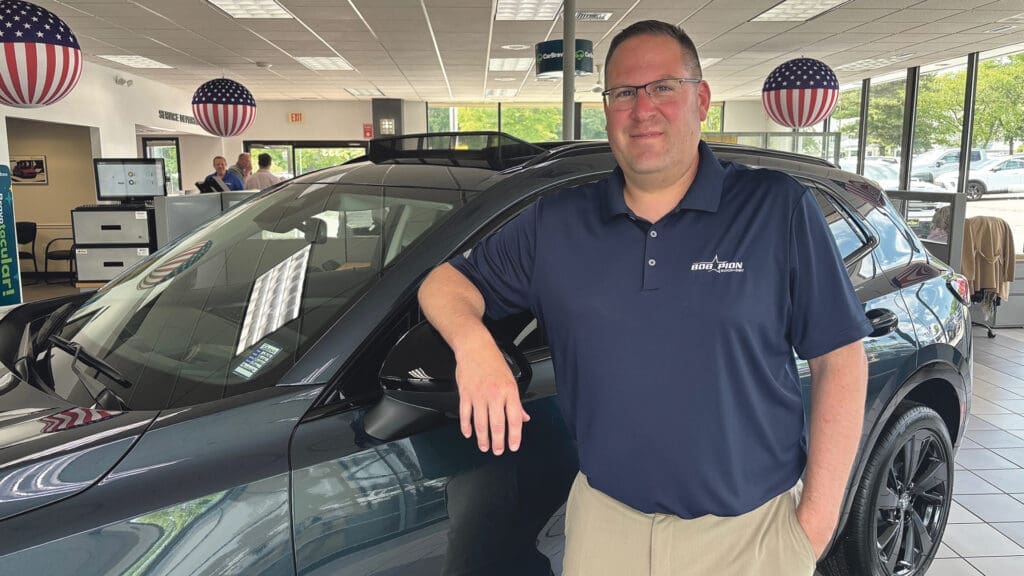
Rob Pion says AI has helped auto dealers better serve customers in a 24/7 world.

“People expect that out of everything,” he went on, adding that this includes cars, trucks, a part, or a service appointment. In short, customers are looking for information and insight — and in many, if not most, cases, they don’t want to wait until the next day for the answers.

And that’s one way dealers are using AI, Pion said — to chat with customers, answer questions, and collect some leads at all hours of the day.

“At least we have someone, or something, responding 24/7 to customer inquiries and concerns,” he explained, choosing those words carefully and then noting that AI is a way for dealers to meet consumers where they are, on their schedule.

But providing answers to questions on lease rates at midnight is just one of the ways auto dealers are putting AI technology to work. Others include everything from finding answers for technicians in the service bay to slicing through the remarks in customer reviews to find common threads, to finding holes in service schedules — and filling them.

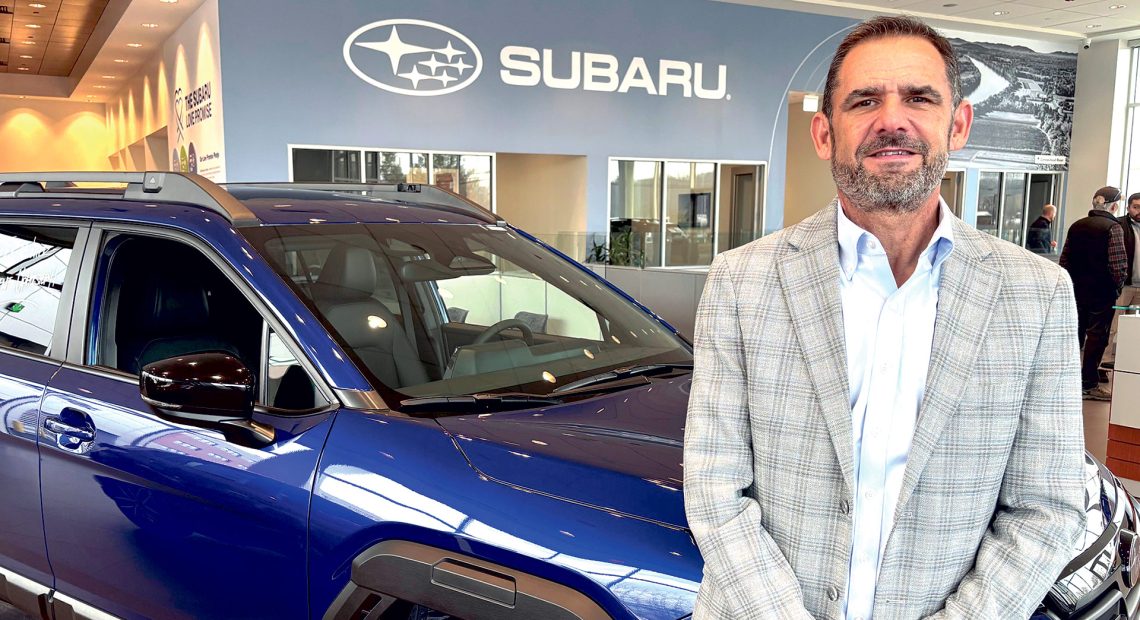
“We always read through reviews, but you don’t always catch the themes as they come in,” said Alex Balise, director of Corporate Strategy for Balise Auto Group. “I’ve been using AI to read our reviews for the past three months and tell us key themes so we know what customers appreciate and where we can improve. A one-off review doesn’t necessarily tell you what the real experience is, but, looking at the themes, you can see that wait times have become an issue at this store or they really like the muffins at Balise Subaru in Hadley, so we should keep those. AI can tell us that.”

And it can do many other things, such as providing help with pricing to analyzing inventory to helping make sure the dealerships are carrying the right mixes of vehicles, said Carla Cosenzi, president of TommyCar Auto Group, noting, as others did, that the technology is certainly not intended to replace the human interaction that has marked this industry from the very beginning, or replace people.

“We want to use AI to make us a better resource for the customer and make sure we don’t lose that human interaction that we pride ourselves on here.”

“We use AI a lot,” she explained. “We’re a very customer-centric and community-focused dealer group, so we want to use AI to make us a better resource for the customer and make sure we don’t lose that human interaction that we pride ourselves on here.”

For this issue and its focus on auto sales, we look at the various ways AI is being used today, and how it might be used in the years to come.

Speed Thrills

Like most other industries, the auto sales and service business is really only beginning to tap into AI and its vast potential.

Indeed, those we spoke with said that, while many different uses have been found for the technology, there are many others still in the developmental stages, with testing ongoing. But already, individual dealers and larger groups have been successful in developing strategies for using AI in everything from sales to marketing to service and using the technology for what it was designed to do — creating efficiencies while allowing employees to do what they do better and make more efficient use of their time.

And in many cases, time is what is being saved — for those working at the dealership, and for customers as well.

“AI gives customers really quick, personalized, and smarter responses with transparent pricing, and it gives them a quicker transaction time,” said Cosenzi, citing the example of a customer looking for information online. 

“If a customer wanted a price on leasing a Nissan Rogue and sent in a quote to our internet department … before, our internet department would have to go to the sales managers and get information from them to properly quote the vehicle if they wanted a lease or different financing options,” she explained.

“But we have new software and AI that enable us to get right back to a customer in under five minutes and give them a completely transparent quote that gives them all the options they need, whether that’s purchasing, financing, options for different money down, for different financing institutions — all in less than five or 10 minutes. Before AI, it might have been 20 or 30 minutes.”

Balise agreed, and offered another example, this one in the service bay.

“A lot of the manufacturers have added AI support,” she explained. “So when a technician is working on something and has a question, their AI guide can help finish the repair sooner than if they had to call a support line and wait for an answer. That’s been a big help with making a repair time faster; AI can read their whole manual, which could be hundreds of pages, and spit back the specific instruction needed for that repair.”

Using AI to sift through customer reviews also saves time, Balise said, noting that employees would spend hours reading through the responses looking for common themes and issues to address. “AI can do it five minutes and give us action items that can make a real difference in the customer experience.”

Beyond saving time, AI is also helping dealerships be more efficient with everything from how they market their products and services to how they shape their inventories, Cosenzi noted, adding that new uses for the technology are continually being explored.

“It’s a 24/7 world — we’re an immediate society; people don’t want to wait for the next business day for anything.”

“We use it to match the right vehicle to the customer for their situation to help meet their goals and accomplish what they’re looking for, which saves them time,” she said. “We use it to price our vehicles in the market to make sure we’re the most aggressive and our customers are getting transparent, upfront, live-market pricing; we’re using it to help customers schedule appointments with us smarter and faster; and we use it to analyze our inventory so we’re carrying the right mix of what our customers are searching for.”

People Power

The overriding strategy is to put AI to work in ways that will enable employees to save time and put their energies in other directions, not put them out of work, said those we spoke with.

“We’re looking for where AI can make our teams more efficient so they can spend their time doing the human things we need them to do — connecting with customers,” Balise said. “AI should be an extra tool for our team. It’s not replacing people; it’s making them more effective in their jobs.”

Pion agreed. “We’re a ways from AI replacing people, especially in our business,” he said. “It’s a personal experience when you’re spending this kind of money, and people want to deal with people. I see AI as a way to communicate with people overnight, when I can’t expect someone to be doing that on my behalf. But there’s no replacing human interaction in a business such as ours.”

While AI is making its mark in the auto sales industry, those in the business say that, in many ways, dealers are only scratching the surface when it comes to this technology, what it can tell them, and how it can make their operations more efficient.

Right down to the muffins at the Subaru dealership. 
Features

Driving Forces

Carla Cosenzi says the auto industry should see a less tumultuous year in 2026, but there will be challenges.

Carla Cosenzi says the auto industry should see a less tumultuous year in 2026, but there will be challenges.

‘Turbulent.’

Of all the single words that could be used to describe what kind of year 2025 was for the auto industry and individual dealers, Peter Wirth believes that one works best.

And it might even be an understatement.

Indeed, a sector that was working itself back to normalcy after COVID, chip shortages, a lack of inventory, scarce supplies of used cars, and inflation was hit with tariffs as well as a seismic shift in priority when it comes to electric vehicles.

This added up to some interesting times — that’s another adjective used heavily to describe the year that was — as well as a roller-coaster year for sales that ended up mostly flat or a few percentage points higher than 2024.

“It wasn’t a bad year; it was just a lot of ups and downs and changes — with tariffs being the obvious one, but there was also the huge change in course as far as electric vehicle adoption, which had a huge impact on manufacturers, but also on us,” said Wirth, owner of Mercedes-Benz of Springfield, referencing the expiration of federal tax credits for new and used vehicles after Sept. 30 and an abrupt U-turn on mandates concerning the percentages of new car sales that had to be EVs.

Carla Cosenzi, president of TommyCar Auto Group, which boasts four stores selling Nissan, Hyundai, Volkswagen, and Genesis, agreed. She said 2025 was a solid year, one that started strong as consumers sought to beat tariffs and ended somewhat sluggishly.

“We started to really see it around October,” she said, adding that manufacturers, perhaps anticipating a slowdown due to factors ranging from tariffs to still-high interest rates, ramped up the incentives to engage consumers, who stand to benefit from higher inventories.

“Overall, it was a really good year for us,” she said, adding that Hyundai and Nissan both posted solid numbers and finished strong, making up for some slower months in the middle.

As 2026 rolls on, the pendulum is shifting even more toward normalcy and perhaps less volatility, although no one can project too far ahead in this business, said Ben Sullivan, chief operating officer for Balise Motor Sales, which owns 26 dealerships across Massachusetts, Rhode Island, and Connecticut.

Indeed, the focus is shifting back to hybrids and gasoline-powered cars, and manufacturers are providing plenty of incentives to buy and lease them, including 0% financing in some cases, he said, adding that he projects 2026 will be a good year for auto buyers and, thus, a better one for dealers.

“From a consumer point of view, I’d say 2026 will be a very positive year,” Sullivan said. “And from the dealer perspective, we’re actually pretty bullish on where this is going to go. Affordability is such a key part of consumer behavior, and the fact that availability and the incentives are going to be there for the consumers prompts us to believe we’ll be growing by 5% to 7% this year.”

Wirth agreed, noting that Mercedes has rolled out aggressive sales programs for January.

“Mercedes is putting their money where their mouth is as far as being on a growth trajectory,” he explained. “They sold 303,000 units last year, and they want to sell 325,000 to 330,000 this year; that’s a 10% increase, and it’s one of the reasons we’re incredibly optimistic for this year.”

“It wasn’t a bad year; it was just a lot of ups and downs and changes — with tariffs being the obvious one, but there was also the huge change in course as far as electric vehicle adoption, which had a huge impact on manufacturers, but also on us.”

For this issue, BusinessWest talked with area dealers about the turbulence of 2025 and the prospects for more normalcy, probably the most since COVID, in 2026.


Shifting Gears

As he talked with BusinessWest about the year that was and the years ahead, Wirth said he sympathizes with car manufacturers, who have had to cope with many different, and often dramatic, changes to the landscape in recent years, especially with tariffs and changing policy on EVs.

“I don’t envy my colleagues in corporate because it’s really hard to deliver on three fronts at the same time — electric vehicles, plug-in hybrids, and combustion-engine cars, which is what’s happening right now,” he said. “This significant change in policy — and no one knows how it’s going to change in three years again — makes it really difficult for the manufacturers.”

Sullivan agreed. “For manufacturers, it takes three to five years to develop a vehicle program, and they were all assuming that, at some point, we’d have to be 100% electric, and they put a bunch of their development money down that stream,” he explained. “And now, the federal government is saying that this is no longer what they need to do. So all the manufacturers are trying to adjust and adapt just in the EV market — and that was just one of two large challenges that hit us last year.”

Ben Sullivan says that, with less urgency to sell EVs, automakers are providing incentives for other models on the lots.

Ben Sullivan says that, with less urgency to sell EVs, automakers are providing incentives for other models on the lots.

The other factor was tariffs, which hit some makers harder than others, he said, noting, as others did, that these factors are prompting hard decisions, many of which will take years to materialize, about where cars will be made — and what cars will be made.

For dealers and consumers, these issues changed some buying patterns and, in many ways, altered the sales calendar.

Indeed, when tariffs were first announced last March, there was a surge in sales as consumers looked to beat the tariffs, said Wirth and others we spoke with, making March and April better than they normally are and some of the subsequent, normally heavier months lighter.

“When you look at the first half of the year, it shook out the way we expected; it was just more volatile,” he said, summoning another word to describe 2025. “You had a higher high than you were projecting, and then a lower low.”

This was just one of the many intriguing aspects of this past year, said those we spoke with, noting that what is being called a retrenchment on EVs was certainly another. Indeed, sales spiked in the run-up to the end of the $7,500 federal government purchase incentive on Sept. 30, resulting in a record for the third quarter of 2025 (about 12% of the U.S. market), before falling off in the months that followed.

Cosenzi said EVs are still selling, in part due to incentives offered by the state, but they were off by roughly 10% in 2025 over the year prior — better than many other dealers are reporting because the TommyCar dealerships are in Hadley and Northampton, which she described as a great market for EVs — and this pattern is expected to continue into 2026.

The focus is now shifting to hybrids and gasoline-powered cars, with an even greater emphasis on SUVs, said Sullivan, adding that, due to the tariffs and shifts on EVs, makers are doing some model trimming because some offerings are no longer popular, cost-effective, or both.


Drive Time

Looking down the road and toward the year ahead, those we spoke with expressed optimism about the big picture and the manner in which car makers are incentivizing consumers to buy and lease.

As Wirth noted earlier, Mercedes has set ambitious goals for 2026 and is backing them up with programs and incentives that are similar to those intended to drive sales at year end.

“Our January programs are essentially as good as our outgoing December programs were, which is something I’ve never seen before with them,” he noted. “They’re really trying to hit the ground running and maintain and ultimately increase their market share in the luxury market.

“They were all assuming that, at some point, we’d have to be 100% electric, and they put a bunch of their development money down that stream. And now, the federal government is saying that this is no longer what they need to do.”

“And while it’s still very early,” continued Wirth, who spoke with BusinessWest in the first week of January, “they seem to be starting on the right foot.”

Cosenzi and Sullivan agreed, noting that conditions are right for a solid 2026, meaning dealers have inventory (especially for what’s in demand, meaning hybrids and SUVs); they have incentives, including attractive lease deals and financing rates for purchases; and are stocking more used cars, although they’re still in somewhat short supply.

“We’re putting a lot of focus on used vehicles heading into 2026, especially those under that $30,000 price range,” said Cosenzi, adding that TommyCar has created a buying center to maximize opportunities in a still-challenging market and build an inventory.

“We’re really working to have the right-priced pre-owned vehicles that can go through the stringent certified process to give the consumers the confidence they’re looking for,” she explained, adding that there is strong demand for such vehicles, especially SUVs, in the Five College area.

Sullivan said the stars are aligning as the industry moves into 2026. “Interest rates are starting to trend down, and availability of cars is getting better, unlike during COVID,” he noted, adding that the attractive incentives that were being offered to incentivize EVs, back when the pressure was on to sell those models, have been shifted to gas and hybrid models.

“Now that the manufacturers are not under that regulation anymore, you will see in 2026 some better incentives coming back, like attractive lease payments, low APR, and customer cash, because the manufacturers can afford to do that,” he explained. “So I think that will be a very big positive for consumers as we roll into 2026; their affordability matrix will be a lot better than it was in 2024 or even 2025.”

Meanwhile, Sullivan sees some general improvement in used car availability as new car inventories have improved and consumers can replace aging vehicles and enter into new leases rather than buying cars coming off lease, and this is another source of optimism heading into 2026.

As for EVs, dealers still have them, and they’re still selling them, but the pendulum has swung, with those who have been on the fence about such vehicles now more incentivized to stay on the gas or plug-in hybrid side, the latter of which provides some attractive middle ground for those looking to reduce their carbon footprint.

These are just a few of the issues that will shape 2026, a year that will still be interesting, but probably — that’s probably — less turbulent for dealers and consumers.

Autos Special Coverage

Too Many Moving Parts


‘Fascinating.’

That’s the first word Ben Sullivan, chief operating officer at Balise Motor Sales, used to describe the current landscape for the auto industry, and especially dealers, as tariffs of some kind, involving some countries and some products, loom over the sector.

He would use many others, especially ‘uncertainty’ and ‘volatility,’ terms that explain why, by and large, the large Balise stable of dealerships across Western Mass., Connecticut, and Cape Cod isn’t really doing much of anything at this point in response to what’s happening and is conducting what could be described business as usual.

That includes refraining from use of ‘beat the tariffs prices’ advertisements and similar messages that many others have deployed — although they’ve been discussed.

“We just didn’t think we had enough clarity to do that,” Sullivan said, hitting on just how much uncertainty exists today. “If we’re going to say something to our customers, we have to make sure that we’re on solid ground. We absolutely stayed away from creating any kind of frenzy around these things because we just don’t know if it’s true or not.”

But while it’s business as usual in some respects, dealers are certainly doing more business than usual for this time of year.

“Consumers are getting smart when it comes to how to manipulate the market and take advantage of the best opportunity and time to upgrade their vehicle and learning how to really maximize their equity.”

Indeed, while Sullivan said sales in March and April were up 24% over that same period a year ago, Carla Cosenzi, president of TommyCar Auto Group, which has five dealerships in Hampshire County, put the number at more than 30% across all brands, with Hyundai and Volkswagen leading the way.

“We’ve seen a surge in consumer urgency — they’re trying to get ahead of the potential tariffs,” she said. “And, right now, incentives are still good — there are a lot of low APRs available for consumers across the board — and their trade values are worth more than now than they were a month ago or two months ago. That combination is driving a sense of urgency.”

Other impacts include:

• An increase in leasing, as consumers in need of a new car survey the situation and see that option as a way to get a decent price and buy themselves some time until there is more clarity on what will happen long-term, or at least longer-term;

• With uncertainty about new cars, marked growth in demand for used cars, with prices holding generally steady, at least for now, said Cosenzi, adding that this demand translates into those higher trade-in values she mentioned; and

• A similar increase in demand for service contracts as consumers read and hear about how the prices of parts might be soaring as well due to tariffs.

“Consumers are getting smart when it comes to how to manipulate the market and take advantage of the best opportunity and time to upgrade their vehicle and learning how to really maximize their equity,” said Cosenzi as she surveyed the landscape and what’s she’s seeing from her front-row seat regarding all of the above.

Ben Sullivan says there are too many variables and unknowns to say with any kind of certainty what the short and long term look like for auto dealers.

Ben Sullivan says there are too many variables and unknowns to say with any kind of certainty what the short and long term look like for auto dealers.

As for what comes next … well, that’s where uncertainty takes over, especially with headlines changing seemingly every week, or even every day, on the levels of tariffs, possible exemptions, new deals with countries — such as the 90-day truce recently struck with China — and possibly individual manufacturers, and more.

“Nobody’s making major adjustments — the manufacturers are not making wild swings in what they’re doing because the landscape is changing almost by the day,” said Sullivan, who drew a parallel to the recent run on iPhones, a surge that quickly abated when it was announced that there would be exemptions on those products, but then picked up again when it was announced that the chips inside them would not be exempt.

“Overall, I don’t believe the tariff news will end up being as bad as we fear or as good as we hope,” said Sullivan as he summed things up, adding that it is simply too soon to know what will happen in the months and years to come.

Cosenzi agreed, noting that, beyond prices, inventory will be something to watch. Availability will likely become more limited, she said, adding that the great unknowns are when and to what degree this will happen.

“It’s too soon to really know, and it depends on the brand, but we’re starting to see that slowdown with brands like Volvo and VW,” she noted, adding that she doesn’t know if these cars are still in Europe or at the dock waiting for the smoke to clear. “It’s really complicated right now, and it’s very gray, so it’s hard for us to give consumers a clear picture.”

‘Fascinating.’ ‘Complicated.’ ‘Volatile.’ ‘Gray.’ These are the adjectives that describe the current state of the auto sales market, and it appears they will prevail for some time.


Driving Forces

March and April are traditionally not big months in the auto industry, said those we spoke with. They’re not bad months, necessarily, but they’re not like February (the real start of the sales season), end of year, or even some summer months, when there are usually deals to be had.

But this year was, of course, different.

With the coming of President Trump’s Liberation Day and news reports of car prices rising several thousand dollars as a result of traiffs, consumers took the initiative and found not only locked-in prices, but some incentives as well, said Cosenzi, adding that demand has been steady across the board, brand-wise, with small to mid-sized SUVs still dominating sales. Overall, the trend continues even as the rhetoric on tariffs continues to soften.

“When you back it up and look into an industry like ours with a truly global supply chain, it is nearly impossible right now to determine all of the impacts.”

Some of these buyers needed a new car, she said, but most were trying to beat the clock when it comes to expected price hikes and reduced availability.

“They may not necessarily be in the market for a new car, but they’re saying, ‘I might as well take advantage of the market conditions and upgrade sooner rather than later,” she explained, adding that this surge speaks to still-high levels of confidence in the economy.

Meanwhile, some manufacturers are price-protecting until the end of May and June in some cases, which provides even more incentive to buy now.

“If someone is in the market for a new car or coming up to be in the market, this is the perfect time to purchase,” said Cosenzi, adding that, while no one has a crystal ball and can say what the landscape will look like in six months or even six weeks, it is unlikely that it will look as good as it does now for consumers.

So, for now, it is still business as usual, and more of it. The overriding question is for how long. And no one really knows.

There are too many variables, especially when it comes to the impact on the thousands of parts that go into a vehicle, how many times these parts cross boundaries, and, thus, how many times they may be subject to a tariff.

“When you back it up and look into an industry like ours with a truly global supply chain, it is nearly impossible right now to determine all of the impacts,” Sullivan said. “A car might be assembled in Alabama, but there are parts from all over the world. And some of those things start as a small part, get put into an assembly, they cross the country border, get into the next stage of development … some of these assemblies might cross a country border seven times. So, if the tariffs become stackable, it would be devastating to consumers.”

Which explains the surge in new-car and used-car buying in March and April, but also the increases in leasing and service contracts as consumers digest the news and look to beat some worst-case scenarios with regard to both pricing and availability.

“With the tariffs, inventories will start to tighten, and consumers want to get ahead of that,” Cosenzi said. “They don’t want to be in a situation like the one they were in with COVID, where if they wanted a car, they really had to sacrifice what they were looking for in terms of color or trim.”

Carla Cosenzi says March and April were much busier than normal amid tariff and inventory concerns, and that trend is continuing.

Carla Cosenzi says March and April were much busier than normal amid tariff and inventory concerns, and that trend is continuing.

While this is certainly a good time to buy, and many consumers are, Sullivan said Balise has been reluctant to encourage consumers to buy now because of the high levels of uncertainty and the pace at which the landscape is changing.

“Most industry analysts say the average car price could go up by between $4,000 and $15,000 if all this comes to pass,” he noted. “There will certainly be some cost increase, but I don’t think it will be as severe as people fear at this point. But there is so much that is not known.”

Dealers are already seeing swings in consumer activity, he went on, adding that, while April was a very strong month for Balise, by late April, as the headlines started to reflect a softening of tone on tariffs, the pace of sales eased accordingly.

He drew some parallels to the early months of COVID, when news of shortages of paper towels and toilet paper sent consumers into stores for what amounted to panic buying.

It’s not quite like that with auto sales, but there was a similar knee-jerk reaction, Sullivan said, adding that the frenzy, if it can be called that, is already abating.


Bottom Line

Returning to his analogy with iPhones, Sullivan said it provides some appropriate context for any conjecture on what might happen next in his industry.

“You go to bed one night assuming that your iPhone is going to cost $2,000, and the next morning, it’s still going to be $800 to $900 for the top-end models that it was the day before,” he said, adding that the same is likely — not definite, but likely — to be the case with all those mid-sized SUVs on the market today.

But no one really knows.

So dealers have to be ready, willing, and able to adjust on the fly and absorb whatever comes at them, Cosenzi said, adding that, over the past several years, they’ve had plenty of practice at pivoting.

“This is a really challenging industry anyway, so dealers have to be resilient to be able to be in this business,” she explained. “We know how to pivot quickly and adjust to whatever the customers’ needs and demands are, and that’s what we’re doing in these unsettled times.”

That’s what’s needed when there are so many moving parts, literally and figuratively.