
Auto Industry Faces Dramatic Shifts Heading into 2026
Driving Forces

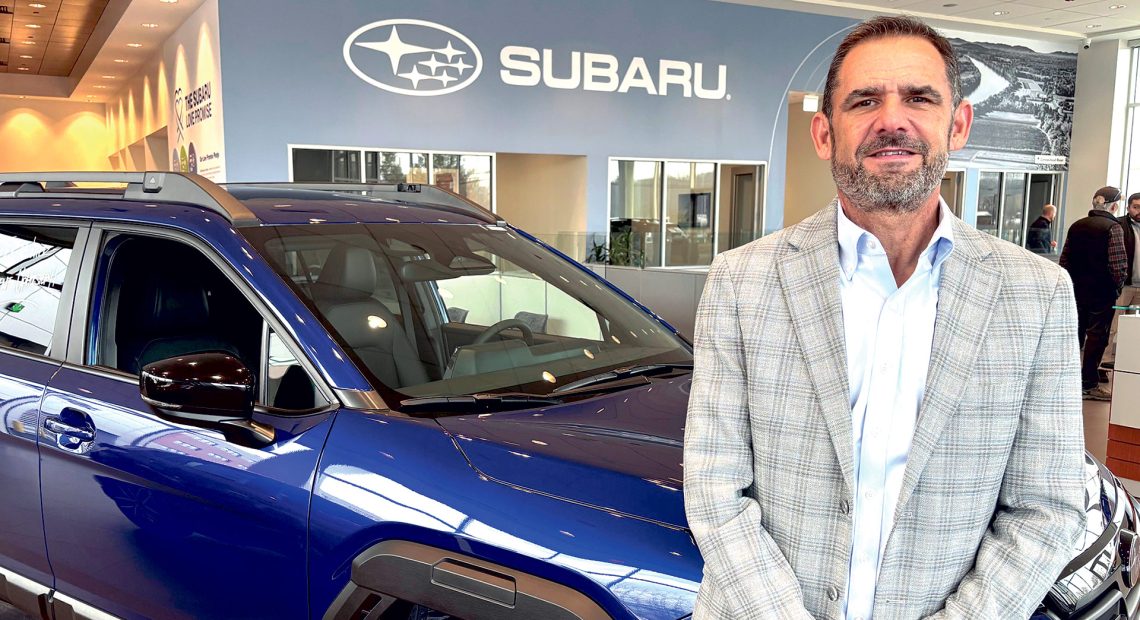
Carla Cosenzi says the auto industry should see a less tumultuous year in 2026, but there will be challenges.
‘Turbulent.’
Of all the single words that could be used to describe what kind of year 2025 was for the auto industry and individual dealers, Peter Wirth believes that one works best.
And it might even be an understatement.
Indeed, a sector that was working itself back to normalcy after COVID, chip shortages, a lack of inventory, scarce supplies of used cars, and inflation was hit with tariffs as well as a seismic shift in priority when it comes to electric vehicles.
This added up to some interesting times — that’s another adjective used heavily to describe the year that was — as well as a roller-coaster year for sales that ended up mostly flat or a few percentage points higher than 2024.
“It wasn’t a bad year; it was just a lot of ups and downs and changes — with tariffs being the obvious one, but there was also the huge change in course as far as electric vehicle adoption, which had a huge impact on manufacturers, but also on us,” said Wirth, owner of Mercedes-Benz of Springfield, referencing the expiration of federal tax credits for new and used vehicles after Sept. 30 and an abrupt U-turn on mandates concerning the percentages of new car sales that had to be EVs.
Carla Cosenzi, president of TommyCar Auto Group, which boasts four stores selling Nissan, Hyundai, Volkswagen, and Genesis, agreed. She said 2025 was a solid year, one that started strong as consumers sought to beat tariffs and ended somewhat sluggishly.
“We started to really see it around October,” she said, adding that manufacturers, perhaps anticipating a slowdown due to factors ranging from tariffs to still-high interest rates, ramped up the incentives to engage consumers, who stand to benefit from higher inventories.
“Overall, it was a really good year for us,” she said, adding that Hyundai and Nissan both posted solid numbers and finished strong, making up for some slower months in the middle.
As 2026 rolls on, the pendulum is shifting even more toward normalcy and perhaps less volatility, although no one can project too far ahead in this business, said Ben Sullivan, chief operating officer for Balise Motor Sales, which owns 26 dealerships across Massachusetts, Rhode Island, and Connecticut.
Indeed, the focus is shifting back to hybrids and gasoline-powered cars, and manufacturers are providing plenty of incentives to buy and lease them, including 0% financing in some cases, he said, adding that he projects 2026 will be a good year for auto buyers and, thus, a better one for dealers.
“From a consumer point of view, I’d say 2026 will be a very positive year,” Sullivan said. “And from the dealer perspective, we’re actually pretty bullish on where this is going to go. Affordability is such a key part of consumer behavior, and the fact that availability and the incentives are going to be there for the consumers prompts us to believe we’ll be growing by 5% to 7% this year.”
Wirth agreed, noting that Mercedes has rolled out aggressive sales programs for January.
“Mercedes is putting their money where their mouth is as far as being on a growth trajectory,” he explained. “They sold 303,000 units last year, and they want to sell 325,000 to 330,000 this year; that’s a 10% increase, and it’s one of the reasons we’re incredibly optimistic for this year.”
“It wasn’t a bad year; it was just a lot of ups and downs and changes — with tariffs being the obvious one, but there was also the huge change in course as far as electric vehicle adoption, which had a huge impact on manufacturers, but also on us.”
For this issue, BusinessWest talked with area dealers about the turbulence of 2025 and the prospects for more normalcy, probably the most since COVID, in 2026.
Shifting Gears
As he talked with BusinessWest about the year that was and the years ahead, Wirth said he sympathizes with car manufacturers, who have had to cope with many different, and often dramatic, changes to the landscape in recent years, especially with tariffs and changing policy on EVs.
“I don’t envy my colleagues in corporate because it’s really hard to deliver on three fronts at the same time — electric vehicles, plug-in hybrids, and combustion-engine cars, which is what’s happening right now,” he said. “This significant change in policy — and no one knows how it’s going to change in three years again — makes it really difficult for the manufacturers.”
Sullivan agreed. “For manufacturers, it takes three to five years to develop a vehicle program, and they were all assuming that, at some point, we’d have to be 100% electric, and they put a bunch of their development money down that stream,” he explained. “And now, the federal government is saying that this is no longer what they need to do. So all the manufacturers are trying to adjust and adapt just in the EV market — and that was just one of two large challenges that hit us last year.”
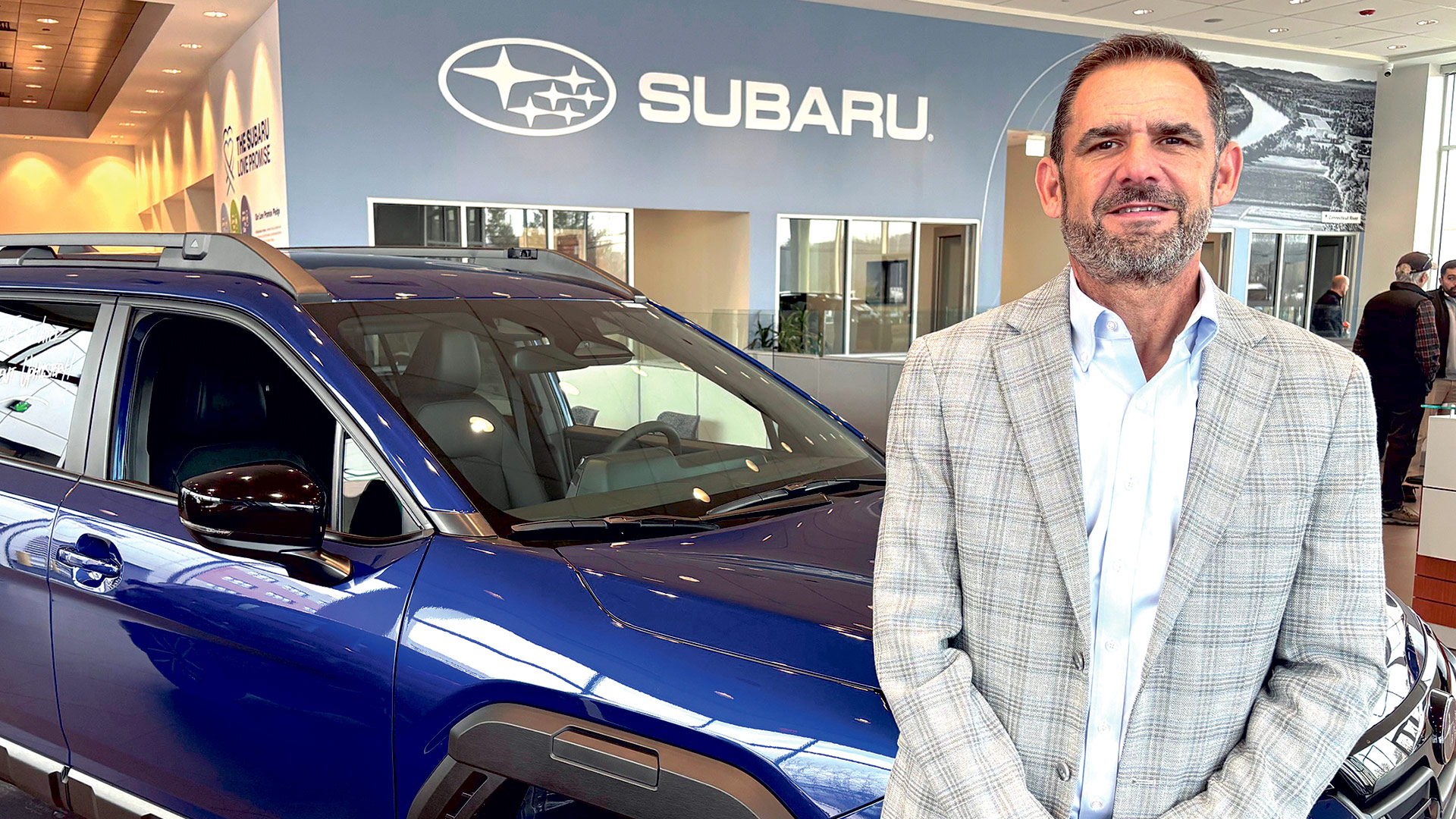
Ben Sullivan says that, with less urgency to sell EVs, automakers are providing incentives for other models on the lots.
The other factor was tariffs, which hit some makers harder than others, he said, noting, as others did, that these factors are prompting hard decisions, many of which will take years to materialize, about where cars will be made — and what cars will be made.
For dealers and consumers, these issues changed some buying patterns and, in many ways, altered the sales calendar.
Indeed, when tariffs were first announced last March, there was a surge in sales as consumers looked to beat the tariffs, said Wirth and others we spoke with, making March and April better than they normally are and some of the subsequent, normally heavier months lighter.
“When you look at the first half of the year, it shook out the way we expected; it was just more volatile,” he said, summoning another word to describe 2025. “You had a higher high than you were projecting, and then a lower low.”
This was just one of the many intriguing aspects of this past year, said those we spoke with, noting that what is being called a retrenchment on EVs was certainly another. Indeed, sales spiked in the run-up to the end of the $7,500 federal government purchase incentive on Sept. 30, resulting in a record for the third quarter of 2025 (about 12% of the U.S. market), before falling off in the months that followed.
Cosenzi said EVs are still selling, in part due to incentives offered by the state, but they were off by roughly 10% in 2025 over the year prior — better than many other dealers are reporting because the TommyCar dealerships are in Hadley and Northampton, which she described as a great market for EVs — and this pattern is expected to continue into 2026.
The focus is now shifting to hybrids and gasoline-powered cars, with an even greater emphasis on SUVs, said Sullivan, adding that, due to the tariffs and shifts on EVs, makers are doing some model trimming because some offerings are no longer popular, cost-effective, or both.
Drive Time
Looking down the road and toward the year ahead, those we spoke with expressed optimism about the big picture and the manner in which car makers are incentivizing consumers to buy and lease.
As Wirth noted earlier, Mercedes has set ambitious goals for 2026 and is backing them up with programs and incentives that are similar to those intended to drive sales at year end.
“Our January programs are essentially as good as our outgoing December programs were, which is something I’ve never seen before with them,” he noted. “They’re really trying to hit the ground running and maintain and ultimately increase their market share in the luxury market.
“They were all assuming that, at some point, we’d have to be 100% electric, and they put a bunch of their development money down that stream. And now, the federal government is saying that this is no longer what they need to do.”
“And while it’s still very early,” continued Wirth, who spoke with BusinessWest in the first week of January, “they seem to be starting on the right foot.”
Cosenzi and Sullivan agreed, noting that conditions are right for a solid 2026, meaning dealers have inventory (especially for what’s in demand, meaning hybrids and SUVs); they have incentives, including attractive lease deals and financing rates for purchases; and are stocking more used cars, although they’re still in somewhat short supply.
“We’re putting a lot of focus on used vehicles heading into 2026, especially those under that $30,000 price range,” said Cosenzi, adding that TommyCar has created a buying center to maximize opportunities in a still-challenging market and build an inventory.
“We’re really working to have the right-priced pre-owned vehicles that can go through the stringent certified process to give the consumers the confidence they’re looking for,” she explained, adding that there is strong demand for such vehicles, especially SUVs, in the Five College area.
Sullivan said the stars are aligning as the industry moves into 2026. “Interest rates are starting to trend down, and availability of cars is getting better, unlike during COVID,” he noted, adding that the attractive incentives that were being offered to incentivize EVs, back when the pressure was on to sell those models, have been shifted to gas and hybrid models.
“Now that the manufacturers are not under that regulation anymore, you will see in 2026 some better incentives coming back, like attractive lease payments, low APR, and customer cash, because the manufacturers can afford to do that,” he explained. “So I think that will be a very big positive for consumers as we roll into 2026; their affordability matrix will be a lot better than it was in 2024 or even 2025.”
Meanwhile, Sullivan sees some general improvement in used car availability as new car inventories have improved and consumers can replace aging vehicles and enter into new leases rather than buying cars coming off lease, and this is another source of optimism heading into 2026.
As for EVs, dealers still have them, and they’re still selling them, but the pendulum has swung, with those who have been on the fence about such vehicles now more incentivized to stay on the gas or plug-in hybrid side, the latter of which provides some attractive middle ground for those looking to reduce their carbon footprint.
These are just a few of the issues that will shape 2026, a year that will still be interesting, but probably — that’s probably — less turbulent for dealers and consumers.