Home Posts tagged Deerfield
Autos

Built for Speed


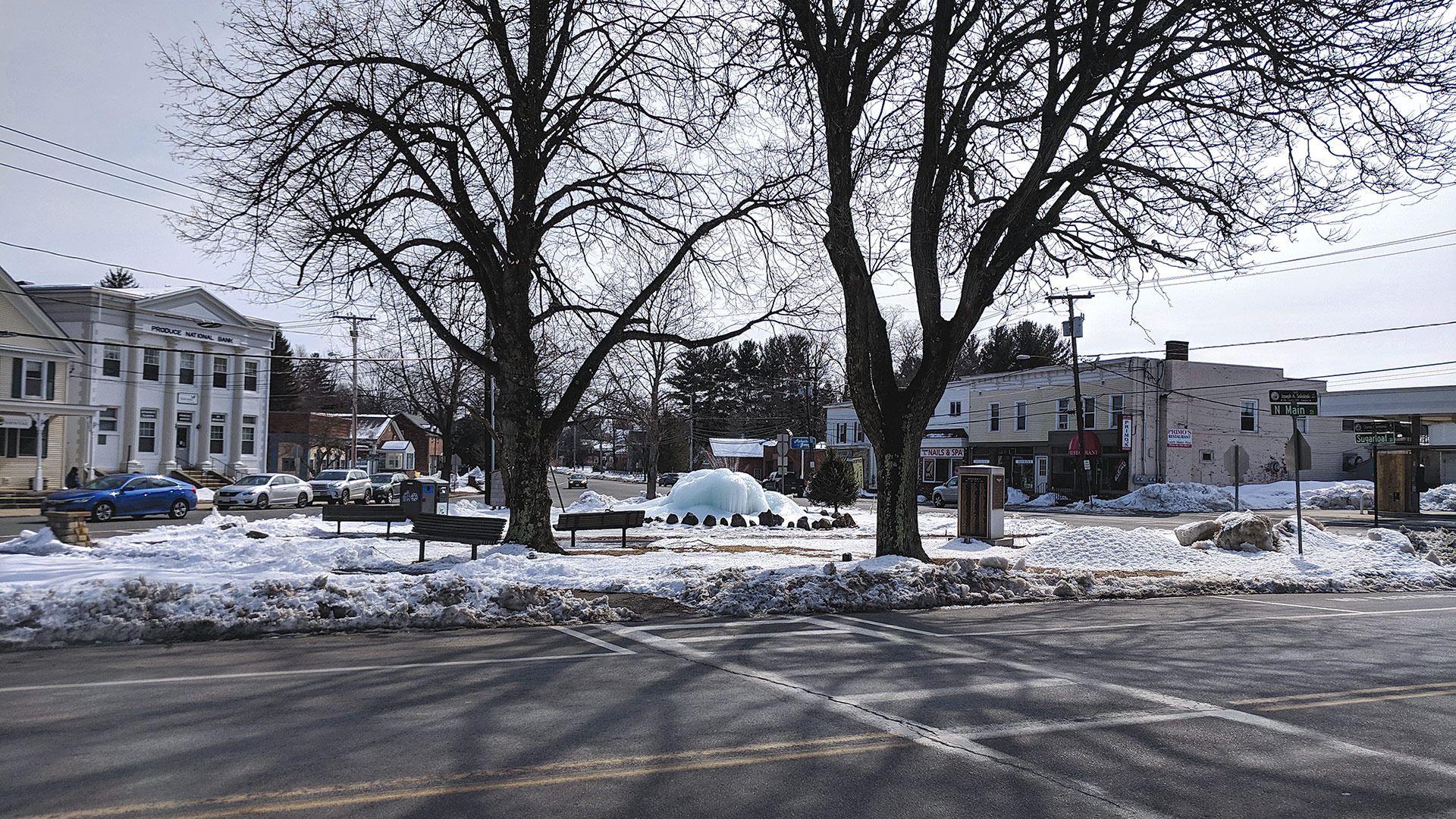
The EV charging hub, located at 59 North Main St. in South Deerfield, is now open to the public.

The EV charging hub, located at 59 North Main St. in South Deerfield, is now open to the public.


Rivermoor Energy, a provider of clean-energy development solutions for commercial and government customers, recently completed a new electric vehicle (EV) fast-charging hub in downtown South Deerfield, in partnership with the town of Deerfield and the Federal Highway Administration.

The opening of the charging hub was celebrated with a ribbon-cutting event on Nov. 15. The project was funded by a $2.46 million federal Charging and Infrastructure (CFI) grant, made possible by the Bipartisan Infrastructure Law (BIL). It is the first CFI grant project to be completed in the Eastern U.S. and is also compliant with the National Electric Vehicle Infrastructure Program.

The EV charging hub, located at 59 North Main St., is now open to the public. The charging stations are fully accessible to local EV drivers, by either mobile phone or credit card.

“This is a large step forward for clean energy in Massachusetts and demonstrates the Commonwealth’s leadership in the energy transition,” U.S. Rep. Jim McGovern said. “This project will also serve as a blueprint for others across the state and around the country, showing communities a way to implement innovative technologies and solutions that benefit the environment, the economy, and, most importantly, the people who live in and around these areas.”

The facility includes four new EV chargers — two dual-port Level 3 DC fast chargers and two dual-port Level 2 chargers, for a total of eight charging ports. Electric vehicles will be able to fully charge in 20 minutes or less.

The positive environmental impact goes beyond EVs. In recent years, Deerfield has experienced increased flooding from nearby waterways, including the Deerfield River, the Connecticut River, and Bloody Brook. The project incorporates environmental engineering designed to mitigate and adapt to the effects of flooding and climate change, including the installation of permeable asphalt and rain gardens; planting of native trees, grasses, and shrubs; and creating new green space in the center of Deerfield.

“This is a large step forward for clean energy in Massachusetts and demonstrates the Commonwealth’s leadership in the energy transition.”

“This project is not only an impactful one for the environment and the advancement of clean energy, but it’s also a boost for the economic backbone of our town,” said Christopher Dunne, Deerfield’s acting town administrator. “With the added accessibility, climate-change mitigation, and new pedestrian walkways leading to downtown businesses, Deerfield can continue to thrive and serve its local business owners and attract new customers to our business community. We thank the Joint Office of Energy and Transportation, the Federal Highway Administration, and the Massachusetts Departments of Transportation and Energy Resources for their support and partnership in the planning and development of this project.”


Center of Activity

As electric-vehicle adoption grows across the country, the federal CFI program advances the development of convenient, reliable charging stations designed to make it easier for consumers to charge their cars quickly and easily. The town of Deerfield was selected for the CFI grant as a regional business center with easy access for other Western Mass. communities and travelers along Interstate 91.

Acting Federal Highway Administrator Kristin White called Deerfield’s project “a key pillar of the nation’s EV charging network,” adding that “this project embodies the goals of the BIL by deploying American-made clean transportation infrastructure that shows our historic investment in combating climate change for future generations.”

Gabe Klein, executive director of the Joint Office of Energy and Transportation, noted that “multi-modal charging hubs in communities are key to giving more people the choice to ride and drive electric. The town of Deerfield is showing leadership in building out convenient charging infrastructure that brings new transportation choices to rural and disadvantaged communities, while supporting local commerce.”

While the Level 3 chargers — the fastest in the industry — can charge electric vehicles in as quickly as 20 minutes, the Level 2 chargers allow for residents or visitors who will stay parked for a longer time to charge their vehicles as well. With transportation accounting for the largest portion of total greenhouse-gas emissions in the U.S., having Deerfield’s chargers accessible in a public place, near a major highway, is a positive for travelers, employees, and visitors to Deerfield’s businesses and restaurants, project advocates noted.

“Deerfield’s charging hub, less than a mile from I-91, will attract visitors to downtown South Deerfield’s vibrant restaurants and businesses.”

“Rivermoor Energy is proud to lead the development of the first CFI grant project completed in the Eastern U.S.,” said John Tourtelotte, founder and managing director of Rivermoor Energy. “This project delivers EV fast charging to the most rural county in Massachusetts. Deerfield’s charging hub, less than a mile from I-91, will attract visitors to downtown South Deerfield’s vibrant restaurants and businesses. Deerfield’s project also directly benefits the local and regional economy by advancing skilled trades, engineering services, and good-paying jobs right here in Western Massachusetts.”


Regional Partnership

Partners on the project included Universal Electric of West Springfield, Taylor Davis Landscape & Construction of Amherst, Berkshire Design Group of Northampton, and Weston & Sampson engineering of Reading. Eversource Energy upgraded on-site utility infrastructure to enable the industry’s fastest EV-charging technology to seamlessly operate with its electric distribution system.

“The Deerfield charging hub marks an important milestone in Massachusetts’ journey toward a clean-energy future. Through close collaboration with our partners and local stakeholders, Eversource has helped bring this groundbreaking project to life, providing critical infrastructure that supports EV adoption and strengthens the community’s commitment to sustainable energy,” said Roger Kranenburg, vice president, Energy Strategy and Policy at Eversource. “By upgrading utility infrastructure to support this state-of-the-art charging technology, we’re not only enabling fast, reliable EV charging, but also demonstrating the kind of partnership essential to advancing the clean-energy transition.”

The Deerfield project advances U.S. manufacturing and job creation by using American-made charging technology from Autel for ultra-fast EV charging, ChargePoint for Level 2 charging, and Eatonfor infrastructure equipment, with supply-chain logistics support from Rexel Energy Solutions.

Based in Boston, Rivermoor Energy delivers comprehensive energy strategy, planning, project development, and financing solutions to enable customers to meet their goals for EV charging, solar energy, energy storage, and energy resilience.

Community Spotlight

Community Spotlight

Diana Schindler

Diana Schindler says it’s key for Deerfield to balance the town’s rural character with needed economic growth.

Deerfield boasts numerous draws for businesses looking to relocate, Diana Schindler says, from its reasonable property-tax rate to its proximity to Interstate 91, Route 116, and Routes 5 and 10.

But there’s also been some pushback against some of those businesses, which reared its head when residents recently spoke out against a proposed Dollar General store in town. The Planning Board listened and turned down the project, said Schindler, Deerfield’s interim town administrator.

“There’s been a feeling in the community that they want that at arm’s length — that big-box retail development, drive-thrus, things they don’t feel are part of the culture of old Deerfield. It’s meaningful to them,” Schindler told BusinessWest.

“On the flip side, it creates more of a burden on the residential tax base,” she went on, noting that more than 80% of the town’s tax base is residential. “There’s a cost to the citizens in their tax rate and the sustainability of that tax rate. Deerfield has always readily paid for the level of service its citizenry wants and expects, but at the expense of not doing some major projects.”

For instance, the town is looking at a $1 million cost to replace a tank at the South Deerfield Wastewater Treatment Plant, which is only the tip of the iceberg when it comes to needed work at the facility over the next decade or two. Then there are plans to expand the Tilton Library and develop a shared senior center with surrounding communities.

“Seniors are asking for that. But all this adds up to millions of dollars, and you have the pressure of limiting development — or, rather, wanting development that will fit into the culture, which does limit it to some capacity,” Schindler said. “Less than 20% of the tax base is commercial/industrial, which is not a lot considering the viability of the property we have along 5/10 and a couple other areas. It’s going to become a question for the citizenry — is it sustainable?”

She’s one of many in Deerfield who believe economic development — in whatever form residents may want — is critical to the future of a town known for its tourist draws, including Yankee Candle’s flagship store, Mount Sugarloaf, Historic Deerfield, and Magic Wings, but needs to diversify and broaden its commercial portfolio.

“At first, they wanted to hide it, put it on the outskirts of town, but now they want it close to downtown. And that’s where it should be — take it out of the shadows, take it away from the edge of town where people can just pop in and leave. Bring them in and use it for economic development.”

“The ideal would be to get everybody together and integrate it all. We’re spread out geographically, and there’s a dichotomy between Old Deerfield and South Deerfield. We’re working toward making sure the town is the town, and everybody recognizes that if the town does well and comes together, then all of the components, all of our events, could do better.”

A veteran of the Franklin Regional Council of Governments and the Hampshire Council of Governments, Schindler has some regional government experience, and she believes there’s value in taking a regional view of economic development. But she’s more concerned with Deerfield’s residents, agencies, and organizations working together to forge a common vision for community development.

“If we could come together,” she said, “especially as we come to our 350th-anniversary celebration, we could build energy off of each other.”

Forging a Path

That celebration rolls around in 2023, which should be enough time, Schindler said, to see some real development progress in town, particularly in the Elm Street corridor, the main commercial area in South Deerfield.

Town leaders know that to attract new businesses — in hospitality and other sectors as well — they need to make the downtown area more inviting and pedestrian-friendly, and they’re eyeing a host of potential improvements in the Elm Street center, which may include work on sidewalks, lights, and storefronts.

For a year before taking on her current role last month — one she is interested in pursuing on a permanent basis — Schindler was a special projects consultant in town, and one of the big projects she embraced right away was Complete Streets, mostly geared toward the South Deerfield center.

South Deerfield center

Town leaders see plenty of potential in the South Deerfield center corridor.

“We’re in the process of putting that plan together. We want to create more walkability, more accessibility, and that includes for folks in wheelchairs, people with children, people of all abilities,” she said. “We’re also looking at ways to make South Deerfield’s center more aesthetically pleasing — light it, put in streetscapes, put in wayfinding, finish the municipal parking lot we have down there; all that is being discussed as part of the plan. We want it to stay a viable downtown.”

The area is not particularly expansive, she pointed out, spanning just a few blocks, but in some ways, that presents a more enticing opportunity, by ensuring that development and improvement efforts are tightly focused. There’s some land-use complexity as well, as the Massachusetts Department of Transportation owns a small part of the corridor, and the state owns Conway Street, home to Town Hall.

“But that’s an opportunity,” she said, “because the state is also excited about Complete Streets, and we could see a wonderful economic center down here, which I’m sure the state would support in a variety of different ways.”

The downtown has seen some business change recently, with longtime restaurant Jerry’s Place closing last year, and a café called Leo’s Table setting up shop in the location, with proprietor Jennifer Howard specializing in made-from-scratch breakfast and lunch fare. The building itself — which is also home to Ciesluk’s Market, Giving Circle Thrift Shop, the Tavern, and a Subway sandwich location, as well as 19 apartments on the second floor, has new owners, Jason Kicza and Justin Killeen, who plan to touch up the property this spring.

“I would consider that the anchor building on that side,” Schindler said, “and it’s doing great.”

Cumberland Farms’ move from South Deerfield’s center to the main road — specifically, the corner of Elm Street and Routes 5 and 10 — may not have been as great for the downtown’s prospects.

Deerfield at a Glance

Year Incorporated: 1677
Population: 5,400
Area: 33.4 square miles
County: Franklin
Residential and commercial Tax Rate: $16.34 (Deerfield), $18.14 (South Deerfield)
Median Household Income: $74,853
Median Family Income: $83,859
Type of Government: Open Town Meeting
Largest Employers: Yankee Candle Co., Pelican Products Inc.
* Latest information available

“They have a bigger business down on the corner, but it’s not necessarily a draw into the center; now people can just pop into Cumby’s for gas and keep going,” she said. “So we are looking at ways to basically create more stability in the center of South Deerfield by doing a variety of things. Obviously, part of that is keeping businesses and attracting more businesses.”

These days, the corridor can be oddly empty at certain times of the day, she noted, but well-trafficked during morning and evening rush hours. The goal, she told BusinessWest, is to turn it into a pedestrian-friendly center at all hours, rather than a thruway.

The Complete Streets plan will be a big part of that. By the time the 350th rolls around, she’d like to see significant physical and infrastructure improvements to make the downtown more of a destination. “The sidewalks will look different, maybe more green space, and hopefully we’ll see more people down there.”

High Times

Like many area communities, Deerfield has embraced the burgeoning cannabis industry in Massachusetts, recently approving two site plans, one for a cultivation facility at Pioneer Gardens on Mill Village Road, and the other for a dispensary run by Harvest Inc. on State Road.

“The culture has changed,” Schindler said, noting that, when communities were first exploring the economic possibilities of marijuana businesses, many Deerfield residents — most of them older — were staunchly opposed. But that opposition has died down to a large degree in many towns, to the point where communities might begin to locate such businesses in more central areas.

“At first, they wanted to hide it, put it on the outskirts of town, but now they want it close to downtown. And that’s where it should be — take it out of the shadows, take it away from the edge of town where people can just pop in and leave. Bring them in and use it for economic development.”

Meanwhile, Schindler and other Deerfield leaders will continue to think outside the box — even if big boxes aren’t in the cards — by examining where pockets of land already devoted to commercial and industrial businesses might have some infill potential, and continue to take pressure off the residential tax base.

“The thing I think is so tremendous about Deerfield is the huge opportunity it offers,” she said. “It’s wide open, and it’s got resources — financial resources, natural resources, culture, art, access to main roads. I get excited about it.”

Joseph Bednar can be reached at [email protected]