Delivering a Message

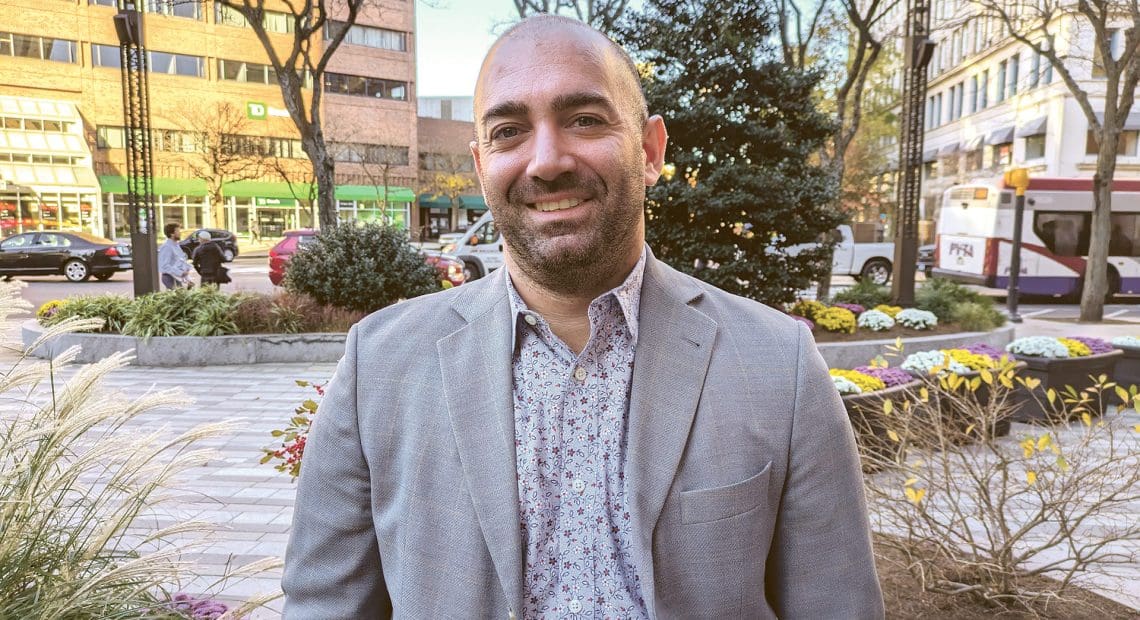
Alfonso Santaniello says a marketing strategy begins with figuring out who the customers are and then taking the message to where they are.
When Alfonso Santaniello launched the Creative Strategy Agency 15 years ago — into the teeth of the Great Recession, no less — digital marketing was a simpler world, though not always a more effective one.
By that, he means it was easier to navigate the fewer available online channels back then, but the myriad options for getting a message out today pose more opportunities to finely target a message.
“When I started consulting, I wanted to focus on digital, and at the time, it was really websites and emails, and Facebook had just become public to everyday users,” he said. “And Facebook didn’t have business pages at the time. There was no advertising. Their algorithm was pretty great because you would see the feed in chronological order, before the algorithm came in, before advertising came in.”
When the recession began to fade and company advertising budgets grew, the digital marketing landscape changed as well, Santaniello said, with Instagram, LinkedIn, and Twitter growing in scope alongside other options.
“People were starting to realize it wasn’t going anywhere, and it wasn’t just Facebook — more were popping up,” he said. At the same time, “that’s when Facebook started pivoting to business pages, creating advertising platforms for businesses to target. But then other things changed, where a post would reach only 10% of your audience.”
“Companies think they’re doing good. And it’s important that their consumers know what they’re doing. That can be product-oriented to some extent, and it can be community-oriented to some extent. But whatever it is, it’s got to be interesting to their audience.”
John Garvey, president of Garvey Communication Associates Inc. (GCAi), said the digital world has opened up countless opportunities for marketers.
“What we’re about, I think, is success and education. Companies think they’re doing good. And it’s important that their consumers know what they’re doing. That can be product-oriented to some extent, and it can be community-oriented to some extent. But whatever it is, it’s got to be interesting to their audience.”
A better word, he added, might be ‘relevant.’ “If it’s not important to me, I’ll move on,” he said. So, from a marketing perspective, the question becomes, “what’s important to the audience, and where is this audience? How am I going to reach this audience on various platforms? You have to chase audience to some degree.”
Dylan Pilon, who started Cloud 9 Marketing Group a decade ago, said Facebook and Instagram remain key channels for content creation and targeted advertising, but a number of clients also leverage LinkedIn, Google Business Profile, and YouTube channels, as well as email marketing and other tools.
“People would probably say that 2010 to 2012 was the heyday for Facebook; organic reach was really good back then. A message could go a lot farther without the need to put paid, targeted advertising behind it,” he explained.
“Since then, Facebook has sort of throttled down the organic reach because they realized that they were giving the milk away for free. Nobody was buying the advertising cow, right? So since then, it’s been more difficult to break through because there’s also a lot more content being created. There’s a lot of noise.
“So the goal is to create a piece of content that will stop somebody from scrolling and capture their attention with a nice hook and then keep their attention engaged so you can deliver your message,” Pilon added. “Now, the focus is more on finding a way to craft creative that can stop someone’s thumb from moving.

While the tools may evolve, John Garvey says marketing always comes back to what’s important to the audience.
“It’s not a cookie-cutter approach,” he went on. “We don’t have packages; we don’t have tiers. Our entire service is a la carte. You come in, and we present you a menu: ‘here are the things that you could do. What are you interested in?’ We’ll give you feedback on what we think would be the most beneficial and the most impactful. And then we build you a customized plan tailored just for you.”
Again, there are more opportunities in digital marketing today, but also, as Pilon noted, more noise — meaning more challenges.
“I feel like it was easier then, where now it’s highlighting the brand in a way that will reach the right people, but in a way that they will engage, or they will consume,” Santaniello said. “And every demographic consumes different content in different ways. Some people like to read, some people want videos.
“So now, it’s multiple targets. You’re not just targeting Western Mass.; now, we’re targeting this specific age group in Western Mass., with this interest, and we can do all that now within Facebook or Instagram or any platform,” he explained. “So the targeting and the way we want to reach people now is much more accessible, where before, we were just throwing things out there and hoping that we reach our audience.”
Medium and Message
All three company owners BusinessWest spoke with said they work with clients in traditional media as well — print, radio, TV, etc. — but digital marketing offers a new way to take a message directly to the public. And sometimes, one campaign can encompass both traditional and new media.
For example, Garvey’s firm specializes in a unique style of video storytelling in its campaigns.
“The goal is to create a piece of content that will stop somebody from scrolling and capture their attention with a nice hook and then keep their attention engaged so you can deliver your message.”
“It starts with shooting a video,” he said. “We then take narrative from the video. In this case, that narrative has to be approved. So there’s a third party that has to say, ‘yeah, that all works.’ And we can take the narrative from the video and turn part of it into a printout. Or we can take that narrative from the video and turn it into audio and create a promoted radio campaign with that. And that video can be a digital campaign on LinkedIn or various platforms. We have a multiple array of channels that we can go through to get this information out.”
Pilon said Cloud 9 has strong in-house capability for graphic design and copywriting, while working with strategic partners on photography and videography. “So we are able to act in the capacity of a full-service agency, but you don’t have to pay full-service agency pricing.”
When working with clients — its main industry focuses are real estate, building trades, and food and beverage — Cloud 9 offers a robust digital toolbox but also works in traditional media.
“Sometimes we have clients that are interested in print or radio, direct mail, those types of things. We don’t discriminate. Everything might not work for everyone,” Pilon said. “So depending on who the client is and who they’re trying to get their message out to, traditional methods could very well be a fit for sure.”

Dylan Pilon says it’s critical to make sure the messaging being created is providing value to the audience.
Santaniello added that “I usually spend a lot of time building out a strategy — first, really figuring out who the customers are, and then going to where they are. We’re not in a day where you build it and they will come. It’s kind of build it, find out where are they are, and then get it in front of them.”
In other words, “you don’t need to be on Facebook if that’s not where your audience is,” he said. “It’s really focusing on who the audience is and going where they are. That’s where you engage. You can’t wait for people to come to you. You have to go to them.”
For many clients, he added, “we do a lot of content and story. So it ties into the website, then we connect it to social. It’s a more multi-channel approach, compared to, ‘let’s just create a post and throw it on social.’ For me, it’s more, ‘OK, with that post, what is the call to action? What do we want them to do? Do we want them just to engage with the post? Do we want them to click a link to go somewhere, and if so, where are they going? What’s on that page? What do we want them to do?’ It’s a much more thought-out, strategic process than just throwing this out on social media and seeing what happens.”
Santaniello said traditional media is important to some clients, especially in pockets of this region that don’t have high-speed internet, and while he thinks in terms of digital first, the goal is always the same: “how do you connect with people offline and bring them online? And when they’re online, how do you bring them to your storefront offline? It’s full-circle. It’s not just that you’re doing only traditional, or only digital — you should be doing both.”
Checking the Numbers
Whatever the medium, it’s critical to assess the analytics to determine who is engaging with a campaign, and in what ways.
“If you’re not evaluating at least on an annual basis — if not biannually or even quarterly — what you’re doing and where you’re doing it and how you’re doing it, you’re at a disadvantage,” Pilon said. “So it’s not only having a strategy, having a plan, having a budget, but being able to say, ‘here is the measurable impact; here’s what we’ve been able to accomplish in three months, six months, a year, what have you.’”
Garvey said he offers detailed tools to measure not only impressions, but engagement actions, and for good reason: “video views and link clicks are two different results.”
Elaborating, he added, “I like to talk about what’s important to that audience, what’s helpful to them, what’s relevant. And the outcome that’s going to measure whether or not it’s relevant is engagement. The tools and measurement aspects are all available to the client, so we can say, ‘here’s what’s working.’”
Pilon agreed. “One thing that’s very important is making sure that the messaging that you’re creating is going to provide value with the audience. A lot of people talk at their customers on the internet instead of talking to their customers on the internet. And digital marketing and social media has such a customer-service aspect to it.”
Santaniello agreed that businesses need to examine the data.
“For marketing be more successful than the way it used to be done, they have to look at the numbers — they have to know why people are coming to the website, where are they coming from, what posts are doing well. Going in and regularly looking at the data will tell you what you’re doing right and what you’re doing wrong.”
As for the next big thing in digital marketing? Santaniello had an easy answer.
“If you want to know what the next platform is, ask a high-school student. They’re going to know,” he said. “Then give it five years, and they’ll find a way to add advertising revenue to it and introduce it to businesses.”