Community Spotlight
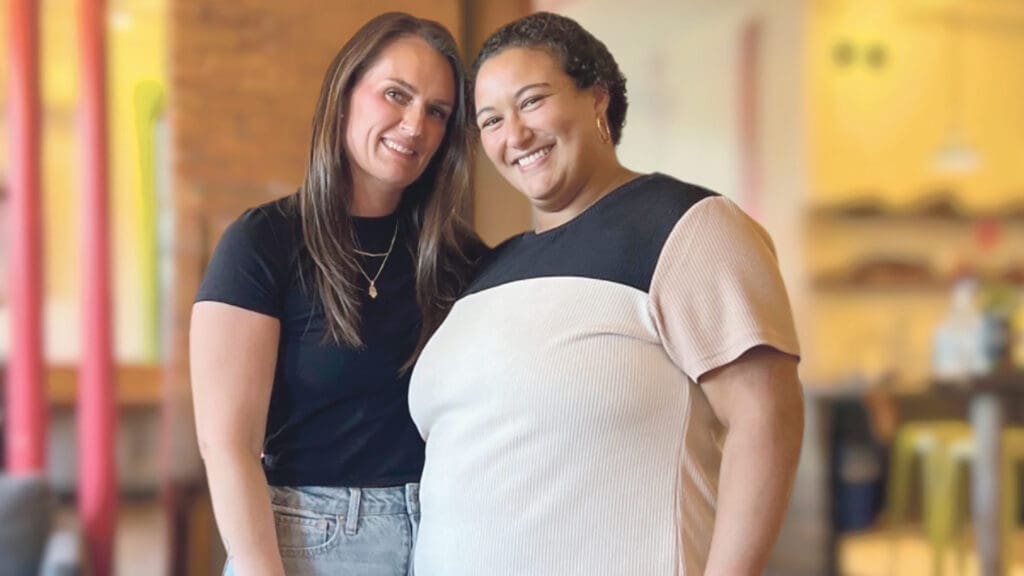
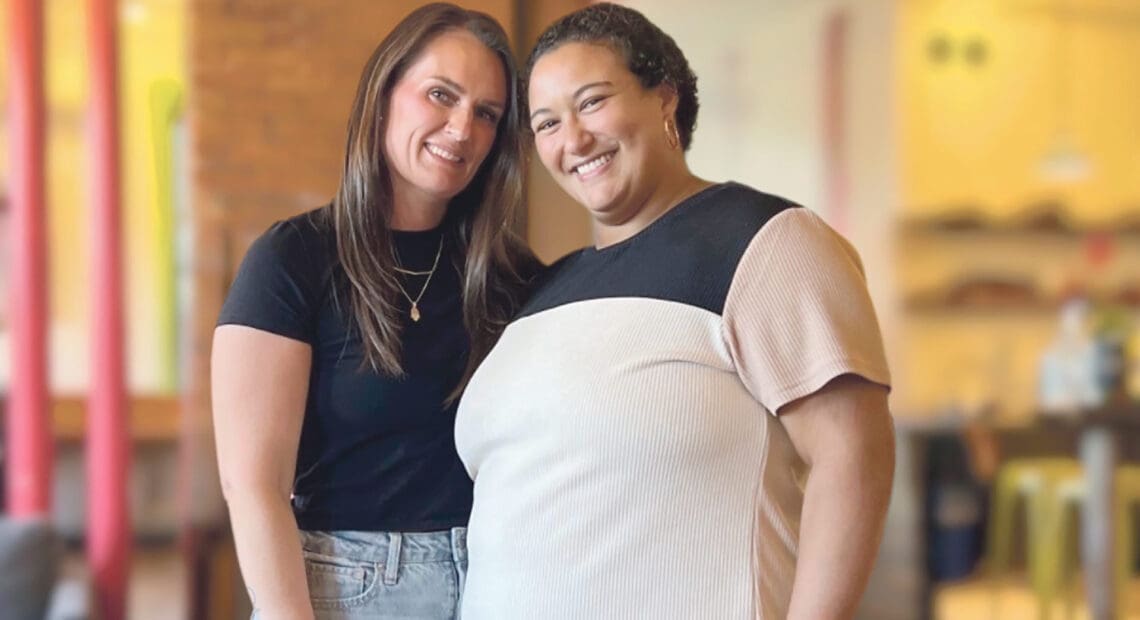
Sarah Little (left) and Nismah Osman want people to walk into Greenspace CoWork and think, “I belong here.”
For Nismah Osman, acquiring Greenspace CoWork late last year with business partner Sarah Little feels like a full-circle moment.
After relocating from Boston to Gill, her first job in the area was at Hawks & Reed. She used Greenspace, which Jeremy Goldsher and Jeff Sauser launched in 2018, almost daily for printing and overflow work and felt drawn to the space from the start.
“When we learned the space might be available, it just felt right,” Osman said. “Greenspace had already played a role in my journey here. We wanted to honor what Jeremy and Jeff created while expanding what’s possible.”
Little, who grew up in Gill in a small business family, sees the space as a natural extension of Franklin County’s entrepreneurial culture.
“We want this to be a place where people can build something meaningful — not just a place to sit and work, but a place to connect, collaborate, and feel supported,” she said.
“We want this to be a place where people can build something meaningful — not just a place to sit and work, but a place to connect, collaborate, and feel supported.”
Jessye Deane, executive director of the Franklin County Chamber of Commerce & Regional Tourism Council, noted that entrepreneurs and remote professionals are an increasingly important part of Franklin County’s economic future, and Greenfield is no exception.
“We’re thrilled to see Sarah and Nismah leverage their own venture to support other small business owners,” Deane said. “Greenspace attracts career-oriented professionals to downtown Greenfield who might otherwise be working from home. That translates into increased foot traffic, stronger connections, and more commerce for our local restaurants, retailers, and service providers. It’s a win for Greenspace CoWork members and for the entire downtown ecosystem.”
That downtown foot traffic is something Hannah Rechtschaffen thinks about a lot. As executive director of the Greenfield Business Assoc. (GBA), she said her organization’s efforts to drive and promote downtown activity fall into a few buckets.
“First, we’re tending to what is visible on the surface — downtown, but all over Greenfield, too — where we can. That’s a multi-pronged approach around cleanliness, beautification, and activation of vacant storefronts, and really bringing business owners together to have more communication and connection among themselves,” she explained, adding that some of those are new businesses in town, like Victoria Bar, Freedom Café, the Sparkle Cave, and Ja’Duke.
“We’re working with business owners in different ways to pull people together and have some collaboration going on,” Rechtschaffen told BusinessWest. One is an effort to encourage downtown businesses to stay open until 8 p.m. during Arts Walk events, which happen the last Friday of every month, and on certain Saturdays throughout the year that coincide with big Greenfield events.
“We’re targeting activation. Business owners are not being asked for the moon; they’re just being asked to lean into things that have a lot of structure,” she said, adding that the GBA is also working to activate vacant storefronts and encourage businesses to liven up active windows.
Rechtschaffen noted that attendance at Greenfield events has been a concern, even though social media engagement with local organizations is up.
“We continue to hear things like, ‘there’s nothing going on downtown.’ And that disconnect, for us, feels like a responsibility,” she told BusinessWest. “We’re continuing to amplify things on social media, share things broadly, work with our partners. What’s keeping people from going out? Maybe it’s been overstated, but post-COVID has seen such a behavioral change in how people engage, and maybe there has to be something to our approach that’s different.”
To that end, a downtown business meet-up group will gather for the first time on April 30 to crowdsource what’s keeping people from going out, she added. “It’s not just marketing. Clearly we see more traffic to the websites, but attendance is still shaky.”
“They’re looking for the kind of life that we offer in Western Mass. — and they’re leaving the state for it. So it would be wonderful to see the state looking at how they can leverage Western Mass. to solve one of our major issues, which is people leaving the state.”
In this latest installment of our Community Spotlight series, we take a look at progress being made in Franklin County’s largest municipality — and how local leaders plan to generate more.
On the Move
Another of the GBA’s buckets of focus is economic development; Rechtschaffen and her team are working closely with the Office of Community and Economic Development and its executive director, Amy Cahillane, as well as with the Franklin Regional Council of Governments. The GBA also recently hosted Aaron Vega, president and CEO of the Western Massachusetts Economic Development Council, for a day visiting local businesses.
“That was amazing,” Rechtschaffen said. “We’re working to make sure Greenfield gets attention and gets focused on. We’re proud to be the heart of Franklin County, but we oftentimes fall outside certain advocacy efforts and funding efforts. We’re not a rural place, in a county that’s largely rural, so Greenfield doesn’t fall under certain funding structures, and we need to step up our advocacy for Greenfield and our connection to Franklin County in a healthy way.”
Hannah Rechtschaffen
“We have 100 units of affordable housing coming online in downtown Greenfield in the next two years. That’s going to be huge for us.”

She told BusinessWest there’s been a national trend of people moving to rural and bucolic places, but in many cases, they’re moving out of urban areas in Massachusetts to Connecticut, Rhode Island, New Jersey, and elsewhere.
“They’re looking for the kind of life that we offer in Western Mass. — and they’re leaving the state for it. So it would be wonderful to see the state looking at how they can leverage Western Mass. to solve one of our major issues, which is people leaving the state.”
Mayor Virginia Desorgher recently wrote on Greenfield’s website that expanding the city’s tax base through development is its best long-term solution for stabilizing taxes and stimulating the economy, and housing is one place where the city is making significant strides.
That includes the continuing development of the former Wilson’s department store into a mix of retail and housing, as well as a project undertaken by Rural Development Inc. (RDI) — an arm of the Greenfield Housing Authority — to develop 32 units of mixed-income housing at 176 Main St.
MassDevelopment acquired the Wilson’s property at 242-262 Main St. in 2022 with plans to expand and relocate Green Fields Market to the building’s first floor, while turning the upper floors into 65 mixed-income rental apartments. The RDI project site includes an existing single-story commercial building and a 22,000-square-foot surface parking lot to the rear of the buildings, all in the heart of downtown Greenfield. Also in the works is the city’s plan to develop a property at 53 Hope St. into a residential or mixed-use development.
“We have 100 units of affordable housing coming online in downtown Greenfield in the next two years. That’s going to be huge for us,” Rechtschaffen said, noting, again, that development can be challenging in the city because of certain state funding restrictions.
“Our population is too high to be considered rural in the eyes of the state, which excludes us from certain funding pools, but we’re also too small to be considered a gateway city, which is also an amazing program.”
Still, she added, we continue to see small developers in Greenfield really step up, going above and beyond turning old office space into apartments. We have folks up here working hard and investing in ways that, for them, don’t always make financial sense; it’s because they care deeply about people being able to live up here and be part of what’s happening here.”
Street-level View
Desorgher noted that the city is building a downtown that meets everyday needs in part by upgrading infrastructure and incentivizing the occupation of vacant storefronts.
“In 2026, we should see the results of a new tax credit grant designed to revitalize long-vacant spaces,” she said. In terms of infrastructure, “we are focused on the basics that impact daily life: better sidewalks, smarter recycling, and parking improvements. We have replaced roughly 10% of our total sidewalk mileage since 2018, including nearly 4,000 feet replaced in 2025 alone.”
Greenfield at a Glance
Year Incorporated: 1753
Population: 17,768
Area: 21.9 square miles
County: Franklin
Residential Tax Rate: $19.31
Commercial Tax Rate: $19.31
Median Household Income: $33,110
Median Family Income: $46,412
Type of Government: Mayor, City Council
Largest Employers: Baystate Franklin Medical Center, Greenfield Community College, Sandri
* Latest information available
Through June 1, the city is accepting applicants for its Storefront Improvement Program, which provides resources for storefront upgrades to elevate downtown aesthetic appeal and economic vitality, with the ultimate aim of enhancing the area as a welcoming place to visit, shop, and work.
The program is funded through the federal Community Development Block Grant Program and administered by the city’s Community and Economic Development Department, and businesses located in the central commercial zone can apply for up to $10,000. While funding is prioritized for signage and awnings, other visual storefront improvements may be eligible.
“We are putting federal funds to work in our effort to improve downtown vitality and support small, local businesses,” the mayor noted. “The Storefront Improvement Program is a great opportunity for local businesses and organizations to improve their curb appeal while contributing to the overall health of our downtown.”
Meanwhile, Osman and Little are excited to be overseeing Greenspace CoWork’s two locations on either side of 289 Main St., hoping to deepen partnerships with local organizations; continue collaborations such as the Take the Floor competition with the Franklin County Community Development Corp.; and host incubators, retreats, workshops, mixers, and conferences that further strengthen the downtown sector’s business network.
Goldsher and Sauser originally designed Greenspace to elicit calm and focus, incorporating wood, abundant natural light, and a variety of real plants throughout the space. Under Osman and Little’s leadership, that aesthetic foundation remains intact while the mission evolves.
Under their ownership, Greenspace has introduced several updates, including a streamlined, automated booking system; a more affordable and flexible membership option for those who do not need full-time access; complimentary monthly yoga sessions for members; and expanded amenities.
“These details might seem small, but they make a difference. We want people to feel seen and considered when they’re here,” Osman said, adding that, as BIPOC and LGBTQ+ women business owners, they’re committed to creating spaces that feel welcoming and inclusive to all.
Added Little, “we want people to walk in and think, ‘I belong here’” — a sentiment certainly shared by many city business and municipal leaders striving to make Greenfield more of a place people want to live, work, and visit.