Home Posts tagged engineering
Environment and Engineering Special Coverage

Something to Build On

Two Western New England University students work on a jet engine they built

Two Western New England University students work on a jet engine they built. (Photo courtesy of Western New England University)


Among the courses Mike Rust teaches at Western New England University (WNE) is “Introduction to Engineering,” a very hands-on class that teaches the engineering design process to freshmen through a robotics development project.

At first, “they’re looking at me like, ‘I don’t know how to do these things.’ And then we train them in all the technical things that they need to do,” said Rust, professor of Biomedical Engineering and director of Experiential and Entrepreneurial Learning at WNE. “Over time, they’re weaning off, and at the end of the course, the faculty’s checking in, but the students are doing it themselves. They almost don’t notice, but by the end, they’re acting like an engineer; they’re thinking like an engineer — because they’ve lived and breathed it their first year on campus.

“When I was a student a couple decades ago, we didn’t get a project like that to work on until junior year,” Rust said, adding that giving students hands-on experience from day one helps them thrive throughout college — which can translate into success in internship experiences and their early career. “The context sticks a little better when they have the muscle memory because they’ve experienced it, not just thought about it.”

It’s not just in class that WNE engineering students are preparing for the real world. At the Delbridge Career Center, the university’s career services hub, a professional adviser is assigned to each student, and available resources include résumé development, mock interviews, internship connections, and an alumni network.

“Engineering is a professionally oriented field, and students, when they’re coming through our programs, are already thinking in these terms when they start: where are they going to go with this degree? What are they going to do long term?” Rust said, explaining how those career services tie into the hands-on classroom model.

“The context sticks a little better when they have the muscle memory because they’ve experienced it, not just thought about it.”

“We teach theory, but we’re always putting that theory into practice with projects; students are actually doing it. So when they go to the interview, they can say, ‘I have done these things; this is the value I can provide your company.’ And when they get their first job after graduation, they can hit the ground running.

“Everyone needs to be trained when they join a company,” he added, “but what we hear from companies is that the learning curve is a little flatter because they’ve got a lot of that hands-on exposure.”

That’s appreciated by firms like Westfield-based Tighe & Bond, a very large, multi-state engineering firm that hires close to 100 new employees each year.

Bob Belitz says Tighe & Bond’s robust internship program aims to give aspiring engineers as much real-world, hands-on experience as possible.

Bob Belitz says Tighe & Bond’s robust internship program aims to give aspiring engineers as much real-world, hands-on experience as possible.

“In such a competitive marketplace, we’re trying to build relationships and connections as early as possible, so we get connected to students and universities whenever we can,” said Bob Belitz, the firm’s president and CEO. “We’re participating in educational programs, going into elementary schools, middle schools, and high schools to judge fairs or just explain to these students what a career in STEM could look like.”

Those efforts are complemented at the college level with scholarships and an internship program that brings in about 30 students per year to work on real-world projects.

“What we’re trying to do through these programs is give these students a real-life, hands-on experience, to get them on as many projects site as possible. The more practical exposure they get to the work we do, the better, so our mission is to do as much of that as we can,” Belitz said, adding that interns also get professional development opportunities like help writing résumés, enhancing speaking and interview skills, and even a career fair where they present a poster board on the projects they worked on during the summer.

“In such a competitive marketplace, we’re trying to build relationships and connections as early as possible, so we get connected to students and universities whenever we can.”

“A large majority of them either come back for another internship, or we offer them full-time employment. They’re exposed to the culture of the company; we assign them buddies and team leaders throughout the course of the summer when they’re here. Hopefully they appreciate that direct investment,” he went on.

And if they choose to pursue work somewhere else, well, “it helps enhance the profession either way.”


Values and Purpose

All these efforts at recruitment and career development are important for an industry that needs new blood, said Ashley Sullivan, president and CEO of O’Reilly, Talbot & Okun Associates (OTO) in Springfield.

“For the past few years, it has been very challenging to recruit and find people. We have a shortage of people, it seems,” she noted. “We have a big exodus with retirements — through the whole COVID pandemic, there were people rethinking engineering. So there’s a lot of work, and there seems to be not a lot of people.”
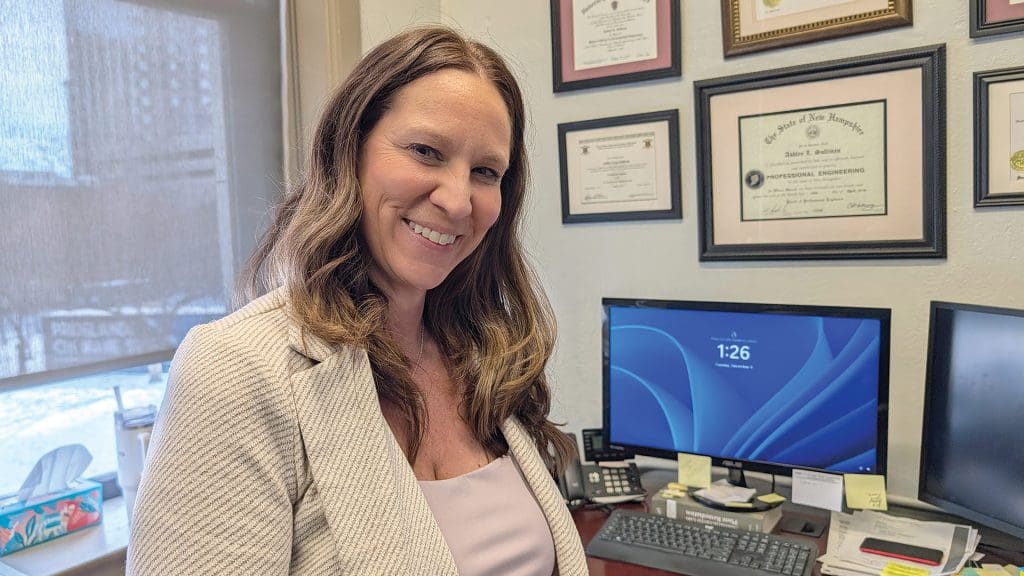
Ashley Sullivan says today’s young recruits are looking for a company that aligns not only with their work interest, but with their purpose, goals, and values.

Ashley Sullivan says today’s young recruits are looking for a company that aligns not only with their work interest, but with their purpose, goals, and values.

One way to attract talent is through a workplace culture that resonates with young people, she explained, and OTO started to put more emphasis on that when she transitioned into company leadership in 2020, better defining its brand; emphasizing workplace values like transparency, respect, and togetherness; and operating according to the mission statement, “we will elevate our industry to create and deliver the best solutions for natural and built environments.”

“We asked, ‘who are we? Who do we want to be?’” Sullivan said. “And we need to live by that so we can communicate it and say, with full transparency, ‘this is what we are. If you want to work at a place like this, this is what you’re going to get.’”

Meanwhile, the recruitment process involves not only interviews with top leadership, but eventually meetings with field staff and project managers. “We invest a lot in the interview process — by that time, we know this is a great candidate, so how do we show them how they would fit into our business model and fit in with our people?”

Belitz also emphasized the value of workplace culture in attracting what he characterizes as a more purpose-driven generation of young job applicants than he’s seen before.

“The narrative has changed a little bit. This generation is interested in the stability of the company. I don’t know if it’s the uncertain economy driving it, but to be able to say to these prospective interns that the company has been around over 100 years, we’re very financially stable, we do purpose-driven work, we’re 100% owned by employees — that’s a nice difference,” he explained.

“The big picture is that we’re trying to train engineers who are value creators — technically strong, skilled at math and science, but they also have that vision of how the world can be a better place.”

“We’ve also put in some really good benefits for students, like loan repayment. Benefits are a hot-button issue, so we’re really trying to promote this overall climate of stability and of the company investing in the people we bring into the firm,” Belitz added. “And giving back to the community is another key part of the puzzle — and a big selling point for young people.”

Sullivan agreed with that emphasis on culture and purpose.

“I think this newest generation wants a company that knows who they are and has a purpose — one that aligns with their purpose or what their goals are,” she told BusinessWest. “It could be that they want to see their projects have an impact on the community — they’re really community- and impact-driven, much more than the rest of us that were just looking to get a job, which is really neat. I think culture and the big picture is important to them.”

In short, she said, “they want to matter. They want to know their value, and they want to be valuable. And they want that from the beginning.”

Meanwhile, retention is as important as recruitment, which is why Tighe & Bond invests thought, time, and energy into cultivating career tracks for employees, Belitz said.

The firm’s onboarding and training program consists of not only leadership training, but anything people need to do their jobs: project management, quality management, safety and health principles, and more — efforts branded internally as Tighe & Bond University.
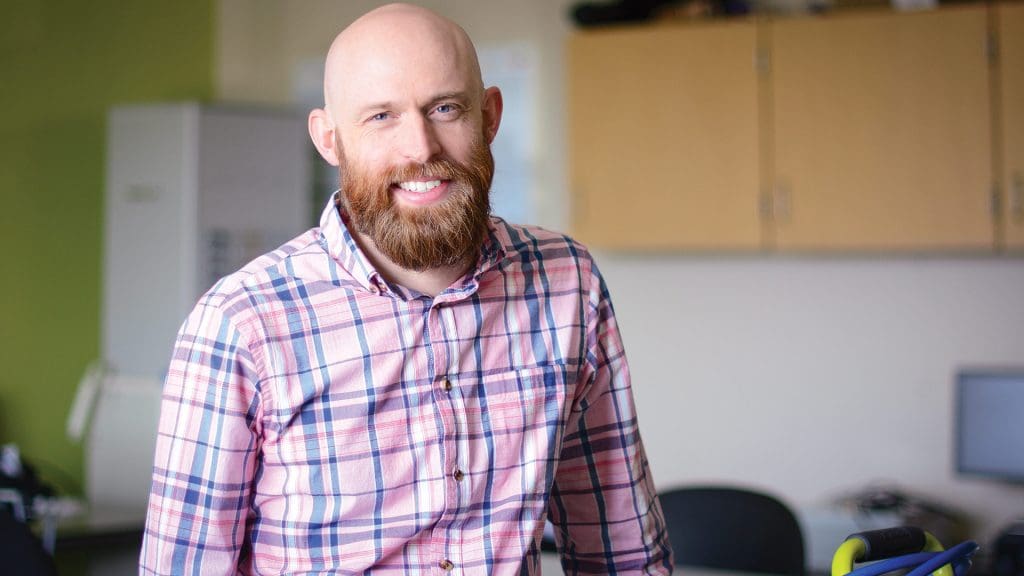
Mike Rust says higher education has seen a shift toward giving engineering students more hands-on, project-based experience right from the start of their college careers.

Mike Rust says higher education has seen a shift toward giving engineering students more hands-on, project-based experience right from the start of their college careers.

“We’ve also started investing more in training around technology, making sure folks have a good understanding of how to appropriate and use things like artificial intelligence and other investments we’ve made in digital toolsm” he added. “There’s a lot of energy around that, especially with the younger generation.”

Sullivan said many recruits want to see a clear career ladder at work.

“I think it’s important for them to be able to see where they could be in a few years, so they feel like they’re moving along. I think they want to see opportunity; they don’t want to get stuck in a rut or doing one task.

“And for me, leading a small business, I want people that want to do that because I love that people will develop and can do a little bit more of a project. If that means they’re more valuable, then the pay comes with that,” she added. “At OTO, those two things are aligned. It’s always in our benefit to develop people, so we’re looking for people that really want to do more.”


Surveying the Landscape

While Tighe & Bond is a civil and environmental engineering firm and OTO specializes in geotechnical, environmental, and industrial hygiene consulting services, Western New England, like many universities with strong engineering programs, is sending graduates out into myriad engineering disciplines — mechanical, electrical, civil and environmental, biomedical, industrial, and more. And placement rates are high, with 97% of engineering graduates placed in jobs within six months.

“Engineering tends to be pretty steady regardless of what’s going on in the economy,” Rust said. “The big picture is that we’re trying to train engineers who are value creators — technically strong, skilled at math and science, but they also have that vision of how the world can be a better place.”

Elaborating, he added, “they’re encouraged to think in those terms — to take an existing product and improve it, or talk to the customer about what the pain points are and how to address them. They’re thinking not only about what a company does, but what it could do. And companies come back to us and say, ‘can you get me five more of that student you got us last year? They were what we want.’ Because they’re not satisfied with the status quo.”

Sullivan, who has taught classes at WNE, still participates in engineering advisory boards there, connecting area industry leaders with educators.

“We talk about what we looking for for graduates and who are we looking to hire. But they also talk to us about the exciting research they’re doing, the programs they have, the outreach they have, where they have challenges, where they may need support,” she explained. “And I really feel like, whenever you have two or more groups together working to solve a problem, the ideas that come out of there are amazing.”

Like Rust, Sullivan appreciates when young people emerge with a problem-solving mindset, but also an appreciation for how they can change the landscape, both literally and figuratively.

“We get to work with a lot of people, and we get to see new development and help with projects that impact our own lives or the people we care about,” she said, naming the recently opened Square One expansion in Springfield and DC Station, the new electric vehicle charging hub in Northampton, as two examples.

“I can bring my daughters to an urgent care and know that I worked on it,” she added. “That’s one of the reasons why we try to encourage people to come to OTO, or to be in civil engineering: you impact people. The work is hard, but it’s so rewarding, and you’re constantly reminded why you do it.”

Environment and Engineering Special Coverage

Engineering a Youth Movement

Ashley Sullivan, president of O’Reilly, Talbot & Okun.

Ashley Sullivan, president of O’Reilly, Talbot & Okun.


Ashley Sullivan can think of plenty of reasons why someone might want to go into engineering.

“It is a very rewarding field where you get to see your work benefit your family and your community,” the president and CEO of Springfield-based O’Reilly, Talbot & Okun said. “And you’re always going to need civil engineers, so there’s job protection there. There’s so much opportunity in the field, whether you want to go into construction or consulting or the regulatory side. There’s a lot of different options, and each individual can find what’s right for them.”

That said, the industry is facing the same headwinds seen in other fields these days, ranging from construction to manufacturing to insurance: retirements outpacing the number of young people coming on board.

“We’ve had a lot of retirements; as quick as I hire, we have people retire or leave the industry,” Sullivan said. “We’re trying to grow, we’re trying to hire, and we make progress one year, and then a few months later, we might fall back. We’re trying to hire about five more by the end of the year, but, just like with everybody else, it’s been very challenging.

“Previously, being a smaller, local firm, we didn’t necessarily compete with the larger firms or state agencies because if somebody liked a small firm, they liked a small firm, versus a larger firm. Now we’re finding we’re going up against those agencies and larger firms,” she went on. “I’m not sure if that’s because of the hybrid or remote potential. We’ve really focused on the ones that want to work near where they live, but now it’s getting hard to do that. There are also a lot of competitive salaries out there, so we’ve had to adjust to that. It’s definitely a challenge.”

Westfield-based Tighe & Bond is at the other end of the hiring spectrum, boasting about 600 employees at 17 locations across the Northeast. The firm is growing significantly at a time when a surge of federal funding — from the $1.2 trillion Bipartisan Infrastructure Law of 2021 to the Inflation Reduction Act and CHIPS Act of 2022 — is creating plenty of opportunity for civil-engineering firms.

“They’re requiring technical talent throughout the country to do all the work that’s coming,” President and CEO Bob Belitz said, noting that the firm has more employees dedicated to recruiting and onboarding than in the past. “We’ve made an investment in that function because it’s such a big part of our business.”

He added that the firm’s broad footprint across the Northeast makes it easier to recruit and retain talent. “Before, if somebody was working for us and got married and moved to New Hampshire, Maine, or New York, they might have to leave us to go work for somebody else because we didn’t have offices there. Now we do. From a growth perspective, it helps to be able to transfer you among other offices.”

Bob Belitz

Bob Belitz says work opportunities for engineering firms are high right now, and so is the need to attract new talent.
Staff Photo

But with some turnover to be expected in a company this size, and with a goal of growing both organically and through acquisitions, Tighe & Bond needs to onboard more than 100 new employees each year, and doing so successfully requires it to stand out from its competitors in a number of ways, Belitz said, from its employee-ownership model to hybrid work schedules; from a strong benefits program to a broad mix of projects.

Sullivan said communicating the culture of a company to job seekers is also critical.

“When we’ve had conversations where we effectively communicate that, people are very interested in working here,” she said, adding that another factor is communicating a clear path to career advancement.

“One of the things I think is so great about engineering — particularly about civil engineering or the environmental engineering that we do — is that we make our community better.”

“I am looking for future business partners. You’re working with the people that are managing the business, you’re getting day-to-day experience in that, and there’s real, clear potential for somebody to be a stockholder, be on the board of directors, and guide the company sooner than they might at a larger company. We can give examples of that. So that’s something that we try to explain. We feel that, if we’re effective in communicating that, we’ll find the right people.”


Mission Driven

As a civil engineer teaching at a women’s liberal-arts college, Glenn Ellis, a professor of Engineering at Smith College, said his students often come to the field from a specific mindset — namely, social impact.

“The number-one thing I hear from students is they want to do some good for the world, to make the world a better place,” he told BusinessWest. “They’re very interested in sustainability. That’s the number-one draw for many students as an engineer. And you can really make an impact on all sorts of things.”

That line of thinking resonates with Sullivan. “One of the things I think is so great about engineering — particularly about civil engineering or the environmental engineering that we do — is that we make our community better,” she said. “We’re an important part of that, and you can see it.”

Ellis noted that the industry code of ethics now includes sustainability as a key tenet, which dovetails with what his students are demanding. But he also said young people are drawn to the sheer diversity of engineering and how broadly it impacts the world.

“The more young people know what an engineer is, the more they’re interested in it. Studies show that the reason why way fewer women than men are engineers is not because women leave these programs at a higher rate than men; they leave at the same rate. It’s that they don’t go into engineering programs to begin with.”

And the time to start capturing their interest, he added — not just for engineering but for all STEM fields, where women have been historically underrepresented — is not college or even high school, but middle school.

“I say to a lot of young people, ‘you know, everything you can see has been designed by engineers. Engineers literally designed the entire world.’”



“I think that’s the time to develop a STEM identity. When you ask kids in middle school if they want to be engineers, they say, ‘I don’t know what that is,’ or ‘that’s really boring; you just work on pipes and buildings.’”

Ellis spoke with one young girl who said she wasn’t interested in engineering, but she wanted to work in the medical realm, helping to design artificial limbs that will help people.

“I said, ‘that’s engineering — that’s bioengineering.’ Young people don’t know what engineering is, so you need to introduce them at a young age, show them that it’s not just building bridges and wearing hardhats. This is a creative profession, a collaborative profession. If you want to change the world, this is the place to do it.”

And employers know talented young engineers have options in choosing where to make their mark, so recruitment, onboarding, and benefits are all critical.

“When we think about our benefit programs, we need to think about things that are important to the younger generations,” Belitz noted, and these run the gamut at Tighe & Bond from student-loan assistance to wellness programs to pet insurance, but also include a strong focus on mentorship, learning, and professional-development opportunities, including the addition of a female mentoring program last year.

“We’re also always giving back to our communities, and we try to talk about that as much as we can when we’re recruiting people,” he went on. “Hopefully that total package, along with the work that we have in the backlog, is attractive to the younger and mid-career people, who are the hardest ones to retain.”

O’Reilly, Talbot & Okun, while a much smaller firm, is also in a growth mode.

“There is a lot of work to be done, and the clients need us to get their work done,” Sullivan said, adding that the industry is facing a bit of an experience gap as veterans retire and young engineers replace them.

“We knew this was coming, so you have to invest in your people and make sure that you’re narrowing that gap continuously,” she told BusinessWest. “One of the things that we’ve done — and that I continue to do — is really invest back in people, try to give them the skills and get them the training.

“And not just the technical training, but also business development, project management, and entrepreneurial skills that get you even further,” she went on. “That’s something that I knew I had to do five years ago, and I’ve continued to do that. We just finished a big team training about presentation skills, whether in a small meeting or a large group, but it was also about team building, communication, and all that.”


Making a Difference

Ellis said Smith has been graduating a few dozen engineers each year, and they’re entering a market that’s tilted somewhat to job seekers.

Conversely, for employers, “it’s very challenging,” Sullivan said. “It’s just really hard to find people right now. We’ve had some people with a verbal acceptance, and then a few weeks later, they get a counteroffer and stay where they are.”

Meanwhile, Ellis hopes more young people — particularly young women — get the message early on that this is a meaningful, impactful career with plenty of opportunity.

“Women are definitely more attracted to engineering when they can be involved in messy, complex societal issues, which actually is what engineering is all about. It’s all about taking math and science and solving problems for society,” he said.

“I say to a lot of young people, ‘you know, everything you can see has been designed by engineers. Engineers literally designed the entire world. You can go into it and move up in the world and make a difference.’”

Workforce Development

By the Numbers

By Nikki Graf, Richard Fry, and Cary Funk

Workforce

Employment in science, technology, engineering, and math (STEM) occupations has grown 79% since 1990, from 9.7 million to 17.3 million, outpacing overall U.S. job growth. There’s no single standard for which jobs count as STEM, and this may contribute to a number of misperceptions about who works in STEM and the difference that having a STEM-related degree can make in workers’ pocketbooks.

A new Pew Research Center analysis of U.S. Census Bureau data takes a broad-based look at the STEM workforce from 1990 to 2016 based on an analysis of adults ages 25 and older working in any of 74 occupations. These include computer, math, engineering, and architecture occupations, physical scientists, life scientists, and health-related occupations such as healthcare practitioners and technicians.

Here are seven facts about the STEM workforce and STEM training.

1. STEM workers enjoy a pay advantage compared with non-STEM workers with similar levels of education. Among those with some college education, the typical full-time, year-round STEM worker earns $54,745 while a similarly educated non-STEM worker earns $40,505, or 26% less.

And among those with the highest levels of education, STEM workers outearn their non-STEM counterparts by a similar margin. Non-STEM workers with a master’s degree typically earn 26% less than STEM workers with similar education. The median earnings of non-STEM workers with a professional or doctoral degree trail their STEM counterparts by 24%.

2. While STEM workers tend to be highly educated, roughly a third have not completed a bachelor’s or higher-level degree. A substantial share (35%) of the STEM workforce does not have a bachelor’s degree. Overall, about three in 10 STEM workers report having completed an associate degree (15%) or have some college education but no degree (14%). These workers are more prevalent among healthcare practitioners and technicians, computer workers, and engineers.

Some 36% of STEM workers have a bachelor’s degree but no graduate degree, while 29% have earned a master’s, doctorate, or professional degree. Life scientists are the most highly educated among STEM workers, with 54% having an advanced degree.

3. About half of workers with college training in a STEM field are working in a non-STEM job. Among workers ages 25 and older with at least a bachelor’s degree, 33% have an undergraduate degree in a STEM field of study. But only 52% of these STEM-trained workers are employed in a STEM occupation.

Among non-STEM occupations, management, business, and finance jobs attract a substantial share of college graduates with STEM training (17%), particularly those who majored in engineering. Roughly a quarter (24%) of engineering majors are in a managerial, business, or finance job.

Overall, among adults with a STEM college major, women are more likely than men to work in a STEM occupation (56% versus 49%). This difference is driven mainly by college graduates with a health-professions major (such as nursing or pharmacy), most of whom are women.

However, 38% of women and 53% of men with a college major in computers or computer science are employed in a computer occupation. And women with a college degree in engineering are less likely than men who majored in these fields to be working in an engineering job (24% versus 30%). These differences in retention within a field of study for women in computer and engineering occupations are in keeping with other studies showing a ‘leaky pipeline’ for women in STEM.

4. STEM training in college is associated with higher earnings, whether working in a STEM occupation or not. Among college-educated workers employed full-time year-round, the median earnings for those who have a STEM college major are $81,011, compared with $60,828 for other college majors.

The earnings advantage for those with a college major in a STEM field extends to workers outside of STEM occupations. Among all non-STEM workers, those who have a STEM college degree earn, on average, about $71,000; workers with a non-STEM degree working outside of STEM earn roughly $11,000 less annually.

5. The share of women varies widely across STEM job types. Women are underrepresented in some STEM job clusters, but in others they match or exceed their share in the U.S. workforce overall. In fact, women comprise three-quarters of healthcare practitioners and technicians, the largest occupational cluster classified as STEM in this analysis, with 9.0 million workers — 6.7 million of whom are women.

And women’s gains since 1990 in the life sciences (up from 34% to 47%) have brought them roughly on par with their share in the total workforce (47%), a milestone reached in math occupations (46%) as well. Women remain underrepresented in engineering (14%), computer (25%), and physical-science (39%) occupations.

6. Women have made significant gains in life and physical sciences, but in other areas their shares have been stable, and in computer jobs it has declined. While there has been significant progress for women’s representation in the life and physical sciences since 1990, the share of women has been roughly stable in several other STEM job clusters.

In engineering, the job cluster in which women have the lowest levels of representation on average, women’s shares have inched up only slightly, from 12% in 1990 to 14% today. And the share of women has actually decreased in one of the highest-paying and fastest-growing STEM clusters — computer occupations. In 1990, 32% of workers in computer occupations were women; today, women’s share has dropped to 25%.

7. Blacks and Hispanics are underrepresented in the STEM workforce relative to their shares in the U.S. workforce as a whole. This underrepresentation is evident across all STEM job clusters, with one exception: 11% of healthcare practitioners and technicians are black, similar to the share of blacks in the total workforce.

Within job clusters, however, the share of blacks and Hispanics varies widely. For example, 37% of licensed practical and licensed vocational nurses are either black or Hispanic. By comparison, other health-related jobs have smaller shares of workers who are black or Hispanic, including physicians and surgeons (11%), pharmacists (10%), dentists (9%), and physical therapists (9%). Just 5% of optometrists, veterinarians, and chiropractors are black or Hispanic.

Asians are overrepresented across all STEM occupational groups, particularly among computer workers and life scientists. They account for 19% of workers in both of these fields, which is much higher than their share in the workforce overall (6%).

The share of Asians varies substantially within occupational groups, however. For example, in engineering jobs, the share of Asians ranges from 30% among computer-hardware engineers to 2% among surveying and mapping technicians. Among healthcare practitioners and technicians, 21% of physicians and surgeons are Asian. But Asians comprise a far smaller share in other occupations, such as veterinarians (3%) and emergency medical technicians and paramedics (2%).

Nikki Graf is a research associate focusing on social and demographic trends at Pew Research Center. Richard Fry is a senior researcher focusing on economics and education at Pew Research Center. Cary Funk is director of science and society research at Pew Research Center.