

Engineering Firms Prioritize Ways to Attract, Develop New Talent
Something to Build On

Two Western New England University students work on a jet engine they built. (Photo courtesy of Western New England University)
Among the courses Mike Rust teaches at Western New England University (WNE) is “Introduction to Engineering,” a very hands-on class that teaches the engineering design process to freshmen through a robotics development project.
At first, “they’re looking at me like, ‘I don’t know how to do these things.’ And then we train them in all the technical things that they need to do,” said Rust, professor of Biomedical Engineering and director of Experiential and Entrepreneurial Learning at WNE. “Over time, they’re weaning off, and at the end of the course, the faculty’s checking in, but the students are doing it themselves. They almost don’t notice, but by the end, they’re acting like an engineer; they’re thinking like an engineer — because they’ve lived and breathed it their first year on campus.
“When I was a student a couple decades ago, we didn’t get a project like that to work on until junior year,” Rust said, adding that giving students hands-on experience from day one helps them thrive throughout college — which can translate into success in internship experiences and their early career. “The context sticks a little better when they have the muscle memory because they’ve experienced it, not just thought about it.”
It’s not just in class that WNE engineering students are preparing for the real world. At the Delbridge Career Center, the university’s career services hub, a professional adviser is assigned to each student, and available resources include résumé development, mock interviews, internship connections, and an alumni network.
“Engineering is a professionally oriented field, and students, when they’re coming through our programs, are already thinking in these terms when they start: where are they going to go with this degree? What are they going to do long term?” Rust said, explaining how those career services tie into the hands-on classroom model.
“The context sticks a little better when they have the muscle memory because they’ve experienced it, not just thought about it.”
“We teach theory, but we’re always putting that theory into practice with projects; students are actually doing it. So when they go to the interview, they can say, ‘I have done these things; this is the value I can provide your company.’ And when they get their first job after graduation, they can hit the ground running.
“Everyone needs to be trained when they join a company,” he added, “but what we hear from companies is that the learning curve is a little flatter because they’ve got a lot of that hands-on exposure.”
That’s appreciated by firms like Westfield-based Tighe & Bond, a very large, multi-state engineering firm that hires close to 100 new employees each year.

Bob Belitz says Tighe & Bond’s robust internship program aims to give aspiring engineers as much real-world, hands-on experience as possible.
“In such a competitive marketplace, we’re trying to build relationships and connections as early as possible, so we get connected to students and universities whenever we can,” said Bob Belitz, the firm’s president and CEO. “We’re participating in educational programs, going into elementary schools, middle schools, and high schools to judge fairs or just explain to these students what a career in STEM could look like.”
Those efforts are complemented at the college level with scholarships and an internship program that brings in about 30 students per year to work on real-world projects.
“What we’re trying to do through these programs is give these students a real-life, hands-on experience, to get them on as many projects site as possible. The more practical exposure they get to the work we do, the better, so our mission is to do as much of that as we can,” Belitz said, adding that interns also get professional development opportunities like help writing résumés, enhancing speaking and interview skills, and even a career fair where they present a poster board on the projects they worked on during the summer.
“In such a competitive marketplace, we’re trying to build relationships and connections as early as possible, so we get connected to students and universities whenever we can.”
“A large majority of them either come back for another internship, or we offer them full-time employment. They’re exposed to the culture of the company; we assign them buddies and team leaders throughout the course of the summer when they’re here. Hopefully they appreciate that direct investment,” he went on.
And if they choose to pursue work somewhere else, well, “it helps enhance the profession either way.”
Values and Purpose
All these efforts at recruitment and career development are important for an industry that needs new blood, said Ashley Sullivan, president and CEO of O’Reilly, Talbot & Okun Associates (OTO) in Springfield.
“For the past few years, it has been very challenging to recruit and find people. We have a shortage of people, it seems,” she noted. “We have a big exodus with retirements — through the whole COVID pandemic, there were people rethinking engineering. So there’s a lot of work, and there seems to be not a lot of people.”
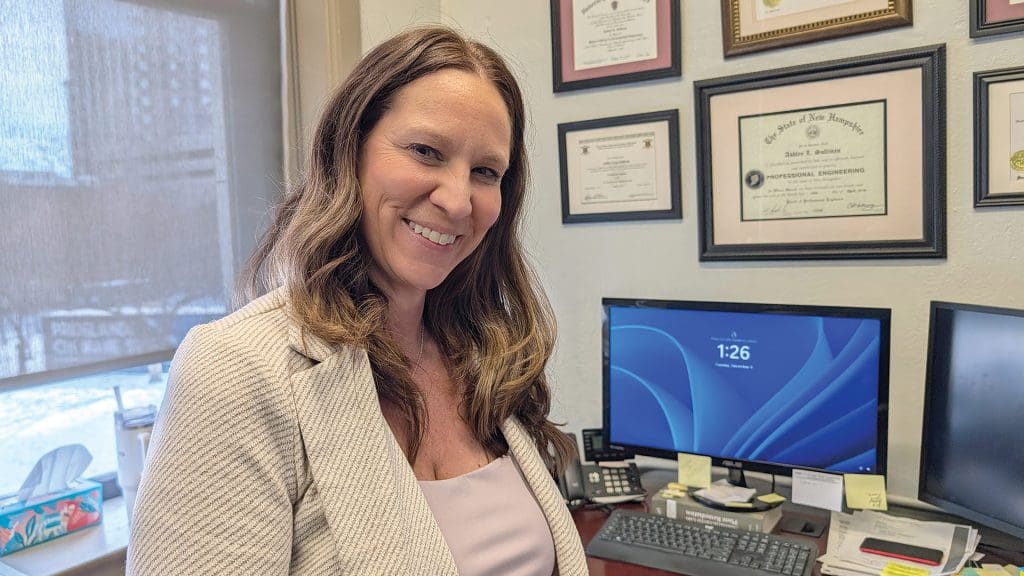
Ashley Sullivan says today’s young recruits are looking for a company that aligns not only with their work interest, but with their purpose, goals, and values.
One way to attract talent is through a workplace culture that resonates with young people, she explained, and OTO started to put more emphasis on that when she transitioned into company leadership in 2020, better defining its brand; emphasizing workplace values like transparency, respect, and togetherness; and operating according to the mission statement, “we will elevate our industry to create and deliver the best solutions for natural and built environments.”
“We asked, ‘who are we? Who do we want to be?’” Sullivan said. “And we need to live by that so we can communicate it and say, with full transparency, ‘this is what we are. If you want to work at a place like this, this is what you’re going to get.’”
Meanwhile, the recruitment process involves not only interviews with top leadership, but eventually meetings with field staff and project managers. “We invest a lot in the interview process — by that time, we know this is a great candidate, so how do we show them how they would fit into our business model and fit in with our people?”
Belitz also emphasized the value of workplace culture in attracting what he characterizes as a more purpose-driven generation of young job applicants than he’s seen before.
“The narrative has changed a little bit. This generation is interested in the stability of the company. I don’t know if it’s the uncertain economy driving it, but to be able to say to these prospective interns that the company has been around over 100 years, we’re very financially stable, we do purpose-driven work, we’re 100% owned by employees — that’s a nice difference,” he explained.
“The big picture is that we’re trying to train engineers who are value creators — technically strong, skilled at math and science, but they also have that vision of how the world can be a better place.”
“We’ve also put in some really good benefits for students, like loan repayment. Benefits are a hot-button issue, so we’re really trying to promote this overall climate of stability and of the company investing in the people we bring into the firm,” Belitz added. “And giving back to the community is another key part of the puzzle — and a big selling point for young people.”
Sullivan agreed with that emphasis on culture and purpose.
“I think this newest generation wants a company that knows who they are and has a purpose — one that aligns with their purpose or what their goals are,” she told BusinessWest. “It could be that they want to see their projects have an impact on the community — they’re really community- and impact-driven, much more than the rest of us that were just looking to get a job, which is really neat. I think culture and the big picture is important to them.”
In short, she said, “they want to matter. They want to know their value, and they want to be valuable. And they want that from the beginning.”
Meanwhile, retention is as important as recruitment, which is why Tighe & Bond invests thought, time, and energy into cultivating career tracks for employees, Belitz said.
The firm’s onboarding and training program consists of not only leadership training, but anything people need to do their jobs: project management, quality management, safety and health principles, and more — efforts branded internally as Tighe & Bond University.
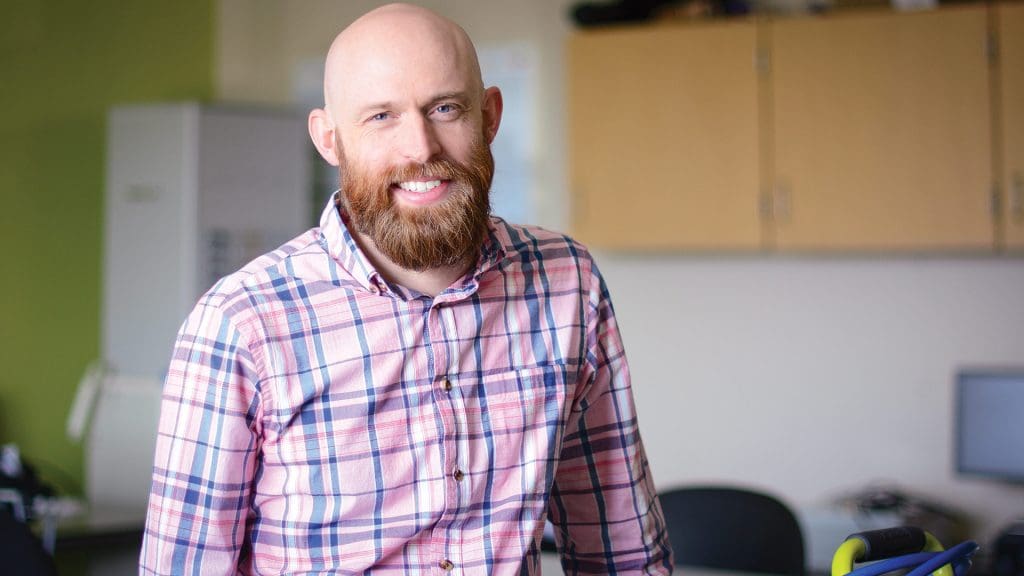
Mike Rust says higher education has seen a shift toward giving engineering students more hands-on, project-based experience right from the start of their college careers.
“We’ve also started investing more in training around technology, making sure folks have a good understanding of how to appropriate and use things like artificial intelligence and other investments we’ve made in digital toolsm” he added. “There’s a lot of energy around that, especially with the younger generation.”
Sullivan said many recruits want to see a clear career ladder at work.
“I think it’s important for them to be able to see where they could be in a few years, so they feel like they’re moving along. I think they want to see opportunity; they don’t want to get stuck in a rut or doing one task.
“And for me, leading a small business, I want people that want to do that because I love that people will develop and can do a little bit more of a project. If that means they’re more valuable, then the pay comes with that,” she added. “At OTO, those two things are aligned. It’s always in our benefit to develop people, so we’re looking for people that really want to do more.”
Surveying the Landscape
While Tighe & Bond is a civil and environmental engineering firm and OTO specializes in geotechnical, environmental, and industrial hygiene consulting services, Western New England, like many universities with strong engineering programs, is sending graduates out into myriad engineering disciplines — mechanical, electrical, civil and environmental, biomedical, industrial, and more. And placement rates are high, with 97% of engineering graduates placed in jobs within six months.
“Engineering tends to be pretty steady regardless of what’s going on in the economy,” Rust said. “The big picture is that we’re trying to train engineers who are value creators — technically strong, skilled at math and science, but they also have that vision of how the world can be a better place.”
Elaborating, he added, “they’re encouraged to think in those terms — to take an existing product and improve it, or talk to the customer about what the pain points are and how to address them. They’re thinking not only about what a company does, but what it could do. And companies come back to us and say, ‘can you get me five more of that student you got us last year? They were what we want.’ Because they’re not satisfied with the status quo.”
Sullivan, who has taught classes at WNE, still participates in engineering advisory boards there, connecting area industry leaders with educators.
“We talk about what we looking for for graduates and who are we looking to hire. But they also talk to us about the exciting research they’re doing, the programs they have, the outreach they have, where they have challenges, where they may need support,” she explained. “And I really feel like, whenever you have two or more groups together working to solve a problem, the ideas that come out of there are amazing.”
Like Rust, Sullivan appreciates when young people emerge with a problem-solving mindset, but also an appreciation for how they can change the landscape, both literally and figuratively.
“We get to work with a lot of people, and we get to see new development and help with projects that impact our own lives or the people we care about,” she said, naming the recently opened Square One expansion in Springfield and DC Station, the new electric vehicle charging hub in Northampton, as two examples.
“I can bring my daughters to an urgent care and know that I worked on it,” she added. “That’s one of the reasons why we try to encourage people to come to OTO, or to be in civil engineering: you impact people. The work is hard, but it’s so rewarding, and you’re constantly reminded why you do it.”