Home Posts tagged Hadley Mass.
Healthcare News Special Coverage

Creating a Movement

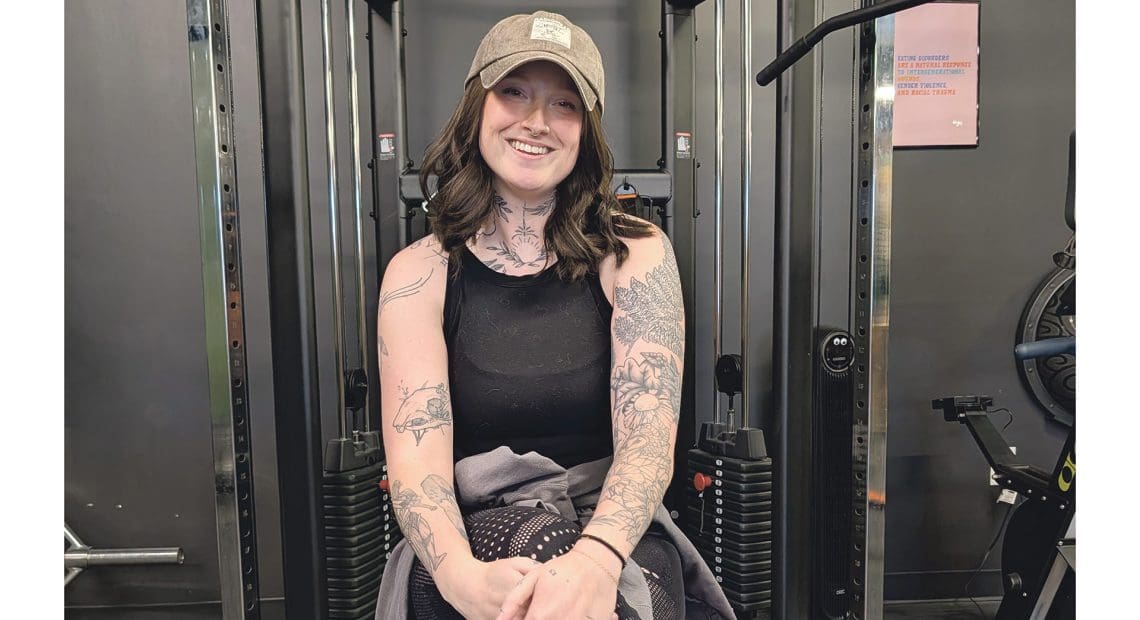
Britt McGrath opened the Hadley studio of My Health Matters Fitness in late 2023.

Britt McGrath opened the Hadley studio of My Health Matters Fitness in late 2023.


In her bio on the website of My Health Matters Fitness, Britt McGrath makes it clear what she thinks of ‘diet culture.’

“I have been on a decades-long journey of learning to look at my body for everything it is, rather than everything it is not. And through years of certifications, training, and actual hands-on work, I’ve found my purpose. I’ve found my worth again,” she wrote. “And that is to help other people who have had similar histories as mine give diet culture and all of its toxic friends a huge middle finger — to finally start living our lives in ways that do not revolve around how our bodies look, but rather everything else life has to offer.”

Now in her sixth year of helping a growing roster of clients make fitness and wellness work for them, she believes in that philosophy even more.

In short, too many people have been let down by a fitness and diet industry that puts too much emphasis on weight numbers and body shape, and have grown up in a society that overly focuses on the way they look, and places all the value on that, McGrath told BusinessWest during a broad conversation at her Hadley fitness studio.

“For as long as I can remember, I always fixated on my body. I was an athlete for many years, and I felt strong, but once I stopped playing, that’s when my eating disorders started happening because I didn’t know how to control my body anymore,” she said. “And over the years, as I started healing my own body image, I started making more connections with other people speaking out and letting me know they’ve also experienced that.”

“Over the years, as I started healing my own body image, I started making more connections with other people speaking out and letting me know they’ve also experienced that.”

My Health Matters contains many trappings of a traditional gym — weights, circuit training, boxing, group classes, personal training, and much more — but with a few key differences, from a lack of mirrors to a deliberate de-emphasis on number of pounds lost. Instead, fitness plans are individualized to each member’s needs, goals, and body type, with an emphasis on improving quality of life rather than chasing specific numbers.

“We’ve created a community of people who have been wanting something like this, to be able to escape a lot of what they’re exposed to in other places or by their own families and friends — whoever is telling them, ‘you have to look a certain way, or else you’re unhealthy,’” McGrath explained.

My Health Matters features a host of different exercise modalities, plus group classes and personal training.

My Health Matters features a host of different exercise modalities, plus group classes and personal training.

“A lot of folks are coming in and saying, ‘thank God there’s a place where I can just be me. I can say no to a movement that I don’t want to do. I can flip off the trainer if I want to. I can leave halfway through class if I feel like that’s what I needed.’ And I think the bodily autonomy of it, being able to make those choices without shame or guilt, is really important for us here.”

It’s an idea she’s become passionate about, and which drove her to create a safe space that’s welcoming to all body types — and women and men of all ages and backgrounds who want to express themselves and find their own path to wellness.

“I think it’s important to go against the grain a little bit,” McGrath said. “How many centers are talking about, ‘lose the weight,’ ‘burn this off,’ ‘eat this.’ There’s constantly another diet, another thing that’s coming up. But if all these diets were supposed to work, then why haven’t they worked? It’s because they’re not supposed to work, and they’re damaging to our bodies, and they’re damaging to our mental health. And they make us feel like failures if nothing happens.

“And also, why do we have to lose the weight? Why do feel like we have to hate our bodies if they don’t fit into a little box that society has deemed as appropriate this year? And that changes every year. I just felt like this needed to change,” she went on. “We have many amazing companies in our area, and a lot of personal trainers that I started getting to know as I was developing this space, who are practicing these things, but only in bits and pieces.”


Body Talk

McGrath didn’t always intend to work in this field; she has a background in environmental studies. But in many ways, fitness was always at the back of her mind.

“I was an athlete growing up; soccer was my baby. I ended up playing lacrosse for a few years, but soccer was always at the forefront.”

She picked up soccer at age 9 because a close friend was playing, and she wound up competing in a municipal league in Belchertown, then Belchertown High School, and was scouted by colleges — but a knee surgery early in her college career shut everything down. She did wind up coaching soccer at the high school level, which she enjoyed.

“Playing sports always felt really at home for me and made me feel connected to my body — but then, also disconnected, because I didn’t know how to feed it and how to take care of it when I wasn’t being an athlete.”

Britt McGrath says she wants to be the kind of positive fitness example to people that she wishes she had growing up.

Britt McGrath says she wants to be the kind of positive fitness example to people that she wishes she had growing up.

Seeking to get back in touch with what she enjoyed about movement, McGrath started working as a spin instructor at Energia Fitness in Hadley, now known as 50/50 Fitness/Nutrition. Later, she became a high school physical education teacher and a personal trainer, before launching her own business in 2020 that started with remote classes and home visits, before she hung out a shingle on Route 9 in October 2023.

“What I love is teaching folks, helping people see that there’s always potential, there’s always a possibility of finding a way that feels good in your body rather than feeling like you’re stuck. You should never feel stuck,” she said. “There should always be another option that someone can provide you so you’re like, ‘wow, look how cool my body is doing these things.’ That’s what I want to teach people — I want people to experience how good it can feel to be like, ‘my body is cool,’ rather than, ‘what’s wrong with me all the time?’

“We don’t need that, especially with everything going on these days,” she went on. “The last thing we need is feeling bad about ourselves continuously. So fitness is an opportunity to be able to connect with our bodies and with other like-minded folks and be like, ‘yeah, let’s do this.’”

Having struggled with body image and eating disorders in her past, McGrath is convinced that, had she encountered a role model with a body-positive take on fitness, her experiences might have been very different — and she wants to be that kind of positive influence for her club members today.

“I wanted this to be inclusive — different bodies, different identities, different lived experiences. We wanted to have a lot of variety for folks to be able to choose what works best for their bodies,” she explained. “So we have a mix of some higher-engaging classes like spin classes and boxing and strength classes. And then we wanted classes that have a sweet balance of making sure that you’re not just like beating your body into submission to feel like your value based on that — so we have mat pilates, yoga, we’ve even had meditation in the past. Bar classes are also nice because they work the smaller muscle groups and help keep your joints supported in those ways that you might not in the larger muscle groups.”

“I hear so many stories from our clients about the crap they’ve dealt with. Then they connect with other community members and are like, ‘my God, that happened to you too.’ And then they become closer.”

Aubrey Endress gets to the heart of choosing the right activities in a recent post about ‘joyful movement’ on the My Health Matters Fitness blog.

“Whether you’re walking with a friend, dancing solo to your favorite song in the kitchen, or finding your center in a yoga class, finding joyful movement establishes a level of trust within ourselves. You are taking the time to really listen to your body and respect it by choosing movement that supports what you need in the moment. No guilt, no shame, no punishment — just connection with what your body truly will benefit from.”

McGrath loves seeing members, many of whom have been scared off by other gyms and who have struggled with body image, find their connection — and a new passion for movement.

“I hear so many stories from our clients about the crap they’ve dealt with. Then they connect with other community members and are like, ‘my God, that happened to you too.’ And then they become closer,” she told BusinessWest. “I think it’s so needed. To be able to make those connections with like-minded folks is really important for a lot of us. And it’s really beautiful to see.”


Down to Business

McGrath reiterated more than once that opening a physical location and bringing on employees — she has 14 of them now — has been challenging and scary, but also deeply gratifying.

“I was terrified to do it — still am, sometimes. At the beginning, I really was trying to figure out what was best for my mental health and how to mix the balance of work and my personal life. With the pandemic, my mental health got pretty bad, and that gave me some perspective of what I was looking to do.

“Then a lot of my clients were starting to express that they wanted to lift heavier weights and be able to go somewhere and do that. That was at a time where a lot of us were saying, ‘OK, maybe we can start going out in public more.’”

She has partnered with other like-minded businesses, like Happy Valley Nutrition, a group of dietitians who, led by founder Amanda Mittman, also promote an anti-diet, weight-inclusive view of fitness and wellness.

“I love connecting with people and making people feel strong and validated in their experiences and their bodies,” McGrath said. “A lot of times, we go through the world thinking that everyone either hates our bodies or sees things about our bodies that aren’t there, and we develop bad body image or eating disorders.

“A lot of people have specifically sought us out because they’re like, ‘you’re different. This is cool.’ This is something they’ve actually been wanting to do, but might not have had the means yet. Or they’re looking for something that can heal their own trauma with movement. I say all the time that I needed this growing up so I could have healed my relationship with my body and my mind. And a lot of people working for us have specifically come here to help people with that.”

Clearly, McGrath has figured out that relationship for herself, and is passionate about helping others get there as well.

“I think this is the first job I’ve had where my cup is filled after I leave, rather than being completely depleted,” she said. “I feel very grateful. I mean, owning a business is no joke. That can be draining. The people are not.”

Community Spotlight Special Coverage

Community Spotlight

Paragus Strategic IT has become a regional success story from its Route 9 headquarters in Hadley.

Leaders and business owners in Hadley know the value of Route 9, which accounts for the vast majority of non-farm commerce in this community otherwise dominated by agriculture. Roughly 100,000 cars traverse Russell Street every day, but they’ve been slowed — and business owners have been frustrated — by a massive project to widen and reconstruct about 2.5 miles of the thoroughfare.

But relief in in sight, as the project is expected to wind down by next spring, and most agree the end result will be worth the trouble.

At the same time, Hadley residents are also being asked to make tough decisions about the town’s budget and its impact on their property tax bills.

Specifically, they’re being asked to consider a Proposition 2½ override. Proposition 2½ is a 1980 Massachusetts law that limits the amount of property tax revenue a municipality can raise. Each year, a community’s levy limit can increase by 2.5% of the previous year’s limit in addition to added value from new construction, renovations, and other property improvements.

To raise taxes above this limit, a community must seek voter approval through an override. By passing an override, the town can raise taxes beyond the automatic 2.5% annual increase and new growth allowed under Proposition 2½. This results in a permanent increase to the levy limit, meaning the approved amount becomes part of the tax base in all future years.

Ed Augustus

Ed Augustus

“This funding round is about more than bricks and mortar, it’s about people.”

As BusinessWest went to press on this issue, a Sept. 9 town meeting loomed in Hadley to determine whether two measures make it to a Sept. 29 special election: a $2.25 million general override to cover various operating expenses for town and school departments, and a $300,000 capital stabilization override to pay for various assets and infrastructure.

The larger measure stems from several budget needs in town, including $579,435 for an around-the-clock fire department; $824,404 for increased operational expenses, including town and school budgets and a mid-year health insurance increase; and $846,785 to cover free cash that was used to balance the budget approved by a town meeting in May.

Should both measures pass, the town’s property tax rate would increase from $11.63 to $13.57 per $1,000 valuation. That would mean a $679 difference in the annual tax bill for a house assessed at $350,000, $873 for a $450,000 home, and $1,067 for a $550,000 home.

Then there’s the search — currently paused — for a new town administrator. Carolyn Brennan stepped down from the role in December after more than four years in the chair, and Police Chief Michael Mason has been serving in that role on an interim basis. In June, the Hadley Select Board postponed the search for a permanent replacement after members decided not to offer the job to either of the two finalists — Nate Malloy, an Amherst senior planner, and Nick Caccamo, Williamsburg’s town administrator — who conducted in-depth interviews.

“There’s work that needs to be done on the Russell School. However, it is a strong building, one that is ripe for redevelopment, and one that we think should have a future in this town, from our perspective.”

Select Board members cited the Proposition 2½ matters and the looming town meeting as circumstances making it difficult to focus on hiring a permanent town administrator, and determined to resume the effort soon. In all, the search committee reviewed 16 applications and interviewed five semifinalists before narrowing the list to two and, ultimately, turning both down.


No Place Like Home

Affordable housing remains an issue in Hadley, as it does in most communities in Western Mass., and while it’s far from a broad solution, one state-funded project aims to make a dent.

On July 31, the Healey-Driscoll administration announced $182 million in low-income housing tax credits and subsidies to 21 rental housing developments that will create or preserve 1,245 homes across Massachusetts.

Paul Kozub

Paul Kozub

“This anniversary is not just a celebration of V-One’s growth, but also of the passion and vision that have driven us since day one.”

One of those projects will be the EconoLodge redevelopment in Hadley, the adaptive reuse of a closed hotel as permanent supportive housing. The nonprofit sponsor is Valley Community Development Corp. The completed project will include 50 units for individuals or small households earning less than 60% of area median income (AMI), with 31 units further reserved for individuals or small households earning less than 30% of AMI. The completed project will primarily serve homeless individuals.

These awards were made possible in part through the Affordable Homes Act and by Gov. Maura Healey’s tax cuts package, which raised the low-income housing tax credit to $60 million annually, a $20 million increase that allows the state to support more affordable housing production.

“Our administration is working on all fronts to build more reasonably priced housing and lower costs for everyone,” Healey said. “These awards are creating thousands of apartments that people can actually afford. This is helping seniors age independently and close to their families and helping workers afford to live in the communities where their jobs are.”

Other Western Mass. projects receiving funding from the program include Ferry Street, a new construction project in Easthampton, which will offer 96 units on a site including former mill buildings; South Holyoke Homes Phase 3, a new construction family housing project in the Paper City that will offer 40 total units; and Eagle Mill Phase II, a new construction project adjacent to Eagle Mill Phase I, a mill conversion project now underway in Lee; Phase II will offer 44 units.

“This funding round is about more than bricks and mortar, it’s about people,” Housing and Livable Communities Secretary Ed Augustus said. “Whether it’s a formerly homeless individual in Boston, a senior in Topsfield, or a working family in Easthampton, the homes we’re supporting will change lives.”

In Hadley, housing is one option being considered for the iconic, 131-year-old Russell School, which has been vacant since 2015. A reuse study has identified several alternatives, including keeping the property as a municipal building and renovating it and creating a public-private partnership.

Pulse Café, a popular vegan restaurant, is among the many eateries located along Route 9 in Hadley.

This past spring, Architectural Heritage Foundation (AHF) Boston, working with Allegrone Companies of Lenox, completed a report on the 1894 building at 131 Russell St. That feasibility study determined that the structure can be rehabilitated into micro apartments, office space, or classrooms and art studios for less than $10 million. The study and resulting 24-page report were funded by the town and the Community Preservation Act.

“There’s work that needs to be done on the Russell School. However, it is a strong building, one that is ripe for redevelopment, and one that we think should have a future in this town, from our perspective,” said Jake Sanders, project executive for the nonprofit AHF Boston.

Hadley at a Glance

Year Incorporated: 1661
Population: 5,325
Area: 24.6 square miles
County: Hampshire
Residential Tax Rate: $11.63
Commercial Tax Rate: $11.63
Median Household Income: $51,851
Median Family Income: $61,897
Type of Government: Open Town Meeting, Board of Selectmen
Largest Employers: Super Stop & Shop; Evaluation Systems Group Pearson; Elaine Center at Hadley; Home Depot; Lowe’s Home Improvement
* Latest information available

“In our research, we have found the Russell School is an ideal candidate for housing or a community use,” he added, noting that options range from active use to repairs to demolition. “We have a path forward for the town.”


Something to Celebrate

Meanwhile, business owners along Russell Street continue to anticipate the finish line of the road project — and they are myriad, from law firms, restaurants, and car dealerships to big box stores at Hampshire Mall and Mountain Farms, to well-established local success stories like Paragus Strategic IT and V-One Vodka, which, in fact, just marked 20 years since opening its doors in Hadley.

“This anniversary is not just a celebration of V-One’s growth, but also of the passion and vision that have driven us since day one,” owner Paul Kozub said.

And while Hadley has plenty on its plate, grappling with budgetary realities, leadership discussions, housing, and more, it’s also a town on the move — and hoping to move a little more quickly down Route 9 next spring.

Features Special Coverage

Udderly Innovative

[email protected]

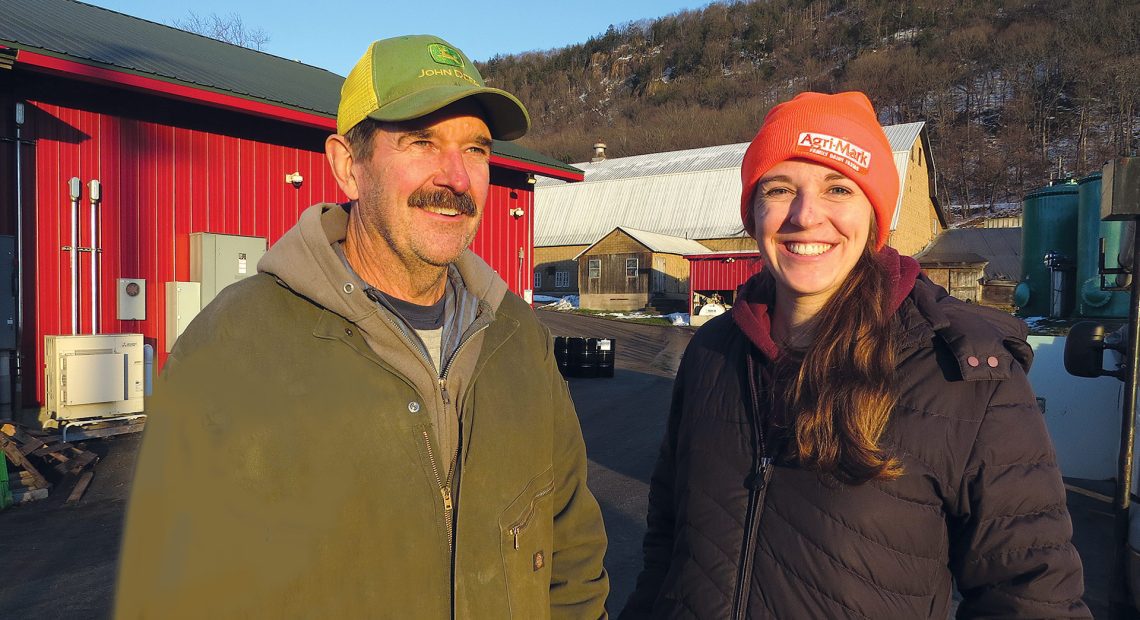
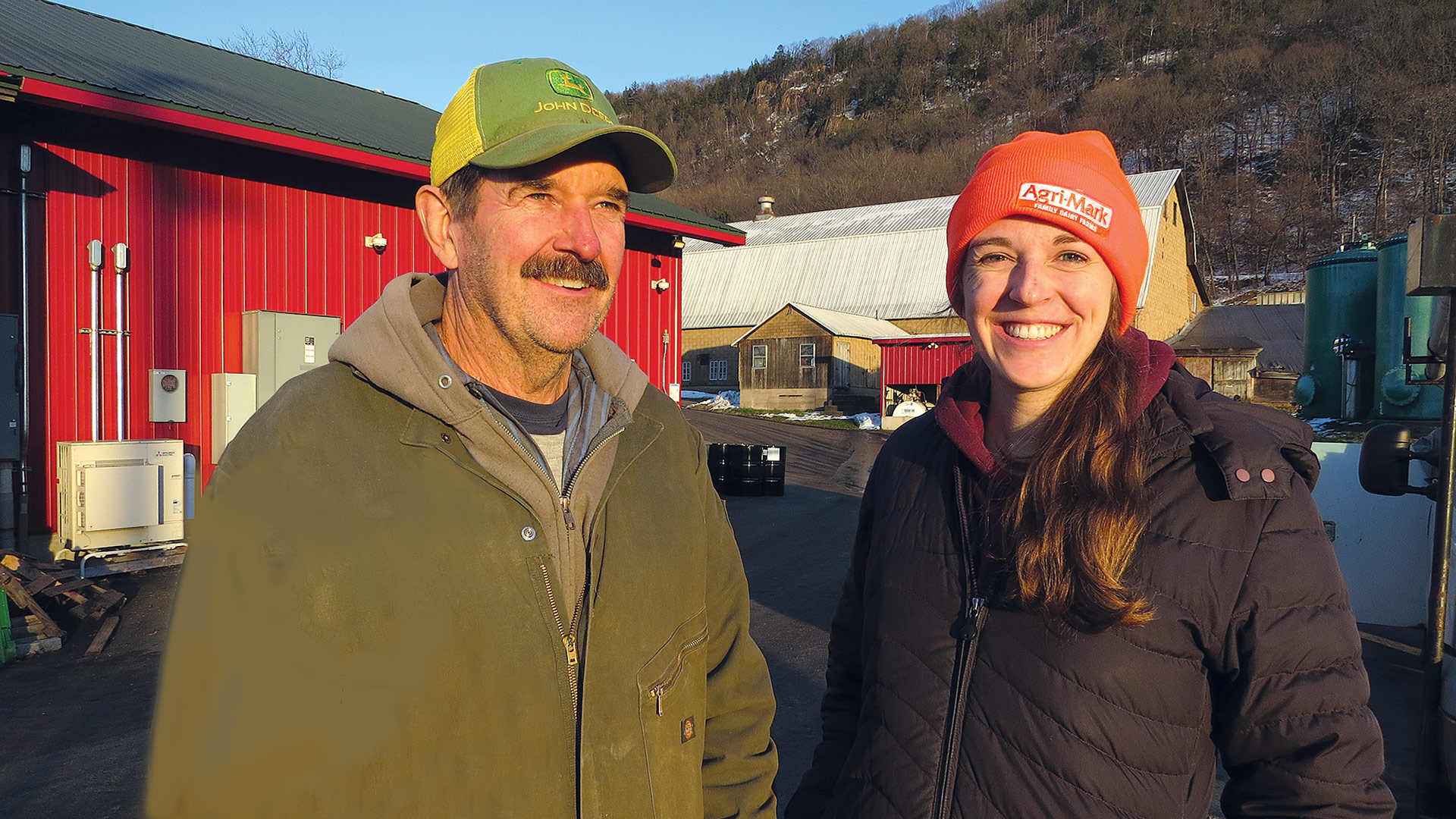
David Barstow and Denise Barstow Manz

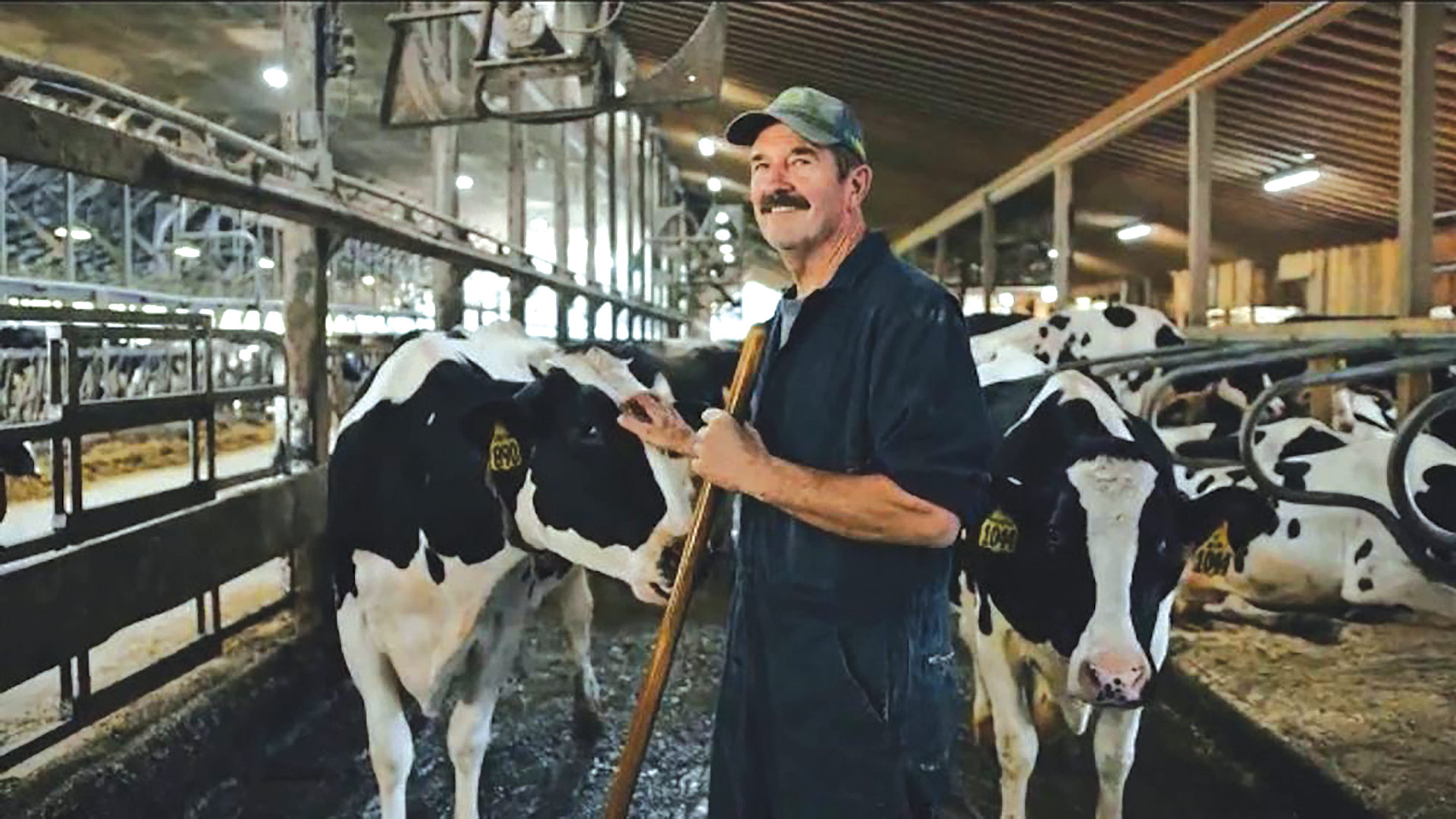
David Barstow and Denise Barstow Manz are part of the sixth and seventh generations now carrying on traditions — and creating new ones — at the family farm in Hadley.
Staff Photo

While she grew up on her family’s dairy farm in Hadley and enjoyed that lifestyle, Denise Barstow Manz had no intention of making the 200-year-old operation a career.

“The farm was a place that was fun, and I had a really good time playing with my cousins, being around large animals, and being around nature — it was an amazing way to grow up,” she recalled. “And then, as I got older and I started to see the numbers and realized that the farm was a lot of hard work and not an easy path to wealth, I thought that maybe I should go and do something else.”

She attended the University of New Hampshire — in part because of its renowned dairy program, although she chose a different major — and would later move west and work for the National Park Service, with stints at Yellowstone and Glacier National Park in Montana. And it was while on these assignments that she began to rethink what she would do with her life — and why.

“It finally hit me when I was in Glacier,” she said. “I was a trail guide, and I saw these people donating money to preserve these places. And I thought, ‘if everyone’s giving to places like this, who’s taking care of the places we come from?’ I thought about who was taking care of the place I came from that has been in my family for more than 200 years — and I wanted to be part of that story.”

And with that decision, Barstow Manz would also become part — and she stressed that word part early and quite often, because this is truly a family affair — of one the region’s more intriguing business stories: Barstow’s Longview Farm.

“This is a good place to raise a family in a multi-generational business — everyone can see how life works; the goal has always been to leave something for the next generation.”

It’s a story that includes most of the elements shaping the growth, evolution, and resilience of the local economy today. That list includes entrepreneurship, innovation, technology, clean energy, tourism and hospitality, and sustainable agriculture.

They all come together in an impossibly beautiful, picture-postcard setting, the historic Hockanum Village, framed by the Connecticut River and the Holyoke Range, scenery that belies the myriad and ever-more severe challenges facing dairy farmers — and all those in agriculture — today.

It was these challenges — and especially very trying times roughly two decades ago that prompted the sixth and seventh generations of the Barstow family to take the motto that has defined this business — ‘looking forward since 1806’ — to new dimensions.

Barstow’s Longview Farm since 1806.

Evolution and diversification have been hallmarks of Barstow’s Longview Farm since 1806.

Indeed, a family that has always embraced change and diversification (much more on that later) has taken some dramatic new turns in recent years, first with Barstow’s Dairy Store and Bakery, and later, through a partnership with Vanguard Renewables to build one of the first farm-powered anaerobic digesters in New England. Meanwhile, the 450-acre dairy farm produces 19,000 pounds of milk daily and is a member of the Cabot Creamery/Agri-Mark Cooperative; almost all of the farm’s milk is supplied to the Cabot/Agri-Mark facility in West Springfield and is made into Cabot butter and other products.

The anaerobic digester (AD), installed in 2013 and expanded in 2016, converts cow manure — the herd at the farm produces some 9,000 tons of it annually — and food waste into electricity, heat, and fertilizer.

It has become an important revenue source for the farm, but it also makes a statement about what the sixth and seventh generations of this family — and those that came before them — stand for.

“The AD speaks to what we believe in as a family — that we need to lower our carbon footprint and play a role in mitigating climate change,” Barstow Manz said, adding that, for this family, sustainability comes in many forms and means many things, including work to ensure that this business will be there for the next generations.

Her father, David Barstow, director of special projects at the farm, agreed. He said that, while many things have changed at this location — in general, but especially during his lifetime — what hasn’t changed is that concept of preserving, and persevering, for those who will continue the tradition.

“My father and grandfather used to talk about working with horses,” he said, adding that change and advancement are constants on the farm; the key is to embrace that change and be at the forefront of it. “This is a good place to raise a family in a multi-generational business — everyone can see how life works; the goal has always been to leave something for the next generation.”

“We got together as a family and decided that we needed to either diversify or get out of farming completely.”

All of the various components of Barstow’s Longview Farm make for an intriguing tour — one that usually includes lunch on site — and Denise and other family members offer many of them, all year long. More than that, these elements collaborate to create an inspiring new chapter to a story that began when Thomas Jefferson was patrolling the White House — and even a century before that, as we’ll see.


Herd It Through the Grapevine

They call it Pasture Day, and it is celebrated the first Saturday in May.

As that name suggests, this is the day when the cows, which have spent the winter in barns, get to head back into the pasture. It’s the unofficial start of spring, and a community event — many visitors, including several families living in the area, will come out, watch the heifers celebrate their first taste of fresh grass, enjoy live music, and have some ice cream.

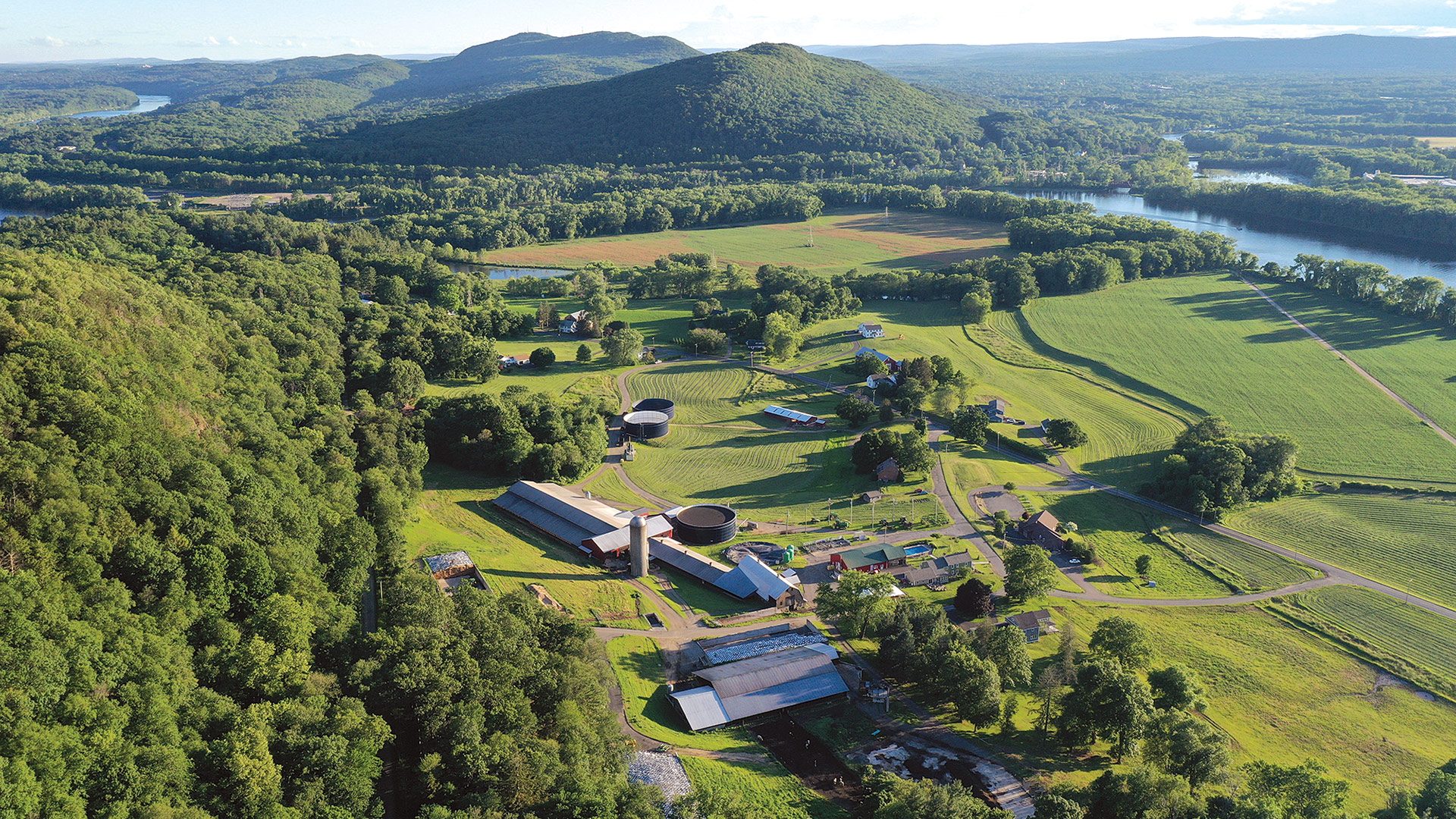
An aerial view of Barstow’s Longview Farm

An aerial view of Barstow’s Longview Farm in the historic Hockanum Village.

“People kick up their heels and have a good time; they sit on the hill and watch,” said Barstow Manz, who doesn’t have a formal title, but serves as the farm’s marketing director. She also handles the farm tours, manages the dairy store and bakery, handles outreach, and acts as the main grant writer. She used to feed the calves, but the farm now has an automated calf feeder, one of many examples of innovation at this institution.

She said Pasture Day is just one of the many traditions that have lived on at this property since Septimus Barstow, originally from Wethersfield, Conn., acquired the property on the bank of the Connecticut River that was first farmed at least 100 years earlier by the Lyman family.

Originally a crop farm that focused on asparagus, as many farms in Hadley did, as well as squash, corn, tobacco, and other staples, the Barstow’s operation eventually evolved into a dairy farm after the advent of refrigeration, which provided an avenue for selling milk wholesale.

By the 1930s, dairy was the primary focus at the farm, she went on, adding that, with a herd of 300 cows, this is small to mid-sized operation, one that is dwarfed by huge operations in this country and overseas.

It’s one of a dwindling number of dairy farms both in Massachusetts and across the U.S., she said, citing statistics showing that this country loses five dairy farms every day.

“And when you lose those farms, you’re losing a lot,” she went on. “You’re obviously losing food and food security for that community. But you’re also losing open space, which is good for wildlife habitat, groundwater, climate resilience, and food security. And you’re losing that heritage and that connection to your past.”

The reason for such attrition is simple. This is a very difficult business to be in, she said, adding that the federal government controls milk prices, and margins have historically been paper-thin.

“Even though it’s very perishable, milk is marketed on a global scale, so we’re competing against New Zealand, we’re competing against California … and it’s kind of a broken system,” Barstow Manz explained. “The only real way for dairy farmers to make more money is to make more milk, which doesn’t always line up with demand. And we have no control over the price of the product we produce.”

There are only 115 dairy farms left in the Bay State, and there probably wouldn’t be any were it not for the Massachusetts Dairy Tax Credit, which enables them to remain competitive, she said, adding that there are six operations in Hadley alone, a concentration that testifies to the quality of the soil in that region.

In the early years of this century, the milk market essentially collapsed, primarily because of oversupply, she said, calling this a scary time for the Barstow farm and all the others in this market.

David Barstow

David Barstow says his family lives by the farm’s motto, ‘looking forward since 1806.’

“The milk market crashed like no one had ever seen or felt before in this country; we were getting $12 per hundred pounds of milk, when our break-even was $22,” she explained, adding that it was a critical time in the history of the farm, or another critical time, to be more precise.

“We got together as a family and decided that we needed to either diversify or get out of farming completely,” she recalled. “And that’s when we started talking about how we wanted to diversify and who we wanted to include. And we knew that we wanted to be thoughtful of what the next generation was interested in doing and what our strengths are.”


A Process of Evolution

Over the next several years, diversification would come in several forms, starting with the dairy store and bakery in 2008, an operation inspired in many ways by Denise’s cousin, Shannon Barstow, who does most of the baking. It’s an operation that would transform the farm into a true destination.

“We’re always trying to be mindful and committed to what’s going to be best for our herd, and also for our land, our workforce, our community, and our food system.”

“We understood that people were going to have to drive here if we were going to get the support and the revenue we needed,” she recalled. “So we did lunch, and we started probably too big for our britches. But we’ve definitely settled into who were are, and we have a really supportive community.”

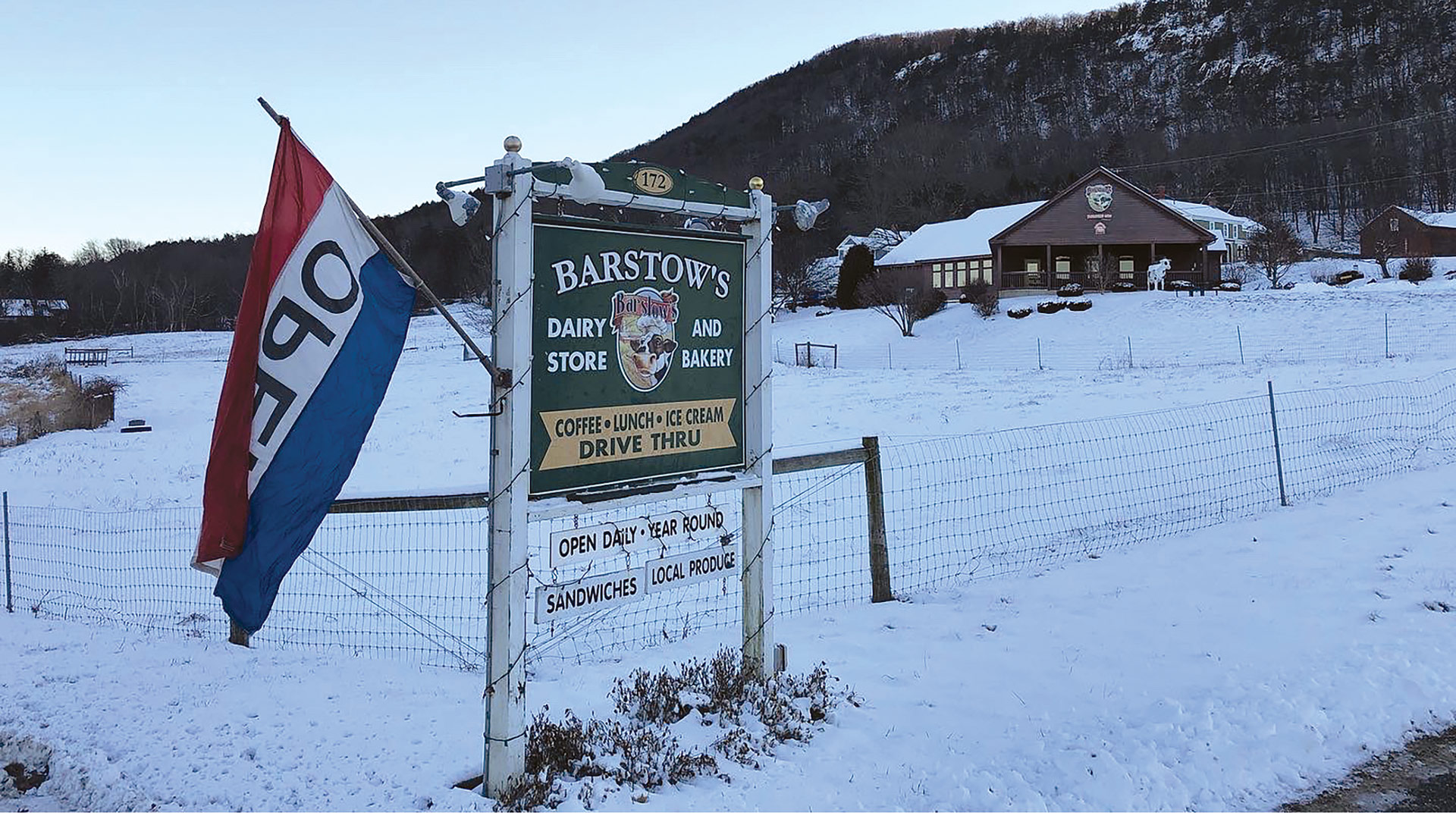
The dairy-store operation and bakery offers both breakfast and lunch as well as a number of prepared foods — and ice cream. The bakery serves up pies, cupcakes, brownies, turnovers, croissants, scones, muffins, breads, and much more. The facility handles private functions, porch parties, and catering. Meanwhile, visitors can buy Barstow’s beef — everything from tenderloin steaks to ground beef — on site. There’s even a drive-thru for those who want or need to grab and go.

The facility draws visitors from around the corner, but also from across the state and beyond, said Barstow Manz, adding that it has become a real destination and a way to take the Barstow name and products well beyond Hadley.

“Most of our regulars are from Hadley and South Hadley,” she explained. “But we have people who come to us from Eastern Mass. because they love our beef, and from the Berkshires because they love our pies; we draw from all over.

Shannon Barstow

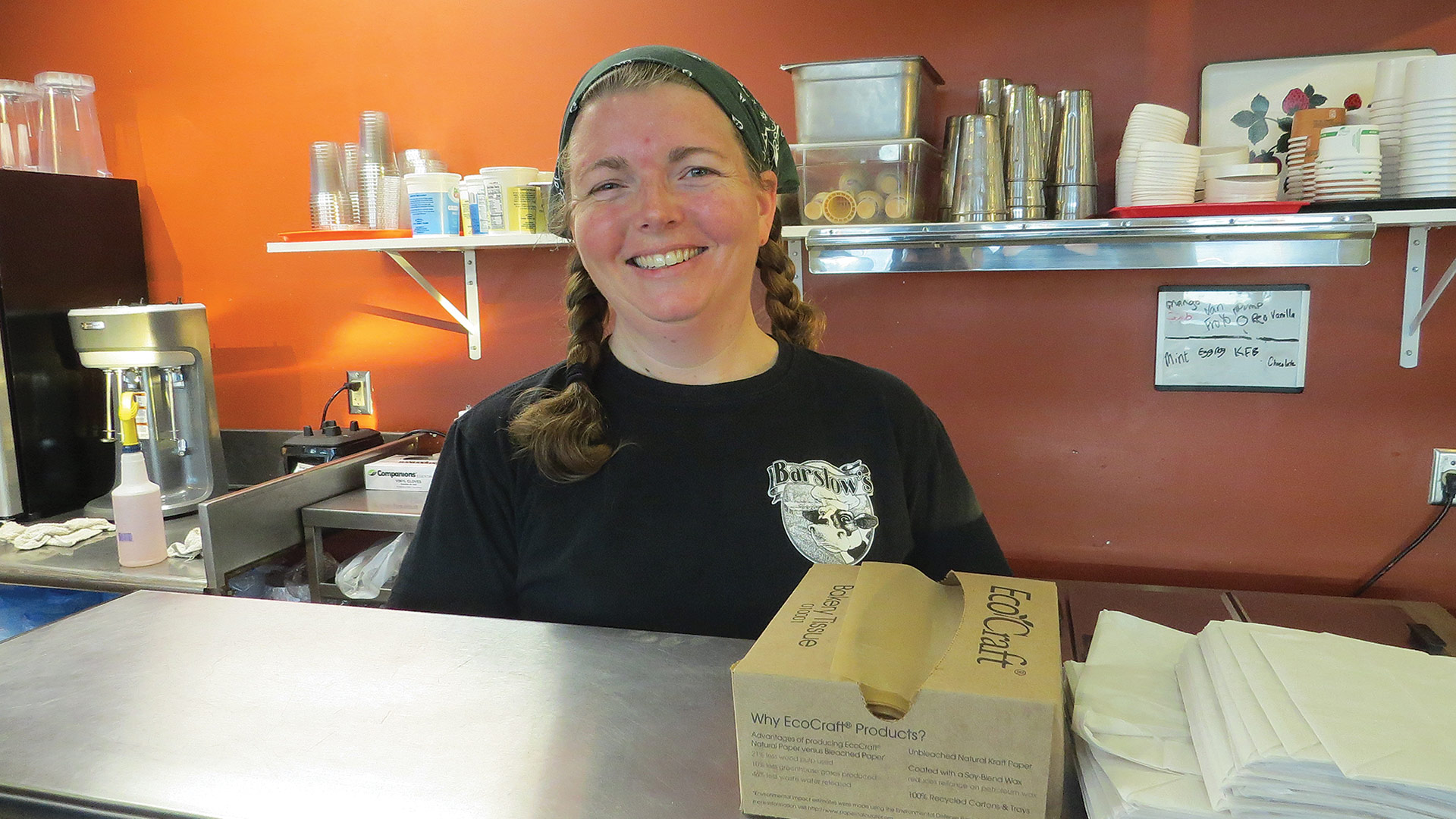
Shannon Barstow does most of the baking at the dairy store and bakery, which opened in 2008.

“We opened this place to save the family farm, and it’s had so many other amazing qualities to it that we didn’t really expect,” she told BusinessWest. “It’s become this time capsule for all these family recipes — most of the stuff that’s in the dairy case is Grandma [Marjorie] Barstow’s recipes. And it’s also a neighborhood gathering space — it’s a space where people can work close to home and also be part of a family farm and a local economy on a small scale.”

Indeed, the dairy story and bakery now employs 15 people and has provided many area young people with their first jobs.

The anaerobic-digestion system, launched at a cost of roughly $6 million, is not a supplier of jobs, but it is, as noted earlier, a supplier of electricity, heat, fertilizer — and also pride for a family that has, through its long history, been innovative.

The conversations about installing such a facility began around the same time the family was opening the dairy store and bakery, she said, adding that the system is another important step toward diversification.

Explaining how it works, she said the system takes the energy potential (methane) out of cow manure and food waste and converts it into enough electricity to power 1,600 homes. The food waste comes from local food producers, including Cabot/Agri-Mark, Whole Foods, the Coca-Cola plant in Northampton, and local restaurants.

The food waste and cow manure, both treated and in liquid form, are put into the digester, which Barstow Manz equated to a large stomach, with the gas from the ‘digestion’ process rising to the top of the nine-story facility. That collected gas combusts in an engine and turns a generator, thus creating electricity.

Heat, one of the byproducts of this process, is used to heat that system, provide hot water in the barns, and heat the eight homes on the property, she went on.

“It’s pretty cool that the system has lessened our reliance on fossil fuels as a business, but also on a personal level in our own homes — we don’t have to pay for oil anymore,” she noted. “We’re also getting a chemical-free fertilizer; that’s because most of what we put in we get back; we just need the gas.”

Like the dairy store and bakery, the AD, the second such system in the state and one of the first in the nation, is a reliable revenue stream at a time when such sources of income are needed in the wake of those razor-thin margins in dairy farming, she said, adding that it became reality through partnerships, such as the one with Vanguard Renewables, and grants from several entities, including the Natural Resource Conservation Service, the U.S. Department of Agriculture, the Massachusetts Department of Agricultural Resources, the Center for EcoTechnology, and other entities.


A Butter Alternative

Looking ahead, Barstow Manz said she and others working at the farm have a simple mission — to live up to their motto and continue looking forward.

“We’re always trying to be mindful and committed to what’s going to be best for our herd, and also for our land, our workforce, our community, and our food system,” she said. “Among the dairy farms I’m aware of, we’re been pretty open to accepting new technology and trying new things. We’re always reading and learning and talking to our vets and to our soil agronomists about what we can be doing better.

“I also think it’s cool that the sixth generation has always been focused on the seventh,” she went on, “and the four of us that work here are constantly thinking about what we’re going to leave our kids — what’s in it for the eighth generation.”

If history is any guide, it will be something that can grow and thrive and be sustainable — in every way imaginable.