Home Posts tagged Healthcare Education
Healthcare Heroes

Healthcare Education

Professor of Biology, Elms College

She Has Impacted Generations of Young Healthcare Professionals


Janet Williams

Janet Williams

Janet Williams traces her interest in biology back to animal care — specifically, horses, which she had as a child.

“And when you have horses, you have to know how to take care of them,” she noted. “So I got involved with 4-H in New Jersey, and they have a big emphasis on horse care and knowing everything about the anatomy and physiology of the horse — knowing about their nutrition, knowing some basic veterinary care. I had a lot of background in that.”

It was something she kept with her when she first majored in journalism in college — and found she was bored. “So I decided to switch to biology. And that was hard because I didn’t have any science background. I did struggle for a while, but then I really liked it and decided to go to graduate school.”

She has one caveat regarding her love for biology, though.

“I would definitely say, ever since I was young, I am a squeamish biologist. I don’t get sick or anything; I just don’t like some things. I like things that don’t bleed, scream, or throw up. In my career, I’ve had to do things like teach anatomy and physiology where there’s a lot of dissections. I’ve had to work with a lot of live animals and do studies, which I’ve not particularly liked doing, through my degrees.

“But after I finished my PhD, I pretty much switched just to molecular work, where everything’s in a test tube and very tiny and there’s nothing that looks really biological,” she added. “It’s much more like chemistry.”

In graduate school, however, Williams did some intriguing work with chickens and the autoimmune disorders vitiligo and alopecia areata; the principal investigator on that project teamed up with a group from Harvard University that was doing work on both vitiligo and alopecia in humans.

“I did a lot of experiments to try to find out whether the tendency to lose pigment was something to do with the immune system or something to do with the genetics of the bird. It turns out that it was a cross between both of them,” she said. “That was fun.”

Other intriguing graduate-school projects followed, notably in the molecular realm, including cloning experiments and DNA-sequencing experiments, before she finished her PhD in zoology at UMass Amherst, where she also earned a Distinguished Teaching Award for the instruction that was part of her doctoral work.

After that, Williams did post-doctoral work with a company called New England Biolabs, where her work with enzymes earned three U.S. patents with the company. During almost a decade there, she got to work with Richard Roberts, who earned a Nobel Prize in the mid-1990s.

“It was quite an honor working there with him; he was a very interesting man,” she told BusinessWest. “I even have a publication with him, so that was really cool too. Then I got married, and New England Biolabs was about two and a half hours away, so I couldn’t stay there. But Elms College had a position open, so I came here and taught anatomy and physiology and genetics.”

That was 30 years ago, and she hasn’t looked back.

“It was really fun. I’ve always enjoyed teaching, and you don’t get to teach very much when you’re doing research,” she said. “So it was really fun to get back into the classroom again.”

More importantly, Williams has been able to implement new academic programs and generally influence students moving through the college’s well-regarded nursing and health-science majors, while also connecting them with area employers and boosting the region’s healthcare workforce.

“Janet is innovative, always reaching out to our local healthcare industries to see how Elms can better serve the community.”

“During her tenure at Elms College, Janet has embodied the health-sciences program at Elms,” said Julie Beck, dean of the School of Nursing. “She teaches biology, which extends itself to other health-related fields, such as pre-med, physician assistant, pre-PT/OT, and pre-chiropractic studies. Janet is innovative, always reaching out to our local healthcare industries to see how Elms can better serve the community.”

As a professor with impact — three decades worth — Williams certainly merits being chosen as this year’s Healthcare Hero in the category of Education.


Into the Real World

Williams approaches her role with a sense of gratitude for being able to shepherd and mentor students as others did for her during her college and early-career years.

“There’s a huge difference between my previous position as a research scientist and being in academia, being a faculty member, and teaching and mentoring students — it’s very, very different,” she said. “But at the end of every day, I feel great because some student has probably come up to me and said, ‘I never understood that, and today I understand it.’ Or they tell you something exciting; maybe they got a letter and have been accepted somewhere. It’s the greatest feeling, and you feel like every win for them is a win for you.

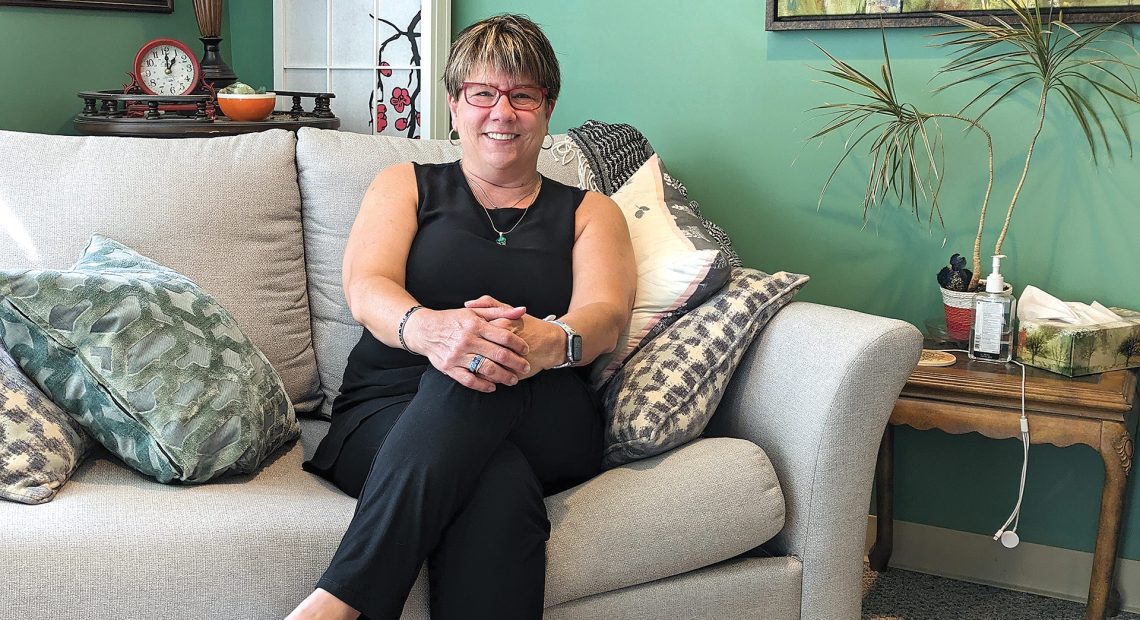
Janet Williams calls herself a “squeamish biologist”

Janet Williams calls herself a “squeamish biologist” who prefers molecular work over, say, dissections.

“But then, every time they are struggling, you’re struggling with that too — especially when you know that they’re a great person and they’d be a great doctor and you feel like they just need a chance, and you just hope somebody opens the door for them,” she went on. “But they find their way. Sometimes medical school might be the pie-in-the-sky goal, but some of them find they may need to think about something else — maybe dental school, or podiatry, or physician assistant … there are so many wonderful options out there. That’s the thing about this kind of path — there are many different ways they can go from it.”

Since most of her students are going into some branch of healthcare, she became the pre-med advisor as well.

“I had to show students the pathway of how you get from an undergrad program into an MD or DO program, or chiropractic, or pharmacy, or physician assistant, or dental school, or veterinary school,” she explained, adding that, around 2008, she started something called the post-baccalaureate pre-medical program.

“That’s kind of an odd program. It’s where students have already gotten a bachelor’s degree — they might have studied pre-med, or they might have studied something else. So they could either retake courses that they’ve already taken to get better grades and to understand it better, or maybe they majored in English and didn’t have any pre-med prerequisites, so they are taking those courses for the first time.”

That program has drawn students who graduated from places like Amherst College, Princeton University, and other schools where they didn’t study in the medical field, but wanted to expand their career options.

“Those students would do well in our classes, and then they would take the MCAT, do well, and go off to medical school. It was really exciting because, all of a sudden, we were bringing these students from all over the place — not just the Northeast, but California, Florida, Texas, Uganda, China, you name it. It was amazing.”

More recently, she launched master’s programs in biomedical sciences and biotechnology, which many students have taken on their way to medical, dental, veterinary, or physician assistant (PA) programs.

Many Elms students also receive clinical training at the region’s many hospitals and other institutions, and Williams has helped forge those connections over the years.

“A student really can’t get into medical school or dental school or PA or anything without having experience with patients,” she said. “It’s great because you get paid, but you’re also learning, which supports your career goals. We’ve had a lot of students do that; this area has been fantastic supporting our students in their progression.”

“It was really exciting because, all of a sudden, we were bringing these students from all over the place — not just the Northeast, but California, Florida, Texas, Uganda, China, you name it. It was amazing.”

More recently — in the past year, in fact — Elms also launched a phlebotomy class. “This is where students learn how to do blood draws. We’ve had a lot of interest from not only our students who want to be pre-meds, but also the nursing students, because the nursing students find that, if they have this skill, they’ll be a little bit more valuable and a little bit more marketable.”

An EKG certification course may be on the horizon as well. All these efforts, Williams noted, translates into strengthening the local healthcare workforce.

“Interestingly enough, some of our students that have come here all the way from California stay here. They don’t even want to go back. They like the Northeast.

“We’re also very fortunate that, in this local area, we have a lot of physician-assistant programs. We have Assumption, Springfield College, Westfield State, St. Joseph’s down in Hartford, and also Bay Path, which has accepted a lot of our students. That’s been really good, too, because there are so many local opportunities for students to get into PA programs. And then we’ve had a lot of students interested in medical school.”


Giving the Full Picture

One advantage to studying at Elms, Williams said, is access to ethics courses through Dr. Peter DePergola, whose many titles at the college center around bioethics, religious studies, and medical humanities, and who was honored as a Healthcare Hero himself in 2018.

“So many of our students take classes with him, and they learn so much from him. And that is such a critical aspect of really doing well in healthcare,” she said. “He just rolls out a scenario and puts you right into the difficulties of understanding the ethics and concerns of a situation, which is a great thing for students because it’s going to happen to them when they’re out there practicing medicine.”

But there are many, many other challenges in healthcare, and Williams doesn’t sugarcoat them.

“I’m the devil’s advocate. I try to paint the worst possible picture for the students so that they really understand what they’re getting into, because medicine isn’t easy,” she told BusinessWest. “We’re not just talking about the academic part of it; we’re talking about the other parts — working with people in healthcare is not easy. Veterinary is even probably harder because you’re not only working with people, but you’re working with people and their animals, so that’s that’s really a difficult field, and not everybody has insurance to cover the bad things that happen to their animals.

“So I’m trying to breathe a little reality into students so that they don’t just see medicine as what we see on TV,” she went on. “That’s also what’s nice about getting them out to volunteer or work in some of our local practices, because they’re really seeing it; they see the struggles they’ll face in healthcare and medicine.”

But Williams believes in the opportunity for the right person to make a difference in healthcare, whether it’s locally or far beyond Massachusetts. Beck, in nominating her, called her a “valued asset” at the college — and much more: a truly impactful Healthcare Hero.

“I do really love working with students every day,” Williams said. “When you get to work with students every day, they always bring something to you. The students have been really amazing.”
Healthcare Heroes

Clinical Psychologist; Assistant Professor of Graduate Psychology, Bay Path University

She Impacts Lives — and the Next Generation of Mental-health Professionals — for the Better

Kristina Hallett

It’s not easy to cover everything Kristina Hallett has done in her wide-ranging career in one story. At least, not cover it in a way that fully conveys her impact.

Her past titles convey some of it. Director of Brightside Counseling Associates and then director of Children’s Services at Providence Behavioral Health Hospital, both in Holyoke. Supervising psychologist at Osborn Correctional Institute in Somers, Conn. Director of Psychology Internship Training at River Valley Services in Middletown, Conn. And currently, associate professor in Graduate Psycholology and director of Clinical Training at Bay Path University.

Oh, and she’s maintained a private psychotherapy practice in Suffield, Conn. for the past quarter-century.

There are some common threads.

“Dr. Hallett’s career spans over 25 years, during which she provided invaluable psychotherapy, consultation, and supervision to medical and mental-health professionals, addressing myriad relationship and major life issues. Her expertise in complex trauma and dissociative disorders is instrumental in supporting and empowering those facing significant psychological challenges,” wrote Crystal Neuhauser, vice president of Institutional Advancement at Bay Path, one of three people who nominated Hallett as a Healthcare Hero.

Just as importantly, “she is a guiding influence in shaping the next generation of mental-health practitioners. Her commitment to education and mentorship showcases her passion for instilling excellence, compassion, and cultural competence in students. She is especially passionate about guiding under-represented caregivers into the profession to help underserved communities see themselves in their mental-health professionals.”

That’s a mouthful, but it’s important to understand the generational impact of Hallett’s work — not only helping people move through often-severe challenges and trauma toward a happier, healthier, more fulfilling life (which she accomplishes as a teacher, therapist, executive coach, author, speaker, podcaster, and more), but she’s helping to raise up the next wave of mental-health professionals to do the same, at a time when the needs are great.

“When we’re talking about mental health, it’s about connection, and there are different ways to make a connection. And having a role model who look like you and who understands you is really important.”

“I’m just ecstatic about our program,” she said of her role at Bay Path, where she started teaching in 2015. “When I came, we had maybe 50 students. Right now, in our program, we have 280-plus students. This summer, they did a 100-hour practicum with us before their 600-hour internship out in the community. We had 62 students in practicum this summer, which is a logistical challenge, but we’re really able to help shape them, educate them, and give tools and resources to the next generation.”

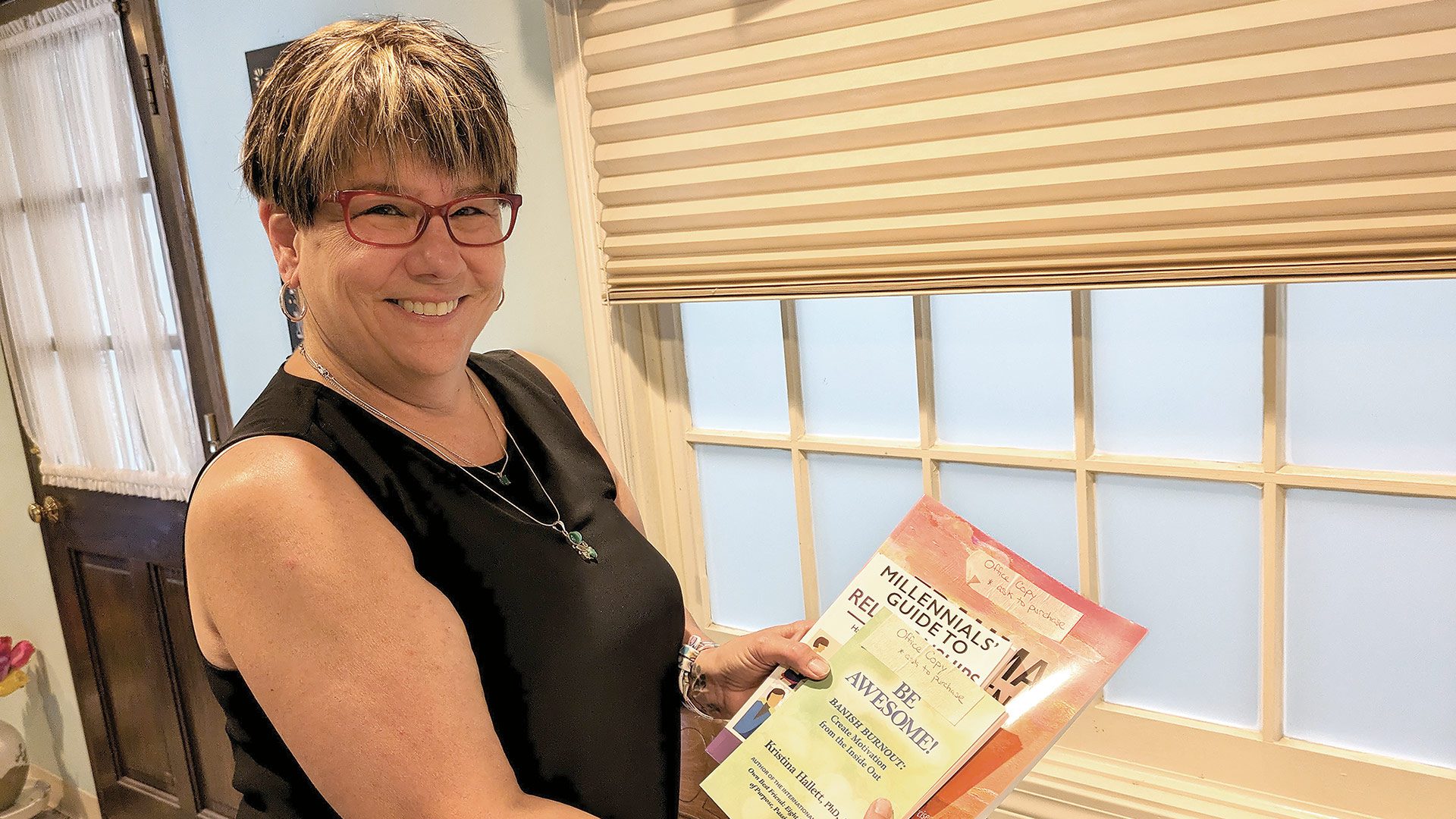
Kristina Hallett’s books

Kristina Hallett’s books have delved into topics ranging from relationships to banishing burnout.
Staff Photo

Meanwhile, Hallett’s bestselling books, Own Best Friend: Eight Steps to a Life of Purpose, Passion, and Ease and Be Awesome! Banish Burnout: Create Motivation from the Inside Out, inspire personal growth and empowerment, while a co-authored workbook titled Trauma Treatment Toolbox for Teens is a resource for young people facing trauma-related challenges, and her contribution as a co-author to Millennials’ Guide to Relationships: Happy and Healthy Relationships are Not a Myth! reflects her commitment to enhancing the lives of diverse populations.

As an executive coach, she helps participants find lasting change in the areas of burnout, stress, motivation, and self-confidence. And her podcast, “Be Awesome: Celebrating Mental Health and Wellness,” provides hope and guidance to listeners, fostering an environment where seeking help and prioritizing mental health is normalized.

As noted, it’s a lot to take in, but Hallett is energized by the opportunity to impact so many lives in so many different ways. The opportunity, in fact, to be a Healthcare Hero.


Connected to Kids

Hallett’s private practice offers individual and family treatment, with some intriguing specialty areas, including psychotherapy for medical and mental-health professionals, military personnel, and first responders; substance abuse; mood disorders; LGBTQ clients; trauma recovery; and treatment of complex trauma and dissociative disorders.

It’s a far cry from her earliest goal in life, which was to be a pediatrician.

At Wellesley College, where she was a biology major in a pre-med program, she took a psychology course “for fun” — and found the topic interesting, so she added a double major in psychology. “My professors were like, ‘oh, you should go into psychology.’ And I said, ‘no, no, no, I’m going to be a pediatrician … right?’”

During her senior year, as she took her medical college admissions tests, Hallett found herself in an interview, being asked, ‘why do you want to go to medical school?’ And something clicked.

“I had this experience where my mouth kept talking, but a part of my brain said, ‘yeah, why do you want to go to medical school?’”

Her answer was to enroll at UMass Amherst — in a graduate psychology program.

That’s not to say she wouldn’t work with children, adolescents, and families, though. At her earliest career stops, she had plenty of opportunities for that, from her stint as regional program supervisor for the Key Program in Springfield from 1991 to 1995 to her roles with Brightside Counseling Associates from 1996 to 1998 and Providence Behavioral Health Hospital from 1998 to 2003.

“I loved the idea of working with adolescents because, while I was young, still in my 20s, I felt like they’re ripe for change; you can be honest with them … it’s a very real interaction, while adults are just stuck in their ways,” she said, adding quickly, “I don’t think that way anymore.”

That’s because she’s had plenty of experience working with clients of all ages. In fact, her next stops — at Osborn Correctional Institution from 2003 to 2005 and River Valley Services from 2005 to 2015 — broadened her experience dramatically.

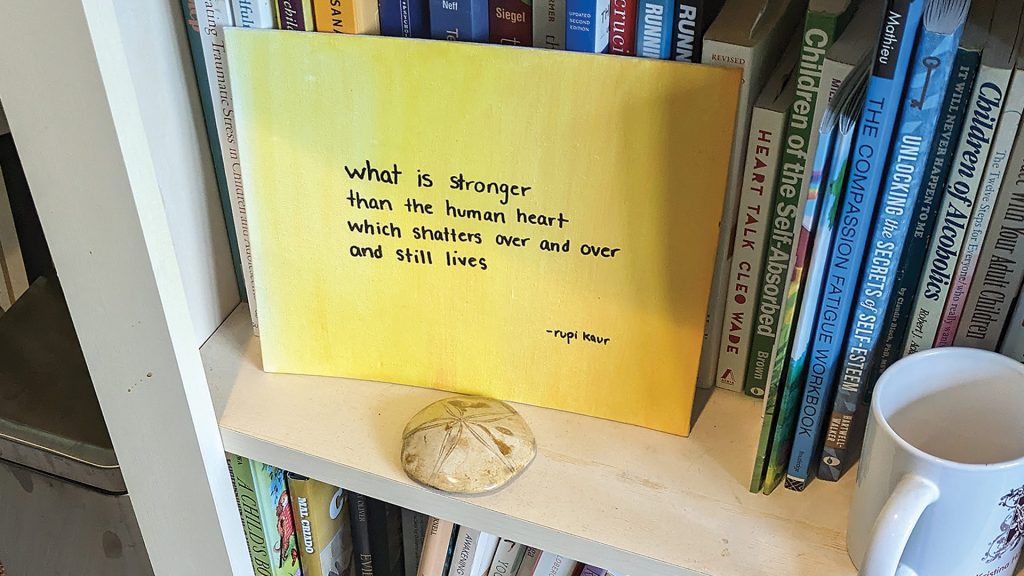
Kristina Hallett’s office

Kristina Hallett’s office in Suffield, Conn. is filled with photos, artwork, and mementos from her interactions with patients.
Staff Photo

“So the first half of my career was children and adolescents, but really centered on adolescents,” she said. “And it’s unusual for someone to be running an outpatient mental-health clinic and running inpatient children’s services, and then working in a prison.” At the time, she added, Osborn housed 2,000 male inmates and also arranged schedules for mental-health workers for some other local prisons.

Years later, while working at River Valley, Hallett had a yen to get into teaching, so she joined Bay Path as an adjunct professor in 2015, which quickly led to part-time work and then a full-time opportunity. It sure beat the commute from Suffield to Middletown, but there were other, more important reasons to make the jump.

“Bay Path had just started its clinical mental-health counseling program, and they were going to expand. And I thought, ‘yeah, I’m ready to do this full-time.’”

Her first title was coordinator of clinical training, which became director of clinical training. And this past spring, when the program director left, she took over that role.

“I’ve been responsible for bringing in a lot of faculty over the last few years, and this summer alone, I brought in four faculty who are former graduates of our program, all coming from different perspectives,” she told BusinessWest. “I like to bring back our graduates because they know the program, and we want to support them in their career. I’m trying to create a pathway for our students, post-graduation, to continue their own growth and learning.”

A couple years ago, Hallett’s department procured a behavioral-health workforce and education training grant through the Health Resources and Services Administration, to support and build up the young mental-health workforce, but also to better integrate these professionals into medical settings.

“So, you have a medical office with physicians, and then you have an embedded clinician,” she explained. “You come in for your annual physical, maybe you’ve been feeling a little down, and your physician says, ‘oh, you know what, I’ve got Stacy here who can maybe talk to you about that.’ And Stacy talks to you and sees if there are resources available to help you — therapy or whatever. So that’s a newer model that’s beginning to happen, which is great.

“It’s always about increasing access, because there’s a huge mental-health crisis, a huge need, a huge waiting list,” Hallett went on. “So anything to increase the workforce is great.”

In 2023, the third year of the four-year grant, Bay Path was able to fund 36 students to the tune of $10,000 each. “So 36 students are working full-time, many have families, and they’re still trying to get a master’s degree and go into the field. As you can imagine, it’s really hard to do all that and then work 600 hours as a clinician. So the $10,000 is phenomenal.”

She recently applied for another grant, with a bigger stipend, for students going through their internships and want to work in community-based clinics, either with services from the Department of Mental Health or a majority MassHealth clientele. “So the people who need the services are going to get good services,” she said, while, again, cultivating the next generation of professionals. “I am so excited about it.”


Heart of a Teacher

It was Hallett’s love for educating people, in fact, that led her to finding other ways to communicate.

“I love what I do one-to-one, and I love teaching. So what other ways do I have to make an impact with things that people really need to know?” she said. “The podcast and the books and the speaking are just ways to share messages and really say, ‘there are things that we can do to help ourselves, to feel a sense of agency, even when the world is sort of going crazy around us, and when there are really difficult challenges that we don’t necessarily have any control over.”

So much of her work, she said, has been with community-based organizations because she cares about access to mental health, especially for the underprivileged and underserviced. “I want to support and encourage an increase in a truly diverse workforce because that’s who we are. People need to see people like themselves. It’s not that they can never talk to people with differences; of course they can. But when we’re talking about mental health, it’s about connection, and there are different ways to make a connection. And having a role model who look like you and who understands you is really important.”

As for her decades of work with stress and trauma, in particular her work with clients from the military and first-responder communities, it started early on, working with adolescents in difficult situations.

“There are horrific things that humans do to each other that are certainly hard to live through,” she said. “They’re hard to hear about, and they’re hard to know. So I try to counteract that darkness with some kind of support. People who have gone through really horrible things deserve someone to stand in the witness of that.”

For a while, in the pre-COVID years, Hallett said, she was primarily working with medical and mental-health professionals in her practice. “These are small communities; it’s hard to find providers who work with providers. So that just sort of evolved. I had already started working with veterans and first responders, and then COVID hit, and that was a time when there was so much need.”

She no longer works with teens, and the goal for her adult clients is to get them back out living their lives and doing the work that’s meaningful to them. “But if something comes up at another point in time where something new has happened, you can come back. We create a relationship that allows you to come and go. I’m always working to create these longer-term relationships.”

And, not surprisingly, she has applied that passion to her other career at Bay Path, helping to create an advanced trauma certificate in her department.

“As practitioners in the field, we’re always asking, ‘what’s the latest? What’s backed by science? What do people need to know? What do we wish we knew when we were in school? And how do we continuously support the growth of the next generation?’” she said. “Because we need them.” n