Home Posts tagged Healthcare Provider
Healthcare Heroes

Healthcare Provider

Occupational Therapist, Baystate Medical Center

She Brings Passion, Compassion to Her Work in the NICU
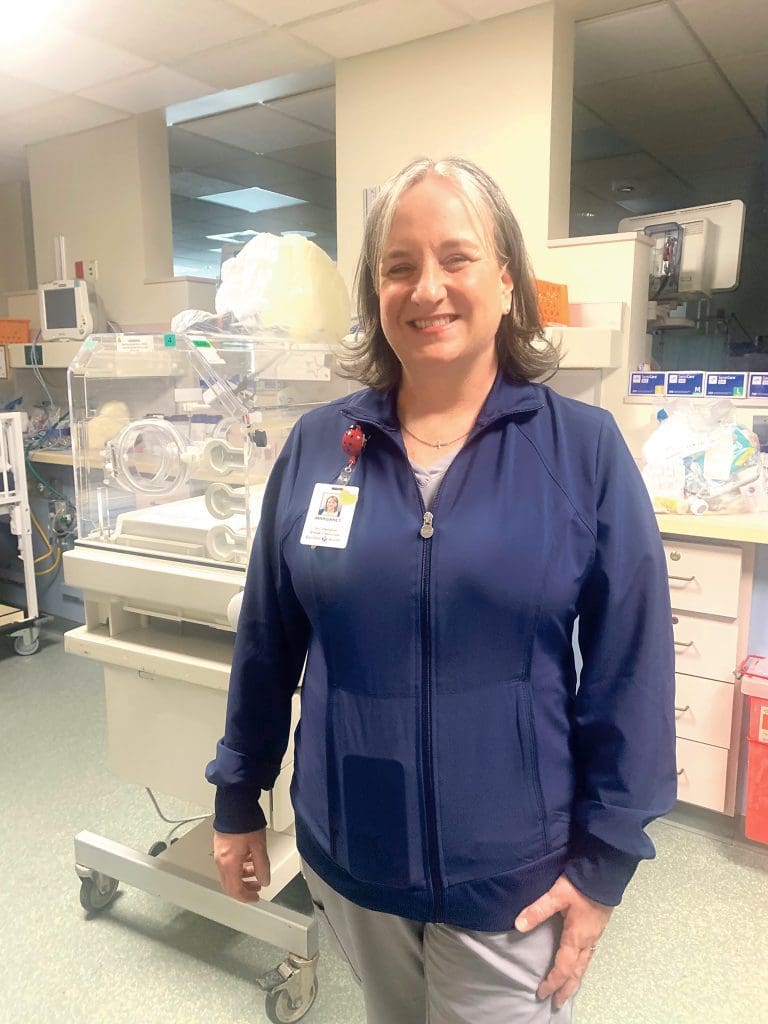
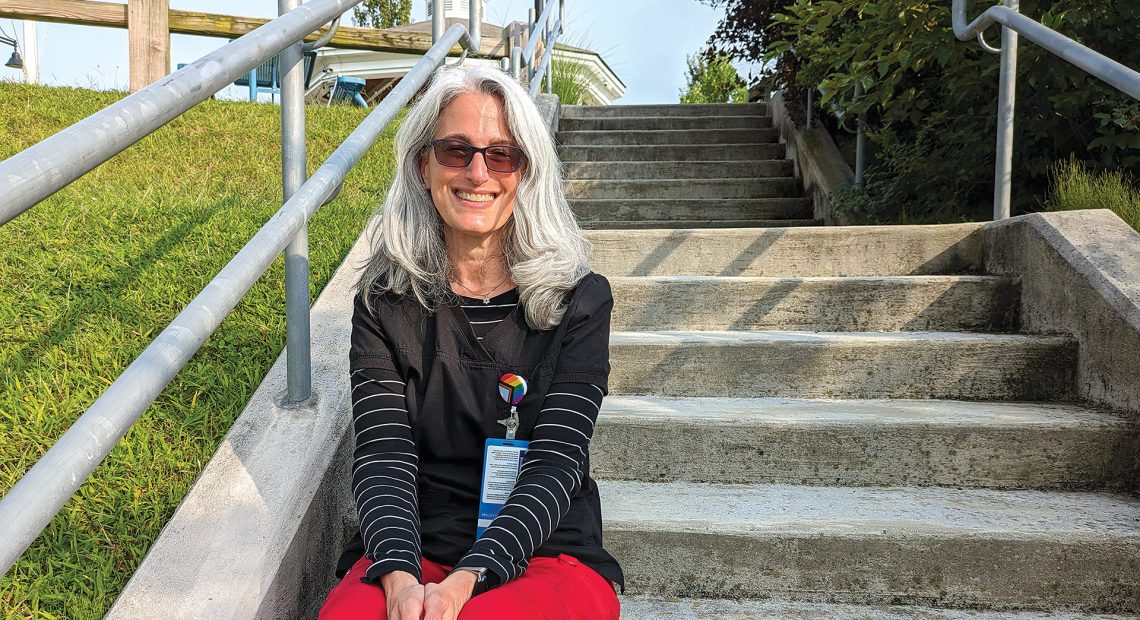
Margaret King

Margaret King

As she talked about her work as an occupational therapist in the Neonatal Intensive Care Unit (NICU) at Baystate Medical Center, and why she believes she was “born” to be in this setting, no pun intended, Margaret King flashed back almost 40 years.

As King tells the story, she and her mother were visiting her father, then a patient in a hospital in Texas, when her mother suggested they swing by the maternity unit and look at the newborns. And they did.

“I lit up, and I clearly remember my mother saying, ‘you should work with babies someday — I think you’d be really good at it,’” she recalled. “I have carried that with me, and I truly feel like this is what I was put on this Earth to do.

“I feel like I have the best job in the world,” she went on. “It’s a privilege to be able to do this work; these babies … they just melt your heart.”

King, a Healthcare Hero in the Provider category, has worked as an OT in pediatrics, and mostly in the NICU, for most of her career, and at Baystate for the past 16 years. And while this unit — for babies born prematurely (as many as 10-12 weeks prematurely) and babies with serious medical conditions — is not what most people think of when they hear the words ‘occupational therapist,’ there are many aspects to this assignment, she told BusinessWest.

“Occupational therapy, by definition, is about improving someone’s ability to participate in life skills,” she said. “Those are the jobs of living that we refer to, and a baby has jobs of living, too. They need to be able to grow correctly; they need to be able to sleep and rest because that’s also how they grow; they need to be able to eat, whether that’s bottle or breastfeeding; and they need to be able to bond with their parents.”

As she helps newborns with these jobs, King works in concert with other professionals in the NICU to essentially bring light to a unit kept dark to replicate conditions in the womb.

And, according to those King works beside, she is the consummate team player — supportive, always positive, and often serving as a mentor to younger OTs and other professionals.

“Maggie is known for her smile, kindness, patience, and resilience,” said Erin Jarosz, Rehabilitation manager for Baystate Health, who nominated her for this honor. “She is passionate about her care for babies, and she works closely with families to be able to best support the physiological needs of their babies and improve the babies’ abilities to participate in daily life activities.”

Olivia Fernandes, a Baystate Rehabilitation speech pathologist, agreed.

“Not only is Maggie a phenomenal clinician, she truly is a wonderful person,” Fernandes said. “She is a leader within our department and treats everyone with respect and kindness. I have looked up to her throughout my time at Baystate as I always value her guidance and advice.”

These qualities resonate not only with co-workers, but also with the parents and other family members of NICU patients, none of whom expected their child to be in this unit and all of whom agonize over each day spent there.

“This is not where they wanted to be — they didn’t want to meet me or anyone else in the NICU, so you have to start from there,” said King, adding that the unique setting, coupled with the emotional nature of the work, leads to relationships that last for years after the baby has gone home.

“I run into so many parents at the grocery stores, Target, places like that,” she went on. “That’s always sweet; that was such a unique, difficult time for them, and that’s why we become family to them during that stressful time, so it’s exciting to see them.”

King was — and still is — a part of hundreds of families across the region, families touched by her passion, warmth, and competence. Families who would say she is more than worthy of being called a Healthcare Hero.


Baby Steps

Whenever a baby goes home from the NICU, it’s an event, a celebration, King said. “It’s always a big thing, especially for the parents. And for me, if I’ve worked with them a lot, it’s just a very exciting day.”

And when a baby who has been there several months leaves those confines, there’s an even bigger sendoff, with pom-poms and the theme from Rocky playing in the background, a nod to the perseverance and fighting spirit of that child — and his or her family.

“She is passionate about her care for babies, and she works closely with families to be able to best support the physiological needs of their babies and improve the babies’ abilities to participate in daily life activities.”

King said it happens regularly, sometimes a few times a day. But it never, ever gets old.

“There’s lot of tears and hugs,” she noted. “Every situation in the NICU is meaningful and challenging, but some of those babies have been here for months, and it’s a big feat to get out of here.”

Helping babies ‘get out of here’ might be King’s unofficial job description — and, as she noted earlier, work she was born to do, even if it took a while to realize that.

Maggie King, center, with Rebecca Hillenbrand, left, and NICU Manager Stephanie Adam

Maggie King, center, with Rebecca Hillenbrand, left, and NICU Manager Stephanie Adam, has been called the consummate team player.

Indeed, she did a music-therapy internship while in high school, and during that time, she pulled an occupational-therapy journal out of the trash and remembers saying, “what’s this?”

“I starting learning about occupational therapy and really never looked back,” she said, adding that she focused on that specialty while studying at Texas Tech. She started in Texas, first in adult rehab and then pediatrics, but eventually relocated to New England (and Baystate) to be closer to family.

And for most of her career, the NICU has been … well, home.

It’s a unique setting, obviously, one where the patients are small, cannot talk — although they can certainly communicate — and, in many cases, their eyes are not yet open.

But they still need occupational therapy, and King loves to talk about that subject.

“Even when babies that are tiny — the 23-weekers — one of my jobs is to help with the positioning of that baby so their arms, legs, and bodies grow properly, but also in a way that keeps them calm so they can sleep and keep their vital signs stable so they can be medically well,” she explained.

“I love working with adults, and the main difference with them is that you can communicate with them and have a give and take, and they can work on following directions. With babies, you have to be really good at following their cues to know what they like and what they don’t like.”
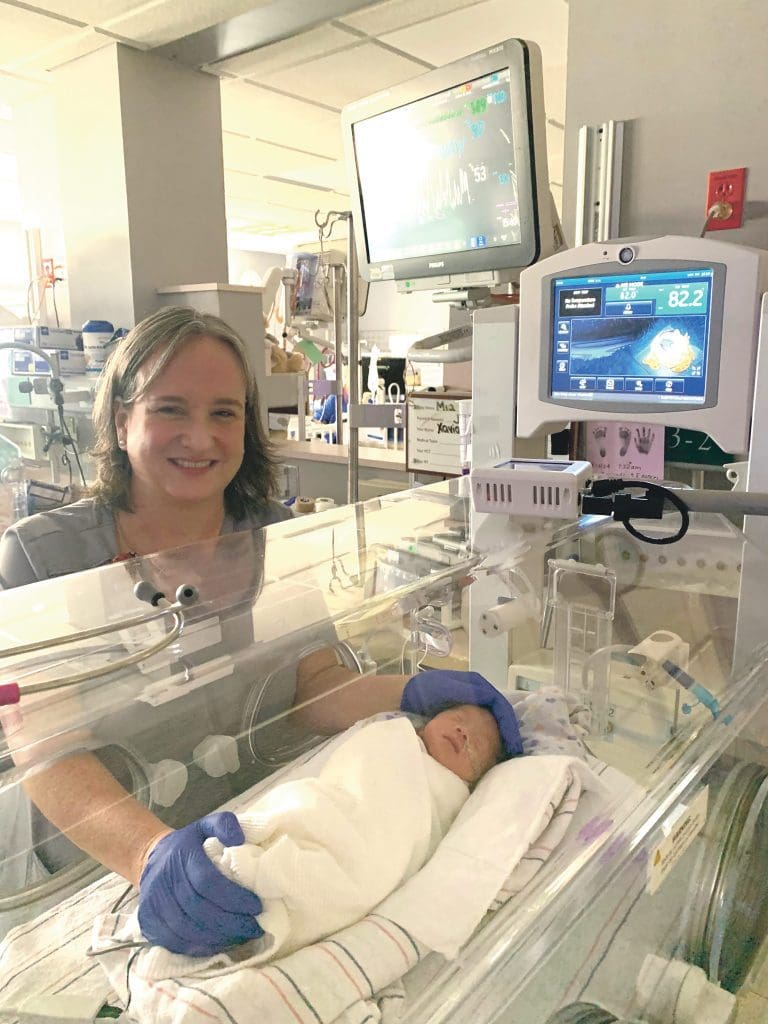
With premature babies, she noted — and, really, all babies in the NICU — she and other team members work to keep those babies in the same position they would be in if they were still in the womb.

“As an occupational therapist, I provide positioning aids that we put the babies in to provide support and containment — we try to recreate the womb,” she explained, adding that this is why it’s kept dark in the unit. “For babies, looking at the light is very stressful; it can actually raise their blood pressure and elevate their heart rate, just because it’s too light. And it’s my job to protect babies from those stressors.”

There are many other aspects to this work beyond positioning, she said, listing everything from supporting the baby during painful procedures, such as putting in an IV, to help with feeding, which is obviously a large part of her work.

When asked what she likes about OT, King said it’s the ability to “work on a little bit of everything with a person, things that are meaningful to them, things that are necessary for life, and you get to establish relationships with people. It’s very unique, and it’s special, and you get to give a lot of yourself to make things happen.”

She stressed that all that is true even if the patient is a few days old and/or several weeks premature.

“I love working with adults, and the main difference with them is that you can communicate with them and have a give and take, and they can work on following directions,” she explained. “With babies, you have to be really good at following their cues to know what they like and what they don’t like.”

Maggie King says there are anywhere from 30 to 50 babies in the NICU at any given time

Maggie King says there are anywhere from 30 to 50 babies in the NICU at any given time.

They don’t like light, and they’re also put off by sounds, everything from phones ringing to isolette doors closing, she said. “Just small sounds to us can be painful to these babies, and we know that because of their vital signs.”

And while her primary work is with patients, King is also there for parents and other family members, who are obviously under a good deal of stress.

Parents of NICU babies are not ‘visitors,’ per se, as in a traditional hospital setting; they can come whenever they want and stay as long as they want.

“We do encourage parents to have rest breaks, take a walk, go get some lunch, maybe go home,” she said, adding that helping parents through this extremely difficult time is just one of myriad rewards that come with this job.


Born Leader

King told BusinessWest that the tiny patients in the NICU — there are between 30 and 50 at any given time — stay in that unit anywhere from a few weeks to several months, depending on how prematurely they were born or the severity of their condition. But the relationships forged with those patients and their parents last for years, if not decades.

Indeed, in addition to the yearly holiday cards she receives from the families she’s worked with, there are pictures sent as those former patients grow older, as well as invitations to their birthday parties — a steady stream of them, actually.

So many that King “sets boundaries,” as she put it. “I’ll go to a few of them. If I went to all of them, I’d be going to about 50 birthday parties a month.”

King is on those birthday-party invite lists because parents remember her, and they remember all that she brought to the NICU every day, from her competence to her passion to the smile that seems permanently etched on her face.

Those she works with see these same things every day, and they consider her the consummate team player: supportive, encouraging, and, in many ways, a mentor.

“Maggie has been consistently supportive and proactive in helping me work in this challenging, rewarding setting,” said Dan Lemaire, another Baystate Rehabilitation OT. “The NICU is, after all, an intensive-care unit; the patients are very involved medically, and Maggie’s experience and guidance has been essential to me in navigating this practice area. She has helped me understand an OT’s role amidst highly trained nurses, neonatologists, and other specialists. She has shown sensitivity and awareness regarding my skill level and readiness to approach different patients, and has guided me to appropriate training resources. Not least of all, Maggie is simply fun to work with.”

Upon reading or hearing such comments, one thing becomes abundantly clear: Maggie King’s mother, who died just a few years after that visit to the maternity ward in that Texas hospital, was right. Her daughter is really, really good at this, meaning work not just with babies, but babies in an intensive-care unit — and with parents who are under more stress than perhaps at any other time in their lives.

In such a setting, someone must bring to their job passion and compassion, and they need to bring it every day.

Maggie King does, and that’s why she’s a Healthcare Hero.
Healthcare Heroes

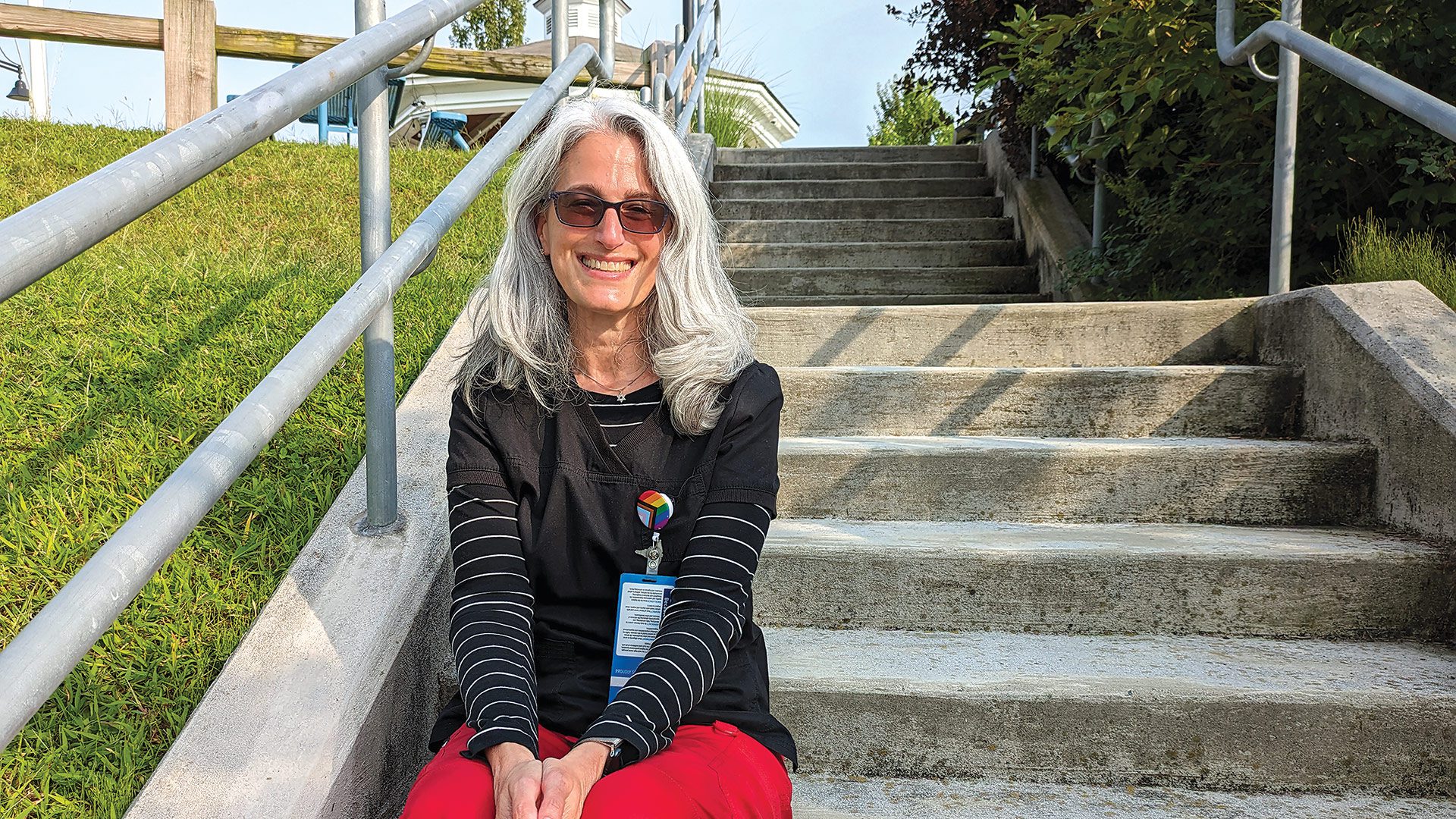
Nurse Manager, VA Central Western Massachusetts Healthcare System

Her Work Caring for Veterans Is Grounded in a Sense of Mission


Julie Lefer Quick

After a decade and a half in the nursing profession, Julie Lefer Quick was looking for a change, and found one at the Veterans Administration’s (VA) outpatient clinic in Springfield.

She also found a level of passion and mission-driven commitment she hadn’t experienced before.

“I can honestly say that I’ve never seen nurses more dedicated to their population; I feel the dedication,” she said. And so do the patients. “Last week, a nurse forwarded me an email that she received from one of her veterans’ caregivers about what great care she took of that veteran, just going above and beyond. And she said, ‘I love my job.’

“Every one of the nurses who works with the VA goes above and beyond every single day,” Lefer Quick added. “And it’s really wonderful to be a part of that, serving such a deserving population.”

She started at the VA in July 2018 as a primary-care nurse. Before that, she worked for a pediatrician in solo practice, including as practice manager, for two and a half years, followed by more than 11 years in the Springfield Public Schools.

“When my son went off to college, I thought, ‘now is a great time to try something new, get back into primary care.’ So that’s when I got the job at the VA.”

When they hear mention of the VA Central Western Massachusetts Healthcare System, most people think of the hospital in Leeds, which houses services ranging from inpatient psychiatric mental-health and substance-misuse treatment to primary care; from rehabilitation to specialties like orthopedics, radiology, cardiology, and many others.

“Every one of the nurses who works with the VA goes above and beyond every single day. And it’s really wonderful to be a part of that, serving such a deserving population.”

“And we also have five community-based outpatient clinics, where we primarily do primary care and then, depending on the clinic, some specialties to support the veterans,” she explained, noting that these are located in Springfield, Fitchburg, Greenfield, Pittsfield, and Worcester. “In Springfield, we have a very large mental-health department, and we also have a small lab, physical therapy, a registered dietitian, a clinical pharmacy, and what’s called home-based primary care.”

As it happens, Lefer Quick loves primary care, and missed that during her years working in the schools. “I had missed the ongoing, deep relationships with patients and their families.”

So, with her son graduating from the school system, she craved a return to care in a medical-office setting, and happened to meet some VA nurses at a Learn to Row event through the Pioneer Valley Riverfront Club in Springfield, where her husband, Ben Quick, is executive director.

“They were like, ‘oh you should come work at the VA,’” she recalled. So she did — and, not surprisingly, she loved the work. Which is why she was hesitant to take the position of nurse manager when it became available last October.

“I wasn’t really sure I wanted to be a nurse manager. I love taking care of my patients. I love working with my team in the VA,” she said. “Nationwide, we practice a primary-care delivery system called the PACT model, which stands for patient-aligned care team. So there’s one provider, one RN, one LPN, and one admin; it’s sort of like a mini-practice within a group practice.

“We always see the same patients, and I had a great team that I worked with,” she went on. “It’s a good model for the patients; they really love it. So I didn’t want to leave my team or my patients.”

But a mentor encouraged her to try something new, and she accepted the detail.

“As a PACT RN, I was providing direct patient care and education, working with my team to meet population health-management goals, such as certain levels of control for diabetes or hypertension. And now I work for the other PACT nurses, supporting them in their practice.”

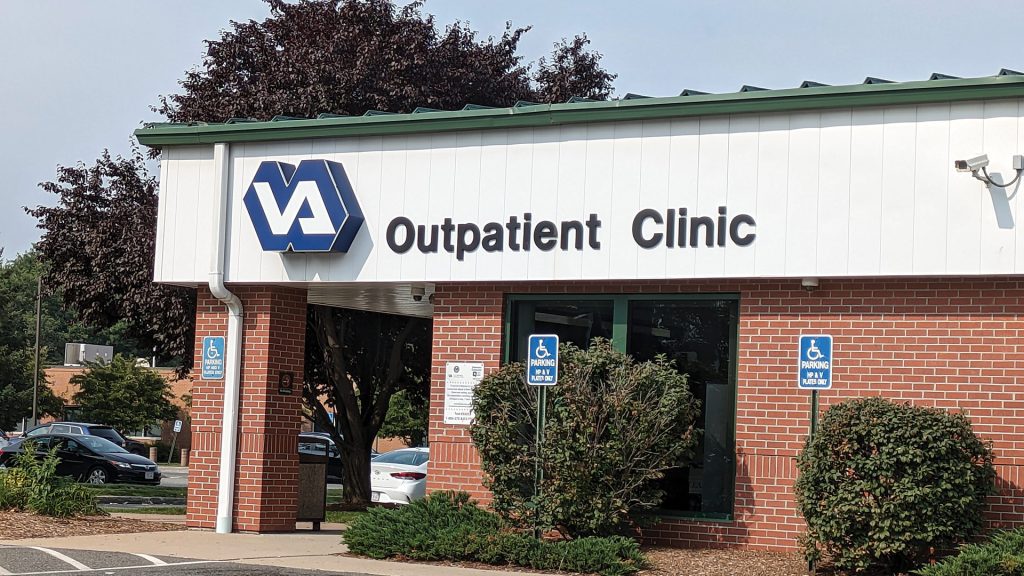
The busy community-based outpatient clinic in Springfield

The busy community-based outpatient clinic in Springfield is one of five operated by the VA in Western and Central Mass.

As nurse manager for two clinics — Springfield and Greenfield — she currently supervises 23 LPNs and RNs, with about three more to be hired soon. And she quickly found she could apply her passion for care in this overseeing role.

“In the VA, we have a unique understanding of the military culture that other providers in the community don’t necessarily have,” she said. “It’s a very sad truth that a lot of our veterans have emotional issues when they come back, but we are on the cutting edge of all types of mental-health treatment modalities and therapeutic options, and we also have the support of Congress — it’s a single-payer system, and we don’t have to be bogged down by some of the stuff that community providers have to deal with. So we, as nurses and providers, can really focus on our veterans and come up with innovative ways to care for them.”


A Passion for Patients

A quick look at the typically full parking lot at the VA’s Springfield CBOC, which stands for community-based outpatient clinic, testifies to the need for the services it provides, from laboratory and pharmacy to primary care and behavioral health.

“From what I have learned as the spouse of a VA nurse manager, it seems that, while most of these workers could get paid more elsewhere, they stay with the VA because they are passionate about caring for our veterans, and they are energetic about supporting each other in this difficult, important work,” Ben Quick wrote in nominating his wife for the Healthcare Hero recognition.

Yet, nursing wasn’t her first career. After graduating from college, she worked briefly in human resources, found she didn’t like that career, and went back to school for a nursing degree.

“Coming out of nursing school a little bit older than the typical students, I kind of took the first job that I could get,” she recalled. “I had a small child, so I didn’t want to work hospital hours, even though I loved the idea of being in the hospital, so I went to work for a pediatrician.”

Which surprised her, considering that her nursing-school rotations caring for youngsters tended to make her cry because she didn’t want to see them hurt or sick.

“I think there’s more of an awareness of mental-health needs in general in healthcare right now. And certainly, veterans who have seen combat are going to need support afterward. So that’s part of our mission.”

But as a pediatric nurse, “I loved seeing the kids grow over the years, seeing new babies born into families, working with parents on all kinds of different diagnoses to help their kids,” she recalled, and her next move was born of wanting to keep caring for children. “Working in the public schools was a way to be available for my son while also reaching a big population of kids. And I loved it.”

So Lefer Quick felt torn about leaving pediatric care for the VA.

“I remember leaving the public-school job for this, and I was very, very excited, but I had this moment of, ‘oh my gosh, am I doing the right thing?’ I said to one of my friends, ‘but I love my kids so much here.’ And she said, ‘you’ll find new patients in a while.’ And I did.”

In doing so, she’s taken to heart Abraham Lincoln’s famous quote that the VA — established 65 years after he uttered it — has adopted as a sort of mission: “to care for him who shall have borne the battle and for his widow, and his orphan.”

“One of the things that almost kept me from accepting the detail to nurse manager was all my patients,” she said, but she understands that all her roles have been supportive in some way: “supporting kids and their families, supporting students at school to be optimally healthy and ready to learn, supporting our veterans, and now supporting the nurses who provide that care to veterans.”

Some of that care is behavioral and substance-related. “We recognize the need for that integrated care for our veterans. I think there’s more of an awareness of mental-health needs in general in healthcare right now,” she noted. “And certainly, veterans who have seen combat are going to need support afterward. So that’s part of our mission.”

She said the VA has felt the strain of a nationwide nursing shortage as much as any other facility, but added that the nurses who take jobs there value the mission President Lincoln put forward — and many are veterans themselves, or come from a strong military family, or are drawn for some other reason to caring for a veteran population.

“That was how I talked myself into the manager position. I thought, ‘well, if I can be a manager with my background, already doing this job, I can support these nurses, which ultimately provides better care for the veterans.’ So I’m not just doing it for my team; I’m helping every single team.”

The COVID pandemic posed challenges across the spectrum of healthcare, but Lefer Quick said the VA was uncommonly prepared for it, as it had already implemented a remote monitoring platform called VA Video Connect, so VA facilities were able to pivot to virtual appointments more quickly than other organizations.

For instance, before the pandemic, “I had a patient who needed monthly monitoring for medication he was on, and he liked to travel. So we would do video visits, and we would have a set appointment to do the follow-up for his medication, wherever he was. So we already all knew how to use this,” she recalled.

And when COVID struck, “we very quickly pivoted to using video for several months, almost exclusively. A lot of our patients did not want to come to the clinic. Nobody wanted to go anywhere. And we already had this in place.”

Their concerns were warranted, as the pandemic hit the elderly population hard in the earliest days of the pandemic. “As you can imagine, a large percentage of the VA population is elderly. I had a father-son set of patients — and the son was 74. So a lot of them, being elderly and therefore immunocompromised, were scared, but the VA already had this amazing video platform, and we had already trained everybody how to use it.”

Meanwhile, “the nurses that I worked with were coming up with great ways to rotate the staff through the clinic so that we could spread out more to allow for that social distancing and masking in a more comfortable way,” Lefer Quick explained. “And we took on new providers and new nurses, even during the pandemic. We didn’t slow down much.”


Cutting-edge Care

In his nomination, Ben Quick boiled his pitch down to three thoughts: the VA’s quality of care is second to none, downtown Springfield has a busy medical practice devoted to healing America’s heroes, and the workers there are humble, passionate, professional patriots. “That’s a Healthcare Hero story that everyone needs to hear,” he wrote.

And now they will.

“The VA is the best employer I’ve ever had in my entire life,” Lefer Quick said. “They value creativity and innovation, and they support us to explore that.

“We really are on the cutting edge,” she added. “The people I work with are doing amazing things and love to be there. No matter where they are, in Springfield or any other part of this country, if someone is eligible for VA care, they really ought to look into it.” n