Home Posts tagged Massachusetts Clean Energy Center
Daily News

BOSTON — The Massachusetts Clean Energy Center (MassCEC) announced the launch of two resources — the Massachusetts ADU Resource Center and the Pioneer Valley ADU Accelerator — designed to help homeowners plan and build accessory dwelling units (ADUs). Together, these tools will address the most common early barriers homeowners face, including feasibility assessment, understanding costs, navigating permitting, and finding qualified professionals.

“Accessory dwelling units are one of the most practical ways we can create more housing, lower costs, and help more people stay in the communities they love,” Gov. Maura Healey said. “We made ADUs legal by right across Massachusetts because we know they can make a real difference for families, seniors, and homeowners. These new tools will help more residents move projects from idea to reality and make it easier to build the housing our state needs.”

The Massachusetts ADU Resource Center is a statewide website that centralizes information to make it easier for property owners to plan and build an ADU. The website includes typical cost ranges and a property look-up tool to help owners understand what they can build and what they may be able to afford.

The Pioneer Valley ADU Accelerator makes it easier for property owners in Hampden, Hampshire, and Franklin counties to build ADUs by providing one-on-one support and a curated list of manufacturers and builders who offer repeatable ADU designs and transparent pricing. The program will also gather participant feedback to identify systemic barriers and inform future state policies, with lessons from the region intended to benefit homeowners across Massachusetts.

“Accessory dwelling units are a common sense solution to our housing shortage because they create real housing options for families, older adults, and young people while giving homeowners more flexibility,” Executive Office of Housing and Livable Communities Secretary Juana Matias said. “By giving homeowners clearer information, practical tools, and hands-on support, these programs make it easier to move from interest to action and help more communities say yes to the housing we need.”

MassCEC CEO Ben Downing added that the center “is focused on connecting residents with practical opportunities to adopt affordable clean energy solutions in their everyday lives. Through the ADU Resource Center and ADU Accelerator, we’re helping homeowners move from interest to action, while supporting the growth of an innovative housing sector in Massachusetts.”

Daily News

BOSTON — The Massachusetts Clean Energy Center announced the selection of six sites across the state that will receive rapid electric vehicle (EV) charging infrastructure through the Ride Clean Mass Charging Hubs program. The initiative is designed to address one of the biggest barriers to EV adoption for rideshare and taxi drivers by expanding access to reliable public charging in high-demand areas throughout Massachusetts.

“Rideshare and taxi drivers are on the road more than anyone, and they should have accessible charging infrastructure, especially with gas prices on the rise,” Energy and Environmental Affairs Secretary Rebecca Tepper said. “By putting fast chargers in the places these drivers already go, we’re making it easier and more convenient for drivers to switch to electric vehicles and building on our success of stronger charger density statewide.”

Massachusetts Clean Energy Center CEO Ben Downing added that “this program is about meeting rideshare drivers where they are. These six locations were selected through a data-driven process to maximize impact for drivers and customers alike. By building out this network, we’re proving that we can build smart, equitable charging infrastructure that works for high-mileage drivers, while creating a stronger foundation for transportation electrification across Massachusetts.”

Each site will receive fast-charging (DCFC) infrastructure, procured and installed at no cost to site hosts. Sites were selected using rideshare data to identify locations with high passenger pickup and drop-off frequencies, as well as communities with large populations of rideshare driver residences.

The following sites were selected for charging hubs: Big Y, 503 Memorial Ave., West Springfield; Big Y, 100 Mayfield St., Worcester; Foss Park, 49 Fellsway West, Somerville; Crescent Plaza, 694 Crescent St., Brockton; Grove Hall, 456-476 Blue Hill Ave., Boston; and UMass Lowell, 50 Standish St., Lowell.

Installation timelines will be staggered throughout the coming months, with all sites expected to be active by late summer to early fall of this year. Charging stations will be available to all community members.

Workforce Development

Powering the Future

The Massachusetts Clean Energy Center (MassCEC) recently issued $13.4 million in grants to 13 Massachusetts community colleges to expand career training programs in clean energy fields.

Greenfield Community College (GCC) was awarded $810,000, and Springfield Technical Community College (STCC) received $809,989, both to launch and expand workforce training in HVAC and heat pump technologies, creating new career pathways in the growing clean energy sector.
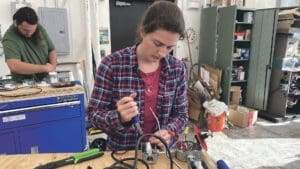
MassCEC’s latest heat pump and HVAC training grants will benefit students at Greenfield Community College and other institutions.

Meanwhile, Holyoke Community College (HCC) was awarded $455,000 through a different MassCEC grant program to continue and refine its clean energy career training programs. 

“Massachusetts is leading the nation in clean energy and climatetech, and that leadership depends on a strong, skilled workforce,” Gov. Maura Healey said. “These investments will connect residents across the state to good-paying careers while helping employers meet growing demand. We are building a clean energy economy that creates opportunity in every region and real jobs for Massachusetts workers.”

Beyond funding, MassCEC will ensure program quality and consistency through the development of a universal heat pump curriculum, a shared instructional framework, and contextualized English for speakers of other languages (ESOL) resources. Together, these efforts represent a coordinated, statewide push to expand training capacity, improve program quality, and create accessible pathways into clean energy careers for Massachusetts residents.

“We need training that keeps pace with how the energy industry is evolving,” Massachusetts Secretary of Energy and Environmental Affairs Rebecca Tepper said. “These grants give community colleges the tools to deliver hands-on, modern instruction that prepares students for the work happening today and what’s coming next.”

“By pairing funding with a shared approach to curriculum and training, we’re helping to build an integrated system that can better support our workers and a clean energy future.”

MassCEC CEO Ben Downing added that “the Heat Pump and HVAC Training Network is focused on what happens after the investment — more trained workers and closer alignment with employer demand. By pairing funding with a shared approach to curriculum and training, we’re helping to build an integrated system that can better support our workers and a clean energy future.”

Heating Up

Jayshawn Brown, a student in HCC’s solar tech training program, works on a solar panel installation project at Dean Technical High School.

GCC’s grant will provide its division of Workforce Development with funding to train 40 students in HVAC skills. It is anticipated there will be two cohorts of entry-level HVAC training and two cohorts of incumbent worker heat pump training; each cohort will include up to 10 students.

Across the state, this program, supported by the Department of Energy Resources, aims to train 500 additional HVAC workers to meet the Commonwealth’s growing demand for clean heating and cooling systems. Greenfield Community College will use this funding to continue training programs for new HVAC technicians as well as work with local employers to provide heat pump installation and maintenance training for their current workforce.

“This funding allows us to continue to offer a full range of HVAC and heat pump training through our Workforce Development division, creating excellent opportunities for residents to enter and advance in clean energy careers,” said Kristin Cole, vice president of Workforce Development at GCC. “With these programs, we can address the urgent needs of local employers and equip our community with the skills necessary for success in a sector that supports both economic growth and clean energy.”

Since launching the HVAC training program in fall of 2024, GCC has graduated 27 individuals from the program with several industry certifications; 85% of those graduates are currently working in the industry. On May 29, the third cohort of students will graduate and transition into employment or paid internships with local employers. This new grant will fund training for additional students.

“We are building a pathway that supports our community, meets employer needs, and connects workforce training to college and long-term economic growth.”

Meanwhile, STCC’s funding supports a comprehensive clean energy training strategy centered on high-efficiency heating and cooling systems and modern heat pump technologies. 

Through six workforce development programs, STCC will provide Springfield residents and regional workers with free, hands-on training aligned with employer demand, industry certifications, and the Commonwealth’s clean energy goals. Together, these programs prepare both entry-level learners and incumbent workers for employment, advancement, and credential attainment in a rapidly changing workforce.

Gladys Franco, assistant vice president of Workforce Development at STCC, noted that “we are building a pathway that supports our community, meets employer needs, and connects workforce training to college and long-term economic growth.”

The initiative strengthens STCC’s existing HVAC and energy systems programs while creating a flexible workforce training model that helps participants quickly gain skills, credentials, and access to employment opportunities. The program also creates a pathway into STCC’s associate degree programs in energy systems technology and building automation.

MassCEC funding has made it possible for STCC to launch and scale six targeted training programs that would not otherwise be available. Investments in lab upgrades, modern equipment, and instructional delivery are significantly increasing training capacity, expanding access for underrepresented populations and accelerating entry into clean energy careers. Meanwhile, the college is working closely with MassHire, regional employers, and community-based organizations to support recruitment, training, and job placement.

The Next Phase

At HCC, the MassCEC grant will pay for two free training programs for up to 30 individuals: introductory training in construction, electricity, and clean energy systems in the fall of 2026, and a solar installer/electrical pre-apprenticeship program in the spring of 2027.

HCC piloted both programs in 2025 after receiving a $1.42 million grant from the Massachusetts Executive Office of Education for climate-related workforce training initiatives. The new award is part of a $7 million allocation in clean energy and climatech grants announced last month by the Healey-Driscoll administration.

“The first grant was really to design, develop, and essentially figure out what would work in our market,” said Kermit Dunkelberg, HCC’s assistant vice president of Adult Basic Education and Workforce Development. “Now, we’ll not just be continuing, but refining these programs to achieve even stronger outcomes.”

The MassCEC grants will support 17 organizations through four programs: Equity Training Implementation; Climate Critical Training, Equipment, and Infrastructure; Climate Critical Underrepresented Business Support; and Student and Young Adult Career Awareness and Training. They are designed to help local organizations expand inclusive training, career awareness, and business support for jobs such as electricians, solar technicians, HVAC-R technicians, energy auditors, refrigeration technicians, and EV charger technicians.

“Through our programs and partnerships, students are introduced to building trades unions — in particular, the electrical workers union and carpentry union — as well as solar installer and electrical apprenticeship opportunities.”

HCC was the only community college in Massachusetts to receive a dedicated grant, while the Massachusetts Assoc. of Community Colleges, a consortium of all 15 community colleges in the state, received $120,000 to support HVAC programs across the community college system. 

HCC’s key partners in the grant are Holyoke’s Dean Technical High School, where the clean energy training classes meet, and solar industry companies PV Squared and SolaBlock. Other partners include the MassHire Hampden County Workforce Board, the Coalition for Equitable Economy, Springfield Works, Browning the Green Space, and the Entrepreneurship & Business Collaborative.

“Thanks to these grants, we’ve been able to connect students to career pathways that can be very challenging to get into,” said Mary Wagner, HCC’s Workforce and Economic Development training manager. “Through our programs and partnerships, students are introduced to building trades unions — in particular, the electrical workers union and carpentry union — as well as solar installer and electrical apprenticeship opportunities.”

Since 2025, HCC has run the introductory clean energy program three times, the solar tech program once, a weatherization program two times, and recently introduced an Introduction to Manufacturing and Clean Energy Applications pilot program. 

“These programs are creating opportunities for underserved populations,” Dunkelberg said. “It’s not just opening the pathways, but reaching deeply into the community to create the access that’s been missing.”


Daily News

Ben Downing

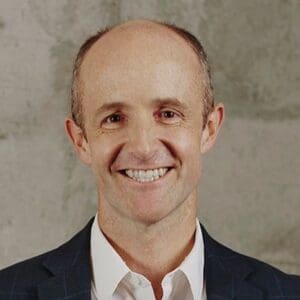
BOSTON — The board of the Massachusetts Clean Energy Center (MassCEC) voted to appoint Ben Downing as its next CEO. Downing is currently chief growth officer at the Engine, a nonprofit incubator and accelerator built by MIT to support climate tech, biotech, and advanced infrastructure startups. He also previously served as a state senator representing the Berkshires and as Senate chair of the Joint Telecommunications, Utilities, and Energy Committee.

“Massachusetts is home to some of the world’s leading climate tech companies, and many of their successes can be attributed to Ben Downing’s visionary leadership in the Legislature and the support he has spearheaded for startups at the Engine,” Gov. Maura Healey said. “Our administration is deeply committed to growing our innovation economy. With strong support authorized under the Mass Leads Act, Ben will steer our climate tech industry and over 162,000 climate tech workers to its next chapter.”

Downing thanked Healey, Lt. Gov. Kim Driscoll, and Energy and Environmental Affairs Secretary Rebecca Tepper for the opportunity.

“My experience has taught me that Massachusetts can be the place where the solutions to climate change are invented, built, and deployed,” he added. “Doing so affordably requires activating all of the state’s resources. I’m excited to help MassCEC do just that with our partners in the Healey administration, the Legislature, the clean energy and climate tech sectors, and more. Let’s get to work.”

As chief growth officer at the Engine, Downing working hands-on with climate tech and biotech startups. In that capacity, he has supported, advised, and worked with some of the most promising and impactful teams from Commonwealth Fusion Systems, Form Energy, VEIR, Sublime Systems, Lydian Labs, Atlantic Quantum, Vaxess, Foundation Alloy, Cellino Bio, Robigo, and many more. He helped them secure hundreds of millions in federal awards, build significant connections, and make significant investments across Massachusetts.

Prior to this role, he was vice president of New Market Development for Nexamp, a clean energy company focused on community solar and lowering customer utility bills. He led strategic expansion working nationally with a specific focus in the Midwest and Mid-Atlantic.

As Senate chair of the Joint Telecommunications, Utilities, and Energy Committee, Downing helped shape Massachusetts’ clean energy and climate tech policy, including authorizing the first offshore wind procurement, investments in the New Bedford Marine Commerce Terminal, support for workforce development, and energy affordability initiatives to rein in costs.

“Ben brings a rare combination of policy experience, hands-on startup leadership, and deep relationships across the climate tech ecosystem,” Economic Development Secretary Eric Paley said. “At a time of growing global competition in climate tech, Ben is the right leader to help MassCEC strengthen our innovation pipeline, support companies as they scale, and ensure this industry continues to deliver economic growth across Massachusetts.”

Downing’s tenure will begin in April. He will take over for Jennifer Le Blond, who has served as interim CEO since November. Le Blond will return to her role leading the Emerging Climatetech team at MassCEC.

Daily News

BOSTON — The Massachusetts Clean Energy Center announced $11.7 million in funding for six school districts and private transportation providers as part of the fourth round of the School Bus Deployment program. This initiative supports communities putting dependable, modern, electric school buses on the road, making transportation more reliable for students and more affordable for school districts.

“We’re helping school districts upgrade their buses and give our kids the best,” Gov. Maura Healey said. “By electrifying school buses, we’re reducing pollution and making transportation more affordable for schools.”

The Massachusetts Clean Energy Center’s (MassCEC) School Bus Deployment program provides both financial support and hands-on technical planning assistance to ensure a smooth transition for school districts. The program also focuses on supporting high-need and environmental justice communities.

Round 4 grantees include Boston Public Schools ($2,500,000), Acton-Boxborough Regional School District ($1,959,000), Springfield Public Schools ($598,375), Doherty’s Garage Inc. supporting Lincoln and Newton Public Schools ($2,425,000), Highland Electric supporting Belmont Public Schools ($1,839,013), and Student Transportation of America supporting Chicopee Public Schools ($2,390,000).

“The School Bus Deployment program gives communities the tools to provide cleaner, healthier transportation for students,” said Rebecca Tepper, Massachusetts secretary of Energy and Environmental Affairs. “This funding improves air quality and protects the long-term health of Massachusetts children and residents.”

To date, MassCEC’s School Bus Deployment program has funded projects to purchase 423 electric school buses across 20 districts and their transportation operators, representing a total investment of more than $34 million. These projects reflect significant statewide momentum toward cleaner, healthier student transportation, while building practical experience in charging infrastructure, operations, and utility coordination.

Daily News

SPRINGFIELD — West Springfield families will benefit from a new partnership between Western New England University (WNE) College of Engineering and Greater Springfield Habitat for Humanity (GSHFH) that uses drone and AI technology to identify heat loss and implement energy-saving home retrofits — at no cost to qualifying residents.

This partnership is possible thanks to a $149,700 EmPower Massachusetts grant from the Massachusetts Clean Energy Center.

Through this initiative, the team will conduct thermographic assessments to detect heat loss in the homes of low-income families in West Springfield. Principal investigator (PI) Yu Hou and co-PI Steven Li will lead efforts using drones equipped with thermal cameras to create thermographic models. They will apply artificial intelligence (AI) algorithms to analyze and quantify heat loss, simulate building energy consumption, and generate automated retrofitting plans. WNE will work with GSHFH to implement these plans for selected families.

“This project helps residents understand their home conditions and reduce energy costs while giving WNE students hands-on experience applying classroom knowledge to real-world construction projects,” said Hou, assistant professor in the WNE Construction Management department. “Students will use AI techniques — specifically computer vision methods — to identify areas of heat loss from building envelope images.”

Students can use local homes as case studies, integrating building energy simulation and tools like building information modeling into their coursework.

“This work enables us to assess residential energy consumption and building efficiency while also exploring public trust in generative AI,” said Li, professor in the Industrial Engineering & Engineering Management department at WNE.

Aimee Giroux, executive director at GSHFH, added that “we’re excited to partner with Western New England University on this important initiative. This grant will support our Home Preservation Program and help us provide lower-income homeowners with valuable information on improving energy efficiency. We’re especially thrilled to work alongside WNE students, whose participation brings fresh insight and energy to our shared mission of building stronger, more sustainable communities.”

Daily News

BOSTON — Massachusetts Clean Energy Center (MassCEC) announced $1.4 million in funding for 12 organizations through its Innovation Ecosystem Program, which provides critical funding to support Massachusetts’ growing network of climatetech entrepreneur support organizations (ESOs). These grants will empower ESOs to expand services, strengthen infrastructure, and increase support for early-stage climatetech startups.

“The world looks to Massachusetts for innovative solutions to our planet’s toughest challenges,” Gov. Maura Healey said. “That’s because we value the groundbreaking work and the significant economic impact of entrepreneurs and researchers. We’re going to continue to invest in the innovators and companies who are leading new discoveries in climatetech.”

Since 2016, MassCEC has awarded more than $6 million to 22 ESOs through this program, indirectly supporting more than 1,300 climatetech startups. The Innovation Ecosystem Program enables a wide range of ESO activities, including operations and management expenses, facility and infrastructure build-out, equipment purchases, and networking and workshop events.

“Massachusetts is home to a thriving climatetech startup ecosystem, thanks in part to a robust network of accelerators, incubators, and innovation hubs that help early-stage companies navigate commercialization and scale their impact,” said Emily Reichert, CEO of MassCEC. “Through the Innovation Ecosystem Program, we’re investing in the organizations that provide critical infrastructure and mentorship to growing businesses, ensuring that homegrown innovation translates into real-world climate solutions.”

This year’s awardees are: Activate Boston, Boston, $175,000; ACT’s Cleantech Open Northeast Program, Somerville, $120,000; Berkshire Innovation Center, Pittsfield, $139,800; the Engine, Cambridge, $50,000; FORGE, Somerville, $120,000; Greentown Labs, Somerville, $175,000; Harvard Innovation Labs, Cambridge, $50,000; InnoVenture Labs, Beverly, $120,000; Lever Inc., North Adams, $100,100; MassChallenge, Boston, $75,000; SeaAhead, Cambridge, $175,000; and UMass Lowell’s Innovation Hub, Lowell, $100,100.

Daily News

BOSTON — Massachusetts Clean Energy Center (MassCEC) announced $4.2 million in funding for 24 clean-energy and climatetech companies and researchers. The funding will support clean energy and climatetech innovators in 15 cities and towns throughout Massachusetts, including Amherst, Boston, Cambridge, Concord, Holyoke, Lowell, Milton, Quincy, Somerville, Spencer, Springfield, Tyngsboro, Woburn, Woods Hole, and Worcester.

The grants are awarded through MassCEC’s AmplifyMass, Catalyst, Diversity in Cleantech – Early Stage (DICES), InnovateMass, and IncubateMass programs. Catalyst, DICES, and InnovateMass programs are additionally supported by MassVentures.

“Massachusetts is the most innovative state in the country — the place where big challenges like climate change are solved with bold ideas and cutting-edge technologies,” Gov. Maura Healey said. “Climatetech businesses are already producing groundbreaking solutions in Massachusetts, but it’s our goal to be the global leader in climate innovation. We’re going to do that by providing entrepreneurs and early-stage companies with the resources they need to stay, scale, and succeed here.”

One Catalyst/DICES awardee is based in Western Mass.: Western New England University (Professor Bart Lipkens) was awarded $75,000 to develop a new type of filter for making medicine that has less of an impact on the environment.

Two InnovateMass awardees are based in Western Mass: Clean Crop Technologies Inc. in Holyoke, awarded $350,000 to demonstrate its system that reduces food waste by removing pathogens from seeds; and florrent Inc. in Amherst, awarded $244,916 to test its bioderived carbon material to create effective backup power systems.

As a complement to the grants and support for technology developers, MassCEC also recently awarded $730,000 from its IncubateMass program to six Massachusetts-based incubators focused on supporting climatetech innovators, including one from Western Mass.: Berkshire Innovation Center in Pittsfield).