
Springfield Museums
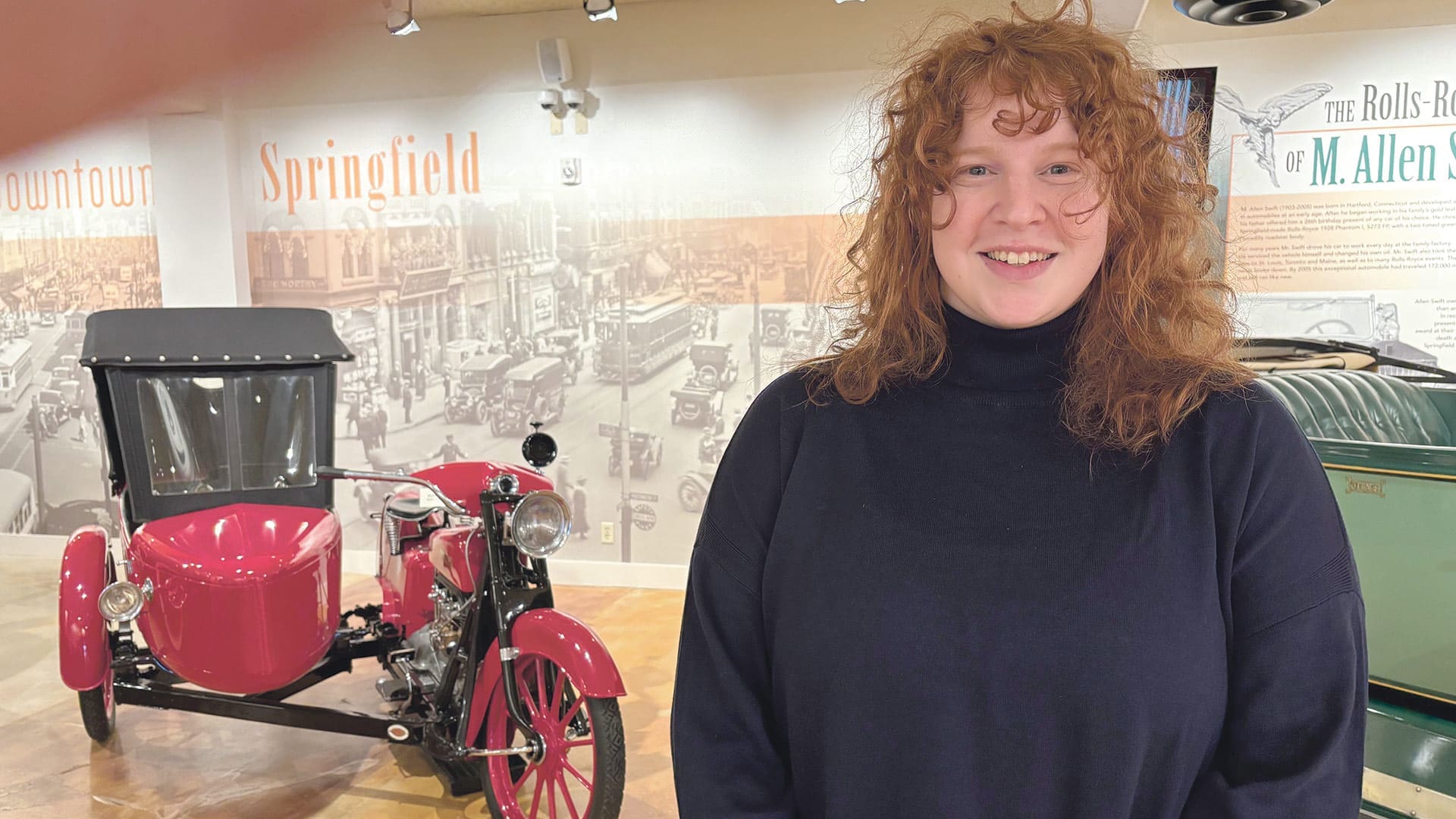
Elizabeth Kapp says the Springfield Museums’ exhibits will focus as much on revolutionary ideas as the Revolutionary War period itself.
Elizabeth Kapp says she’s long had a passion for history.
“I’ve always been fascinated by the stories of the past and how many of them seem so improbable because things have gone wrong so many times along the way,” Kapp, curator of History for Springfield Museums, told BusinessWest. “It was the determination and innovation of the people on the ground that opened up so many doors for us today.”
She would put the birth of this nation firmly in that category, and determination and innovation are just two of the qualities that will be celebrated with exhibits and programs as the Museums mark the Semiquincentennial.
Kapp joined Springfield Museums two years ago and immediately made the 250th celebration a priority for the institution. Such occasions are rare, she went on, noting that, while she was born well after the Bicentennial in 1976, she has studied that event and what it meant for history museums, house museums, and similar facilities.
“There was truly a boom of opportunity and interest in 1976, and it actually helped shape the modern museum world in a professional sense,” she said, adding that she is anticipating something similar this year.
And as Kapp talked about what the Museums have planned, she said she and other organizers began with a purpose, or mission. “It’s an opportunity to collectively visit the past,” she said of the 250th. “And see how the decisions and actions of groups and individuals in the past led us to where we are today.”
“I thought it was important to give our visitors an opportunity to see how revolutionary thinking can come in a lot of different ways, shapes, and forms.”
With that in mind, the Museums — specifically, the Wood Museum of Springfield History — are planning exhibits that will focus not so much on the Revolutionary War, as other institutions are, but rather on “revolutionary ideas.”
“I thought it was important to give our visitors an opportunity to see how revolutionary thinking can come in a lot of different ways, shapes, and forms,” she told BusinessWest. “If we look at the past, time and time again we see that anyone can be revolutionary.”
Elaborating, Kapp said the Museums’ exhibit for the 250th, slated to open May 16, will have three historic themes, or time periods, with one centered on what Springfield was like at the time of the Revolution, but with a focus on what she called the “domestic side” — an approximate interior of a typical home from the 1770s.
“There will be slight inspiration from a Colonial-era coffeehouse,” she said, “because, historically, that’s where a lot of these discussions of revolutionary ideas took place.”
A second component on the exhibit will be called “Defining the Dictionary,” and it will focus on the revolutionary (there’s that word again) Merriam-Webster dictionary, the work of Noah Webster and the Merriam brothers, George and Charles. The company they founded is still creating dictionaries today.
“As a young man, Noah Webster was one of the few who were in a position to influence and help the new nation figure itself out,” Kapp explained, adding that this section of the exhibit will focus on the dictionary and the “power of words.”
“Revolutionary ideas often come with revolutionary words and phrases that need to be recorded,” she went on, adding that the exhibit will enable visitors to explore the words of early America and see how the work of Webster and the Merriam brothers helped establish the American language.
Visitors will have the opportunity to guess the definition of words like ‘macaroni’ (which was much different 250 years ago than it is today), ‘unalienable,’ and ‘patriot.’
The third segment of the exhibit will focus on the Industrial Revolution and how Springfield came to be the home to countless innovations and inventions that have had a profound impact worldwide, she said, listing everything from the development of interchangeable parts and the assembly line to ‘firsts’ that include the Duryea automobile, the motorcycle, and the GB aircraft.
And, like the other segments of the exhibit, this one will be interactive, Kapp said, adding that visitors will get an opportunity to work on a mini-assembly line and handle interchangeable parts used in the production of some of the vehicles on display at the museum.
“Again, the foundation that we built off is that anyone can be revolutionary,” she said. “And my goal is that people walk away with an understanding that these ideas and actions that we historians call revolutionary were people thinking outside the box — and we want to encourage them to do the same.”
—George O’Brien