Home Posts tagged Trump
Features

Coming into Focus


Carlo Bonavita

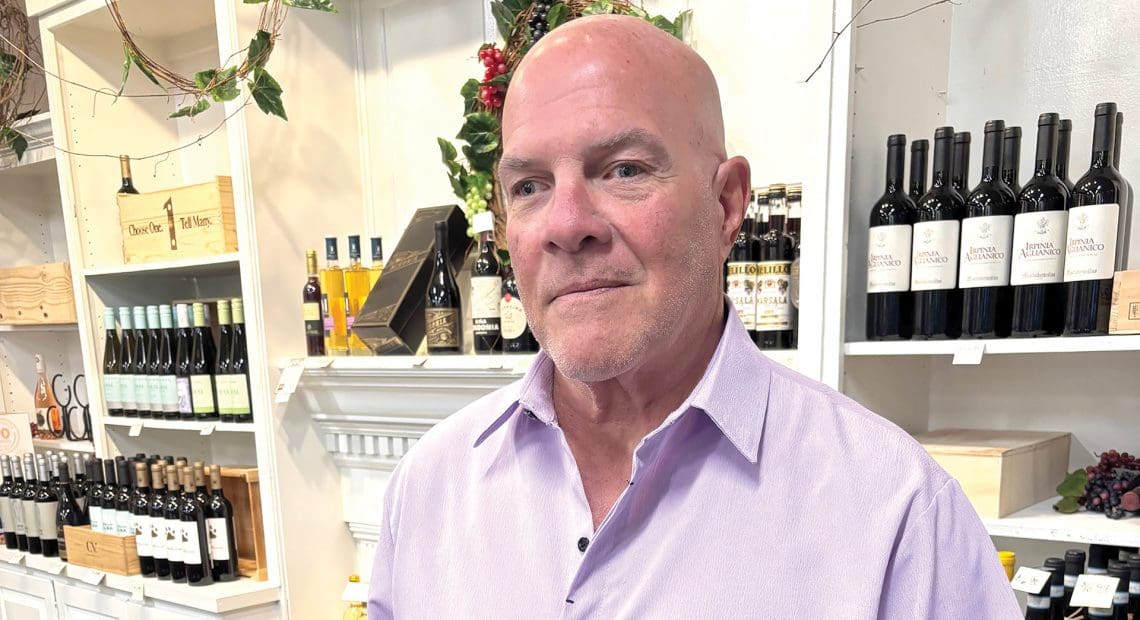
Carlo Bonavita says tariffs will likely prompt some wine drinkers to switch to domestic products.


Clarity.

Ever since tariffs became a main thrust of the Trump administration’s economic policy — that would be day 1 — that’s what business owners and managers have been calling, if not begging, for.

They still don’t have as much as they want, but they now have a lot more than they did 60 or even 30 days ago.

That’s especially true in the auto industry, where trade deals inked with Japan, South Korea, and the EU lock in 15% tariffs on a large list of foreign imports. That translates into a roughly $2,000 increase on an average-priced vehicle, which is now in the mid-40s, said Ben Sullivan, chief operating officer for the Balise Auto Group.

And that number must be put into perspective, he went on, noting that, with the return of incentives such as 0% financing and attractive lease rates, the consumer’s monthly payment — which is what most focus on — may not rise much higher than it is now.

“At the same time as those price increases are coming, most manufacturers have increased production, and when they increase production, they want to sell a bunch of cars, and when they want to sell a bunch of cars, they put incentives on them.”

“At the same time as those price increases are coming, most manufacturers have increased production, and when they increase production, they want to sell a bunch of cars, and when they want to sell a bunch of cars, they put incentives on them,” said Sullivan, who cited the case of a co-worker with a truck coming off lease. She’s getting into a new one and shaving $100 off the monthly payment at the same time.

That’s an indication of how unattractive the incentives were in the years after COVID, and how much better they are now, said Sullivan, adding quickly that, while there’s still a good amount of dust to settle, especially with regard to tariffs imposed on Canada and Mexico and the cars and parts made in those countries, there is a sense of normalcy returning to this sector (more on that later).

Ben Sullivan

Ben Sullivan says that, while car prices are rising by $2,000 on average due to tariffs, with incentives, consumers may not see a rise in their monthly payment.

The same can generally be said for Carlo Bonavita’s business, Springfield Wine Exchange, where clarity is also a technical term.

Bonavita’s shelves are loaded with imported wines, many of which will now be subjected to at least 15% tariffs. This will add a few dollars to the average-priced bottle, which might be enough to sway some consumers to switch to domestic labels, something he’s been promoting for some time now, especially with the prices from some European wines rising even before tariffs were imposed, for reasons he can’t pinpoint.

“The reality is, I’d prefer to find domestic wine alternatives for our customers. It’s our job to go out there and find wines for our customers that are affordable, quality — and that’s easy to do,” he said, adding that he expects that some will shift more to domestic products. “Most people are loyal to the grape, and not necessarily the label,” he said, adding that consumers are likely to trade an Italian Pinot Grigio for one made in California.

There is less clarity in some other sectors, however, and with many different products, especially since a new, wide round of tariffs on individual countries went into effect earlier this month. The countries included Brazil (50%), Switzerland (39%), Vietnam (20%), and Taiwan (20%), and the tariffs are expected to generate price increases on everything from watches to shoes; computers to furniture; coffee to toys.

Construction is another sector where there are still some unknowns.

Dave Fontaine, CEO of Fontaine Bros. Inc., said tariffs will certainly impact the cost of projects large and small because tariffs on products, such as steel or copper, are applied not when they are ordered, but when they enter the country.

“I would equate it to walking into a store … the sales tax is 6.25%, and then, while you’re purchasing the item, the sales tax gets doubled or tripled,” he explained. “That’s going to impact at the register.”

To date, increases in prices from tariffs have been offset by decreases in the cost of some materials due to a general slowdown in the industry, allowing projects to stay on budget, he went on, but it remains to be seen if things will stay that way.

“I don’t know for sure, but I think that what our distributors did, as these tariff talks were going on, was bulk up their warehouses just to get people along for six or seven months in anticipation that the tariff talks would blow over and things would get settled.”

For this issue, BusinessWest talked with business owners and managers across several sectors to get some perspective on tariffs and what they mean for their businesses and their customers.


Grape Expectations

The announcement of Trump’s ‘Liberation Day’ tariffs on April 2 has been followed by four and half months of trade talks, new deals, deadlines made, deadlines extended, and seemingly never-ending speculation about the impact of tariffs on prices, individual businesses, and entire sectors.

In many respects, the speculation is giving way to increased clarity, though there are still plenty of question marks on everything from how much of the price increases will be passed on to consumers to how those same consumers will respond to the higher prices.

More will be known in the weeks and months to come, said those we spoke with, adding that much, but not all, of what’s for sale now — be it cars in showrooms or wines on shelves — were delivered before tariffs went into effect.

That’s true of the popular beers from Germany, Belgium, and other European countries sold at the Student Prince, said Nate Yee, director of Hospitality for the Bean Restaurant Group, which counts the downtown Springfield landmark among the many area eateries in its portfolio.

“I don’t know for sure, but I think that what our distributors did, as these tariff talks were going on, was bulk up their warehouses just to get people along for six or seven months in anticipation that the tariff talks would blow over and things would get settled,” he said, adding that prices have remained remarkably, and unexpectedly, stable. “That’s the only explanation I can think of for why our costs haven’t gone nuclear.”

The company has enough in its own warehouses to get through the Big E, where it will have several locations, said Yee, adding that what happens when the current warehouse stock is replaced with post-tariff products remains to be seen.

“Who knows what will happen?” he said, adding that, if costs rise, the Bean Group will have to think about adjusting its own prices. “But we want to be as price-sensitive as we can; we want to be affordable, and we want our guests to come back multiple times a week, and a big part of that is the value aspect of it.”

Bonavita said almost everything at his storefront in Tower Square, and everything shipped to customers elsewhere, including the eastern part of the state (a growing part of this business), arrived pre-tariffs. It will be September or October, he projects, before the nature of the inventory shifts and prices are adjusted.

And while he will continue to order wines from dozens of other countries (together, they make up roughly 35% of what he sells), he fully expects movement toward domestics as the inevitable price increases come. Meanwhile, like Yee, he said he will likely absorb some of the hit to minimize the impact on the consumer.

“We wouldn’t be here without our customers, so I’ll do whatever it takes to keep our customers,” he explained. “If that means we work on a lesser margin, we’ll work on a lesser margin.”


Driving Forces

Sullivan said many — but certainly not all — the cars on area lots were delivered pre-tariffs. That means consumers might find two almost identical cars at a dealership with different price tags.

And, as he mentioned earlier, while the price tag on the post-tariffs model might be higher, the monthly payment might — that’s might — not be. And that’s just one of the many intriguing dynamics within the auto industry as a once-fuzzy picture sharpens a bit.

“The tariff landscape is coming into clearer focus,” he told BusinessWest. “Now, it’s about what the scale and the impact of the tariffs will be and when it will all settle into something that’s predictable. We’re not home yet, knowing exactly where this whole thing shakes out, but we’re getting closer.”

Elaborating, Sullivan said there will be more clarity in the months and years to come on issues ranging from used car sales to how long consumers hang on to their cars as the cost of maintaining them rises because of tariffs on parts, many of which are made in China.

Meanwhile, with new car sales, as well as the proverbial big picture, there is more normalcy than a few months ago, when panicked consumers were running to dealerships to beat the tariffs.

“Now, things have calmed down,” he said. “People are aware that it’s not as bad as they feared; it’s still going to cost them more to buy a car, but not as much as they feared. So right now, we’re seeing a more normalized market than we’ve seen in a while.”

‘Normalized’ wouldn’t be a word to describe what’s happening in the construction sector, said Fontaine, noting that tariffs are impacting not only projects in progress — such as the new high schools his company is building in East Longmeadow and Agawam — but some initiatives on the drawing board.

“When the cost of materials is going up, that makes construction projects more difficult to to get financed — and more difficult to make sense,” he explained, adding that this is more prevalent on the private side of ledger than on the public side. “And a lot of people are in the wait-and-see phase because of the uncertainty with the economy.”

For construction firms, the challenge is to find ways to minimize the impact through use of more domestically produced materials and other strategies to keep projects on budget.

“We’re spending a lot of time trying to protect ourselves and our clients from the impact of them, and I think we’ve been generally successful with that,” Fontaine said. “We’ve pushed a lot of things to be imported from places that are not impacted by tariffs or made in America. We’re doing everything we can to mitigate costs, but it’s a hot issue in construction right now.”

And in many other sectors as well.

Law

Avoiding Layoff Pitfalls

By John Gannon, Esq.


Last month, on Independence Day, President Trump signed into law the One Big Beautiful Bill Act (OBBB), a nearly 1,000-page bill addressing significant federal tax and spending policies. According to the White House, the OBBB will act “as a catalyst for job creation, domestic investment, and long-term growth.”

But critics are not so sure the legislation will boost job growth. Indeed, many are concerned that deep spending cuts to social safety net programs such as Medicaid and food stamp benefits, coupled with the end of tax credits tied to clean energy, will cause many Americans to lose their job. One study estimates that 1.22 million jobs could be lost in 2029 due to Medicaid and SNAP cuts.

Given these deep spending cuts, coupled with what seems like daily (and sometimes hourly) uncertainly over foreign tariffs, the Trump administration is leading many businesses to consider cutting labor costs, even if only for the short term. In light of this, employers need to understand the legal and practical ramifications when implementing a reduction in force (RIF), which is a more formal term for layoffs. Key aspects include understanding the relevant legal risks, selecting employees fairly, and providing proper communication and support.

John Gannon

John Gannon

“Employers need to be able to provide legitimate, business-based reasons for implementing a workforce reduction. These typically involve economic considerations, such as the loss of key contracts or higher material costs, but could also be the product of a department or company-wide reorganization.”

Legal Issues

To start, employers need to be able to provide legitimate, business-based reasons for implementing a workforce reduction. These typically involve economic considerations, such as the loss of key contracts or higher material costs, but could also be the product of a department or company-wide reorganization. Whatever the reason(s), businesses need to be able to explain in crystal-clear terms why people are losing their jobs.

There are also a host of employment laws that businesses need to be cognizant of when implementing a RIF. In a large-scale workforce reduction, the most important of these laws is the Worker Adjustment and Retraining Notification (WARN) Act, which requires 60 days notice to all affected employees in the event of a mass layoff or plant closing.

The penalties for failure to comply with WARN are steep. WARN Act violations include back pay and benefits for up to 60 days for each affected employee, civil penalties of up to $500 per day of violation, and potential attorneys’ fees for successful lawsuits. Needless to say, determining whether the WARN Act applies is always step number one when businesses are considering a RIF.

Next, employers must ensure that the selection criteria used to determine who will be included in the RIF are non-discriminatory and based on legitimate business needs. This means reasons for selecting an employee for the RIF cannot be tainted by bias based on age, race, gender, or other protected characteristics, including use of Paid Family and Medical Leave or sick leave protected by the Massachusetts Earned Sick Time law.

To that end, employers should develop an documented selection criteria plan for the decision makers prior to announcing the end result to employees. Establish selection factors with the company’s legitimate business needs in mind, trying to keep the selection process focused on objective, legal criteria as much as possible (such as seniority, elimination of unnecessary categories such as part-time and temporary, elimination or consolidation of unnecessary positions. etc.).

Taking this one step further, employers should consider conducting a detailed analysis of the potential for disparate impact discrimination in a workforce reduction. Disparate impact discrimination occurs when a policy, practice, or decision-making process of an employer that appears to be neutral has a negative impact on a protected group of employees.

For example, if a high percentage of those selected for layoff are over age 40, and a significant amount of those retained are under 40, there is a risk that someone will file an age discrimination claim and argue that the method used to evaluate employees had a disparate impact on those over 40, and, therefore, led to their separation.

Disparate impact testing helps organizations recognize and address biases that might exist within their decision making process, even when there’s no intent to discriminate. We suggest that any disparate impact analysis be conducted by an attorney so that any problematic data that is discovered would be protected from disclosure in lawsuit by the attorney-client privilege.

Finally, employers need to be aware of wage payment obligations for those who are laid off. Under the Massachusetts Wage Act, employees who are laid off as part of a RIF must be paid all earned wages — including pay for all accrued and unused vacation — on their last day of employment. Also, if a worker is subject to the terms of an employment contract (as opposed to be employed at-will), that employee might be entitled payout if the employment relationship ends prior to the expiration of the term set out in the employment contract.


Practical Considerations

Employees who are let go as part of a RIF are likely going to expect severance pay to help pay the bills while they look for new employment. That said, there is nothing that requires employers to offer separation agreements to at-will employees being laid off (note that this might be different if the employee is subject to the terms of an employment contract).

However, most employment lawyers and HR professionals will tell you that offering at least some severance, while not legally required, is a best practice. This is because, as noted above, it provides departing employees with some level of financial stability while they are in between jobs. Severance packages also often include payments for continued health insurance or other benefits, easing the transition and potentially reducing out-of-pocket medical expenses for departing employees.

Finally, obtaining signed severance agreements from departing employees mitigates legal risk, as the agreement should include a legally compliant release of claims against the employer. Stated otherwise, employees accept the severance payments, and in exchange, they agree not to bring a legal action against the company. We see this as a win-win for the employee and the employer.

Finally, as far in advance as possible, businesses need to start developing a clear and transparent communication strategy that will be used to explain the RIF to the workforce. This strategy should involve two messages — one for the entire workforce that explains the business needs for the RIF, and another message that is tailored to those who are affected by the RIF.

For those who will be losing their jobs, conduct private meetings to deliver the news and discuss next steps. This meeting should go over the terms of the severance package, if one is being offered. While the meeting should be brief, employees should be given some time to discuss the positives and negatives of their employment experience, as well as ask questions related to post-employment issues such as unemployment and health insurance continuation.

As for the remaining employees, the business should have a plan in place to discuss how the RIF will affect their day-to-day duties. Is there a plan in place to replace the departing workers if business circumstances improve? Will the RIF lead to longer days and more demands for the remaining employees? Does the company plan to lay off more employees within the next few months?

These types of questions, as well as the psychological impact associated with many co-workers (and friends) losing their jobs, is often referred to as workplace survivor syndrome. Leaders in the organization must be prepared to answer questions from remaining employees about their ‘new normal,’ as well as listen and respond to their concerns and fears, in order to avoid workplace survivor syndrome causing more negative workplace ripples than the RIF itself.

Implementing a RIF is no small task. There are serious legal and practical considerations that businesses need to consider as soon as potential layoffs are a topic of conversation during leadership meetings. Be sure to engage experienced employment counsel early on in the process so businesses leaders do not get caught in traps for the unwary during a workforce reduction.


John Gannon is a partner with Springfield-based law firm Skoler, Abbott & Presser, P.C., a law firm exclusively practicing labor and employment law for more than a half-century, focusing on litigation avoidance, employment litigation, and labor law and relations. He specializes in employment law and regularly counsels employers on compliance with state and federal laws; (413) 737-4753.

Opinion

Editorial


Maroun Hannoush doesn’t seem fazed by what some are describing as ‘trade wars’ and a rapidly changing scene when it comes to tariffs imposed on products from around the world.

Indeed, while Hannoush, CEO of the family-owned chain of jewelry stores and manufacturing facilities, acknowledged the 39% tariff rate imposed on products from Switzerland, including a wide array of watches sold in his stores, and some uncertainly about will happen with the price tags on those and other items, he was generally upbeat when he talked with BusinessWest.

He spoke of manufacturing moving to other countries, and especially this one, and, more generally, about how his industry (and others) will respond to this latest challenge with creative efforts to continue thriving, while also minimizing the impact on their customers.

“It’s exciting to see — there’s great potential for new jobs and new opportunities,” he said of already announced plans to move some manufacturing to this country, and the promise of more. “The United States has a great deal of untapped resources when it comes to making products like jewelry here.”

While most others are not as openly optimistic and upbeat, the general tone we’re sensing is that, yes, the tariffs are just another challenge to be overcome, and they are confident that they can make the needed adjustments, whether it’s steering wine lovers toward domestic labels or finding ways to absorb or offset some of the price increases.

As we talked with several other local business owners about tariffs, most said the full impact of these measures are still matters for the future tense.

Whether it’s Swiss watches, German beers, French wines, Japanese cars, or even some construction materials, there is mostly plenty of stock in warehouses that arrived well before the tariff rates were set in stone — if they’ve actually been set in stone — for the next several months.

Meanwhile, other factors, from attractive incentives on the sale and lease of new cars to falling prices on some construction materials amid a mild slowdown, are keeping the full effects from tariffs from being felt.

The question is, for how long? Actually, that’s just one of the questions being asked — questions for which there are no real answers at this point.

But amid these questions, there is a certain amount of confidence that many of these tariff issues can be minimized through the same creativity and diligence that has seen this business community endure through a Great Recession, a pandemic, an ongoing workforce crisis, and much more.

Maybe Hannoush is right. Perhaps these tariffs will generate more manufacturing in this country, equating to more jobs and more game-changing investments in communities across the country. Maybe the negotiations will continue, tariffs will fall, and important concessions will be gained as a result.

Maybe.

In the meantime, area businesses are responding as they always do — with imagination and determination.

Opinion

Not a Sublime Turn of Events


Leaders at Sublime Systems, a company that has developed a low-carbon cement, believe they can withstand the loss of an $87 million federal grant and move their plans forward, including those for a manufacturing plant in Holyoke.

News of the Trump administration’s plans to terminate $3.7 billion in grants issued by the the U.S. Department of Energy’s Office of Clean Energy Demonstrations, including the $87 million earmarked for Sublime, came down earlier this month.

To many, the news sounded like a death knell for Sublime, but officials there believe they have enough momentum, in the form of contracts with players ranging from Microsoft to regional and national construction companies, including Daniel O’Connell’s Sons in Holyoke, to press on and perhaps only be slowed down, not stopped, by the loss of the federal grant.

We hope they’re right, because Sublime’s ability to weather this storm has huge implications for both Holyoke and the region.

Before getting to that, we’ll just say that the termination of this grant makes little sense. The Trump administration has stated goals to bring more manufacturing to this country and lessen its dependence on foreign countries for everything from energy to construction materials.

Sublime’s cement does all that. It will bring jobs here, and it will reduce dependence on foreign makers of cement, including Canada and Mexico.

We can only assume it is the phrase ‘clean energy’ that does not align with the philosophy and goals of the Trump administration, but the ‘why’ in this case is not what matters. It’s the end result.

Now, Sublime must try to resecure that federal grant by restating its already strong case about what its product can do to dramatically reduce the carbon footprint from cement making, while also creating jobs and helping to revitalize a community like Holyoke.

The Paper City has a lot riding on Sublime’s ability to move forward with plans to construct a plant in the Flats section of the city that will produce 30,000 tons of cement per year. Indeed, the city is trying to stake a claim as a home to clean-tech companies, and brings many assets to bear, including land and former mills to develop and reliable, cheap, green energy (hydropower) from the Holyoke G&E.

With the cannabis sector plateauing, if not declining, Holyoke needs clean energy and companies like Sublime for job creation to help continue the momentum that has been building in this historic manufacturing city for several years now.

The region needs Sublime and other success stories in this realm as well. We’ve already documented how its traditional economic pillars — higher education, healthcare, and nonprofits — were already struggling before the Trump administration began changing policies and terminating grants, and now, their struggles are deepening. The region needs to tap new sources of innovation and jobs, and clean energy is one of them.

It’s very difficult for a company like Sublime to overcome the loss of an $87 million grant. It must tap other resources — from the state to venture capital — while also hoping to get that grant back.

We hope Sublime can overcome this loss and move forward, because Holyoke and this region need this company to succeed.


Cover Story

Mission: Imperiled

Nicole Blais, CEO of Holyoke Chicopee Springfield Head Start

Nicole Blais, CEO of Holyoke Chicopee Springfield Head Start


Nicole Blais was troubled when she clicked the link.

Forwarded to her by her the executive director of the Massachusetts Head Start Assoc., it led to an April 14 U.S. News & World Report article stating that the Trump administration was considering an FY 2026 budget that would zero out funding for Head Start.

Overall, the piece confirmed what Blais, CEO of Holyoke Chicopee Springfield (HCS) Head Start, already knew about the federal budget and this $12 billion line item — that a presidential budget is essentially a wish list, only Congress can allocate federal funding, and Head Start enjoys support on both sides of the aisle.

But she wasn’t in any mood to be complacent.

Indeed, within days, she had penned an op-ed for area media outlets, stating, “HCS Head Start is more than just a program; it is a lifeline that connects families to vital resources. The looming threats of federal funding cuts — especially to programs that safeguard the health and well-being of our children and families — is an issue affecting more than just those we serve.”

On May 2, said Blais, the president unveiled what’s known as a ‘skinny budget,’ which did not list Head Start as a program to be eliminated. But, as with that April 14 article, this latest report, while reassuring, is by no means final.

“That budget is just a proposal that’s sent to Congress. That was a good sign, but we’re still waiting to see the budget that Congress puts together before we exhale.”

“That budget is just a proposal that’s sent to Congress,” she said. “That was a good sign, but we’re still waiting to see the budget that Congress puts together before we exhale.”

There are many nonprofit managers and board members holding their collecting breath these days, including Andrew Morehouse, executive director of the Food Bank of Western Massachusetts, who said proposed cuts to SNAP (Supplemental Nutrition Assistance Program) funding and Medicaid would dramatically increase demand for the agency’s services at a time when demand is already soaring due to inflation and a softening jobs market.

“For the fiscal year October of 2023 to September 2024, we saw a 30% increase, and since then, we’ve seen a 10% increase,” he said, adding that this number will likely increase due to tariffs and other forms of pressure on consumers.

Meanwhile, several grants for area programs and initiatives have already been terminated, including:

• A $20 million grant from the Environmental Protection Agency to Springfield that was slated for home energy retrofits, air pollution monitoring, and de-leading of homes, an initiative involving several area nonprofits;

• A $1 million EPA grant to address asthma in Western Mass. through in-home environmental remediations, such as mold removal and improved ventilation, in Chicopee, Holyoke, and Springfield;

• A $50,000 National Endowment for the Arts (NEA) grant to MASSMoCA in support of Jeffrey Gibson’s “Power Full Because We’re Different” exhibition;

• A $400,000 funding package from the U.S. Department of Agriculture to the Food Bank for the fiscal year ending in August; and

• A $20,000 grant from the NEA to Amherst Cinema for its Bellwether series, which promotes “creative, thoughtful, and inventive approaches to non-fiction cinema,” according to a statement from the theater.

That list, and it is certainly just a partial list, shows that the cuts have come across the broad spectrum of nonprofits, agencies in categories ranging from the arts to public health to food security.

Common denominators, aside from language from the Trump administration stating that the programs in question fall outside the administration’s priorities, are actions to appeal the cuts while also looking for other ways to fund them — when possible.

Andrew Morehouse says looming cuts to SNAP benefits and Medicaid could greatly increase demand for services provided by the Food Bank of Western Massachusetts.

Andrew Morehouse says looming cuts to SNAP benefits and Medicaid could greatly increase demand for services provided by the Food Bank of Western Massachusetts.

That’s not possible with a $20 million grant or even a $1 million grant, but it is with the NEA’s grant to the Amherst Cinema, for example, and also with the cut to the Food Bank’s budget, and both agencies are appealing to the public.

Meanwhile, at least one nonprofit, the YWCA of Western Massachusetts, is considering the launch of a capital campaign to sustain programs that are funded by federal grants that are mostly no longer available (more on this later). And many nonprofits are reaching out to area foundations, not only with appeals for funding, but for support with efforts to find ways to collaborate with other agencies to meet needs within the community and keep their agencies active and financially stable.

“People are reaching out, and not just with appeals for direct funding; we’ve been in conversations with our current grantees and others in the nonprofit ecosystem, and we’ve been having conversations about how else we can be of service in these challenging times,” said Denise Hurst, vice president of Community Impact and Partnerships with the Community Foundation of Western Massachusetts. “They’re asking about opportunities to partner with one another, share ideas, and collaborate in real time to navigate these difficult times.

“There’s still domestic violence going on, there’s still child abuse going on, there’s still sex trafficking going on, there’s still human trafficking going on, and there’s still stalking going on. And that means that the nonprofits in that arena that do that work are being stripped of the funding, and the survivors aren’t able to get the services they need.”

“We’re just four months into this new administration, and we’re really thinking about stabilization and sustainability of the nonprofit ecosystem,” she went on, adding that the region’s nonprofits not only meet critical needs, but they are an important pillar in the Western Mass. economy, providing not only jobs but critical services that benefit employers and their workforces.

For this issue, BusinessWest examines this time of challenge and high anxiety for nonprofits, what’s at stake, and how these agencies are responding.


Waiting to Exhale

As she talked about the plight of her agency, Liz Dineen, CEO of the YWCA of Western Massachusetts, shared information concerning grants from the Department of Justice for programs to assist those the agency serves.

They fall into various categories, such as transitional housing assistance grants for victims of domestic violence, dating violence, sexual assault, and stalking; grants to improve the criminal justice response program; the Sexual Assault Forensic Exam hiring and training program; and others, she said, adding that she and her staff continuously peruse the DOJ website, and, specifically, the Office of Violence Against Women, for notices of funding opportunities and apply to whatever is available.

Colleen Shanley-Loveless

Colleen Shanley-Loveless

“Private funding is not going to have the impact of some of these larger grants, and the state can’t make up for all of it.”

But starting in January and the start of the Trump administration, there has been very little available. Indeed, the DOJ recently terminated more than 360 victims’ services grants, which stripped hundreds of millions of dollars away from programs that promote public safety and provide victims and survivors with access to safety, security, and justice.

“Traditionally, at the beginning of February, there’s a bunch of new grants that are posted; they posted several new grants at the beginning of February, and then they pulled every one of them,” she explained. “There were no federal grants at all available for us to pursue.”

Recently, there were a few grants posted, one for Indian tribes and the other for rural areas, which meant this particular YWCA is ineligible for both, she went on, adding that the one program the agency could apply for had just 19 grants for the entire country.

“In the past, we might have had an opportunity to look at 30 to 35 grants; now we’re looking at one,” she said, adding that she’s found it difficult to even talk with anyone at the DOJ to get some direction on what’s happening — or not happening. “There’s a real dearth of opportunities out there right now.”

This reality prompted Dineen to consider a capital campaign so that the agency may continue to provide its services. A feasibility study is now underway, she noted, adding that the question isn’t whether there will be a campaign, but what the monetary goal should be.

“We’re trying to gauge what funders and foundations will be able to give us,” she said, acknowledging that, in most campaigns of this nature, funding is sought for capital projects such as a new building, but in this case, it’s to continue programming for which the agency can no longer secure grant funding.

“There’s still domestic violence going on, there’s still child abuse going on, there’s still sex trafficking going on, there’s still human trafficking going on, and there’s still stalking going on,” she said. “And that means that the nonprofits in that arena that do that work are being stripped of the funding, and the survivors aren’t able to get the services they need.”

What Dineen is experiencing — and her response, in terms of both action to keep programs running and strong words about what will happen if they are curtailed or eliminated — is being repeated across the region, at dozens of nonprofits.

Including Revitalize Community Development Corp. (CDC), where President and CEO Colleen Shanley-Loveless is responding to the termination of that $1 million grant to combat asthma as well as a $1.5 million stake in the EPA grant to Springfield that was terminated.

The former went to the state Department of Public Health, she said, adding that roughly $900,000 was left to be spent on the Healthy Homes program and initiatives that have been successful in bringing the rates of asthma down in this region.

“Indoor air quality in housing is impacted by gas stoves, older housing stock with leaky roofs, poor ventilation, etc.,” she said. “We piloted healthy homes work with Revitalize CDC and the city of Springfield. The work to address housing needs is critical to keep people healthy; these are proven interventions to help folks control asthma.”

Elaborating, she said funds have been terminated, or are in limbo, for several air-quality-related initiatives, including an EPA grant to the Hitchcock Center in Amherst and Springfield’s $20 million EPA Community Challenge grant, and the impact from these cuts could be devastating, with area health officials projecting increases in asthma hospitalizations and the cost of that care, as well as higher morbidity and mortality rates.

Jessica Collins

Jessica Collins

“We were being set up for a decade’s work to engage, educate, and inform people of how climate impacts health, but also to work with partners like the city of Springfield to literally change policy and infrastructure. And now, all of that will be paused.”

Shanley-Loveless said her agency has diverse funding streams and some public support, but nothing that can make up for the loss of millions of dollars in federal grants.

“Private funding is not going to have the impact of some of these larger grants, and the state can’t make up for all of it,” she explained. “And that’s the challenging part; $1.5 million is a large amount — if we apply to a foundation for $50,000, that’s a good amount, but it doesn’t come close to the amount and the impact of those federal grants.”


Clearing the Air — or Not

Jessica Collins, executive director of the Public Health Institute of Western Massachusetts, agreed, adding that, while nonprofits of all kinds are under duress, the Trump administration seems to be “piling on” when it comes to those involved with public health.

She has some theories about why, including lingering resentment over how the COVID crisis was handled. But the ‘why’ isn’t as important as the ‘what,’ she noted.

“The attack on climate change is really devastating,” said Collins, adding that her agency was to be a major subcontractor to Springfield to help the city carry out strategies related to that $20 million EPA grant, just one initiative in the broad realm of climate change her agency was slated to be involved in.

“We were being set up for a decade’s work to engage, educate, and inform people of how climate impacts health, but also to work with partners like the city of Springfield to literally change policy and infrastructure,” she said. “And now, all of that will be paused.”

There will be appeals to lawmakers to restore the funds and, in many cases, lawsuits to accomplish that same end, said Collins and others we spoke with, but nonprofits are bracing for the possibility, if not the probability, that they will have to move on without that funding.

And that has implications for individual nonprofits as they look to maintain staff and carry out missions, as well as their various partners in various initiatives.

“Last year, our budget was $4 million, but more than $1 million went out to 35 different organizations in subcontracts,” she explained. “So when we take a hit, everyone else kind of takes a hit as well because we’re seen as a convener and a lot of the funding we get is collaborative.”

And while shoes have already dropped for many nonprofits, others are bracing for the possibility that they might be impacted as well, while hoping they’re not — while at the same time acknowledging that hope is not a strategy.

That’s certainly the case at the Food Bank of Western Massachusetts, where the threat of cuts to SNAP benefits and Medicaid loom large over the agency and all those food pantries and survival centers that it supports.

“To the extent that those programs are cut, more people will turn to their local food pantry, meal site, and, ultimately, the Food Bank for more food,” said Morehouse, adding that a 20% cut in SNAP benefits has been proposed, which, if it becomes reality, would result in the loss of 19 million meals in Western Mass.

“That’s more than the Food Bank provides in a whole year, our entire inventory,” he went on, adding that there are nearly 200,000 people in the four counties of Western Mass. that receive SNAP benefits totaling $35 million a month. “That’s a lot of food, and it would, at the very least, result in a tremendous increase in demand for food assistance to make up for that loss. This would be a devastating blow.”

The same sentiment prevails at HCS Head Start, where Blais is optimistic that Head Start will remain in the federal budget, but not complacent given what’s at stake.

“At a time when the early-education world is rebounding from COVID and we’ve been so focused on providing access, this would be a ginormous step in the wrong direction,” she said, adding that Head Starts are “making noise” locally and nationally about how cuts to the agency would impact young people, families, and businesses still struggling to maintain workforces. “It’s like that ripple on a pond. Head Start reaches so many people; it’s not just families and children in the classroom.”

In the wake of cuts (and possible cuts), area nonprofit leaders are responding in many different ways — from hard looks at other sources of funding to educating the public and elected leaders alike on what’s at stake with these cuts, to looking at ways to collaborate to provide needed services.

Hurst told BusinessWest that the Community Foundation has received calls from nonprofits across a broad spectrum — including public health, the arts, environmental justice, and higher education — about cuts, what they mean, and how their broad impact can be mitigated.

“We’re doing a lot of deep listening, learning, and connecting them with resources,” she said. “We’re connecting them with other organizations so they can think about resource sharing and partnering with other organizations that are also trying to figure out next steps and strategy around culturing some of these funding losses as well as stabilizing internal operations.

“We’re there to listen, and thinking about ways to use that information that we’re gathering to influence and inform how we move forward,” Hurst went on, adding that the discussions are far more about strategies for meeting needs than plugging gaps in funding — because the gaps are too large to plug.

“We’re having discussions and conversations with donors about the importance of giving locally and regionally,” she said, “and how to be more strategic and intentional with their giving, both in the current and the long term.”