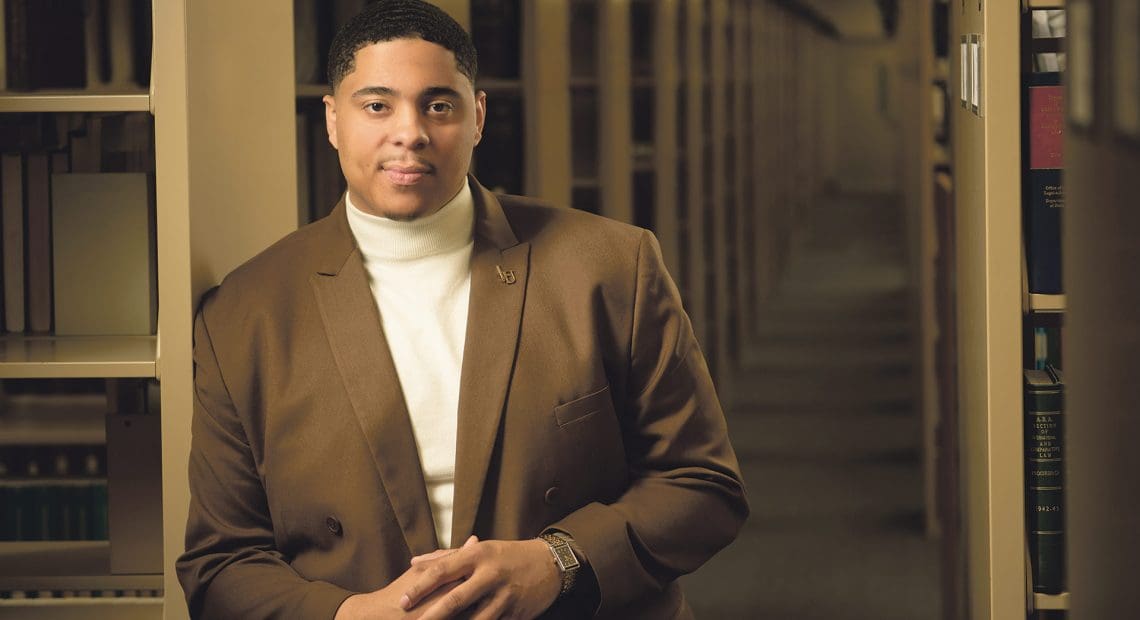
Zeno Temple
Founder, Just Us Movement
He Shows Up Every Day Striving to ‘Get One Better’
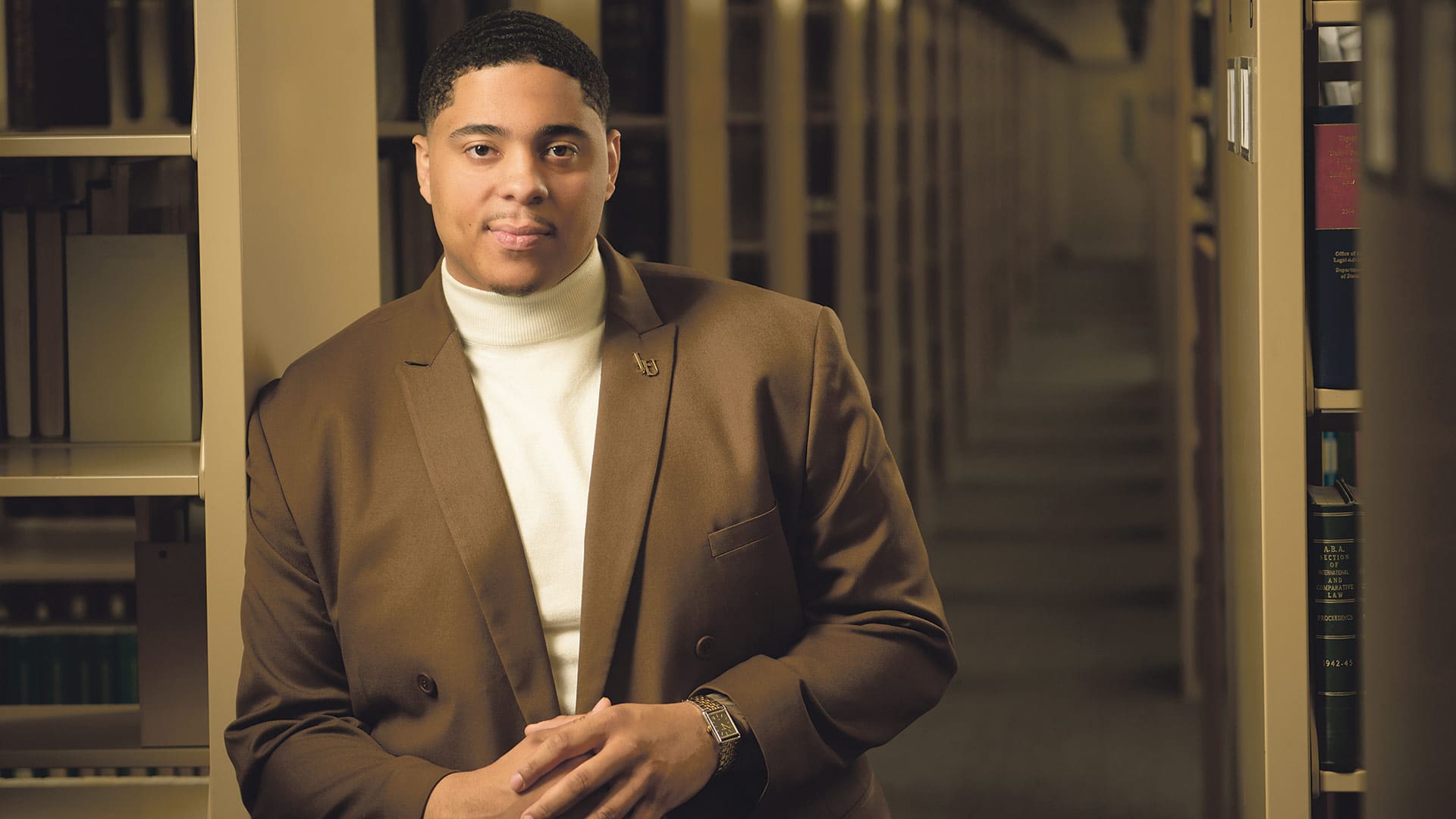
Zeno Temple played football at Western New England University.
He started on the defensive line and eventually moved to offensive guard. He played all four years he was at the school, and the teams he played on did well, winning the Conference of New England title each year and advancing to the Division III playoffs.
Temple, who spent several years working as a community safety outreach specialist at the Hampden County District Attorney’s Office, says he takes a number of lessons from his playing days into his current work — both as a senior legal analyst with the law firm Royal Parker Spruce, working toward becoming a lawyer (he’s on track to graduate from Western New England University School of Law in May and envisions specializing in employment law); and with a nonprofit he launched called the Just Us Movement.
In both cases, he strives to do something his former head coach, Keith Emery, or ‘Coach E,’ always told his players.
“Human rights and civil rights are not things where you can sit back and be like, ‘OK, I have those, and everything will be fine.’ These are things that always have to be advocated for and fought for.”
“He told us, ‘you gotta show up every day and get one better,’” Temple recalled, noting that the one refers to 1%. “He said it every day — ‘one better, one better.’ I keep that handy and ready because it’s true; I try to get one better in some aspect of my life every day.”
This philosophy, if you will, of continually getting 1% better is reflected in the broad mission of the Just Us Movement — to empower individuals, strengthen communities, and dismantle systemic barriers through legal education, health and wellness initiatives, and dynamic leadership programs — and its specific initiatives.
They fall into three categories — education, law, and health — and include everything from a program called Nourish the Neighborhood, through which Temple and his team have served hundreds of families with fresh meals; to a series of Know Your Rights workshops, free webinars covering topics from immigration encounters to mental health in the workplace; as well as the distribution of Red Cards, pocket-sized constitutional rights guides.
Temple is also establishing what he calls the Emerging Leaders Council, a pipeline for young professionals and students entering fields like law, education, and healthcare. It’s designed to cultivate the next generation of justice-driven leaders, he said — people who will carry forward the values of equity, service, and community advocacy.
“Zeno is one of Hampden County’s emerging leaders, whose work is transforming how communities access support, advocacy, and empowerment,” wrote Khadijah Allen, the Just Us Movement’s chief of staff. “His leadership reflects a clear vision — that justice and community well-being must be accessible to everyone, not just those who know how to navigate complex systems. That belief is the foundation of his work and the driving force behind the movement he leads today.
“Zeno is a Difference Maker because he doesn’t just witness inequities — he responds to them with action,” Allen went on. “Through the Just Us Movement, he has built a model of leadership that uplifts, empowers, and unites communities. His work is not only changing individual lives; it is shaping the future of justice and advocacy in Hampden County.”
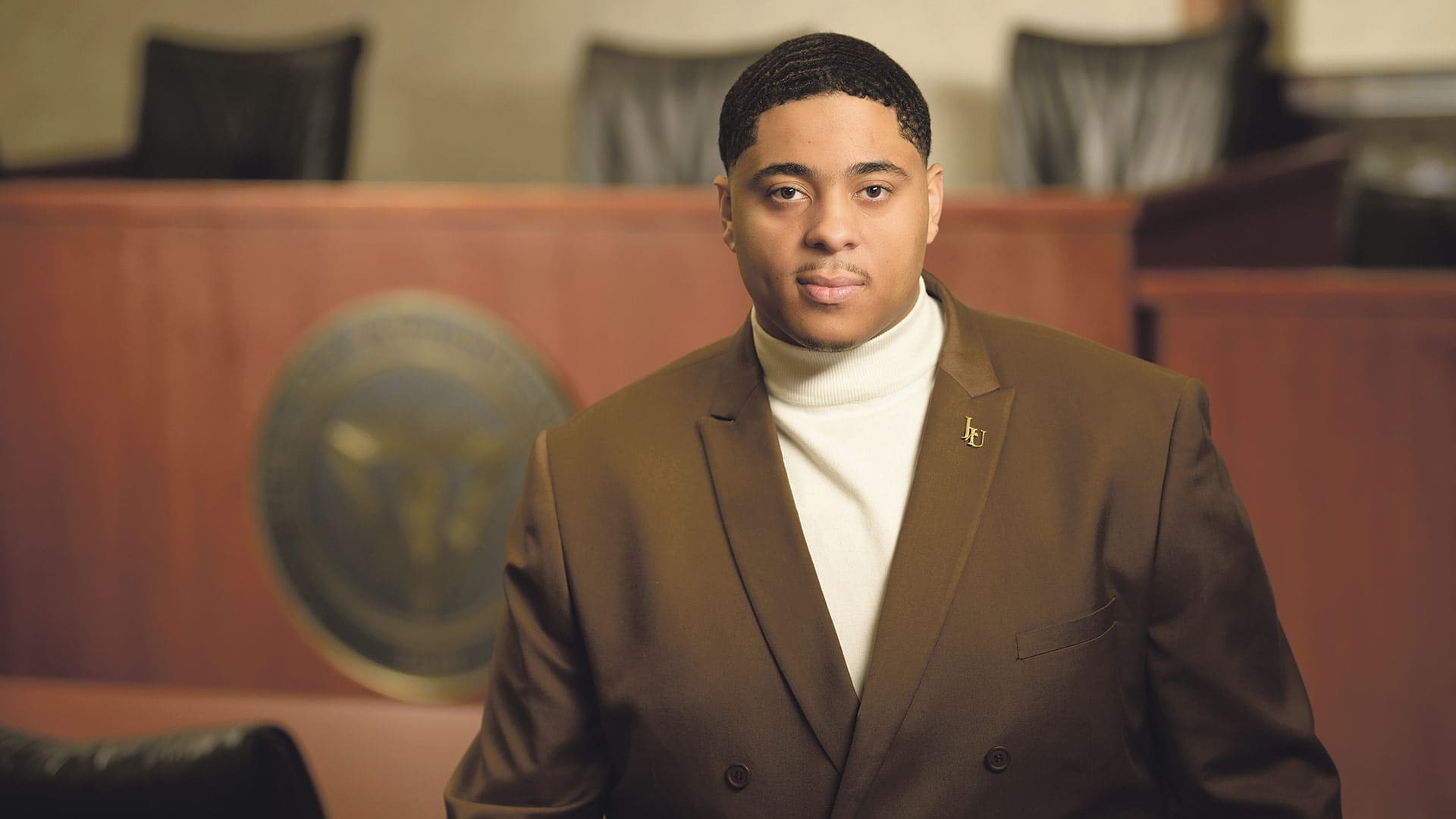
Zeno Temple says the Just Us Movement aims to empower individuals, strengthen communities, and dismantle systemic barriers.
Photo by Bob Zemba, Simple Truth Imaging
Reflecting on what’s been done in the year since he started the nonprofit — and the work still to come — Temple said there are many needs within the community, including equal access to justice.
“It sounds so simple, and it sounds so basic, but it’s true — justice as a whole needs to be accessible to everyone, period. And I don’t think that we’re doing a good enough job of that as a society, and my goal is to make that a reality.”
Knowing the Score
Temple grew up in Philadelphia and recalls that his early aspiration was to become an architect.
“As the years went on, I got more in tune with current events and things that were going on, like Trayvon Martin,” he said, referring to the case of the Florida teenager shot and killed by a neighborhood watch member who claimed self-defense and was eventually acquitted of second-degree murder and manslaughter. “I was glued to the TV and, for the first time, saw what was going on.
“I started becoming more interested in the law,” he went on, adding that this interest, while keen, took a back seat to athletics. He played football in high school and in his senior year commenced a search for schools where he could continue playing.
“I visited a ton of schools and fell in love with Western New England,” he said, adding that, while playing, he also majored in law and society and became a life-skills mentor to younger players on the football team.
“When the freshmen would come in as athletes, we’d be the people to look out for them, help them out, check in on them, make sure their grades were good, and get them any resources they needed,” he recalled, adding that these experiences helped inspire his advocacy efforts to come later.
After graduating in 2020, at the height of the pandemic, he took some time off, went back to Philadelphia, did some policy work, and helped with a few political campaigns, before getting an offer to return to Springfield and work in the DA’s office as a community safety outreach specialist.
In that role, he worked as part of a small unit that worked within the community on several initiatives, everything from school visits to talk with students on a variety of subjects to court tours, by which young people became acquainted with the legal system, from arraignment to trial.
“Zeno is a Difference Maker because he doesn’t just witness inequities — he responds to them with action.”
“It was a cool job … we went into schools across Hampden County, getting to students early and doing prevention work,” Temple explained. “We talked about internet safety, alcohol and drug abuse, driving safety, and more. We had those discussions in big group settings, but also smaller sessions as well.
“Having that connection with the students was amazing,” he went on. “Being out in front of 100 high school students or middle school students and talking about important topics … it was not just educating the students, but also educating myself, trying to keep up on what’s new and what’s happening so we can be most productive and most helpful to the community. It gave me the opportunity to work on my public speaking skills, while also finding lanes to grow as an individual.”
Temple started attending law school at night in 2022, and is closing in on his degree, with intentions to focus on employment law and civil rights. As a paralegal and senior legal analyst at Royal Parker Spruce, he is gaining additional learning experiences while sitting in on mediations and other sessions.
Inspired by several factors — everything from the example set by his mother, a social worker, to the work he’d become involved with at the DA’s office, to various, and obvious, needs within the community, he started the Just Us Movement roughly a year ago.
As noted earlier, the Chicopee-based agency has a broad mission and service area (Western Mass. and Northern Conn.) and several focus points.
These include Nourish the Neighborhood; a Community Earth Day initiative (tree planting and neighborhood beautification); virtual programs to connect community members with information and resources; a back-to-school teacher supply drive in Hartford; participation in the Dignity Grows Partnership, a national initiative that provides hygiene and menstrual care products to individuals experiencing period poverty; a Black Balloon Day webinar on March 6 to join others in honoring those lost to overdose; and more.
The ‘Rights’ Thing to Do
Each of these initiatives grew out of need and a desire to meet it, Temple said, adding that the Nourish the Neighborhood effort is a good example. It was inspired by efforts undertaken by a friend at shelters in Philadelphia.
“I was thinking, ‘we should definitely do something like that up here,” he recalled, adding that the first effort, one that provided meals to more than 70 people — with his mother, also a caterer, doing most of the cooking — was in Hartford, with others to follow in the 413.
“We knew it was the right thing to do and that we were on the right track,” he said, adding that two more events followed over Thanksgiving and Christmas, with more planned for this year.
Another key element of his mission is education, including Know Your Rights seminars. These are free webinars on topics such as “Bridging the Gap: Access to Justice and Community Engagement,” “Know Your Rights: Law Enforcement and Immigration Encounters,” and “Mental Health in the Professional World.”
“We have some amazing people come in and speak on these panels — judges, attorneys, people who work in the community,” he said, adding that there have been seven of these webinars to date, with other subjects ranging from employment law matters to record sealing and expungement, and they are available on YouTube and various social media platforms.
The most recent offering was on Feb. 7, a program on housing featuring officials with the Massachusetts Commission Against Discrimination.
And the response has been very positive, he said, adding that several dozen people have attended the live webinars, and there are usually energetic rounds of Q&A at the end of each one.
Behind these events is the simple philosophy that information is power and that access to justice and the rights that many take for granted is in many cases not equal.
“Human rights and civil rights are not things where you can sit back and be like, ‘OK, I have those, and everything will be fine,’” he said, adding that recent events in Minneapolis and elsewhere have driven home this point. “These are things that always have to be advocated for and fought for, and right now is the most important time to have people speak up for human rights. We need to realize that we all matter.
“The easiest thing to say would be, ‘I want peace and happiness, and things like that,’” he went on. “But we also have to realize that history repeats itself, and we all have to do a better job of learning from history, in all facets of life.”
Looking ahead, Temple wants to keep growing the Just Us Movement and broadening its impact. “I want us to be an organization that reflects the community we serve, and I want it to be an organization that will serve the community based on access to justice.”
This brings him all the way back to that notion of getting 1% better. It’s a personal goal, of course, but also something everyone involved in the Just Us Movement strives for.
“That’s what we do here — 1% better,” he said. “If you try to shoot for 1% better every day for a year, and you reach that, at the end of the year, you’ll be doing well.”
That mindset certainly helps explain why Temple is a Difference Maker.