








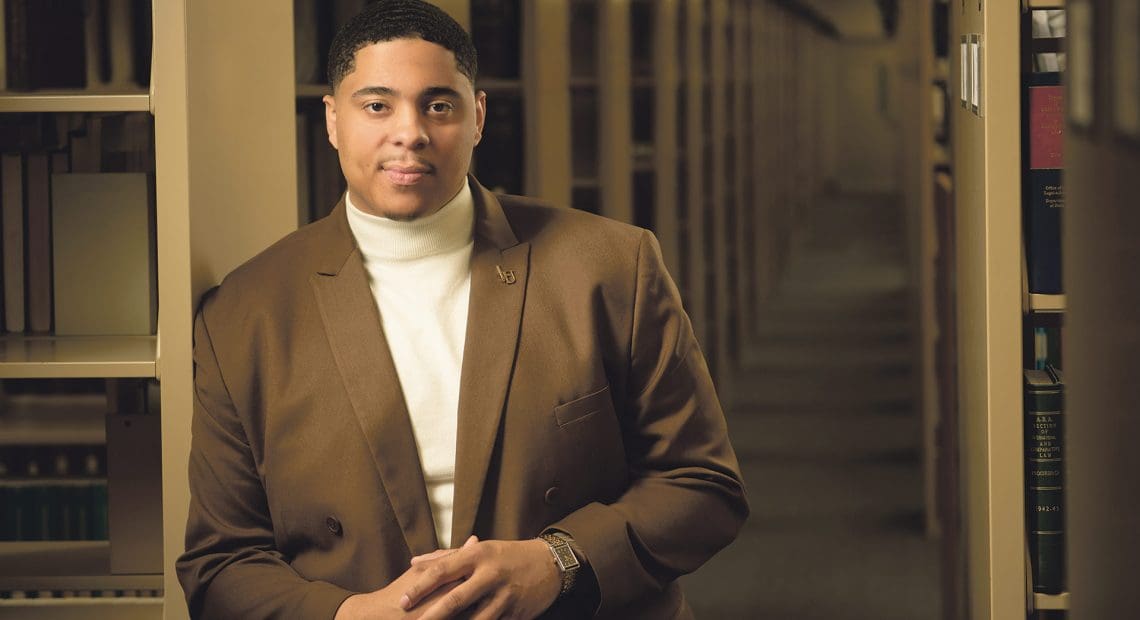
Zeno Temple played football at Western New England University.
He started on the defensive line and eventually moved to offensive guard. He played all four years he was at the school, and the teams he played on did well, winning the Conference of New England title each year and advancing to the Division III playoffs.
Temple, who spent several years working as a community safety outreach specialist at the Hampden County District Attorney’s Office, says he takes a number of lessons from his playing days into his current work — both as a senior legal analyst with the law firm Royal Parker Spruce, working toward becoming a lawyer (he’s on track to graduate from Western New England University School of Law in May and envisions specializing in employment law); and with a nonprofit he launched called the Just Us Movement.
In both cases, he strives to do something his former head coach, Keith Emery, or ‘Coach E,’ always told his players.
“Human rights and civil rights are not things where you can sit back and be like, ‘OK, I have those, and everything will be fine.’ These are things that always have to be advocated for and fought for.”
“He told us, ‘you gotta show up every day and get one better,’” Temple recalled, noting that the one refers to 1%. “He said it every day — ‘one better, one better.’ I keep that handy and ready because it’s true; I try to get one better in some aspect of my life every day.”
This philosophy, if you will, of continually getting 1% better is reflected in the broad mission of the Just Us Movement — to empower individuals, strengthen communities, and dismantle systemic barriers through legal education, health and wellness initiatives, and dynamic leadership programs — and its specific initiatives.
They fall into three categories — education, law, and health — and include everything from a program called Nourish the Neighborhood, through which Temple and his team have served hundreds of families with fresh meals; to a series of Know Your Rights workshops, free webinars covering topics from immigration encounters to mental health in the workplace; as well as the distribution of Red Cards, pocket-sized constitutional rights guides.
Temple is also establishing what he calls the Emerging Leaders Council, a pipeline for young professionals and students entering fields like law, education, and healthcare. It’s designed to cultivate the next generation of justice-driven leaders, he said — people who will carry forward the values of equity, service, and community advocacy.
“Zeno is one of Hampden County’s emerging leaders, whose work is transforming how communities access support, advocacy, and empowerment,” wrote Khadijah Allen, the Just Us Movement’s chief of staff. “His leadership reflects a clear vision — that justice and community well-being must be accessible to everyone, not just those who know how to navigate complex systems. That belief is the foundation of his work and the driving force behind the movement he leads today.
“Zeno is a Difference Maker because he doesn’t just witness inequities — he responds to them with action,” Allen went on. “Through the Just Us Movement, he has built a model of leadership that uplifts, empowers, and unites communities. His work is not only changing individual lives; it is shaping the future of justice and advocacy in Hampden County.”
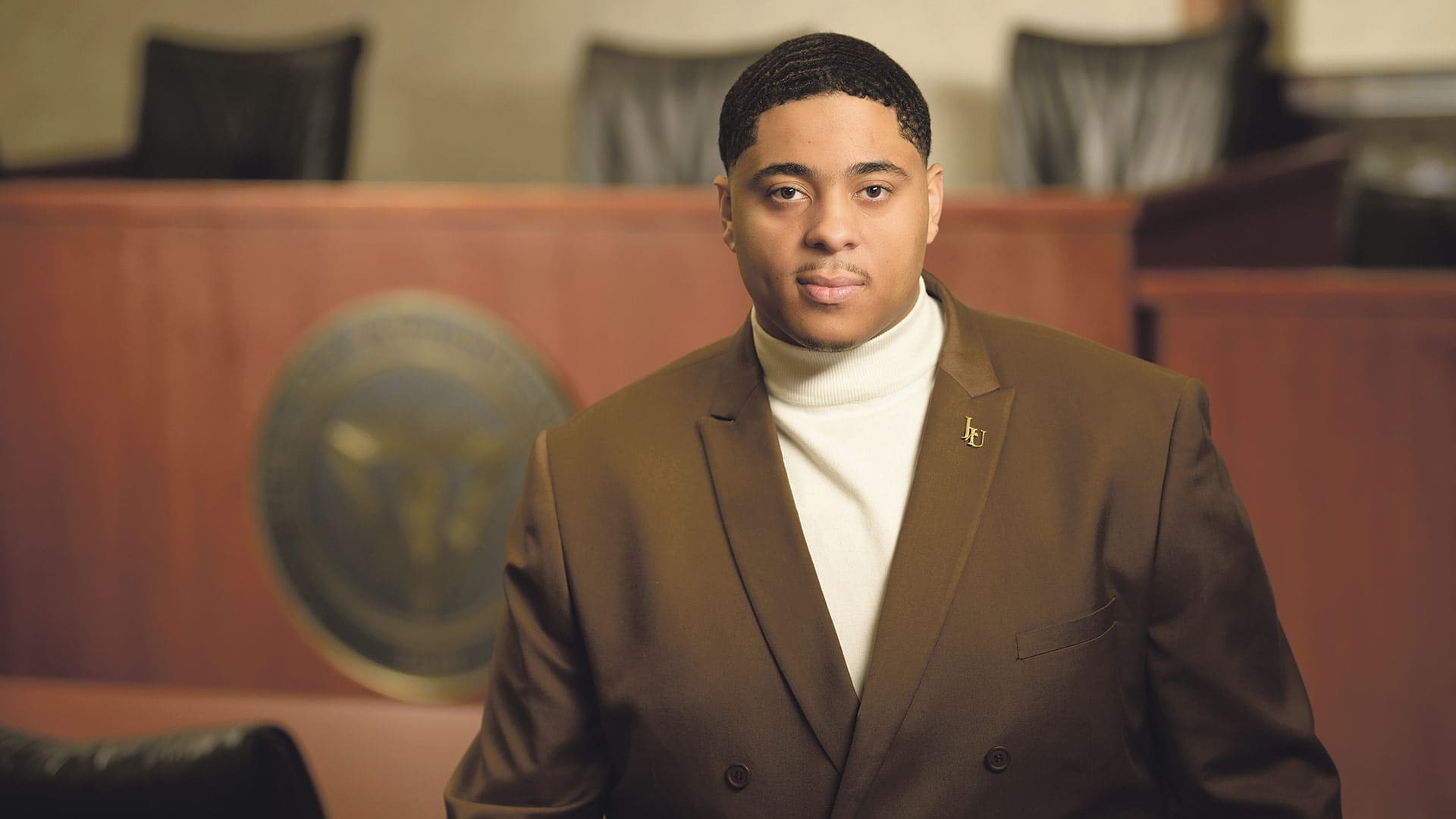
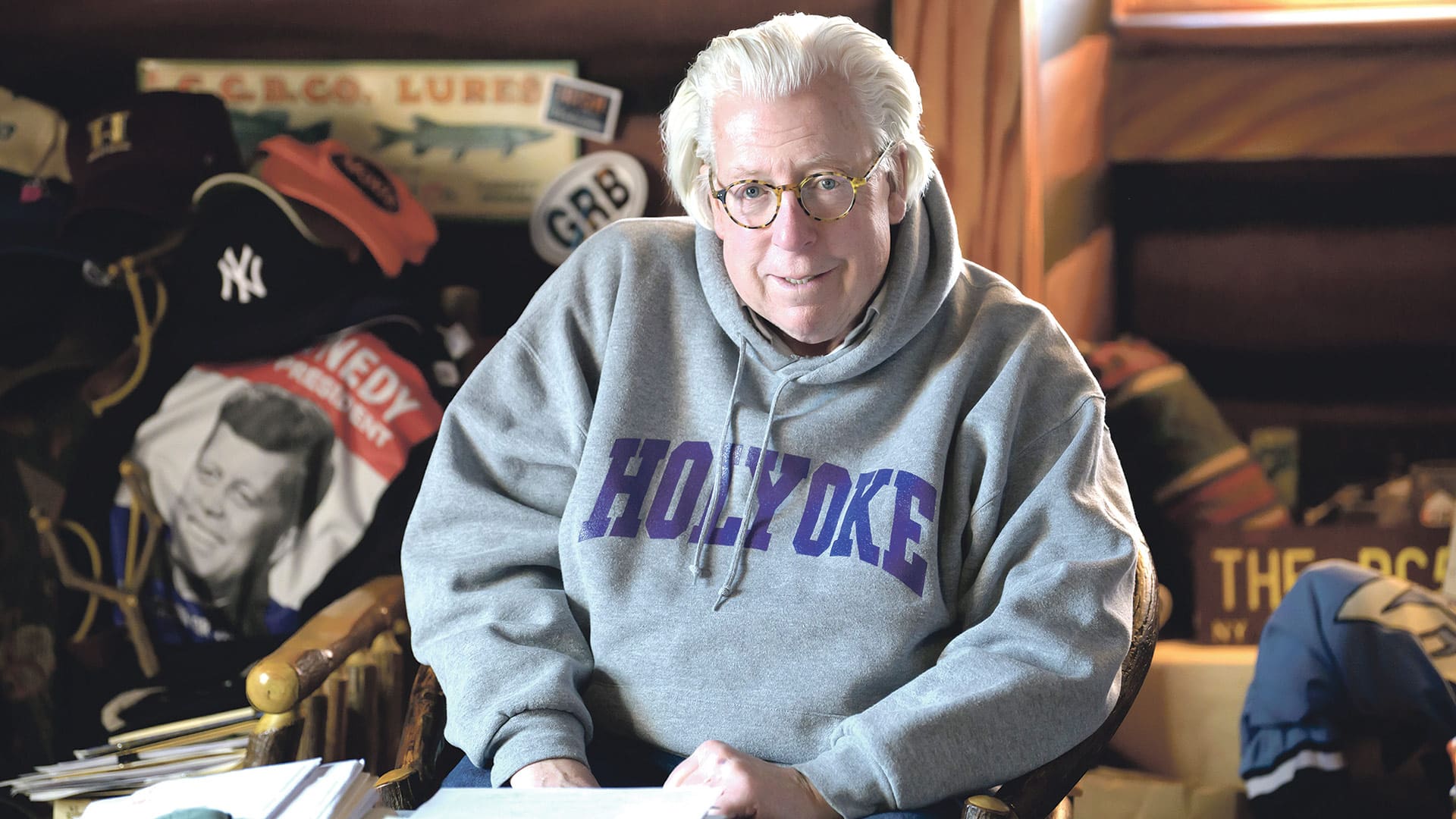
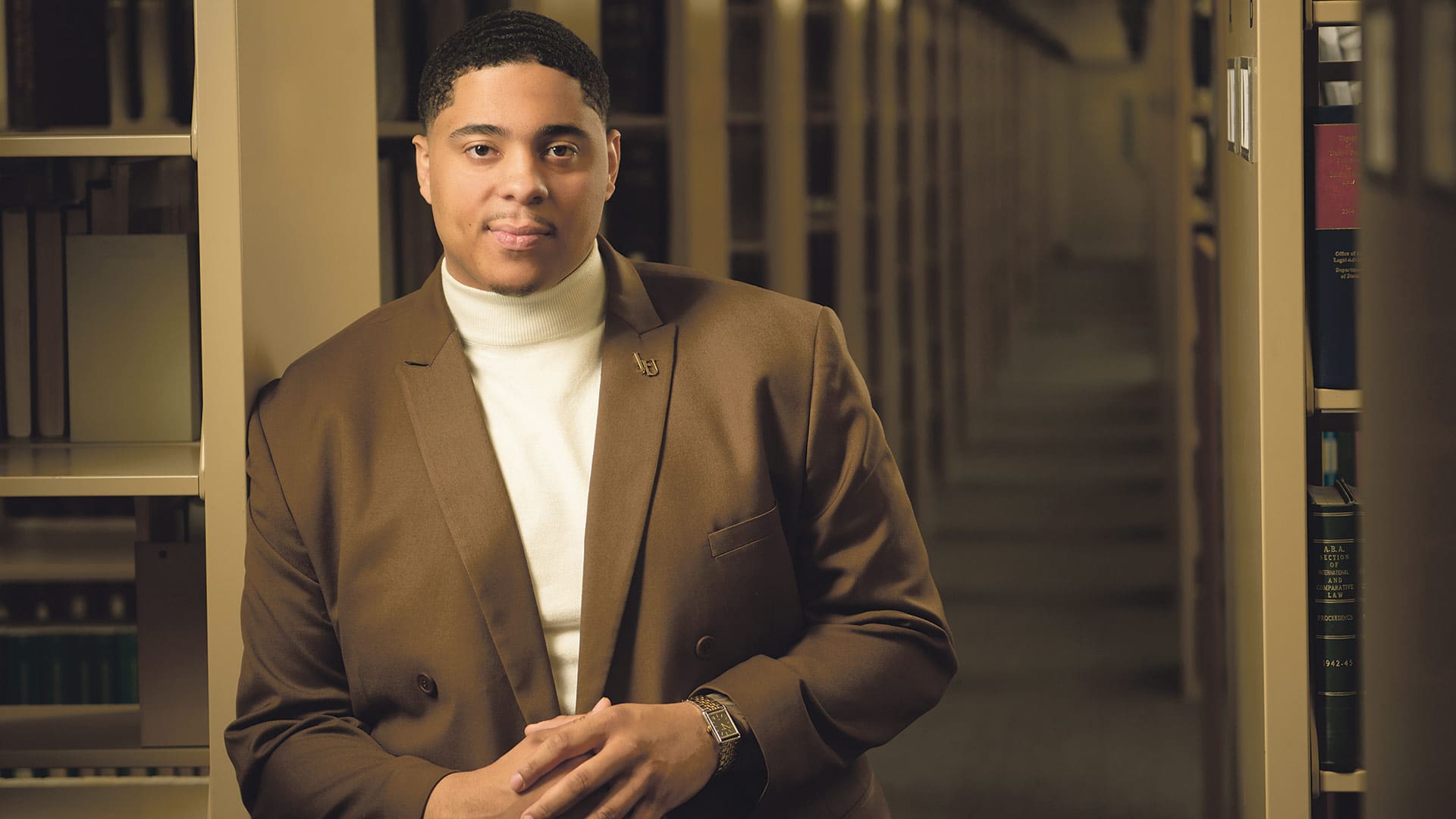
Zeno Temple says the Just Us Movement aims to empower individuals, strengthen communities, and dismantle systemic barriers.
Photo by Bob Zemba, Simple Truth Imaging
Reflecting on what’s been done in the year since he started the nonprofit — and the work still to come — Temple said there are many needs within the community, including equal access to justice.
“It sounds so simple, and it sounds so basic, but it’s true — justice as a whole needs to be accessible to everyone, period. And I don’t think that we’re doing a good enough job of that as a society, and my goal is to make that a reality.”
Temple grew up in Philadelphia and recalls that his early aspiration was to become an architect.
“As the years went on, I got more in tune with current events and things that were going on, like Trayvon Martin,” he said, referring to the case of the Florida teenager shot and killed by a neighborhood watch member who claimed self-defense and was eventually acquitted of second-degree murder and manslaughter. “I was glued to the TV and, for the first time, saw what was going on.
“I started becoming more interested in the law,” he went on, adding that this interest, while keen, took a back seat to athletics. He played football in high school and in his senior year commenced a search for schools where he could continue playing.
“I visited a ton of schools and fell in love with Western New England,” he said, adding that, while playing, he also majored in law and society and became a life-skills mentor to younger players on the football team.
“When the freshmen would come in as athletes, we’d be the people to look out for them, help them out, check in on them, make sure their grades were good, and get them any resources they needed,” he recalled, adding that these experiences helped inspire his advocacy efforts to come later.
After graduating in 2020, at the height of the pandemic, he took some time off, went back to Philadelphia, did some policy work, and helped with a few political campaigns, before getting an offer to return to Springfield and work in the DA’s office as a community safety outreach specialist.
In that role, he worked as part of a small unit that worked within the community on several initiatives, everything from school visits to talk with students on a variety of subjects to court tours, by which young people became acquainted with the legal system, from arraignment to trial.
“Zeno is a Difference Maker because he doesn’t just witness inequities — he responds to them with action.”
“It was a cool job … we went into schools across Hampden County, getting to students early and doing prevention work,” Temple explained. “We talked about internet safety, alcohol and drug abuse, driving safety, and more. We had those discussions in big group settings, but also smaller sessions as well.
“Having that connection with the students was amazing,” he went on. “Being out in front of 100 high school students or middle school students and talking about important topics … it was not just educating the students, but also educating myself, trying to keep up on what’s new and what’s happening so we can be most productive and most helpful to the community. It gave me the opportunity to work on my public speaking skills, while also finding lanes to grow as an individual.”
Temple started attending law school at night in 2022, and is closing in on his degree, with intentions to focus on employment law and civil rights. As a paralegal and senior legal analyst at Royal Parker Spruce, he is gaining additional learning experiences while sitting in on mediations and other sessions.
Inspired by several factors — everything from the example set by his mother, a social worker, to the work he’d become involved with at the DA’s office, to various, and obvious, needs within the community, he started the Just Us Movement roughly a year ago.
As noted earlier, the Chicopee-based agency has a broad mission and service area (Western Mass. and Northern Conn.) and several focus points.
These include Nourish the Neighborhood; a Community Earth Day initiative (tree planting and neighborhood beautification); virtual programs to connect community members with information and resources; a back-to-school teacher supply drive in Hartford; participation in the Dignity Grows Partnership, a national initiative that provides hygiene and menstrual care products to individuals experiencing period poverty; a Black Balloon Day webinar on March 6 to join others in honoring those lost to overdose; and more.
Each of these initiatives grew out of need and a desire to meet it, Temple said, adding that the Nourish the Neighborhood effort is a good example. It was inspired by efforts undertaken by a friend at shelters in Philadelphia.
“I was thinking, ‘we should definitely do something like that up here,” he recalled, adding that the first effort, one that provided meals to more than 70 people — with his mother, also a caterer, doing most of the cooking — was in Hartford, with others to follow in the 413.
“We knew it was the right thing to do and that we were on the right track,” he said, adding that two more events followed over Thanksgiving and Christmas, with more planned for this year.
Another key element of his mission is education, including Know Your Rights seminars. These are free webinars on topics such as “Bridging the Gap: Access to Justice and Community Engagement,” “Know Your Rights: Law Enforcement and Immigration Encounters,” and “Mental Health in the Professional World.”
“We have some amazing people come in and speak on these panels — judges, attorneys, people who work in the community,” he said, adding that there have been seven of these webinars to date, with other subjects ranging from employment law matters to record sealing and expungement, and they are available on YouTube and various social media platforms.
The most recent offering was on Feb. 7, a program on housing featuring officials with the Massachusetts Commission Against Discrimination.
And the response has been very positive, he said, adding that several dozen people have attended the live webinars, and there are usually energetic rounds of Q&A at the end of each one.
Behind these events is the simple philosophy that information is power and that access to justice and the rights that many take for granted is in many cases not equal.
“Human rights and civil rights are not things where you can sit back and be like, ‘OK, I have those, and everything will be fine,’” he said, adding that recent events in Minneapolis and elsewhere have driven home this point. “These are things that always have to be advocated for and fought for, and right now is the most important time to have people speak up for human rights. We need to realize that we all matter.
“The easiest thing to say would be, ‘I want peace and happiness, and things like that,’” he went on. “But we also have to realize that history repeats itself, and we all have to do a better job of learning from history, in all facets of life.”
Looking ahead, Temple wants to keep growing the Just Us Movement and broadening its impact. “I want us to be an organization that reflects the community we serve, and I want it to be an organization that will serve the community based on access to justice.”
This brings him all the way back to that notion of getting 1% better. It’s a personal goal, of course, but also something everyone involved in the Just Us Movement strives for.
“That’s what we do here — 1% better,” he said. “If you try to shoot for 1% better every day for a year, and you reach that, at the end of the year, you’ll be doing well.”
That mindset certainly helps explain why Temple is a Difference Maker.
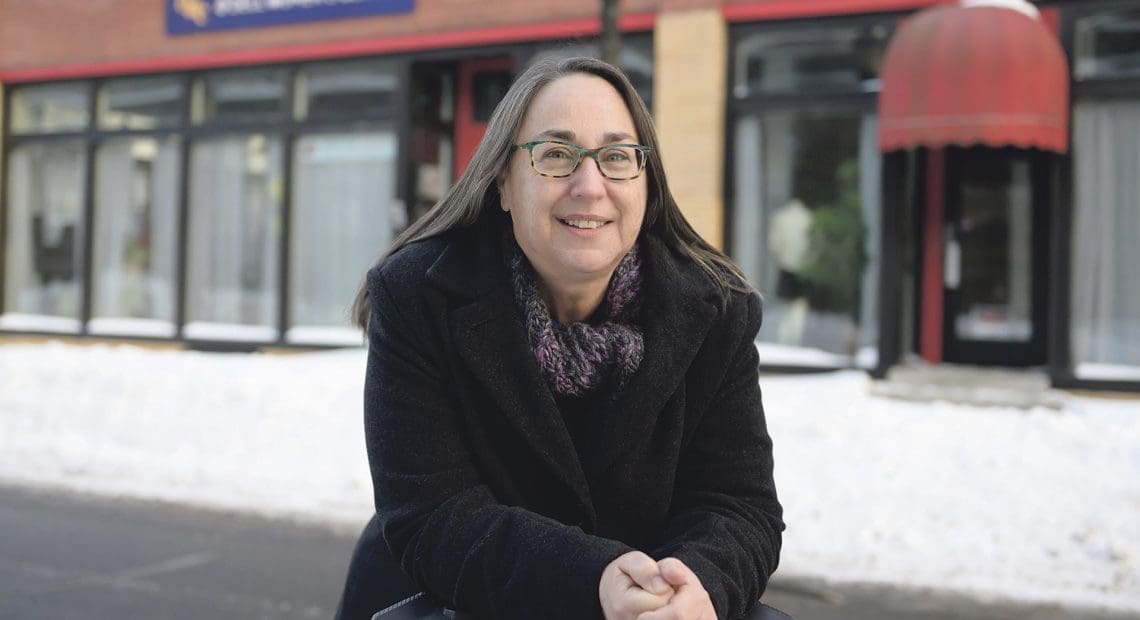
Margaret Tantillo has spent her entire career in the nonprofit space, much of it with the Girl Scouts, and then for almost a decade leading Dress for Success Western Massachusetts.
“I’ve always worked in organizations in support of women and girls — and that was purposeful. I had a passion for it,” she said.
“There were some experiences that led me to understand that women are treated differently, and that there’s a need for women to support each other,” she added, citing a persistent wage gap between men and women as one example.
“Women take the more responsibility for childcare, for elder support. So there are benefits to lifting women up — especially the women that we serve,” she went on, referring to her latest role, which she accepted in early 2024, as executive director of the O’Dell Women’s Center, a philanthropic organization that supports low-income women in and around Springfield in a variety of ways.
“I’ve always said that not everybody gets dealt the same cards, and my hope, personally, is to sort of even the playing field,” Tantillo explained. “I could have just as easily been born into a household that was not well-off financially, and that would have been my barrier to overcome. But the hand I was dealt was middle-class, and there was no question I was going to go to college.
“Margaret’s dedication ensures that women and families have stability and access to essential resources during difficult times.”
“So for me personally, it’s like, where’s the fairness?” she went on. “We’re all getting different opportunities, and and they’re just not equal, so by working in women’s organizations, what can I do to even the playing field?”
The O’Dell Women’s Center was inspired by Connie O’Dell, who served for more than 40 years as a maternity nurse at Providence Hospital and dedicated her life to caring for women with dignity, compassion, and respect. Founded in 2023, the center occupies a 10,000-square-foot facility in the heart of Springfield.
Its most visible arm is its foundation, which provides grants, typically ranging from $10,000 to $75,000, to local nonprofits that advance educational, workforce, and career development opportunities for low-income women, as well as nonprofit organizations that address systemic barriers, such as food insecurity, childcare access, transportation, and housing instability.
The foundation distributed $550,000 in 2025 to support women and families across Springfield, and an estimated $750,000 in grants will be awarded in 2026.
The center also houses Dress for Success Western Massachusetts, which was displaced from its longtime home at the Eastfield Mall when that complex was about to be torn down and redeveloped. The O’Dell Women’s Center offered it about 5,000 square feet of space — more than $80,000 in free rent annually — to continue its work without interruption, said Jessica Roncarati-Howe, who succeeded Tantillo as head of the organization in 2024 — and is one of two individuals who nominated her as a Difference Maker.

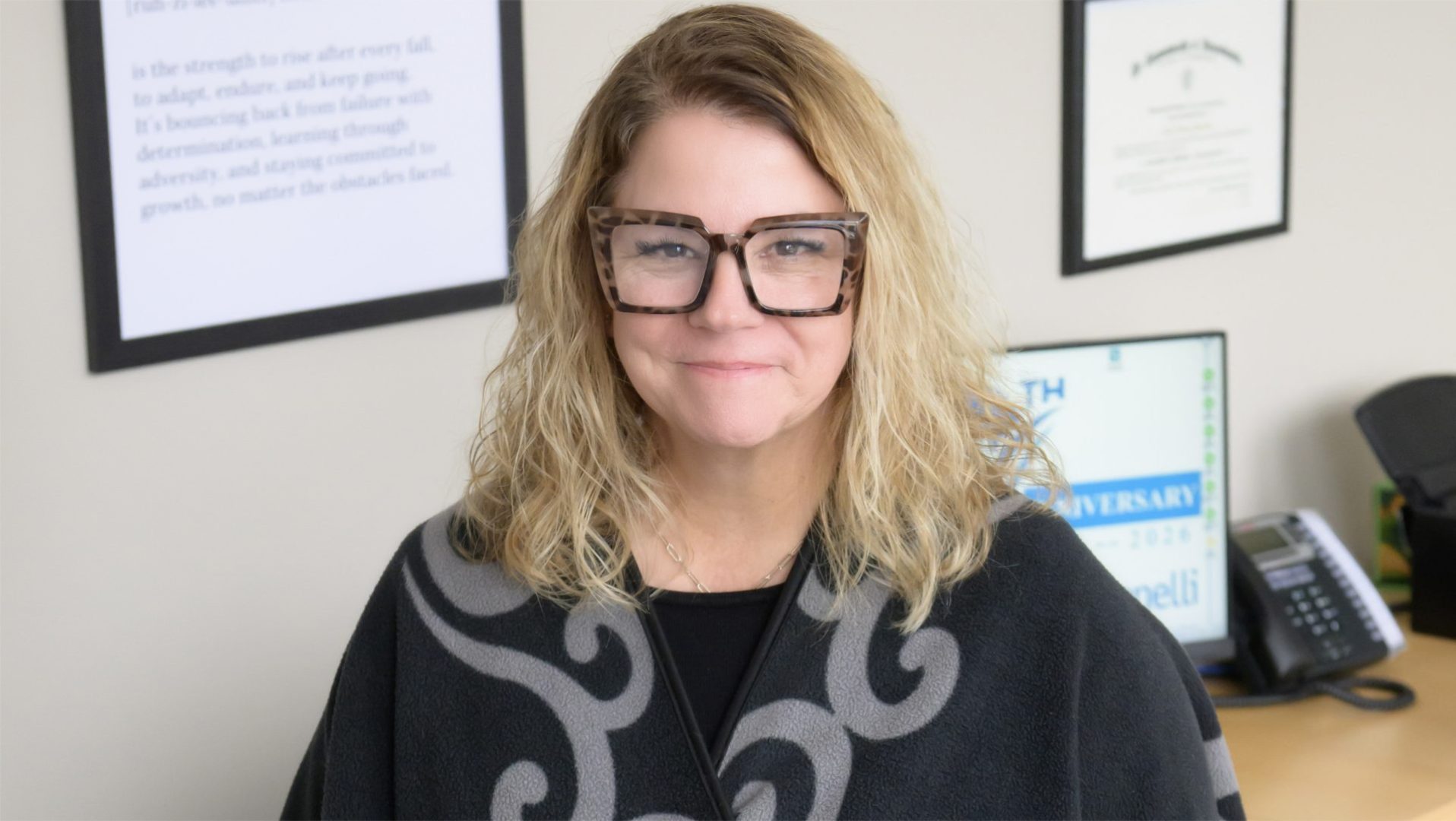
Margaret Tantillo says she understands Springfield and its needs, and is grateful to be in a place where she can make an impact.
Photo by Bob Zemba, Simple Truth Imaging
“This single act ensured that hundreds of women in Springfield and surrounding communities could still access professional clothing, employment coaching, career development, programming, and the support networks that help them thrive,” Roncarati-Howe said. “The O’Dell Women’s Center did not just give us space; they gave us stability, dignity, and the ability to keep serving women who rely on us every day.
“What impresses us most is that this generosity is not an exception — it is the model,” she added. “The Odell Women’s Center provides free gathering and meeting space for women’s groups and is actively seeking additional nonprofits to join the building at low or no cost. Their goal is to create a true community hub where women can access multiple resources under one roof, reducing barriers and strengthening the social and economic fabric of Springfield.”
“We’re hoping to see quality relationships that align with our values of treating women with compassion, not assuming what other women need, but kind of walking hand in hand to provide that support.”
Mydalis Vera, founder of Guerrera Writer and a volunteer at the center, noted its support of food pantries during a particularly challenging time for food insecurity, pointing out that the center distributed $100,000 in emergency support to Springfield-area pantries late last year, helping families navigate the pressures of SNAP benefit changes and a temporary federal government shutdown.
“Margaret’s dedication ensures that women and families have stability and access to essential resources during difficult times,” Vera said, adding that Tantillo also spearheaded a successful diaper drive, partnering with local agencies to collect more than 40,000 diapers and registering more than 200 families to receive this essential support. “Her tireless commitment to uplifting women and families, providing practical assistance, and fostering long-term stability truly sets her apart as a leader and changemaker in the community.”
In her former role as executive director of Dress for Success Western Massachusetts, Tantillo increased the budget sevenfold and grew the organization from one program to five, all in the service of helping unemployed and underemployed women achieve economic independence. And, as Roncarati-Howe noted, it was a natural fit to operate out of the O’Dell building in downtown Springfield.
“Dress for Success is its own nonprofit; they have their own board of directors and run their own thing,” Tantillo explained. “We have a very collaborative relationship, and now it’s like, ‘what else can we bring in to support women?’ It’s a slow build. In some ways, we’re providing the next step, the next circle of resources for women.”
The funding for Dress for Success’ rent-free tenancy comes from the O’Dell Women’s Center’s family foundation, she added.
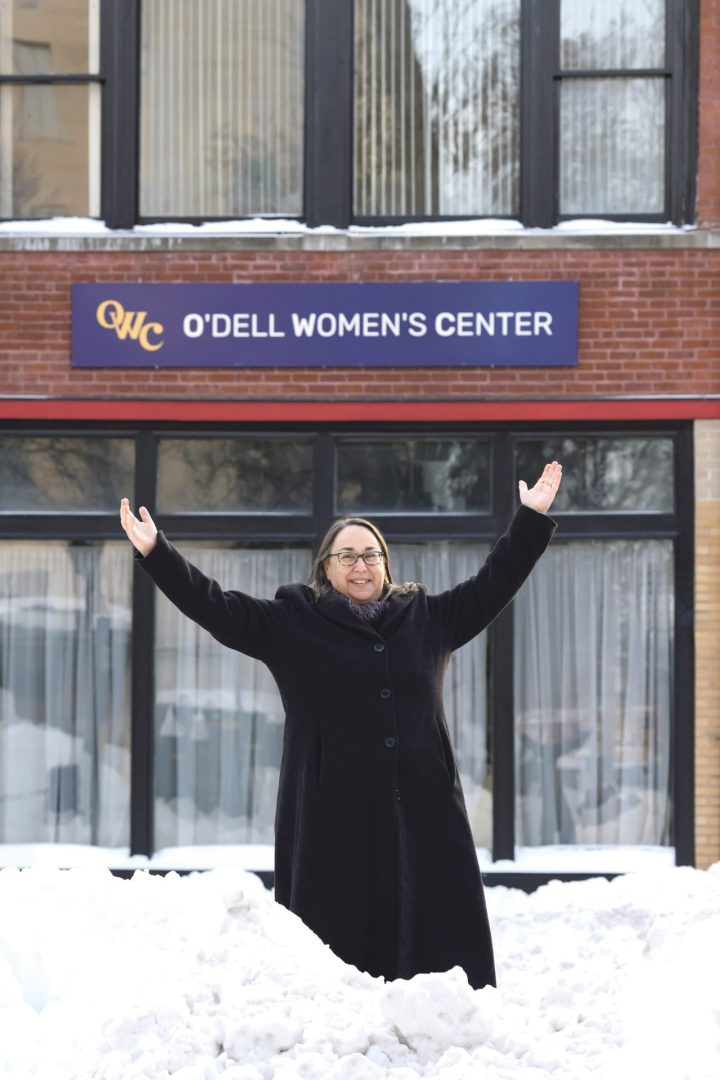
Margaret Tantillo says it’s important to lift women up, and she’s spent much of her career doing just that.
Photo by
Bob Zemba, Simple Truth Imaging
“These partnerships reflect our belief that economic stability is built through coordinated, community-driven solutions,” said Keely Krantz, founder and president of the O’Dell Women’s Center Foundation. “When women have access to basic needs, education, and career opportunities, entire families and communities are strengthened.”
To demonstrate how the O’Dell grants target the upward mobility of women, the 2025 grantees included:
• Bay Path University, to support a new emergency assistance initiative for Springfield-based students facing unexpected crises, including housing instability, transportation challenges, and lack of basic necessities, helping women remain enrolled and complete their education;
• Dress for Success Western Massachusetts, to provide a continuum of career support, including professional attire, career readiness, coaching, and advancement services that help women achieve long-term financial independence;
• Girls Inc. of the Valley, to continue supporting the Eureka! Program, a no-cost, five-year STEM initiative that empowers girls to envision themselves as part of the future workforce through hands-on learning and sustained mentorship;
• The Gray House, to strengthen adult education services for low-income migrants and refugees, including ESOL (English for speakers of other languages) instruction paired with essential life and job skills training;
• It Takes a Village, to expand basic needs programming that fills critical service gaps for low-income women and families, helping remove survival-level barriers to economic stability;
• MassHire Holyoke, to implement the GLOW program in Springfield, a holistic workforce initiative combining intensive case management, job placement, and wrap-around supports to address barriers such as childcare, transportation, housing instability, and digital skill gaps;
• South End Community Center, to provide out-of-school programming that offers safe, reliable childcare through after-school, vacation, summer, and school-closure programs, supporting parents’ ability to work and pursue education;
• Tech Foundry, to deliver digital literacy instruction, professional development, and career mapping for women participating through YWCA programming; and
• United Way of Pioneer Valley, to expand direct services for underserved women by increasing food pantry access and strengthening Thrive Financial Wellness programming through individualized financial coaching.
As the center’s executive director, Tantillo ensures that the grants are directed in the most impactful ways and that the building’s physical resources are used responsibly, and most of those efforts specifically help women navigate barriers to stability and build sustainable futures, she explained.
“I understand Springfield and its needs, and I work very closely with the founder, who is one of the kindest, smartest women I’ver ever met,” she said of Krantz. For example, “with that emergency food funding, I said, ‘this is what’s going on with SNAP. I think we need to do this.’ And she said, ‘yes, that makes sense.’”
The decision wound up putting the planned grant outlay for 2025 $50,000 over the original budget, but the issue was deemed an urgent one. So Tantillo went about approaching area food pantries directly to get a sense of how many people they serve and what their needs were, then facilitated the grants.
While most of the center’s work focuses on providing a path to academic stability through career advancement and education, the $100,000 outlay for food pantries isn’t as much of an outlier among the other grants as it might seem.
“In the organizations that we provided funding for, you’ll see those [career] paths as well as some basic needs, because there are a lot of barriers for women,” Tantillo explained. “Like, we didn’t necessarily fund childcare, but we fund out-of-school programming, so when women are working, there’s a safe space for their children to go. So we’re going from immediate needs, basic needs, to supporting long-term opportunities.”
As part of that effort to connect women with education and career opportunities, the center is piloting something called the Bridging Navigator Peer to Peer mentorship program, which pairs mentors with lived experience with low-income women to help connect them with resources and pathways that lead to educational and career advancement.
One of those navigators is Areliz Barbosa, an assistant professor at Bay Path University and one of BusinessWest’s Healthcare Heroes last fall, who has often spoken about the dire challenges she has had to overcome in life.
“I was shocked to hear that she slept on a bench for a little while,” Tantillo said. “We’re going to pair her with a woman who may be in a situation where she can’t see her future — because she certainly has achieved a professional level of success.”
If the pilot expands, she added, “we’re hoping to see quality relationships that align with our values of treating women with compassion, not assuming what other women need, but kind of walking hand in hand to provide that support. The Bridging Navigator program will probably help women access social services or steer them toward Dress for Success or encourage them to take a training or go to community college to get that certificate.”
The O’Dell Women’s Center also offers free space for clients and community nonprofits to use, including a small, private conference room; an office with several desks; and a large, central meeting or presentation space. Tantillo said the center has also forged a partnership with MassHire Hampden County Workforce Board, which will physically place a representative in the building.
Meanwhile, she added, with nonprofits facing a tough funding landscape, she would like to bring area organizations together to determine what efficiencies exist and how they can complement each other’s services.
These are just some of the ways Tantillo brings people and resources together with the general goal of elevating women — which she has done, in some form, over her entire career.
“I just provide the opportunity, and people kind of join in,” she said. And by doing so, she continues to be a true Difference Maker.
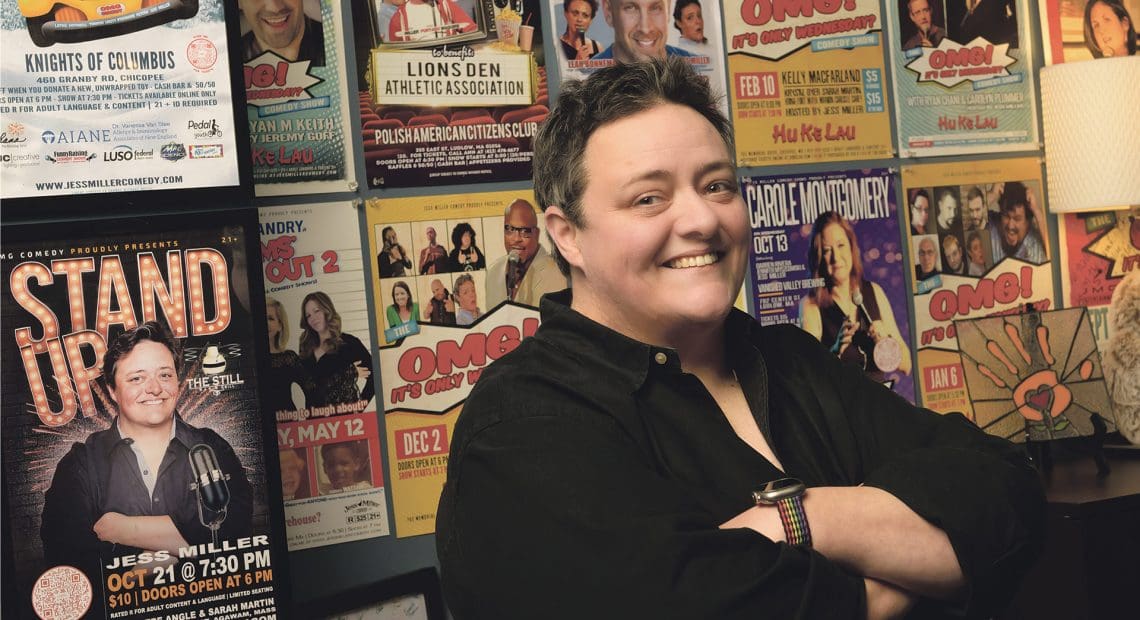
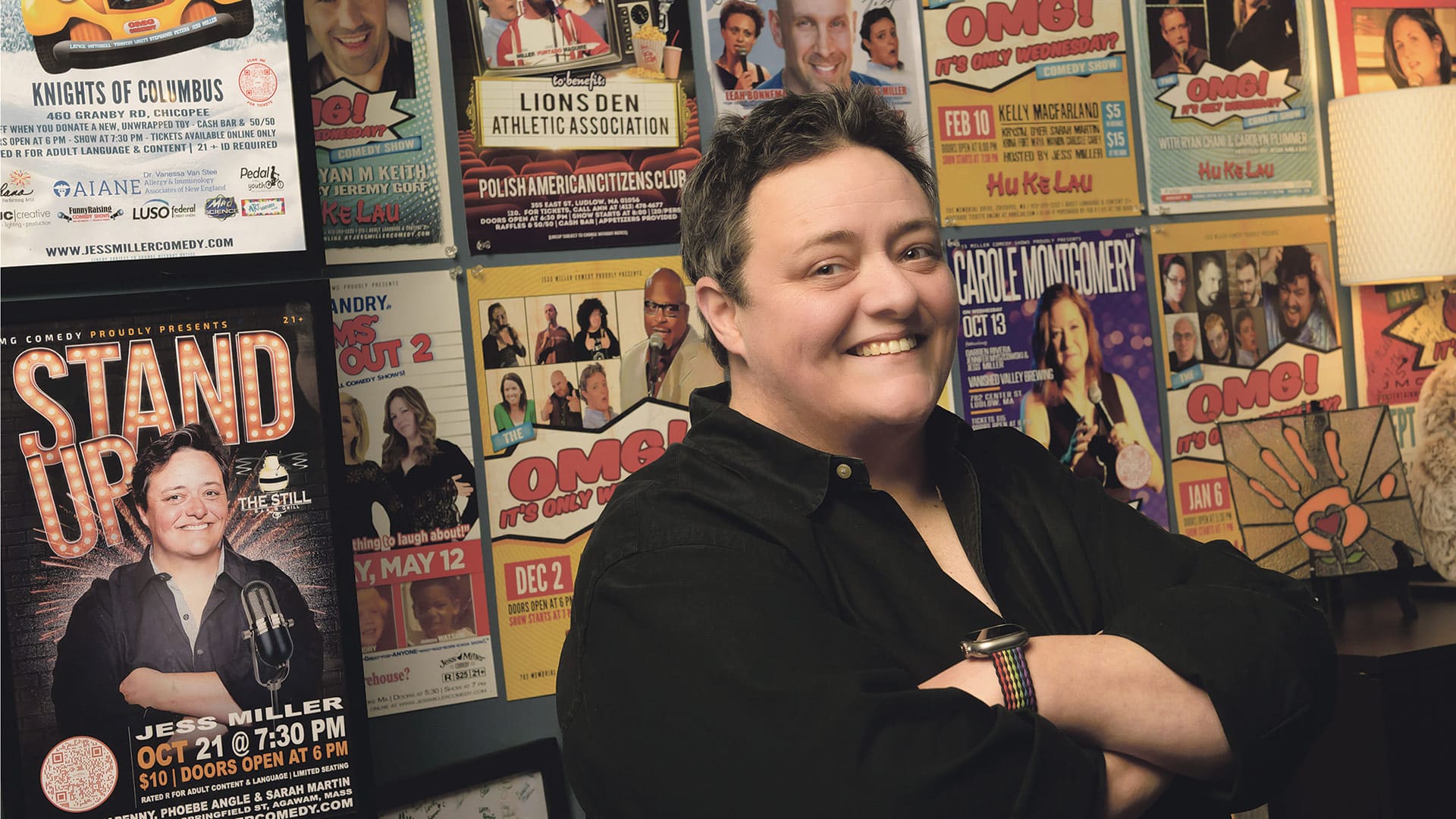
Jess Miller has survived plenty of struggle.
She lost her mother to a divorce when she was 8, then had a traumatic experience in the Army, then lost her mother again — this time permanently, to suicide — a few years after that.
But difficult experiences can be motivators, too — in her case, to spread kindness in a hard world.
“Being kind is just caring about people, right?” she said. “If you’re kind, you actually care about doing good things for other people. That’s kind of my philosophy.”
It’s a credo that led to Miller performing stand-up comedy starting about 15 years ago and turning those shows into benefits for local nonprofits — and, eventually, to her creation of the Kind Squad. First a Facebook page launched in 2015 and now an official 501(c)(3) nonprofit, it’s essentially a collection of people who gather online to donate to fundraising drives aimed at helping people in need — or just making someone’s day.
Miller explained the humble origins of the organization. In 2020, during the pandemic, she wanted to do something to contribute to the community and started a campaign called Art Kits for Foster Kids, posting about it in the Facebook group to solicit donations.
One member expressed interest in donating, but mentioned not having enough money to pay her own water bill. Miller calculated that, if 100 people donated $3 each, they could help cover the bill. So they did, and the model was born — what is now thousands of people who take up the call for small donations that collectively add up, leading annual campaigns ranging from Art Kits for Foster Kids and Mother’s Day Flowers for Foster Moms to the pre-holiday Western Mass. Toy Drive, which, this past December, collected more than $100,000 in toys, which were distributed in partnership with numerous agencies.
“The Kind Squad is built on a simple but powerful mission: to show children and families in need that they matter — and that their community truly cares.”
In all, the Kind Squad has raised approximately $300,000 not just for those annual campaigns, but for one-time requests that come in from across the region — and the entire U.S., for that matter.
“Maybe this homeless shelter needs a little jungle gym. I literally write everybody’s donations out, I buy the stuff, I put the receipt out — 100% in, 100% out. And that’s kind of how we’ve been. It’s micro-philanthropy — just people who want to give.”
Karin Jeffers, president and CEO of Clinical & Support Options (CSO), who nominated Miller as a Difference Maker, appreciates how the spirit of the Kind Squad goes well beyond helping others and speaks to the meaning of kindness itself.
“The Kind Squad is built on a simple but powerful mission: to show children and families in need that they matter — and that their community truly cares,” Jeffers said. “The Kind Squad has helped literally thousands of children and families, providing toys, essential items, emotional support, and moments of joy during some of the most difficult times of their lives. Jess leads this work with no expectation of recognition or reward. Her motivation is purely selfless: to make a real difference, one family at a time.”

Long before Jess Miller launched the Kind Squad, she was using her comedy platform to raise funds for nonprofits.
Photo by Bob Zemba, Simple Truth Imaging
Jeffers pointed out the recent toy drive’s haul and its “extraordinary impact” on families. “She ensured that countless kids experienced the magic of the holidays — many for the first time. But Jess’s work goes far beyond gifts. She understands that what families often need most is reassurance: the knowledge that they are not forgotten, that someone sees them, and that kindness still exists. By showing up with compassion, consistency, and heart, Jess delivered something even more meaningful than toys — hope.”
That’s real impact — generated by a true Difference Maker.
Miller’s foray into performing in public didn’t get off to the most auspicious start — she tried out for America’s Got Talent.
“I didn’t do comedy; I sang. And I killed the song. I literally killed it. Not in a good way, but in a very, very bad way,” she recalled. “But I had fun, and I wanted to do that again. I love performing.”
So she took some acting classes — “because I really sucked” — and eventually landed a part in the musical Rent at Exit 7 Theater in Ludlow. She enjoyed that a lot, but had an itch for comedy, so she took a comedy class at Carolines in New York City, then tried some improv in Boston.
Progress was slow — she auditioned for another musical as well, but didn’t get cast — before one of her teachers gave her some advice: “if you want to do comedy and you’re not getting gigs, book yourself — post your own shows.”
So around 2013, Miller produced her first comedy show — a fundraiser for foster kids for the Massachusetts Society for the Prevention of Cruelty to Children (MSPCC). In fact, comedy benefits were the model right from the start — make people laugh, raise money for a good cause.
“Then I started doing monthly performances called the OMG! It’s Only Wednesday comedy show. Every month, we would try to do something to benefit the community. So, if it was bringing a can of food, you’d get five bucks off a ticket. Tickets were already cheap. But bring a coat, bring in hygiene products, you get five dollars off a ticket,” she explained. “I think, when you’re in business, you should be grateful that people support you, and try to give back to your community.”
A few years later, she opened up a venue in downtown Springfield, called the OMG! Comedy Club, that ran into issues with the landlord, and that project eventually shut down. “That was just before COVID, though, which may have been a good thing,” she said.
Which brings her story to 2020, when the Kind Squad — due to that woman reaching out about an unpaid water bill — started to become more than a Facebook page. “It just stacked up from there. We’re close to $300,000 at this point, just doing little missions like that.”
The week before she spoke with BusinessWest, Miller and her team of volunteers had completed a coat collection for a homeless shelter, and they’re constantly receiving other requests from far and wide that the Kind Squad community, currently about 2,700 strong, quickly responds to.
Miller’s wife, Stephanie Greenberg, partially explained why foster kids and foster moms are so important to the nonprofit’s work.
“I think it’s important to be able to give to kids because they don’t have a voice — especially foster kids. I mean, they get nothing. I used to be a teacher, and when they get moved, they just get a trash bag full of whatever they had in their house that they were able to grab at the time. And it’s just sad to see that. So anything we can do to make their lives, especially the holidays, a little happier for them, I think it’s good.”
Kim Dougherty, a volunteer with the Kind Squad, said the model works because each individual commitment is very light — the power is in the accumulation of all those tiny donations.
“It’s not a matter of, ‘oh my God, we need to give 100 bucks.’ You can give $1.25, and if we all give $1.25, look at what we can do. It gets infectious because you want to spread it to everybody else — to say, ‘hey, look at this. It’s minimal; it’s really not a lot.’ How many people can throw a dollar aside? Most of us can. So I think the simplicity of it was what drew me in — it’s not going to take all my time. It’s not going to take a ton of money. It’s simple. And that’s why it works.”
“And if you can’t give a dollar,” Greenberg added, “it’s not a big deal — there are other missions and other ways you can help. Like, for the toy drive, people brought in their gently used Christmas bags, and we can use them next year. That was a game changer.”
Sometimes Miller asks herself a troubling question: “why is it so hard to be kind?” And she realizes that the best way to answer it is, simply, to model kindness, showing others that it’s not that hard after all.
“In 2020, after George Floyd got killed, I was just like, ‘I don’t know what to do.’ Like, on a national or global level, what can one person do? But on a community level, a local level, you can do a lot.”
And some of it goes beyond the micro-philanthropy.
“In addition to toy drives, food drives, and fundraising campaigns to help families in need, Jess and Steph and the Kind Squad have helped families dealing with children diagnosed and going through treatment for cancer, using her Kind Squad page to gather emotional support, physical donations, and volunteers to support the family and visit them in hospitals,” Jeffers noted in her nomination.
“Jess has an exceptional ability to mobilize generosity and unite people around kindness,” she added. “She pours her time, creativity, and personal energy into the Kind Squad, building trust with families and inspiring others to give, volunteer, and care. Her leadership has created a ripple effect that continues to strengthen the community long after any single event ends.”
“I post it, and then people donate, and if we can get enough money, then the mission is completed — and we do that over and over and over again. But it never comes from me. It’s always from the Kind Squad.”
Amid the surprising success of December’s toy drive, Miller teamed up with organizations like the MSPCC’s Kids Net program, CSO, the Massachusetts Department of Children and Families, and others — “basically, we partner with whoever needs toys.”
And now, she’s thinking bigger. “If I can get the systems in place the right way, I have an idea for the Great American Toy Drive, which is all of America, all helping foster kids. It’s either me going on tour or getting at least 50 other comics involved from all 50 states, and then doing the toy drive on one night.”
She then looked around at the small, rented office in downtown Chicopee that the nonprofit calls home, and thought about the long week spent moving $100,000 worth of toys to people and organizations in need.
“If I have my own space, then I’ll be able to do a lot more. This is not big enough for us to do $100,000 worth of toys. But we have to stay small until we can afford it — because we really haven’t done a lot in terms of income. It’s mostly small grants. They’re not even grants, just very small donations to get us through. In 2024, it was tough because the focus went from helping people to paying for the space. I’m like, ‘this doesn’t feel right.’”
But since then, the volunteers — a core team of eight, plus about 30 who help with the toy drive — have eased the load significantly, allowing Miller to dream of what might be next in her mission of kindness.
“I don’t know what I’m doing. I have no clue. I jump in and I’m like, ‘I’ll figure it out,’” she told BusinessWest. “I post it, and then people donate, and if we can get enough money, then the mission is completed — and we do that over and over and over again. But it never comes from me. It’s always from the Kind Squad.”
Still, it’s gratifying to be called a Difference Maker.
“I like to make a difference. I want to make a difference,” she said. “I guess that’s what I’m getting at. I think I just want people to know that they’re not alone — and that a lot of people feel the same way. And I’m surrounded by those people. If you’re part of the Kind Squad, that means you have some humanity in you, and you care what’s happening in the world.”

Ed Sokolowski calls it the ‘triangle.’
It comprises what he says are the three sides of any company that wants to consider itself truly successful.
One side involves the client and, more specifically, providing consistent, quality service — “you need to be there for them; we pick up calls on the weekend,” he said. Another involves employees, taking care of them, and giving them the tools they need to succeed in whatever role they might perform.
And the third involves the community and giving back to it, said Sokolowski, managing partner and wealth advisor with Pioneer Valley (PV) Financial Group in Ludlow, the company he and a few partners founded in 2002, adding that these three sides must be equal, and he makes sure that, with his business, they are.
“If we equally take care of those elements — you put the clients on top, you have the employees and the community, and you put PV in the middle … we’ll be OK,” he told BusinessWest. “We’re not here to make the most money; we’re here to make a difference in all three of those areas.”
Indeed, from the beginning, he has stressed that the company, and everyone who works for it, must be focused as much on the community as on the team and the customers.
“It’s in our mission statement — we believe in helping our clients and community live better,” he said. “Our legacy is the people and lives we have touched.”
“If we equally take care of those elements — you put the clients on top, you have the employees and the community, and you put PV in the middle … we’ll be OK. We’re not here to make the most money; we’re here to make a difference in all three of those areas.”
This philosophy has manifested itself in countless ways — from the PV Charitable Fund, which Sokolowski funds out of his own pocket, to the annual Slide into Summer Safely programs on the last day of school in Ludlow, Wilbraham, and Hampden (more on this later); from an annual First Responders Dinner, a salute put on by the company in conjunction with the local VFW, to small donations to myriad nonprofits across the region.
It has also manifested itself in a relatively new position at the firm — Community Outreach manager, a post held by Katherine (Kat) Ferri, who acknowledged that it is rare for a company this small (just 20 people) to have someone in such a role, which also includes marketing duties. But the fact that it exists, she added, speaks volumes about Sokolowski and his belief in giving back.
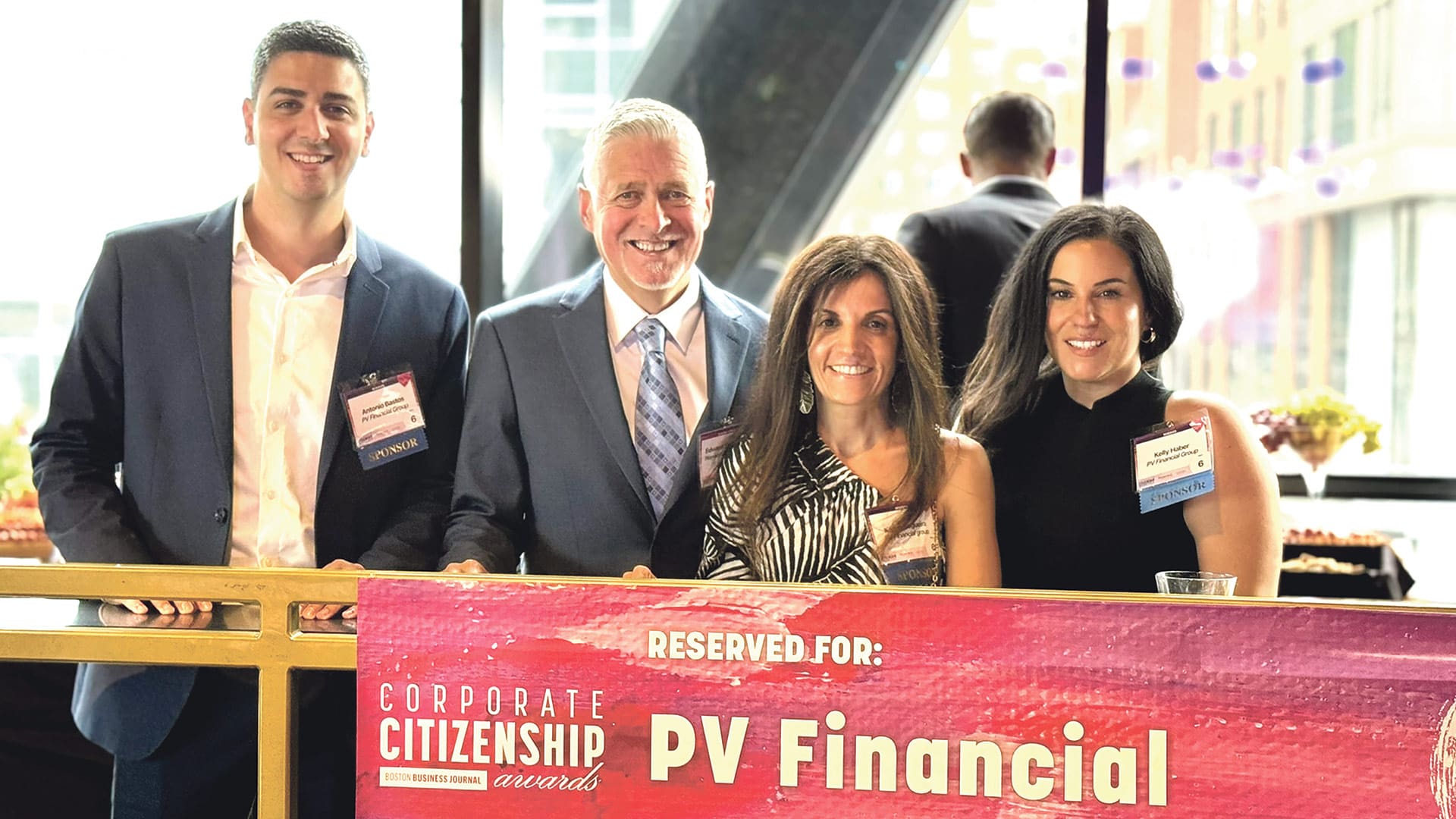
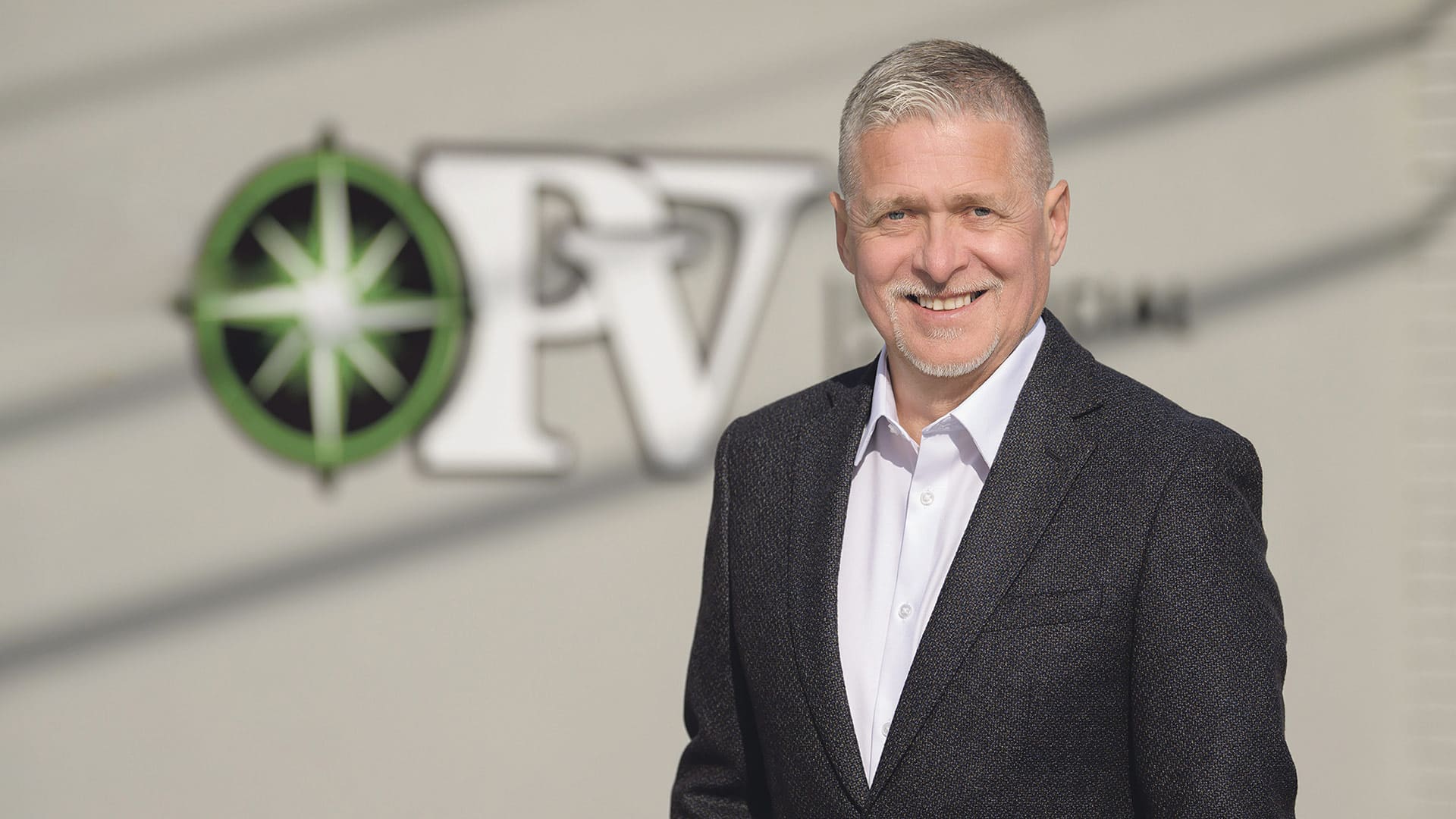
From left: Antonio Bastos, Ed Sokolowski, Karen Nogueira, and Kelly Haber at the Boston Business Journal’s Corporate Citizen Awards in 2025.
“Going back to when I was first interviewed, Ed talked about the company and how it has a focus on finance and helping people plan,” Ferri recalled. “And then, he went all in about the work we do in the community, the events we do, and the importance placed on giving back to the community.”
This hard focus on community has led to some recognition. Indeed, PV Financial, an employee-owned company, made its first appearance on the Boston Business Journal’s list of the state’s most philanthropic companies (what it calls its Corporate Citizenship Awards) in 2025, placing 96th in total giving ($145,000, not counting another $50,000 from the charitable fund — a large number for a small company) — but first in the average number of hours per employee devoted to community work, roughly 75 a year. The company was also among the first to be recognized by the Springfield Regional Chamber’s Super 60 category known as ‘Give Back.’
The awards are nice, and they bring attention to what is truly a team effort, said Sokolowski, adding quickly that the greater rewards come from seeing the impact of that team’s work in the community — the smiles on the faces of children at Slide into Summer Safely events or the appreciation from first responders at that annual dinner, for example.
“I don’t know how much it’s helped; we’ll probably never know, but we’ve had thousands of kids participate over the years, and we certainly think this is worth doing. It’s enjoyable to see the kids, knowing that they’re having fun, but learning.”
“I know we were happy when we crossed $100 million in assets, and then $200 million, $500 million, and on our way to $1 billion. I know I was proud, but I don’t remember the dates; I don’t remember the weather that day; I don’t remember too much,” he said. “But I do remember the kids’ faces and something that someone might say to me when it comes to charitable giving. I’m just as proud of those things, and they’re more memorable.”
Every Monday at 9, the staff at PV Financial gathers in the conference room for a weekly meeting. This room was carved out of the former LUSO Federal Credit Union offices, and there is still a teller’s window looking out onto what used to be a drive-thru.
These meetings start with Sokolowski giving what he calls a ‘state of the union’ report on the company, its performance, and its financial health. The agenda also includes updates from partners Kelly Haber and Karen Nogueira on compliance and initiatives to serve clients, before things are turned over to Ferri, who gives a lengthy update on upcoming events and all other matters involving the company’s involvement in the community.
This is just another indicator of the importance placed on this work, said Sokolowski, who told BusinessWest that he knew what he wanted to do for a living when he was 12, when he visited the EF Hutton office that his sister worked in and saw the ticker-tape machine used to print stock prices.
As he advanced these career plans, he decided early on that he wanted to work on the financial consulting side, rather than the stockbroker side.
“There’s a big difference between buying and selling stocks and doing financial planning,” noted Sokolowski, who ran the investment arm of the former Palmer Goodell Insurance before launching PV Financial Group in 2002. “I like watching money grow, but I’d rather watch what it does for people at the other end. Money can help in so many ways; it doesn’t necessarily buy happiness, but it helps, for sure.
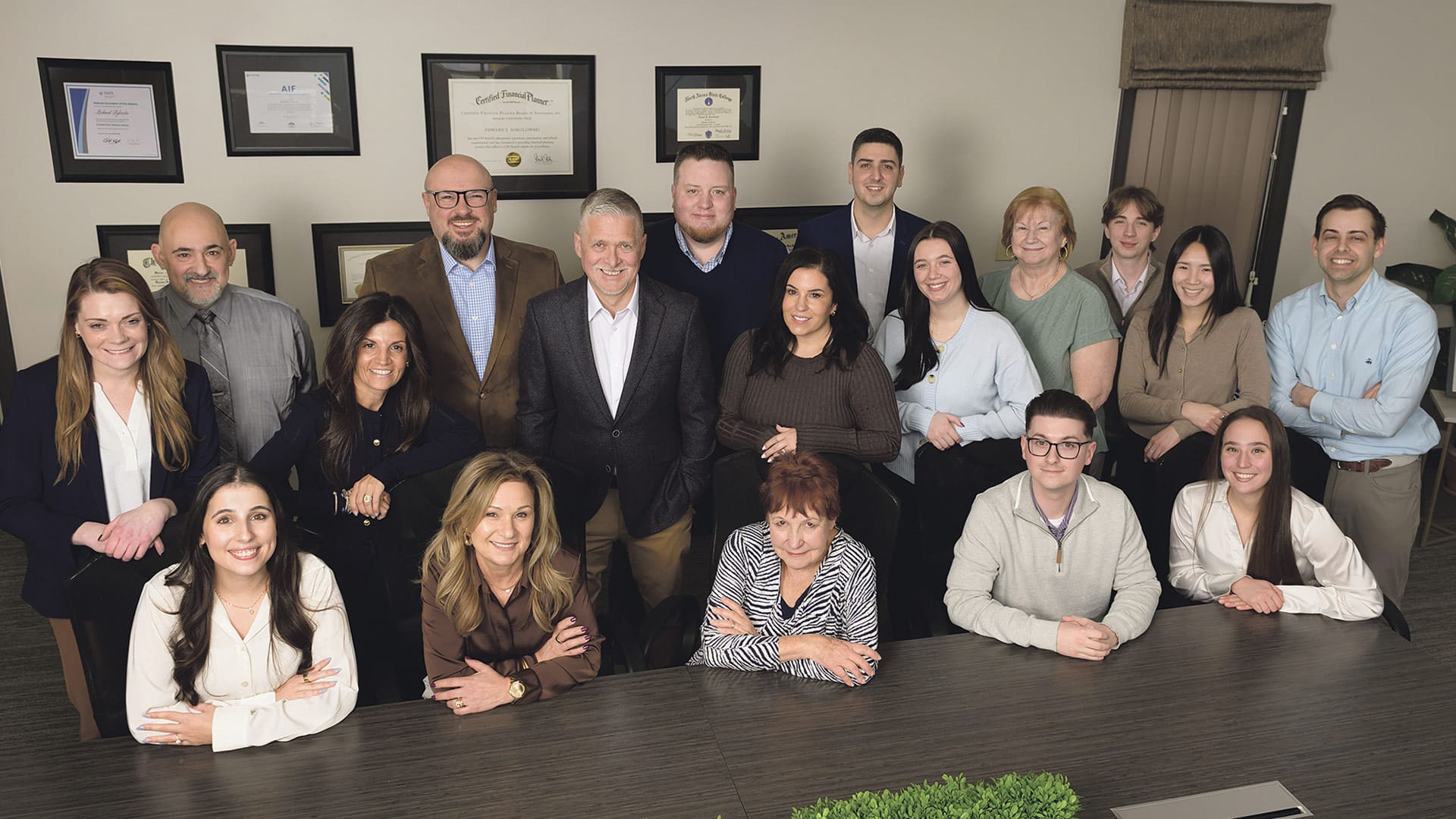
The team at PV Financial puts a hard focus on community involvement.
Photo by Bob Zemba, Simple Truth Imaging
“I didn’t want to call people and say, ‘I have a hot stock tip for you,’” he went on. “I’d rather do that longer-term planning.”
This thoughtfulness, this caring about people and their futures, permeates every aspect of this company, and all three sides of the triangle. That includes the community side, which includes many different types of giving.
The list includes monetary donations — almost all of them small in nature, meaning a few hundred dollars — to a wide array of groups of causes, from Rick’s Place and Ludlow High School hockey to the WillPower Foundation and Baystate Children’s Hospital; from Belchertown Little League and the Southwick Animal Shelter to the Miracle League of Western Massachusetts and the Michael J. Dias Foundation.
“We rarely say no when we’re asked,” said Sololowski, adding that the company likes to spread the wealth, if you will, and support as many causes and agencies as it can.
But it’s important to note that the giving back goes well beyond writing checks — and, again, it’s a company-wide effort, with Sokolowski setting the tone.
He said he was influenced by his upbringing — he grew up in a low-income household and attended a state university (what is now Massachusetts College of Liberal Arts) — and also by mentors, especially Bob Carnavale, president of Palmer Goodell.
“He was a very philanthropic person — he gave back a lot, and that’s how he ran his business,” said Sokolowski, adding that, like Carnavale, he and his team members make giving back a corporate philosophy.
When it comes to those 75 volunteer hours that employees spend on average, Sokolowski — who’s very proud of that number and knows it by heart — said the company likes to get creative in this regard.
By that, he meant fun and productive, such as staging putt-a-thons and fling-stick challenges to raise additional money at charity golf tournaments, rather than playing in the event.
“We try new things,” he said, putting the Slide into Summer Safely programs in that category. Undertaken in cooperation with local police and fire departments, and started a dozen or so years ago in Ludlow and later expanded into Wilbraham, they place on the last day of the school year.
“The thinking was that, if we can talk with them right before they head into summer break, that would be ideal; that’s when they get into trouble — riding bikes without helmets, fireworks, swimming,” he said, adding that the challenge would be how to get students to come to such a program after school let out, and then how to get to them to listen and respond to what they were being told.
The answer was a program that’s as entertaining as it is educational, with ice cream, slides, popcorn, and more.
“I don’t know how much it’s helped; we’ll probably never know, but we’ve had thousands of kids participate over the years, and we certainly think this is worth doing. It’s enjoyable to see the kids, knowing that they’re having fun, but learning.”
“In order for the kids to get free popcorn and ice cream, they have to go up to a police officer or firefighter,” Sokolowski explained. “They’ll be asked a question — like a firefighter asking, ‘what do you if you light yourself on fire?’ And the kid has to say ‘stop, drop, and roll.’ If it’s a police officer, he’ll ask, ‘what do you do when you swim?’ And the kid has to say, ‘you swim with a friend.’ Their wristband gets marked, and then they get the free food.
“I don’t know how much it’s helped; we’ll probably never know, but we’ve had thousands of kids participate over the years, and we certainly think this is worth doing,” he went on. “It’s enjoyable to see the kids, knowing that they’re having fun, but learning.”
Another program the company has initiated is a first responders dinner event, staged in conjunction with the local VFW post. First responders from across the area, including the Ludlow, Wilbraham, and Hampden police and fire departments, the Massachusetts State Police, the Hampden County Sheriff’s Office, veterans, and others participate, said Sokolowski, adding that the event has grown in size since it was initiated eight years ago.
Meanwhile, in the planning stages is another event to recognize several of the area’s nonprofits, perhaps five a year, across different realms, with the twin goals of educating people about their missions and how they are carried out, while also raising money for these groups.
“For every dollar we spend, we should fundraise the same dollar amount back,” he said, adding that organizers are looking at higher-end bingo and raffles as options for fundraising. “It’s a way for the nonprofits to just show up and not have to worry about planning the event or fundraising.”
Meanwhile, the event should provide another creative way for PV Financial employees to volunteer, he said, adding that the company is always looking for fun ways to get employees involved in the community.
It’s just another example of how PV Financial focuses on that third leg of the triangle — one of the keys to this company being truly successful, and one that makes Sokolowski, who sets the tone for all of this, a true Difference Maker.
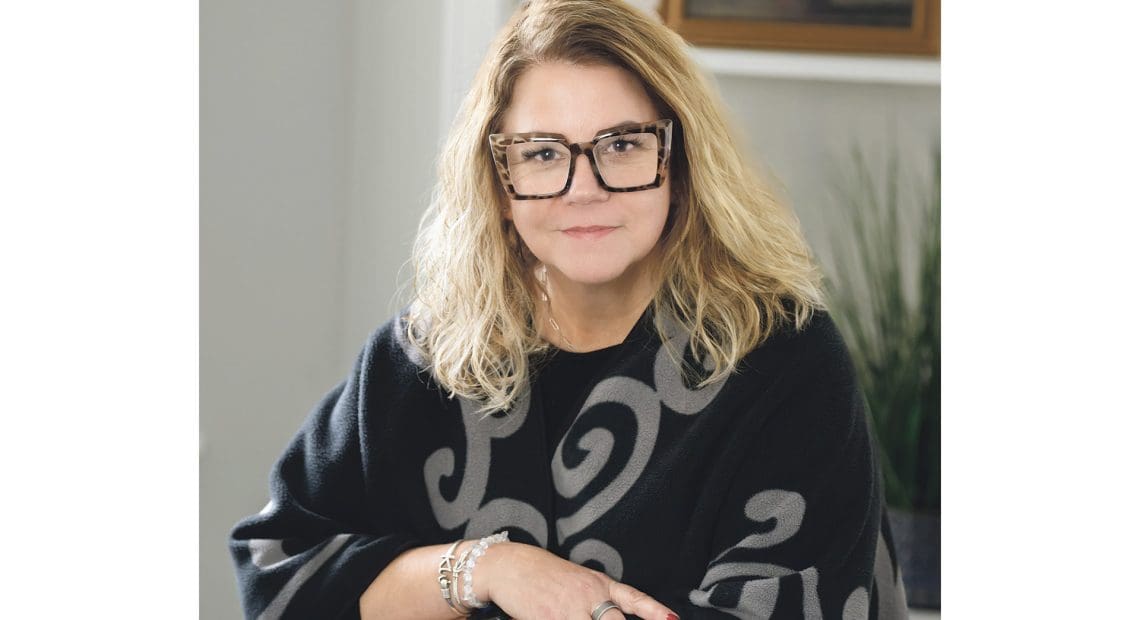
Julie Quink says it’s easy for accountants to get involved in community.
Indeed, she said, there’s no shortage of small nonprofits who need CPAs on their boards to help handle the books, and over the years, she’s done some of that, as almost everyone in the profession has.
And she encourages all members of the team at Burkhart Pizzanelli, P.C., the firm she serves as managing principal, to get involved as well — and, when possible, to go much further than crunching numbers for nonprofits and regional institutions, although that’s important, too. And here, she sets the tone.
She’s affiliated with several professional groups, such as the Massachusetts Society of CPAs and the Assoc. of Certified Fraud Examiners; sits on some boards — those at Baystate Health, Greater Springfield Senior Services, Monson Savings Bank, and Square One, among others — and serves as treasurer for the Quaboag Hills Chamber of Commerce, I Found Light Against All Odds, and the Estate Planning Council of Hampden County.
“One of the things that Square One does is allow us, when the coats come in, to help the kids choose their coat, and some of our team members take part. It’s a completely amazing event for us, and over the years, it has helped the team share my commitment to that organization because we can see that the little work we do for this fundraising really has an impact on these kids.”
But she does, indeed, go further, such as with Square One’s Operation Warm, a program that provides winter coats for kids; she has made the firm the sponsor of that initiative and inspired team members and clients alike to support those efforts.
“One of the things that Square One does is allow us, when the coats come in, to help the kids choose their coat, and some of our team members take part,” she noted. “It’s a completely amazing event for us, and over the years, it has helped the team share my commitment to that organization because we can see that the little work we do for this fundraising really has an impact on these kids.”

Julie Quink with Burkhart Pizzanelli co-owner Deborah Penzias.
Photo by Bob Zemba, Simple Truth Imaging
With that, she tells the story of a now-retired staff member at Burkhart Pizzanelli who had a sign outside his office that read ‘Grumpy Old Man.’
“He was self-proclaimed,” Quink said. “He went one year when the team met with the kids to hand out coats, and he was on his knees with these little people, and he had the biggest smile on his face. And I just thought, ‘if there was nothing else worth it in this whole entire thing, just seeing the look on his face and the joy that doing what he was doing brought … that’s what it’s really about for me.’”
Quink’s success with creating such moments is one of many reasons why she will be among those honored as Difference Makers in 2026. Others include the way she serves as a mentor and role model to those on her staff, creating an atmosphere that is more like a family than a business.
“Julie believes that we live and work in a community, and everyone has a very important role to play,” said Rebecca Connolly, director of the Auditing Department, who nominated Quink for this award. “She takes her role as a business owner and as a role model — not only for her staff, but her family and clients — seriously.
“At work, we joke that we don’t think Julie sleeps because she is so busy with helping small business owners with their businesses, helping them to grow their businesses, navigating tough financial times, while coming out on the other side feeling more supported and in better financial position,” Connolly added, noting that she does all this while serving on several boards, supporting the initiatives of several nonprofits, and serving as adjunct faculty in the MBA accounting program at Elms College.
Quink says she enjoys all aspects of this balancing act and finds the time for all of it, even during tax season — which isn’t really a season anymore, she noted, saying, “it never ends.”
“I can tell you personally that I take away much more than I give when it comes to organizations I belong to and work with, as a board member or even as a volunteer,” she told BusinessWest. “It makes everything worthwhile when you see the impact that you have on someone else’s life.”
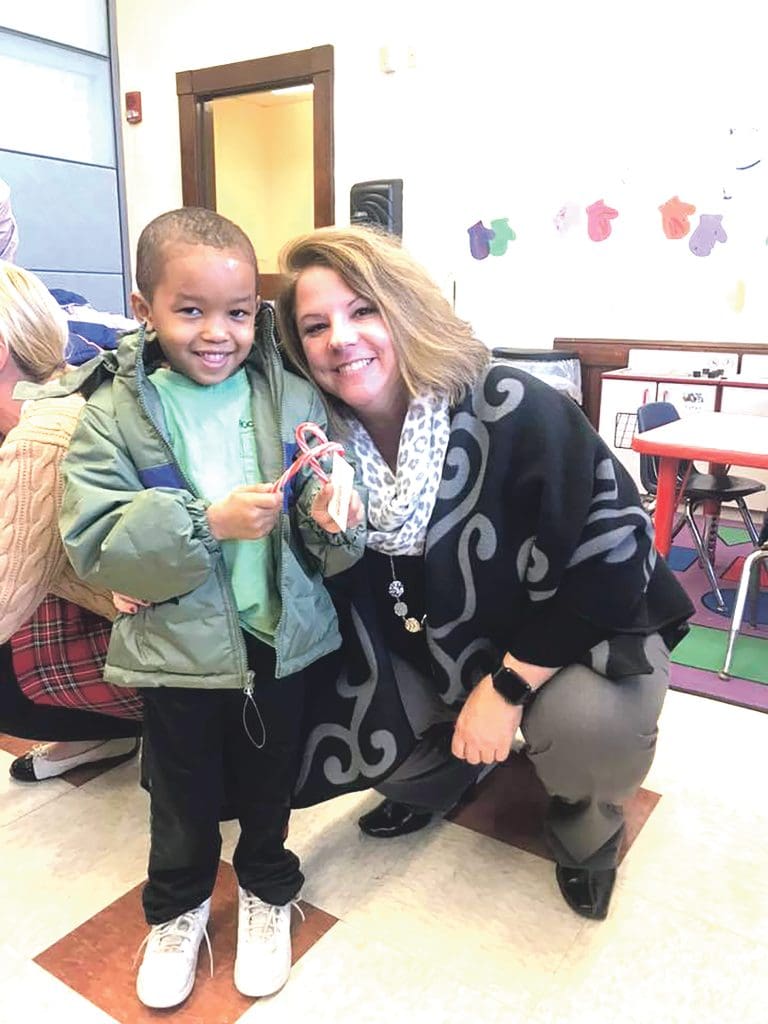
Julie Quink spends a moment with a Square One student as winter coats are distributed as part of Operation Warm.
Overall, Quink excels at listening, responding, and being there for people — in all aspects of her life and every corner of the community.
Quink told BusinessWest that, while in high school, she developed an affinity for numbers and accounting.
“My accounting professor recognized that I had a talent in that area — I wasn’t even focused on it, really — and urged me to explore it,” she recalled. “It was interesting to me, and I understood it; I’m not a scientist, and I could never be a medical professional — I don’t have the stomach for that sort of thing — so accounting was it.”
She considered UMass Amherst and Elms College, and chose the much smaller, much more intimate setting, and never regretted that decision, becoming the first in her family to graduate from college.
“I’m a firm believer that you end up where you’re supposed to be,” she said, adding that she enjoyed the small class sizes there. “In hindsight, had I gone to a large institution, I probably would have gotten lost in the system. It was a benefit to me, and that’s one of the reasons I teach at Elms.”
She started in the field as senior accountant at what was then KPMG Peat Marwick in Springfield and later worked for 17 years at J.M. O’Brien & Co., P.C. in Springfield as director of Audits and Business Issues.
She came to West Springfield-based Burkhart Pizzanelli, now celebrating its 40th anniversary, in 2011 as part of a succession plan, serving first as senior manager of Audit/Consulting before becoming a principal in 2013 and then managing principal in 2015. She’s now spent 35 years in the profession and has seen a good amount of change, especially when it comes to culture.
“When I came on, you were expected to work long hours, you were expected to travel … it was just something you knew was part of the job; it was expected of you, and you did it,” she explained. “Now, it’s a lot different in terms of culture; we’re really focused on our team members here, their wellness, their well-being, their career trajectory. It’s really come a long way.
“Quality of life is really important to the younger generations, understandably, and the meaningfulness of what they do is important,” she went on. “We’ve had to adapt to all that.”
Elaborating, she said Burkhart Pizzanelli was at what she called the “front end of that curve,” which is one of the things that attracted her to the firm. And as managing principal, she is determined to stay ahead of that curve.
“What’s really important for us is balance,” she told BusinessWest, noting that there is now a staff of 25. “I think we, as a leadership group here, are really in tune with what’s impacting our team, and we can make changes and adapt workloads quickly if we see that someone’s overwhelmed.”
Beyond balance, she and others on the leadership team are focused on mentoring and being positive role models for younger staff members.
“All the leaders here have a strong desire to make sure our team is happy, growing in their positions, exposed to new opportunities … so we all take mentoring very seriously,” she said. “If I were to look at where I spend my time during the day, I’d say maybe an hour or two a day is spent in conversation about ‘how can we do this better? Where are we at? And how can I be a resource for you?’ We want to be hearing what’s going on, and we want to be adapting where we need to make change, and that takes a lot of listening. So I like to think I spend a lot of time listening.
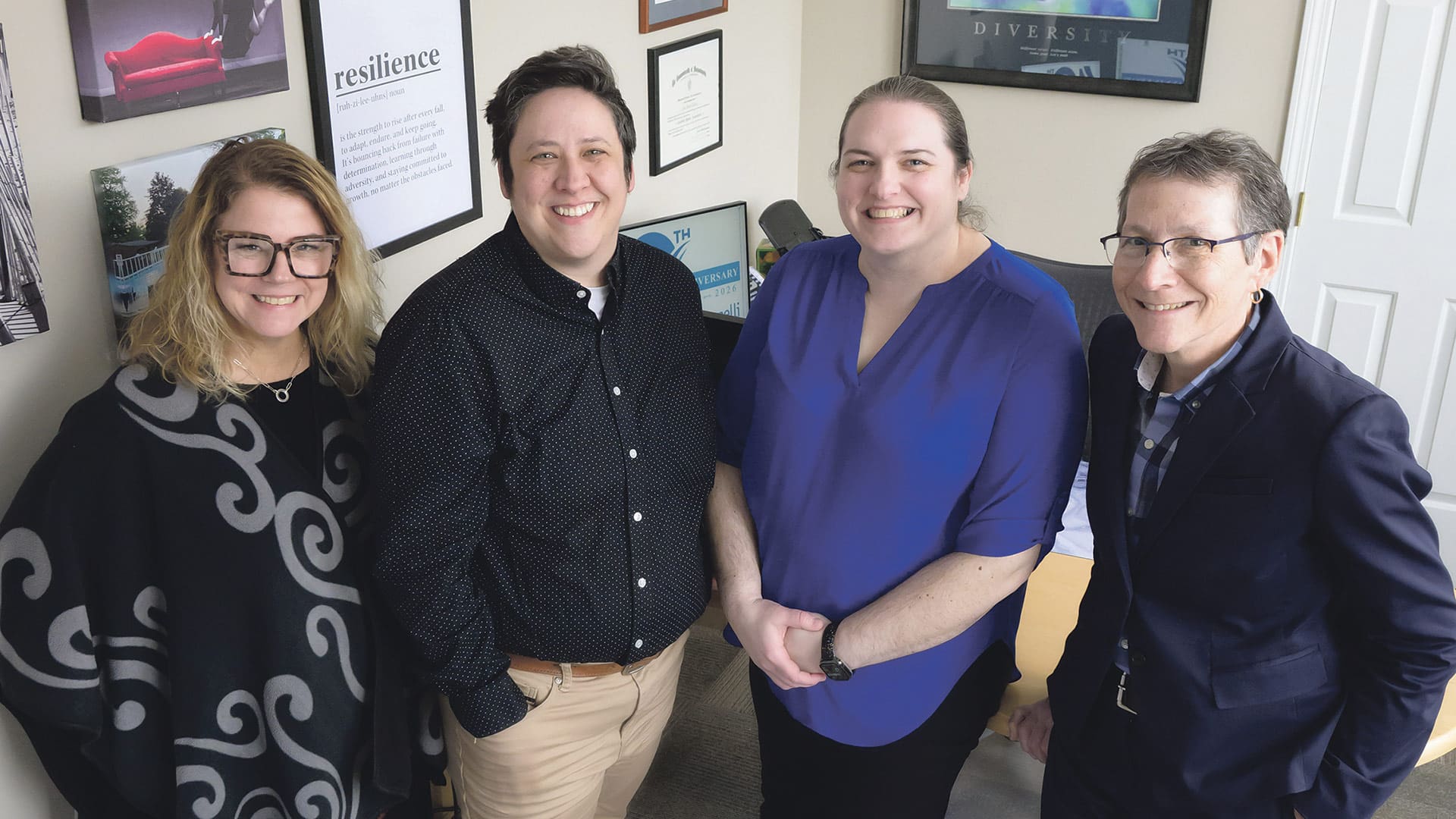
From left: Julie Quink with team members Sarah Lapolice, Rebecca Connolly, and Deborah Penzias.
Photo by Bob Zemba, Simple Truth Imaging
“If I want people to come to me as a leader with a problem, an issue, something I can solve, my advice … I must be authentic, and they need to feel like they’re being heard,” she went on. “I’m really focused on what’s important to them because, if it’s important for them, then it becomes important for me.”
This ability to listen and act on what she’s hearing is one of the many reasons why Connolly considers Quink, the tone-setter for the company, a Difference Maker.
“She really believes in family — she remembers everything about you,” she said. “No matter if it’s April 15 and a client needs her or something has happened to a staff member health-wise, her first response is, ‘do what you need to do; we’ll cover you.’ That’s what we do — we’re a team, and we support one another.”
Indeed, Connolly said, if there is one word that perhaps best sums up Quink and all aspects of her life, it would be ‘supportive.’ That’s true when it comes to the team at work, clients, her students at Elms, and the community.
“I can tell you personally that I take away much more than I give when it comes to organizations I belong to and work with, as a board member or even as a volunteer. It makes everything worthwhile when you see the impact that you have on someone else’s life.”
With that last realm, she stressed that she gets involved with agencies and causes that she’s passionate about, and she encourages others at the firm to take that same approach. “I tell them, ‘don’t just volunteer and not feel like you’re getting meaning out of your volunteering.’”
This sentiment explains why she became involved with healthcare organizations such as Baystate Health — which is going through a challenging time, as all hospitals and healthcare systems are — as well as Greater Springfield Senior Services and Square One.
“I’m on the board of Greater Springfield Senior Services because of the really great work they do with seniors in the catchment area and folks that really need the services we can provide and connect them to,” she said, explaining that she has chaired this board for several years now. “Especially as our population ages, we want people to be able to age at home if they like.”
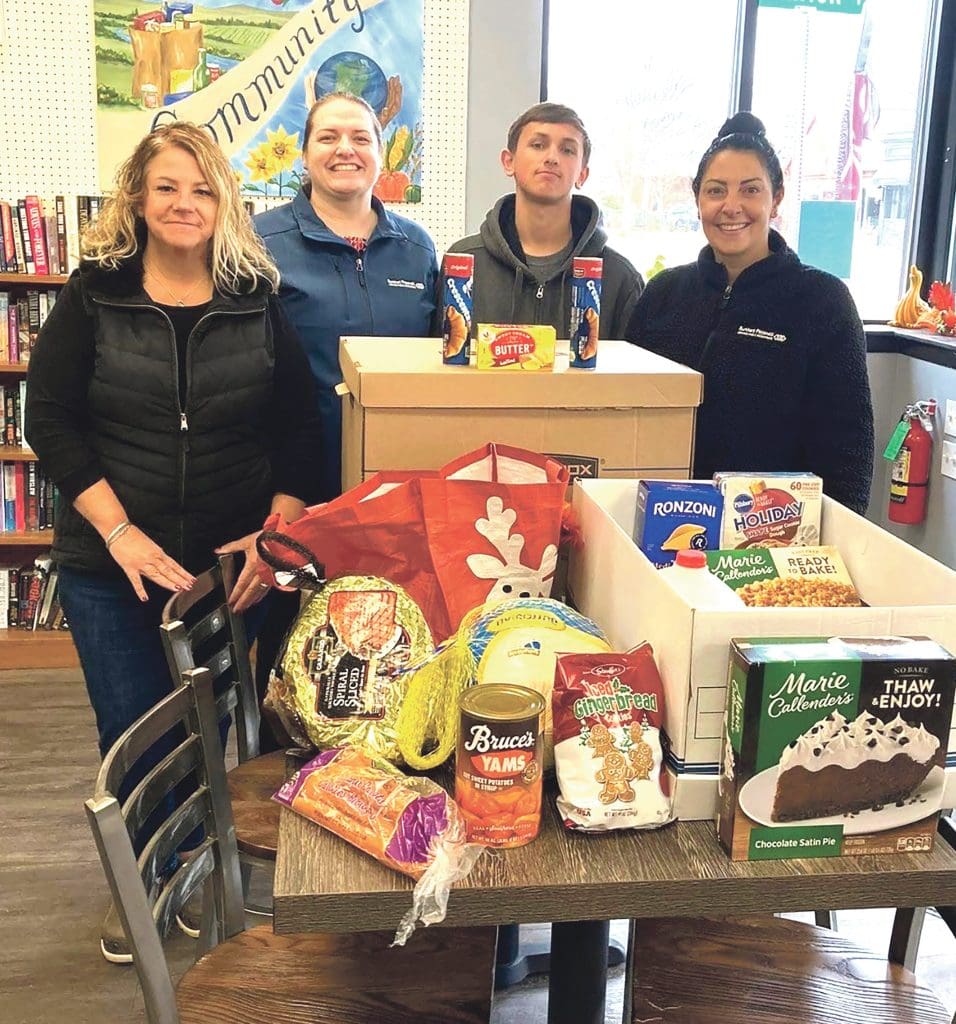
Julie Quink, left, and other Burkhart Pizzanelli team members take part in a program run by the Parish Cupboard, which provides meals and groceries to individuals and families in need.
She was also drawn to I Found Light Against All Odds, an organization that helps secure housing for homeless young women — efforts that made it a Difference Maker in 2022.
“The need exists, probably more than we recognize or are aware of,” Quink said. “Homelessness is a real issue among young women, and that’s what drew me to that organization; we’re actively working toward increasing programming and creating more supports for women in that age group and in those insecure situations. Our goal is to get them off the streets or out of the situation that is harmful for them.”
With Square One, she was approached by now-retired president and CEO Joan Kagan to join the board, and almost immediately started looking for ways to get involved on a deeper level.
She recalled a conversation with Kris Allard, the agency’s vice president of Development and Communication, about the coats program.
“They had someone who worked with them prior who was backing out of the coat campaign, and she approached us about sponsoring that effort,” Quink noted. “We sat across this conference room table, and both had tears in our eyes as we talked about the conditions these kids are dealing with.
“I said, ‘sure, we’ll do what we can — we’ll be a sponsor,’” she went on, adding that it soon became a firm-wide initiative, with fundraising and then and distributing the coats.
The fundraising goal this year was $5,000, she said, noting that more than $10,000 was raised, enough to buy more than 400 coats.
“Over the years, the campaign has evolved to where our clients have gotten involved, and they remind us to send them information on the coat campaign because they want to donate,” she continued. “It’s really become important to us, but also our clients.”
And it’s just one example of how Quink and members of the firm get involved beyond handling the books for nonprofits. And another example of why this role model is also a Difference Maker.
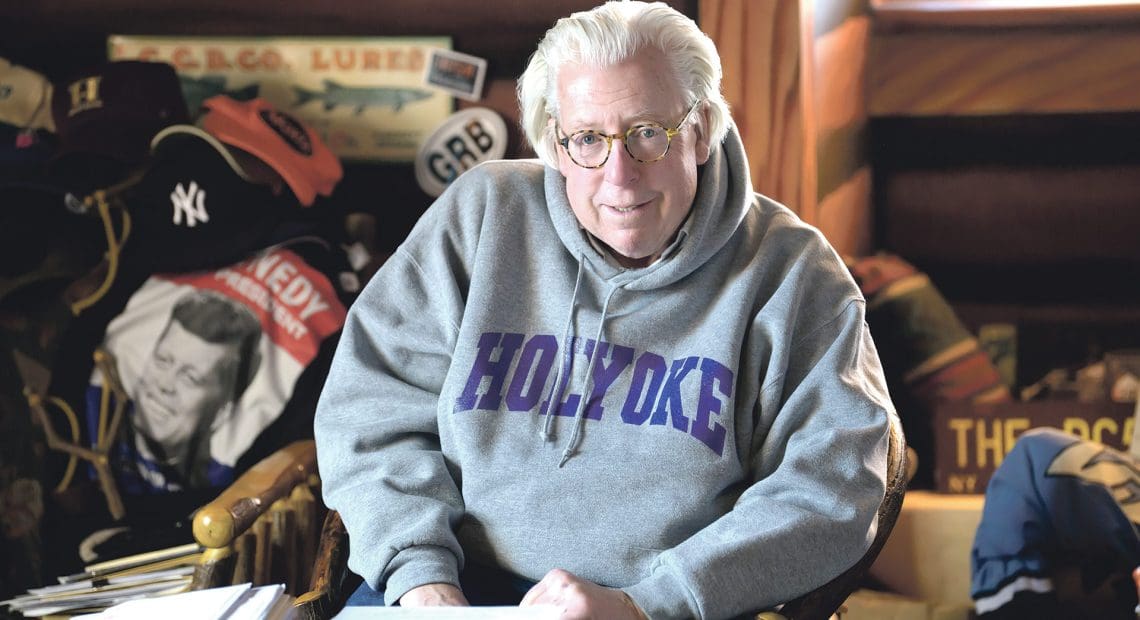
Photo by Bob Zemba, Simple Truth Imaging
They call it the Fishing Buddies Lodge.
It’s a very informal meeting space within the suite of offices for Darby O’Brien Advertising in South Hadley, and, obviously, it is decorated to look like a fishing cabin.
It is crammed, as in crammed, with collectibles and wall art that start to tell the story of the founder of this company. There are bobbleheads, baseball gloves, New York Yankees and Mickey Mantle merch (he’s a long-time fan of the team and grew up, as many his age did, idolizing #7), a scale model of the Bluesmobile, various photos of JFK, countless mugs, hats, and, on the wall, a framed, autographed photo of Ken Osmond, famous for playing the insincere flatterer and provocateur Eddie Haskell on the classic sitcom Leave It to Beaver.
“I was a fan of Eddie’s — he was the king of mischief,” said O’Brien, the Holyoke native who shares that trait with Haskell, one of many that make him a unique character, in every sense, and contribute to his being named a Difference Maker.
Others include creativity — his ads certainly stand out as different and, generally speaking, effective — as well as genuineness, sincerity, and a passion for getting involved, often with underdog groups and causes.
“On the way out, Jeremy grabbed me by the arm and said, ‘will you fight for us? Because we can’t fight.’ I said, ‘yeah, I’ll fight to the finish, because this is wrong.’”
With that last one, there is a long list, everything from efforts to reopen Holyoke’s reservoirs to fishing and bring back his childhood baseball team, the Elmwood Jets, to lobbying against the quarrying of a local ski area with his ‘Mount Tom, I Don’t Dig It’ campaign; from early efforts to thwart casino gambling in Springfield to a campaign protesting the Western Massachusetts Economic Development Council’s (EDC) decision to hire a Tennessee-based firm to rebrand the region for tourism efforts, rather than use local marketing talent.
And then, there was the Phoebe Prince case.
Prince was a student at South Hadley High School when she took her own life after persistent bullying. O’Brien is credited by many with taking the case to a regional, national, and even international stage, attention that eventually led to charges against several students and the passing of anti-bullying legislation at the state level called ‘Phoebe’s Law.’
Soon after the matter starting getting press, O’Brien remembers getting a call from Prince’s parents, Jeremy and Anne, asking if they could meet with him.
“On the way out, Jeremy grabbed me by the arm and said, ‘will you fight for us? Because we can’t fight,’” he recalled. “I said, ‘yeah, I’ll fight to the finish, because this is wrong.’
“No one was standing up,” he went on, adding that he pressed the matter, despite repeated warnings that it would be bad for his business and, eventually, several death threats.
But as with other cases in which he’s gotten involved, he’s ignored such warnings and plowed ahead. Indeed, while he likes to say he’s gotten involved in most of the issues listed above “by accident,” those who know him well say otherwise.
“He literally does not back down from a fight or a wrong,” said John Garvey, a friend and fellow marketing firm owner. “And he encourages other people to not back down when they see a wrong.”
This is certainly the case with a weekly blog of sorts that he started at the height of the pandemic as a way to keep people connected, informed, and even entertained, and also to generate dialogue on the issues of the day.
While some offerings are whimsical, such as taste testings (fruitcake and Twinkies, for example) involving his grandson, Flynn, others are poignant and thought-provoking, such as a recent tribute to his brother David (known to most as ‘Moon’) who died last month, a remembrance of one of the students shot at Kent State in May 1970, who died recently, and sharp criticism of Newton officials for making a man take down an ice rink he created in his front yard during COVID because he lacked a special permit.
“Imagine doing that to kids during this COVID-19 winter?” O’Brien asked rhetorically. “Jackasses. Look the other way and let the kids have good, clean fun, will ya?”
Such sentiments, and the williness to express them, help explain why he’s a true Difference Maker.
Getting the Message
O’Brien said he took note of all the things marketing experts said not to do as he was starting his business — such as not getting involved with retail or political campaigns — but, by and large, he ignored them.
Indeed, among his first clients were the men’s clothing store A.O. White and Holyoke mayoral hopeful Marty Dunn, who was waging an underdog (there’s that word again) campaign to unseat long-time incumbent Ernie Proulx.
“He was a sure-shot loser because Ernie Proulx had been mayor for 12 years, he won every ward, every precinct, and had a reputation for demolishing Irish candidates,” O’Brien recalled, adding that he drew inspiration from boxer Sugar Ray Leonard’s ‘stick-and-move’ tactics to defeat Marvin Hagler and ran a successful campaign that he called “a real strong statement about being creative.”
Suffice it to say that O’Brien has been doing things his way — not the way the experts advise — since he started his company — and, actually, long before that.
Like when he was in high school — actually, several of them, as it took him six years and several institutions to earn a diploma. He said he joked to his frustrated father, a vice president with the construction firm Daniel O’Connell’s Sons, “dad, the longer I’m in school, the smarter I get.”
He added that “I hadn’t really thought about advertising, although I was kind of a promoter as a kid.” But he was eventually “discovered” by the owner of the local firm Bewick Advertising.
“He called me, hired me, and put me in charge of new business, which I knew nothing about,” O’Brien recalled, noting that he eventually started his own agency in 1980, taking with him many of his clients from Bewick and focusing on the goal of getting more of the larger businesses in the region to use local marketing talent.
Over the course of roughly 45 years in business, O’Brien has made his mark in many different ways, starting with his approach to marketing — which is to almost dare clients, and potential clients, to look beyond what would be considered safe — something he laments that very few are willing to do now.
His ads can certainly be defined as different and creative, to the extent that the phrase ‘Darby ad’ has entered the lexicon, a reference to something bold — and at times controversial — that stands out.

One of the many marketing initiatives that could be described with the phrase ‘Darby ad.’
Like the billboard featuring a Hot Table panini and the headline ‘Bite Me.’ Or the billboard for lawyer Raipher Pellegrino with the words, ‘The Iceman Sueth.’ Decades ago, there was a newspaper ad for the Springfield Civic Center promoting a tennis match at the then-Springfield Civic Center between Springfield native Tim Mayotte and Czechoslovakian Ivan Lendl. The headline read, ‘On February 9, BayBank Invites Tim Mayotte Back to Springfield to Bounce a Czech.’
As O’Brien tells the story, Lendl called the event organizers saying that was backing out of the match due to the ad, which he considered offensive, then started laughing, saying he was just kidding.
Then there’s the ad O’Brien put together for a group opposing casino gambling in Springfield. Featuring a picture of a masked man pointing a gun at the reader, it took the headline, ‘If You Build It, They Will Come.’
“You hire Darby because you want ideas,” Garvey said. “You don’t hire Darby to run your ideas by him. And for God’s sake, don’t fight him on the creative — because that is holy ground.”
Peter Rosskothen, the serial entrepreneur who has been a client of O’Brien’s for more than 30 years and worked with him on campaigns for the Log Cabin Banquet & Meeting House, the Delaney House restaurant, and his current venture, Delaney’s Market, agreed — sort of.
In fact, he has fought him on creative content on a few occasions, but most of the time, he’s been talked into ads that were, well … different.
“He likes to push the envelope, and he makes a difference with his uniqueness,” Rothkossen said. “He’s very bold, and he tells me as a client that I’m being too conservative. I like that — I like the fact that the material tends to be different and stands out.”
While his marketing and advertising impact has been noteworthy, so too has O’Brien’s work within the community, much of which has involved young people, Holyoke, or some combination of the two.
Such as his efforts to reopen the Paper City’s reservoirs to fishing, a campaign that featured a group he created called the Fishing Buddies, and some escapades involving O’Brien and Peter Jourdain in Blues Brothers-like outfits. He said this effort started by accident when he and an acquantaince, who fished the reservoirs when they were young, tried to relive old memories several decades later and were chased off by police.
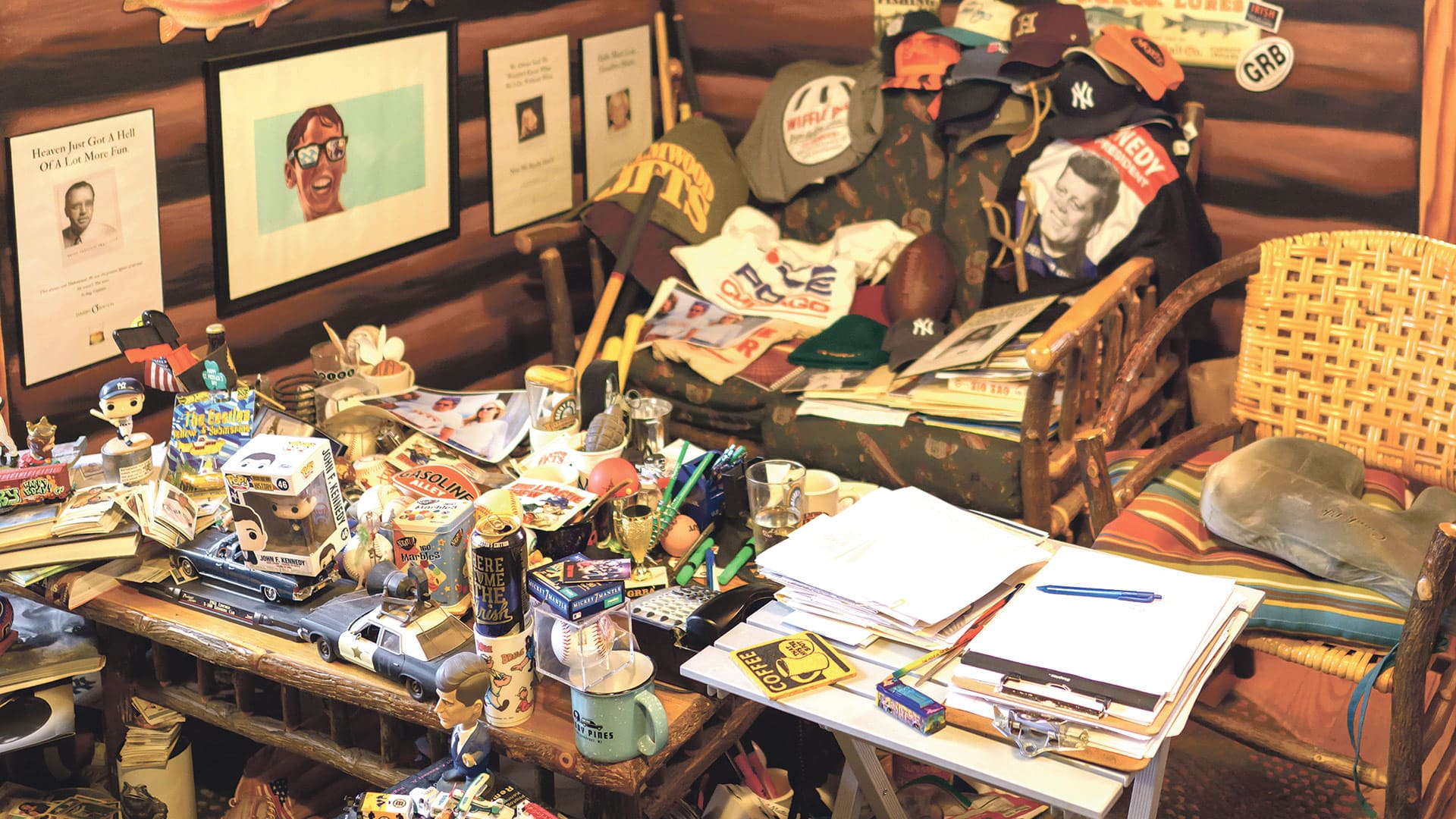
The Fishing Buddies Lodge at Darby O’Brien Advertising is crammed with collectibles that speak to O’Brien’s interests — and passions.
Photo by Bob Zemba, Simple Truth Imaging
“There’s no reason why inner-city kids can’t fish out here,” he said, adding that, while the fight was ultimately unsuccessful, despite widespread support — the reservoirs remain closed to fishing — he had some fun and gave people something to think about. And that could be described as his MO.
It was the same with the EDC’s decision to hire a Tennessee firm to rebrand the region. After the ad campaign was created, O’Brien famously challenged then-EDC President Allan Blair to a winner-take-all ping-pong game in an ad that appeared in BusinessWest.
“I told him that if he beat me, I’d shut up and he could put me on his board, and that if I beat him, he’d give the work to the local talent,” said O’Brien, adding that, while Blair never responded, he got his point across, and had some more fun.
With the Phoebe Prince case, though, his involvement was taken to new and far more serious levels.
Encouraged by his father, who thought South Hadley officials were trying to sweep the matter under the rug, O’Brien reached out to Boston Globe columnist Kevin Cullen and went on the record for a piece titled “The Untouchable Mean Girls,” which was essentially the first news story to suggest that bullying was the root cause of Prince’s suicide.
“All hell broke loose,” recalled O’Brien, adding that national and global media were soon all over the story. Soon thereafter, he met with Prince’s parents and committed to do whatever he could to generate more press and hold those responsible accountable. And in the months and even years to follow, he was the subject of threats to his business, health, and life.
Rosskothen said he’s one of many who have, over the years, advised O’Brien that it might not be good for his business to get involved — with the Prince case, but also many of the other issues he’s become entangled with.
“A conversation like that with Darby is a pretty normal conversation because he pushes hard,” Rosskothen said. “As a friend, I sometimes tell him that; he listens, but that doesn’t mean that he follows the advice.”
O’Brien continues to push for what he considers right in his weekly blog, which he calls “Keep Up Your Dukes,” something he said repeatedly to a close friend during his recent cancer fight.
He acknowledged that the more common phrase is ‘put up your dukes,’ a nod to someone that you’re ready to fight and that they should bring it on. His take is different — meant to say that one should always be ready to fight when necessary.
He’s always been that way, and that’s what makes him a Difference Maker.
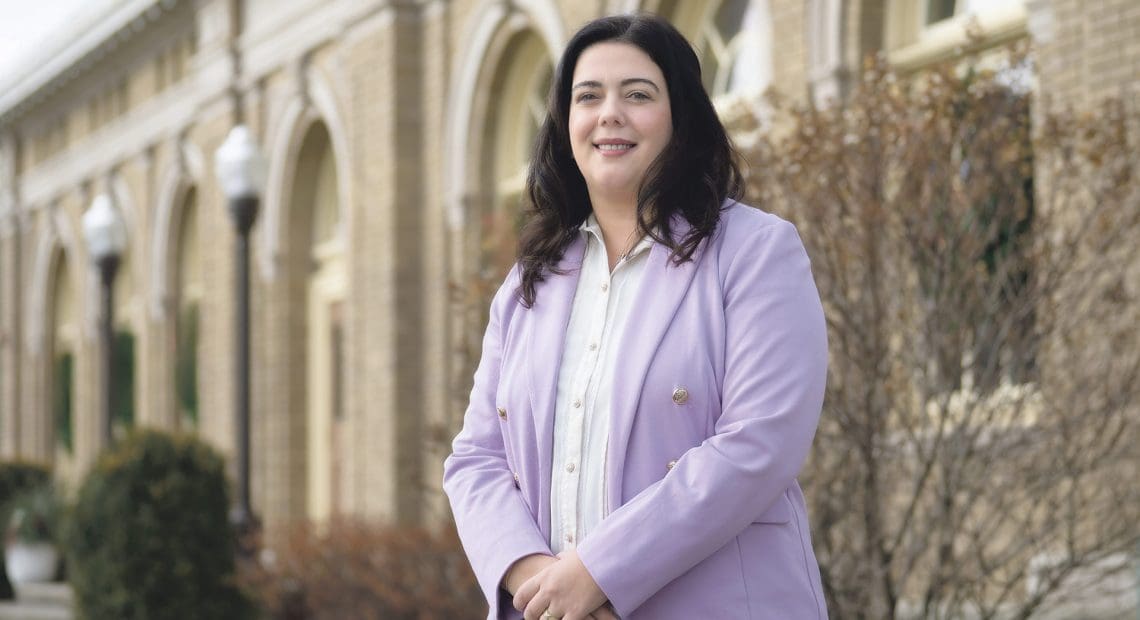
Rachelle Hannoush often talks to teenagers about red flags and green flags in relationships — because, at that young age, it’s easy to mix up the two.
“Say a guy is isolating you from your family, isolating you from going to your volleyball practice. And when I ask about it, you say this is actually a green flag because it shows that they love you and want to spend time with you,” said Hannoush, whose title — director of Youth, Violence Prevention, and Court Support Programs at the YWCA of Western Massachusetts — hints at the many hats she wears there.
In this particular part of her conversation with BusinessWest, she was explaining the ‘prevention’ part of her job, especially an initiative called the HERE (Healthy and Empowering Relationship Education) Project, which helps students between ages 12 and 18 how to navigate everything from dating violence to gang activity to sex trafficking risks.
“We go into schools and teach youth different curriculum that enhances their skills on healthy relationships, violence prevention, bystander intervention. Like, if you see something, what do you do? Who do you talk to? How do you stay safe? And also, how can we have healthy relationships? What are the green flags? What are the red flags? During high school and middle school, a lot of things happen. So it’s really equipping them with skills to be able to make good decisions as they get through those teenage years.”
“What empowers our work and makes the biggest impact is when different organizations work together. And I see that here at the Y — all the departments truly live its mission, which is to empower women.”
Hannoush said prevention is effective — and is more important than ever in the age of social media and the extra pressure it places on kids.
“They can see, ‘oh, she got to go to the Caribbean for April vacation,’ or ‘she got this purse,’ or ‘she’s hanging out with this friend, and they didn’t invite me.’ There’s much more transparency and knowledge, and sometimes it can be very toxic.”
Another of Hannoush’s roles involves supervised visitation centers in Hampden and Hampshire counties, which provide secure, neutral visitation services for families experiencing domestic violence, divorce, custody, and probate issues. The program provides a structured environment for children to connect and visit with their non-residential or custodial parents.
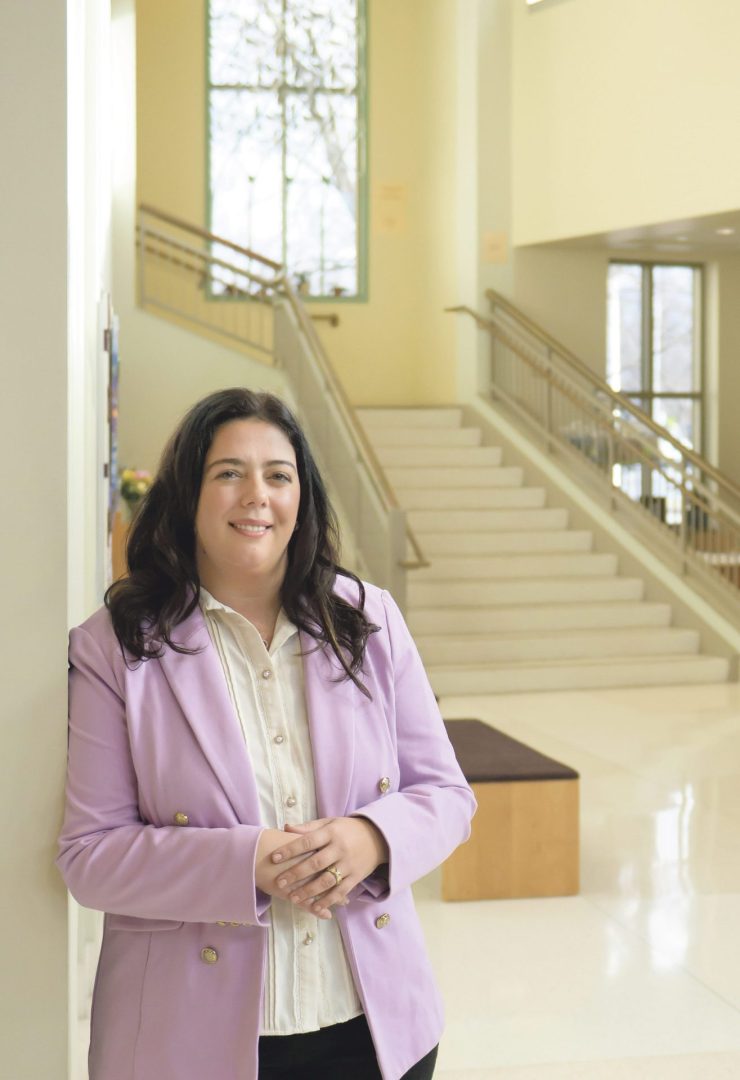
Rachelle Hannoush says her own early struggles as a high school student in Lebanon have influenced the significant empathy she has for teenagers today.
Photo by Bob Zemba, Simple Truth Imaging
“We ensure an environment that’s safe; the most important thing is the child in that scenario,” she explained. “We want the child to have this special bond with their parents, and supervised visitation creates an environment where the parent can connect or the caregiver can connect with the child in a safe environment.”
The third leg on the stool of her job description is working with SAFEPLAN, which provides vital court advocacy services for victims of domestic violence, sexual assault, and stalking in five area district and probate courts. These advocacy services include assistance in obtaining restraining orders, harassment orders, safety planning, and resource and referral information.
“In each of the courts, there’s a SAFEPLAN office and a SAFEPLAN advocate. And anyone that is looking to do a restraining order or harassment order, the advocates help them,” she said. “Sometimes we’re making referrals to other community organizations, or for other programs within the YWCA.”
So … it’s definitely more than a long job title for Hannoush — it’s a lot of work. And that’s not even touching on some of her other community-centered projects outside the YWCA (but we will touch on those a bit later).
But she’s gratified by her copious responsibilities at the YWCA, where she started working last September after years of being connected to the nonprofit as a volunteer and advocate.
“It’s amazing work, and I’ve always been a fan of the YWCA, even before I started working here,” she said. “What empowers our work and makes the biggest impact is when different organizations work together. And I see that here at the Y — all the departments truly live its mission, which is to empower women.”
Hannoush grew up in Lebanon, and to say she encountered struggles in school would be an understatement.
“The reason my family moved was because I was, you might say, the troubled child. I remember to this day, my principal telling my mom, ‘don’t bother with her; she will be nothing in life.’ And I had to redo my freshman year because I failed it. I was going through a lot back then — just teenage stuff — but nobody stopped to ask, why is she doing this?’” she explained. “I think that’s why I care so much — that experience really informed my work. But I didn’t come to that conclusion until much later.”
First came a dramatic turnaround when her family settled in Holyoke.
“It was my sophomore year of high school, and the change in school environment shifted me to become almost a straight-A student,” she recalled, adding that she still derives motivation from her high school experience in Lebanon. “That principal’s words will never leave me — I will be something, and I will do my best, and I will always be looking for more.”
Those years also gave her a deep empathy for the challenges of young people, which is why she found herself working in early education.
Her path there wasn’t exactly linear; she originally went to school for nuclear medicine. But she loved spending time with the children during internships at Boston Children’s Hospital, and when she had her first child, she began to understand the critical role of early education for a working parent — and its cost and access challenges — and she began to explore that as a career.
“I love science, so I was able to blend science with motherhood and education,” she said. “I started as an assistant teacher and then went back to school and got my teacher certification, then lead teacher certification, then director certification. And that started my educational leadership journey.”
A few years later, in 2019, Hannoush found herself developing a passion for professional development and also came across across the Children’s Trust, a Boston-based organization that addresses child abuse and neglect, which was looking for trainers.
“As early educators, as caregivers, we’re mandated reporters, which means, if you see something, you have to report it. My staff had always taken the mandated reporter training, but the training only shows you how to report; it doesn’t teach you how to respond. Like, if a child comes and discloses something to me, what’s the appropriate thing to say? That caught my attention and started my journey deep diving into prevention.”
The Children’s Trust eventually appointed her outreach coordinator for Western Mass. “I would reach out to different schools, different programs, anyone serving children, to say, ‘hey, we will give you training on how to create policies and procedures that ensure safe environments for children.’ Then I started doing parent workshops. With everything I do, the child is always center.”
“Rachelle has spent years working on the front lines and behind the scenes, creating systems of support and bridging gaps between agencies, schools, nonprofits, and families. Her ability to mobilize networks, build trusting partnerships, and bring diverse sectors together demonstrates the very essence of making a difference.”
That mindset led Hannoush to create an organization called Rooted Leaders, which partners with area schools, early education programs, and youth-serving organizations through parenting workshops, educator workshops, leadership services, and coaching and consulting programs.
“You cannot act in silos when you are serving children and families,” she told BusinessWest. “And if you want to have a really big impact, the impact comes from working together.”
The COVID years, especially, posed challenges for educators.
“Social and emotional development got really bad. So a lot of support was needed within the classrooms when we came back. I remember, when we came back into the classroom after COVID, the kids had to be in what I called islands. I’m like, how do we keep 3-year-olds separated? So we created islands. I got different colored rugs and it was like Pirate Island, or Lego Island, and each child got to have an island per day.
“That takes creativity and planning; we knew that it wasn’t right, but it’s what we had to do,” she added. “So how do you make it fun and exciting so children don’t feel it?’”
Hannoush has taken on other civic responsibilities as well. As president of the Massachusetts Assoc. for the Education of Young Children, she represents thousands of early educators across the state, advocating for policies and professional supports that strengthen the early education workforce.
And her commitment to young women is further amplified through her role with the Hampden County Commission on the Status of Women, where she champions opportunities, safety, and leadership development for girls and young women across the county.
“Her voice and advocacy contribute to meaningful conversations and initiatives that uplift the next generation of leaders,” said Lauren Kidrick, a registered behavior technician with Beacon Mental Health Services, who nominated Hannoush as a Difference Maker.
Hannoush is also an adjunct professor at the Urban College of Boston, a role she took on after earning her master-of-education degree last spring from Bay Path University. “One of my goals was to teach in higher education. I’ve been doing professional development, and I’m training everywhere, but I really wanted to experience the higher ed field.”
This depth of commitment impresses Kidrick. “Across all her roles — nonprofit leadership, statewide advocacy, higher education, and community service — Rachelle has spent years working on the front lines and behind the scenes, creating systems of support and bridging gaps between agencies, schools, nonprofits, and families. Her ability to mobilize networks, build trusting partnerships, and bring diverse sectors together demonstrates the very essence of making a difference.”
Hannoush said she’s not afraid to say no, but she also makes sure time with family comes first, noting that she and her husband, Ziad Hannoush — “my support and cheerleader from day one” — make sure their children, ages 13, 10, and 6, come first.
She’s also quick to credit others in her life, from her mother, Carol Tatarian, to her grandfather, George Tararian, for their influence on helping her overcome obstacles to success.
“My grandpa was a big supporter of mine,” she recalled. “He always really believed in me, regardless of what was happening at the school in Lebanon. He would say, ‘you are smart; you just have to put your mind to it — never give up.’ And he would spend hours teaching me, doing homework and preparing me for tests. So, whenever I succeed in something, he’s always there with me.”
That said, “I’m still figuring it out as I go,” Hannoush went on. “I do the best that I can today. I don’t think 10 years from now; I think one day at a time, one month at a time. Wherever I see an opportunity to make a difference, to help someone, I take the opportunity — because that’s what stays. That’s our legacy — our legacy is our impact.”
And that’s why she’s able to take on so much, to be a true Difference Maker — because helping others succeed, as others helped her, is deeply meaningful.
“Entrepreneurship has given me the ability to dream beyond survival and focus on legacy,” she said. “I come from a place where nothing was handed to me, and that reality fuels my passion to build something meaningful for my family, my children, and the community I serve. I want to show that it’s OK to want more, to pursue different goals, and to redefine what success looks like. Breaking generational cycles means not only changing our circumstances, but also creating access, hope, and opportunity for the next generation.”
Rob DiTusa (left) and Ryan Alekman Photos by Bob Zemba, Simple Truth Imaging
While talking about the culture of giving back that permeates their Springfield-based personal injury law firm, Ryan Alekman and Robert DiTusa brought up a new tradition — one that has been part of their last two Thanksgiving potluck lunches, and will continue going forward.
“Every staff member gets $100 with a letter that says, ‘you can do whatever you want with this $100. You can put it in your pocket, no shame; everyone’s got their own needs. But we ask that you consider paying it forward,’” Alekman explained.
A month later, at the firm’s holiday party, employees are asked to share, if they’d like, what they did with the money.
“Invariably, everybody has done something to give back to another person. Somebody will say, ‘I took that $100 and added my own $100 and I gave it away.’ And everybody’s clapping because they’re so excited that they work with people who think that way.”
DiTusa added, “it always shocks me, the diversity of things that people do. Somebody gave it to a stranger; they literally saw a stranger in need at a store, who didn’t look like they had much, and they paid it forward right there on the spot. They said the person was in tears. Other people say, ‘my church has a charity drive, or a toy drive.’ Somebody else said, ‘I brought my kid to Target and told him we’re buying toys today, but none of them are for you.’ They were showing their kid how to give back.
“The community has really embraced us; we have a very successful business, we help a lot of people, and that, by itself, is great. But watching everybody who works here have that same value set of wanting to make the world a better place … that’s fantastic.”
“It really does warm my heart to know how many lives you’re able to touch just by sending people out with $100 to do some good,” he said — just one way in which giving back to the community has become firmly embedded in the company culture.
“We’re very fortunate,” Alekman said. “The community has really embraced us; we have a very successful business, we help a lot of people, and that, by itself, is great. But watching everybody who works here have that same value set of wanting to make the world a better place … that’s fantastic. These are incredible people that we work with.”
That emphasis on giving back is something potential hires understand before they join the firm, Alekman and DiTusa told BusinessWest; it takes many forms, and it’s something that has been honed over time. And because these two partners set the tone, they’ve earned a spot among the Difference Makers class of 2026.
Rob DiTusa says giving back to the community has become an infectious part of the law firm’s culture.
Photo by Bob Zemba, Simple Truth Imaging
Alekman thought back to the tornado of 2011 as a time when much of this community involvement was coalescing. They were already supporting nonprofits like the Food Bank of Western Massachusetts and the Red Cross, but the tornado threw the need into stark relief.
“The Red Cross reached out and asked me, as somebody who was known in the Latino community because I’ve been on Spanish TV and radio for many years, if I would be a face that people would trust, and go on the radio and explain what the Red Cross was doing for people who had been harmed by the tornado,” he recalled. “So Rob and I did that. We raised a significant amount of money for the Red Cross back in 2011.”
The firm has also been a longtime supporter of the WillPower Foundation, which helps families with different abilities, and Revitalize Community Development Corp. (CDC), not only giving money to the latter, but sending teams of employees to its #GreenNFit neighborhood rebuild days, helping provide home repairs for area residents in need.
Chelsea McGrath — who met Alekman and DiTusa in 2019 when she was executive director of the WillPower Foundation, and is now vice president of Operations & Finance for Revitalize CDC — nominated them as Difference Makers.
“They are extremely financially generous, donating extensively to many nonprofits in the area and abroad,” McGrath said, citing the aforementioned nonprofits as well as Square One, Rachel’s Table, Community Legal Aid, Ronald McDonald House, Suit Up Springfield, and New North Citizens’ Council, a few of the dozens of nonprofits the firm supports.
“During the COVID-19 pandemic, when WillPower’s funding was significantly limited, I asked them to increase their already very generous annual contribution, and they did not hesitate to do so,” McGrath added. “However, they don’t just write a check and go about their day. They are extremely generous with their time and commitment to community service as well.”
But the partners are always sharing credit with their team.
“They enjoy it. They feel like they’re part of it. They see what we’re doing, and then they engage in it,” DiTusa said. “When it comes to giving, some people are natural givers — they’ve grown up with it, maybe they knew somebody that was philanthropic and they want to emulate that, or maybe they were helped by a charity at some point in their life and they thought, ‘I’m going to give back when I have my opportunity.’ Whatever drives you to it, you get there.
“But sometimes,” he added, “you can show other people how to give, and it’s really infectious.”
Alekman has been practicing law for 28 years, while DiTusa has been in business for more than 30 — and at one point was renting an office from the former. They found they got along well, so in 2010, they decided to team up.
“When I was renting space, we started to do some cases together, and we discovered that our skill sets were so complementary that we made a really good team,” DiTusa added, explaining that he specializes in litigation, and Alekman prefers negotiating with insurance companies and pressing for settlements.
“So putting those two skill sets together made a whole lot of sense,” he added. “And we both love what we do; not all lawyers can say that.
Ryan Alekman says it’s gratifying helping people who call on their worst days to find fair resolutions.
Photo by Bob Zemba, Simple Truth Imaging
“When I look back at the past 15 years, the most satisfying thing is the fact that we’ve grown this firm from two lawyers to seven lawyers, and from five people to 25. That’s something I didn’t necessarily imagine. It’s been incredibly satisfying to be able to grow something very small to what I think is a pretty decent-sized firm, and be able to serve as many people as we do.”
DiTusa said he was drawn to personal injury law because he’s always considered himself an underdog and wants to advocate for people like that.
“As a lawyer, I see myself as somebody who stands up for underdogs, somebody who’s willing to fight really hard and for people that have been taken advantage of.”
Alekman encountered the personal injury discipline in a more random way. His mother was a lawyer in Boston, and after his undergraduate studies, he took a job at a personal injury firm, where he developed a knack for the customer service side of the business — communicating with clients in a way that his co-workers did not. He developed a taste for it and attended law school, eventually working in personal injury and criminal defense, but eventually focusing solely on the former.
“Every day, we wake up, and we get to help people. And I’m passionate about helping people,” Alekman said. “I know that sounds cliché, but we literally wake up in the morning, and someone’s going to come to us with a problem, and we we get to solve that problem, and it just feels really good.”
Both were quick to credit their team for the firm’s legal successes.
“Every time that we get a large settlement, every time we do something that’s really good for a client, I make sure I go around to the staff and say, ‘hey, you were part of this. This isn’t just our victory,’” DiTusa said. “If we’re not all rowing in the same direction, we don’t get the results that we’re able to get.”
And that goes for both their work with clients and the firm’s community service, with priorities ranging from food insecurity to anything having to do with children — and sometimes both.
“We’re just one part of a bigger system that gives back to people. And, trust me, there is great need in Springfield, but there are also a lot of great people in Springfield that help fill the need.”
“Nobody should go to sleep hungry. We live in one of the wealthiest countries in the world, and people go to sleep hungry. It’s insanity. That shouldn’t be a thing, right?” Alekman said. “We hear from people at Square One about how they provide food to kids to bring home on the weekends because otherwise they’re not sure those kids are going to eat. How can you not want to support an organization that’s doing that?”
Many walls at Alekman DiTusa feature nature photographs that Alekman has taken on trips around the world.
“I share my photos on Facebook, and a friend of mine said, ‘hey, you should do a calendar,’” he recalled. So he did — but he wanted to use the proceeds to give back, so for the past four years, he has sold those calendars of his international photos to support Mara United School in Masai Mara, Kenya.
The first year, he donated $1,500 from those sales to get the school tied into a nearby village’s well, the first time the kids were able to access fresh water. Other years have funded electricity at the school, a small tractor to help with agriculture, and, most recently, 48 triple bunk beds, mattresses, and other items for a new girls’ dorm.
“I’d love to be able to fund every project,” Alekman said. “One of the things that we don’t get to do very often is to see how our support makes a difference, and going to that school — I’ll actually be back in October, and I’ll get to visit the kids again — it’s amazing how much they do with so little and the difference a small amount makes to change lives over there. So Rob and I are fortunate because we get to do what we do — we get to help people.”
And so does their staff, he added. “They put us in a position of success every day. They come to work with the same attitude — to help somebody. And we’re helping people on their worst days. I mean, nobody’s like, ‘yay, I get to call a lawyer.’ No — someone got injured, or something horrible happened to a family member.”
With their success, he added, comes a responsibility to give back, which is why the firm’s success in its legal cases is so tightly interwoven with its work in the community.
“We’ve worked hard and been fortunate enough to be in a position to be able to give back, so we do,” DiTusa said. “We’re just one part of a bigger system that gives back to people. And, trust me, there is great need in Springfield, but there are also a lot of great people in Springfield that help fill the need.
“I always think, if you’re in a position to be able to give and you do it, you make yourself a better person,” he added. “I think it’s called selfish giving. Giving is good for everyone, and we have to do it as a community. But it’s also selfish in a way because, by doing it, you also feel good. The moment you make that gift, you feel better about life, about everything. And the more you do it, the better you feel.”
McGrath, who has been on the receiving end of the firm’s generosity in more than one setting, doesn’t see it as selfish at all.
“Their honesty, integrity, and dedication shows in their commitment to service,” she said. “They truly embody every aspect of what it means to be a Difference Maker.”


Dan Moriarty
Photo by Bob Zemba, Simple Truth Imaging
Dan Moriarty will be the first to acknowledge that he goes heavy on the sports terms and comparisons between the athletic field and the workplace, especially when it comes to the power of teamwork.
Make that really heavy.
But it’s understandable, and for many reasons.
Moriarty was a star athlete at Monson High School and later at Providence College, excelling at soccer. And he remains an athlete; he’s competed in several marathons and half-Ironmans (including the one in this region), as well as a full Ironman, which involves a 2.4-mile open-water swim, a 112-mile bike ride, and a 26.2-mile run (a full marathon). A few years back, he bicycled some 60 miles between Monson Savings Bank’s seven locations, a trek he called the ‘Tour de Branches.’
In the small-world department, he and Mike Rouette, executive vice president and chief operating officer at MSB, were teammates on the Monson High soccer team. In fact, they both scored goals in a 2-1 win over Monument Mountain in a 1984 game that propelled the team to the regional finals.
So, Moriarty certainly comes from a sports background.
And with that experience, he knows the full value of teamwork and understands that it’s more than a catchphrase managers will use to get employees to pull in the same direction.
Indeed, Moriarty stresses that, whether on the athletic field or in the workplace, individuals can excel and score goals (either figuratively or literally), but teams win games and accomplish great things together.
“Mike and I will sometimes maybe overuse the analogies from sports, but the best teams are the ones that have the best teamwork, and not necessarily the best players,” he said, adding that this the mindset he works to instill from the top, while also acknowledging that he has some pretty good players.
In keeping with this mindset, when called to inform him that he had been named a Difference Maker for 2025, he said simply, “I’m honored, but I’d rather give it to the team here.”
It is this ability to promote teamwork, while fostering a philosophy of giving back and getting involved, that makes Moriarty worthy of this award.
“Dan exemplifies a culture of support and community giving,” said Dodie Carpentier, first vice president and Human Resources officer at MSB, who nominated Moriarty for the Difference Makers award. “Leading a community-focused bank, he has overseen contributions of approximately $230,000 to local nonprofits this year, with bank staff collectively volunteering around 1,700 hours of their time. Over the past five years, MSB has supported 420 organizations, donating more than $1 million, and collectively volunteering more than 10,500 hours of time.
“Dan himself sets a powerful example, dedicating approximately 200 hours annually to nonprofit work, embodying the bank’s commitment to community involvement,” she went on. “As a member of the bank’s community outreach and community reinvestment committees, he actively fosters initiatives that align with the needs of the local community, encouraging his team to engage deeply and give back. His leadership reflects a genuine dedication to building stronger, more supportive communities.”
Claire Clini, owner of Professional Paralegal Services and a long-time MSB board member, and, before that, a corporator, agreed.
“Mike and I will sometimes maybe overuse the analogies from sports, but the best teams are the ones that have the best teamwork, and not necessarily the best players.”
“He’s a caring, compassionate individual, and he’s perhaps not the stodgy model of a bank president of years ago,” she explained. “He’s very transparent with the board and other employees relative to discussing his ideas, and certainly with the board, he encourages conversation relative to the strategy and the broad mission of serving the local community and the customers. I find that open communication to be refreshing, interesting, and very positive given what’s going on in the world today.

Like his former Monson High soccer teammate (and now colleague at Monson Savings Bank) Mike Rouette, left, Dan Moriarty says he understands, and preaches, the importance of teamwork.
Photo by Bob Zemba, Simple Truth Imaging
“He’s always willing to give his time and his talent with a lot of local organizations, including several nonprofits,” she went on. “And I think that’s a quality to be admired by others.”
These comments explain why Moriarty will invariably use ‘we’ instead of ‘I’ when talking about anything at the bank, why he’s looked upon as a mentor and role model, and why he’s a true Difference Maker.
You might say that sports — and community involvement — run in the family.
Indeed, the soccer field at Monson High, home to the Mustangs, is named in honor of Moriarty’s grandfather, Robert.
“He was a great educator and coach in Monson; he started sports in Monson, so he was well-respected in a small community,” he said. “He was a coach from the ’20s to the ’60s, and he was an inspiration because he gave everyone an opportunity to succeed, and with the students and athletes who needed help, he would spend more time with them; he was their first real mentor.”
Moriarty said he has tried to follow his grandfather’s — and parents’ — lead throughout his professional career, which started at the accounting firm Coopers & Lybrand, now PWC, where he stayed a few years before coming to a realization.
“You have to let your team know that, even though there are people in positions that may have more responsibility, it’s still a team effort — no one’s better than anyone else here at the bank.”
“I felt like public accounting just wasn’t my style because you’d just go into a company for two or three weeks and do audit and consulting work with them, and then you would move on,” he explained. “You never really had a chance to help contribute to the business.”
His career took him to a few private companies, including Aetna and what was Rehab West, now HealthSouth, and then Unicare.
“But I kept feeling the same thing — that I wasn’t contributing to the overall success of an organization,” he went on, adding that, when he saw that Monson Savings Bank was looking for an account manager, he saw an opportunity to change that equation.
Unfortunately, he didn’t get the job. Fortunately, the woman who did — who, coincidentally, worked with him at Unicare — became frustrated as the bank went through a conversion and decided to leave, letting Moriarty know the job was open again.
“I told her, ‘it doesn’t sound like a great role if you’re leaving.’ But it was my hometown, so I decided to take a chance,” he recalled.
Over the years, he moved up in the ranks, with titles ranging from controller to senior vice president and chief financial officer, and eventually, president in 2020, followed by president and CEO in 2021.
As he discussed how he manages, Moriarty described himself as a servant leader.

At Monson Savings Bank, Dan Moriarty has fostered a culture of teamwork and giving back.
“I’ll do anything from the menial task of cleaning the vestibule, blowing out leaves, to leading the executives on complex situations, loan opportunities, and market-expansion opportunities,” he said, adding that, in all cases, he tries to lead by example and set a tone.
Elaborating, he said he sets this tone by being transparent and empathetic while also helping employees with the challenging assignment of balancing work and life.
“I try to set reasonable goals and expectations, but also let them know that I support them in any way I can, without getting in their way of accomplishing what they want to do,” he said, crediting his wife with reminding him, early and often, that he needs to listen and be open to new ideas.
“And that’s an enjoyable part of my job,” he went on. “I work with tremendously intelligent people who have great ideas, which makes it a really good team environment here.”
Throughout his tenure, Moriarty has stressed community involvement, said those who know him, and he has set the tone personally.
Indeed, he has been involved with many nonprofits, causes, institutions, and industry groups. The long list includes his church, St. Patrick’s in Monson, and the Monson Free Library. It also includes several nonprofits, including Link to Libraries (LTL), I Found Light Against All Odds, and the Community Foundation of Western Massachusetts, as well as Baystate Wing Hospital, the East of the River Five Town Chamber of Commerce, the Western Massachusetts Economic Development Council, and the Massachusetts Bankers Assoc. He was also recently asked to be on the board of the Healing Racism Institute of Pioneer Valley.
As he talked about them, he used ‘I’ and ‘we’ interchangeably, meaning there is often not a distinction between himself and the bank. That’s especially true with nonprofits such as LTL and I Found Light, where he plays a role himself, but the bank supports those causes as a company.
Moriarty said he says yes to requests to get involved whenever he can, and often, these yeses involve organizations focused on food insecurity, education and literacy, financial literacy, healthcare, and more.
And while giving back and fostering a culture where others do as well, he is always working to take the good players he has at the bank and create an ever-better, ever-stronger team.
When asked how he does that, he said there are many things that go into that assignment.
“You have to let your team know that, even though there are people in positions that may have more responsibility, it’s still a team effort — no one’s better than anyone else here at the bank,” he explained. “And you must stress that we all celebrate when we achieve things, but we all have to take responsibility for our actions and show appreciation, the best that we can, to the organization and the employees.
“You can’t have silos in your organization, where one department thinks it’s better than another department,” he went on. “You remove one department in the organization, and the organization is going to be weak.”
He put an exclamation point on his comments about teamwork and teammates by saying, “it’s a team effort. I couldn’t achieve any of this without the incredible team at Monson Savings Bank. Their unwavering dedication inspires me to strive for excellence. It’s their deep commitment to our communities and customers that keeps me focused and driven.”
When asked what he thinks about biking 56 miles, running 13 miles, and swimming just over a mile (a half-Ironman), Moriarty said his mind will wander in several directions.
“I think about a lot of things — family, friends, business — but then, when you get toward the end, it’s a soul-searching experience; you’re pretty close to God at that point.”
He also thinks about how to be a better manager and leader, and often comes back to his wife’s reminders about communicating and, especially, being a good listener.
He’s already good at that, but he’s committed to becoming better, which makes him a good teammate — yes, there’s that word again. And it’s just one of the things that makes him a Difference Maker.
Michael J. Dias Foundation
Photo by Bob Zemba, Simple Truth Imaging
Michael J. Dias was a smart kid — an athlete and pianist who excelled in high school and college. He didn’t fit the stereotype of a drug abuser.
So, when he took his life after struggling with steroid addiction, his mother, Grace, had to know why. So she got in touch with Michael’s friends, and what she heard shocked her.
“It turns out he was on massive amounts of steroids. He tried to bulk up, and there were a lot of characters at the gyms selling that stuff,” she told BusinessWest, adding that she also found out he was selling to support an ever-more-desperate habit.
“It was a rude awakening. The thought process in society is that the drug users are kids that grew up in the streets of Springfield that were homeless, that didn’t have good families, didn’t have the right upbringing. Well, we lived in a 3,200-square-foot home in Ludlow. My kids had everything. And they were great students, both of them. So that didn’t make sense.”
Around the same time, Grace’s nephew was struggling with addiction, and the family started a support group for people in similar situations, then raised funds to create awareness in schools. Later, with her sister away on a trip, her nephew wound up detoxing in her house, then wanted her to take him to a sober home in Worcester.
“I dropped him off in this house that was disgusting. People were smoking in there; the house was filthy. I left there crying, thinking, ‘I just left my nephew in a space that I wouldn’t leave my dog in. How is he going to get better in a place like that?’
“We thought, ‘that doesn’t happen in our little community. My children couldn’t possibly know about that world.’ But it’s everywhere.”
“So, on the way home, I had this bright idea — I don’t know, they come to me at times — that we should start a foundation. And we should open a sober house.”
So a small group — Dias and her sisters, plus a few friends — set about raising money and wound up buying and fixing up a two-story home in Springfield for around $40,000, all the funds they had. In 2014, Michael’s House opened as a haven for men in the early stages of addiction recovery. There, she explained, they enjoy the support of a community of peers, guided by staffers who understand the path to recovery, in an atmosphere of accountability. Residents are encouraged to find employment and pay a modest rent.
And that’s how the foundation’s story begins — but not remotely where it ends. We’ll tell the story in a linear fashion, with every step along the way demonstrating how the Michael J. Dias Foundation has been, and continues to be, worthy of the title Difference Maker.
Katie and Ed Wilczynski were among the earliest members of the Michael J. Dias Foundation board. Like Michael, their son, Sean, grew up in a close-knit family in Ludlow.
“We were churchgoing people. He was involved in Boy Scouts and travel sports. We were together all the time as a family. He was very active in school,” Katie said. But life can take some sad, unexpected turns, and Sean’s turned quickly into painkiller addiction.
Michael J. Dias Foundation board members (from left) Ed and Katie Wilczynski, Mary Ellen Metzger, and Grace Dias.
Photo by Bob Zemba, Simple Truth Imaging
“Somewhere along the way, he injured his back and mentioned it to a classmate, and the classmate said, ‘oh, I’ve got something that might take the edge off of that.’ We think that’s where it started,” Ed explained. “He was a very talented hockey player, and he had aspirations of going on and doing more with his hockey. He was a driven, committed, very smart kid.”
Katie said society has become much more open to talking about the pervasiveness of drug addiction — and the fact that it doesn’t discriminate.
“We thought, ‘that doesn’t happen in our little community. My children couldn’t possibly know about that world,’” she said. “But it’s everywhere. So our big issue, in trying to help Sean when we recognized he had a problem, was trying to understand the world of recovery and how it works and detoxing and trying to find sober homes and treatments and how to work insurance.”
Thus began a series of sober homes (some effective, many not) and relapses for Sean, who eventually succumbed to addiction and lost his life. But the experience gave the Wilczynskis valuable insight as the foundation developed Michael’s House, especially when it came to life outside it. In short, Sean had struggled outside those residences.
“We started recognizing gentlemen leaving our houses oftentimes fell into that same category,” Katie said. “One year just wasn’t enough to get a good, stable job to be able to financially sustain them or catch up on childcare payments, or reconnect with family and rebuild the connections that had been damaged by some of their drug use. So we recognized, whatever our second home would be, it needed to be a transitional home that would give our guys extra time if they felt they needed more stability in one area of their life.”
An anonymous donor’s generosity in late 2017 paved the way for Sean’s Place, the foundation’s transitional sober home, which opened in early 2019. This residence offers a social model for sobriety, creating a secure environment for residents to support each other in a less-structured environment than Michael’s House.
“Every guy that has ever relapsed and left our houses, I’ve never heard any of them say, ‘I didn’t like it there; I would never go back.’ Normally, they would call me and thank me for the chance they had to be here because, to them, it was a gift.”
“We also felt that some of the guys leaving Michael’s House graduated from the program, but the only place they had to go was back into the environment they came from, back into the neighborhoods, with the same old friends who may not be supportive of their new lifestyle, or are still using themselves,” Ed said. “This just provided an extra step for them to set up some goals and continue to work on their recovery, but in a safe environment.”
In 2020, the foundation acquired a third sober-living residence called Christian and Brian’s House, which operates much like Michael’s House, serving as a supportive and nurturing community for men in the early stages of their recovery. The purchase was made possible through a combination of foundation funds and a generous contribution from the Forest Park Project, a nonprofit organization dedicated to raising funds in memory of Christian Diaz and Brian Metzger, two compassionate, charismatic friends who lost their lives to addiction.
Mary Ellen Metzger, Brian’s mother and another Michael J. Dias Foundation board member, said her son’s recovery path was frustrating and, in the end, fruitless.
“Our journey took us all over Massachusetts, to a lot of sober homes and a lot of programs. And, much like Katie found, some places were just big houses where they took your rent. There was no program whatsoever. In our foundation, we follow a 12-step recovery program. It’s clean, it’s sanitary, it’s safe, it’s a structured environment, and it provides a support system that fosters recovery as people navigate that difficult time in their lives.”
The Forest Park Project has been a great comfort to Mary Ellen. “It said to me that his friends remember him as more than his problem. And all of us in this foundation realize that these young men and women who are cursed with this disease of addiction, they didn’t choose it, and they are much more than their disease.
Michael’s House was the first of three (soon to be four) sober homes opened by the Michael J. Dias Foundation.
Photo by Bob Zemba, Simple Truth Imaging
“The message isn’t that you’re a throwaway, like some sober houses where they don’t care what you do,” she added. “The message is, we know you’ve got it in you to succeed, and we’re going to help you to do that. We try to take people where they are and bring them forward.”
Michael’s House, Sean’s Place, and Christian and Brian’s House have a combined capacity of 44 men — but no women. That will soon change.
The Michael J. Dias Foundation launched a $500,000 capital campaign last year aimed at funding the creation of a 16-bed sober home for women. So far, $214,000 has been raised, with generous contributions from individuals, businesses, and community leaders helping to propel the campaign forward. Donations can be made online at www.mdiasfoundation.org/capital-campaign.
The campaign’s chair, Dr. Megan Miller, an assistant professor of Obstetrics and Gynecology at UMass Chan Medical School – Baystate and an addiction-medicine specialist, is a big believer in the project.
“I am very well-versed in how addiction affects women,” she said. “Gender-specific care is so important, especially in the early stages of recovery. In terms of receiving gender-specific care for substance abuse, women are an underserved population in Western Massachusetts. There is a dire need for a women’s sober home here.”
Ed Wilczynski agrees. “We did a little research last year before we started the capital campaign. We found that, in Western Massachusetts, only 11% of the beds were female-focused. The rest of the state had 25% of the sober beds focused on females. From a statistical perspective, 32% of those seeking recovery assistance are women. There’s a big disparity with beds available — especially the safe beds that we aspire to. So we decided that was the time to at least start the journey.”
As for the foundation’s journey, Dias believes it has been guided by God in many ways, from the way the members came together to the way needed funding and gifts have emerged. She’s especially proud that the organization has never taken on debt, paying for each project with money on hand instead of financing the properties.
It’s a dedicated group, too. There are four paid employees, including Executive Director Karen Blanchard, and everyone else, including all the officers and board members, are volunteers. As Karen Wilczynski put it, “your heart has to be in this.”
It really is a family, Dias said, one that provides temporary families for men (and someday women) in need of such a structure.
“Every guy that has ever relapsed and left our houses, I’ve never heard any of them say, ‘I didn’t like it there; I would never go back,’” she added. “Normally, they would call me and thank me for the chance they had to be here because, to them, it was a gift.”
And relapses do happen, Ed Wilczynski said. That’s the nature of addiction, which these parents know all too well.
“However, when it has happened to some of our residents, we are one of the first calls they make after they get out of detox, that they want to come back to us,” he added. “They know we had something, and they want to come back and get that reinforcement and work with our group again and then go back out on their own.”
Metzger said her son’s story didn’t end in a good place — but his legacy certainly has.
“In the 10 years of going through that merry-go-round with him, this was the only type of program that was set up for success,” she told BusinessWest. “I think every person involved in our houses feels valued, like they’re something special. You can have hopes and dreams, and we’re going to support them. And we’re going to hold you accountable — because that’s what real life does.”


John Doleva
Photo by Bob Zemba, Simple Truth Imaging
John Doleva knows a little something about recognition programs.
Indeed, he’s president and CEO of the Naismith Memorial Basketball Hall of Fame, which, in addition to being a sports museum, annually inducts a handful of individuals and groups, across all levels of the game, into the shrine.
In fact, he’s the one who gets to call these people and let them know they’ve reached the pinnacle of this sport.
So when he was called to inform him that he was named a Difference Maker for 2025, the shoe was on the other foot, and he was both humbled and a little … well, reluctant.
“Why me? I’m just doing my job,” he asked.
Maybe. But this job, which he’s held since 2001, has been far more challenging — and even more rewarding — than he could possibly have imagined when he took it.
The rewards have come from overcoming those challenges, most of them financial in nature, and taking the Hall from a position where it didn’t know every two weeks if it could make payroll or if it would have to file for bankruptcy, or if it might be moved to another city, to where it is now: financially stable and with a secure future. In Springfield.
And most would say he isn’t just doing his job — he’s also been active in his community, especially regarding youth sports, childhood literacy, and other initiatives.
Jerry Colangelo, the former owner of the Phoenix Suns, long-time Hall of Fame board of governors member, and its current chair, has seen the transformative change at the shrine and credits Doleva with being the right leader at the right time.
“He’s always talked about how important the Hall of Fame is to the city of Springfield and the great interest he’s had, and the Hall has had, in promoting the city,” Colangelo told BusinessWest. “When you look at the progress the Hall of Fame has made, I give a great deal of credit to John Doleva. He’s been a great leader, and I think he’s a very valuable asset for the city of Springfield. The Hall of Fame is in the best financial condition it’s ever been in, by far, and the future looks great.”
Frank Colaccino, another long-time board member, agreed. “John doesn’t waver — he’s a hard-working guy; he doesn’t give up,” he said. “He’s one of the key reasons this organization is where it is today. John is the engine that makes it go.”
Looking back, Doleva told BusinessWest that it was never his intention to stay at the Hall long enough to have people describe him in such terms. Indeed, he said his plan was to stay a few years and then return to the sporting-goods world from which he came.
What kept him from going back, what kept him at the Hall, was the enormity of the challenge and opportunity to lead the shrine through it.
“When you look at the progress the Hall of Fame has made, I give a great deal of credit to John Doleva. He’s been a great leader, and I think he’s a very valuable asset for the city of Springfield.”
“I wouldn’t call it a thrill, but it was the thrill of managing something that that was seemingly impossible,” he said. “It was a like a firefight; you get into it, and you’re making progress — you can feel it, you can see it. It took a long time, and there were a couple of stumbles like the 2008 recession. But I enjoyed seeing the Hall reposition itself — that was exciting to me.”
Over the past 20 years or so, the Hall has gone from $14 million in debt to a $4 million endowment. Doleva acknowledges both that the latter is certainly not enough, and one of his goals is to greatly grow that number, and that the turnaround at the Hall was not the work of one man.

John Doleva says the successful capital campaign accompanying a recent renovation of the Hall exemplifies its stronger financial footing and status within the basketball community.
Photo by Bob Zemba, Simple Truth Imaging
But those who know him say it’s Doleva’s leadership and ability to build vital relationships that were weak or non-existent that made it possible.
And that’s one of many reasons why he’s a true Difference Maker.
As noted earlier, Dovela came from the sporting-goods world, specifically Spalding, then based in Chicopee at the site of what is now a Callaway golf-ball manufacturing plant.
He was 25 when he joined the company as assistant product manager in the early ’80s, eventually rising to vice president and general manager of the company’s Sporting Goods Group. He said his years working for President George Dickerman, noted for being a tough, demanding manager, were difficult, but ultimately invaluable learning experiences.
“Those first few years, I went through the wringer with him … there were lots of times when I said, ‘this is crazy, I’m going to quit, I’m going to quit, I’m going to quit,’” he recalled. “But the lightbulb went off one day that what he was doing was preparing those who wanted to be prepared to be really good managers.
“You were always ready with your numbers, for instance, and you had two or three options for every question you anticipated him asking,” he went on. “And I think that really helped me with my business thinking.”
Doleva said those years at Spalding under Dickerman certainly helped steel him for what was to come at the Hall, which he joined in 1999 as vice president of Marketing, with the encouragement of Dickerman, one of the many leaders forced out when Spalding was acquired by KKR in 1996. (Doleva took a package from Spalding and worked briefly for a technology company in the Berkshires before coming to the Hall.)
Just a few years later, when then-president Don Gibson left, Doleva was placed in the role of chief operating officer, and a year later, he was named president and CEO and thrust into what could only be called a crisis.
“Those first few years, I went through the wringer with him … there were lots of times when I said, ‘this is crazy, I’m going to quit, I’m going to quit, I’m going to quit. But the lightbulb went off one day that what he was doing was preparing those who wanted to be prepared to be really good managers.”
Indeed, the new Hall of Fame on the city’s riverfront was opening after a failed capital campaign and amid $14 million in debt that suffocated the institution.
Colangelo remembers Doleva calling him at the height of this crisis in 2002, asking for advice, and soliciting his help. Colangelo responded by pledging financial support and telling other NBA owners — “I didn’t ask them, I told them” — to support the cause as well.
The money raised by the NBA provided vital breathing room, but the crisis was far from over, and huge amounts of debt remained. The firefight, as Doleva described it earlier, would continue for years.
Describing how he and his team were able to steer the Hall out of serious debt, onto stable financial footing, and raise more than $30 million during a recent capital campaign to renovate the shrine, he said it’s been about building relationships — with the NBA, the NCAA, high-school basketball, other bodies, and especially the hall of famers themselves.
“When I first came to the Hall, we’d have enshrinement, and we’d invite existing hall of famers back, but we wouldn’t pay for their flights, we wouldn’t pay for their hotel, we wouldn’t pay for their ticket to enshrinement,” he explained. “And the return was very low; I remember one year we had five hall of famers return and a class of three. It wasn’t a very crowded room.

John Doleva, left, with former UMass coach John Calipari at his induction ceremony, has led the Hall through times of both growth and extreme challenge.
“The first thing I said when I took over — and this is when we had all that debt and no money — is that ‘we have got to offer to pay for hall of famers to come back, with a guest; we’re going to pay for their airfare, we’re going to pay for their hotel and their ground transportation … we’re going to treat them like hall of famers. And we’re going to bet that this will pay off in the future because they will get more involved.’”
And they have, with 58 hall of famers coming to Springfield for enshrinement ceremonies last fall, joining the 13 being inducted. Meanwhile, these inductees have become foot soldiers, as Doleva called them, acting as ambassadors for the Hall and taking part in its many events around the country.
This brings Doleva back to something he said earlier about seeing the Hall reposition itself over the years “from a place that had a lack of knowledge and lack of respect from the basketball community to something that was meaningful and respected and, in fact, revered.
“We’ve changed the minds of a lot of people in basketball about what the Hall is, what it represents, and what kind of quality image it has in the game,” he went on, adding that this work never stops.
While repositioning the Hall, Doleva has also become quite involved in the Western Mass. community. He’s active with the Greater Springfield Convention and Visitors Bureau, and also with efforts to create the annual Hoophall Classic, one of the nation’s largest and most prestigious high-school basketball tournaments, and Hooplandia, the annual 3-on-3 basketball tourney staged at the Big E, with select division championship games at the Hall.
Meanwhile, he has also been involved with the nonprofit Link to Libraries (LTL) — as a reader, program sponsor, and youth mentor — as well as the Greater Springfield YMCA, Springfield College, the Red Cross of Pioneer Valley, the Springfield Rescue Mission homeless shelter, and other area agencies.
“John is a dynamic, hardworking, caring, and humble man. He excels in many things, including his work at the Hall of Fame, but more importantly, he excels at being a truly wonderful and generous human being,” wrote Susan Jaye Kaplan, co-founder of LTL, as she nominated Doleva for the Difference Makers award. “He goes the extra mile each day, and not just in his work-related duties. He cares greatly for his Western Mass. community, and it is evident on a daily basis.”
Getting back to his role as the one who calls inductees with the good news, Doleva said that’s a bittersweet day — because he’s also the one who calls those who came up short in the annual voting.
And there are sometimes tears from those in both camps, he said, adding that this makes the day somewhat difficult.
As for the phone call he received from BusinessWest … there were repeated attempts to minimize his contributions to the Hall, the game, the city of Springfield, and this region by simply saying, “I’m just doing my job.”
But Doleva has been doing much more than that. He’s been a real leader and a true Difference Maker.

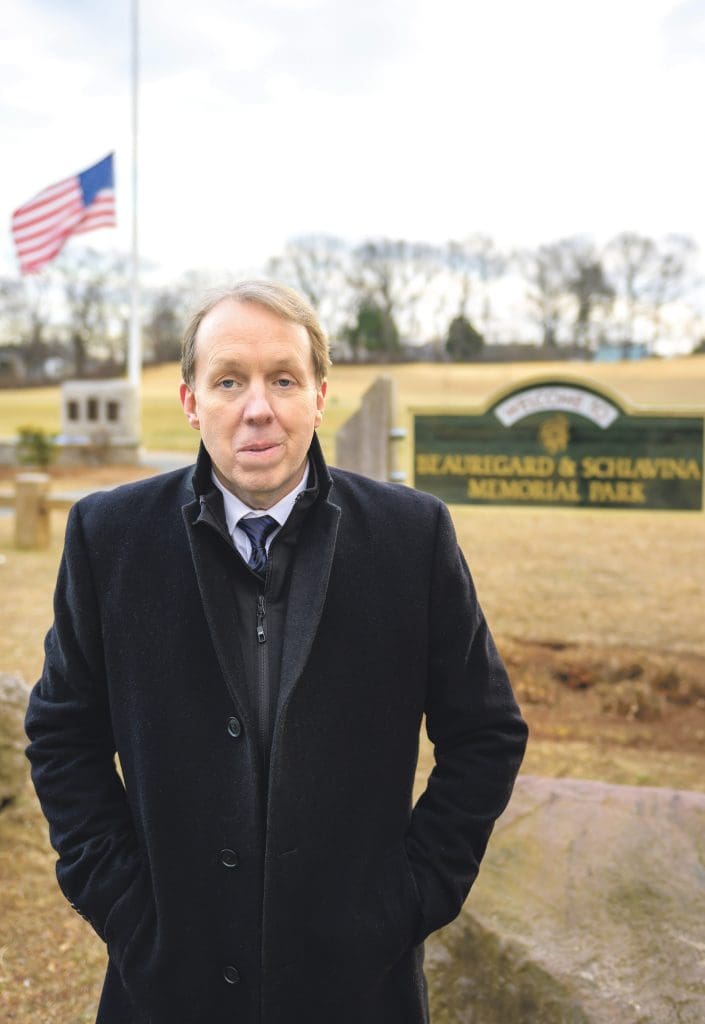
John Delaney
Photo by Bob Zemba, Simple Truth Imaging
John Delaney remembers, in vivid detail, the day his colleague, Springfield Police Officer Kevin Ambrose, died.
It was June 4, 2012, and Delaney was having lunch with his wife when his phone started blowing up. Ambrose had been shot in the line of duty, responding to a domestic disturbance.
“I raced to Baystate Medical Center and went into the ER, and when they saw me coming in, they directed me right to the room where a team of doctors and nurses were working on him,” Delaney recalled. “When I got in the room, Kevin was lying there. And within 30 seconds to a minute, the doctor pronounced him dead. It was kind of tough to take.”
He also recalled listening to dispatch from the hospital parking lot, to all the 911 calls still pouring in. “The world didn’t stop, and the police officers couldn’t stop just because they just lost one of their own.”
Delaney was tasked with planning Ambrose’s funeral — attended by some 5,000 police officers — and a celebration of life afterward, but he and some colleagues wanted to do something more to commemorate their friend. The death later that summer of Westfield Police Officer Jose Torres, who was struck by a truck in the line of duty, got them thinking about a broader event to honor fallen officers. “My friends and I were bike riders, so we said, ‘why not do a bike ride in their honor?’”
They planned a route from Springfield to Boston and figured maybe 50 people would participate, but about 170 signed up, and the Boston Police Department helped out by closing off the route to cars from Boylston Street to the State House.
“I’m riding along guys that I’d worked with for years, state troopers, police officers from around Western Massachusetts, and they’re all crying, strong guys that really show no emotion while they’re working, but they showed emotion that day,” Delaney recalled.
The initial organizers — Delaney, Officers Mike Goggin and Eddie Vanzant, and Gary Kennedy, who owned Competitive Edge Ski & Bike — knew this should be a regular event, but what they didn’t know was that, 14 years later, Ride to Remember would grow into one of the biggest cycling events in Massachusetts, drawing more than 500 riders per year and raising hundreds of thousands of dollars for worthy causes while honoring the memories of local fallen heroes from the ranks of police officers, firefighters, and corrections officers, as well as the families that must carry on after they’re gone.
“Every year, we ride for somebody to make sure that their family becomes part of the Ride to Remember family. And we let them know that we’re never going to forget. So every year we do the ride, we remember their names; we have signs with their pictures emblazoned on them along the route,” Delaney said. “We’re making sure that the average citizens that we protect and serve every day know that these cops gave their lives to protect them.”
Delaney understands the risk, sacrifice, and sometimes deep loss that come with public-service careers.
“I guess public service was in my blood. My grandfather died fighting a fire in Springfield. He was an acting deputy chief, but a captain in one of the station houses. He was always one of the first ones in, and he died fighting a fire. I never met him. That was way before I was born.
“And then my dad died when I was 10. He was in the Navy, also serving the public and the safety of citizens. So I guess that ran through my blood.”
“I’m riding along guys that I’d worked with for years, state troopers, police officers from around Western Massachusetts, and they’re all crying, strong guys that really show no emotion while they’re working, but they showed emotion that day.”
Delaney retired as a Springfield Police sergeant seven years ago — again, acutely aware that many officers don’t make it to retirement — and continues to teach at American International College. “I’m teaching young kids what it’s like to be a cop, hoping to mold them to become good police officers. And I continue on with this ride to make sure people don’t forget. That’s the only reason why I do it.”
He credits his wife, Gabriela, for being his “right hand,” not only helping with copious planning on logistics, supplies, and more, but grounding him when he becomes stressed.
“Every year I do this, I say to her a month before the ride, ‘this is the last year; I can’t do it anymore,’ because it’s stressful to feed everybody, hydrate everybody, transport people, make sure people are safe. We can’t publicize the route because I fear something might happen to the riders because there are a lot of crazy people out there. A lot goes into this ride, and I don’t sleep the night before the ride, but I pedal every mile, every year.”
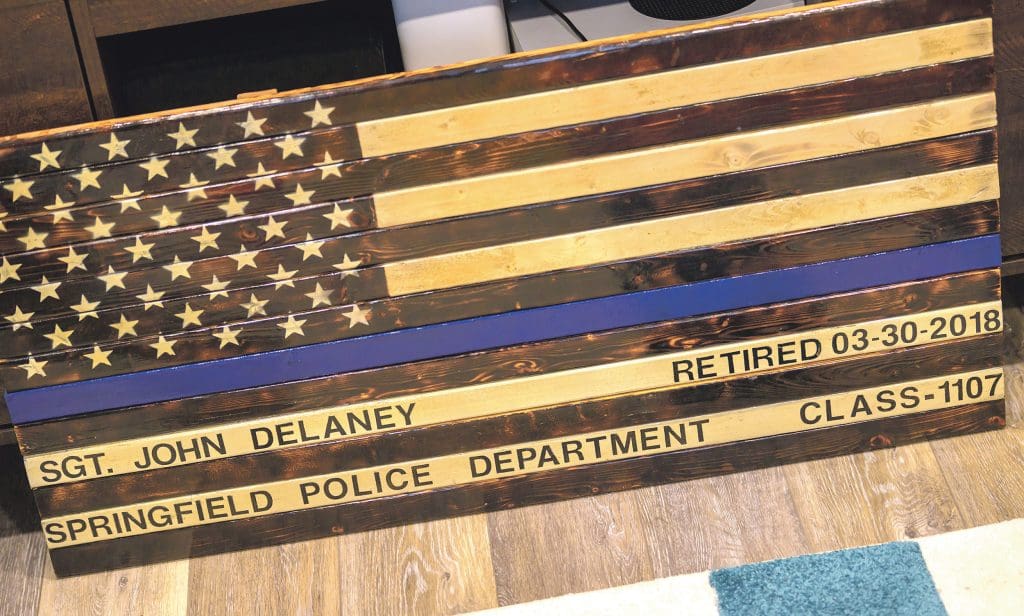
Seven years into retirement from the Springfield Police Department, John Delaney has remained deeply involved in Ride to Remember.
Photo by Bob Zemba, Simple Truth Imaging
Ride to Remember is no longer a one-way trek to Boston, instead embarking on a different round-trip journey every year, always starting and ending in downtown Springfield. This year, it will head to Hartford and back, not for the first time; other years have employed routes that head to Worcester or wind around Western Mass.
“As we’re planning the route, we have to go to every jurisdiction that we hit along the way to get permits, to let them know we’re coming,” Delaney said. “It grew from 170 to 500. That’s a lot of people on a bicycle. If you see it in person, it just goes on forever. We have police officers on motorcycles, escorting the whole way, and we never have to stop. All the local jurisdictions help out. They’re all on board, and they meet us at each border.”
But the riders do stop for at least four rest and refreshment breaks, and everyone stays together; it’s not a competitive event, but a communal one.
“You don’t have to be a cop, fireman, or corrections officer to do the ride. Everybody can do the ride. Our oldest person that does the ride every year is 85 years old, and they start at 16, 17 years old,” he explained. Three Peter Pan buses follow along, and if anyone can’t keep up or finish a leg, they can put their bike on a truck and get on the bus, where volunteers offer hydration and massages; an ambulance also trails the pack for more serious concerns. Those on the buses can rejoin the ride at any stop.
“It’s more than just a ride. It’s a powerful tribute to the dedication and sacrifice of our local law-enforcement officers and first responders who put their lives on the line every day.”
“These are weekend warriors; they’re not like Tour de France professional bikers. We only go 13 miles an hour, which is a conversational pace. I highly encourage people to take part in this. People come up to me after every ride and say, ‘this is one of the best days of my life.’”
That’s because they’re pedaling for a reason, he added. “There’s camaraderie. You’re riding alongside people you don’t know, most of whom are first responders, and they develop friendships as they’re pedaling along. And if you get a flat tire, Competitive Edge changes it in 30 seconds, like it’s a NASCAR pit stop.”
Ride to Remember, which takes place on Sept. 6 this year, charges just $200 to participate. A winter indoor event has been added in recent years, which takes place this year on March 2 at Scantic Valley YMCA in Wilbraham and costs $45. But corporate sponsorships, including PeoplesBank, Country Bank, AFC Urgent Care, and Domino’s Pizza, among other partners, are critical.
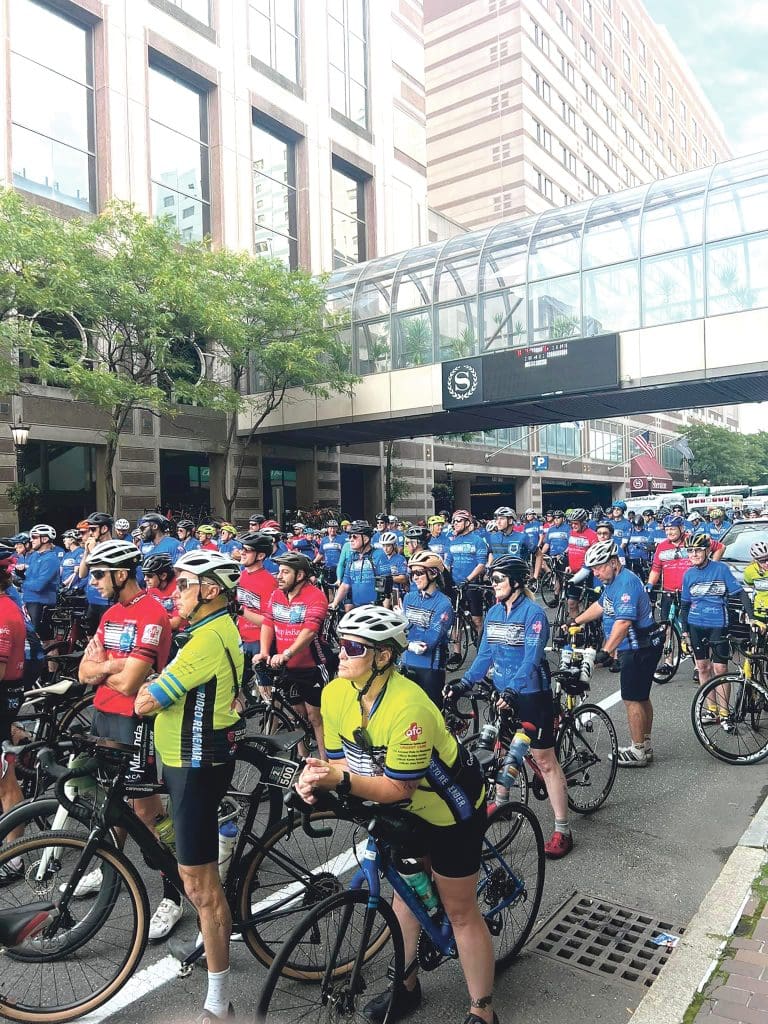
Riders gather in downtown Springfield, as they do at the start of every Ride to Remember.
Over the years, proceeds have supported many causes in the region, including Christina’s House, On-Site Academy, Square One, multiple police and firefighter memorials, several neighborhood playgrounds and soccer fields, and other community-based initiatives.
Shannon Mumblo, who founded Christina’s House and was honored by BusinessWest as a Woman of Impact in 2021, when she served as the nonprofit’s executive director, was one of three individuals who nominated Delaney as a Difference Maker this year.
“It’s more than just a ride,” she wrote. “It’s a powerful tribute to the dedication and sacrifice of our local law-enforcement officers and first responders who put their lives on the line every day.”
Those aren’t just words for Mumblo, who backs them up by organizing the ride’s 100-plus volunteers every year, Delaney said. “She gives them jobs, makes sure the rest stops are manned, helps collect the donated food … she’s a monster. She does everything, and with a smile on her face.”
With the support of people like that, as well as his dedicated wife and everyone else who contributes to the event’s success, it’s no wonder Delaney stressed, multiple times, that this Difference Makers honor isn’t his alone — not by a longshot.
And, again, the community impact is huge. Ride to Remember has supported Christina’s House — which takes in homeless mothers and their children and helps them return to independence — to the tune of about $250,000 over the years. Ambrose’s widow, Carla, chose that nonprofit as one of the ride’s supported causes because, Delaney said, Ambrose was a family man.
“I can remember when I was a younger cop, and we would come across women with kids sleeping in the bus station. We had no avenue … where do you take those people? It was definitely a void that needed to be filled in the community, and Christina’s House is filling it.”
As noted, other nonprofits have benefited from the ride as well. “We donate to a charity that helps police officers and counsels them through post-traumatic stress,” said Delaney. “If they witness a shooting or if they witness a baby dying, that weighs heavy on a cop’s shoulder. A lot of times, they have nowhere to turn, so we donate to that. I’m very proud of the charities that we donate to. All of them are based here in Western Massachusetts.”
He said the ride is deeply personal to each rider in their own way.
“A really good friend of mine, Sal Persico, was a police officer in Florida, and he came up here to live. I coached his daughters in soccer. He was my best friend; he was like my brother. He did every ride with me, but he died of a massive heart attack, taken way too early in life. I ride for him every year. His family is like my family.
“So every year, before the ride, I always give a little speech after a prayer, and I say, ‘the Ride to Remember means a lot to a lot of people. Everybody out here that’s riding, remember somebody that you’ve lost, that you’ve loved in life. It could be a father, uncle, grandmother, best friend, or the police officers. While you’re riding, remember that person. That’s what it’s about.”
Delaney still does plenty of riding on his own time. “My friends and I will go out and do 100 mikes a week. It’s just part of our nature.”
But even for those who can’t say the same, Ride to Remember is a very doable — and deeply meaningful — effort, one that truly makes a deep impact in the region. Just like the Difference Maker who helped start it because he wanted to keep some heroes’ memories alive.


Mychal Connolly
Photo by Bob Zemba, Simple Truth Imaging
Mychal Connolly believes in entrepreneurship, but he also believes in learning and mentorship and absorbing the examples of success stories before him.
That’s why he’s fond of talking about the influences in his own life, like Yankee Candle founder Mike Kittredge, Vermont Teddy Bear founder John Sortino, Jelly Belly founder David Klein, and many others.
“I say this all the time: if you ever had the chance to speak to Mike Kittredge, you would know really quickly that it wasn’t about the candles when he sold for $500 million,” Connolly said. “You’ll know Mike Kittredge could have sold used chewing gum, and it would have been a $500 million used chewing-gum company. I loved that guy, man. And John Sortino’s the same way.”
But while he’s learned lessons about ideas, marketing, selling, and growing a business from those famous names, he’s also drawn inspiration from his adoptive father, Harry Connolly, who owned a pest-control business in their native Bahamas.
“I remember one night, the hotel that he was spraying forgot he was coming,” he said, and they left guard dogs roaming free — and Harry was badly hurt. “It was like a horror scene — there was blood everywhere. And you know, this man, the next night, was out spraying the homes he had lined up for that day. That made a serious impact on me.”
Connolly has gathered all these lessons — on hard work, dedication, innovation, and more — and applied them during an entrepreneurial career that actually began at age 9, when he would take some of the candy his grandmother brought back from trips to Florida and sell it to classmates in school.
But his first real business, launched in 2008, was Stinky Cakes, which offered practical gifts to new parents, most notably cakes shaped from diapers. As a result of his early success in business and marketing, he was asked to do some teaching, guest lecturing, and mentoring of young entrepreneurs by groups like Valley Venture Mentors and EforAll Holyoke.
One course was called the “100 Grand Plan,” which, as that name suggests, explains how to make one’s first $100,000. Among the keys to doing so, and one that is often overlooked, is marketing.
These efforts led to the creation of the Launch and Stand Out Agency, which is where Connolly learned about non-traditional advertising — including mobile, digital billboards, which became the basis of his current business, Stand Out Truck, which will celebrate five years in business on March 9.
That’s right. He started a very public-facing business on March 9, 2000.
“I never got to run my year-one business plan,” he recalled. “My year-one business plan was to completely figure out the owner-operator model. But on March 13, the world shut down.”
Which meant 2020, dominated by COVID, was a time of navigating challenges, pivoting, and putting into action all the lessons he had learned about business and marketing from the Kittredges and Sortinos of the world. He made sure he started out with enough capital to withstand some very soft months, and he found some creative avenues for his traveling billboard, like graduation messages for students whose ceremonies had been canceled.
Since that start, the company has steadily built a base of hundreds of clients, from local businesses to large, national brands, and even, in one case, President Biden, when he was pitching what would become the Bipartisan Infrastructure Law. And Connolly is planning to expand as well, possibly with a third truck and a larger team.
“Mike Kittredge could have sold used chewing gum, and it would have been a $500 million used chewing-gum company. I loved that guy, man.”
Meanwhile, he continues to mentor young people, most notably his son, Mychal Connolly Jr., — known to most as Mikey — who has been busy building his own first enterprise, Realistic CEO.
In short, Connolly Sr. has not only been an example of entrepreneurship, he’s helping others follow that path as well, benefiting not only their own careers and families, but the region’s economy. That’s the impact of an unconventional, charismatic, inspiring Difference Maker.
It’s also, as noted, the impact of a father on his oldest son’s entrepreneurial dreams.
The two of them co-authored a motivational book titled I Am a CEO. Realistic CEO after a high-school teacher told Mikey during a class project that his goal of becoming a CEO was, well, unrealistic. The book, illustrated by local artist DeAndra Roy, aims to inspire people to chase their dreams, no matter the odds.
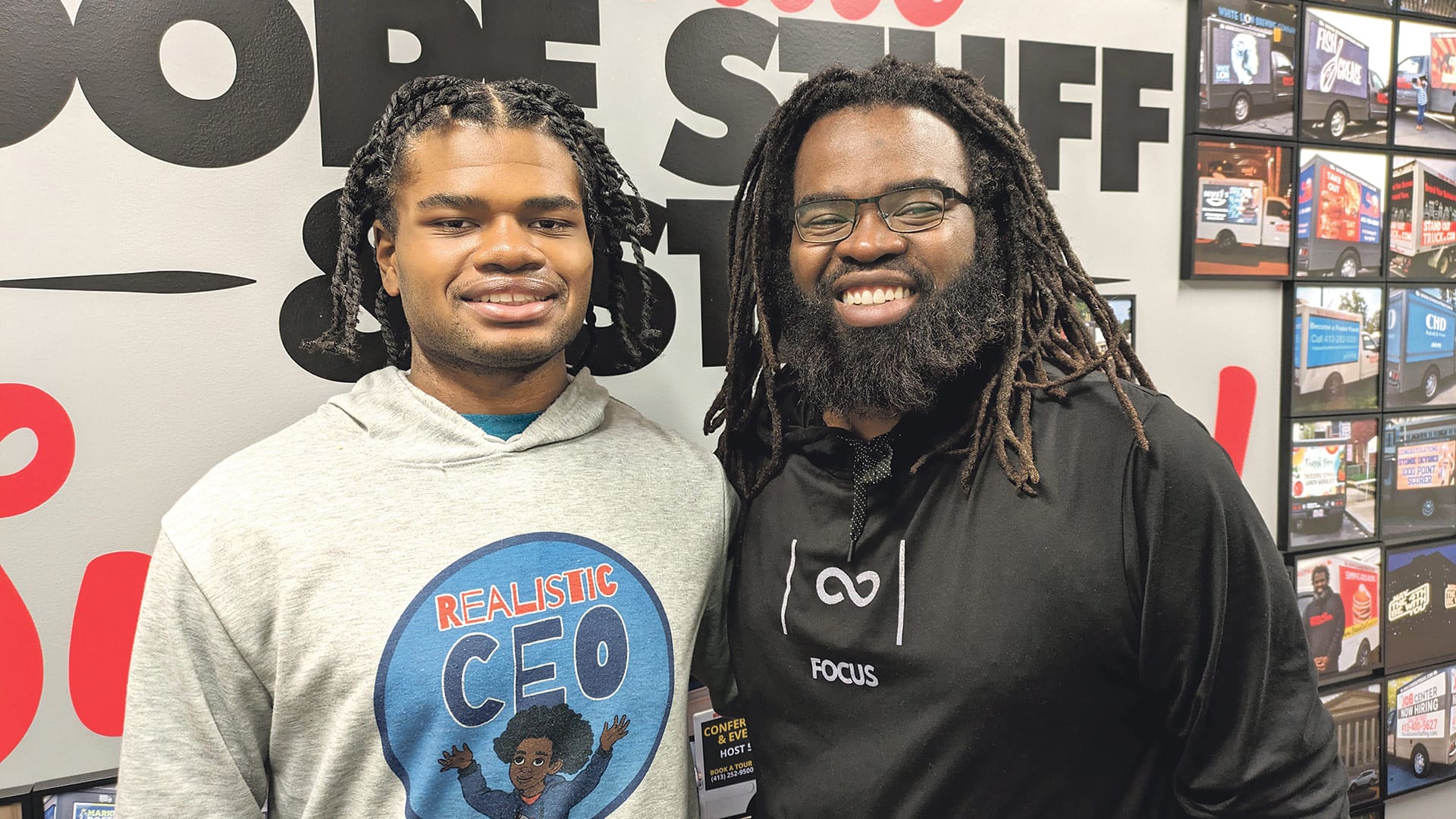
Mychal Connolly’s son, Mychal Connolly Jr. (left), has been influencing young people through his Realistic CEO enterprise.
Mikey also launched the Realistic CEO Podcast, a platform where he interviews successful business owners, CEOs, founders, presidents, executives, and community leaders. Coincidentally, two of his early guests were members of the Difference Makers class of 2025 — John Doleva and Dan Moriarty.
As he studies communication and journalism at Holyoke Community College — he made the dean’s list last semester while running his podcast and public-speaking business — Mikey is honing his skills in those fields through real-world experience, while teaching others what he learns about becoming a CEO.
“It’s definitely exciting,” he said. “A teacher who started following me on Instagram said she bought the book and she read to her class. Then she posted that one of her students already wants to start a nail-salon business. I thought it was kind of cool that, simply by reading my story, the teacher was able to see the vision of her student wanting to start her own nail salon.”
Connolly loves seeing his son work for his dreams — which currently involves a goal of distributing 500,000 copies of the book over the next five years and taking his inspirational message to young people on a much wider stage than Western Mass. — and knowing he can provide an example of successful entrepreneurship from his own life.
“When I think back to Stinky Cakes and all the things I wish I knew then, I’m able to tell him,” he said. “But I say to him, ‘dude, I can open doors for you, but I’m never walking through the door for you.’”
One recent initiative is a one-for-one program where anytime someone purchases a copy, Mikey donates one to a kid in a low- to moderate-income community or book desert.
“When I meet someone, I don’t see someone who is maxed out. When I’m talking to my clients, I’m not talking to them where they are today. I live in the future. So I’m sitting at the top of the mountain enjoying a coffee or tea with them at them being their best, at their peak. And that’s what I do for myself every day.”
“So his business model is that, after he does the 500,000 copies and makes an impact in so many communities, he’s going to be booked to speak all around the world on how to create an impact as a youth,” Connolly said. “And he really wants to make an impact. He wants to be an example. He wants young people — and older people — around the country to look at him and go, ‘man, you know what, you’re right, I can do this right now. And it doesn’t matter if someone says it’s unrealistic — I have a plan, and I can do this, just like the kid in the book.’”
Family support is important to Connolly, who often talks about the influence of his wife, Adrienne, in his life.
“A lot of people see the wins, and they go, ‘oh, man, Myke’s doing great.’ But in business, sometimes it’s days, weeks, months where everything’s going wrong. And in those times, she’s the glue. From Stinky Cakes to the agency to Stand Out Truck, when it’s going wrong, she’s the glue. She’s the reason I’m able to do a lot of what I do.”
That said, the successes are real.
“I’m very good at marketing, and we get some massive clients. To be able to serve them with my business, it’s a great thing,” he told BusinessWest. “I’ve built a pretty strong team of designers, writers, videographers, all these pieces that you need to run a successful marketing campaign.”
He stressed that his Launch and Stand Out Agency performs the necessary work in the background so his clients can shine up front.
“My son is one of my clients at the agency, and a big reason for so much of what he’s doing out there is because of the Launch and Stand Out Agency. He’s the rock star, and we quietly do the work behind the scenes from a marketing and advertising standpoint.”
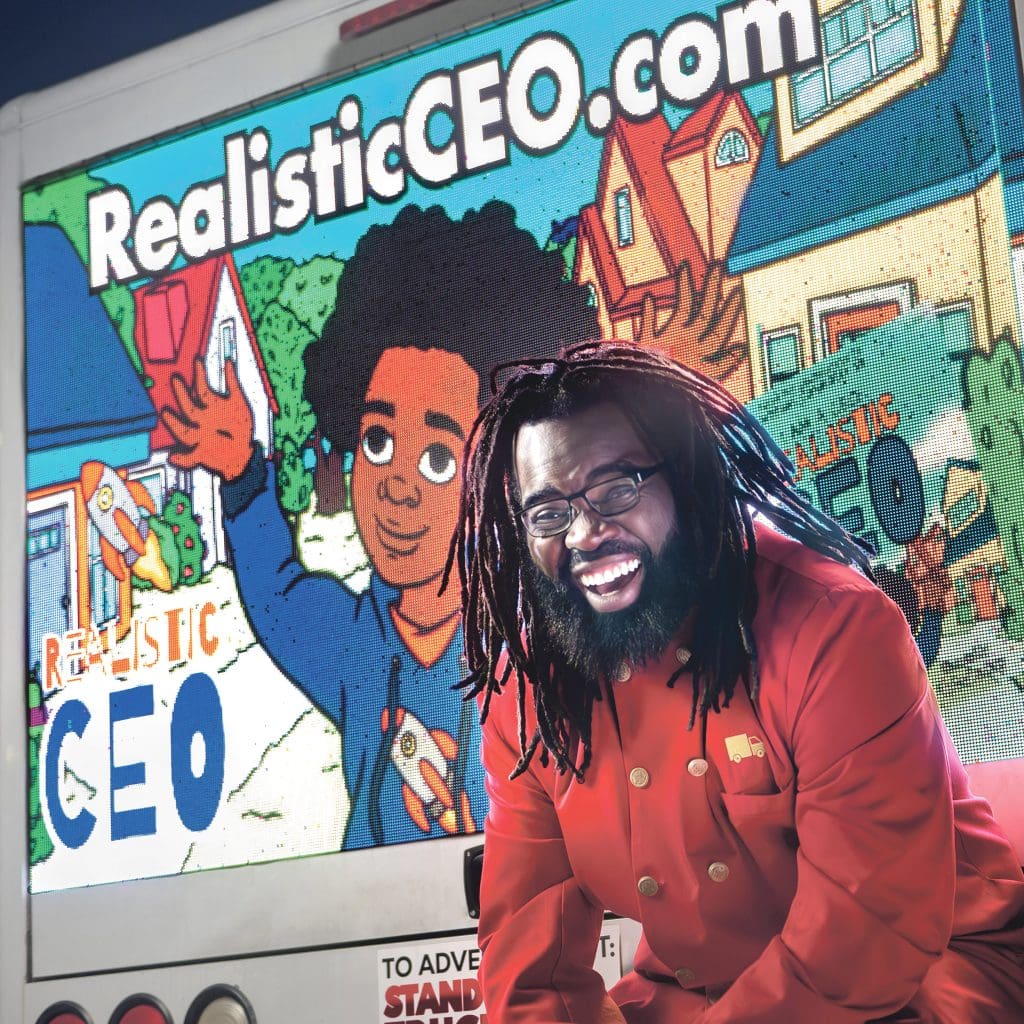
Mychal Connolly has taken Stand Out Truck to clients both within and well outside this region.
Photo by Bob Zemba, Simple Truth Imaging
One thing his famous mentors — Kittredge, Sortino, and Klein — taught Connolly is that marketing is, at its heart, a simple thing. So he keeps it simple when delivering lessons through Marketing and Cupcakes, his long-time entrepreneurship networking and mentorship program.
“I love entrepreneurship, man. I believe in entrepreneurs. Like, I believe in people,” he said, before adding, “I believe in kind people. And, like I always tell people, in a world of 8 billion, you’d be hard-pressed to find 1 billion just straight evil people. I think the majority of people in the world are really good people. And I love serving people.”
Connolly’s handle on social media is standouttruckking — a bold decision, which he humbly explained.
“Some people are like, ‘you call yourself a king?’ And I go, ‘listen, the king is the greatest servant amongst the community. The people choose their king. Just because you have nice clothes and nice jewelry, that don’t make you a king. The king is a servant — the biggest servant in the community. And I believe in serving.”
And promoting clients in any way he can, including telling their stories right on his website through essays and photos. He’s a believer in their success, and he understands their struggles.
“I’ve been climbing these steps for so long, and every time I get to next step, it plateaus, and I feel like I’m not good enough or I don’t know anything,” he said. “But it’s not in a negative, self-defeating way — it’s like, ‘no, no, no, now it’s time to level up.’
“I don’t see people as they are; I see people at max potential,” he added. “So when I meet someone, I don’t see someone who is maxed out. When I’m talking to my clients, I’m not talking to them where they are today. I live in the future. So I’m sitting at the top of the mountain enjoying a coffee or tea with them at them being their best, at their peak. And that’s what I do for myself every day. Even the days when I don’t want to do it.”
“I can be having the worst day ever, but I can’t live in that space,” Connolly added. “That’s a skill you develop because I think everybody deals with the negativity, bad days, and you could turn it into impostor syndrome and curl up in a ball, or you could say, ‘well, here’s an opportunity to level up.’ There’s real value in communicating that to people, because everyone needs that.”
Even a Difference Maker.

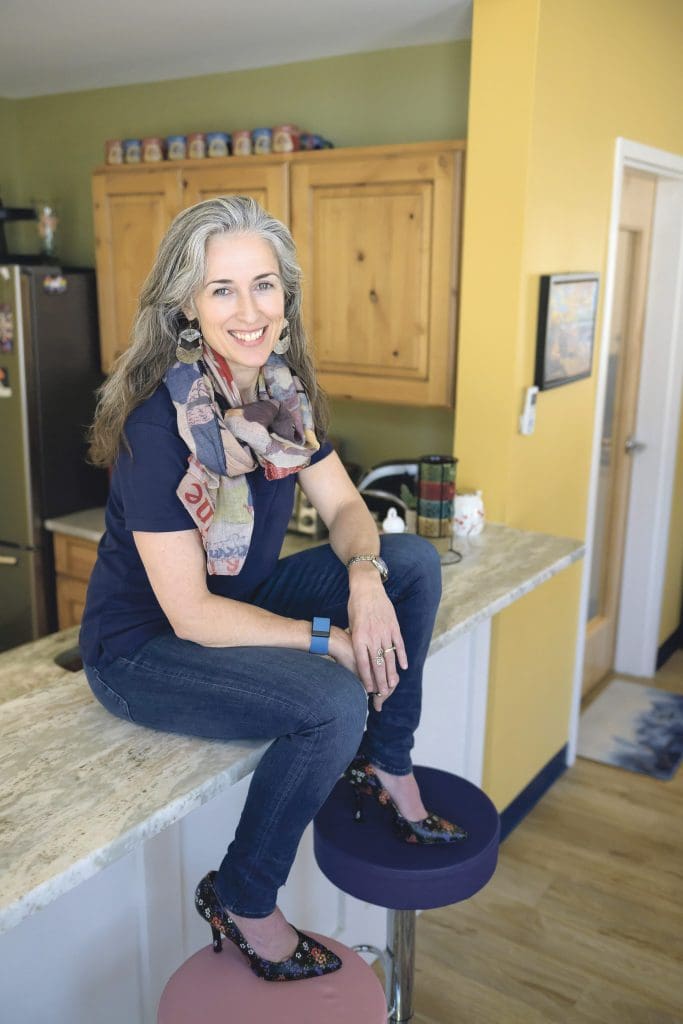
Andrea Bordenca
Photo by Bob Zemba, Simple Truth Imaging
Early in life, and then as she started her career, Andrea Bordenca had no real desire to work within, let alone manage, the business started by her father, DESCO, a healthcare emergency field-service response organization.
“I said, ‘it’s your thing, dad, but I don’t know if it’s my thing,’” she recalled, adding that she did work for the company in various capacities in her youth, but began working professionally as a technical writer and later handled marketing for her husband, an artist specializing in murals.
But things changed when her father got sick with kidney cancer.
“I thought it was something I needed to do to help my parents … and I eventually fell in love with it,” said Bordenca, who joined her mother, a nurse practitioner, in managing the venture, taking the role of president. Over the past 20 years, Bordenca, now CEO and chairperson, has expanded its services from laboratories to hospitals, surgery centers, clinics, restaurants, and hotels, taking sales from $4 million to $10 million while greatly improving profitability as well.
But her success in growing the company and taking it the next level is not why she has been named a Difference Maker for 2025, although it’s certainly part of her inspiring story.
Instead, it’s what she’s done at the space that … well, also serves as DESCO’s headquarters, at 200 Venture Way in Hadley.
There, she has created what she calls the Venture Way Collaborative, with the emphasis on the last word in that title. There, she brings together diverse voices and provides both the physical space and positive environment for people to grow and achieve something she never felt growing up — a sense of belonging.
“I thrive when people of all ages, races, and genders are in dialogue together,” said Bordenca, a self-described entrepreneur, executive coach, and youth and adult leadership educator. “And I believe that the only way toward systemic change is by bringing all community stakeholders together to create change together.
“In my leadership and coaching, I work with people to develop a grounded and powerful presence rooted in what drives them,” she went on. “This starts with creating awareness of how people see themselves. That awareness then creates choice to move differently in the world. The root of all these conversations is care. What are we taking care of? What needs more care? A common missing piece in the leaders, parents, and kids I work with is ourselves.”
She does this at Venture Way Collaborative, which she described as far more than space that can be rented for events, team-building exercises, community gatherings, nonprofit fundraisers, and yoga classes — although it is that, too.
“We don’t just rent space; we form relationships,” she told BusinessWest, adding that the collaborative is a “space for community members to work, learn, and explore creative solutions together.”
It is home to DESCO, which now boasts more than 60 employees and serves businesses across the country, but also Generative Leadership Consulting, which she serves as managing partner, as well as Lead Yourself Youth and the Women’s Collaborative, two initiatives she founded to enable those constituencies to address issues and challenges together and collaboratively.
Ira Bryck, the former director of the family business center at UMass Amherst, and a Difference Maker himself in 2020, first met Bordenca as she came to the center to navigate the many complex issues that confront those in family businesses.
In nominating her for this award, he said she helps individuals, and especially young people, become the best versions of themselves.
“When I would try my best, I wasn’t as good as my peers or my sister, so I developed this narrative that I was stupid because I didn’t do well in school, and I would try my hardest.”
“Her leadership methodology combines neurolinguistics, mindfulness, emotional literacy, and somatics, and this comprehensive approach facilitates the embodiment of leadership rather than passive learning,” he wrote. “She focuses on developing awareness and creating choices for people to move differently in the world, with care at the root of all conversations.
“On top of all these ventures and accomplishments, she is a wholesome, kind, generous, curious, inspired person, who loves nothing more than to make the universe a better place to live,” Bryck went on, adding that the sum of her accomplishments and attributes certainly makes her a Difference Maker.
Before talking about what she’s created with the Venture Way Collaborative, Bordenca first talked about her own life, her own struggles to try to fit in, and her inability to see her own worth, because the two are related.
She grew up in Medfield, an affluent community in Eastern Mass., and struggled, as she put it, to feel like she belonged.
“I wasn’t a great student, and my older sister was,” she recalled. “And even though I looked like everyone else — it was a white-dominant town — I really struggled in school, and I was seen as disruptive.
“When I would try my best, I wasn’t as good as my peers or my sister, so I developed this narrative that I was stupid because I didn’t do well in school, and I would try my hardest. And as a defense mechanism, I ended up skipping school, got into drugs, and was just disruptive to get the acceptance of my peers. I recognize that now as an adult, but didn’t know it at the time.”
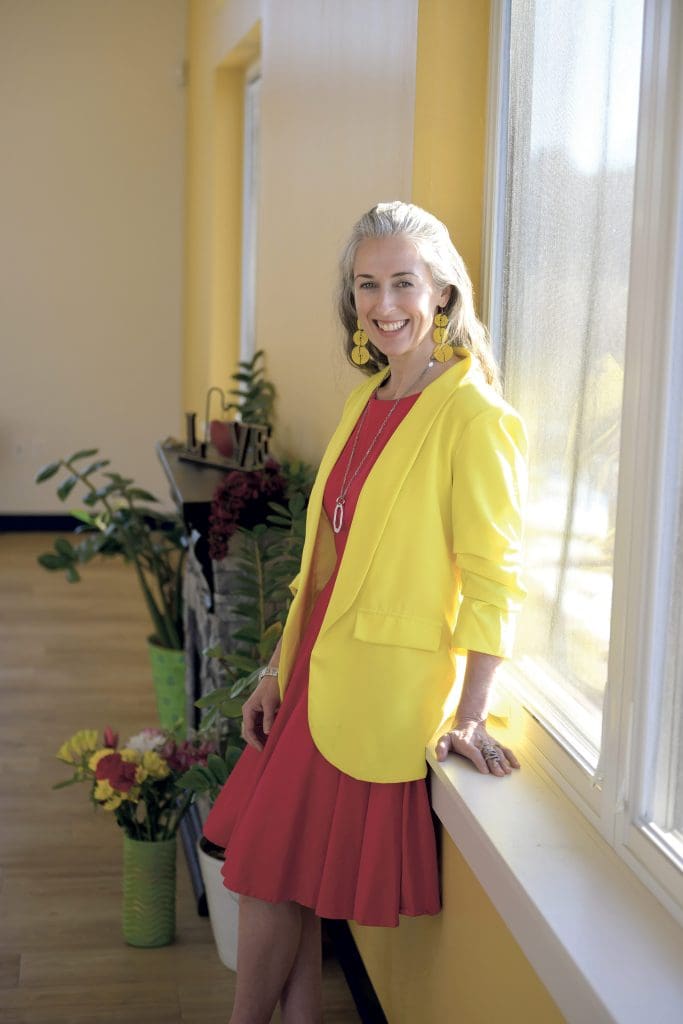
Andrea Bordenca says her many programs are designed to give people something she didn’t have growing up — a sense of belonging.
Photo by Bob Zemba, Simple Truth Imaging
A psychological determination would reveal that she had four learning disorders, including ADHD, and this helped her overcome feelings of being “stupid,” as she put it, although she struggled with various medications prescribed for her.
She credits her husband with helping her understand that “there was nothing crazy about me — I just didn’t fit into the box I was supposed to be fitting into in the town that we were in.
“That gave me some hope,” she went on, adding that she eventually took herself off those medications and “found what it was that gave me a sense of belonging.” And, in the simplest of terms, the Venture Way Collaborative was created to help others do the same.
She broke ground for the collaborative in 1999, just a few months before the pandemic arrived. COVID initially kept the facility from doing what it was designed to do — bring people together, in person — but Bordenca carried on through Zoom, and admits that her timing was actually good because she could not have afforded to build the facility amid the soaring construction costs that arrived post-pandemic.
As she mentioned earlier, it is physical space where people can meet, but it’s much more than that.
“It’s a physical space that manifests a place where I want to feel good, and where I want others, when they come in, to say, ‘this is good; I feel welcome.’ There are high ceilings, there’s expansiveness, there are bold colors — there are a lot of touches I curate so people feel like this is home,” she said. “I want it to be expansive and creative.”
That’s especially true of a large, 1,000-square-foot space that is called, among other things, the ‘classroom,’ or the ‘studio,’ depending on who’s using it.
“It has no furniture in it in, so there’s room to move around,” she said. “Everything I do has a component of awareness of the body and the nervous system, so I want to make sure that, when I’m doing leadership training, people can feel their bodies and are aware of their movement because that’s not something we’re taught to be aware of.”
The space now hosts groups ranging from the Queer Valley Library to the Women’s Fund of Western Massachusetts; from the Zonta Club of Quaboag Valley to Faces of Medicine, which shares the journeys, successes, and struggles of Black female physicians.
Beyond her work at DESCO and as a landlord at 200 Venture Way, Bordenca is also a coach, working with both adults and young people. As part of these efforts, she created Lead Yourself Youth and the Women’s Collaborative to bring people together and create dialogue.
The former is not an official nonprofit, but rather an informal entity that provides professional development. Bordenca has worked with groups ranging from Girl Scouts to students and educators at the MacDuffie School in Granby and the Hadley school system, and focuses on normalizing different emotions, ranging from anxiety to frustration, using hands-on activities like juggling and sewing.
“A lot of it is helping people build that emotional resilience through these safe spaces of practice and simulation,” she said, adding that she does the same with women, a discussion that will take her to … golf.
“I talk to women professionals who say, ‘I golf, and I hate golfing,’” she explained, adding that she once put herself in that category. “And I say, ‘why do you golf, then?’ And they say, ‘that’s where the decisions are made.’
“I’ll say, ‘if this isn’t your thing, what is something that you can create that might attract some golfers and maybe non-golfers that are also influencers, decision makers, people that you’re trying to close deals with?’” she went on. “‘Can you create another event, like a hike or even a trip to an amusement park?’”
That’s just one example of how she encourages people to help cultivate communities by being creative and focused on knocking down walls instead of doors.
Overall, Bordenca said her broad focus is on helping individuals of all ages, genders, and life paths find common ground and that sense of belonging that eluded her in her youth.
“If people don’t have the people around them that have the same value system, they’re not going to get very far because they’re just going to have people tell them they’re wrong or ‘that’s the wrong way,’ which was a lot of my childhood,” she explained. “The work that I do with other children and also educators and other organizations is … ‘hey, there’s no right or wrong way; it’s just based on values and your compass.’
“If you work in an organization, if you live in a community, if you’re part of a family whose value systems are different, who are the people that you can find that share your values so you don’t feel crazy, isolated, alone, or so you don’t have to compete or fight so hard? It doesn’t have to be that way.
“As social animals, we need other people,” she continued. “And just because of the way we’re taught and we learn, I think it’s really difficult, especially post-COVID with all the social and emotional issues that children and people are having, especially Gen Z, to know how important it is, and how possible it is, to find the people who are just like you.”
Helping individuals do that — helping people find that sense of belonging — is just one of many reasons why Bordenca is truly a Difference Maker.

Sheryl Blancato
Photo by Bob Zemba, Simple Truth Imaging
Twenty-six years ago, Sheryl Blancato opened an animal shelter. And quickly realized it wasn’t enough.
“The initial plan was, ‘hey, we’re going to help the animals.’ But I quickly realized that it’s a band-aid. There was a much bigger issue here, and I’m a root-cause person. And the root cause is, ‘why are these animals coming into the shelter?’ That’s why we started doing vaccine clinics, because the animals were dying of preventable diseases, and we also did spay and neuter to prevent overpopulation.
“I still remember the day I went to my husband and said, ‘you know what? We need to start having hospitals because too many animals are being surrendered for perfectly preventable, treatable things, and it’s overwhelming the shelters. And if they’re already in a loving home, why not keep them there?’”
That idea became the foundation of everything Second Chance Animal Services does: addressing the root causes of why families have to give up their pets, and then keeping those families and pets together.
“You can never build a shelter big enough to help every animal in need,” Blancato said. “But you can build things to keep them out in the community where they’re already in loving homes.”
Programs like Homebound to the Rescue. The idea behind that initiative is that many senior citizens can’t afford to provide basic medical care for their pets or don’t have transportation to bring them to a vet. So Second Chance visits low-income senior-housing areas to offer low-cost vaccinations, testing, and other care, so the animals stay healthy and, just as important, don’t have to be surrendered because they can’t be properly cared for.
Then there’s Project Keep Me, which provides temporary housing for the pets of domestic-violence survivors, enabling their owners to seek safe housing arrangements while ensuring the well-being of their animal companions, and later returning them to a more stable environment. Without such a program, people in crisis often have to choose between staying in a dangerous situation and losing their beloved pets.
“I saw some people surrendering because they were in domestic-violence situations,” Blancato recalled. “They had somewhere to go, but they didn’t want to leave their pet, and they couldn’t bring their pet in this situation until they could sort things out,” she said. “So we hold on to those pets for up to 90 days, so they can go to their sister’s house, where their dog doesn’t get along with her cat. We’ll hold the dog for you; you get to your sister’s, get safe, get the assistance you need to get somewhere else, and then take your dog back.”
Second Chance now offers a similar service to veterans who need to seek medical treatment outside their home for an extended period. “If they can’t bring the animal with them, they’re not seeking the treatment. So we’re doing the same thing: we’ll give you up to 90 days so you can go get the treatment you need, get on the right path, and get your animal back.”
In fact, many of the programs that have evolved from that initial small shelter in East Brookfield were developed with the same goal in mind: to not only help animals find homes, but keep as many as possible from being surrendered at all.
This focus has seen Second Chance expand its reach dramatically over the past 26 years. It now encompasses four hospitals (in North Brookfield, Springfield, Worcester, and Southbridge) and serves more than 56,000 animals a year — a number that grows steadily every year.
Blancato has occasionally run into people who take the attitude of, ‘if they can’t afford pets, they shouldn’t have pets.’
“So I present examples. ‘What about your grandmother? Your grandfather died, and that little puppy, or that little cat, is their whole life.’ Or, ‘think about the single mom. I was a single mom at one time with three kids. That dog was everything to me. God forbid I had a serious medical issue; I didn’t have the money for it. But that dog meant so much to me and my kids at that time.’ And they say, ‘all right, I get it.’”
“The average family has less than $500 in emergency money. So, if you’re raising kids, $8,000 is a lot of money. I couldn’t have done it when I was a single mom. There’s no way. I would have had to make a really heart-wrenching decision.”
With tens of thousands of animal-loving families also getting it — and getting the help they need but could not otherwise afford — Blancato has made a career of keeping pets in loving homes. That’s the work of a true Difference Maker.
Blancato has often told the story of a puppy named Buster that she — then a single mother of three — adopted during her 20s, following a tough stretch in which her husband left and she battled cancer. Because Buster liked to escape his yard, Blancato got to know East Brookfield’s animal-control officer, and they became friends — and he eventually offered her a job as an animal-control assistant. He retired not long after, and she took over his role.
She’d pick up a lot of strays that were never claimed, and she struggled to get them medical care and into homes, so she decided to start a shelter on a neighbor’s donated plot of land. By that time, she had adopted another dog, Dusty, who had been abused.
Project Good Dog matches behaviorally needy dogs with inmates in pre-release programs at local correctional institutions.
Photo by Bob Zemba, Simple Truth Imaging
So, while raising three children — and, by that time, two stepchildren — she took $400, raised whatever else she could, and built the adoption center that still sits on the property today.
The shelter was offering spay/neuter services and vaccines in the early years, but Blancato realized she could do more to keep pets and families together through expanded veterinary care. The first hospital was built in neighboring North Brookfield in 2010 and expanded to full-service care in 2013, and the other three hospitals followed, giving Second Chance a broad footprint across Central and Western Mass.
In addition to the hospitals and the programs mentioned earlier, Second Chance offers the Helping Hands outreach, which assists dozens of rescue sites, shelters, and municipal facilities by providing low-cost spay/neuter and vet care; Project Good Dog, which matches behaviorally needy dogs with inmates in pre-release programs at local correctional institutions, providing 24/7 care and training for the dogs while teaching handlers patience, compassion, and responsibility; a pet-food pantry; mobile adoption, education, and vet-care events; and much more.
The low-cost hospital care for families that need it can be the difference between keeping a pet and losing it. For example, the week before Blancato spoke with BusinessWest, a patient’s dog had swallowed a baby’s pacifier.
“That’s a $6,000 to $8,000 surgery in emergency. They didn’t have it. We were able to do it for $1,000. That’s life-changing for them,” she recalled. “The average family has less than $500 in emergency money. So, if you’re raising kids, $8,000 is a lot of money. I couldn’t have done it when I was a single mom. There’s no way. I would have had to make a really heart-wrenching decision.”
Other area veterinary hospitals have actually sent patients to Second Chance to avoid what Blancato called “economic euthanasia.” And the model of subsidizing care for low-income patients is catching on in other places, she added, though it’s not for the faint of heart.
“When someone says, ‘we want to start a hospital,’ I’m like, ‘OK, here’s the deal. It’s expensive, it’s hard, and you have to have a business mind because we work on a very tight budget.’”
That budget — about $10 million annually — comes in several forms: grants, individual donations, legacy gifts from people who pass away and leave money, as well as hospital co-payments and adoption fees. “We don’t get enough in the hospitals to sustain it all, so we need those donations.”
“What people don’t realize is the cost of medical equipment in veterinary medicine is equal to that in human medicine. It’s very expensive, and it doesn’t last forever. We also want to attract the best vets, the best techs, the best staff. And they need to get paid.”
And many clients do, indeed, pay full cost, which helps to subsidize those who need a hand.
Second Chance has gained national attention; it was one of just 12 organizations in the U.S. chosen by PetSmart Charities to be part of its inaugural Accelerator grant program. “The three-year, $1.1 million grant will go toward upgrades in our hospital, as well as helping expand the staff from 12 vets to 26 last year, while increasing total staffing by 20%,” Blancato said.
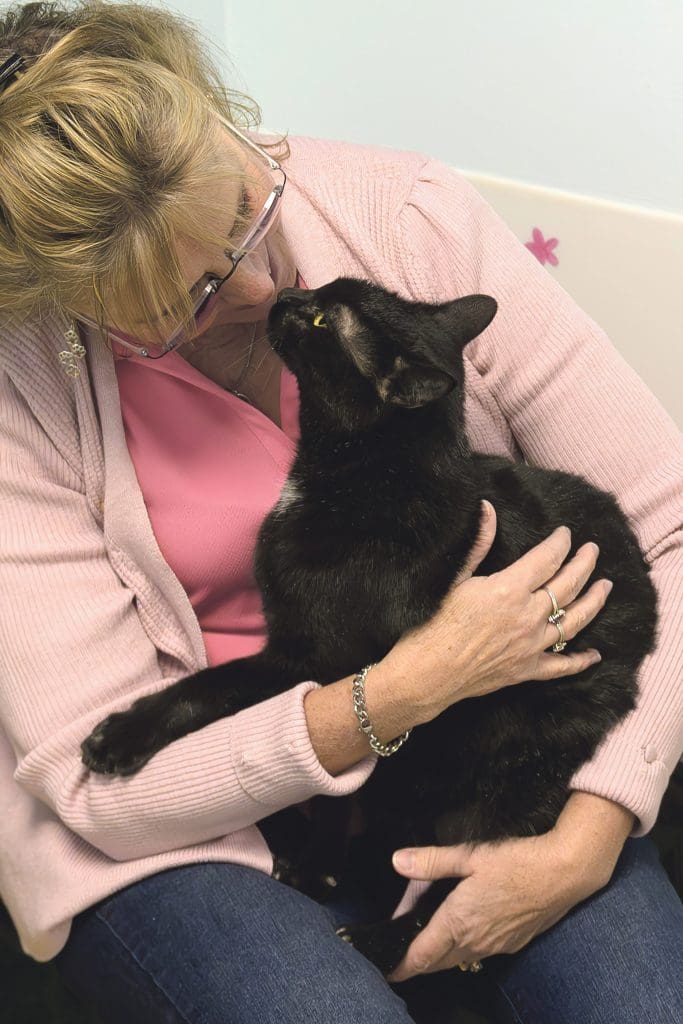
Sheryl Blancato spends time at each of Second Chance’s four hospitals every week.
Photo by Bob Zemba, Simple Truth Imaging
“That’s huge. What people don’t realize is the cost of medical equipment in veterinary medicine is equal to that in human medicine. It’s very expensive, and it doesn’t last forever. We also want to attract the best vets, the best techs, the best staff. And they need to get paid. They have bills to pay, too. So it’s staff, it’s equipment, it’s overhead. We have to raise all that money.”
Blancato, like several other Difference Makers this year, was quick to deflect the idea of this award as an individual one.
“This is not about me. We have over 100 staff, we have hundreds of volunteers … it’s a massive thing now. And what I tell staff when they come on is, ‘this is not just a job. This is the one job that, at the end of every day, you can get in your car, take 30 seconds, and think about at least one impact you had that day. It could be on a person. Maybe you were able to save that pet.’”
Like the family who brought in an ailing, 17-year-old cat, ready to say goodbye to an animal they adored. But Second Chance ran a quality-of-life exam and found the cat had thyroid disease, which was very treatable with medication.
“To be prepared to say goodbye and then take the cat home, that’s life-changing for those people. We gave them another two, maybe three years,” she went on. “We have hundreds of those stories. I always tell the staff when they come on, ‘yes, you’re getting a paycheck’ — we take good care of our staff. But they also get to have that rewarding experience — every day, something is going to be life-changing.”
Meanwhile, Second Chance’s adoption center has a 99.9% live release rate, an incredibly high number for a no-kill shelter.
“It’s amazing. As animal control, I used to pick up litters of puppies running down the street, and I just wanted to keep puppies off the street,” Blancato recalled. “To watch it evolve, with all the innovation and the programs and how many people are impacted, you sit back and go, ‘wow.’
“I always tell people, you can’t say, ‘I’m just one person. I can’t make a difference,’ because that’s not true. Yes, you’re one person, and yes, you have your limitations, but if you have a vision that people can see, then others will join in. That’s how this has become what it is. It’s your vision, then it’s other people coming out of nowhere, and the next thing you know, you have a whole army behind you. And that’s really exciting.”

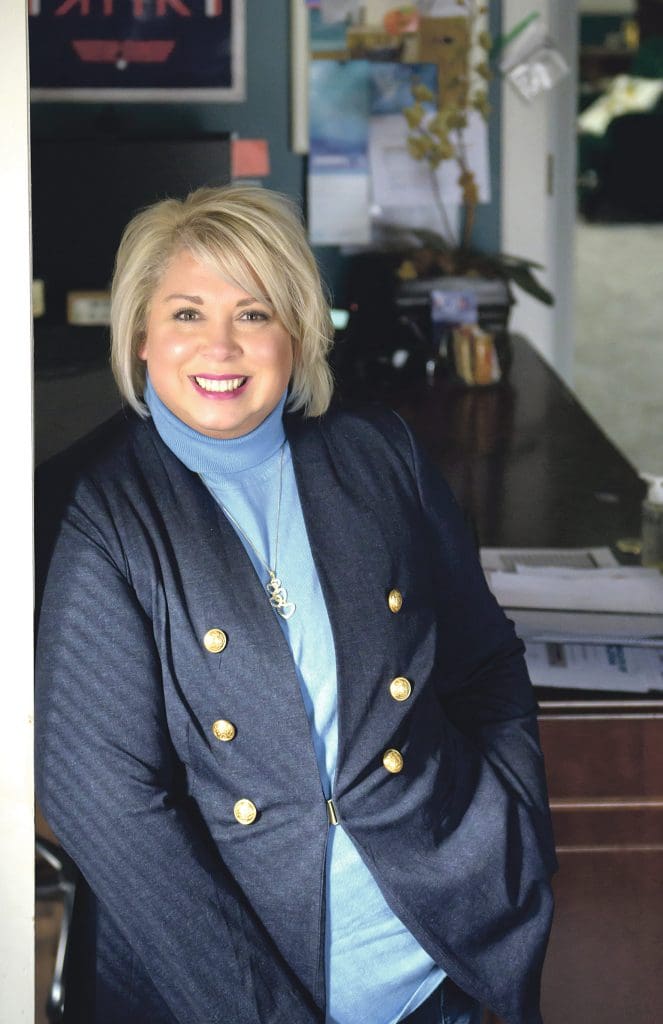
Jennie Adamczyk
Photo by Bob Zemba, Simple Truth Imaging
They called it ‘Fashion for Compassion.’
This was a fundraiser staged by Holyoke-based Providence Ministries for the Needy (PMN). Area ‘celebrities’ would stroll down a runway modeling clothes from area stores, with proceeds from ticket sales benefiting the nonprofit, which provides services ranging from a soup kitchen to sober homes for men.
Jennie Adamczyk was working for Ross Insurance, handling sales and marketing, and, through her work to bolster the agency’s social-media profile, she had reached that ‘celebrity’ status and was asked, along with her boss at Ross, to become one of the models.
So she did, sporting some offerings from Old Navy, and, in the process, getting to know some of the leaders at PMN and learning much more about its multi-faceted mission. She became intrigued, and soon she would get far more involved.
Fast-forwarding quite a bit (we’ll go back in more detail later), she became its executive director five years ago and commenced what could be called a turnaround for the agency, greatly improving morale among staff members, creating an even sharper focus on its mission, and nurturing a culture of caring.
“I’ve always tried to lead by example here — ‘this is how I want you talk to people, this is how I want you to engage with people.’ Everyone gets treated with dignity and respect,” said Adamczyk, who firmly believes that she and her staff members embody the spirit of Sr. Margaret McCleary, SP, founder of PMN, an agency affiliated with and sponsored by the Sisters of Providence.
“We model ourselves after Sister Margaret: if you see a need, you meet that need to the best of your ability,” she said. “And there’s no judgment. It’s not our job to decide if someone is worthy of help; that’s not what we do. We make sure that they’re fed, their stomachs are full, and we send them on their way. That is the attitude we take across all our programs, and it comes from her.”
We talked with Sr. Margaret, who described Adamczyk as the right person in the right place at the right time.
“She’s a wonderful administrator, but more than that, she has a courageous spirit,” she said. “This is needed when advocating for the least among us. Jennie hears the cries of the poor and speaks up for them and embraces them always with respect and dignity.”
Sr. Mary Caritas, SP, who served on the board of PMN for many years before recently stepping aside, agreed.
“She was never trained for the job she’s in, but she’s a natural. She took over at a time when we needed a real turnaround, and I’m very proud of the way she’s done that. She came into her own very quickly, and she’s just a natural leader,” she said, citing, as one example, how Adamczyk stepped forward when the city of Holyoke needed a pop-up warming shelter and converted the chapel in the former convent that serves as home to many PMN programs for that purpose.
“She takes people off the street like that when it’s cold, and there’s discipline, there’s love, and respect, but people have to abide by the rules,” Sr. Caritas went on. “And, for the most part, people do that willingly because there’s so much love and concern for who they are.”
“We model ourselves after Sister Margaret: if you see a need, you meet that need to the best of your ability. And there’s no judgment. It’s not our job to decide if someone is worthy of help; that’s not what we do.”
Adamczyk described her work as “challenging, exhausting, and fulfilling,” essentially because of the constituencies being served and the circumstances under which they come to Providence Ministries for help.
“You’re working in an environment where you never, ever see anyone at their best,” she explained. “People are coming in, and they’re depressed, they’re hungry, they’re financially crippled, they have an abuse history … the list goes on and on.
“No one’s at their best, and that takes a toll,” she went on. “But if we can instill a little bit of hope, a little bit of joy into the people we serve, then it’s all worth it.”
This is the attitude she brings to her work, the attitude she has instilled in her staff, the attitude that permeates this agency. And for making it so prevalent, so ingrained in the fabric of PMN, Adamczyk is truly a Difference Maker.
As she talked about her not-so-subtle career change, going from insurance sales and marketing to being the program manager at Providence Ministries for the Needy, Adamczyk said that, on many levels, and to most people, it didn’t make a whole lot of sense.
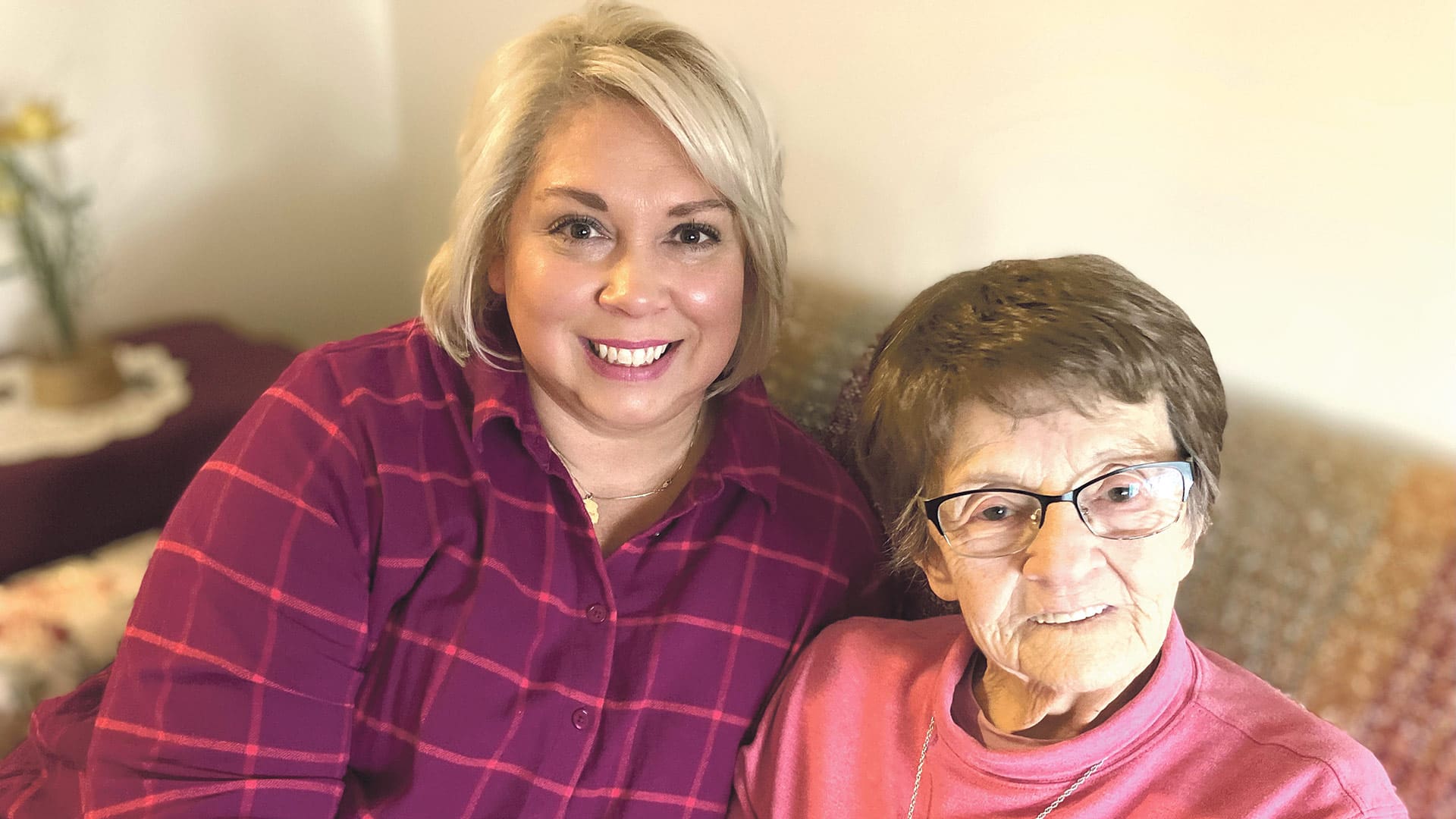
Jennie Adamczyk says she patterns her approach to managing Providence Ministries after its founder, Sr. Margaret McCleary (right).
Indeed, this was a lateral move. The salary wasn’t any higher, and the benefits were no better. But deep down, she knew this move was one she needed to make, personally and professionally.
“It felt right, like I was supposed to be here,” she told BusinessWest. “It felt like home — this is where I’m supposed to be — and that this mission is what I’m supposed to be doing. There was an overwhelming sense of peace being here; I felt that this is where God wanted me to be.”
Flashing back to her participation in Fashion for Compassion, Adamczyk said that, soon thereafter, the director at Providence Ministries asked her to join the agency’s fundraising committee, which she did, helping to create an enduring fundraiser called Retro Game Night, at which participants take part in old classics like the Match Game, Password, Name That Tune, and others.
Success in that realm led that same executive director to ask Adamczyk to become program director of PMN, an agency she knew about but had never visited. In fact, she practically had to ask for directions because she hadn’t been to that section of Holyoke, even though she lived in the city.
She was soon promoted to associate director when the director went out on maternity leave. And when that individual left, she became interim director, and then director when the candidate initially awarded that position did not pan out.
“She’s a wonderful administrator, but more than that, she has a courageous spirit. This is needed when advocating for the least among us. Jennie hears the cries of the poor and speaks up for them and embraces them always with respect and dignity.”
Today, Adamczyk leads the many programs at PMN, which fall into two categories — life-preserving and life-changing. The former includes Kate’s Kitchen, which served 74,000 people last year, and has seen demand of its services rise amid inflation and other economic woes; Margaret’s Pantry, which distributed 2.7 million pounds of food last year and has likewise seen demand for its services soar; St. Jude’s Clothing Center; and foodWorks@Kate’s Kitchen, a culinary training program that offers unemployed and underemployed individuals job training in the culinary field.
Meanwhile, the latter includes three sober houses for men, Loreto House, Broderick House, and McCleary Manor.
In addition, there is that pop-up warming shelter, a unique facility to say the least, and one of many programs in the former convent, which now, thanks to Adamczyk, also houses the agency’s administrative offices — before, they were at McCleary Manor, behind Providence Hospital — a move that speaks to her approach to this agency and its mission.
“When I first came here, I requested that my office be down here, because how can you run the programs if you’re not where the programs are?” she said, adding that all staff is at the Hamilton Street facility, and board meetings are staged there as well.
Administering the agency’s programs is what Adamczyk does for a living. How she and her staff administer them is what makes her a Difference Maker.
As she talked about the ‘how’ element to her work, she started by saying, “I’m not corporate,” and returned to her thoughts about her approach and guiding philosophy, echoing that of Sr. Margaret McCleary.
“I tend to act when there’s a need, much like Sr. Margaret would have,” she said, adding that she doesn’t always follow all the policies and procedures when adding or amending a program. “That’s sometimes difficult to do in this kind of world; sometimes you just need to act and make a decision.”

Jennie Adamczyk with staff members, from left: Michael Clark, facilities manager; Stephanie Trombley, marketing coordinator; and Axel Fontanez, housing manager.
Photo by Bob Zemba, Simple Truth Imaging
Such was the case when she decided that Kate’s Kitchen would serve dinner in addition to lunch — because the need was (and is) there, and so was the infrastructure.
“We were already serving lunch, we had the staff … it just seemed like a no-brainer to open the doors for dinner as well,” she said, adding that this mindset guides her in everything she does, and in every program within PMN.
The pop-up warming shelter — open when the temperature dips below 10 degrees or the wind chill falls below zero, and with a capacity for 25 beds and more if need arises, which it often does — is another example.
It’s not your typical shelter in most respects — everything from allowing married couples to stay together to providing hot showers; from making popcorn and hot chocolate for the guests and popping in a movie to providing fresh clothes and food.
“Our job with the pop-up shelter is not to rehabilitate anyone,” Adamczyk explained. “A lot of them are coming in and using; they will actively detox with us through the evening, but they’d rather be sick than be out in the cold.
“We had a mother and her autistic son stay with us this last stretch of open nights,” she went on. “They came to us in the morning and said, ‘we want to thank you for opening because we would have died in our tent last night, it was so cold; I’m afraid we wouldn’t have woken up.’
As for the movies, they’re part of larger efforts to provide those who need the shelter “a moment of feeling normal; it doesn’t feel like they’re not seen,” she explained.
“I’ve never myself experienced that, but I can only imagine that walking through a day and feeling as if no one sees you — and if they do, it’s a negative connotation — would be pretty heavy,” she continued. “So we try to be as loving and positive as we can those shelter nights.”
Meanwhile, operation and staffing of this shelter speaks to the way Adamczyk has improved morale at PMN and created a culture of not only giving back, but going perhaps above and beyond. Indeed, there isn’t a separate staff for the shelter, she explained, adding that regular staff who volunteer to work there do so knowing they go straight from that detail to their regular job.
“I have many staff that are going to work overnight and still have their day job in the morning,” she said. “They are giving of their time, energy, and resources to meet the needs of these people. They say they do it because I do it.”
Bottom Line
Adamczyk likes to say she’s a Protestant living in a Catholic world.
She recalled that, when she reminded of Sr. Caritas of this, she jokingly responded, “well, everyone is flawed in some way.”
She certainly doesn’t consider it a flaw that, on occasion, she may not follow all the rules or procedures when adding a program or a service. Like Sr. Margaret, when Adamczyk sees a need, she tries to meet it.
That makes her the right manager for PMN — and also a Difference Maker.



Photos by Underwood Photography




For 16 years now, BusinessWest has been recognizing and celebrating the work of individuals, groups, businesses, and institutions through its Difference Makers program, with one goal in mind: to show the many ways one can, in fact, make a difference within their community.
The stories of the class of 2024, like the 15 cohorts before it, are all different, but the common thread is the passion and commitment exhibited by each honoree to improve quality of life for those in this region and make it a better place to live, work, and conduct business.
The stories are inspiring in many different ways, whether it’s Matt Bannister’s deep commitment to area nonprofits or Shannon Rudder’s lifelong pursuit of equity and access for all; whether it’s the work of Fred and Mary Kay Kadushin and the staff of Rock 102 to fight hunger or the ways Delcie Bean and Scott Keiter use their business success to impact others; whether it’s Linda Dunlavy’s hard work on tough regional issues or the significant impact of Springfield Symphony Orchestra and Springfield Chamber Players on the economic and cultural health of Western Mass.
We invite you to read these stories below. All of the 2024 Difference Makers have made an impact — real, tangible, often life-changing impact — in this region that we call home.
You can also help us celebrate the honorees in person on Thursday, April 10 at the Log Cabin in Holyoke. Tickets cost $95 each, with reserved tables of 10-12 available. For more event details and to reserve tickets, go HERE
Thank you to our sponsors — Burkhart, Pizzanelli, P.C., Keiter, Mercy Medical Center/Trinity Health, the Royal Law Firm, and TommyCar Auto Group — for making this program possible.


Springfield Symphony Orchestra President and CEO Paul Lambert and Springfield Chamber Players Chair Beth Welty.
Beth Welty said the musicians just wanted to play.
With the Springfield Symphony Orchestra’s leadership and musicians locked in a labor dispute in 2021 and 2022, the players were willing to perform under the old contract until a new one was settled, but the SSO wouldn’t agree.
“At this point, the pandemic had subsided enough that all the other orchestras in the Northeast had come back to work, audiences were showing up, and we decided we needed to do something,” Welty said. “We were very worried if there was no symphonic music in Springfield — out of sight, out of mind — people would forget about us. We had to keep this going.”
So the musicians started staging shows on their own — both at Symphony Hall and at smaller venues around the region — churches, the Westfield Atheneum, anywhere they could draw an audience.
“We were playing at all these little places, constantly expanding to new communities and venues, and bringing live chamber music to as many people as we possibly could in Western Mass.,” said Welty, an SSO violinist who headed up the effort known as MOSSO, or Musicians of the Springfield Symphony Orchestra.
“So many people, including members of my board, have told me, ‘the first time I ever heard a symphony orchestra was in school.”
Well, you might know the story after that — the SSO and the musicians’ union struck a two-year deal last spring to bring full symphony concerts back to downtown Springfield, which proved gratifying to SSO President and CEO Paul Lambert, who never considered the musicians his enemies as they worked out their labor differences.
“I grew up in the Actors’ Equity Association. I’m a union member. And I believe in organized labor, especially in the performing arts. You want to make sure that everyone is well taken care of,” he said. “At the same time, I’ve been a businessman for a long time, so I’m very well aware of the economic realities and challenges that the performing-arts business is going through, especially in these eccentric times we’re still living through.”
The relief on both sides, in fact, was palpable. But the return of concerts to Symphony Hall was only part of the story. The other part was the continued existence of MOSSO under a new name — Springfield Chamber Players — and its continuing mission to bring smaller chamber concerts to venues around the region, including schools.
“We’re interested in promoting the voices that don’t get heard as much but are great composers — music by Black composers, composers of color, women composers,” Welty said. “We’re mixing in composers people have some familiarity with, but also bringing them composers they haven’t heard of, even living composers.”
So as the music reverberates around the region once again, BusinessWest has chosen to honor both the Springfield Symphony Orchestra and Springfield Chamber Players as Difference Makers for 2024 — not because they settled a labor agreement last year, but because of how important the performing arts are to the region, and how important both entities are to filling that role, hopefully for generations to come.
The Springfield Chamber Players string quartet includes Miho Matsuno, Robert Lawrence, Martha McAdams, and Patricia Edens.
(Photo by Gregory Jones)
“When people come to the concerts, and I may open with remarks, I ask people, ‘just for a couple of hours, turn off your cell phones and let it go,’” Lambert said. “It’s like therapy — go listen to some beautiful music. For a few hours, just relax and drink it in. We just need that so badly right now.”
Welty agreed. “Music is a big part of life, and I want that for everyone. It doesn’t have to be classical — we did a combo jazz-classical concert,” she noted, before citing Duke Ellington’s famous line about how genre doesn’t matter, and that “there are simply two kinds of music, good music and the other kind.”
And good music — good live music — truly makes a difference in a community.
Lambert recalled being in the fourth grade and attending a symphony concert; in fact, it’s an especially vivid, formative memory. So he’s grateful for a two-year, $280,000 grant from the city last spring to help the SSO create educational programming for youth.
“We are deeply involved in finding creative solutions, ways to reach out. This is a giant opportunity to reach all kinds of members of our community who might like to learn more about music — classical music, symphonic music, all the various forms of music that we can touch,” he said.
Meanwhile, through a program called Beethoven’s Buddies, people can donate money toward free tickets for those who might not be able to afford one. “Whatever your situation is, we want you to come to these concerts to hear this music and have a wonderful time,” he explained. “We’re excited about that. It’s also another way that we can reach into our community to pull in people as donors and sponsors.”
“You come together, and the concert happens, and it’s magic. It’s that one-time experience of being together in a space where this beautiful thing happens. It’s special.”
A long-time program called the Springfield Symphony Youth Orchestra is going strong as well, Lambert said, and the SSO just hired an education director, Caitlin Meyer, who has been engaging with public schools and colleges on everything from internships to educational programming and performances.
“That’s a critical piece in the equation,” Lambert added. “So many people, including members of my board, have told me, ‘the first time I ever heard a symphony orchestra was in school.’”
Meanwhile, Springfield Chamber Players recently presented educational outreach concerts at the Berkshire School in Sheffield and the Community Music School of Springfield.
Meeting young people where they are is simply a matter of survival for performing-arts organizations, said Mark Auerbach, Marketing and Public Relations director for Springfield Chamber Players.
“A lot of people who go to symphonies and come to our concerts are on the older side. And it’s partly because the music programs in schools are not what they were 30 or 40 years ago,” he noted. “If we can get family concerts going, educational concerts going, and interest kids and young adults to come to concerts, hopefully they will stay and grow with us.”
Welty is glad the SSO is doing grant-funded youth outreach because the budget for Springfield Chamber Players is limited, so it needs to be a group effort.
“I’ve been with the symphony 40 years, and we used to have a really robust school presence. We’d send a trio or a quartet to play for kids, talk to them, and answer questions. And they later came to Symphony Hall to hear the whole orchestra,” she recalled. “I think they want to bring that back. We have to be developing the next generation of audience members.”
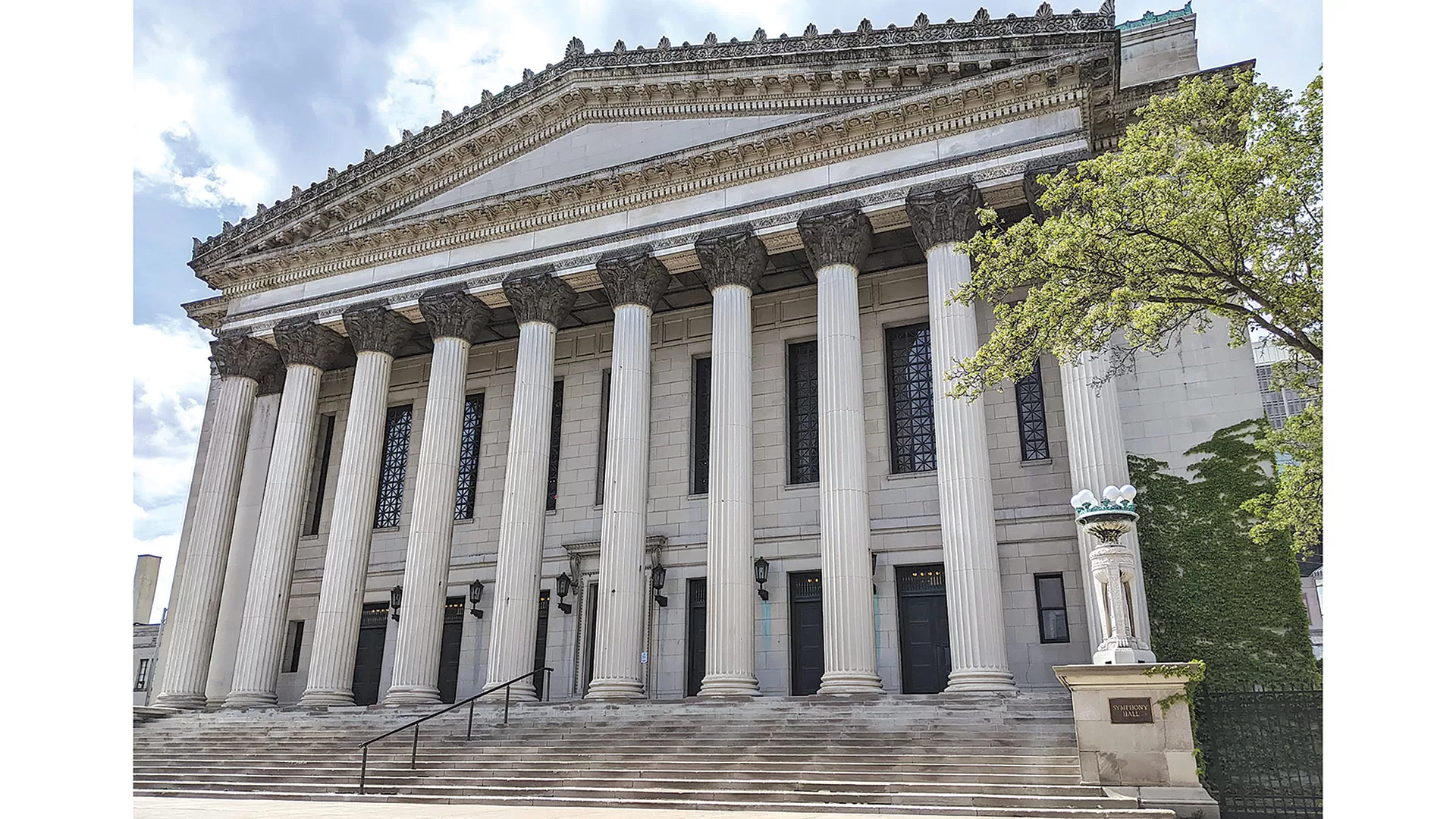
Leaders of both Springfield Symphony Orchestra and Springfield Chamber Players are gratified to be bringing music back to both Symphony Hall (pictured) and smaller venues around the region.
Part of the growth and outreach is simply broadening the definition of what an SSO concert is, Lambert told BusinessWest.
“A lot of folks think of a certain type of music from Western Europe, from the 18th and 19th century. And I love that music. I love Mozart. I love Brahms. I love Beethoven. I love Schubert. I’m thrilled to hear that music, personally,” he said. “But I’ve become increasingly aware of the streams of music traditions that exist all around the world in different cultures and different backgrounds that might appeal to all kinds of folks. So we are trying to pull those various streams together in our programming opportunities.”
To that end, the SSO has begun assembling some hybrid concerts that offer a mixture of traditions, like the classical-jazz fusion explored at the Martin Luther King Jr. celebration concert in January, and a Havana Nights show earlier this month that featured Latin jazz and Afro-Cuban rythms.
“The MLK concert had a marvelously diverse audience. We are thrilled when we see new people coming in,” Lambert said. “At our Juneteenth concert that we did last year, we had so many people telling us, ‘I’ve never been to one of your concerts before; I’ve never even been to Symphony Hall before.’ It’s thrilling to us to get those folks coming in to hear this beautiful music.
“Our pops concerts do really well, and we’re going to see what we can explore with those, with different genres of music,” he added. “At the same time, we’re never going to lose track of that beautiful, traditional repertoire that people, including me, love so much. That’s the core of who we are.”
Welty noted that Springfield Chamber Players has brought an eclectic spirit to its offerings as well, such as “Johnny Appleseed,” a composition by local composer Clifton Noble Jr. based on Janet Yolen’s book of the same name. That concert will take place outdoors in Longmeadow — the legendary character’s hometown — on May 12.
Whatever the venue, she is passionate about exposing more people to good music — whatever that means to Duke Ellington or anyone else — and to get them into music at younger ages.
“I wish every kid could take lessons on an instrument for a few years. You really learn so much. Problem-solving, analyzing, listening, observing. Music is very mathematical, too. Music education would boost everybody,” she said.
“I really think of arts organizations — music, a ballet company, whatever it is — as a resource for everyone,” she added. “You can’t just go to work every day and then go home and watch TV. That’s a boring life. You want something more. And kids that see live music get interested. They want to try it themselves.”
A thriving performance culture is also an economic driver, Auerbach noted.
“It’s essential that Springfield Symphony Orchestra survives because it’s the only live, nonprofit performing-arts organization in Springfield,” he said. “Without the arts, we’d have trouble attracting new residents and new businesses. And there’s a lot of economic spinoff — you go out, first you pay to eat, you pay to park, you may go out to drink afterwards. The musicians, if they are local, spend money here. If they’re not local, they have to stay in hotels and eat here.”
Lambert agrees, even though the demographics for this art form are challenging right now — not just in Springfield, but everywhere.
“For a couple of years during the pandemic, folks stayed at home, and they got used to not coming out at night so much. You got used to staying home and being cozy in your armchair and watching Netflix. Coming back from that was always going to be a substantial challenge.”
But the rewards are great, he added.
“I used to think about how people make wine — you grow the grapes, and you tend the vineyards, and you design the bottle, and you do all of this work. And then you get to dinner and someone opens the cork and you drink it, and it’s gone. But it’s a beautiful thing for that moment.
“I often think about our experience the same way,” he went on. “All the work and the rehearsals and the planning and the tickets and this and that. But you come together, and the concert happens, and it’s magic. It’s that one-time experience of being together in a space where this beautiful thing happens. It’s special.”
For her 12th birthday, Shannon Rudder didn’t want a present from her mother; instead, she wanted to redecorate her bedroom.
So she did, and she remembers some of the things she hung on the walls, like the Indigenous Ten Commandments and a picture of Martin Luther King Jr. and Gandhi, along with the quotation, “live, think, and act. Be inspired by humanity evolving toward a world of peace and harmony.”
She remembers that message because she internalized it at a young age, and it has informed every stop along her career journey — and the difference she has been able to make at each one.
“It’s embedded in me,” Rudder said as she sat with BusinessWest in her office at Martin Luther King Jr. Family Services in Springfield. “I feel like I can be a part of creating humanity in my immediate area. I might not be able to change the whole world or the whole city that I’m in, but I’ve always felt compelled to make an impact in a positive way with compassion and love. And I’m responsible for my thoughts because those become actions. Very early on, that idea led me to be a person of integrity, of deep compassion, and of advocacy.”
Perhaps that’s why, after considering a corporate career in college, she eventually embarked on a series of roles at organizations with a social mission, from MotherWoman and Teach Western Mass to Providence Ministries and, now, MLK Family Services, where she stepped a year ago into the very big shoes of the late Ronn Johnson, who steered the ship there for more than a decade (and was also honored by BusinessWest as a Difference Maker in 2020).
Simply put, Rudder said, “I just think I have been called to contribute to important causes, and I go after that.”
Her first nonprofit job was in Buffalo, N.Y., where she grew up, for an organization called Women for Human Rights & Dignity. “It just like cracked me open, like, ‘oh, the skills that I have and the compassion that I have … they can be aligned, and I get paid to do awesome, impactful work?’
“I might not be able to change the whole world or the whole city that I’m in, but I’ve always felt compelled to make an impact in a positive way with compassion and love.”
“That was all about women’s empowerment,” she added. “We did alternatives-to-incarceration programs and domestic-violence support and non-traditional education and housing. I was really young, and I had a little baby, and I was doing this good work, but also learning how to run a business.”
Since then, Rudder has taken care to align with causes that are important to her, moving into work with fair housing and civil rights in the Buffalo region before moving to Western Mass., where her first pathway to organizational leadership was at MotherWoman, a nonprofit focused on maternal health and well-being, where she served as executive director.
Later, she was executive director for Providence Ministries Inc., a nonprofit advocating for and supporting marginalized populations across programs dedicated to food security, addiction recovery, housing, clothing, and workforce development. That role opened her eyes to many types of need and further honed her sharp sense of empathy.
“I remember my grandmother saying, ‘but for God’s grace, there go I’ — meaning, in a blink of an eye, your situation could change, and you could be on the other side of needing services like that,” she said. “We’re all part of the same journey.”
Shannon Rudder with the two youth emcees from last month’s MLK Day celebration.
She also served as deputy director of Teach Western Mass, a nonprofit startup working toward educational equity in partnership with more than 30 schools. Her duties included fiscal and operational oversight, knowledge-management systems, data and impact, communications, equity and belonging, human-resource management, overall team culture, and supervision of cross-functional teams.
“I’ve been really intentional about the causes that make a difference to me, approaching it from the perspective of, ‘OK, this agency’s mission is really clear, the heart and the compassion are here, and I get to make sure it lasts for a long time by building the infrastructure, the operations systems, the fundraising and return on investment, and all the important scaffolding that needs to be in place so that the business aspect of it can thrive.”
The clear thread woven through all these roles has been a focus on equity and making sure everyone has access to the resources they need to live healthy, meaningful lives, she explained. “I picked causes that are doing the important work of amplifying the voices of those that have often been silenced or marginalized.”
By using her own voice, compassion, and business acumen to do so, Rudder has become a true Difference Maker.
At MLK Family Services, she shares with Johnson, her late predecessor, an approach to the work from a public-health standpoint, considering how the social determinants of health affect all areas of life.
“Sure, we can triage and put Band-Aids on stuff — people are hungry now, so let’s make sure they have food — but let’s dig a little deeper: how do we actually get a grocery store in an area that is in need?” she said.
“I remember my grandmother saying, ‘but for God’s grace, there go I’ — meaning, in a blink of an eye, your situation could change, and you could be on the other side of needing services like that. We’re all part of the same journey.”
“I also want to make sure that MLKFS as a whole, operations and programs, is operating from a trauma-informed place,” she went on, citing a philosophy that takes into account the unique, often traumatic experiences of an individual’s life and how that informs what they need.
“How do we approach our programs and ensure that the people working with our kids are helping to break that, or making sure that those kids have resources like mental-health counseling? How do we make sure we’re helping to embolden and empower them, and then actually building the bridge to get them access to the things that they need?”
The current programs offered by MLK Family Services are many and diverse, and include:
• The Family Stabilization Program, funded through the Department of Child and Family, offers support to families to keep their children safely at home and in the community by advocating for the well-being and rights of all children and ensuring parenting support.
Shannon Rudder’s work at MLK Family Services lifts up children in many ways.
• The MLK Food Pantry provides emergency food services to community members in Hampden County. The program relies on donations from grocery vendors and is a member of the Food Bank of Western Massachusetts. The pantry operates at the MLK Community Center weekly and also hosts the Food Bank’s mobile market twice monthly.
• The Clemente Course in Humanities is a transformative educational experience for adults — an opportunity to further their education and careers, advocate for themselves and their families, and engage actively in the cultural and political lives of their communities.
• The Historically Black College and University (HBCU) Tour helps young people explore their academic journey by visiting multiple college campuses in a single trip. These tours equip participants with a solid understanding of the history, culture, and traditions that have shaped the schools’ collective legacy. In addition, students, parents, and counselors are engaged in a year-long series of workshops.
• The King’s Kids afterschool programs serve up to 130 children at two locations. Programming is aimed at helping students become academically successful by nurturing their character building, critical-thinking skills, and creativity. Students are offered homework help, STEAM enrichment, literacy support, cultural experiences, and recreational and holistic well-being.
• Youth between ages 13 and 22 are invited to participate in the weekly Night Spot program, which empowers them to be critical thinkers and community builders while preparing them for life in high school, college, and beyond. Night Spot offers advocacy services for a variety of needs, including handling life’s complications, navigating the court system, and ensuring safety in a safe, drug-free environment.
• Beat the Odds is a Springfield-based youth mental-health coalition led in partnership with the Public Health Institute of Western Massachusetts. Hosted at MLK Family Services, the program focuses on breaking the cycle of stigma and barriers to youth mental healthcare. In 2023, this program launched a public-awareness campaign called “I Am Not My Mood.”
“How do we make sure we’re helping to embolden and empower them, and then actually building the bridge to get them access to the things that they need?”
• King’s Kids Summer Camp is a full-day camp for children ages 5-12. Meanwhile, a new partnership with Springfield Empowerment Zone schools provides summer enrichment programs to Springfield middle- and high-school students in partnership with agencies across Massachusetts.
• DCR Summer Nights Program is a transformative, statewide initiative that enriches the lives of urban youth ages 13 to 21. MLK Family Services is one of the sites providing safe, inclusive, and fun activities (both recreational and educational) during evening hours. Participants enjoy gaming competitions and tournaments in a variety of sports, enriching arts activities, health and wellness workshops, career explorations through guest speakers, and off-site excursions.
“I can’t wait to jump in with the community and do a strategic plan where they begin to inform us what they need, so we’re not sitting here thinking, ‘oh, I think it would be cool if we created this experience,’” Rudder said. “Does the community need that? We know that the community is ever-shifting and changing. So to really meet the needs of the community, we need to hear from them, and I’m excited about doing that.”
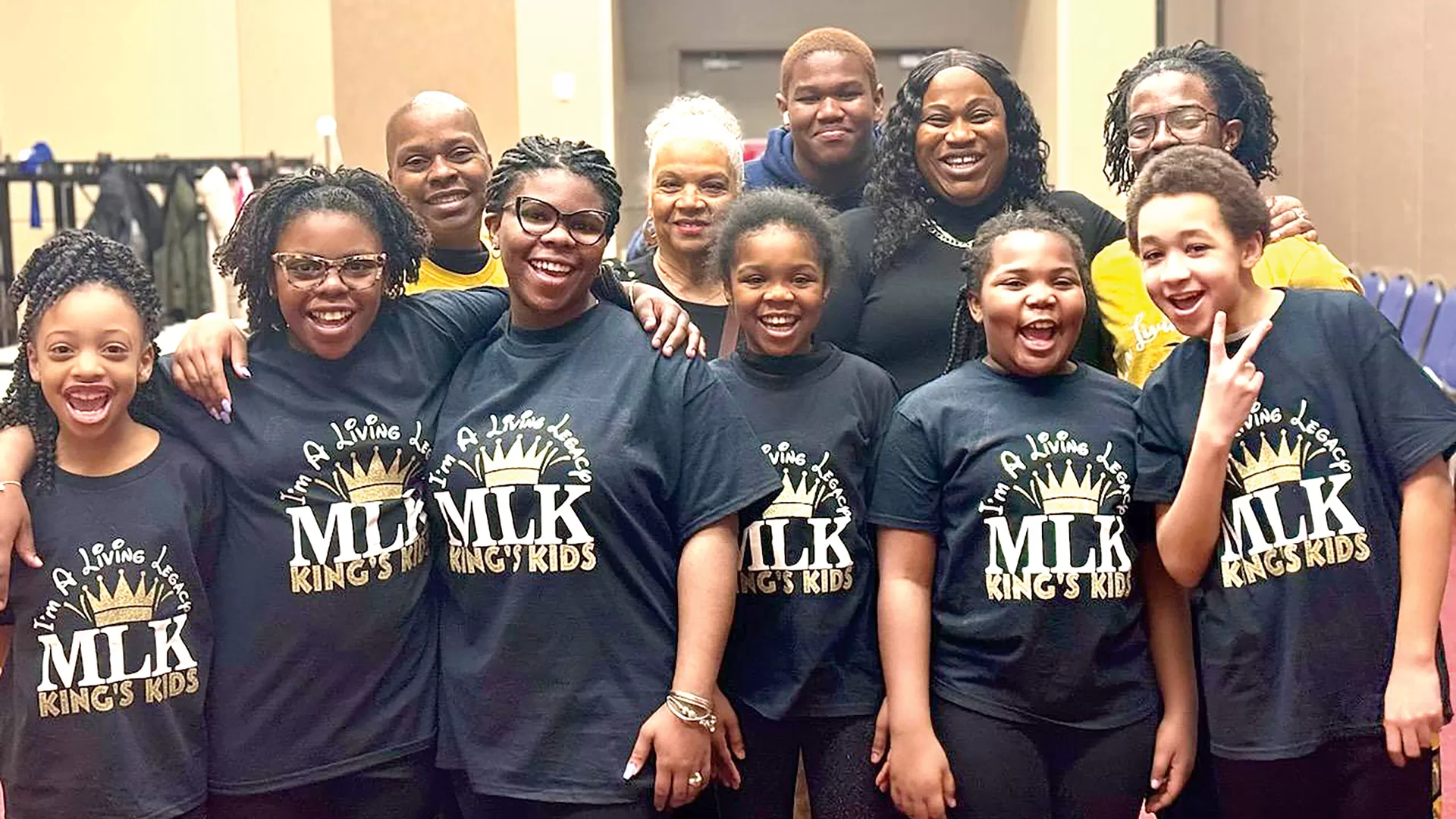
The MLK King’s Kids dance troupe performed at MLK Day this year.
It’s a way to go beyond Johnson’s ‘teach a man to fish’ credo and make sure people are fishing in the right ponds.
“If we say we’re going to listen to the community, then we have to go into the community and say, ‘OK, we heard you. How are we going to work at this together?’” Rudder said. “It’s our job to provide the resources and the tools, but I want them to be a part of that solution, whatever that looks like.”
Rudder has plenty of goals for the center, from broading the trauma-informed piece to launching a full capital-needs assessment.
“I want to make sure our center is there for decades to come, so that means a lot of capital improvement. Our food pantry needs a new home; we’re just bursting at the seams.
“I also want to do economic-development training,” she added. “We do a really good job with HBCUs and also college readiness locally, and I want our kids to dream big — but college might not be for them. So how do we equip them to realize their dreams and potential? I want to do some vocational training, some entrepreneurial things, all STEAM-based approaches to things.”
One idea from Providence Ministries she’d like to being to MLK Family Services is ServSafe training. “We can get them certified in management and actually have hands-on teaching of kitchen skills and culinary skills. And then, how do they make money off of that? So, we’ll teach them business acumen and then link them to opportunities for jobs,” she explained. “I’m just excited to hear what our community’s needs are and finding a way — again, through the public-health lens — of making sure that we meet those needs.”
To accomplish all that, Rudder relies not only on the center’s staff, but also about 120 volunteers. And she finds it gratifying that she’s following King’s philosophy of not working solo, but galvanizing an entire community to accomplish positive change.
“One adage I grew up with is, ‘to whom much is given, much is required.’ And I’m really blessed; I’m really fortunate in my life,” Rudder told BusinessWest. “So that’s my responsibility — to leverage those things that I’ve been blessed with into doing good, into impact. This is fun, and it is fulfilling to me.”
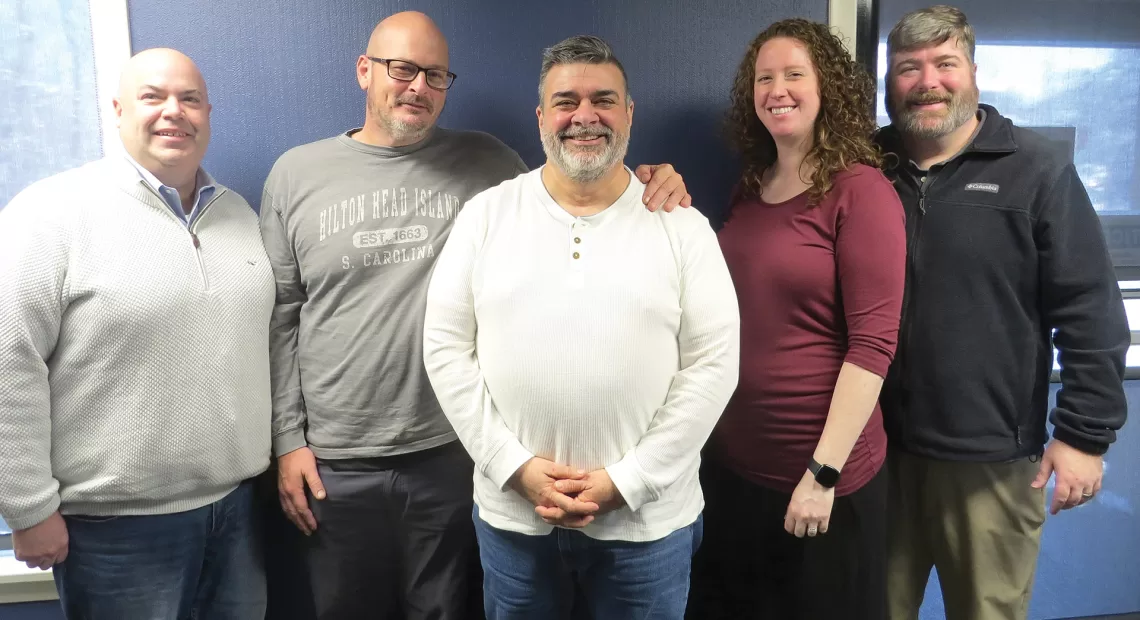
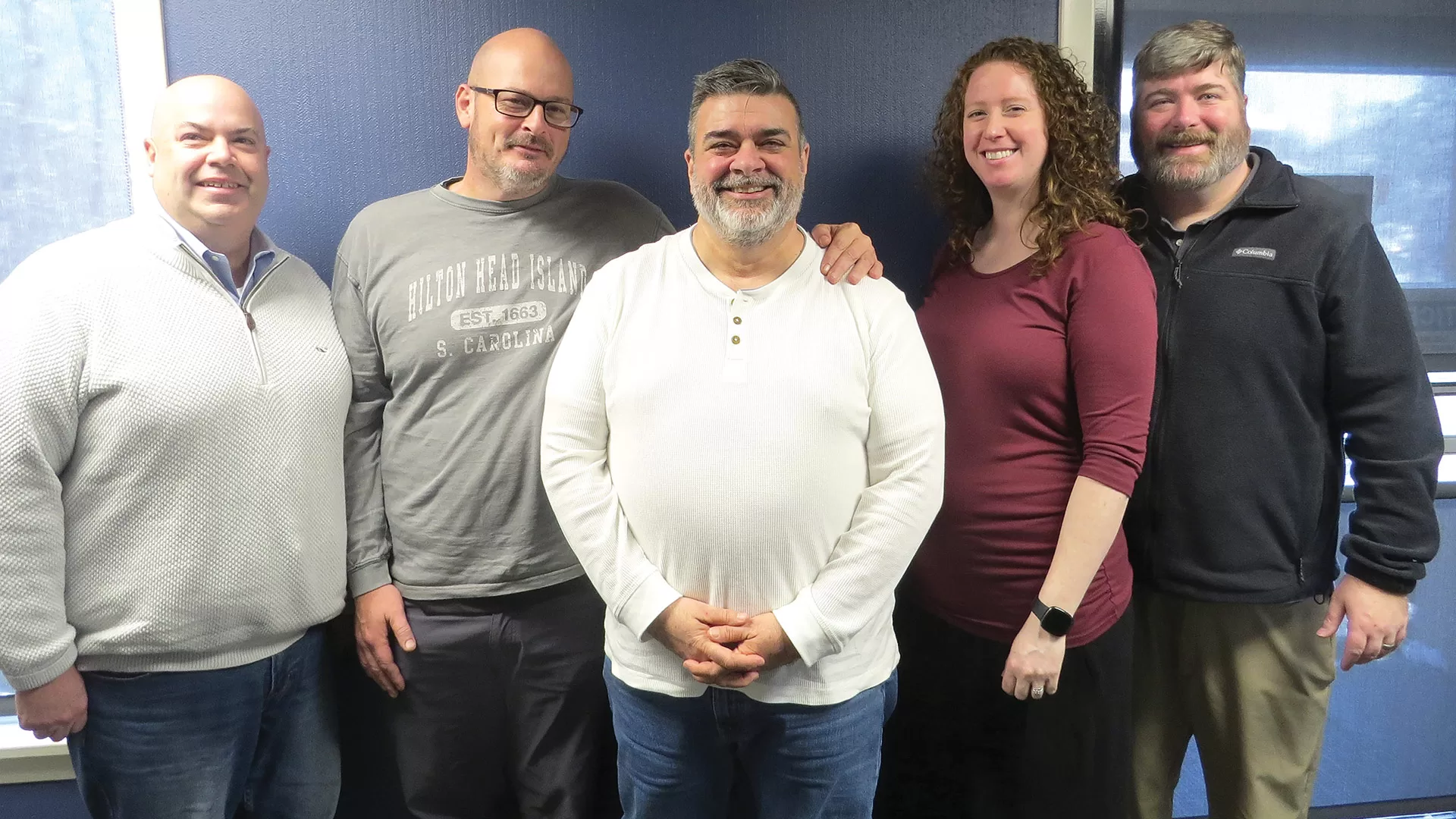
Mike Baxendale, the on-air personality known to all simply as Bax, says it started as a radio promotion. But it quickly became a community event.
And now, it’s a huge community event, involving individuals, families, businesses, institutions, area schools and colleges, and more.
He was referring, of course, to the Mayflower Marathon, staged each year in the days just before Thanksgiving to benefit Open Pantry. For 30 years now, the event, organized by and staged by the staff at Rock 102, has collected food and monetary donations to help those in need.
It started with one Mayflower trailer — hence the name — and each year, with a few rare exceptions, such as the height of the Great Recession in 2009 and the height of COVID in 2020, it has grown bigger and collected more to combat food insecurity.
And in 2023, the marathon, in its relatively new home at MGM Springfield, shattered all previous records, collecting more than $234,000 in food and monetary donations and filling nearly six trucks.
That number, and the level of support needed to reach it, speak to both the growing amount of need in the region amid higher inflation and growing financial issues facing many in the 413 and the manner in which the staff at Rock 102 have collaborated with others in recent years to take the marathon to new levels, with a comedy night at MGM Springfield and a Mayflower Marathon Night on the Springfield Thunderbirds schedule.
“They’re incredible; they truly have such huge hearts to make sure our neighbors get fed. The Open Pantry would never be able to serve that many people without the Mayflower Marathon.”
“Ultimately, the goal is to raise more and more and more to help those in need,” said David Oldread, vice president and general manager of the Springfield Rocks Radio Group and Northampton Radio Group, which includes Rock 102. He noted that the marathon involves difference makers on many levels, including those who donate everything from the trucks to the portable toilets to the tents; those corporate supporters, many of which have been part of this since the beginning; and the volunteers who help collect the donations and load the trucks.
But it is the staff at Rock 102 that is being honored the Difference Makers award this year, and deservedly so. The station conceived the idea back in 1993, and it has been the driving force in continuing the program and orchestrating its strong growth pattern.
The Mayflower Marathon, now staged at MGM Springfield, fills several trucks with donations of food for Open Pantry in Springfield.
And it’s a company-wide initiative, a true team effort, said Oldread, noting that it is “all hands on deck,” especially in the weeks and days leading up to the event, with each staff member making important contributions to the effort, with work starting months before the marathon begins.
Bax and Steve Nagle, morning show hosts, entertain the audience — and inspire it — for 52 hours during the marathon; Erin Buehler, promotions director at Rock 102, plans, organizes, sets up, and executes the event; Alex Byrne, program director, coordinates the entire broadcast; Joshua Smith, engineer, sets up the technical side of the broadcast and keeps the show on the air; Dan Williams and Pat Kelly, on-air hosts, produce the broadcast at the station in East Longmeadow; the sales staff members rally their clients to get donations and volunteer their time at the event … and on it goes.
Overall, the marathon has become a powerful collaboration between Rock 102 staff members and the community to come together for a great cause, said Buehler, adding that this collaboration grows stronger each year.
Nicole Lussier, executive director of Open Pantry, agreed. She’s been with the Springfield-based agency for nearly 30 years, and thus has been involved with the marathon since the beginning. She’s watched it grow and become an increasingly larger force in the agency’s ability to carry out its mission. And she noted that the staff at Rock 102 brings passion to its work of making the marathon happen each year.
“To be able to tell Nicole Lussier what we had just done — and she had been there every minute of the event — to be able to tell her that we had raised at least $217,000, with more on the way … to see her reaction, I can’t speak for anyone else, but I got choked up on the air.”
“They’re incredible; they truly have such huge hearts to make sure our neighbors get fed,” Lussier said. “The Open Pantry would never be able to serve that many people without the Mayflower Marathon; there’s no way we would be able to distribute that much food.”
Such sentiments help explain why the team at Rock 102 is being honored not for putting on the marathon, necessarily, but for rallying a region, a community, around a cause — and, in the process of doing so, becoming a true Difference Maker.
He called it the “chicken wing.”
This was the very effective submission hold developed by former pro wrestler Bob Backlund, who administered it to Bax during one of the marathons a few years ago.
“It’s very painful,” he said with a look that conveyed as much, adding that Backlund is one of many colorful guests who have made appearances during the marathon over the years, and his application of the chicken wing is one of the more intriguing ways that the airtime has been filled.
Others in the guest category include mayors, U.S. Rep. Richard Neal (a regular each year), comedians, New England Patriots wide receiver JuJu Smith-Schuster (who stopped by last year), and many others. As for memorable moments, there have been plenty of those as well, as the marathon has persevered through all kinds of weather, power outages, equipment glitches … you name it.
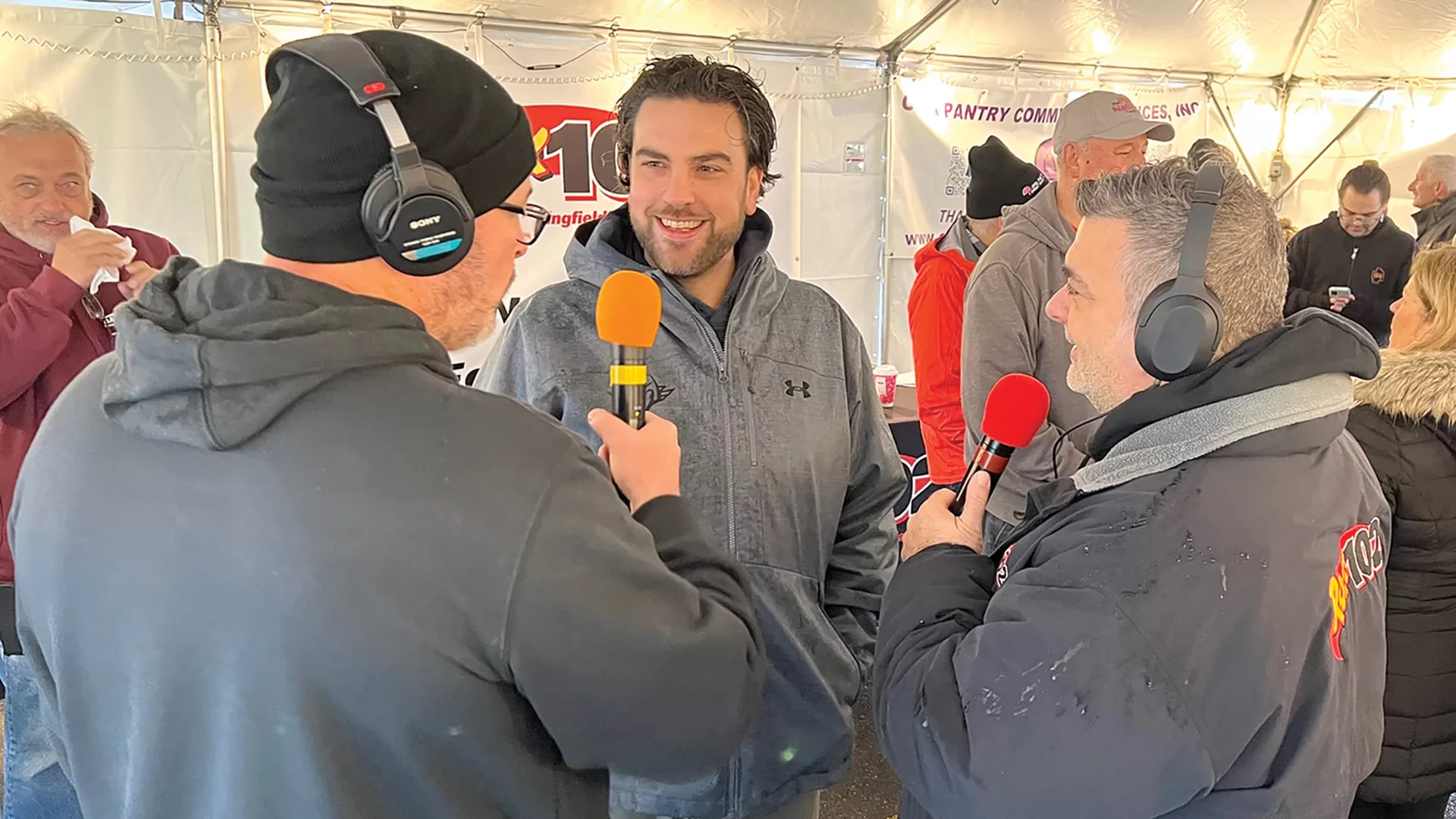
Rock 102 morning show hosts Bax (right) and Nagle talk with Springfield Thunderbirds President Nate Costa (a Difference Maker himself in 2023) at last year’s Mayflower Marathon.
But what is remembered far more are other moments in time — the ones that reflect the generosity, caring, and spirit of collaboration that have come to define the marathon and explain why it was conceived all those years ago.
Moments like the announcement of how much was raised last November.
“At the end of the broadcast, we give an unofficial total, with this year [2023] far exceeding anyone’s expectations — I don’t think anyone expected anything close to this,” Bax recalled. “To be able to tell Nicole Lussier what we had just done — and she had been there every minute of the event — to be able to tell her that we had raised at least $217,000, with more on the way … to see her reaction, I can’t speak for anyone else, but I got choked up on the air, and so did Steve. When you realize where this is going and how many people it helps…”
He didn’t finish that sentence, but didn’t really have to. And this sentiment speaks to how and why the marathon was launched three decades ago.
The idea, said all those we spoke with, was to raise some money for Open Pantry, which today operates several different programs, including am emergency food pantry, holiday meals, the Loaves & Fishes Kitchen, a teen-parent program, and many others.
It’s unlikely that anyone at the time could have imagined that it would grow, evolve, and become, as Bax noted, a community event, said Byrne, adding that the marathon has continually broken through new barriers — be it with trucks filled or the total dollar amount raised — that were previously thought impossible.
And every employee at the station, roughly 25 at last count, is involved on some level in making it happen, said Oldread, noting there are many moving parts with this production.
“There’s an awful lot that goes into this,” he said, “from making sure you have power and internet access to getting trucks and RVs and security, and feeding volunteers, and signage and traffic plans. You have to start around Labor Day in order to get things where they need to be in the days before Thanksgiving.”
“We’ve developed our own little tradition with this game, and we want to continue it and expand it. It’s a testament to the work they’re doing at Rock 102 — they’re driving a huge amount of food to the Open Pantry, which lasts almost an entire year.”
The staff, and the marathon, has persevered through recessions, a pandemic, rough weather, and, most recently, the need to find a new home when the Basketball Hall of Fame informed those at the station in 2022 that it could no longer host the marathon in its parking lot.
In many ways, that search for a home crystalized just how much the community had embraced the marathon and wanted to help it live on, said Oldread, noting that, as the station’s on-air personalities went public with the need to find a new home, there was an outpouring of support and commitments to help take the program to a new, much higher level.
Indeed, Beth Ward, director of Public Affairs for MGM Springfield, said the station received several offers to host the marathon, so many that there was almost a competition for the right to become its new home.
MGM Springfield prevailed, she said, and it has been a privilege to stage the marathon, an event that has become part of the philanthropic culture at the resort casino.
“When we got the call, it was like Christmas morning; we were so excited that we were chosen,” she recalled. “There are so many of us here at MGM that live in Western Mass. and are familiar with this event and have taken part in it and donated to it. Immediately, there were so many people who were thrilled and excited to be there and support it.”
She said MGM Springfield set a record when it comes to volunteer hours donated by employees, and a big reason is the Mayflower Marathon, with many of the casino’s workers on site early (as in 5 a.m. in some cases) to help collect donations and load them into trucks.
“Our employees want to be part of this; they want to help make it successful,” she said, effectively summing up the sentiments of many others we spoke with.
That includes Nate Costa, president of the Springfield Thunderbirds, a Difference Maker himself last year. He told BusinessWest that the team has long had a solid relationship with Rock 102, knowing that its listenership boasts many hockey fans. That relationship was taken to a new level when the event lost its home and then found one with another of the T-Birds’ partners, MGM Springfield.
The team soon dedicated the Wednesday night game before Thanksgiving to the cause, branding it Rock 102 Mayflower Marathon Night. That Wednesday is traditionally a time for family gatherings and “bar gatherings,” as Costa called them, but the pull of the marathon and Open Pantry has brought more than 5,000 fans to the arena the past two years for “one last push” for donations.
“We’ve developed our own little tradition with this game, and we want to continue it and expand it,” he said. “It’s a testament to the work they’re doing at Rock 102 — they’re driving a huge amount of food to the Open Pantry, which lasts almost an entire year.”
Costa, Ward, Lussier, and others credit the staff at Rock 102 — the on-air personalities especially, but everyone that gets involved (and that is everyone) — with bringing a region together behind a cause as few other events in this region have.
“Over the course of the past 30 years, it’s become a full-blown community event, where it almost has nothing to do with Rock 102 or any of us,” Bax said. “It has everything to do with different segments of the community getting involved in something special — collecting food.”
Well … it has something to do with the team at Rock 102. Indeed, they have made this happen, not just when it comes to logistics, but from the standpoint of shaping an event that not only serves a community, but creates a stronger community, Oldread said.
And that’s why the team can collectively share the title of Difference Maker.
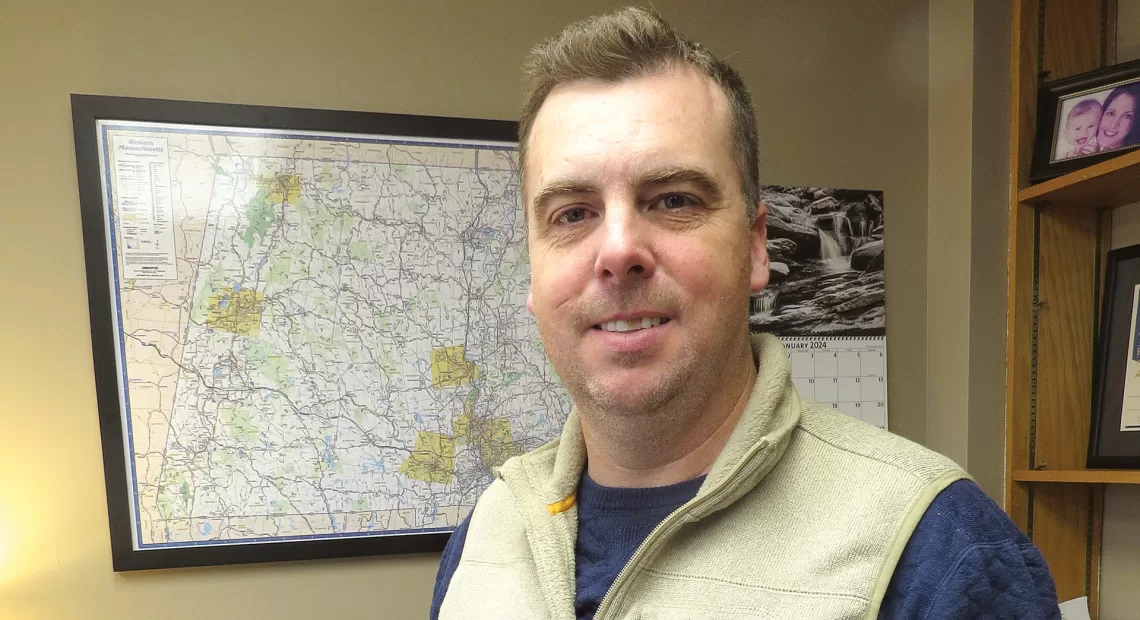
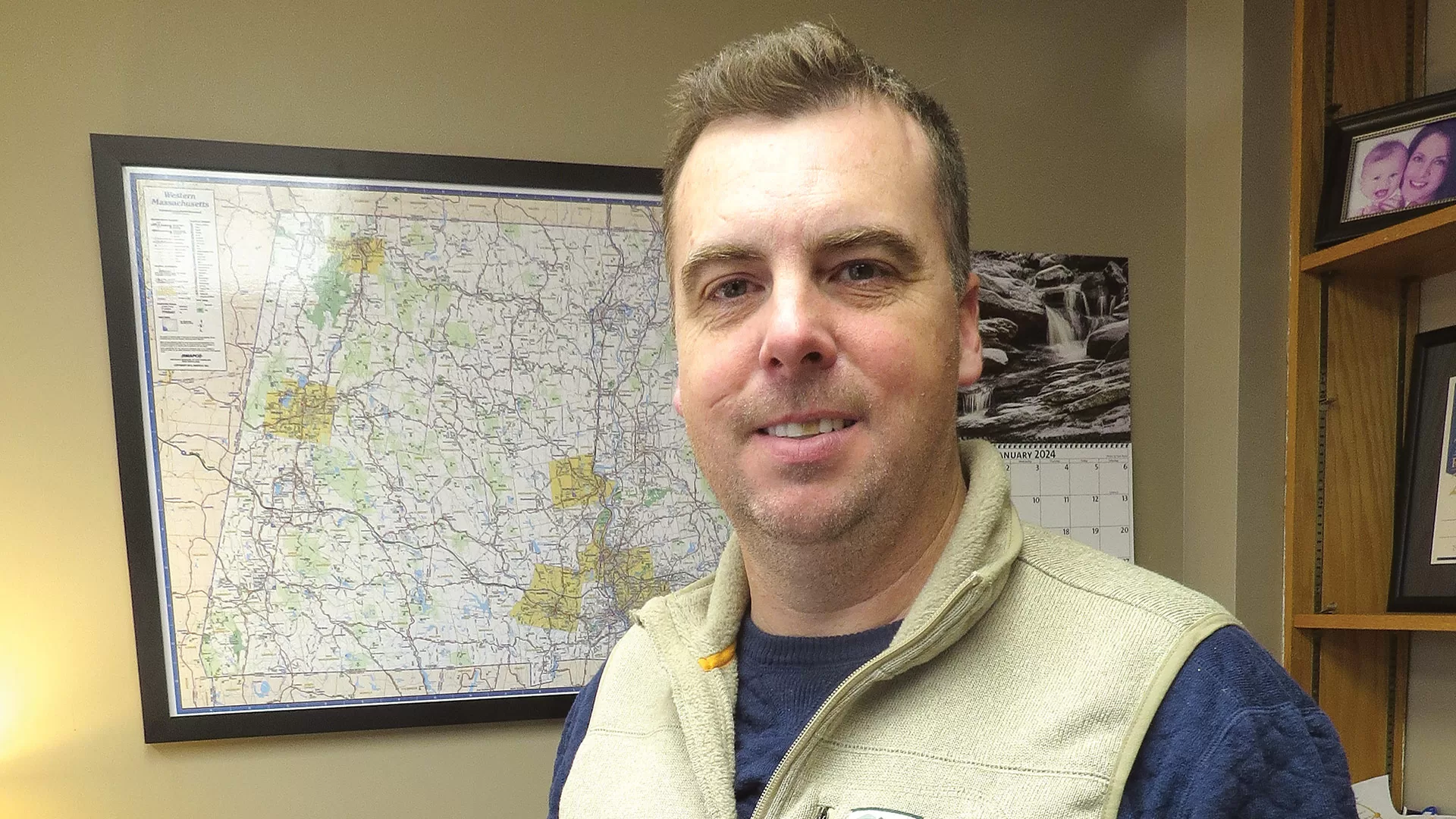
Scott Keiter has made the construction company that bears his name one of the fastest-growing ventures in this sector regionally.
And to position his company to achieve that kind of growth, Keiter (pronounced ‘Kiter’) knew early on that he would have to focus most of his time and energy on business, making connections, developing talent, putting the right team in place, and fashioning a blueprint (yes, that’s an industry term) for success.
“As we built the business, the most precious resource was time,” he said. “Anyone who creates a business knows what it takes — it’s every waking hour, so there’s not much time left behind. And then you introduce a child or two, and there’s even less time.”
But he also knew that, once he had the foundation of his business down and was building on top of it, he would eventually shift some of that time and energy toward the community and start to get involved on a number of levels.
And he has followed that blueprint as well, devoting time and talent to everything from an advisory role at Smith Vocational and Agricultural High School’s carpentry program to becoming a trustee at Look Park, to involvement with the Greater Northampton Chamber of Commerce (GNCC) on many levels, including something called the ‘Keiter Card.’
“He said, ‘I’d like to do something, because we have, fortunately, gained business throughout this horrible period. So I’d like to do something to support the community.’”
This is an initiative to match the value of gift cards sold by the chamber and accepted in more than 100 businesses — one that has put thousands of dollars back into the Greater Northampton economy in late summer, during back-to-school sales and tax-free-weekend time.
In the beginning, it was called the ‘Double Your Money Northampton Gift Card Promotion,’ but eventually it took the name of the company and the philanthropist behind it, making this both an economic driver and an effective branding initiative.
The program, started in 2021 and expanded each year, allows consumers to purchase a $25 Northampton gift card and receive $50 in actual spending power, said Vince Jackson, executive director of the Greater Northampton Chamber, adding that it has provided a real boost for that region’s many small businesses and become somewhat of phenomenon in Paradise City.
The Keiter Card has been described as a ‘win-win-win,’ benefiting the Keiter company, the local economy, and small businesses that accept the cards.
Indeed, as he talked about the card, Jackson referenced everything from how quickly they sold out each of their first three years, to how mothers would bring in their children collectively (it’s one Keiter Card per customer) so they could spend part of their allowance on a card, and then talk about where they would go and what they would spend it on.
But while heaping praise on the card and its impact, Jackson saved some for the company and the person behind it, especially as he recalled the circumstances of how it came about.
Flashing back to late summer 2021, when the economy was really starting to open up again after the pandemic, Jackson recalled a conversation he had with Keiter.
“He said, ‘I’d like to do something, because we have, fortunately, gained business throughout this horrible period. So I’d like to do something to support the community,’” Jackson recalled. “So he came up with the idea of donating $10,000 to the chamber, and for everyone who bought a $25 gift card, he would match that amount, up to $10,000.”
For year two, Keiter doubled the amount to $20,000, and in year three, he increased it to $25,000, with the chamber donating another $5,000 to make it a $30,000 matching program. For year four … Keiter leaked to BusinessWest that he will again be donating $25,000 to build on the momentum that’s been generated.
Meanwhile, Keiter, working in tandem with his wife, Jill, continue to expand their involvement in the Greater Northampton area while at the same taking their business to the proverbial next level.
Success in both realms helps explain why Keiter will soon have his name on something else: a Difference Makers plaque.
Returning to the subject of the Keiter Card, Jackson said it’s an example not only of Scott Keiter’s genrosity and commitment to the community and its small businesses, but also of how he’s developed into a successful business person, refining several talents, including, in this case, branding and marketing.
Indeed, to purchase a Keiter Card, one first has to say that name, said Jackson, adding that, when needed, those at the chamber will help the buyer along.
“Sometimes they need help with the pronounciation — some will say ‘Keeter,’” he explained, adding that, with each transaction and each card, the Keiter business gets some additional exposure.
Scott Keiter with, from left, Evan Latour, Zak Martinez, and Sean Houlihan, Smith Vocational Agricultural High School graduates now working for the company.
And it has already been making a name for itself in the region as a growing company, now with 85 employees, focused on both residential and commercial construction. With the former, the company tackles new construction, but mostly renovations. And with the latter, it has developed a deep portolio of clients, including many higher-education institutions, including Smith College, Mount Holyoke College, Amherst College, Elms College, and Western New England University. It also counts many businesses and municipalities on its client list.
The business recently spun off Hatfield Construction, which focuses on earth work and site work, as a wholly owned subsidiary of Keiter, and last month, it announced that it had appointed Jim Young, a business consultant and former president of Paragus Strategic IT, as president of Keiter, leaving its founder more time to focus on the proverbial big picture instead of day-to-day operations.
“We’re excited to open a new chapter for the company and focus on growth and development and building on the successes that we’ve already had,” said Keiter, who will assume the title of CEO. “Jim will help me leverage my time so I can remain focused on looking forward, being in the role of a visionary, and guiding the direction of this organization.”
The business plan calls for continued, sustainable growth and further expansion into Hampden and Berkshire counties, he went on, adding that the company has established itself in those markets and wants to build on that presence.
As noted earlier, for the first several years he was in business, Keiter had a singular focus, to get that venture on solid footing and put an aggressive growth plan in place.
As the company’s name, reputation, and portfolio of clients and projects grew, he began to shift some of his time to the community, although the main focus has still been his business.
Keiter has chosen to get involved in realms where he can lend expertise, and also where he can make a difference.
That includes Smith Vocational, where he has served as an advisor to the carpentry department while also bringing a number of its students into the company through its co-op program, with several of them eventually being hired by the firm.
“We try to get them out to do everything that we do,” he explained. “We try our best to get them out on our projects, where they can work side-by-side with our staff. In fact, we’ve hired a number of them; they’re some of our best employees.”
Keiter’s involvement also extends to Look Park, which he described as a “treasure,” one of the city’s best assets.
But it’s with the Keiter Card that he is making a greater name for himself in the community, literally and figuratively.
And he said it came about through twin desires — to help small businesses in the community and build his brand.
“I had an epiphany one day,” he recalled. “We were comtemplating how to allocate some marketing money, and I wanted to find a way to create a win-win, or what Vince [Jackson] calls a ‘win-win-win.’
“What this card does is give Keiter some good exposure, but it’s also supporting our community, and it’s also supporting the local economy and retailers,” he said, adding that the idea was to build on the chamber’s existing gift-card program, which was “keeping the money local.”
Douglas Gilbert, vice president of Commercial Lending at Florence Bank, another of those who nominated Keiter for the Difference Makers award, put the initiative in perspective, noting that “Scott’s generous support of the Northampton gift-card program has been vital to the program’s success and provides purchasers with a significant financial incentive to support participating area merchants.”
Jackson agreed, adding that the program’s impact has grown each year.
“In 2023, the GNCC experienced year-over year growth of 10% in Northampton gift-card sales, 13% growth in gift-card units, and 22% growth in redemptions — all driven primarily by the excitement and impact of the Keiter Card promotion,” he said, noting that the cards have sold out in a matter of days each year. “That growth in redemptions in significant and signals immediate spending, giving an exceptional boost to small businesses during a traditionally slow sales period.”
Summing up Kieter’s involvement in the community, as well as his success in business, Jackson started by saying the chamber no longer refers to those who join its ranks as members. Instead, it calls them ‘investors.’
And some businesses have earned the designation ‘prestige investors,’ he went on, adding that these are the ones creating jobs, getting involved — in the chamber and in the community — and making an impact.
Keiter — both the company and its owner — have certainly earned that designation, said Jackson, adding that his involvement in the region prompted the chamber’s leadership to present him with a Community Service Award in 2023.
“They’re doing all the right things, practicing good citizenship and promoting economic development along the way,” he noted. “They’re sharing the wealth and rewards that they’ve been blessed to have, and that’s admirable.”
Jackson told BusinessWest that Keiter cycled off the chamber’s board of directors recently, and that it’s a tradition to give departing board menbers a gift, usually something of the ‘gag’ variety.
In this case, those at the chamber wrapped up a Keiter Card and presented it to him, imploring him to spend it wisely and spread the wealth around.
While that card was a gift to him, the Keiter Card program has been a gift to the community —both its residents and its businesses. It is a gift that has become, as Jackson said, a true win-win-win.
It all started with a story on National Public Radio in 2017, one with some alarming statistics about how many children in this country go to bed hungry — some 6 million of them, according to estimates at that time.
Dr. Fred and Mary Kay Kadushin were in different places when the NPR story aired, but they both had their radios on. And they were both surprised and alarmed by what they heard — enough to want to try to do something about it.
“Both of us were just so blown away by what we heard,” said Mary Kay, a retired graphic artist. “When you think about childhood nutrition, and the lack thereof … you think of other countries, but it’s right here in the United States; it’s right under your nose.”
Fred, a semi-retired neuropsychologist who specializes in toxic disorders, agreed. “We decided we needed to do something, and that we needed to do more than just a write a check.”
They talked at length about possible courses of action and eventually settled on creating a new nonprofit venture that would be called Feed the Kids, a name that says it all. And they would eventually settle on a golf tournament (something they had some experience with from their years helping to fundraise for the Boy Scouts) and accompanying online auction as the way to carry out a simple yet vitally important mission — to help existing local programs that have undertaken initiatives to combat childhood food insecurity.
Specifically, they now support Square One, the Springfield-based early-education and family-support provider that offers breakfast, lunch, and snacks to its preschoolers; Pioneer Valley Power Packs, an all-volunteer program that provides school-aged children with non-perishable food each weekend in Easthampton and Northampton; the HPS (Holyoke Public Schools) Weekend Backpack program; and No Kid Hungry, a national organization that battles food insecurity.
“Both of us were just so blown away by what we heard. When you think about childhood nutrition, and the lack thereof … you think of other countries, but it’s right here in the United States; it’s right under your nose.”
Since the first players teed it up in 2018, the program has raised more than $350,000 to fight childhood food insecurity, and along the way it has garnered the support of several area businesses, including PeoplesBank, Westfield Bank, the accounting firm Meyers Brothers Kalicka, the law firm Shatz Schwartz and Fentin, Freedom Credit Union, Monson Savings Bank, Elm Electric, and many others.
We talked with the Kadushins about their work, but we also talked with those at the agencies they support. They describe a couple that is modest, caring, generous, and committed to doing what they can to help others in this region. In other words, Difference Makers.
Dr. Fred Kadushin gets to know some of the young students at Square One in Springfield, one of the nonprofits supported by Feed the Kids.
“Fred and Mary Kay are selfless in their efforts,” said Mary Bianca, a board member with Pioneer Valley Power Packs, who nominated the Kadushins for the Difference Makers award. “They work tirelessly, and their help and dedication have, and continue to make, a huge difference in the lives of thousands of children in our community.”
Kris Allard, vice president of Development and Communication at Square One, who also nominated them, agreed.
“If there’s a poster recipient for the Difference Makers award, it would be Fred and Mary Kay,” she told BusinessWest. “They are the kindest, most generous family … and there’s a pureness to what they do. They’re just individuals doing this work; there’s no expectation for recognition. They’re just good people.”
As she talked about the Kadushins, Allard started not with Feed the Kids and what it does for Square One, but with a different initiative at the agency — one that collects winter coats for children in need.
“They would donate beautiful coats to the program, and I would always get a note from them that said, ‘make sure they check the pockets,’” she said. “There was always a toy zipped into the pocket — a little Matchbox car or any other kind of small toy that would fit in there — and Fred would always say, ‘have the kids check the pockets; there’s a little something extra there.’”
Doing something extra has been the MO for the Kadushins, she went on, adding that, during COVID, when coat drop-offs were not possible, the couple still wanted to donate. Allard, who lives in Wilbraham, arranged to go to the Kadushins’ home on Lake Paradise in Monson and pick up some coats, and while there, Fred initiated a conversation about what else Square One did.
“If there’s a poster recipient for the Difference Makers award, it would be Fred and Mary Kay. They are the kindest, most generous family … and there’s a pureness to what they do. They’re just individuals doing this work; there’s no expectation for recognition. They’re just good people.”
Upon being told the agency provided breakfast and lunch for children, but that this was ‘deficit operation,’ because funds from the state didn’t fully cover the costs, Fred told her about the golf tournament that he and Mary Kay had started a few years earlier.
So began a partnership that embodies the mission of both agencies, and one that certainly helps explain why the Kadushins are being honored as Difference Makers.
For a more in-depth explanation, we need to go back to that report on NPR.
The Kadushins, as noted, came away determined to help, and not by writing a check. They did considerable research on how best to address the larger problem and started a golf tournament to support No Kid Hungry. Soon, though, they wanted to expand their reach and directly support local organizations with programs to feed children.
There are many of them because the need is great, said Mary Kay, adding that they eventually created partnerships with Square One, Pioneer Valley Power Packs (PVPP), and the HPS Weekend Backpack program, which provides 250 to 500 Holyoke children with a backpack of nutritious food to tide them over until they return to school on Monday.
But some of these programs, and especially No Kid Hungry, provide more than food, said Fred, adding that education is also critically important.
“They have programs that educate parents about making smart food choices because sometimes, kids are just getting the wrong foods,” he explained. “It’s not just that they’re not getting enough; they’re getting the wrong kinds.”
And the need is only growing within the region, said both the Kadushins and those operating the nonprofits they support.
The Feed the Kids golf tournament has drawn the support of dozens of local businesses and become a summer tradition in Western Mass.
Indeed, Bianca said Pioneer Valley Power Packs saw a 65% increase in need in 2023, a surge she attributes to inflation, rising rents, an overall softening of the economy that saw more people out of work, and an end to some COVID-related relief programs.
There is a waiting list for students to receive the power packs, which consist of two breakfasts, two lunches, and some snacks, she said, adding that, thanks to the donation from the Feed the Kids tournament and auction, the agency was able to take some young people off that waiting list.
“They’re our largest supporter,” she said. “If not for them, we wouldn’t have a program.”
The golf tournament created to support PVPP and other organizations fighting childhood food insecurity, staged annually at Springfield Country Club, has become a labor of love for the Kadushins and a small army of volunteers that lend support and handle assignments from securing items for the auction to working at the course on tournament day.
Planning for next year’s tournament begins almost immediately after the current year’s edition ends, said Fred, adding that the goal is to keep overhead as low as possible (in this case, almost zero) to funnel as much of the money raised to nonprofits as possible.
The event has grown over the years, at least in terms of the auction and the number of supporting corporate sponsors. (As veteran golf-tournament organizers, they understand the importance of limiting the number of golfers on the course, thus helping to ensure that a good time is had and foursomes come back the next year.)
And its importance has grown as well, said the Kadushins, agreeing with Bianca that, regrettably, the need has only increased in the years since that NPR report.
They view their efforts as an investment in young people and an investment in the future of this region, and the country.
“The payoffs are so high,” Fred said. “Proper nutrition affects physical, cognitive, and emotional development. If you think about it, nutrition affects everything. If you improve concentration, you can improve school performance, and when kids eat properly, they’re more likely to graduate, and the downstream implications of that are huge in terms of improving lives and ensuring that people become productive members of society.
“You decrease things like obesity and improve immunity,” he went on. “So downstream, you’re improving kids’ health, so there will be less drag on the healthcare system.”
Mary Kay agreed. “Our passion is with kids because it’s hard to imagine a child going to bed hungry, and that’s generally through no fault of their own,” she said. “Our heart goes out to that.”
While they’re proud of what they do, the Kadushins, as might be expected given the testimonials above, say the real work being done to combat food insecurity among young people is at the nonprofits addressing the problem and by those on the front lines, many of them volunteers.
“These volunteers are amazing; they pack the food, they get it distributed, and they identify who needs the food,” Mary Kay said, adding that she, Fred, and other members of the golf-tournament team will be joining those in Holyoke to stuff backpacks later this month. “It’s pretty amazing, these people who actually do this work.”
Equally amazing is the devotion that Fred and Mary Kay bring to the efforts to help these agencies and volunteers carry out their missions.
Their work is done mostly behind the scenes, organizing the golf outing, signing up sponsors, and attending to the smallest of details. Their stated goal is to press on, grow their venture, hopefully add a title sponsor, and, ultimately, help local agencies help more people in need.
What else would you expect from a couple that puts small surprises in the pockets of winter coats earmarked for children in need? What else would you expect from a couple that didn’t just listen to a news story on childhood hunger, but committed themselves to doing something about those alarming statistics?
What else would you expect from two genuine Difference Makers?
When asked what she likes about her work — and she must like it because she’s been doing it for more than 30 years now — Linda Dunlavy paused for a moment before giving an answer that was as succinct as it was powerful.
“If you’re patient … you can create positive change,” she said, putting additional emphasis on that word patient. And for good reason. When you’re dealing in complex issues such as transportation, broadband access, a housing shortage, climate change, and poulation loss, the solutions don’t come quickly or easily, she said.
To get her point across, Dunlavy, executive director of the Franklin Regional Council of Governments (FRCOG, or simply the COG, as it’s called), recalled the countless meetings she would attend with Tim Brennan, the former director of the Pioneer Valley Planning Commission who passed away in 2020 (and a Difference Makers honoree himself in 2011), as they led efforts to bring north-south rail service back to Greenfield and other communities in Western Mass.
It was a long, hard fight, she recalled, shaking her head as the reflected on the heavy amounts of early skeptism, miles put on the odometer traveling to and from more meetings than she could possibly count, and endless discussions with policymakers and power brokers in an effort to turn back the clock on rail service.
“There were people saying, ‘you’ll never get this,’ and ‘you can never justify this,’” she recalled, flashing back almost a quarter-century and the start of her work on this issue.
“Tim and I would drive to Boston all the time, and I would drive to Springfield all the time; I was meeting with MassDOT, meeting with legislators, meeting with Amtrak, meeting with the Federal Highway Administration, meeting again with MasssDOT, meeting again with legislators. And it was a lot of ‘let’s try this’ … and we’d hit a dead end and then back up, and then we’d say, ‘let’s try this option’ and hit a dead end. That was a lot of the strategic work I did with Tim: ‘what can we try next? What’s the next obstacle that needs to be overcome to prove that this is a good idea?’”
Overall, it took 15 years to get north-south passenger rail returned, Dunlavy noted, adding that passenger volumes post-COVID, high enough to convince the state to take the service from trial status to permanent in nature, validate all that hard work.
This is just one example of how her patience, and a number of other qualities, have yielded that positive change she spoke of. Others include her work to bring reliable broadband to rural communities, a project to realign Route 2 around the Erving Industries paper mill, and even the building the COG is now housed in — the John Olver Transit Center in Greenfield.
“Linda has a preternatural ability to see what needs to be done and, with transparency underpinned by a willingness to accept risk and accountability for choices, forge ahead.”
Dunlavy’s tenacity and ability to get things done were summed up effectively by Jay Dipucchio, president of Turners Falls-based Nutri-Systems Corp. and also a member of the COG advisory board, who nominated her for the Difference Makers award.
“Linda has a preternatural ability to see what needs to be done and, with transparency underpinned by a willingness to accept risk and accountability for choices, forge ahead,” he wrote. “It helps as well that the energies applied and chances taken are informed by hard-earned experience and a great depth of knowledge.
During her lengthy career with the FRCOG, Linda Dunlavy has brought services to, and been a tireless advocate for, communities in Franklin County, including Greenfield, seen here.
“She is an incomprably vigorous advocate and collaboration builder for Greater Franklin County and the Pioneer Valley,” he went on. “By cultivating collaboration and fostering innovative public-sector responses to regional service issues, her leadership of the FRCOG has created arguably one of the most unique and recognized public-service organizations in the Commonwealth, truly making a difference for the people who live here.”
In keeping with that assessment of her talents and value to the region, Dunlavy said she is focused not on what she’s been able to accomplish for the people of Franklin County — and all the state’s 170 rural communities, for that matter — but on the work still to be done.
And there is plenty of it, in realms ranging from housing to climate issues and readiness for disasters like the mirobursts and heavy rains of last July, to what has become the most crucial issue facing this region: population loss.
Dunlavy is addressing these issues and others with the requisite patience, but also large amounts of tenacity and that ability to get things done — attributes that speak to her impact as a Difference Maker.
As she wrapped up her conversation with BusinessWest, Dunlavy gestured out one of the windows of her corner office to the incoming Amtrak train, the Vermonter, stopping at the depot just a few hundred feet away. She took the opportunity to count the number of people getting off and on, something she does often, and for obvious reasons.
“She is an incomprably vigorous advocate and collaboration builder for Greater Franklin County and the Pioneer Valley.”
While only a few were getting on this particular train, heading north on a Tuesday afternoon, the numbers for the trains heading south — to Northampton, Springfield, Hartford, then New York and eventually Washington — have been solid, as has overall volume for the service, she said, adding that the numbers help validate all those meetings and all that time spent convincing officials to bring the trains back to the region.
And while the return of train service may be the crowning achievement of Dunlavy’s career, there have been many others, as noted earlier.
Bringing rail service back to Greenfield and other Western Mass. communities is one of many long-term projects in Linda Dunlavy’s record of service to the region.
Beyond the larger projects, there is the day-to-day work of advocating for, and providing services to, the towns of Franklin County, but also all the rural communities of the Bay State — those with fewer than 500 people per square mile.
That’s every community in Franklin County other than Greenfield, she said, adding that these towns are small — or, in the cases of Monroe and Rowe, with populations of 120 and 394, respectively, very small.
Serving these communities is the mission of the COG, created in the wake of the abolition of county government in 1997. Today, it operates 12 programs and boasts more than 50 staff members and an annual budget of more than $5 million, funded in part by assessments to the 26 municipalities in Franklin County, but mostly through state and federal grants.
Dunlavy started with the county commission in 1993 and transitioned to the COG when it was created in 1998, and took at the helm of the organization in 1999.
Summing up its mission, she said it is similar in many ways to the Springfield-based Pioneer Valley Planning Commission. It serves the communities of Franklin County, the most rural county in the state, providing planning services as well as regionalized municipal services to those communities, as well as some outside the county. Those services include building, wiring, and inspection services, as well as the purchasing of municipal products and services for 59 towns, items such as guardrail, asphalt, salt, sand, and fuel.
“Our focus is Franklin County, but we go outside Franklin County with projects and partnerships to serve the county better,” she explained. “So we work with cooperatively with the Pioneer Planning Commission on many projects, such as rail.
“Our towns are very rural, and that’s why we provide so many municipal services,” she went on. “A small town like Buckland would have a hard time finding a qualified accountant, a qualified health agent, a qualified business inspector. So, by combining those services together, we can hire professional staff and provide those services to our rural communities.”
Beyond providing these services, the COG, like Dunlavy herself, serves as an advocate for the region, on issues ranging from rail to broadband to housing.
The week she spoke with BusinessWest, she was also in Boston testifiying at an 11-hour hearing on the housing bond bill and advocating for housing solutions that recognize the difficulties and contraints of developing housing in rural areas.
She was testifying in her role as part of the Massachusetts Assoc. of Regional Planning Agencies, but also as chair of the Rural Policy Advisory Commission, she said, adding that, in both capacities, she advocated for recognition that housing development in rural areas comes at a smaller scale than in Hampden County or Eastern Mass., for example, meaning there are fewer economies of scale and far fewer developers interested in building in such areas. Also, most of these rural communities have limited water and sewer infrasructure, so the cost to develop housing is much higher.
With a better understanding of these issues, she said, legislators can craft a bond bill that creates greater equity when it comes to a housing shortage that impacts virtually every community in the Commonwealth.
Meanwhile, she and others at the COG are also working to make the region more prepared for disruptions like COVID and climate-related disasters such as the torrential rains and accompanying flooding last summer, which ruined crops and damaged infrastructure.
“We need to focus on what we can learn from the devastation of the July storms, on how we make our region more resilient, and how we can get our communities to work together to set climate-resiliency priorities and choose projects togther,” she said. “If you look at all of that as emergency response … that’s a big part of what we’re doing right now.”
But the biggest challenge, though, is population loss, and it’s an issue that now commands a large amount of Dunlavy’s time and energy.
“It’s a huge issue for us; we always have it in the back of our minds in all of the work that we do — what can we do to stem population loss and attract young families to our region. Because an aging and declining population is not great for our economy.”
Elaborating, she said population growth has been stagnant since 2000, but there are projections, contained in a report prepared by the UMass Donahue Institute, for a precipitious decline, perhaps 20%, in the years to come.
That model does not take into account a resolution to the broadband issue in many Franklin County communties, she went on, nor does it factor in the rising popularity in remote work and the boost it has provided for many rural areas. So, while the projections are stark, there is reason for optimism.
“There are a lot of factors we can use to make sure those population projections don’t come true,” she told BusinessWest. “That’s a big focus of our work.”
As she offered a quick tour of the transit center, Dunlavy recalled the time a gentleman visited not long after it opened.
“He said, ‘I’d like something like this; how long did this take?’” she recalled, adding that the answer — more than 20 years — startled him somewhat.
That’s about the average for most of the major projects she has undertaken, she went on, stressing, again, that none of her landmark projects — be it broadband, rail, or the Route 2 realignment — came quickly or easily. Such projects require patience, and a whole lot more.
Dunlavy has those attributes, just as her friend, colleague, and mentor Tim Brennan did. And now she shares something else in common with him.
She’s a Difference Maker.
Delcie Bean had been repairing computers as a side gig from schoolwork from his early teens, and he was a high-school junior when he started taking his enterprise seriously, with business cards and a company name: Vertical Horizons.
The name would change twice over the next two decades, first to Valley Computer Works, then to Paragus Strategic I.T. The technology would change quite a bit, too, as would his business model (more on that later).
What hasn’t changed is Bean’s initial goal: to know more than his clients.
“When I started, it was residential computer support. A lot of it was just helping senior citizens,” he recalled. “I was just helping people who were less sophisticated than I was set up a computer and learn how to use it.
“I didn’t actually know all that much. I just had to know more than the person I was helping,” he continued. “I didn’t have a car; I didn’t have a license. So people had to come pick me up, bring me to their home, and I’d help them fix their computer. I got paid $10 an hour and fed very, very well; it was a lot of grandmas, so I got a lot of cookies and cakes and got invited to a lot of dinners.”
The company grew steadily over the next few years, first in a storefront in Amherst, then in a converted house on Route 9 in Hadley. By 2008 — still only 21 — Bean had accomplished enough to be named to BusinessWest’s 40 Under Forty, one of the youngest-ever honorees. He also earned the publication’s Top Entrepreneur award for 2014 and its first-ever Alumni Achievement Award, given to high-performing 40 Under Forty alumni, in 2015 — both of those recognizing the impressive growth of what was now called Paragus Strategic I.T. and located in a larger building a half-mile east on Russell Street.
“How can we be the sherpas, the guides, for those small businesses and tell them what’s coming around the corner, what they should be thinking about, and what they should be preparing for?”
And now, Bean is a Difference Maker — not necessarily for the company’s still-upward trajectory when it comes to growth and expansion. No, it’s for the impact he’s had on IT workforce development in the region, and also for implementing an ESOP (employee stock ownership plan) model that may create dozens of employee-owner millionaires over time.
“We think we can be a $250 million company in 15 years,” he told BusinessWest. “But in order to do that, we’re going to need to grow a lot, and we’re going to need capital. A lot of businesses in our position bring in a private equity group and leverage their dollars, but that means you work for them, and they make a lot of the big decisions, and it isn’t the same company anymore. And we decidedly did not want to do that.”
He also had no interest in selling the company, feeling he has more to give. “So the third option was to do what we did the first time we wanted to grow, and double down on the ESOP. In this case, we’re becoming 100% employee-owned.”
Looking back, one of the biggest decisions in Bean’s career took place after he and a partner (whom he eventually bought out) settled on the name Valley Computer Works and bought the house in Hadley.
By 2011, the client base was about 60% residential (with about 4,000 customers) and 40% commercial.
“We got it running like a well-oiled machine. There was a touchscreen kiosk when you dropped it off — you checked off what services you wanted to get. We had it running like a car wash: ‘do you want this package or this package?’ And the whole thing was really efficient, but we weren’t enjoying it. It wasn’t giving me a lot of excitement,” he recalled. “But I loved the commercial stuff. I loved helping companies and working with businesses.”
Besides its Hadley headquarters (pictured), Paragus has a location in Worcester and ambitions to expand its footprint steadily from there.
So, one day, he woke up and decided his future would be in commercial support — and he made the bold decision to shut down 60% of his revenue at the time and build on the 40%.
These days, Paragus exclusively provides IT support to small businesses in an ongoing contract model, he explained. “We are their outsourced IT department, and we become an extension of their company, managing and taking care of whatever they need.”
Bean describes Paragus’ traditional services in terms of three pillars. The first is the help desk. “Your employees have a problem — they can’t turn their computer on, they can’t get into their email, their phone’s not working — and we’re the help desk. We’re the people you call to get those issues taken care of.”
The second pillar is the proactive part of IT: the backups, monitoring, and security. “Obviously, that has evolved and changed so much in the past 10 years, but the core principle is that you need somebody looking after your network and being proactive and taking care of it.”
The third pillar is strategy, helping businesses figure out what technology they should be using, and how to use it more efficiently.
But about four years ago, a fourth pillar emerged at Paragus, which is AI and automation. “That’s all about using technology to make the business more efficient, more intelligent. How do we access more information to run a better business?”
As technology continues to evolve, especially on that fourth front, it’s critical that businesses have a strategic partner well-versed in IT and current trends, he added.
“AI and automation are changing everything. They’re going to have a huge disruption in the labor force in terms of who’s doing what jobs and how those jobs get done. And we’re going to be able to do things that, right now, we can’t do, either because we’re too busy doing the mundane, repetitive work, or because we just didn’t have the tools to be able to work on those things.
“So, how do we stay one or two steps ahead of our customer base,” Bean asked, “but in a way that we can figure out not only how this is impacting our industry, but how it’s impacting small business in general? Then, how can we be the sherpas, the guides, for those small businesses and tell them what’s coming around the corner, what they should be thinking about, and what they should be preparing for?”
Sensing a need for a stronger pipeline of talent into the IT field, in 2014, Bean created Tech Foundry, an educational nonprofit that provides in-depth training for promising individuals, particularly from marginalized or underrepresented backgrounds.
“We wanted to create a program that would take people who are having a hard time finding work, give them a career path, and then we can employ them,” he explained. “It helps us, it helps them, it helps everybody. It seemed very sustainable.”
“About 500 students have graduated from Tech Foundry. And many of them are earning significant salaries, way more than they ever could have imagined.”
Employer partners agreed, and a fundraising campaign brought in $400,000 to launch the program, which continues today — and recently expanded into Tech Hub, a facility in Holyoke where people can learn technology skills to help them advance in an increasingly digital job market.
“About 500 students have graduated from Tech Foundry. And many of them are earning significant salaries, way more than they ever could have imagined,” Bean said. “So it not only impacts that person, it impacts their entire family, because now you’ve just changed this person’s entire trajectory.”
In the early years of Vertical Horizon and Valley Computer Works, Bean said, it didn’t matter who owned the company because it wasn’t making any money.
“But there came a time when that changed, and the company was suddenly worth more. And that was the moment where it started to feel a little bit inequitable. We had the same culture; we were all working just as hard. Everybody was the first one in and last one out, and there was no hierarchy; we were all just doing what we could to make this company successful and serve our customers.
“But at the end of the day, as the company actually started to gain value, all that value was coming to me,” he said. “So, around 2013, I had this idea that I wanted to spread that value across the employees. We tried a couple of different models and finally settled on ESOP as the way we wanted to do that.”
The plan was to transfer 40% of the stock to the employees, a transaction that was finalized in June 2016.
“That was the first moment where I actually planned on running the business for many years into the future,” Bean said. “Up until that point, it was still kind of a side project; I was still a kid with no responsibilities. But when I made that decision to become an ESOP, I was like, ‘OK, this is actually a business, and I want this business to grow and thrive and succeed.’”
To do that, he needed to attract top talent who would want to stay, and that meant creating a desirable employee culture — with employee ownership as a key part of that. Which is why Paragus is now expanding its ESOP to become 100% employee-owned.
“I will no longer own any more stock than any of the other employees,” he told BusinessWest. “I’ll just be another employee owner. But we will have created the capital that we need to be able to execute on our acquisition strategy.”
That’s the heart of the plan: to continue to acquire companies in new geographic footprints, a strategy that Paragus piloted in Worcester with its acquisition of Comportz Technologies during the summer of 2021.
“The plan is to try to do an acquisition a year for the next five years or so and continue to learn and grow and figure out what works, what doesn’t work, and then continue to execute that strategy for as long as it provides value to the community, to the customers, and to the employees,” he explained. “Each year, we want to look for a new geographic market that we think has the right conditions for us to succeed and thrive.”
Meanwhile, Paragus continues to give back to the community, supporting many local businesses by donating goods and sponsoring nonprofit events and educational initiatives.
“We’re a company that believes companies can be a force for good in the community and in the world,” Bean said. “For us, the world is too big a target, but the community feels really approachable. We serve businesses in the community, and we’re dependent on the community.”
And now it’s serving those businesses as a 100% employee-owned firm, which promises to change a lot of lives.
“I’d encourage businesses that are looking to grow, looking to transition ownership, looking to make a change, to keep that option on the table without just defaulting to selling out to private equity,” he added. “Oftentimes, the impact of that is losing jobs, losing revenue, and dollars leave the area.”
The opposite is happening at Paragus, which continues to benefit clients, employees, aspiring IT talent, and the community in myriad ways.
That’s the story — with many chapters in his young life still unwritten — of a Difference Maker.
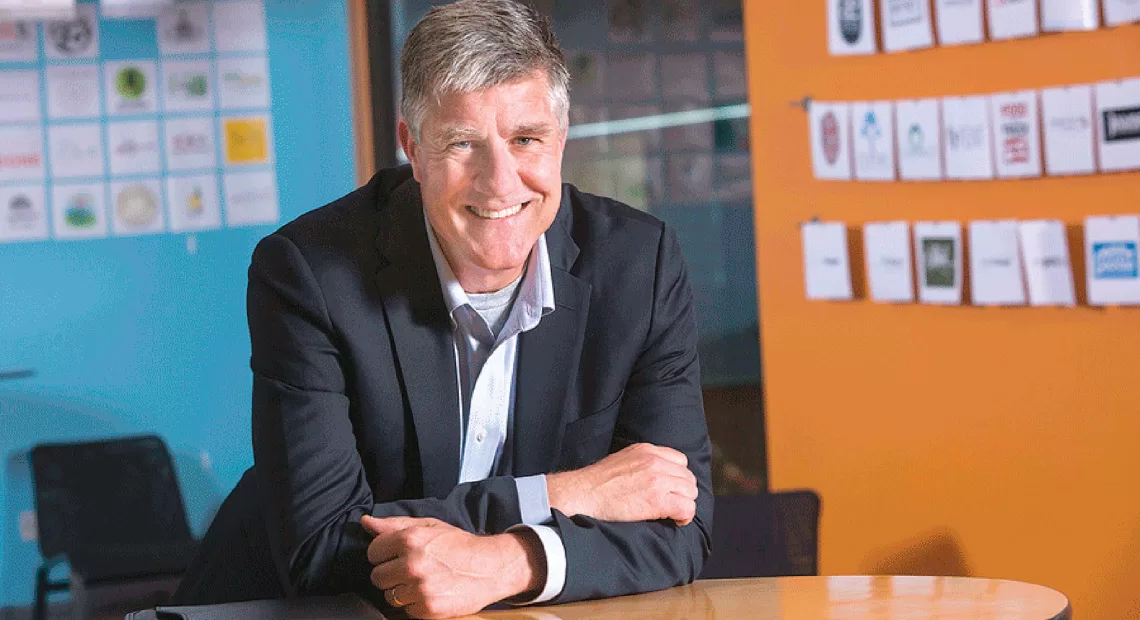
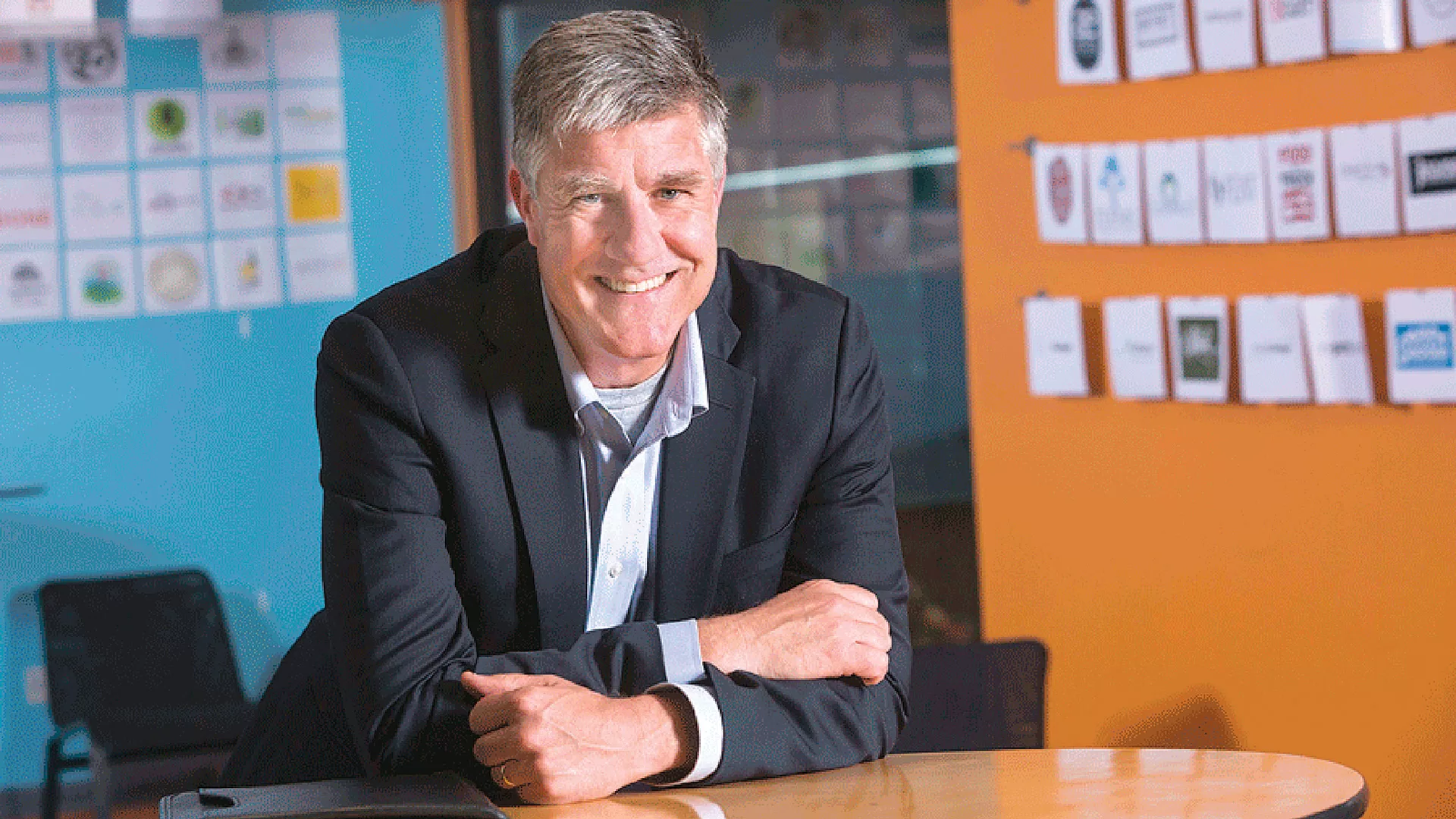
Matt Bannister likes to say that he has “one of the best jobs at the bank,” although some might consider it the worst.
His title is senior vice president of Marketing and Corporate Responsibility, a position that comes with many responsibilities, including a rather large role in determining and then implementing PeoplesBank’s philanthropic strategy, duties he described this way: “I get to play Santa Claus.”
Indeed, he’s part of the team that essentially determined how the bank apportioned $2.3 million in giving in 2022 and another $1.6 million in 2023, with donations averaging roughly $3,000 presented to more than 500 nonprofits and causes meeting some of the region’s most critical needs, such as food insecurity, housing, economic development, and literacy.
More on all this later, because this work is not why Bannister has been named a Difference Maker for 2024. OK, it’s a small part of the reason why.
The much bigger reason is the manner in which he has gone well beyond playing Santa Claus and well beyond helping decide to whom the bank will write checks — rather, he’s become closely involved with helping to meet some of those needs listed above.
Since joining the bank in 2015, he has served as a board member for agencies including Link to Libraries, EforAll Pioneer Valley, the Greater Northampton Chamber of Commerce, the Springfield 9/11 Memorial fundraising committee, the Public Health Institute of Western Massachusetts, Hilltown Community Health Center; the American Red Cross, and Revitalize Community Development Corp. (CDC), where he is current co-chair.
“You can say that he manages the pocketbook and he helps us disperse funds in the right ways, but when you see that expense report and you see that mileage — that’s not giving out money as much as it is participating and being part of the community.”
Involvement with the health-related agencies on that list continues a pattern to focus his time, energy, and talent on matters related to health and well-being (and he puts Revitalize CDC squarely in that category, as we’ll see).
Before coming to PeoplesBank, Bannister was executive vice president of Corporate Communications and Brand Content for the American Heart Assoc./American Stroke Assoc., and before that, he was vice president and group account director at Arnold Worldwide, working on integrated marketing campaigns with a focus on anti-tobacco efforts for clients including the Massachusetts Department of Public Health, the FDA, and the American Legacy Foundation.
PeoplesBank President Tom Senecal, who nominated Bannister as a Difference Maker, says he can quantify and qualify how much of an impact his colleague has made. For both, he turns to statistics the company keeps on just how many hours each employee devotes to volunteer work — with Bannister logging at least twice as many on bank-sponsored activities, in his estimate — and especially the expense reports Bannister turns in.
“I see the expense reports; they’re three pages long with his volunteer mileage — three pages per month,” he said, adding a verbal exclamation mark. “You can say that he manages the pocketbook and he helps us disperse funds in the right ways, but when you see that expense report and you see that mileage — that’s not giving out money as much as it is participating and being part of the community.
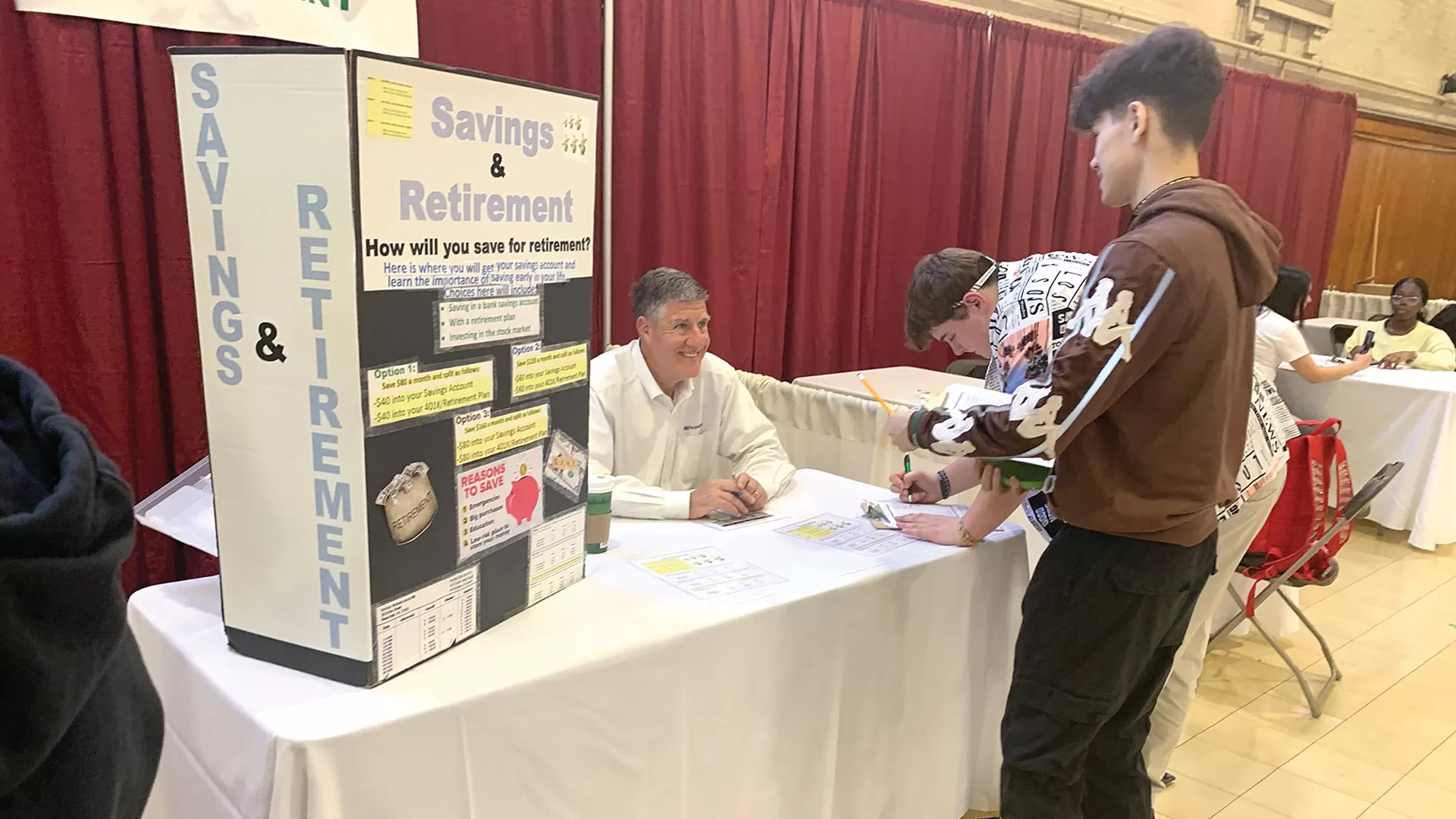
Matt Bannister, seen here at the PeoplesBank booth at Junior Achievement’s Teen Reality Fair last year in Chicopee, has become actively involved in the community.
“He goes well above and beyond what we ask him to do to represent PeoplesBank,” Senecal went on, adding that this involvement, this commitment to backing up the checks the bank writes with his work on boards and mowing lawns for Revitalize CDC, explains why he’s been chosen as a Difference Maker for 2024.
Bannister loves to tell the story about his participation in career day at his then-9-year-old daughter’s elementary school. It conveys a little about what he was doing at the time — this was when he was with Arnold Worldwide working on ad programs to help curb smoking among young people — and a lot about why he has been chosen as a Difference Maker.
“Kids at that age don’t really have a strong sense for what their father does for a living,” he said, recalling that his daughter introduced him by saying simply, ‘this is my dad … he saves lives for a living.’
“I thought that was really cool,” he told BusinessWest, adding that this description of what he did certainly helped inspire some of his next career steps. “I said, ‘I want more of that,’ and it helped me go from doing the anti-tobacco work at the agency to the American Heart Association.”
“Our philosophy is to give a little to a lot of groups, and not a lot to a few groups. That’s because almost every nonprofit is worthwhile and doing good work.”
Tracing his work history, Bannister said he worked for the ad agency Hill Holiday in Boston and later with Arnold Worldwide, working on accounts ranging from Volkswagen to Puma to Ocean Spray. In the late ‘90s, he was promoted and told he’d be working on the Department of Public Health account.
“I initially said, ‘that doesn’t sound like a promotion,’” he went on, adding that this was at the time when a 25-cent tax was put on every pack of cigarettes sold, with the money going toward smoking-cessation programs and preventing youth uptake.
“Every ad agency had a beer, a car, a fast-food chain … now, a brand-new category was created — a $100 million category because of all the revenue that was being created,” he went on. “And it was untilled, fertile soil.”
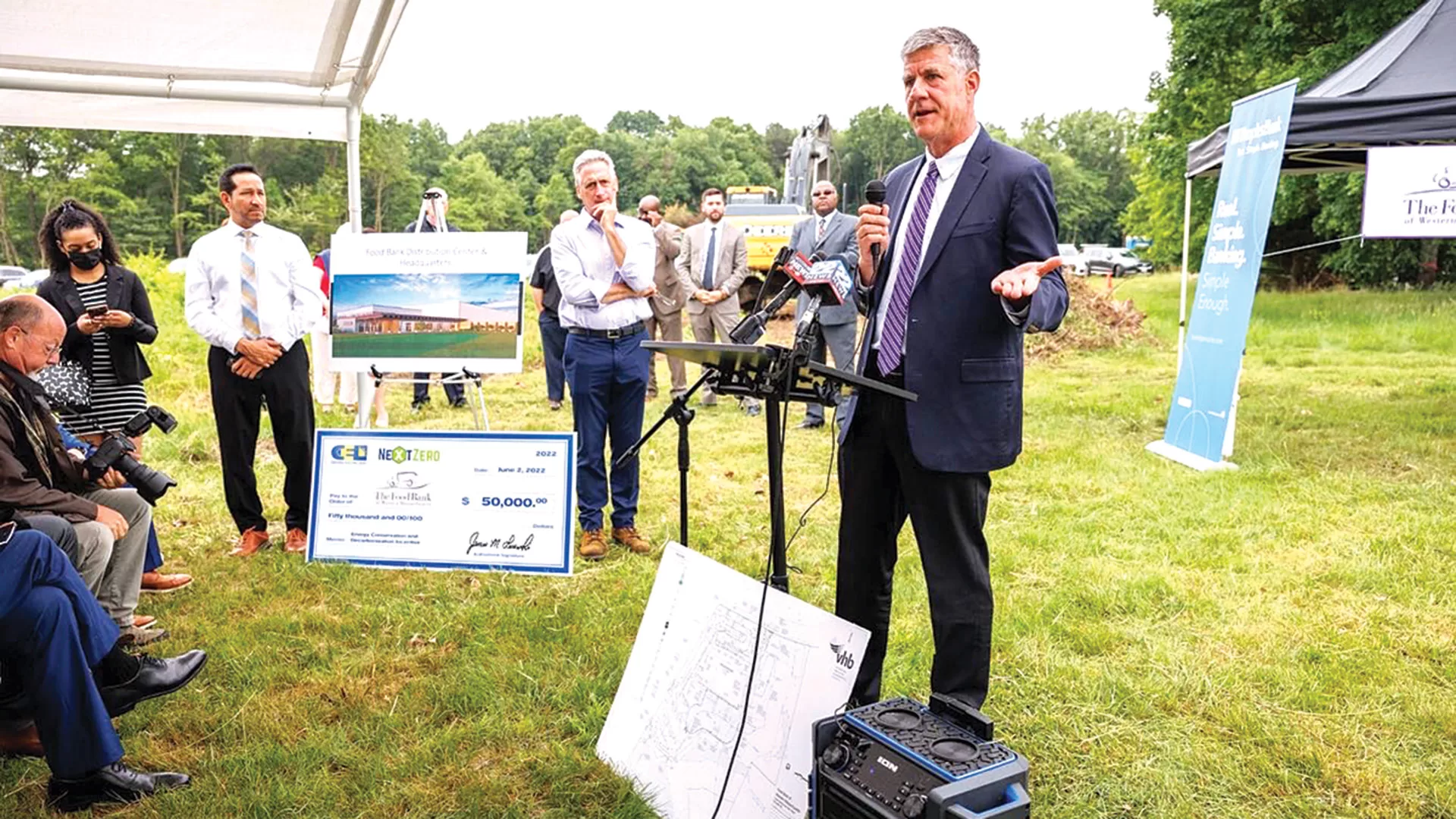
In his role, Matt Bannister is often the face of PeoplesBank, such as at this occasion marking the bank’s donation — $250,000 over five years — to the building of a new facility for the Food Bank of Western Massachusetts.
Overall, it was more rewarding work than selling cars or cranberry juice, he said, adding that he changed course, career-wise, and joined the American Heart Assoc., serving eventually as executive vice president of Communications at its national headquarters in Dallas.
“At the ad agency, you’re selling pizza, sneakers, and sugar water — you’re selling a product,” he explained. “In public health, you’re selling behavior change; you’re selling ‘eat right, don’t smoke, exercise more.’ It’s not something you buy, it’s behaviors, and it’s marketing that’s a lot more challenging and rewarding.”
Desiring a return to the Northeast — he was born in Dedham and attended UMass Amherst — Bannister accepted the role of senior vice president of Marketing and Corporate Responsibility at PeoplesBank, a position with a broad job description that includes corporate responsibility but now also includes marketing, media relations, and social-media management.
And when it comes to charitable giving, he said the bank’s goal is to “say yes as often as you can,” he noted.
“Our philosophy is to give a little to a lot of groups, and not a lot to a few groups,” he explained. “That’s because almost every nonprofit is worthwhile and doing good work.”
Elaborating, he said that, while he supports a wide array of nonprofits and causes, within the giving strategy is an emphasis on certain areas, such as economic development, literacy, food insecurity, and public health, which translates into larger donations to some groups, such as the Food Bank of Western Massachusetts, Girls Inc. of the Valley, and Revitalize CDC.
These have, in fact, become Bannister’s personal points of emphasis as he chooses the organizations and causes to get personally involved with — and there are many invitations to weigh.
As noted earlier, this involvement is the primary reason why he is part of the Difference Makers class of 2024. He said it’s a part of his job, and also a way to see first-hand the work being done in some of the areas listed above, and be a part of that work.
“The more I can roll up my sleeves, the better I feel about who we’re giving to,” he told BusinessWest, adding that he is certainly selective about the groups and causes he gets involved with.
“In the beginning, it was because they asked me,” he said with a laugh. “Now, it’s more the groups that are working boards that have a vibrant cross-section of the community involved, and that I think we can benefit by being involved.”
Since joining PeoplesBank, Matt Bannister has donated his time, energy, and talents to several nonprofits and causes, including Revitalize CDC.
That includes Revitalize CDC, which undertakes a number of projects that fall into broad category of public health, including critical repairs on homes of low-income families with children, the elderly, military veterans, and those with special needs, but also initiatives involving interventions for adults and children with asthma, nutrition programs, and making home improvements that allow seniors to remain in their homes.
He is active with all those intiatives, but has carved out his own niche.
“My favorite thing is mowing the lawn — no one thinks to do that. It’s the curb appeal,” he said with a laugh. “I’m not a skilled laborer, and mowing the lawn is hard to screw up.”
Turning serious, he said the organization’s work is critical to improving health and quality of life in the region.
“Their work involves prevention more than treating the symptoms, which is what a good public-health person cares about,” he said. “It’s not as glamorous, and it’s harder to quantify, but it’s much more important work.”
As he talked about what he does for a living and within the community, Bannister made sure to thank the bank for giving him the opportunity to be part of a winning team, and to thank his wife, Sharon, for … well, being understanding and tolerant of a schedule that has him on the road a lot, maybe three or four days a week and sometimes for several events on the same day during the busy season.
It’s a big part of the job, he said, adding quickly that the job, the travel, and the events involve two states and a much larger radius now that the bank has made a push into Connecticut, one that promises to involve more zip codes in the years to come.
What’s not necessarily part of the job — and this becomes clear in Bannister’s expense sheets and Senecal’s reaction to them — is his commitment to getting very involved with several of the organizations that the bank ultimately writes checks to.
He admits to gradually learning how to say ‘no’ to those who ask him to serve on boards, but often, the answer is still ‘yes.’
If Matt Bannister had to introduce himself at a third-grade career day, he might start by saying what he often tells people about his role: “I work at a bank, but I’m not a banker. And I absolutely love my job at the bank.”
Others who really know, people like Senecal and Colleen Loveless, president and CEO of Revitalize CDC, might be tempted to borrow the line used by his daughter and say that he saves lives.
Or … they could keep it very simple, yet powerful — and introduce him as a Difference Maker.
That says it all.
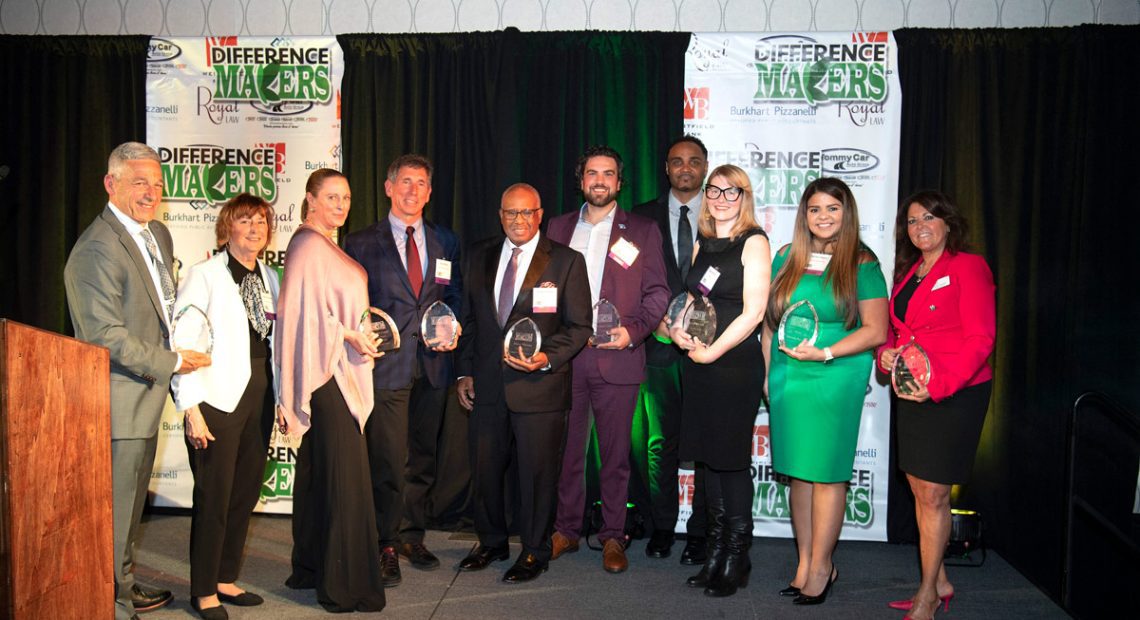
To order prints go to Leah Martin Photography
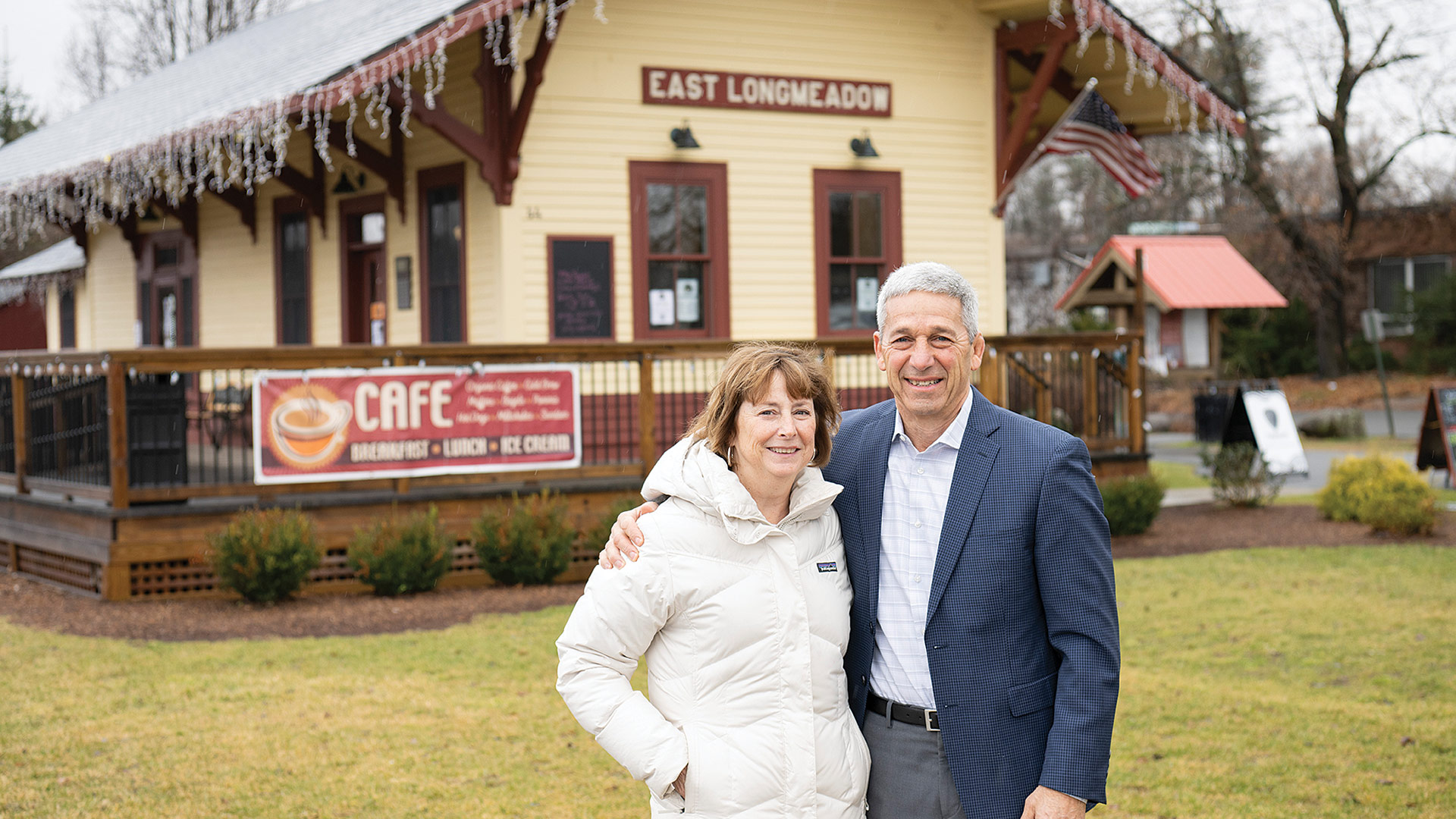
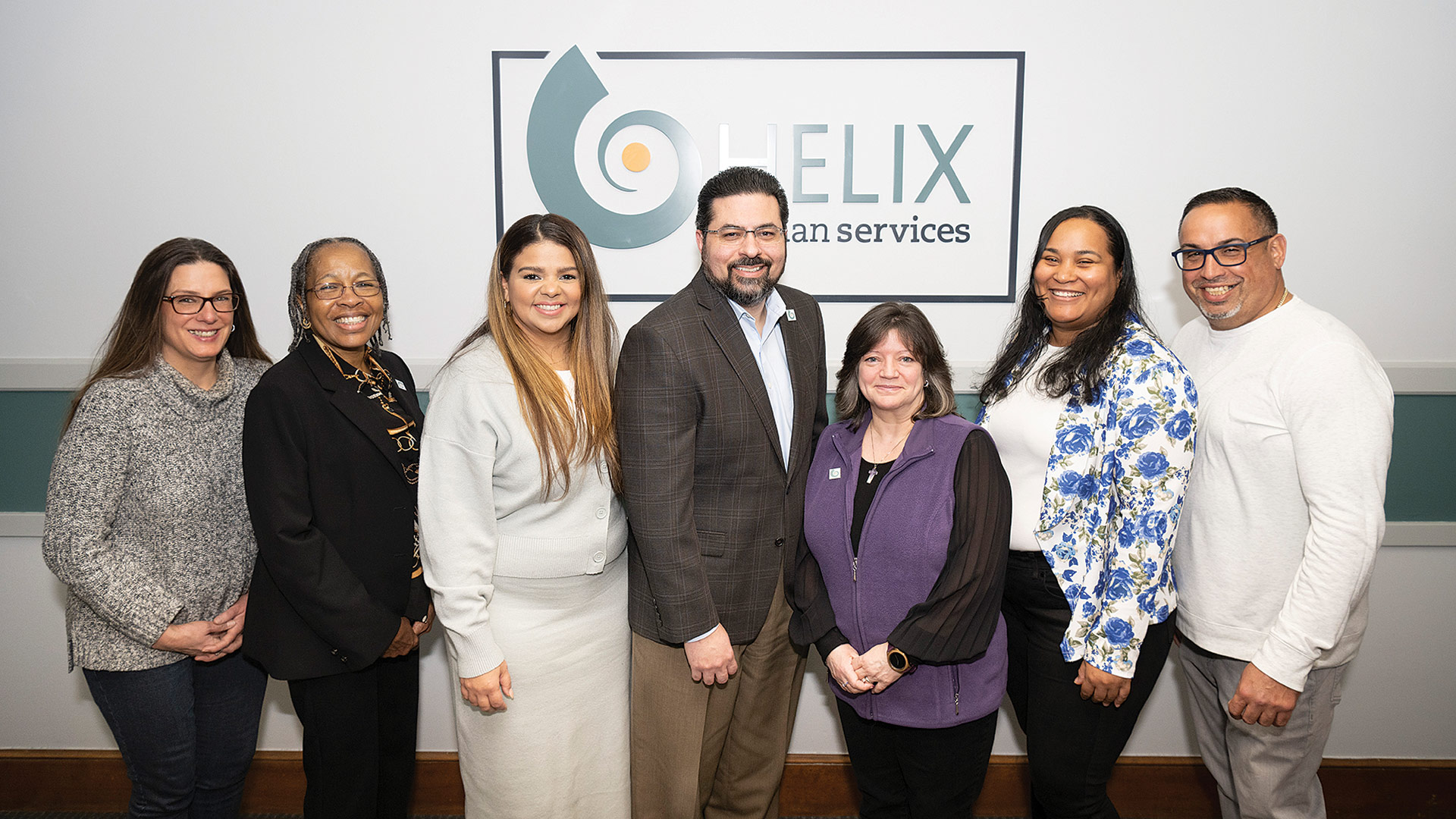
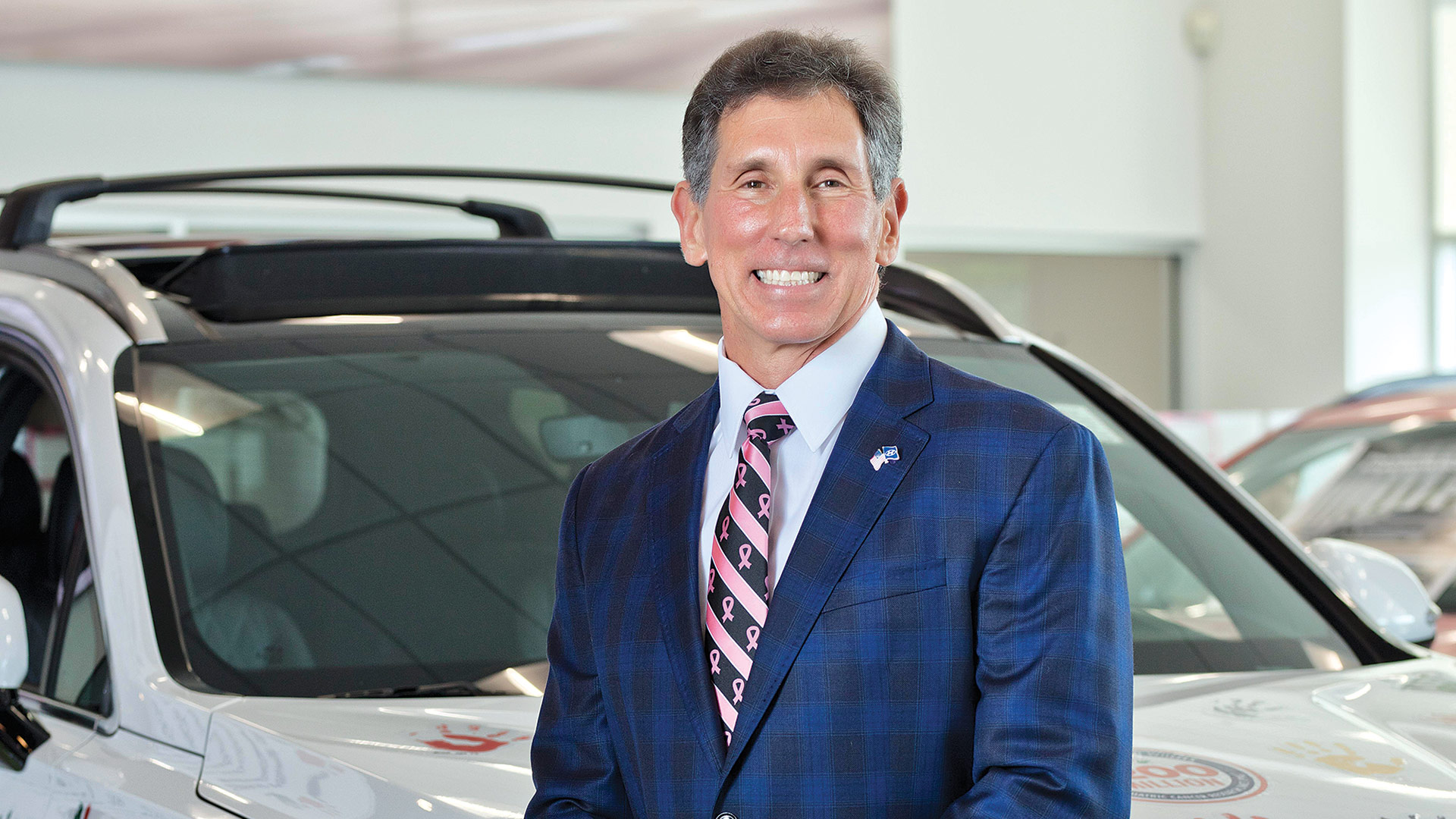
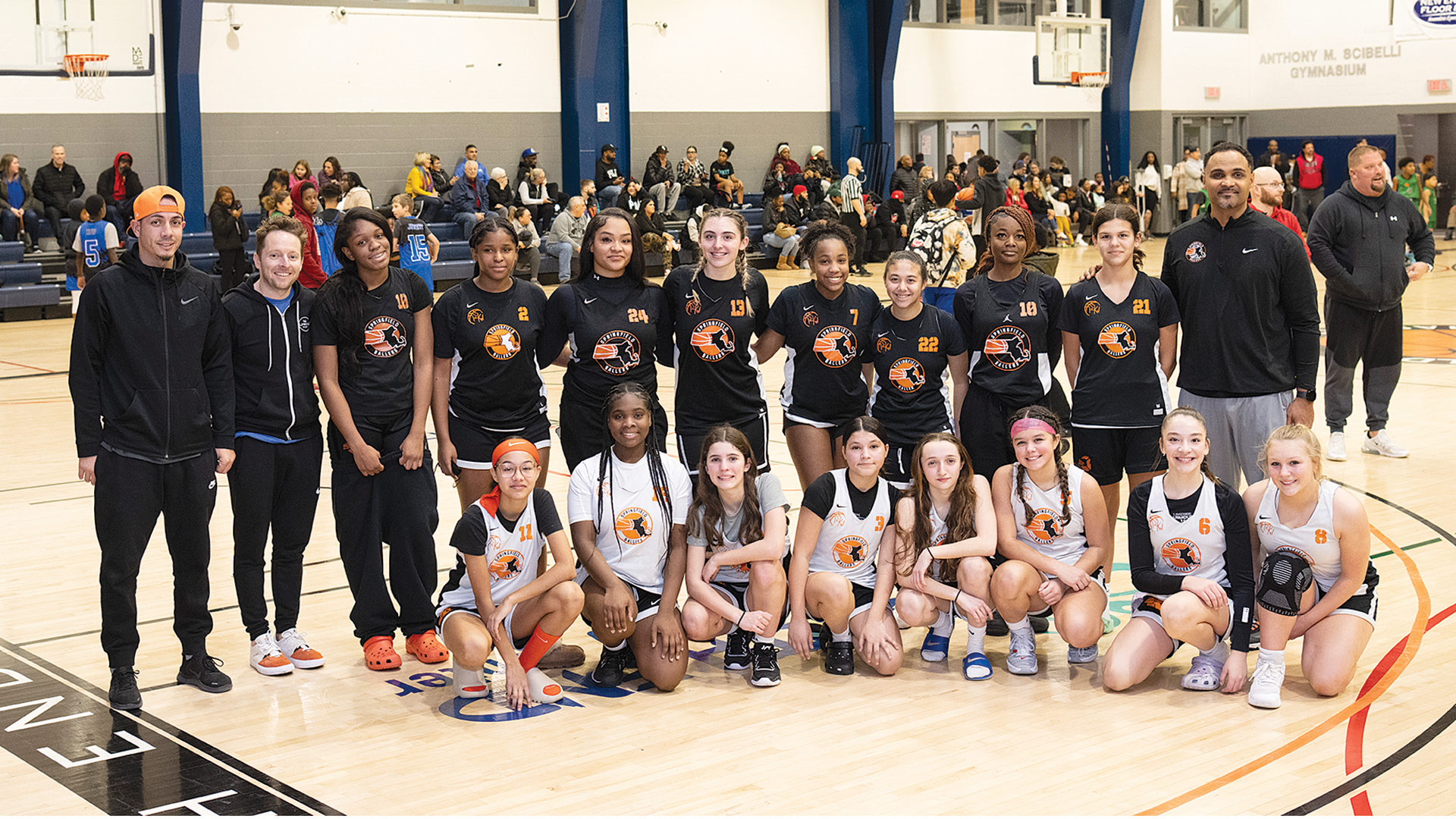


 For 15 years now, BusinessWest has been recognizing the work of individuals, groups, businesses, and institutions through its Difference Makers program, with one goal in mind: to show the many ways one can, in fact, make a difference within their community.
The stories below convey a desire to help others, go above and well beyond, and set the bar higher when it comes to what people can accomplish when they work together. That’s true whether we’re talking about Steve and Jean Graham, owners of Toner Plastics, or Claudia Pazmany and Gabrielle Gould, dynamic leaders in Amherst. Or Gary Rome, the charismatic local auto dealer recently named TIME magazine’s Dealer of the Year. Or Nate Costa, whose hockey team, the Springfield Thunderbirds, and his staff working behind the scenes are changing the dynamic in downtown Springfield and beyond. Or the Springfield Ballers, a nonprofit helping to get young people in the game.
Leah Martin Photography
“This is my life story.”
That’s what Henry Thomas said as he gestured to a piece of furniture in his living room — an end table with a compartment under its glass top that contains dozens of items that, indeed, trace many points along his life’s journey.
It’s a story told by business cards and nametags. Badges from his days as Springfield’s Fire and Police commissioner. A ticket to President Obama’s first inauguration in 2009. A campaign button from Mike Dukakis’ unsuccessful presidential run in 1988, which Thomas worked on. His Ubora Award from Springfield Museums, along with various other medals and ribbons. A baby-dedication program for one of his five grandchildren. A miniature saxophone, representative of the music he would like to pursue more fully when he has more time.
And two objects that are oddly related. One is a 1950s-era box from a product called Asthmador, a powder that was burned and inhaled in the days before aerosol asthma inhalers. “It looked like I was doing hash,” he laughed. The other object is his draft card for military service during the Vietnam War.
“I got a waiver when I was in college, so that saved me from having to go right away,” he recalled. But when it came time to visit the draft board, “they said, ‘sorry, we can’t take you.’ I said, ‘why not?’ They said, ‘you’ve got asthma.’”
“If you’re trying to get into the end zone for a touchdown, you can’t run out at the five-yard line, back to the coach, and say, ‘hey, Coach, I’m trying to get in the end zone, but this guy keeps stopping me.’ There’s always going to be a defense in life, and that’s what I’ve preached to my kids as well.”
Coming from a long line of men who had seen military service, from the Civil War through two world wars, Thomas felt … well, disappointed. And he argued about it, but was told that an asthma attack could get not just him killed, but other soldiers as well.
“That’s what saved me from going. But I shouldn’t say ‘saved me,’ because I do consider it an honor to serve your country,” he said.
After excelling in football, track, and gymnastics in his youth — he’s a member of the Springfield High School Sports Hall of Fame — he also aspired to play football professionally, but a severe ankle injury derailed that goal as well. But he took lessons from those days that have served him well all his life.
“In a sport like football, all the principles of life are embedded — I think you can say that about other sports as well, but I’m more familiar with football,” said Thomas, who was a running back at Technical High School and American International College. “If you’re trying to get into the end zone for a touchdown, you can’t run out at the five-yard line, back to the coach, and say, ‘hey, Coach, I’m trying to get in the end zone, but this guy keeps stopping me.’
This table contains many of the meaningful items that tell Henry Thomas’s life story.
“There’s always going to be a defense in life, and that’s what I’ve preached to my kids as well,” he went on. “A lot of guys were bigger and better than I was. But I had a lot of willpower, and I think that was the difference sometimes.”
So, thanks to his asthma and his ankle, Thomas chose a different course after his graduation from AIC in 1971: he got to work on his master’s degree; married Dee, his wife of 51 years; and went to work for the Urban League.
Fifty-two years later, he’s still there, with almost a half-century at the helm. It’s a life marked by profound changes in society, with myriad opportunities to make a deep impact throughout this region. It’s the life of a Difference Maker.
Thomas’ first role at the Urban League was youth coordinator, and he immediately saw the impact the organization could have on youth, as well as older people.
“The late Vernon Jordan told me, ‘Henry, this is the best job in black America, because you have an opportunity to meet a host of interesting folks, and you become more sensitized to the challenges and issues that impact the lives of the people you know, or even in your family.’”
In 1974, at age 25, Thomas became the nation’s youngest leader of a national Urban League affiliate. One of his key areas of focus throughout his career has been education, and not just through Urban League programs; he also served for 13 years on the UMass Amherst board of trustees — including two and a half years as board chair — and was a co-founder of New Leadership Charter School.
In all Urban League initiatives — its programs include education and youth-development initiatives, as well as programs for economic and workforce development, health and wellness, and seniors — Thomas has been driven by an understanding of the importance of equity.
“No equity, no excellence,” he simply said. “I always had a feeling that things could be better, as it relates to equity, everyone getting the treatment that others are getting.”
From co-founding a charter school to chairing the UMass Amherst board of trustees, Henry Thomas has made education central to his work throughout the decades.
Leah Martin Photography
Even today, programs like Youth STEM Enrichment, Digital Connectors, a partnership with UMass Amherst IT, and access to STEM programs at Springfield College speak to the need to break barriers to technology adoption by urban teens.
“Technology has had an impact on the Urban League, as it has with many other business,” Thomas said. “Technology is a real game changer in how well are you going to adapt to doing a new job — or an old job, because even the old job has to get upgraded. It’s major, because I’ve seen so many people working inefficiently, and that can limit you. If you want to climb, you’ve got to learn how to do these things.”
Thomas’ leadership and advocacy on the UMass board of trustees was instrumental in UMass Chan Medical School’s establishing its first-ever regional campus, UMass Chan Medical School – Baystate, in downtown Springfield, and its focus on improving the health and well-being of the region’s medically underserved rural and urban communities.
For that effort, he recently earned an honorary doctorate there, to go along with similar honors from UMass Amherst, Bay Path University, Westfield State University, and Nichols College. In addition to his bachelor’s and master’s degrees from AIC, he also earned a juris doctor degree from Western New England University School of Law.
Also in the vein of education and workforce development, Thomas established Step Up Springfield, a teacher-development program in Springfield; is funding (along with his wife, Dee, a former teacher and principal herself) a $50,000 scholarship for Black youth from Springfield; and tackled a two-year assignment with the National Urban League as its vice president for Youth Development, with a primary focus of youth development within inner-city communities.
Another one of Thomas’ successes was bringing Camp Atwater in North Brookfield — the oldest overnight camp for Black youth in the U.S. — back to life in 1980 after a period of dormancy. The camp, which celebrated its 100th anniversary in 2021, is especially meaningful to him because he attended as a youth.
“I don’t feel desperate. I feel like we can get to where we need to be. I’m optimistic.”
“It had an impact on me; this was the place where I learned that I don’t have to make a selection between being cool or being smart. I found out that I could do both.”
The lesson he took from his own experience at camp was that kids need to see other kids making the right choices in life.
“These kids knew all the contemporary dances. But they were talking about becoming a doctor, becoming a lawyer, and at the same time shooting three-point shots. And I said, ‘wow, I really don’t have to make a choice. I could do both.’”
But it’s not just showing teens positive pathways, but helping them get on them, that really matters, he added. He said his parents did that for him, and it’s been his life’s work at the Urban League to help others achieve their dreams.
“Like I said before, it’s equity. If you don’t have a chance to be as good as the next woman or guy, then you’re not going to achieve the excellence that you think you’re capable of. So I should give my parents a little credit.”
When considering his long list of achievements of impact, Thomas boils it down simply.
“It’s been a very good life,” he said, before expressing pride in his wife and his children; his son works for OppenheimerFunds in South Orange, N.J., and his daughter is an assistant school superintendent in Richmond, Va. And, as noted, Thomas’ own responsibilities have taken him beyond the Urban League, such as his role as first African-American to chair the Springfield Police and Fire commissions.
“I’ve actually marveled at all the various hats this man has worn through the years, particularly as Police commissioner,” Dee Thomas said. “Those were really rough times when he was in that position, and he met a lot of opposition in trying to change the face of the police force and make it more diverse. I will never forget those days. But I’ve seen all the people that he’s touched, and we still see officers come up and thank him for allowing them to be on the commission, because they know, if were not for him, they wouldn’t be there.”
It’s just another example, Henry said, of sometimes having to run the ball through a defense in life.
And he’s hopeful that the younger generation will continue to pick up his mantle, understanding that equity has not yet been achieved in all areas of life, no matter how much various corners of society — in government, education, and elsewhere — would like the conversation to go away, as evidence by the current tussles over critical race theory and what students are allowed to learn and read.
“I think it is doing an injustice to young people when they are not getting the kind of access that they need — and that they deserve — to help them understand the world and how it operates: the good, the bad, and the ugly. You can make better choices when you know all three,” he said. “I do think that there’s too much of a passive approach by people who are self-sufficient and feel, well, ‘that’s not my problem. I hate to see it, but I’ve got to move on.’”
Thomas is not moving on from those goals, even after his time with the Urban League is done. He’s seen enough to recognize the power of arming young people with education, creating access to opportunities, and continuing the conversation.
“But I don’t feel desperate,” he said — largely because of those young people with the potential to be difference makers themselves, as he certainly is. “I feel like we can get to where we need to be. I’m optimistic.”
That’s a life story — and a continuing legacy — much bigger than a glass-covered end table.
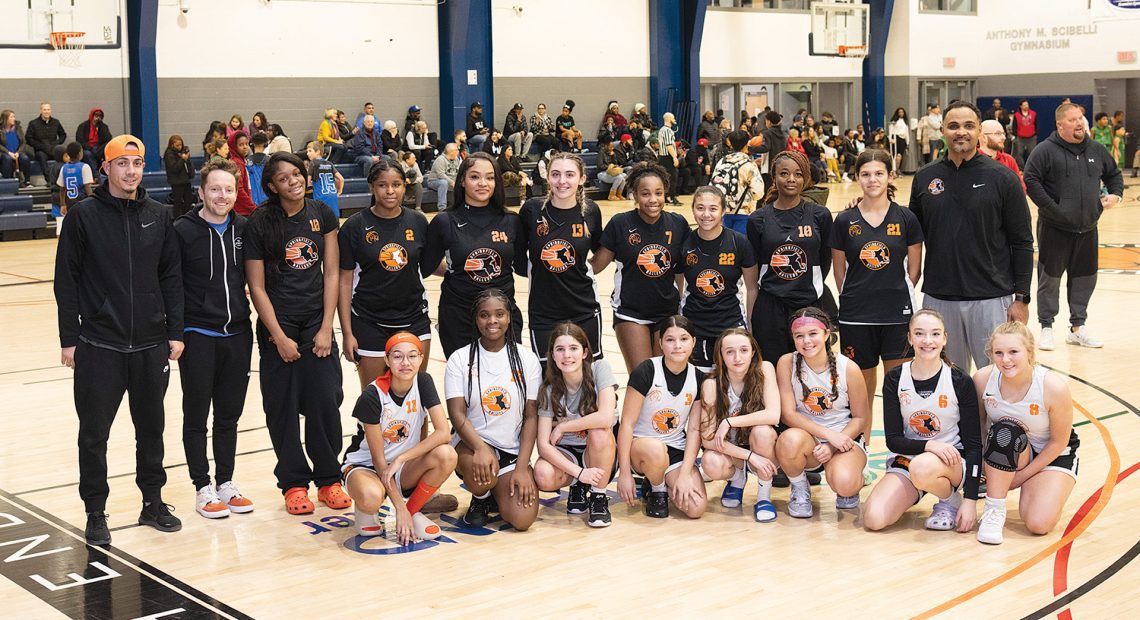
Leah Martin Photography
James Gee grew up in Springfield, in a single-parent household.
He remembers his mother having to hold down several jobs and work very long hours — 70, maybe 80 a week by his count. He also remembers sports, and especially basketball, being … well, much more than a game at that critical time in his life.
Sports were something to look forward to at a time when there wasn’t much in his life that fell into that category, he told BusinessWest, and something that provided a number of invaluable life lessons — on everything from the value of teamwork to overcoming adversity; from learning from role models to understanding the importance of working hard to achieve one’s goals.
“I had sports as something to keep me engaged and focused,” said Gee, head coach of the women’s varsity basketball team at Central High School, which won the state championship in 2022; a former player at Central himself; and a history teacher at the school. “I had coaches who would pick me up and drop me off and be there as role models as well. Mom was always there for me and always pushing the importance of academics, but the reality was, she had to go to work to pay the bills. I understood that, but when you have that much time, you can get in trouble and find the wrong friends and the wrong crowds. For me, because I had sports, I didn’t have time to get in trouble; my focus was much different.”
It is this basic understanding of the importance of sports in the development of young people that led to the creation of Springfield Ballers, a nonprofit that got its start with an all-girls basketball team (the Lady Ballers) back in 2006 — and also led to Gee to join the effort, become a pivotal force in its growth and development, and become passionate about its mission.
“I believe that sports correlates with life in so many ways. Everything from just being on time to handling adversity, dealing with different situations, dealing with different individuals, learning how to work through struggle; it’s huge. There are so many lessons that sports provide — and it also gives young people something to look forward to.”
Today, through the leadership of Gee, who now serves as president and CEO of the nonprofit; fellow coach Mike Anderson; and a strong board of directors, the Ballers has expanded its mission in many different ways.
Indeed, there are now 27 basketball teams involving boys and girls of all ages; other sports, including golf, lacrosse, and softball; clinics; competitions; and more. Access to sports and competition is now year-round.
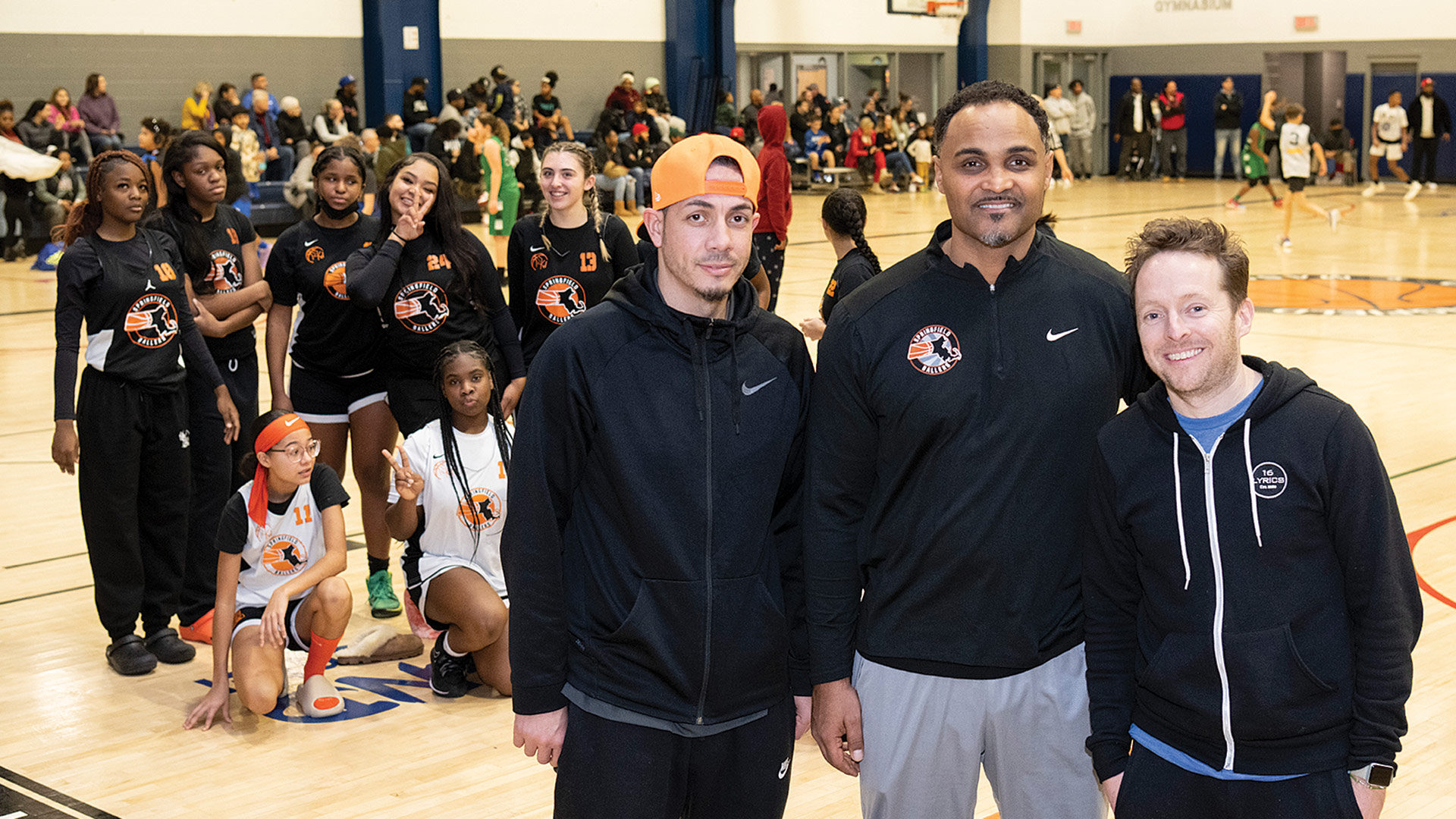
From left, Omar Almodovar, James Gee, and Tim Allen attend a Biddy Ball practice in Springfield.
Leah Martin Photography
Summing it up, Gee said it’s about making sports affordable and accessible, and thus enabling young people to enjoy the many benefits of sports and competition. But the equation also includes exposure to coaches and other positive role models, support with academics, and much more.
“I believe that sports correlates with life in so many ways,” he explained. “Everything from just being on time to handling adversity, dealing with different situations, dealing with different individuals, learning how to work through struggle; it’s huge. There are so many lessons that sports provide — and it also gives young people something to look forward to.
“With a lot of the coaches, they become a really important figure in the kids’ lives. And they provide a lot more than just coaching them on the court.”
Amy Royal
“With all the challenges people face today, sports gives them something to distract them, especially children in lower socioeconomic and demographic areas,” he added. “Sports gives them something to look forward to after school; sports teaches you so many lessons.”
Sports also helps break down racial barriers, he noted, adding that, when young people from communities with different demographic characteristics come together to play ball, eyes are opened, preconceived notions melt away, and there are learning experiences, and forms of acceptance, on many levels.
“When they play together, the best relationships are formed,” Gee explained. “It’s just people, kids playing basketball or playing sports together; when they finally interact with other, it knocks down barriers and builds so many great relationships.”
Amy Royal, a principal with the Springfield-based Royal Law Firm, long-time supporter of the Springfield Ballers, and one-time coach of a team, agreed.
“It’s so important in so many ways because the Ballers programming does so many different things in the community,” said Royal, who worked with Gee to create the 501(c)(3) nonprofit entity for the agency. “It’s not just about playing basketball or getting instructional lessons in golf; it’s not just about the sports — it’s about learning to be on a team, be with other kids, getting exposure to a diversified group.
“When they play together, the best relationships are formed. It’s just people, kids playing basketball or playing sports together; when they finally interact with other, it knocks down barriers and builds so many great relationships.”
“Also, the Springfield Ballers do a lot of different camps, providing an opportunity to do something when school is out of session — and do something that’s good and positive and productive,” she went on. “There’s also the mentorship and the mentoring programs, the academics, and beyond; it’s all very essential.”
It certainly is, and that reality goes a long way toward explaining why the Springfield Ballers are part of BusinessWest’s Difference Makers class of 2023.
They call it ‘Biddy Ball.’
That’s the name given to the basketball program for the youngest of the young people served by the Springfield Ballers — those in preschool up to grade 2.
They gather for clinics at Kiley Middle School in Springfield on Saturday mornings. Gee, who is on hand himself for these clinics, said some youngsters who took part in Biddy Ball years ago are now playing at Central and other area high schools and even at the college level.
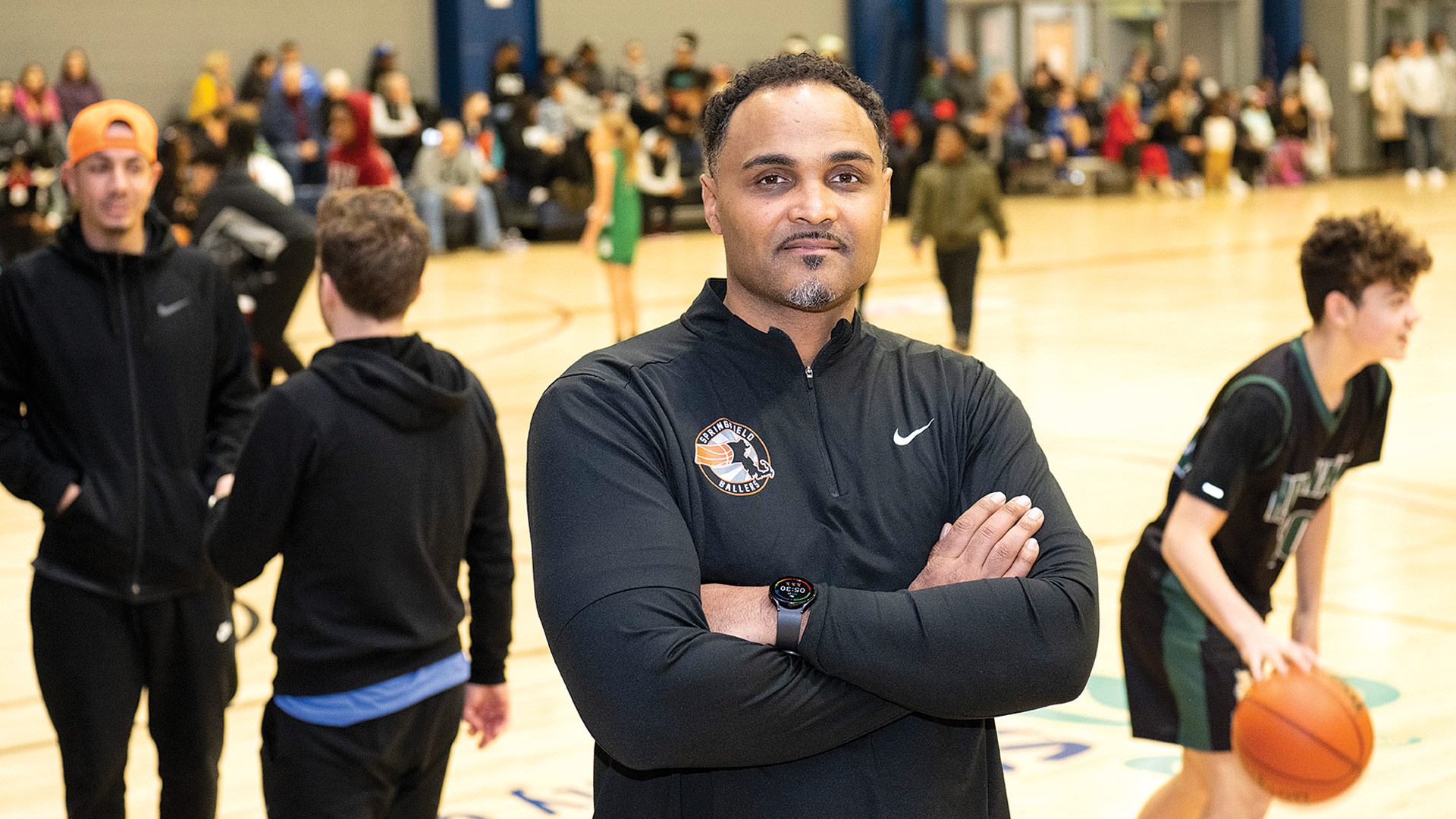
James Gee says his life-changing experiences with sports when he was young inspired him to become part of, and now lead, Springfield Ballers.
Leah Martin Photography
This is one example of how the program shapes lives, not for the short term, but for the long term, by not just showing participants how to pass, shoot, rebound, and defend, but also about how to work as a unit, work together to achieve a common goal, and stay on track, as Gee put it. Indeed, when asked to try to at least quantify the impact that involvement with the Ballers has had on participants over the years, Gee said he sees the results very day.
“When kids have a purpose and a reason and a ‘why,’ they start to focus a little better,” he explained. “We’ve had kids that were struggling in middle school … people would think that they didn’t have a shot. But some became college graduates and have their own business.
“I believe involvement has helped reduce teen pregnancy,” he went on. “You have young ladies who are now engaged in sports — they have goals. Young men, the same thing. Participation in sports helps improve attendance and their academic achievement. I’ve seen first-hand how the program has helped.”
This is what organizers had in mind when they started a girls basketball team 17 years ago and gave the initiative the name Springfield Ballers. The program was soon expanded to include girls and boys from across the region, and, eventually, it moved well beyond basketball to those other sports mentioned earlier.
As Gee said, the mission boils down to providing affordable access to sports, and the Ballers program has done that for thousands of young people of all ages and from across the region.
Indeed, many of the participants are from Greater Springfield, but they are also from Greenfield and other points north and west, and the next expansion initiative is into Northern Connecticut, to meet demonstrated need for such a program.
Meeting needs has been the goal from the beginning, said Gee, adding that those needs vary, from financial support to transportation to an introduction to sports such as golf and lacrosse that are expensive, but important in the way they can provide opportunity — to make connections, make friends, and possibly even earn a college scholarship.
The organization, which partners with a number of organizations and institutions, including area YMCAs and Boys and Girls Clubs, American International College, USA Lacrosse, and Dick’s Sporting Goods, does all this mostly through donations from individuals and businesses, but it has applied for and received some grants, said Royal, adding that there is an annual fundraising gala, and this year will include a golf tournament as well. Meanwhile, individual teams stage their own fundraisers.
These funds are used to provide what are called ‘scholarships’ — up to 100% — for those who don’t have the ability to pay the costs associated with playing for various teams, especially those that travel to play teams in other parts of the state and other regions of the country. Funds are also used to provide participants with equipment, especially for the more expensive sports such as lacrosse and golf, she went on, adding that the agency received a grant from Dick’s Sporting Goods for that purpose.
“The money is absolutely needed because we have so many kids, and so many dollars being spent on scholarships,” said Royal, adding that, last year, the Ballers awarded more than $25,000 in scholarships.
Over the years, the agency has continuously looked for ways to broaden its mission and its many forms of assistance to make organized sports even more affordable and accessible, said Gee and Royal. It has done that by adding more sports to the portfolio, and also by extending its geographic reach.
And, moving forward, it will do this by providing more assistance with transportation — to practices, games, events, and even visits to colleges by high-school athletes getting ‘looks’ from recruiters. With the help of some grant money, the Ballers will look to add some vans, said Royal, adding that the need is obviously great.
And it is great in many areas, she went on, adding that sports — and the Springfield Ballers —have the ability to meet many of them.
“It’s not just about putting kids on teams so they can play sports, which obviously is important for exercise, health, well-being, and all of that; there’s so much more to it. A big part of it is forming relationships and connections.
“I know that, with a lot of the coaches, they become a really important figure in the kids’ lives,” she went on. “And they provide a lot more than just coaching them on the court.”
Crunch Time
As he added up all that sports has provided him in life, Gee said that, in addition to all those lessons he mentioned earlier and the manner in which sports helped keep him out of trouble, they have provided him friendships that have endured for many years.
“I was able to have friends in different communities, not just in Springfield, and I have great relationships to this day,” he said, adding that he’s not sure how his life would have turned out if sports hadn’t intervened, but he’s quite sure he wouldn’t be where he is today.
His goal is to have sports intervene in as many young lives as possible. Springfield Ballers exists to do just that, and it has created a formula for winning — in every sense of that phrase.
And that’s what makes this organization a Difference Maker in this region.
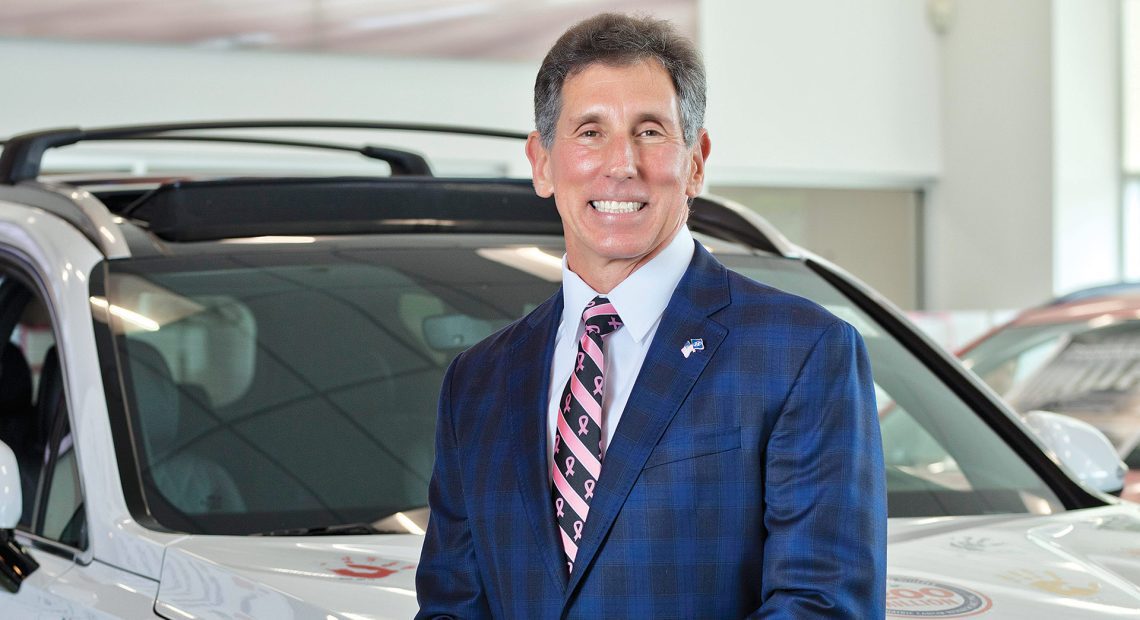
Gary Rome
Jeffrey Byrnes Photography
Gary Rome says it was like the Oscars — or at least what he’s seen of the Oscars on TV.
He was referring to the recent ceremonies at which he was named TIME magazine Dealer of the Year.
The Oscars reference was a nod to everything from the size of the crowd gathered for the National Automotive Dealers Assoc. Show at the Kay Bailey Hutchinson Convention Center in Dallas — roughly 3,000 — to the butterflies that were in his stomach when, as one of four finalists for the coveted award (from among 48 nominees), he stood on stage awaiting the announcement of the winner.
“It was very nerve-wracking,” recalled Rome, who can now add being on the cover of TIME (not to mention BusinessWest) and the back of Automotive News to his long list of accomplishments. “My heart rate was like 100; I was really nervous, and then they pulled out that envelope and said, ‘from Holyoke, Massachusetts, our award winner is Gary Rome.’”
With the Dealer of the Year Award now on prominent display at his Hyundai store, Rome now has an even more crowded calendar for the months ahead. Indeed, representatives of TIME and Ally Financal, sponsor of the program, will be coming to Holyoke to celebrate the award, and officials from Hyundai corporate will be coming in from California to mark the occasion as well.
“If it were up to me, I’d give the money to an organization focused on animals, in honor of Jack. But … it’s not up to me. It’s not about me; it’s about my team — that’s who I attribute our success to.”
And he also has a big decision to make — only, he’s quick to note that he won’t make it himself.
The prize comes with a check from Ally Financial for $10,000, to be awarded to the charity of Rome’s choice. But, as a reflection of how he operates his dealerships, Rome will let his team help him decide.
“If it were up to me, I’d give the money to an organization focused on animals, in honor of Jack,” he said, referring to his beloved companion, spokesdog, and customer favorite, who passed away in October. “But … it’s not up to me. It’s not about me; it’s about my team — that’s who I attribute our success to.”
The TIME award was announced just a few weeks after Rome was chosen by BusinessWest to be one of its Difference Makers for 2023. The juxtaposition of the two honors is significant, and he was chosen by two different sets of judges for essentially the same reasons.
They are summed up in comments from Doug Timmerman, president of Ally Financial, who said of Rome — and the other auto dealers nominated — “they go above and beyond for their customers, communities, and employees.”

Gary Rome was recently honored as TIME magazine’s Dealer of the Year.
In Rome’s case, it’s well above and beyond, especially when it comes to communities and his employees.
With the former, Rome is omnipresent, it seems, serving as a foundation board member at Holyoke Community College (HCC); presenting a car annually to a graduating high-school student in Holyoke; carrying on a holiday tradition called the Trees of Hope event, which raises funds for the Ronald McDonald House; and presenting, in collaboration with other Western Mass. Hyundai dealers, an honor called Salute to Heroes, among many other initiatives. The latest such hero, who received a new Hyundai in gratitude for his work in the community, is Bob Charland, a/k/a the Bike Man, who was named a Difference Maker himself in 2018.
With the latter, Rome’s operating philosophy is perhaps best summed up in the company’s core values — excellence, passion, integrity, caring, and especially the last one, ‘we have fun.’
“My involvement with cars started at the age of 9 — I was just enthralled with my father and his business, so I wanted to be around him all the time. My father would go to work, and I would chase him down the hallway at home to make sure he would take me with him. I was very excited about being there, being around him … it got into my blood.”
This is made clear by the monthly calendar for the business, printed out for all employees. It lists birthdays and anniversaries of employment, but also regular raffles staged at the dealership, which coincide with ‘holidays’ such as (in January) ‘Time to get Organized Day’ and ‘National Cuddle Up Day,’ as well as ‘National Peanut Butter and Jelly Lunch Day,’ for which the company provided peanut butter and jelly sandwiches to Providence Ministries — and to employees as well.
That philosophy is also represented in monthly newsletters that profile specific employees in a ‘Get to Know’ section, spotlight employees of the month (and employees of the year in the December issue), as well as collections of photos involving events and company involvement in the community. The December issue included shots from the Mayflower Marathon (Gary Rome Hyundai was a presenting sponsor), Gary and Daisy (another spokesdog) at a Springfield Thunderbirds sponsor-appreciation day, and a Gary Rome Auto Group employee-appreciation party at the Castle of Knights in Chicopee.
Gary Rome, Eastern Region board member for Hyundai Hope on Wheels, Hyundai’s philanthropic initiative to raise funds for research for childhood cancer, presents a $300,000 check to Massachusetts General Hospital last fall.
All this — and it’s just a sample, to be sure — helps explain why Rome is not just Dealer of the Year, but a true Difference Maker.
Getting back to Jack, he took the title ‘official greeter’ for the Gary Rome Auto Group. That title is still held by Daisy, who has her own business cards and is often sought out by customers (most of whom want photos) as they look over models or come to pick up a vehicle they’ve purchased.
“Some people will say they’re not buying a car until they meet the dog,” Rome said. “When Jack passed away, we put it on social media, and it reached 220,000 people; I received more than 6,000 messages on Facebook, hundreds of cards, letters, flowers, chocolate. We put it on LinkedIn, and it reached almost 60,000 people, and I had almost 2,000 people reach out to me, saying they grew up with Jack, and he was a big part of their life.”
Dogs have been prominent in this business for years, from their barking heard on radio and TV commercials to the company’s marketing slogan — ‘the best doggone place to buy a car’ — and their presence is seen everywhere, from the dealership itself to all those events highlighted in the newsletters. In fact, in addition to a new car wash being planned for the Hyundai store, there will a dog wash as well.
“Why would you put your dirty dog in a clean car?” he asked rhetorically, not waiting for an answer.
And dogs are just part of an intriguing story that most know by now. It starts with a young Gary working odd jobs at his father Jerry’s Datsun (later Nissan) dealership in Holyoke.
“My involvement with cars started at the age of 9 — I was just enthralled with my father and his business, so I wanted to be around him all the time,” he recalled. “My father would go to work, and I would chase him down the hallway at home to make sure he would take me with him. I was very excited about being there, being around him … it got into my blood.”
Gary Rome Hyundai sold a record 306 cars last August, and to celebrate, the staff was treated to lunch, one example of how the company values its employees.
So much so that plans to pursue a law degree were eventually shelved, and he followed his father into the business.
By 1985, he was general manager of Jerry Rome Nissan, which would eventually move to Riverdale Street in West Springfield. In 1997, Gary bought the old dealership in Holyoke and opened Gary Rome Hyundai, at a time when that brand was more of a punchline than the respected name it is today. In 2006, he bought a Kia dealership in Enfield, thus creating the Gary Rome Auto Group.
In 2016, the Hyundai store was moved to its present location on Whiting Farms Road, where it has become one of the most successful Hyundai dealerships in the country — ranking fifth in sales in the Northeast and 28th in the country, out of 820 dealers. It has also become a model for others in the brand, he said, noting that Hyundai’s regional manager recently brought his entire team of 65 to Holyoke for a day in October “so they could see what this dealership looks like, take photos, and show their other dealers what a dealership should look like.”
Those numbers, and those tours (there have been many over the years), help explain how Rome has gone from his humble beginnings to TIME’s Dealer of the Year. His work in the community — make that his team’s work in the community — and the culture he has created at his dealerships are perhaps even bigger reasons.
Let’s start with that culture. It is embodied in those newsletters and that monthly calendar of events. It’s an attitude more than anything else, encapsulated by that core value, ‘we have fun.’
Gary Rome (and Jack) read to fourth-graders at Peck Middle School in Holyoke as part of the read-aloud program created by the nonprofit Link to Libraries.
As for his work in the community, he said it takes many forms, from his involvement at Holyoke Community College, which he called a ‘crown jewel’ in the region, to support of Providence Ministries, to the Trees of Hope program for Ronald McDonald House, which this past year raised more than $175,000. On a shelf behind his desk is an array of stuffed dogs that resemble Daisy, Jack, and another predecessor, Buddy. The dealership sells them for $25 each, with proceeds going to the Jimmy Fund; more than $15,000 has been raised to date.
As with the $10,000 check coming his way from being Dealer of the Year, Rome said decisions about community involvement and where to put time, effort, imagination, and money are made as a team.
“We try to find charities that are near and dear to our employees’ hearts because we want them to be invested, and we want to them to participate,” he explained, adding that this strategy, which includes a special emphasis on Holyoke, where the company is a large corporate citizen, has proven itself very effective over the years.
Within the city, he’s on Mayor Joshua Garcia’s transition team, he’s a member of the Holyoke Taxpayers’ Assoc., and he’s on the governmental affairs committee for the Greater Holyoke Chamber of Commerce, among many other forms of involvement.
“When people ask me where I live, I say I live in Holyoke — I just sleep somewhere else,” he explained.
Rome said his father had a few favorite sayings and words to live by. There are a few that he lives by and will recite quite often.
“He always said that your education is something that no one can take away from you,” he noted, adding that this sentiment helps explain his heavy involvement in education, be it at HCC, the Holyoke public schools, or other initiatives.
Gary Rome presents the keys to a new car to a graduating senior at Holyoke High School, one of many initiatives to support education and area young people.
“He also used to say, ‘it doesn’t cost any extra to be nice,’ and he would say it over and over and over again,” Rome went on, adding that this is a mindset he has bought to work, and to the community, every day.
“For 61 years, I heard, ‘Gary, it doesn’t cost any extra to be nice,’” he said. “And that’s why I have an excessively positive outlook on things. If you tell me there’s a 70% chance of rain, I don’t even hear you; I just hear there’s a 30% chance of sun.”
That outlook on life, work, and community explains not only why Rome is TIME’s Dealer of the Year for 2023, but why he’s always been a Difference Maker.
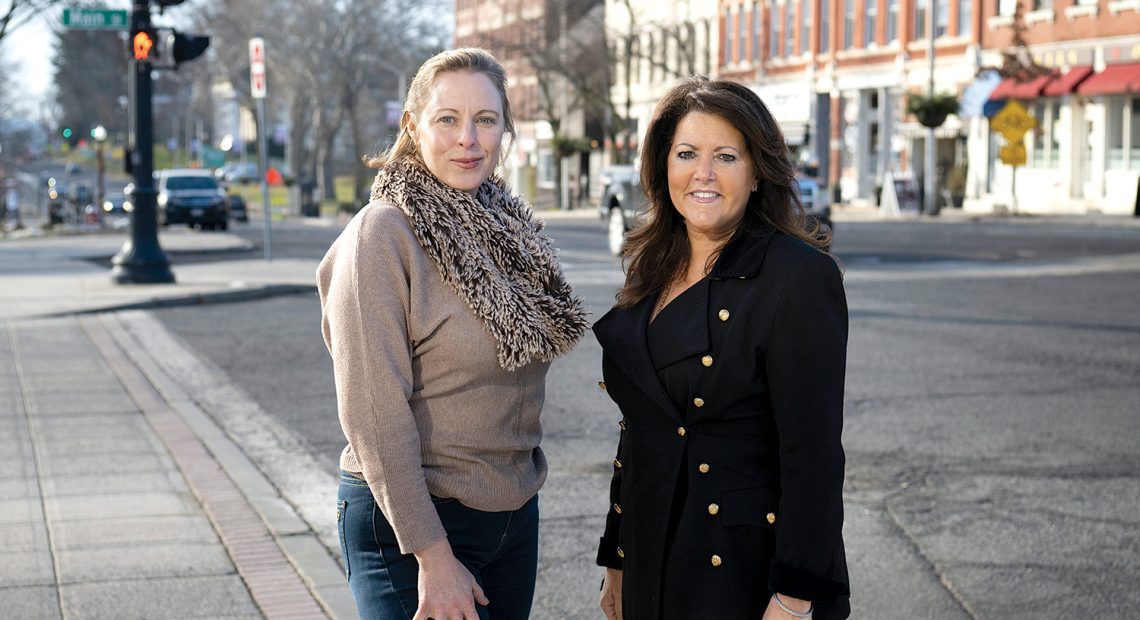
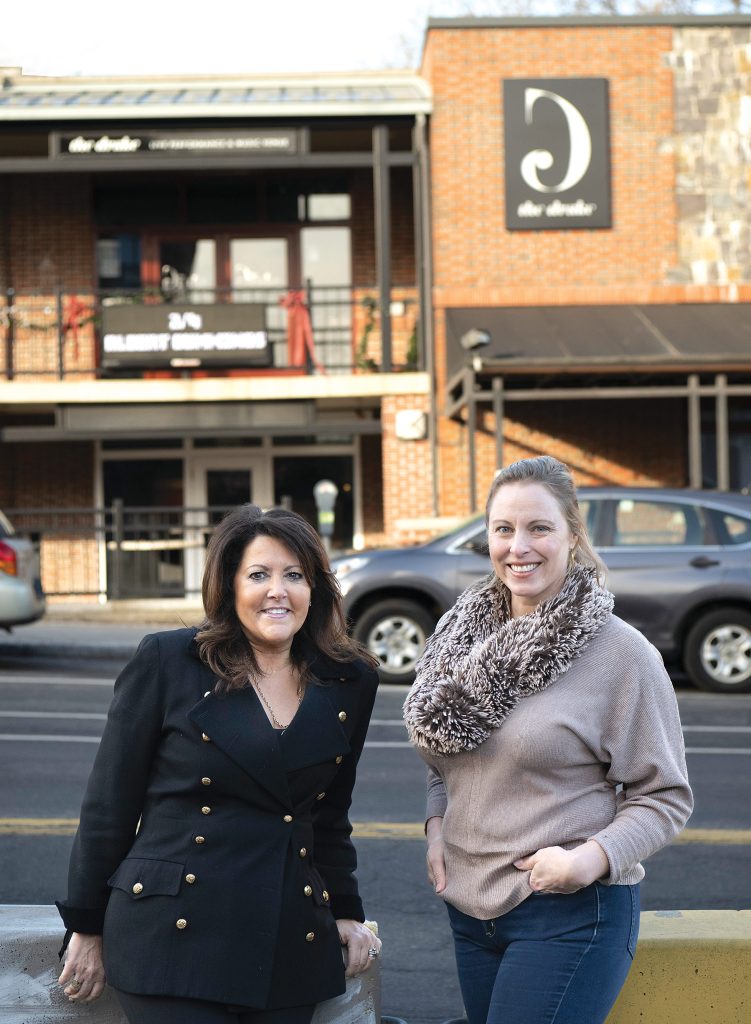
Leah Martin Photography
March 13, 2020.
Both Claudia Pazmany and Gabrielle Gould remember that date, and they say they’re not likely to ever forget it.
It was the day when Gould, executive director of the Amherst Business Improvement District (BID) received word that the Downtown Amherst Foundation she created had officially received its 501(c)(3) status. But that long-awaited good news was rendered all but moot by what else was happening that day — the shutting down of the Commonwealth by Gov. Charlie Baker as the COVID-19 pandemic reached the Bay State and the first deaths were being reported.
“I was thinking, ‘I did all this work to create this foundation that was going to do all these amazing things, and now we’re in lockdown, and we’re not going to be doing anything,’” Gould recalled.
She and Pazmany, executive director of the Amherst Area Chamber of Commerce, who share space in the chamber offices on South Pleasant Street in the heart of the community’s downtown, remember walking out the door together that afternoon, turning off the lights, and setting the heat at 56 degrees as they went.
What they were walking into … well, they had no idea, really.
Turns out, they were walking into what would become a deep (or deeper, to be more precise) and quite extraordinary partnership, through which they would help lead a community that was devasted by the pandemic perhaps more than any other in this region, and maybe the entire state, out of that darkness.
A partnership that makes them true Difference Makers in the Greater Amherst area.
Working separately on some initiatives, but hand-in-hand in most all others, they have helped change the landscape in Amherst and its downtown in all kinds of ways, as we’ll see. But they are also being honored for ensuring that the landscape didn’t change more than it did. Indeed, it is through their efforts that many businesses were able to survive that storm.
“It was a devastating time, but from that, we forged this great partnership,” Pazmany said of the early days of the pandemic. “And we put our collective talents and resources together to put information out there and help people and businesses in need. It was remarkable to see how people came together in that time of crisis.”
By Gould’s count, Amherst “lost more than 45,000 people overnight” that fateful day in March 2020. That number includes students at the three colleges that call the community home — UMass Amherst, Hampshire College, and Amherst College — but also thousands of people who came to work at those institutions and other businesses in town. It also includes tourists who wouldn’t be coming, parents of students and alumni who wouldn’t be attending sporting events or anything else, visiting lecturers who wouldn’t be on campus, performing artists who wouldn’t be coming … you get the idea.
“It was a devastating time, but from that, we forged this great partnership. And we put our collective talents and resources together to put information out there and help people and businesses in need. It was remarkable to see how people came together in that time of crisis.”
In the wake of this exodus, businesses were left dazed and looking for some kind of answers — and any kind of help. Pazmany and Gould helped provide both, with everything from PPE (which they delivered themselves) to virtual ‘tip jars’ to help those out of work; from small-business microgrants to grant-application coaching. They bought hundreds of thousands of dollars worth of meals from restaurants and gift cards and other items from businesses to both help them survive and assist families and individuals in need.
With this assistance, and their own sheer will to survive, many businesses have made it through the pandemic and to the other side.
But this story, this partnership, is not just about COVID and helping businesses ride out that storm. Indeed, it’s an ongoing story of bringing new businesses and new vibrancy to downtown Amherst and beyond. Businesses like the live-performance venue known as the Drake, an initiative of the Downtown Amherst Foundation, which, in less than a year, has brought roughly 1,000 performers and more than 15,000 patrons to the community.
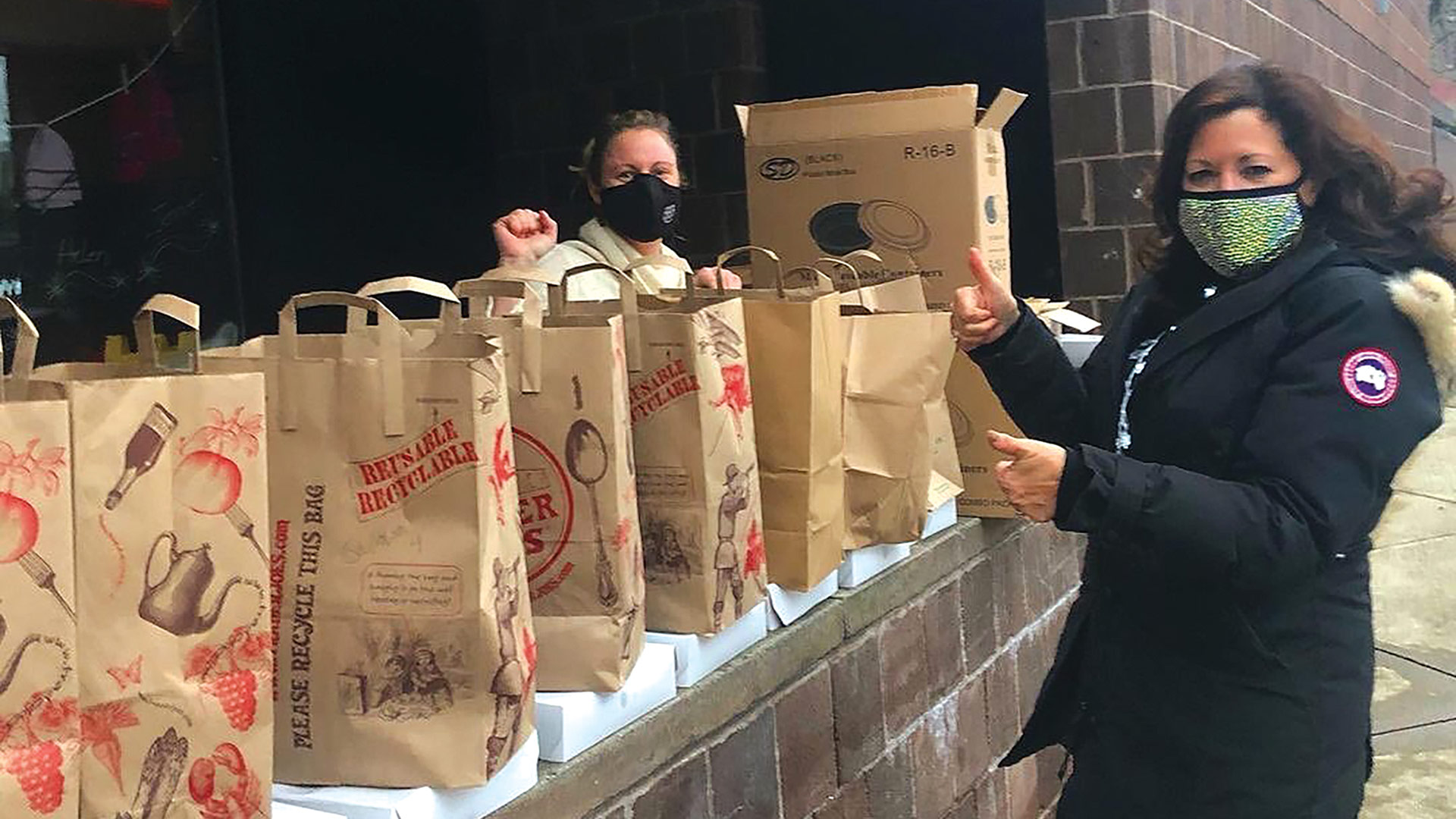
Claudia Pazmany arranges meals that were bought from Amherst-area restaurants and given to those in need as part of the Dinner Delights program staged during the height of the pandemic.
This informal partnership’s philosophy is summed up in a branded campaign launched in 2021 and funded by a Massachusetts Office of Travel and Tourism grant, called, appropriately, “What’s Next? Greater Amherst.” It includes a YouTube video and a website — www.greateramherst.com — that highlights the natural beaty, global cuisine, and arts and culture in the community and helps people who are planning a visit.
“Without our collaborative help and willingness to sit in these offices at 7 o’clock at night with business owners with masks on and help them upload their documents and write grants, I think you would have seen a lot more businesses throughout Amherst close.”
Overall, these partners continue to work to make Greater Amherst both a destination and a place to put down business roots. Thanks to them, what’s next is more creative programing, more opportunities for growth, and more vibrancy.
And that makes them true Difference Makers.
Returning to the dark days of the start of the pandemic — and they were dark … the lights literally went out in downtown Amherst — isn’t exactly easy for Gould and Pazmany.
These were extraordinary and, in many ways, desperate times when business just stopped. There was a great deal of uncertainty about what would happen, they recalled, and for several weeks after the state was shut down, businesses suffered mightily.
But as they looked back, these two partners said that was also a time of what could, in some ways, be called triumph, when people, and a community, reached down deep to find ways to support one another and help them through that darkness.
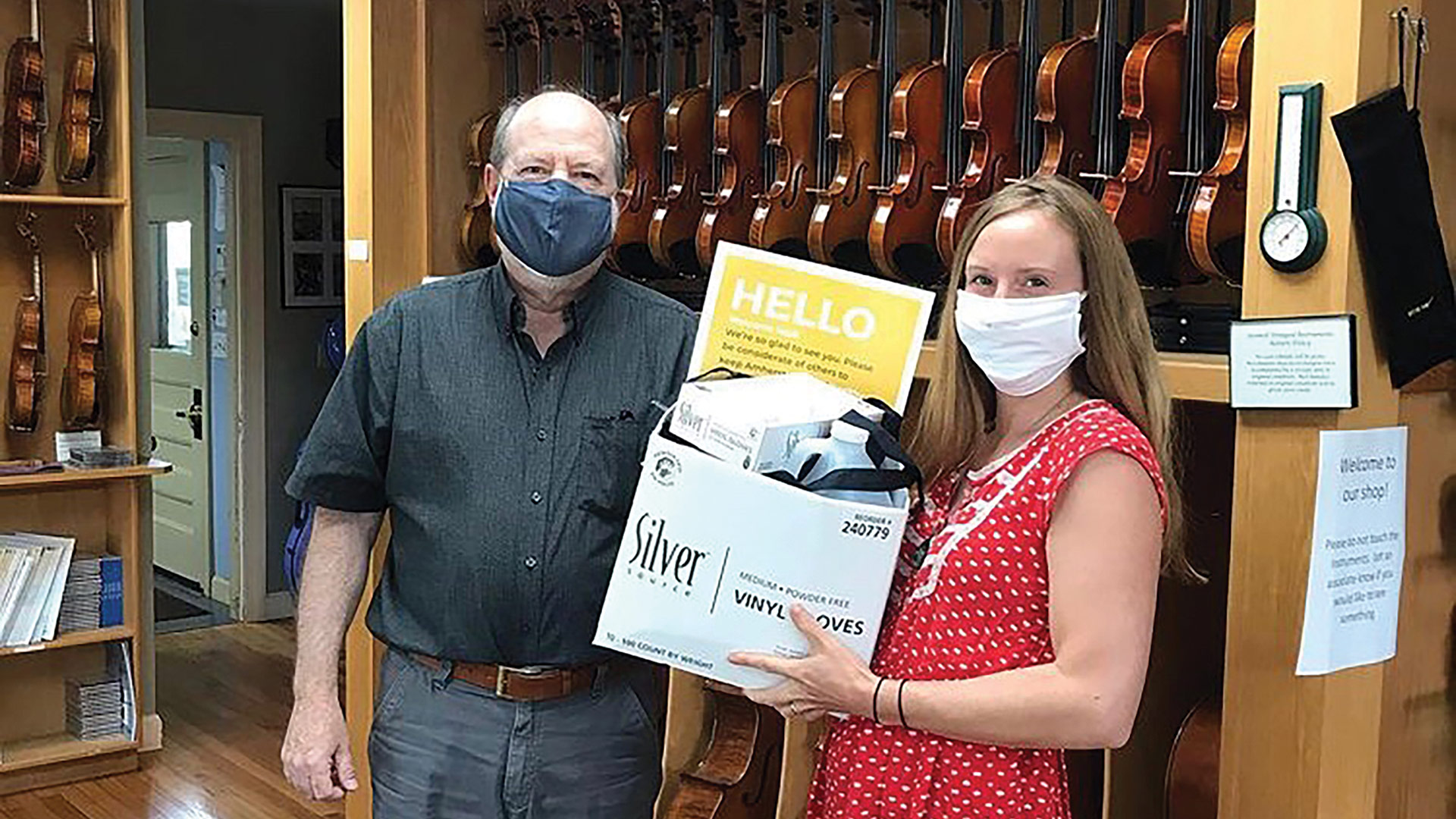
Stamell Stringed Instruments was one of dozens of Amherst-area businesses to receive gifts of PPE — free safety posters, gloves, sanitizer, and more — as a part of the #IAMherst campaign, through monies raised through the Downtown Amherst Foundation.
Before we elaborate on that, let’s set the stage by talking about the two organizations and their missions.
Like several other communities in the area, Amherst has both a chamber and a business-improvement district. The former, as most know, exists to promote and support businesses, and it does this through everything from advocacy (at the local, state, regional, and national levels) to education and providing forums for businesses to gather, network, learn, and perhaps do business with one another.
The BID, meanwhile, is charged with everything from cleaning up downtown and watering the plants growing from hanging baskets to handling holiday lighting displays and marketing the community through initiatives such as Destination Amherst.
But it was during the pandemic that the two organizations really came together, pooled their resources, and put their various skills sets to work.
Pazmany and Gould were working remotely at the time — the chamber office, like most businesses, was closed — but they were together often, working long days (and a great many nights) to help businesses. Here are just some examples of what they were able to do together:
• Raise close to a half-million dollars and distribute what became known as Relief and Resiliency microgrants to 67 small businesses throughout Amherst, the lion’s share of the money coming from residents, with donations from $25 to $50,000;
• Buy bulk PPE (masks, gloves, hand sanitizer, and more) at a time when it was difficult for businesses to attain it, and deliver it to businesses;
• Create a virtual tip jar so residents could support the many who were out of work — rom artists to hairdressers to bartenders;
• Launch the Dinner Delights program, through which the two agencies raised more than $100,000 and used those finds to purchase dinners and lunches from area restaurants to keep them in business, and hand out the meals to families in need;
• Provide those same families with gift bags filled with toys, puzzles, and gift cards purchased from a wide array of businesses — from hair salons to convenience stores — to help those small ventures;
• Continue some time-honored traditions, albeit virtually, such as the lighting of the Merry Maple, a maple tree on the North Common, during the holidays;
• Encourage takeout business at a time when the restaurants needed it and when there was some resistance to such efforts from the colleges and elsewhere in the community;
• Register close to 200 individuals within the business community, including many for whom English is their second language, for vaccination; and
• Provide assistance with state and federal grants. Together, by Gould’s estimates, they were able to help businesses secure more than $2.1 million in state and federal grants by sitting down with them and helping them write grants.
“Without our collaborative help and willingness to sit in these offices at 7 o’clock at night with business owners with masks on and help them upload their documents and write grants, I think you would have seen a lot more businesses throughout Amherst close,” Gould said. “While many people were at home staying safe, which they should have been doing, Claudia and I came to work every day; we showed up, we went out in public, we hand-delivered grants.”
Pazmany agreed, noting that both agencies looked beyond their respective missions and beyond the downtown itself to help a decimated community at a time of dire need.
Gabrielle Gould and Claudia Pazmany have worked tirelessly to promote Amherst and the surrounding area as a destination.
Leah Martin Photography
“We all had PPE in our cars for two months — and we delivered it door-to-door,” she recalled. “I looked beyond my membership, and she looked beyond the downtown, and together we were able to look at the collective impact of our shared work around the entire town of Amherst.”
As significant as the work during the pandemic was, this partnership, as noted earlier, is about much more than those efforts.
Indeed, it’s about ongoing work to put Greater Amherst on the map and make it even more of a destination for visitors and home for businesses of all kinds. Here again, the agencies have worked independently of one another, but mostly in concert, to get a number of things done.
Things like the Drake, a venue that has brought people from across New England and beyond to downtown Amherst and provides ample proof of the power of the arts as an economic-development engine.
“I truly believe that arts and culture in a community builds economic development,” Pazmany told BusinessWest. “And it builds reasons for people to come to your community and be part of your community, to want to live here and do business here.”
Looking ahead, Gould said the BID is working on several initiatives, including a spring block party in the downtown with a focus and arts and culture, a summer music series on the Commons, revitalization of the North Common, and creation of more anchors in the downtown.
As for the chamber, Pazmany said a great amount of momentum was generated in 2022 as a number of popular events, from After 5 gatherings to the annual fundraiser Margarita Madness, returned to the calendar. The goal for 2023 is to build on this momentum, generate new membership, and continue to support businesses across Greater Amherst.
“I truly believe that arts and culture in a community builds economic development. And it builds reasons for people to come to your community and be part of your community, to want to live here and do business here.”
“For us, it’s getting back to what we normally do as a chamber,” she explained. “We’re focusing on getting all our events back, making them better than ever, and connecting businesses.”
Gould told BusinessWest that she’s learned that Amherst’s response to the pandemic — the various programs created and carried out by the chamber and the BID — has been hailed as one of the best in the Commonwealth and a model of cooperation and innovation for other communities to follow.
Likewise, the Drake project has become a model itself — of how an organization like the BID can take a concept, raise the money needed, and make it a reality, all in roughly a year’s time.
Pazmany and Gould weren’t thinking about creating models or case studies when they undertook these programs. They were thinking about their community, and how to make it stronger, more resilient, and more of a destination. The fact that they have become models for other towns is testimony to the high levels of imagination, determination, and perseverance these two have brought to their ongoing work.
And that explains why they are Difference Makers.
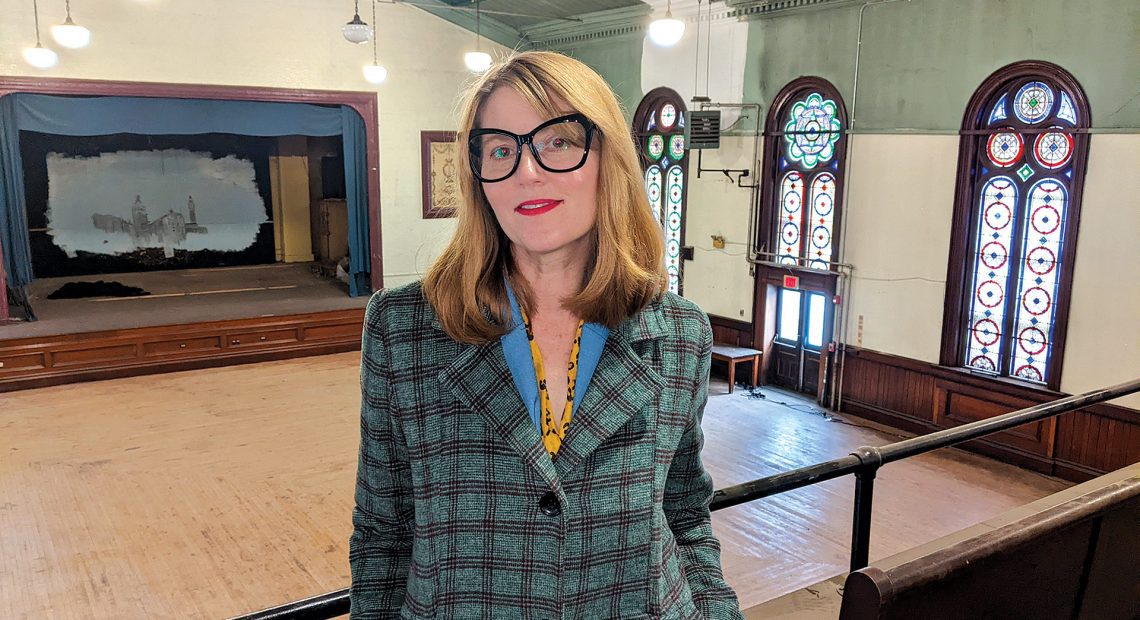
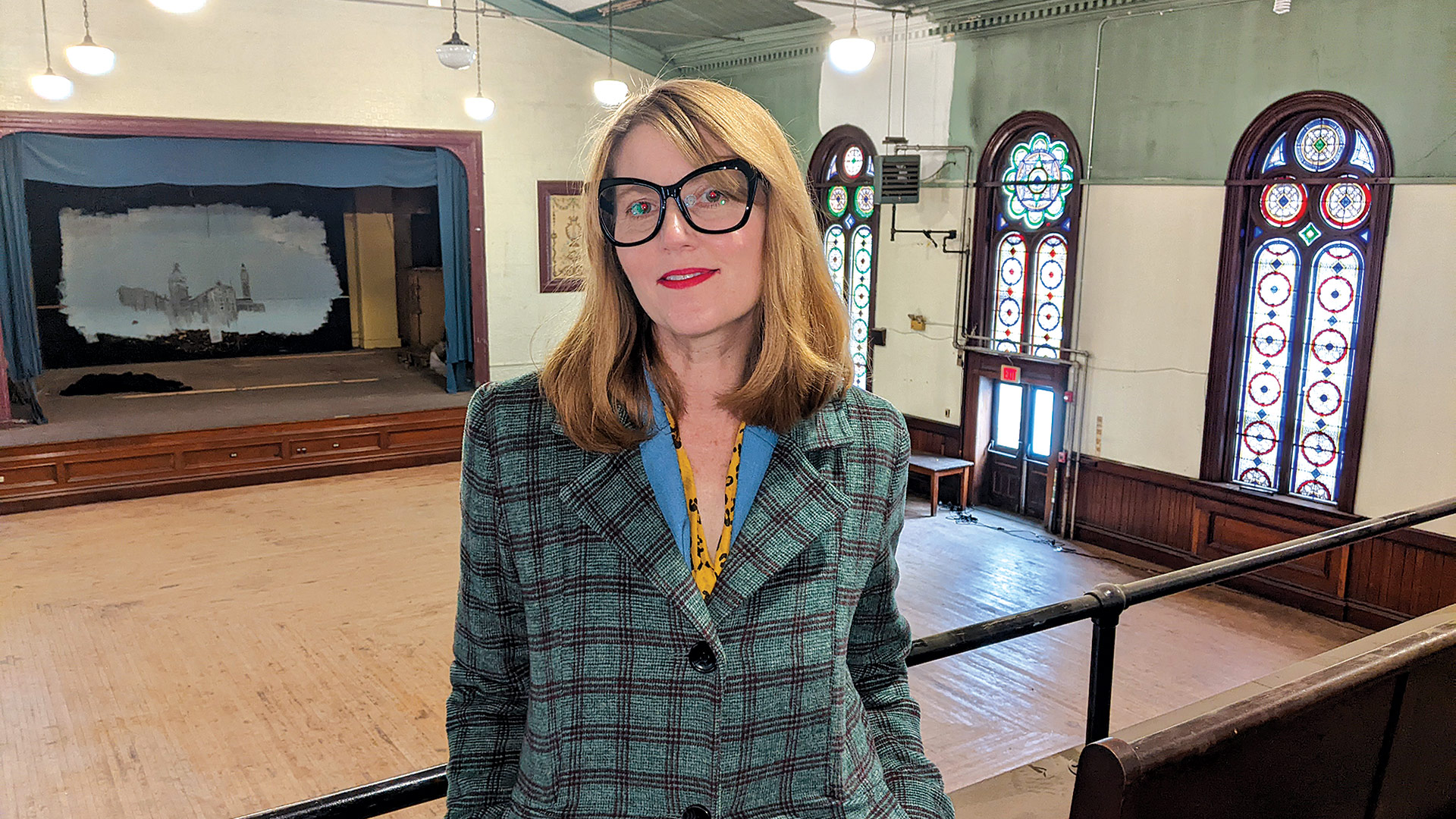
Burns Maxey
Looking back over two decades in Easthampton, and her current work with a volunteer organization called CitySpace, Carol Abbe Smith saw, in its leader, someone who is making a difference in myriad ways.
“If you came to Easthampton in 2000, you would see empty storefronts and no foot traffic,” said Smith, owner of Delap Real Estate. “Today, Easthampton has restaurants, interesting shops, and music venues, in part due to the vision, energy, and leadership skills of one person: Burns Maxey.”
She’s right, though Maxey is quick to share credit — and share it with a lot of people — for the revitalization of Easthampton’s downtown in the form of an intriguing project to transform Old Town Hall into an arts and performance space, and the ways in which that project has caused, and will continue to generate, economic ripples far beyond the center of town.
“I think artists have the capability of making change happen on a smaller scale and creating reverberations with communities,” Maxey told BusinessWest. “And imagination is the key to thinking outside of the box and really considering what the possibilities are — or beyond the possibilities.”
“I think artists have the capability of making change happen on a smaller scale and creating reverberations with communities.”
Maxey has been heavily involved in Easthampton’s arts culture for the better part of two decades, including serving as arts coordinator for Easthampton City Arts from 2011 to 2016; during her tenure, she oversaw the creation of events like Bear Fest, Cultural Chaos, and the Easthampton Book Fest, securing grants in the process.
Also in 2011, she joined the all-volunteer board of CitySpace, which had been tasked with creating a flexible arts and community space in Old Town Hall, which was built in 1869 and housed the town’s municipal offices until 2003. In 2015, she became board president, and since then, she has helped secure Community Preservation Act funds, multiple foundation grants, and historic tax credits, as well as heading the capital campaign and events committee in an effort to raise about $8.5 million for the project.
Phase one involved renovation of the first floor, including the creation of a small, 80-seat rental performance space called the Blue Room. In conjunction with that, Maxey established a program called Pay It Forward to allow low-income artists the resources, space, and support to create or collaborate on a project, or have a residency to complete a project prior to public performance. After a successful trial in 2022, the program will roll out more fully in 2023, with the help of a $30,000 grant from the Community Foundation of Western Massachusetts.
“This gives access to this space for rehearsals or performances to artists who need it — underserved artists, artists of color, low-income artists, really — anyone who doesn’t have the capacity to pay for the affordable rates we have,” she explained.
It’s also a sort of incubator space, she said. “It’s used for performing-arts groups and everything from community meetings to nonprofit fundraisers to exercise classes and rehearsals. Last year, we had close to 100 events within the space, different populations coming into the building. They get to see what’s happening here and really get to learn about what CitySpace does. So it’s kind of a neat way for us to test some ideas.”

Burns Maxey stands in the Blue Room, which hosted about 100 events in its first year.
Leah Martin Photography
One Pay It Forward recipient, Amherst-based musician Kim Chin-Gibbons, brought her band, Sunset Mission, to CitySpace for a three-day intensive to practice, hone their sound, create a video, and play for a crowd, followed by an audience talk-back session.
“We discovered things about our tech and performances I don’t think we would have for months or maybe years,” Chin-Gibbons said. “It was the perfect place to control all our variables and grow as musicians and people.”
The next phases of the Old Town Hall revival include the restoration of a 350-seat space on the second floor (likely double that capacity for standing-room shows). But that takes fundraising, and Maxey and her board continue that effort, seeing the impact a broadened arts culture has already had on the town’s vitality, and understanding how the completed project will multiply that impact.
“This was established in 1869 to be the hub for community, for performances, for meetings, for dances. It was the place where people gathered.”
“I believe everyone has a place to live and thrive in Western Massachusetts, and now we have a great opportunity to plan smartly to create both affordability and economic flourishing,” she told BusinessWest. “I believe CitySpace is a partial solution to concerns like gentrification by creating long-term affordability to creative space on Main Street, right in the middle of the region.”
By fostering the arts and community she added, “we can make a destination where people want to be, and this, in turn, has economic reverberations. It’s that cycle of reciprocity that will allow this region to fully lift itself up to its potential.”
While touring Old Town Hall with BusinessWest, Maxey stopped by Big Red Frame, a business owned by Jean-Pierre Pasche that moved into the building around 2007, a few years after the municipal offices moved out.
“I fell in love with this place 17 years ago when I heard that it was going to be transformed into an arts center,” Pasche said. “I approached the people submitting RFPs to the town, and I said, ‘if you need a tenant on the project, I’ll go in. And I’m still here.”
Maxey credits town officials at the time for having the foresight to envision an arts and culture hub in the building, and recognize the impact that could have on economic development in town.
“I could see the potential for this building,” she added. “And when they showed me the second floor, I was like, ‘oh yeah, I’m really interested in this project.’”
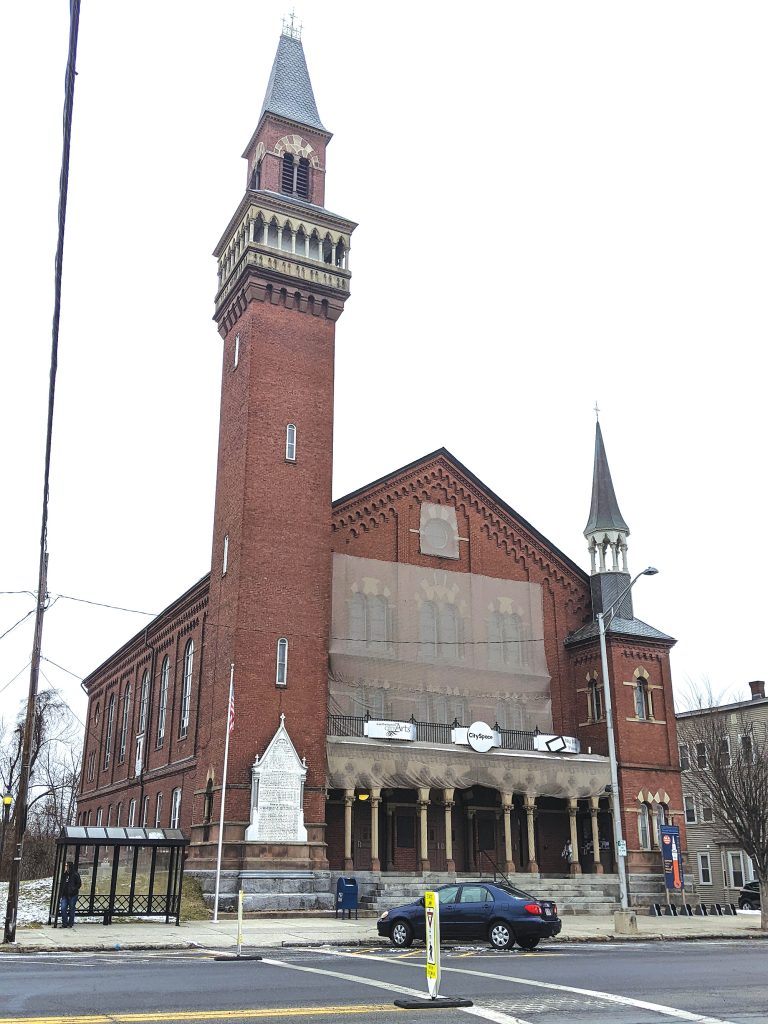
Old Town Hall
The first floor, which includes a number of art spaces and the Blue Room, is largely completed. “When you look at the second floor,” Maxey said, “you see where the funding stopped.”
Elaborating, she explained, “when the pandemic hit, we started to think about phasing the project and what our options would be to continue the work. So we talked to our architects, and they said, ‘yes, you can phase it.’ Initially, we thought that it would be one project as a whole, but it grew from a $6.6 million project to an $8.5 million project, which is a lot, but compared to a lot of other projects within the region and beyond, it’s not too far off from where we originally started.”
Phase two of the project, which has already seen the HVAC system upgraded and modernized, will also add an elevator and newly accessible entryway in front of the building; Maxey said CitySpace needs about $170,000 to get there.
Phase three, easily the most expensive part of the $8.5 million project, will complete the second floor, restoring the ceiling and floors, adding restrooms, installing new electrical and fire-safety systems, and investing in state-of-the-art theatrical and lighting equipment. Amid the modern amenities, Maxey wants to retain as much history as possible, including the mahogany balcony.
“Easthampton, historically, wasn’t a wealthy town,” she explained. “Unlike Holyoke or Springfield or Northampton, we really don’t have a plethora of beautiful buildings throughout the city. This was established in 1869 to be the hub for community, for performances, for meetings, for dances. It was the place where people gathered.”
It’s Maxey’s vision to see that happen again, and she intends to maintain affordable rental rates, not just in the small space currently open, but in the large performance hall on the second floor, once it’s complete.
“That’s part of our mission, to keep this building affordable for arts and community programming,” she said of the Blue Room. “When somebody comes into the space, there’s a flat, hourly rate. But they get everything, like the PA, the projector, tables, chairs. So it’s not like an a la carte menu where we’re adding dollars for each item.”
That model will continue upstairs. “We’re thinking of keeping it very similar to what we’re doing in the Blue Room. It’s a rental space with affordable rates, attracting and really serving artists throughout Western Massachusetts, and we want some traveling artists to come in as well. It’s really a place for people who want to produce events, and it’s also allowing for CitySpace to have our own programming.”
The 350-seat capacity is a “sweet spot” for the area, she added, larger than compact spaces like the Parlor Room in Northampton and the Drake in Amherst, but smaller than the Academy of Music in Northampton, which seats about 800. “Sometimes that’s too much to fill for some artists, and there are a lot of 150-seat locations throughout the region, so this is one step above that.”
CitySpace has a 44-year lease with the city on the building, and Maxey is looking long-term, including applying for Massachusetts historic tax credits after the building is completed, to go toward its continual upkeep.
“Even though we’ll be restoring the second floor,” she said, “we know that having a long-term plan for maintenance on the building will allow it to be here for another 150 years.”
Maxey, like all the others on her board, serves CitySpace as a volunteer. Meanwhile, her career — which has taken her from Williston Northampton School as communications associate from 2005 to 2011 to her role as Easthampton’s arts coordinator from 2011 to 2016, to the positions of manager, then director, of Digital and Creative Marketing at New England Public Radio from 2016 to 2020 — has entered a new phase with BurnsMax, the art and design business she launched last year. She is also an adjunct professor of Marketing at the Arts Extension Service at UMass Amherst, teaching a class titled “Marketing the Arts.”
In a sense, that’s what she’s doing at CitySpace, too, a role she called “a joy because of the people who surround me.” In doing so, she singled out several other board members, including former Easthampton Mayor Mike Tautznik, Nikki Beck, Peggy Twardowski, and Smith, as well as an artist advisory committee including Trenda Loftin, Emily Ditkovski, Kyle Boatright, Amber Tanudjaja, and Pamela Means, not to mention a capital-campaign team led by Alison Keller and Tara Brewster.
“Seriously, CitySpace is a labor of love,” Maxey said, “and there are so many more that could be named since we are all volunteers right now — me included — as we kickstart this organization into adulthood.”
And pump some energy into the region as well, she added, noting arts organizations and venues opening up from Greenfield to Springfield, all holding the potential of boosting economic development through the arts.
“You can go to all of these locations, and it’s kind of like this renaissance; you see the potential for performing arts to really enliven and connect the whole Western Massachusetts region. And because of that, we have the capability for incredible economic growth within the region — not just a lovey-feely connection, although that exists too.”
Economic development and its many reverberations. The renovation of a historic building. Creating long-term affordability and accessibility for artists. That’s a lot of differences to make, and Maxey and her team are far from done.
“I’ve made my home here, and it’s such a fantastic place to live and work and play,” she said. “And I think we have a lot of potential to make it even better.”
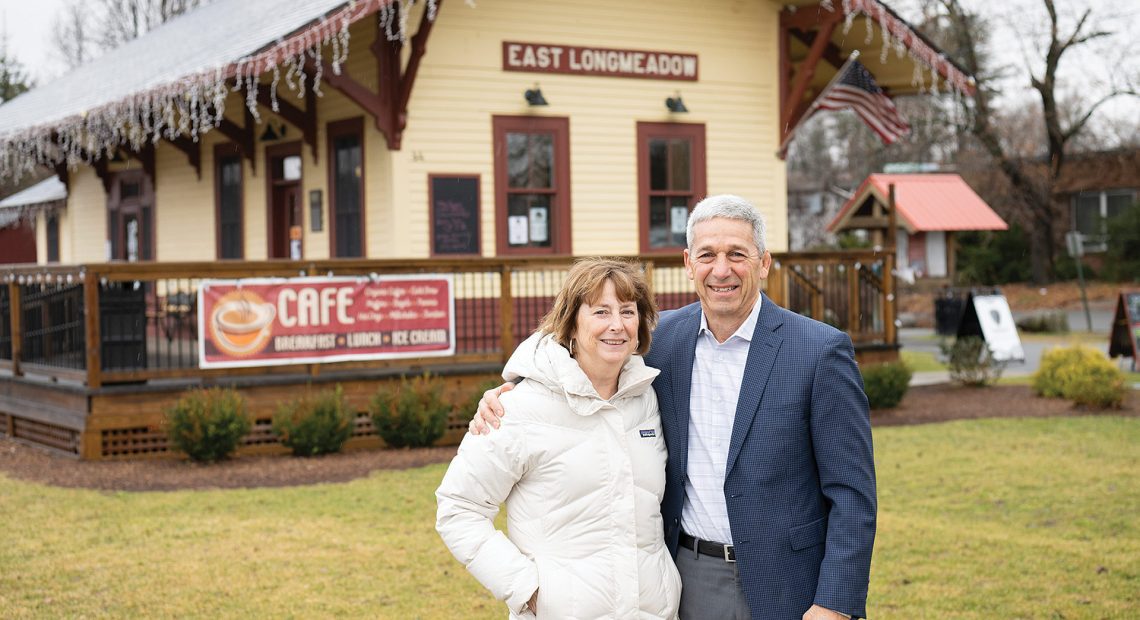
Steven and Jean Graham
Leah Martin Photography
As he talked about wrestling and how it can help shape young people, Steve Graham offered a wry smile, a cock of the head, and then a look that spoke volumes.
Indeed, it conveyed everything from the many ways the sport helps build character and provides lessons in perseverance, to just how grueling and difficult wrestling practice can be in high school. And Graham, who wrestled in high school and college, has coached the sport on many levels, and helped create the Grit & Gratitude Wrestling Academy in Springfield’s North End, backed up the look with some commentary grounded in those decades of experience.
“The sport is really nice because there are weight classes, so all sizes fit from day one,” he explained. “And that’s unusual. You don’t have to be tall, you don’t have to be big, you don’t have to be anything. But you do have to be tough mentally because wrestling is physically very taxing, and you’re literally fighting with your teammates every single day. And, inevitably, when you start, you’re getting your butt kicked as a freshman and a sophomore by the older kids. Eventually, you become more proficient and stronger and more mature.
“But wrestling also teaches you discipline, and it teaches you control,” he went on. “So when someone does beat you and throws you on your back, you can’t start punching them, you can’t start kicking them, you can’t start actually fighting with them. You have to control yourself, and you have to get back up and face them again.”
Those are great life lessons, and lessons for business as well, he noted, adding that, for anyone in business, there are days when you get knocked down and you must get back up again. And to persevere, one must be mentally tough. He and his wife, Jean, who together started Toner Plastics, now based in East Longmeadow, would know all that, too.
“You don’t have to be tall, you don’t have to be big, you don’t have to be anything. But you do have to be tough mentally because wrestling is physically very taxing, and you’re literally fighting with your teammates every single day.”
In different ways, separately in some cases, but mostly as a team, Steve and Jean Graham have been real difference makers in their community — as an employer, as a wrestling coach and indefatigable promoter of the sport, as supporters of countless nonprofits and education-related causes and organizations, and, yes, as purveyors of ice cream.
Indeed, the Grahams turned an East Longmeadow landmark, the old train depot in the center of town, into an ice-cream shop, but also much more. It has become a gathering spot in the community and a place where children and families can hear music, take in car shows, ride a miniature train, play cornhole, and get a cup or cone of sea-salt caramel. (Much more on that later).
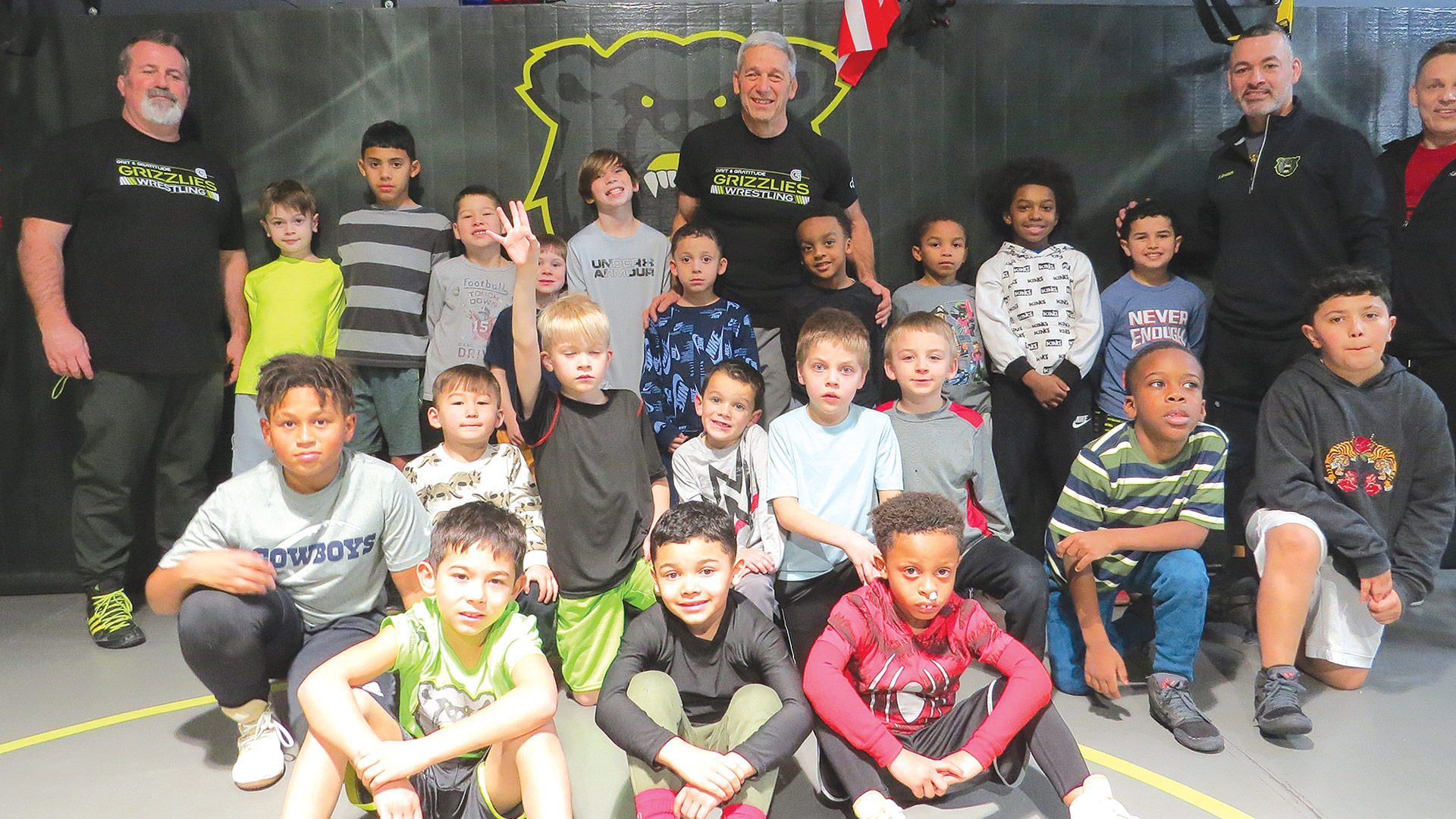
Steve Graham was instrumental in creation of the Grit & Gratitude Wrestling Academy in Springfield’s North End, which introduces young people to a sport that provides many life lessons.
BusinessWest talked with the Grahams about all this, and, well, it wasn’t easy. Both would much prefer to just do what they do than talk about it. Humble and unassuming, they both said, in essence, that they have been simply motivated to help others and improve quality of life in this region.
“We are happy to help out other people if they need it, and we have the means,” Jean said. “It’s nice to help other people out.”
The old train depot in the center of East Longmeadow is a small, rather non-descript structure. But it is loaded with history, much of which can now be seen in photos on its renovated walls.
Built in 1876, this was where people gathered to catch two commuter trains each day, back when the train was how people got from here to there — and there to here. One train, which originated from Hartford, left at 10:57 in the morning. The other, which started in Springfield, left the station at 3:21 in the afternoon. Meanwhile, freight trains, which also passed through the station twice a day, carried a wide range of goods in and out of the community, but especially the sandstone and brownstone that came from more than 100 quarries in town and was used to build many historic structures, including Boston’s Trinity Church; the original Waldorf Astoria hotel in New York; buildings at Harvard, Yale, and Princeton; and East Longmeadow Town Hall.
Later, after the last train came through in the late ’60s, the depot was converted into the Community Feed Store, where area residents could buy grain, coal, farming supplies, and more.
Steve and Jean Graham learned or witnessed much of this history after moving to the town in the ’90s, and that’s one of the reasons why they became determined to somehow preserve the station for future generations. Steve told BusinessWest that they decided to buy the depot from a developer who planned to create an apartment complex on the site, not knowing where they would move it if the need arose — and it probably would.
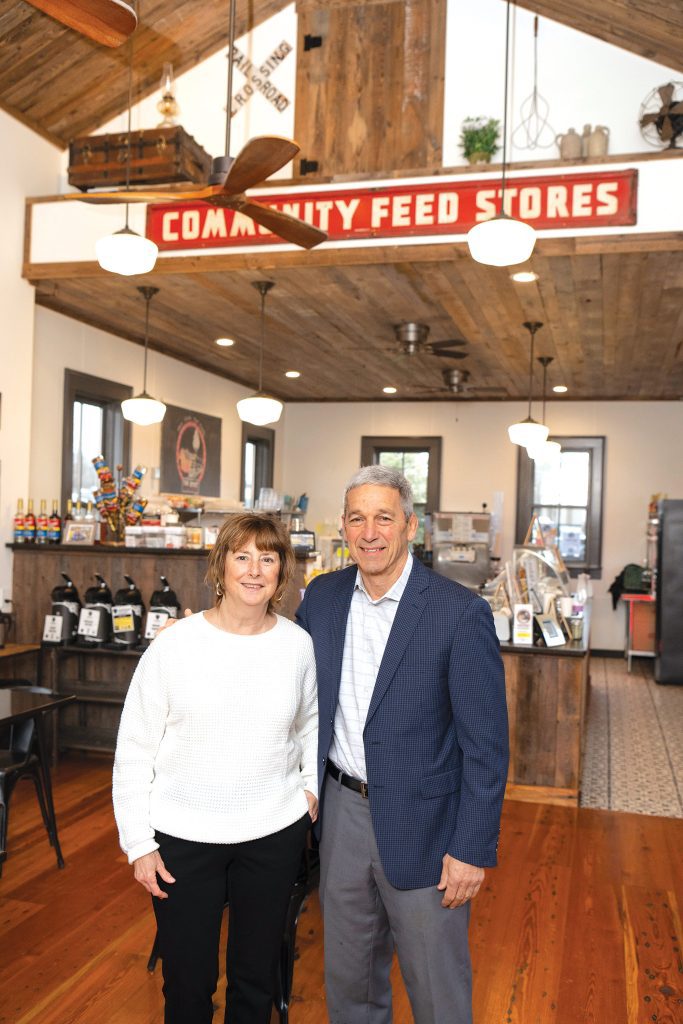
Steve and Jean Graham inside the old train depot they have converted into an ice-cream shop and gathering place for the community.
Leah Martin Photography
“We thought … we’ll move it to our backyard if we have to,” he noted, adding that this wasn’t necessary, as he and Jean eventually bought the property around the station as well, as those development plans failed to materialize. And they created an ice-cream shop that opened in the spring of 2021.
Its called the Depot at Graham Central Station, and has since expanded in several ways, including a café where lunch is now served and a small railroad that runs on a track around a portion of the property.
It’s a moderately successfully business, but turning a profit is not really what motivated the Grahams in this effort to not only rescue the station but transform it into something for the community.
“We wanted to create a place for families,” said Jean, who played a lead role in renovating the station and providing a new, warm, and inviting look. “Communities need places to gather, where people can come together and have a good time. That’s what we wanted to do here.”
Those sentiments effectively sum up what drives the Grahams and the many ways they have been involved in the community. There has always been a desire to help children and families through initiatives that include:
• Work with other parents to launch the East Longmeadow Educational Endowment Fund, which today stands at more $1 million and has donated hundreds of thousands of dollars to the town’s schools. The couple, and especially Jean, helped stage the annual dinner dance that raised money for the fund and raised awareness as well;
• Work building stronger minds and bodies through wrestling. From 2005 to 2015, Steve, who wrestled in high school in New Jersey and then at Princeton, was a volunteer and eventually head coach of the wrestling team for six years at East Longmeadow High School. In 2021, in the middle of the pandemic amid the suspension of interscholastic sports, he worked with other coaches in the area to open (and fund) the nonprofit Grit & Gratitude Wrestling Academy, where they work with young people ages 5 and up;
• The train depot, which has a become a community gathering place, with park benches, live music, and more; and
• Support to a wide range of area nonprofits, from Link to Libraries to the Ronald McDonald House; from the Springfield Jaycees to the National Epilepsy Foundation (Steve’s brother suffered from the disease, so for him it was personal).
Meanwhile, the Grahams have been difference makers as business owners and employers as well, providing opportunities on many levels.
As for their business, Toner Plastics, it started small, as in very small — “we had one sale for $200 the first six months,” Steve noted — but eventually they garnered some regular customers, first the old Woolworth’s department store and then eventually Walmart, Michael’s, Hobby Lobby, and others.
Today, the company manufactures everything from point-of-purchase displays to radiator covers to filament for 3D printing equipment. It is still headquartered in East Longmeadow, but has other locations in Pittsfield, Rhode Island, and Florida. While growing the company, the Grahams have amassed a strong track record of providing not only job opportunities, but opportunities to thrive, personally and professionally, after being hired.
Frank Valazquez, operations manager at Toner Plastics, explains.
“I had never met a man like Steve, with a pure heart, humble, fair, quick to listen, patient, wise, consistent, and willing to help anyone willing to help themselves — and who genuinely enjoys helping others by doing good. And for me, a young kid with no sense of direction, 22 years old at the time from Springfield’s North End, he was a difference maker.
“All I needed was a chance,” Valazquez continued, “an opportunity for someone like Steve Graham to truly listen and say, ‘I believe in you, and I am here to help you through the process as long as you are patient and put in the work.’”
Steve said he and Jean have helped script many similar stories at Toner Plastics, where they provide employees more than a job and a paycheck. Often, there are other forms of support and other types of doors they’ve helped to open.
“We have a program that allows employees to borrow money for any reason without divulging why, and they set the payment schedule,” he noted. “The money is loaned interest-free; in the more than 30 years of business, I can’t recall anyone not paying the money back. We encourage employees to invest their money not just in a 401(k) but in the stock market in a conservative manner, and show them the value of compounding. Most of the people who work for us on the factory floor have been able to buy a home and send their kids to college if they so choose. It is wonderful to see.”
Added Jean, “to me, it’s like a family here. Everyone works very hard, and we appreciate everything they do. And we love to see them progress in their lives.”
As noted earlier, the Grahams don’t like to talk about themselves. They would rather let their actions and deeds do the talking for them. When prodded, Jean noted that they are motivated, primarily, to help children and families and “do the best we can.”
Most would say this is a classic understatement.
Pinning Him Down
While he doesn’t like talking about himself, Steve Graham really enjoys discussing wrestling and all that it can do to help shape the lives of young people.
In short, he said, it teaches them about much more than maneuvers like the single-leg takedown and the front quarter nelson. Indeed, it also provides important lessons in perseverance, teamwork (even though they’re on the mat themselves), and, yes, humility.
“Wrestling is special because you know that the person in the mirror is the only one responsible for success or failure,” he told BusinessWest. “It is special because, no matter how tough you think you are in street clothes, someone is going to beat you on the mat. And getting beat physically and mentally on the mat is very beneficial; it makes you humble, teaches you respect, and makes you tougher mentally.”
Speaking of special, that’s a word you would need to describe the Grahams, although they probably wouldn’t use it themselves. They put their time, their talents, their resources, and their experience to work helping others and building a stronger, better community.
And that certainly makes them Difference Makers.
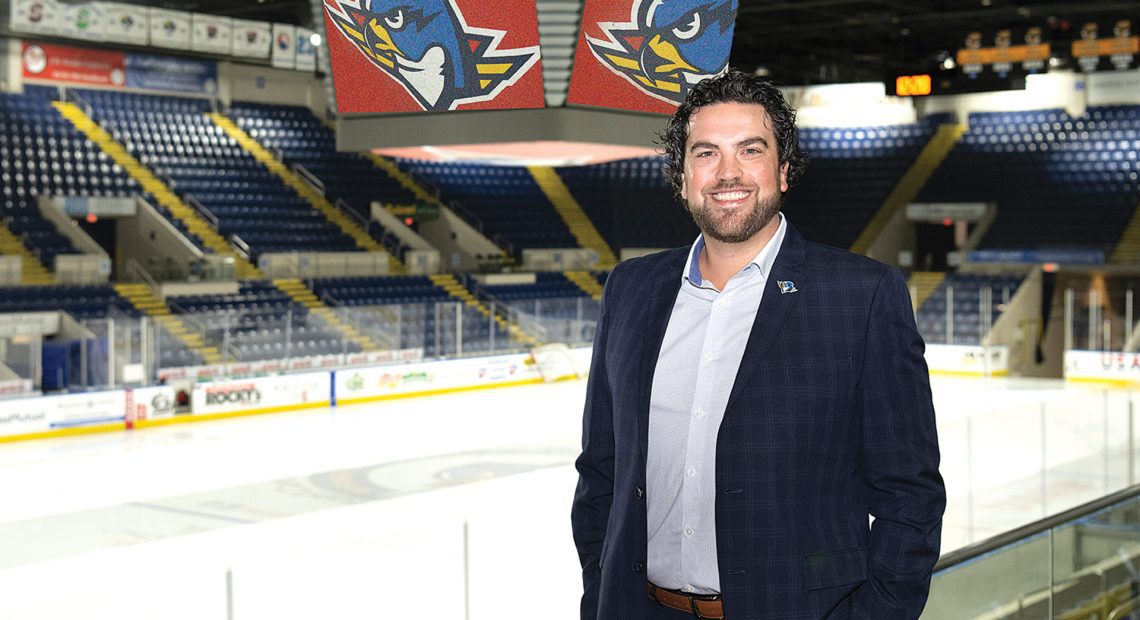
Nate Costa
When the Springfield Thunderbirds shut down the 2020-21 season in the midst of a raging pandemic, Nate Costa understood the impact — and the longer-term risk.
“It was an awful period because I had to lay off half of my staff, and the staff that stayed with me were on reduced hours,” he recalled. “And we really didn’t know what we were facing.”
That was the initial impact — which also included serious revenue losses. The longer-term risk had to do with momentum — more accurately, a complete halt to it.
“COVID affected our business like few others. You need people to get together to come to sporting events, to have success in this business. So COVID was a scary thing,” Costa continued. “And we weren’t sure how long it was going to take to have people come back together again.”
Looking back to 2016, when a large ownership group comprised of local business owners brought the Thunderbirds to Springfield just two months after the Falcons moved to Arizona, Costa said it was critical to move that quickly, as other cities that had lost AHL teams, including Worcester and Albany, never replaced them, so maintaining momentum was paramount.
Which is why late 2020 posed such a concern. But Costa understood that the way the organization was constructed would put it in the best position to succeed when hockey returned — and return it did, with a late-season surge in both wins and attendance in the spring of 2022, and a playoff run that stopped just a couple wins short of an AHL championship.
“We had taken the right steps to build the business the right way … to do things that were going to put us in a position to be sustainable long-term,” he said. “And that was really focusing on community activity, being visible in the community, and giving fans a good experience here at the building.”
By continuing with those efforts — and for leading a team that positively benefits community organizations, an enthusiastic fanbase, and the economic vitality of downtown Springfield — Costa has been named a Difference Maker for 2023, though he’s always quick to deflect credit to a hardworking staff and a committed ownership group.
“We had taken the right steps to build the business the right way … to do things that were going to put us in a position to be sustainable long-term. And that was really focusing on community activity, being visible in the community, and giving fans a good experience here at the building.”
“I’m a young person — I have a lot of life to go,” he said, contrasting his experience with Ted Hebert, a member of the T-Birds’ ownership group, who was honored as one of last year’s Difference Makers for a lifetime of work in the community. “It’s cool to be recognized, obviously, but it’s a humbling thing because it’s not what I got into it for.
“I grew up in Springfield,” Costa continued. “I used to come to games. I always thought it would be the coolest job in the world if I could run the hockey team one day, and it happened. And the extension of that is that I get to do things that are going to be the right thing for the community.”
It’s called Pink in the Rink.
It’s a national effort across the AHL to raise awareness of breast cancer; teams dye the ice pink, wear pink jerseys, and often highlight local efforts.
“Some teams partner with national organizations; some teams don’t partner with anybody — they just host an event, and there’s not a lot of teeth to it,” Costa said. “But when I came here, I knew that the way to make that event as effective as possible is to partner with somebody locally. It’s like an amplification of messages.”
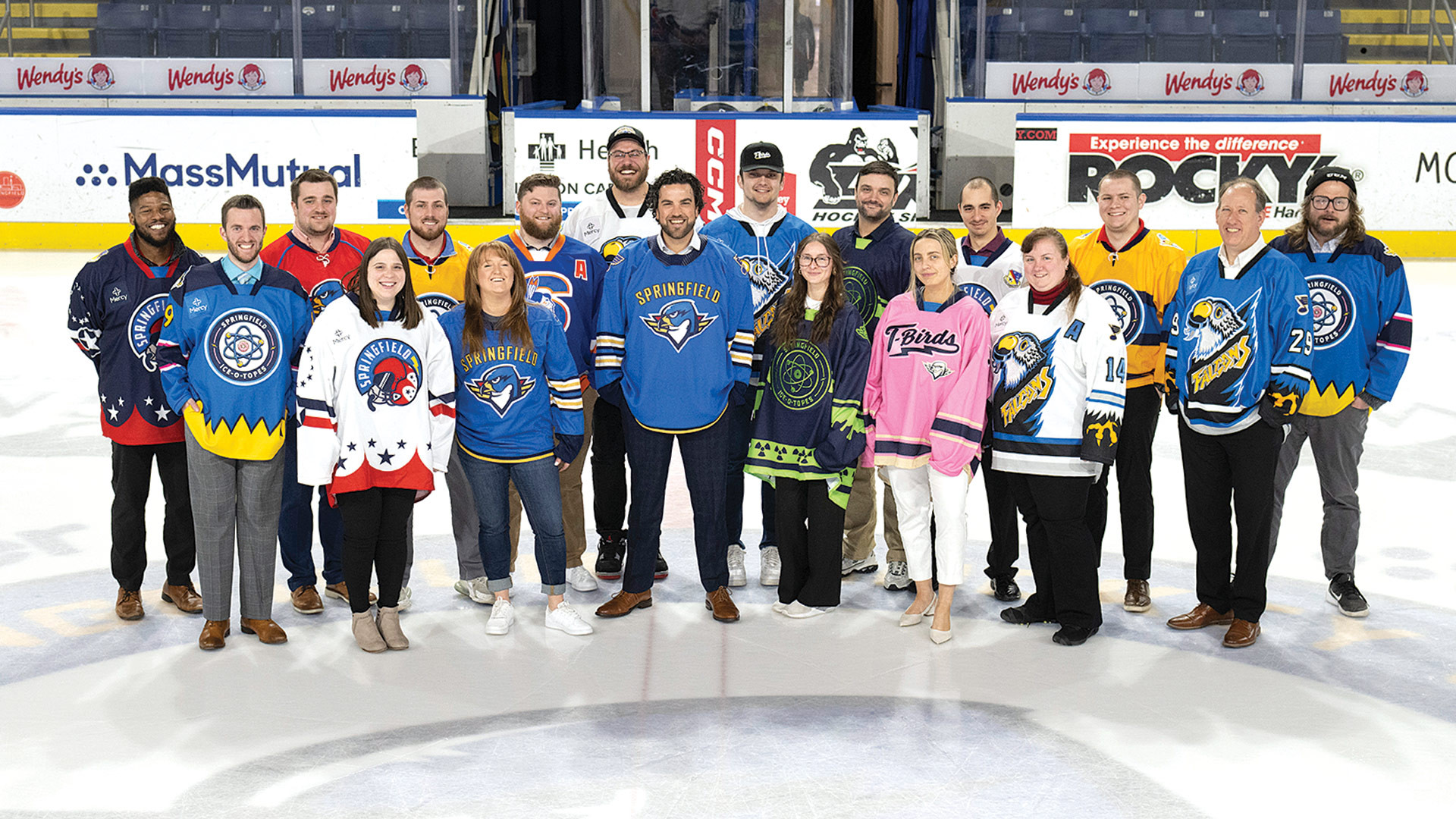
Nate Costa credits his staff of salespeople
In the T-Birds case, the local partners include Rays of Hope and the Baystate Health Foundation, and the event isn’t held in October, the traditional month for breast-cancer awareness, but in March.
“We do it during a time of the year where there isn’t a lot of focus on the breast-cancer cause. That’s strategic. October is a time when there’s already a spotlight on that cause. Our idea was, ‘well, why don’t we have a second event that brings just as much attention as we would in October to a whole different group of people?’”
Last month, the team hosted a Stair Climb as part of its Hometown Heroes night, celebrating first responders and raising money for the T-Birds Foundation, with support from the American Lung Assoc. “That night, at the game, we have police vehicles and fire vehicles on the ice, and we recognize people that have made a contribution to our community throughout the night.”
Back in November, the team partnered with Rock 102 on the Mayflower Marathon, raising thousands of dollars to battle food insecurity locally. December saw the annual Teddy Bear Toss, when players collected thousands of stuffed animals thrown by fans onto the ice and delivered them to several local nonprofits serving children. The list continues: Military Appreciation Night; St. Pawdy’s Day, which raises money for the Foundation for TJO Animals; a sensory-friendly game in February; and so on.
“Obviously, you want to win a championship, and you want to bring that excitement to the city and to your fans. But I do think, on a day-to-day basis, we put a lot of focus and time and effort into creating value regardless of the score on the ice.”
Many of these events generate a quantifiable community impact, as opposed to the team’s emotional impact on individual fans. But that’s just as important, Costa said.
“We’re getting to the point where COVID is behind us, and getting back to providing experiences for kids and giving them access to players — high-fiving the players, lining up with the players, doing interactive things. Those are things we couldn’t do all last year.”
Costa noted one young girl who attends games all the time, and a member of Costa’s staff gave her a signed stick from one of the players as a reward for her achievements in school. The girl was thrilled.
“I waited behind because I wanted to see the whole thing, because that’s the stuff that you don’t necessarily get to see every single day,” he said. “But that’s what our organization really means. You have an ability to make a real impact on someone’s life. You don’t know what they’re going through; you don’t know what they’ve been through; you don’t know what they’re striving for. But at that one moment, giving someone a stick from their favorite player, it’s a really meaningful experience.”
He recalled his employee was in tears after the encounter. “Those moments that get burned into your mind … that’s what it’s about,” he went on. “Where else in this area can a little kid go and get to sing the national anthem in front of 6,500 people? Where else can you go and high-five professional hockey players that tomorrow night might be on the ice at the NHL level? You can’t do that elsewhere in Western Massachusetts. How many times can we make a difference in someone’s life? How many times can we provide them with an experience they can’t get anywhere else? We want to sell that story to people, and by extension create lifelong fans by the experiences that we’re providing.”
And although it’s not the main factor — as roster decisions are up to the St. Louis Blues — fielding a winning team is a net positive, he added.
“It definitely helps. People have been spoiled in this market because of the success of the major four,” he said, referring to the raft of titles won by the Bruins, Celtics, Patriots, and Red Sox over the past two decades. “So that’s a good thing at the end of the day. But are we reliant on it? No. I think we have built an organization that could be sustainable even if we’re not necessarily going to the Eastern Conference championship.

Nate Costa says he was gratified, post-pandemic, to see the return of opportunities for young fans to have experiences on the ice.
“That was the goal from the beginning,” he added. “Obviously, you want to win a championship, and you want to bring that excitement to the city and to your fans. But I do think, on a day-to-day basis, we put a lot of focus and time and effort into creating value regardless of the score on the ice.”
The third major impact the Thunderbirds — and Costa — have had is on Springfield itself, especially its downtown.
“We take a lot of pride in being sort of the centerpiece for the downtown renaissance, I think, hand in hand with MGM Springfield; I mean, none of this would be possible without their investment in downtown, too. They’re driving as much of that renaissance here as we are,” Costa said, again trying to distribute credit. “I think a good example of showing how much we mean to the downtown area is this brand-new garage going up across the street. I don’t think it would be possible if it weren’t for the success of the franchise. We’re averaging more than 5,000 people, 40 nights a year. So we’re bringing bodies downtown.”
And that benefits restaurants like Red Rose, Nadim’s, Theodores’ and others, as well as bars and other attractions — and contributes to an ongoing effort to change long-held misconceptions about being downtown, especially at night.
“I think we’ve really changed the perception. Very rarely now do I hear, ‘I don’t want to come downtown because it’s not safe.’ That is not something we deal with, ever.”
It’s not just hockey and gambling driving the renaissance, he added, noting projects like the renovation of the former Court Square Hotel into mixed-use space. “It’s great to see that local people are trying to invest in living downtown; I think more people living downtown makes our job easier. Everybody coming to our games now, they’re driving downtown. If we have more people living downtown, they can just walk across the street.”
He went on to cite continuing investments by MGM, the revitalization of Tower Square, and new places to eat and drink on Worthington Street as examples of why downtown Springfield is on the rise, and he knows the Thunderbirds are a big part of that. That potential is what the ownership team recognized when they moved quickly to draw another AHL franchise to the MassMutual Center after the departure of the Falcons.
“They understood the need for this,” Costa said. “Yes, we want to have a successful franchise; obviously, that’s our mission for long-term sustainability. But at the end of the day, these guys have successful businesses and were able to take on the risk because they wanted to do something for the city of Springfield — for this renaissance of this area.”
And while championship runs may not happen every year, Costa said, there’s no reason why the fan experience can’t be stellar all the time.
“I think if you come to one of our games and then you go to any other rink, you’ll see we’re putting on, if not the best, one of the best experiences in the American Hockey League. And it doesn’t matter that we’re in a small city; in fact, we take a lot of pride in that. It’s pretty cool that I get to go to the league meetings, and we’re winning awards and getting recognized next to teams that run the same type of business in cities like Chicago, Austin, San Diego. Look at Hartford — we’re outdrawing them almost two to one. There’s a reason for that: we’re really investing in the entire experience.”
He may balk at being singled out as a Difference Maker, but for leading a staff that continues to impact lives and communities — both inside and outside the rink — Nate Costa certainly lives up to that title.
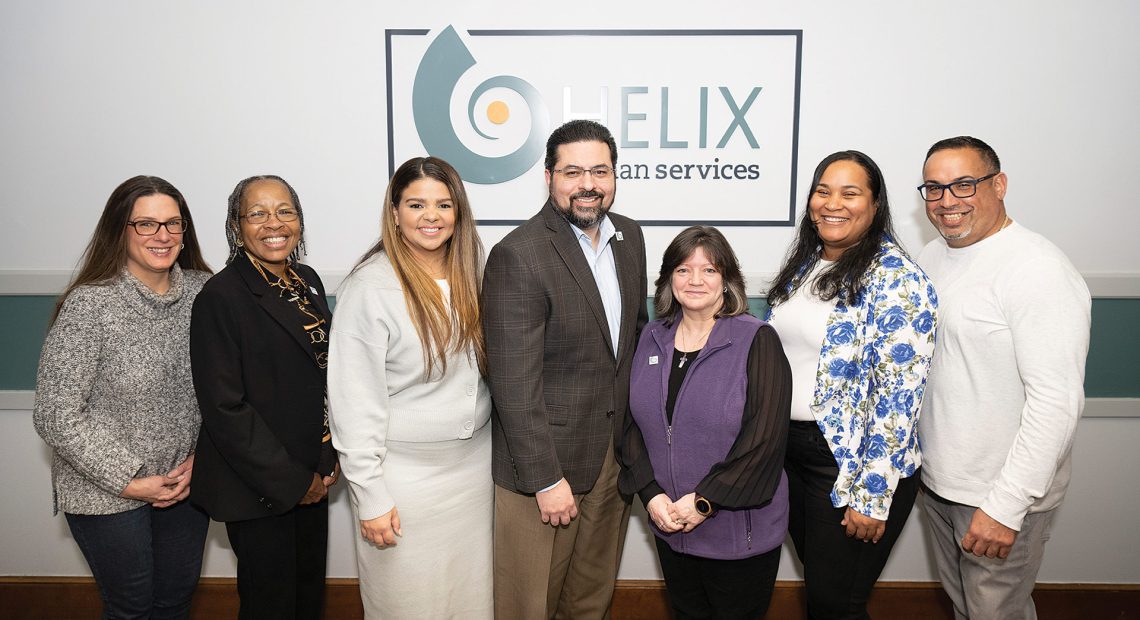
Leah Martin Photography
John Pappas doesn’t know exactly when (he’s now somewhat committed to finding out), but he does know that his maternal grandmother served on the board of the Children’s Study Home and, for a time, as its president.
Likewise, his father followed that same pattern. And his paternal grandmother served on the board as well.
And now, he’s making it three generations in a row. He joined the board in 2016, and he became its chair just last year. This tradition of service speaks to just how much this family believes in the mission of the Children’s Study Home, now known as Helix Human Services, following a needed rebranding that we’ll get into later.
“There’s certainly a lot of connection over the years with my family,” he said in a classic bit of understatement. “Things have changed mightily from then to now, but the underlying mission has not.”
But as long as this continual pattern of service to the agency on the part of Pappas and his predecessors might be, it still covers only a small fraction of its long history.
Indeed, this is the oldest social-service agency in Western Mass., tracing its roots back to 1865, when it was known as the Springfield Home for Friendless Women and Children, and its purpose was to provide care, comfort, and healing to destitute women and children orphaned by the Civil War.
And there were many of them, said John Morse, the now-retired president of the Springfield-based dictionary maker Merriam Webster and long-time member of the agency’s board, who noted that Rachel Capem Merriam, wife of the company’s co-founder, was the agency’s first director.
Over the past 157 years, the agency, which has programs in Western Mass., the Berkshires, and Cape Cod, has moved well beyond its original mission, while remaining true to its purpose — providing relief to families and especially children in need.
“We all believe in the mission, which hasn’t changed over all these years,” Pappas said. “You have to give kids a chance — that’s what we’re all about. Your heart has to go out to kids that were born in less-fortunate circumstances; they have the power to create their own path and their own destiny, and you love to see it when they blossom.”
“This is an organization that has always thought outside the box. When you’re doing this kind of care, it really makes a lot of sense to not just take care of the kids and get them in a better place.”
John Pappas
Need comes in many forms, he went on, and so do the programs created to address it. They include:
• The Mill Pond Schools, with locations in Springfield and the Berkshires. These facilities serve students — kindergarten through age 22 — who have social-emotional and/or behavioral challenges, a learning disability, or who may have a diagnosis of high-functioning autism, and they serve the ‘whole child,’ including the child’s family;
• The SHARP residential program, which is designed to support young people who identify with the LGBTQIA+ community. The program supports youth who have experienced trauma, with moderate to severe mental-health and behavioral-health challenges, and may be struggling with their personal identity;
• The Family Wellness Center. A recent addition to the portfolio, the facility, located in Holyoke, offers a wide array of outpatient mental-health services, including individual therapy for anyone over age 5, family therapy, couples therapy, community-based therapy, telehealth, and parent education, among others;
• The Cottage residential program, an inclusive environment designed to support male clients, regardless of how they identify, who have experienced trauma, with moderate to severe mental and behavioral challenges;
• The Family Reunification Support Program (FRSP), which supports Department of Children and Families-involved families whose children are not currently living at home but who are expected to return home within six months; and
• Fathers in Trust (FIT), a parent-education initiative that helps men ages 16 to 60 develop skills central to positive parenting, yielding healthy outcomes for children and families.

Will Dávila, outgoing president and CEO of Helix Human Services, center, with several staff members. Formerly the Children’s Study Home, the nonprofit is the oldest social-services agency in Western Mass.
Slicing through all that, one reads the words ‘trauma,’ ‘youth,’ and ‘family’ early and quite often, and these are themes that defined this agency from the beginning, and continue to define it more than a century and a half later.
And the agency’s evolution continues even today. Indeed, between the time BusinessWest selected the Children’s Study Home as a Difference Maker for 2023 and this announcement issue, the agency rebranded to Helix Human Services and launched a search for a successor to Executive Director and CEO Will Dávila, who will become president and CEO of Rochester, N.Y.-based Villa of Hope in the spring.
Helix is coping with challenge the same way it has from the beginning, said Pappas — through a focus on the future, innovation, and … giving kids a chance.
Resilience.
There are many words than can sum up what it takes to persevere and serve those in need for 157 years, but none do it better than this one.
The Children’s Study Home has shown as much resilience as those it serves, said Pappas, noting that, over the past century and a half, it has endured myriad challenges on the way to delivering it various services.
And the challenges have continued into this century, and this decade, with everything from COVID and its many side effects to leadership changes and struggles with maintaining strong census at its homes and the Mill Pond Schools.
The agency perseveres because of the importance of its mission, said Pappas, adding that an agency doesn’t live to celebrate its sesquicentennial unless it is able to evolve, adapt, and cope with adversity. His grandmother and father could have told him that — and they probably did.
“This is an organization that has always thought outside the box,” he told BusinessWest. “When you’re doing this kind of care, it really makes a lot of sense to not just take care of the kids and get them in a better place, but also take care of the family that they’re going home to, making sure that services are provided there and that the path they were on is not going to be traumatic moving forward.
“As we think of children, we don’t want to be thinking of them in isolation — we have to be thinking of them as being parts of families, parts of communities, parts of systems, and addressing all those aspects of children’s experiences.”
“The mission is to do that for as many people as we can while also providing quality service,” he went on, adding that the process of change, evolution, and focusing on not just children but the family has continued into this century, with new programs and initiatives created to meet emerging needs.
Morse agreed. “Over the years, what the agency has gotten right is making subtle, or sometimes not-so-subtle, shifts to its mission in order to best address the needs of the community,” he said. “If you go back to when they adopted the name Children’s Study Home, I think they were focused on diagnosis and treatment of children with some kind of behavioral or emotional challenge. As admirable as that is, what the agency has been doing steadily since then is broadening its view of ‘how do you best meet the needs of children facing a broad range of challenges for a broad range of reasons?’
“What I see when I look at the Children’s Study Home now is about a dozen different kinds of programs that we’re running that tackle issues facing children and families in a variety of different directions,” he went on. “And I think that’s the right way to be thinking; as we think of children, we don’t want to be thinking of them in isolation — we have to be thinking of them as being parts of families, parts of communities, parts of systems, and addressing all those aspects of children’s experiences.”
As an example, Pappas and Morse both cited the Family Wellness Center in Holyoke. It was established to address the surging need for outpatient mental-health services, a need that was there before COVID but made even more apparent by the pandemic, which strained families and individuals in many different ways.
“This is a walk-in clinic that anyone can use,” Pappas explained, adding that it was a timely and much-needed addition to the portfolio, and part of an overall operating philosophy he described in this simple yet poignant way: “leave people in a better place than when they came to the organization.”
Elaborating, he said this process of leaving people in a better place is never easy. Results come over time, and the road to progress is rarely smooth. The goal is to get them there.
“We’ve always been dynamic when it comes to looking to the future and where we can expand, strategically, not just for the sake of doing so,” he noted. “We know what we do best, and it’s really trauma-informed care. If we can be on the cutting edge of trauma-informed care, that’s where we want to be, with initiatives like the mental-health clinic.
“We don’t want people to be with the Children’s Study Home forever,” he went on. “But we want them to be at the Children’s Study Home for as long as they need to feel like they’re on solid ground again.”
It was Shakespeare’s Juliet who famously asked the question, “what’s in a name?” and then followed it up with … “a rose by any other name would smell as sweet.”
Perhaps, but when it comes to nonprofits and their need to effectively convey who they are and what they do for a broad range of constituencies, a name carries plenty of weight.
And it is with that perspective that that the need to rebrand the Children’s Study Home was identified during a seven-month strategic planning process involving representatives of the board and the staff.
“Certainly, the agency’s work is known and appreciated by our referral and funding sources, our donors, board members, and sponsors,” Pappas said. “But we recognized there was work to be done to make sure our story and our brand reflects who we are today.”
Elaborating, he said none of the three words in the name — ‘children,’ ‘study,’ and ‘home’ — really work anymore, at least when it comes to shedding light on the agency’ broad mission.
Yes, they work to some extent, he said, noting, for example, that there is still a heavy focus on serving children, but something new and different was needed to get the message across.
“The goal isn’t to erase history, but to build upon it,” he went on. “I think we need to be dynamic; the name Children’s Study Home … while it has history and it had great intentions years and years ago, today it seems quite antiquated.”
By whatever name the agency is called, it will carry on as it has for the past 157 years, said Pappas, adding that there has always been a simple philosophy guiding it: “there’s no such thing as a bad kid — just kids who are brought up in tough circumstances.”
This organization now known as Helix Human Services exists to help change the equation so they are no longer in those circumstances, he went on, and it has been able to do that for several generations of young people.
And this clearly explains why this agency belongs in the category of Difference Makers.