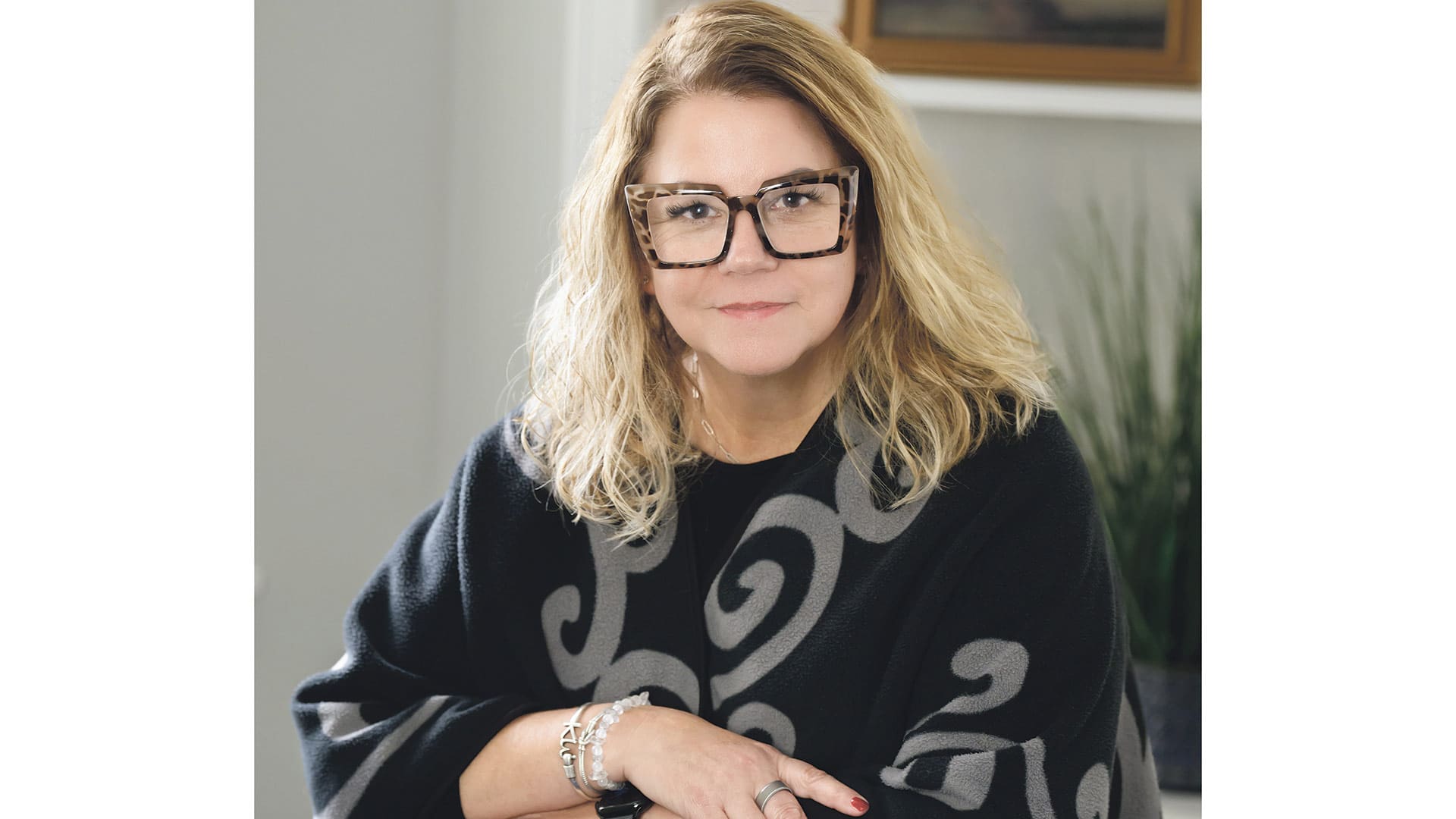


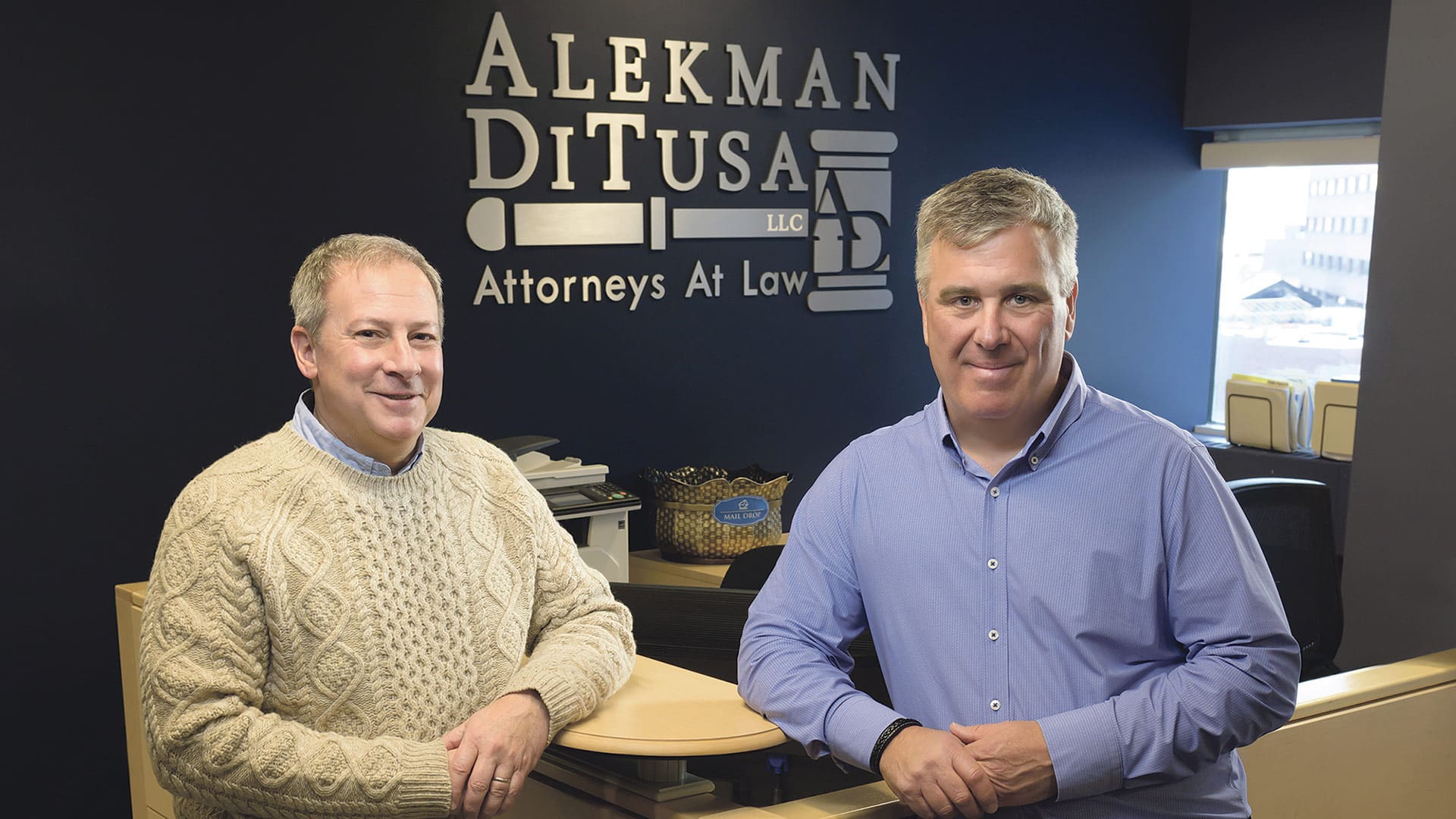

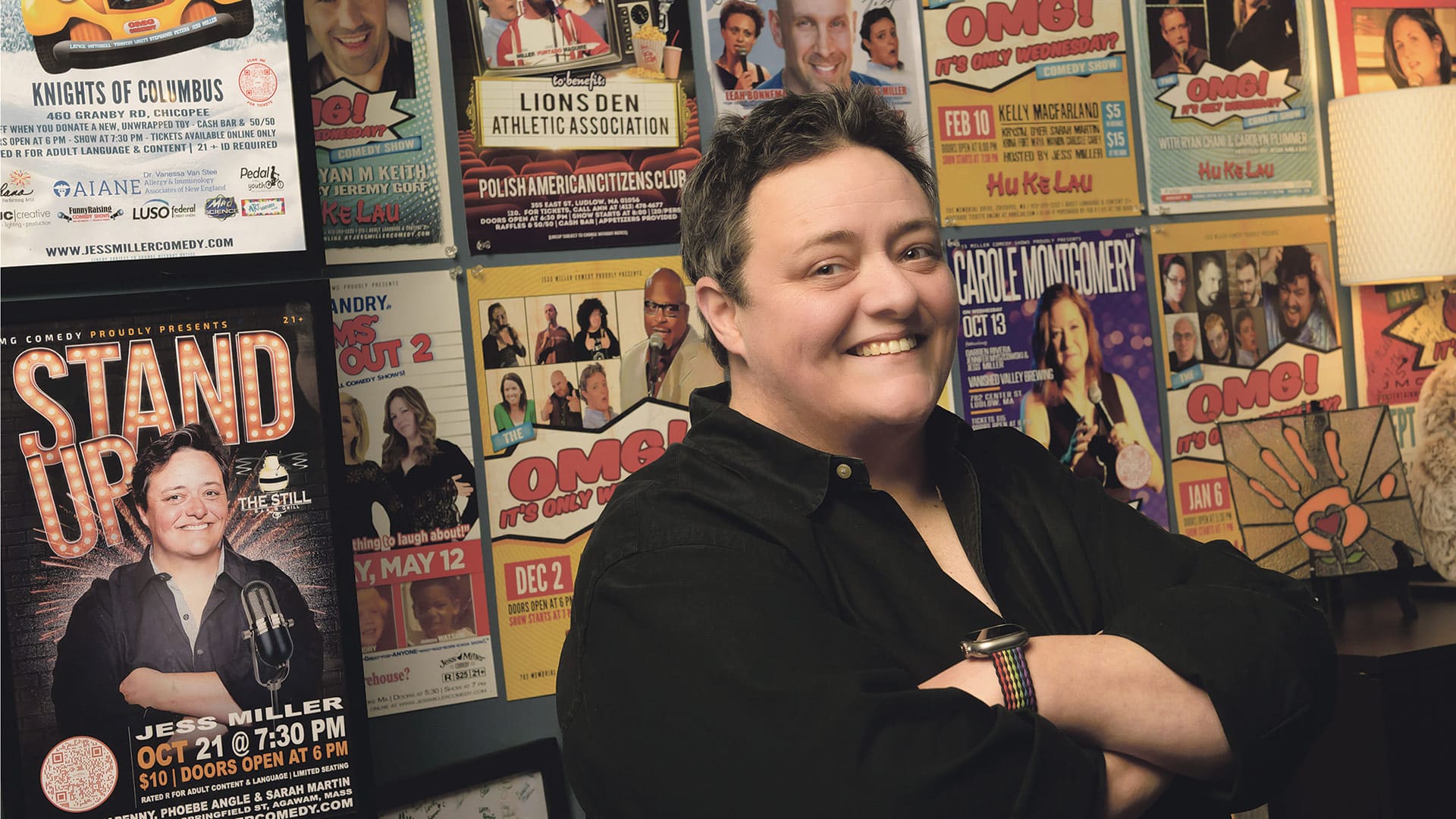
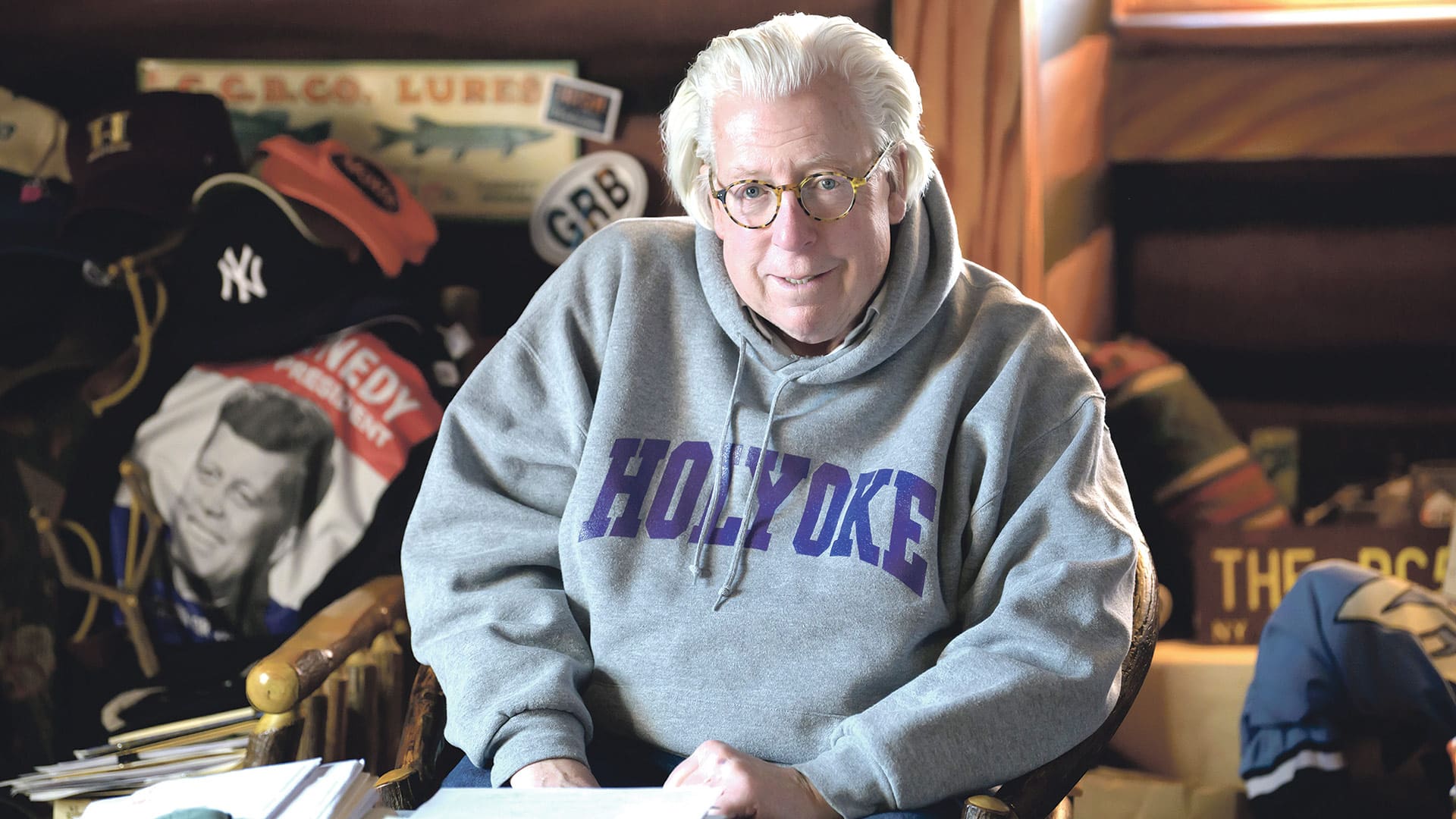


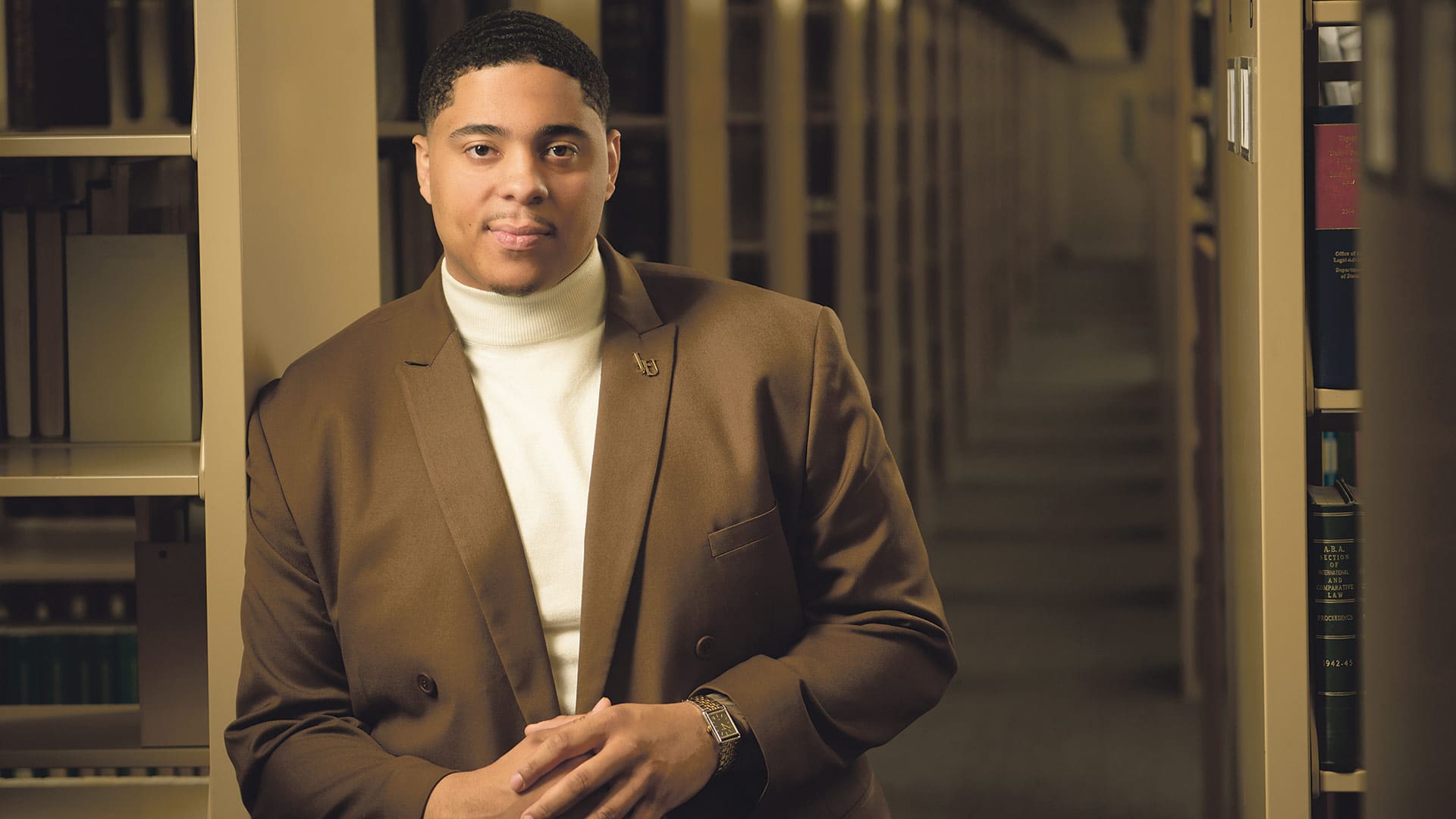




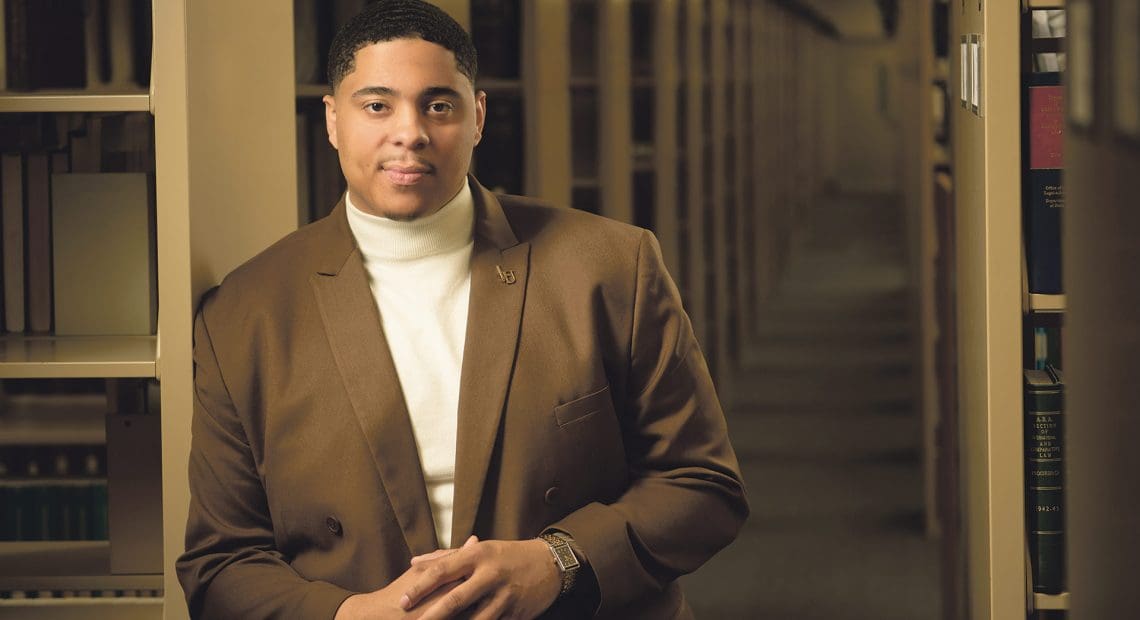
Zeno Temple played football at Western New England University.
He started on the defensive line and eventually moved to offensive guard. He played all four years he was at the school, and the teams he played on did well, winning the Conference of New England title each year and advancing to the Division III playoffs.
Temple, who spent several years working as a community safety outreach specialist at the Hampden County District Attorney’s Office, says he takes a number of lessons from his playing days into his current work — both as a senior legal analyst with the law firm Royal Parker Spruce, working toward becoming a lawyer (he’s on track to graduate from Western New England University School of Law in May and envisions specializing in employment law); and with a nonprofit he launched called the Just Us Movement.
In both cases, he strives to do something his former head coach, Keith Emery, or ‘Coach E,’ always told his players.
“Human rights and civil rights are not things where you can sit back and be like, ‘OK, I have those, and everything will be fine.’ These are things that always have to be advocated for and fought for.”
“He told us, ‘you gotta show up every day and get one better,’” Temple recalled, noting that the one refers to 1%. “He said it every day — ‘one better, one better.’ I keep that handy and ready because it’s true; I try to get one better in some aspect of my life every day.”
This philosophy, if you will, of continually getting 1% better is reflected in the broad mission of the Just Us Movement — to empower individuals, strengthen communities, and dismantle systemic barriers through legal education, health and wellness initiatives, and dynamic leadership programs — and its specific initiatives.
They fall into three categories — education, law, and health — and include everything from a program called Nourish the Neighborhood, through which Temple and his team have served hundreds of families with fresh meals; to a series of Know Your Rights workshops, free webinars covering topics from immigration encounters to mental health in the workplace; as well as the distribution of Red Cards, pocket-sized constitutional rights guides.
Temple is also establishing what he calls the Emerging Leaders Council, a pipeline for young professionals and students entering fields like law, education, and healthcare. It’s designed to cultivate the next generation of justice-driven leaders, he said — people who will carry forward the values of equity, service, and community advocacy.
“Zeno is one of Hampden County’s emerging leaders, whose work is transforming how communities access support, advocacy, and empowerment,” wrote Khadijah Allen, the Just Us Movement’s chief of staff. “His leadership reflects a clear vision — that justice and community well-being must be accessible to everyone, not just those who know how to navigate complex systems. That belief is the foundation of his work and the driving force behind the movement he leads today.
“Zeno is a Difference Maker because he doesn’t just witness inequities — he responds to them with action,” Allen went on. “Through the Just Us Movement, he has built a model of leadership that uplifts, empowers, and unites communities. His work is not only changing individual lives; it is shaping the future of justice and advocacy in Hampden County.”
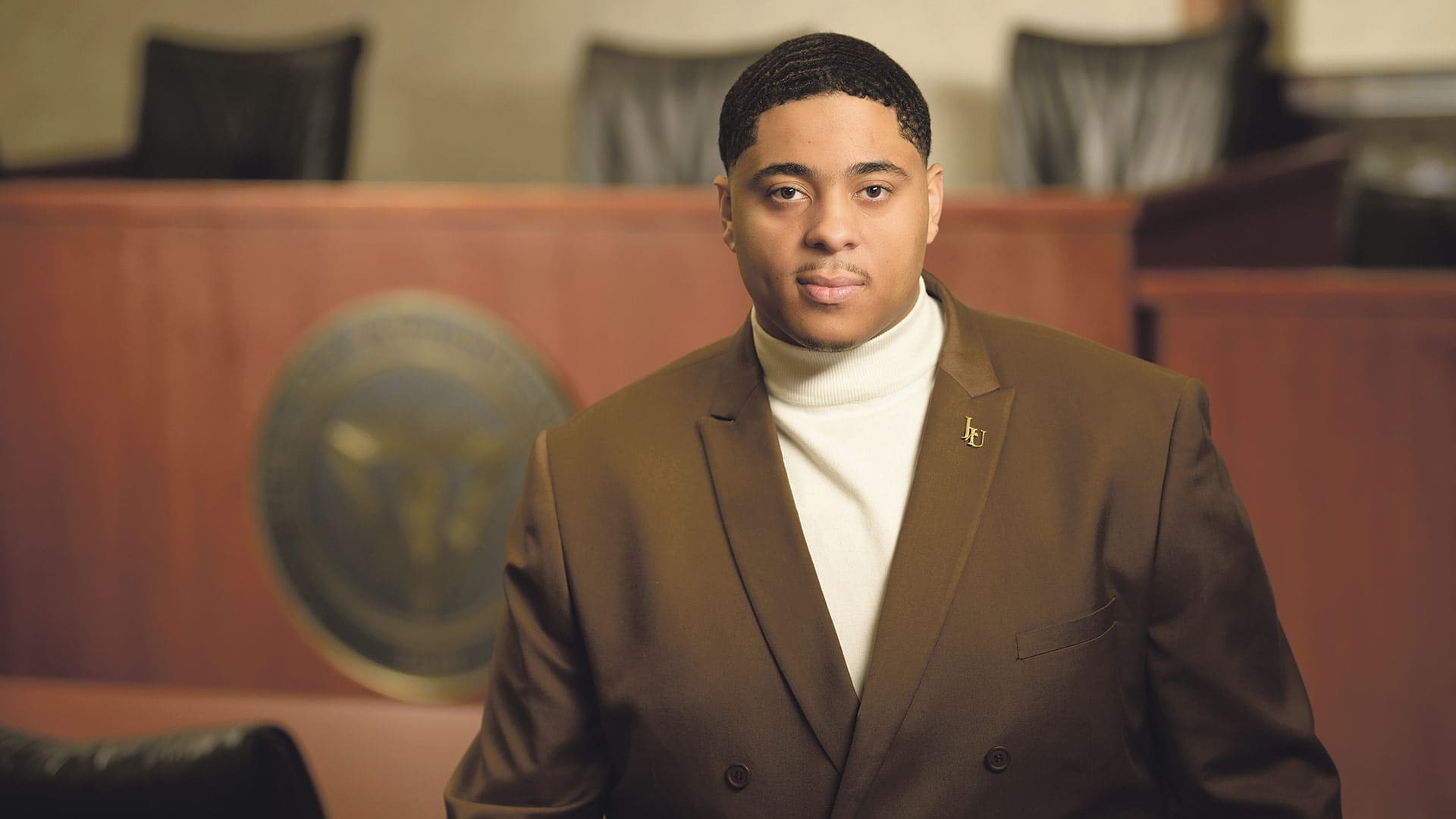
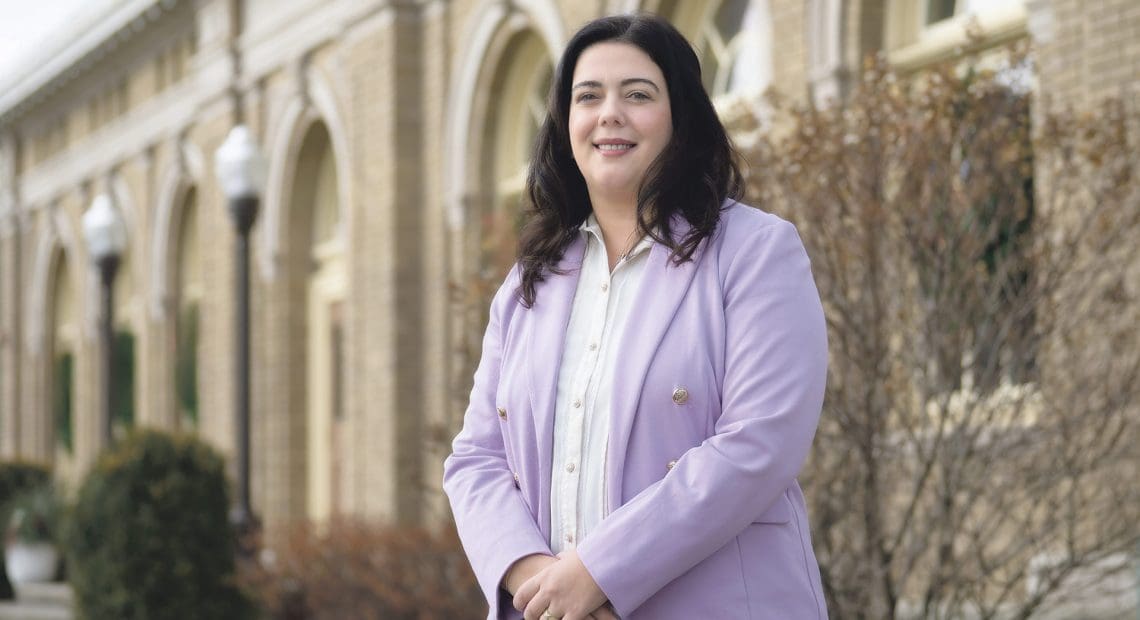
Zeno Temple says the Just Us Movement aims to empower individuals, strengthen communities, and dismantle systemic barriers.
Photo by Bob Zemba, Simple Truth Imaging
Reflecting on what’s been done in the year since he started the nonprofit — and the work still to come — Temple said there are many needs within the community, including equal access to justice.
“It sounds so simple, and it sounds so basic, but it’s true — justice as a whole needs to be accessible to everyone, period. And I don’t think that we’re doing a good enough job of that as a society, and my goal is to make that a reality.”
Temple grew up in Philadelphia and recalls that his early aspiration was to become an architect.
“As the years went on, I got more in tune with current events and things that were going on, like Trayvon Martin,” he said, referring to the case of the Florida teenager shot and killed by a neighborhood watch member who claimed self-defense and was eventually acquitted of second-degree murder and manslaughter. “I was glued to the TV and, for the first time, saw what was going on.
“I started becoming more interested in the law,” he went on, adding that this interest, while keen, took a back seat to athletics. He played football in high school and in his senior year commenced a search for schools where he could continue playing.
“I visited a ton of schools and fell in love with Western New England,” he said, adding that, while playing, he also majored in law and society and became a life-skills mentor to younger players on the football team.
“When the freshmen would come in as athletes, we’d be the people to look out for them, help them out, check in on them, make sure their grades were good, and get them any resources they needed,” he recalled, adding that these experiences helped inspire his advocacy efforts to come later.
After graduating in 2020, at the height of the pandemic, he took some time off, went back to Philadelphia, did some policy work, and helped with a few political campaigns, before getting an offer to return to Springfield and work in the DA’s office as a community safety outreach specialist.
In that role, he worked as part of a small unit that worked within the community on several initiatives, everything from school visits to talk with students on a variety of subjects to court tours, by which young people became acquainted with the legal system, from arraignment to trial.
“Zeno is a Difference Maker because he doesn’t just witness inequities — he responds to them with action.”
“It was a cool job … we went into schools across Hampden County, getting to students early and doing prevention work,” Temple explained. “We talked about internet safety, alcohol and drug abuse, driving safety, and more. We had those discussions in big group settings, but also smaller sessions as well.
“Having that connection with the students was amazing,” he went on. “Being out in front of 100 high school students or middle school students and talking about important topics … it was not just educating the students, but also educating myself, trying to keep up on what’s new and what’s happening so we can be most productive and most helpful to the community. It gave me the opportunity to work on my public speaking skills, while also finding lanes to grow as an individual.”
Temple started attending law school at night in 2022, and is closing in on his degree, with intentions to focus on employment law and civil rights. As a paralegal and senior legal analyst at Royal Parker Spruce, he is gaining additional learning experiences while sitting in on mediations and other sessions.
Inspired by several factors — everything from the example set by his mother, a social worker, to the work he’d become involved with at the DA’s office, to various, and obvious, needs within the community, he started the Just Us Movement roughly a year ago.
As noted earlier, the Chicopee-based agency has a broad mission and service area (Western Mass. and Northern Conn.) and several focus points.
These include Nourish the Neighborhood; a Community Earth Day initiative (tree planting and neighborhood beautification); virtual programs to connect community members with information and resources; a back-to-school teacher supply drive in Hartford; participation in the Dignity Grows Partnership, a national initiative that provides hygiene and menstrual care products to individuals experiencing period poverty; a Black Balloon Day webinar on March 6 to join others in honoring those lost to overdose; and more.
Each of these initiatives grew out of need and a desire to meet it, Temple said, adding that the Nourish the Neighborhood effort is a good example. It was inspired by efforts undertaken by a friend at shelters in Philadelphia.
“I was thinking, ‘we should definitely do something like that up here,” he recalled, adding that the first effort, one that provided meals to more than 70 people — with his mother, also a caterer, doing most of the cooking — was in Hartford, with others to follow in the 413.
“We knew it was the right thing to do and that we were on the right track,” he said, adding that two more events followed over Thanksgiving and Christmas, with more planned for this year.
Another key element of his mission is education, including Know Your Rights seminars. These are free webinars on topics such as “Bridging the Gap: Access to Justice and Community Engagement,” “Know Your Rights: Law Enforcement and Immigration Encounters,” and “Mental Health in the Professional World.”
“We have some amazing people come in and speak on these panels — judges, attorneys, people who work in the community,” he said, adding that there have been seven of these webinars to date, with other subjects ranging from employment law matters to record sealing and expungement, and they are available on YouTube and various social media platforms.
The most recent offering was on Feb. 7, a program on housing featuring officials with the Massachusetts Commission Against Discrimination.
And the response has been very positive, he said, adding that several dozen people have attended the live webinars, and there are usually energetic rounds of Q&A at the end of each one.
Behind these events is the simple philosophy that information is power and that access to justice and the rights that many take for granted is in many cases not equal.
“Human rights and civil rights are not things where you can sit back and be like, ‘OK, I have those, and everything will be fine,’” he said, adding that recent events in Minneapolis and elsewhere have driven home this point. “These are things that always have to be advocated for and fought for, and right now is the most important time to have people speak up for human rights. We need to realize that we all matter.
“The easiest thing to say would be, ‘I want peace and happiness, and things like that,’” he went on. “But we also have to realize that history repeats itself, and we all have to do a better job of learning from history, in all facets of life.”
Looking ahead, Temple wants to keep growing the Just Us Movement and broadening its impact. “I want us to be an organization that reflects the community we serve, and I want it to be an organization that will serve the community based on access to justice.”
This brings him all the way back to that notion of getting 1% better. It’s a personal goal, of course, but also something everyone involved in the Just Us Movement strives for.
“That’s what we do here — 1% better,” he said. “If you try to shoot for 1% better every day for a year, and you reach that, at the end of the year, you’ll be doing well.”
That mindset certainly helps explain why Temple is a Difference Maker.
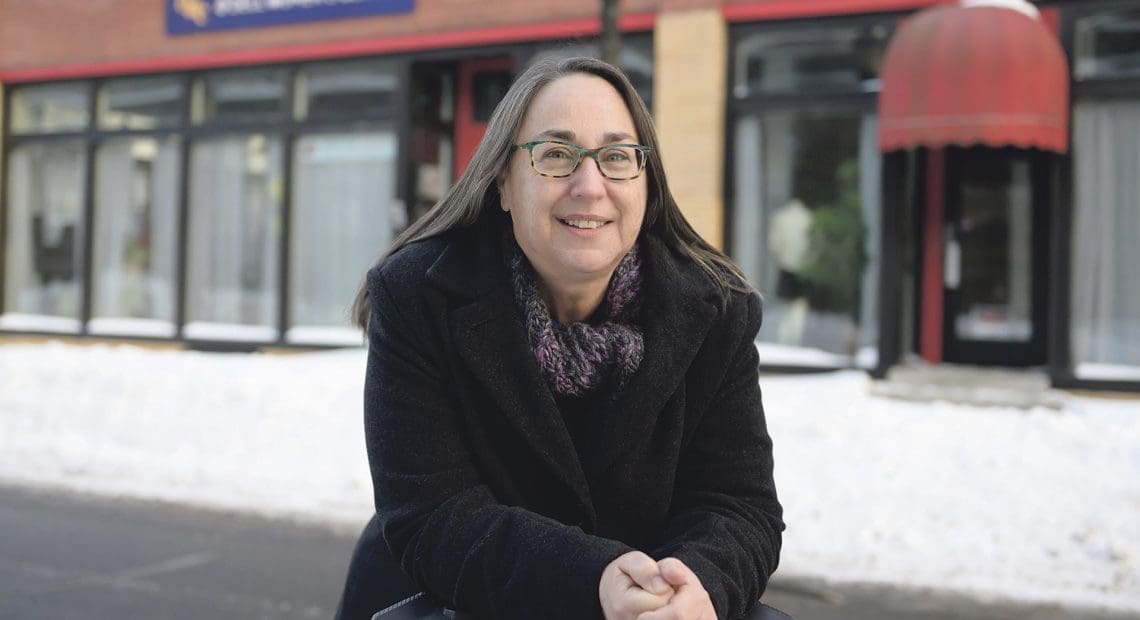
Margaret Tantillo has spent her entire career in the nonprofit space, much of it with the Girl Scouts, and then for almost a decade leading Dress for Success Western Massachusetts.
“I’ve always worked in organizations in support of women and girls — and that was purposeful. I had a passion for it,” she said.
“There were some experiences that led me to understand that women are treated differently, and that there’s a need for women to support each other,” she added, citing a persistent wage gap between men and women as one example.
“Women take the more responsibility for childcare, for elder support. So there are benefits to lifting women up — especially the women that we serve,” she went on, referring to her latest role, which she accepted in early 2024, as executive director of the O’Dell Women’s Center, a philanthropic organization that supports low-income women in and around Springfield in a variety of ways.
“I’ve always said that not everybody gets dealt the same cards, and my hope, personally, is to sort of even the playing field,” Tantillo explained. “I could have just as easily been born into a household that was not well-off financially, and that would have been my barrier to overcome. But the hand I was dealt was middle-class, and there was no question I was going to go to college.
“Margaret’s dedication ensures that women and families have stability and access to essential resources during difficult times.”
“So for me personally, it’s like, where’s the fairness?” she went on. “We’re all getting different opportunities, and and they’re just not equal, so by working in women’s organizations, what can I do to even the playing field?”
The O’Dell Women’s Center was inspired by Connie O’Dell, who served for more than 40 years as a maternity nurse at Providence Hospital and dedicated her life to caring for women with dignity, compassion, and respect. Founded in 2023, the center occupies a 10,000-square-foot facility in the heart of Springfield.
Its most visible arm is its foundation, which provides grants, typically ranging from $10,000 to $75,000, to local nonprofits that advance educational, workforce, and career development opportunities for low-income women, as well as nonprofit organizations that address systemic barriers, such as food insecurity, childcare access, transportation, and housing instability.
The foundation distributed $550,000 in 2025 to support women and families across Springfield, and an estimated $750,000 in grants will be awarded in 2026.
The center also houses Dress for Success Western Massachusetts, which was displaced from its longtime home at the Eastfield Mall when that complex was about to be torn down and redeveloped. The O’Dell Women’s Center offered it about 5,000 square feet of space — more than $80,000 in free rent annually — to continue its work without interruption, said Jessica Roncarati-Howe, who succeeded Tantillo as head of the organization in 2024 — and is one of two individuals who nominated her as a Difference Maker.

Margaret Tantillo says she understands Springfield and its needs, and is grateful to be in a place where she can make an impact.
Photo by Bob Zemba, Simple Truth Imaging
“This single act ensured that hundreds of women in Springfield and surrounding communities could still access professional clothing, employment coaching, career development, programming, and the support networks that help them thrive,” Roncarati-Howe said. “The O’Dell Women’s Center did not just give us space; they gave us stability, dignity, and the ability to keep serving women who rely on us every day.
“What impresses us most is that this generosity is not an exception — it is the model,” she added. “The Odell Women’s Center provides free gathering and meeting space for women’s groups and is actively seeking additional nonprofits to join the building at low or no cost. Their goal is to create a true community hub where women can access multiple resources under one roof, reducing barriers and strengthening the social and economic fabric of Springfield.”
“We’re hoping to see quality relationships that align with our values of treating women with compassion, not assuming what other women need, but kind of walking hand in hand to provide that support.”
Mydalis Vera, founder of Guerrera Writer and a volunteer at the center, noted its support of food pantries during a particularly challenging time for food insecurity, pointing out that the center distributed $100,000 in emergency support to Springfield-area pantries late last year, helping families navigate the pressures of SNAP benefit changes and a temporary federal government shutdown.
“Margaret’s dedication ensures that women and families have stability and access to essential resources during difficult times,” Vera said, adding that Tantillo also spearheaded a successful diaper drive, partnering with local agencies to collect more than 40,000 diapers and registering more than 200 families to receive this essential support. “Her tireless commitment to uplifting women and families, providing practical assistance, and fostering long-term stability truly sets her apart as a leader and changemaker in the community.”
In her former role as executive director of Dress for Success Western Massachusetts, Tantillo increased the budget sevenfold and grew the organization from one program to five, all in the service of helping unemployed and underemployed women achieve economic independence. And, as Roncarati-Howe noted, it was a natural fit to operate out of the O’Dell building in downtown Springfield.
“Dress for Success is its own nonprofit; they have their own board of directors and run their own thing,” Tantillo explained. “We have a very collaborative relationship, and now it’s like, ‘what else can we bring in to support women?’ It’s a slow build. In some ways, we’re providing the next step, the next circle of resources for women.”
The funding for Dress for Success’ rent-free tenancy comes from the O’Dell Women’s Center’s family foundation, she added.
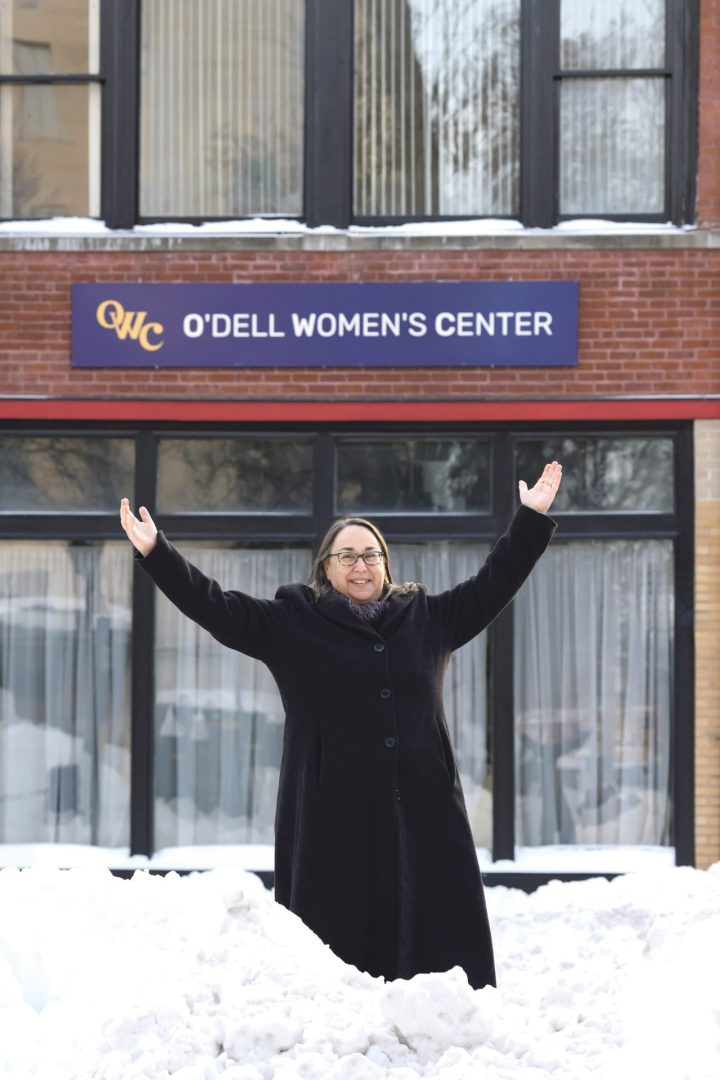
Margaret Tantillo says it’s important to lift women up, and she’s spent much of her career doing just that.
Photo by
Bob Zemba, Simple Truth Imaging
“These partnerships reflect our belief that economic stability is built through coordinated, community-driven solutions,” said Keely Krantz, founder and president of the O’Dell Women’s Center Foundation. “When women have access to basic needs, education, and career opportunities, entire families and communities are strengthened.”
To demonstrate how the O’Dell grants target the upward mobility of women, the 2025 grantees included:
• Bay Path University, to support a new emergency assistance initiative for Springfield-based students facing unexpected crises, including housing instability, transportation challenges, and lack of basic necessities, helping women remain enrolled and complete their education;
• Dress for Success Western Massachusetts, to provide a continuum of career support, including professional attire, career readiness, coaching, and advancement services that help women achieve long-term financial independence;
• Girls Inc. of the Valley, to continue supporting the Eureka! Program, a no-cost, five-year STEM initiative that empowers girls to envision themselves as part of the future workforce through hands-on learning and sustained mentorship;
• The Gray House, to strengthen adult education services for low-income migrants and refugees, including ESOL (English for speakers of other languages) instruction paired with essential life and job skills training;
• It Takes a Village, to expand basic needs programming that fills critical service gaps for low-income women and families, helping remove survival-level barriers to economic stability;
• MassHire Holyoke, to implement the GLOW program in Springfield, a holistic workforce initiative combining intensive case management, job placement, and wrap-around supports to address barriers such as childcare, transportation, housing instability, and digital skill gaps;
• South End Community Center, to provide out-of-school programming that offers safe, reliable childcare through after-school, vacation, summer, and school-closure programs, supporting parents’ ability to work and pursue education;
• Tech Foundry, to deliver digital literacy instruction, professional development, and career mapping for women participating through YWCA programming; and
• United Way of Pioneer Valley, to expand direct services for underserved women by increasing food pantry access and strengthening Thrive Financial Wellness programming through individualized financial coaching.
As the center’s executive director, Tantillo ensures that the grants are directed in the most impactful ways and that the building’s physical resources are used responsibly, and most of those efforts specifically help women navigate barriers to stability and build sustainable futures, she explained.
“I understand Springfield and its needs, and I work very closely with the founder, who is one of the kindest, smartest women I’ver ever met,” she said of Krantz. For example, “with that emergency food funding, I said, ‘this is what’s going on with SNAP. I think we need to do this.’ And she said, ‘yes, that makes sense.’”
The decision wound up putting the planned grant outlay for 2025 $50,000 over the original budget, but the issue was deemed an urgent one. So Tantillo went about approaching area food pantries directly to get a sense of how many people they serve and what their needs were, then facilitated the grants.
While most of the center’s work focuses on providing a path to academic stability through career advancement and education, the $100,000 outlay for food pantries isn’t as much of an outlier among the other grants as it might seem.
“In the organizations that we provided funding for, you’ll see those [career] paths as well as some basic needs, because there are a lot of barriers for women,” Tantillo explained. “Like, we didn’t necessarily fund childcare, but we fund out-of-school programming, so when women are working, there’s a safe space for their children to go. So we’re going from immediate needs, basic needs, to supporting long-term opportunities.”
As part of that effort to connect women with education and career opportunities, the center is piloting something called the Bridging Navigator Peer to Peer mentorship program, which pairs mentors with lived experience with low-income women to help connect them with resources and pathways that lead to educational and career advancement.
One of those navigators is Areliz Barbosa, an assistant professor at Bay Path University and one of BusinessWest’s Healthcare Heroes last fall, who has often spoken about the dire challenges she has had to overcome in life.
“I was shocked to hear that she slept on a bench for a little while,” Tantillo said. “We’re going to pair her with a woman who may be in a situation where she can’t see her future — because she certainly has achieved a professional level of success.”
If the pilot expands, she added, “we’re hoping to see quality relationships that align with our values of treating women with compassion, not assuming what other women need, but kind of walking hand in hand to provide that support. The Bridging Navigator program will probably help women access social services or steer them toward Dress for Success or encourage them to take a training or go to community college to get that certificate.”
The O’Dell Women’s Center also offers free space for clients and community nonprofits to use, including a small, private conference room; an office with several desks; and a large, central meeting or presentation space. Tantillo said the center has also forged a partnership with MassHire Hampden County Workforce Board, which will physically place a representative in the building.
Meanwhile, she added, with nonprofits facing a tough funding landscape, she would like to bring area organizations together to determine what efficiencies exist and how they can complement each other’s services.
These are just some of the ways Tantillo brings people and resources together with the general goal of elevating women — which she has done, in some form, over her entire career.
“I just provide the opportunity, and people kind of join in,” she said. And by doing so, she continues to be a true Difference Maker.
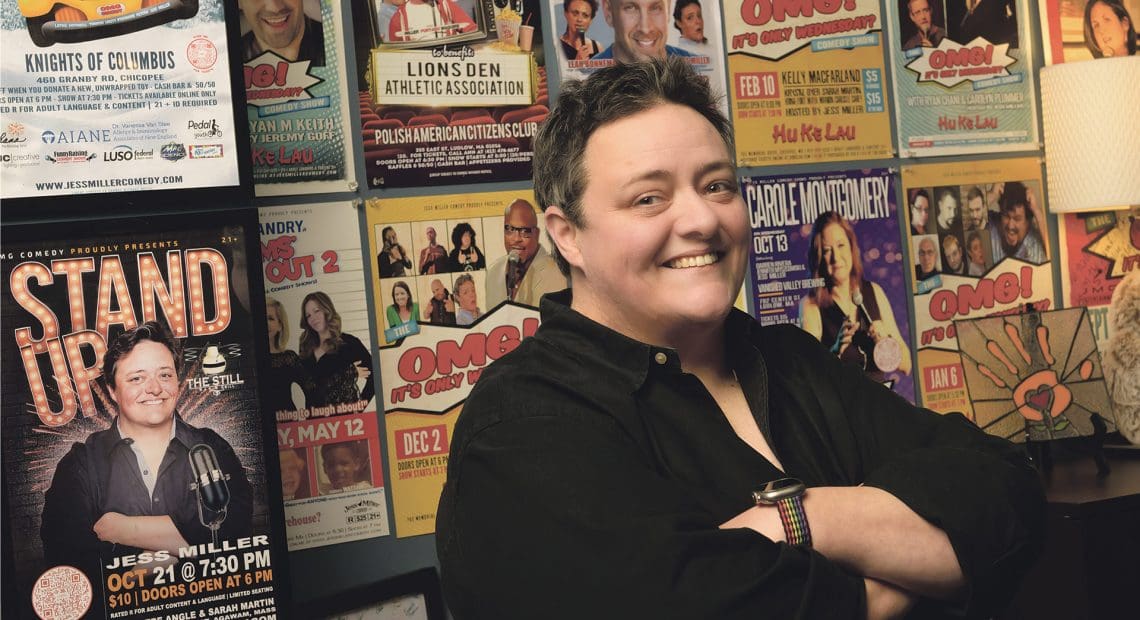
Jess Miller has survived plenty of struggle.
She lost her mother to a divorce when she was 8, then had a traumatic experience in the Army, then lost her mother again — this time permanently, to suicide — a few years after that.
But difficult experiences can be motivators, too — in her case, to spread kindness in a hard world.
“Being kind is just caring about people, right?” she said. “If you’re kind, you actually care about doing good things for other people. That’s kind of my philosophy.”
It’s a credo that led to Miller performing stand-up comedy starting about 15 years ago and turning those shows into benefits for local nonprofits — and, eventually, to her creation of the Kind Squad. First a Facebook page launched in 2015 and now an official 501(c)(3) nonprofit, it’s essentially a collection of people who gather online to donate to fundraising drives aimed at helping people in need — or just making someone’s day.
Miller explained the humble origins of the organization. In 2020, during the pandemic, she wanted to do something to contribute to the community and started a campaign called Art Kits for Foster Kids, posting about it in the Facebook group to solicit donations.
One member expressed interest in donating, but mentioned not having enough money to pay her own water bill. Miller calculated that, if 100 people donated $3 each, they could help cover the bill. So they did, and the model was born — what is now thousands of people who take up the call for small donations that collectively add up, leading annual campaigns ranging from Art Kits for Foster Kids and Mother’s Day Flowers for Foster Moms to the pre-holiday Western Mass. Toy Drive, which, this past December, collected more than $100,000 in toys, which were distributed in partnership with numerous agencies.
“The Kind Squad is built on a simple but powerful mission: to show children and families in need that they matter — and that their community truly cares.”
In all, the Kind Squad has raised approximately $300,000 not just for those annual campaigns, but for one-time requests that come in from across the region — and the entire U.S., for that matter.
“Maybe this homeless shelter needs a little jungle gym. I literally write everybody’s donations out, I buy the stuff, I put the receipt out — 100% in, 100% out. And that’s kind of how we’ve been. It’s micro-philanthropy — just people who want to give.”
Karin Jeffers, president and CEO of Clinical & Support Options (CSO), who nominated Miller as a Difference Maker, appreciates how the spirit of the Kind Squad goes well beyond helping others and speaks to the meaning of kindness itself.
“The Kind Squad is built on a simple but powerful mission: to show children and families in need that they matter — and that their community truly cares,” Jeffers said. “The Kind Squad has helped literally thousands of children and families, providing toys, essential items, emotional support, and moments of joy during some of the most difficult times of their lives. Jess leads this work with no expectation of recognition or reward. Her motivation is purely selfless: to make a real difference, one family at a time.”

Long before Jess Miller launched the Kind Squad, she was using her comedy platform to raise funds for nonprofits.
Photo by Bob Zemba, Simple Truth Imaging
Jeffers pointed out the recent toy drive’s haul and its “extraordinary impact” on families. “She ensured that countless kids experienced the magic of the holidays — many for the first time. But Jess’s work goes far beyond gifts. She understands that what families often need most is reassurance: the knowledge that they are not forgotten, that someone sees them, and that kindness still exists. By showing up with compassion, consistency, and heart, Jess delivered something even more meaningful than toys — hope.”
That’s real impact — generated by a true Difference Maker.
Miller’s foray into performing in public didn’t get off to the most auspicious start — she tried out for America’s Got Talent.
“I didn’t do comedy; I sang. And I killed the song. I literally killed it. Not in a good way, but in a very, very bad way,” she recalled. “But I had fun, and I wanted to do that again. I love performing.”
So she took some acting classes — “because I really sucked” — and eventually landed a part in the musical Rent at Exit 7 Theater in Ludlow. She enjoyed that a lot, but had an itch for comedy, so she took a comedy class at Carolines in New York City, then tried some improv in Boston.
Progress was slow — she auditioned for another musical as well, but didn’t get cast — before one of her teachers gave her some advice: “if you want to do comedy and you’re not getting gigs, book yourself — post your own shows.”
So around 2013, Miller produced her first comedy show — a fundraiser for foster kids for the Massachusetts Society for the Prevention of Cruelty to Children (MSPCC). In fact, comedy benefits were the model right from the start — make people laugh, raise money for a good cause.
“Then I started doing monthly performances called the OMG! It’s Only Wednesday comedy show. Every month, we would try to do something to benefit the community. So, if it was bringing a can of food, you’d get five bucks off a ticket. Tickets were already cheap. But bring a coat, bring in hygiene products, you get five dollars off a ticket,” she explained. “I think, when you’re in business, you should be grateful that people support you, and try to give back to your community.”
A few years later, she opened up a venue in downtown Springfield, called the OMG! Comedy Club, that ran into issues with the landlord, and that project eventually shut down. “That was just before COVID, though, which may have been a good thing,” she said.
Which brings her story to 2020, when the Kind Squad — due to that woman reaching out about an unpaid water bill — started to become more than a Facebook page. “It just stacked up from there. We’re close to $300,000 at this point, just doing little missions like that.”
The week before she spoke with BusinessWest, Miller and her team of volunteers had completed a coat collection for a homeless shelter, and they’re constantly receiving other requests from far and wide that the Kind Squad community, currently about 2,700 strong, quickly responds to.
Miller’s wife, Stephanie Greenberg, partially explained why foster kids and foster moms are so important to the nonprofit’s work.
“I think it’s important to be able to give to kids because they don’t have a voice — especially foster kids. I mean, they get nothing. I used to be a teacher, and when they get moved, they just get a trash bag full of whatever they had in their house that they were able to grab at the time. And it’s just sad to see that. So anything we can do to make their lives, especially the holidays, a little happier for them, I think it’s good.”
Kim Dougherty, a volunteer with the Kind Squad, said the model works because each individual commitment is very light — the power is in the accumulation of all those tiny donations.
“It’s not a matter of, ‘oh my God, we need to give 100 bucks.’ You can give $1.25, and if we all give $1.25, look at what we can do. It gets infectious because you want to spread it to everybody else — to say, ‘hey, look at this. It’s minimal; it’s really not a lot.’ How many people can throw a dollar aside? Most of us can. So I think the simplicity of it was what drew me in — it’s not going to take all my time. It’s not going to take a ton of money. It’s simple. And that’s why it works.”
“And if you can’t give a dollar,” Greenberg added, “it’s not a big deal — there are other missions and other ways you can help. Like, for the toy drive, people brought in their gently used Christmas bags, and we can use them next year. That was a game changer.”
Sometimes Miller asks herself a troubling question: “why is it so hard to be kind?” And she realizes that the best way to answer it is, simply, to model kindness, showing others that it’s not that hard after all.
“In 2020, after George Floyd got killed, I was just like, ‘I don’t know what to do.’ Like, on a national or global level, what can one person do? But on a community level, a local level, you can do a lot.”
And some of it goes beyond the micro-philanthropy.
“In addition to toy drives, food drives, and fundraising campaigns to help families in need, Jess and Steph and the Kind Squad have helped families dealing with children diagnosed and going through treatment for cancer, using her Kind Squad page to gather emotional support, physical donations, and volunteers to support the family and visit them in hospitals,” Jeffers noted in her nomination.
“Jess has an exceptional ability to mobilize generosity and unite people around kindness,” she added. “She pours her time, creativity, and personal energy into the Kind Squad, building trust with families and inspiring others to give, volunteer, and care. Her leadership has created a ripple effect that continues to strengthen the community long after any single event ends.”
“I post it, and then people donate, and if we can get enough money, then the mission is completed — and we do that over and over and over again. But it never comes from me. It’s always from the Kind Squad.”
Amid the surprising success of December’s toy drive, Miller teamed up with organizations like the MSPCC’s Kids Net program, CSO, the Massachusetts Department of Children and Families, and others — “basically, we partner with whoever needs toys.”
And now, she’s thinking bigger. “If I can get the systems in place the right way, I have an idea for the Great American Toy Drive, which is all of America, all helping foster kids. It’s either me going on tour or getting at least 50 other comics involved from all 50 states, and then doing the toy drive on one night.”
She then looked around at the small, rented office in downtown Chicopee that the nonprofit calls home, and thought about the long week spent moving $100,000 worth of toys to people and organizations in need.
“If I have my own space, then I’ll be able to do a lot more. This is not big enough for us to do $100,000 worth of toys. But we have to stay small until we can afford it — because we really haven’t done a lot in terms of income. It’s mostly small grants. They’re not even grants, just very small donations to get us through. In 2024, it was tough because the focus went from helping people to paying for the space. I’m like, ‘this doesn’t feel right.’”
But since then, the volunteers — a core team of eight, plus about 30 who help with the toy drive — have eased the load significantly, allowing Miller to dream of what might be next in her mission of kindness.
“I don’t know what I’m doing. I have no clue. I jump in and I’m like, ‘I’ll figure it out,’” she told BusinessWest. “I post it, and then people donate, and if we can get enough money, then the mission is completed — and we do that over and over and over again. But it never comes from me. It’s always from the Kind Squad.”
Still, it’s gratifying to be called a Difference Maker.
“I like to make a difference. I want to make a difference,” she said. “I guess that’s what I’m getting at. I think I just want people to know that they’re not alone — and that a lot of people feel the same way. And I’m surrounded by those people. If you’re part of the Kind Squad, that means you have some humanity in you, and you care what’s happening in the world.”

Ed Sokolowski calls it the ‘triangle.’
It comprises what he says are the three sides of any company that wants to consider itself truly successful.
One side involves the client and, more specifically, providing consistent, quality service — “you need to be there for them; we pick up calls on the weekend,” he said. Another involves employees, taking care of them, and giving them the tools they need to succeed in whatever role they might perform.
And the third involves the community and giving back to it, said Sokolowski, managing partner and wealth advisor with Pioneer Valley (PV) Financial Group in Ludlow, the company he and a few partners founded in 2002, adding that these three sides must be equal, and he makes sure that, with his business, they are.
“If we equally take care of those elements — you put the clients on top, you have the employees and the community, and you put PV in the middle … we’ll be OK,” he told BusinessWest. “We’re not here to make the most money; we’re here to make a difference in all three of those areas.”
Indeed, from the beginning, he has stressed that the company, and everyone who works for it, must be focused as much on the community as on the team and the customers.
“It’s in our mission statement — we believe in helping our clients and community live better,” he said. “Our legacy is the people and lives we have touched.”
“If we equally take care of those elements — you put the clients on top, you have the employees and the community, and you put PV in the middle … we’ll be OK. We’re not here to make the most money; we’re here to make a difference in all three of those areas.”
This philosophy has manifested itself in countless ways — from the PV Charitable Fund, which Sokolowski funds out of his own pocket, to the annual Slide into Summer Safely programs on the last day of school in Ludlow, Wilbraham, and Hampden (more on this later); from an annual First Responders Dinner, a salute put on by the company in conjunction with the local VFW, to small donations to myriad nonprofits across the region.
It has also manifested itself in a relatively new position at the firm — Community Outreach manager, a post held by Katherine (Kat) Ferri, who acknowledged that it is rare for a company this small (just 20 people) to have someone in such a role, which also includes marketing duties. But the fact that it exists, she added, speaks volumes about Sokolowski and his belief in giving back.
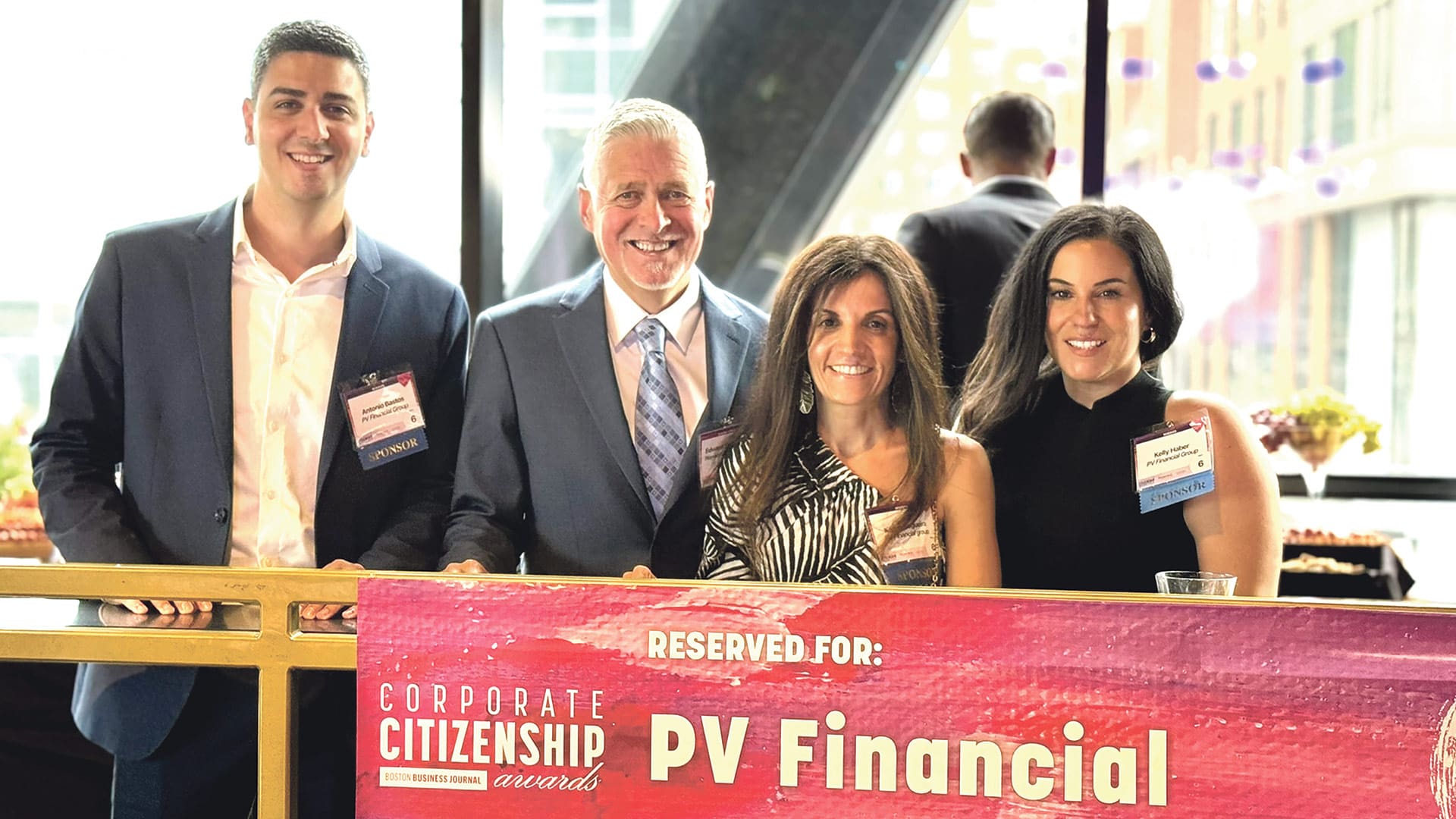
From left: Antonio Bastos, Ed Sokolowski, Karen Nogueira, and Kelly Haber at the Boston Business Journal’s Corporate Citizen Awards in 2025.
“Going back to when I was first interviewed, Ed talked about the company and how it has a focus on finance and helping people plan,” Ferri recalled. “And then, he went all in about the work we do in the community, the events we do, and the importance placed on giving back to the community.”
This hard focus on community has led to some recognition. Indeed, PV Financial, an employee-owned company, made its first appearance on the Boston Business Journal’s list of the state’s most philanthropic companies (what it calls its Corporate Citizenship Awards) in 2025, placing 96th in total giving ($145,000, not counting another $50,000 from the charitable fund — a large number for a small company) — but first in the average number of hours per employee devoted to community work, roughly 75 a year. The company was also among the first to be recognized by the Springfield Regional Chamber’s Super 60 category known as ‘Give Back.’
The awards are nice, and they bring attention to what is truly a team effort, said Sokolowski, adding quickly that the greater rewards come from seeing the impact of that team’s work in the community — the smiles on the faces of children at Slide into Summer Safely events or the appreciation from first responders at that annual dinner, for example.
“I don’t know how much it’s helped; we’ll probably never know, but we’ve had thousands of kids participate over the years, and we certainly think this is worth doing. It’s enjoyable to see the kids, knowing that they’re having fun, but learning.”
“I know we were happy when we crossed $100 million in assets, and then $200 million, $500 million, and on our way to $1 billion. I know I was proud, but I don’t remember the dates; I don’t remember the weather that day; I don’t remember too much,” he said. “But I do remember the kids’ faces and something that someone might say to me when it comes to charitable giving. I’m just as proud of those things, and they’re more memorable.”
Every Monday at 9, the staff at PV Financial gathers in the conference room for a weekly meeting. This room was carved out of the former LUSO Federal Credit Union offices, and there is still a teller’s window looking out onto what used to be a drive-thru.
These meetings start with Sokolowski giving what he calls a ‘state of the union’ report on the company, its performance, and its financial health. The agenda also includes updates from partners Kelly Haber and Karen Nogueira on compliance and initiatives to serve clients, before things are turned over to Ferri, who gives a lengthy update on upcoming events and all other matters involving the company’s involvement in the community.
This is just another indicator of the importance placed on this work, said Sokolowski, who told BusinessWest that he knew what he wanted to do for a living when he was 12, when he visited the EF Hutton office that his sister worked in and saw the ticker-tape machine used to print stock prices.
As he advanced these career plans, he decided early on that he wanted to work on the financial consulting side, rather than the stockbroker side.
“There’s a big difference between buying and selling stocks and doing financial planning,” noted Sokolowski, who ran the investment arm of the former Palmer Goodell Insurance before launching PV Financial Group in 2002. “I like watching money grow, but I’d rather watch what it does for people at the other end. Money can help in so many ways; it doesn’t necessarily buy happiness, but it helps, for sure.
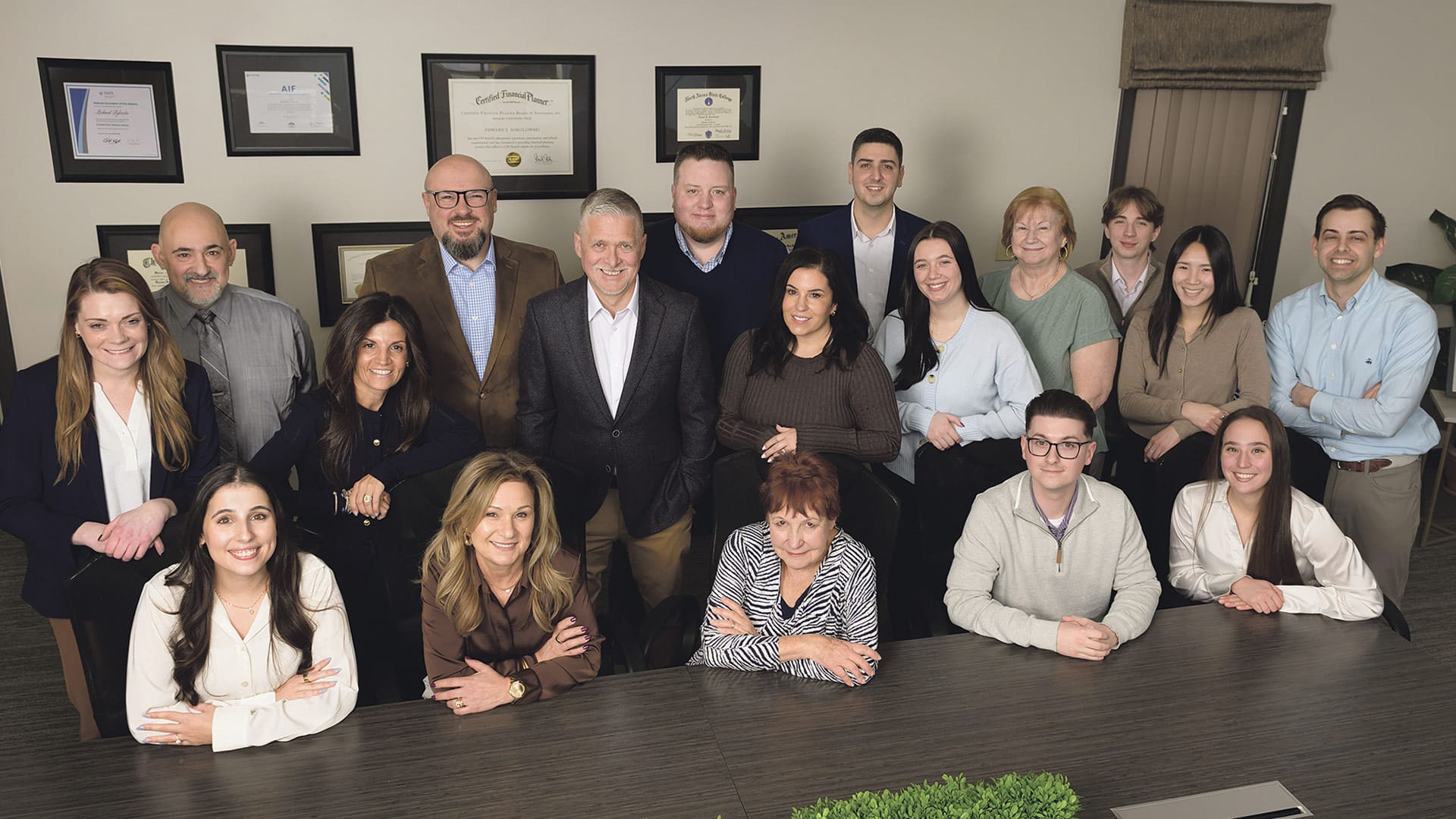
The team at PV Financial puts a hard focus on community involvement.
Photo by Bob Zemba, Simple Truth Imaging
“I didn’t want to call people and say, ‘I have a hot stock tip for you,’” he went on. “I’d rather do that longer-term planning.”
This thoughtfulness, this caring about people and their futures, permeates every aspect of this company, and all three sides of the triangle. That includes the community side, which includes many different types of giving.
The list includes monetary donations — almost all of them small in nature, meaning a few hundred dollars — to a wide array of groups of causes, from Rick’s Place and Ludlow High School hockey to the WillPower Foundation and Baystate Children’s Hospital; from Belchertown Little League and the Southwick Animal Shelter to the Miracle League of Western Massachusetts and the Michael J. Dias Foundation.
“We rarely say no when we’re asked,” said Sololowski, adding that the company likes to spread the wealth, if you will, and support as many causes and agencies as it can.
But it’s important to note that the giving back goes well beyond writing checks — and, again, it’s a company-wide effort, with Sokolowski setting the tone.
He said he was influenced by his upbringing — he grew up in a low-income household and attended a state university (what is now Massachusetts College of Liberal Arts) — and also by mentors, especially Bob Carnavale, president of Palmer Goodell.
“He was a very philanthropic person — he gave back a lot, and that’s how he ran his business,” said Sokolowski, adding that, like Carnavale, he and his team members make giving back a corporate philosophy.
When it comes to those 75 volunteer hours that employees spend on average, Sokolowski — who’s very proud of that number and knows it by heart — said the company likes to get creative in this regard.
By that, he meant fun and productive, such as staging putt-a-thons and fling-stick challenges to raise additional money at charity golf tournaments, rather than playing in the event.
“We try new things,” he said, putting the Slide into Summer Safely programs in that category. Undertaken in cooperation with local police and fire departments, and started a dozen or so years ago in Ludlow and later expanded into Wilbraham, they place on the last day of the school year.
“The thinking was that, if we can talk with them right before they head into summer break, that would be ideal; that’s when they get into trouble — riding bikes without helmets, fireworks, swimming,” he said, adding that the challenge would be how to get students to come to such a program after school let out, and then how to get to them to listen and respond to what they were being told.
The answer was a program that’s as entertaining as it is educational, with ice cream, slides, popcorn, and more.
“I don’t know how much it’s helped; we’ll probably never know, but we’ve had thousands of kids participate over the years, and we certainly think this is worth doing. It’s enjoyable to see the kids, knowing that they’re having fun, but learning.”
“In order for the kids to get free popcorn and ice cream, they have to go up to a police officer or firefighter,” Sokolowski explained. “They’ll be asked a question — like a firefighter asking, ‘what do you if you light yourself on fire?’ And the kid has to say ‘stop, drop, and roll.’ If it’s a police officer, he’ll ask, ‘what do you do when you swim?’ And the kid has to say, ‘you swim with a friend.’ Their wristband gets marked, and then they get the free food.
“I don’t know how much it’s helped; we’ll probably never know, but we’ve had thousands of kids participate over the years, and we certainly think this is worth doing,” he went on. “It’s enjoyable to see the kids, knowing that they’re having fun, but learning.”
Another program the company has initiated is a first responders dinner event, staged in conjunction with the local VFW post. First responders from across the area, including the Ludlow, Wilbraham, and Hampden police and fire departments, the Massachusetts State Police, the Hampden County Sheriff’s Office, veterans, and others participate, said Sokolowski, adding that the event has grown in size since it was initiated eight years ago.
Meanwhile, in the planning stages is another event to recognize several of the area’s nonprofits, perhaps five a year, across different realms, with the twin goals of educating people about their missions and how they are carried out, while also raising money for these groups.
“For every dollar we spend, we should fundraise the same dollar amount back,” he said, adding that organizers are looking at higher-end bingo and raffles as options for fundraising. “It’s a way for the nonprofits to just show up and not have to worry about planning the event or fundraising.”
Meanwhile, the event should provide another creative way for PV Financial employees to volunteer, he said, adding that the company is always looking for fun ways to get employees involved in the community.
It’s just another example of how PV Financial focuses on that third leg of the triangle — one of the keys to this company being truly successful, and one that makes Sokolowski, who sets the tone for all of this, a true Difference Maker.
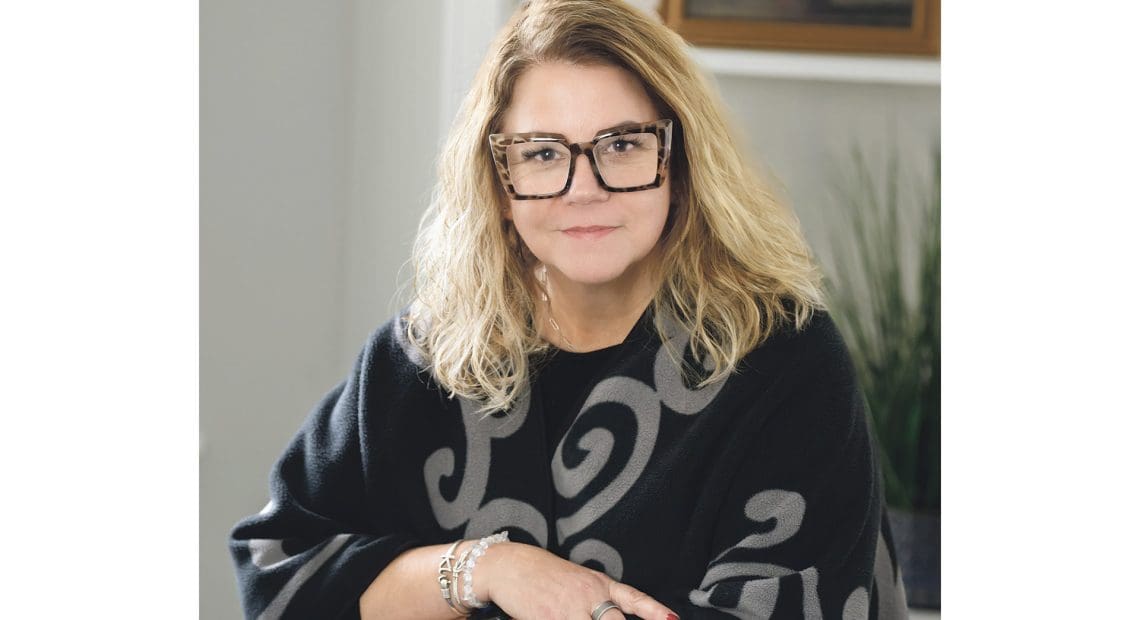
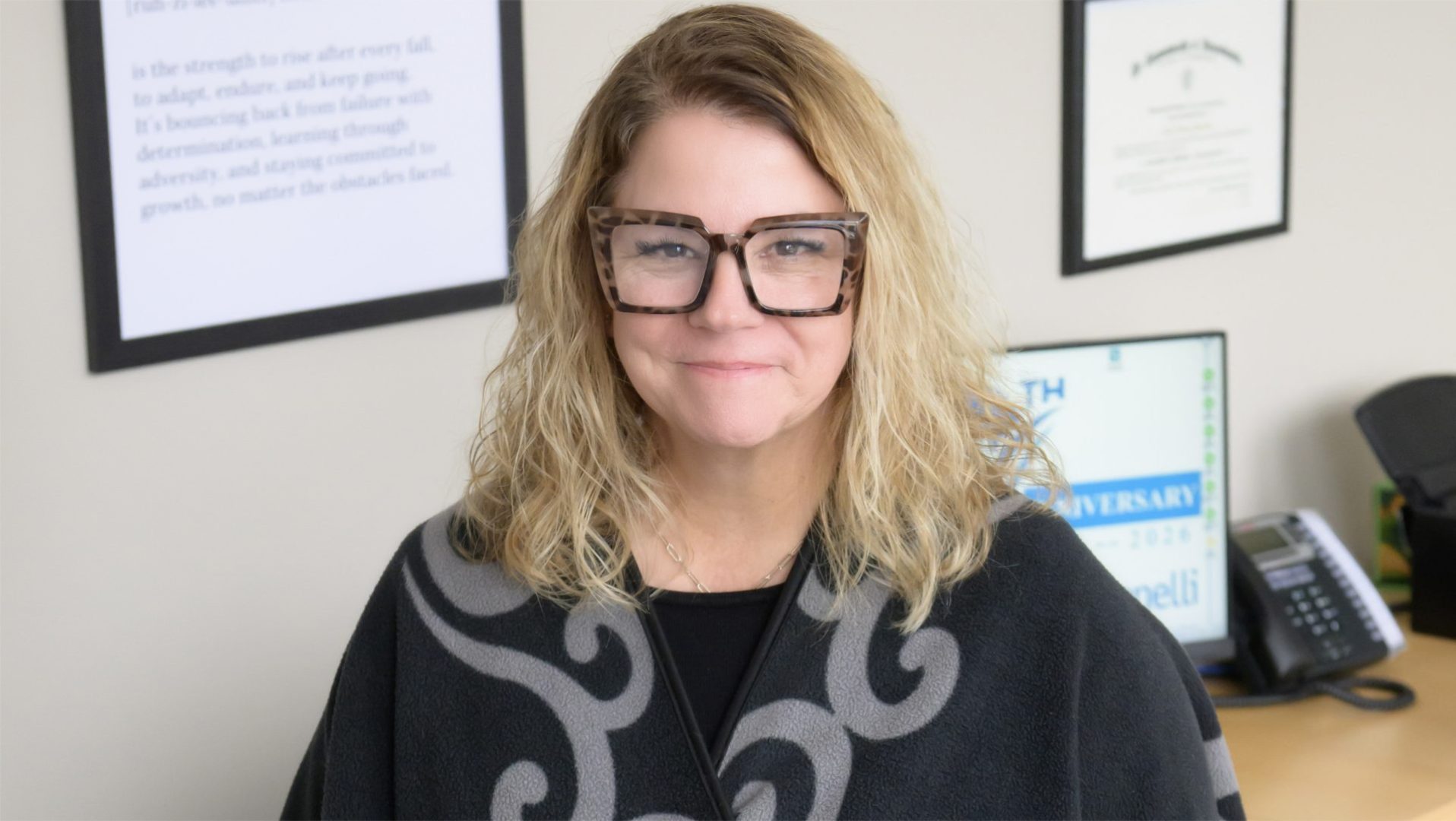
Julie Quink says it’s easy for accountants to get involved in community.
Indeed, she said, there’s no shortage of small nonprofits who need CPAs on their boards to help handle the books, and over the years, she’s done some of that, as almost everyone in the profession has.
And she encourages all members of the team at Burkhart Pizzanelli, P.C., the firm she serves as managing principal, to get involved as well — and, when possible, to go much further than crunching numbers for nonprofits and regional institutions, although that’s important, too. And here, she sets the tone.
She’s affiliated with several professional groups, such as the Massachusetts Society of CPAs and the Assoc. of Certified Fraud Examiners; sits on some boards — those at Baystate Health, Greater Springfield Senior Services, Monson Savings Bank, and Square One, among others — and serves as treasurer for the Quaboag Hills Chamber of Commerce, I Found Light Against All Odds, and the Estate Planning Council of Hampden County.
“One of the things that Square One does is allow us, when the coats come in, to help the kids choose their coat, and some of our team members take part. It’s a completely amazing event for us, and over the years, it has helped the team share my commitment to that organization because we can see that the little work we do for this fundraising really has an impact on these kids.”
But she does, indeed, go further, such as with Square One’s Operation Warm, a program that provides winter coats for kids; she has made the firm the sponsor of that initiative and inspired team members and clients alike to support those efforts.
“One of the things that Square One does is allow us, when the coats come in, to help the kids choose their coat, and some of our team members take part,” she noted. “It’s a completely amazing event for us, and over the years, it has helped the team share my commitment to that organization because we can see that the little work we do for this fundraising really has an impact on these kids.”

Julie Quink with Burkhart Pizzanelli co-owner Deborah Penzias.
Photo by Bob Zemba, Simple Truth Imaging
With that, she tells the story of a now-retired staff member at Burkhart Pizzanelli who had a sign outside his office that read ‘Grumpy Old Man.’
“He was self-proclaimed,” Quink said. “He went one year when the team met with the kids to hand out coats, and he was on his knees with these little people, and he had the biggest smile on his face. And I just thought, ‘if there was nothing else worth it in this whole entire thing, just seeing the look on his face and the joy that doing what he was doing brought … that’s what it’s really about for me.’”
Quink’s success with creating such moments is one of many reasons why she will be among those honored as Difference Makers in 2026. Others include the way she serves as a mentor and role model to those on her staff, creating an atmosphere that is more like a family than a business.
“Julie believes that we live and work in a community, and everyone has a very important role to play,” said Rebecca Connolly, director of the Auditing Department, who nominated Quink for this award. “She takes her role as a business owner and as a role model — not only for her staff, but her family and clients — seriously.
“At work, we joke that we don’t think Julie sleeps because she is so busy with helping small business owners with their businesses, helping them to grow their businesses, navigating tough financial times, while coming out on the other side feeling more supported and in better financial position,” Connolly added, noting that she does all this while serving on several boards, supporting the initiatives of several nonprofits, and serving as adjunct faculty in the MBA accounting program at Elms College.
Quink says she enjoys all aspects of this balancing act and finds the time for all of it, even during tax season — which isn’t really a season anymore, she noted, saying, “it never ends.”
“I can tell you personally that I take away much more than I give when it comes to organizations I belong to and work with, as a board member or even as a volunteer,” she told BusinessWest. “It makes everything worthwhile when you see the impact that you have on someone else’s life.”
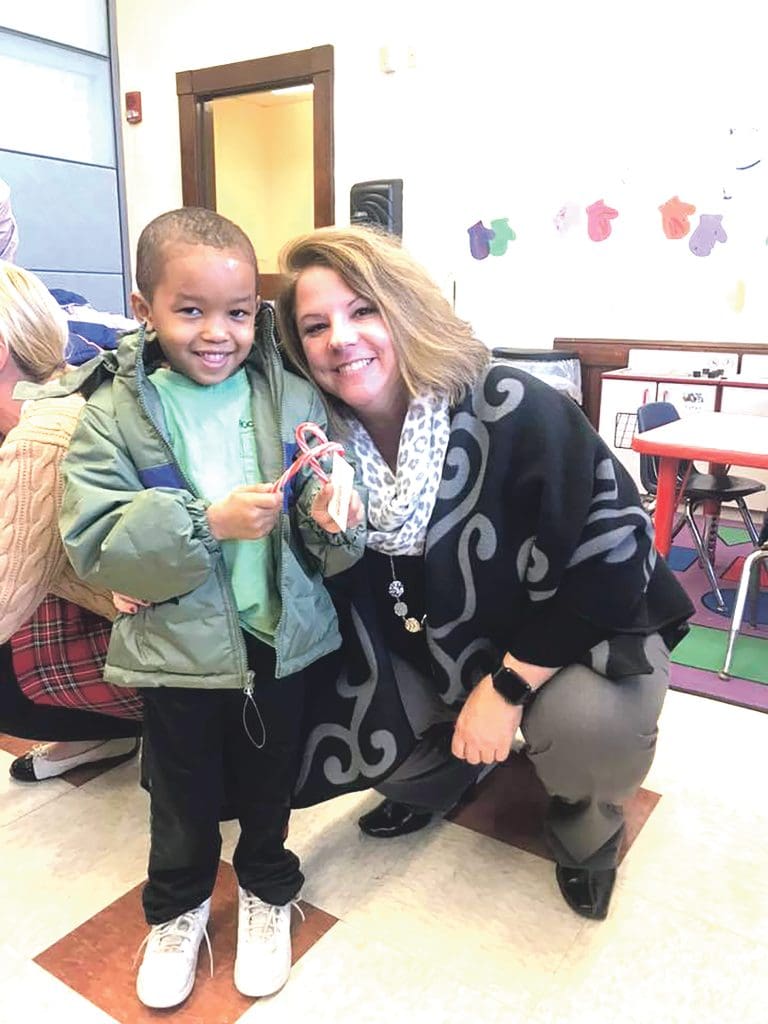
Julie Quink spends a moment with a Square One student as winter coats are distributed as part of Operation Warm.
Overall, Quink excels at listening, responding, and being there for people — in all aspects of her life and every corner of the community.
Quink told BusinessWest that, while in high school, she developed an affinity for numbers and accounting.
“My accounting professor recognized that I had a talent in that area — I wasn’t even focused on it, really — and urged me to explore it,” she recalled. “It was interesting to me, and I understood it; I’m not a scientist, and I could never be a medical professional — I don’t have the stomach for that sort of thing — so accounting was it.”
She considered UMass Amherst and Elms College, and chose the much smaller, much more intimate setting, and never regretted that decision, becoming the first in her family to graduate from college.
“I’m a firm believer that you end up where you’re supposed to be,” she said, adding that she enjoyed the small class sizes there. “In hindsight, had I gone to a large institution, I probably would have gotten lost in the system. It was a benefit to me, and that’s one of the reasons I teach at Elms.”
She started in the field as senior accountant at what was then KPMG Peat Marwick in Springfield and later worked for 17 years at J.M. O’Brien & Co., P.C. in Springfield as director of Audits and Business Issues.
She came to West Springfield-based Burkhart Pizzanelli, now celebrating its 40th anniversary, in 2011 as part of a succession plan, serving first as senior manager of Audit/Consulting before becoming a principal in 2013 and then managing principal in 2015. She’s now spent 35 years in the profession and has seen a good amount of change, especially when it comes to culture.
“When I came on, you were expected to work long hours, you were expected to travel … it was just something you knew was part of the job; it was expected of you, and you did it,” she explained. “Now, it’s a lot different in terms of culture; we’re really focused on our team members here, their wellness, their well-being, their career trajectory. It’s really come a long way.
“Quality of life is really important to the younger generations, understandably, and the meaningfulness of what they do is important,” she went on. “We’ve had to adapt to all that.”
Elaborating, she said Burkhart Pizzanelli was at what she called the “front end of that curve,” which is one of the things that attracted her to the firm. And as managing principal, she is determined to stay ahead of that curve.
“What’s really important for us is balance,” she told BusinessWest, noting that there is now a staff of 25. “I think we, as a leadership group here, are really in tune with what’s impacting our team, and we can make changes and adapt workloads quickly if we see that someone’s overwhelmed.”
Beyond balance, she and others on the leadership team are focused on mentoring and being positive role models for younger staff members.
“All the leaders here have a strong desire to make sure our team is happy, growing in their positions, exposed to new opportunities … so we all take mentoring very seriously,” she said. “If I were to look at where I spend my time during the day, I’d say maybe an hour or two a day is spent in conversation about ‘how can we do this better? Where are we at? And how can I be a resource for you?’ We want to be hearing what’s going on, and we want to be adapting where we need to make change, and that takes a lot of listening. So I like to think I spend a lot of time listening.
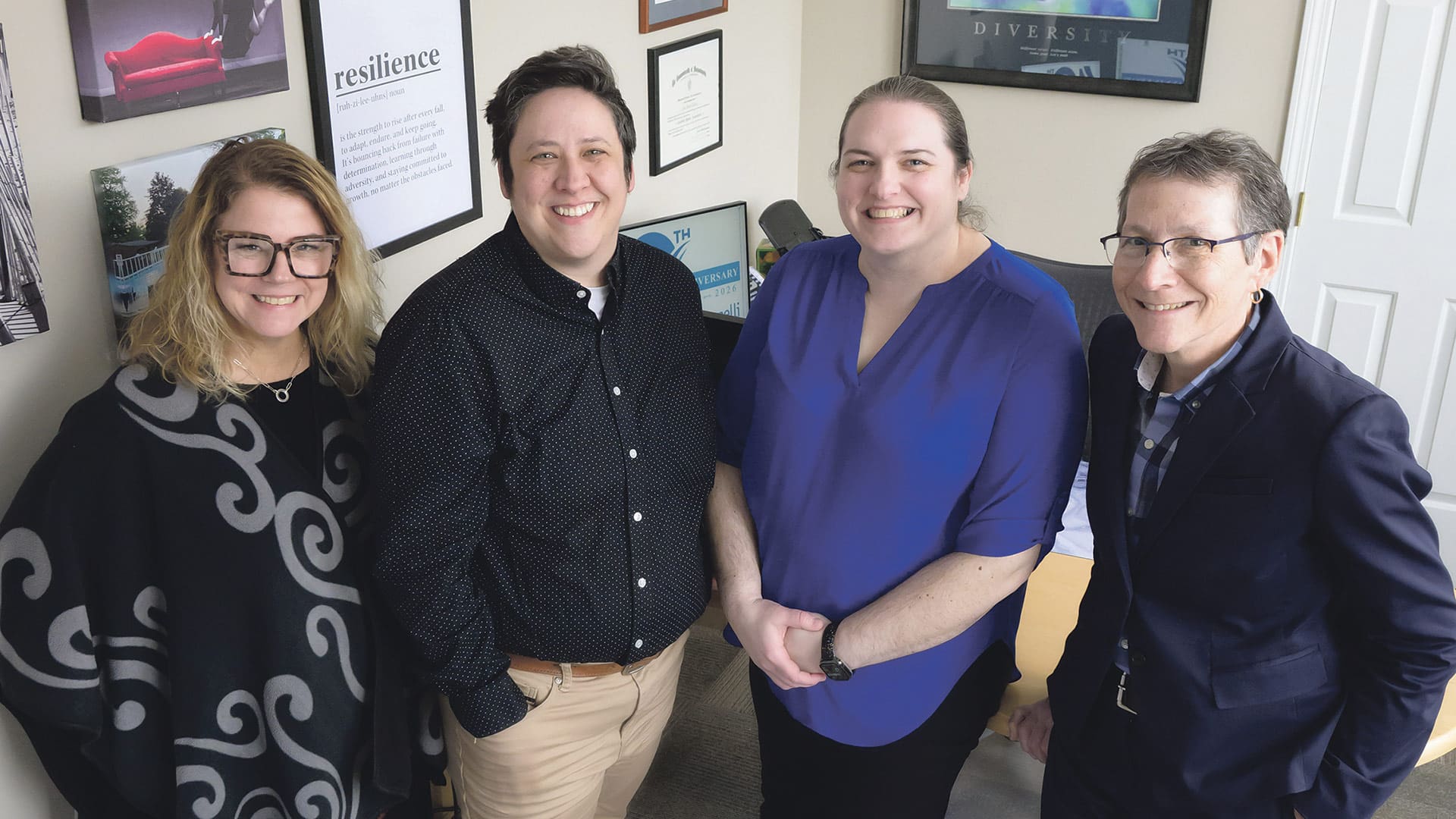
From left: Julie Quink with team members Sarah Lapolice, Rebecca Connolly, and Deborah Penzias.
Photo by Bob Zemba, Simple Truth Imaging
“If I want people to come to me as a leader with a problem, an issue, something I can solve, my advice … I must be authentic, and they need to feel like they’re being heard,” she went on. “I’m really focused on what’s important to them because, if it’s important for them, then it becomes important for me.”
This ability to listen and act on what she’s hearing is one of the many reasons why Connolly considers Quink, the tone-setter for the company, a Difference Maker.
“She really believes in family — she remembers everything about you,” she said. “No matter if it’s April 15 and a client needs her or something has happened to a staff member health-wise, her first response is, ‘do what you need to do; we’ll cover you.’ That’s what we do — we’re a team, and we support one another.”
Indeed, Connolly said, if there is one word that perhaps best sums up Quink and all aspects of her life, it would be ‘supportive.’ That’s true when it comes to the team at work, clients, her students at Elms, and the community.
“I can tell you personally that I take away much more than I give when it comes to organizations I belong to and work with, as a board member or even as a volunteer. It makes everything worthwhile when you see the impact that you have on someone else’s life.”
With that last realm, she stressed that she gets involved with agencies and causes that she’s passionate about, and she encourages others at the firm to take that same approach. “I tell them, ‘don’t just volunteer and not feel like you’re getting meaning out of your volunteering.’”
This sentiment explains why she became involved with healthcare organizations such as Baystate Health — which is going through a challenging time, as all hospitals and healthcare systems are — as well as Greater Springfield Senior Services and Square One.
“I’m on the board of Greater Springfield Senior Services because of the really great work they do with seniors in the catchment area and folks that really need the services we can provide and connect them to,” she said, explaining that she has chaired this board for several years now. “Especially as our population ages, we want people to be able to age at home if they like.”
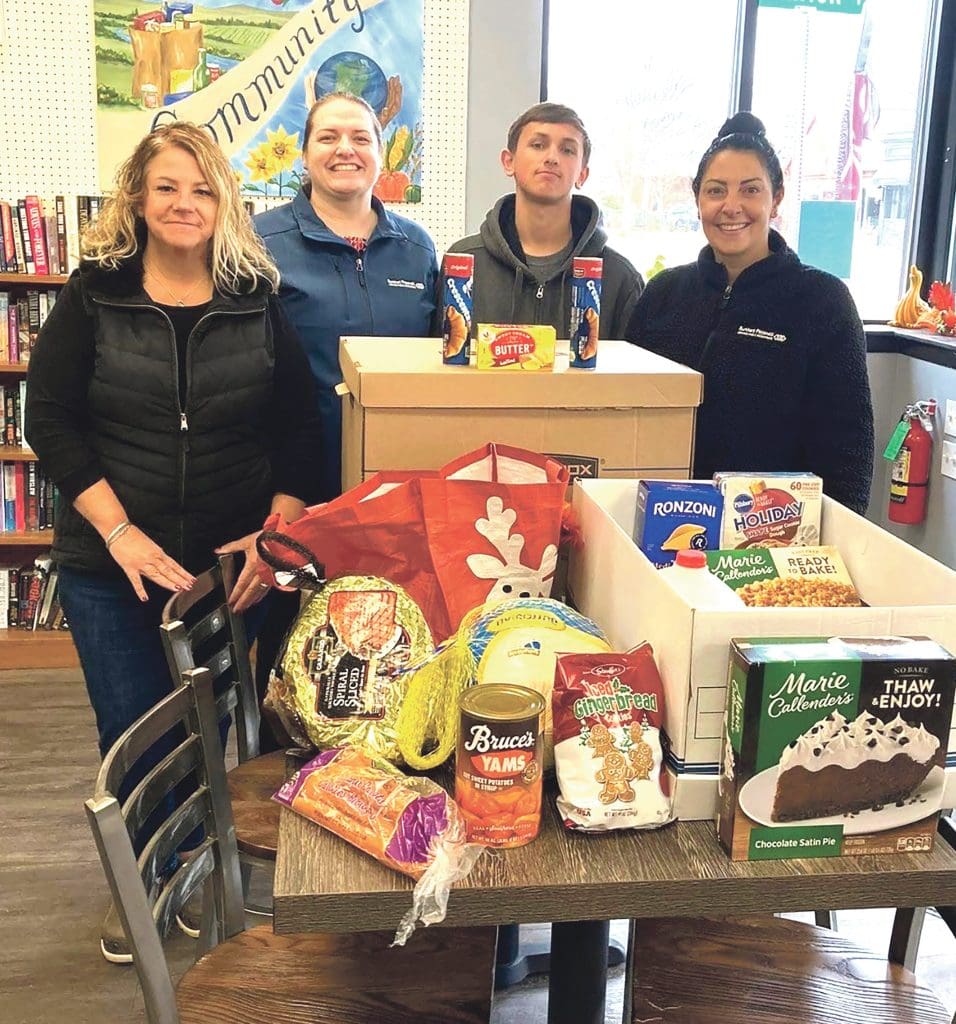
Julie Quink, left, and other Burkhart Pizzanelli team members take part in a program run by the Parish Cupboard, which provides meals and groceries to individuals and families in need.
She was also drawn to I Found Light Against All Odds, an organization that helps secure housing for homeless young women — efforts that made it a Difference Maker in 2022.
“The need exists, probably more than we recognize or are aware of,” Quink said. “Homelessness is a real issue among young women, and that’s what drew me to that organization; we’re actively working toward increasing programming and creating more supports for women in that age group and in those insecure situations. Our goal is to get them off the streets or out of the situation that is harmful for them.”
With Square One, she was approached by now-retired president and CEO Joan Kagan to join the board, and almost immediately started looking for ways to get involved on a deeper level.
She recalled a conversation with Kris Allard, the agency’s vice president of Development and Communication, about the coats program.
“They had someone who worked with them prior who was backing out of the coat campaign, and she approached us about sponsoring that effort,” Quink noted. “We sat across this conference room table, and both had tears in our eyes as we talked about the conditions these kids are dealing with.
“I said, ‘sure, we’ll do what we can — we’ll be a sponsor,’” she went on, adding that it soon became a firm-wide initiative, with fundraising and then and distributing the coats.
The fundraising goal this year was $5,000, she said, noting that more than $10,000 was raised, enough to buy more than 400 coats.
“Over the years, the campaign has evolved to where our clients have gotten involved, and they remind us to send them information on the coat campaign because they want to donate,” she continued. “It’s really become important to us, but also our clients.”
And it’s just one example of how Quink and members of the firm get involved beyond handling the books for nonprofits. And another example of why this role model is also a Difference Maker.
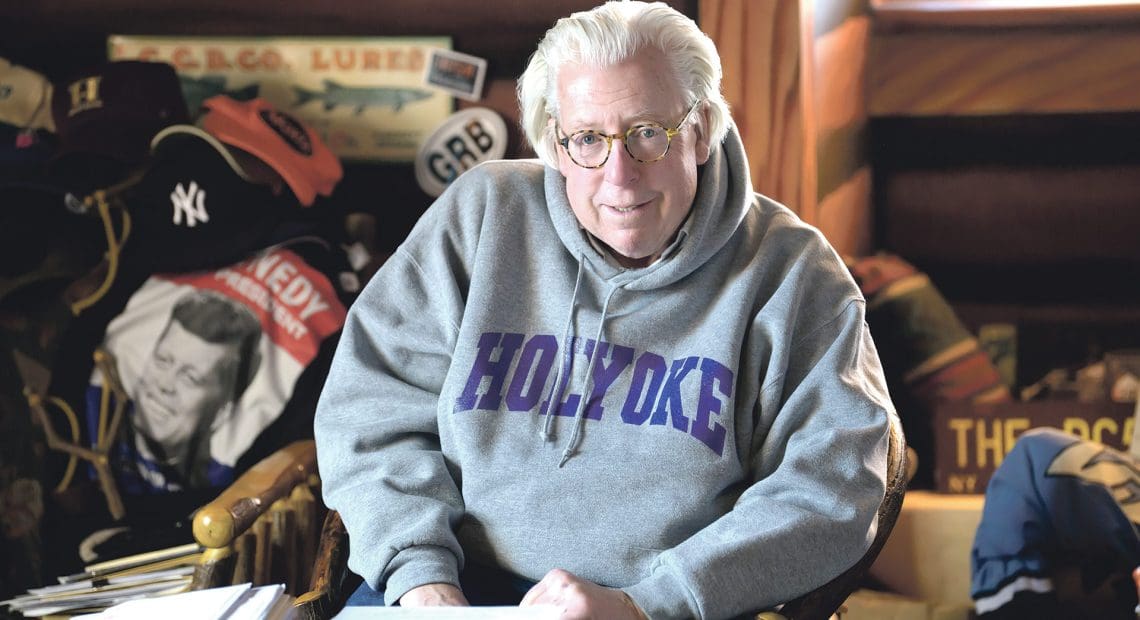
Photo by Bob Zemba, Simple Truth Imaging
They call it the Fishing Buddies Lodge.
It’s a very informal meeting space within the suite of offices for Darby O’Brien Advertising in South Hadley, and, obviously, it is decorated to look like a fishing cabin.
It is crammed, as in crammed, with collectibles and wall art that start to tell the story of the founder of this company. There are bobbleheads, baseball gloves, New York Yankees and Mickey Mantle merch (he’s a long-time fan of the team and grew up, as many his age did, idolizing #7), a scale model of the Bluesmobile, various photos of JFK, countless mugs, hats, and, on the wall, a framed, autographed photo of Ken Osmond, famous for playing the insincere flatterer and provocateur Eddie Haskell on the classic sitcom Leave It to Beaver.
“I was a fan of Eddie’s — he was the king of mischief,” said O’Brien, the Holyoke native who shares that trait with Haskell, one of many that make him a unique character, in every sense, and contribute to his being named a Difference Maker.
Others include creativity — his ads certainly stand out as different and, generally speaking, effective — as well as genuineness, sincerity, and a passion for getting involved, often with underdog groups and causes.
“On the way out, Jeremy grabbed me by the arm and said, ‘will you fight for us? Because we can’t fight.’ I said, ‘yeah, I’ll fight to the finish, because this is wrong.’”
With that last one, there is a long list, everything from efforts to reopen Holyoke’s reservoirs to fishing and bring back his childhood baseball team, the Elmwood Jets, to lobbying against the quarrying of a local ski area with his ‘Mount Tom, I Don’t Dig It’ campaign; from early efforts to thwart casino gambling in Springfield to a campaign protesting the Western Massachusetts Economic Development Council’s (EDC) decision to hire a Tennessee-based firm to rebrand the region for tourism efforts, rather than use local marketing talent.
And then, there was the Phoebe Prince case.
Prince was a student at South Hadley High School when she took her own life after persistent bullying. O’Brien is credited by many with taking the case to a regional, national, and even international stage, attention that eventually led to charges against several students and the passing of anti-bullying legislation at the state level called ‘Phoebe’s Law.’
Soon after the matter starting getting press, O’Brien remembers getting a call from Prince’s parents, Jeremy and Anne, asking if they could meet with him.
“On the way out, Jeremy grabbed me by the arm and said, ‘will you fight for us? Because we can’t fight,’” he recalled. “I said, ‘yeah, I’ll fight to the finish, because this is wrong.’
“No one was standing up,” he went on, adding that he pressed the matter, despite repeated warnings that it would be bad for his business and, eventually, several death threats.
But as with other cases in which he’s gotten involved, he’s ignored such warnings and plowed ahead. Indeed, while he likes to say he’s gotten involved in most of the issues listed above “by accident,” those who know him well say otherwise.
“He literally does not back down from a fight or a wrong,” said John Garvey, a friend and fellow marketing firm owner. “And he encourages other people to not back down when they see a wrong.”
This is certainly the case with a weekly blog of sorts that he started at the height of the pandemic as a way to keep people connected, informed, and even entertained, and also to generate dialogue on the issues of the day.
While some offerings are whimsical, such as taste testings (fruitcake and Twinkies, for example) involving his grandson, Flynn, others are poignant and thought-provoking, such as a recent tribute to his brother David (known to most as ‘Moon’) who died last month, a remembrance of one of the students shot at Kent State in May 1970, who died recently, and sharp criticism of Newton officials for making a man take down an ice rink he created in his front yard during COVID because he lacked a special permit.
“Imagine doing that to kids during this COVID-19 winter?” O’Brien asked rhetorically. “Jackasses. Look the other way and let the kids have good, clean fun, will ya?”
Such sentiments, and the williness to express them, help explain why he’s a true Difference Maker.
Getting the Message
O’Brien said he took note of all the things marketing experts said not to do as he was starting his business — such as not getting involved with retail or political campaigns — but, by and large, he ignored them.
Indeed, among his first clients were the men’s clothing store A.O. White and Holyoke mayoral hopeful Marty Dunn, who was waging an underdog (there’s that word again) campaign to unseat long-time incumbent Ernie Proulx.
“He was a sure-shot loser because Ernie Proulx had been mayor for 12 years, he won every ward, every precinct, and had a reputation for demolishing Irish candidates,” O’Brien recalled, adding that he drew inspiration from boxer Sugar Ray Leonard’s ‘stick-and-move’ tactics to defeat Marvin Hagler and ran a successful campaign that he called “a real strong statement about being creative.”
Suffice it to say that O’Brien has been doing things his way — not the way the experts advise — since he started his company — and, actually, long before that.
Like when he was in high school — actually, several of them, as it took him six years and several institutions to earn a diploma. He said he joked to his frustrated father, a vice president with the construction firm Daniel O’Connell’s Sons, “dad, the longer I’m in school, the smarter I get.”
He added that “I hadn’t really thought about advertising, although I was kind of a promoter as a kid.” But he was eventually “discovered” by the owner of the local firm Bewick Advertising.
“He called me, hired me, and put me in charge of new business, which I knew nothing about,” O’Brien recalled, noting that he eventually started his own agency in 1980, taking with him many of his clients from Bewick and focusing on the goal of getting more of the larger businesses in the region to use local marketing talent.
Over the course of roughly 45 years in business, O’Brien has made his mark in many different ways, starting with his approach to marketing — which is to almost dare clients, and potential clients, to look beyond what would be considered safe — something he laments that very few are willing to do now.
His ads can certainly be defined as different and creative, to the extent that the phrase ‘Darby ad’ has entered the lexicon, a reference to something bold — and at times controversial — that stands out.

One of the many marketing initiatives that could be described with the phrase ‘Darby ad.’
Like the billboard featuring a Hot Table panini and the headline ‘Bite Me.’ Or the billboard for lawyer Raipher Pellegrino with the words, ‘The Iceman Sueth.’ Decades ago, there was a newspaper ad for the Springfield Civic Center promoting a tennis match at the then-Springfield Civic Center between Springfield native Tim Mayotte and Czechoslovakian Ivan Lendl. The headline read, ‘On February 9, BayBank Invites Tim Mayotte Back to Springfield to Bounce a Czech.’
As O’Brien tells the story, Lendl called the event organizers saying that was backing out of the match due to the ad, which he considered offensive, then started laughing, saying he was just kidding.
Then there’s the ad O’Brien put together for a group opposing casino gambling in Springfield. Featuring a picture of a masked man pointing a gun at the reader, it took the headline, ‘If You Build It, They Will Come.’
“You hire Darby because you want ideas,” Garvey said. “You don’t hire Darby to run your ideas by him. And for God’s sake, don’t fight him on the creative — because that is holy ground.”
Peter Rosskothen, the serial entrepreneur who has been a client of O’Brien’s for more than 30 years and worked with him on campaigns for the Log Cabin Banquet & Meeting House, the Delaney House restaurant, and his current venture, Delaney’s Market, agreed — sort of.
In fact, he has fought him on creative content on a few occasions, but most of the time, he’s been talked into ads that were, well … different.
“He likes to push the envelope, and he makes a difference with his uniqueness,” Rothkossen said. “He’s very bold, and he tells me as a client that I’m being too conservative. I like that — I like the fact that the material tends to be different and stands out.”
While his marketing and advertising impact has been noteworthy, so too has O’Brien’s work within the community, much of which has involved young people, Holyoke, or some combination of the two.
Such as his efforts to reopen the Paper City’s reservoirs to fishing, a campaign that featured a group he created called the Fishing Buddies, and some escapades involving O’Brien and Peter Jourdain in Blues Brothers-like outfits. He said this effort started by accident when he and an acquantaince, who fished the reservoirs when they were young, tried to relive old memories several decades later and were chased off by police.

The Fishing Buddies Lodge at Darby O’Brien Advertising is crammed with collectibles that speak to O’Brien’s interests — and passions.
Photo by Bob Zemba, Simple Truth Imaging
“There’s no reason why inner-city kids can’t fish out here,” he said, adding that, while the fight was ultimately unsuccessful, despite widespread support — the reservoirs remain closed to fishing — he had some fun and gave people something to think about. And that could be described as his MO.
It was the same with the EDC’s decision to hire a Tennessee firm to rebrand the region. After the ad campaign was created, O’Brien famously challenged then-EDC President Allan Blair to a winner-take-all ping-pong game in an ad that appeared in BusinessWest.
“I told him that if he beat me, I’d shut up and he could put me on his board, and that if I beat him, he’d give the work to the local talent,” said O’Brien, adding that, while Blair never responded, he got his point across, and had some more fun.
With the Phoebe Prince case, though, his involvement was taken to new and far more serious levels.
Encouraged by his father, who thought South Hadley officials were trying to sweep the matter under the rug, O’Brien reached out to Boston Globe columnist Kevin Cullen and went on the record for a piece titled “The Untouchable Mean Girls,” which was essentially the first news story to suggest that bullying was the root cause of Prince’s suicide.
“All hell broke loose,” recalled O’Brien, adding that national and global media were soon all over the story. Soon thereafter, he met with Prince’s parents and committed to do whatever he could to generate more press and hold those responsible accountable. And in the months and even years to follow, he was the subject of threats to his business, health, and life.
Rosskothen said he’s one of many who have, over the years, advised O’Brien that it might not be good for his business to get involved — with the Prince case, but also many of the other issues he’s become entangled with.
“A conversation like that with Darby is a pretty normal conversation because he pushes hard,” Rosskothen said. “As a friend, I sometimes tell him that; he listens, but that doesn’t mean that he follows the advice.”
O’Brien continues to push for what he considers right in his weekly blog, which he calls “Keep Up Your Dukes,” something he said repeatedly to a close friend during his recent cancer fight.
He acknowledged that the more common phrase is ‘put up your dukes,’ a nod to someone that you’re ready to fight and that they should bring it on. His take is different — meant to say that one should always be ready to fight when necessary.
He’s always been that way, and that’s what makes him a Difference Maker.
Rachelle Hannoush often talks to teenagers about red flags and green flags in relationships — because, at that young age, it’s easy to mix up the two.
“Say a guy is isolating you from your family, isolating you from going to your volleyball practice. And when I ask about it, you say this is actually a green flag because it shows that they love you and want to spend time with you,” said Hannoush, whose title — director of Youth, Violence Prevention, and Court Support Programs at the YWCA of Western Massachusetts — hints at the many hats she wears there.
In this particular part of her conversation with BusinessWest, she was explaining the ‘prevention’ part of her job, especially an initiative called the HERE (Healthy and Empowering Relationship Education) Project, which helps students between ages 12 and 18 how to navigate everything from dating violence to gang activity to sex trafficking risks.
“We go into schools and teach youth different curriculum that enhances their skills on healthy relationships, violence prevention, bystander intervention. Like, if you see something, what do you do? Who do you talk to? How do you stay safe? And also, how can we have healthy relationships? What are the green flags? What are the red flags? During high school and middle school, a lot of things happen. So it’s really equipping them with skills to be able to make good decisions as they get through those teenage years.”
“What empowers our work and makes the biggest impact is when different organizations work together. And I see that here at the Y — all the departments truly live its mission, which is to empower women.”
Hannoush said prevention is effective — and is more important than ever in the age of social media and the extra pressure it places on kids.
“They can see, ‘oh, she got to go to the Caribbean for April vacation,’ or ‘she got this purse,’ or ‘she’s hanging out with this friend, and they didn’t invite me.’ There’s much more transparency and knowledge, and sometimes it can be very toxic.”
Another of Hannoush’s roles involves supervised visitation centers in Hampden and Hampshire counties, which provide secure, neutral visitation services for families experiencing domestic violence, divorce, custody, and probate issues. The program provides a structured environment for children to connect and visit with their non-residential or custodial parents.
Rachelle Hannoush says her own early struggles as a high school student in Lebanon have influenced the significant empathy she has for teenagers today.
Photo by Bob Zemba, Simple Truth Imaging
“We ensure an environment that’s safe; the most important thing is the child in that scenario,” she explained. “We want the child to have this special bond with their parents, and supervised visitation creates an environment where the parent can connect or the caregiver can connect with the child in a safe environment.”
The third leg on the stool of her job description is working with SAFEPLAN, which provides vital court advocacy services for victims of domestic violence, sexual assault, and stalking in five area district and probate courts. These advocacy services include assistance in obtaining restraining orders, harassment orders, safety planning, and resource and referral information.
“In each of the courts, there’s a SAFEPLAN office and a SAFEPLAN advocate. And anyone that is looking to do a restraining order or harassment order, the advocates help them,” she said. “Sometimes we’re making referrals to other community organizations, or for other programs within the YWCA.”
So … it’s definitely more than a long job title for Hannoush — it’s a lot of work. And that’s not even touching on some of her other community-centered projects outside the YWCA (but we will touch on those a bit later).
But she’s gratified by her copious responsibilities at the YWCA, where she started working last September after years of being connected to the nonprofit as a volunteer and advocate.
“It’s amazing work, and I’ve always been a fan of the YWCA, even before I started working here,” she said. “What empowers our work and makes the biggest impact is when different organizations work together. And I see that here at the Y — all the departments truly live its mission, which is to empower women.”
Hannoush grew up in Lebanon, and to say she encountered struggles in school would be an understatement.
“The reason my family moved was because I was, you might say, the troubled child. I remember to this day, my principal telling my mom, ‘don’t bother with her; she will be nothing in life.’ And I had to redo my freshman year because I failed it. I was going through a lot back then — just teenage stuff — but nobody stopped to ask, why is she doing this?’” she explained. “I think that’s why I care so much — that experience really informed my work. But I didn’t come to that conclusion until much later.”
First came a dramatic turnaround when her family settled in Holyoke.
“It was my sophomore year of high school, and the change in school environment shifted me to become almost a straight-A student,” she recalled, adding that she still derives motivation from her high school experience in Lebanon. “That principal’s words will never leave me — I will be something, and I will do my best, and I will always be looking for more.”
Those years also gave her a deep empathy for the challenges of young people, which is why she found herself working in early education.
Her path there wasn’t exactly linear; she originally went to school for nuclear medicine. But she loved spending time with the children during internships at Boston Children’s Hospital, and when she had her first child, she began to understand the critical role of early education for a working parent — and its cost and access challenges — and she began to explore that as a career.
“I love science, so I was able to blend science with motherhood and education,” she said. “I started as an assistant teacher and then went back to school and got my teacher certification, then lead teacher certification, then director certification. And that started my educational leadership journey.”
A few years later, in 2019, Hannoush found herself developing a passion for professional development and also came across across the Children’s Trust, a Boston-based organization that addresses child abuse and neglect, which was looking for trainers.
“As early educators, as caregivers, we’re mandated reporters, which means, if you see something, you have to report it. My staff had always taken the mandated reporter training, but the training only shows you how to report; it doesn’t teach you how to respond. Like, if a child comes and discloses something to me, what’s the appropriate thing to say? That caught my attention and started my journey deep diving into prevention.”
The Children’s Trust eventually appointed her outreach coordinator for Western Mass. “I would reach out to different schools, different programs, anyone serving children, to say, ‘hey, we will give you training on how to create policies and procedures that ensure safe environments for children.’ Then I started doing parent workshops. With everything I do, the child is always center.”
“Rachelle has spent years working on the front lines and behind the scenes, creating systems of support and bridging gaps between agencies, schools, nonprofits, and families. Her ability to mobilize networks, build trusting partnerships, and bring diverse sectors together demonstrates the very essence of making a difference.”
That mindset led Hannoush to create an organization called Rooted Leaders, which partners with area schools, early education programs, and youth-serving organizations through parenting workshops, educator workshops, leadership services, and coaching and consulting programs.
“You cannot act in silos when you are serving children and families,” she told BusinessWest. “And if you want to have a really big impact, the impact comes from working together.”
The COVID years, especially, posed challenges for educators.
“Social and emotional development got really bad. So a lot of support was needed within the classrooms when we came back. I remember, when we came back into the classroom after COVID, the kids had to be in what I called islands. I’m like, how do we keep 3-year-olds separated? So we created islands. I got different colored rugs and it was like Pirate Island, or Lego Island, and each child got to have an island per day.
“That takes creativity and planning; we knew that it wasn’t right, but it’s what we had to do,” she added. “So how do you make it fun and exciting so children don’t feel it?’”
Hannoush has taken on other civic responsibilities as well. As president of the Massachusetts Assoc. for the Education of Young Children, she represents thousands of early educators across the state, advocating for policies and professional supports that strengthen the early education workforce.
And her commitment to young women is further amplified through her role with the Hampden County Commission on the Status of Women, where she champions opportunities, safety, and leadership development for girls and young women across the county.
“Her voice and advocacy contribute to meaningful conversations and initiatives that uplift the next generation of leaders,” said Lauren Kidrick, a registered behavior technician with Beacon Mental Health Services, who nominated Hannoush as a Difference Maker.
Hannoush is also an adjunct professor at the Urban College of Boston, a role she took on after earning her master-of-education degree last spring from Bay Path University. “One of my goals was to teach in higher education. I’ve been doing professional development, and I’m training everywhere, but I really wanted to experience the higher ed field.”
This depth of commitment impresses Kidrick. “Across all her roles — nonprofit leadership, statewide advocacy, higher education, and community service — Rachelle has spent years working on the front lines and behind the scenes, creating systems of support and bridging gaps between agencies, schools, nonprofits, and families. Her ability to mobilize networks, build trusting partnerships, and bring diverse sectors together demonstrates the very essence of making a difference.”
Hannoush said she’s not afraid to say no, but she also makes sure time with family comes first, noting that she and her husband, Ziad Hannoush — “my support and cheerleader from day one” — make sure their children, ages 13, 10, and 6, come first.
She’s also quick to credit others in her life, from her mother, Carol Tatarian, to her grandfather, George Tararian, for their influence on helping her overcome obstacles to success.
“My grandpa was a big supporter of mine,” she recalled. “He always really believed in me, regardless of what was happening at the school in Lebanon. He would say, ‘you are smart; you just have to put your mind to it — never give up.’ And he would spend hours teaching me, doing homework and preparing me for tests. So, whenever I succeed in something, he’s always there with me.”
That said, “I’m still figuring it out as I go,” Hannoush went on. “I do the best that I can today. I don’t think 10 years from now; I think one day at a time, one month at a time. Wherever I see an opportunity to make a difference, to help someone, I take the opportunity — because that’s what stays. That’s our legacy — our legacy is our impact.”
And that’s why she’s able to take on so much, to be a true Difference Maker — because helping others succeed, as others helped her, is deeply meaningful.
“Entrepreneurship has given me the ability to dream beyond survival and focus on legacy,” she said. “I come from a place where nothing was handed to me, and that reality fuels my passion to build something meaningful for my family, my children, and the community I serve. I want to show that it’s OK to want more, to pursue different goals, and to redefine what success looks like. Breaking generational cycles means not only changing our circumstances, but also creating access, hope, and opportunity for the next generation.”
Rob DiTusa (left) and Ryan Alekman Photos by Bob Zemba, Simple Truth Imaging
While talking about the culture of giving back that permeates their Springfield-based personal injury law firm, Ryan Alekman and Robert DiTusa brought up a new tradition — one that has been part of their last two Thanksgiving potluck lunches, and will continue going forward.
“Every staff member gets $100 with a letter that says, ‘you can do whatever you want with this $100. You can put it in your pocket, no shame; everyone’s got their own needs. But we ask that you consider paying it forward,’” Alekman explained.
A month later, at the firm’s holiday party, employees are asked to share, if they’d like, what they did with the money.
“Invariably, everybody has done something to give back to another person. Somebody will say, ‘I took that $100 and added my own $100 and I gave it away.’ And everybody’s clapping because they’re so excited that they work with people who think that way.”
DiTusa added, “it always shocks me, the diversity of things that people do. Somebody gave it to a stranger; they literally saw a stranger in need at a store, who didn’t look like they had much, and they paid it forward right there on the spot. They said the person was in tears. Other people say, ‘my church has a charity drive, or a toy drive.’ Somebody else said, ‘I brought my kid to Target and told him we’re buying toys today, but none of them are for you.’ They were showing their kid how to give back.
“The community has really embraced us; we have a very successful business, we help a lot of people, and that, by itself, is great. But watching everybody who works here have that same value set of wanting to make the world a better place … that’s fantastic.”
“It really does warm my heart to know how many lives you’re able to touch just by sending people out with $100 to do some good,” he said — just one way in which giving back to the community has become firmly embedded in the company culture.
“We’re very fortunate,” Alekman said. “The community has really embraced us; we have a very successful business, we help a lot of people, and that, by itself, is great. But watching everybody who works here have that same value set of wanting to make the world a better place … that’s fantastic. These are incredible people that we work with.”
That emphasis on giving back is something potential hires understand before they join the firm, Alekman and DiTusa told BusinessWest; it takes many forms, and it’s something that has been honed over time. And because these two partners set the tone, they’ve earned a spot among the Difference Makers class of 2026.
Rob DiTusa says giving back to the community has become an infectious part of the law firm’s culture.
Photo by Bob Zemba, Simple Truth Imaging
Alekman thought back to the tornado of 2011 as a time when much of this community involvement was coalescing. They were already supporting nonprofits like the Food Bank of Western Massachusetts and the Red Cross, but the tornado threw the need into stark relief.
“The Red Cross reached out and asked me, as somebody who was known in the Latino community because I’ve been on Spanish TV and radio for many years, if I would be a face that people would trust, and go on the radio and explain what the Red Cross was doing for people who had been harmed by the tornado,” he recalled. “So Rob and I did that. We raised a significant amount of money for the Red Cross back in 2011.”
The firm has also been a longtime supporter of the WillPower Foundation, which helps families with different abilities, and Revitalize Community Development Corp. (CDC), not only giving money to the latter, but sending teams of employees to its #GreenNFit neighborhood rebuild days, helping provide home repairs for area residents in need.
Chelsea McGrath — who met Alekman and DiTusa in 2019 when she was executive director of the WillPower Foundation, and is now vice president of Operations & Finance for Revitalize CDC — nominated them as Difference Makers.
“They are extremely financially generous, donating extensively to many nonprofits in the area and abroad,” McGrath said, citing the aforementioned nonprofits as well as Square One, Rachel’s Table, Community Legal Aid, Ronald McDonald House, Suit Up Springfield, and New North Citizens’ Council, a few of the dozens of nonprofits the firm supports.
“During the COVID-19 pandemic, when WillPower’s funding was significantly limited, I asked them to increase their already very generous annual contribution, and they did not hesitate to do so,” McGrath added. “However, they don’t just write a check and go about their day. They are extremely generous with their time and commitment to community service as well.”
But the partners are always sharing credit with their team.
“They enjoy it. They feel like they’re part of it. They see what we’re doing, and then they engage in it,” DiTusa said. “When it comes to giving, some people are natural givers — they’ve grown up with it, maybe they knew somebody that was philanthropic and they want to emulate that, or maybe they were helped by a charity at some point in their life and they thought, ‘I’m going to give back when I have my opportunity.’ Whatever drives you to it, you get there.
“But sometimes,” he added, “you can show other people how to give, and it’s really infectious.”
Alekman has been practicing law for 28 years, while DiTusa has been in business for more than 30 — and at one point was renting an office from the former. They found they got along well, so in 2010, they decided to team up.
“When I was renting space, we started to do some cases together, and we discovered that our skill sets were so complementary that we made a really good team,” DiTusa added, explaining that he specializes in litigation, and Alekman prefers negotiating with insurance companies and pressing for settlements.
“So putting those two skill sets together made a whole lot of sense,” he added. “And we both love what we do; not all lawyers can say that.
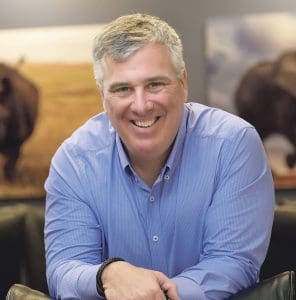
Ryan Alekman says it’s gratifying helping people who call on their worst days to find fair resolutions.
Photo by Bob Zemba, Simple Truth Imaging
“When I look back at the past 15 years, the most satisfying thing is the fact that we’ve grown this firm from two lawyers to seven lawyers, and from five people to 25. That’s something I didn’t necessarily imagine. It’s been incredibly satisfying to be able to grow something very small to what I think is a pretty decent-sized firm, and be able to serve as many people as we do.”
DiTusa said he was drawn to personal injury law because he’s always considered himself an underdog and wants to advocate for people like that.
“As a lawyer, I see myself as somebody who stands up for underdogs, somebody who’s willing to fight really hard and for people that have been taken advantage of.”
Alekman encountered the personal injury discipline in a more random way. His mother was a lawyer in Boston, and after his undergraduate studies, he took a job at a personal injury firm, where he developed a knack for the customer service side of the business — communicating with clients in a way that his co-workers did not. He developed a taste for it and attended law school, eventually working in personal injury and criminal defense, but eventually focusing solely on the former.
“Every day, we wake up, and we get to help people. And I’m passionate about helping people,” Alekman said. “I know that sounds cliché, but we literally wake up in the morning, and someone’s going to come to us with a problem, and we we get to solve that problem, and it just feels really good.”
Both were quick to credit their team for the firm’s legal successes.
“Every time that we get a large settlement, every time we do something that’s really good for a client, I make sure I go around to the staff and say, ‘hey, you were part of this. This isn’t just our victory,’” DiTusa said. “If we’re not all rowing in the same direction, we don’t get the results that we’re able to get.”
And that goes for both their work with clients and the firm’s community service, with priorities ranging from food insecurity to anything having to do with children — and sometimes both.
“We’re just one part of a bigger system that gives back to people. And, trust me, there is great need in Springfield, but there are also a lot of great people in Springfield that help fill the need.”
“Nobody should go to sleep hungry. We live in one of the wealthiest countries in the world, and people go to sleep hungry. It’s insanity. That shouldn’t be a thing, right?” Alekman said. “We hear from people at Square One about how they provide food to kids to bring home on the weekends because otherwise they’re not sure those kids are going to eat. How can you not want to support an organization that’s doing that?”
Many walls at Alekman DiTusa feature nature photographs that Alekman has taken on trips around the world.
“I share my photos on Facebook, and a friend of mine said, ‘hey, you should do a calendar,’” he recalled. So he did — but he wanted to use the proceeds to give back, so for the past four years, he has sold those calendars of his international photos to support Mara United School in Masai Mara, Kenya.
The first year, he donated $1,500 from those sales to get the school tied into a nearby village’s well, the first time the kids were able to access fresh water. Other years have funded electricity at the school, a small tractor to help with agriculture, and, most recently, 48 triple bunk beds, mattresses, and other items for a new girls’ dorm.
“I’d love to be able to fund every project,” Alekman said. “One of the things that we don’t get to do very often is to see how our support makes a difference, and going to that school — I’ll actually be back in October, and I’ll get to visit the kids again — it’s amazing how much they do with so little and the difference a small amount makes to change lives over there. So Rob and I are fortunate because we get to do what we do — we get to help people.”
And so does their staff, he added. “They put us in a position of success every day. They come to work with the same attitude — to help somebody. And we’re helping people on their worst days. I mean, nobody’s like, ‘yay, I get to call a lawyer.’ No — someone got injured, or something horrible happened to a family member.”
With their success, he added, comes a responsibility to give back, which is why the firm’s success in its legal cases is so tightly interwoven with its work in the community.
“We’ve worked hard and been fortunate enough to be in a position to be able to give back, so we do,” DiTusa said. “We’re just one part of a bigger system that gives back to people. And, trust me, there is great need in Springfield, but there are also a lot of great people in Springfield that help fill the need.
“I always think, if you’re in a position to be able to give and you do it, you make yourself a better person,” he added. “I think it’s called selfish giving. Giving is good for everyone, and we have to do it as a community. But it’s also selfish in a way because, by doing it, you also feel good. The moment you make that gift, you feel better about life, about everything. And the more you do it, the better you feel.”
McGrath, who has been on the receiving end of the firm’s generosity in more than one setting, doesn’t see it as selfish at all.
“Their honesty, integrity, and dedication shows in their commitment to service,” she said. “They truly embody every aspect of what it means to be a Difference Maker.”