
Dr. Andrew Lam Keeps Writing New Chapters
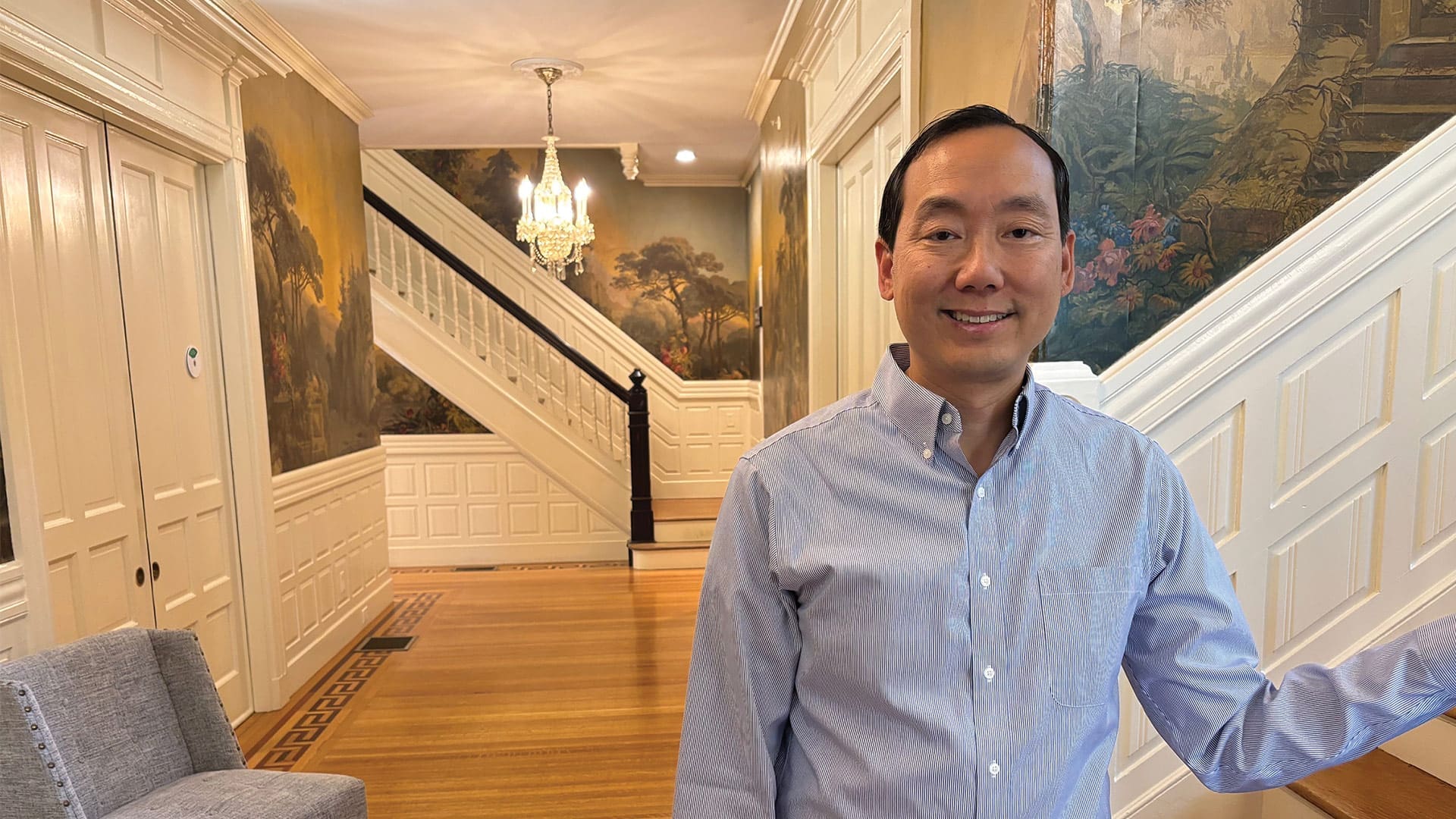
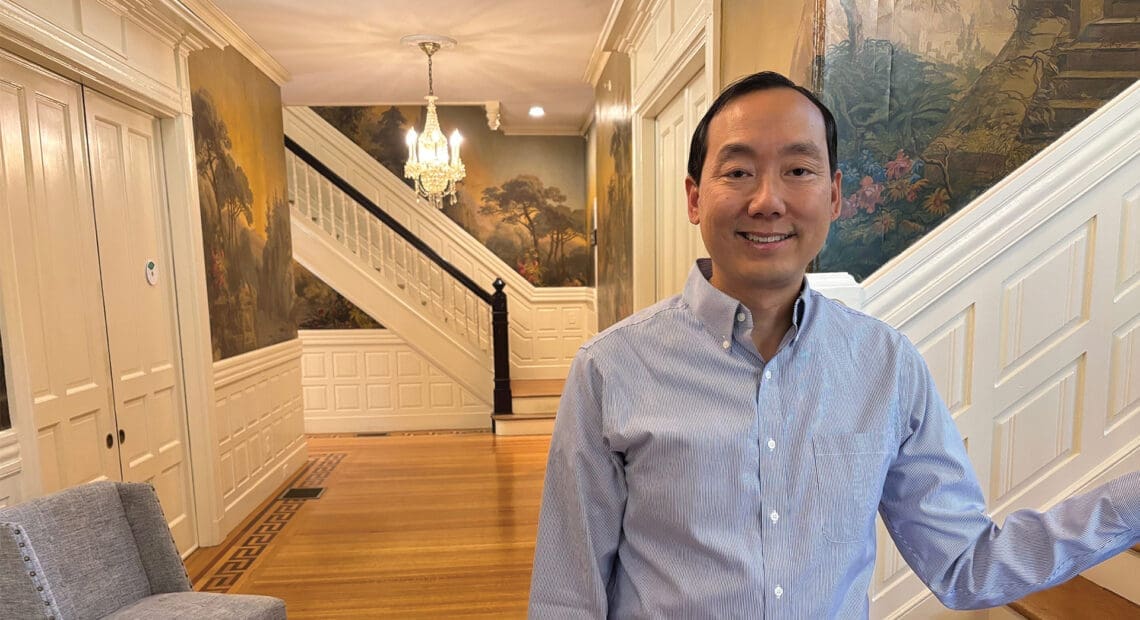
Dr. Andrew Lam inside the restored Brewer-Young mansion
Where Are They Now?
It’s called the ‘Cobra Effect.’
And Dr. Andrew Lam is more than happy to explain.
“In India in the 1800s, the British in Delhi had a problem: there were too many cobras. So they said, ‘let’s make a bounty on cobras; if the people bring us a dead cobra, we’ll pay them,’” he explained. “At first, it seemed to be going great; they were getting all these cobras, and the native cobra population declined. But for some reason, the cobras kept coming, and they realized people were breeding cobras so they could get paid for them. So they stopped doing the bounty, and then the people released their cobras into the wild because they were worthless, and that increased the cobra population.
“It was a classic backfiring of a well-intended policy,” Lam went on, noting that he made this case part of a chapter in his latest book, called What Could Possibly Go Wrong? Unintended Consequences, Unnecessary Blunders, and the Urgency of Avoiding Tomorrow’s Mistakes.
It is expected to be released early next year, said Lam, who gave BusinessWest a sneak preview of sorts — a breakdown of tentatively titled chapters and cases to be explored within them.
In the chapter called “Resist the Easy Fix,” he looks at China’s one-child policy, price freezes, and rent controls. In one called “Assume Your Invention Will Be Misused,” he explores the work of the Wright Brothers, Alfred Nobel, and Richard Gatling, as well as developments such as AI. And in a chapter called “Do Good Carefully,” he addresses Prohibition and the Bay of Pigs.
We’ll get back to What Could Possibly Go Wrong? later. It represents just that latest … well, chapter in Lam’s story, and there are many of them, all ongoing.
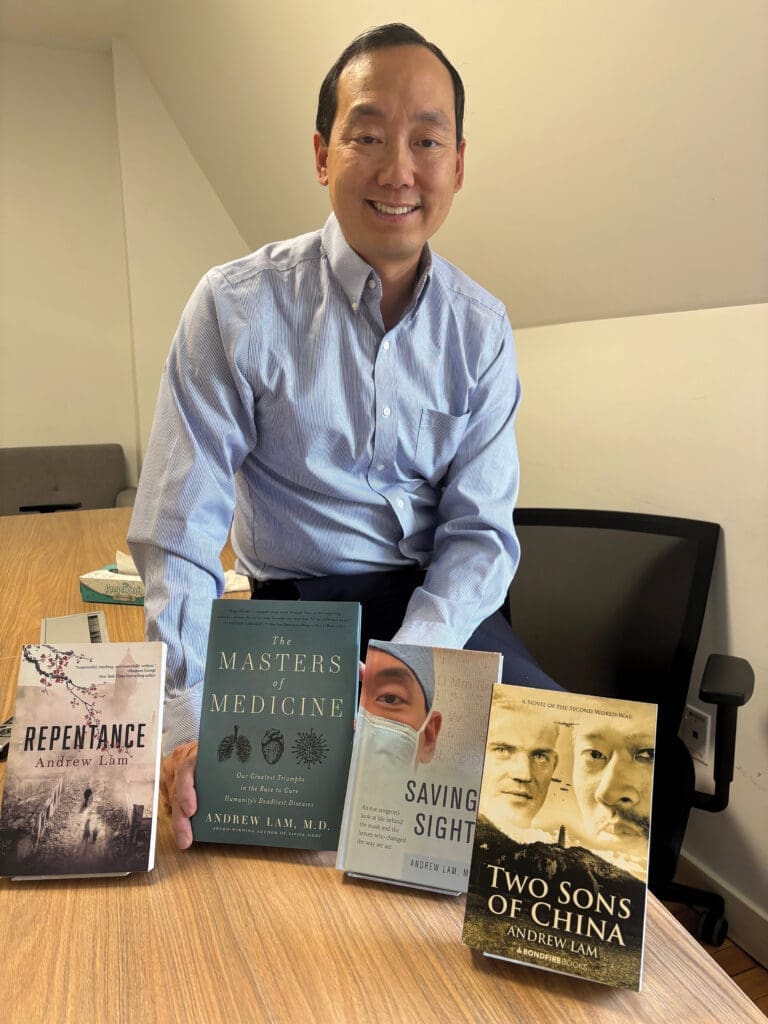
Dr. Andrew Lam has written four books, with a fifth slated for release next year.
Let’s start with his day job. He’s a senior partner at New England Retina Consultants and professor at UMass Medical School. And there are his books, several of them now. The others are Saving Sight, in which he describes his life as a retinal surgeon while also telling the stories of doctors whose inventions make saving sight possible; Repentance, an award-winning novel drawn from the heroic story of a Japanese-American regiment that fought in World War II; Two Sons of China: A Novel of the Second World War; and The Masters of Medicine: Our Greatest Triumphs in the Race to Cure Humanity’s Deadliest Diseases.
And then, there’s his work in the community of Longmeadow. He started on the Historical Commission, later served on the Finance Committee, and, in 2024 was elected to the Board of Selectmen.
“I enjoy doing everything I can to help make Longmeadow better,” he said. “And I’m particularly passionate about helping to steer a prudent fiscal course.”
Meanwhile, Lam and partners Henry Clement and Chris Orszulak restored the historic Brewer-Young mansion on Longmeadow Street into co-working space called Modern Workspace. The venture, which had to endure its own battle to win approval from town board and, ultimately, town meeting voters, has successfully transformed the landmark, which had fallen into deep disrepair, into home for a wide array of professionals.
And just this past week, Lam gave the keynote speech as Longmeadow celebrated the nation’s 250th birthday party with an event on the town green.
Most of the above has happened since he was named a 40 Under Forty winner in 2014. Back then, he had two books published — Saving Sight and Two Sons of China — and was just starting to get involved with the town, on the Center School Council and Longmeadow Soccer Assoc., for example.
He’s added to the résumé in both realms, especially as a public servant, which he finds rewarding, but worlds apart from his work as a retinal surgeon, as he explained.
“I don’t think there’s anything as antithetical to the skills and attitude of being a surgeon as being in government,” he said. “As a surgeon, you learn to be decisive, and sometimes the stakes are extremely high. In government, it’s the exact opposite; it moves like molasses, and things that seem like common sense take a long time because of the process.”
For this latest installment in its Where Are They Now? series, we look at the many aspects of Lam’s life and career, and how he makes time for them all.
Learning from History
Dr. Andrew Lam in 2014, when he was named to the 40 Under Forty.
In his address to those assembled at Longmeadow’s 250th celebration, Lam offered some history lessons about men from Longmeadow who left their homes to travel to Boston the day after the battles of Lexington and Concord — men whose names now grace streets and open spaces in town: Captain Simon Colton, Medad Stebbins, and others.
He also offered some thoughts on the nation’s first 250 years and the forces that have shaped its trajectory.
“History shows us the story of American progress is not a straight line upward,” he said. “It has always involved setbacks, disagreements, sacrifice, and renewal. It has included grievous errors, from slavery to prejudice, nativism, and some wars fought abroad that contributed to untold havoc and suffering.
“We’ve made mistakes, but the difference between us and the monarchies and dictatorships of the past and present is that our system allows us to recognize those mistakes and correct them,” he went on. “We do not have to pretend we are perfect. We can believe we have an excellent form of government and that America can be a force for good in the world, without insisting that we are exceptional or somehow better than people in other nations.”
These comments display Lam’s passion for history, public service, and learning lessons from past mistakes with an eye toward not repeating them. And these passions have driven his writing, which covers considerable ground — from China during World War II to efforts to cure deadly diseases — and different genres.
“A smart author would only do the same kind of book every time because you make a ton of connections with reviewers and readers,” he explained. “When I did the historical novels, I got lots of connections with people who write blogs and reviewers and podcasts on that subject. And with the medical books, I made a lot of connections. But I can only write well if I’m really interested and fascinated by the subject.”
This mindset includes his latest effort, which is much more than a comprehensive listing of things that have gone wrong over the years, everything from plastic bag bans to desegregation busing; tariffs to geoengineering; the ill-fated bullet train between Los Angeles and San Francisco to overreaction to the ‘shoe bomber.’
It’s also a look into what drives these failures — the cognitive biases, emotional drivers, and systemic blind spots that consistently derail even the most thoughtful plans.
“With optimism bias, we plan for perfection,” he explained, adding that this mindset drives everything from cities staging the Olympics to towns (like Longmeadow) building new DPW facilities, to people scheduling their day and leaving for appointments. And this bias helps explain why things go wrong — and why people are late.
“People expect there to be no traffic, no parking problems — we do this all the time in our daily lives; we’ll leave at the last second, for everything,” he said, adding that this is just one tiny example of how thinking everything will go right is a major contributor to things ultimately going wrong.
By cataloging some of the more infamous things that have gone wrong over the years, Lam hopes these cautionary tales can perhaps prevent future calamities on many different scales.
“This book covers our worst mistakes in government, business, medicine, the military, and more,” he said. “The idea is to learn lessons from these errors and apply them to future problems.”
The Write Stuff
Like most authors, Lam said that, even before his latest book has been published, he’s thinking about the next one.
He has an idea, but isn’t ready to share it just yet. Suffice to say it will address something he’s passionate about — and that certainly covers a lot of ground.