Brew Practitioners Celebrates Decade of Success, Challenge
Beer, Family … and Staying Open
By Tanzi Cannon-Eckerle
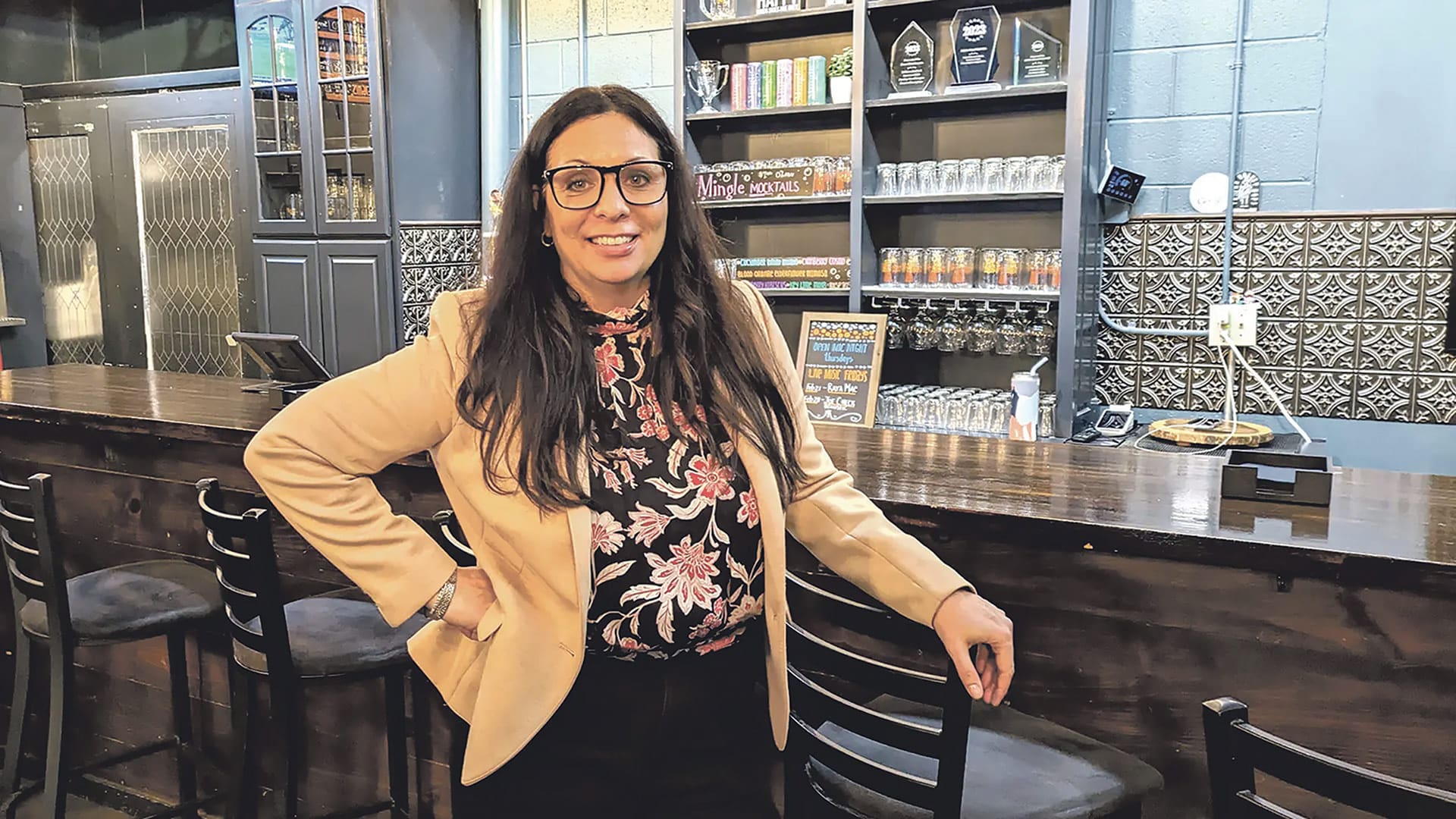
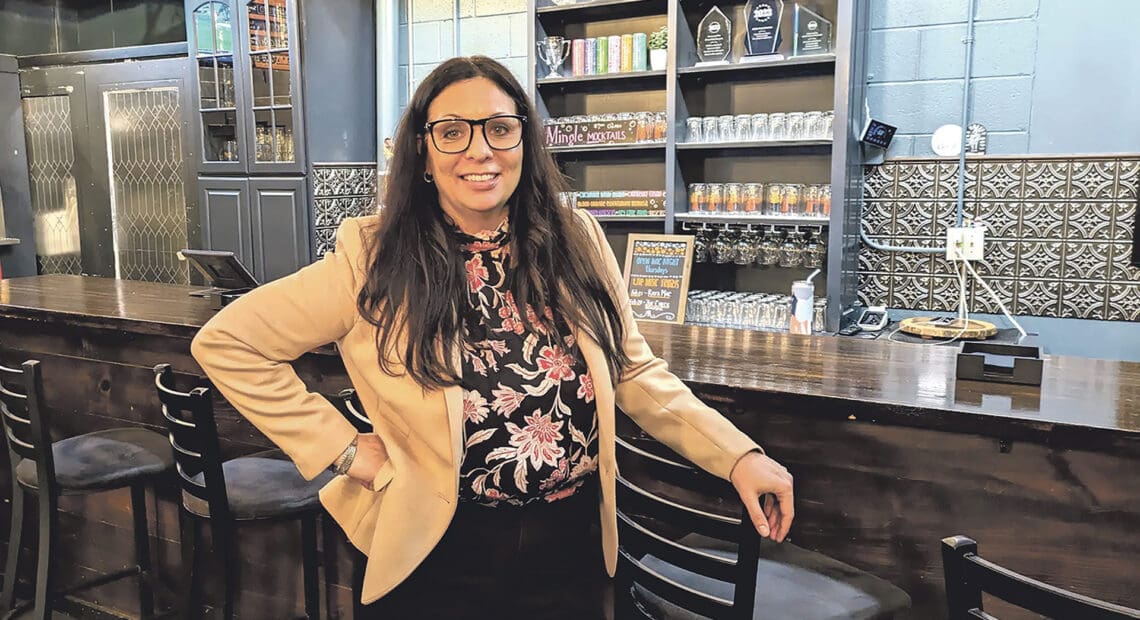
Tanzi Cannon-Eckerle at the brewery she owns with her husband, Joe Eckerle.
I’m Tanzi. Joe is my husband and head brewer. I’m a labor and employment business attorney; he’s a COO and manufacturing engineer. I’m the creative one. He is the executor, the efficiency expert.
About 10 years ago, we added a brewery to our marriage — because we are busy bees and serial entrepreneurs, always full of ideas and wanting something new to do. The marriage is still on tap (more than 21 years now), and so is the beer — and it is good.
We built the brewery with friends, sweat equity, and the simple desire to achieve. You have heard that before, of course. I worked in restaurants and bars from age 15 through college and until our daughter was born, so I know the industry — then went to law school (nothing says ‘new baby energy’ like casebooks and cold coffee).
A year later, I bought Joe a home-brew kit for Father’s Day. As an engineer by training and farmer by birth, I thought he needed something to tinker with. He fell in love, got kicked out of the kitchen and relegated to the backyard, and after a beer trip to Munich, years of tasting, and a Siebel class, friends started taking a second sip and saying, “wait… you made this?” At the same time, I was thinking we have too many beers on tap at the house. That’s when the universe cleared its throat: so, are we doing this, or what?
So, with rave reviews, ‘why not’ thoughts, and a garage full of equipment, we talked a few friends into opening a brewery. We called it Brew Practitioners, because brewing — like law or medicine — isn’t something you master so much as something you practice. The goal was never to be the loudest — just to make beer we’d proudly pour for anyone who walked in.
Our menu philosophy is classic, clean, and simple — right down to naming beers like a box of crayons: White (blonde), Yellow (IPA), Mellow Yellow (NEIPA), Orange (pale), Brown, Black (stout), and Red (West Coast amber). If you want a hazy triple pastry marshmallow whatever, you might be in the wrong building.
Then there’s Pink — that’s mine. It took a year of tweaking and occasional dramatic quitting. People teased, “you can’t make a beer that tastes like a wine cooler!” First, never tell me I can’t. Second: hold my beer. When Pink launched, people traveled from all over New England to get it; the first time I ran out, I was worried about a riot. It’s still surreal — like accidentally starting a small, polite cult.
We also have Green, our practice beer — experiments the patrons decide what works or not. Some notable misses include my jalapeño beer (tasted like pickles) and the lavender beer (“shampoo,” apparently). For the record, Joe has not made any ‘nots.’ Anyway, when it works — when someone takes a sip and does that involuntary “oh wow” — it’s a reminder that brewing is a business and a way of making something that ends up in someone else’s memory.
“What’s the best part? I can give you the practical answers: the process, the recipes, the thrill of fermentation doing exactly what it’s supposed to do. Joe will tell you about systems and consistency, that sweet smell of wort, and the quiet morning alone time in the brewery. But the truth is: it’s the people.”
The brewery became our family’s rhythm. Our daughter was basically raised there. She played her first live music set at the brewery. I don’t care how tough you think you are — watching your kid play in a room full of people rooting for her will wreck you in the best way. Our son moved to Massachusetts, worked at the brewery early on, and — 10 years later — is still here with a wife and daughter.
Up for the Challenge
What’s the best part? I can give you the practical answers: the process, the recipes, the thrill of fermentation doing exactly what it’s supposed to do. Joe will tell you about systems and consistency, that sweet smell of wort, and the quiet morning alone time in the brewery.
But the truth is: it’s the people. Regulars who feel like friends and who will absolutely show up to meet your new baby pig (Olive — yes, she’s cute), visitors who act like they’ve been coming for years, and employees who become family in a very Hotel California way — you can check out any time you like, but you can never leave. (We say this affectionately, while still texting former staff about life updates and occasionally roping them into “one more shift.”)
Our team members have embraced our customer service, beer quality first mission and our side quests (brew buses and brewery libraries), and bought into our “it’s just beer” motto — our version of “don’t worry; be happy!” We always wanted more than a beer business — we built a community living room. And when times were tough, like through the pandemic, our community was there to help us with the next chapter.
When Northampton shut us down during COVID, we packed up, made fast decisions, and moved to East Longmeadow — exhausting and surreal. We brought the birdcage chandeliers, hand-painted the harlequin floor (Joe says he’s happy our marriage survived that), and poured the concrete that supports the patio we call the Beertanical Gardens — yes, the one from Joe’s “Beer of the Week” skits. It turned out lovely — the community welcomed us with open arms and full pints and thoughts of sugarplums, which has been great for a while.
But then things changed, as they do. What worked in year two or five doesn’t automatically work in year 10 (going on 11). We must always watch the dials, and the new math is real — more competition and fewer people drinking beer at all.
People are watching calories, budgets, phone screens, and kids’ schedules — just not the bottom of a pint glass the way they used to (good for their sleep numbers, not good for my budget numbers). Some weekends still roar; other nights are quiet enough to make you want to ask the chairs if they’re OK. Common sense tells us this is not sustainable. A decade ago, opening a brewery was the event; now you have to create events (more costs) and be interesting on a Wednesday.
Meanwhile, costs keep rising: malt and hops, CO2, cans, chemicals, utilities, insurance, repairs, labor — surprise expenses that arrive like uninvited relatives. Breweries are equipment-heavy manufacturing businesses with hospitality hours — so we get hit from both sides. Fermenters still need cleaning and maintenance when traffic is down, and a bad weather month can ruin the budget. Add licensing, record keeping, safety, compliance (said with love, from your resident business attorney), and the margins get fragile fast. Plus, we want to pay people fairly (they deserve it), but a taproom can’t run on love and good vibes.
If you’re thinking, “just raise prices,” I hear you — and I wish it were that simple. But pint prices have a ceiling, and we’ve always tried to keep Brew Practitioners accessible.
On the upside, we’re not out of ideas. We can tighten operations (less SKU creep, smarter brewing so cash isn’t stuck in tanks), match hours and staffing to real traffic, protect margins while keeping the beer classic and clean, and maintain old standbys (trivia, open mic, themed releases). Partnerships help, too — food trucks, local restaurants, and local vendor pop-ups. But if we build it, will they come?
We also have to get serious about tracking numbers (traffic, labor efficiency, margins), get ruthless about waste, review costs, and push vendor terms where we can. We’re exploring private events, pickleball courts, classic car nights, using the patio like the asset it is, with more planned Beertanical Garden days and community and movie nights. But, again, if we build it, will they come?
“Underneath this is the big question: are we optimizing for survival, growth, or a graceful landing? Those are three different plans. And part of being practitioners is knowing when a case is worth taking — and when it’s wiser to settle.”
The thing is: between Joe’s COO/manufacturing engineer brain and my business attorney brain, we’re not allergic to reality. We understand process, cash flow, risk, compliance, and what happens when you ignore small problems until they get expensive. You can run tight operations and still get clipped by uncontrollables: a slow season, a cost spike, bad weather, or a cultural shift that makes the whole beer category feel like it has to reintroduce itself.
Looking Down the Road
Underneath this is the big question: are we optimizing for survival, growth, or a graceful landing? Those are three different plans. And part of being practitioners is knowing when a case is worth taking — and when it’s wiser to settle.
We have grandkids in three different states, and time is suddenly our most expensive input. I also have my beloved law firm — General Counsel by Cannon, PLLC — that’s grown quickly and requires my full attention. There’s only so much bandwidth for day jobs, night jobs, weekend jobs, and the kind of ownership that lives in your head even when you’re not there.
Which brings me to this: maybe this expedition is ending. That sentence actually hurt my heart to write. Brew Practitioners shaped our last decade, introduced us to most of our friends, and held more ordinary and extraordinary moments than I can list. But love, nostalgia, and great beer don’t automatically fix industry headwinds.
What if we hop aboard the love boat and leave this brew joint behind? We will be sad — but, like Brad Pitt in Legends of the Fall, “it will be a good death.” Our brewery practice has been the rare kind of success you can’t spreadsheet: building something from scratch, raising kids in the rhythm of real work, hiring people we still call family, and becoming a place where birthdays, breakups, engagements, open mic nights, and random cornhole tournaments happened under one roof. Lately, ‘practice’ has also meant practicing realism—looking at the numbers, the market, our energy, and what we want next.
Anyway, it’s just beer.
For the record: if we ever step back, I’m walking away with my Pink Beer trade secret tucked safely in my pocket — because a girl deserves options, and I’ve learned never to underestimate the power of a well-timed, wildly pink comeback. Barbie did it.
For now, though, the taps are still working. So come by — belly up, grab a pint, say hello. We are still here, and so is Olive. What’s next is somewhat up to you. If we build it, will you come?
Tanzi Cannon-Eckerle and Joe Eckerle are the owner-operators of Brew Practitioners, located at 45 Baldwin St., East Longmeadow.