
Home Sections Archive by category Supplements (Page 7)

Supplements

Sections Supplements
The Return of the Holiday Get-together

Peter Rosskothen

Peter Rosskothen says the key to a good party is to add something unique, a personal touch.

With economic stability slowly returning to the marketplace, an excellent way for businesses to express that optimism lies in staging an annual holiday party. Banquet facility owners report that, after a down year in 2008, many companies are ready to party again — but while still keeping a keen eye on the bottom line.

Peter Rosskothen said that he’s a “bit of a radical” when it comes to making a good party.

Co-owner of the Log Cabin and Delaney House in Holyoke, Rosskothen said that “a good party is one that adds a personal touch to it, something unique. Just saying, ‘I’m going to serve you dinner, bring in a DJ,’ that makes it a nice party, but I don’t think it makes it a special party. Something a little more is required.”

This season, a little more might have to be budgeted for a little less. Like most businesses, Rosskothen said that the special-event industry took a hit last season, adding that “most people in the industry will tell you that they were very scared last September.”

The lights dimmed across the nation on the party season last year. Forbes reported that the number of businesses holding holiday parties dropped to a 20-year low last winter, with only 81% of the nation’s businesses partying on. When the economy went into a skid — some saw it as a free fall — the idea of wining and dining employees in the wake of massive layoffs just didn’t feel right.

The story is different this year. Signs of an economic recovery are tentative, and analysts are presently predicting flat holiday sales, but area event professionals are reporting that confidence is returning to their holiday schedules. And that in itself is cause for some celebration.

Companies want to thank their employees after a tough year in business, but there is still an eye to that celebration’s spread sheet. “We’re seeing a lot of our repeat customers now asking to do a little less,” said Ralph Santaniello, owner of the Federal in Agawam. “People still want to do something fun and keep it festive,” he added, “but they’re obviously trying to keep the budget low. The trend thus is a bit more for the cocktail parties, hors d’oeuvres, and less for sit-down-type dinners with lots of food and multiple courses.”

With tight times still a reality, most event professionals said they have been devising creative ways over the past year to keep enthusiasm high. In Springfield, Pazzo head chef Byron White said his goal has been to provide good value for his clientele, but not at the cost of a memorable occasion. “Keep them satiated, keep them happy,” he said, “because we want them to take that experience to heart so that they want to keep coming back.”

’Tis the season for holiday parties. In this issue of BusinessWest, we take our annual look at the holiday event market, what venues are doing to keep the party rolling, and how the season’s tidings can spread beyond one night to remember.

Make It Special, Make It Different

When it comes to talking about all things party-related, Rosskothen is the perfect man for the job.

On a tour of the picture-perfect Log Cabin property, he brimmed with ideas as he walked from room to room. “What makes a party unique?” he asked, before answering his own question. “Something personal about your co-workers, or your employees. Something personal about the business, or about your results from the past year. Something that will become memorable. Something where the client says, ‘wow, we want to come back here next year.’ Those are the touches that make a party great.”

He pointed to a brochure advertising a promotion which joins his two properties with an off-site catering wing called Log Rolling. Rosskothen has organized a variety of holiday event options designed to appeal to a wide array of tastes. From formal dinners at the historic Delaney House to holiday-themed events with kids, to meals at one’s own location, the idea was to create packaged possibilities which he calls “products,” all with attractive price points.

“We try to come up with things that are unique and yet still come under budget for our clients,” he explained. “Come to comedy night, for instance. It’s not something that you normally would think of for holiday parties, but you don’t always have to go dancing or do elaborate sit-down dinners. This is bringing in differing ingredients, as it were, coming up with creative solutions for people to stretch their dollars and make it something different.

“Over the last two years, we have broken out of the element of just offering the basics,” he continued. “We want to be known as a group that can do those basics, but we want to offer you a bit more. Games, dancing, trivia, we have products for that. We’re giving you the idea, then you, the customer, can say that this fits me by the nature of this product, and it fits me by price, also.”

The competition for holiday events is keen, and while most people agree that the market has not reached saturation point yet, everyone strives to offer that “bit more.”

“What we do at the Federal is to cater to each individual customer’s tastes and budget, because the perfect party is different for everyone,” said Santaniello. Meeting with the client and finding what ideas they might have are the launching pad for his team to create the perfect event. Last year a customer wanted to do something with an Italian theme, and the Federal created a Tuscan Christmas party.

While people are ready to celebrate, expectations are kept in check with an eye toward a tough year, he said, and that means fewer tabled affairs on tap. But that suits him fine. “One of our signatures is passed hors d’oeuvres,” he said, giving high praise to his partner and chef, Michael Presnal, for his vision and creativity.

“He’ll do things you might not expect, or present them in ways you might not normally see them,” he explained. “We’re known for passing hors d’oeuvres on spoons, with different flavors and textures. Grilled, breaded shrimp with a gazpacho shooter, served in a shot glass. It’s a different take on the traditional shrimp cocktail.”

Even in a tough year, Chez Josef in Agawam offers flexibility for companies of all sizes that want to have parties. As in past years, groups of eight or more are welcome to participate in the facility’s group company holiday parties, which allow multiple organizations to celebrate with music and dancing, circulating hors d’oeuvres, and a multi-course dinner — to enjoy the trappings of a big event, in other words, while cutting down on planning time.

“Groups of 10 to 20 can enjoy a big party atmosphere, where it would be unaffordable for them to do that on their own. Those remain very popular and are a great value for the guests,” said Linda Skole, president of Chez Josef. She noted that sit-down dinners remain the most popular style of company party at her facility, and businesses are not cutting back on frills — but the bookings this year are smaller than in the past.

“Groups are still having holiday parties, and they’re not scaling back, but the counts may be a little bit lower due to economic conditions,” she told BusinessWest, adding that parties remain an important way for companies to motivate and reward employees. “Things are a little soft as everyone’s feeling the pinch, but we’re looking forward to a stronger next year.”

Coming Back for More

Growing up in a family of 12, Byron White knows a thing or two about hosting large groups of people.

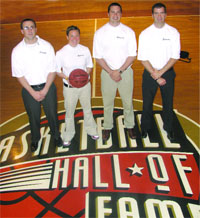
In the fourth year of holiday events at Pazzo, his popular restaurant connected to the Basketball Hall of Fame, he said that this year, prices and value play an important role in creating some of the finest Italian food in the region. Winner of numerous accolades for his culinary skills, including a prestigious nomination from the James Beard Foundation for Outstanding Chef of the Year, White said he strives to make a holiday event that will remind people that good food at good prices is available to them all year long.

“When we book our holiday functions, whether it be for Halloween, Thanksgiving, Christmas, or beyond,” he said, “we are always looking to have ways to attract them not only for those events, but for all the other times of the year beyond that. Something where people will say, ‘I want to eat here again, I want to bring my family,’ whether it be for another event or simply lunch.”

So far, those holiday bookings are coming in fast. Like Rosskothen and Santaniello, White noted that, despite the downturn, dates are filling up, and business projections are good for the holidays.

White says his goal for the season, what he calls “synergy” — that which makes an event truly special — is a relationship with his clientele. From his open kitchen, he likes to see first-hand the role his food plays for what he calls his “extended family.”

“This open kitchen is not just so that people can see what we’re doing,” he said. “It’s also that we can see out there, and get that instant gratification of seeing people enjoying what we’ve made.

“Pazzo is the place where they can have a relationship with the owner, with the chef, the staff,” he continued. “To be a successful place, it’s got to have good ambience, good energy, a soul that will make you feel like this is above and beyond as an experience. The holidays are a good time of year for people to be reminded of the larger community they’re in, but we want to remind them of those other times of the year when that doesn’t change for us.”

White said that every night of the week, the restaurant offers some form of promotion, from half-priced appetizers on up to half-priced entrées. He’s heard that people want value for the holiday season and beyond, and he wants to show how much he wants the restaurant to be an intrinsic part of the community.

The Show Must Go On

The holidays are a time for people to join in celebration, and this year the reasons for holding a party might be more important than ever. In Rosskothen’s opinion, a company celebration transcends mere food and drink. “I think it’s a great way to motivate the people who work with you, especially during tough times,” he said, echoing Skole’s similar notion.

“Throwing a party during the holiday is as important as advertising in this economy,” he continued. “Morale is something that cannot be played with. Holiday parties are a great way to say, ‘we’re here, we made it, and we did it because we have a great team.’”

This year, the life of the party is the very company that made it through the recession intact. And that’s certainly something to celebrate.

Sections Supplements
Fully Digesting What the Terms ‘Ordinary,’ ‘Necessary,’ and ‘Reasonable’ Mean

It is early one evening, and you’re finishing a great dinner at a local restaurant with a colleague. The waitress brings the check, and you reach for your wallet. As you ponder which credit card to put it on, business or personal, you probably don’t realize the complex, sometimes contradictory rules that apply to deducting business meals and entertainment expenses.

These rules go far beyond the IRS limitations which allow only a 50% deduction for meals and entertainment expenses. There are many rivers to cross before that bridge.

The deductibility of any cost incurred for business entertainment or meals is governed by the long-established requirement that the expenditure be an ‘ordinary,’ ‘necessary,’ and ‘reasonable’ expense bearing a proximate relation to the taxpayer’s business or income-producing activity. Under an equally well-embedded principle, however, no deduction is allowed with respect to personal or family expenses.

Over the years the courts have struggled to balance these countervailing principles by attempting to distinguish those expenditures that are business-related and deductible from those that are personal in nature and thus non-deductible.

The term ‘ordinary and necessary’ does not lend itself to a ready definition. Countless cases that have attempted to determine whether an expense was in fact ‘ordinary and necessary’ with respect to a particular taxpayer have considered whether a hard-headed businessman would have incurred it under the circumstances. This common-sense test lends a degree of objectivity to the statutory formula, and is helpful in rationalizing the occasionally inconsistent results reached by the courts. If the taxpayer is an employee and incurs unreimbursed entertainment costs to benefit his employer, the expenditure, to be deductible on the individual level, must be an ‘ordinary and necessary’ expense of the taxpayer’s earning his salary as an employee. In general, this requires a showing that the employer required or expected the employee to bear these expenses himself and that the expenditures were not reimbursable by the employer.

With respect specifically to promotional costs, including those for entertainment or meals, the case law recognizes as a general proposition that providing amenities of this nature to customers, clients, or business colleagues of a taxpayer is generally conducive to bettering the taxpayer’s business, and that this is not an unusual or uncustomary occurrence. Nevertheless, the taxpayer must be prepared to demonstrate that, with reference to the particular business conducted by the taxpayer, the expense was ‘ordinary.’ For an employee, generating goodwill falls short of the necessary requirements.

The term ‘necessary’ means that the expenditure must be appropriate and helpful for the development of the taxpayer’s business. Under this definition, the expenditure need not be indispensable to one’s business, but it must be made with the intention of securing a business benefit. If the taxpayer can demonstrate that a business benefit was intended or resulted from the expenditure, any incidental personal benefit is disregarded; conversely, if the expenditure was primarily of personal or social benefit and only incidentally business-related, it is not deductible. Since expenditures for entertainment or meals are usually of mixed business and personal benefit to the taxpayer, they are especially susceptible to attack as lacking a business relationship.

Perhaps you are feeling positive that the expense passes the ‘ordinary and necessary’ requirements. You are not yet insured a tax deduction. To be deductible, the expense must be not only ‘ordinary and necessary’ but also be either ‘directly related’ to or ‘associated with’ the active conduct of the taxpayer’s trade or business.

Directly related entertainment usually involves a business discussion that should result in income or some other business benefit at some specific time in the future. This discussion can take place during the entertainment or in a clear business setting.

‘Associated with’ requires that a substantial business meeting must have taken place before, between, or after the entertainment activities and that the entertainment was associated with the active conduct of a trade or business.

IRS rules state that entertainment or food and beverage expenses incurred in a ‘clear business setting’ directly in furtherance of the taxpayer’s trade or business are deemed ‘directly related.’

IRS rules provide for an objective, rather than a subjective, standard to determine whether there was a clear business setting for the entertainment or meals. Thus, entertainment occurring in distracting circumstances is presumed not to have occurred in a clear business setting and is deemed socially, rather than commercially, motivated. IRS guidance cites the following examples of settings which might not be a clear business setting:

  • A meeting or discussion taking place at a nightclub, theater, or sporting event, or during essentially social gatherings such as a cocktail party; or

  • A meeting or discussion, if the taxpayer meets with a group that includes persons other than business associates, at places such as cocktail lounges, country clubs, golf and athletic clubs, or vacation resorts.
  • However, the Congressional Committee Reports indicate by way of illustration that Congress intended to allow the deduction of entertainment expenses as ‘associated with’ the active conduct of a trade or business if the taxpayer conducts substantial negotiations with a group of business associates and that evening entertains them and their wives at a restaurant, theater, concert, or sporting event. In this case, the entertainment expenses are considered ‘associated with’ the active conduct of the business, and are deductible, even though the purpose of the entertainment is to promote goodwill.

    So, having that said, a sporting event or theater would not be ‘directly related’ but would be ‘associated with.’ No wonder taxpayers get lost in these rules.

    IRS rules create a rebuttable presumption that the ‘active conduct of trade or business’ is not the principal character or aspect of combined business and entertainment activity on hunting or fishing trips, or on yachts and other pleasure boats, and requires the taxpayer to clearly establish to the contrary, to meet this test under those circumstances.

    Assuming a taxpayer meets the threshold tests of demonstrating that the entertainment or meal cost represents an ordinary and necessary business expense and then shows that the expense satisfies (or is excepted from having to satisfy) the ‘directly related’ test or the ‘associated with’ test, it must still meet the rigorous substantiation requirements. In essence, the rules bar any deduction for an expenditure on the basis of the unsupported testimony of the taxpayer or on the basis of his approximations.

    Accordingly, to secure any portion of the deduction, the taxpayer must substantiate all entertainment and meal expenses by adequate records or sufficient evidence corroborating his own statement as to (1) amount, (2) time and place, (3) business purpose, and (4) business relationship of the person entertained. The substantiation requirements are strictly construed, and the taxpayer’s failure to satisfy their particulars entails complete disallowance of the deduction.

    All this said, don’t forget that most meals and entertainment expenses, if deductible, are limited to a 50% deduction. Additionally, expenses related to an entertainment facility or membership are not deductible at all, but the cost of separately stated expenses incurred at such a place may be deducted subject to the above limits including the 50% rule.

    Kristina Drzal-Houghton, CPA, MST is partner in charge of Taxation at Meyers Brothers Kalicka in Holyoke; (413) 536-8510.

    Sections Supplements
    Pioneer Valley Christian School Provides a Unique Perspective
    Timothy Duff (left) and Gary Coombs

    Timothy Duff (left) and Gary Coombs say Pioneer Valley Christian School adopts a unique and effective philosophy on education.

    When Timothy Duff stands before his sociology class for the first time each year, he takes two sets of glasses out of his pocket, asking his students to think about how they view the world.

    “You can see it as a world created and controlled by God, using your Christian faith as the lens through which you view life,” he says, wearing one set of glasses.

    Then he switches to the second set, adding, “or, you can view it as a world of chance, devoid of any faith.”

    Duff is the headmaster at the Pioneer Valley Christian School on Plumtree Road in Springfield, a private educational institution with 265 students in preschool through grade 12.

    Housed in the former Ursuline Academy, PVCS is a partnership between families and staff members who want students exposed to a Christian worldview in a setting where faith trumps doubt in every arena of life.

    “Some people think a Christian school shortchanges students,” Duff said. “Our school does not. Students analyze all views, including evolution.”

    Parents make a strong commitment to the school, and many are graduates. They drive their children to PVCS from cities and towns that include Southwick, Granville, Westfield, Brimfield, Hadley, South Hadley, Enfield, and Somers, Conn. to follow in the footsteps of past generations.

    For this issue, BusinessWest takes a close-up view of the mission of PVCS and its ambitious plans for growth despite a turbulent economy.

    Setting a Course

    The school was conceived by a group of concerned parents at First Baptist Church in East Longmeadow in 1970, and opened its doors to 50 students in 1972 as the East Longmeadow Christian Day School.

    “These parents wanted an alternative where God could be at the foundation of learning, as they felt faith should be an integral part of the learning process,” said Duff.

    In its early years, the school was housed within the church. But in 1975, a new church was built, the old 1840s building was designated as a high school and renamed the Pioneer Valley Christian School, and younger students were moved to the new church building on Parker Street.

    By 1983, the population had outgrown the space, so for one year, kindergarten through grade 4 was taught in Church of the Nazarene on Wilbraham Road in Springfield, and grades 5 through 8 were housed in Bethesda Lutheran Church on Island Pond Road, a short distance away.

    Although it presented a challenge, administrators and parents remained committed to PVCS, and in the spring of 1984, negotiations began with the Ursuline Order of Nuns to purchase the well-kept Ursuline Academy, set on 25 acres at 965 Plumtree Road.

    At first, it appeared financially impossible, but parents pledged $300,000 annually over a three-year period, and in August 1985, PVCS made the $900,000 purchase.

    That year, enrollment increased from 135 to 225 students, and a preschool was added. The population continued to grow, and during the next three years the school received prestigious accreditations and added staff and administrative positions.

    During the ’90s, enrollment stabilized, fund-raising efforts continued, the second mortgage was paid off, and the first mortgage was reduced.

    In 1999, PVCS instituted a long-range, four-phase strategic plan for growth. The first phase, completed in 2003, was an elementary wing with six classrooms.

    Phase two kicked off late in 2007, and ground was broken in May 2008 for a 20,000-square-foot, $2.5 million, state-of-the-art Center for Science and the Arts, along with 12 new classrooms that include a chemistry and computer technology lab and visual arts space.

    The addition increased the size of the building by 50%, and volunteers pitched in to defray costs, saving the school about $250,000.

    Duff says donor generosity is a cornerstone of PVCS, and parents have built four tennis courts, the soccer and baseball fields, and repaved and enlarged the parking lot.

    School officials are excited about the addition, and Director of Development Gary Coombs says it will enhance the quality of the courses offered and allow for continued growth. With the added space, PVCS can accomodate 450 students. “We built it that way, as we expect to grow,” Coombs said.

    It will be at least three years before phase 3 is initiated. It calls for a $3 million new gymnasium with lockers, showers, a weight room, and additional classrooms. Down the road, phase 4 will expand the cafeteria, as the present ‘cafetorium’serves as both lunchroom and gymnasium.

    Study in Commitment

    PVCS suffered a drop in enrollment this fall, reducing the number of students from 315 to 265. It’s a loss of about $400,000 in tuition, but no reductions in staff were made, and the student-to-teacher ratio stands at 15-to-1 or lower.

    Tuition ranges from $4,000 for two half-days of preschool to $9,300 for high-school students, with optional programs available for students with cognitive and learning disabilites.

    Many students receive financial aid from a fund fed by donors. “Tuition reductions are based on financial need,” said Coombs. If families still can’t meet the cost, they can apply for scholarships.

    Five years ago, MassMutual included the school in its scholarship program, and 10 students were given full, four-year scholarships. That program has ended, but Duff and Coombs hope other companies will come forward to assist them.

    Although the drop in enrollment is a cause for concern, “we expect when the economy gets better, our enrollment will increase,” Coombs said.

    Principles of Christian faith are built upon in every class and incorporated into the curriculum. But Duff is quick to explain that students receive a quality, rounded education and are exposed to every side of the issues they study. Still, they are constantly reminded they have the choice of viewing things from a Christian tradition.

    That suits their parents. “Parents find harmony between what is taught at home, at school, and in their houses of worship,” Coombs said, referring to morals and the faith elements of Christianity.

    Every student takes a Bible class each year, and all subjects are viewed from both a secular and Christian perspective. “We teach both, but use the values and virtues taught in the Scriptures to analyze even subjects like literature,” Duff said. “The principles of the Bible serve as a backdrop to how we look at life.”

    Christian beliefs are put into action, and every high school student has to complete 20 hours of community-service work to graduate. Elementary students host clothing and food drives and collect soda-can tops for the Ronald McDonald House, as well as supporting children in third-world countries and needy area families. “It goes back to the biblical belief that we must love our neighbors as ourselves,” said Coombs.

    Academics are stressed, however, and high-school foreign-language offerings embrace French and Spanish, while advanced-placement courses include mathematics and sciences. English students enter a variety of competitions in science, art, music, spelling, mathematics, athletics, creative writing, and speech, bringing home awards.

    Last spring, every graduate went on to college, and the school’s graduates have attended a prestigious line of educational institutions, including the U.S. Naval Academy in Annapolis, Md.

    That generates pride, but the biggest graduation gift they receive is knowing they have a choice of viewing their lives, sorrows, and joys through a lens which shines with faith — or one which simply shows things as they are.

    Sections Supplements

    If you are one of the many millions of Americans who are responsible for your own personal financial needs, as well as supporting and caring for your own children, in addition to your elderly family members, you are part of the Sandwich Generation (SandGen).

    Approximately 44% of Americans between ages 45 and 55 are stuck right there in the middle of two generations who are both financially and emotionally dependent for their well-being. According to a recent AARP report, there are nearly 20 million Baby Boomers in this situation. This SandGen must look at planning from many different angles in order to ensure that they can secure their own financial future as well as provide for those they care about.

    Common expenses and responsibilities that you may face if you’re a part of the SandGen are college tuition, wedding expenses, helping with housing for your children, caretaker responsibilities, health care costs and cost-of-living expenses for your adult parents, all the while still trying to save for your own retirement. Despite the fact that advanced planning is usually best, attacking the issues at any time will bring more success than a do-nothing approach.

    The SandGen parents in this situation must first have an open conversation about the importance of financial planning and solid money-management skills with their children — the younger the better, as this conversation can jump-start planning for future education expenses as well as other major lifetime expenses. Although many parents crack into their retirement nest egg in order to finance college education, children should be encouraged to look into other financial resources that may be available. They may be able to access education savings plans, scholarships, grants, money earned from part-time employment, and student loans in order to offset the financial strain on their parents.

    A low-interest loan for a college education seems a better choice than the invasion of principal and the associated taxes and penalties that may result from using retirement savings. If the SandGen continues to deplete assets on college as well as the other caring responsibilities, they will likely extend their working years on average an additional 10 years.

    There are also luxury expenses — for example, helping with weddings or assisting with the purchase of homes for their children. Here, the SandGen needs to take into consideration that these financial outlays are going to dramatically affect their retirement and lifestyle. Children need to understand the implications that these requests may have on their parents as well, so the SandGen must find a way to discuss with their children what is necessary and what is luxurious. Those who give in and offset major purchases and expenses for their children may need to adjust their estate plans to account for disproportionate distributions during their lifetime between their children.

    An aging parent, grandparent, or other elderly relative who is dependent upon this generation comes with major potential financial needs. Assisted-living facilities that help a relative with the activities of daily living such as bathing, eating, and personal care can cost on an average $48,000 yearly. Nursing-home care costs over $100,000 annually.

    The average household is not in a position to absorb these types of extraordinary expenses, and the average household is not equipped to take in an elderly family member or provide at-home care in the family member’s home. The decision to bring an elder family member into one’s home often results in a major home renovation. This can be funded by the elder’s money, but although it is often much less expensive than what an elder would spend on nursing-home or assisted-living care, it still may become cost-prohibitive if the elder requires a level of care greater than family members can provide, as in-home care costs can be daunting. Also, down the road, the elder may require a level of skilled care that cannot accomplished at home.

    One way to prevent these types of expenses is through the ownership of a long-term care insurance policy that begins to pay when a policy holder suffers from a chronic condition and needs constant care. The policy can pay for in-home assistance, assisted-living facilities, as well as nursing-home care, depending upon the level of need. The most affordable premiums are quoted to people in their early 50s who are in good health. Although the premiums are often expensive, especially for older applicants, it still is less expensive than the annual costs of privately paying for the care.

    Families should discuss sharing these premiums if an elderly person can’t afford the expense alone. Siblings sharing in the cost can dramatically reduce the financial burden to a single household.

    In the event that a parent cannot qualify for long-term care insurance, Medicaid, a state’s health care system for individuals who meet a predetermined poverty level, can be accessed. Bear in mind however, that in order to qualify, the applicant must be devoid of nearly all assets and the family will be spending assets on the private-pay costs of care.

    Families should consult with an elder law attorney who can advise on the development of an asset-preservation plan that may reduce the cost to the family or benefit them by determining what can be protected from Medicaid recovery and prevented from being spent on care.

    A reverse mortgage is another option for individuals who desire to remain in their own home. For many elderly people, this is of paramount concern; however, they may not have the day-to-day resources to afford to remain there. In the absence of assistance from their children to pay the monthly carrying costs of real-estate taxes, hazard insurance, water, sewer, utilities, maintenance, and any debt service, there would be no feasible way for the parent to remain in the home. A reverse mortgage allows the elder to access the equity in their home for expenses for as long as they continue to live in their home. This loan is then paid back upon the death of the elder, or the sale or refinance of the property. A reverse mortgage may deplete the potential inheritance to be received from a elderly family member; however, balanced against the financial security of not having to invade one’s retirement and savings, as well as giving the elder the peace of mind of remaining at home, it seems a win-win option.

    During this time of determining housing options, it is a good idea to speak with the elder about the need for a proper estate plan, creating one if no plan exists or updating an outdated existing plan. What may often be a touchy subject among children and parents or elderly relatives may be broached more easily when working together to reach health care, housing, and lifestyle decisions. In any event, a SandGener who is taking on the financial obligations and/or personal care responsibilities of an elderly relative must ensure that the relative has at least a health care proxy, durable power of attorney, and last will and testament in place in order to stave off problems in future decision-making.

    All in all, the SandGen is one that still needs to save for themselves in addition to saving for their children’s education and paying to support the expenses of their elder family members. They can’t ignore their own needs while succumbing to the pressure of meeting everyone else’s needs. Proper planning for this generation includes not only their own individual retirement and financial and estate planning, but that for their children and elder relatives as well. This can include, but not be limited to, the use of traditional savings vehicles, life insurance, long-term care insurance, qualified retirement funds, 529(c) plans and other available college savings plans, as well as a good old-fashioned budget and proper estate planning to ensure that everyone’s needs are met. With proper planning, there should be plenty of eggs left in the nest to go around. n

    Julie A. Dialessi-Lafley, Esq. is a partner with the law firm Bacon Wilson, P.C. She focuses her practice in business, real estate, estate planning and administration, elder law, and family law; (413) 781-0560;bwlaw.blogs.com/familylawbits;[email protected]

    Sections Supplements
    Hampden Bank Continues Its Growth Pattern
    Tom Burton

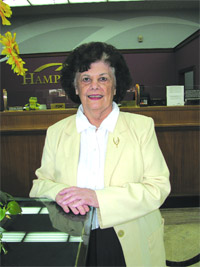
    Tom Burton says tough times have chased people from investments markets and toward safer options like a strong community bank.

    Last year was a rough one for financial institutions everywhere, but a good one for Hampden Bank, which was well-capitalized following its conversion to a publicly traded company in 2007 and, like most local banks, free of the toxic loans weighing down the industry on the national level. After turning a slight profit in 2008 (no small feat), the bank continues to thrive, looking for further growth opportunities — and further ways to brighten each customer’s day.

    As part of its current marketing campaign, Hampden Bank says it wants to brighten each customer’s day. Thomas Burton’s day is brightened just by thinking about the timing of its transformation to a publicly traded company in 2007.

    “Obviously, our timing was very good,” said Burton, the bank’s president and CEO. “When we first decided to go public, in late 2005, we were at a point where we needed capital to continue to grow the bank — and we raised a lot of capital, more than we really needed.” In fact, the first initial public offering in 2007 netted about $50 million.

    “So we ended up with a lot of capital going into a period of time, last year, when the capital markets essentially collapsed, and you couldn’t get capital if you wanted to,” he continued. “We were very fortunate that we continued to grow, and we went through this difficult time in very, very good shape. We actually made a small profit last year.”

    Hampden Bank has more than weathered the storm; well-capitalized and free of the toxic assets that have cripped many national banks, the institution saw its deposit accounts grow tremendously last year, and commercial loan volume increase by 8% — a remarkable figure at a time when the recession has dissuaded many companies from expanding and making capital investments.

    “I have satellite radio in my car, and I hear these national ads from loan brokers saying that banks aren’t lending,” Burton told BusinessWest. “Well, we’ve been lending. Our underwriting standards haven’t changed, and 8% growth is a good year when there hasn’t been a lot of economic expansion. I think it’s unrealistic for people to think they can’t get a loan in this day and age; certainly we’ve been lending on a consistent basis.”

    In this issue, BusinessWest examines why, at an uncertain time for the economy as a whole and especially financial services, Hampden Bank’s future is looking bright.

    Successful Surge

    In rocky financial times, people gravitate toward local institutions they trust, said Rick DeBonis, senior vice president of marketing at Hampden Bank. While any bank can bring in money by raising CD rates, he explained, Hampden significantly raised its core deposits over the past year because people felt like that’s where their money should be.

    “This past year, we saw one of our largest deposit growth years ever,” Burton said. “There’s been a flight to safety, with taking money out of the markets and going back to their local banks, and we benefited from this. We need the deposits to continue to grow.”

    “It was a remarkable year, and that came from a cross-section of checking accounts, money markets, and some CDs,” added DeBonis. “We employ what is called a ‘surge marketing’ technique and focus on a two- to three-mile radius around each branch, and that seems to be working well for us. Of course, you’ve got to have the right products, too.”

    Burton said the bank’s marketing efforts have focused on Hampden’s position as a local, community bank, “where you have access to real people, where you can call in during business hours and not get an answering machine, but get a real person. My office is right off the lobby, and I certainly expect to see customers — and, believe me, they don’t hesitate to drop in.”

    But that community emphasis extends beyond mere courtesies and carries a tangible economic benefit for Greater Springfield, he explained.

    “It’s what we call our ‘circle of prosperity,’” he told BusinessWest. “We’re getting these local deposits, and they are lent back into the community — whereas, if you put your money into a national bank headquartered somewhere else, like Charlotte, or Canada, those deposits may or may not stay local.”

    “We say that deposits made here go to work here, which is an important distinction,” DeBonis said. “Also, an important focus of our advertising starting last year has been to use Tom as the key spokesperson. We feel that’s important in this environment, that peole want to know the president of the bank, that he’s accessible to them. He’s always had an open-door policy, and that gives people an added measure of comfort and peace of mind, knowing the president of the bank is right here, addressing their issues.”

    One of those issues, Burton said, is simple customer anxiety — specifically, the fear last fall that their deposits weren’t safe as bank failures dominated the news. Like other area institutions that remained essentially healthy (in large part because they had not abandoned basic underwriting standards to take on risky loans), Hampden Bank was proactive in getting the word out that, between the Federal Deposit Insurance Corp. increasing coverage from $100,000 to $250,000 of each bank account and Massachusetts guaranteeing the rest, people’s money was safe.

    Then there’s the bank’s marketing slogan of the past year: “How can we brighten your day?”

    “Our people answer the phone that way, and they mean it,” DeBonis said. “It’s not just a slogan, but something we’re trying to live,” whether that means easing someone through the mortgage process or helping someone to their car with an umbrella when it’s raining. “It’s going above and beyond and brightening a customer’s day.”

    Burton said customers want that kind of treatment given the economic turmoil of the past year. “It’s been the worst of times and the best of times,” he noted. “We’ve done well capturing new customers, especially from the larger banks, and that has allowed the bank to continue to grow. Word of mouth is the best advertising, and not a week goes by when I don’t get a letter from someone who had a pleasant experience doing business here. That’s encouraging, that people would take the time to write about their experience. It makes my day when that occurs.”

    Branching Out

    Burton said Hampden Bank has been growing by about a branch a year on average; its latest addition, on Shaker Road in Longmeadow, is that town’s second branch, but one that’s more accessible to residents of East Longmeadow as well as Suffield and Enfield, Conn., giving Hampden a foothold across the border.

    “We look for opportunities where we see weaknesses in the industry,” he said. “We’re always looking for opportunities to grow the bank, both geographically and in lines of business, and we have our eyes open and ears to the ground. Right now, coming out of a recession, is the best time to expand and make moves.”

    The bank’s online presence has also seen consistent growth, Burton said. “People recogize it as a convenience, and it becomes part of their life. You can pay bills and transfer funds wherever you have a computer and Internet. Look at me — I work a few feet from the tellers, and I rarely go there.”

    He doesn’t expect online banking to replace physical branches any time soon, though, or even reduce the need for them very much. “People go to the bank for a variety of reasons — to transact business, yes, but for some it’s a social experience. People are always welcome here, and they’re welcome online; we’re glad to have all these channels open to our customers.”

    Those efforts to brighten people’s day, wherever they choose to conduct business, is paying off, Burton said, as evidenced by the influx of new business as well as a high percentage of customers who have been with Hampden Bank for at least a decade.

    “Our focus now is on continuing to grow and leverage the capital we have, while making sure we don’t make any mistakes in the process,” Burton said. “We’ve seen that happen to too many banks that went from mutuality to stock ownership in the late ’80s, and we don’t want to make the same mistakes some of those made.”

    That means seeking out growth opportunities slowly and deliberately and reaping the rewards of greater lending power — the bank can make commercial loans up to $10 million — but also refusing to compromise its underwriting standards to make a quick buck.

    “We had one foreclosure this year — a condo that wasn’t even inhabited — and have another one in process, and that’s the extent of our foreclosures,” he said. “There’s two reasons for that. One, we correctly underwrote the loans in the first place, and two, those customers who have had financial problems or lost their job, we try to work with them to modify their loans to make them affordable or at least help them through the temporary difficulties in their household income.”

    It all goes back to developing lasting connections with the people to come through the front door seeking financial assistance.

    “We’re not transaction-oriented; we’re relationship-oriented,” Burton said. “We don’t just care about giving you a mortgage; we want customers to be with us for a long time, for their deposits, car loans, investment services, whatever. We’d like to be their financial institution of choice.”

    It’s a bright strategy — one that’s paying dividends even in uncertain economic times.

    Joseph Bednar can be reached at

    [email protected]

    Sections Supplements
    60 Congress St. Gets a Facelift and a Clean Slate
    Bob Greeley, left, and Zane Mirkin

    Bob Greeley, left, and Zane Mirkin say the accessibility of 60 Congress St. should help fill the building, even in a down economy.

    While speculative building is certainly risky in this economy, Zane Mirkin and Jerry Gagliarducci thought they were on solid ground when they acquired 60 Congress St., aka the ‘Hooters Building.’ They’re off to a strong start with the signing of the Pioneer Valley Planning Commission as lead tenant, and believe they can fill what’s left quickly due to the building’s great location and a facelift that is making its past use a distant memory.

    Bob Greeley calls it “changing the mass.”

    That’s a development industry term (sort of), he said, that is used to describe the process of dramatically altering a building’s appearance so that no one will know what it was before — or care.

    To say that the mass has been changed at 60 Congress St. in Springfield would be a real understatement, at least in light of some the anecdotes shared by Greeley, president of the R.J. Greeley Co., who helped orchestrate this highly visible project.

    60 Congress St. — before, during, and after.

    “I’ve had a lot of people ask me if this a new building,” he said of the structure, which was built nearly a century ago and has seen a number of uses, including, most recently, home to a certain chain restaurant noted for its provocatively dressed waitresses. “And one person said to me recently, ‘this was the Hooters building?’”

    That’s exactly the kind of comments Greeley and the two partners/developers in this endeavor, Zane Mirkin and Jerry Gagliarducci, had in mind when they demolished one section of the four-story structure, completely gutted what was left, built a small addition, and put on a new façade.

    Actually, the real goal was and is to remove the phrase ‘Hooters building’ from the local lexicon — and sooner rather than later.

    “We certainly don’t use that term anymore,” said Greeley, referring to those at his firm who call it simply, ‘60 Congress St.’ He believes that with time, and perhaps not much of it, that will become the name commonly used in Greater Springfield. And to help move matters along, the developers have affixed the numeral 60 (five feet high) to all four sides of the building.

    They can be seen by a great many people, said Mirkin, president of Associated Building Wreckers, who, while offering a tour of the facility along with Greeley, gestured with his hand while looking out huge windows facing south, west, and north. With that view, people can see cars traversing Routes 91 and 291, as well as Main Street and other major arteries. “This is a very visible, very accessible site.”

    It is this attractive location that inspired Mirkin and Gagliarducci to undertake what amounts to speculative development at the height of the worst recession in 70 years, and it prompted optimism from Greeley as he discussed the task of filling the remaining space.

    The Pioneer Valley Planning Commission (PVPC) has taken the first two floors, or roughly 60% of the 30,000 square feet available, and Greeley says there’s been a good deal of interest in floors three and four, which can accommodate one or several tenants each within their 6,000 square feet.

    “We’ve had some interest from the medical sector,” he said, noting that there are many medical offices within a few blocks of the building, as well as the close proximity of Baystate Medical Center and Mercy Medical Center. “But we’re seeing it from many other sectors as well; I’ve had a lot of calls.”

    New Lease on Life

    Recalling his Springfield history, Greeley told BusinessWest that 60 Congress St. was long home to the American Linen Supply company and was the only building in a three- or four-block area of the North End not to be razed during what became widely known as the ‘bulldozer era’ of urban renewal in the early and mid-1960s.

    “It managed to survive all that somehow,” he explained. “It was a solid building, in pretty good shape — so they let it stand.”

    More than four decades later, it’s still there, although no one would recognize it — which is exactly the point of the exercise undertaken by Mirkin and Gagliarducci, president of Gagliarducci Construction, with a little coaxing from Greeley.

    He has worked with those businessmen on several commercial real estate developments in Greater Springfield, and saw, in 60 Congress St., what he considered another excellent opportunity.

    Greeley told BusinessWest that he had been “chasing” the building for some time, meaning that he had been monitoring the situation — the building had been vacant for some time after Hooters and another restaurant on that site closed down — and watching for circumstances to come together for practical reuse.

    He approached Mirkin and Gagliaducci to discuss what he considered to be vast potential at the site, but said he really didn’t have to sell them on the idea.

    “Instead, it pretty much sold itself,” he continued, adding quickly that, despite some structural challenges and the softened economy, the property had what he called “all the right ingredients” for success, including visibility, accessibility, and abundant on-site parking.

    Together, these provided more than enough selling points for Mirkin and Gagliarducci, who prevailed at the second of two auctions on the property roughly a year ago.

    This would become latest in a string of real-estate endeavors for the two partners. They came together for a development of an office complex on Dwight Road at the Longmeadow/East Longmeadow line, and also on a property on Brookdale Drive in Springfield that became home to Branford Hall. They also worked together on a project involving a former Peter Pan bus-repair facility on Arnold Avenue in Springfield.

    What the two saw in 60 Congress St. was a chance to breathe some life into a North End landmark that had somehow fallen into dormancy, and they took what amounted to a considerable risk given the economy and a soft real-estate market that has flooded the region with vacancies and ‘for-lease’ signs.

    But they were helped tremendously by the plight of the PVPC. The agency had been located on the top floor of the municipal office building in West Springfield for more than 20 years, but was informed in 2007 that the city needed that space. It was only a few months after Mirkin and Gagliaducci purchased the building when talks commenced about the agency about moving to that address.

    By then, the partners had already engaged the architectural firm Caolo & Bieniek and Saloomey Construction Co. to design to execute this “changing of the mass” that Greeley described.

    A small portion of the original structure was demolished, and a new entrance element, featuring an elevator, stairwell, and common space, was added. A number of structural changes were made to bring the 99-year-old edifice up to modern building codes (earthquake-proofing it, for example), said Mirkin, and the property was essentially gutted to its four walls.

    The signing of the PVPC as the primary tenant provided a real sense of urgency and moved matters along very quickly, said Greeley, noting that the developers set and met an aggressive timetable to have the agency moved in by Sept. 1.

    As for the task of filling the remaining space, Greeley told BusinessWest that he had been reluctant to show prospective tenants a work in progress or architects’ renderings of what a renovated 60 Congress St. would look like. But now that the work is essentially completed, he’s making up for lost time.

    “I wanted to wait until it was finished,” he explained. “It’s hard to sell people on a drawing. Now that people can see what’s been done, it will be much easier to sell them on this address.”

    Success Stories

    As he walked across the fourth floor of 60 Congress St., admiring the views of downtown Springfield that it provides, Greeley conjectured that it wouldn’t be long before the top two floors of the building — which have gone virtually unused for two decades — would again be teeming with activity.

    And by then, the phrase ‘Hooters Building’ should be that much closer to being a term out of use.

    That’s what happens when a building’s mass is changed — not to mention its fortunes.

    George O’Brien can be reached at

    [email protected]

    Sections Supplements
    New Central Heating Plant at UMass Sets the Standard for Energy Efficiency
    John Mathews

    John Mathews shows off UMass Amherst’s new, $133 million central heating plant.

    The new, $133 million central heating plant, or CHP, at UMass Amherst has been drawing plenty of attention — and winning its share of accolades from the industry trade publications — since opening last year. The reasons are simple: the new standards it is setting for efficiency and low emission levels, and the manner in which it builds a bridge of sorts between older technologies and the future of renewable energy.

    John Mathews nearly wore out the phrase ‘state of the art’ as he talked about the new central heating plant (CHP) at UMass Amherst.

    He used it to describe nearly every facet of the gleaming, $133 million facility, the building of which has been Mathews’ primary focus for more than a decade now.

    Indeed, while standing on the roof of the glass and steel structure, Mathews pointed out the aesthetic refinements of the building, from smokestacks sheathed with a metal mesh scrim to south-facing high-tech windows, to that soaring roofline echoing the neighboring Mullins Center.

    Mathews, assistant director of the Facilities Planning Division at UMass Amherst, has been the project manager for the $133 million CHP, and after 12 years, he’s happy not only to see the project finally finished, but to have it recognized as a standard-bearing example of the future for district energy facilities.

    Dedicated this past April, the CHP is the latest example of UMass leading the way in providing responsible answers to the energy needs of the 21st century. The technology utilized throughout the facility, from mechanical to architectural, has helped contribute to a 30% reduction of the school’s carbon footprint. Overall, the CHP has reduced the greenhouse gas emissions at UMass by approximately 75%.

    Mathews gave BusinessWest a tour of the facility recently, and described the innovations that have made this power house the latest word in efficient energy production.

    Steam of Consciousness

    The CHP replaces a power plant that was completed in 1910. Mathews joked that the campus technology had been a contemporary of Teddy Roosevelt as he stormed Cuba during the Spanish American War. The university was then in its heyday as an agricultural college.

    “That technology had been added onto in the ’40s, ’50s, and ’60s,” he continued, “but you need the reliable and quality power today to function as a modern research facility, which in so many ways UMass has become.”

    Financed by the UMass Building Authority (UMBA), a separate state agency from the university, the facility was first blueprinted in the 1990s, when the school decided that the time had come to finally replace the old coal-fired power plant, which over time became close to the hub of the growing campus.

    The UMBA is responsible for all facets of university capital construction, from financing to design and construction. Upon completion, the buildings are then turned over to the campus physical plant operations. In the case of the CHP, the decision was made to use the same architectural firm, Cambridge Seven, that designed the Mullins Center.

    The 1,400-acre Amherst campus has more than 10 million square feet of space in more than 200 buildings. More than 25 miles of steam lines bring power to these buildings, and the CHP is at the core of it all.

    The primary energy needs for the university are steam and electricity. Steam is used throughout the year, for hot water, heating in the winter, but also used to run absorption chillers in warmer months. “As steam cools, it contracts by 1,000%,” Mathews explained. “That vacuum allows us to generate cold water that is then put into air conditioners.”

    The heart of the CHP is a 10 megawatt gas turbine powered by a jet engine. The process is called combined-cycle technology, and while the machinery looks high-tech, Mathews’ description makes it seem pretty simple.

    “We fire natural gas or oil into the jet engine, and that spins an electric turbine generator which makes electricity,” he said. “It has an air compressor, with rows of fan blades that compress the air to 450 pounds per square inch, where we inject gas into a combustion chamber. Gas expands as it combusts, and it spins the fan blades, spins the rotor, and makes electricity.

    “The heat from that process exhausts at 900 degrees Fahrenheit,” he continued, “and that exhausts into a heat recovery boiler. There’s an additional duct firing natural-gas burners like a backyard barbecue, but in an industrial size, 72 burners, and that fires the temperature in the boiler up to about 1,500 degrees Fahrenheit.”

    Thus, the two demands for the campus, electricity and steam, are met. According to the CHP’s specs, the gas turbine produces 10 million watts of electricity at 13.8 kilovolts. An additional 4.5-megawatt steam turbine generator adds to the electrical output.

    While most people would think that a state-of-the-art and efficient district energy facility would incorporate some form of renewable fuel source such as solar, geothermal, or wind, Mathews explained that for the requirements of this power plant, fossil-fuel consumption is still the best possible way to meet the energy needs of the university community.

    “The CHP is an important bridge between the older technologies and the future of renewable energy technologies,” he said. “Solar is still very expensive per kilowatt hour, and so are fuel cells, which are 10 times the cost of energy from fossil fuels. Nuclear power is hard to site. Renewable energies just need more time to develop. In the meantime, we have these technologies available to us that will have a significant contribution in reducing greenhouse gas emissions.”

    So what the CHP does do incredibly well is use existing methods of fuel consumption and make them more efficient than ever before. Traditionally, a power plant utilizing steam turbines for the production of electricity captured about 35% of the available energy in their fuel, wasting the other 65% into the atmosphere and the environment as ash. The CHP uses over 80% of the available energy in the fuel.

    “Almost close to optimum use per pound of fuel is captured here,” Mathews continued. “Per pound of fuel, we are generating twice as much electricity as a traditional power plant, plus half the greenhouse gas emissions of a power plant. This facility was responsible for significant reductions of greenhouse gas emissions for all state-owned facilities in the Commonwealth. This one facility. And there’s not a solar cell in the place.”

    He said that state agencies have wanted a power plant of this sort to be built for a long time. The Massachusetts DEPA, along with those of California and New York, has been pushing the industry to do better and be more efficient.

    “The permits they issued for this facility were stricter than those for the facility they did before ours,” Mathews said, “and the permits after this will be even stricter. They’re pushing the vendors to further develop their technology, to lower total emissions.

    “We are meeting the most stringent air-pollution-control standards in the country,” he continued. “There is no other facility of this kind, of this size, in the country that has such low emission limits as we have. So it has really challenged the manufacturers to meet those low limits. They are trying to use these technologies to make the higher limits around the country meet these limits.”

    But the emissions aren’t the only aspect of the CHP that make it a model for efficiency.

    Waste Not, Want Not

    In the past, steam traveling from the power plant to the campus was lost in the process, and not successfully recirculated back to the source. Mathews estimated that the older facility would get on average of 80% to 90% of the steam returned.

    To make up for that loss, additional water was pumped in from the Amherst town water supply. “We were using about 150,000 to 250,000 gallons per day of make-up water for steam,” he said.

    But in true fashion for a model of efficiency, the CHP uses so-called gray water, non-industrial wastewater, from the nearby Amherst town wastewater treatment plant. “We treat it through two different treatment processes, sterilizing it and also reducing the suspended materials and minerals,” he explained. “By doing so, we are diverting about 11% of its flow to the Connecticut River.

    “Recycling the water saves something in the neighborhood of 65 million gallons per year taken from the drinking water supply,” he continued.

    But it’s not just the state agencies that have recognized the CHP as a standard bearer for regional energy facilities.

    Combined Cycle Journal, the industry’s leading trade publication, gave the UMass facility one of its highest recognitions for 2008, the Pacesetter Plant Award. The International District Energy Assoc., a non-profit with goals of energy efficiency and environmental quality, gave UMass Amherst an award at the CHP’s opening for leading sustainable campus in America. Mathews said that he is currently seeking federal recognition, with an award from the U.S. Department of Environmental Protection for Combined Cycle Technology.

    But the CHP is just one example of the school taking the lead with regard to its own environmental impact.

    “As a campus, environmentally, we have just instituted about 40 energy-conservation measures,” said Mathews. “We replaced 12,000 light fixtures on campus, about 5,000 plumbing fixtures, modernized our chillers and air-conditioning equipment. We have effectively reduced our steam and electrical demand by over 20% during the design of this project” — such a reduction in demand, in fact, that the CHP was able to eliminate one of the large boilers from the facility’s array.

    The CHP may be the tip of the spear for central power plants, but for the school also. UMass will further its green commitment with two new buildings in the pipeline. As Mathews puts the finishing touches on this building, he mentioned a new police station just out to bid now which is designed to be a LEED gold structure, and a $144 million science building, with a LEED level to be determined.

    With the power plant designed to meet the school’s energy demands for the coming decades, Chancellor Robert Holub said, “this first-rate building advances UMass Amherst’s leadership in higher education with development of one of the nation’s most efficient and environmentally friendly energy facilities. It also will contribute significantly to meeting the governor’s goals for reducing the carbon footprint of state facilities.”

    Mathews said that he’s given tours of the CHP to organizations facing similar projects, and he’s happy to use the plant as a model of what could be. “This is a public facility, so we’re not here to make a profit,” he said. “But there are private-sector developers for district power plants throughout the world who are struggling to make this viable for them. Cities and towns and state agencies need to provide more incentive for the construction of these kinds of facilities.”

    While the university continues to be on the front line for alternative energy sources, its own needs are met for the coming decades by this example of efficient operation. UMass, in more ways than one, is proving again to be a powerhouse in efficient energy answers.

    Sections Supplements
    That’s How to Get More of What You Want From Your Financial Institution

    In the movie Caddyshack, Ty Webb (played by Chevy Chase) offers a piece of sage advice to his caddy: “Danny, there’s a force in the universe that makes things happen. And all you have to do is get in touch with it, stop thinking, let things happen, and be the ball.” Ty then blindfolds himself, walks up to his ball, and sticks it stiff to the pin.

    In the spirit of that famous line, when you want to score a great deal and cultivate a longstanding business relationship with your banker, be the banker. Think like a banker. If you were the banker, what would make you sleep like a baby or give you nightmares?

    As a certified public accountant, I advise my clients that there are several important characteristics a banker evaluates before lending you money. These characteristics can be broken down into three categories: financial, management, and environmental.

    Financial characteristics include cash flow, collateral, and the availability of liquid assets to cover unanticipated losses. Management issues take into account the integrity, history, and reputation of the management team, as well as the ability to include additional guarantors on the note and the existence of a compelling strategic business plan. Environmental characteristics could include national and local economic conditions and legal and regulatory issues impacting the financial health of the business.

    Let’s start with financial characteristics, and your first opportunity to be the banker. What do cash flow, collateral, and the availability of liquid assets have in common? They determine a business’s ability to repay a loan. Now, can you really blame a banker for being concerned about your ability to repay a loan? Any viable business needs to ensure that their customers can pay their bills. Banks are the same way.

    In a perfect banking relationship, the banker lends money; the customer lives by the covenants of the loan and repays the loan. But sometimes the banking relationship becomes less than perfect, and the customer defaults on the loan. In the event of a default, the banker will want to sell the assets that were used to collateralize the loan.

    So put on your banking shoes and say to yourself, “I don’t really want to get stuck with a bunch of assets that are valued less than the loan … I don’t really want to get stuck with any assets at all. I just want my customer to repay their loan. On the other hand, I’d sleep better knowing that if my customer defaulted, I’d have some way to recover my losses and make my bank whole.” Valuable, saleable collateral and back-up sources of liquid assets make bankers happy.

    With a focus on management issues, be the banker again. As a banker, why would you be so interested in the integrity, experience, history, and reputation of the management team? The management team makes most all of the decisions impacting day-to-day and long-term operations. If the management team makes well-thought-out decisions, the business will probably be successful and have the ability to repay its debts. If the management team makes poor decisions, the business will suffer — it may fail — and be unable to repay its debts. If I’m the banker, I’d feel a lot better lending money to an experienced management team with a good track record.

    Moreover, the ability to add additional guarantors to the banking relationship helps your banker sleep at night. Additional guarantors provide another safety net for a banker. If you and your business are unable to meet the obligations of the loan, the bank would have another option to seek repayment. That being said, an individual would only agree to be a guarantor if they believed in you and your business. Guarantors are typically stockholders of the company or family members. Many times, you’ll need to present your strategic business plan to potential guarantors to persuade them to sign their name on the dotted line. This is yet another reason to write an intelligent strategic business plan.

    A good management team alone does not make for an attractive customer to a banker. It’s easier for a banker to lend money to a management team with a compelling strategic business plan than to lend money to a management team with scribbles written on Post-it Notes. A talented, experienced management team armed with a clear, compelling strategic plan is a winner in the eyes of most bankers.

    So how can you get more of what you want from your bank? As a business leader, think as a banker thinks and make decisions as a banker makes decisions.

    • Before initiating conversations with a banker, I advise my clients to take some of the following steps:

    • Strengthen your cash position. Start now, as this may take time;
    • Build a solid management team. Be prepared to talk about their track record;
    • Dust off and update your strategic business plan. Make sure it’s presentable;
    • Carefully examine your operating environment. Be ready to talk about strengths, weaknesses, opportunities, and threats;
    • Plan for the unknown. Aggressively project expenses and conservatively project revenues;
    • Conduct a valuation of your assets. You may have to hire a business-valuation professional;
    • Line up additional guarantors who believe in you and your business model; and
    • Retain earnings in the business or personally to protect the business in challenging times. It’s good business sense, and bankers really like seeing that cushion.
    • Want a great deal from your banker? Of course you do. A banker wants to reduce the risks associated with writing a deal. A banker wants you to repay your loan. A banker wants to protect himself if you default on the loan. If you think your business will need access to funds sometime in the future, start preparing it now. And think like a banker. n

      Umberto Santaniello is a member of the firm and the quality control group at Kostin, Ruffkess & Co., LLC, a certified public accounting and business advisory firm. Beyond traditional accounting, auditing, and tax consulting, the firm also specializes in employee benefit plan audits, litigation support, business valuation, succession planning, business consulting, forensic accounting, wealth management, estate planning, fraud prevention, and information technology assurance; (413) 233-2300;www.kostin.com

      Sections Supplements
      Shielding Your Estate from Taxes Using Annuities and Life Insurance

      The growth of IRA funds accumulated for retirement now exceeds more than $4.75 trillion in the U.S. This figure is sure to increase over the coming years as age and retirement planning come to the forefront for a larger segment of the population.

      In many cases, people who have no use of an IRA account for retirement income may have the intention of passing these funds onto their heirs, but are unaware of the tax consequences that may ensue.

      While the initial contributions and earnings growth are tax deferred, the distribution is another matter entirely. Because the money used to create the IRA was never taxed, an IRA distribution is subject to income tax and, as a large portion of a person’s estate, may also be subject to estate taxes, increasing the tax burden. This is where a knowledgeable adviser can be a real asset.

      Additional Advantages with

      Life Insurance

      The easiest way to pass wealth on to the next generation is through the use of life insurance. This vehicle carries two main advantages in the transfer of wealth; first, life insurance benefits are tax-free to the beneficiary, and second, the increase of cash value is tax-deferred.

      Taking Advantage of Your IRA

      One way in which you can pass more of your estate on to your heirs is by using your IRA. You can use the funds in the IRA to purchase a fixed annuity, and then use the income stream from the annuity to purchase life insurance. The annuity is set up for guaranteed lifetime income in order to assure the ongoing maintenance of the life-insurance policy.

      Calculate the amount of income needed to purchase the insurance, taking into account the affects of taxation. The after-tax income is used to pay the policy premiums, with the heirs named as the beneficiary for the life-insurance policy.

      At the time of death, the annuity has no value; therefore there are no taxes due. The death benefits are paid to the beneficiary tax-free. Compare this to a situation with no planning, and the IRA being fully taxable at death, and it’s easy to see the benefits.

      You will, of course, be paying income taxes on the annuity income, but with the estate taxes eliminated, the end result should be a tax burden much lower than the combined income tax and estate tax that would be in effect without the proper planning.

      Create a Trust Account

      Finally, the establishment of the insurance policy should be done within a trust in order to avoid the inclusion of the death benefits as part of one’s estate.  There are additional tax and legal issues that should be considered.

      If you are interested in this concept, you should consult an attorney and tax advisor specializing in estate planning to ensure that your financial plan is structured to meet your particular situation and objectives.

      Marco Amato is the President of Dowd Financial Services, LLC and has been in the financial-service business for more than 30 years. Dowd Financial Services is a full-service financial division of the Dowd Agencies, with more than 50 years of combined monetary experience. The Dowd Agencies has four offices in Western Mass. Amato can be reached at (413) 538-7444;[email protected]

      Sections Supplements
      How to Prevent a Potential Disaster for Your Heirs

      If you pay bills and bank online, and handle much of your financial activity there, your agents under your durable power of attorney, or the executor of your will, or the administrator of your estate must have access to that information in order to manage your financial affairs when you are no longer able to do so.

      Even something so seemingly simple as canceling a deceased person’s account on a social-networking site such as Facebook, LinkedIn, or Twitter may be extremely frustrating and heartbreaking for a fiduciary who doesn’t have the username and password combination to access that account.

      Most security officers of Web sites will allow access with proper documentation, such as a certified death certificate and certificate of appointment from a probate court, appointing someone as the fiduciary of the decedent’s affairs. However, when someone becomes incapacitated, the guardian or conservator who needs access to the information is often blocked by the Web site’s privacy officer, who may require a specific order from a judge. In fact, some credit-card companies and other vendors will also not allow a fiduciary to have access without a specific court order.

      The entire process can be quite frustrating and expensive, and it may also require the filing of separate documentation with the court. Very often, the executor or power of attorney spends countless hours tracking down information and attempting to locate and obtain access to the Web sites holding accounts of the deceased or incapacitated person.

      This may all be prevented by taking a few simple steps right now.

      In this day and age, most individuals with Internet access have login names and passwords. In fact, it is likely that you may have several passwords and/or usernames for various Web sites, as some require a combination of capital and lowercase letters as well as numbers or symbols.

      All is well so long as you are alive and healthy. Unfortunately, a problem is likely to occur upon your incapacity or death if access to your login names and passwords is not available to the person functioning as your durable power of attorney, executor, or administrator.

      Think about this. It is likely that you perform all or many of the following functions online: banking, booking flights, paying bills, and purchasing goods and services. Even Web-based e-mail programs like AOL, Gmail, Hotmail, etc. may contain vital information that will be necessary once you can’t handle your own finances any longer.

      You may not wish to share this private information with anyone during your lifetime, but in the event of incapacity or death, it is vital that this information is available to those who will handle your affairs. Certainly, with the significant issues of fraud and identity theft so prevalent, you don’t wish to share your passwords; however, it is prudent to have them documented so they can be accessed upon your death or incapacity.

      This information may remain private simply by telling whoever will be responsible for your financial affairs the login name and password for access to your computer and that there is a document there with all of the necessary information. In this manner, if passwords are changed routinely and often, then the person who will act on your behalf knows how to access the information when it is required.

      The person who is trusted with this information may be the agent under a durable power of attorney and/or the executor of your will. Often, the same person is nominated to serve as your fiduciary. If there are two separate individuals or entities serving, then both may receive it, or one could be given the information, and the other may be provided with the knowledge as to who is in control.

      Some people choose to keep this information in a safe place, such as a safe in their home or a safe-deposit box. However, when you pass away, what happens if no one knows where the key is or the combination to your safe? It is critical to trust at least one person with your sacred information regarding passwords. An often preferred option is to place this information in a sealed envelope and keep it with your original will and durable power of attorney at your attorney’s office. Because passwords are changed and new sites are added to the list, this envelope may be updated or substituted.

      In the past, when a person completed an estate-planning questionnaire for their lawyer, it required information such as names, addresses, and financial accounts. In this day and age, it is important to also have access to an individual’s e-mail, because many clients prefer to communicate through that channel, so it likely contains vital information.

      In addition, if you are self-employed, access to your Web site, personal, and business e-mail, customer service departments, orders, marketing, etc. may not be available without password knowledge. This information is private, but crucial to have available if and when you become incapacitated or die.

      Naturally, this problem is providing an opportunity for businesses to provide solutions. One such entity that will provide private storage and access to this information is Legacy Locker. This company provides family members or fiduciaries safe and secure access to account information in time of need. It maintains information including e-mail addresses, photo-sharing accounts, online auction access, and all other online information. It even allows other private information to be stored, such as memoranda regarding the ultimate distribution of tangible personal property and any special information regarding end-of-life decisions, funeral arrangements, etc.

      When opening the Legacy Locker account, you designate the ‘verifiers’ who will have access to the information upon your death or disability. This provides peace of mind regarding personal information privacy while living. Confidential information will be preserved in one place and distributed only under emergency circumstances. Fees are generally charged annually or as an upfront lump sum for your lifetime.

      It is likely that safeguarding this private information is going to be an integral part of preparing an estate plan in the future. This will provide peace of mind so you can be assured that your personal information will remain confidential until it must be accessed by someone responsible for handling your affairs. n

      Attorney Hyman G. Darling is chairman of Bacon Wilson, P.C.’s Estate Planning and Elder Law Departments. His areas of expertise include all areas of estate planning, probate, and elder law. Darling is a past president of the Hampden County Bar Assoc., teaches Elder Law at Bay Path College, and is an adjunct professor at Western New England College School of Law (the LLM program), where he teaches elder law. He is a frequent lecturer on various estate-planning and elder-law topics at both the local and national levels, and he hosts an estate planning blog at bwlaw.blogs.com; (413) 781-0560;[email protected]

      Sections Supplements
      Recent Discrimination Developments in Employment Law Provide Poignant Lessons

      Over the past year, there have been several decisions in Massachusetts employment law that may have an impact on how business owners and managers hire, terminate, or address an accommodation. And they offer some practical, and important, lessons.

      It is important to note that, while the facts outlined below may be very similar to circumstances regarding your employees, every employment-based decision is unique and must be reviewed on a case-by-case basis.

      The following two cases were decided by the Massachusetts Supreme Judicial Court (SJC), the highest court in the Commonwealth of Massachusetts. They deal directly with issues of accommodation and religious discrimination.

      In Massachusetts Bay Trans. Auth. v. Massachusetts Commission against Discrimination, the court addressed the issue of whether an employee must engage in an interactive process with a prospective employee to determine a reasonable accommodation for religious beliefs. In this case, the complainant applied for work as a part-time bus driver with the Massachusetts Bay Transportation Authority (MBTA). Despite being qualified in all other aspects of the job, the MBTA refused to hire the complainant because he could not accept shifts that interfered with his religious observation of the Sabbath.

      When the MBTA refused to hire the employee, he filed a complaint with the Mass. Commission Against Discrimination (MCAD) alleging discrimination based on religion. The employee demonstrated that he had a religious belief and that he was a piquant in his church. The MCAD found in favor of the employee because the MBTA failed to introduce any evidence it engaged in any effort to accommodate the employee, and that the MBTA was required, without exception, to engage in an interactive process with the employee.

      The MCAD’s ruling in favor of the employee was ultimately upheld by the SJC. However, the SJC stated that “there is no obligation to undertake an interactive process if an employer can conclusively demonstrate that all conceivable accommodations would impose an undue hardship on the course of its business.” The SJC stated that such a demonstration would be extremely difficult without interacting with the employee.

      The SJC also addressed the issue of undue hardship in accommodating a religious belief. In Brown v. F.L. Roberts, an employee worked for an oil/lube service/car-repair center. He was a devoted Rastafarian, and as part of his religious practice, he neither shaved nor cut his hair. His employer was aware of his religious beliefs. The employee’s job responsibilities included working in the bay under the car as well as in the facility greeting customers and performing various sales duties.

      Several years after the employee started working at the location, a new vice president of operations implemented a personal-appearance policy requiring that all employees remain clean-shaven with their hair trimmed. The employee informed the manager that he was unable to comply with the personal-appearance policy. In response, the manager told the employee that he would not be permitted to have any contact with customers and would work solely in the lower bays, away from the customers. The conditions in the lower bays were significantly worse than anywhere else.

      Based on these facts, the lawsuit began in the MCAD and the Equal Employment Opportunity Commission, and then ultimately found its way to the SJC. The SJC was asked to address whether an employer can claim an undue-hardship defense when it is not engaged in an interactive process with the employee and whether granting an exception to a grooming policy would pose an undue hardship on the business. The SJC held that an employee’s initial request for an exemption to the grooming policy did not relieve the employer of its obligation to attempt to provide the employee a reasonable accommodation. The SJC also held that an exemption from the employer’s grooming policy could not constitute an undue hardship as a matter of law.

      The second-highest court in Massachusetts addressed an issue relating to race-based discrimination.

      In Thomas O’Connor Construction Inc. v. MCAD, the complainant was an employee of a subcontractor. The complainant filed a charge with the MCAD alleging that the job superintendent of the general contractor had discriminated against him and a coworker by using offensive and explicitly racist comments and epithets when referring to them.

      After the hearing, the MCAD found in favor of the complainant and ordered that the general contractor pay $50,000 in emotional distress damages and a civil penalty in the amount of $10,000, and was required to conduct annual training sessions for five years regarding race-based discrimination.

      The general contractor appealed on the premise that it was not liable to the complainant because the complainant was an employee of the subcontractor. The Court of Appeals held that the general contractor could be liable under Massachusetts law for the hostile work environment created by its job superintendent where it had notice of the allegations, corroborated some of the allegations, and failed to take corrective action.

      Employers should take caution because this case demonstrates that, when an employer is aware of a possible hostile work environment, it should take steps to investigate and otherwise remedy the situation.

      There were also cases in the Massachusetts Superior Court where the court addressed various issues relating to employment law including age and handicap discrimination.

      In Woldemariam v. Pilgrim Parking, the complainant was an assistant manager of a parking company. During the course of his employment he sustained a work-related injury and was subsequently laid off. The complainant alleged that when the employer terminated him after he sustained the work-related injury, he was discriminated against based on a handicap.

      Ultimately, the case found its way to the Massachusetts Superior Court. The court found in favor of the employer because the employee was unable to demonstrate that the suspected reasons for his layoff were in fact the cause. The employer had alleged that the employee was a poor worker and that his termination was an economic necessity. While the complainant was able to demonstrate a solid case for discrimination, the employer was able to demonstrate that there was a work-related reason for termination outside of the complainant’s injury.

      In Somers v. Converged Access Inc., the complainant alleged that he had been discriminated against based on age. The employee had been asked to be considered for two open positions within the company. When the employer filled the positions with other individuals, the complainant believed he had been passed over by the employer because of his age.

      The Superior Court ruled in favor of the employer because it maintained that it had selected other individuals based upon qualification and experience, and also because the complainant was unable to demonstrate that either hiring decision was the result of discrimination, and had failed to demonstrate he possessed the skills for the position.

      In Fischer v. Pres. & Fellows of Harvard College, the complainant alleged that she had been discriminated against based on age because she was terminated and replaced with a younger employee. The Superior Court was not persuaded by the plaintiff offering statistics that older employees were not hired as often as younger employees.

      In addition, the court was not persuaded by a few stray remarks regarding the complainant’s age, because those remarks did not create a sufficient basis for a discrimination claim. However, the court denied the employer’s motion to dismiss because it found that her successor had been given a higher rate of pay despite having less experience, and the number of complaints made by the plaintiff against her supervisor were potentially indicative of a vendetta.

      These cases clearly demonstrate that every employment decision made by an employer must be reviewed carefully. The facts and circumstances surrounding a hiring or firing must be made for reasons related to the business.

      Kevin V. Maltby, an associate with Bacon Wilson, P.C., is a former prosecutor for the Northwestern District Attorney’s Office with extensive jury trial and courtroom experience; (413) 781-0560; linkedin.com/in/kevinmaltby;

      baconwilson.com.

      Sections Supplements
      How They Can Impact Gift- and Estate-tax Planning Strategies

      The Applicable Federal Rates (AFR) established by the Internal Revenue Service have a substantial impact on various gift- and estate-planning strategies. Each month the IRS determines the interest rate that must be used to measure the present value of annuities, income interests, and remainder interests for gift-tax purposes. This is known as the ‘Section 7520 rate.’

      Low AFR rates are particularly beneficial to certain gift- and estate-tax planning strategies, and thus create opportunities for transferring assets to the next generation without, or with fewer, gift- and estate-tax consequences. This article discusses strategies for realizing these benefits.

      Intra-family Loans

      An example of an intra-family loan is when a parent loans money to a child and the child issues the parent a promissory note evidencing the loan. The then-applicable AFR rate is the minimum interest rate the parent must charge on such a loan to avoid potential gift-tax problems. Another example is a similarly structured loan from a grandparent to a grandchild. However, with respect to the intra-family loans, it is important that the payments required under the note actually be paid to the lender. Moreover, any forgiveness of debt by the lender will constitute a gift to the borrower, which could lead to gift- or income-tax consequences.

      Generally, the loan proceeds are invested by the borrower with the expectation that the return on those invested assets will be greater than the interest rate on the promissory note. Thus, the net effect of such a loan should be that the future appreciation of the invested assets in excess of the interest rate on the promissory note will go to the borrower as a tax-free gift.

      Loan to Grantor Trust

      A loan by a parent, for example, to an irrevocable trust that the parent established is also very effective. However, such a trust should have some other assets to repay the loan that is made to the trust. Otherwise, the IRS might contend that the lender retained an interest in the trust for estate-tax purposes.

      If it is a ‘grantor trust,’ it will provide even greater benefits. If the trust is properly drafted and administered, the trust assets will not be subject to estate taxes upon the death of the grantor. Additionally, because of grantor trust status, all the net taxable income of the trust is reported by the grantor on his or her own personal income tax return. This results in the trust being able to grow faster since the income taxes attributable to the trust’s taxable income are paid by the grantor and not by the trust.

      From an income tax point of view, it’s as if the grantor had made the loan to himself. The intra-family loan to the grantor trust should have no income-tax consequences since the interest is not taxable to the grantor. The tax laws do not treat the income-tax payment made by the grantor as an indirect gift to the trust. The promissory note from the trustee of the trust should use the minimum AFR rate.
      Sale to Grantor Trust

      Another type of intra-family loan involves the sale of appreciated assets to a grantor trust in exchange for a promissory note from the trustee of the trust using the minimum AFR rate (unless the lender wants a higher rate). Because of the grantor trust status, there is no income tax on the difference between the value of the asset sold to the trust and its cost basis.

      The payment of interest by the trust to the grantor has no income-tax consequences. It is neither deductible by the trust nor treated as interest income by the grantor. With respect to this type of sale, it is very important, however, that the promissory note be paid in full to the grantor before his or her death. Otherwise, the non-recognized gain at the time of the original sale to the trust might be recognized in the event that the trust still has a debt to the grantor at the time of his or her death.

      This type of sale can be leveraged if the sale involves a fractional interest in an asset rather than the entire asset. The value of a fractional interest in an asset should be less than its percentage value of the entire asset because a bona fide purchaser would insist on a discount for purchasing a fractional interest.

      Grantor Retained Annuity Trust

      A Grantor Retained Annuity Trust (GRAT) provides an excellent opportunity for someone who wants to pass wealth to his or her next generation and minimize transfer taxes (e.g., gift or estate taxes). The GRAT is an irrevocable trust for a term of years to which the grantor makes a one-time transfer of property. The grantor retains the right to receive a fixed payment at least annually from the GRAT for the specified term of years.

      At the time of the transfer, the grantor makes a gift calculated on the present value of the remainder interest. At the end of the term of years, the trust property is distributed to or held for the benefit of the remainder persons named in the trust.

      The grantor-beneficiary of the trust must outlive the term of years in order for the GRAT to remove the trust assets from the grantor’s estate. As with many of the techniques, the successful use of a GRAT calls for a balance of factors. The longer the term and the larger the annual payment, the lesser the amount of the gift that reverts to the next generation. On the other hand, the longer the term, the greater the risk that the grantor-beneficiary of the trust will predecease that term, in which case the then-value of the GRAT is includable in the deceased grantor’s estate. However, if the grantor dies during the term of the GRAT, the estate of the deceased grantor is no worse off than if that grantor had never used the GRAT (except for the cost of having set up the GRAT).

      Private Annuity

      Private annuities provide various tax advantages. In a typical transaction, a parent transfers property to his or her child, and the child gives an unsecured promise to pay the parent a fixed amount of periodic income for life. To avoid a gift, it is important to structure the private annuity so that the value of the assets transferred to the child equals the present value of the annuity to be paid. With a lower AFR rate, the amount the child has to pay as an annuity to his or her parent is less.

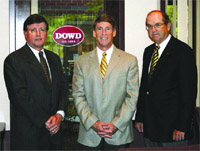
      The private annuity is a good strategy when the parent has a short life expectancy. This is due to the fact that the private annuity automatically terminates upon the annuitant’s death. If the parent is deemed to be terminally ill, then the mortality component of the IRS valuation tables cannot be used to determine the present value of the annuity. A person is deemed to be terminally ill if there is at least a 50% probability that he or she will die within one year.

      However, a private annuity certainly becomes disadvantageous if the annuitant lives beyond his or her life expectancy since the payments must be made for the annuitant’s lifetime. Moreover, it is important to note that the payer of the private annuity does not get a tax deduction for any of the payments made, which would be the case if the transaction had instead involved a loan by the parent.

      Charitable Gift Annuities

      An increasingly popular method of benefiting a charity, but with the donor receiving regular payments from the charity, is through a charitable gift annuity. Many charities offer these annuity opportunities. With a low AFR rate, the potential income-tax charitable deduction for the gift annuity will be less, but a lower AFR rate permits a higher portion of the annuity payments to be received income tax-free. This would be particularly valuable to an individual who does not itemize his or her deductions.

      Charitable Lead Trust (CLT)

      A charitable lead trust (CLT) is a trust that pays income to a charity for a period of years, after which the trust assets revert back to the grantor. If the CLT is established upon the grantor’s death, then the reversion would be to the individuals and/or trust designated to receive the trust assets upon the expiration of the time period. If the CLT is set up as a grantor trust, the grantor will be taxed on the trust income each year but will receive, in the first year that the trust is funded, a charitable deduction for the present value of the charity’s interest over the specified period of years. A low AFR rate results in a lower present value of the reversionary interest to the grantor or other beneficiaries, and thus increases the grantor’s charitable deduction.

      Using a non-grantor CLT, there is no initial charitable deduction, but the grantor is not taxed on the CLT income each year. Instead of the trust assets at the end of the term reverting to the grantor, the assets are distributed to named family members, other third persons, or trusts. The low AFR rate increases the present value of the charitable interest and thus reduces the value of the remainder interest for determining whether there is a gift subject to a gift tax (if the CLT was funded during the grantor’s lifetime), or whether the value of the remainder interest is subject to an estate tax (if the CLT was funded upon the grantor’s death).

      Charitable Remainder Interest in Personal Residence

      An individual can make an outright gift of his personal residence to charity but retain a life estate to continue to use and occupy the personal residence during his or her lifetime. The residence may be the primary or secondary residence. When a low AFR rate is applied, the present value of the charity’s remainder interest is higher, and thus the donor receives a larger income-tax charitable deduction.

      When a Low AFR is Detrimental

      A low AFR rate makes it more difficult to properly structure a charitable remainder trust (CRT). The typical CRT is funded by the grantor and provides for a fixed percentage payment each year to the grantor during the grantor’s lifetime or for a specific term of years. On the grantor’s death or the expiration of the term of years, the CRT’s assets are distributed to charity. The grantor should get a partial income-tax charitable deduction when he or she funds the CRT. Additionally, appreciated assets can be used to fund a CRT, and the trust in turn can then sell the assets without any tax on the gain. If the payout rate to the beneficiary is greater than the income of the CRT, however, then some of that non-taxed gain will be considered distributed to the beneficiary for that year and thus taxable to the recipient as a capital gain.

      A low AFR rate complicates the use of a CRT because it is more difficult to satisfy two of the code requirements for the CRT to be qualified. One requires that the remainder interest to the charity cannot be less than 10% of the initial value of the assets transferred to the trust. Second, the possibility for exhausting the CRT assets before the end of the CRT cannot be more than a 5% probability at the time the trust is funded. Despite these difficulties, there are certain ways to design a CRT to be able to satisfy these percentage requirements even when a low AFR rate is applied.

      Qualified Personal Residence Trust

      A qualified personal residence trust (QPRT) generally involves an individual transferring his or her personal residence (either a primary or secondary residence) to a trust for a fixed term of years. The consequences are similar to that of the GRAT discussed above. If the grantor survives the term of years, then the residence in the QPRT is transferred to the designated beneficiaries. If the grantor does not survive the term of years, then the value of the residence is includable in his or her estate for estate-tax purposes.

      When the QPRT receives the residential property, a gift to the remainder beneficiary is deemed to have occurred. The value of that gift is based on the value of the retained right to occupy the residence by the grantor during the term of years, the applicable AFR rate, and also the age of the grantor. With a low AFR rate, the value of the retained right to occupy is lower, thus increasing the present value of the gifted remainder interest for gift-tax purposes. Nevertheless, the use of a QPRT can be an effective way to transfer a residence with a lower gift value then an outright gift of the property to that remainder beneficiary. This can be especially effective if the gift involves a fractional interest in the residential property.

      Conclusion

      With interest rates still low, there are substantial wealth-transfer opportunities available for parents, grandparents, and others who wish to transfer assets to the next generation or beyond and, in the process, minimize or eliminate transfer taxes, whether they be gift or estate taxes. Current economic conditions have resulted in depressed asset values, but when combined with the attractive growth-shielding tools discussed in this article, now is the time to be calling your estate-planning attorney.

      As Steven Leimberg, a nationally recognized estate planner, wrote in his April 2009 newsletter, estate planners are witnessing a “rare convergence” of events favorable to their clients. These events include depressed value of assets, low AFR rates, and significant valuation discount techniques. As with many issues surrounding tax-centered estate planning, however, these factors are vulnerable to economic and legislative change. It is therefore important to take advantage of these opportunities while they are available.

      Richard M. Gaberman, Esq. is of counsel to the Springfield law firm Robinson Donovan, P.C. He specializes in estate and trusts, tax and estate planning, corporate and business transactions, and commercial real estate; (413) 732-2301.

      Sections Supplements
      Abundant Wellness Center Offers a Healing Touch
      Debee Boulanger

      Debee Boulanger turned this house in Chicopee into a multi-faceted center for holistic healing.

      Debee Boulanger was trained as a nurse, but it took her two decades to figure out how best to apply her skills and desire to help people. After returning to school to learn therapeutic massage, she launched her own business in Chicopee. Apparently, she tapped into a need; after only a few years, the Abundant Wellness Center boasts some 25 practitioners in therapies ranging from massage and yoga to acupuncture and Reiki — and much more. For Boulanger, it’s all about helping people who are beaten down by the stresses of life and showing them how to heal.

      Debee Boulanger comes from a family with more than a dozen nurses, so it was natural for her to pursue that field.

      But after a short time working in a nursing home in New Hampshire, she became disillusioned with how care was delivered — so she switched gears completely and went into retail instead. But the need to care for other people eventually nagged at her again.

      “After more than 20 years, I knew I needed a change,” she told BusinessWest. “I had a lot of experience in management and sales, but I loved helping people, and I wanted to get into a field where I could truly help somebody.”

      She considered becoming a yoga instructor, but instead felt drawn to massage, so she scouted out area schools, settled on the Boston Muscular Therapy Institute in Cambridge, and enrolled in a two-year program, commuting every weekday from Northampton to study the art of therapeutic massage.

      That was the late 1990s, and back then, Boulanger couldn’t envision what that decision has led to: the Abundant Wellness Center, her own business in Chicopee, which now houses some 25 therapists — most of them independent contractors — under one roof, professionals who specialize in not only massage, but a palette of other holistic health services, from acupuncture, Reiki, and yoga to hypnosis and classes aimed at both emotional and spiritual well-being.

      It’s been a successful business model, and one that — perhaps surprisingly, but perhaps not, depending on one’s perspective — has not been dented by the ongoing economic downturn that has companies of all kinds struggling.

      “Our business has increased. We’ve gained lots of new clients,” Boulanger said frankly. “Whether someone has lost a job or not, they’re coming in here because they’re stressed out and worried, and we’re a place of peace. We can offer them healing.”

      She emphasized that, while no one is happy about a recession that costs jobs and increases stress, the silver lining may be that people are starting to look inward at what’s important in their lives.

      “It’s forcing people to tap into the true value of themselves, and the biggest investment one can make is in their own health — not their house or their car or their boat, but their health,” Boulanger explained.

      “I think, in our society, people feel guilty about taking care of themselves, but that’s changing. At one time, people were saying, ‘I’ll treat myself.’ Now they’re saying, ‘I need this therapy.’ They recognize that it’s important to their health. They’ve been running their children here and there, spending very little time on themselves, and then, all of a sudden, they get sick or they’re in pain, and they’re forced to take care of themselves. That’s when we see them coming to us, whether it’s taking a yoga class or getting a massage or acupuncture.”

      In this issue, BusinessWest pays a visit to Boulanger’s holistic emporium to learn how an interest in massage turned into an abundant passion for wellness.

      Pressing the Flesh

      In 2000, after completing her training in Boston, Boulanger shared space with another massage therapist in Chicopee while she built up her clientele, aggressively marketing her services with special offers, holiday gift certificates, and connections with the city’s Chamber of Commerce and other networking groups; soon she had put together a consistently full schedule.

      Not long after, she struck out on her own, recognizing a need for holistic health services and envisioning a multi-disciplinary health center that went well beyond massage. She purchased a run-down two-story house on Route 116, alongside Interstate 391 and WWLP TV-22, and went to work renovating it.

      She opened in 2004 with a handful of massage therapists and one yoga instructor, and has grown the business from there. Many clients first find the center when passing by on the road; between cold calls and word of mouth (and a detailed Web site), Boulanger said the client base has grown steadily without much in the way of marketing.

      “People read up on everything we have to offer, and they’re definitely comfortable calling here,” she said. “And once they’re here, they feel they’re going to be in great hands.”

      Her own hands benefited from training in a wide range of massage therapies, and learning many modalities was one of the keys to building an early client base, she said. Even now, Abundant Wellness Center offers Swedish massage for stress reduction, deep-tissue massage for injury rehabilitation, and hot stone treatments to ease stress and tension and promote relaxation. There are also massage options for couples, pregnant women, even newborns, who reportedly reap benefits such as more restful sleep, improved digestion, and better immune function.

      Acupuncture clients also have options. The treatment in its basic form elicits a response from the nervous and immune systems, directing the body’s life force or energy (qi) to return the nervous system to a balanced state. It can reduce muscular spasms and tightness the occur after an injury, and produces a general feeling of relaxation.

      But the center also offers something called a tui na massage, which acts as an adjunct to acupuncture and involves pressing, kneading, and rolling techniques to increase circulation along acupuncture pathways. Meanwhile, a facial-rejuvenation acupuncture treatment uses points on the face and beck to increase the flow of qi and blood to the face, staving off premature aging and reportedly aiding with other health issues, including allergies and digestive problems.

      The center also offers one-on-one sessions and/or group classes in reflexology (which employs pressure on the feet and hands), as well as detoxification, yoga, Pilates, and even belly dancing.

      There’s also a host of energy work, including Reiki and craniosacral therapy (which taps into the cerebrospinal fluid to enhance the body’s healing capabilities), as well as hypnotherapy and spiritual-growth sessions. Many services at the center have a spiritual side — including meditation and prayer-writing — for those seeking that, Boulanger said.

      “Many clients want to seek out a more spiritual path,” she told BusinessWest. “We don’t try to sway people from their religion by any means. But many therapies connect the mental to the physical, and now they want to take the next step.”

      It’s all about a holistic approach to well-being, she explained, one that encompasses body, mind, and often spirit, and recognizes the connections between each. “Many of our clients will read our flyers and be curious about some other class or workshop.”

      Lay Your Burdens Down

      Most of the treatments offered at the Abundant Wellness Center target stress in some form, because that’s either the cause or symptom — perhaps both — of many health-related complaints, Boulanger said.

      “Stress can cause chronic pain, headaches, digestive problems, poor posture, anxiety, depression, emotional issues,” she ticked off, noting that each of these conditions in turn leads to further health problems — and more stress. “It creates a big ball of stress, and if people don’t know how to handle it, they’ll never get rid of those problems.

      “Not all stress is the same, though, so we have to look and see what’s going on,” she continued. “It could be stress from an accident or a lost job. It could be any number of things. If someone came in for massage and we felt they needed acupuncture, we’d send them in that direction. If I recognize that someone needs a chiropractic adjustment, I won’t hesitate to recommend that” — even though her business doesn’t offer that service.

      Boulanger said some people go to a spa to de-stress, but she wasn’t aiming for a spa feel when she set up the center. Neither did she want a doctor’s-office environment, but instead a homey feel, which her customers — about 60% of whom are female — appreciate.

      Ensuring that people are comfortable is key. For some, making the leap from something familiar, like massage, to a practice like acupuncture, which to many people seems more exotic, can be daunting, but Abundant Wellness offers a free consultation to determine whether someone is a good candidate. It’s all about matching each client to the right service, Boulanger said, which is why the sheer range of holistic services she offers is so crucial.

      “It’s very important to have that consultation because they don’t feel like they have to commit to something that maybe they’re not sure about,” Boulanger said.

      She finds that her chair-massage service, which costs just $1 per minute and involves no clothing removal at all, is a good way to get people comfortable with the types of stress-reducing services available to them.

      “We’ve done that at companies,” she said. “It’s very relaxing. Some make a comment that they don’t want to go back to work, but I know for a fact that they’re clearer and have a better work attitude afterward. They’re more productive after a chair massage, and they appreciate that the company invests in them in that way.”

      Again, it all comes back to investing in one’s health. In these troubled times, it’s something people are seeking — in abundance.

      Joseph Bednar can be reached at

      [email protected]

      Sections Supplements
      For Horizons Owner Mark Melikian, the Sky’s the Limit
      Mark Melikian

      Mark Melikian says the key to his longevity is fairly simple — giving customers what they want, and at an attractive price.

      Mark Melikian has seen a lot of changes come to Wilbraham Road (Route 20) since he opened Horizons Restaurant & Bar on that thoroughfare 22 years ago.

      “There was much less here then,” he said, referring to the stretches both east and west of his establishment and gazing skyward as he tried to recall the landscape in 1988. “There was a tennis club back then; now it’s a soccer center of some kind. There was just one auto dealership; now there’s several. And of course Post Office Park (the elaborate business center a mile or so west of Horizons) hadn’t been built.

      “It’s getting pretty developed now … there’s a lot of new businesses, and a lot of new chain restaurants,” he continued, noting that the former has helped his enterprise, while the latter he could definitely do without, although he has stood up well to the groundswell of competition.

      That’s rather obvious if he’s been witness to more than two decades of change and progress on Wilbraham Road when many businesses, not to mention restaurants, have come and gone in that span.

      Melikian says he owes his feats of longevity (something fairly rare in this sector) to some basic business principles and some strategic approaches specific to the restaurant industry and the niche he serves. He tries to keep things simple, for example, and focus on what the customers say they want, not what he believes they might want. He keeps his prices reasonable and puts the accent squarely on value.

      This approach has kept regulars coming back and a steady stream of newcomers coming to the door, he told BusinessWest, adding that over roughly three decades in the business he’s seen a number of business cycles, and the current downturn has been particularly challenging.

      “This has been going on for two years now, really,” he said of what has evolved into what some have dubbed the ‘Great Recession.’ “It’s been challenging; we’re talking about disposable income, and everyone has less of it these days.”

      In this environment, restaurant owners and managers have to control their spending, become even leaner (restaurants always run lean), and look to create new business opportunities, he said, adding that he’s doing all of the above.

      For our annual Restaurant Guide, BusinessWest talked with Melikian about Horizons, the restaurant business, surviving a recession, and, in general, what it takes to achieve longevity in this ultra-challenging business.

      For Appetizers

      Melikian said he took what would have to be considered the road most taken when it comes to restaurant ownership.

      He started (where else?) washing dishes at the old Willow Glenn House in East Longmeadow, a restaurant and banquet facility owned by his father and two uncles. He graduated to other kitchen duties involving food preparation, developed that requisite passion for the business, and went to school to hone his skills.

      “I don’t know what possessed me to do it, but I applied to the Culinary Institute of America and got accepted,” he joked. “I took a sabbatical from college and went off to pursue this; I guess I really knew early on that this is what I wanted to do with my life.”

      After working as a chef in a number of restaurants, including a few in Florida and New York, Melikian, like most others who start down this road, wanted to run his own restaurant. Actually, this was a dream also shared by his brother, Jeff, so they pursued it together.

      With some financial backing from their father, the brothers Melikian acquired the then-closed Top of the Hill Restaurant, a long-time, if at times troubled, fixture on Boston Road in Wilbraham in 1987. They renovated it, renamed it Horizons, and a few years after opening it put on a large expansion (the current bar area).

      Jeff, now with Mohegan Sun in Connecticut, left the business several years ago, leaving Mark, now playing the role of chef/owner — “I supervise everything” — to cope with the changing scene on Route 20 and an ever-more-competitive business landscape.

      He’s fared well by catering to a broad constituency that includes everything from retirees to business professionals living in Wilbraham, East Longmeadow, Longmeadow, Belchertown, Ludlow, and other affluent suburbs east of Springfield.

      The former is the bread and butter, if you will, for the luncheon business, while the latter dominates the dinner clientele. Meanwhile, younger audiences find the bar area an attractive spot for watching a ballgame, listening to live music (now featured regularly), and enjoying a good meal.

      Such well-roundedness helps Horizons at all times, but especially when the economy is soft, said Melikian, adding that he relies on a steady diet of regulars, but also a constant stream of newcomers. He draws both by keeping the menu, which he described as “Creative American,” varied, but also dominated by staples such as prime rib — cooked on the bone — as well as steaks, seafood, and pasta dishes.

      And while discussing what has become a recipe for success he almost apologizes for its simplicity.

      “You just try to do the right thing and treat people right— offer quality products at affordable prices,” he explained. “It sounds mundane, but that’s what you have to do; that’s what it comes down to.”

      Elaborating, he said this means listening to customers and responding with what they want. “We try to cook the food I think people want to eat, and not necessarily what you’d like to do,” he explained. “Everyone would like to be able to serve a $40 steak, but you have to take what the market gives you.”

      As for the recession, Melikian speaks for others in the business (actually, they speak for themselves; see related story, page 23) when he says that the key to surviving and thriving is to simply “keep an eye on things.”

      And by that, he means everything from the prices he pays for food and other items to controlling waste to keeping any and all other expenses in check.

      “It’s like any business; you can’t control what comes in,” he said, referring to the volume of business for a given day, week, or month. “But you can control what you spend.”

      Such steps are necessary, he said, because this recession is more challenging than any he’s seen previously (and he lived though the downturn in the early ’90s), and people simply don’t eat out as much when they have less disposable income or if they are uncertain about the economy — and until recently, that meant just about everyone.

      “People still come in, just not as often,” he said. “If you used to see them once a week, maybe you’ll see them once a month now.”

      To compensate, Horizons is doing more off-site catering, said Melikian, noting that it recently handled a wedding at the Barney Estate in Springfield, one of many such assignments in recent months, and, in general, it is stretching its imagination when it comes to ways to generate additional revenue and reduce expenses.

      “And that’s a challenge, because your fixed expenses have gone up, and you can only charge so much for what you do,” he said. “You can’t say, ‘this steak used to be $15, but now I’m going to charge $25 to cover my expenses.’ Well, you could do that, but no one would eat it.

      “Instead, you have to find ways to cut back, but not sacrifice quality, the things that make people come to your restaurant in the first place,” he continued. “It’s not complicated, really. You just keep an eye on everything.”

      Just Desserts

      Returning to the matter of chain restaurants proliferating on and around Boston Road, Melikian said he’s seen many come — and a good number go.

      There have been other observations, as well. “When one of them opens, you always notice some drop-off in business as people go to check it out,” he said. “Then, things gradually return to normal, and after their good start, some of the chains slow down, and before long you see their people coming to your door looking for work. There’s a pattern there.”

      Melikian has stitched his own pattern, one of success and longevity that has made Horizons a true landmark and enabled its owner to be a witness to 22 years of evolution on Route 20 — and counting.

      George O’Brien can be reached at[email protected]

      Sections Supplements
      They Make Good Sense for Landlords and Tenants Alike

      By now, most people are familiar with the term ‘going green’ and the concept of green building, but many people may not be familiar with green leasing.

      While there is, as yet, no working definition of the term, green leasing generally integrates concepts such as recycling, sustainable-development principles, energy and water conservation, alternative-energy usage, and hazardous materials (usually cleaning materials) use and disposal, with the standard leasing language involving operating expenses, rent structure, and tenant build-out costs.

      Most green leases include provisions for the reduction of energy usage through such simple measures as energy-efficient fixtures and equipment, turning off lights, motion sensors, and increased rent for ‘after-hours’ business operations. These leases also contain clauses requiring recycling programs, sustainable buildout materials, air-quality standards, and reduced water usage.

      Just as green leasing lacks a standard definition, there is also no single certification given to identify a lease as a ‘green’ lease. Instead, there are a number of different certifications that can be attained by builders, developers, and landlords seeking to label leases as green leases. For example, some seek certification pursuant to the Leadership in Environment and Energy Design (LEED) standards set forth by the U.S. Green Building Council, which awards points based on building specifications. In the case of existing buildings, LEED certification for commercial interiors (LEED-CI) is often sought. LEED-CI awards points (a) if the lease is for a term of 10 years or more; (b) if the leased space is located in a LEED-certified building; and (c) if the leased space is located in a building that contains certain green equipment, including but not limited to water- and energy-conservation fixtures.

      Another certification sought is Energy Star for commercial buildings, which is a government program administered by the U.S. Environmental Protection Agency and the U.S. Department of Energy. Energy Star’s goal is to reduce the use of energy through the use of energy-efficient practices and products. Energy Star also uses a points-based system that awards points on a scale of 1 to 100. Buildings that receive a score of 75 or more receive the Energy Star rating.

      So, it’s logical to conclude that green leasing equates to increased construction and operating costs. While there are without doubt costs associated with green leasing that are not found in traditional leases, if crafted properly, green leases can actually result in an overall increase in net operating income through the inclusion of requirements affecting the use of energy, regardless of prevailing energy prices.

      In the context of a net lease arrangement, this can be accomplished through the inclusion of green-building capital expenditures, repairs, and maintenance in the definition of common-area maintenance (CAM) and/or operating expenses. In a gross-lease context, this can be accomplished through the adoption of green rules and regulations that require all tenants to adopt green standards, thereby eliminating the possibility that tenants who have adopted green practices, and therefore incurred such associated costs, are paying a pro-rata share of energy expenses with tenants who have not adopted such practices, and are therefore responsible for a disproportionately large percentage of overall energy consumption.

      In addition, more and more companies and government entities are now demanding green lease space. For example, in 2007, the Energy Independence and Security Act of 2007 (EISA) was enacted, which set forth goals and standards for the reduction of energy use in federal buildings (including all buildings in which the federal government leases space), including the use of energy-efficient lighting fixtures and bulbs and a prohibition against federal agencies leasing space in buildings that do not earn an Energy Star label. As such, landlords who seek federal government tenants will be forced to attain Energy Star certification.

      Additionally, many companies have enacted sustainability statements that, in addition to other provisions, require that leases entered into by the company contain at least some green language. These mandates, along with a growing and continuing trend toward green building and green initiatives in general, are beginning to force landlords and tenants to rethink lease arrangements in order to meet the goals of both parties.

      While green leasing is a relatively new concept, the number of green buildings being built, and the number of companies and government agencies requiring green leases, continue to increase. As with most new concepts, those who lay the groundwork now for preparing and/or negotiating green leases will be well-positioned when this new concept becomes an accepted reality. This positioning requires both landlords and tenants to reconsider the approach the other takes when negotiating lease arrangements.

      Dennis G. Egan Jr. is an associate with

      the regional law firm Bacon Wilson,

      P.C., who specializes in business and

      corporate law; (413) 781-0560;[email protected]

      Sections Supplements
      The Employment Picture Is Improving, but It Remains Fuzzy
      Mary Ellen Scott, left, and Christine Phillips

      Mary Ellen Scott, left, and Christine Phillips say business is picking up.

      The July unemployment numbers released by the U.S. Department of Labor were lower than expected. That’s the good news.

      However, the difference between the projected figure and the 9.4% unemployment statistic for that month was a tenth of a percent. That’s … not too bad for news these days.

      Across the nation in July, employers trimmed 247,000 jobs, in contrast to the staggering January losses of 741,000. On the day the unemployment numbers were released, President Obama said that “the worst may be behind us,” and that “we are pointed in the right direction.”

      The Bay State posted a seasonally adjusted 8.6% unemployment rate for the month of June, and while there were other Mass. communities that spiked into double digits, Hampden County edged below, at 9.8%.

      That’s still a large number, and it’s reflected in what Rexene Picard, executive director of FutureWorks in Springfield, one of 37 statewide career centers, observes every day. “The big thing that we’re seeing is increased traffic for job seekers. There’s a line out the door when we open. At the same time, we are seeing fewer job opportunities. Our job postings have gone down from this time last year about 38%. That’s a significant drop.”

      At United Personnel in Springfield, owner Mary Ellen Scott and Executive Vice President Christine Phillips took a positive look at the local job market. Talking about the manufacturing sector, historically one of the backbones of the local economy, Scott said that “our business has definitely been picking up over the last few months.”

      Joe Ascioti, owner of Reliable Temps Inc. in Agawam, feels less buoyant about the government’s predictions. While the latest statistics are better than feared, he said, “let’s face it, we aren’t creating a lot of new jobs yet. There’s still too much uncertainty out there right now.”

      In these days of economic turmoil, a reduction in bad news is good news, most would agree. Massachusetts has consistently been at the lower end of the nation’s unemployment rates, but in talking with area employment professionals, the big question is, when does the good news get good?

      Local Looks

      While the number of job-seekers and the dearth of jobs Picard sees everyday are both somewhat historic, she is confident in programs that are available for area workers.

      “Western Mass. is better in some ways than the Boston area because we don’t see the highs nor the lows that they do,” she said.

      Some new growth in the job market comes from familiar sources, she continued. “Health care is, and continues to be, the leading source of employment for this area and the state.

      “Our largest employer in the area is Baystate Medical Center,” she continued. “They are reaching out to us now, because we know that there is going to be a need to hire around 1,000 people a year for the next several years. Anybody that’s thinking about a new career, or switching gears, I encourage them to look at that field.”

      In the manufacturing and construction sectors, new claims for unemployment in Hampden County totaled more than 3,000, and Picard agreed that the bulk of her June numbers comprised those industries. But with funds from the American Recovery and Reinvestment Act, one of the largest stimulus packages in history, funds have come through the pipeline to address those losses. Picard said she’s pleased to see substantial money going into both new training and retraining for the manufacturing base of the area.

      “But it’s difficult,” she continued, “because this money essentially is going to replacement jobs. Not a lot of new companies are moving to the area.”

      Manufacturing continues to be an important facet to the regional workforce, despite decades of offshore attrition. Picard said that the Regional Employment Board of Hampden County is involved with numerous initiatives to keep people in those positions.

      “The manufacturing industry constitutes 17% of the area workforce, and those generally are jobs that are well-paying positions,” she said. “The REB is doing a lot of work in the area with manufacturers, asking where the need is for new employees and what they can do to successfully build pipelines into those industries. It’s an aging workforce in many cases.”

      Phillips and Scott say there are signs of some light at the end of the tunnel for the manufacturing sector, and they’re seeing it in the growing number of positions they’re being hired to help fill.

      “I don’t think we were expecting manufacturing to be doing as well as we have seen already this year,” said Scott. Phillips agreed. “It has picked up, and it is definitely where we have seen the biggest trend change. We were not anticipating certain clients to have needs this year; our analysis was that we weren’t planning on having any orders.”

      The improving picture can be attributed in part to what appears to be greater consumer confidence, as reflected in some of the numbers being posted by retailers, said Phillips.

      “I think that if you look at certain other sectors, let’s say retail, their numbers began the year pretty low,” she said. “What they predicted for this quarter has been completely surpassed. There was a real concern about what kind of money would be spent. What retailers are seeing is that people are still spending. Thus, analysts look from this time last year to now, and their orders are far greater than they had anticipated.”

      Phillips and Scott agreed that the numbers these days are not as good as they would like them to be. While some clients are hiring more than they anticipated, many employers are, by and large, holding out for more assurance that the economy will strengthen.

      “Frankly,” said Phillips, “I’d be more nervous if we were making giant leaps in gains in the economy. It is more-steady gains that build people’s confidence. If it goes up in a sharp increase, people think that it could similarly go down in a sharp decline.”

      Ascioti told BusinessWest that he sees government forces sometimes playing a contradictory role with regard to the employment picture. Unemployment taxes can be punishing to small business, and that size employer is one that needs to be given more consideration, he maintained.

      “What I’m worried about right now,” he said, “is where are we going with all this? As the saying goes, Wall Street doesn’t like uncertainty; well, neither does small business. Unemployment costs for many businesses are going to go up 30%. For politicians in Boston to think that they can just raise the sales tax, raise the meals tax, raise this, mandate that, and that businesses are just going to sit there and say, ‘oh yeah, no problem. We’ll just raise our prices’ — well, it’s not an elastic environment. You can’t just do that.”

      In this area, he said, a lot of what he hears is that business is still off 25% to 30%. “We have a couple of clients that are doing better than normal,” he said. “Are they where they were a year and a half ago? No. Are they better than 80% of what their competition is doing? Yes. But can I pick one specific industry? Unfortunately, no.”

      Looking at the larger forces of federal and state regulation, Ascioti said, “what we need to do right now is bring our costs in line. I wish the government would understand that it’s small business that creates the jobs in America. If the climate isn’t positive for them, it’s going to be impossible to hire people.”

      Hire Ground

      The day after the newest unemployment figures were released, the New York Times reported that “employers are no longer in a panic, and the pressure they felt to get rid of workers in a hurry is diminishing.” That seems to be the sentiment in the Pioneer Valley, but the overall employment picture remains fuzzy because there are too many variables to make a clear assessment.

      One thing is fairly certain, however: until the economy gains both momentum and sustained stability enough for employers to take on more workers, the only real good news is that the bad news is getting better.

      Sections Supplements
      Report Touts Green Building as Economic and Environmental Imperative

      Investing in the energy efficiency of buildings represents a powerful and strategic energy and climate solution that, combined with other non-transportation initiatives, could reduce the nation’s energy consumption by 23% by 2020, save the U.S. economy $1.2 trillion, and reduce greenhouse gas emissions by 1.1 gigatons annually, according to a study released recently by McKinsey & Co., a national management-consulting firm.

      “This confirms a critical path forward that we have long championed,” said Rick Fedrizzi, president, CEO, and founding chairman of the U.S. Green Building Council (USGBC), which co-sponsored the report. “Harnessing the engine of green, energy-efficient buildings can cost-effectively drive tremendous improvements in our economy and environment.

      “Green building can stimulate the economy at a level one and a half times larger than the federal stimulus bill,” he added. “In terms of climate change, a commitment to energy efficiency would be the equivalent to taking the entire U.S. fleet of passenger cars and light trucks — more than 200 million vehicles — off the road.”

      The report provides a detailed assessment of how much the nation can increase energy efficiency in buildings and other non-transportation sectors using existing methods and technologies. A targeted investment of $50 billion a year over 10 years, the report finds, would enable the entirety of those potential savings to be realized. Those reductions in energy use would save the U.S. economy $1.2 trillion, a return on investment of more than 2 to 1.

      Furthermore, those investments would generate 900,000 jobs and reduce greenhouse gas emissions by 1.1 gigatons, according to the report, “Unlocking Energy Efficiency in the U.S. Economy,” which was sponsored by 12 organizations from within both the government and private sector.

      McKinsey’s research finds that a comprehensive strategy, executed at scale, could reduce the annual non-transportation end-use energy consumption analyzed in this report from 36.9 quadrillion BTUs in 2008 to 30.8 quadrillion BTUs in 2020 — saving 9.1 quadrillion BTUs relative to a business-as-usual baseline.

      “Increasing our nation’s energy efficiency is an economic, environmental, and national security imperative that requires bold public policy,” Fedrizzi said. “As Congress debates climate-change legislation, these findings make an overwhelming case that we must dramatically strengthen provisions that support and scale green building.”

      The energy-efficiency potential cited in the report is divided across three sectors of the U.S. economy: industrial (40% of the end-use energy-efficiency potential), residential (35%), and commercial (25%).

      Solutions, drawn from proven, piloted, and emerging national and international examples, show that maximizing the energy-efficiency potential from any single opportunity — weatherizing homes, utilizing efficient air conditioners, or employing combined heat and power generation — requires addressing multiple barriers simultaneously.

      “By leveraging existing green-building approaches, we have the ability and capacity now to address multiple barriers, and thus generate additional resource efficiencies and cost savings,” said Fedrizzi.

      Call to Action

      The report calls for an integrated national plan guided by five principles:

      • Recognize energy efficiency as an important energy resource that can help meet future energy needs, while the nation simultaneously develops new no- and low-carbon energy sources.
      • Formulate and launch — at both the national and regional levels — an integrated portfolio of proven, piloted, and emerging approaches.
      • Identify methods to provide the significant upfront funding.
      • Forge greater alignment among utilities, regulators, government agencies, manufacturers, and energy consumers.
      • Foster innovation in the development and deployment of next-generation energy-efficiency technologies to ensure continuing productivity gains.
      • According to the USGBC, buildings in the U.S. are responsible for 39% of carbon dioxide emissions, 40% of energy consumption, 13% of water consumption, and 15% of GDP per year, making green building a source of significant economic and environmental opportunity. The organization claims that greater building efficiency can meet 85% of future U.S. demand for energy, and a national commitment to green building has the potential to generate 2.5 million American jobs.

        In addition to USGBC, the McKinsey report was also sponsored by Austin Energy, the U.S. Department of Energy, DTE Energy, the Energy Foundation, the U.S. Environmental Protection Agency, Exelon Corp., the Natural Resources Defense Council, PG&E Corp., Sempra Energy, the Sea Change Foundation, and Southern Co. To download the report, visitwww.mckinsey.com.

        Ashley Katz is communications manager for the U.S. Green Building Council.

        Sections Supplements
        Employee Free Choice Act Opens Fresh Dialogue on the Future of Labor Unions
        Meredith Wise

        Meredith Wise says employers are making a mistake if they underestimate unions.

        As Congress gets set to re-open debate on a bill that will streamline the process by which employees unionize — a measure opposed by many businesses but supported by elected leaders in this time of economic turmoil — there is new discussion about organized labor and the role it will play in the years to come.

        Later this year, a bill to be voted on in Congress will have a significant effect upon the American workforce.

        The Employee Free Choice Act (EFCA) was originally introduced in February 2007 and gained momentum, but a Republican filibuster kept the bill effectively squashed. In March of this year, Sen. Edward Kennedy and Rep. George Miller of California re-introduced the provision to the 111th Congress.

        EFCA’s role in the workplace is to streamline the process by which employees unionize their workplace. Key proponents of the bill see this as necessary for workers in a time of financial turmoil. However, businesses from Home Depot to FedEx have reacted strongly against the pending legislation.

        While supporters lobby to get some form of the bill passed through Congress, larger questions arise. With such powerful federal assistance to organized labor in America, is it time to re-evaluate the role unions play in the contemporary workforce?

        “Basically union membership has been declining overall for the past 10 to 15 years,” said Meredith Wise, president of the Employers Assoc. of the NorthEast, a membership organization that strives to improve employer-employee relations. “One of the reasons why the unions have declined is because their agenda has been legislated.”

        But Tom Juravich, a professor of Labor Studies at UMass Amherst and former director of the school’s Labor Center, disagrees with that basic premise. “I think it’s important to draw the distinction between how unions operate, and the role unions play in this country, with the workforce of Western Europe,” he explained.

        In contrast with that workforce, which is largely granted much of its benefits and social stability through citizenship, said Juravich, “in many ways, the only opportunity an American worker has is through a union card.”

        With historic change possibly on the docket in Congress, BusinessWest opens a dialogue on what role unions have for the nation’s workforce, what EFCA will mean, and what the future might hold for organized labor.

        The Times They Are a-Changing

        Wise said that with all the attention placed on EFCA these days, “companies, as well as unions, are focusing more on what role unions play in the workplace and whether they’re going to grow or continue to diminish in membership.”

        What seems to be happening, she said, is that both companies and unions are in a holding pattern, basically seeing how the legislation fares. “The sense had been that, until the EFCA passed or was totally shot down, that the unions wouldn’t get active. They wouldn’t do more than they typically do, as far as outreach or trying to unionize workplaces, and a lot of employers I think kind of put the urgency to look at their employee relations on the back burner.

        “The economy being what it is,” she continued, “business might be saying, ‘my plate’s full; I just can’t worry about the possibility of unionization unless something happens with EFCA. Unions can’t come after me anyway, because there’s just no money to give increases, people are being laid off … unions don’t have a platform.’”

        However, quite the opposite of that logic is what appears to be underway. Wise said that over the past several weeks, she sees unions in Western Mass. and Northern Conn. not pulling back, but getting much more active in reaching out to workers. “They don’t appear to be saying, ‘the economy’s not good; we shouldn’t push,’” she said.

        Rather, unions are reaching out to increasing numbers of workers, but aren’t filing petition cards with the National Labor Relations Board, said Wise, adding that she is left with questions concerning their intent. “Part of what we as an employers association, and what businesses are wondering, is whether the unions are getting active to gather signature cards, and then sit on them for a while with the thought that EFCA is going to pass, or some version of it passes, and then they can present these cards and be recognized? Or are they gathering them and they just haven’t gotten to enough of a point yet to get an election?”

        While speculation swirls about EFCA and its fate, there is broader discussion about just how much power unions still possess and what it can or should do with that influence.

        While manufacturing has been the traditional base for organized labor, Wise noted that unions have branched out into many different sectors. The public sector, from the federal government on down to town municipalities, represents fully one-third of the organized workforce in the nation, she noted, adding that growth is significant in both human services such as health care and also finance.

        The big difference for unions these days, she told BusinessWest, is that goals have changed with the times. “I think that one of the main reasons is that, 10 to 15 years ago, unions did a really great job of pushing their agenda into the political arena,” said Wise. “So there had been a lot of laws and regulations that used to be part of union contracts, but now they are regulated.

        “These include things like family and medical leave,” she continued. “At one point in time, something that would have been a big part of the union platform is that you can go out on leave and have your job protected. Well, now that is federally legislated. That’s going to happen regardless if you are union or not.”

        The Americans with Disabilities Act of 1990 is another example of union success for the workplace at large. “I think that the unions have done a pretty good job over time of getting their agendas politicized and put across for all employers to have to do without being unionized.”

        Juravich agreed that union’s message has successfully become part of the American worker’s rights, union or not. However, he noted that there is still work for unions to do. “I still think that what we’re given by law is minimal when contrasted with other industrial societies,” he explained. “For example, there is no federally or state mandated right to a lunch hour. So I think that unions still can provide a lot.”

        EFCA Marks the Spot

        Votes for unionization currently take place when 30% of the workers for a given employer agree to sign authorization cards. Those cards are then filed with the NLRB, which then organizes an election for them.

        Generally within 60 to 90 days there is a secret-ballot election, where the employees that have been identified as a unit have an opportunity to vote ‘yes’ or ‘no.’ Those who originally signed those authorization cards may stick with their original vote of pro-union, or they can decide against it.

        If EFCA passes as currently written, there would be no secret-ballot election. If the union voices could get 50% plus one of the workforce originally, the potential bargaining unit that gathered these election cards would present them to both the employer and the NLRB and then they’re in — no further election.

        EFCA, essentially, seeks to safeguard the jobs of employees seeking to organize their workplace. Juravich explained some of the clear and present dangers with the current process and why the legislation has been filed.

        “The problem is that, during the days leading up to the election process, what we know is that they are not very democratic,” he explained. “Employers can do a variety of things to impede the elections. For example, they can bring workers in and meet with them individually for five minutes to three hours to try to dissuade them from voting positively in the election.

        “There is a statistic that in one out of every three union elections, workers are fired illegally for trying to organize,” he continued. “That has an incredibly chilling impact, even though those employees might later be hired back.”

        The possibility for compromise with the EFCA as currently written seems likely, said Wise and Juravich. One of the key revisions already discussed is that the secret-ballot election wouldn’t be abolished; it would just take place with an expedited timeline. Instead of the current waiting period of 60 to 90 days, balloting would have to happen within 10 days. Or, if the election were to take place within 10 to 15 days, there are certain things management can or cannot do regarding campaigning against the union.

        Labor Daze

        While helping employers understand EFCA and potential ramifications, Wise also has some advice for business owners about organized labor in general: Don’t underestimate it.

        She said the card unions are playing today involves respect, or, more to the point, the lack of it being shown to workers during this economic downturn.

        “Businesses are very involved right now in keeping themselves afloat, making it through another payday, making it through the year, and they are neglecting to a large extent those employee-relations pieces,” she continued. “It’s an important thing not to say to an employee, ‘you’re lucky to have a job,’ or, ‘no I don’t have time to listen to your complaint today, and remember, you have a paycheck. You’re not like the other 10% of the workforce that is unemployed.’”

        Wise noted that unions are a business, and are utilizing sound business models these days. “Over the last five to 10 years, the unions have been working so hard at restructuring themselves and re-educating themselves because the workforce that they were accustomed to organizing is no longer the workforce that’s out there,” she said.

        “Now, unions are poised to kind of come back,” she continued, “because they have more technology. They’ve worked really hard at rebuilding their Web sites, updating their methods of communication, and frankly probably done a better job of that than their employers as far as recognizing how tech-savvy a lot of the younger people are, and working that into their campaigns and their outreach.”

        For Juravich, his contrast with the industrialized societies of Western Europe highlights the discrepancies between the two workforces. “As part of the rights one receives there with citizenship, one has the right to earn a living wage, to have health care and pension benefits. Those are their citizenship rights.

        “In this country,” he continued, “the laws provide us with minimum wage, no access to health care, no access to pension programs, with the exception of Social Security. Unions are in many ways for American workers to be a part of a society, to have what workers around the world are offered by law.”

        Speculation on Capitol Hill is that health care is presently on the front burner of Congressional voting, and that EFCA cannot realistically be addressed until at least later this month. Passage of the bill would prove to be a significant victory for organized labor in the U.S., and Wise wants employers to understand the consequences of current actions.

        “My message is that companies need to open their eyes,” she said, “and if they don’t want that union intervention, they need to stop and look at what their employee relations are.

        “That’s what’s going to help them achieve their corporate goals and expectations,” she continued. “Unions have played a role in the economy and environment, but I think that businesses can do a better job of achieving their goals of working with their employees without third-party intervention.”

        Juravich thinks this is a pivotal time for unions. “This is without a doubt the most difficult time that workers will face in over three generations, because of the economy. But also this is the most challenging time for unions to be facing in that same time period.

        “In the industrial sector,” he continued, “unions have not been able to hold onto their workers. In the auto industry, they are struggling and saying to themselves, ‘how can we still make a difference?’ Unions have always been about wages, pensions, and health care. But they have also always been about more than just that. In these difficult times it’s important to remember that unions are also preserving the larger issues of justice and dignity in the workplace.”

        Sections Supplements
        Mercy’s New Intermediate Care Unit Sheds Some Light on the Subject

        To officials at Mercy Medical Center who recently cut the ribbon on the hospital’s new intermediate care unit, the space is an ideal blend of state-of-the-art technology and natural healing.

        The 22-bed IMCU features private rooms for each patient with direct access to large windows and plenty of natural light. Both, it turns out, are more than mere design choices.

        “On one hand, it’s a unit designed to respect a patient’s privacy, and to have a place for family and friends to visit,” said Vincent McCorkle, president and CEO of the Sisters of Providence Health System, which oversees the Springfield-based hospital.

        “But when it comes to privacy and things like the use of natural light,” he continued, “clinical studies have demonstrated that they help in the healing process and help patients do better. There’s less disorientation, and patients leave the hospital faster.”

        Of course, privacy has become a major concern for hospitals in the era of the Health Insurance Portability and Accountability Act (HIPAA). But Stan Rogalski, vice president of System Support Services, also cited a string of industry studies demonstrating that a patient’s hospital environment — elements like natural light, noise reduction, even the colors used in room décor — can have a measurable impact on healing time and the quality of that healing.

        Private rooms are a big part of that equation, and even insurance companies are coming around on the issue, he added, noting that payers that have historically been reluctant to cover private rooms now understand that, when patients recover faster, there are lower costs in the long run.

        That’s partly why McCorkle sees the new IMCU as an investment, in more ways than one.

        “We look at the demographics of our community and what the community can afford, and at the same time what the community needs in terms of exceptional health care,” he told BusinessWest. “This is part of a strategy to offer value — a combination of lower cost and excellent clinical quality — improving the overall experience of hospital care for the patient and the family when they come to the intermediate care unit.”

        Comforts of Home

        Family members and others who visit patients in the new unit will find more space inside patient rooms and in common areas than in the old IMCU. Additional amenities include flat-screen televisions and wi-fi service provided free of charge, as well as adjustable lighting, ceramic-tiled bathrooms, and glass-panel doors for noise reduction.

        Such elements, particularly those related to privacy and noise reduction, aren’t new concepts, but they are receiving more attention in hospital design as new data becomes available and is touted by organizations like the California-based Center for Health Design Research (CHDR).

        Take, for example, the benefits of private rooms in relation to noise levels. “Hospitals are extremely noisy, and noise levels in most hospitals far exceed recommended guidelines,” writes Dr. Anjali Joseph on the CHDR Web site. “The high ambient noise levels, as well as peak noise levels in hospitals, have serious impacts on patient and staff outcomes ranging from sleep loss and elevated blood pressure among patients to emotional exhaustion and burnout among staff.

        “Poorly designed acoustical environments can pose a serious threat to patient confidentiality if private conversations between patients and staff or between staff members can be overheard by unintended listeners,” he adds. “At the same time, a poor acoustical environment impedes effective communication between patients and staff and between staff members by rendering speech and auditory signals less intelligible or detectable.”

        Natural light has measurable benefits as well, Joseph notes. “Adequate and appropriate exposure to light is critical for health and well-being of patients as well as staff in health care settings. Natural light should be incorporated into lighting design in health care settings, not only because it is beneficial to patients and staff, but also because it is light delivered at no cost, and in a form that most people prefer.”

        The opening of Mercy’s new IMCU — one floor below the hospital’s modern intensive care unit, which opened in 2007 — marks the completion of the first phase of an initiative to create more private rooms and improve the patient experience.

        “These improvements are the direct result of input from our patients, many of whom have expressed a desire for more privacy as they recover from illness or injury,” McCorkle said, adding that, increasingly, hospitals need to consider both technological advances and structural design elements when trying to improve patient satisfaction and care.

        Phase two of the project will involve the conversion of double rooms to private rooms on other patient care floors at Mercy, significantly increasing the number of single or private rooms available for both medical and surgical patients. One of the areas to see this renovation will be the old intermediate care unit, he said.

        Elbow Room

        As for the new IMCU rooms, he said patients and their families will be pleased with the space. Even elements unrelated to square footage — like a bank of outlets to hook up monitoring equipment attached to the wall of each room — will save space and reduce chaos.

        “The rooms aren’t quite as large as in the ICU, where they have to be bringing in crash carts and teams of people,” McCorkle said. “But there are more rooms here than in the ICU, and they all have very spacious private bathrooms.”

        All of which, he said, speaks to an overall goal of patient satisfaction.

        “As we tell people these days, if you haven’t seen Mercy lately, you haven’t seen Mercy.”

        Joseph Bednar can be reached at

        [email protected]

        Sections Supplements
        AIC’s New Business Dean Wants to Make a World of Difference
        Lea Johnso

        Lea Johnson wants AIC business students to get an education with an international flavor.

        Lea Johnson says she won’t ever forget the impact a 2006 trip to Africa made on her views about conducting business in a global environment.

        At the time, she didn’t see much value in going on the excursion, which was a mandated part of her doctoral program. But a “flash point” of awakening occurred when a colleague remarked that it was sad so many children there didn’t have shoes.

        The African professor they were talking to reacted with anger, Johnson said, and explained that going barefoot in their country was not necessarily a sign of poverty.

        “If you could have seen the anger in her eyes. We sat in stunned silence,” she recalled. “We were administrators from all over the U.S., but we didn’t understand their culture or apartheid and the inequality that still exists until we were actually there.”

        The experience caused her to vow that, if she was ever in charge of an international business graduate program, she would make sure students understood the importance of culture and history.

        Johnson is in that position today as the newly ap-pointed dean of the School of Business Administration at American International College. In this issue, BusinessWest takes a close look at her vision for the future as she explains why teaching established business skills to students is no longer enough to guarantee success.

        Flying High with Ideas

        Johnson, who assumed her new role in early July, said one of her first priorities is to restructure the program. “We can no longer keep education in the silos,” she explained. “It was OK until about 15 years ago, but things have changed. We talk about a global economy, and we really have an obligation to make sure students understand cultures and economies outside our own. We need to become sensitive and know what is expected, what a country’s protocol is, and what is off-limits to discuss.”

        That means providing more students with an international experience, which is in line with AIC’s mission. The business school’s undergraduate and graduate programs are based in Springfield, but in the past two years satellite operations were established in Ireland, Italy, Bangkok, and London. Johnson said they hope to open another location in the UK in about a year.

        However, only a handful of students participate in the programs in Ireland and Italy. The Bangkok and London programs are more popular, and this fall, 50 MBA students will study at those remote sites, with 25 in Bangkok and 25 in London.

        Recently, John-son accepted 40 new students into the MBA program in Springfield, hailing from Russia, Africa, China, and India, as well as the U.S.

        “Think how rich it will make classroom discussions,” Johnson asked, adding that a foreign dentist and physician are part of the new Springfield student body. Still, she would like to see more U.S. students do a semester abroad and be matched with mentors in those countries.

        That experience should be valuable, and Johnson plans to consider moving the Bangkok and/or London programs to a different continent. The idea to move their location came to her during a 30-hour return flight from a recent graduation ceremony in Bangkok. The AIC students there presented an impressive array of completed projects. But she believes future graduates might benefit more from studying in countries with emerging economies.

        “I thought, ‘let’s rachet it up.’ There are different types of deans,” she said. “Some just keep the train running on time, and others try to take the organization to the next level. I’d like to think I am one of those deans.”

        To that end, she plans on putting a team together to explore where it would make the most sense to relocate the program.

        “The demand in education is for us to focus on the BRIC (Brazil, Russia, India, and China) economies, which are emerging,” she said. “Russia and Brazil are percolating on a back burner, and they are potential superpowers to watch,” Johnson said.

        She also plans to review the school’s undergraduate programs this fall and will explore the possibility of having students study how major businesses set themselves up in foreign countries. “It would be fun to study how they deal with cultural problems, language barriers, currency, and economic structures,” she said. “If we are training students to become managers and potential leaders, they need to be aware of global issues.”

        Johnson is not a new face at AIC. She was hired a year ago as associate dean of the School of Business. Her areas of expertise are integrated marketing communications, program development, and entrepreneurship. Her background includes positions with the federal government and stints as the director of advertising campaigns in the private sector.

        She founded a national trade magazine for the public relations profession, and has worked in administration at Suffolk University School of Management and the Massachusetts Institute of Technology. Still, Johnson was very surprised when she was asked to head up AIC’s School of Business, because she had not applied for the position. “I was very excited, honored, and thrilled,” she said. “It is a terrific opportunity.”

        AIC’s business school has added a new faculty member who will focus on green economics. The new position is only a beginning, however, as Johnson wants to market the college’s business programs around the globe.

        “I am hoping to double the faculty,” she said. “I want to introduce and expand the areas of economics we teach and also build new courses in international study.”

        Johnson has already added courses to the fall roster in nonprofit management, and says AIC’s new president, Vincent Maniaci, supports her ideas.

        Another goal is to forge new, local partnerships. “I plan to convene an industrial advisory council in the late fall with senior business leaders who can give us good advice as we conduct our curriculum reviews,” she said. “They will be able to tell us about emerging needs in their industry.”

        Making classes more accessible to working people, via blended programs which utilize online learning, is an idea Johnson hopes to bring to fruition. “We need to explore different models,” she said. “This is another area the Advisory Council could help us with, especially if their employees became students here. We need to look at what students really need along with what employers really want.”

        Two-week internships abroad for MBA and nonprofit students are also on the burner. Many students work full-time, but would be able to use their vacation to take advantage of this opportunity, said Johnson, noting that adding more courses to the college’s menu could complement those experiences. “I would like to add business courses that relate to culture and the economic state of different countries,” she said.

        In April, AIC’s business school was awarded a prestigious accreditation from the International Assembly for Collegiate Business Education. While all of the college’s programs are accredited through the New England Assoc. of Schools and Colleges, the new accreditation is specific to business education. Johnson said the process has taken years to complete and involved site visits, self-study, and follow-up reports.

        “It’s a new accreditation for schools with a focus on teaching and student learning outcomes,” she said. “There are 1,500 business schools in the U.S., and less than one-third of them have earned this.”

        Course of Action

        In order to maintain its standing, AIC will have to focus on practices that promote excellence in business education through a benchmarking process, which allows school administrators to assess whether their goals are being realized.

        Johnson said she’s excited about the challenge and enthusiastic about expanding the program so that graduates enter the market prepared to be successful anywhere in the world.

        That’s just part of what she considers a truly global focus on business, education, and life in general.

        Sections Supplements
        Some Words of Wisdom from a ‘Certified Ethical Hacker’

        Most companies recognize basic security as part of the cost of doing business. However, leaving your information systems exposed is a lot like leaving your front door unlocked 24/7.

        Even very small businesses can attract unwanted attention from those with the skills to infiltrate their information systems, including servers, applications, and operating systems. And chances are, if they’ve been there, you may not even know it without the help of a forensics expert.

        Because many organizations are unaware of the risk of computer attacks, technology security tends to be an afterthought in both small and large companies. Information technology (IT) professionals feel great pressure to maximize functionality and speed, and security controls are often credited with slowing the processes.

        However, when the proper security devices and procedures are built into IT systems on the front end, they can become seamless and efficient while also providing far greater protection from hackers and other security risks.

        As a certified ethical hacker and certified information systems auditor, I am trained to hack into my clients’ systems, just as an unauthorized hacker would. An ethical hacker is an individual who is employed with or by an organization and who can be trusted to undertake an attempt to break into networks and/or computer systems to discover and address vulnerabilities in corporate, governmental, and institutional information systems.

        Hacking is a felony in the U.S. and most other countries. But when it is done by request and under a contract between an ethical hacker and an organization, it is legal. Ethical hackers help municipalities and other government bodies, businesses, and nonprofit organizations to become more secure.

        Who’s a Hacker?

        Hackers come in many forms, and their intent to harm can vary as well. So-called ‘black-hat hackers’ break into Web-interface applications to gain access to servers to steal information or vandalize systems. But malicious behavior can also come from people you know by name — for instance, disgruntled employees. These individuals can cause public-relations problems, such as defacing your Web site or getting access to credit cards and Social Security numbers.

        Hackers target all types of organizations, including professional firms, private and public companies, government, and nonprofit institutions — so all need to take security precautions. The good news is that many of these precautions are neither difficult nor expensive to implement.

        Common Weaknesses

        Fortunately, some of the most common security weaknesses require little to no cost to address.

        Using proper password complexity to secure data is a perfect example. Lack of proper passwords or weak passwords are considered ‘low-hanging fruit’ among hackers. By trying a brute-force-automated attack software that attempts 150 passwords per second, a five-character password can be cracked in less than 24 hours. Default password settings in hardware can also represent an open window to hackers.

        Often, the passwords associated with the hardware aren’t changed after purchase, so the manufacturer’s default password is the only protection against intrusion. For example, if your firm installs a Cisco router and the password isn’t reset, a hacker can easily infiltrate your network because manufacturers’ default passwords are available to anyone on the Internet.

        Poor access controls are also a common weakness within computer networks. Creating policies and procedures to manage access to the network and specific applications is essential to network security. Many organizations fail to eliminate ‘phantom users,’ such as former employees, from their systems, leaving the door open to individuals who may wish to cause embarrassment or damage.

        We encourage clients to implement user ID auditing to ensure that the right people are on the system at any given time, with the right credentials and the appropriate security access.

        Trends in Hacking

        Another trend in hacking should be of particular concern to smaller businesses, municipalities, and educational institutions. Hackers who want to steal information or create damage at a high-visibility target, like a major corporation, need to do so under the cloak of anonymity to avoid being caught and prosecuted.

        To do that, they hack first into smaller, more vulnerable organizations and harvest that site’s credentials — IP numbers and other identifying information — and take on that identity when hacking the primary target. This represents a problem for the smaller organization because the larger company can argue that a lack of proper security allowed the fraud to be committed.

        Protecting Your Virtual Assets

        A vulnerability assessment is an effective way to protect your organization against hackers and malicious intruders. In a vulnerability assessment, a certified ethical hacker attempts to break into an organization’s systems and identify areas of weakness. This results in an analysis and specific recommendations for implementing security technologies, as well as policies and procedures to control and monitor access to the system.

        After six months, a followup benchmark analysis is conducted to ensure that all recommendations were implemented and are working properly. The service offers a high return on investment, not to mention peace of mind.

        Michelle D. Syc, MsAIT, CISA, CEH, a certified ethical hacker and certified information system auditor, heads the Informa-tion Technology (IT) Assurance Service Group at Kostin, Ruffkess & Co., LLC, with offices in Farmington and New London, Conn., as well as Springfield. She evaluates information systems to identify vulnerabilities and recommends solutions to mitigate security weaknesses; (860) 678-6000;[email protected]

        Sections Supplements
        New Law Affects Virtually Every Business in the Commonwealth

        It’s referred to as ‘201 CMR 17.’ It’s better known as the state’s tough new law regarding the protection of personal information, and business owners have considerable work to do if they and their employees are to be ready by the deadline for compliance with this legislation — Jan. 1, 2010.

        The law, passed into law in August 2007, requires that all businesses and individuals that own, license, store, and maintain ‘personal information’ — that’s now a legal term with its own definition — have in place a comprehensive plan to protect that information and help prevent security breaches like the one at TJX Co. in 2006 that led to the theft of more than 45 million customer credit- and debit-card numbers and prompted calls for such legislation.

        Since nearly every enterprise in the Commonwealth falls into this category, the law will have a significant and potentially costly impact on the business community and individual companies. And it will have teeth, in the form of penalties that could reach $5,000 for each violation, in addition to other potential liabilities for investigative and restitution costs.

        This is legislation that will make nearly every business owner somewhat painfully familiar with the acronym WISP, or ‘written information security program,’ which all businesses must have to be in compliance, and which must be comprehensive enough to meet a 32-point checklist promulgated by the state relative to maintaining the personal information and electronic records of customers and clients.

        The original deadline to comply with 201 CMR 17 was last Jan. 1, but the timeline was extended to May 1 amid protests from the business community and calls for more time to comply, and was extended again until next Jan. 1. There is no talk of any further extensions, so the time to act is now.

        What follows is a primer on the new regulations and a comprehensive assessment of what business owners and managers must do to be ready for, and in compliance with, the new law.

        By the Book

        Perhaps the place to start is with that definition of personal information (PI), as set forth in the new regulations: In this case, it refers to any Massachusetts resident’s last name and first name and any of the following: a Social Security number, a driver’s license number, a financial account number (credit card or debit card), or an access code that would allow one to access that person’s financial information.

        With that definition, and given the profound growth in electronic financial transactions, it’s clear to see the broad impact of the measure. First, it impacts every business that employs Massachusetts residents, and it involves each and every service provider and professional, from accountants and attorneys to retail stores and physicians’ offices — virtually every conceivable business or entity that maintains even a bare minimum of financial or personal information regarding its customers.

        To be in compliance with the new law, all applicable businesses must have in place a comprehensive WISP. Such plans dictate that businesses owners must:

        • Include administrative, technical, and physical safeguards for personal information protection;
        • Designate employees to maintain and supervise the comprehensive security program;
        • Identify the paper, electronic, and other records and electronic storage systems (e.g. computers) that contain personal information;
        • Identify and evaluate foreseeable internal and external risks to paper and electronic records containing personal information;
        • Include regular, ongoing employee training and procedures for monitoring employee compliance, including disciplinary measures for violators;
        • Determine procedures for immediately blocking terminated employees’ access to company records;
        • Thoroughly analyze the capacity of third-party service providers (payroll, accounting, legal) to comply with the requirements of this section, including requiring the certification of such third-party service providers and an analysis of the location where physical records are stored, including assuring security and ongoing monitoring to ensure and prevent unauthorized access to such records;
        • Conduct an annual review of security measures; and
        • Establish significant and specific regulations requiring the storage of electronic records, including the use and nature of passwords and user identifications, the encryptions of personal information records and files transmitted in an E-mail or wireless capacity, the encryption of laptops and other portable devices, up-to-date firewall protection, system security agent software and virus protection, and employee training regarding such computer security.
        • There can be no question that the aforementioned laundry list of requirements will impose some financial obligations on the impacted individuals and businesses.

          In fact, as the Commonwealth recently acknowledged in its “fiscal effect and small-business impact statement” relative to the new legal requirements, businesses that will be affected “may be subject to increased costs related to establishing and/or maintaining the comprehensive, written information security program” that is required by the new regulations.

          Information Is Power

          Meanwhile, the new law will change day-to-day operations at most every business because of the way it will change the way customer data is handled. Business owners should expect to confront displeasure and opposition from employees who will be forced to deal with encrypted devices and jump through extra hoops within their daily business routines.

          The new regulation will affect anyone who must move sensitive customer information via an electronic device, such as a USB flash drive, laptop, or PDA (Blackberry, iPhone, etc.), including both office workers and those who work from home.

          How will workers cope with these changes in the protection of personal client information? For starters, they will need to be trained in how to handle PI and adjust to changes initiated by new password policies and E-mail encryption. Depending upon the sensitivity of your company’s customer data, the new password policy and encryption software have the potential to significantly impact the way your employees conduct business.

          Encrypting E-mail is one of the many methods of PI protection. Some solutions will force 100% compliance, and others will leave more discretion in the hands of employees, so business owners and managers must balance your company’s need for security against employee inconvenience. The varying levels of E-mail encryption available include:

          • Software that scans all E-mails and attachments, then automatically determines if PI is necessary and encrypts the E-mail before sending it;

          • Manual encryption of E-mail, giving the worker the ability to determine which E-mails need to be encrypted before sending; and
          • Encryption of all E-mail, regardless of whether it contains any PI.
          • Allowing the decision whether to encrypt to be made on a case-by-case basis by employees may not be in the best interest for your company. Most workers will probably not want the responsibility for making this decision, so one of the remaining two options may be preferable. It may also be in the best interest of your company to remove the risk for error from your employees because most breaches of PI are the result of employee error or improper handling of information.

            Another major risk to your customers’ PI security is your employees’ portable devices. Compliance with the new law will require that data encryption be used on any portable device that transfers sensitive PI. All company laptops and USB thumb drives will require encryption software to prevent any information from being accessed if the device is lost or stolen. One suggestion to start with is TruCrypt (www.truecrypt.org) to protect your company’s laptops. This is free encryption software.

            Another popular communication tool that is heavily utilized in today’s business world is the PDA. This device facilitates the transfer of personal data between clients and your employees, so protecting PI on handhelds is an area of concern.

            Those businesses that use PDAs for E-mail purposes and either transfer PI or synch with a server that can access PI will have to enforce the use of passwords on all handheld devices used by their employees, whether personally or company-owned. Handhelds without passwords are vulnerable to information theft because the data on the device is not encrypted. This means that the information sent via unencrypted E-mail or text message to a handheld device such as a Blackberry, Palm Pilot, or iPhone is not protected, and anyone who could gain physical control of the handheld device would have access to the data.

            Passwords on handheld devices won’t be the only change users will have to face. Part of the new regulation mandates more-stringent password policies and forces the use of stronger passwords and frequent password changes. This new password policy may be an inconvenience to workers who are not used to being so security-conscious.

            It is worth noting that the modifications made by the state Office of Consumer Affairs and Business Regulation resulting in the extended Jan. 1, 2010 compliance date additionally softened the requirements imposed upon impacted businesses to verify compliance of third-party service provides (e.g. payroll companies) with the OCABR regulations.

            Rather than contractually requiring such providers to maintain the privacy safeguards, when the regulations take effect, businesses will need only to take “all reasonable steps to verify that any third-party service provider with access to personal information has the capacity to protect such personal information in the manner provided” pursuant to the regulations.

            As significant and onerous as these obligations may be, it is equally important for individuals and businesses storing personal information to understand fully the potential penalties for violation of the provisions of the new regulations — those fines of up to $5,000 — and the fact that compliance of the new regulations will fall upon the Office of the Attorney General pursuant to Chapter 93A, the Mass. Consumer Protection Statute, which provides for double and treble damages in the case of certain violations.

            There can be no question that,

            with the new privacy regulations, Massachusetts is ushering in a new era of strict regulatory compliance relative to how businesses store personal information regarding its customers. Only with careful and prudent analysis of the new requirements will companies be able to ensure compliance and, perhaps more importantly, prevent a future instance of a TJX-like data breach. n

            Jeffrey Fialky is an associate with the regional law firm Bacon Wilson, P.C, specializing in business, corporate, municipal, and real-estate law; (413) 781-0560;[email protected]. John D. Chavis is the systems administrator at Bacon Wilson, P.C. He is responsible for all hardware and software applications and implementing solutions that comply with the new personal information security regulations;baconwilson.com.

            Sections Supplements
            Shriners Hospital Gets a New Lease on Life
            Mark Niederpruem

            Mark Niederpruem stands in front of a wall decked out with recent letters of support for Shriners Hospital.

            The staff and patients at Shriners Hospital for Children spent a few anxious months wondering whether the facility would survive a proposed closing. But those months were also filled with constant reminders, in the form of letters, petitions, and rallies — of the hospital’s importance to the community. Yes, Shriners is staying open, but financial challenges remain amid the undeniable good feelings.

            When word came down that Shriners Hospital for Children might close its doors in Springfield, what followed felt a little like a family reunion.

            “Former patients told us how much of a difference we’d made in their lives,” said Administrator Mark Niederpruem. “We had somebody about my age — I’m 53 — tell us how much we helped him more than 40 years ago with a brace for his foot.

            “He was only 10 years old then, but he recalled it like it was yesterday,” Niederpruem continued. “Not only was it a positive experience for him, but what they did for him here has improved his life today. That was really humbling and touching, and it shows the impact the hospital has had.”

            It wasn’t an isolated incident. In the weeks following an announcement by the national Shriners organization that it was considering closing six of its 22 children’s hospitals across the country — including the one on Carew Street — former patients, family members of patients past and present, and even community members with no personal connection to the Springfield facility unleashed a deluge of outrage and support.

            “The thing that surprised me most,” said Niederpruem, “was the sheer volume of letters, petitions, phone calls, and fund-raisers. ‘Overwhelming’ is a term that’s often overused, but it was amazing how people stepped up to the plate.”

            In the end, the Shriners board decided against closing any of its specialty children’s hospitals — the one in Springfield focuses on orthopedic care, while others center on spinal-cord injuries, burns, and other niches — even though the organization has struggled in recent years to provide its traditionally free care given rising costs and a shrinking endowment.

            That’s a victory for children like Jared, a local grade-schooler and Shriners patient whose entire class wrote letters asking the hospital not to close. Many such letters and petitions festoon the walls today, and reflect widespread gratitude that the facility will continue to meet critical needs in Western Mass. — and beyond — as it has for the past 84 years.

            This Year’s Model

            “I would rather see you charge my insurance and pay a co-pay than close the facility.”

            That quote, from Albany, N.Y. resident Laytoyia Hardie, is included in a brochure of support prepared recently by a local group called Friends of Shriners Hospital. It’s similar to many such sentiments that poured into Shriners nationally, and it may reflect the children’s hospitals’ best chance for survival.

            “While it brought to light the impact we’ve had on the community for 84 years, through the testimonials of patients, former patients, and families,” said Niederpruem, “this situation also brought into focus the financial challenges we face. The national board decided not to close any hospitals, but they will operate under a different business model so we can afford to do this work and be financially sound.”

            Specifically, in announcing that the six threatened facilities will remain open, the board conceded that the hospitals will have to start accepting third-party payments — from private insurance and government payers such as Medicaid — when possible, although free care will still be provided to all patients without the means to pay.

            “It’ll take some time to ramp up, but it should give some financial stability to the organization long-term,” he added. “We still have an endowment that provides for nice facilities and equipment, and we’re going to make sure patients’ families avoid any financial issues; we have a commitment to people who are uninsured or underinsured, including kids from foreign countries.”

            Specifically, while Shriners Hospital in Springfield treats some 1,000 inpatients annually and logs about 20,000 outpatient visits per year, only about half its young patients hail from Massa-chusetts; the rest are referred from surrounding states and abroad — 31 countries in all last year.

            “Our name has been out there a long time, and various relief organizations, or just well-intentioned individuals, will help a child get here and provide housing and so forth,” said Niederpruem.

            As an orthopedic specialty hospital, the Springfield facility focuses on conditions ranging from scoliosis, cerebral palsy, and spina bifida to club foot, chest-wall deformities, cleft lip and palate, and a host of other conditions afflicting the limbs, joints, bones, and extremities.

            The hospital is committed to using the most state-of-the-art equipment within its means. Take, for instance, a surgical treatment for cleft palate that employs computer-aided design (CAD) and computer-aided manufacturing (CAM) technology. It creates a 3D model of the palate to customize a series of devices that gradually reduce the size of the gap.

            Or consider the hospital’s motion-analysis laboratory, where an array of infrared cameras examine how a child walks and converts that data to a 3D model that gives doctors all they need to know about a child’s progress — cutting-edge technology that originated in the movie and video-game industries.

            “They’re doing pre- and post-operative measurements with it,” Niederpruem explained. “It’s an emerging technology. We’ve collected enough data that there’s very strong research potential here, too.”

            That reflects an ongoing commitment by the Shriners to research and education — in the past 20 years, more than 2,000 physicians have undertaken residency education or postgraduate fellowships at the children’s hospitals — but the organization balances the serious with a palpable sense of fun in the buildings themselves.

            “Being exclusively a children’s hospital allows us to create an environment and culture that caters to children,” Niederpruem said, referencing the playscapes and colorful, kid-oriented sculptures and artwork found within its walls. “It’s appreciated by the families that come here, and even other physicians tell us how much they love coming here. One doctor told me he’d like to do all his work here.”

            Red Ink

            Despite these positive testimonies, the hospital system has been fighting a discouraging financial tide.

            As the stock market tumbled last year, an $8.5 billion endowment fund lost more than $3 million in value. At the same time, the system’s 2009 budget of $859 million was far outpacing the fund’s interest and donations, which normally combine to cover operating costs, and that trend was siphoning $1 million per day from the fund.

            As a result, Shriners proposed closing six hospitals, with Springfield’s facility joined in limbo by those in Spokane, Wash.; Erie, Pa.; Greenville, S.C.; Shreveport, La.; and Galveston, Texas. In the end, the organization decided to become flexible with its business model rather than eliminate critical services from these regions.

            “Accepting money from insurers and finding other ways to cut costs will help Shriners retain their presence in all 22 locations,” Doug Maxwell, newly elected president and CEO of Shriners Hospitals, told CNN after the organization’s convention in San Antonio last month. “Our membership affirmed that, rather than closing any, we want to have that presence and take care of children in all those locations.”

            However, questions remain over whether some of the hospitals might become outpatient-only surgery facilities. Many Shriners hospitals have empty beds — including Springfield, in contrast to its extremely busy outpatient work — in part because they were built during a time when most surgery patients needed to stay overnight, unlike today, when advances in surgical techniques allow many more procedures to be done on a same-day basis.

            Regardless of what changes are in store, staff and patients of Springfield’s Shriners Hospital are gratified by the reprieve. Bernadette White, director of public relations, said the outpouring of community support was an emotional lifeline to the hospital’s employees, whose jobs — and roles within an institution they believe in — were up in the air for several months.

            “It had such a positive impact,” she said of the outcry. “It was a real morale booster for our staff during what has been a very challenging time.”

            Going further, Niederpruem said the crisis and the community’s response to it likely succeeded in bringing the institution a higher level of public awareness, which it will need; after all, Shriners hospitals still rely on donations to cover a large part of their costs.

            “It does give us a renewed commitment to what we do,” he said. “I think we’ve been a silent asset in the community for a number of years. This has brought us to people’s attention, and now we need to continue that awareness and keep it going. We’re still going to need donations. We’re never going to be a truly traditional hospital, and we still serve a great many underinsured kids.”

            White said some patients’ families have wondered why the hospital didn’t accept payments before. “They said, ‘if you have to make a choice, take my insurance. Just don’t close.’”

            Building a Future

            Not only is the hospital not closing, it continues to make improvements, including a renovation of all outpatient facilities and addition of more outpatient rooms — a $2 million renovation that was approved and begun before the recent financial turbulence.

            But outpatient surgery is a key element of the hospital’s work — about 700 surgical procedures were performed there last year — so the project is an important one, Niederpruem said. “We’re plugging along, and we want to be around a lot longer for the betterment of these kids.

            “I just want to thank the community and our elected officials for being so vocal,” he added. “No one had a negative comment about us over the past four months.”

            And now it’s time to get back to work, crafting more of those success stories that people will be talking about 40 years from now.

            Sections Supplements
            Some Recent Developments in the Law Bear Watching

            Congress continues to pass a variety of new laws, many of which have significant implications for individuals and businesses. What follows is a summary of some key developments enacted during the second quarter of 2009.

            Guidance on the Limited Subsidy for COBRA

            The American Recovery and Reinvestment Act of 2009 provides a 65% subsidy for COBRA continuation premiums for up to nine months for workers who have been involuntarily terminated, and for their families. This subsidy also applies to health care continuation coverage for small employers if required by states (including Massachusetts, other than employers with fewer than 11 employees).

            In most instances, the federal subsidy works as follows: the employer advances the 65% subsidy to the health plan and is reimbursed through a payroll tax credit. To qualify for premium assistance, a worker must be involuntarily terminated between Sept. 1, 2008 and Dec. 31, 2009. The subsidy is not taxable when received, but higher-income recipients — those with modified adjusted gross income above $125,000 ($250,000 for joint filers) — will have to pay back part or all of it at tax return time. This subsidy has been the subject of much guidance from the IRS, posted at www.irs.gov. This guidance includes the following posts:

            • In early May, the IRS posted Q & As on its Web site providing additional guidance on recovery of the COBRA premium subsidy by way of a payroll credit claimed on Form 941, and clarifying when the subsidy begins and ends.

            • In late May, the Department of Labor released a form that terminated workers (or their qualifying family members) can use to request expedited review of their being denied the COBRA premium subsidy.
            • In early June, the IRS added 19 new Q & As confirming that the premium subsidy will not be reported to the IRS or the recipients on either Form W-2 or Form 1099. The IRS also clarified a number of other topics, including events that will be treated as involuntary termination for COBRA subsidy purposes, determination of who is entitled to claim the payroll tax credit for the premium subsidy, and certain record-keeping requirements.
            • Business Cell-phone Substantiation Requirements

              An employee may exclude from gross income the business use of an employer-provided cell phone as a working-condition fringe benefit. However, because cell phones are so-called listed property, strict substantiation requirements must be satisfied for business cell-phone usage to qualify for the exclusion. Additionally, any personal usage of an employer-provided cell phone is a taxable fringe benefit. Thus, the current rules require documentation of the business and personal use of the cell phone. The IRS is currently considering three alternative methods to simplify the substantiation requirements applicable to employee usage of employer-provided cell phones: a minimal personal-use method, a safe-harbor substantiation method, and a statistical sampling method (or some combination of the three).

              Cash for Clunkers Law

              President Obama recently signed legislation into law that gives a cash incentive for individuals and businesses to trade in older gas-guzzling vehicles for new and more fuel-efficient ones. The incentive takes the form of a voucher of $3,500 or $4,500 depending on the type of vehicle traded in and the fuel efficiency of the vehicle purchased. The new vehicle must be purchased between July 1 and Nov. 1, 2009. The vouchers are not treated as gross income for purposes of the Internal Revenue Code (or for federal or state assistance programs).

              IRA Rollover Pitfall to Avoid

              Subject to certain limited exceptions, withdrawing funds from an IRA before reaching age 59 1/2 triggers a 10% penalty. One way to avoid the penalty is to take a series of substantially equal periodic payments (SOSE or SOSEPP), not less frequently than annually, for the life (or life expectancy) of the IRA owner or the joint lives (or joint life expectancies) of the IRA owner and his designated beneficiary.

              The IRS has been fairly unforgiving on inadvertent, good-faith errors with respect to SOSEPPS. In one case, an owner took advantage of this exception, but later moved her IRA funds out of equities and into safer certificates of deposit at another institution after the market soured. In a private ruling, the IRS said that this move triggered the 10% penalty for all years going back to when she started taking the periodic payments. The IRS said that the rollover of the IRA to the new institution was a modification of the periodic payments that triggered imposition of the back penalties under a so-called recapture rule. It was irrelevant that the move was inspired by safety concerns, and that the individual was willing to take the payments out of the new IRA.

              The IRS also refused to allow her to correct the situation by placing the funds back into the original IRA. Note, however, that a new private ruling issued on July 17 indirectly calls that conclusion into question. The ruling provides relief where an amount was erroneously rolled over into the IRA from which periodic payments were being taken following a rollover from the original IRA from which the payments commenced. The ruling did not affirmatively address whether the original rollover constituted a modification, but assumed that it did not.

              Note also an education exception to this somewhat harsh rule. Another litigated matter involved a taxpayer who took advantage of the SOSEPP exception. She subsequently varied the amount to access additional funds for her son’s education. The IRS maintained that this was a modification, triggering the penalty. However, the Tax Court overruled the IRS, holding that there is no penalty because of the exception for IRA funds withdrawn before age 59 1/2 for education, and that the rules allow an individual to qualify for more than one exception at the same time.

              Claiming Motor-vehicle Sale-tax Deduction

              For 2009, there is a new deduction for state and local sales and excise taxes paid on the purchase of new cars, light trucks, motor homes, and motorcycles after Feb. 16, 2009 and before Jan. 1, 2010. The deduction generally is available regardless of whether you itemize deductions on Schedule A or claim the standard deduction. The deduction is limited to the tax on up to $49,500 of the purchase price of an eligible motor vehicle.

              This dollar limitation is imposed on a per-vehicle basis, so taxpayers can deduct taxes on one or more purchases of qualifying motor vehicles, up to the limit on each one.

              New Guidance on Life Settlements

              The IRS recently lifted some of the uncertainty surrounding life settlements by explaining their tax consequences. Until recently, individuals who no longer needed a life-insurance policy had few options: they could surrender the policy to the issuing insurance company for its cash-surrender value, or they could stop paying the premiums and let the policy lapse. For a term insurance or other policy without cash-surrender value, the only choice was to let the policy lapse.

              Now, for some individuals, there is a secondary insurance market in which they may be able to sell a policy for more than its cash-surrender value or even sell a policy without cash-surrender value, such as a term policy. These transactions are called life settlements.

              This is an important development for anyone contemplating a life settlement because they will now be in a position to gauge how much they will be left with after tax once they reach an agreement on the settlement amount and fees.

              Brenda Doherty is a partner with the Springfield-based firm Doherty, Wallace, Pillsbury, & Murphy P.C. She practices in the areas of corporate law, estate planning, and taxation; (413) 733-3111.

              Sections Supplements
              Athletic Training Profession Grows in Popularity — and Responsibilities
              Susan Guyer, left, and Tracey Dexter Matthews

              Susan Guyer, left, and Tracey Dexter Matthews have seen interest in their profession steadily increase.

              Susan Guyer says that many of those who enroll in Springfield College’s four-year Athletic Training program do so with visions of working for the Boston Red Sox some day.

              That’s why she gives her students — and those thinking about becoming her students — what she calls a reality check. It comes in the form of hard statistics, and specifically the one about how fewer than 1% of the athletic trainers currently employed across the country are on the payrolls of top-level professional sports teams.

              This doesn’t seem to faze many of these individuals, nor should it, said Guyer, assistant professor of Athletic Training at SC. For starters, some of those who enroll in this program may very well become part of that small percentage; several of its graduates are now with major league teams, including Jim Rowe, head trainer with the Red Sox, and Barry Weinberg, head athletic trainer with the St. Louis Cardinals, among others. But more to the point, those who choose this program are drawn by an intriguing mix of medicine and sports, she explained, and most of them of them would be content no matter where they landed.

              And there are many possible destinations, from those aforementioned pro sports teams to colleges and high schools; from clinical settings such as physical therapy centers to military units. There are now more than 32,000 people making a living as athletic trainers, and that number grows every year, said Tracey Dexter Matthews, associate professor of Research & Statis-tics at SC.

              That’s because the need is escalating, she said, continuing a pattern that started more than 50 years ago. Indeed, there were only a few hundred athletic trainers in the late ’50s, and just a few thousand when Springfield College created its program — one of the first in the country and still one of the largest — in 1975.

              The profession, and programs to train those who want to enter it, have come a long way over the past 34 years, said Guyer, but progress has been slow to come in some areas, starting with the matter of identity.

              “Sometimes our name doesn’t clearly depict what we do; I was on a plane the other day, and when I told the person sitting next me I was an athletic trainer, she said, ‘can you help me get fit?’” said Guyer, citing the confusion between this profession and that of fitness, or personal, trainer. “It’s been a problem for a long time, but whenever we discuss a possible new name, no one can come up with one that works.”

              Meanwhile, salaries remain at levels below what those inside and outside the profession think they are or should be, although some improvement has been recorded. Those working at high schools usually earn in the mid-40s, said Dexter Matthews, while those with small, private colleges actually make considerably less, and the average salary for those working in professional baseball (all levels included) is still in the low 30s.

              At the top rung, however, the salary, benefits, perks, and other rewards can be substantial, Guyer continued, noting that trainers can earn bonuses, royalties, and even World Series and league championship shares and rings, as Rowe and Weinberg have.

              “Salary has been a battle — they’re not where we want them yet,” said Guyer. “But the numbers are improving; every time I look at the statistics, I get a little more encouraged.”

              And there remain some glass ceilings, Guyer continued, noting that there are hardly any women working at the top rung of professional sports — the NFL boasts one female assistant athletic trainer, with the Pittsburgh Steelers, for example — although she believes there will be a breakthrough, and soon.

              “Someone’s going to bust through the barrier; things are improving on many different levels,” she said, adding that interest in the program and the profession has remained steady and strong over the years. As for the salaries … “it’s not about money for these individuals; it’s a passion for being involved with athletes.”

              Field of Dreams

              When asked if there was a standard profile for students who enroll in SC’s program, Guyer said there’s nothing, really, beyond that aforementioned attraction to both sports and medicine, although the number of women getting involved is climbing. Indeed, for the first time last year, more than half of those enrolled in programs nationwide — 51%, to be specific — were women.

              But there are some personality traits shared by most students, she added quickly, noting that anyone who doesn’t like the sight of blood should look in another direction, career-wise. And, overall, a strong stomach is a prerequisite.

              “These are people who will look at the YouTube video of [former Washington Redskins quarterback] Joe Theismann getting his leg broken [the gruesome injury suffered in a 1985 game against the New York Giants] and watch it over and over and over again,” she said. “They’ll look at the tape, watch and learn, and say, ‘that’s a good knee injury,’ if you should be calling it that.”

              Dissecting such video is a small part of the process of learning the athletic trainer’s main duties — to “treat, rehabilitate, and diagnose injuries and illnesses,” Guyer continued, adding that, while the place of employment may vary from a local high school to a pro hockey team, the basic job description is essentially the same.

              But it’s a role that has evolved over the years, she said, adding that new responsibilities have been added as medicine, society, and attitudes about fitness and exercise have changed.

              To help explain it, Guyer used her own work as a trainer for SC’s women’s basketball team, and a season in that life, as an example. She said her work starts long before the first jump ball of the season, with thorough evaluations of each player.

              “I will check each one of them in a preventative strategy before the season starts, so we play a huge role in prevention,” she told BusinessWest. “We do height, weight, blood pressure, pulse; we do orthopedic screening, and we do overhead-squat screenings to see if they have any weaknesses or any limitations in motion. We do a full health history screeing and go through it to see if there are any red flags — do they have a history of concussion? do they have diabetes? Are they an individual that’s asthmatic? What medications are they on?

              “So we know a lot about this individual before they even step onto the court,” she continued, adding that, once the practice or a game begins, she’s also the first one on the scene if there’s an injury, such as a sprained ankle.

              In such a scenario, the athletic trainer will check out said ankle, diagnose the problem, treat it, and monitor the situation. “I’m going to choose whatever modality I want,” she explained, “whether it’s ice and ultrasound progressing to heat and laser-light therapy. I’m going to be doing all the rehabilitation, so I’m going to get the range of motion back, and the strength back, and the balance back.”

              And he or she also makes the decision about if and when the player is ready to return to the court (except in matters involving head injuries).

              “It’s the trainer’s decision,” she said, noting quickly that this responsibility will sometimes, and perhaps often, lead to disagreements with coaches and the injured players in question. This explains another of the skill sets expected, if not required, of graduates — the ability to effectively communicate with a host of constituencies, even the parents of players.

              And there’s more, Guyer continued, noting what she called a “psychosocial” element of the equation. Indeed, the athletic trainer is expected to help individuals cope with personal problems, common colds, and even eating disorders.

              The breadth and depth of the job description can be gathered from the list of foundational and professional courses students must take over their four years. The subject matter includes human anatomy, kinesiology and biomechanics, nutrition, ‘acute care of injury and illness,’ ‘risk management and injury/illness prevention,’ health care administration, therapeutic modalities, and ‘psychosocial intervention and referral.’

              In addition to work in the classroom, students must also complete field work TO gain hands-on experience. These are undertaken at area high schools, including Central in Springfield, Agawam, South-wick, and many others, and several colleges, including SC and UMass Amherst.

              This combination of classroom and field work has the graduate ready for many of the possible destinations for athletic trainers, said Dexter Matthews, noting that most all seniors who want to enter the field have jobs long before commencement, but many choose to go on to master’s degrees that could open more doors.

              That’s a Wrap

              Summing up the realm of the athletic trainer and its popularity, Guyer said simply, “we deal with healthy people who have had an injury.”

              This helps explain why this profession is more popular than some in the broad spectrum of health care, and why there has been a steady stream of interest in programs like that at Springfield College, even though the odds are very long that graduates will ever trot of the Red Sox dugout to check on Jacoby Ellsbury’s status after he’s had an encounter with the center-field wall.

              “If you have a student who’s looking at a college, and they like sport, and they like medicine, this is a perfect combination,” she explained. “If you go into another profession, you’re not guaranteed to work with a physically active population that has few, if any, outside problems, like stroke.”

              In other words, it’s enjoyable, rewarding work, even if you never get to take home a World Series ring.

              George O’Brien can be reached at

              [email protected]

              Sections Supplements
              How Mary Lane’s Chad Mullin Went from Spinning News to Making It
              Chad Mullin

              Chad Mullin says he long desired his current job, and prepared for the day when he would compete for it.

              When Charles (Chad) Mullin was manager of public relations and marketing for Baystate Mary Lane Hospital in Ware, he would often “hang out” (his words) in departments such as radiology, cardiology, the lab, the sleep program, and others.

              “I was the ‘PR guy who just wouldn’t leave them alone,’” said Mullin, adding that he was fascinated with the new technologies and procedures put to use in those departments.

              Outwardly, he was looking for story angles for the internal publications for which he would write and edit, and also for ways to generate external press for the small, 31-bed hospital he joined in 1997.

              But there was much more going on.

              He was watching, learning, and appreciating the work being done, while also setting an ambitious career goal — to one day be the one leading those departments in the position known as director of Diagnostic Services.

              The position was occupied when he set that goal, of course, but he knew that someday it would be available. And he went about making himself job-ready — by taking the knowledge he had amassed and coupling it with an MBA he earned from the Isenberg School of Management at UMass Amherst in the spring of 2008.

              The day before commencement, his father passed away unexpectedly.

              “I still walked down the aisle to get my diploma,” said Mullin, adding that he did so more out of respect for his father than anything else. And a few months later, when the director of Diagnostic Services position did in fact come open, he showed that respect again.

              “My father was always saying that, if you want something in life, just do it,” said Mullin. “When I went back to school, I just wanted to get my education and to get this job.”

              And roughly a year ago, he was given the title he long coveted. The work, as he expected, is challenging and rewarding, and he enjoys just about everything about it.

              In this issue, BusinessWest looks at how Mullen made the unusual leap from PR to hospital administration, and how he’s settled into this important role.

              Hot Off the Press

              Not long after he arrived at Baystate Mary Lane, Mullin concluded that, despite its small size, this was a hospital he wanted to stay with — although not necessarily in that position.

              “For me, it’s the people, and the fact that you’re involved in a lot of decision-making,” said Mullin, adding that, soon after arriving, he got a real feel for the sense of what he called “family” that exists at the hospital. “Patients know employees, mothers bring their daughters, and eventually those daughters bring their daughters; there’s a real community connection here.”

              Mullin got to know every corner, every aspect of the hospital in his role as manager of public relations and marketing, a job he ascended to after serving for two years as a public-relations assistant at Baystate Medical Center. He actually started as an intern at Baystate, worked briefly in public relations for the Big E, and then returned to the medical center.

              At Mary Lane, Mullin was responsible for public-relations functions; internal employee, management, and medical staff communication; and marketing activities. He also coordinated special events. In the course of doing all that, he developed a keen understanding of how the hospital and its various departments, especially the diagnostic areas, worked — and how they could work more efficiently.

              All this contributed to Mullin’s goal of someday leading the diagnostics department, a progression he admitted was somewhat unusual, and perhaps only doable at a smaller hospital like Mary Lane.

              When now-former Diagnostics Director Bill Patten announced his plans to leave for another opportunity in the summer of ’08, Mullin had a lengthy talk with Mary Lane President and CEO Christine Shirtcliff about the position and his desire to hold it. Actually, he said he had spoken to her often about his desire to be in hospital administration at some point.

              What he told her — and BusinessWest — is that, while he lacked direct experience in administration, he had a thorough understanding of the hospital, its component parts, and how to remain competitive in the local health care market.

              “I think the 12 years of working here prior to seeking this role helped prepare me for it,” he explained, “because when you work in a small community hospital, you have exposure to a lot of clinical and non-clinical work. I had a good understanding of the operations arena.”

              This level of understanding was obviously communicated to those interviewing candidates, and the message resonated with them.

              As director of Diagnostic Services, Mullin supervises roughly 65 employees working in several different departments. They include Diagnostic Radiology, Mammography, Nuclear Medicine, Ultrasound, CT, Cardiology, Laboratory, the Sleep Program, Respiratory, and Outpatient Specialty Services.

              He knows all the numbers — 29,000 radiology exams a year, 165,000 lab tests, and 280 sleep studies — but, more importantly, he knows the people behind the numbers

              There was still a learning curve for Mullin, but he said he had — and still has — a good support network to help him in what is still a career in transition.

              “I knew going into the position that I wasn’t going to be out there on an island,” he explained. “That’s because Mary Lane is so integrated with Baystate Health that I knew I had people in Springfield — in radiology, in laboratory, and in the sleep program — that I could call at a moment’s notice to help me through any challenges that came up.”

              He describes his work as purely administrative, with the clinical link being the supervisors, or the “wheels on the ground,” as he called them, running each specific department. “They’re the ones managing most of the day-to-day clinical issues.”

              When asked about what a day in his new life is like, Mullin said this is much more of a 24/7 position than his previous work; now, as then, he carries a beeper. There are more meetings, obviously, both within the Mary Lane operation, and the Baystate system. Mullin appreciates the latter, because there is a sharing of ideas that can benefit his facility and all others under the Baystate umbrella.

              “You can share information about what works at your place, and they share information about what works at theirs,” he explained. “We’re always refining the way we deliver services here at Mary Lane.”

              And Mullin says the learning process never ends.

              “I’m still learning every day,” he said. “There are many facets to this position, and there is a lot involved with each of those patient-care areas. You’ll learn different ways of doing your job and how you can help your techs do their job every day.”

              The Bottom Line

              When asked if he had to write the press release for his own promotion a year ago, Mullin laughed and said that responsibility fell elsewhere.

              Clearly, he already had new responsibilities and a new job to learn and do.

              His father had told him that, if he wanted something in life, then he should just do it. This was something he wanted, and he did it.

              George O’Brien can be reached at[email protected]

              Sections Supplements
              Why Asthmatics Struggle in the Pioneer Valley — and What Can Be Done

              Dr. Matthew Sadof emphasizes something he calls the ‘rule of twos’ to determine when to seek professional help for asthma.

              “If you wake up at night due to asthma more than twice a month, if you need to use your rescue inhaler more than twice a week, or if you need to refill your inhaler more than twice a year, then your asthma is out of control, and you need to get some help,” said Sadof, a pediatrician who runs the asthma intervention program at Baystate Children’s Hospital and chairs the Pioneer Valley Asthma Coalition (PVAC).

              “If you’re having trouble breathing, call somebody,” he added. “Asthma deaths are preventable for the most part.”

              Deaths?

              It’s true: according to the American Academy of Allergy Asthma & Immunology (AAAAI), some 3,500 Americans die from asthma-related causes every year, and up to 250,000 annual deaths worldwide may be attributable to asthma. More than 34 million Americans are living with a diagnosis of asthma at some point in their lives. On an average day, about 30,000 Americans suffer an asthma attack, and 5,000 wind up in the hospital.

              It’s even worse in Western Mass., said Sadof, noting that the incidence of asthma is about 18% — much higher than the state average.

              “It has a lot to do with the geography of the area,” he explained. “We’re in a valley, which is kind of a bowl, and the air coming up from New York and Hartford pools in the area, giving us poor air quality. Plus we have a highway, coal-fired power plants, and a lot of manufacturing in the valley.”

              Those elements are magnified by issues with indoor air quality that are also common to Western Mass. — specifically, a multitude of old houses that don’t feature modern ventilation, allowing mold and other allergens to take hold.

              Considering all these factors, the asthma coalition has launched a series of educational and advocacy programs aimed at improving asthma conditions in homes, schools, and other places in the Pioneer Valley. In this issue, BusinessWest examines this ongoing health problem and why Sadof believes those goals are within reach.

              Gasping for Air

              Asthma is a breathing condition triggered by any number of things, from exercise and cold air to illness and allergies to plants, pets, or dust mites. And it’s on the rise; the prevalence of asthma has roughly doubled over the past quarter-century, according to the AAAAI.

              In technical terms, asthma is a chronic respiratory condition in which the airway occasionally constricts and becomes inflamed. This airway narrowing can cause a number of symptoms, from wheezing and coughing to chest tightness and shortness of breath. It affects all ages, but young children and senior citizens have the highest incidence.

              The Mass. Department of Public Health released a report recently that found that the incidence of adult asthma rose by 29.4% in the Commonwealth between 2000 and 2007. Moreover, total hospital costs related to asthma jumped by 77% over roughly the same period, from $50 million to $89 million annually — and, again, Western Mass. has borne the worst of the increase.

              While noting that homeowners can reduce their own asthma triggers with certain home improvements, such as better ventilation systems, Sadof conceded that this is a bad time economically for people to make those sorts of changes.

              With that in mind, the PVAC continues to partner with organizations that have the resources to make a difference. “We want to increase the capacity of statewide and local partnerships, and address these issues at a community level,” Sadof said. Among the organization’s efforts are:

              • The Springfield Healthy Schools Initiative, a partnership with Springfield’s Department of Parks, Buildings and Recreation Management, which aims to improve indoor air quality in city schools and educate students about asthma;

              • Asthma Education for Kids Like You!, a general asthma-education outreach targeted at grades 3-5, which trains Nursing students from Elms College to deliver the program;
              • A project that educates school nurses in Springfield and Holyoke about asthma management, and provides asthma-related resources and materials, as well as putting together a School Nurse Asthma Conference in collaboration with the American Lung Assoc.; and

              • A project in conjunction with Square One to educate its staff about asthma, improve indoor air quality in its early-education facilities, and implement best practices to manage asthma.
              • Such programs are critical to improving the health of the region’s young people, Sadof said.

                “One school a few years back reported that more than 40% of the students had asthma,” he recalled. “Like other chronic illnesses, asthma requires ongoing medical assessment and self-care, and that happens not only in a medical setting, but in the home, in the community, and at school.”

                Better Living

                PVAC also focuses on healthy housing, with forums teaching people about asthma triggers in their homes, development of community resources to help homeowners minimize these triggers, and public advocacy aimed at reducing asthma triggers in public, subsidized, and private housing. The group also distributes educational material for parents of asthmatic children and pushes for legislation to improve access to medical care for individuals with asthma.

                Educating asthma sufferers about how to properly administer medicine is also important, Sadof said.

                “Many people I see in practice, when they have an asthma attack, are often taking their medicine improperly,” he told BusinessWest. “And it’s not that people don’t listen; it can be extremely complicated. People need to be reminded on a regular basis how to use their medicine properly.”

                Sadof is passionate about each of these points — and the programs the PVAC has set up to address them — because he knows that asthma doesn’t have to kill.

                “The sad thing is, here in 2009, you can live a completely normal life with asthma, but for many people in our community, it’s out of reach,” Sadof said. “For economic reasons, they don’t have access to health care, and they can’t make the changes in their environment that can decrease the triggers for asthma. It’s a crime.

                “Kids with asthma should be able to move around and play without coughing, but too often, that doesn’t happen.”

                So he continues to spread the word, understanding that it’s possible, with a little knowledge and effort, for asthma sufferers — even in the Pioneer Valley — to breathe a little easier.

                Joseph Bednar can be reached at

                [email protected]

                Sections Supplements
                Passive Activity Rules Bring Benefits of Real-estate Investment into Question

                During this economic downturn, we have seen housing prices and mortgage interest rates fall. The stock market keeps falling and setting new lows. The combination of these events may have people looking to get into the real-estate market for investment purposes.

                While there are many things to consider when making such an investment, the possible tax benefits should be at the end of the list. Generally, rental real estate generates a tax loss that may or may not be deducted on the individual tax return. There are rules that may disallow or limit the losses from rental activities and limit the tax benefits of such investments.

                Passive Activity Rules

                The biggest hurdle in deducting rental losses is the passive activity rules. While real estate might be our current focus, it’s important for us to have an overall understanding of these rules and how they are intended to work. The passive activity rules were set up by Congress in 1986 to curb the abuses of tax shelters aimed at individuals. The Internal Revenue Code generally does not allow the taxpayer to deduct a loss or credit from a passive activity.

                If there is passive income during the year, it is allowed to be offset against the passive losses for the year. Any excess passive losses that were not offset by passive income are carried over to the following year. If the passive activity is fully disposed of in a taxable transaction, the passive losses that were carried over are allowed to be deducted in the year of disposition.

                Rental activities by their nature are passive activities. Any rental activity, generally, is considered a passive activity. There are six exceptions to this rule:

                1. The average period of customer use for such property is seven days or less, as with a rental-car company.

                2. The average period of customer use for such property is 30 days or less, and significant personal services are provided by or on behalf of the owner of the property in connection with making the property available for use by customers (e.g. hotels).

                3. Extraordinary personal services are provided by or on behalf of the owner of the property in connection with making such property available for use by customers (without regard to the average period of customer use). An example of this exemption might be the rental of crutches from an orthopedic physician practice.

                4. The rental of such property is treated as incidental to a non-rental activity of the taxpayer. This includes property held for investment, and the gross rent received is less than 2% of the lesser of the unadjusted basis or the fair market value in the building (rental of land to a logger, for instance).

                5. The taxpayer customarily makes the property available during defined business hours for nonexclusive use by various customers, such as with a parking garage.

                6. The provision of the property for use in an activity conducted by a partnership, S corporation, or joint venture in which the taxpayer owns an interest is not a rental activity. For example, a lawyer renting an office building to his or her own practice would fall within this exception.

                If the taxpayer is involved in any of the activities noted above, the loss from the activities would not be considered passive. Rather, the losses would be deducted and would not have to meet the passive-activity loss limitations.

                The IRS provides an exemption for middle-class taxpayers that allows a $25,000 deduction on certain residential rental activities. The taxpayer must actively participate in the rental activity during the tax year. In other words, the taxpayer must make management decisions, such as approving tenants and arranging for repairs, in a bona fide sense. This exemption is reduced by 50% of the amount of adjusted gross income (AGI) over $100,000 and is fully phased out once AGI reaches $150,000.

                There are also special rules for taxpayers in the real property business or real-estate professionals. A taxpayer that is determined to be in the real property business may elect to not be subject to the passive activity rules. A taxpayer must materially participate in the rental activity to be in the real property business. For a taxpayer to materially participate in the real property trade or business, he or she must spend more than one-half of his or her time and more than 750 hours of service during the year in the real-estate business. To be considered a real-estate professional, the taxpayer must ‘materially participate’ (see below) in the real estate activity and not just merely ‘actively participate’ in it. Real property trade or business is any real property development, redevelopment, construction, reconstruction, acquisition, conversion, rental, operation, management, leasing, or brokerage trade or business.

                A passive activity can also be any activity that is a trade or business that the taxpayer does not materially participate in. Material participation occurs when the taxpayer is involved in the operations of the activity on a basis that is regular, continuous, and substantial. Any work that an owner performs for his or her business is generally considered participation. Material participation is determined on a yearly basis.

                Once a taxpayer is considered to materially participate in an activity, it does not mean that he or she will continually be considered to materially participate the next year. If the taxpayer materially participates, the loss generated by these activities would not be considered passive, and the taxpayer would be able to deduct the losses without having the passive-loss rules come into play.

                Keeping the above in mind, make your real-estate investment decisions based upon the economics of the investment without considering the possible tax benefits. Under the passive-loss rules, those benefits could be a long time in the making.

                Sean Wandrei is a tax manager with Meyers Brothers Kalicka, P.C. His technical concentrations are in multi-state taxation as well as real-estate entities; (413) 536-8510.

                Sections Supplements
                For Nearly 60 Years, She’s Been a Steady Influence
                Ann Kantianis

                Ann Kantianis says much has changed in banking in 58 years, but not her company’s approach to doing business.

                Ann Kantianis had just graduated from Chicopee High School in June of 1951 when she took a job at Hampden Bank as a secretary.

                The stint was supposed to be brief — “I told them it was just for the summer and then I was going to move on to something else,” she said. But Kantianis never left.

                She’s been reporting to work at 19 Harrison Ave. in downtown Springfield ever since, and has no real plans to retire, although she admits that there are some days — albeit few of them — when the thought does cross her mind.

                “I love what I do,” said the 75-year-old. “That’s why I’m still here and why I want to keep working.”

                Kantianis’s desk has been replaced and moved at least a few times over the past 58 years, but it is probably no more than 40 feet from where she was first stationed to serve as secretary to George Holderness, then assistant treasurer and corporator at Hampden. Only a few months later, the secretary to then-President Robert McGaw passed away, and Kantianis was moved into that position.

                She’s been serving in that capacity ever since, although the title was amended in recent years to administrative assistant. That’s been among the more minor changes to come to banking, Hampden, downtown Springfield, and society in general since.

                Indeed, Kantianis, who started at Hampden when Harry Truman was president and the Korean War was ongoing, has seen the emergence of television, the computer, the office tower in downtown Springfield (Tower Square, then Baystate West, was opened in 1967), the bank branch (most banks had one location until the early ’70s), and eventually the Internet.

                She’s connected to it from the latest PC in a line of computers she’s used since the early ’90s — but wouldn’t say which sites she visits.

                “I remember how we would figure out interest rates by hand in the old days” she said, referring to large calculators. “I had a typewriter forever, and now I can barely remember how to use one.”

                Over 58 years, one collects a lot of memories, and Kantianis has more than her share.

                She remembers, for example, some of the apparently many idiosyncracies of McGaw, who died in 1961 at age 85 — while still serving as Hampden’s president. McGaw, it seems, didn’t drive — or at least he didn’t drive to or from work, Kantianis recalled, noting that she thought he had a chauffeur, but saw several different individuals handle that assignment.

                McGaw, or ‘Mr. McGaw,’ as Kantianis remembers he insisted on staff calling him, also sent his dry cleaning to New York City, she recalled, adding that she was too young and too timid to question what seemed like an unusual practice. If the shirts came back and didn’t meet her boss’ expectations, Kantianis had to hustle down to the post office and mail them back.

                There are also memories of what Kantianis described as a different, better time (in her opinion) for downtown Springfield. “I remember there were so many great stores, restaurants, and movie theaters,” she said, lamenting the loss of such landmarks as Forbes & Wallace, Steiger’s, Johnson’s Bookstore, and many others.

                And then, there are memories of the only robbery to take place at Hampden over the past 58-plus years. It happened in 1994, when Victor Quillard was president and just a few days from retirement after 21 years at the helm.

                Kantianis said she and Quillard were sitting in the lobby talking (his office was being used for a meeting) when they both observed a young man handing a note to a teller, then the teller handing him money — and reacting accordingly.

                “As I remember it, I think I did just about everything wrong in that situation, meaning what they say you’re not supposed to do,” said Kantianis, adding that she distinctly remembers saying to her boss (who was obviously less formal than McGaw), ‘Victor, go get him.’”

                And Quillard did.

                He followed the robber out the door, then onto a PVTA bus, where Quillard told the driver to summon a police officer, and then off the bus after the perpetrator started getting nervous and exited out the back door. Quillard continued following him into Harrison Place, where he was eventually apprehended.

                “It was quite a scene,” said Kantianis, recalling that the rest of her 58 years at the bank have been comparatively quiet, but marked by that seemingly constant change.

                One thing that hasn’t changed, thankfully, she said, is that banking, at least at Hampden’s level, is still a people business.

                “I’ve seen several generations of the same family come in here,” she said of her other home since 1951. “A lot has changed, but we still do business the same way.”

                —George O’Brien

                Sections Supplements
                Banking Veteran Janes Takes the Reins at NUVO
                Dale Janes

                Dale Janes wanted to return to banking at the community level and in a leadership position, and found that opportunity at NUVO Bank.

                Dale Janes has a collection of his old business cards arranged inside a picture frame at his home.

                There are more than a dozen in all, arranged clockwise, sort of, starting with his first assignment with Shawmut in 1980 as a credit analyst, and ending with what had been, until last month, his last stint in the banking industry, as regional executive with Sovereign, which ended in 2000.

                There is now another card — although it has not yet joined the others, and Janes isn’t sure it will. It proclaims that he is the new chief executive officer of Springfield-based NUVO Bank, a career choice made, in large part, because of that proliferation of cards Janes collected over a roughly (and often rough) 20-year stretch in banking.

                Indeed, that was a time of change, consolidation, turmoil, and lots of business cards for most people in the industry, especially those who, like Janes, were involved in commercial lending. It was a period, ushered in by the last major recession in the late ’80s and early ’90s, that left Janes frustrated and aggravated enough to leave banking for a job in the Retirement Services division at MassMutual, which he kept for more than eight years.

                “By 2000, I had become tired, more mentally than physically, of banking,” he recalled. “For three or four years, all I had been doing was merging, being merged, letting people go, downsizing, and, quite frankly, telling clients things weren’t going to change when they probably were.”

                But even before that job at MassMutual was eliminated earlier this year, Janes was thinking about a return to banking — with some caveats, however.

                He wanted a leadership position (CEO or COO) — and a challenge — with a community bank, not a regional giant like the ones he worked for years ago. “That was what my heart was telling me — that I wanted to get back into banking, but at the community level, not at the big-bank level; I had no desire to go to a large bank.”

                And he told BusinessWest that he talked with the CEO and/or board chairman of just about every institution that fits that category about opportunities that might exist.

                One such individual was Don Chase, chairman of the board at NUVO, the small de novo bank that opened its doors in space once occupied by BayBank and other institutions in Tower Square. Chase had a proposition — for Janes to become the next helmsman at NUVO — and the latter listened and then did some due diligence.

                His research informed him that this would be the right job at the right time, so now Janes has another business card for his collection.

                In a wide-ranging interview, he said he expects that there will be another wave of consolidation in the local banking sector, one that will lead to the arrival of larger (usually out-of-town) players, and the creation of growth opportunities for smaller community banks, like NUVO.

                “At some point, there has to be consolidation; someone is going to have to sell out, or someone is going to have to get together with someone else,” he said by way of analyzing the local market and the prospects for the foreseeable future. “That’s how the cycles work.”

                Job Interest

                Janes admitted that, before he eventually said ‘yes’ to Chase, he had some doubts about whether to take him up on his offer.

                “When I first heard of this, I was somewhat skeptical,” he recalls. “Not because of NUVO specifically, but because this was a quasi-startup — it was a year old. I asked myself, ‘is this what I want to do right now?’”

                It was his extended due-diligence period, including several lengthy talks with Chase, but also with countless others he knew within the industry, that enabled him to eventually answer in the affirmative. “As I continued to talk with him [Chase], I came to realize that this was what I was looking for — an opportunity and a challenge; I really wanted to run my own show,” he said. “I wanted to stay local; I’m committed to this market, and I’ve spent most of my life here. I knew that if I could stay in this market, I wanted to do that, and this was an opportunity that would allow me to do that.”

                Elaborating, he said that what drew him to NUVO — where he succeeds Jim Gardner, who, with President Jeff Sattler, opened the bank roughly a year ago — was “what I heard and what I know.”

                Regarding the former, from Chase and many others, he heard that NUVO was off to a solid start, the sluggish economy notwithstanding, and that its message — about personable banking and a hard focus on commercial lending to small and mid-sized businesses — was resonating.

                As for what he knows? For starters, he knows that the bank actually caught a break from the delays, resulting mostly from difficulty raising the required capital, to its scheduled opening, which was originally close to a year earlier. Had the bank opened as planned, it would likely now have some troublesome loans on the books, said Janes, adding that, while the middle of a deep recession is not exactly good timing for a new bank, in this case, it was a blessing.

                “That later opening kept them from extending themselves in the wrong places,” he explained. “It allowed a lot of things to come out in the economy about banks that was negative, and that helped them.”

                Meanwhile, Janes says he also knows the local market and its players. Describing the landscape, he said it has “great institutions with great people.” However, he then continued with a heavily weighted “but…”

                Indeed, some of these institutions are headquartered outside the market, he told BusinessWest, and many of them have changed or are changing their relationships with what would be considered smaller customers.

                “These are all good banks, but they’ve all had problems with the economy, and they’ve all had to adjust their balance sheets; they did what I would do if I was in their shoes,” he explained. “But a portion of their client base gets squeezed.

                “We’re a state-chartered commercial bank, probably the only one in Western Mass. Our focus is on small-to-mid-sized businesses; we want to be the commercial bank for small businesses.”

                Thus, timing played a significant role in this career decision, said Janes, adding that NUVO stands to gain market share from those banks that, for whatever reason, have to make changes in their relationships with small-business owners.

                “There’s been some opportunity created for us,” he said. “We don’t need big market share the first couple of years … we just need to build some good, solid relationships.”

                And Janes believes his blend of experience and leadership will help NUVO in that assignment, work that is already very much under way.

                The Bottom Line

                Summing up his career choice, Janes said the basic task at NUVO is to stay focused, keep things simple, and take care of the customer.

                All those things were hard to do back in the late ’80s and ’90s, when he was merging, getting merged, letting people go, and collecting business cards.

                He hopes, and expects, that he won’t be adding any more any time soon, because he has want he’s wanted for some time now — an opportunity, a challenge, and a chance to run his own show.

                George O’Brien can be reached at[email protected]

                Sections Supplements
                Holyoke Rebrands Efforts to Bring Tourism Back to the City and Its Museums

                While visiting Washington, D.C., Kate Navarra Thibodeau recalls how confusing it was walking around and simply trying to find a restaurant.

                “You’ve got all this incredible history around you,” she said, “but really what you want to find is a place to eat.” She told of finding street-level signposts with a wealth of information, not only outlining the vibrant historical background of the spot marking where you stand, but also restaurants and other businesses within a four-block radius.

                From that trip came the idea behind a collaboration between Holyoke’s museums, business community, and civic leaders. A self-guided tour of the Paper City is in the works, to be incorporated with an update of the city’s history museums.

                Called “Creating Holyoke,” the project was given a boost in the form of a National Endowment for the Humanities grant for $400,000, and a state Department of Conservation and Recreation grant for $132,000, bringing the total budget close to $700,000.

                Thibodeau is the city’s historian and one of the architects of the project. In a partnership with Wistariahurst Museum, Holyoke Heritage State Park, the Children’s Museum, the Holyoke History Room, and Enchanted Circle Theater, the plan is wide-ranging in details, but with very specific goals: to infuse Holyoke with civic pride, update the exhibited history of the city, and include the business community with a plan to return visitors to the streets downtown.

                City museums have had to grapple with small budgets in recent years, and the existing exhibits reflect that shortcoming. Thibodeau said that exhibits on Holyoke’s immigration are “about 30 years old,” adding “they talk about the workers, and the city’s waterpower, the basic history. But they don’t take into consideration the Puerto Rican immigration.”

                New exhibits for the project involve updating that chapter of the city’s history, but also showing living spaces of past populations from three different time periods, and a display in the newly-renovated carriage house at Wistariahurst documenting the past as seen through Holyoke’s recreational attractions.

                Thibodeau said the signs to be installed downtown are still in the planning stages, but the business community likes the idea. “Local businesses, in my experience, want to be involved. But the problem has been that no one is asking them for their help, or no one is providing an opportunity for them to help,” she said.

                Focusing on the city’s downtown, she continued, “yes, we need to get more restaurants; yes, we need to encourage business to come back. But in the meantime, let’s highlight what we do have here already.”

                Coupled with a brochure highlighting all the spots on this heritage trail, both will function as a self-guided driving or walking tour. “The city has so much to offer,” Thibodeau said. “We envision this to be a tourist destination much like the city of Lowell.”

                Local businesses will sponsor the signs, designed in such a way that Thibodeau calls “accidentally learning about history when you’re trying to get from point A to B.”

                From the historic canal systems to the buildings and green spaces designed by world-renowned architects, to the existing 19th-century architecture of the industrial revolution, Creating Holyoke wants to ensure that not only is the past not dead, but it’s not the past at all — it’s still the present.

                That, and they want to make sure that you know where to get lunch while you’re out walking around.

                Sections Supplements
                Tournament Organizer BasketBull is Generating Net Results
                The team at BasketBull: from left, Patrick Fisher, Molly Dullea, Colin Tabb, and Chris Sparks.

                The team at BasketBull: from left, Patrick Fisher, Molly Dullea, Colin Tabb, and Chris Sparks.

                Using the Naismith Memorial Basketball Hall of Fame as a drawing card, a still-developing business venture called BasketBull is bringing thousands of young players to Springfield and other area communities for tournaments, thus filling hundreds of hotel rooms and providing business for other hospitality-related businesses, including the Hall, in the process. There are ambitious growth plans on the table, according to general manager Colin Tabb, who believes his company has a winning formula.

                Colin Tabb says there are two rather unofficial “missions” for the company called BasketBull, LLC — named in part for his grandfather (more on that later) — which he serves as general manager.

                The first, as it states on the back of Tabb’s business card, is to “organize competitive AAU tournaments, thus providing players of all ages and ability the chance to learn and compete at the highest level and develop to their fullest potential.”

                The second mission — equally important, but in a much different way — is to help “make Springfield ‘Basketball City,’” said Tabb, a former college shooting guard who played professionally overseas for several seasons before shifting gears career-wise. He believes this fledgling company is well on its way to accomplishing that lofty goal, through a partnership with the sport’s Hall of Fame and an ambitious business plan that outlines net results on several levels.

                Started as a part-time venture for Tabb and the principals who created it — his uncles, Mike and Bob Martin — BasketBull, now occupying space on the 15th floor of One Financial Plaza, arranges Amateur Athletic Union tournaments at various sites across Western Mass. and elsewhere, with the championship games often played on Center Court at the Naismith Memorial Basketball Hall of Fame.

                These tournaments have names like ‘HoopHall Invitational,’ ‘New England Elite Showcase,’ ‘End of Summer Blowout,’ ‘New England Best of the Best,’ and ‘Columbus Day Challenge.’ They have brought, or will bring, between 60 and 1,800 players to the host city (usually Springfield, but others have been played in locales ranging from Amherst to Chicago), with that number usually somewhere in the middle of those extremes.

                And by doing so, these events have helped bring thousands of additional visitors to the Hall of Fame, while also filling hotel rooms, seats in restaurants, and rides at Six Flags, thus making BasketBull, the official organization for all basketball-related events associated with the Hall, an economic driver as much as it is an organizer of hoop tournaments.

                From a business perspective, says Tabb, a political science major still learning many of the ins and outs of running a company, BasketBull is hitting or exceeding the numbers laid out in a business plan that has seen several revisions in only a few years.

                The business model is fairly simple: teams are charged entrance fees (averaging $400 or so) to participate in the various tournaments, revenues that currently exceed expenses that range from rental fees paid to area colleges and high schools to use their gyms to hiring game officials to insurance. The immediate goals are to increase the number of events — there appears to be strong growth potential with girls’ tournaments, for example — and maximize revenues from each one, said Tabb, who told BusinessWest that he and his staff members are aggressively exploring expansion strategies, including plans to become more national in scope.

                There are several competitors in what would be considered a relatively new business sector, said Tabb, but none that can really offer what BasketBull can — a chance to play a game on a court where players can look up and see the plaques of Hall of Fame inductees.

                “It’s really a unique opportunity to play at the Hall of Fame,” he said. “It’s something players and coaches will remember long after the games are over.”

                In this issue, BusinessWest looks at how this intriguing company intends to capitalize on this home-court advantage, and thus create new opportunities — for BasketBull, Springfield, the Hall of Fame, and other hospitality-related businesses.

                Court of Opinion

                Tabb said the inspiration for BasketBull came in large part from a venture often referred to as the Field of Dreams — Cooperstown Dreams Park is the actual name of the facility — which stages baseball tournaments at a large complex of diamonds near, but not part of, the Baseball Hall of Fame in that New York hamlet.

                “Our model is very similar to that in the sense that we want to use the Hall of Fame as a drawing card,” Tabb explained, “and try to make Springfield more of a basketball town, a basketball city in America.”

                The success of the Cooperstown initiative prompted Basketball Hall of Fame officials to approach Mike and Bob Martin — the former the athletic director for Springfield schools and the latter a long-time basketball referee and supervisor of officials — in 2004 to see if there was any interest in putting on events that would, among other things, create more foot traffic for the Hall.

                There was.

                What emerged was a small start-up that would take the name BasketBull, LLC, a tribute of sorts to Tabb’s grandfather, William Martin, a former basketball star at Providence College and long-time Springfield police chief, who was nicknamed ‘Bull.’

                “It seemed like a good fit, and it makes a lot more sense when we explain it,” joked Tabb, who joined the company with the assignment of taking it to the next level. He brings to that task a varied background, including knowledge of the local sports market — be was raised in Springfield — and a passion for the game. After playing college ball at Trinity in Hartford, where he earned Division III first-team All American honors, he played professionally in Germany and Ireland before eventually taking a job as assistant coach at Brandeis University in Wellesley. He was in that post when he got the call from his uncles to join them in their entrepreneurial venture.

                As he explained the basic business model behind BasketBull, Tabb said there are thousands of AAU teams, or clubs, around the country comprised of boys and girls of all ages. Locally, there are clubs affiliated with the Dunbar Community Center and South End Community Center, for example, he said.

                These clubs practice during the week and, if they are so inclined, play in tournaments on the weekend, Tabb continued, adding that many are willing to travel (within driving distances, usually, but some will actually get on planes) to compete in events; for the Hall of Fame Junior Nationals (June 26-28 in Springfield), teams from North Carolina and Texas have signed on.

                Event organizers do well when they have some kind of hook, he explained, adding that, for BasketBull, it is the sport’s shrine, which can comfortably sit 150 to 200 people for a title game on its not-quite-regulation-size court.

                “It’s a great draw,” said Tabb, who noted that BasketBull uses E-mail blasts, phone calls to AAU coaches, and other vehicles to bring attention to its events — and people to Springfield.

                Points of Interest

                While BasketBull is still clearly in its developmental stage, it is already compiling some fairly impressive statistics.

                For example, an event staged in Springfield in mid-May called the Spring Classic brought 170 teams (137 of them from outside the state) and 2,136 competitors to the City of Homes, said Patrick Fisher, marketing director for the company, who keeps spreadsheets detailing the company’s impact on the region. Total visitors numbered nearly 5,000, he continued, and nearly 200 admission tickets were purchased for the Hall of Fame.

                Patrick has grand totals projected for the 2009 season, which will include 22 events, 14 of them in Springfield. Together, they will involve 860 teams (218 from Massachusetts and 632 from out of state) and 11,485 participants. The games will bring a projected 16,144 spectators and 30,689 total visitors to the area. They will purchase 1,070 room nights and nearly 2,000 tickets to the Hall of Fame.

                “Sometimes, it’s the players and a coach coming in a van,” said Tabb, noting that teams usually put several players in a hotel room. “But many times, mom, dad, and the grandparents will come to the tournament as well; it varies from team to team. We’re impacting a number of area businesses, and we expect those numbers to continue increasing in the years to come.”

                The impact on restaurants and other tourist attractions is somewhat difficult to quantify, Tabb continued, but there is no doubt that the tournaments are helping a number of chain family eateries as well as attractions like Six Flags.

                Looking down the road, Tabb said the obvious goals are to broaden the schedule and expand geographically, thus building the BasketBull brand and providing long-term viability. “There’s only so much you can do in this region, the New England area,” he explained. “There’s only so many times teams are going to come to Springfield to play in a tournament and visit the Basketball Hall of Fame.”

                The plan is to establish regional sites across the country, he continued, and have, in many instances, the regional winners and runners up come to Springfield and play in what would be called a national final.

                There are currently 14 events on BasketBull’s local slate for 2009 — 10 for boys and four for girls — and the goal is to have 30 to 35 on the schedule within five years, said Tabb, adding that there will be a heightened focus on the girls’ side of the ledger, which has strong growth potential.

                To reach it, the company has brought on Molly Dullea, who takes the title ‘girls director,’ and is focusing specifically on adding events to the calendar. Her counterpart on the boys side, Chris Sparks, has a similar assignment.

                There will be some logistical challenges to accomplishing all this, said Tabb, noting that the company currently uses a number of venues, including AIC, Springfield College, Holyoke Community College, and several high schools, but could use more.

                One potential re-use of the former York Street Jail site is as a home for events such as those staged by BasketBull — an option mentioned often by city economic-development officials. Tabb said such a venue would solve many of his problems, but BasketBull would not be the entity to build such a complex.

                In the meantime, the company’s staff is splitting its attention and energies between work to ensure that this year’s scheduled events go off as well as possible and efforts to expand the slate for 2010.

                “We’ve got one eye on this year’s tournaments and the other on 2010 and beyond,” he said. “Next year is going to be pivotal for us in terms of building our brand.”

                At the Buzzer

                As he took a few shots while taking part in a photo shoot at the Hall of Fame, Tabb swept his arms across Center Court and said, “what a great venue for a championship game.”

                Indeed, the Hall is proving to be the drawing card that those at BasketBull and the shrine thought it would be.

                There is considerable growth potential for this venture, said Tabb, but still considerable work to be done before Springfield can truly be called ‘Basketball City.’ However, he thinks his team is up for the challenge, and can grab the bull by the horns. n

                George O’Brien can be reached at[email protected]

                Sections Supplements
                Springfield College Facility to Focus on Wellness, Research and Making a Difference on Quality-of-life Issues
                Charles Redmond

                Charles Redmond says Springfield College’s new Center for Wellness Education and Research will become a clearinghouse of information on the broad subject of wellness.

                Charles Redmond says the mission statement for Springfield College’s new Center for Wellness Education and Research, due to open in September, is still very much a work in progress.

                There’s nothing down on paper yet, said Redmond, dean of the college’s School of Health, Physical Education and Recreation, and certainly nothing approved by college administrators. But some wording is being rounded into shape.

                “We want to create a center that, through a focus on research and education, will explore various elements of wellness and, in the process, improve quality of life for people across the lifespan,” he said. “If can make a difference in trying to keep people healthier, whether through public policy or a domino effect, we would then be contributing to the bigger picture.”

                These are ambitious goals, but, in Redmond’s mind, realistic ones as the college advances plans for the center, which will, according to those plans, conduct groundbreaking research, become a national source for the latest wellness information, and design and present public wellness-education programs and conferences.

                “There is so much information on wellness or health, fitness or nutrition available today,” he explained. “The public gets bombarded with information, some of which I would suspect is really good stuff, and some that I would suspect is not very good stuff. How does the public sort all of this out? We’d like to be a place where people can go to ask questions and to clarify things.

                “And if we’re in a position to answer that or get that information,” he continued, “we’re making a major contribition to quality of life, because people wouldn’t have to rely on that infomercial or flyer they got in the mail. We want to be a clearinghouse for information that is grounded in science.”

                Putting things another way, Redmond said the new center will take a number of things that the college has focused on since its inception in 1885 — such as focusing attention on the importance of fitness, research (including a current study on diets and their impact on muscle mass in men losing weight), and the concept of wellness (even when that word wasn’t being used) — and bring them to a higher, better-coordinated level.

                “One of the reasons we’ll be successful in this center is that we now have things centralized in one location, enabling us to do more collaborative research,” he explained. “Before, we were scattered across campus. It’s not that we couldn’t collaborate before — it’s just much easier to do it now.”

                In this issue, BusinessWest takes an indepth look at the new center, to be housed in the college’s new exercise science and wellness facilities, how it will develop, and how it will go about meeting that mission-in-formation of ‘making a difference.’

                The Shape of Things to Come

                When asked for how long faculty and administrators at Springfield College had been discussing and shaping plans for the new center, Redmond, who came to his current post just over a year ago, said they’d been ongoing since before he arrived and accelerated after he came to SC.

                But in some ways, the college has long been a type of center for information and research on the broad subjects on health and wellness, he continued, citing the work of Russian-born Dr. Peter Karpovich, a longtime faculty member and director of health education at SC, founder of the American College of Sports Medicine in 1954, and widely considered the father of American exercise physiology.

                “It might be a stretch as to whether he would accept the title ‘grandfather of wellness,’ because ‘wellness’ wasn’t a term back then, but that’s essentially what he was,” joked Redmond, noting that, in many respects, the new center pays homage to Karpovich’s work, continues it, and brings it to a higher plane.

                In many ways, the center will call attention to the fact that, while the college’s main mission — “educating students in spirit, mind, and body, and service to others” — hasn’t changed over the past 124 years, the manner in which that mission is carried out, and the names given to aspects of this field, have.

                Indeed, where once the school’s sole purpose was training YMCA directors and was later broadened to mostly training physical educators, it has evolved further, especially over the past few decades. “When I did physical education, it was learning sports skills — you learned how to play tennis, basketball, and so on,” Redmond explained. “We’ve reached the point where it is as important to teach people skills and activities as it is to get them interested in physical activity, or valuing physical activity.

                “Over the years, we’ve evolved and developed new academic programs, such as exercise science, health sciences, sports psychology, and sports performance,” he continued. “These are all a spin-off of our history in physical education but focus now on things that are beyond the activities themselves.”

                The new wellness education and research center is a part of that evolutionary process, he said, and the concept is not exactly new. There are already a few such programs in existence; the University of Rhode Island has one, as does Texas A&M, among others. What Springfield College wants to do, said Redmond, is join those other institutions, and perhaps work with them, in building a critical mass of information on wellness that runs across the spectrum, or “lifespan,” he said, meaning people of all ages.

                “If we’re going to make a major impact, we would like to look at the prevention side of the equation,” he said. “Let’s do research to explore how we can make behavioral changes so that we don’t end up with people with these chronic diseases; let’s keep them healthy on the front end.”

                And by this, he meant working with individuals, especially young people, to stress the importance of fitness and physical activity, and, eventually, to help control or minimize the incidence of obesity.

                And as he talked about the scope of the work that could be undertaken in the facility, Redmond said the possibilities are seemingly limitless, and include the broad issues of obesity, nutrition, physical activity, and many others, all with a focus on quality of life and prevention of disease as much as treatment.

                Returning to the concept of collaborative research, he said the work undertaken by the new center and the School of Health, Physical Education & Recreation may eventually involve a number of different schools and programs at the college, including psychology, sociology, the School of Health Sciences & Rehabilitation Studies, and the School of Arts, Sciences & Professional Studies, which includes anatomy, chemistry, physiology, and other fields.

                “We’ve been doing a lot of these things all along,” he said, “but we’re going to take the various pieces and put them into a whole. We’re going to continue the research we’re doing, but now we’ll can grow the research; we’ll be a better position to do our own research locally, but maybe facilitate research in other areas, and maybe leave the campus and collaborate with other institutions or organizations.”

                The center will be housed in the college’s new $22 million wellness center, field house, and athletic training/exercise science complex, and take full advantage of its specific facilities, said Redmond, who pointed them out as he gave BusinessWest a detailed tour.

                These include a two-story, 47,840-square-foot wellness center that features cardio and weight-training equipment, a climbing wall, several multi-purpose teaching/activity spaces, fitness-testing facilities, and faculty offices; a 93,830-square-foot field house that includes a six-lane running track surrounding four multi-purpose courts, as well as strength and conditioning facilities; and an athletic training/exercise science complex that includes classrooms and state-of-the-art laboratories and research space for the study of all aspects of human performance.

                The center is slated to formally open on Sept. 1, but work that would come under the scope of its mission is already being conducted, said Redmond, citing, as just one example, a study investigating the impact of carbohydrate weight-loss diets on muscle mass in men aged 50 to 70.

                Begun last fall and led by Richard Wood, a assistant professor of Exercise Science at SC, the study puts men in that age category through a 12-week program of supervised dieting along with supervised resistance-training exercises for some of the participants.

                “Research has confirmed that there is more than one way to reduce body weight and improve risk factors for cardiovascular disease and diabetes,” said Wood, who plans to study men in 12-week groups through the end of the this year. “Muscle mass is key to our metabolic health. However, it is not clear whether one diet is better than another in preserving muscle mass during weight loss. It is my hope that this research will yield information that that could benefit the greater population of persons with metabolic syndrome.”

                Body of Work

                Moving forward, Redmond said there are a number of ‘next steps’ for him and others at the college to address as they mold the new center shape.

                There is staffing, the eventual naming of a director, and creating a job description for that individual — several models are being looked at — as well as exploration of funding for the research that will go on at the facility. There should be large volumes of federal money available for programs, considering the gravity of the issues at hand, said Redmond, but also considerable competition for it.

                And then, there’s that mission statement. It’s still a work in progress, as he said, but it comes down to one central purpose — making a difference in the overall health and well-being of people across the region and around the world.

                George O’Brien can be reached at[email protected]

                Sections Supplements
                STCC Expands Its Solar-power Capacity with a Second Photovoltaic Installation
                STCC’s second photovoltaic installation will be one of the largest in the state.

                STCC’s second photovoltaic installation will be one of the largest in the state.

                Springfield Technical Community College’s Building 20 is one of the largest and busiest on campus. It houses 14 health programs that run day and night, as well as the bookstore. There is a steady stream of traffic in and out of the building, even in summer, but few of those visitors are seemingly aware of its latest claim to fame.

                That’s because it sits on the roof.

                Specifically, it’s a solar-power array, believed to be the largest in the region and one of the largest in the state, comprised of 272 photovoltaic panels that will soon be turning sunshine into electricity.

                At 82.9 kilowatts — 2.5 times larger in overall energy production than the first installation the school put in three years ago across the street in the Technology Park at STCC — the array will further reduce the school’s carbon footprint and continue a program of expansion into alternative energy sources at the school.

                Solar panels are not particularly economical to install, which is why the school funded the $663,000 project with a $407,000 grant from the Mass. Technology Collaborative and $256,000 worth of zero-interest clean renewable energy bonds (CREBs) from the IRS.

                The new installation will save the school an additional $19,000 a year. It’s only a nibble (about 1.7%) out of the school’s $1.1 million annual electricity bill, but STCC president Ira Rubenzahl calls the move toward renewable energy “socially responsible,” and one of many the college is undertaking.

                Quick Study

                The system will eventually pay for itself, although the school estimates it will take 18 years, maybe less if energy prices go through the roof (no pun intended). But according to Rubenzahl, in addition to reducing the school’s carbon footprint, the system offers other benefits.

                Namely, it adds value to the school’s academic program. The earlier installation on Building 101 in the Technology Park was not easily accessible to students. In contrast, the college designed the installation on Building 20 (also known as the health sciences building) as a demonstration project. Anyone can walk up to observe the system firsthand.

                What’s more, the Building 20 installation is hooked up to a Web-based data-acquisition system, which students can easily access to monitor the system and get readings on ambient temperature, power output, and accumulated energy. And because the system stores data for five years, students can compare output year over year.

                Rubenzahl said that, increasingly, individuals and institutions such as STCC that plan to go into building design and construction need to understand renewable energy systems.

                “We already have a program where we train technicians to install photovoltaic systems,” he said. “Now we’re looking at injecting components of this class into other programs in architecture and civil engineering.”

                Another benefit of the installation has to do with the local economy. Rubenzahl believes that green projects on campus increase the potential of renewable energy companies taking root in the region.

                “We think clean energy is a fertile area of economic development,” he said. “The more we do with it on campus, the more it helps us to build relationships and plant the seeds for new companies.”

                ‘Tinkertoy’ Installation

                Once STCC gathered approvals for its new photovoltaic installation, the rest was easy. Eric Ness, STCC’s vice president of campus facilities, called it a “Tinkertoy” installation.

                The 305-watt panels, made by SunPower Corp., arrived in boxes. Assembly essentially involved taking the panels out of the boxes and running the electrical cables.

                “We started setting up at the end of April, and I’ve never seen more than two to three workers on the roof at a time,” said Ness. “It was just a matter of bolting the things together and setting them out on the roof.”

                Silent and unobtrusive, solar panels produce clean energy. A panel contains an array of photovoltaic cells that use semiconductors to convert sunlight into direct current. The cells produce energy even on overcast days. An inverter, located in the basement of Building 20, converts direct current into alternating current to power lights, air conditioners, and other appliances.

                The STCC campus is an ideal place for photovoltaic installations, said Ness. Its natural elevation and tall buildings with flat roofs ensure the solar panels get plenty of sunlight.

                Meanwhile, the school picked Building 20 for its latest installation because the structure has a new roof. Solar panels have a 30-year lifespan, and users don’t want them going on an old roof that needs replacement in the near future.

                Compared to the previous Tech Park installation, which is fix-mounted to the roof with bolts, the newer installation on Building 20 simply sits on the roof without damaging the roof’s membrane. In fact, the school did not even need a building permit for the installation.

                More to Come

                With plenty of flat roofs on its campus, STCC has room for more photovoltaic installations down the road. At the same time, the school is tracking new developments in ground-powered arrays and arrays that concentrate sunlight with the use of parabolic mirrors.

                “A lot can be done in improving the efficiency of collecting light energy and transmitting it into electricity,” explained Ness.

                Until then, STCC is taking things one roof at a time.

                Sections Supplements
                Dowd Agency Builds on a 110-year Legacy of Relationship Building
                The principals at the Dowd Group, from left, Bob Gilbert, John Dowd, and David Griffin.

                The principals at the Dowd Group, from left, Bob Gilbert, John Dowd, and David Griffin.

                In the front lobby of the offices of the Dowd Group in Holyoke hangs a framed copy of the citizenship papers of the company’s founder, James J. Dowd, circa 1871.

                There’s a portrait of Dowd on another wall, as well as some pictures of his descendents, subsequent presidents of the firm he started in 1898. In the conference room, there’s another portrait of Dowd, a few pictures depicting early 20th-century Holyoke (this company’s only corporate home), and a painting depicting the coastline of Ireland, from which the patriarch emigrated with the rest of his family in 1865.

                The walls are so decorated to convey history and continuity, two things those with the Dowd Group are quite proud of, said John E. Dowd, fourth-generation principal, specifically executive vice president, of the James J. Dowd & Sons Insurance Agency. But while the company likes to talk about its past, it’s certainly not living in it, he told BusinessWest.

                Indeed, the landscape in insurance has changed almost as dramatically as the scene in downtown Holyoke over the past century and a half, he explained, and the company has responded accordingly. It has expanded well beyond its Holyoke roots, with offices in Southampton and Amherst and clients across the Northeast and beyond, and it has diversified, with products now ranging from insurance to financial service to employee benefits. And it continues to be both innovative and entrepreneurial.

                The latest example is a venture called WestMass Professional Insurance LLC, a recently created company led internally by Dowd principal David Griffin that is, in effect, an insurance wholesaler specializing in helping smaller agencies bring more options to customers and thus remain viable in a highly competitive market.

                “We see this as a great opportunity for us to generate new business,” said Griffin, noting that WestMass was born as a way to co-broker the products sold by provider Promutual. But there are myriad opportunities for an agency like Dowd to serve smaller players in the market — with everything from insurance and financial services products to IT support — and the firm intends to take full advantage of them.

                Innovation coupled with strong customer service and solid relationship-building efforts have been the keys to Dowd’s growth over the years, said Bob Gilbert, president and treasurer, who came to the company in 1975 and has seen it grow from just over $1 million in sales then to more than $40 million now.

                “When asked how the company has achieved such growth, Gilbert, who joined it as a principal in 1975, said the formula is fairly straightforward, and the key is execution.

                “You hire good people, you train them well, and you know your product better than the competition,” he explained. “It’s comes down to knowing your business, paying attention to customers’ needs, and learning how to listen.”

                With his background in commercial sales, Gilbert has guided the company to what he called a 180-degree transformation, from an agency specializing in personal-lines products a quarter-century ago to one that now has 85% of its portfolio in the broad category of commercial work.

                Moving forward, he wants to build on the company’s legacy of relationship-building, and take that ability in new directions, thus spawning new and different opportunities.

                In this issue, BusinessWest looks at a company that is rich in history, and eager to write some new chapters to the story.

                Irish Eyes

                John Dowd says he enjoys talking about the company’s history, which is good, because there’s plenty of it, passed down by subsequent generations of the family. There are many singular events and circumstances, he told BusinessWest, which combined to give this agency its start — and to remain in business for more than a century.

                It all starts with Dowd’s great-great-grandfather, also named James Dowd, who, when hard times hit County Kerry Ireland in 1865, came to America with his wife and 14 children. It was one of those children, James, who would eventually create the firm, although insurance wasn’t his original career pursuit or passion.

                Instead, he started in retail (he bought the small grocery store he worked at) before becoming an assessor in Holyoke — the start of work in public service that included several terms in the state Legislature — and eventually board chairman. That was a post he lost when he and a colleague and eventual business partner, Jeremiah Keane, refused to bow to pressure from the mayor of the city and assign a modest assessment to the property of one of the mayor’s friends. In September 1898, they started Keane and Dowd, an insurance and real estate business, in Room 32 of the Ball Building, later known as the Holyoke National Bank Building.

                James Dowd’s son, James J. Dowd II, attended Holy Cross College, as many members of this family have over the past century or so, and played baseball there. A pitcher, he was good enough to earn a contract from the Cincinnati Reds for the then-lucrative amount of $2,200 a year.

                But a year later, in 1916, he gave up a promising career in baseball to take over the family business, then named James J. Dowd & Son after Keane left the firm to return to the assessor’s office following his father’s unexpected death.

                “My great-grandmother called him and told him he had a choice to make,” Dowd told BusinessWest. “She said, ‘you’ve got the agency your father started and worked hard to build or your professional career — what’s it going to be?’ Obviously, he chose to quit baseball.”

                Fast-forwarding through the company’s history somewhat, John Dowd said the company grew and prospered through the 20th century, moving several times (always staying in downtown Holyoke, though) to accommodate this growth, while successive generations of the family, as well as industry veterans such as Gilbert (in 1975) and Griffin (1998), have assumed leadership roles.

                In 1947, the third generation of the Dowd family, James Jr. (John’s uncle), joined the agency, followed by his brother, John (John’s father), a few years later. They took the helm in 1960 when James J. Dowd II passed away. In 1974, John’s father passed away unexpectedly, leaving the company in the hands of his uncle; his cousin, James Dowd III, who joined the agency that year; and, a few months later, Gilbert.

                By All Accounts

                He had been working for Aetna, essentially teaching independent agents (including those at Dowd) how to sell commercial products — workers comp, liability, property insurance, bonds, and more — when he was approached by James Dowd Jr. about joining the agency in a leadership role.

                “He offered me an opportunity I just couldn’t pass up,” he said, adding that, with his background in commercial products, the firm soon started gravitating in that direction.

                It has been an effective growth formula. “The opportunities to grow a business are there in commercial, because you can write a couple of commercial accounts, while it may take you 40 personal-lines accounts to reach the same number. And it takes a lot of time to gain 40 new accounts.”

                In the ’80s, the Dowd agency expanded geographically, first into Southampton with a venture now called the Dumont-Dowd Insurance Agency, and then into Amherst with the Cray-Down Insurance Agency. These ventures, along with the original Dowd agency and Dowd Financial Services, comprise the Dowd Group.

                Through its existence, the company has always thrived through its success in relationship-building, said Gilbert, noting that early relationships were mostly with families and businesses in Holyoke, and that, in latter years, they were defined by a much-wider geographic area and a much-broader range of businesses.

                It was relationships — those John Dowd forged when he was in college (St. Michael’s in Vermont, not Holy Cross) and later in Boston that helped the Dowd agency earn the business of Suffolk Downs in the ’80s and ’90s. Dowd remembers going to the track on many occasions. “I’d bring friends, we’d sit in the owner’s box and act like big wigs, while placing our $2 bets.”

                And it was similar relationships, as well as some effective bidding, that helped the agency gain a lucrative contract with the University of Mass-achusetts, one it kept for 15 years, to insure buildings at its then-three campuses.

                “We eventually lost that contract to politics,” said Gilbert, adding quickly that the company’s portfolio remains large and diverse, with clients ranging from the Eastern States Exposition to Sullivan Trucking to dozens of general contractors.

                The challenge at hand is to continually expand that portfolio.

                And as he talked about how to go about doing that, Gilbert returned to the matter of relationships, noting that the ability to maintain them and forge new ones is critical to continued growth in a region typically defined as a low-growth area, meaning one with little if any residential and commercial growth.

                Gaining larger market share in the insurance realm, as in banking, to a large degree, comes through customer service, finding ways to distinguish oneself, even when many of the products and services being offered are similar in nature, and finding new avenues for growth and revenue, he continued.

                Agents of Change

                One such avenue is WestMass Professional, a venture that grew out of the necessity for Promutual, a writer of medical and professional liability coverage, to secure what’s known as a co-broker to work with smaller agencies to renew existing policies and write new ones.

                That co-broker became WestMass Professional after roughly a year’s talks, said Griffin, adding that the new venture could lead to new and similar opportunities for co-brokering products, especially with changes in the automotive market from managed competition to open competition, in which consumers can effectively shop for lower rates.

                “In Massachusetts, 85% of the personal-lines business was being written by independent agents, but because we were in a non-competitive state, there wasn’t a lot of product you could sell, per se; all you were really selling was your services,” he explained. “We recognized very early on that there would be a lot of smaller agents that would be limited in their competitive ability because they represented only one or a few carriers, and there might be an opportunity to wholesale to some smaller agencies so they could expand the portfolio of carriers they could represent.

                “We broached this idea with our carriers first, to get their blessing,” he continued, adding that most of them gave it. And from there, the discussion of wholesaling certain products was expanded from personal lines to commercial products as well.

                Eventually, three ‘portals of opportunity,’ as Griffin called them, emerged from this wholesaling concept: medical and professional, personal lines, and commercial.

                Soon, other potential portals came into focus as those at Dowd anticipated other needs among smaller agencies. One such need is the ability to sell financial-services products — Dowd has a separate division that could make such products available — while another is for assistance with what Griffin called agency-management services, meaning everything from accounting to IT support — and Dowd has its own IT-support department.

                And there are more opportunities on the horizon, he continued, listing everything from help with succession planning, or selling or agency, to help understanding and then coping with new privacy-of-information laws that were originally slated to take effect May 1, have been pushed back, but will soon become reality.

                “These will impact an insurance operation in many ways,” said Griffin. “Our IT person is fully conversant on the law and how to come into compliance, and he’s knowledgeable on all aspects of the measure.”

                The sum of these portals is a large opportunity to create a large and reliable stream of new revenue, said Gilbert, adding that the business plan for these ventures is still in progress. Several agencies have been approached concerning these services, and at least five have signed on, with the potential for many more over the coming months. There is already limited competition in the wholesaling realm, and the possibility of much more, but those at Dowd believe they have an attractive model, one that leaves participating agencies with desired levels of flexibility and control.

                “With some models, you’re selling yourself to the devil, lock, stock, and barrel,” he explained. “Our approach is a little more hands-off, where you can use us in any of those disciplines that you want, but it isn’t a requirement that you use us for all of them.”

                Dowd agreed. “The agencies get to maintain their identity, or their sovereignty, if you will,” he said, adding that the arrangement entered is a true partnership, or relationship — there’s that word again — that benefits both parties.

                Overall, Gilbert said Dowd will continue to be imaginative and entrepreneurial in their approach to finding new business opportunities, personality traits that will be needed in a new era for the insurance industry, one defined by opportunities, but also heightened competition.

                Traditions — at a Premium

                When the Dowd agency turned 100 in 1998, the company marked the occasion in a number of ways. It printed a commemorative booklet telling the history, for example, and several members of the Dowd family paid homage to the founder at the Holyoke St. Patrick’s Day parade that year.

                “Several of us dressed up as Irish immigrants,” John Dowd recalled, adding that the plan was to get a horse and Irish trotting buggy and ride it down the parade route.

                But things didn’t go according to plan.

                It snowed heavily the night before the parade, and the owner of the horse to be rented for the day decided it was too dangerous to send the animal out on the slippery streets. So members of the Dowd family walked.

                “My three-year-old daughter cried for most of the three miles,” said Dowd, adding quickly that the march has become a small part of family lore.

                There is a great deal of history at Dowd — on the walls, in the family scrapbooks, and in decades worth of Holy Cross yearbooks. But while there is immense interest and pride in the past, this is an organization firmly focused on the present and the future.

                And on making some more history.

                George O’Brien can be reached at[email protected]

                Sections Supplements
                Concussions and Other Brain Traumas Can Pose Serious Risks to Athletes
                Dr. Ellen Deibert, center, pictured with two staffers of Berkshire Medical Center’s Comprehensive Brain Injury Program

                Dr. Ellen Deibert, center, pictured with two staffers of Berkshire Medical Center’s Comprehensive Brain Injury Program

                For many parents, says Dr. Ellen Deibert, youth sports can be a headache.

                “We deal with a lot of kids out there who are active in sports. A lot of them play soccer year-round. I feel bad for their parents,” she said with a wry smile.

                As a neurologist who runs the Comprehensive Brain Injury Program at Berkshire Medical Center, however, Deibert knows that the real headaches occur on the field, when players’ heads collide with the ground, equipment, or other players.

                “Right now we’re taking care of a soccer kid with a fractured temple bone. You can get seriously hurt out there,” she said.

                According to the Journal of Sports Medicine, the medical community generally places the total number of sports-related traumatic brain injuries at about 300,000 per year nationally. However, the Centers for Disease Control and Prevention (CDC) estimated this year that the actual number is likely between 1.6 million and 3.6 million, and most of these injuries are concussions.

                That speaks to the difficulty in diagnosing concussions, said Deibert; in fact, even if an athlete is taken to the hospital, there’s no way to scan for a concussion with any consistency.

                “With concussions, the scans are always normal, but the kids are not normal,” she explained. “We do know that in youth sports, recovery takes longer than in college or professional sports. Why, we don’t understand yet, but the data looks pretty solid, and from my experience, that seems to be true.

                “I have a snowboarder who got hurt early in 2008 who’s still coming around from a concussion,” she added. “Sometimes, you can get somebody with a concussion better in seven days, and someone else takes months recovering. It really depends on the situation — the forces applied to the brain, and what the kid’s history is.”

                Fortunately, “neurosurgeons as a group have really taken this seriously, both on the research side and the public-health side, in terms of campaigns to include helmets and head protection during athletic events,” said Dr. Kamal Kalia, a neurosurgeon with New England Neurosurgical Associates. “There are a lot of good papers out there regarding head injuries and athletes.”

                Specifically, he referred to the work of Drs. Julian Bailes and Robert Cantu, who released a landmark study on the topic in 2001, determining that about 9% of all injuries related to sports and recreational activities are head injuries. Actually, Kalia explained, the preferred term in neurosurgical circles these days is MBTI, or mild traumatic brain injury, which spells out with more clarity what a concussion actually does.

                A concussion, Kalia explained, is an immediate and temporary impairment in neural function, affecting vision, equilibrium, and other responses. But not every concussion is equal, and doctors grade them on a three-part scale.

                Grade 1 concussions, the mildest type, involve no loss of consciousness, but some confusion or alteration in mental status that clears within 15 minutes, with no long-term effects. Typically, an athlete may safely return to play during the same event. Grade 2 also features no loss of consciousness, but the effects last longer, and the athlete should be pulled out for at least that day. Grade 3 involves loss of consciousness, and these athletes should be transported for further evaluation, Kalia said.

                “These injuries can occur in football, soccer, skiing, equestrian sports, skateboarding, all sports,” Kalia said — and participants in many such activities don’t wear helmets. “Internationally, there are about 200 million soccer players. There is great risk for concussion related to that event.”

                The challenge is teaching coaches to recognize when it’s time to sit an athlete, and Kalia says most seem to take that evaluation seriously. “I think there has been a big effort to make sure they are aware.”

                Deep Impact

                Some efforts specifically target coach and trainer education around head trauma, such as the ImPACT program that Deibert oversees in the Berkshires.

                That acronym stands for Immediate Post-concussion Assessment and Cognitive Training, and it’s a tool to help coaches and trainers recognize when a player might have a brain injury, even when the outward signs aren’t obvious, and determine whether or not he or she may safely return to play.

                The key is the establishment, before the sports season even begins, of a baseline cognitive level for each player. Athletes are tested in short-term memory, attention span, reaction time, and other tasks to demonstrate what cognitive abilities they have off the field. Deibert has brought ImPACT into area schools at the start of each season, administering the baseline test to athletes and training coaches in recognizing when to sit a player or seek further medical attention.

                “One of the biggest concerns in coaching is being able to diagnose a concussion,” Deibert said, particularly in fast-moving, high-impact sports like football or ice hockey where violent collisions aren’t out of the ordinary.

                “I get very worried about ice hockey; I know those kids are getting hit, but we didn’t see a lot of ice-hockey players in the clinic this year,” she told The Healthcare News. “Some kids have said the coach held up three fingers, and they went back out on the ice. But a repeat concussion during the symptomatic period can be very dangerous.”

                Deibert is sympathetic to the challenges faced by coaches, who, after all, are not medical professionals. “Coaches have a lot to do; I get that,” she said. “They’re watching not just one kid, but a number of kids. But they need to take the time to evaluate kids. It’s not their job to diagnose how sick someone is, but whether they’re sick enough to be pulled out and seen by a professional. That way, the coach can’t get blamed for further injury.”

                Referring to the baseline results from ImPACT testing is important, she said, because many young athletes seem to ‘shake off’ symptoms easily — or simply desperately want to get back to the action — when a closer comparison with the baseline behaviors would belie that enthusiasm. “We know some kids can take a bad hit and clear, but in many cases, they shouldn’t be put back in until they’re seen by a professional.”

                Kalia cited the long-term damage incurred by many athletes who sustain repeated concussions. One condition common to boxers, characterized by Parkinson’s-like symptoms, even has an appropriate name: dementia pugilista.

                Other athletes have also served as living — and sometimes not — warnings to others. Andre Waters, a former defensive back with the Philadelphia Eagles, took his own life at age 44 a few years ago; doctors attributed his depression to head trauma that caused his brain to resemble that of an 85-year-old man.

                Former Patriots defensive lineman Ted Washington, whose brain shows dementia-like symptoms, has accused the team of having him run full-contact drills while in a concussed state. And many former football players, from quarterback Steve Young to running back Merril Hoge, have decided to leave the sport early after repeated concussions rather than risk further damage.

                Deibert ticked off a wide range of sports and recreational activities that could be considered high-risk for head injuries, from obvious choices like football and hockey to lacrosse, skiing and snowboarding, motocross, snowmobiling, even cheerleading.

                “Common sense says that any high-speed sport where kids are at risk of hitting another kid — or a pole, or the ski slope — that would be considered high risk for head trauma,” she explained.

                Although not every risky activity merits a helmet — some might imagine the gear out of place on cheerleaders, for example — Deibert leans toward extra caution in most cases, supporting helmets in sports such as soccer and lacrosse.

                “The thing about lacrosse is, girls do not wear helmets, and boys do,” she noted. “They tell me it has to do with the rules — girls are not supposed to carry their sticks as high — but that depends on how well-coached the team is and how well-refereed the game is. We get some serious lacrosse injuries in the clinic, as well as soccer.”

                Soccer brings a wide range of injury possibilities, she said, with the head prone to collide with the goalpost, another player’s head, or the ground. “When the ground is frozen, even natural grass can turn into hard turf when the cold weather arrives,” she said. “Soccer has developed headbands that some kids are wearing, but they haven’t been mandated by the U.S. Soccer Federation yet. I do think these kids need good training, good coaching, and good refereeing.”

                And that goes back the baseline tests and why they are so important, Deibert explained. “A lot of people think that, because their scans are OK, they’re OK,” she said. “We do scans not to look for concussions, but for things like fractures. Kids who have delayed functional outcomes, memory problems, things like that are picked up with ImPACT and other neuropsychological tests. That’s how you find out how sick a kid really is. People need to understand that they shouldn’t ignore their symptoms, but seek help.”

                Sudden Death

                In terms of sheer numbers of concussions, Kalia said, football leads the way among all sports, and the average number of deaths in the sport related to head injuries — roughly four per year — hasn’t changed in three decades. The danger used to be worse; not only has helmet design improved over the years, but starting in the 1970s, the NFL and NCAA instituted rules penalizing the use of the helmet in tackling, which has doubtless prevented many serious head and spinal injuries.

                Sometimes, the story is not one of long-term, sustained damage, but of a life snuffed out instantly, as in the case of actress Natasha Richardson, who recently suffered a head injury and died while skiing — without a helmet. But Kalia was quick to note that just wearing any helmet isn’t enough.

                “You have to choose the right helmet and make sure it fits properly,” Kalia said. “If you’re out on the slopes and 80% of your forehead is exposed, with your helmet resting like a beanie on your head, that’s not a properly fitting helmet.”

                Kalia recalled when he was a child, and kids rode bicycles helmet-free and wriggled freely across the back seat of the family automobile without a carseat — and that was considered normal. He prefers the caution of today’s world.

                “Maybe there’s some loss of freedom with all these things,” he said, “but then you see how devastating these injuries can be.”

                After all, freedom means little when you’re battling a severe head injury — or when you’re no longer alive to fight it.

                Joseph Bednar can be reached at

                [email protected]

                Sections Supplements
                What’s Your Function?
                Loren Isler-Wallander

                Loren Isler-Wallander uses an ultrasound device that employs heat to promote healing, one of the many modalities available to today’s physical therapists.

                Cathleen Bastible remembers the day several athletes from a local college wound up in Noble Hospital after practicing too long in the heat, and the day a local police academy made the same mistake. And, for that matter, the time she stood in the vault of a local bank, showing its employees how to properly carry heavy bags of coins.

                In her 14 years with Noble Hospital Sports and Rehabilitation Center, Bastible, the center’s executive director, has seen a wide range of injuries stemming not just from sports, but the hidden hazards of daily life — hidden, that is, until patients are made aware of their lifestyle mistakes.

                “We’ve seen an uptick in tendinitis due to the setup of people’s computer workstations, things like that,” she said. “We do a fair amount of education. Some people lift for a living, and we teach them about body mechanics. Or their chairs aren’t adjusted properly. There are so many daily tasks we’re doing wrong. And we’re passing it on to our kids — they’re using computers four times as much as we are. We could be raising a generation of people with wrist and arm problems, and I’m convinced we’ll all be deaf from wearing iPods.”

                The educational component is critical for everyone who comes through the door, said Bastible, whether it’s giving a pregnant woman exercises to help her manage back pain or showing athletes how to stay injury-free. It’s no coincidence that most sports-related visits occur early in the season, when players aren’t always properly conditioned. “We work with coaches on drills that help stave off problems.”

                “Neck and back injuries are the most common,” said Keith Riedy, one of Noble’s physical therapists, “but we also see a lot of joint replacements; knee, hip, and shoulder problems; tennis elbow; hand and wrist injuries; and we’re the only clinic in Westfield that has an occupational therapist.”

                True to its name, the center handles its share of sports injuries, including athletes from Westfield State College and the city’s public schools. But its services are far more extensive, encompassing gait deficits, or problems with walking, as well as balance issues, general weakness, recovery from strokes and amputations, Parkinson’s disease, and wheelchair evaluations, just to name a few.

                “Let’s say you hurt your back,” he said. “You’d have a comprehensive evaluation to determine whether you’d benefit from pain modalities, electrical stimulation, heat and ice, etc. The general focus is on flexibility, strength, and function, and our goal is to get you back to your previous level of function as soon as possible and resolve your pain. Typically, people are here 10 to 12 visits — two or three times a week, depending on the severity of the injury.”

                Riedy has been in the field 23 years and has seen technology advance, but he takes an old-fashioned approach when describing the core of physical therapy. “These are still the best tools,” he said, holding up both hands.

                For this issue, BusinessWest visits the rehabilitation center, located in downtown Westfield, for a look at how those hands — and generous doses of common sense — are helping patients reduce their pain and get back to daily life.

                Bringing It Home

                Loren Isler-Wallander, a physical therapist at the center, said the field has seen some dramatic changes over the years. “It was underutilized, and there was a time when maybe it was overutilized, but I think the relationship between physicians and physical therapists is growing, and they’re beginning to understand how they can work with us.”

                What that creates is a structured continuum of care between Noble Hospital, individual physicians, and outpatient rehab, he explained. And some of those patients are being referred with serious issues that have to be resolved faster than ever because insurers are paying for fewer sessions than in the past.

                That, again, is where the education component comes in; although a patient might go in for rehab twice a week, he’s given exercises and activities to incorporate throughout the week, and needs to be responsible for his own care, both during the rehab period and after.

                “It’s no longer a passive experience,” said Isler-Wallander. “It’s a much more collaborative partnership. I give people a lot of homework. If they’re here two days a week, those other five days they’re on their own, so they’d better be doing something.”

                That said, the staff at Noble Hospital Sports and Rehabilitation Center want patient visits to be as cheerful as possible, and the design of the center, open and well-lit, reflects the upbeat attitudes of the staff, said Riedy, most of whom have been with Noble for 15 years or more. “We try to keep it animated and light,” he told BusinessWest. “When people come in here, they’re in pain; we don’t treat just the pain, but the whole person. And laughter can be the best medicine.”

                Luis Amaral finds the environment infectious, too. In a practice boasting several veterans in the field with 20-plus years of experience, he’s is a relative newcomer, joining the center in 2002.

                “It’s been my experience with people I’ve worked with that most of us got into it because we had something wrong and had to go to physical therapy ourselves,” Amaral said. “With me, I happened to injure my knee.”

                After a few doctor visits had him in an immobilizing cast, he decided to give physical therapy a shot. “They gave me some exercises and some treatment, and within a few weeks, I felt much better. I thought, maybe there’s something to this stuff.”

                So much so that Amaral began looking at it as a career. He originally intended to be a physical therapist assistant, but went on to earn his master’s degree and become a full-fledged PT. Since then, physical therapists have required doctorate-level education; current PTs are grandfathered in, but Amaral went back to school to earn his doctorate anyway.

                “Basically, they’re trying to get you better faster,” he said of the additional education necessary today. “Over the past few years, the profession has become heavily into evidence-based practices, and a big part of that is being able to design and review research and studies and apply that to your practice.”

                Isler-Wallander agreed that rehabilitation has become a much more holistic practice as the profession has moved away from what he called a “seat-of-the-pants” approach and toward scientifically based treatments that consider the whole person.

                “Physical therapy has changed its focus from just going through exercises to focusing on people’s function and how they can get back to their daily lives,” he explained. “What’s important to them, and how can we get them back to that? It’s not just treating the wrist; can they pick up a coffee cup? It’s not just reducing pain in the knee; do they like to garden? Then let’s get them back to gardening. So not only is there a more scientific basis for what we do, but we work with referral doctors as a team to focus on these functional outcomes.”

                The reward, of course, comes when a patient has a breakthrough that leads to that restored function and quality of life.

                “I love seeing people get better,” said Riedy. “Not everyone gets better, of course, but if we treat 10 people and one or two get better, they make it all worthwhile. There are people who never thought they’d walk again, and they’re walking. With other people, we just want to make them more functional within their pain tolerance, and get them back doing some of the things they like, returning to work, sports, and leisure activities.”

                Even with the additional education necessary to enter the field these days, physical therapy and rehabilitation remains a hot career choice because the need is only expected to grow as Baby Boomers get older, Bastible said.

                “They’re expected to live longer and stay more active” than previous generations, she said. “They don’t want to slow down; they don’t see themselves that way.”

                And why should they, these therapists say, when so many tools — starting with those hands Riedy talked about — are available to them?

                “The best thing is when someone who hasn’t been able to get resolution somewhere else comes here, and you help them get better,” Amaral said. “This may sound selfish, but it makes you feel good to be able to do that, to hear someone say, ‘I don’t want to live like this,’ and then at least see them able to carry on with their lives. It’s a good feeling.”

                Joseph Bednar can be reached at

                [email protected]

                Sections Supplements
                State Program Will Plant the Seeds for Green Energy Jobs — and Careers
                Larry Martin

                Larry Martin says the Gateway project is expected to lead to careers, not simply jobs.

                It’s called the Springfield-Holyoke ‘Gateway to Green Jobs’ initiative, a state-financed project that has a number of goals — from job creation to helping make the Commonwealth’s homes and business more energy-efficient. The program will fund training that will enable individuals to enter a number of relatively new occupations, from ‘energy auditor’ to ‘solar hot water heating system installer.’ But ultimately, the Gateway initiative wants to place people into careers, not merely jobs.

                Bill Ward calls it “low-hanging fruit.”

                That was his way of describing a Bay State initiative, funded by the Department of Energy and Environmental Affairs, that covers considerable ground in the areas of clean energy and workforce development, and holds great promise for creating some needed momentum in both realms.

                It’s called ‘Springfield-Holyoke Gateway to Green Jobs,” a name that doesn’t say it all, but comes very close, said Ward, executive director of the Regional Employment Board of Hampden County. ‘Gateway,’ in this case, has multiple connotations — it refers to the term ‘gateway cities,’ now being used by several state agencies to refer to older manufacturing centers in the Commonwealth that are struggling to find new economic identities; there are 11 of them, including Springfield and Holyoke. Meanwhile, the program provides an entry, or gateway, to employment for unemployed or underemployed individuals.

                And ‘green jobs,’ in this case, refers to a growing list of occupations that have arisen out of regional, national, and even international efforts to make homes and commercial buildings more energy-efficient, thus reducing society’s overall carbon footprint. These include ‘weatherization technician,’ ‘energy auditor,’ ‘window insulation customer service/sales representative,’ and even ‘solar hot water heating system installer.’ These would be considered mostly entry-level positions with fairly modest salaries, but they could lead to work higher up the ladder, said Ward.

                The Springfield-Holyoke endeavor is part of a $1 million statewide initiative that encompasses five separate projects, all involving Gateway cities. The local piece is the only one that involves a regional employment board, said Ward, and it will create 51 jobs in those areas described earlier, positions that area companies attempting to capitalize on the clean-energy movement report difficulty in filling.

                But there are possibly more and greater opportunities for the long term, said Ward, noting that the program may help spark interest in this emerging sector, one that would appear to have strong growth potential. In the meantime, Springfield Technical Community College is bidding to become a regional center for programs to train individuals to enter clean-energy occupations, a distinction that would provide more opportunities for the region.

                “There is a lot of talk about whether green energy is going to be an economic driver in this region,” said Ward. “There are a number of factors that will go into determining whether it will, especially the level of private investment in new products and technology. But government investment will also be critical. The potential is definitely there for this to be an important part of the local economy.”

                The term ‘low-hanging fruit’ refers to the relatively simple way in which this program will go about addressing need for qualified workers, said Ward, and also help in the broad efforts to make buildings more energy-efficient in the state’s older urban centers, where the need for such work is great. But the components of the project have the potential to bear more fruit down the road.

                In this issue, BusinessWest looks at the Gateway to Green Jobs program and how it addresses two of the state’s primary economic-development issues at the same time.

                Windows of Opportunity

                Larry Martin, Planning and Employer Services manager for the REB, said the training to be spawned by the Gateway program is employer-driven, and the need is apparently acute.

                This was revealed at a recent focus group, or roundtable discussion, staged in Hatfield that involved 20 area businesses already in or looking to break into the emerging clean-energy sector. The session, similar to others conducted for other industry groups, including health care and precision manufacturing, was designed to gain a consensus on workforce needs and how to address them, he told BusinessWest.

                “That consensus is that there is definitely going to be a need to expand the workforce in this clean-energy field for 2009, 2010, and moving forward from there,” said Martin. “Areas identified included weatherization, insulation, energy auditing, customer sales and service of products, some manufacturing — generally across the board.”

                The Gateway program emerged in part to meet the need for skilled workers, said Ward, and in some respects the Bay State is taking the lead in such endeavors. Other cities or regions have programs — Chicago, New York, and some areas of Texas have launched initiatives, for example — but the Springfield-Holyoke project has the potential to become an effective model.

                “This was a policy decision made by Gov. Patrick, and it arose out of the need to begin to address green-energy initiatives,” said Ward. “It was determined that one of the easiest, low-hanging-fruit ways of getting out of the blocks was to create jobs in the urban areas for low-income people to do entry-level jobs with some level of training.”

                Such jobs would involve work with energy audits, conducted to identify ways to become more energy-efficient, he continued, but also in the manufacturing and installation of new products and technologies.

                “So many of the older houses and apartments, as well as the Section 8 [subsidized] housing buildings, are not up to maximum efficiency by any stretch,” said Ward. “These are properties that can, and should, be modernized and upgraded.”

                And there would be significant return on investment from such initiatives, he continued, noting lower energy bills for individuals and businesses, and, overall, less reliance on fossil fuels.

                Elected officials have recognized the importance of such efforts, said Ward, and stimulus money should put more work in the pipeline. The challenge at hand is creation of a workforce that can handle such projects, and the Gateway initiative, described as a pilot program, addresses that concern, while also creating new career opportunities for several challenged constituencies.

                Powerful Arguments

                Indeed, Martin said the program will provide a pathway out of poverty for many individuals, and will do so by providing high-quality training in the occupations of solar-boiler installation, energy auditing, manufacturing of a new proprietary window-sealing product, and weatherization technician.

                This will be accomplished by creating career ladders and so-called “lattice-training structures,” said Martin, adding that the ultimate goal is to elevate the work of the occupation from a simple job to a career, one with multiple points of entry and that holds opportunities for several constituencies, including women, youths, minorities, non-English-speaking individuals, and economically disadvantaged candidates.

                Both Springfield and Holyoke have large populations of such individuals, said Ward, and the REB put both cities together its response to the state’s request for proposals regarding the grant money, a bid that was ultimately chosen.

                As with most REB initiatives, there were will be a number of players, or partners, in this initiative, said Martin.

                They include Holyoke Community College, which will handle project coordination; other educational institutions and training providers, in this case, HolyokeWorks, Springfield Technical Community College, and the Mass. Career Development Institute; Career Point and FutureWorks, the region’s two one-stop career centers, which will recruit potential candidates for the training; Nuestras Raices, a Holyoke-based community organization that will work to recruit young people for the youth component of the project, solar hot-water heating systems; and other groups such as as the Springfield and Holyoke housing authorities and YouthBuild programs in those two cities.

                Another set of partners will be the employers that will hire the individuals to be trained. These include the Alliance to Develop Power, Alteris Renewables, the Center for Ecological Technology, Co-op Power, Greendustry Park (a green-business incubator), Environmental Compliance Services Inc., and others.

                The Gateway project is expected to create more than 50 jobs over the next 16 months, including 12 weatherization technicians, 16 solar-boiler installers, eight window-treatment installers, five window-treatment assemblers, and one machinist. These positions will carry salaries averaging $12 or $13 per hour to start, but there will be opportunities to move up the ladder to better-paying jobs, such as energy auditor.

                “People can establish their own businesses or become engineers, for example,” said Martin. “There are places to go within this industry.”

                Clean Starts

                Summing up the Gateway program, Ward described it as a common-sense initiative that could address several important needs simultaneously — especially the desire to make the state more energy-efficient and creation of a workforce that can handle that assignment.

                If all goes as planned, the individuals who will eventually take part won’t have jobs, they’ll have careers, he told BusinessWest, meaning that this ambitious project will truly provide windows of opportunity — on a number of levels.

                George O’Brien can be reached at

                [email protected]

                Sections Supplements
                A Time of Challenge, Opportunity for STCC’s Technology Park
                Bob Greeley

                Bob Greeley says Building 104 at the Technology Park is unique space that should catch the attention of the market.

                After an unsuccessful bid to land the state’s backup data center and the departure of long-time tenant Springboard Technologies, managers of the Technology Park at Springfield Technical Community College have a 116,000-square-foot challenge on their hands. Re-tenanting the property known as Building 104 won’t happen quickly or easily given the current state of the economy, but those charged with that task see an opportunity to add new jobs and bring stronger fiscal health to the park for the long term.

                When the Assistance Corporation that administers the Technology Park at Springfield Technical Community College commissioned a feasibility study on what’s known as Building 104 last fall, there were several possible scenarios in play for the structure built at the start of World War II.

                Plan A, if it could be called that, would see the 116,000-square-foot facility become home to the state’s backup data center, an $80 million operation that would store and transfer information on everything from traffic tickets to tax collection and employ hundreds of people. But the tech park site was one of two being considered for the center, and the competition, the former Technical High School, or what’s left of it, on Elliott Street eventually got the nod from the state in January.

                Knowing this was a possible eventuality, the Springfield-based architectural firm Dietz & Co., which handled the feasibility study, considered other options, including a consolidation of Building 104’s long-time occupant, Springboard Technology, into a portion of that structure and subdividing what remained for new tenants.

                But when Springboard, which handled contract work maintaining and repairing computer components, and had been struggling for some time, eventually fell victim to the faltering economy earlier this year and informed the Assistance Corp. that it couldn’t remain in the park in any capacity, that essentially brought the board to Plan C. This amounts to starting with a clean slate in a building that comprises roughly one-third of the space in the ambitious, 13-year-old technology park created out of several manufacturing complexes in the old Springfield Armory.

                The timing could obviously be better for starting anew, said Bob Greeley, president of R.J. Greeley Co., which will be tasked with leasing out the space, noting that the economy has made many companies cautious about moving or expanding. But the space in Building 104 is unique, he said, in that it can handle heavy loads and features redundant power and heavy-fiber connectivity.

                This combination should make it attractive to data-center-like facilities and also some manufacturers, he said, noting that, while it may take some time to fill the space, the tech park may likely emerge fiscally stronger from Springboard’s departure. Indeed, while that company took one-third of the space in the park, it certainly wasn’t providing one-third of the revenue, said Greeley, adding that new tenants taking advantage of the building’s highest and best use — data storage and high-tech manufacturing — could yield substantially higher revenues for the long term.

                Paul Stelzer, president of Holyoke-based Appleton Corp., which manages the complex, agreed. He said that, while Springboard was a solid, long-time tenant, it was essentially underutilizing much of the space it occupied.

                “Looking forward, we see an opportunity for the technology park,” he said, adding quickly that seizing on that opportunity won’t be easy given the current economy.

                In this issue, BusinessWest looks at what will certainly be an intriguing next chapter for the tech park, which was created with the help of the state Legislature to house technology-related businesses and startups, and thus bring new jobs to the region.

                Park Place

                While giving BusinessWest a tour of Building 104, Greeley stopped at what was a $5 million clean room built by Digital Equipment Corp. (DEC) when it occupied most of what is now the technology park in the 1980s.

                The clean room, later converted for general assembly work by Springboard, is part of the facility’s long history, which dates back to the early ’40s, when the Springfield Armory used it for some manufacturing, but mostly warehousing operations. It has held that role for most of the past 70 or so years for the Armory, then Milton Bradley and General Electric, which both occupied the site for many years after the Armory closed in 1967, and later Digital, from which the Springboard operation was spawned.

                But it won’t be a warehouse in the future, said Greeley, noting that it has much more to offer than high ceilings and several loading docks. Indeed, the building’s redundant power and what’s called ‘heavy fiber’ will make it ideal for technology-related ventures, especially data storage.

                “There’s a lot of warehouse space on the market in this region,” said Greeley, “but there isn’t any other space like this.”

                And it this uniqueness that provides a measure of optimism for park administrators as they go about the task of trying to re-tenant Building 104 in the middle of the worst recession in decades.

                Tracing the history of Springboard and its influence on the evolution of the park, Greeley said the company, founded by long-time Digital plant manager Tony Dolphin, originally occupied much more space in the park, including part of what’s known as Building 111. In the late ’90s, park administrators consolidated Springboard’s operations into 104, thus opening up space to be used as a call center by RCN and, later, by current occupant Liberty Mutual, which arrived last summer.

                Springboard has struggled for the past several years, said Stelzer, but the Assistance Corp. and park managers remained committed to helping it remain viable — and in the park, albeit in much smaller space.

                Springboard’s difficulties and the increasingly pressing need to find a new, more-stable tenant for 104 prompted the Assistance Corp. to propose that space as a suitable home for the state’s data center, he continued. When that two-year-long battle was lost, and when Springboard made its departure official a few months ago, park administrators quickly launched an ambitious effort to market the space.

                Until a few weeks ago, however, they didn’t have much to show prospective tenants, said Greeley, noting that Springboard was still in the process of moving out. With that work now completed, he continued, “we can expose the space to the marketplace.”

                Getting more specific, he said the target audience will be operations that store, process, and transfer information. There are already a few smaller ventures of this ilk in the park, he said. As one example, he cited Crocker Communications, which occupies 5,000 square feet, in which it operates what would be considered a small co-location facility.

                Such operations run 24/7/365 and require high levels of redundancy that doesn’t exist in most facilities, especially in Western Mass., said Greeley, adding that he’s already had some informal inquiries about the site, despite limited marketing to date.

                Stelzer told BusinessWest that, while one large tenant is a possibility for the site, it is far more likely that the space will be subdivided into four and possibly more smaller spaces.

                “There just aren’t that many 100,000-square-foot tenants out there,” he said, adding that the feasibility study indicates that the property can, and probably should, be divided into spaces ranging from 10,000 to 40,000 square feet.

                There are some potential tenants currently doing business in the 413 area code, Stelzer continued, but the property will likely be filled with a mix of businesses from this area and other regions, meaning the potential for additional new jobs for the region.

                The wild card in the equation, of course, is the economy, which is currently defined by question marks, said Greeley. “People don’t know what things are going to look like in a few months, let alone a year,” he said. “This recession is not like other recessions I’ve seen; no one can say with any degree of certainty what’s going to happen, and this has left many businesses unsure of what to do.”

                New Lease on Life

                One thing is for certain: filling the space in Building 104 is critical to the long-term success of the technology park, say those charged with re-tenanting the property.

                Yet, the assignment isn’t simply to fill the space, but to find tenants that can make the most of its unique properties, and thus provide better, more-reliable revenue streams for the park.

                Time will tell how successful Greeley and others will be in completing their mission, but they’re cautiously optimistic that they can make the most of what they ultimately view as a stern challenge and a unique opportunity.

                George O’Brien can be reached at[email protected]

                Sections Supplements
                O’Leary Group Respects the Past While Tackling New Trends
                From left, Patricia Titcomb, executive assistant at Aero Fastener; James Avery; Kevin Donovan; and Michael Byrnes outside the new facility.

                From left, Patricia Titcomb, executive assistant at Aero Fastener; James Avery; Kevin Donovan; and Michael Byrnes outside the new facility.

                Horizon Solutions has offices across the Northeast, “from Bangor to Buffalo,” as Rob Barcome put it.

                So the company decided that Holyoke would be ideal for a central location that will serve as a training mecca for the electrical/industrial distributor.

                “It’s a place where we can train our customers, employees, and vendors on site, with some corporate personnel in another portion of the building,” said Barcome, the company’s purchasing and inventory control manager. The building, now being completed by the O’Leary Group, will house 50 employees and feature a demonstration lab and remote meeting capabilities, among other features.

                “O’Leary was able to be accommodating to us, giving us suggestions as to what would look good and not look good, responding to our changing needs,” Barcome said. “Seeing something on paper come to fruition was easy.”

                That’s the goal of every project O’Leary takes on, said Michael Byrnes, general manager of the Easthampton-based general contractor, which came under new ownership last year but continues to emphasize its reputation as a one-stop shop for design, construction, and maintenance.

                “Design-build is simply a process where the builder is the designer, and you’re able to take it from paper to brick and mortar with any changes in between,” said Kevin Donovan, O’Leary’s director of sales. “It’s a streamlined process because all the different services are in-house.”

                “That made it easy for us when we needed changes,” Barcome said. “It wasn’t a complicated process; we just got on the phone and made the changes that were necessary.”

                The project didn’t happen overnight, Byrnes explained, noting that the company first contacted O’Leary in September 2007.

                One holdup was obtaining the property, said Barcome. Once the Kelly Way site came on the market last July, Horizon Solutions bought it, and the project design began the following month. Construction started in January, and despite a series of weather-related obstacles stemming from an unpredictable winter, the building is set to open for business in June.

                “Because we can design something and build it, we know what it costs; we know what the rough budget is going to be,” said Donovan. “We do a lot of feasibility up front, and we can make changes without taking the project back to the drawing board two or three months into the process.”

                In this issue, BusinessWest takes a look at two recent O’Leary projects, why the company’s use of pre-engineered materials saves money and time, and why it’s important to stay ahead of construction trends — including an increasing focus on ‘green’ building — in order to stay competitive in a shifting marketplace.

                Under One Roof

                In 2008, ownership of the O’Leary Group changed hands, when the company was purchased by a team of three investors. “All of them have considerable construction background of 25-plus years,” Donovan said. “They basically wanted the company to do the same things it had been doing since 1955 under prior ownership.”

                That means a heavy emphasis on design-build, which essentially brings the design and construction of a project under one roof, and is becoming a more popular model in the industry for several reasons, said Byrnes, from the cost-consciousness rising from the slow economy to a tendency for customers to demand projects completed faster than ever before.

                “The nice part about the building process is, when customers like Rob come to us, we can tailor the project to meet their exact needs, and it allows flexibility for revisions during the process as a customer further defines their actual building needs,” he added. “The other thing it does is, it allows for cost control along the way, which is obviously critical in this business environment.”

                Although O’Leary can tackle any type of building, said Donovan, 95% of its projects use pre-engineered metal frameworks manufactured under the Butler name, which provides not only strength but flexibility of design and efficiency during the construction process.

                “Butler has been involved with pre-engineered building systems since post-World War II, and they’ve developed an attractive product line that’s one of the best in the pre-engineered building market,” said Byrnes, ticking off a series of benefits to property owners, from lengthy roof warrantees to state-of-the-art finishes and exterior wall treatments. “They maintain their durability over the years. We’ve got buildings still functioning well that were built in 1957.”

                “The ease of construction means more flexibility than other buildings,” Donovan added. “A pre-engineered building doesn’t have to be a metal-sided building. It can have any finish you want on the outside, from clapboard to a log-cabin look.”

                The fact that pre-engineered components arrive at the site already punched not only saves time, said Byrnes, but it ensures that every piece will have the necessary plumbness and squareness, which eliminates waste. “Because of that, you can move more quickly than with traditional welded buildings.”

                To James Avery, however, none of that mattered as much as timing.

                “The specifics of the building weren’t the key to the project; getting it built on time and on budget was,” said Avery, owner of Aero Fastener Co., an aerospace-industry distributor, which opened its new site in Westfield in mid-February — a date that was set in stone when the construction project began last summer.

                “We could not be without an approved site; all our qualifications have to be in line for us to ship our parts,” he explained. “For us to miss the completion date by a week would cost Aero $300,000. So we needed a commitment to getting the building done on time. That was an essential ingredient in picking O’Leary. And we were successful; we were operational within five business days of moving in.”

                Avery had worked with O’Leary’s previous ownership on a massive remodeling of another property, increasing its size from 10,000 to 25,000 square feet, and his recent experience was equally smooth. One of the key factors, he said, was the fact that the company’s final price hardly moved from the bid price, as it tends to do with many projects. “Other people lowball you at first,” he said.

                Byrnes said that consistency in pricing speaks to the nature of pre-engineered structures; it’s easier to anticipate changes using the Butler system, which means fewer surprises for clients.

                “Because of what they know about the business, it was an easy bid process,” said Avery. “They didn’t come back with any excuses.”

                Going Green

                Byrnes said the O’Leary Group also boasts an extensive service department to maintain buildings it has erected.

                “We’ve been constructing buildings since 1957,” he said, “and as customers’ building needs evolve and change, we provide ongoing services and products they need to maintain the function and appearance of their building.”

                And priorities in the industry are changing all the time, perhaps most notably in a growing emphasis on green building, which considers the overall environmental impact and energy efficiency of a structure.

                The Horizon Solutions building boasts several green features, including extra insulation to reduce heating costs; a white, reflective roof that keeps the structure cool during the summer and holds air-conditioning costs down; and sensory lights in many areas that automatically switch off when a room isn’t occupied.

                “Green seems to be the trend; a lot of people are asking for it, given fuel costs and operating costs,” Byrnes said, noting that all construction companies have to stay up to date on this trend. In fact, every green feature earns a company points with the Leadership in Energy and Environmental Design (LEED) Green Building Rating System. And LEED isn’t only concerned with construction processes; it also promotes healthy lifestyles, which is why bike racks, vending machines that carry healthy snacks, and building locations along bus routes all earn points as well.

                But despite shifting trends, some priorities are timeless — and cost and speed are certainly among them.

                “Our bank told us that we should budget 10% to 15% worth of overages, and we came in at 4%,” said Avery of his Aero Fasteners project. “That was important to them because they didn’t want the mortgage to increase very much. In the end, we paid for the overruns with self-funding.

                “In today’s market, you can’t have surprises,” he added. “It’s important to know that the costs are going to be fixed.”

                Because green is important in more ways than one.

                Joseph Bednar can be reached at

                [email protected]