Dick Easton
This Nurse Proves That Age Really Is Just a Number
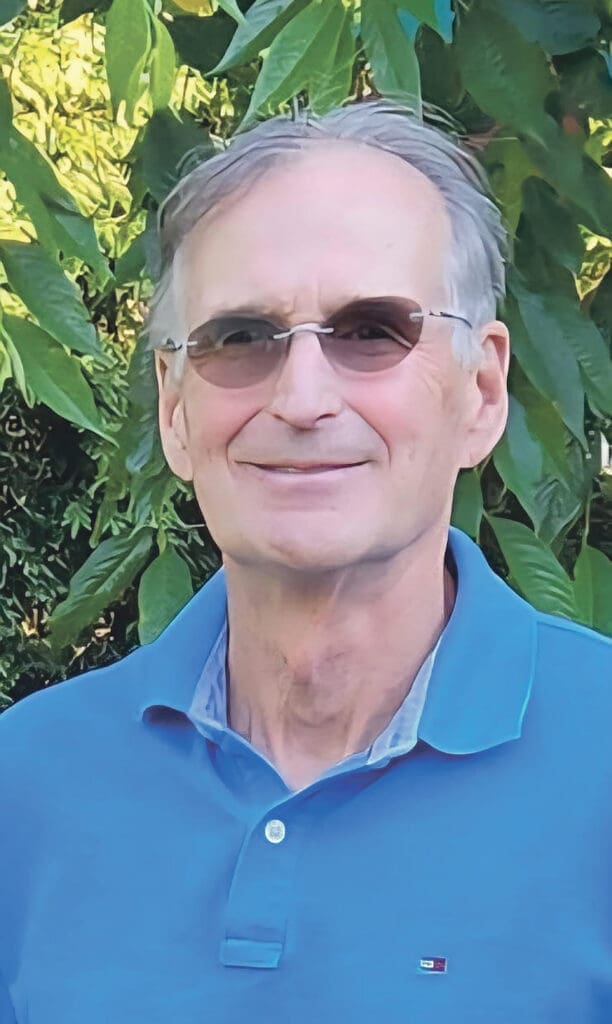
Dick Easton
Dick Easton attended nursing school at UMass Amherst with students roughly one-third his age.
He started work as a nurse at Cooley Dickinson Hospital in Northampton when he was 62, the age when many in this profession are retired or thinking seriously about it. He was nearly 70 when COVID hit, and while that ultra-challenging time prompted many in the field to head for the exits, it only deepened his passion for this second career.
“It brought even more meaning to my life — it just motivated me to stay at it,” he told BusinessWest. “It was a very trying time, but when you met the challenges, it was incredibly satisfying. There was a lot of heartache because of deaths in the hospital, but it had incredible meaning to me every single day, and never once did I say ‘God, I can’t take it, I’m going to quit.’”
Easton’s story is certainly an inspiring one, a saga that drives home the point that age really is just a number, and not a limitation or a boundary to anything that one might want to do.
It’s a story — well, this chapter, at least — that begins in late 1997, when Easton’s older son was severely injured in a skiing accident. It turns out that this would be the first of three incidents — Dick’s own heart attack a few months later and his younger son’s back injury while at work a few months after that being the other two — that enabled him to see all that nurses and other healthcare professionals did for patients and family members. And it compelled him to start thinking seriously about a later-in-life career change.
“I credit the nurses that took care of myself and my family with instilling in me the desire to help people through health crises; I started thinking, and I started assessing where I was in my life,” said Easton, who was in his late 40s when these health incidents changed the trajectory of his career and his life. “It made me realize that nurses did much more than take care of patients; they were also taking care of the surrounding family.”
So, Easton, a small-business owner — one of his ventures shipped shoring timbers to Boston for the Big Dig — started shadowing nurses in many different settings and departments, from private physicians’ offices to the ER, and after nearly two years of … let’s call it research, came away determined to join the profession. That’s what he told his wife in a far-reaching conversation that would prepare the ground for what was to come.
“I told her I wanted to become a registered nurse and explained to her why, and she said, ‘I think that would be great,’” he recalled. “But we had obligations to both our children, and we said we would see them through their college and graduate school if they so desired, and we had a mortgage on our house; we agreed that I could pursue a nursing career once we had paid off all our debt.
“And so, for the next nine years, we did nothing but pay down debt,” he went on, adding that when they reached the end of that road, he enrolled in what’s known as the Second Bachelor’s program at UMass Amherst, a nursing program for individuals who already have a four-year degree, in 2010. He was 60, and some of the students around him were still in their early 20s. But they made him fit right in.
“It was unbelievably satisfying,” he said of going back to the classroom and entering a taxing program at that age. “Was it challenging going back to school? Yes, but it was incredibly fun; I had a great group of students I was with, and they treated me as if I was their age — it was amazing, and I made really strong connections with people in that class.”
He started working the night shift at CDH on the med-surg unit in 2012 and took a job on the cardiac-telemetry unit three months later.
COVID arrived in late 2019 and certainly changed the landscape, he said, noting that days were challenging and very stressful.
“But I never came home from work any day I worked saying ‘that was a horrific day,’” he noted. “I would come home and say, ‘today was a real challenge, but it was a very good day.”
Now 76, Easton is semi-retired, working per-diem maybe eight days a month (he was full time until just a few months ago), and handling some nursing education “whenever they have a need.” He told BusinessWest he would still be at it full time if not for a compromised immune system that limits his time in the hospital.
Putting things in perspective, he said that his career change is about much more than someone merely joining the nursing profession around the same time as he starts qualifying for most senior discounts. It’s about getting a first-hand look at all that healthcare professionals do and the many rewards they receive and deciding to be a part of all that.
And it’s also about growing as a person and continuously learning.
“When I was younger, I was fairly intolerant, I would say,” he told BusinessWest. “If someone was a smoker and they got lung cancer, I would say, ‘they brought it on themselves, what can I do?’ That all changed when my kids and I became patients with serious injuries; the nurses supported you no matter what.
“That made a deep impression on me and completely changed my intolerance to total tolerance,” he went on. “I treated a lot of patients in the hospital who were there because of lifestyle choices they made, but that doesn’t mean they don’t need help. They need support, they need assistance to get back to the best possible outcome that be achieved. That’s what nursing is all about.
Whether you start your first shift at age 22 or 62.