
MiraVista Finds Success with Substance-use Treatment by Reaching into the Community
Meeting Them Where They Are
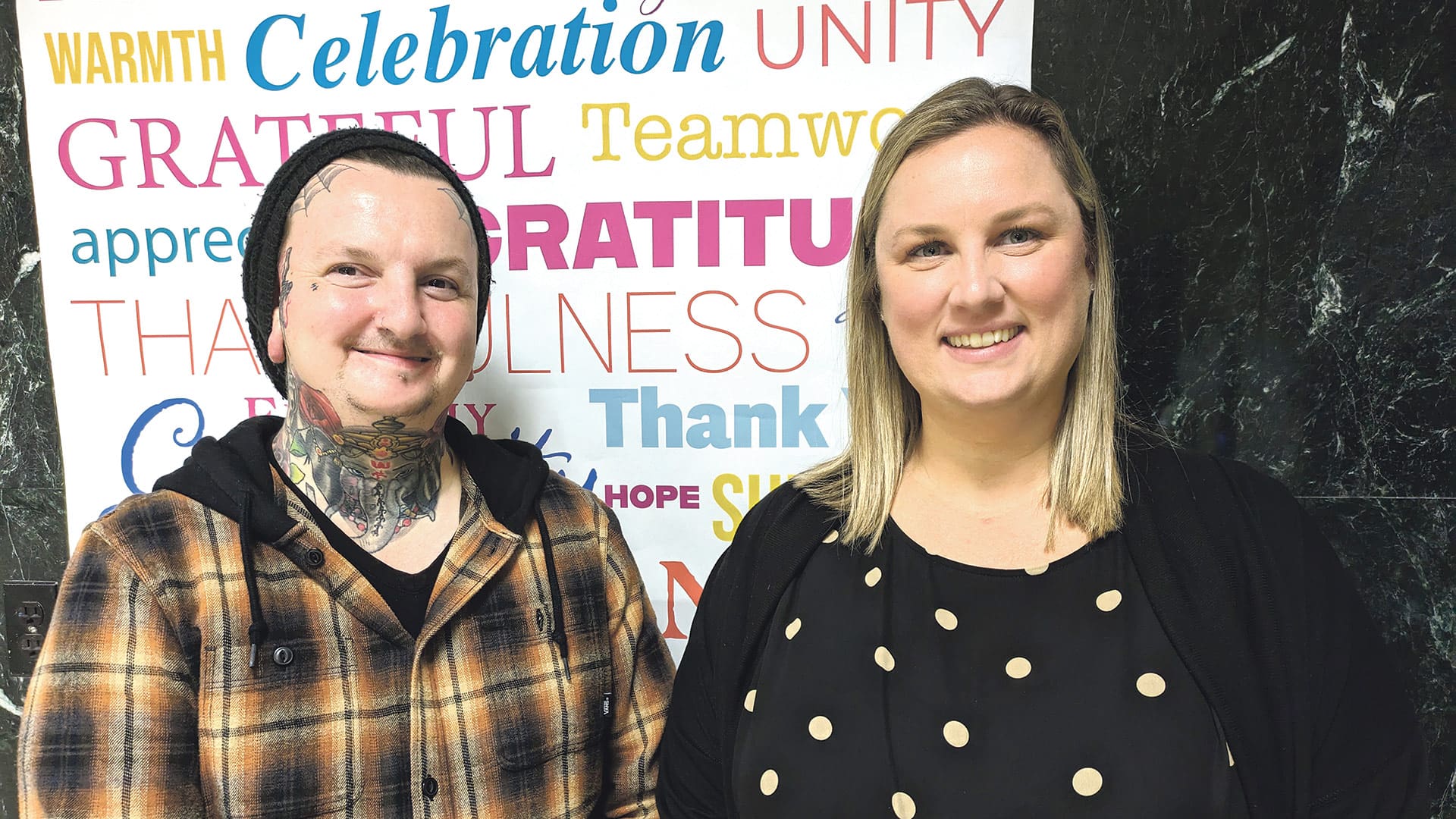
Charles DiRosa and Lauren Temple say MiraVista has found success going out and meeting addicts where they are, instead of waiting for them to walk through the doors.
Charles DiRosa knows all about the challenges of substance-use recovery. And looking back on 11 years of sobriety, he also knows how the treatment landscape has changed for the better.
“Being in recovery myself, I’m so proud to be a part of the resources we have here,” said DiRosa, a recovery support navigator at MiraVista Behavioral Health Center in Holyoke. “Looking back on it, 11 years ago, it wasn’t like this. It was a lot harder to get sober and to work a recovery.”
One example is same-day methadone dosing.
“In the past, you would have to make an appointment, maybe wait a couple of days to see the doctor, even a week, and then come in. For addicts, when they make that decision to get clean, usually we have to follow up with them pretty quickly because their mind is constantly changing.”
By accepting walk-ins, he noted, “our goal is, hopefully within an hour, we’ll get them in our system, get them an ID card, and get them dosed, all in the same day. We also offer transportation.”
But another key change at MiraVista has been an emphasis on reaching out into the community, rather than wait for people struggling with addiction to walk through the doors.
“By going to the individual instead of waiting for them to come to us, we’ve noticed a big increase in our numbers, and also our success rate,” DiRosa said. “It’s just providing our resources, letting them know that what we have to offer. If they’re already seeking our services, then we ask them to bring the word of mouth back to their loved ones or people they might know in the community.”
Kimberley Lee, MiraVista’s chief of Creative Strategy and Development, agreed that proactive outreach is making a difference.
DR. ROBBIE GOLDSTEIN
“It is heartening to see this significant decrease in fatal overdoses — a direct result of the ongoing hard work in our communities to reach those struggling with substance-use disorder.”
“We’ve gone into parks, we’ve gone and hung out at McDonald’s on Appleton Street, in front of other well-known high-traffic areas. We’re just setting up a table, having a little snack, bottles of water, and using that as an opportunity to engage individuals,” she explained.
“What’s really heartwarming and really supports our work is that, when you’re in a park, and you make a connection with an individual, and you give them your card and the flyer, they may not be ready in that moment. But the next day, we see them in the front lobby. It’s very reassuring to know that type of connection has worked for that individual, and then to see them progress from when they first arrived to later on in their treatment — to see the change, the metamorphosis that takes place for these individuals.”
DiRosa called it “planting seeds.” And in his role, he can help people grow those seeds from a place of empathy and compassion.
He’s currently involved in a program called State Opioid Response, which provides extra funding to MiraVista’s outpatient methadone clinic to help those who need extra resouces to be successful throughout their recovery.
“What that might look like is, they would come to me and let me know they’re in need of — let’s say housing, or they lost their insurance, or maybe they need a new cell phone because theirs broke, or whatever the case may be. My role is to look out in the community, find those resources, bring it back to them, and bridge the gap. That way, they can continue to be successful in their recovery.
“Especially in early recovery, it’s very easy for them to get overwhelmed with all these steps or goals that they have in mind. A lot of times, they don’t have the guidance; they don’t have the support,” he added. “So we’re making sure that we’re supporting our clients, making sure we’re finding those resources out in the community for them.”
By reaching out and bridging these gaps, DiRosa said he’s helping to provide hope at a critical time.
“A lot of times, we meet individuals on the streets that might not have an ID, might not have insurance, and we tell them, ‘hey, we can still get you in and get you enrolled.’ So I’m not only providing resources in-house, but also bringing resources out to the streets, which has been pretty successful, in my opinion.”
Mixed Bag of Data
This outreach and support work is especially critical in MiraVista’s environs. While opioid-related overdose deaths in Massachusetts decreased by 10% in 2023 — the largest single-year decline since 2009-10 — according to Massachusetts Department of Public Health (DPH) data, Holyoke actually saw an increase.
Statewide, there were 2,125 confirmed and estimated opioid-related overdose deaths in 2023 — 232 fewer than in 2022, when Massachusetts had a record 2,357 fatal opioid-related overdoses. As noted, the opioid-related overdose death rate decreased by 10% to 30.2 per 100,000 people compared to 33.5 in 2022.
Kimberley Lee
“They’re approaching our clients and our patients with either their own personal experience or their own personal knowledge of the disease of addiction and how important it is for people who are starting their pathway to recovery to know that they’re not alone.”
“While we are encouraged by the overall decrease in overdose deaths, this report also is a reminder of the work that we still need to do to bring deaths down for all people and all areas of the state,” Gov. Maura Healey said when the report was released late in the spring. “Our administration remains committed to prioritizing prevention, treatment, and recovery efforts to address the overdose crisis that continues to claim too many lives and devastate too many families in Massachusetts.”
Preliminary data from the first three months of 2024 indicated a continued decline in opioid-related overdose deaths in Massachusetts, showing 507 confirmed and estimated deaths, a 9% drop compared to estimates from the same time last year.
“It is heartening to see this significant decrease in fatal overdoses — a direct result of the ongoing hard work in our communities to reach those struggling with substance-use disorder,” said Dr. Robbie Goldstein, Department of Public Health commissioner. “To sustain these hard-won gains, we must focus even more deeply on the populations that have not yet seen such dramatic improvements. This means doubling outreach efforts in communities of color, particularly for Black residents, and people living in our most rural communities, who, as the data show, are most disproportionately impacted by overdose deaths.”
DiRosa posed one reason why overdose death rates are still high in Holyoke, while cities like Brockton, Lawrence, and Pittsfield saw declines, and it has to do with accessibility and cost.
“In a lot of the outreach that we do in the community, we’ve noticed the drop in the cost of the drugs. Back maybe five, seven years ago, where one bag of heroin would cost $10 or $15, it’s now going for $3 to $5. So it’s keeping people actively using these substances longer and not seeking treatment.”
When they do seek help, addicts have treatment options. MiraVista’s Intensive Outpatient Program is an enhanced level of care for individuals who need more intensive support for their recovery from addiction and want to remain in the community, while the Opioid Treatment Program (which includes the methadone dosing) offers a continuum of outpatient services, including individualized medication management, comprehensive addiction assessments, individual and group counseling, case management, referral support, harm-reduction education, and more.
“We’re bringing education into the community that we’re here, and we’re going to be able to care for the patients when they’re ready to come through our doors,” said Lauren Temple, director of Clinical Services, adding that prompt appointments are a big part of that. “We’re going to get you a same-day appointment as quick as we can. We don’t want you to wait.”
One Step at a Time
“Every overdose death is tragic, preventable, and unacceptable,” Secretary of Health and Human Services Kate Walsh said when the state’s report was issued earlier this year. “While we are proud and encouraged that fewer Massachusetts residents were lost to overdose last year, we know that inequities persist, and our work is not done. Our understanding of where gaps in treatment and services occur, and the people who we are not yet reaching, drives our work and helps focus our efforts.”
Those thoughts dovetail well with MiraVista’s efforts in Greater Holyoke.
“We try to stay with our clients moving forward. We check up on them on a regular basis,” DiRosa said. “Sometimes our clients might need that extra phone call; they might need extra support. We want them to take pride in their recovery, but also help them see that we do care.”
Like DiRosa, much of Miravista’s outpatient-services team have lived experience with these challenges, Lee added.
“So they’re approaching our clients and our patients with either their own personal experience or their own personal knowledge of the disease of addiction and how important it is for people who are starting their pathway to recovery to know that they’re not alone,” she added. “We are here to walk with them, whether it’s the first step they’re taking or the 100th step. There are people here who understand and who can appreciate the journey. They’re not alone.”