Home Posts tagged Holyoke Mass.
Commercial Real Estate Special Coverage

Back to the Future

Cesar Ruiz bought Wyckoff with a sports complex in mind

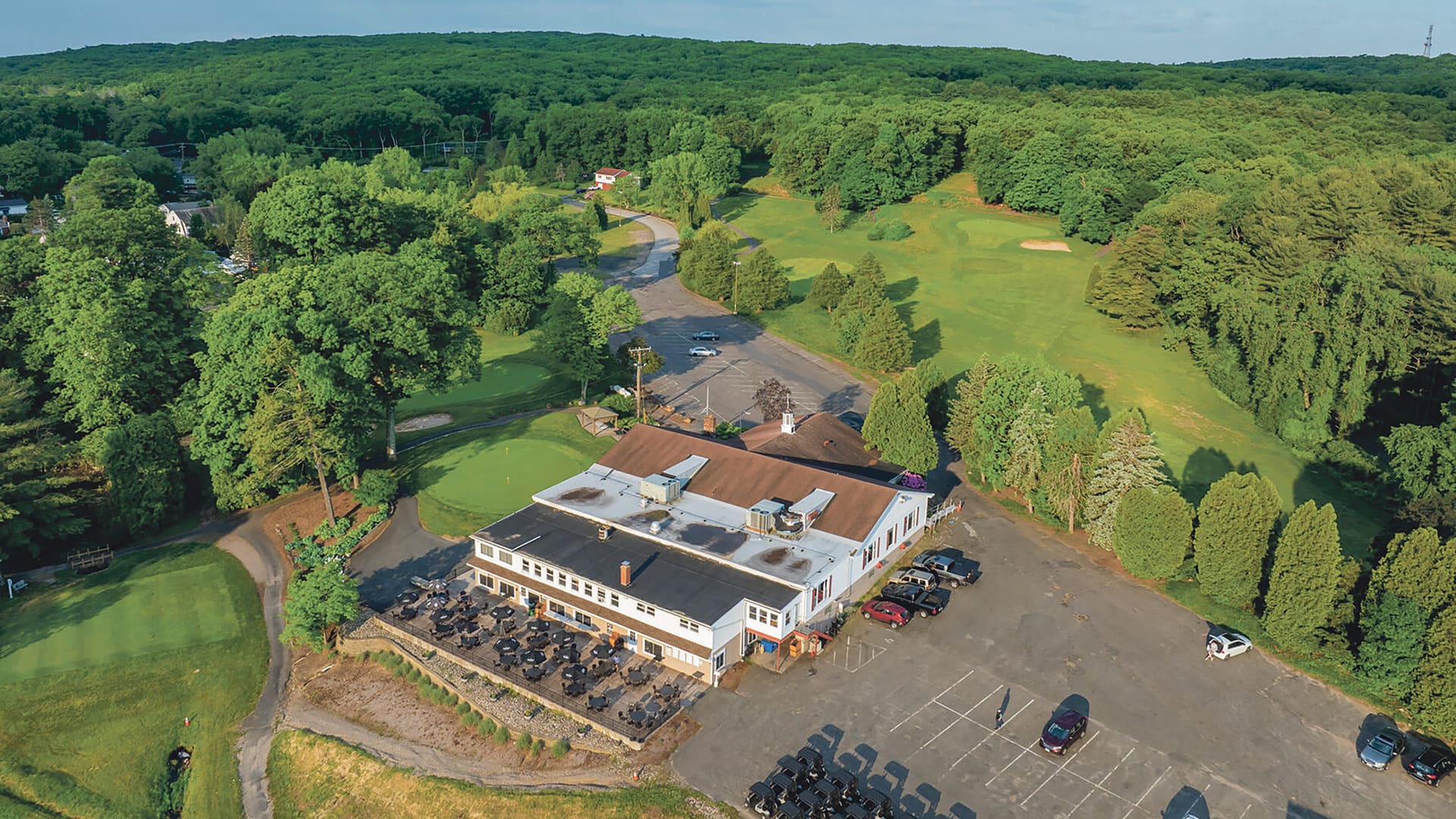
Cesar Ruiz bought Wyckoff with a sports complex in mind, but his intention now is to keep it a country club and grow both membership and events.


Cesar Ruiz says it was only a few hours after he wrapped up a well-attended press conference in early February 2024, announcing his plans to bring a large sports complex to Holyoke, when his phone first pinged with someone offering some real estate for the initiative.

“He texted, ‘I’m a Holyoke boy. I’ve got five and half acres in downtown Holyoke. I’d like to do my part,’” Ruiz said. “So we followed that thread, but it was nothing we were interested in.”

The second time it pinged … well, that was a little different.

“It was a text sent to the mayor and forwarded to me, saying, ‘I have 100 acres in Holyoke, and you may be interested in looking at it,’” Ruiz recalled. “I was thinking to myself … ‘where is there 100 acres in Holyoke?’”

Some quick research revealed that the parcel in question was Wyckoff Country Club, and its beleaguered owners were looking to sell.

And Ruiz, anxious to gain some momentum for his project and unwilling to be “outflanked,” as he put it, by other potentially interested parties, was willing to not only listen, but enter into a purchase-and-sale agreement.

Fast-forwarding our story a little, the Wyckoff site, bordering a thickly settled residential neighborhood off already-busy Route 141, was essentially deemed impractical for Ruiz’s plans for a sports complex that might become the new home to the Volleyball Hall of Fame but also include fields and courts for several other sports.

“This change in management has generated interest and some real momentum, I believe.”

But Ruiz, who closed on the property late last month for $2.8 million, is now committed to a different future for Wyckoff — its past, specifically the more distant past.

Indeed, the Donald Ross-designed course and its clubhouse and other facilities have fallen on hard times recently, with Wyckoff not fully enjoying the post-COVID surge many clubs are experiencing.

“There’s been no real work done on this place in 50 years,” said Ruiz, referring to both the course and the facilities, adding that this has led to a decline in both play and events staged at the club.

Ruiz, a serial entrepreneur with experience in everything from formalwear to healthcare, has started making investments — everything from chemicals for the course (little, if any, fertilizer was applied last year) to new golf carts to needed renovations within the clubhouse — and plans to keep making them to facilitate a comeback for the club, now 92 years old.

Cesar Ruiz says the plan is to make the needed investments to return Wyckoff Country Club to prominence.

Cesar Ruiz says the plan is to make the needed investments to return Wyckoff Country Club to prominence.

“This change in management has generated interest and some real momentum, I believe,” he said, adding that he hopes to use his connections in the business world and the Latino community to bring more events — from weddings to wine tastings; from bingo to quinceañeras (sweet-15 birthday parties for Latinas) — to the property.

For this issue and its focus on commercial real estate, we talked with Ruiz at length about his acquisition of Wyckoff and his plans to return the facility to something approaching its former glory.


Course of Action

When asked if there would be a steep learning curve for him when it comes to running a golf club, Ruiz offered a light laugh and then a slight shrug.

Both gestures were might to acknowledge that, while he doesn’t have any experience running a club, he does have considerable experience — and quite a bit of success — in business.

And, as noted earlier, it has come in several different fields. These include men’s fashions — he was a franchisee of Gingiss Formal Wear, with a location in the Riverdale Shops, before opening his own store, Cesar’s Formal Wear, in Springfield’s X neighborhood — then financial services (specifically the mortgage business), and then healthcare, opening the hugely successful Golden Years, a home-care company that developed a staffing division as well, which he sold last fall.

Golf and events management are new and different businesses for him, Ruiz acknowledged, but the basics are … well, the basics.

And they include understanding the consumer and what they’re looking for; providing consistent, quality service; and making the necessary investments in people, technology, systems, and infrastructure.

Ruiz is focused on all three, especially, at this critical juncture, the needed investments. And there are many of them, starting with the property, where crews are working, or soon will be, on the roof, foyer, bathrooms, ballroom walls and ceiling (complete with new chandeliers), bar area (which will mirror the foyer), and more.

“We certainly have an opportunity to expand membership locally and perhaps beyond our borders to Worcester and Hartford, and we’re optimistic on that.”

The intent is to have this and other projects done for some upcoming events, including one on March 15, both to improve the experience for those gatherings and to showcase the improvements for potential future clients.

Meanwhile, on the course, Ruiz said he intends to make it green again — aerial photos from last year revealed too much brown from the lack of fertilizer — while also doing some work on the cart paths and other areas in need of work.

When asked about the planned initial investments, he said it’s a moving target — now about $300,000 and expected to move higher.

The initial investments, and talk of those to come, has generated interest and momentum, said Ruiz, adding that, since last April, with the announcement of the purchase-and-sale agreement, there was widespread speculation about the club’s future and whether it even had one.

The more recent announcement — that not only would it remain a golf course, but there would be significant reinvestment in the course and property — has spurred interest in membership and future events alike.

On the golf side, he intends to leverage his investments in the course and grounds; market aggressively to women, young people, Hispanics, and other constituencies; and try to take full advantage of the surge that many courses are still enjoying.

“They lost a lot of the women members, and we’d like to bring them back,” he said. “We’d like to bring youth back. We certainly have an opportunity to expand membership locally and perhaps beyond our borders to Worcester and Hartford, and we’re optimistic on that.”

Overall, Ruiz said he intends to rely on another of those business basics — creativity — when it comes to maximizing the potential of both the course and the facilities.

By that, he meant looking at other opportunities, from cross-country skiing and even snowmobiling to generate revenue during the winter months to staging different kinds of events, from an already-planned bridal showcase to quinceañeras and other types of events involving the Hispanic community.


Next Big Swing

While Ruiz will still be leading the efforts to bring a sports complex to Holyoke, his immediate focus is on those 100 acres first brought to his attention in that text just over a year ago.

In fact, his office has officially moved from the Golden Years complex to the back of the clubhouse at Wyckoff.

There, he’s planning the next stages in what he believes will be a true comeback story, one in which this Holyoke landmark strides confidently into the future by first turning back the clock.


Healthcare News Special Coverage

Meeting Them Where They Are

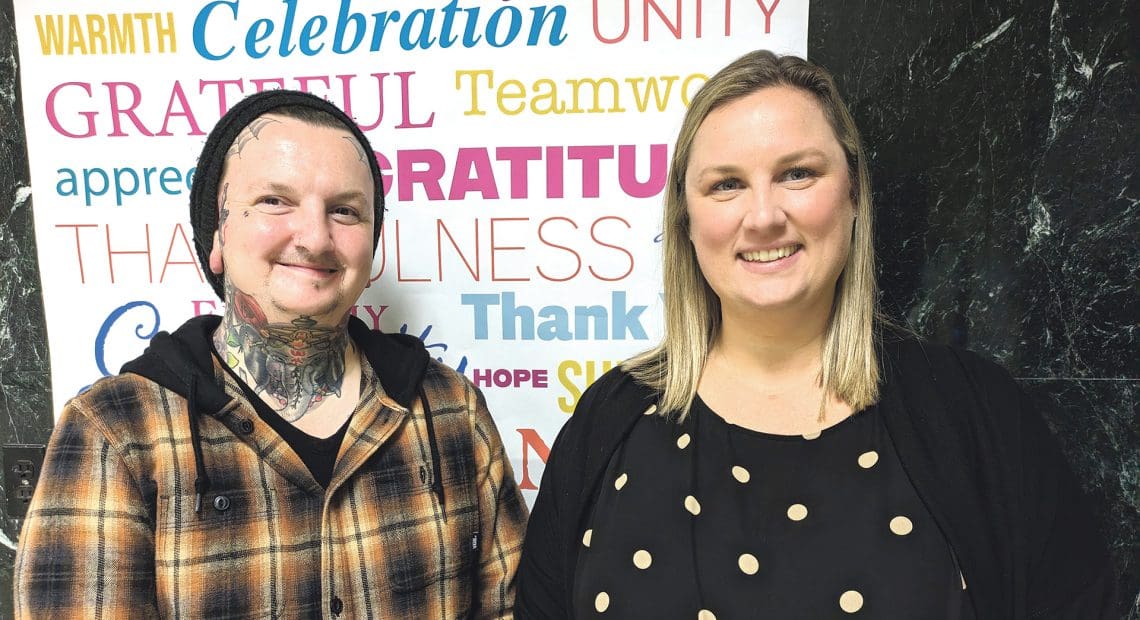
Charles DiRosa and Lauren Temple say MiraVista has found success

Charles DiRosa and Lauren Temple say MiraVista has found success going out and meeting addicts where they are, instead of waiting for them to walk through the doors.


Charles DiRosa knows all about the challenges of substance-use recovery. And looking back on 11 years of sobriety, he also knows how the treatment landscape has changed for the better.

“Being in recovery myself, I’m so proud to be a part of the resources we have here,” said DiRosa, a recovery support navigator at MiraVista Behavioral Health Center in Holyoke. “Looking back on it, 11 years ago, it wasn’t like this. It was a lot harder to get sober and to work a recovery.”

One example is same-day methadone dosing.

“In the past, you would have to make an appointment, maybe wait a couple of days to see the doctor, even a week, and then come in. For addicts, when they make that decision to get clean, usually we have to follow up with them pretty quickly because their mind is constantly changing.”

By accepting walk-ins, he noted, “our goal is, hopefully within an hour, we’ll get them in our system, get them an ID card, and get them dosed, all in the same day. We also offer transportation.”

But another key change at MiraVista has been an emphasis on reaching out into the community, rather than wait for people struggling with addiction to walk through the doors.

“By going to the individual instead of waiting for them to come to us, we’ve noticed a big increase in our numbers, and also our success rate,” DiRosa said. “It’s just providing our resources, letting them know that what we have to offer. If they’re already seeking our services, then we ask them to bring the word of mouth back to their loved ones or people they might know in the community.”

Kimberley Lee, MiraVista’s chief of Creative Strategy and Development, agreed that proactive outreach is making a difference.

DR. ROBBIE GOLDSTEIN

DR. ROBBIE GOLDSTEIN

“It is heartening to see this significant decrease in fatal overdoses — a direct result of the ongoing hard work in our communities to reach those struggling with substance-use disorder.”

“We’ve gone into parks, we’ve gone and hung out at McDonald’s on Appleton Street, in front of other well-known high-traffic areas. We’re just setting up a table, having a little snack, bottles of water, and using that as an opportunity to engage individuals,” she explained.

“What’s really heartwarming and really supports our work is that, when you’re in a park, and you make a connection with an individual, and you give them your card and the flyer, they may not be ready in that moment. But the next day, we see them in the front lobby. It’s very reassuring to know that type of connection has worked for that individual, and then to see them progress from when they first arrived to later on in their treatment — to see the change, the metamorphosis that takes place for these individuals.”

DiRosa called it “planting seeds.” And in his role, he can help people grow those seeds from a place of empathy and compassion.

He’s currently involved in a program called State Opioid Response, which provides extra funding to MiraVista’s outpatient methadone clinic to help those who need extra resouces to be successful throughout their recovery.

“What that might look like is, they would come to me and let me know they’re in need of — let’s say housing, or they lost their insurance, or maybe they need a new cell phone because theirs broke, or whatever the case may be. My role is to look out in the community, find those resources, bring it back to them, and bridge the gap. That way, they can continue to be successful in their recovery.

“Especially in early recovery, it’s very easy for them to get overwhelmed with all these steps or goals that they have in mind. A lot of times, they don’t have the guidance; they don’t have the support,” he added. “So we’re making sure that we’re supporting our clients, making sure we’re finding those resources out in the community for them.”

By reaching out and bridging these gaps, DiRosa said he’s helping to provide hope at a critical time.

“A lot of times, we meet individuals on the streets that might not have an ID, might not have insurance, and we tell them, ‘hey, we can still get you in and get you enrolled.’ So I’m not only providing resources in-house, but also bringing resources out to the streets, which has been pretty successful, in my opinion.”


Mixed Bag of Data

This outreach and support work is especially critical in MiraVista’s environs. While opioid-related overdose deaths in Massachusetts decreased by 10% in 2023 — the largest single-year decline since 2009-10 — according to Massachusetts Department of Public Health (DPH) data, Holyoke actually saw an increase.

Statewide, there were 2,125 confirmed and estimated opioid-related overdose deaths in 2023 — 232 fewer than in 2022, when Massachusetts had a record 2,357 fatal opioid-related overdoses. As noted, the opioid-related overdose death rate decreased by 10% to 30.2 per 100,000 people compared to 33.5 in 2022.

Kimberley Lee

Kimberley Lee

“They’re approaching our clients and our patients with either their own personal experience or their own personal knowledge of the disease of addiction and how important it is for people who are starting their pathway to recovery to know that they’re not alone.”

“While we are encouraged by the overall decrease in overdose deaths, this report also is a reminder of the work that we still need to do to bring deaths down for all people and all areas of the state,” Gov. Maura Healey said when the report was released late in the spring. “Our administration remains committed to prioritizing prevention, treatment, and recovery efforts to address the overdose crisis that continues to claim too many lives and devastate too many families in Massachusetts.”

Preliminary data from the first three months of 2024 indicated a continued decline in opioid-related overdose deaths in Massachusetts, showing 507 confirmed and estimated deaths, a 9% drop compared to estimates from the same time last year.

“It is heartening to see this significant decrease in fatal overdoses — a direct result of the ongoing hard work in our communities to reach those struggling with substance-use disorder,” said Dr. Robbie Goldstein, Department of Public Health commissioner. “To sustain these hard-won gains, we must focus even more deeply on the populations that have not yet seen such dramatic improvements. This means doubling outreach efforts in communities of color, particularly for Black residents, and people living in our most rural communities, who, as the data show, are most disproportionately impacted by overdose deaths.”

DiRosa posed one reason why overdose death rates are still high in Holyoke, while cities like Brockton, Lawrence, and Pittsfield saw declines, and it has to do with accessibility and cost.

“In a lot of the outreach that we do in the community, we’ve noticed the drop in the cost of the drugs. Back maybe five, seven years ago, where one bag of heroin would cost $10 or $15, it’s now going for $3 to $5. So it’s keeping people actively using these substances longer and not seeking treatment.”

When they do seek help, addicts have treatment options. MiraVista’s Intensive Outpatient Program is an enhanced level of care for individuals who need more intensive support for their recovery from addiction and want to remain in the community, while the Opioid Treatment Program (which includes the methadone dosing) offers a continuum of outpatient services, including individualized medication management, comprehensive addiction assessments, individual and group counseling, case management, referral support, harm-reduction education, and more.

“We’re bringing education into the community that we’re here, and we’re going to be able to care for the patients when they’re ready to come through our doors,” said Lauren Temple, director of Clinical Services, adding that prompt appointments are a big part of that. “We’re going to get you a same-day appointment as quick as we can. We don’t want you to wait.”


One Step at a Time

“Every overdose death is tragic, preventable, and unacceptable,” Secretary of Health and Human Services Kate Walsh said when the state’s report was issued earlier this year. “While we are proud and encouraged that fewer Massachusetts residents were lost to overdose last year, we know that inequities persist, and our work is not done. Our understanding of where gaps in treatment and services occur, and the people who we are not yet reaching, drives our work and helps focus our efforts.”

Those thoughts dovetail well with MiraVista’s efforts in Greater Holyoke.

“We try to stay with our clients moving forward. We check up on them on a regular basis,” DiRosa said. “Sometimes our clients might need that extra phone call; they might need extra support. We want them to take pride in their recovery, but also help them see that we do care.”

Like DiRosa, much of Miravista’s outpatient-services team have lived experience with these challenges, Lee added.

“So they’re approaching our clients and our patients with either their own personal experience or their own personal knowledge of the disease of addiction and how important it is for people who are starting their pathway to recovery to know that they’re not alone,” she added. “We are here to walk with them, whether it’s the first step they’re taking or the 100th step. There are people here who understand and who can appreciate the journey. They’re not alone.”

Opinion

Opinon

By James E. Samels, Arlene L. Lieberman, Michael Moriarty, and Jacob Brewer


Long before bowl games and Sweet Sixteens, college towns celebrated their venerable roots at places like Harvard in Cambridge; Yale in New Haven, Conn., and Princeton in Princeton, N.J. Consider the proliferation of neoclassical destination college towns across America over the last century — campuses like Amherst, Boulder, Champagne, Durham, Ithaca, Madison, etc.

Destination college towns typically attract students, faculty, families, and year-round visitors because they offer something for everyone. Destination college towns may be small, yet they thrive — with great public schools and prep schools, vibrant downtowns, family discovery centers and tourist attractions, upscale amenities, on-campus concerts, charming villages, and safe, walkable neighborhoods.

With a proud history as the largest paper manufacturer in the U.S., the 15 neighborhoods that now make up Holyoke are among the most diverse in the Commonwealth. With a strong Irish and Latinx population, it is no surprise that Holyoke is home to the second-largest St. Patrick’s Day parade in the U.S. and Fiestas Patronales, the region’s largest showcase of Puerto Rican music, cuisine, and culture. Volleyball lovers rejoice as they enter Holyoke, the birthplace of American volleyball and home to the Volleyball Hall of Fame at Holyoke Heritage State Park.

Founded in 1971, OneHolyoke CDC is a community-development organization dedicated to improving housing for Holyoke residents. Since its establishment, the organization has created more than 160 new homes in the Flats, Churchill, and South Holyoke neighborhoods; rehabilitated hundreds of apartments; and provided thousands of home-improvement grants to homeowners through the Neighborhood Improvement Program.

OneHolyoke builds new homes, improves and manages a portfolio of multi-family buildings, and, in partnership with the city, offers loan and grant opportunities to property owners who need to improve their properties. OneHolyoke has a particular focus on the value of home ownership, both for the families it serves and for the social and financial well-being of the city of Holyoke.

OneHolyoke CEO Michael Moriarty’s hope is that “young people will grow up and love being from Holyoke.” That can be difficult for those growing up in poverty, but we (as a community-development corporation) can certainly take the edge off.

There are a lot of good things happening in Holyoke. Housing, residential, and mixed-use win-win partnerships drive non-tuition revenue streams for both college campuses and towns; hence, destination college towns are less dependent on conventional tuition revenue. Both colleges and towns highly value non-tuition revenue from consumer market demand, tourism, retail, entertainment, and auxiliary enterprises.

“As an institution of opportunity, Holyoke Community College sees itself as an economic and workforce-development engine within its region and in the city it calls home,” HCC President George Timmons said. “I am proud to be the fifth president of HCC, and I am committed to the growth of our community through excellence in education, which meets the needs of our citizens and of area businesses. HCC looks forward to the development of creative partnerships and innovative projects to further the needs of the individual to get a job, to get a better job, and to learn how to do the job better, all right here in Holyoke.

“I am confident that Holyoke has numerous opportunities for growth,” Timmons added. “We recognize that a focus on workforce skill development and the encouragement of an entrepreneurial infrastructure can move the city forward. Holyoke is where we are located, college is what we do, and community is who we are.”

To this end, destination college towns deploy underutilized and underleveraged real-estate assets. These high-value assets collateralize off-campus residential growth opportunities and create a downtown renaissance. Beyond downtown, these partnerships build new, intergenerational residential living and learning communities located at underutilized historical homes and buildings.

Towns know that public-school rankings and reputation drive up property values. Thus, destination college towns value highest and best use. This means creative mixed uses like student, faculty, and staff housing; artist lofts; design and media studios; bookstores; cafes; organic bakeries; multi-ethnic bistros; boutiques; gift and memorabilia shops; microbreweries; live entertainment; and bowling, billiards, and axe throwing.

As a practical matter, colleges and universities are among the largest local employers and economic forces that drive downtown redevelopment. These destination college towns ignite active participation in town-gown relations, with school superintendents and municipal officials participating in on-campus events and college officials serving on municipal boards and community organizations.

In the end, destination college towns are built on mutual respect, economic interdependence, and collegial sympatico — the kind of partnerships that are sustainable and impactful in the near future and over the long run.


James E. Samels is president and CEO of the Education Alliance. Arlene L. Lieberman is senior associate of Samels Associates, Attorneys at Law. Michael Moriarty, executive director of One Holyoke, and Jacob Brewer, graduate of the University of Chicago and Alliance Research fellow, are contributors to this article.


Cannabis Special Coverage

Expanding Their Vision

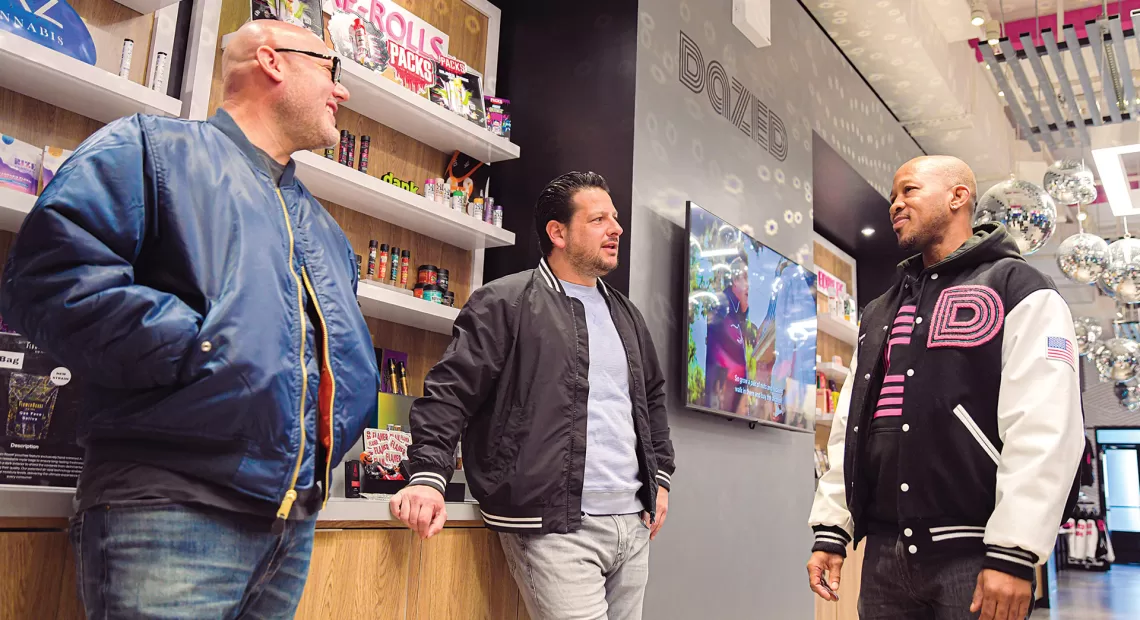
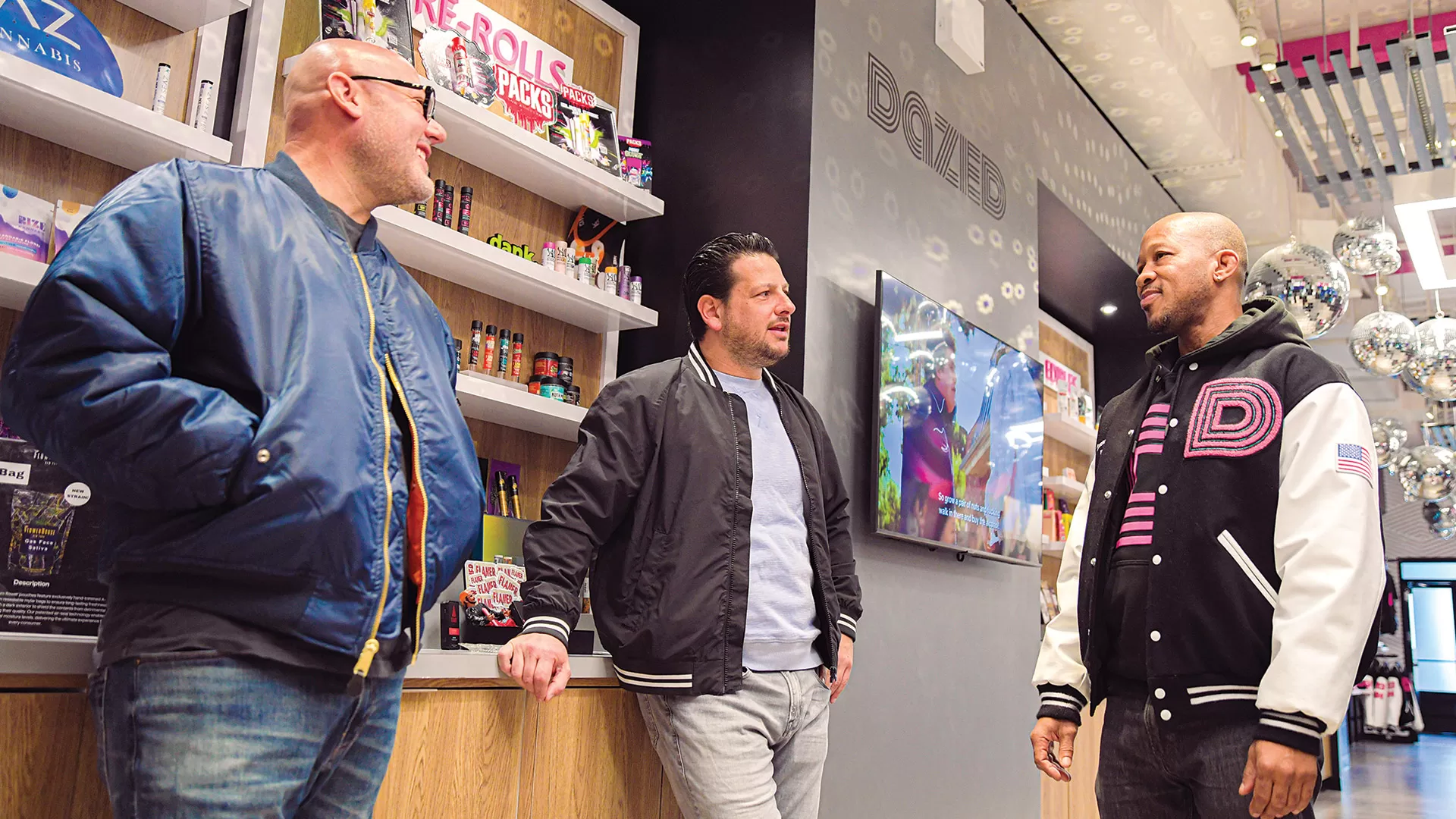
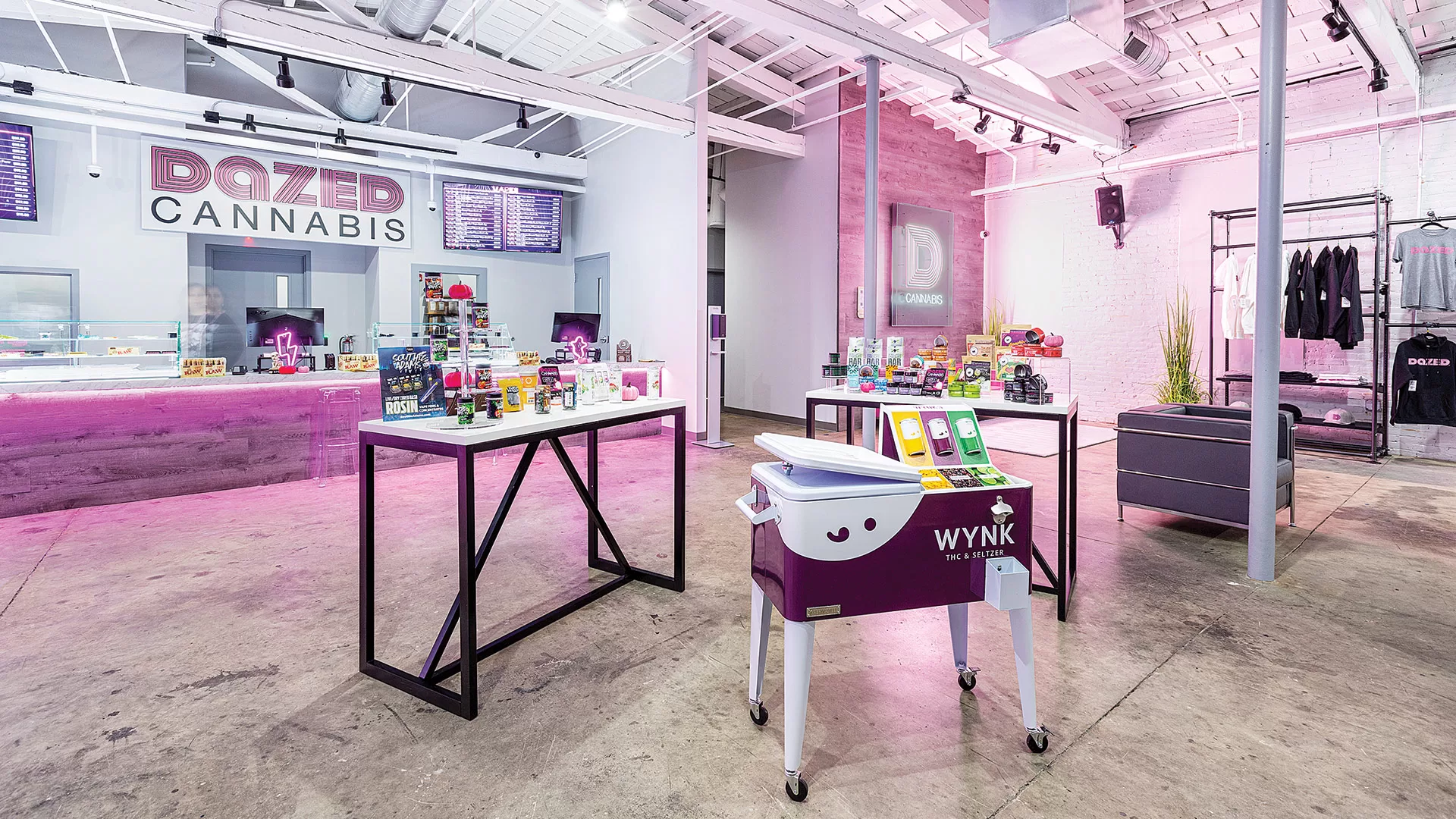
Co-owners Chris Vianello, Rich Rainone, and Keshawn Warner.

Co-owners Chris Vianello, Rich Rainone, and Keshawn Warner.
Photo by Savanna SLUSA Productions for Dazed Cannabis


Chris Vianello said he and his partners at Dazed Cannabis never intended to be the first player on the scene. In fact, their first dispensary in Holyoke, which opened in 2021, was that city’s fourth.

“We were never the only game in town. That’s not our model. If our only claim to fame is that we’re the only game in town, that’s not a sustainable business practice,” Vianello said, noting that Dazed instead stresses quality products and its friendly but funky vibe. “We anticipated competition going into this, especially because Holyoke is not a limited-license jurisdiction.”

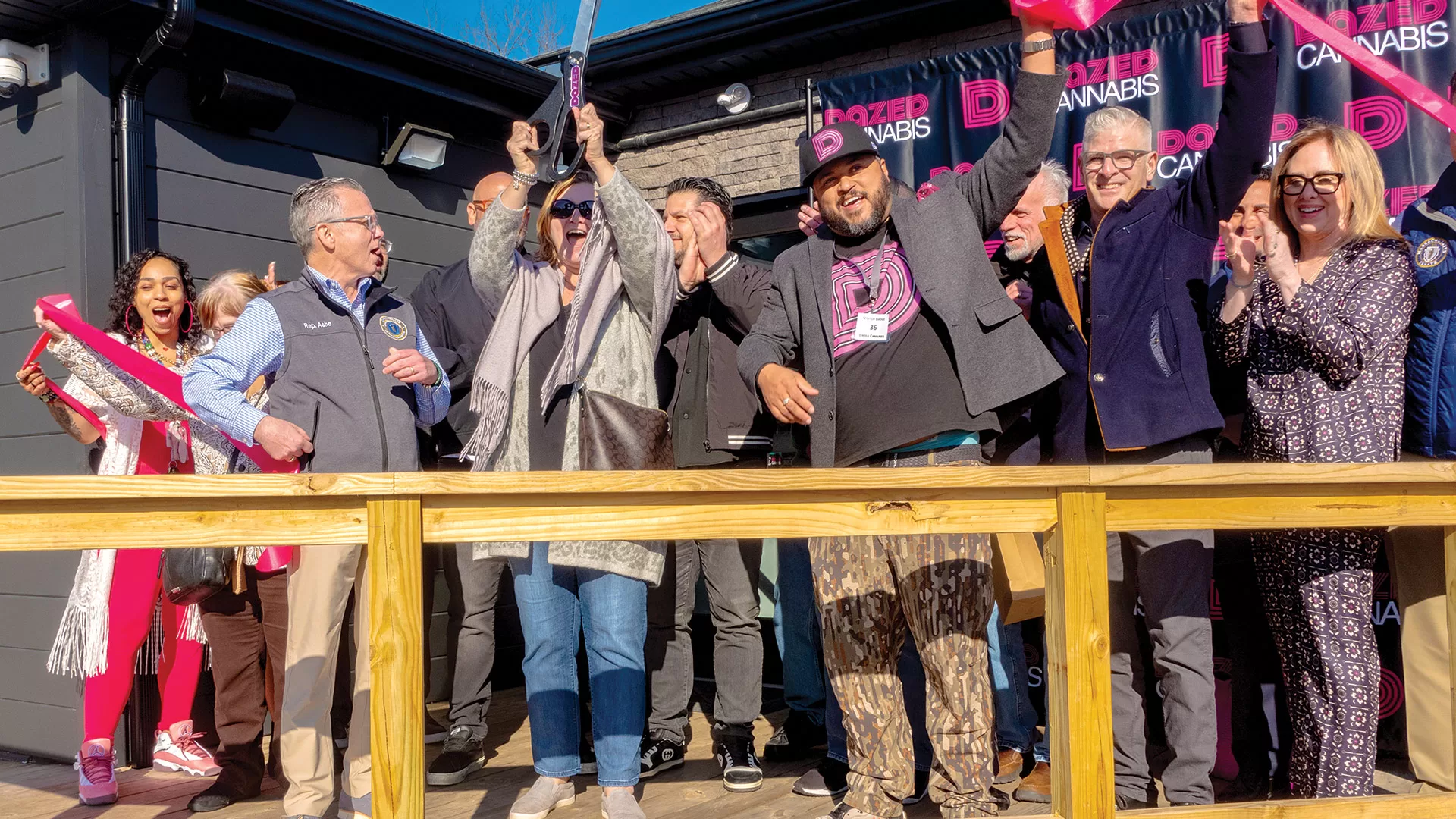
The model has worked. Not only has the Holyoke shop has survived a raft of competition, but Dazed co-owners Vianello, Rich Rainone, and Keshawn Warner have opened two stores since then: in New York City in 2023 (first as a pop-up shop in April and then a permanent storefront in November) and, just last month, in Monson, where Dazed is currently the only cannabis game in town.

That store, where the Magic Lantern strip club operated for more than a half-century before closing in 2022, honors the location’s history by keeping a small stage and dancer’s pole as part of the décor.

Rainone told the Cannabis Business Times recently that the first 90 days after a dispensary’s opening are the most turbulent. The first month is all about establishing operating procedures and employee routines, the second about fixing the challenges of the first 30 days, and the third month about putting it all together and excelling.

He told the publication that Dazed is a “fun party brand,” with visitors encountering a “meet and greet” before they get to security, and the environment inside the shop characterized by music playing and a pink-dominated color scheme that extends to all three dispensaries.

When asked why the team chose each location, Vianello told BusinessWest they appeal in different ways.

“We were never the only game in town. That’s not our model. If our only claim to fame is that we’re the only game in town, that’s not a sustainable business practice.”

“You try to find the balance between what’s the ideal location and what’s a doable location,” he said. “We try to straddle that balance; we don’t want to open up a dispensary just anywhere because that’s not going to work, but also we don’t want to get stuck looking for the perfect location and end up not opening anything. They’re all different in where the traffic is coming from and how we attract different folks to different stores.”

At a time when competition is fierce and some stores have actually closed in Massachusetts, Dazed’s focus on customer experience and steady growth has been a winner, he added.

“In 2018, 2019, you had people who were the only game in town. And that worked for those who were able to get themselves positioned to be the first in the market. They had months, even years where they were cranking as literally the only game in town.”

“We never experienced that. We were never the first,” he continued, understanding that being the first shop in Monson is still being one of nearly 400 in Massachusetts. And amid increasing competition, Vianello doesn’t intend to engage in a race to the bottom when it comes to pricing.

“We’ve seen people trying to undercut the next guy by 10 cents and create an environment where you devalue the purpose of even being there,” he explained. “Understanding that price is always part of what people consider when shopping, you still have to differentiate yourself; you have to make yourself stand out. Ideally, you want people that are coming to you rather than other people because they like what you have going on.”

By doing so, he said, “we’re creating our own lane, our own pie, instead of slicing up what’s already out there.”


Rolling with the Punches

And there is, indeed, a lot out there, and still considerable debate over whether the burgeoning cannabis industry has a ceiling or whether there’s enough growth potential — from new users or consumers rejecting the illegal market to buy from regulated stores — to make up for more competition emerging from both within the Bay State and from outside its borders.

“A lot of it comes down to community outreach, giving people the information they need to buy legal rather than what they’ve been doing the last 20 years,” Vianello said.

The leaders of Dazed Cannabis

The leaders of Dazed Cannabis hope the recent Monson grand opening isn’t their last, but one of many more.
Photo by Marsco Media for Dazed Cannabis

The discussion these days around a possible ceiling for the industry in Massachusetts doesn’t happen in other sectors, he added. “People don’t talk about us the same way they talk about other businesses, like restaurants, liquor stores. It’s really an open market, a lot of competition. And people are competing. I don’t know that we’re hitting the limit.

“There’s still a lot more legal cannabis dollars that haven’t been realized yet,” he added, citing, again, potential from a massive group of users who currently buy from unregulated sources. “But I don’t think businesses are doing poorly as a whole. I don’t think prices are crashing as much as people suggest. I don’t necessarily see that happening as blatantly as they’re describing it. Businesses still have a lot of growth potential.”

At the end of the day, he added, dispensaries have to offer what people want, and that requires staying ahead of the curve. “There are always new, innovative things coming out in the market. You have to stay up on what’s happening, and with market prices. You try not to be the cheapest on the block because that turns into a whole downward spiral. So you try to have competitive pricing and give people a good customer experience.”

Like all other cannabis entrepreneurs, Vianello hopes for the eventual end of the disconnect between state and federal drug laws that have posed onerous burdens on business owners, from IRS Section 280E, which forbids business owners from deducting otherwise normal business expenses, to hardships around banking, transportation, and other activities.

“That has to happen at some point. I think it’s going to happen. But I don’t think anyone knows when. It’s been right around the corner for years,” he told BusinessWest, acknowledging, like many have, that cannabis is legal for well over half the U.S. population, and bipartisan support exists for decriminalizing cannabis, but lawmakers always seem to have other concerns with which to contend.

“We just act accordingly within the rules in place,” he added. “But we know, if it happens, it will open up a lot of things for a lot of people. We need to have all the same rules and regulations as all businesses, the same opportunities, so we can run these businesses properly.”


Land of Opportunity

The New York location, in Manhattan’s Union Square neighborhood, has certainly been a success story, starting with its origin as a pop-up opened under the state’s CAURD (conditional adult-use retail dispensary) program, which invested in communities and entreprenuers that had been harmed by the war on drugs; Warner, a Harlem native, was arrested in 2008 for trying to buy marijuana during a sting operation, which hindered his ability to find employment afterward.

Now, he and his two partners are the employers at three Dazed stores — with more locations in the works, they hope.

“You try not to be the cheapest on the block because that turns into a whole downward spiral. So you try to have competitive pricing and give people a good customer experience.”

“Keshawn and his dedicated team at Dazed exemplify entrepreneurship in action, shining a spotlight on the importance of social equity in the cannabis industry,” Chris Webber of the New York Social Equity Cannabis Investment Fund said upon the Union Square location’s grand opening in November. “This isn’t just about a dispensary; it’s about leveling the playing field, creating opportunities, and building a more inclusive and dynamic entrepreneurial landscape.”

Vianello said it’s been gratifying to hire locally, providing job opportunities to others.

The interior of the Holyoke dispensary

The interior of the Holyoke dispensary is, like other Dazed shops, resplendent in pink.
Photo by Dazed Cannabis

“That’s the most exciting thing. When we started Dazed in Holyoke, we made a conscious effort to hire hyper-locally. Most of our folks are Holyoke residents or from the surrounding areas, Greater Springfield — but mostly from Holyoke. That’s the entire staff, from the general manager to the newest employee; they’re all local, and they’ve all been promoted and hired from within. And when we had the opportunity to expand into Monson, we were able to bring a lot of those folks over and give them a broader opportunity for employment.”

Indeed, many young people entering the cannabis field recognize it as a new industry with plenty of advancement opportunity.

“We want our team to grow with our expansion, and that’s been good for us to see,” Vianello said. “It’s a new industry, so there’s definitely a lot of opportunities for those folks to grow too. Not everyone has a lot of experience, and those that have experience are super valuable.”

As the cannabis workforce continues to mature and move up, Vianello and his partners are excited to see the industry do the same, despite all the challenges and all the hand wringing over how many dispensaries are too many.

“The thing I like best is that it’s changing and growing, with a lot of different opportunities coming up,” he said. “You just don’t know what’s down the road.”

Features

Concrete Example

It’s called the Justice40 Initiative, also known as Section 223 of Executive Order 14008, “Tackling the Climate Crisis at Home and Abroad.”

It was issued by President Biden his first week in office back in 2021, and it directs 40% (hence the name) of the overall benefits of certain federal investments — including those in clean energy and energy efficiency, clean transit, affordable and sustainable housing, training and workforce development, and more — to flow to disadvantaged communities.

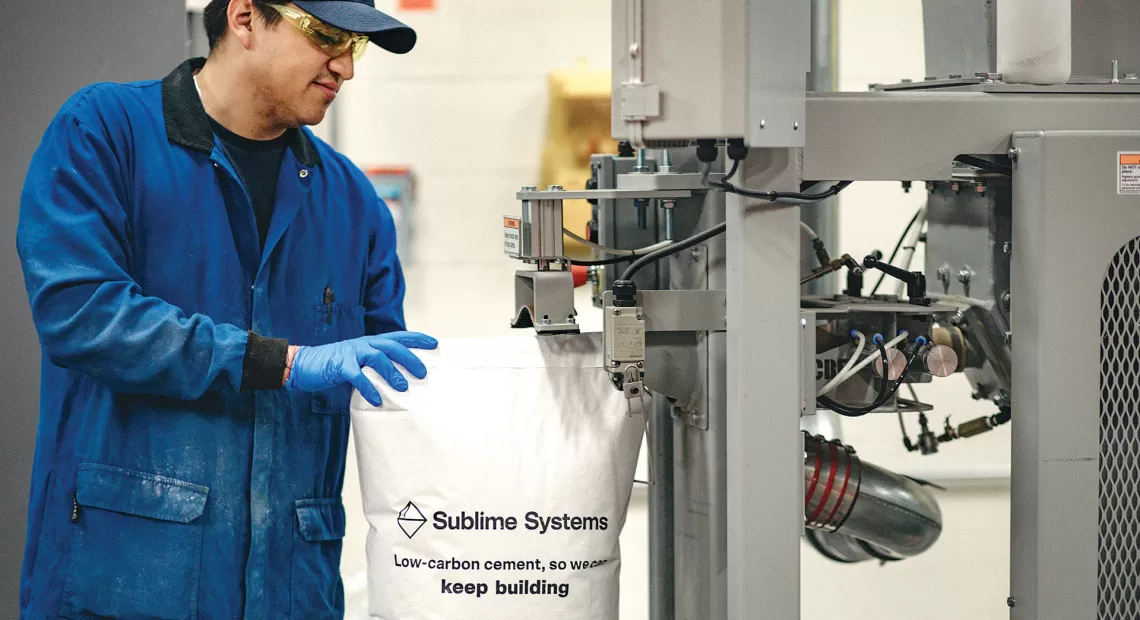
Holyoke still fits that description, and the fact that it does is one of many factors that has brought Sublime Systems, the Somerville-based startup that manufactures what it calls “low-carbon cement,” to the Paper City in an ambitious, $150 million venture that brings the city’s past, present, and future together.

Specifically, Sublime, guided by the Justice40 Initiative tools, its pending application for funding to the Department of Energy’s Office of Clean Energy Demonstrations, and other factors, including accessibility to abundant renewable energy (hydropower), eventually settled on a 14-acre sliver of land, an island in some respects, that lies between the city’s lower canal and the Connecticut River to scale up its operation.

There, the company expects to break ground in early 2025 on a plant that will produce 30,000 tons of cement that is much kinder to the planet than the products that have been produced to date. The application to OCED is for funds for accelerated construction of this facility, and the program in question is one of many covered by Justice40.

“Sublime ultimately selected Holyoke because of the dual opportunity to help local people in the near term while working toward swift and massive impact on global CO2 emissions,” said Erin Glabets, Sublime’s head of Communications, as she summed up the company’s mission — and decision to take its next critical step in Holyoke — in succinct fashion.

Launched from research at the Massachusetts Institute of Technology, the company was founded by Leah Ellis and Yet-Ming Chiang to essentially revolutionize cement production.

“Sublime ultimately selected Holyoke because of the dual opportunity to help local people in the near term while working toward swift and massive impact on global CO2 emissions.”

While doing that, it has become part of an exciting new era in manufacturing in the nation’s first planned industrial city, one focused on green manufacturing and green energy.

Indeed, while Sublime is an environmental story and part of what Gov. Maura Healey calls the ‘climate curtain’ taking shape in the Commonwealth, it is also an economic-development story and an example of the kind of company Holyoke is trying to attract with its strong blend of clean, lower-cost hydroelectric energy; large inventory of old mill space; and accessible location off several major highways.

“Sublime Systems’ low-carbon cement manufacturing project is not just a business development — it is a major stride towards the Holyoke we envision — innovative, prosperous, enterprising, and future-oriented,” Holyoke Mayor Joshua Garcia said. “By supporting this initiative, we are fostering a new paradigm where economic growth and the health of our planet are seen as interconnected and interdependent, not separate or mutually exclusive.”


Cleaner and Greener

As noted, this is a story with many elements, both figuratively and literally, the most obvious being a fundamental change in not only how cement is produced, but how such production impacts the environment.

“The founders wanted to de-carbonize cement,” Glabets said. “Cement is a huge emitter, a high-polluting industry just as a function of how it’s made, and it’s been made the same way for about 200 years — by taking limestone, a mineral that is half carbon dioxide by weight, and breaking that down into reactive ingredients.

“When you break it down, all that CO2 gets released into the air,” she went on. “And the way you break it down is with a very high heat process — a fossil-fuel kiln that needs to reach about 1,400 degrees Celsius. All that contributes to very high carbon emissions for the industry.”

Sublime takes a much cleaner and greener approach, using an electrochemical process that can turn abundantly available non-carbonate rocks and centuries of industrial waste that don’t release CO2 when they are decomposed into cement at ambient temperature — eliminating the need for fossil fuels entirely.

“We can use minerals that don’t have CO2 in them, so there’s no emission on that side,” she explained. “And we can do it at low heat and with a fully electrified process, so there’s no emissions there, either. So the cement has the same chemical makeup as the old stuff, as the more polluting, Portland cement, as it’s called, and it can be used in concrete the same way.”

The company has taken production to a pilot level — about 250 tons per year — in Somerville, Glabets said, adding that the next step is essentially scaling up. And that’s where Holyoke becomes a huge part of the story.

Elaborating, she said most cement plants currently operating in this company produce 1 million tons per year. Sublime wants to someday get to that level of production, but in the meantime, it will take the incremental, or intermediate, step of creating what could be called a demonstration facility.

As it commenced a search for where to build that facility, the company considered a number of factors. For starters, she said the company wanted to be close to sources of raw materials, and also close to its headquarters in Somerville. Meanwhile, it would require a large footprint on which to build, and sites of the size eventually found in Holyoke, about 14 acres, are becoming increasingly difficult to locate.

Other ingredients include accessibility, an ample supply of customers within a short distance of the demonstration facility, as well as a community that would welcome such a large-scale industrial manufacturing facility and had the zoning and permitting for it, she went on, adding that not all cities and towns are welcoming.

And then, there’s the company’s desire for clean energy to power that plant.

“Because what we do is meant to be as green as possible, powering our electrical process with renewables is really important,” she told BusinessWest. “So finding a place with a really green grid was at the top of our list.”

As was a desire to address some of the goals of the Justice40 Initiative, said Pat Beaudry, a Holyoke native now serving as the company’s Project Development manager.

He described his recent work as a “reality check” to determine if Sublime’s facility was something Holyoke residents really wanted and needed in their community. After months of meeting with various constituencies, including residents, officials, nonprofits, labor, and economic-development agencies, he said the answer to that question was a resounding ‘yes’ — for many reasons, he said, but especially a desire to write a new and exciting chapter in the city’s long and distinguished industrial history.

“Even though a lot of people in the city don’t have a direct history of working in the paper mills, they grew up hearing stories from their parents about what it looked like then and the opportunities that abounded downtown,” Beaudry told BusinessWest. “And I think people are ready to go back to the future with a cutting-edge industry.”


Rising Interest

There were a few other options to consider for locating the plant, Glabets said, but Holyoke’s assets, overlaid with the guidelines of Justice40 Initiative, steered the company to the Water Street site, which was home to a series of paper mills that were consolidated over time but had been dormant for several years and were eventually demolished.

Construction, as noted, is expected to begin in early 2025, with the plant coming online in 2026. The cement it produces will be an in-demand item, she noted, adding that end users, be they municipalities or private businesses, are increasingly looking to incorporate green building materials in their projects, thus reducing their overall carbon footprint and what are known as scope 3 emissions, indirect greenhouse-gas emissions that occur in an organization’s value chain.

“Many large companies are working to reduce those scope 3 emissions. And when building a new facility, whether it’s a large data warehouse or something to house any sort of operation, if they can build that facility in very a low-carbon way, that’s one way to accomplish that goal,” Glabets said.

She added that Sublime is already seeing solid interest from large infrastructure owners and end companies that fall into that category.

“Because today’s cement is so high-emitting — for every ton of cement made, a ton of CO2 gets released — this is a very effective lever for reducing those emissions.”

Community Spotlight Special Coverage

Community Spotlight

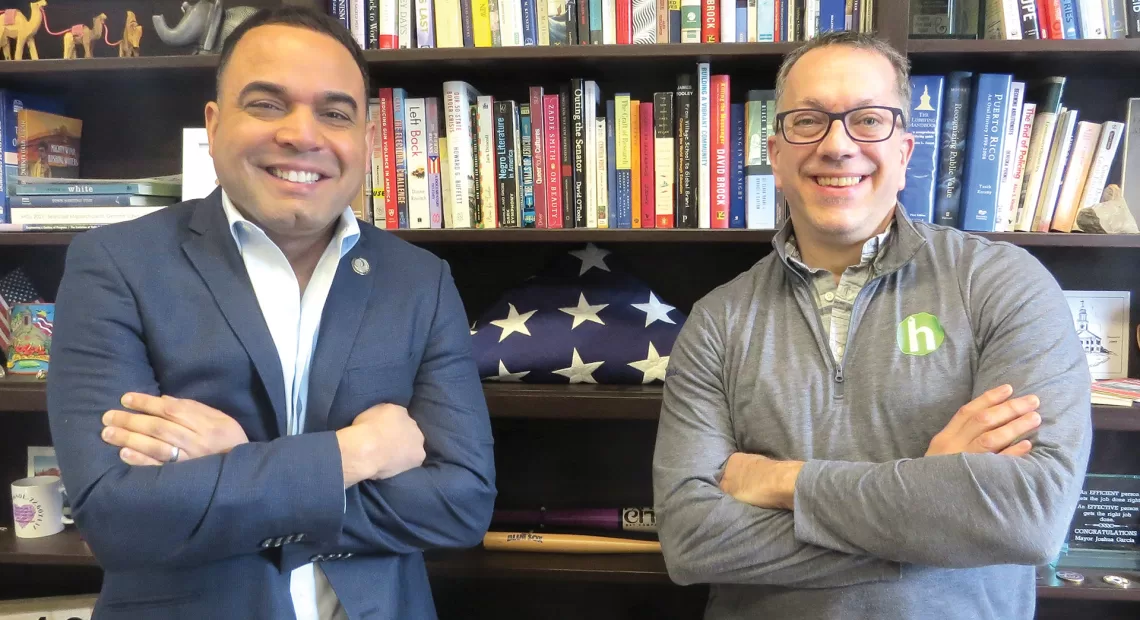
Mayor Joshua Garcia, left, and Aaron Vega

Mayor Joshua Garcia, left, and Aaron Vega can list intriguing signs of progress on many fronts in Holyoke, especially in efforts to attract ‘clean tech’ ventures.


As he talked about Holyoke and its many marketable assets, Mayor Joshua Garcia listed everything from its location — on I-91 and right off a turnpike exit — to its still-large inventory of old mill space and a few available building lots, to its “green, clean, and comparatively cheap” hydroelectric energy.

And all of these assets, and especially that clean, cheap energy, came into play as the city courted and successfully landed Sublime Systems, a startup currently based in Somerville that has developed a fossil-fuel-free, low-carbon cement, and will produce it at a long-dormant parcel off Water Street, perhaps by the end of 2026, employing more than 70 people.

Sublime is exemplary not only of how to maximize the city’s assets, but also of the type of business the city is trying to attract — those in ‘clean’ or ‘green’ technology and manufacturing.

“Sublime is an example of where we want to go,” said Aaron Vega, director of the city’s Office of Planning and Economic Development. “We want to stress our roots in manufacturing and innovation, and now that encompasses clean energy and green tech.”

The pending arrival of Sublime Systems is just one of the many intriguing story lines involving Holyoke. Others include the announcement last month that the city, working with local entrepreneur Cesar Ruiz, is trying to advance plans for an Olympic-style sports complex (one with a projected $40 million to $60 million price tag); new housing proposals in various stages of development; a steady stream of new entrepreneurial ventures fueled by EforAll/EparaTodos; ongoing efforts to revitalize the historic Victory Theatre; and many converging stories involving the city’s cannabis cluster.

One of them concerns contraction of that sector, planned businesses simply not getting off the ground, and the resulting impact on commercial real estate in the city and especially a number of those aforementioned former mill buildings.

“Housing is a focus for us, and it’s tied to economic development. We can bring a fair amount of support to developers who want to do housing projects in the city, but it is a long game, and it’s expensive.”

As many as a dozen of them were acquired with the intention of housing a dispensary or growing facility, but the slowing of the initial ‘green wave’ has left these new owners — all of whom bought high, when the market was red hot, and some of whom have already invested in their structures — looking for buyers and other uses.

And, in many cases, they’re dialing Vega’s number and looking for help, or at least some guidance.

“A lot of people think my office is like a broker … but we’re not moving private property in that way,” he said with a laugh, adding his team will certainly help make connections that might lead to a deal. “We’ll refer people and say, ‘this property is empty, but you have to deal with the owner.’

“They overpaid for these buildings, so it will be interesting to see how they’re going to unload them,” he went on. “Will they put them on the market at a reduced rate, or will they try to earn their money back with a profit?”

Housing is certainly an option, but an expensive and often-difficult one, he continued, adding that, while there is certainly a need for more housing in Holyoke, as there is in most communities in the 413 and across the state, conversion of old mills for that purpose requires capital, patience, and some luck, all in large quantities.
Joshua Garcia

Joshua Garcia

“We’ve been pulling back that curtain to the point where the buzz now is that there’s a lot going on in Holyoke; the reality is, there’s always been a lot going on in Holyoke.”

“Housing is a focus for us, and it’s tied to economic development,” Vega said. “We can bring a fair amount of support to developers who want to do housing projects in the city, but it is a long game, and it’s expensive.”

For this, the latest installment of its Community Spotlight series, BusinessWest looks at these various storylines and, overall, a city making great strides on several fronts.


Curtain Calls

Garcia calls it “pulling back the curtain.”

That’s how he described his office’s ongoing efforts to tell Holyoke’s story and let people know about the many positive developments happening there.

“We’ve been pulling back that curtain to the point where the buzz now is that there’s a lot going on in Holyoke; the reality is, there’s always been a lot going on in Holyoke. It’s just that people have been in their own bubble, believing whatever perception they want to believe about the city,” he said, adding that he’s trying to enlighten people through various vehicles, including a newsletter of sorts that he writes himself and emails to more than 150 people.

It’s called “From the Mayor’s Desk,” and the latest installment includes updates on a wide range of topics, from the proposed sports complex to planned informational meetings to be staged by MassDOT, in collaboration with city officials, on proposed corridor improvements on High and Maple streets; from the scheduling of shuttle service from MGM Springfield to Holyoke City Hall for the upcoming St. Patrick’s Parade and Road Race to some recent news items, including Garcia’s strong comments following state Commissioner of Elementary and Secondary Education Jeff Riley’s refusal to end the receivership of Holyoke’s public school system.

“The decision should have been a resounding ‘yes,’ with a commitment to confer in a reasonable timeframe to transition,” the mayor wrote in a response to the commissioner’s announcement early last month. “Instead, a different message was sent with no plan, no benchmarks, no firm commitment, but just, ‘we are not saying no, but let’s talk more.’”

The lack of progress on the receivership issue aside, the newsletter is generally replete with large doses of positive news, said Garcia, adding quickly that he is aggressively pushing for more in the months and years to come.

Jordan Hart

Jordan Hart

“Our future is tourism, and we need to create opportunities for that to take place.”

Indeed, Garcia, a lifelong resident, was frank when he said he’s tired of hearing about Holyoke’s potential, adding that this word is generally saved for young people, rebuilding sports teams, and startup companies. Holyoke recently celebrated its 150th birthday, and is “way beyond potential,” said the mayor, adding that the city’s “commercial renaissance,” as he called it, is in full swing.

As examples, he cited both Clean Crop Technologies and Sublime Systems, the latter of which was mentioned by Gov. Maura Healey at her State of the State address as an example of how the Commonwealth is building what she calls a “climate corridor.”

Holyoke would certainly like to play a large role in the growth and development of that corridor, said Vega and Garcia, adding that the city plans to take full advantage of those assets listed earlier and attract more companies that fit that profile and join what is the start of what could be called a cluster, with examples like Clean Crop, which uses electricity to revolutionize food production and safety, and also Revo Zero, a Virginia-based hydrogen-energy supplier, which has chosen Holyoke as the site of its Northeast hub. The company works with airports, municipalities, college campuses, and other entities to convert their fleets to hydrogen-powered vehicles.


Momentum Swings

John Dowd, president of Holyoke-based Dowd Insurance, which recently celebrated its 125th anniversary, said the emergence of these companies is part of the sweeping, ongoing change that has defined the city since he grew up there.

He remembers shopping for back-to-school clothes with his parents in the many department stores that dotted High Street back in the ’70s. They are now gone, and for several reasons, including the building of the Holyoke Mall, as are most of the paper and textile manufacturers that gave the city its identity.

The work to create a new identity has been ongoing for roughly a half-century, he told BusinessWest, and will continue for the foreseable future.

“Slowly but surely, positive things have been developing downtown,” he said, adding that Holyoke is a city where the past and present come together nicely. “And when you catch those canals on a beautiful, crisp winter morning with the steam rising off them, it’s a beautiful picture, and you can almost see what Holyoke was like in the very beginning, when my relatives arrived.”

Change has been a constant for that half-century or more, Dowd and others said, adding that more change is imminent — and necessary.

Indeed, with the cannabis industry stuck in neutral, if not moving backward, there are now several old mill buildings that could become home to such ventures, said Vega and Garcia, noting that the fate of properties purchased for cannabis-related uses is an intriguing, somewhat unique challenging now facing the community.

Vega estimates there are six to 12 properties in this category, including the former Hampden Papers building on Water Street, purchased by GTI but never outfitted by cannabis use, as well as other properties on Appleton Street, Canal Street, Commercial Street, and others. And that list will soon include the massive, block-long mill on Canal Street currently occupied by Trulieve, which is pulling out of Massachusetts.

Jordan Hart, executive director of the Greater Holyoke Chamber of Commerce, said the cannabis industry has obviously provided a boost for the city and its commercial real-estate sector, but it has certainly plateaued, leaving opportinties for businesses in other sectors, including clean tech, to create further momentum.

Like the mayor, Ruiz, and others, Hart sees the proposed sports complex as another potential economic engine for the city, bringing people, and dollars, from outside the region and, in the process, perhaps fueling the start, or continued growth, of other businesses in the tourism and hospitality sector.

“The broad goal is to get more people to come and support Holyoke businesses, and I think the sports complex will definitely do that,” she said. “People staying for a weekend are going to need things to do, so this is really big time for Holyoke to realize that this is our future. Our future is tourism, and we need to create opportunities for that to take place.”


Developing Stories

While the sports complex, attracting businesses to be part of the climate corridor, and coping with the dramatic changes coming to the cannabis industry are the lead stories in Holyoke today, there are certainly others, including the ongoing issue of housing and creating more inventory, which is more of a regional story than a Holyoke story.

There are some new units coming online, said Garcia, noting that Winn Development began construction of 88 units in a former alpaca wool mill on Appleton Street. Meanwhile, the new owners of the massive Open Square complex have initiated discussions on creating 80 units of new, market-rate housing in one of the mills in that complex.

The Winn Development project is an example of progress on this front, but also of the many challenges facing those who want to convert properties in the city for that use, Vega said.

“Winn Development is a company that’s obviously well-versed in how to manage these projects,” he said. “They had 11 different pots of money, including historic tax credits, put together in an 88-unit development, and it took almost 10 years.”

While such projects are difficult and certainly don’t happen overnight, the city will need more housing if it is to attract more companies like Clean Crop and Sublime Systems, said the mayor, noting that these and other businesses have expressed concern that, without more inventory, it might become difficult to attract young professionals to the city.

“When we first met with Clean Crop, their first question was, ‘what is your housing plan?’” Vega said. “It wasn’t about business incentives, it was ‘what’s your housing plan, because we’re bringing in people that want to live in this area.’”

Garcia concurred, noting that, like other communities in the region, Holyoke needs a mix of market-rate and affordable housing to meet both its current and future needs. And, overall, the city has the space and the motivation for more housing; what it needs are developers with the patience and skill sets needed to make such projects happen.

Hart agreed, noting that new housing is not only crucial to attracting and retaining businesses, it is a core element in the revitalization of any city, and especially its downtown area.

“We have an overabundance of downtown storefronts that have vacant residential units above them,” she said. “There’s no reason why we can’t be creating downtown living to support the new downtown economic development that’s happening. And that housing will create a safer downtown because you’re going to need more light, and you’re going to need more amenities to help accommodate the people moving into downtown.”

Another ongoing story in Holyoke is entrepreneurship and a steady stream of new businesses getting their start in the city or one of the surrounding communities, said Tessa Murphy Romboletti, executive director of EforAll/EparaTodos in the city. She said the agency is currently working with its 21st and 22nd cohorts of aspiring entrepreneurs, with graduation coming this spring.

The previous cohorts have graduated more than 200 businesses across many different sectors, from restaurants to retail, she said, noting that several of them have become part of the fabric of the city’s business community. She listed Paper City Fabrics, now located in a storefront on High Street, and Raw Beauty Brand as a couple of the many examples of how the agency has helped individuals move from concept to business reality.

There are now several dozen such businesses, she said, adding that EforAll provides many services and support, but mostly helps businesses make the many connections they need to get off the ground or to that proverbial next level.

Holyoke at a glance

Year Incorporated: 1786
Population: 38,328
Area: 22.8 square miles
County: Hampden
Residential Tax Rate: $18.95
Commercial Tax Rate: $40.26
Median Household Income: $37,954
Median Family Income: $46,940
Type of Government: Mayor, City Council
Largest Employers: Holyoke Medical Center, Holyoke Community College, ISO New England Inc., PeoplesBank, Universal Plastics, Marox Corp.
* Latest information available

“We do our part to help them figure out how to navigate the issues they face and know who to connect with in each municipality, whether it’s Holyoke, Chicopee, or wherever, and enable them to make those relationships,” she told BusinessWest.

Meanwhile, another growth area is tourism and hospitality, said Garcia, noting that the planned sports complex, announced at a well-attended press conference at the Volleyball Hall of Fame, is part of that mix.

Another part is the growing list of festivals and other annual events, including Fiestas Patronales de Holyoke, which, in its second year, drew thousands of visitors to the city and established itself as an emerging tradition.

Already well-established are the Holyoke St. Patrick’s Parade, which last year celebrated its 70th anniversary, and accompanying road race, both of which are family events and economic engines for the Holyoke economy.

Hayley Dunn, president of this year’s parade and road race, noted that this year’s parade is actually on March 17, which adds another element of intrigue and also means that it comes earlier than most years, which raises more concern about the weather, which is often a big part of the story.

The bigger parts are the ways families and communities come together to mark the occasions — the road race has its own huge following — and how they provide a huge boost for area businesses. Indeed, a Donahue Institute study conducted several years ago found that parade weekend injects $20 million into the local economy. And there are dozens of events across several communities in the weeks leading up to the parade that also fuel the hospitality sector.

“The parade may go down the streets of Holyoke, but it’s truly a regional event,” Dunn said. “Other cities that are part of our parade — Springfield, Chicopee, Westfield, and others — have their own events as well. Meanwhile, the road race is a huge block party. Both events really support our local businesses.”


Bottom Line

Getting back to his newsletter, “From the Mayor’s Desk,” Garcia said it’s just one of the many ways in which he’s trying to inform people about all the good things happening in his city.

Others include extensive use of social media, as in extensive. And, from all accounts, effective.

“Someone approached me one time and said, ‘whoever is handling your public relations and communications is doing a great job.’ I said, ‘you’re looking at him.’”

Beyond his work on Facebook and Instagram, Garcia, working with other city officials, is doing what he can to generate more of these positive developments — on fronts ranging from clean tech to tourism to housing.

And while it’s still early in the new year, it appears he’ll have quite a bit more to write about in 2024.


 

Business Talk Podcast

We are excited to announce that BusinessWest has launched a new podcast series, BusinessTalk. Each episode will feature in-depth interviews and discussions with local industry leaders, providing thoughtful perspectives on the Western Massachuetts economy and the many business ventures that keep it running during these challenging times.

Go HERE to view all episodes

Episode 199: February 5, 2024

George Interviews Hayley Dunn, 2024 president of the Holyoke St. Patrick’s Day Parade and Road Race

Hayley Dunn

The Holyoke St. Patrick’s Day Parade and Road Race are traditions in the Paper City and across the 413. They are events, but they are much more than that. They bring families and communities together, and they are economic engines — for Holyoke, but also the entire region. On the next episode of BusinessTalk, contributing writer George O’Brien talks with Hayley Dunn, 2024 president of the parade and road race, about all this and much more. They discuss everything from who’s in charge of the weather — the grand marshal — to having the parade on St. Patrick’s Day itself. But mostly, they talk about all that goes into putting these events on, and how the suspense builds in the weeks and days leading up to March 17. It’s must listening, so tune in to BusinessTalk, a podcast presented by BusinessWest and sponsored by PeoplesBank.

Sponsored by:

Also Available On