Home Posts tagged Behavioral Health
Healthcare News

Strengthening the Pipeline


The Healey-Driscoll administration recently issued $12.4 million through the Behavioral Health Trust Fund to 37 colleges and universities to financially support behavioral-health students completing unpaid internships and field placements.

These grants are for undergraduate and graduate-level students pursuing careers treating mental-health or substance-use disorders, and are part of the state’s efforts to grow a culturally and linguistically diverse behavioral-health workforce in Massachusetts.

“Massachusetts needs more qualified behavioral-health professionals, and our administration is committed to supporting students eager to do this work,” Gov. Maura Healey said. “By investing in students looking to treat those experiencing mental-health and substance-use challenges, we’re investing in the long-term health and wellness of communities across Massachusetts.”

Many behavioral-health degree and certificate programs require workplace-based internships, apprenticeships, or practicum credit hours as a condition for program completion. Required field placements play a central role in helping students prepare to serve as behavioral-health practitioners, but these experiences are often unpaid and often require students to sacrifice paid work. To support students pursing these careers, the funding is going to colleges with behavioral-health degrees that require field placements, with a focus on institutions in geographic areas that are priorities for advancing health equity.

“By lifting financial barriers for students pursuing behavioral-health degrees, we are encouraging a more diverse student body to enter this field, which helps us create a more diverse workforce to meet the needs of residents from various backgrounds.”

“By lifting financial barriers for students pursuing behavioral-health degrees, we are encouraging a more diverse student body to enter this field, which helps us create a more diverse workforce to meet the needs of residents from various backgrounds,” Education Secretary Patrick Tutwiler said. “We’re proud to launch a program that helps those looking to help others.”

Health and Human Services Secretary Kate Walsh added that “a good internship or field placement can teach a person much-needed skills and help them gain experiences that last long into that individual’s career. I am grateful this funding gives us the chance to support people financially, which not only helps build a more diverse workforce, but also ensures people reach the right behavioral-health services when and where they need it. Building a stronger workforce that does not have to worry about financial limitations means we can help every person and community throughout Massachusetts get the care they need and in a way that truly makes a difference.”

The behavioral-health internship funds are being issued to campuses as grants to be distributed to qualifying students over a two-year period and can be applied to internships being completed in the 2024-25 and 2025-26 academic years. Students at the awarded institutions who may be eligible for the funding should speak with their program advisor and financial-aid office.

“Internships help behavioral-health graduates prepare to serve community members on day one, and these funds will lessen the financial burden of completing these essential learning experiences,” Commissioner of Higher Education Noe Ortega said. “The more we make entering the behavioral-health workforce possible, the more we can create a pipeline of talented professionals prepared to serve residents across the Commonwealth.”


Statewide Impact

The Behavioral Health Trust Fund was established by the state with American Rescue Plan Act funds and is managed by the secretary of Health and Human Services. Funds are used for addressing barriers to the delivery of an equitable, culturally competent, affordable, and clinically appropriate continuum of behavioral healthcare and services.

Of the 37 colleges and universities receiving funds, 10 are located in Western Mass.: American International College ($310,000), Bay Path University ($695,000), Cambridge College ($460,000), Elms College ($165,000), Massachusetts College of Liberal Arts ($50,000), Smith College ($260,000), Springfield College ($1,045,000), UMass Amherst ($50,000), Western New England University ($180,000), and Westfield State University ($400,000).

“The experiences and knowledge gained outside of a classroom during an internship can be truly invaluable for individuals aspiring to work in the behavioral-health space,” said state Sen. John Velis, Senate chair of the Joint Committee on Mental Health, Substance Use, and Recovery. “Yet I routinely hear from students about the very real financial challenges they face while completing an unpaid internship, which oftentimes keeps students from participating in an internship altogether.”

Added Lydia Conley, president and CEO of the Assoc. for Behavioral Healthcare, “as the behavioral-health workforce crisis continues and the need for care throughout the Commonwealth grows, programs such as this one are essential in building a cadre of emerging professionals to provide high-quality, community-based care where it is needed the most.”

Meanwhile, Linda Thompson, president of Westfield State University and chair of the Massachusetts State Universities Council of Presidents, called the funding “a strong example of government, education, and the behavioral-health sector partnering to serve a critical need in our communities. Our state universities are eager to assist in filling the gaps that lead to better outcomes for individuals experiencing mental-health challenges, and are committed to working with the governor’s office, health agencies, and legislators to develop a knowledgeable, experienced workforce to ensure everyone who requires mental-health assistance receives the support they need.”
Healthcare News Special Coverage

Meeting Them Where They Are

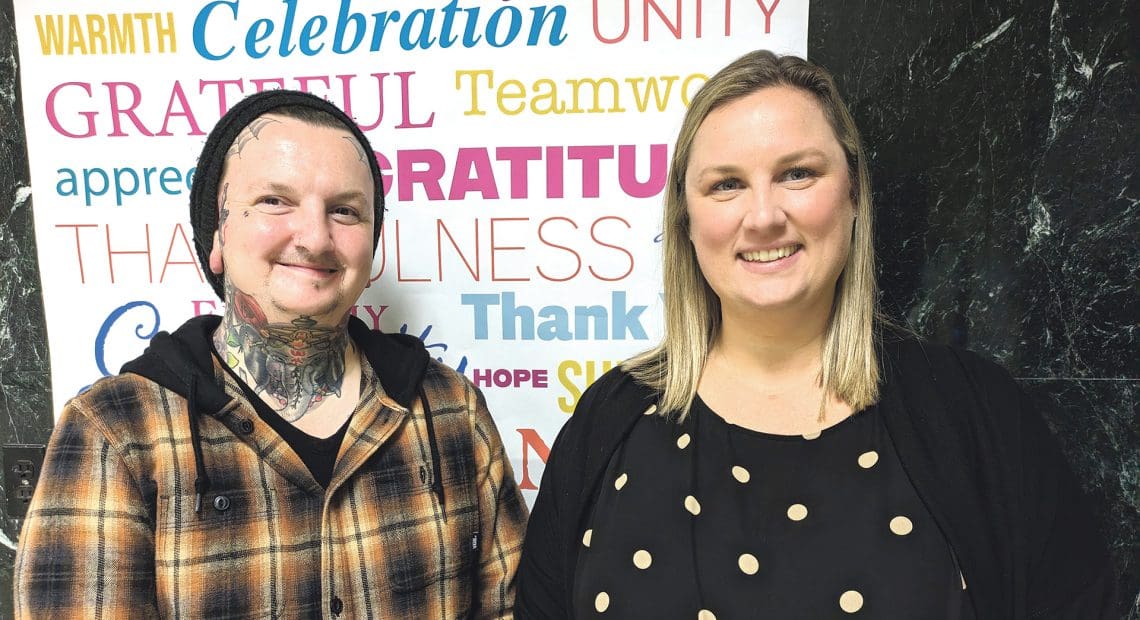
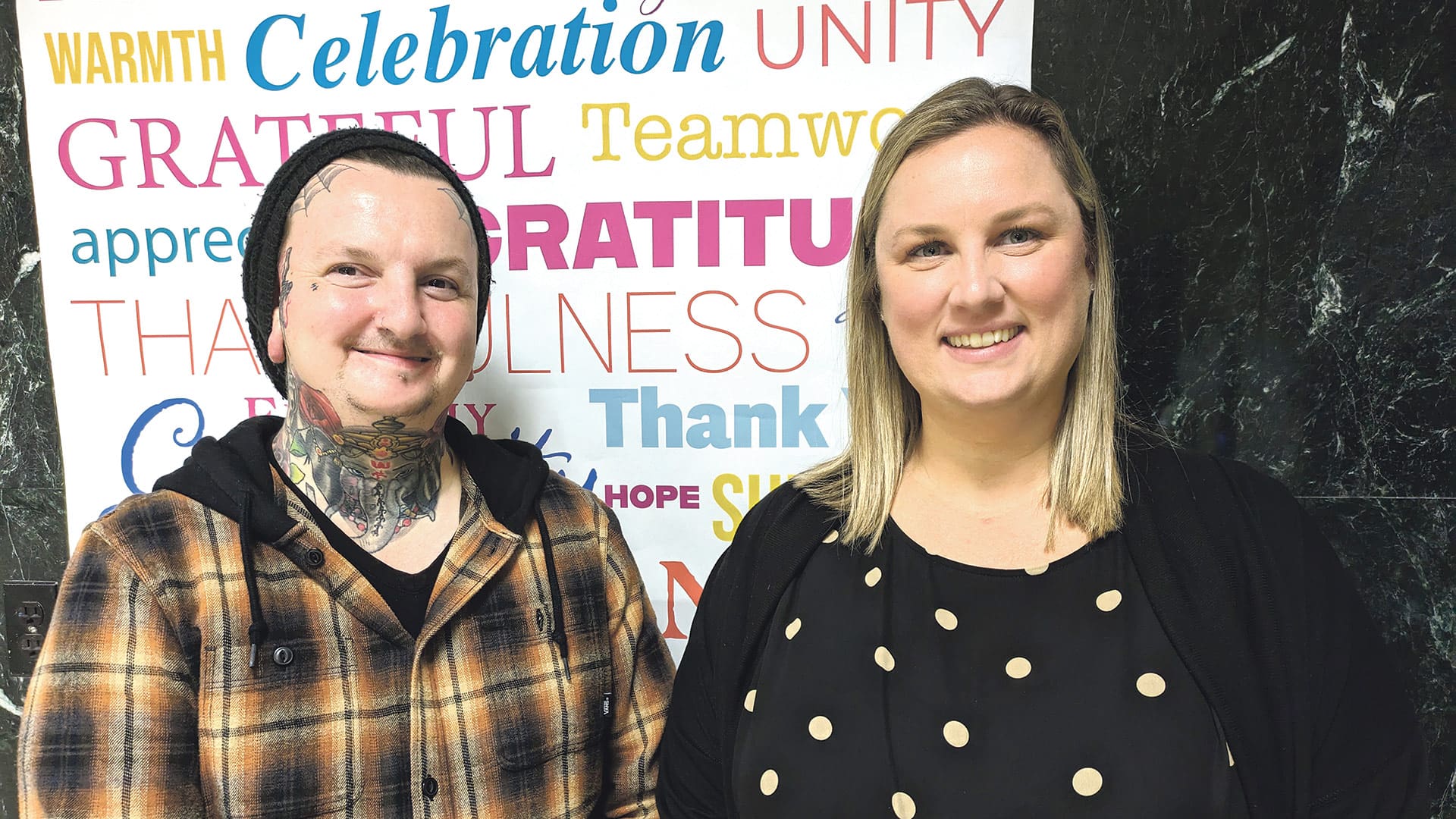
Charles DiRosa and Lauren Temple say MiraVista has found success

Charles DiRosa and Lauren Temple say MiraVista has found success going out and meeting addicts where they are, instead of waiting for them to walk through the doors.


Charles DiRosa knows all about the challenges of substance-use recovery. And looking back on 11 years of sobriety, he also knows how the treatment landscape has changed for the better.

“Being in recovery myself, I’m so proud to be a part of the resources we have here,” said DiRosa, a recovery support navigator at MiraVista Behavioral Health Center in Holyoke. “Looking back on it, 11 years ago, it wasn’t like this. It was a lot harder to get sober and to work a recovery.”

One example is same-day methadone dosing.

“In the past, you would have to make an appointment, maybe wait a couple of days to see the doctor, even a week, and then come in. For addicts, when they make that decision to get clean, usually we have to follow up with them pretty quickly because their mind is constantly changing.”

By accepting walk-ins, he noted, “our goal is, hopefully within an hour, we’ll get them in our system, get them an ID card, and get them dosed, all in the same day. We also offer transportation.”

But another key change at MiraVista has been an emphasis on reaching out into the community, rather than wait for people struggling with addiction to walk through the doors.

“By going to the individual instead of waiting for them to come to us, we’ve noticed a big increase in our numbers, and also our success rate,” DiRosa said. “It’s just providing our resources, letting them know that what we have to offer. If they’re already seeking our services, then we ask them to bring the word of mouth back to their loved ones or people they might know in the community.”

Kimberley Lee, MiraVista’s chief of Creative Strategy and Development, agreed that proactive outreach is making a difference.

DR. ROBBIE GOLDSTEIN

DR. ROBBIE GOLDSTEIN

“It is heartening to see this significant decrease in fatal overdoses — a direct result of the ongoing hard work in our communities to reach those struggling with substance-use disorder.”

“We’ve gone into parks, we’ve gone and hung out at McDonald’s on Appleton Street, in front of other well-known high-traffic areas. We’re just setting up a table, having a little snack, bottles of water, and using that as an opportunity to engage individuals,” she explained.

“What’s really heartwarming and really supports our work is that, when you’re in a park, and you make a connection with an individual, and you give them your card and the flyer, they may not be ready in that moment. But the next day, we see them in the front lobby. It’s very reassuring to know that type of connection has worked for that individual, and then to see them progress from when they first arrived to later on in their treatment — to see the change, the metamorphosis that takes place for these individuals.”

DiRosa called it “planting seeds.” And in his role, he can help people grow those seeds from a place of empathy and compassion.

He’s currently involved in a program called State Opioid Response, which provides extra funding to MiraVista’s outpatient methadone clinic to help those who need extra resouces to be successful throughout their recovery.

“What that might look like is, they would come to me and let me know they’re in need of — let’s say housing, or they lost their insurance, or maybe they need a new cell phone because theirs broke, or whatever the case may be. My role is to look out in the community, find those resources, bring it back to them, and bridge the gap. That way, they can continue to be successful in their recovery.

“Especially in early recovery, it’s very easy for them to get overwhelmed with all these steps or goals that they have in mind. A lot of times, they don’t have the guidance; they don’t have the support,” he added. “So we’re making sure that we’re supporting our clients, making sure we’re finding those resources out in the community for them.”

By reaching out and bridging these gaps, DiRosa said he’s helping to provide hope at a critical time.

“A lot of times, we meet individuals on the streets that might not have an ID, might not have insurance, and we tell them, ‘hey, we can still get you in and get you enrolled.’ So I’m not only providing resources in-house, but also bringing resources out to the streets, which has been pretty successful, in my opinion.”


Mixed Bag of Data

This outreach and support work is especially critical in MiraVista’s environs. While opioid-related overdose deaths in Massachusetts decreased by 10% in 2023 — the largest single-year decline since 2009-10 — according to Massachusetts Department of Public Health (DPH) data, Holyoke actually saw an increase.

Statewide, there were 2,125 confirmed and estimated opioid-related overdose deaths in 2023 — 232 fewer than in 2022, when Massachusetts had a record 2,357 fatal opioid-related overdoses. As noted, the opioid-related overdose death rate decreased by 10% to 30.2 per 100,000 people compared to 33.5 in 2022.

Kimberley Lee

Kimberley Lee

“They’re approaching our clients and our patients with either their own personal experience or their own personal knowledge of the disease of addiction and how important it is for people who are starting their pathway to recovery to know that they’re not alone.”

“While we are encouraged by the overall decrease in overdose deaths, this report also is a reminder of the work that we still need to do to bring deaths down for all people and all areas of the state,” Gov. Maura Healey said when the report was released late in the spring. “Our administration remains committed to prioritizing prevention, treatment, and recovery efforts to address the overdose crisis that continues to claim too many lives and devastate too many families in Massachusetts.”

Preliminary data from the first three months of 2024 indicated a continued decline in opioid-related overdose deaths in Massachusetts, showing 507 confirmed and estimated deaths, a 9% drop compared to estimates from the same time last year.

“It is heartening to see this significant decrease in fatal overdoses — a direct result of the ongoing hard work in our communities to reach those struggling with substance-use disorder,” said Dr. Robbie Goldstein, Department of Public Health commissioner. “To sustain these hard-won gains, we must focus even more deeply on the populations that have not yet seen such dramatic improvements. This means doubling outreach efforts in communities of color, particularly for Black residents, and people living in our most rural communities, who, as the data show, are most disproportionately impacted by overdose deaths.”

DiRosa posed one reason why overdose death rates are still high in Holyoke, while cities like Brockton, Lawrence, and Pittsfield saw declines, and it has to do with accessibility and cost.

“In a lot of the outreach that we do in the community, we’ve noticed the drop in the cost of the drugs. Back maybe five, seven years ago, where one bag of heroin would cost $10 or $15, it’s now going for $3 to $5. So it’s keeping people actively using these substances longer and not seeking treatment.”

When they do seek help, addicts have treatment options. MiraVista’s Intensive Outpatient Program is an enhanced level of care for individuals who need more intensive support for their recovery from addiction and want to remain in the community, while the Opioid Treatment Program (which includes the methadone dosing) offers a continuum of outpatient services, including individualized medication management, comprehensive addiction assessments, individual and group counseling, case management, referral support, harm-reduction education, and more.

“We’re bringing education into the community that we’re here, and we’re going to be able to care for the patients when they’re ready to come through our doors,” said Lauren Temple, director of Clinical Services, adding that prompt appointments are a big part of that. “We’re going to get you a same-day appointment as quick as we can. We don’t want you to wait.”


One Step at a Time

“Every overdose death is tragic, preventable, and unacceptable,” Secretary of Health and Human Services Kate Walsh said when the state’s report was issued earlier this year. “While we are proud and encouraged that fewer Massachusetts residents were lost to overdose last year, we know that inequities persist, and our work is not done. Our understanding of where gaps in treatment and services occur, and the people who we are not yet reaching, drives our work and helps focus our efforts.”

Those thoughts dovetail well with MiraVista’s efforts in Greater Holyoke.

“We try to stay with our clients moving forward. We check up on them on a regular basis,” DiRosa said. “Sometimes our clients might need that extra phone call; they might need extra support. We want them to take pride in their recovery, but also help them see that we do care.”

Like DiRosa, much of Miravista’s outpatient-services team have lived experience with these challenges, Lee added.

“So they’re approaching our clients and our patients with either their own personal experience or their own personal knowledge of the disease of addiction and how important it is for people who are starting their pathway to recovery to know that they’re not alone,” she added. “We are here to walk with them, whether it’s the first step they’re taking or the 100th step. There are people here who understand and who can appreciate the journey. They’re not alone.”

Opinion

Opinion

By State Rep. Aaron Saunders


I grew up in a home where it was OK to ask if you were OK, mentally or physically, at the dinner table. This was not common during the 1980s, when a stay in a psychiatric ward could be a mark against you for life, but my dad was a psychologist, and my mother, a teacher.

They knew the importance of conversations with their boys about feelings, expectations, and disappointments and not just a skinned knee and how you got it.

I was reminded of this recently during a visit to the newly renovated adolescent unit of MiraVista Behavioral Health Center in Holyoke. Its recent reopening brought back on line 16 much-needed inpatient beds in Western Mass. for youth ages 13 to 17. The redesigned environment enhances delivery of care and healing for this population, in which recent government data estimates that nearly 50% have had a mental-health disorder at some point in their lives.

Massachusetts, with its Roadmap for Behavioral Health Reform, introduced last year a Behavioral Health Line to call 24/7 and network of community behavioral-health centers that provide broader access to mental-health services for those in crisis. The state, too, has added inpatient psychiatric beds to ease Emergency Department boarding that continues for all age groups.

We, as legislators, need to ensure that there is ongoing funding for such services and adequate reimbursement rates for such beds, as well as for addiction-treatment programs. Mental-health and substance-use disorders co-occur frequently, and it is important for both to be treated.

We also need to continue to consider policies that address staffing shortages and issues like educating students and their families on the importance of mental healthcare.

Yet, there is another barrier — stigmatization — around lessening disabling behavioral-health conditions. Massachusetts has a campaign that seeks to educate that addiction is a chronic illness and not a personal choice, but stigma and misinformation continue to prevent individuals with behavioral-health issues from seeking treatment.

You can’t legislative away all stigma. We all need to be better-educated that mental illness can be treated and that there are steps to be taken to prevent poor mental health from progressing to where it interferes with daily life. This is what I reflected on during my recent visit to MiraVista.

I hear from my constituents of the need for services close to home and, in applying the lessons learned from my parents in asking my own three children about their feelings, I get a look into their day in an age when bullying and pressure to engage in unhealthy behavior can come from anywhere.

We all need to be more open to talking with our families, friends, and healthcare providers about our mental health and that of those in our care, as this, too, is part of the roadmap to raising emotionally healthy children and staying emotionally healthy, too.


State Rep. Aaron Saunders represents the 7th Hampden District.

Business Talk Podcast Special Coverage

We are excited to announce that BusinessWest has launched a new podcast series, BusinessTalk. Each episode will feature in-depth interviews and discussions with local industry leaders, providing thoughtful perspectives on the Western Massachuetts economy and the many business ventures that keep it running during these challenging times.


Go HERE to view all episodes

Episode 159: April 24, 2023

George Interviews Dr. Negar Beheshti, chief medical officer for MiraVista Behavioral Health Center

Dr. Negar Beheshti

There was already a mental health crisis in this country before COVID. What the pandemic did was amplify the problem and bring some much-needed attention to it, according to Dr. Negar Beheshti, chief medical officer for MiraVista Behavioral Health Center. She is BusinessWest Editor George O’Brien’s guest on the next installment of BusinessTalk. The two discuss the breadth and depth of this crisis and the opportunities and challenges when it comes to helping those in need. It’s must listening, so tune in to BusinessTalk, a podcast presented by BusinessWest and sponsored by PeoplesBank.

Sponsored by:

Also Available On

Opinion

Opinion

By Kimberley Lee


The death of Peter Robbins resonated with me. He was tapped to be the first voice of Charlie Brown as a child actor in the early 1960s when Charles Schultz began to adapt his popular “Peanuts” cartoon strip for TV and movies.

I grew up with these shows, and so did my children, but it was not just nostalgia that made me take notice of Robbins’s death. His family announced on Jan. 25 that the 65-year-old Robbins had died the week before by suicide. He had long struggled with both mental-health and substance-use disorders.

MHA, the Mental Health Assoc., is the organization I work for, whose behavioral-health outreach clinic and residential programs have long offered support and treatment to individuals with such dual diagnoses. It was especially disheartening to read how the life of Robbins, associated through the 1970s with a character that brought much entertainment to the screen, ended.

The cartoon strip itself was sometimes subtitled “Good ol’ Charlie Brown,” and the world Schultz created was a self-contained one about childhood. Its ups, downs, and misplaced crushes were depicted by characters who were very animated, even in print. No adults are featured, but the characters struggle with plenty of personal issues that often follow into adulthood. Some, like Lucy, can be bossy; some are a bit vain, like curly-haired Freida; and some are self-absorbed, like Schroeder on his piano. Everyone is just trying to fit in or fit into who they are, including Snoopy, Charlie Brown’s beagle, who often retreats into his own world on top of his doghouse or into his imagination, where he fights the Red Baron as the Flying Ace. There is also Pig-Pen, who tells Sally, Charlie Brown’s younger sister, he doesn’t appreciate that name he has been tagged with because of his appearance, but neither does he like the rain to wash away that appearance from a day of playing in the dirt.

They are a complicated bunch, defying stereotypes in their own ways of being and thinking and friendships across neighborhoods and interests.

Schultz, who died in 2000, wondered if his characters would resonate through time, and they do, as Charlie Brown embodies a little bit of all of us emotionally as he navigates this world of personalities. And, of course, should he need advice, there is Lucy, who sets up a Psychiatric Help booth, where she gives her version of professional help for five cents. It is a world in which the timeless troubles and alienations of childhood are on display, but also one in which the characters cope and carry on with their pursuits and come together.

I grew up with all the animated specials, including A Charlie Brown Christmas, It’s the Great Pumpkin, Charlie Brown, and A Charlie Brown Thanksgiving, and, again, so did my children. Each time these classic movies aired, those 30 minutes provided an opportunity for us to be together as a family, to make a connection, to embrace each other emotionally.

In our house, emotional connectedness happens in other ways as well. For example, once a week, my husband and I pull our girls together (now that they are in college, this is done remotely), we all unplug, and we just simply and sincerely ask them, “how are you?” And not just physically, but emotionally. Their answers have been honest and transparent and emotional at times.

It gave them, at an early age, a green light to talk openly about how they feel from a mental-health perspective, and there was no stigma, no shame, no hesitancy in doing this.

We all know that challenges to mental health start young, and the sooner we address them, the better the outcome.


Kimberley Lee is vice president of Resource Development & Branding for the Mental Health Assoc.


Health Care

What’s Next in Behavioral Health

By Barry Sarvet, M.D.

As a science-fiction fan, I would love to be able to travel in time to see into the future of psychiatry. But, of course, the future isn’t really knowable and depends in large part on the choices we make. A more useful and realistic approach is for us to envision a possible future based on our awareness of the most urgent needs in the field, and to assume linear progress from the current state of our scientific knowledge and discovery.

Barry Sarvet

Barry Sarvet

In my opinion, the two most compelling needs within the field of psychiatry are the need for more effective, safe, and reliable treatments for the subset of psychiatric patients who don’t respond optimally to current treatments, and the need to make psychiatric care more accessible and equitable for everyone who suffers from mental-health conditions.

Depression is one of the most common psychiatric illnesses, affecting 7.1% of all adults and 13.3% of adolescents in the U.S. Severe depression is a potentially deadly illness, and suicide is a leading cause of death in this country. Although we already have a host of effective treatments for depression, between 10% and 30% of patients do not respond favorably to treatment. However, ongoing advances in our understanding of the neurobiology of mental illnesses in recent years have led to a number of novel biological treatments for treatment-resistant depression and other psychiatric conditions.

One recently developed treatment that has shown great promise with treatment-resistant depression is repetitive transcranial magnetic stimulation (rTMS). Available at Baystate, rTMS is a non-invasive procedure in which focused pulses of electromagnetic energy are applied to specific regions of the brain resulting in increases in blood flow and metabolic activity. rTMS belongs to a branch of psychiatric treatment referred to as psychiatric neuromodulation. We expect to see further development of this branch in coming years, particularly because of the encouraging observations of clinical effectiveness and safety of this type of treatment for patients whose conditions have not responded to conventional medications.

Other biological psychiatry advancements on the horizon include the development of medications targeting receptors for neurotransmitter systems (such as glutamate and NMDA) which have recently been implicated in the pathophysiology of depression and other psychiatric illnesses. We are also seeing a renaissance of research activity studying the use of so-called psychedelic drugs in combination with talk therapy to induce states of consciousness in which patients may find it easier to change well-worn patterns of thinking associated with psychiatric illnesses such as PTSD, anxiety, and depression.

Lastly, on the biological front, advances in the understanding of genetic variability in metabolism and responsiveness of the nervous system to psychiatric medications promise to usher in an era of personalized medicine in psychiatry, allowing psychiatric clinicians to select effective and tolerable medication treatments for patients without having to go through a trial-and-error process.

Even more important than advances in biological psychiatry is the need for progress in making psychiatric treatment more accessible to everyone who needs it. Currently, a majority of patients with mental illness do not receive any treatment at all, and for many more, treatment is delayed. In fact, many patients with untreated mental illness, disproportionately persons of color, end up in the criminal-justice system because of a lack of access to care.

In recent years, we have seen steady reduction in stigma surrounding mental illness and increased acknowledgment of the importance of mental health across society. Baystate’s recently announced plan for the development of a new, state-of-the-art psychiatric hospital facility for our region reflects the growing recognition of the importance of improving access to behavioral healthcare.

This new facility is just one component of a comprehensive strategy which needs to be executed in partnership with the whole community to improve access to all levels of mental healthcare and address persistent racial and socioeconomic disparities in access to care. Some of the components of this strategy includes work we have been doing at Baystate to embed mental-health services into our primary-care services. In addition, our development of new training programs for psychiatrists and child and adolescent psychiatrists have established a pipeline for enhancing the psychiatric workforce in our region.

We also will see continued use and improvement in telehealth models of psychiatric practice, which, of course, have dramatically grown in response to the pandemic, and have proven to be an important tool in reducing geographic barriers to access to care.


Dr. Barry Sarvet chairs the Department of Psychiatry at Baystate Health.