
Springfield Has Designs on Continued Progress
Springfield at a Glance
Year Incorporated: 1852
Population: 155,929
Area: 33.1 square miles
County: Hampden
Residential tax rate: $15.46
Commercial tax rate: $34.35
Median Household Income: $35,236
Median Family Income: $51,110
Type of government: Mayor, City Council
Largest Employers: Baystate Health,
MassMutual Financial Group, Big Y Foods,
MGM Springfield, Mercy Medical Center,
Center for Human Development
* Latest information available
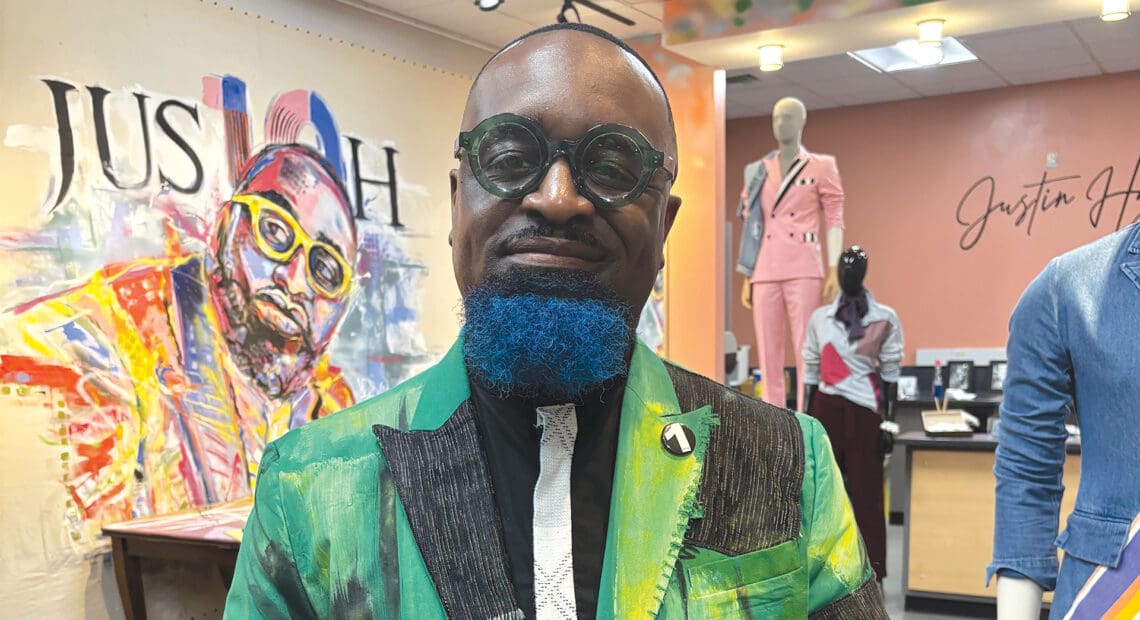
Justin Hayes decided it was time to come home.
His was one of the last retail outlets standing in the Enfield Mall, and when he was informed by mall officials in February that he would no longer be able to enter the building due to infrastructure problems, he commenced a search for a new hub for his fashion brand, JUST10.
He considered other spots in Enfield as well as Hartford, but ultimately opted to come back to Springfield, where he grew up, graduated from the High School of Science and Technology, and hung out at Tower Square, which is where he located that hub.
It’s the storefront next to White Lion Brewing Co. on the ground floor, a visible storefront that has attracted a good number of visitors, although Hayes handles clients by appointment only. Still, he’s hoping his presence will generate more vibrancy — and storefronts — in Tower Square.
“I’m excited to be here, and it’s a historic time,” he said. “There used to be fashion in this mall and across the street at the old Steiger’s. To bring fashion back is huge, and hopefully, we can inspire some more.”
Hayes’ move back to Springfield is one of myriad converging storylines in the City of Homes, including the biggest of these stories — the pending construction of a new county courthouse, or regional justice center (RJC), as it’s being called, in the city.
The state Division of Capital Asset Management and Maintenance (DCAMM), in consultation with the Massachusetts Trial Court, made its long-awaited decision earlier this month, selecting the Liberty Junction Team and its proposed site at 125 Liberty St.
The decision did not go down well with Springfield Mayor Domenic Sarno, who said he was extremely disappointed that the state did not choose a proposed site on the riverfront that he favored — or any of the several proposals submitted by local developers.
He was not alone in criticizing the decision, which ushers in the next stage of the project — negotiation of a lease between the state and the Liberty Junction Team, as well as ongoing speculation about the potential impact of the chosen site and the future of the sites not chosen.
But there are many other stories to follow, including:
• The broad of issue of housing, which has many subplots itself — everything from new projects underway to lingering concern about rent control, whether it might eventually become reality, and how it might have a chilling effect on future investments, to Sarno’s intention to “flip the script” on housing initiatives and focus not only creating more inventory but helping existing homeowners make needed improvements to their properties;
• The announced merger of Baystate Health and Mercy Medical Center. Some question the impact this move will have on competition and the cost of care, but Sarno said Baystate’s decision to step in saved Mercy from what he called imminent closure. “That move needed to be done — if Baystate Health had not stepped in, Trinity Health Of New England would have shut Mercy down,” the mayor said, adding that the city needs both hospitals;
• Various other developments in and around downtown, including the entertainment district on Worthington Street and a potential project involving several new restaurants — some already open, others soon to open — and a live music venue;
• Energy in Tower Square Park, one of the proposed sites for the RJC that was not chosen. An interactive music installation called Sounds of Springfield has been created. Meanwhile, White Lion has expanded its programming in the park on Wednesdays to include midday and early evening festivities;
• Another gathering spot, known as the Landing, created on property adjacent to the Convention Center Carpark. The facility has hosted several concerts and other events since opening earlier this year, and there are many more on the slate;
• An announced $2 million project to stabilize Old First Church, the oldest building in downtown Springfield (1819), the centerpiece to Court Square, and a component of a possible wider project to redevelop the nearby Roderick L. Ireland Courthouse, which will be replaced by the new SJC; and
• Several other ongoing stories, including redevelopment of the former Eastfield Mall, pending redevelopment of the former Massachusetts Career Development Institute site (a request for proposals on that challenging site is expected to be issued in the near future), and success stories such as the Springfield Thunderbirds (which made another deep playoff run) and the transformation of the former CityStage into the Hope Center for the Arts, a state-of-the-art facility designed to educate young people and perhaps inspire careers in the arts.
It’s easy to see that many of the story lines in Springfield are connected, and that the courthouse decision will ultimately have a considerable ripple effect. For this latest installment in its Community Spotlight series, BusinessWest looks at these ripples — and the many other converging stories involving the region’s largest community.
What’s in Store
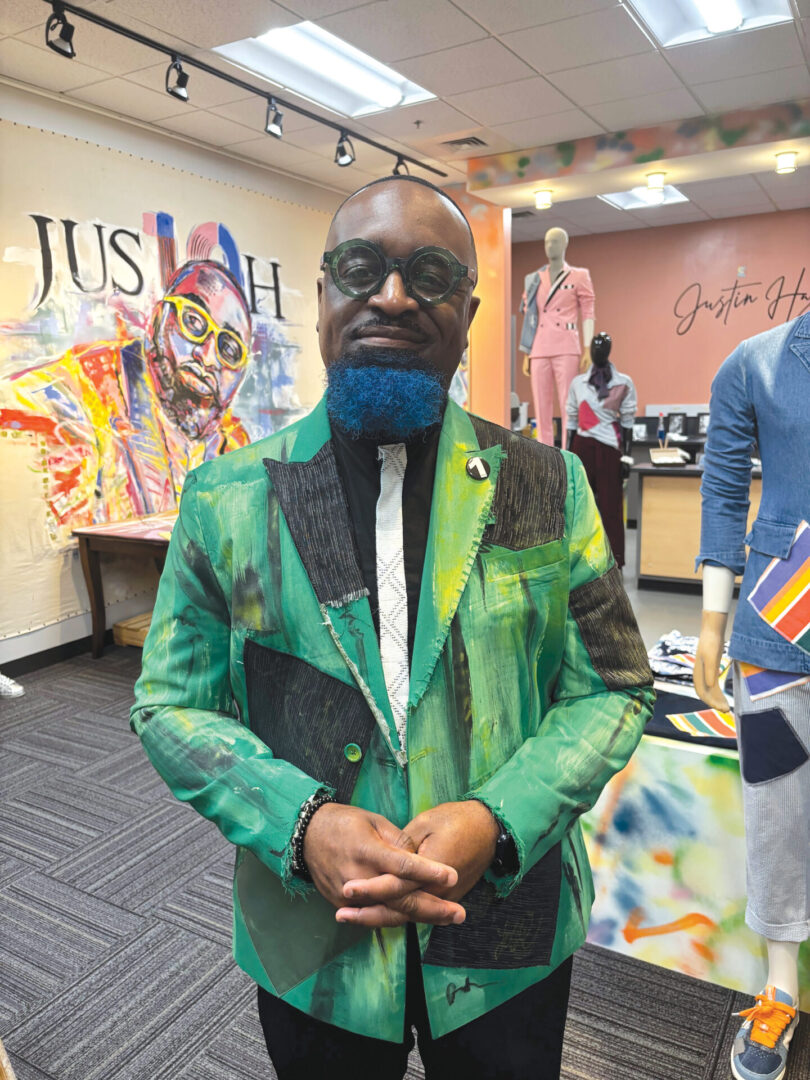
Justin Hayes recently opened his new ‘hub’ in Tower Square.
By now, many in the region know at least some of the Justin Hayes story, one that has seen his name — and clothes — gain national and international acclaim, with his designs featured in the latest The Devil Wears Prada film, for example.
As noted, he grew up in Springfield and, starting when he was in middle school, developed a fascination for fashion. “It was a childhood dream — middle school and high school is when I found style,” he noted, adding that he started outfitting and dressing some of his classmates.
He started working at the Gap when he wasn’t legally old enough to do so — 15 — and would eventually go on to work for Aldo Shoes and then Brooks Brothers, where he handled merchandising for three stores in Connecticut, then on to merchandizing for luxury brands such as Hugo Boss.
When his job was discontinued, he had an opportunity to take a position in Chicago, but turned it down to care for his ailing father, and then his mother — and, while doing so, launched his own brand in Enfield in 2009.
He started slow, but he managed to score some good press from the 2018 New York Fashion Week, being listed second among the top 10 designers at Fashion Week in the small, boutique category.
“And then, everyone else started calling me — LA called me and wanted me to be in LA Fashion Week, Miami called, Dubai called, and everything started progressing from there,” he said, adding that his designs for men, women, and children started taking off. Fast-forward to last month, when he opened to considerable fanfare in Tower Square
There, Hayes hopes to help foster a return to the vibrancy he remembers in his youth.
“I’m anxious to see what this store does here,” he said, adding that he’s hoping to inspire more retail in the downtown. “Downtown has a lot of potential, and I want to help see it grow if I can, through fashion.”
Hayes’ return to Springfield is one of several ongoing stories downtown. Others are taking place across the street, in Tower Square Park.
There, Ray Berry, founder and owner of White Lion, has expanded his Pridelands on Mane, which kicked off in June.
He told BusinessWest that, during his frequent meetings with officials at the Springfield Business Improvement District (BID), there was strong sentiment for a return of the pre-COVID lunch festivities that took place at nearby 1550 Main St.
“There was live music, people would brown-bag it … it was fun,” he recalled, adding that those at the BID urged a return of that experience, and it has become reality with White Lion Wednesday, with the accent on ‘day,’ with live, local music sponsored by the BID.
“We’re opening up the park for a nice lunch — come out, enjoy summer, and be part of the downtown fabric,” Berry said, adding that there will be a creative menu with a strong lobster theme — lobster rolls, lobster cones, lobster bisque, lobster tacos … you get the idea.
The Wednesday fun continues with what Berry calls an after-work social, with more live music and pop-up vendors. And on Thursday nights, White Lion will have music with local DJs, and every other Friday will be Latin night, with live Latin music.
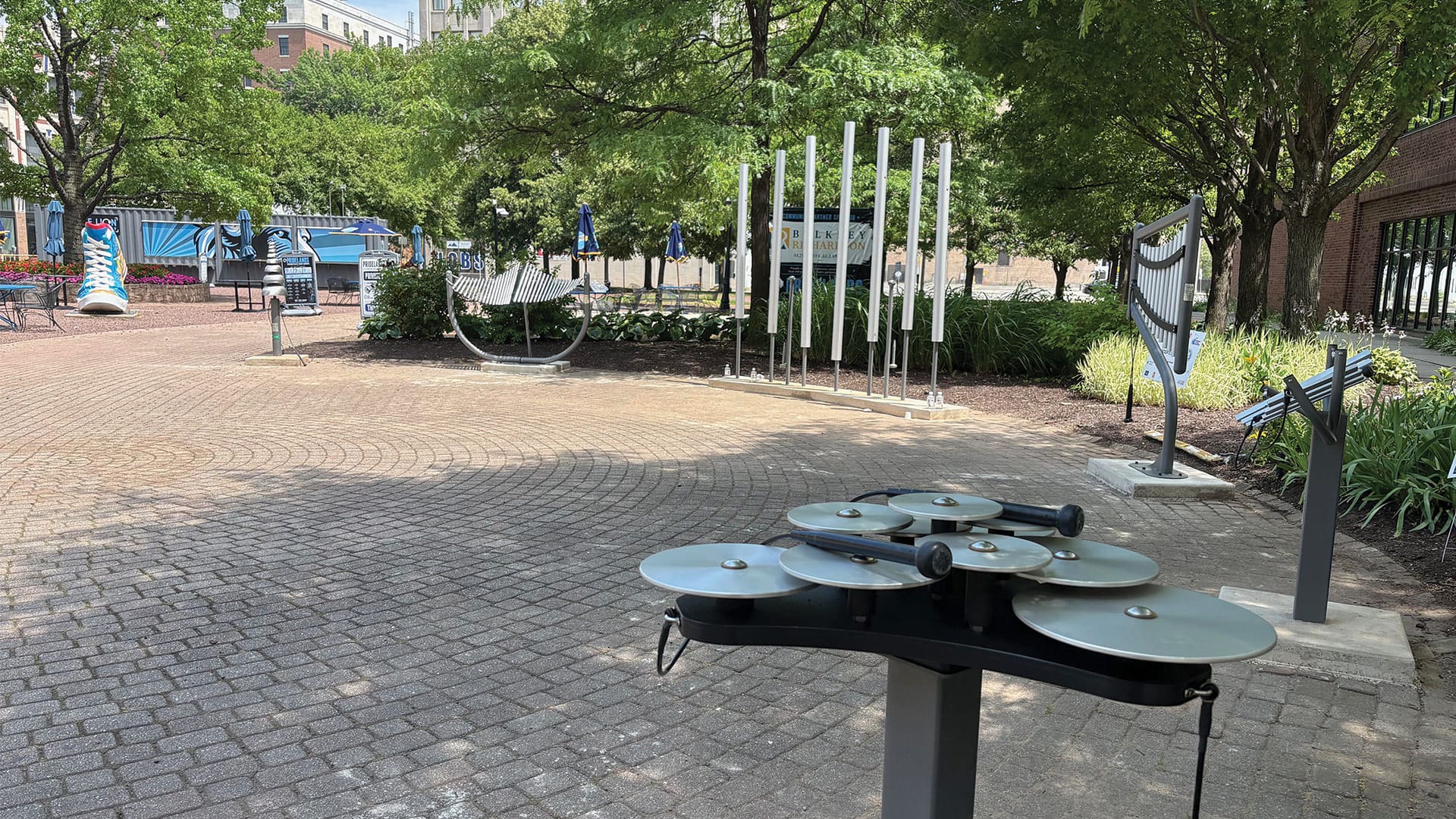
An interactive music installation called Sounds of Springfield has been created in Tower Square Park.
But the energy is not confined to the park. Around the corner, there is growing momentum on Worthington Street, where a cluster of restaurants and gathering spots is coming together.
Led by Raipher and Joseph Pellegrino in partnership with the city, the ongoing project involves redevelopment of a block-long stretch of Worthington Street, which was once considered the city’s entertainment district.
A few restaurants have opened in that space, including Mamou, the southern fare restaurant that opened roughly a year ago; Eat, a breakfast and lunch spot formerly located on Page Boulevard; and District Fusion Table, with a Caribbean-inspired fusion menu. Another, Casa Mia, formerly 350 Grille, is slated to open in the coming weeks.
Meanwhile, a breakfast and lunch café is planned for the spot at the corner of Worthington and Dwight streets, and a large live-music venue is also being created, said Raipher Pellegino, a Springfield-based attorney and commercial real estate developer, adding that the collection of venues meets a critical need for more dining options and will create more vibrancy downtown and make it more of a destination.
“We have 150,000 people in Springfield and 300,000 across the area, and we are so underserved when it comes to restaurants,” he said. “If you look at a city like Providence, which has roughly the same population, there are four times as many restaurants as we have here. There’s a huge demand for quality food, selections, and options.
“And people want to have some nightlife — this section of the city has been essentially dormant for close to a decade,” he went on. “People want options … options are important.”
City of (More) Homes
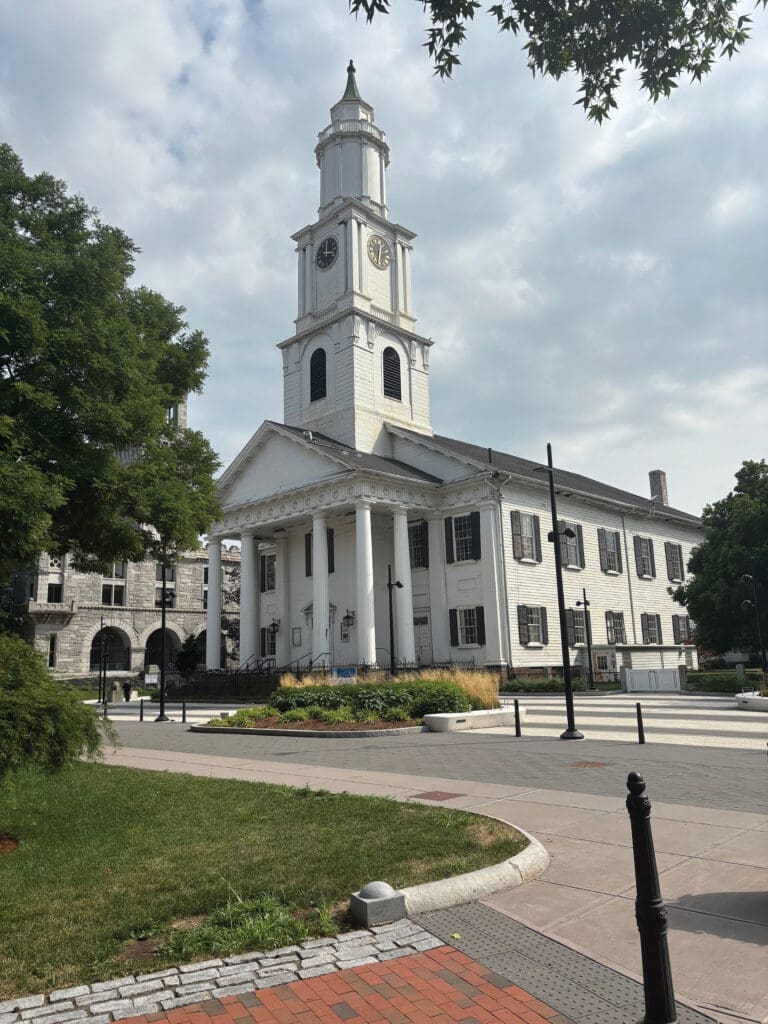
Mayor Domenic Sarno says redevelopment of Old First Church is one of the key components in ongoing revitalization of the Court Square area.
Sarno has been in the corner office for more than 16 years now. He’s the longest-serving mayor in the city’s history and has led it through the Great Recession; the tornado that touched down on June 1, 2011; the six-year ordeal that eventually brought a resort casino to the South End; a global pandemic and its many aftereffects; and myriad smaller battles.
His leadership has been defined by a passion for the city and a willingness to stand up for it when he senses it is being slighted, a character trait displayed on countless occasions, including recent cases where he slammed the director of the Basketball Hall of Fame for merely suggesting he was exploring expansion of a high school basketball tournament into the Boston market and, again, with the decision on the RJC.
“This one really hurts,” the mayor said at a hastily called press conference just minutes after the decision was announced by DCAMM. “It’s going to hurt our residents and our business community.
“I always have to punch above my weight as I continue to fight tooth and nail for the city of Springfield; once again, Boston power brokers are telling the city of Springfield what to do,” he went on, blasting DCAMM for shunning local developers and the fact that the chosen proposal does not have a project labor agreement, and then asking the rhetorical question, “do you think a Springfield developer would ever get a shot in Boston?” and answering it with a firm “no.”
Sarno is taking that same passion and fight to other battles, including one involving remote work and its impact on businesses, especially downtown.
“I hear it from the small, mom-and-pop stores all the time — people have to come back to work,” the mayor said, adding that he has taken up this fight to the extent that he can. “It [remote work] hurts the ecosystem of economic development; when people are back to work in their offices, they go out for coffee and for lunch. And it hurts these office buildings, which hurts my foundation, the tax base.”
He’s been grappling with other matters as well, including housing, an issue with several plotlines, starting with projects in various stages of development across the city, including the high-profile initiative to redevelop the Clocktower building, the Colonial Block, and two other adjoining properties into more than 100 units of market-rate housing; the Residences at the Vault, redevelopment of the former Federal Land Bank building on State Street into 52 units of workforce housing; the Merrick Park Apartments on State Street, a reimagining of the former Springfield School Department headquarters; market-rate housing at the site of the former Howard Johnson’s Motor Lodge on East Columbus Avenue; single-family homes on Tinkham Road; and many others.
Overall, there are several strategies involving housing, Sarno said, including the creation of new inventory, improving the homeownership rate through projects such as the hugely successful redevelopment of the former Gemini site in the South End into affordably priced single-family homes, and generating improvements to an aging housing stock.
“We’re looking to flip the script here,” he told BusinessWest. “We’re looking at some of our neighborhoods and people who have been in their houses for many, many years, and look at ways to help them maintain the upkeep of their homes, which, in turn, will help with the tax base and stabilize those neighborhoods.
“We’ll have to put some skin in the game,” he went on, referring to local funding for such an initiative, adding that the city will explore state and federal programs to help fund projects for existing homeowners, while also creating new housing opportunities.
As for redevelopment of the Old First Church, Sarno and Tim Sheehan, the city’s chief Development officer, see that as a project that will bring a landmark back to relevance, but also potentially serve as a catalyst for other development in that area, including the current courthouse.
The $2.6 million for stabilization efforts will cover a wide range of deferred maintenance, Sheehan said, including painting, drainage and roof work, and more. The goal is ready the property for reuse, likely as part of a larger effort that involves the current courthouse and adjoining facilities.
As he talked about the project, Sarno said he draws inspiration from the successful efforts to transform the church at 52 Sumner Ave. into an event venue.
“That’s what we’re looking to do with Old First Church,” he said. “It would be a great venue for events.”