
Home Posts tagged East Longmeadow MA
Features

The Tables Are Turning
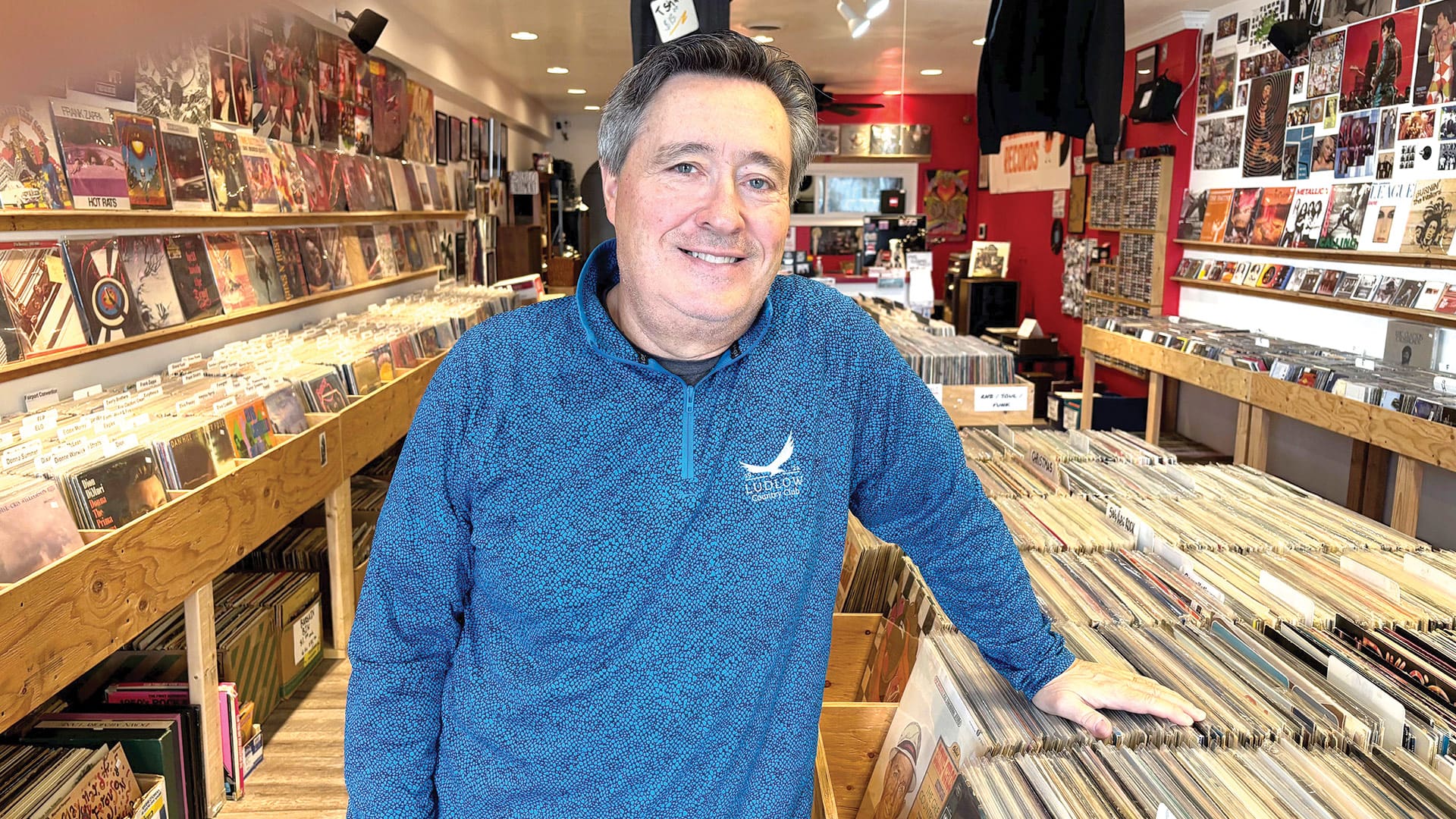
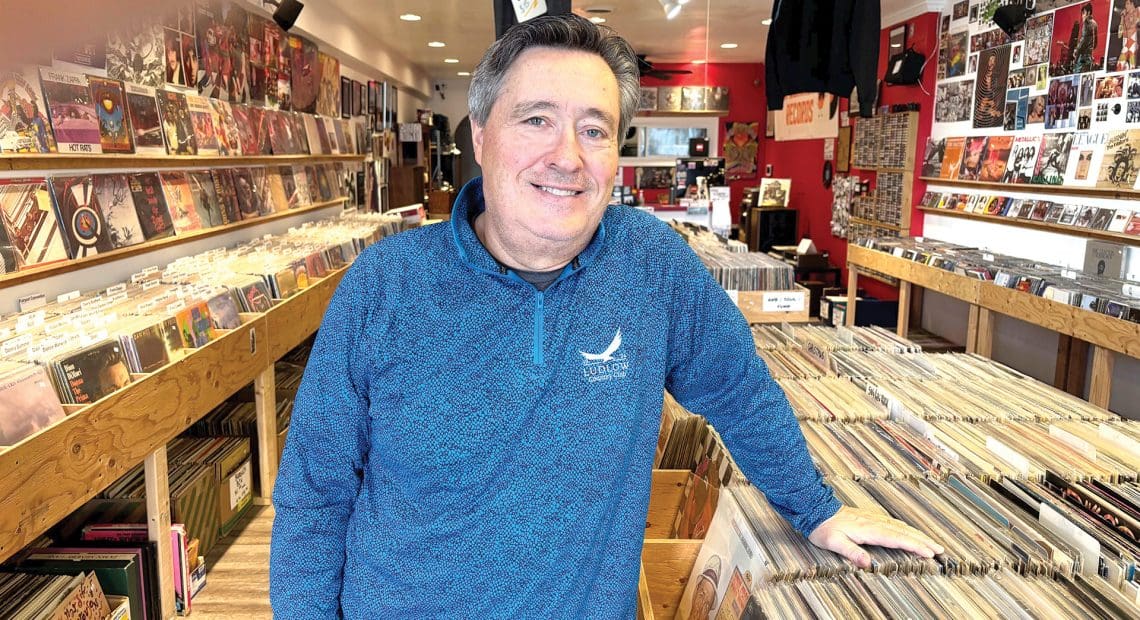
Bob Roccanti says vinyl is enjoying a resurgence among people of all ages.

Bob Roccanti says vinyl is enjoying a resurgence among people of all ages.


As he was explaining why vinyl has been staging a dramatic comeback over the past decade, Bob Roccanti stopped, reached into a box, and pulled out a Stevie Wonder album, circa 1972.

“Look at this … you buy this, you’ve got some artwork,” he said as he showed the cover. “And there’s lyrics, inside you’ve got some more things …a lot of these record albums tell a story.

“It’s a lot warmer than this,” he went on, holding up his cell phone and opining that this is just one reason why some Baby Boomers are rebuilding the record collections that filled their dorm rooms in the ’60s, ’70s, and ’80s and also why their children and even grandchildren are embracing vinyl — although Taylor Swift is probably the biggest reason there.

All this also explains Raspberries Records, a long-held dream and entrepreneurial gambit (although he says it’s not much of a gamble) for Roccanti, a retired wireless industry executive.

“You can put a record store anywhere, and they will find you.”

“It’s something I’ve always wanted to do — I’ve always been into music,” he said, adding that he opened his first location in Ludlow, where he lives and plays much of his golf, in 2022, and then expanded into a strip mall near the center of East Longmeadow roughly 18 months ago. Neither location is in a busy urban area, but they don’t have to be, he explained.

“You can put a record store anywhere, and they will find you,” he told BusinessWest, adding that ‘they’ means visitors from around the corner, halfway across the state, or even another state who arrive in person or go online to browse or find a specific item.

That list includes everything from a copy of the Beatles’ White Album — he generally has a dozen or more in the inventory that sell for $30 on average — to vintage band T-shirts; from blank album covers and frames to put them in to eight-tracks, tapes, and CDs; from 45s to vintage ’60s and ’70s stereo systems.

“We’re like the old Sears — we have good, better, and best, he said, pointing to a few stereos on the floor and on racks selling for between $500 and $1,000.

But the albums, new and vintage, are the big sellers. They cross all genres, and they’re being picked up people coming into stores or ordering them online, he said, adding that he ships out 10 to 12 a day on average.

“We get a lot of Baby Boomers in here, but we also get their children, and they think this is the coolest thing,” he said, adding that he believes this renewed interest in vinyl has legs and is not a fad.

For this issue, we talked with Roccanti about his venture, the record business, and the still-growing interest in vinyl.


Music to His Ears

As he talked with BusinessWest in the back room of the East Longmeadow store, Roccanti was surrounded by thousands of albums covering every genre and every letter of the alphabet.

Along the top row of shelves, many albums were separated by artist, with names written on tape along the bottom: Linda Ronstadt, J. Geils Band, Cat Stevens, Loggins & Messina, and the Beach Boys, among many others. For Boomers, these albums represent a trip in the ‘way back machine,’ while for the younger generations, it’s a new fascination and something more visual — and personal — than streaming music services.
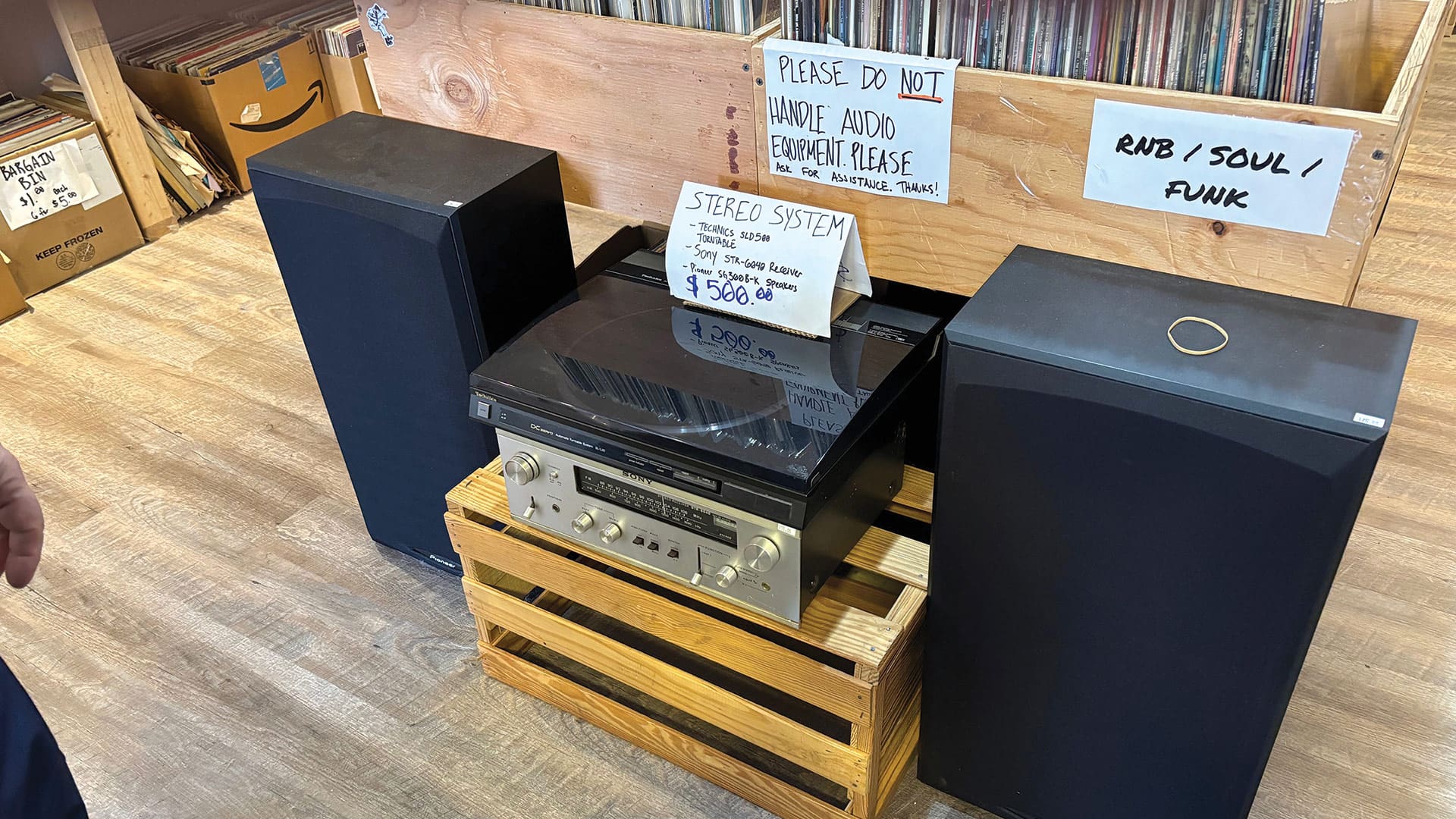
One of the ’70s-era stereo systems for sale at Raspberries.

One of the ’70s-era stereo systems for sale at Raspberries.

When asked where the 71,000 albums he has between the two stores came from, he said simply, “everywhere,” meaning everything from collections from other stores to area residents cleaning out attics and basements.

“A typical call would be, ‘we’ve got a bunch of records. We don’t use them anymore. They belong to my kids; I called the kids, and they said to just get rid of them. Before we take them up to the Goodwill or Salvation Army, we thought we’d give you a call.’”

And while people are still getting rid of their vinyl, others are buying it. When asked who, Roccanti said this runs the gamut as well.

“Collectors come in, other record stores come in and buy from us, people looking for something specific,” he said, adding that prices range from a few dollars to more than $2,000 for a rare funk album from the early ’90s.

“We’ve sold some old jazz albums for more than $1,000,” he said. “And then, you have some different albums that are unique in their own ways because they’re promo copies, or they printed very limited amounts of them, things like that.”

“We’ve sold some old jazz albums for more than $1,000. And then, you have some different albums that are unique in their own ways because they’re promo copies, or they printed very limited amounts of them, things like that.”

Roccanti anticipated all this when he conceptualized Raspberries. He said he started by visiting other record stores — and there are many of them, including maybe a dozen in the 413 by his count — and asking those behind the counter about the business and his prospects for success.

“Some of them would be very encouraging, and others were less so — many of them were retired, and they said they’d seen the industry change,” he recalled. “I saw opportunity, with Taylor Swift coming on board creating a huge amount of interest from young people — everything she came out with was on vinyl.

“All these people were buying record players that had never owned record players,” he went on, adding that demand remains high, and it’s from several different generations of music lovers.
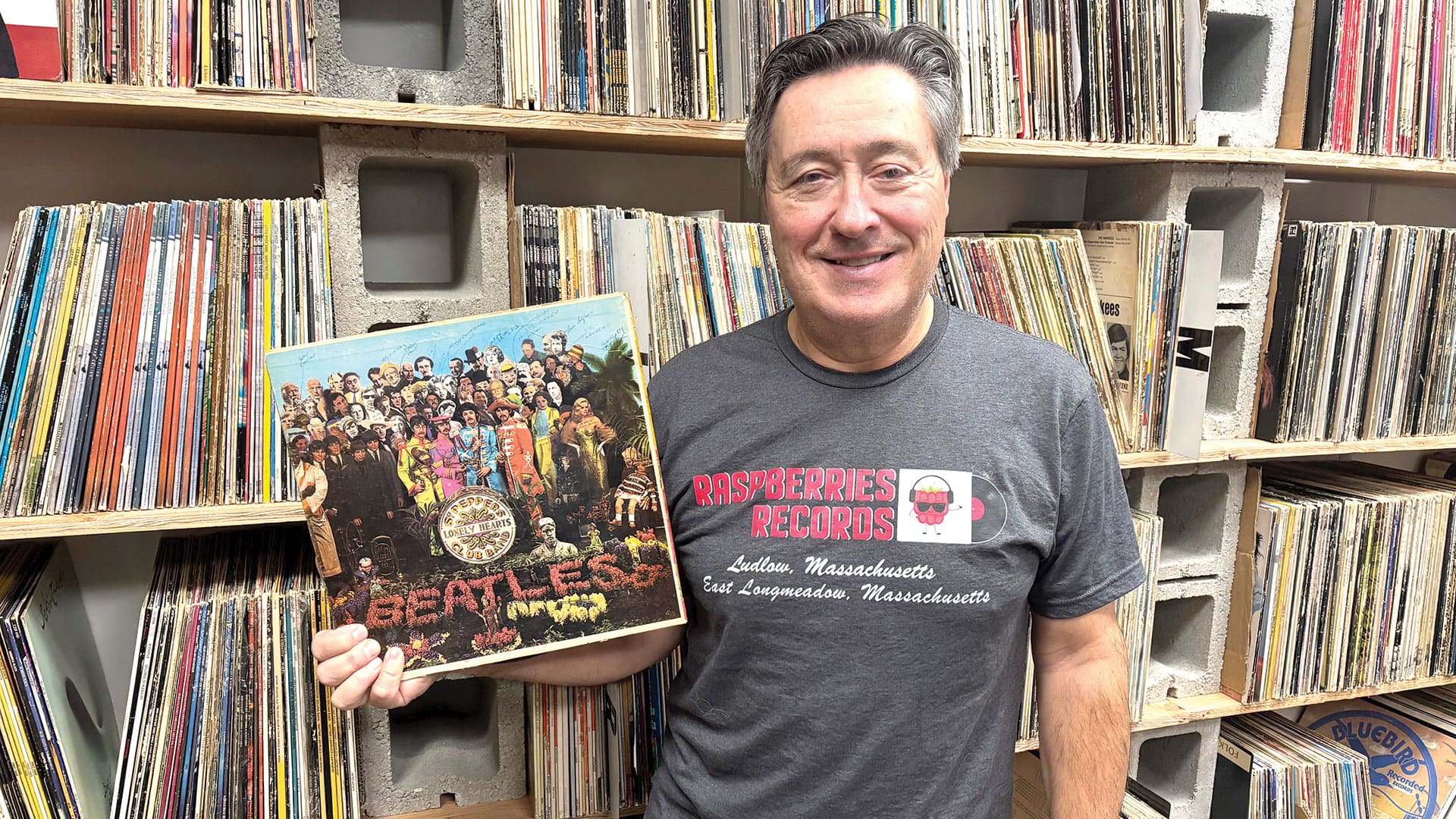
Bob Roccanti, seen here with a copy of the Beatles’ Sgt. Pepper’s Lonely Hearts Club Band, has amassed more than 71,000 records in his stores.

Bob Roccanti, seen here with a copy of the Beatles’ Sgt. Pepper’s Lonely Hearts Club Band, has amassed more than 71,000 records in his stores.

“We’ve got customers that are 12 years old and customers in their 80s,” he explained. “Some of them are just getting into vinyl, and some of them have been into vinyl their whole life. It’s unique in that sense because, when you’re planning your marketing and your strategy, you have to look at the big picture — who’s my target? Our target is anyone and everyone.”


Spin City

Roccanti said he started in Ludlow with a decent amount of inventory, and it didn’t take long to “fill the bins,” as he put it.

“As soon as we opened, from the first month, we were getting calls — the phone was ringing off the hook; ‘do you buy records? Do you buy records? Do you buy records?’” he recalled. “We were very fortunate because people were just getting rid of them.

“Sometimes, people just want to give them to us; other times, they want to sell them,” he went on. “One thing we generally do if someone just wants to give them away … if there’s value in them, I don’t let them leave without taking some money because I’m going to make money, and I want to be fair. If you found out one of those records you tried to give away was worth 100 bucks, you’d be pretty upset.”

Elaborating, Roccanti said there was obviously a learning curve involved with knowing just what an album is worth, and there have always been knowledgeable sources to rely on, as well as the internet.

“Everyone has a story about music.”

“I was fortunate that I had several record store owners that I became friends with,” he said. “I always had someone I could call and say, ‘hey, I’ve got a chance to buy this Beach Boys album.’ They’d say, ‘let me call you back, Bob,’ and when they did, they’d say, ‘grab it, Bob, it’s worth some money.’

“I’ve learned a lot, and the internet is fantastic — you can Google anything,” he went on. “And there are apps that are dedicated specifically to record stores and collectors.”

As for the business side of things, Roccanti said it has been steady, with solid numbers of customers visiting the stores or perusing items online.

A good start in Ludlow prompted thoughts of expansion, and the site in the strip mall in East Longmeadow, a former juice bar, fit the bill.

The nearby rotary — or infamous rotary, to be more precise — detracts a few, but it’s also a good reference point because everyone knows it, even if they don’t want to drive around it, he said.

Meanwhile, that aforementioned learning curve continues — with regard to what items are worth and what they can be sold for, and also what customers are seeking.

“They’re coming in with lists,” Roccanti explained, adding that the bulk of what is sold falls into the category of classic rock, but there is interest in many other genres as well.

“I’ve got a lot of customers my age who realize that this stuff is available again,” he said. “Now, they’re thinking, ‘I had these albums,’ and, little by little, they’re rebuilding their collections, whether it’s Springsteen, Bob Dylan…”

With that, he went back into the bin and pulled out a Traffic album from the early ’70s.

“People will come in, see this, and say, ‘I had this album,’ and then they’ll tell me a story — ‘I was dating this girl, and I loaned her this album, and I never got it back,’” he told BusinessWest. “Everyone has a story about music.”

And that’s why this entrepreneurial venture has taken off, and why Roccanti believes it has a solid future.

 

Community Spotlight Special Coverage

Community Spotlight

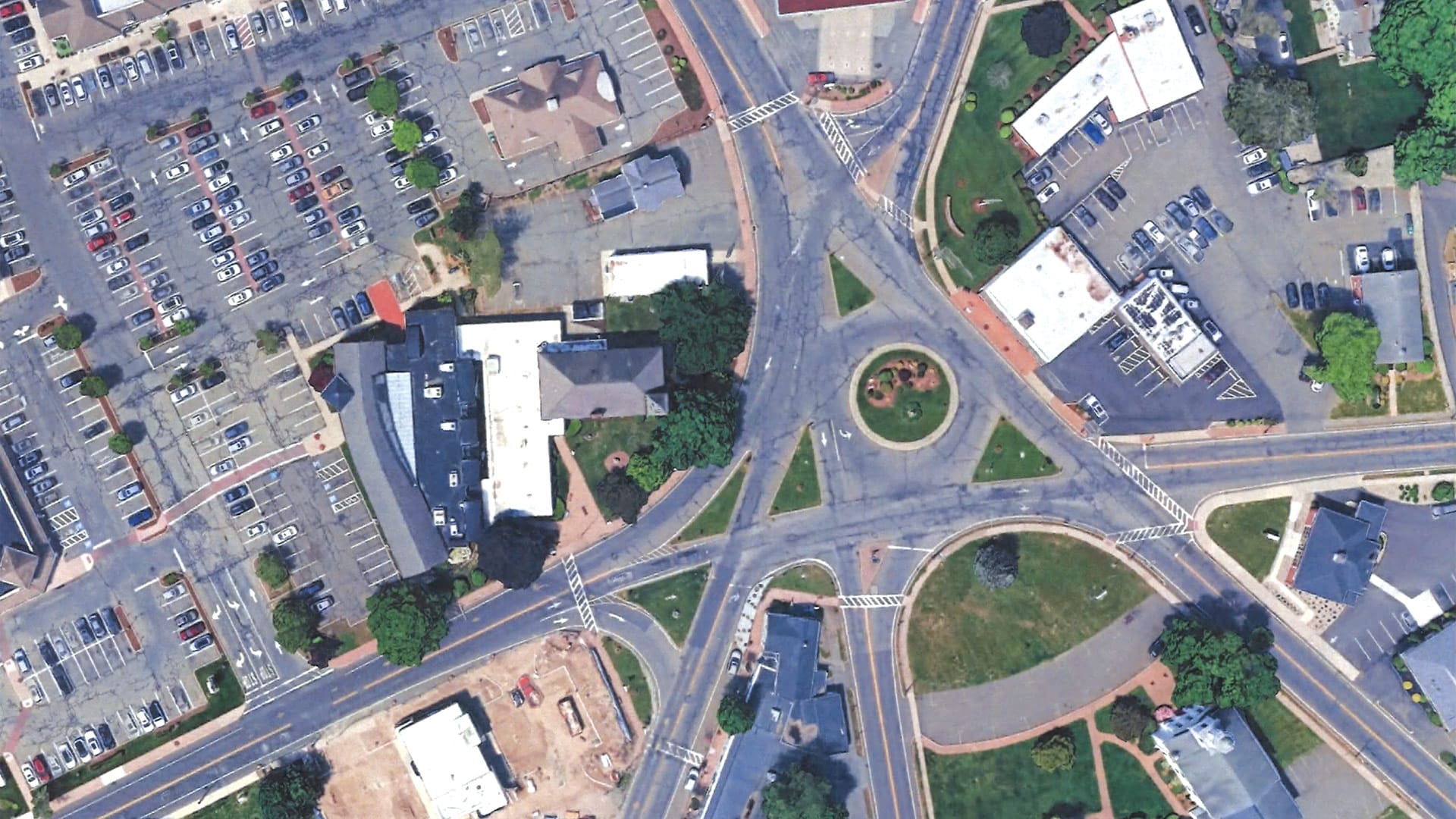
The infamous rotary in East Longmeadow, as seen in this Google Earth image, with its seven converging streets.

The infamous rotary in East Longmeadow, as seen in this Google Earth image, with its seven converging streets.

Tom Christensen says most East Longmeadow residents have learned to live with — and drive through — the infamous rotary in the center of town.

And some even take a small bit of pride in that it once owned a line in the Guinness Book of World Records for having seven converging streets, several of which carry heavy volumes of traffic, with no traffic lights, making it — unofficially, of course — the most dangerous intersection in the world. The rotary has been featured in Ripley’s Believe It or Not! for the same reason.

“We seem to wear this Ripley’s Believe It or Not! as a badge of honor, but I believe that list is for things that shouldn’t exist in nature,” said Christensen, town manager since 2023 and, before that, deputy director of Public Works. “It’s one of the most inefficient intersections ever devised, and while, at some point, it wasn’t so cumbersome due to the number of cars — and it wasn’t even cars at the beginning — now, with the traffic we have … we need to do something.”

He’s not alone in this thinking, which helps explain why, as the town makes progress on several different fronts — from ongoing construction of a new high school to a new fiber optic network to an emerging blueprint for development in the town’s center — there is renewed interest in trying to fix this seemingly most difficult and stubborn of problems.

Indeed, the rotary has been studied, and studied, and studied some more, said Christensen, adding that there is building momentum for finally finding a practical, affordable solution.

“There’s a lot of logistics and a lot of money, but for the health of the community and the future of the community, we have to do something to make this intersection more efficient.”

It won’t come tomorrow, and will likely take 10 to 15 years, he said, but a fix involving a reduction in the number of streets converging on the rotary — maybe to four — is in the earliest of stages.

“We want to take a look at reimagining this intersection. Obviously, it handles all area traffic, not just East Longmeadow traffic, and we need to figure out how to make it more efficient,” he said. “We have this traffic problem that expands out from the hub, but it all starts in the center, where everything grinds to a halt at least a few times a day.”

As for those other projects mentioned above, most are much further along, especially the high school, which is on track to open for the start of school next September.

The new school and adjoining natatorium (which will be open to the public), with a combined price tag of nearly $200 million, will make one of the region’s more attractive communities to live and own a business even more so, said Tanzi Cannon-Eckerle, who owns two businesses in town, a law firm and a craft brewery.

She noted that a modern high school (the current structure opened in 1960) is one of the few missing pieces in a town that boasts a large industrial park, a strong and diverse business community, attractive neighborhoods, and land for new development.

“If you don’t have a fairly new high school, are you going to lose residents to the next town?” she asked rhetorically. “Maybe, maybe not, but it’s good to keep up with the latest technology; this new high school is a great asset for the community.”

Tom Christensen says that, while a fix for the rotary is 10 to 15 years away, more immediate progress is evident on many fronts in town.

Tom Christensen says that, while a fix for the rotary is 10 to 15 years away, more immediate progress is evident on many fronts in town.

Another missing piece, if you will, is a solution for the eyesore that is the long-dormant site of the former Package Machinery manufacturing plant and warehouse on Chestnut Street.

Developers who had proposed a 560,000-square-foot warehouse, a plan that met with considerable opposition from abutters and was ultimately rejected by the Planning Board, recently submitted new plans calling for four warehouses totaling roughly 450,000 square feet.

That plan is still before the Planning Board, said Christensen, adding that the area in question is considered part of the town’s industrial garden park zone — with that section of Chestnut Street being its northern border — and warehouses are therefore a permitted use.

For this latest installment of its Community Spotlight series, BusinessWest takes an in-depth look at the many storylines that are, like the roads in the center of town, converging.


Round About

As he talked about the town’s rotary, Christensen acknowledged it’s a complicated engineering challenge and a problem that has defied a solution for several generations of residents.

Locals have gotten used to it, but are still put off by it, he said, adding that, for non-locals, it can be harrowing.

“I have people come to visit, and they come to my house, and their face is all white,” he said. “And they’re like … ‘you have to yield in that intersection?’ I tell them that conventional wisdom says they have the right of way, but not in our town.”

“It would be great to have that area cleared up in the form of a new development in any form, and get the property back on the tax rolls for the community. It’s hard to drive by that every day and see a derelict property of that size.”

The problem won’t fix itself, and it will only get worse as the town continues to grow and, hopefully, add more jobs, Christensen noted, adding that advances in intersection and rotary design could yield a solution.

“Many studies have been done over the years, and the design parameters were too excessive — we’d have to do some takings and knock down buildings,” he said, referring to the area around the current rotary and the size of a circle needed to accommodate seven streets. “Now, all over the region, they’re popping in rotaries and intersections that you didn’t think were feasible.

“There would be some combination of reconfiguring to a traditional circle, with only four roads coming into it,” he said of the likely fix. “The latest idea is to sort of dog-ear some of these streets into other streets before they got to the rotary by way of a stop sign; we have to figure out some way to get some of those entrances out of the circle to make it work.”

East Longmeadow at a Glance

Year Incorporated: 1894
Population: 16,430
Area: 13.0 square miles
County: Hampden
Residential Tax Rate: $19.28
Commercial Tax Rate: $19.28
Median Household Income: $62,680
Median Family Income: $70,571
Type of Government: Town Council, Town Manager
Largest Employers: Lenox; Cartamundi; CareOne at Redstone; East Longmeadow Skilled Nursing Center
* Latest information available

As he noted, this will be a lengthy process, and a solution with a steep price tag — at least $10 million, by his estimate.

“It takes a long time to even come up with a schematic; it’s going to take a long time to design, and then to come with the funding for this or for us to get on a list with MassDOT is going to take some time,” he said. “There’s a lot of logistics and a lot of money, but for the health of the community and the future of the community, we have to do something to make this intersection more efficient.”

While that project plays itself out into the next decade, there is progress on other fronts, and potential progress (depending on one’s point of view) with others.

The latter is certainly true with 330 Chestnut St., an address where industrially zoned land and residential neighborhoods abut.

The public hearing process on the newest proposal, which has included questions on everything from traffic volume to noise and pollution to whether trucks can and should navigate nearby intersections, is continuing, said Christensen, adding that the area has been an eyesore for decades now.

“It was a great idea when the town decided to move all of its industry into that corner of town in the form of the industrial garden park, but naturally, there are places it abuts that are residential,” he said. “You have to work hard to make sure that the impact is not great on any of the surrounding areas.

“It would be great to have that area cleared up in the form of a new development in any form, and get the property back on the tax rolls for the community,” he went on. “It’s hard to drive by that every day and see a derelict property of that size.”


New School Thinking

Meanwhile, crews are keeping to an aggressive timetable for the new high school, he noted, adding that the project also includes not only the natatorium, but new athletic fields, tennis courts, and improvements to the football stadium area.

“There’s obvious excitement in the community for the new school — it’s a glorious campus,” said Christensen, who graduated from ELHS in 1997 and brings that perspective to the project. “It’s really exciting on so many levels, obviously for the school system, but also for the community to have this wonderful new space.”

And as that project moves forward, the town is also working toward creating a center town district and bylaws for development in that area.

A $22,000 grant from the Massachusetts Office of Energy and Environmental Affairs will be used to hire a consultant to help with the planning of the district, said Christensen, adding that the Town Council has voted not to create the district under the state’s Chapter 40R regulations, which would make the town eligible for state funding, but also bind it to meet specific requirements for housing, including affordable housing.

“The community decided it didn’t want to be beholden to the state, so we have decided to create our own district with our own guidelines, free of any 40R requirements,” he noted. “Depending on how the final parameters of how our bylaw shake out, it could have the parameters of 40R; it just won’t be eligible for that reimbursement to the developer and/or town, because it won’t carry that designation.”

Elaborating, Christensen said that, with all industry moved to the southwest corner of town, several properties in the town center, including the former Carlin Combustion site on Maple Street, could be redeveloped for other uses, including housing. And the development community has interest in that area for that purpose.

The next step in the process is likely to be Planning Board public hearings on the district, he said, adding that he is expecting “robust conversations in a public setting” about what residents want to see regarding density, building heights, and other matters.

“We’re looking at a comprehensive study on not only what the town can handle, but what developers are willing to build,” he went on. “We want to find that happy medium so the bylaws are feasible for all.”

As that project plays out, the community is proceeding with plans to address the lack of broadband competition by building a town-owned fiber optic project with Whip City Fiber, the rapidly growing broadband arm of Westfield Gas & Electric.

“We have a design done, and we’re working with the utilities to get their make-ready costs so that we can formulate a plan on how to roll out this initiative, which we’re really excited about,” Christensen said. “Currently, the town is only served by Spectrum, and residents have long been calling for some competition in town.

“It’s a long process, and a lot of infrastructure has to be put in place,” he went on, adding that the project gives the town the ability to improve services to residents while also generating revenue, which can be put back into the community.

It’s a community that is business-friendly and does a good job of balancing business growth with quality of life for residents, said Cannon-Eckerle, whose craft brewery, Brew Practitioners, is celebrating 10 years.

“They do a really good job of asking questions and doing all the legwork up front,” she said of the Planning Board, Town Council, and other panels that consider plans from businesses. “But then, they take the time to take in the concerns of the residents; they do a very good job of listening to both sides. East Longmeadow does a good job of doing it by the book.”