Home Posts tagged Easthampton Mass.
Architecture Special Coverage

Music to Their Ears

A rendering from Kuhn Riddle Architects & Designers of the planned exterior of Old Town Hall in Easthampton.

A rendering from Kuhn Riddle Architects & Designers of the planned exterior of Old Town Hall in Easthampton.


For Andrew Bagge, the ongoing CitySpace project in Easthampton is a meaningful endeavor in more than one way.

“Two of the greatest assets in Western Mass. are beautiful old buildings and community-minded nonprofits. Pairing the two is really a win-win situation,” said Bagge, senior architect with Kuhn Riddle Architects & Designers in Amherst, which began collaborating on the project in 2016. “Over those 10 years, we’ve been working closely with CitySpace to help them realize their vision for the entire project, including the entry addition and second-floor performance space.”

And recently, the project received a massive boost from the federal government: $3.5 million in congressionally directed spending to support the ongoing restoration of Easthampton’s historic Old Town Hall, a significant boost to the long-term effort to transform the landmark into a fully accessible, multi-level center for arts, culture, and community life.

Specifically, the funding will advance the next phase of work to restore the building’s second floor as a 350-seat performing arts venue.

“The restoration and development of Easthampton’s Old Town Hall serves as a shining example of what is possible when a community has a vision,” said U.S. Sen. Edward Markey, whose office — and that of U.S. Sen. Elizabeth Warren — worked with CitySpace and local partners to further advance the project. “CitySpace, local leaders, and the Easthampton community have breathed new life into this historic structure, transforming a stranded municipal asset into an anchor of the local economy and a nexus for community initiatives.”

Easthampton Mayor Salem Derby added that “this $3.5 million federal investment is a powerful vote of confidence in Easthampton’s vision for Old Town Hall and in the extraordinary work of CitySpace to bring that vision to life.”


Two Decades in the Making

For more than a century, Old Town Hall housed municipal offices, and while its second floor served as a public performance and gathering space, it has been unusable for more than two decades.

The nonprofit known as CitySpace began managing the first floor of Old Town Hall as a multi-genre arts and community center in 2006, one that now welcomes more than 15,000 visitors annually. In 2019, the organization secured a 40-year lease from the city of Easthampton to fully manage Old Town Hall and restore the second floor, a project its leaders say has been shaped by regional community input and the needs of the performing arts community.

“Two of the greatest assets in Western Mass. are beautiful old buildings and community-minded nonprofits. Pairing the two is really a win-win situation.”

Since Burns Maxey joined the CitySpace board in 2011 — she became board president in 2015 — she and her all-volunteer team have worked to create a flexible arts and community space in Old Town Hall, which was built in 1869 and housed the town’s municipal offices until 2003. They have helped secure Community Preservation Act funds, multiple foundation grants, and historic tax credits, as well as operating a capital campaign in an effort to raise about $8.5 million for the project.

Phase one of the project involved renovation of the first floor, including the creation of a small, 80-seat rental performance space called the Blue Room. In conjunction with that, Maxey established a program called Pay It Forward to allow low-income artists the resources, space, and support to create or collaborate on a project, or have a residency to complete a project prior to public performance. The first floor also includes a number of art spaces.
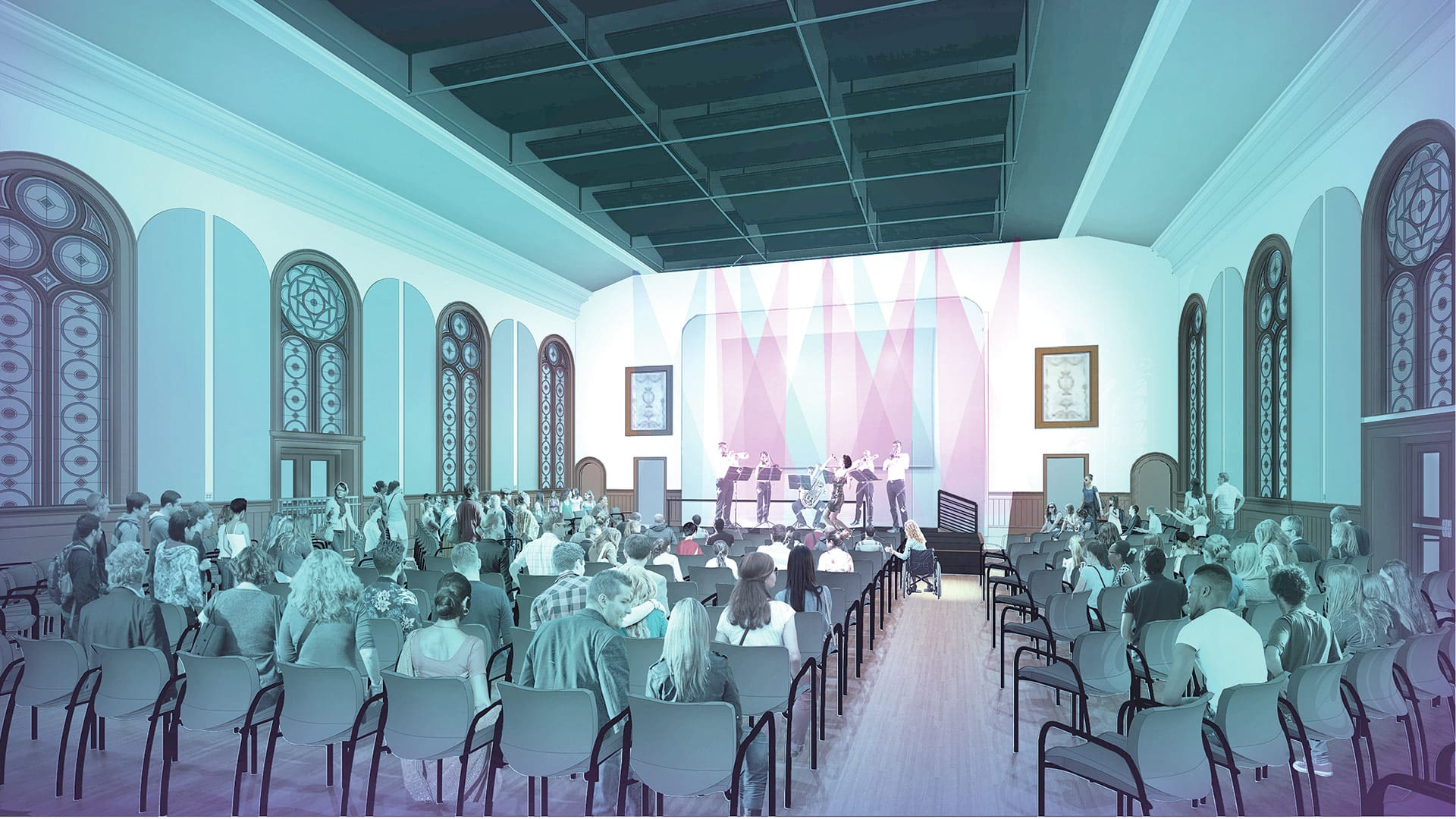
Phase two of the project, which has already seen the HVAC system upgraded and modernized, will introduce a new accessible entryway, an elevator serving every floor, and the repair and display of a historic stained-glass window on the building’s street-facing entryway.

Michael Tautznik, the former long-time mayor of Easthampton who now serves as board treasurer for CitySpace, told BusinessWest that “the intention back in 2018 was to try to do this in one shot, but as we saw inflation and as COVID come in, we decided that it just wasn’t feasible. So we’ve broken that project down into three phases.

“We’ve got a great local contractor, Keiter Corporation, that’s doing the work, and we’ve had help from a couple of state grants, the city of Easthampton, and some very generous donors. And we’ve got that project underway; it’ll be finished this summer. And then we’re going to move into the final design and hopefully execution of the final phase, which is to create that venue on the second floor. That’ll be for entertainment, but it will also be a place for public gathering and just a way to celebrate that building’s history.”

The new federal funding will advance that third phase — easily the most expensive part of the project — which centers on the restoration of the second floor, creating a 350-seat performing arts venue in the space that once served as the building’s historic meeting hall, including restoring the ceiling and floors, adding restrooms, installing new electrical and fire safety systems, and investing in state-of-the-art theatrical and lighting equipment.

“The addition is a contemporary steel and glass structure, creating a light and transparent distinction between new and old. The materials, lighting, and finishes complement the existing building and establish an inviting presence on Main Street.”

Tautznik said the project reflects Easthampton’s growing identity as a hub for arts and culture — a priority for many regions, he added, and one he has seen the city embrace through reuse of its copious mill space.

“Easthampton is a community that has become aware of its purpose in the arts. The idea that arts are just for entertainment, I think, is past. We look at the arts as an economic engine. Our mill space is pretty inexpensive, so it attracts tenants that maybe can’t afford to be in downtown Springfield or class A space. So, from the perspective of reutilizing older mill buildings, you become an attraction. And bringing people into the community brings traffic to your downtown, which supports local businesses.”

As for the future performance space upstairs at Old Town Hall, he said it meets a regional need. “It’s a size that isn’t readily available in the region. There are lots of smaller venues, 200 seats and under, and there are some big venues — well, big for this region. But there’s not a lot in the 300- to 500-seat range.

Mike Tautznik

Mike Tautznik

“The idea that arts are just for entertainment, I think, is past. We look at the arts as an economic engine.”

“We think that there’s a real opportunity to try to tap into some of the artists that move through the Northeast,” he added. “It’s also the kind of space that an up-and-coming artist might be able to fill. And that’s important when you have a show, when you’re doing a performance — you want a full house. Bringing a 300-person performance to an 800-seat venue is sometimes disheartening for the artist.”


Realizing the Vision

For Bagge, the project is a chance to positively impact what is arguably the most iconic building in Easthampton.

“The primary goal of the addition is to provide an accessible way for the public to enjoy the entire building, particularly the second floor,” he said, adding that a “nuanced challenge” for Kuhn Riddle was to minimize the project’s impact on the building’s historic form while also showcasing CitySpace as a vibrant hub for the arts — in other words, respecting both old and new.

“The addition is a contemporary steel and glass structure, creating a light and transparent distinction between new and old,” he noted. “The materials, lighting, and finishes complement the existing building and establish an inviting presence on Main Street.”

Another hurdle was achieving all of this within the limited space adjacent to the building, which remains a challenge during construction.

“We’re asking a lot of a small elevator addition, but collaborating with a forward-thinking client has made it all possible. We’re applying the same strategies moving forward with the second floor performance space design, which will be the main event.”

Bagge said Kuhn Riddle has worked on countless adaptive reuse projects to help organizations like CitySpace find their home in an existing building.

“When we lose historic buildings, we collectively lose a piece of our cultural heritage, which plays a vital role in the unique character of the Valley,” he told BusinessWest. “I’m hopeful that our building codes will adapt to recognize the carbon impact of removing and replacing an existing building. The embodied energy in these buildings should be treated as an asset. It has been incredibly gratifying working on the Old Town Hall and collaborating with a client who understands the value in historic buildings.”

As for Tautznik, who has been both working and volunteering in Easthampton for more than 50 years, “I see this personally as an investment in my community, as a way to provide an anchor for that part of downtown,” Tautznik said. “The building is a place I remember as a child. Then when I first served as a selectman, it was in that building. And when I first became mayor, it was in that building.

“The fabric of the community is really what its citizens make it,” he added. “I hope to be a thread in the weaving of that fabric. And I think CitySpace is a big panel in that fabric. And the benefits are going to far outweigh the costs, which are the immediate challenge. It’s going to be exciting.”
Cover Story

All That Glitters

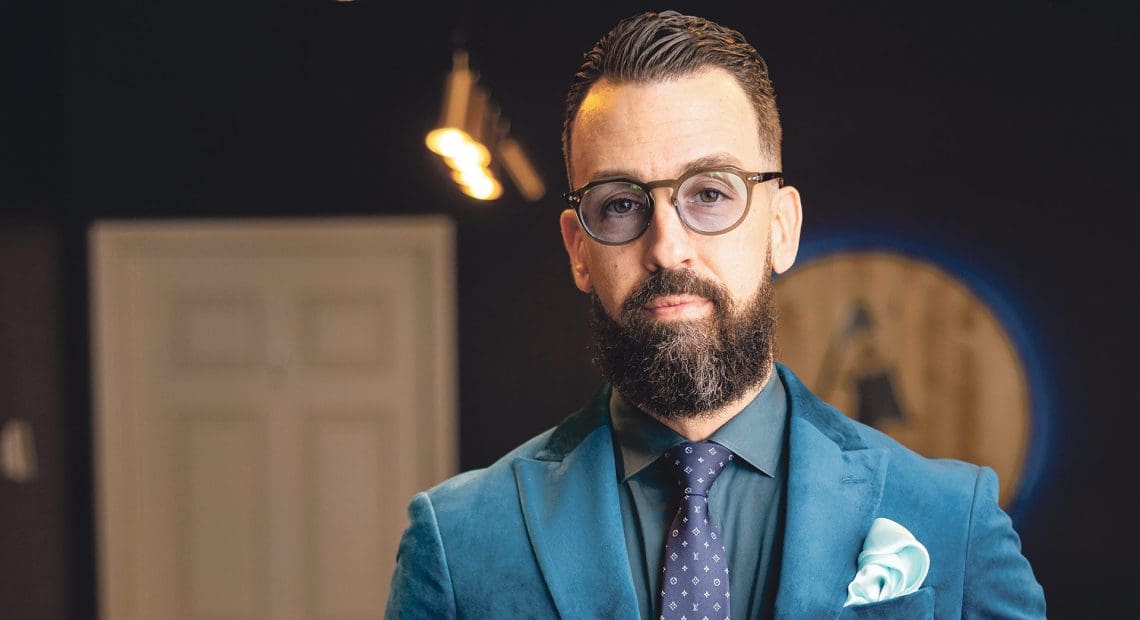
James Murning

James Murning

James Murning designs a lot of jewelry — some of it for pretty notable names. You might have seen — and heard — one of them at the recent Super Bowl halftime.

“I design a lot of pieces for musicians,” said Murning, owner of Aurora Jewelry in Easthampton. “I just sent out a piece for Bad Bunny, called the heritage necklace, which essentially is paying homage to Puerto Rico.”

Elaborating, he noted that “the centerpiece is a diamond-encrusted star for the flag of Puerto Rico, and two bezel-set aquamarines represent Bad Bunny’s birth month. And then there are three-dimensional flor de maga flowers, which are the national flower of Puerto Rico, and there is actually a dog tag hanging off the back of the chain with the city coordinates of the city block he was born in.”

For such big-name commissions, “we work with a variety of different people in rock, country, and EDM,” Murning added, but he takes as much pleasure in creating meaningful pieces for everyone — jewelry that’s not only aesthetically pleasing, but offers plenty of meaning in the design itself.

“We also do a ton of repurposing,” he said. “So if somebody comes in and says, ‘I’ve got some stuff from my grandmother or grandfather, these are heirloom pieces, I want to melt them down and get paid cash,’ 90% of the time, if it’s something really cool, I will tell them, ‘you should not melt this. Let us repurpose it and give it a new life.’ We can take the stones out and put them in a new ring; that way, they have a story to tell 20 years from now.”

“If somebody comes in and says, ‘I’ve got some stuff from my grandmother or grandfather, these are heirloom pieces, I want to melt them down and get paid cash,’ 90% of the time, if it’s something really cool, I will tell them, ‘you should not melt this. Let us repurpose it and give it a new life.’”

Just to mention one example, “I had a lady come in one night. She had this incredible, 22-karat solid gold Peruvian cross, handmade in Peru. I mean, the design work and the soldering that went into this it was incredible. And she said, ‘I want you to polish this cross for me; I want to put it in a shadowbox.’”

Instead, he convinced her to repurpose it into three new pieces, one of which was a ring she gave to her daughter. “That was a very rewarding thing — and they’ve come back. They’re really great people. But that was one of those moments where I was repurposing people’s pieces and giving them a new life and a new story. That’s so important. Because once it’s melted, it’s gone. And the cash will be gone, too.

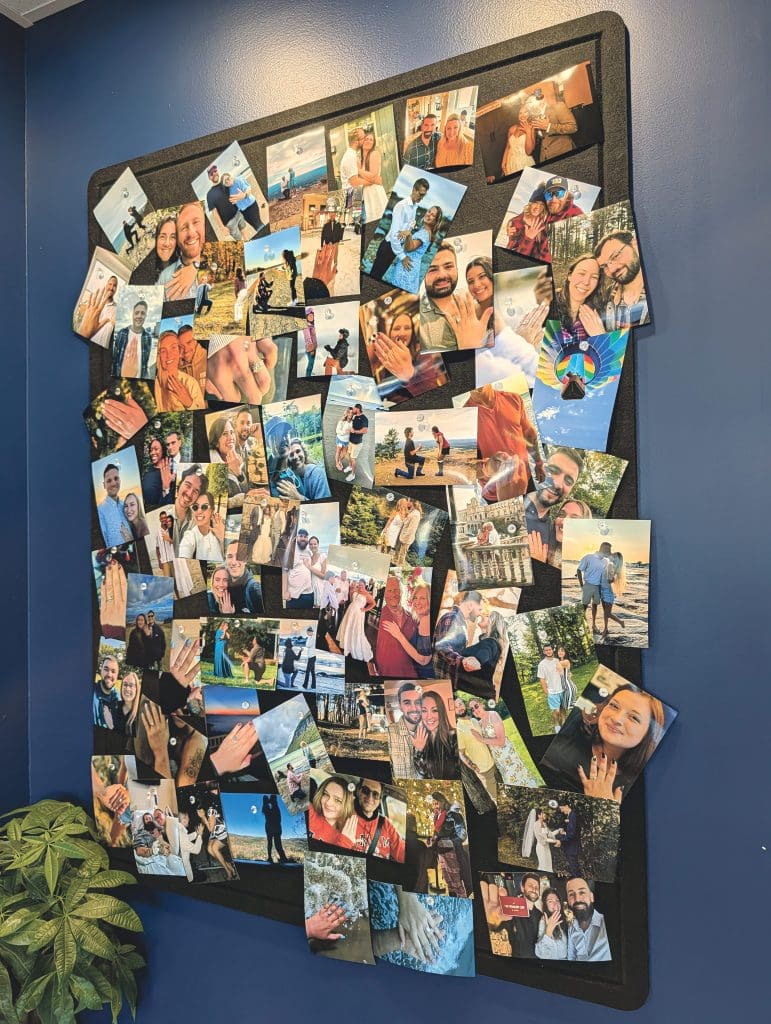
Aurora Jewelers has a wall of engagement photos featuring rings purchased there.

Aurora Jewelers has a wall of engagement photos featuring rings purchased there.

“I love the stories of jewelry. Not only is it art, but you get to hear about people,” Murning went on. “It’s one way you keep people alive. Like, ‘my grandfather bought this for my grandmother in 1915 on 46th Street in New York City.’ You know what I mean? And you can imagine what that scene looked like. So the romance behind it is really nice too.”

One of the most significant aspects of Murning’s business is engagement rings and wedding bands. In fact, he has a wall of photographs on his wall taken by happy couples right after proposals using his rings — another way he sees his job as celebrating history in the making, not just selling jewelry.

“I had a fun couple come in; they said, ‘we’re obsessed with the galaxy.’ And I was like, ‘OK, why don’t I make you a ring that looks like the galaxy?’ And they’re like, ‘you can do that?’ I was like, ‘of course I can.’ It was three rows of diamonds that were circling like a hurricane. And then, in the center, was a mystic topaz which shimmers different colors. So the whole ring looked like the galaxy. And they were blown away by it.”

Murning can wax nostagic when he talks about the value of what he does, and the way his pieces reflect history as much as they reflects light.

“I mean, growing up around my great-grandparents and seeing my great-grandfather get into his light blue Cadillac and open the door for my great-grandmother was … well, you don’t see that kind of culture anymore. It’s just gone. So if I can keep some of that still living, I’ll totally try to do that.”

But Aurora Jewelers has been a success in the bottom line as well.

“Our first full calendar year was 2024, and it was great — way better than I ever expected. In 2025, we did 39% higher. So it just keeps growing,” he said. “There are many factors that come into play when you have a brick-and-mortar jewelry store, not an online business. You just hope that people want to come in and have a conversation. That’s really important. I think COVID really hurt that whole atmosphere of people just wanting to talk to people.”

On a recent afternoon in the Easthampton store, Murning was happy to talk to BusinessWest about the early success of his business, the ways he gives back to the community, and why he’s gratified by all of it.


Shades of a Career

Murning’s path into the jewelry business started at a Sunglass Hut in West Hartford, which he managed when he was around 20 years old. He struck up a friendship with members of the Hannoush family who operated one of their stores there, and was eventually offered a job.

“Joe Hannoush [one of the company’s eight founding brothers] essentially took me in, and his kids are the ones who molded me to the person I am today. Without them, there would be no Aurora Jewelers. Joe was a staple in my career.”

He credits several other mentors with influencing him along the way, including Marc and John Green of Lux Bond & Green, a family jewelry business with a 127-year history.

“Everybody deserves some type of luxury. It doesn’t matter if you’re a farmer or if you’re a construction worker, it doesn’t matter. People like to feel good.”

“I managed one of their locations in Glastonbury, Connecticut — a Rolex store,” Murning said. “And I was very honored to be able to go to Rolex trainings, which not many people get to do. To put myself in that position, where I was able to be inside the room with all these Rolex executives, was a really big thing.”

He also took some courses with the American Gem Society and eventually got to the point where he felt comfortable opening up his own jewelry store, and Aurora Jewelers opened its doors in Easthampton two years ago.

Aurora now sits in an expanded space on Union Street in Easthampton; Murning originally operated out of a smaller spot next door.

“When I walked in there, it was studs, no floor, no ceilings, completely exposed, it was gutted. And I immediately saw exactly what I wanted the store to look like,” he said, from the layout to the color palette, dominated by a blue shade called Salty Dog. “I wanted something that would aesthetically showcase the midnight sky, because that’s the only time the aurora borealis comes out. So there’s significance to everything — the coloring of the store, the greens, the purples, the blues; those are the colors of the aurora.

“Every jewelry store I’ve ever been in, aesthetically, has always been kind of white walls, light gray, and aesthetically, I’m not that kind of person. I’ve always been volume turned up, big color palette. And people have received it really well.”

James Murning has ambitions to expand his brand, including in Boston.

James Murning has ambitions to expand his brand, including in Boston.

But running a business is much more than picking out wall colors.

“I was nervous in the beginning because I didn’t know I didn’t know if Western Mass. could handle a luxury store, and I got told by a few people that this would be better in Boston,” he recalled. “But I said, ‘you know, everybody deserves some type of luxury. It doesn’t matter if you’re a farmer or if you’re a construction worker, it doesn’t matter. People like to feel good.”

The ‘luxury’ description, he said, comes from the fact that he sells more exclusive and higher-quality items — many of which he designs himself — than other stores.

At the same time, giving back to the community is a priority for Murning, and he accomplishes this in a variety of ways, from being a major sponsor of Girls on the Run Western Massachusetts to sponsoring Easthampton athletic programs.

“The people who run Girls on the Run are amazing people, just incredible human beings,” he said of the organization, which blends a life skills curriculum with healthy activity for girls, culminating with a celebratory 5K run each spring and fall. “It’s a great cause. I went and volunteered this past fall. They do a Sneaker Soiree fundraiser, and I told them I’ll raffle off a diamond, and I’ll do some other stuff to help raise as much money as I possibly can.”

Then there’s a group of Easthampton High School students Murning has dubbed the Easthampton Sandlot; he even has a movie poster of The Sandlot that they’ve all signed.

“They’re convinced I’m in the mafia. They think I’m making millions of dollars and drive a Ferrari,” he joked. “But I have always encouraged them. And I tell them, ‘if you get a B-plus or better in school, I will rent a Rolls-Royce and drive you to New York City on graduation weekend, and I will take you to dinner wherever you want in New York City.’ This is important to me because I see a lot of myself in the youth. And I’ve been doing this since I opened the doors.”

“Boston is so consistent because there are so many young people out there, and they’re going to talk to one another: “where’d you get your ring? Where’d you get your ring?’”

He also just started the Aurora Foundation, to which he’ll dedicate a certain percentage of the year’s revenues to help deserving but needy local students attend college — with the goal of expanding it to much more good work. And he created the Aurora Achievement Award, which acknowledges an Easthampton High School basketball player who shows the most leadership or morale-building qualities — another program he’d like to expand.


What’s Next

Murning has a few business plans in the works, including the Foundry on Union, a luxury gift store that will open this summer in his first, smaller space next door, specializing in corporate gifts. He also recently released the first engagement ring created for a new private label called Daybreak. And he’s been making plans to open a location in Boston, where he said he already has a following.

“Out here, the population is a little less, so we’re hitting somewhat of a ceiling with certain things — it will be heightened again, then it’ll drop back down, then heighten again and drop back down. Boston is so consistent because there are so many young people out there, and they’re going to talk to one another: “where’d you get your ring? Where’d you get your ring?’”

What they’ll hear is that their friend got it at Aurora Jewelers, a small business whose owner has some big plans to create more jewelry — and more memories.

Entrepreneurship Special Coverage

Fired Up

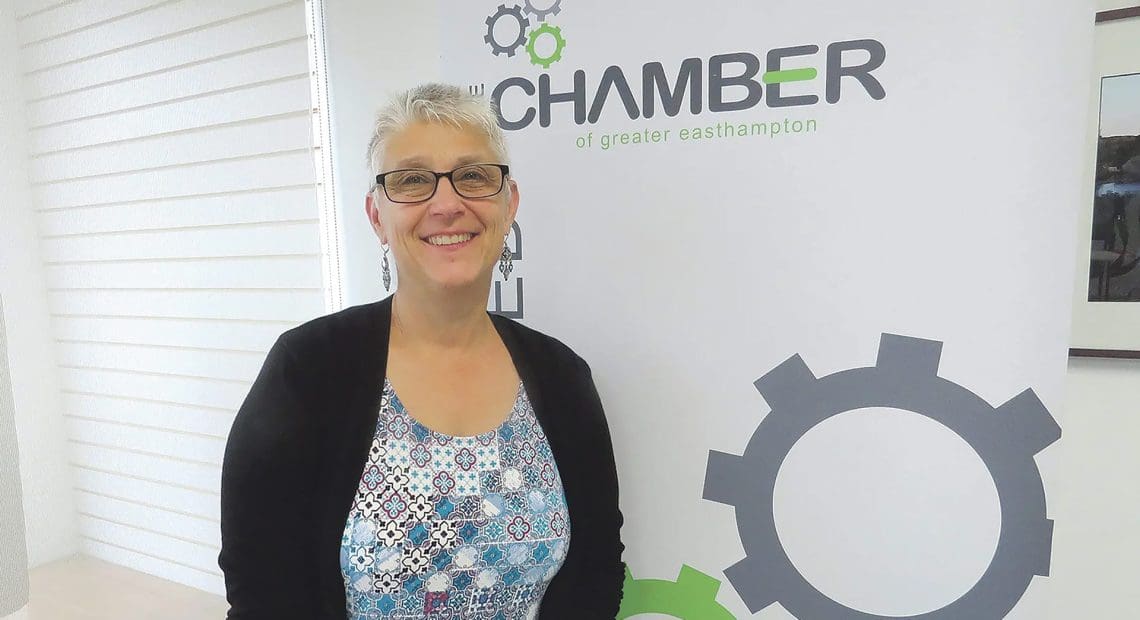
Chamber of Greater Easthampton Executive Director Moe Belliveau

Chamber of Greater Easthampton Executive Director Moe Belliveau


Technology, marketing, and talent.

Those are three elements virtually all businesses must take into account if they want to grow and thrive in 2024. They’re also the main themes of this year’s ignite conference, a “professional learning opportunity” being hosted by the Chamber of Greater Easthampton on Tuesday, Oct. 22 at Abandoned Building Brewery in Easthampton.

This year’s program, dubbed ignite:SPEED, aims to be a fun, fast-paced learning opportunity designed to empower leaders, business owners, professionals, entrepreneurs, employers, and employees with the knowledge and skills required to thrive in the ever-evolving landscape of work.

“In today’s business world, change is the only constant,” chamber Executive Director Moe Belliveau said. “To ensure success, all levels of employees must not only keep pace but anticipate and adapt, turning the momentum and speed of change into a catalyst for growth.”

Sean Hogan certainly sees value in such a conference. The president of Hogan Technology is one of the presenters in the technology category, kicking off the first cluster of presentations with an overview of safety in the dark web. Participants will learn how businesses can be protected from attacks such as webite hacking, security breaches, cyberattacks, ransomware, and phishing schemes.

“I’ll talk about what the dark web is, why it was created, what it’s used for, how to avoid it, and, once your information ends up on the dark web, what to do next,” Hogan told BusinessWest — a relevant concern, especially after the National Public Data breach, reported this summer, exposed some 2.9 billion personal records.

“In today’s business world, change is the only constant. To ensure success, all levels of employees must not only keep pace but anticipate and adapt, turning the momentum and speed of change into a catalyst for growth.”

A credit freeze with the three major credit bureaus should be the first step for anyone exposed, he said. “If you’re not buying something like a house or a car, nobody’s running credit on you, so just freeze them and then unfreeze them if you have to apply for credit somewhere, and then freeze it again.”

This year’s ignite conference is a one-day event following last November’s two-day affair at Abandoned Building, which focused on the latest trends and best practices in artificial intelligence and explored the intersection of AI and the human workforce.

More recently, the Chamber of Greater Easthampton and the Blackstone Valley Chamber of Commerce partnered to bring an ignite conference to the latter’s backyard in North Grafton. That two-day conference took place in April and was aimed at professionals who want to improve their emotional intelligence and learn how to interact with co-workers, customers, or donors more effectively.

Clearly, there’s no shortage of key topics affecting businesses and entrepreneurs, which bodes well for the prospect of keeping future conferences … well, ignited.


Robust Roster

As noted, Hogan will give attendees a crash course in the dangers of the dark web and how to use monitoring tools and other resources to respond to breaches and stay safe.

“If there’s a breach out there, assume that somebody is working to get into more accounts, trying to open credit cards,” he said. “When it becomes identity theft, it’s serious. You can paralyze somebody. You can lock up their bank accounts and ruin their credit for a long time.”

Sean Hogan

Sean Hogan

“If there’s a breach out there, assume that somebody is working to get into more accounts, trying to open credit cards. When it becomes identity theft, it’s serious. You can paralyze somebody. You can lock up their bank accounts and ruin their credit for a long time.”

Following Hogan’s presentation, the technology cluster will continue with Michael Lareau, vice president of Solution Engineering for SourcePass, who will discuss AI governance in the workplace. A recent blog post by Marsh McLennan noted that, while the explosion in AI usage by businesses has driven innovation, efficiency, and profitability, it can also expose businesses to organizational, reputational, and regulatory risks. Lareau will explore how businesses can appropriately govern the use of AI oversight to address risks such as bias, privacy infringement, and misuse while fostering innovation and trust among customers and employees.

Pat Brough, head of Sales and Marketing for Finck & Perras Insurance Agency, will review cyber insurance. According to Cybercrime magazine, 60% of small businesses go out of business within six months of falling victim to a data breach or cyberattack. Cyber insurance covers a business’ liability for a data breach involving sensitive customer information, such as Social Security numbers, credit card numbers, health records, and more.

The second cluster of presentations will focus on the changing landscape of marketing. Jeff Uzzel of Uzzel Design Co. will focus on telling a ‘brand story,’ which entails communicating a mission, values, and purpose in a way that that creates an emotional connection between an organization and its customers. Uzzel will discuss how to successfully tell a brand story and how it can build an organization’s reputation, customer base, and bottom line.

“Building Networks for the Long Game” will be the focus of Bob Burch, owner of Bright Cloud Studio. He will explore how to understand and process what is changing with networking and relationship building, how people can nurture customer relationships, and how to curate marketing to keep pace with it all to build lasting, trusted relationships resulting in repeat, long-term customers.

Blair Winans, president of Rhyme Digital, will end the cluster with a focus on the ever-changing social media algorithms. Social-media platforms utilize algorithms to keep users engaged and ensure users are seeing relevant content. Winans will talk about the various platforms and their algorithms and how businesses can adapt their social-media content to maximize each algorithm to reach a wider audience, increase consumer engagement, and boost their brand.

The final cluster of the program will highlight change in the workplace. With a tight labor market, top talent is in high demand, and talent recruitment, assessment, and retention are critical success factors that can yield a competitive advantage. Allison Ebner, president of the Employers Assoc. of the NorthEast, will discuss how businesses can adapt to the future of work, embrace generational diversity, better engage employees, and reskill and upskill to support retention.

Creating stability in the age of uncertainty and change will be the theme of Tricia Canavan, who will share insights gained as a former business owner, and now as CEO of Tech Foundry. She says technology has always been an industry in constant flux, but newer advances are creating a constantly changing work landscape and environment, causing employers to continuously adapt and upskill, and employees must learn to self-educate to keep pace.

“The fact that we could bring together dozens of partners at both the state and local levels, raising nearly $500,000 to bring this project to fruition, is a clear indication of the value WorkHub on Union will bring to our community and the local economy.”

Shannon Mumblo of Shannon Mumblo Consulting will close the cluster focusing on cultivating robust agility around change. She will help participants discover how to stay confident and resilient in times of uncertainty by embracing discomfort and cultivating a supportive network, and how to expand potential beyond a job description by thinking creatively and continuously adding new skills to one’s personal toolbox.

Registrations for ignite:SPEED cost $75 for chamber members ($110 for non-members) and include a casual dinner provided by Vegan Pizza Land. To register, visit easthamptonchamber.chambermaster.com/eventregistration/register/1690.


And That’s Not All

The ignite conference is just one development that has the Chamber of Greater Easthampton excited; another is last week’s ribbon cutting of the WorkHub on Union project, an ambitious co-workspace project providing resources for entrepreneurs and businesses in the Greater Easthampton region.

In addition to offering flexible workspaces, WorkHub on Union will provide access to mentorship programs, networking events, educational programming, and other support services from the chamber designed to accelerate the growth of startups and small business.

In 2020, the chamber partnered with the city of Easthampton to undertake an extensive analysis of the city’s economic climate relative to entrepreneurialism and innovation. This analysis revealed that businesses would choose to relocate or locate in Easthampton if a supportive entrepreneurial community could be better enhanced and marketed. The analysis also revealed there are more than 13,000 companies in the region that are less than one year old, many of which have no employees and operate from a kitchen table, and could benefit from a resource like WorkHub on Union.

“The fact that we could bring together dozens of partners at both the state and local levels, raising nearly $500,000 to bring this project to fruition, is a clear indication of the value WorkHub on Union will bring to our community and the local economy,” Belliveau said.

Community Spotlight

Community Spotlight


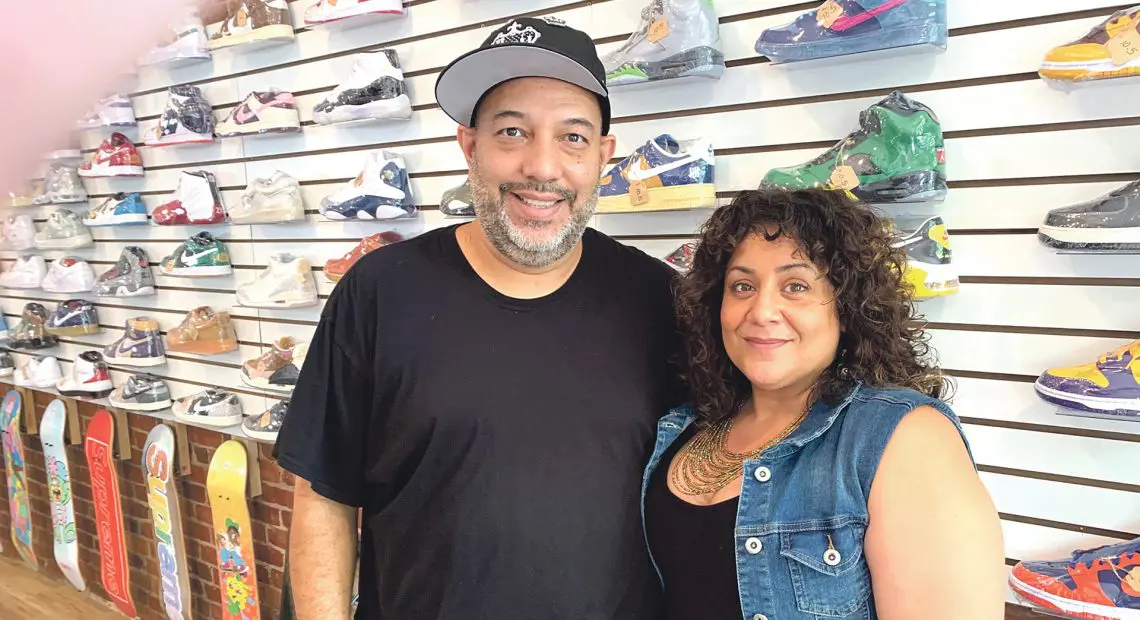
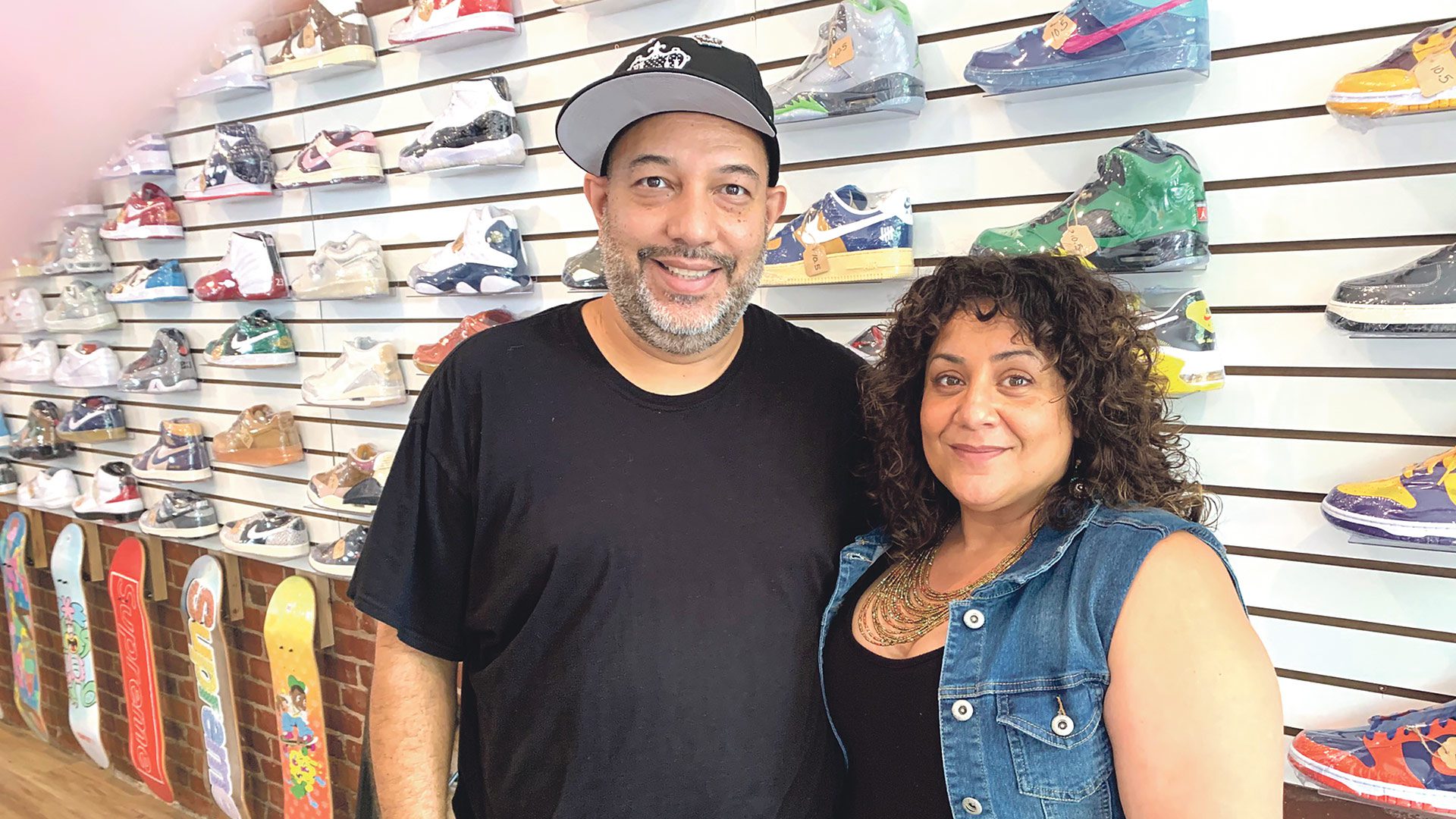
Stacey Blanco and her husband, who opened Hide’n’ Sneakz, are among a growing number of small-business owners in Easthampton.

Stacey Blanco and her husband, who opened Hide’n’ Sneakz, are among a growing number of small-business owners in Easthampton.


Stacey Blanco says she’s always been entrepreneurial.

Although she’s worked in office settings — and those experiences have helped inspire her current venture — she has preferred working for herself and has had side hustles, if you will, like teaching Zumba classes.

During the pandemic, she and her husband, Israel, began thinking about new business opportunities and needs they could meet. And they settled on footwear and related items and ultimately opened Hide’n’Sneakz in a storefront on Cottage Street. There, as the name suggests, they sell sneakers, but also apparel (such as T-shirts) and skateboards.

The store opened roughly 15 months ago, and not long thereafter, Stacey, seeking to learn more about the ins and outs of running a business — and improve her odds of success — became part of the first cohort for a new program created by the Greater Easthampton Chamber of Commerce called CO.STARTERS.

The 10-week entrepreneurial training program, lauched with $50,000 in ARPA funding, is designed for those who have started a venture, said Moe Belliveau, executive director of the chamber, but especially for those who are exploring a new idea or getting close to starting up. And it was conceived to complement, not compete with, other programs within the entreprenerial ecosystem, such as EforAll.

“It’s like a menu — we have a lot of different flavors. And that’s what we want to see in Easthampton; it’s what has made us so attractive to the people who want to come live here; it’s not one size fits all.”

“We cover everything from assumptions going in to your work style, knowing your customers to brand identity,” said Belliveau, adding that the first cohort drew some established business owners as well as those thinking about starting ventures ranging from a vegan restaurant to an outlet providing chef’s chothes for women.

“I wanted someone to check and see what I’ve been doing thus far and help me make wiser decisions about what directions to take next,” Blanco said, “and that’s what I found at CO.STARTERS.”

The iniative, soon to launch its second chort, is just one of the intriguing new programs at the chamber — another is its WorkHub on Union, a co-working space several years in the making that is set to open its doors next month — and one of many interesting storylines in this former mill city that has, over the past 30 years or so, reinvented itself as a home for the arts, hospitality businesses, and, well, entrepreneurs of all kinds.

It has become an increasingly popular place to live, work, and operate a business, said Dave DelVecchio, vice president of Marketing for Sourcepass, a national managed-IT services provider, who has lived in the city for 20 years now.

He praised a succession of municipal leaders with continually building on the progress made in various realms to create a very livable city that is continously raising the bar higher — and then clearing that bar.

“Easthampton has continually invested in ways that have been built upon itself,” he explained. “First it was a bike path by Millside Park, then it was ‘let’s clean up the back side of the mills on Pleasant Street to make them more accessible along the bike path and Millside Park.’ Then, it was ‘let’s do the pond project,’ then Union Street. Everything we’re doing is smaller-scale projects, but when you take the aggregate of everything that’s happened over 20 years, one plus one has equaled three, and it’s brought an uplift to Easthampton in general.”

Mayor Nicole LaChapelle agreed, noting that, in addition to new initiatives to support entrepreneurs and would-be entrepreneurs, the city is making strides in several other areas as well, including infrastructure and an issue impacting seemingly every community in the region — housing.

Indeed, there are several intriguing projects in the pipeline — and in a variety of different settings, from former mill buildings to decommissioned schools to wide-open space, as we’ll see — although most are at least a few years away.

“It’s like … hang on tight, housing units are coming, but they’re getting closer every day,” the mayor said, adding that there are a few hundred units of various types in the mix, additions that will certainly provide some intriguing options for the growing numbers of people who want to call Easthampton home.

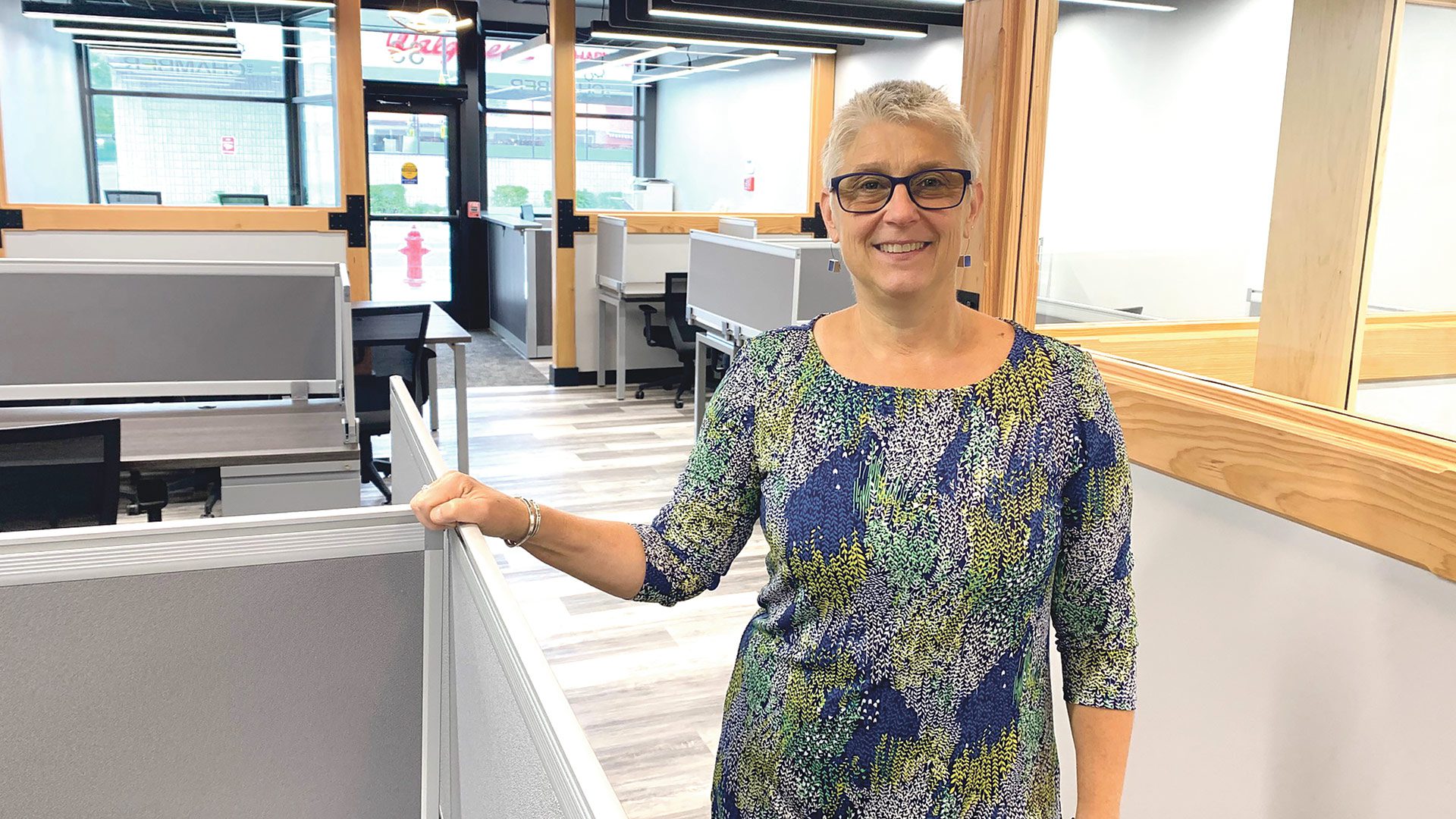
Moe Belliveau stands in the soon-to-open WorkHub on Union at the chamber offices in Easthampton.

Moe Belliveau stands in the soon-to-open WorkHub on Union at the chamber offices in Easthampton.

“It’s like a menu — we have a lot of different flavors,” LaChapelle said. “And that’s what we want to see in Easthampton; it’s what has made us so attractive to the people who want to come live here; it’s not one size fits all. You can live in a mill district and get that flavor or live in the middle of a pasture.”

For this, the latest installment of its Community Spotlight series, BusinessWest takes a hard look at Easthampton and the many forms of progress taking place in this community at the foot of Mount Tom.


Getting Down to Business

As Belliveau talked with BusinessWest at WorkHub on Union earlier this month, all was quiet.

Indeed, the rows of desks and half-desks (there are 18 in all), the conference room available for rent to tenants, and the common kitchen area were empty.

She expects things will be much different in a few weeks, when the facility officially opens its doors. She’s spent several years bringing her vision for the hub to fruition because she believes there’s a strong need for such a facility in Easthampton, and she expects its vast potential to be realized.

“We’ve had a lot of inquiries,” she said, adding that the $450,000 facilty was inspired by anecdotal but also statistical information indicating that there are large numbers of entrepreneurs working from their homes who would prefer to be in a co-working space if one became available to them. Also, there are professionals working remotely, fully or partially, who would likewise prefer not to be home on occasion.

“There’s a whole shadow economy in Greater Easthampton,” Belliveau explained. “And we’re trying to help those who are part of that informal, shadow economy into a more formal space and give them the opportunity to have professional space when they need it. And some people are finding that, since they’re working remotely, every now and then it’s just nice to be with others and get that creative-energy collaborative and their innovative juices flowing.”

WorkHub provides such opportunities, she said, adding that talk about creating such a facility began well before the pandemic, and the need has only increased since then.

DelVecchio, who has long been involved with the chamber, agreed, noting that iniatives like WorkHub on Union and CO.STARTERS represent a shift of sorts when it comes to the overall mission of the chamber.

“Traditionally, when people think about a chamber, the first thing that comes to mind is business-to-business networking — After-5 events — and that is a component to the overall chamber value proposition,” he explained. “But the chamber has other value propositions, one of which is economic development, particularly for budding entrepreneurs. So we see as part of our mission helping build the next generation of Greater Easthampton-based businesses and giving them an opportunity to build their organizations.”

Businesses like Hide’n’Sneakz, and entrepreneurs like Stacey Blanco.

She said she and Israel were attracted to Easthampton because of both the high energy there and the many forms of support for small businesses, especially at the chamber.

They took their concept to Cottage Street, and thus far they’re off to a solid start, said Stacey, adding that they spent much of their first year building visibility, setting goals, and developing a game plan for continued growth.

CO.STARTERS has played a big role in all that, she told BusinessWest, adding that she found, through the program, a solid support network providing both feedback and mentorship.

Easthampton at a glance

Year Incorporated: 1785
Population: 16,211
Area: 13.6 square miles
County: Hampshire
Residential Tax Rate: $13.56
Commercial Tax Rate: $13.56
Median Household Income: $45,185
Median Family Income: $54,312
Type of Government: Mayor, City Council
Largest Employers: Berry Plastics Corp., INSA, Williston Northampton School, National Nonwovens Co.
* Latest information available

Overall, their venture looks to meet what they consider a need — there isn’t a store like this in Easthampton, and its prices are lower than what can be found at the mall — while also promoting sneakers as, among other things, wellness.

“I think a great pair of sneakers will change your attitude for the day,” she explained. “I’ve worked in the office, in the corporate world, and you always had to wear uncomfortable shoes; I’m trying to promote how you can wear a nice pair of sneakers with casual work pants, and you’re going to have a really comfortable day at work.”


Building Momentum

It’s called the Growing Green project.

This is one of several housing initiatives unfolding in the community, each one different, and each one with a story behind it.

Growing Green is a rural project planned for 56 acres just off Main Street near the border with Southampton. It’s a partnership between the Kestrel Land Trust and the Community Builders Inc. said LaChapelle, adding that 22 of those acres will be set aside for housing — 87 units in the affordable category — and the rest will be preserved as open space, with Kestrel and the Massachusetts Audubon Society overseeing the conservation.

“It’s a very interesting project — it’s really cutting-edge,” said the mayor, adding that the initiative will soon be the focus of an upcoming article in Sierra, the magazine of the Sierra Club, because of the way it demonstrates that new housing (a regional and national issue) and land preservation can be undertaken in the same project.

The new units of housing are expected to come online in 2028 or 2029, with the ultimate timing to be influenced by when the developers can secure low-income-housing tax credits, said LaChapelle, adding that other housing initiatives in the community are decidedly more urban in nature.

They include redevelopment of one of the two remaining former mill buildings in the Ferry Street complex — Building 11 to be specific (leaving the largest of the mills, Building 7 still to be developed), said the mayor, adding that this project, being undertaken by Springfield-based Home City Development Corp., will create 96 units of housing — 90 in the ‘affordable’ category, with the other six being market rate. Low-income tax credits will be needed for this project as well, she said, adding that the hope is that these units can come on line at the end of 2026.

Meanwhile, more housing is planned for three recently decommissioned schools — Maple, Center, and Pepin — into 69 units for those of mixed incomes, said the mayor, ading that the buildings “triangulate” the downtown district.

Also, what’s known as the original Town Lodging House on Oliver Street, known to many as the ‘Poor House,’ is being renovated into housing (perhaps 30 units in the affordable category) by the city in partnership with Valley CDC in an initiative with another long time horizon — 2029 at the earliest.

“That’s a building with a lot of restrictions — there’s a historical restriction on it, an affordable-housing restriction on it, there’s an agricultural restriction on it … it’s very complex to develop,” LaChapelle said. “But historically, it’s a very cool project, and Valley CDC has been working with the city to keep those aspects — some of the history of the building, some of the architecture — while putting together modern housing units.”

These projects comprise several hundred units that are needed, not just because of overall demand for housing, she said, but due to a need, in these changing times, of housing of a somewhat non-traditional sense.

“There’s just a conundrum around housing these days,” she told BusinessWest. “When you close you eyes and dream the American dream in New England, it’s literally a white house with black shutters and a picket fence. There simply isn’t enough land for that, and it doesn’t fit the lifestyle like it did 25 or 30 years ago. With the housing units we have planned, there’s a big cross-selection; with those three schools in the downtown, there’s high walkability — you can park your car and forget about it for a week.”

Like the mayor said, there’s a full menu of options — and a wide range of growth opportunities — in a community that has come a long way in 30 years and continues the process of reinventing itself into a dynamic, in-demand community.