
Home Posts tagged healthcare sector
Healthcare News Special Coverage

Turning the Battleship

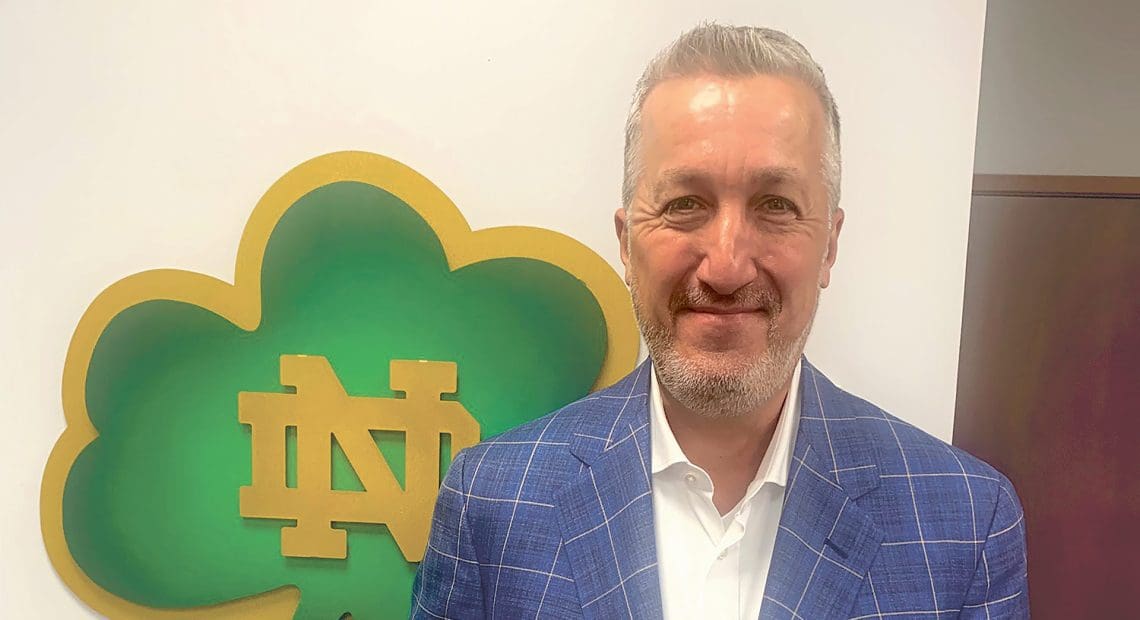
Peter Banko says that, despite a mountain of challenges, the Baystate Health system has achieved needed momentum.

Peter Banko says that, despite a mountain of challenges, the Baystate Health system has achieved needed momentum.

Peter Banko was asked if he was frustrated.

He would certainly have good reason to be.

After all, Banko, president and CEO of Baystate Health, had spent the past 17 months or so trying to right the ship at the system — “turning around a battleship in a bathtub,” as he would later tell the audience at a forum on the state of the healthcare sector in the region — and had made a good amount of progress through difficult and unpopular decisions that included layoffs, cutbacks in many departments, and, most recently, buyouts for many employees, resulting in a profitable fiscal 2025.

But by his estimation, provisions within the One Big Beautiful Bill Act (or OB3, as he calls it), signed into law last July, will cost Baystate Health $146 million a year through its specific provisions and their aftereffects, and essentially wipe out all that’s been accomplished and bring the system back to where he started in terms of the size of the hole to dig out of.

“Those reductions wipe out our positive cash flow in one fell swoop,” said Banko, noting that the system exceeded budget expectations for fiscal 2025 and recorded a 3.6% EBIDA (earnings before interest, depreciation, and amortization). “We exceeded our budget expectations by about $50 million; it was the first time we exceeded our budget in six years. But whatever progress we made this year gets eliminated by the One Big Beautiful Bill; we’re down to zero again, and we start from scratch.”

“We’ve got a lot of great work going on behind the scenes that isn’t glamorous and won’t make headlines, but it’s the right work. I feel more optimistic than I’ve felt in a long time.”

So … while frustration would certainly be understandable, and the picture for 2026 is bleak by most accounts (more on that later), he prefers to be upbeat — to a degree.

“That’s because I believe we’ve created some momentum,” he said. “I’m happy with the momentum we’ve created. We’ve got a lot of great work going on behind the scenes that isn’t glamorous and won’t make headlines, but it’s the right work. I feel more optimistic than I’ve felt in a long time.

“I feel like we have the team and the committed board and committed team members that are willing to do the tough work and make the difficult decisions for it to be successful,” he went on, adding that there are certainly more difficult decisions to be made, and more consolidation likely in the healthcare industry — and 2026 is shaping up to be an ultra-challenging transition year for hospitals.

But, overall, he believes the ship has been turned and is positioned to navigate the turbulent seas that are forecasted.

For this issue and its focus on healthcare, we talked at length with Banko about the progress that’s been made, how much of that progress stands to be undone by the OB3, and what happens next as he continues the turn-around assignment he assumed in the fall of 2024.


Time of Transition

Banko said the One Big Beautiful Bill Act will result in $1 trillion in cuts nationally and represents “the largest rollback to federal support for healthcare in our lifetimes.”

Most of the impact to the Baystate system will not kick in until October, a month before the midterm elections, he went on, adding that online estimators project that the overall impact to Baystate will be more than $140 million. Broken down, these cuts involve everything from sharp increases to the number of uninsured individuals from Medicaid and the Affordable Care Act to a decrease in funding from Medicaid (MassHealth), to a loss of funds from the 340B Drug Pricing Program.

The impact to the system — and all providers — will be profound, he said.

Valley Springs Behavioral Health Hospital, one of Baystate Health’s most significant recent projects, opened in Holyoke in 2023.

Valley Springs Behavioral Health Hospital, one of Baystate Health’s most significant recent projects, opened in Holyoke in 2023.

“A lot of people won’t have insurance, so they won’t have access to coverage or financing,” he explained. “They’re going to delay care, and they’re increasingly have to use the ED when things are really serious, so we’re going to have more overcrowding. It would be shortsighted to say that this will most significantly impact the poor and vulnerable in our community; if you have commercial insurance, you can expect double-digit increases in your premiums the next five years because commercial insurance makes up the difference for Medicare and Medicaid.

“If you’re an employer in this state or anywhere in the United States, you’re going to be paying more for your insurance to cover the gaps here,” he went on, adding that, for systems like Baystate, the impact will be felt in the ER, certainly, but in other realms as well.

When asked to make projections on what will happen across the system and its four hospitals — Baystate Medical Center, Baystate Noble Hospital, Baystate Wing Hospital, and Baystate Franklin Medical Center — Banko said it’s too early to do so, with the specific impacts not likely to be known until the provisions of the bill take effect.

And that won’t be until almost a year from now, he went on, adding that, in most respects, 2026 will be what he called a “transition year.”

“It will be like preparing for a snowstorm,” he told BusinessWest before extending the metaphor further. “Everyone is going to be buying milk and bread and snow shovels; there’s going to be a lot of preparation and action in anticipation of next year.”

When asked how a system prepares for the storm that’s coming, he said the system will continue to make additions and adjustments in the ER in anticipation of more people using that front door instead of primary care.

“We’re aggressively recruiting nurses and physicians for the ER, and we’re working on improving our throughput in the hospital, which impacts the ER,” he explained. “We’re working on improving access and throughput, which will help.”

Overall, he said the system itself will manage, but he’s concerned about the human toll for the cutbacks and their impact on the overall health of the community.

“It will be like preparing for a snowstorm. Everyone is going to be buying milk and bread and snow shovels; there’s going to be a lot of preparation and action in anticipation of next year.”

“Let’s consider this from the humanistic end — someone who had coverage now doesn’t,” he said. “They may be in the middle of cancer treatment; they may be in the middle of a pregnancy. A few months from now, they get diagnosed with a condition, and they delay care, or they’re feeling symptoms, and they know they can’t afford care. From a community standpoint, we’re worried about the impact to the most vulnerable people in our community.

“How do we look our community in the face and say, ‘15% to 25% of you no longer have coverage,’” he went on. “This state has worked so hard, going back to Governor [Mitt] Romney, to provide care for as many people as possible — it’s hard to say all because some people fall through the cracks — and now, it’s all being dismantled.”


Bottom Line

And it’s unlikely there will be much, if any, help coming from Washington, Banko opined, noting that, for now, both sides consider what’s happening to be a “political win,” which makes action before the midterms unlikely in his view.

“Behind the scenes, I think everyone knows what the right things to do are,” he went on. “But OB3 has become a political football, so the folks left holding the bag are our governor and our Legislature — they’re going to have to fill a huge budget gap, $4 billion to $5 billion, and I don’t envy them having to try to figure that out. And our healthcare systems are left holding the bag because it impacts us most severely. Who gets lost in this are the people losing coverage — I’m not sure they have a voice at the moment.”

As for the Baystate system itself, Banko said that, when it comes to the progress made in 2025, budget-wise, roughly half is attributable to cost cutting, with the other half coming from revenue growth.

“We saw decent growth in our business last year, above what our expectations were,” he noted, adding that this growth came in ER volume, surgical volume, inpatient volume, and other realms. “More than half our financial improvement was solid revenue growth.”

Looking ahead to 2026, he’s projecting revenue growth of 2% to 3%, with expenses growing 6%.

“And in any business, that’s not a recipe for success,” he went on, adding that the system has identified core growth areas, including overall access to care.

“We lose a lot of our patients to Boston because they can’t get in here. So if we can grow revenue by 6% to 8% and trim some of our costs, that will allow us to stay in the game,” he explained, adding that there will be more cost cutting in the year ahead — at Baystate and most other providers.

There will also be some less profitable services cut back or eliminated by many providers, he said, as well as continued consolidation within the industry as systems look for all-important scale in the wake of the rising costs of doing business.

“We’re talking to a lot of organizations, and with each one, I have a confidentiality agreement that I can’t violate,” he said, withholding comment on rumored talks between Baystate and Mercy Medical Center. “So, I would just say this … everyone is talking to everyone right now. There isn’t a week that goes by that I’m not having a discussion with a competitor, someone in an adjacent market, someone in a non-adjacent market.

“Everyone is viewing the changes from OB3 as transformational, so everyone is trying to figure out the same thing,” he went on. “We’re all talking to one another about, ‘hey, how do we manage this?’ Or ‘can we manage this better together?’”

There is some evidence that scale has not worked out in healthcare, at least as much as it has in other industries, he continued, adding quickly that he believes scale does bring advantages; systems just need to seize those advantages.

“Our overhead costs are about 12.9%,” Banko explained. “Without more scale, we can bring that down to 10%, but best-practice health systems are below 8%, and there’s no way we can get below 8% without more scale.”

In the meantime, and as he mentioned earlier, he senses real momentum across the system, progress in many ways overshadowed by large headlines about layoffs and buyout programs.

“What gets published in the media is just the financial stuff,” he told BusinessWest. “So when we do a layoff or cut costs somewhere, that gets all the media attention, and it gets all the attention inside the organization. But I would say that 80% of the work is non-financial, and we’re making real progress.”

Healthcare News Special Coverage

Critical Gaps


When Beverly Fein surveys the nursing landscape at Holyoke Medical Center, she sees both positives and challenges, and the difference is generational. Take new nursing graduates, for example; the hospital hired more than 25 of them last year.

“Many of them do their clinicals here. They have a good foundation working for us. They like the environment. So we’ve been lucky — we’ve been able to attract them,” said Fein, senior vice president and chief Human Resources officer for Valley Health Systems, which includes HMC.

“And many others were student nurse techs with us, which means they come on earlier during their schooling, while they’re still juniors or seniors, and we hire them as techs, and that creates a pipeline for nurses,” she added. “Many have come through that pipeline, which is a good thing.”

But finding experienced nurses? That’s been much tougher — and it’s a common lament across the healthcare industry.

“The biggest gaps are in nursing, especially when it comes to RNs and LPNs. The shortage is huge. So how does that impact bedside care at hospitals and long-term care facilities? They’re feeling the shortage.”

“We’re always looking for experienced nurses,” Fein said. “We have had a number of different open house events over the year, and we’ve been able to hire experienced nurses. We have a weekly Walk-In Wednesday, and we’ve been able to hire some experienced nurses just walking in, getting interviews on the spot, offers on the spot. That’s been a tactic we’ve been using in addition to some strong advertising on our intranet, as well as all the social media platforms.”

Nicole Polite, CEO of the MH Group in East Longmeadow, a staffing and recruiting firm with a robust healthcare niche, understands the industry challenges as well.

Beverly Fein says Holyoke Medical Center has hired dozens of new graduate nurses recently, but experienced nurses are harder to come by.

Beverly Fein says Holyoke Medical Center has hired dozens of new graduate nurses recently, but experienced nurses are harder to come by.

“The biggest gaps are in nursing, especially when it comes to RNs and LPNs. The shortage is huge,” she said. “So how does that impact bedside care at hospitals and long-term care facilities? They’re feeling the shortage.”

As are other settings. “Home health and hospice are definitely feeling it. Even outpatient and ambulatory centers are feeling it. Then, there’s a dire need for nurse practitioners and physician assistants in primary and urgent care. Believe it or not, we’re even struggling with telemedicine, especially in rural areas and underserved areas.”

The list goes on. Polite cited workforce gaps locally in behavioral health — psychiatrists, licensed social workers, and licensed professional counselors are in high demand — as well as physician specialties including cardiology and oncology (again, especially in rural and underserved areas). As for home health aides, she said the industry is exploding with the continued aging of the Baby Boom generation.

Michele Anstett, president and director of Visiting Angels West Springfield, promoted two CNAs into recruiting positions to bolster the home care agency’s efforts to maintain a workforce that keeps up with demand.

“They use their own personal stories and experiences with Visiting Angels to sell how much they love working here,” she said, adding that aides and nurses with plenty of options are prioritizing workplace culture as much as pay. “Now what is important is telling our story, and whether they like the way the work environment sounds.”

Karen Rousseau, dean of the School of Health Sciences at American International College, sees the workforce crunch from a different perspective — and a positive one for graduates.

She noted that nursing enrollment has been impacted a bit by free community college in Massachusetts, but it’s still strong, and there’s plenty of interest in AIC’s graduate nursing programs, with nursing recognized by many young people as a secure career choice, given the current state of the workforce.

“It’s a pretty strong job market in the region. The labor statistics show growth in PT and OT, and there continues to be a nursing shortage,” she noted. “Our graduates having no trouble finding positions. I’m hearing that current students seeking employment are being selective in what they choose.”


Glass Half Full

Anstett said recruiting has become more challenging in home care for a number of reasons.

“I’m a person who always thinks positively. I don’t try to dwell on, ‘gee we can’t get people.’ I try to think, ‘how can we get people?’ We do tend to use some different tactics, and it’s much different than before, when it was just putting an ad in the paper, and people would answer it. Now you have to get on social media, get on all these job sites, and you have to word it in a way that the algorithms won’t put it down at the bottom and no one will ever see it.”

Karen Rousseau

Karen Rousseau

“Our graduates having no trouble finding positions. I’m hearing that current students seeking employment are being selective in what they choose.”

One annoying aspect of the current market is … well, the ability of some applicants to be dismissive of the process, or even rude.

“A lot of times, we do have people that respond to the ads and seem interested, but then, when we set up an interview, they’re no-shows. One reason is they never intended to have a job, or applying for a job might have been a requirement to receive some kind of aid.

“It’s a different kind of mindset, and I don’t think it’s generational,” Anstett went on. “I definitely think it’s a society thing. We’ve had people of all ages do this ghosting thing. They come for orientation, and then they’re nowhere to be found. And it’s hard for us because it’s quite a process. We have to do background checks and reference checks and check their skill level, everything. It’s a dollar investment, and it’s heartbreaking when they get all the way through and you schedule them, and then they don’t show up.”

She said Visiting Angels continues to bring in quality caregivers, but the process is tougher, as she may wind up hiring two for every 10 interviews — and even then, their work-hour preferences might change between the interview and the hire.

As for retention, Anstett said it’s a mindset.

Nicole Polite says employers need to understand that potential young hires demand different a culture than in the past.

Nicole Polite says employers need to understand that potential young hires demand different a culture than in the past.

“I really believe a good work environment is the key. It’s creating a family culture at work, which is also very respectful of their family. If they need to get to something for their son or daughter, we do our best because we’re all moms and dads. My belief that no one in Visiting Angels is any better or more important than the other person. We’re all very important to the whole team, and I think that resonates.”

Another thing employers need to be mindful of today is burnout, Polite said, as many nurses and other healthcare workers are feeling it, and often feeling it intensely.

That’s one reason many nurses and doctors who are placed through the MH Group work in a contract capacity.

“Being a contract employee helps them to have work-life balance; they get to select when they want to work. The new term is Uber nursing, the ability to sign up for work when they want, like an Uber driver, which allows them more balance and to alleviate burnout.”

While the model is great for workers who desire it, it can actually benefit organizations as well, as the agency pays for benefits and malpractice insurance. Meanwhile, both sides get to test the waters before perhaps committing to something longer-term, Polite explained. “They find out, do they want to stay? What’s the environment like? What’s the culture like?”


Michele Anstett

Michele Anstett

“We’ve had people of all ages do this ghosting thing. They come for orientation, and then they’re nowhere to be found.”

She added that a nationwide shortage of nursing professors — who also sometimes feel burnt out — is taking its toll on the workforce as well, with many aspiring nurses being turned away from programs for lack of capacity.


Meeting the Needs

Speaking of higher education, colleges and universities with health programs are also looking at shifting needs in healthcare when planning new programs. For example, this fall, AIC will introduce a master of population and community health degree to meet a growing need for professionals who can mobilize community resources to address factors that affect people’s health and well-being.

“We feel there’s a need for public health in the community,” Rousseau said. “We had a master’s of public health, but we’re phasing that out. There hasn’t been a large demand for that, and UMass has a very large program. But a master’s in population and community health practice was driven out of the way we see the needs of employers in the region, and what will help them.”

Rousseau noted that there are many different types of roles in healthcare besides nursing, OT, and PT, noting another AIC program, its exercise science track. “It’s strength and conditioning, but you also use exercise as medicine to help people heal. You can perform all kinds of roles with that degree as well. Healthcare is a big industry. It’s not just the things you think of right off the bat.”

To meet its own workforce needs, Holyoke Medical Center has been innovative beyond just the Walk-In Wednesdays for nurses. Open houses for phlebotomists, another in-demand career, have been successful, Fein said, and the hospital has used temp agencies for roles like medical assistants and medical lab techs to test out their fit.

“We’ve recently been happy with the response to our open house events. It’s nice to have leadership from these areas present and for them to make offers on the spot if we feel there’s a great fit after the tour. If we have good dialogue and they have some experience and we feel good about them, we can bring them on pretty quickly. We’re trying to remove some of the hurdles and roadblocks, basically, and streamline the process.”

At the same time, Fein emphasized the importance of benefits to retention efforts, from a health package to a robust tuition reimbursement program that can funnel $7,000 to $8,000 annually toward a degree and help employees move into the positions they aspire to.

“I think a lot of new employees are very focused on work-life balance as well,” she said, noting that HMC has made some changes to vacation policies with that in mind. “That work-life piece is definitely significant with them. They’re speaking about it a lot.”

Polite hears the conversations, too.

“There will be a shift in the newer generation in terms of the healthcare workplace,” she told BusinessWest. “They’re in demand, and their demands are different; they have a different need for flexibility. So everyone needs to come to the table and come up with a better way to staff those medical positions, and it will need to include flexibility for employees.”

Filling in the gaps will take years, Polite she. “And the big fix is going to have to come from the government. There has to be some incentives for the younger generation coming in from their college years, giving them funding if they enter that field.”

It’s just one of many possible solutions to boosting the workforce, decreasing rampant burnout, and, most importantly, making sure patient needs are met.

Daily News

SPRINGFIELD — In the spring of 2017, the Healthcare News and its sister publication, BusinessWest, created a new and exciting recognition program called Healthcare Heroes.

It was launched with the theory that there are heroes working all across this region’s wide, deep, and all-important healthcare sector, and that there was no shortage of fascinating stories to tell and individuals and groups to honor. That theory has certainly been validated.

But there are hundreds, perhaps thousands of heroes whose stories we still need to tell, especially in these times, when the COVID-19 pandemic has brought many types of heroes to the forefront. And that’s where you come in.

The nomination deadline for the class of 2021 has been extended to end of day today. We encourage you to get involved and help recognize someone you consider to be a hero in the community we call Western Mass. in one (or more) of these seven categories:

• Patient/Resident/Client Care Provider;

• Health/Wellness Administrator/Administration;

• Emerging Leader;

• Community Health;

• Innovation in Health/Wellness;

• Collaboration in Health/Wellness; and

• Lifetime Achievement.

The Healthcare Heroes event is presented by Elms College. Nominations can be submitted by clicking here. For more information, call (413) 781-8600, ext. 100.