Bryson Busiere says it started as a hobby.
Then it became a “second business.” And there are plans — it will take several years to a decade for them to become fruition — for it to become a full-time pursuit, a career.
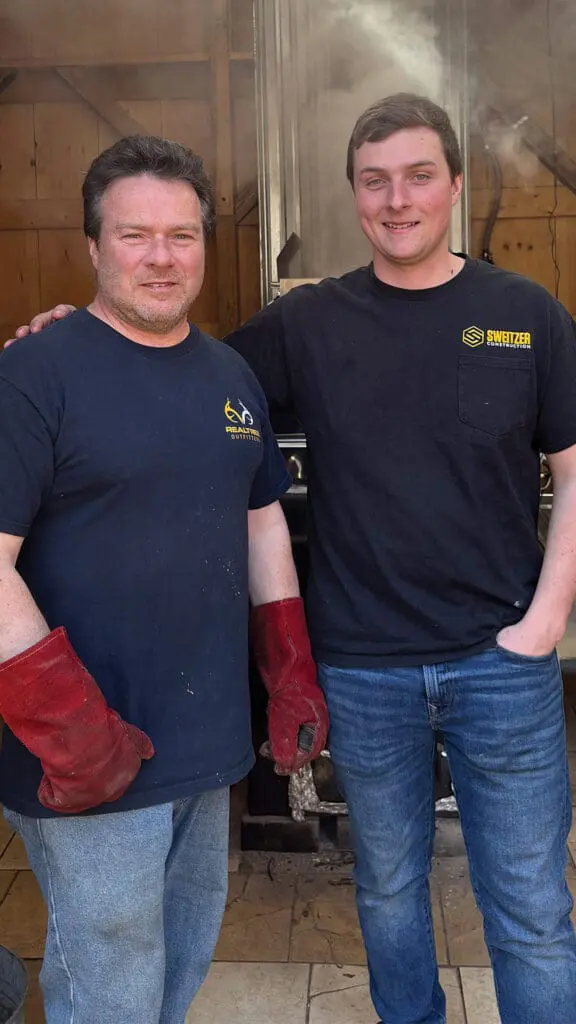
Bryson Busier and his father, Marc, have guided their maple syrup business to continued growth and diversification.
We’re talking about Bryson’s Maple Syrup, an undertaking he started with his father, Marc, 15 years ago when he was in middle school. Together, they’ve grown it steadily to where they now tap 3,000 trees across four main properties, and produce 400 to 600 gallons of maple syrup a year.
They use it create a wide range of products, from bottled syrup to candy to some infused offerings, and sell them at craft fairs, farmers markets, and other events across the region and throughout the year, although summer and the holidays are the busiest times.
“We typically do one fair each weekend,” said Busiere, who works in construction by day, adding that the Pioneer Valley Wine Festival in Brimfield was one of recent stops. “But we’re looking at doing two or three, depending on the week. We’re trying to branch out a little more now that we’re making enough syrup to be able do that.”
Bryson’s Maple Syrup is part of an eclectic business community in Monson that includes many small businesses and second businesses, shops along Main Street, and several agriculture-related ventures.
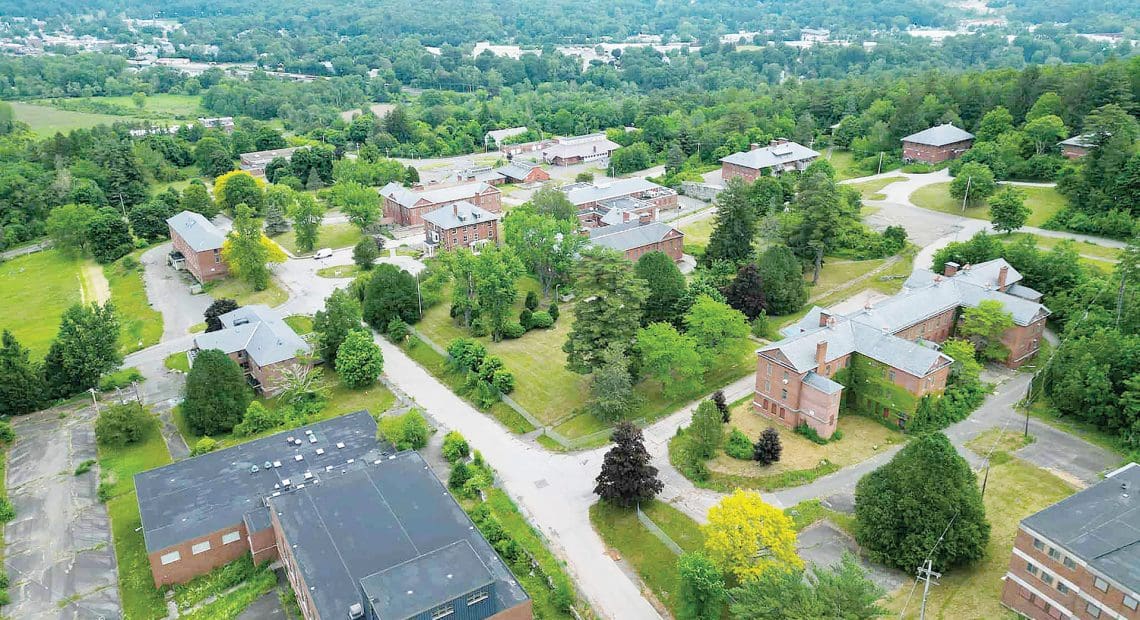
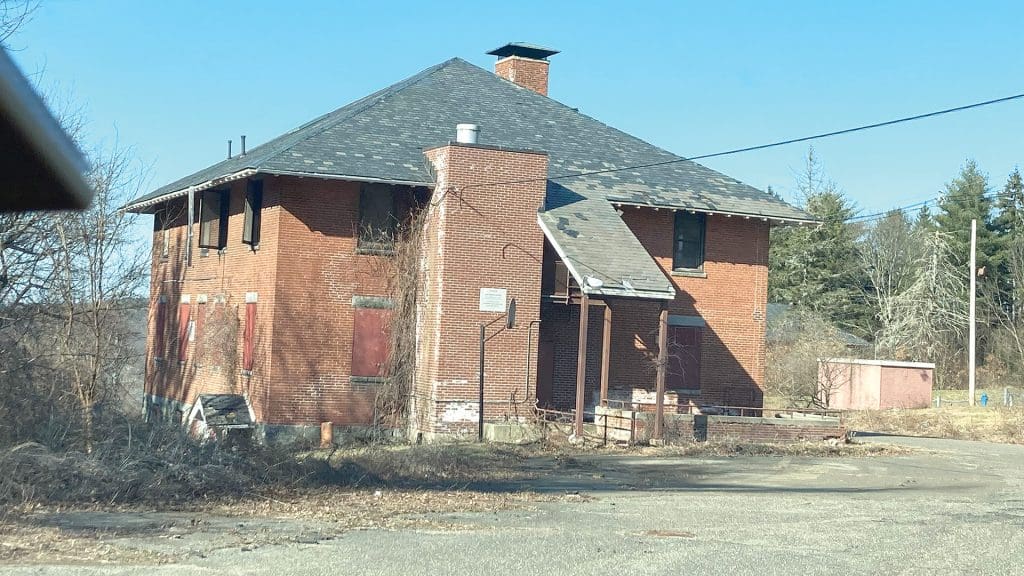
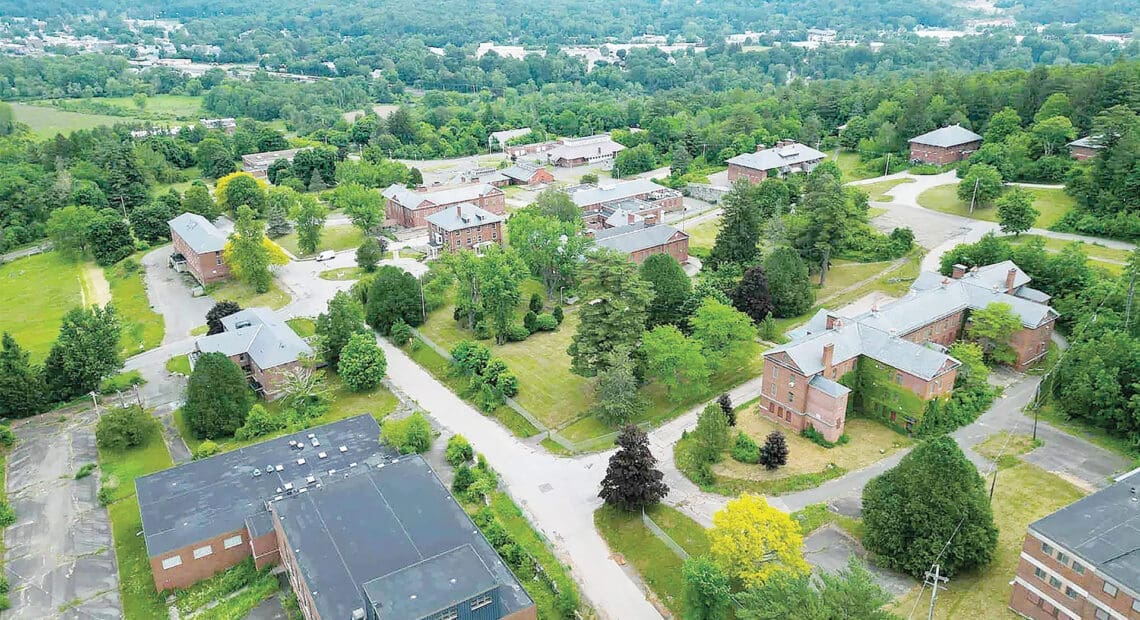
And it’s one of many converging stories in this town of roughly 8,000 people. The biggest, of course, is the redevelopment of the former Monson Developmental Center (MDC), a saga that started when the institution officially closed in 2012 — although speculation began long before that as operations wound down at the complex — and has moved in mostly slow motion for most of that period.
But the pace of progress has accelerated in recent years, starting with the acquisition of the property by Westmass Area Development Corp. And the pace quickened further last month with town meeting approval of a zoning change to create a planned village district that will include housing, commercial, and retail spaces.
What for many years was conceptual is now real, and it will become more real as demolition continues, with the site, which includes more than 30 buildings, due to be fully cleared roughly a year from now, Westmass President and CEO Jeff Daley said.
Meanwhile, numerous other storylines are taking shape in this community, Town Administrator Jennifer Wolowicz said, including:
• A comprehensive reconstruction of a mile-long stretch of Route 33 (Main Street). Now in the planning and public-hearing stage, the projected $15 million initiative is scheduled to start in 2028 and will be the first major reconstruction of the street in roughly a century;
• Expansion of the Board of Selectmen from three members to five; and
• Plans to apply for a grant from MassDevelopment to eventually undertake infrastructure work on a stretch of Route 20 that goes through Monson, Palmer, and Wilbraham to encourage more commercial development there.
The Route 20 initiative — and the MDC project, for that matter — are efforts to bring more development, vibrancy, and people to the community, but without changing the rural character of the town that its residents value, Wolowicz noted.
“Getting this property transferred over to Westmass for oversight and now ownership will provide Monson with an opportunity,” she said. “And opportunities can look and feel different for everyone. I’m sensitive to the historic charm that Monson has, and I’ve loved it since I moved here myself.
“I’ve talked to a lot of people who have lived here their whole lives, and generations before them, who are excited about the project,” she went on. “They’re looking at it as an opportunity to downsize from the large home that they’re still living in because their children have grown and moved and have homes of their own; Monson does not have any 55-and-over communities to offer to our seniors.”
For this latest installment of its Community Spotlight series, BusinessWest takes an in-depth look at Monson and the many developing stories there.
Progress Report
Craig Swietzer, president of Monson-based Sweitzer Construction, has served on the town’s Planning Board for decades now.
He recalls maybe one subdivision plan in all that time, with all other housing being essentially one-offs. So he can understand why there might be some apprehension about the MDC site and plans for more housing than the community has seen over the past several decades combined.
But he believes most of that apprehension has been alleviated through a thorough review process of Westmass’s plans, coupled with strong desire to see something happen with the long-dormant property — something that will generate tax revenue for the community — as well as recognition that housing of various forms is needed, and will come in phases at the MDC site over the next several years.
Jennifer Wolowicz
“Opportunities can look and feel different for everyone. I’m sensitive to the historic charm that Monson has, and I’ve loved it since I moved here myself.”

“The town gets it,” he told BusinessWest, adding that the vote to approve the village district was nearly unanimous, for all those reasons. “It’s easy to be afraid that this thing is going to be huge and there’s going to be 1,000 new residents, but it’s not going to be like that.
It’s going to be market-driven; we anticipate slow, steady, sensible growth.
“Obviously, some adjustments will be needed, like fire and police, but I think this growth can be absorbed efficiently,” he went on, adding that, given the decline in enrollment in town schools, additional students can be absorbed without any new building needed.
Wolowicz agreed, noting that there is some apprehension and negativity concerning the MDC project, but mostly relief that a site that had been vacant for so long is finally being developed, as well as optimism about the various housing options that might emerge at the site.
“One of the things that we hope will be part of this is a mixed-use type of property where you’ll have cluster housing with single-family homes, but you’ll also have a 55-and-over living community that also has some businesses connected to it, like an occupational therapist business or a coffee shop,” she said, adding that, while the property is in Monson, it is near the border with Palmer, and could benefit the residents of that community as well.
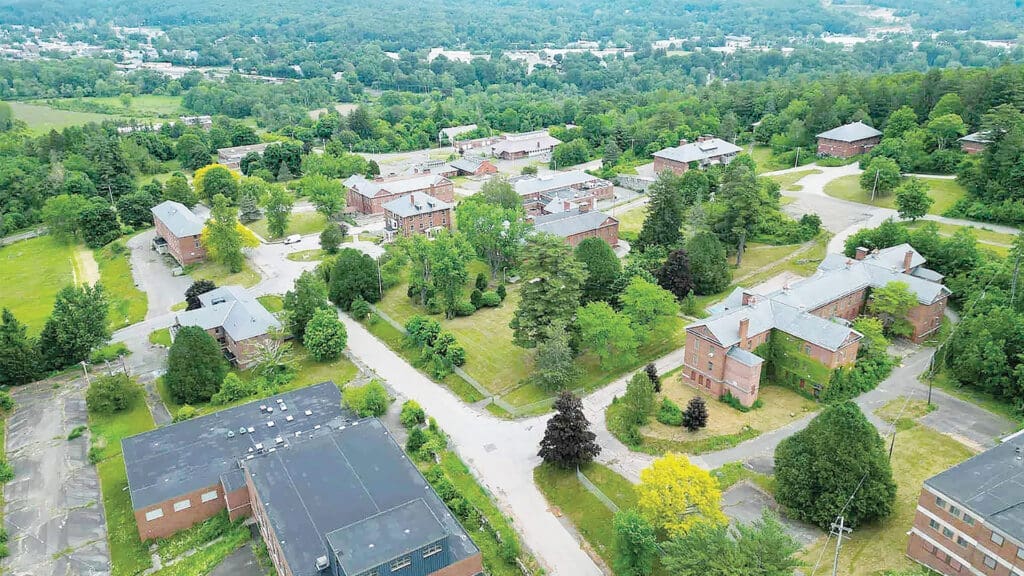
Jeff Daley says demolition of the buildings at the MDC site should be concluded by the summer of 2027, with infrastructure work to follow.
Daley agreed. When it comes to the market, he anticipates there will be solid interest in housing of various types in a community just a mile or two off the Palmer turnpike exit — and only a few hundred yards from the planned east-west rail station in town — and a project that will provide a more affordable alternative to the sky-high prices in Greater Boston and the comparatively high prices in the Worcester area.
“It’s a four-minute ride to the Palmer exit,” he said, adding that, overall, the goal will be to use Westmass’s experience in site development and housing construction to create homes that will be more affordable than those built in other locations and by other developers.
As for the timetable moving forward, demolition of the site is the next priority, Daley said.
“Our goal is to have everything on the ground and the site basically cleaned and ready for development by June 2027,” he noted, adding that the contractor, Associated Building Wreckers, is on pace to meet that goal.
After demolition will come infrastructure work — water, sewer, and electricity — and then market-driven development.
“We’re putting together a development plan for how the site could lay out in the future,” he said. “When that comes to fruition, we’ll likely be the land owner, and a good chunk of the developments will happen with us or through us managing those.
“At the of the day,” he added, “our estimate is that it will be $300 million to fully develop the site with all the infrastructure that needs to be done and the housing and commercial use — and anywhere from 10 to 20 years of work.”
Sweet Success
Busiere told BusinessWest that the family maple syrup venture has grown and evolved over the years.
Indeed, that branching out he mentioned has been happening on many levels, starting with the number of taps. But it also includes the roster of events where the company has a presence, the portfolio of products sold, and a “help yourself farm store” in front of the family home, a miniature sugar house, as he put it.
As for the products, there are now 50 to 75 of them, depending on the year, and these include maple syrup, maple candy, maple cream, and a variety of infused maple syrups, including coffee, cinnamon, and many others.
Most of these items are produced at the sugar house in Monson, but the company also rents out a commercial kitchen for some of its items, including maple-coated peanuts and walnuts as well as a planned maple mustard.
“We’re on track to double in size for the next several years,” he said, adding that the long-term goal is to make this a full-time venture, perhaps in a decade at the current rate of growth and progress.
“It’s easy to be afraid that this thing is going to be huge and there’s going to be 1,000 new residents, but it’s not going to be like that. It’s going to be market-driven; we anticipate slow, steady, sensible growth.”
As noted earlier, Bryson’s Maple Syrup is part of an eclectic business community in Monson, one that includes few large employers, but many smaller, venerable institutions, from Monson Savings Bank to the Woodbine Country Store, a fixture on Main Street for generations.
James Przypek, CEO of the Quaboag Hills Chamber of Commerce, which serves 15 communities, including Monson, said the community boasts a wide range of businesses in sectors ranging from construction to telecommunications; from HVAC to farming and the growing realm of agritourism.
Indeed, ventures such as Echo Hill Orchards Winery & Distillery and Silver Bell Farm, known for its elaborate holiday lighting displays, are helping to make Monson a destination.
“Silver Bell is an amazing attraction — people keep coming back for it,” he noted, adding that the community features many smaller businesses, from cookie makers to roadside farm stands that give it a unique flavor .
As for Sweitzer Construction, it has been part of the Monson landscape for more than 40 years now. A family business, it covers two generations, with Craig and his wife Pat at the helm, and sons Brian and Michael serving as project managers.
The company specializes in in high-tech, design-build work that includes dental construction, a unique niche, but also medical facilities, commercial and manufacturing construction, and, most recently, cannabis facilities.
The business has grown steadily over the years — from its portfolio of projects to its team — and is looking to sustain that growth and “feed the machine,” as Craig put it.
“That can be the tricky part,” he said. “To keep up the volume and the numbers that we need, sometimes we travel more than we like to, but that’s the nature of the beast.”
Elaborating, he said the company has, over the years, expanded its geographic base, both to serve long-term customers, such as Attleboro-based Rust-Oleum, and to secure new work, such a recent project in New Haven.
Overall, each project is unique and brings its own set of challenges, Pat added. “There are a lot of projects that are complex, and they’re really fun — it’s not the same production work over and over. They’re unique projects, and we’re lucky to have a lot of customers like that.”