

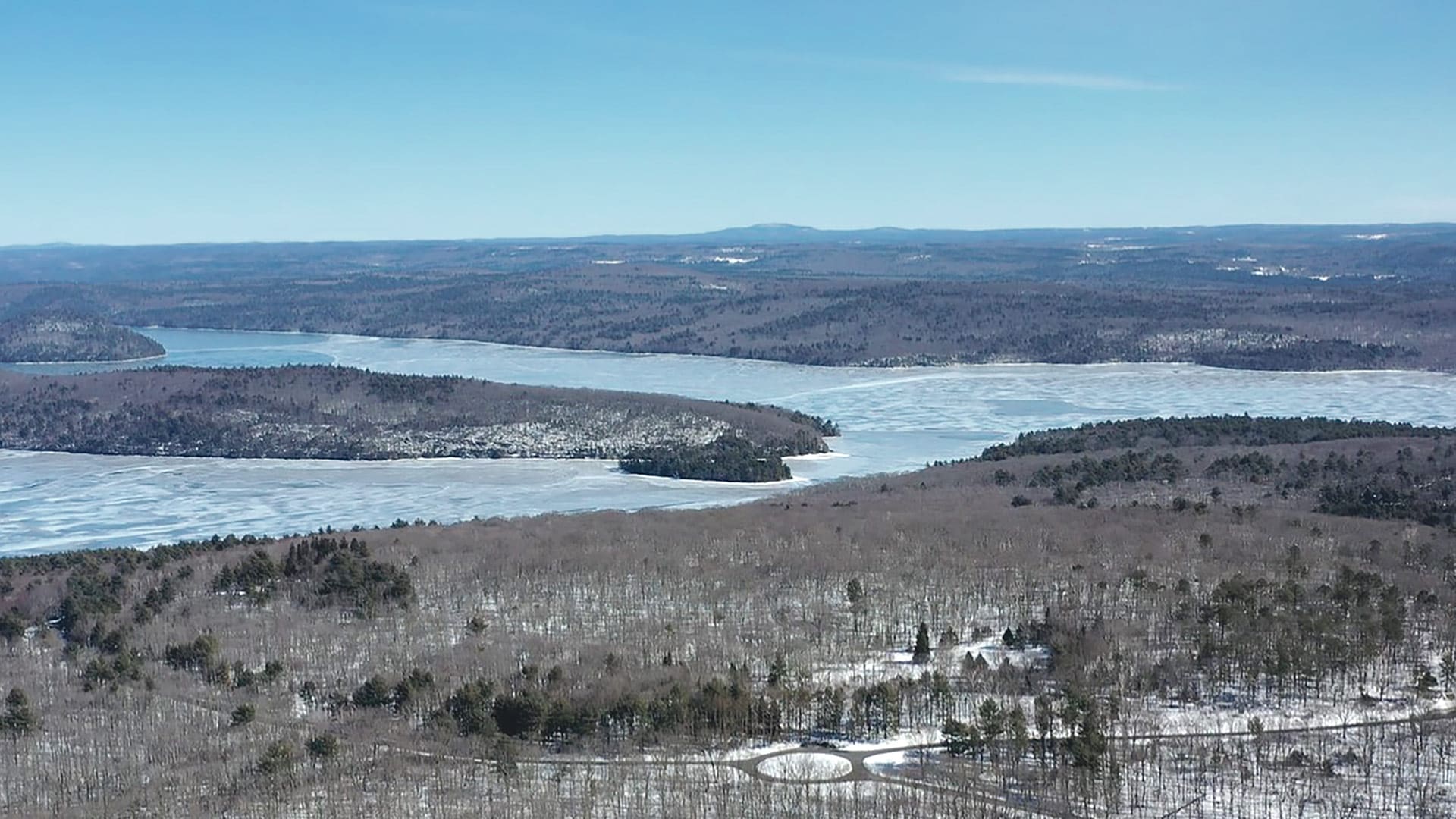
The Quabbin Reservoir is the main drinking water supply for more than 3 million people in the Commonwealth.
It is also an engineering marvel, home to wildlife ranging from eagles to mountain lions to porcupines, the site of dozens of hiking trails, and sits on the site of four small towns that were taken by the state, later disincorporated, and now covered by some 412 billion gallons of water more than 50 feet deep in places.
So there’s history, engineering, nature, recreation, fishing, and education into how this water supply was created and how it operates today. And all of that and more can be taken in with a visit to the reservoir and the Les and Terry Campbell Quabbin Visitor Center in Belchertown, said Maria Beiter-Tucker, Interpretive Services supervisor for the Quabbin.
She handles public programing and educational programming, and quite a bit falls into those two categories.
Starting with the visitor center, located on the first floor of the Quabbin Administration Building at 100 Windsor Dam Road in Belchertown. There, visitors can learn about the history of the Swift River Valley and those aforementioned towns — Dana, Enfield, Greenwich, and Prescott — and also about why and how the reservoir was constructed and how it is managed today, she said.
There’s also a considerable amount of information about the wildlife that calls the Quabbin home, she said, adding that there are educational programs for visitors and groups, including many school field trips, as well as self-guided tours of the area.
These public programs include hikes of Quabbin Park and Quabbin Reservation, including hikes focused on various habitats. There’s also a hike to Dana Common, where some of the foundations to buildings in that community can still be seen.
Overall, there are dozens of hiking trails, including the Bald Mountain Hill Trail, the Goodnough Dike Vista Trail, the Old Stone Trail, and the Quabbin Park Cemetery tour, which takes visitors to the cemetery created for the relocation of graves from the Swift River Valley.
No dogs are allowed at the Quabbin to keep that drinking supply safe from contamination, but two-legged visitors are more than welcome, and, as mentioned earlier, there is much to see, learn, and experience at this regional gem.
The Quabbin Visitor Center is open every day except Wednesday, 8:30 a.m. to 4:30 p.m. Learn more at www.mass.gov/locations/quabbin-reservoir.
—George O’Brien