Home Posts tagged Worthington Street
Features Special Coverage

Filling in the Canvas

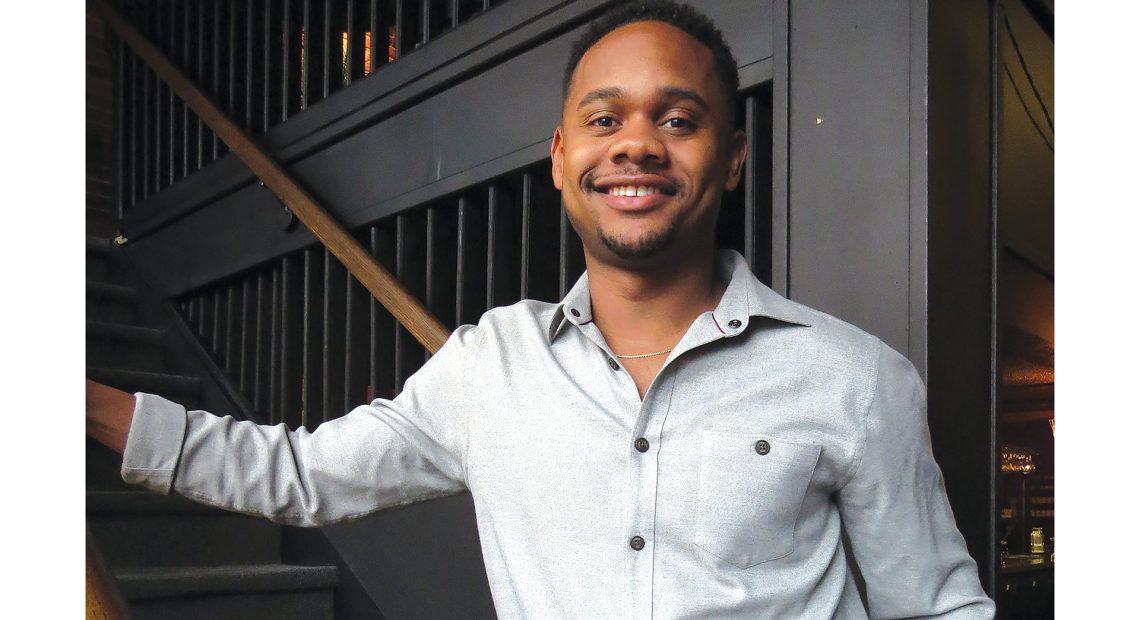
Raipher Pellegrino stands near the huge curved window on the second floor of the property at 280-302 Worthington St., known as the Underwood Building.

Raipher Pellegrino stands near the huge curved window on the second floor of the property at 280-302 Worthington St., known as the Underwood Building.


Raipher Pellegrino paused at the huge, curved second-floor window facing the corner of Worthington and Dwight streets.

“How’s that for a view?” he asked rhetorically, noting that it’s been quite some time since anyone — other than those he’s had out for tours — has looked out that window, some recent history he intends to change.

Indeed, he envisions a Pilates studio, a gym, or something similar on the second-floor space at 280-302 Worthington St., a property known as the Underwood Building, which has been vacant or mostly vacant for more than decade. And that space is just part of a much larger canvas that Pellegrino, the noted personal injury lawyer and real estate developer, working in partnership with his brother, Joseph, and the city of Springfield, is intent on filling in.

While doing so, he’s writing the intriguing next chapter in the history of what has been called (and is still called, even though it hasn’t lived up to the title) Springfield’s ‘entertainment district.’

This is the Worthington Street corridor, specifically the blocks just west of Dwight Street. It has been growing increasingly quiet over the past decade or so as restaurants, clubs, other businesses, and even a nonprofit (Suit Up Springfield) have shuttered or moved. The closing of Dewey’s Jazz Lounge last month was just the latest blow for the area.

It was with the intent of reinvigorating that corridor that Pellegrino and his brother acquired the three buildings east of Duryea Way at auction in 2021. With support from the city in the form of a $2.5 million grant and infrastructure improvements, Pellegrino is filling in his canvas.

Some of the spaces have been filled, like Petra Hookah Lounge, which features Mediterranean food and reopened last fall in extensively renovated space. Others are nearing completion, such as the new restaurant called Mamou, to be owned and operated by the chef at the former Chef Wayne’s Big Mamou, set to open this summer. And still others, including three more restaurants, a music venue to host between 250 and 400 people, and other businesses, like that projected Pilates studio, are still weeks or months away. Meanwhile, several residential units have been renovated, and more will be added to the mix.

“I think it’s vitally important to bring this area back — it raises the quality of living for those living downtown, and it provides places for people to go and eat. That was my desire with this, and it’s a much more difficult project than I think anyone envisioned, but I think we’re starting to see it evolve, and we’re seeing a lot of momentum.”

“The pieces are coming into place,” said Pellegrino, who envisions five restaurants in all, most with doors opening out onto Worthington Street and outdoor dining, in addition to a club and other businesses that will support one another and bring people — and energy — back to the Worthington Street corridor.

“I think it’s vitally important to bring this area back — it raises the quality of living for those living downtown, and it provides places for people to go and eat,” he said. “That was my desire with this, and it’s a much more difficult project than I think anyone envisioned, but I think we’re starting to see it evolve, and we’re seeing a lot of momentum.”

Tim Sheehan, Springfield’s chief Economic Development officer, agreed, noting that the city has invested more than $3.2 million in the entertainment corridor for everything from outdoor dining facilities to small-business assistance to interior buildout for commercial tenants.

This ground-floor space in the Underwood Building is being renovated for use as a music venue, what Raipher Pellegrino describes as an “Iron Horse-like” facility.

This ground-floor space in the Underwood Building is being renovated for use as a music venue, what Raipher Pellegrino describes as an “Iron Horse-like” facility.

“The city’s investment continues in the corridor, and with what’s coming forward, people will see a lot of different options relative to dining in the dining district,” he said, adding that the goal is to bring both new businesses and a degree of long-term stability to a region that has not seen much of the latter.

Indeed, Brian Connors, deputy Development officer for the city, used understatement when he said the entertainment district has had “ebbs and flows.”

By that, he meant some good times, but also controversy with several late-night/early-morning incidents, and, from a business perspective, a high degree of turnover when it comes to restaurants and other businesses, problems compounded by the natural-gas explosion a block away in 2012.

For this issue, BusinessWest takes an in-depth look behind the plywood and brown paper over the doors and windows along that stretch of Worthington and into the future of the city’s entertainment district.


Work in Progress

It was raining intermittently as BusinessWest took its visit to the properties being redeveloped along that block on Worthington Street. The showers quickened the pace of the walks between the buildings, but they could hardly dampen the enthusiasm Pellegrino brought to his work as erstwhile tour guide, something he’s been doing often.

“This is a labor of love,” he said of the project, which is now approaching roughly $6 million in cost and represents perhaps the most extensive undertaking in a growing portfolio of real estate projects in Pellegrino’s portfolio.

That list includes the property at 265 State St. in Springfield — the large home later populated by commercial tenants but vacant in the ’90s and then restored by Pellegrino as a home to his offices — and its adjoining carriage house.

But it also includes a diverse mix of other properties, from charter schools in Springfield and Lowell, where Pellegrino went to college as an undergrad, to Springfield Country Club, which he acquired in partnership with the Hannoush brothers; from the property at 401 Liberty St. in Springfield, a former wire-manufacturing complex, now home to Behavioral Health Network, to the former Lunt Silversmith property in Greenfield, now home to a substance abuse center and mental health offices.

“The tenancy that we have needs to be established tenancy. In terms of going into the restaurant business as a startup business, it’s very, very difficult, and if the business model isn’t spot on, you have a tendency to have what we’ve had — businesses come in, businesses go out, businesses come in.”

Often, the projects involve properties that are historic in nature that require considerable renovations and modernization. Such is the case with the Worthington Street properties, which comprise a new challenge and a tremendous opportunity to reshape and reinvigorate the entertainment district, said Pellegrino, who started his tour at Petra Hookah Lounge, which opened its doors last fall, with the intent of showing what will be happening at the other properties along the street.

The block-long string of properties includes three buildings: 250-270 Worthington St., 272-280 Worthington, and 280-302 Worthington. The first two were built in the 1880s, and the third dates to the early 1930s.

Moving west to east, the properties were in progressively worse condition, he told BusinessWest, adding that 250-270 Worthington, most recently home to Jackalope Restaurant and now Petra (next door), was in decent shape, although both the residential units and restaurant spaces needed upgrades, including new HVAC systems. The property at 272-280, formerly home to several different restaurants, was in worse shape, he said, while 280-302 was “horrendous … uninhabitable.”

Efforts to make it habitable are among the many going on concurrently along that block, a project that came, as Pellegrino noted, with plenty of challenges — everything from renovating historic but badly deteriorated structures to securing established tenants — which became clear as he walked and talked about each of the buildings and the progress being made.

“With historic buildings like these, including one that hadn’t been occupied in 15 years, there are a lot of challenges,” he said, listing everything from floors one could see through to roofs that needed replacing to staircases that no longer meet code and need to be replaced. “This is a project that you can only figure out as you do it; we’ve systematically started at one end, 250-270 Worthington Street, and are working our way to the other.”

Starting with 250-270, he said Petra is now an established tenant, and there will be a new restaurant moving into the former Jackalope space by August or September. He declined to say what the entity will be but noted that it is an already established Springfield restaurant.

Raipher Pellegrino projects that five new restaurants, a music venue, other businesses, and new residential units will take shape along Worthington Street, reinvigorating the city’s entertainment district.

Raipher Pellegrino projects that five new restaurants, a music venue, other businesses, and new residential units will take shape along Worthington Street, reinvigorating the city’s entertainment district.

At 272-280, another new restaurant, Mamou, is expected to open later this month, and another new restaurant, a “bar-like” establishment with light fare, will be opening in the fall, he went on, adding that 280-302 Worthington will have a music venue, a breakfast/lunch restaurant, and other commercial spaces, six units in all, with tenants yet to be identified.

The music venue he’s envisioning will not compete with but rather complement existing venues such as the MassMutual Center, Symphony Hall, and the former CityStage, now being renovated into an arts center for youth, and be an “Iron Horse-like” venue, he said, a reference to the Northampton landmark that reopened last spring.

“The concept is to offer people live entertainment, but also support the restaurants,” Pellegrino said. “If you have an act and sell 250 to 400 tickets, people will want to eat before that.”


Building Momentum

As he stopped at that massive, curved window in the second-floor space above what will be the music venue, Pellegrino pointed to all the parking in the surrounding area, one of the many keys to the success of this project and the entertainment district overall.

Others include everything from improving the perception of public safety to creating stability with the business mix, as well as that supportive element that he mentioned.

Indeed, as the canvas gets filled in, the entertainment district will have a core of new restaurants and businesses, as well as some established eateries — Theodores’ and Del Rey Taqueria on Worthington Street, Osteria on Bridge Street, the nearby Student Prince, and other restaurants and taverns that will support one another, said Pellegrino, adding that the critical mass in his block of buildings should become a draw.

“All of the tenants understand the synergy — there’s discussion about that, and they work well with one another,” he noted. “The idea is that maybe someone can have dinner in one place tonight and have a drink in your place the next night; it feeds off one another. The more people we pull down into the region, the better the restaurants will do. The idea is to create the entertainment district, and the more the merrier.”

Sheehan agreed, noting there are several other keys to the success of this iteration, if you will, of the entertainment district.

These include everything from bringing experienced restaurateurs with proven concepts into the area to infrastructure upgrades.

“The tenancy that we have needs to be established tenancy,” he noted. “In terms of going into the restaurant business as a startup business, it’s very, very difficult, and if the business model isn’t spot on, you have a tendency to have what we’ve had — businesses come in, businesses go out, businesses come in.

“Our objective is to get more stabilized entrepreneurs into the spaces, and I do believe the tenancy that [Pellegrino] is putting forward reflects that stability,” he went on, adding that infrastructure improvements continue in the area, including additional upgrades, including more uplighting and plantings, to Stearns Square, capitalizing on work previously undertaken at that landmark.

Overall, the city has made a large commitment — in funding but also other forms of support — to the stability and growth of the entertainment district, said Connors, noting that public sector support, in the form of loans and grants for initiatives like outdoor dining, interior renovations, and relocation costs, are critical at a time when banks are often reluctant to lend for restaurant and brewery initiatives.

Pellegrino agreed, adding that the investments being made in the three properties along that block of Worthington Street and the individual spaces for restaurants and other businesses are another factor in the success quotient.

“These are major facelifts … these are beautiful, state-of-the-art restaurants. They’re coming into beautifully renovated spaces,” he told BusinessWest. “There’s no guarantee that any restaurant is going to succeed, but this gives them the best opportunity to succeed.

“Everyone has to do their part,” he went on. “The restaurateur has to put out good food and atmosphere; we collectively, with the city, have to provide a safe atmosphere and parking, so it’s inviting, and people feel comfortable coming downtown.”

Whether this picture will come together as Pellegrino and city officials anticipate remains to be seen. But there is great anticipation about what’s behind all that plywood and brown paper.

It’s the next big chapter in the life and times of Springfield’s entertainment district.
Opinion

Editorial

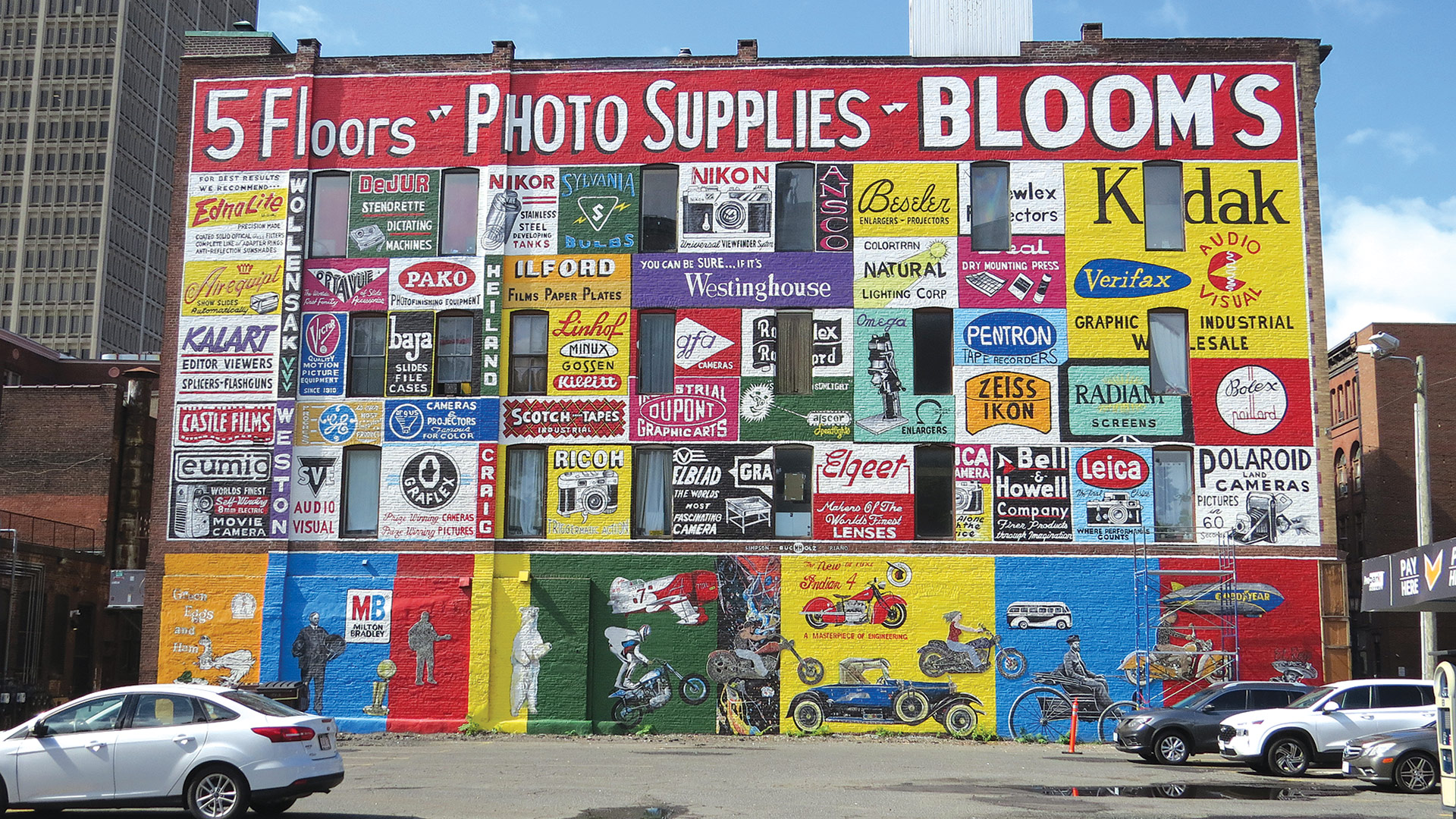
The scaffolding has come down from the five-story wall on Worthington Street facing Stearns Square after a lengthy process of restoration and completion of a new mural undertaken by artist John Simpson.
So now, people can see what they have. And what have is much more than art, although it is certainly that.

It is bridge from the past to the present — and the future — as a well as a conversation piece and another important effort to ‘activate’ property in the City of Homes, and especially in its downtown.

We’re seeing that word ‘activate’ quite a bit lately in reference to downtown properties — everything from the old Court Square Hotel, now being renovated into apartments, to the parking lot adjacent to the soon-to-be-demolished and replaced Civic Center Parking Garage (that property will become an extension of the MassMutual Center and used for various gatherings). It’s also been used to describe restoration work at Stearns Square, Pynchon Park, the riverfront, and other landmarks.

Overall, it is used to describe efforts to take something that was once dormant, or underutilized, and bring it back to useful life.

It’s understandable that the phrase would be used in reference to buildings or parks or even vacant lots. But a wall — in this case, the east wall of the Driscoll Building, built in 1894 and on the National Register of Historic Places?

Yes, a wall.

The wall has been there for 125 years or so, and the advertisements for cameras and related equipment that adorned the wall and sold by the company, Bloom’s, which occupied the structure, have been there for nearly 70 years. But they had become faded and easy to overlook.

Now, the wall is impossible to overlook. It features those same ads, carefully restored to what they were in the 1950s, as well as other images depicting people, businesses, products, and culture that help tell the story of Springfield — everything from a Dr. Seuss book to an Indian motocycle to a depiction of Milton Bradley.

In short, the wall is no longer a wall. It’s a piece of art, but it’s more than that. It’s a window to the past and a vibrant, colorful part of the present and future of the city. It’s also an attraction. People stop, they look, they take pictures, and they marvel at what once was — and still is. You don’t often see 50-foot-high ads for camera equipment.

Even more importantly, this wall is another piece of the city that has been activated, or given a new life. With each triumph like this — and it is a triumph — Springfield takes another important step forward in its efforts to become more vibrant and more livable.

Features Special Coverage

And All That Jazz

Kenny Lumpkin

Kenny Lumpkin doesn’t like to use that word ‘club’ when it comes to his establishment on Worthington Street, Dewey’s Jazz Lounge. He prefers ‘restaurant, bar, and music venue,’ which really says it all. Those are his passions — in life and now in business. A year after opening, he’s off to a solid start and now looking to make an even greater impact on Springfield’s dining and entertainment scene.

Kenny Lumpkin is the true definition of serial entrepreneur.

Since as long as he can remember, he’s wanted to be in business for himself — and he’s put his name and talents behind many different types of ventures.

One was called Room by Room, an app he developed with a friend that he described as “applying Uber to the cleaning industry — an on-demand way to get your house cleaned.” He eventually sold that venture, took the capital, and segued into real estate, flipping houses, and wholesaling. And while doing that, he also got into consulting, specifically with businesses in the hospitality sector looking for help with marketing, and later, biotech and pharmaceutical consulting, working for a few different firms.

But his real passions — yes, we need the plural here — are music, food, and beverage.

And he and business partner Mark Markarian have brought them all together in an intriguing new venture in the heart of Springfield’s entertainment district, or what many are now calling the Dining District.

“I said to her ‘give me the landlord’s number,’ because this fit the vision; I saw the mezzanine, I saw the elevated stage … I saw some incredible potential.”

It’s called Dewey’s Lounge, with that name chosen to honor Lumpkin’s cousin Dwight ‘Dewey’ Jarrett, who passed away in 2014. It’s been called a club by many, but Lumpkin doesn’t necessarily like that term attached to his establishment. He prefers ‘restaurant, bar, and music venue,’ with ‘restaurant coming first for a reason.

Opened almost a year ago, Dewey’s was obviously conceived and launched before and then during the pandemic, although Lumpkin admits that he’s been working on bringing this concept from the drawing board to reality for many years now. And since it is a product of the pandemic, the business plan for Dewey’s has been revised … well, Lumpkin doesn’t know how many times.

“Maybe 15 or 20 times — I’ve lost track,” he said, adding that many things have changed since the original plans were put down, including (and especially) the location.

Indeed, the original site was on Main Street, the former JT’s tavern. Lumpkin and Markarian had signed a letter of intent and were primed to get started when COVID arrived in March of 2020. The partners quickly put those plans on the shelf for what would be more than a year, but in many respects, the pandemic was somewhat of a blessing.

“I look back on it now, and while it was frustrating in the moment, it was extremely beneficial,” he recalled. “It allowed us to really dig deeper, develop the plan in more detail, and look at other locations.”

But what really hasn’t changed is the broad concept and the desire — make that the mission — to make this all happen in Springfield, where Lumpkin was born and spent his early years.

And over its first 11 or so months in operation, Dewey’s is off to what Lumpkin called a solid start that has been better than expected, especially while dealing with COVID, two different surges, mask mandates, and the corresponding changes in attitude about going out and being in a crowded place.

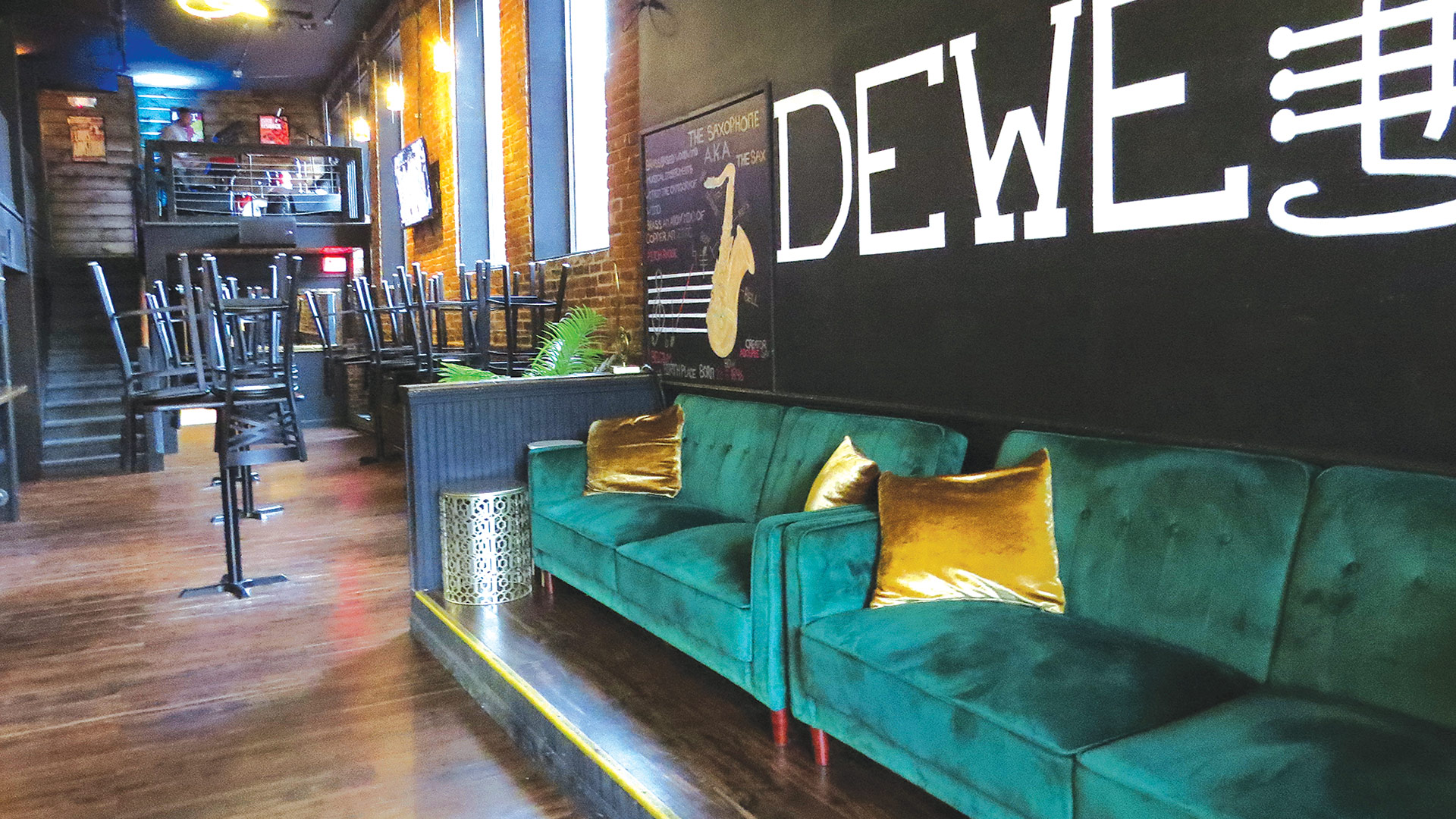
Deweys Bar

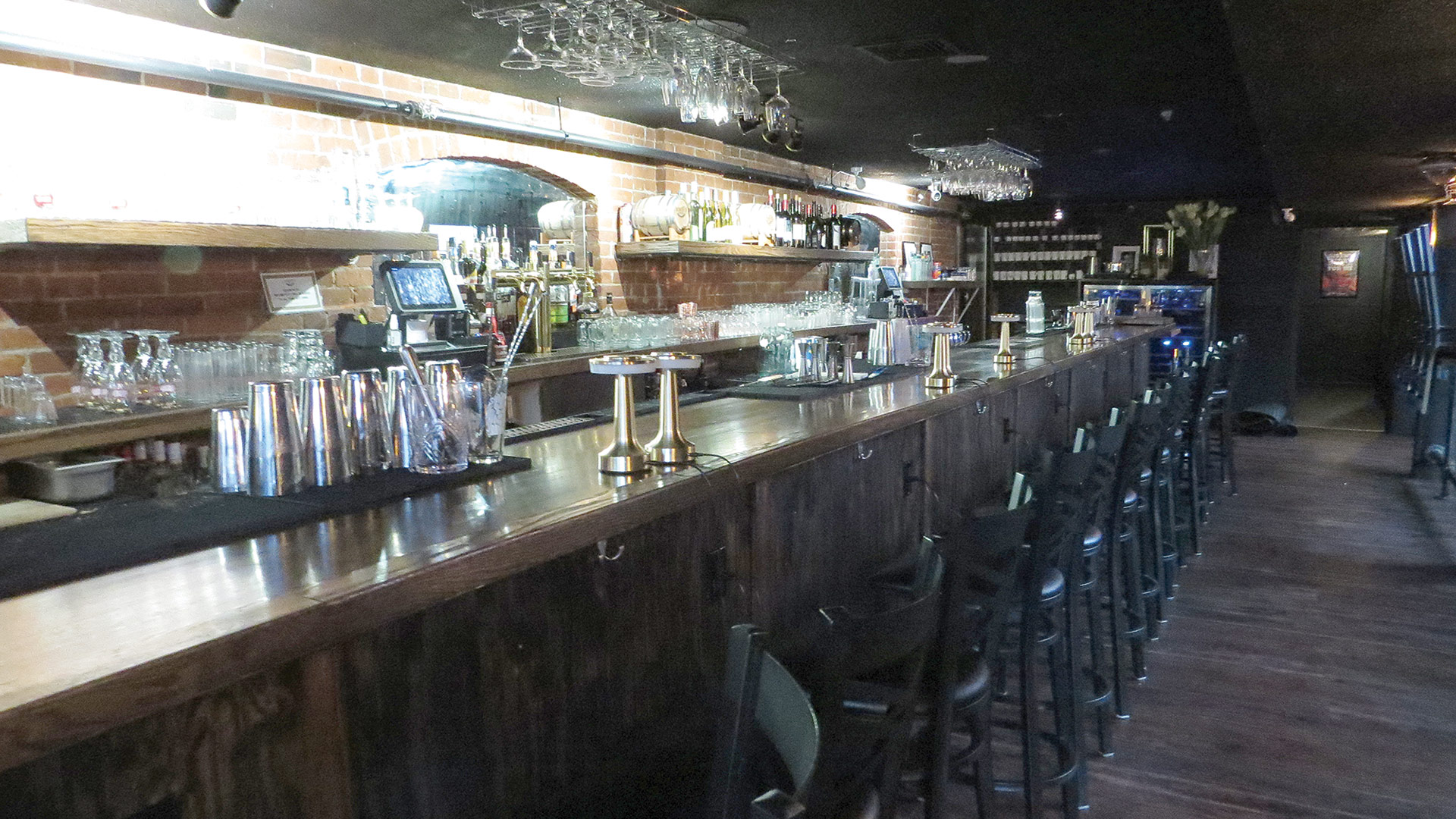
Dewey’s was conceived as a place where food, beverage, and music would come together in a powerful way.

“We’ve seen two dips and two spikes,” he explained, adding that he and Markarian understood the risks of moving ahead with their venture when they eventually did — December of 2020 — but decided these were risks worth taking. “There was really no good time to do it. We took that risk, and, in looking at the cycle of it, understood that we were going to come out of this eventually.”

The goal moving forward is to continue to build on the solid foundation that has been created, he told BusinessWest, while also advancing plans for another new business in the downtown — a sports bar on Dwight Street (more on that later).

For this issue, BusinessWest talked at length with Lumpkin about a host of topics — Dewey’s, the joys (and perils) of entrepreneurship, downtown Springfield and its comeback from COVID, and much more.


Sound Investment

Lumpkin told BusinessWest that the chosen location for Dewey’s came about more or less by accident.

As he tells the story, he was helping his sister prepare for the grand opening of her venture, called Ethnic Study, a co-working space and café in a property on Worthington Street, in late summer of 2020, when she asked him to move some paint and other materials to the other side of the divided first floor.

What he found on the other side was what was left (not much, as he recalled) of the former Fat Cat lounge, which had closed years earlier.

As he looked around, Lumpkin concluded that he had found what he was looking for. Sort of.

“I have always said that music, food, and drinks are the one thing that can really unite anybody and everybody. That was my hypothesis before we opened, and seeing it come to fruition has been quite amazing.”

It wasn’t what he could see that intrigued him — although that, too. But rather, it was what he could imagine. And that was the restaurant, bar, and music venue that he had always dreamed of.

“I said to her ‘give me the landlord’s number,’ because this fit the vision; I saw the mezzanine, I saw the elevated stage … I saw some incredible potential,” he said, adding that he signed a lease late that fall and commenced transforming the location in December.

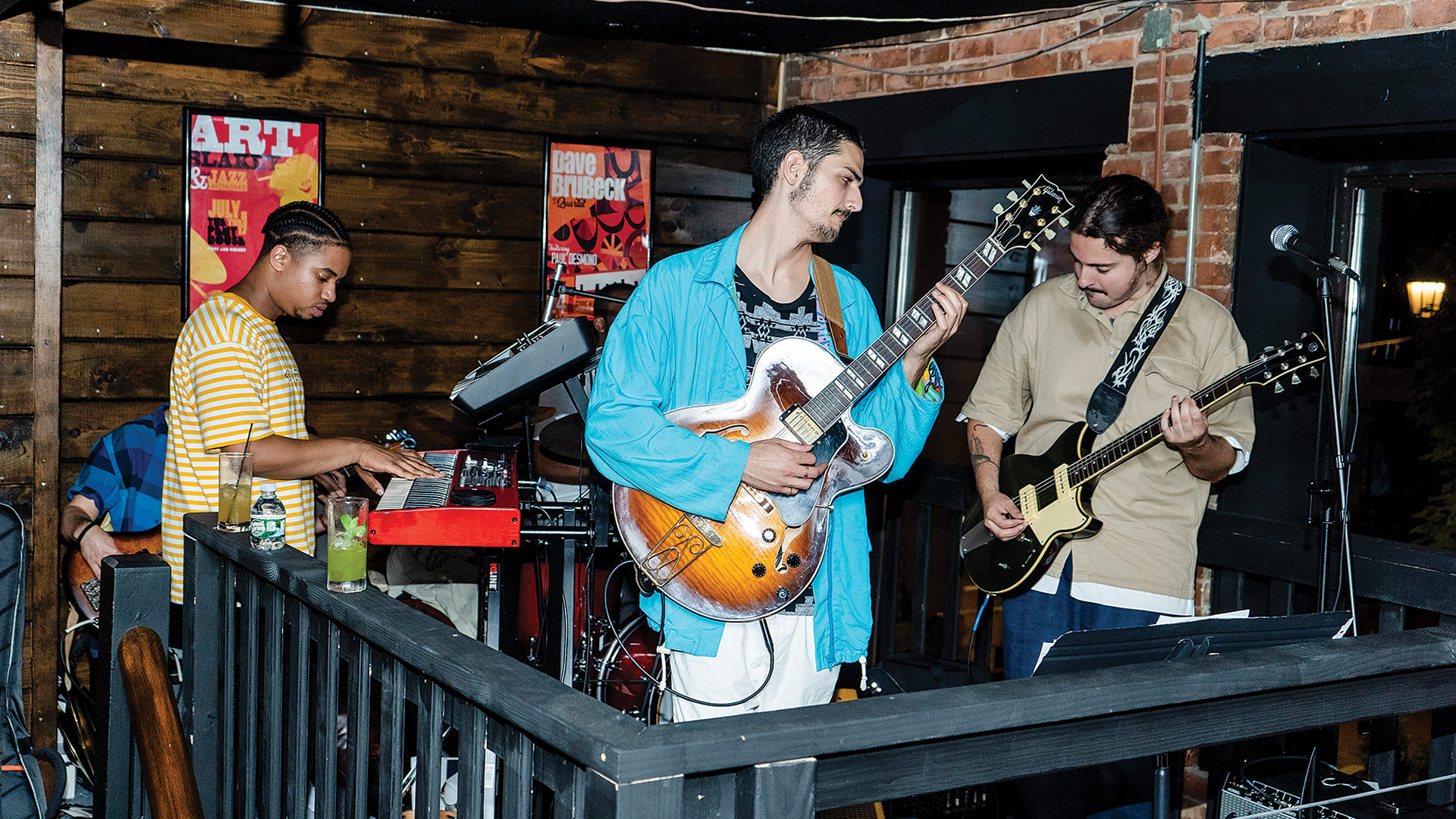
Dewey’s has attracted entertainers

Since it opened, Dewey’s has attracted entertainers from across the region — and across the country.

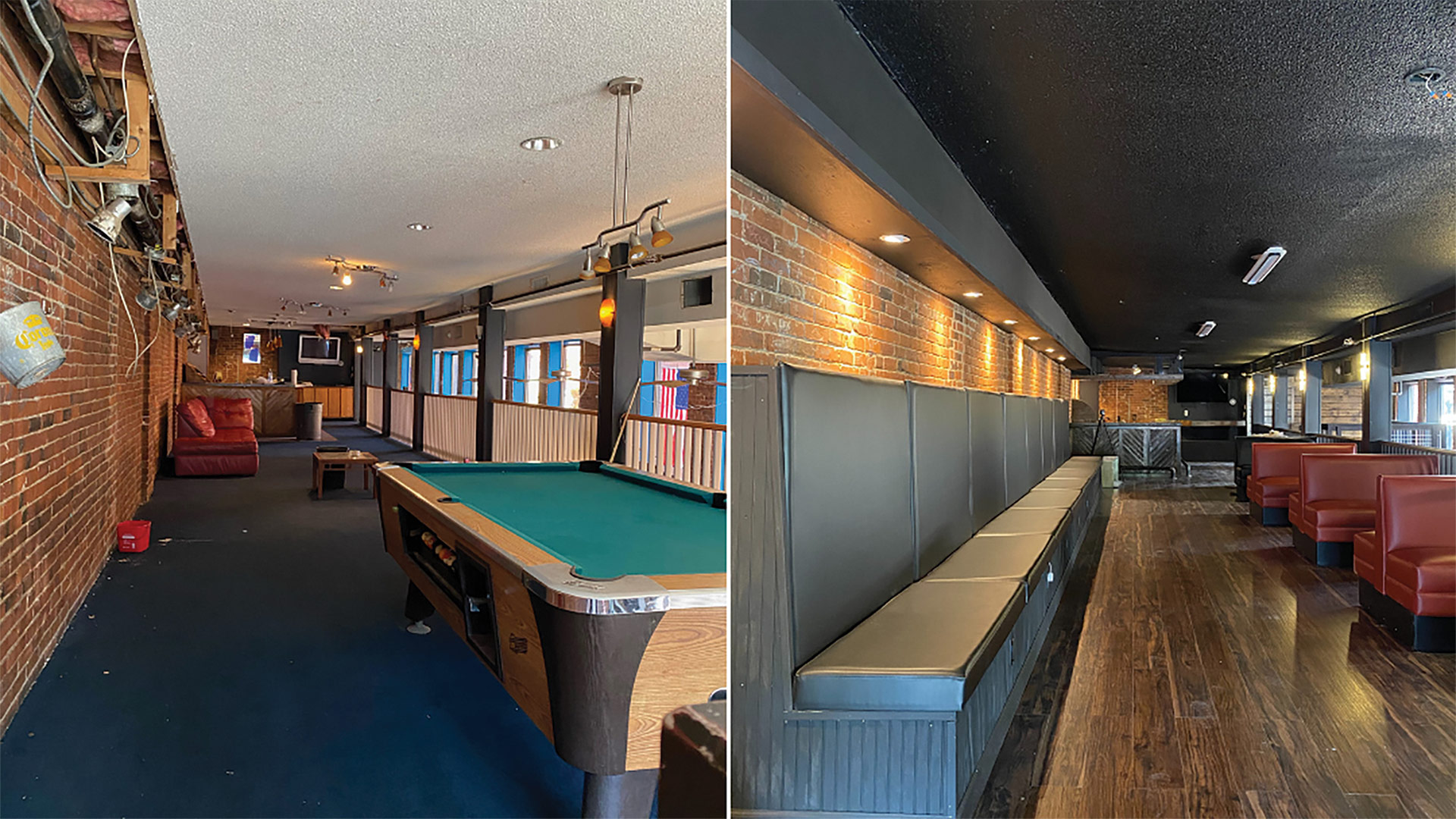
There was a good deal of work to be done, including the replacement of the bar and moving it from the center of the first floor to one side, new shelving, a new bar and seating on that mezzanine level, and more, and it was completed over the next six months or so, with Dewey’s opening in June 2021.

Before getting more into this intriguing addition to the downtown Springfield landscape and how it came about, we first need to explain how Lumpkin made his way back to the City of Homes and made his dream reality.

We pick up the story at Emmanuel College in Boston, where Lumpkin was studying business management, with a focus on marketing, and working as a barback at a local restaurant. Later, he worked as a server at Joe’s American Bar & Grill on Newbury Street, and then as a server and bartender at the Envoy Hotel in Boston’s Seaport.

While working these jobs, he developed that Room by Room app mentioned earlier, then segued into real estate, and then into various forms of consulting. The money was good and the work was rewarding in many ways.

“But … I wasn’t passionate about it,” Lumpkin recalled. “And what I realized I was passionate about was people, and music — I’m really passionate about music. I love to eat, and I love a good cocktail.

“And that’s where this business idea began to develop, because I really do enjoy connecting with people,” he went on. “And I’ve been the friend who said, ‘everyone come to my house — I’ll cook, let’s drink, let’s hang out all night.’”

So he set out to create a business where he would be the host and people could eat and drink, and also listen to live music.

As noted earlier, the plans for what would become Dewey’s started jelling months before anyone had ever heard the word COVID, and would certainly be impacted by the pandemic in many respects. But while there have been some ups and downs that have coincided with surges and subsequent drops in cases, the venture has come together as things were originally envisioned.

Before and after photographs

Before and after photographs show the dramatic transformation of the former Fat Cat lounge into Dewey’s.

He acknowledged that being a business owner, especially in the hospitality industry, is difficult, and that’s without a global pandemic being thrown in for good measure. But he enjoys the challenges, and even used the word “fun” when talking about how to plan and execute during COVID.

“We would all prefer boring,” he explained. “But challenges like the ones we’ve seen keep you intrigued, keep you interested, and keep you creative. And if you get to the core of what an entrepreneur is, it’s someone who is creative, who can find new ways to problem-solve, and find ways to increase volume or throw out new dishes or cocktails; it keeps it fresh and it keeps it new.”


Achievements of Note

It helps to have something new, different, and intriguing, and Dewey’s has those ingredients.

Specifically, this is an appealing mix of food, signature drinks, and music, a combination that has had many guests thinking they’re somewhere other than downtown Springfield when they walk in the door, said Lumpkin, adding that this was the idea when he conceptualized Dewey’s.

And, as noted, he emphasizes that it is a restaurant first, with offerings ranging from Cajun shrimp pasta to baked mac & cheese to fried catfish and grits.

But craft cocktails are an important part of the mix — figuratively but also quite literally — as well, he said, adding that Dewey’s is considered the only craft cocktail bar in downtown Springfield.

“All of our syrups, all of our juices — all of the ingredients that go into our drinks — we make in-house,” he explained. “Everything but the spirit is house; we probably squeeze a couple thousand limes a week.”

The signature cocktails vary with the month and the season, he said, adding that current, spring offerings include ‘Georgia on My Mind,’ a mix of whiskey, iced tea, lemonade, and peach syrup; ‘Louis’ Lemonade,’ which features gin, lemon juice, and lavender simple syrup; and ‘Billie’s Holliday,’ featuring vodka, limoncello, and house-made grenadine, topped with prosecco.

As for the music, when asked how and where he finds performers, Lumpkin said that, in many cases, they find him — because they’re looking for intriguing new places to play.

“You’d be surprised by all the talent that’s here in Western Mass. and Connecticut, and Boston as well,” he told BusinessWest. “The most consistent bookings we receive are within a 100-mile radius; however, we’ve had bands come in from New Orleans, Georgia, D.C., Sacramento … we’ve had bands come in from across the country, but the majority are local.”

Dewey’s is currently booked through July, and it boasts live music five nights a week, he said, adding that each night has a different theme, with vocalists or “a vocal-like instrument” on Wednesdays, with a “throw-back R&B” on Thursday. Friday night is more of a “funky, groovy night,” as he put it, with Saturday devoted to straight-up jazz and Sunday and its brunch reserved for classical or a “more groovy type of band.”

It is the combination of all of the above that has enabled Dewey’s to get off to a good start and attract visitors from across this region and well beyond it, said Lumpkin, noting that he carefully tracks such information and notes that through aggressive, targeted marketing and people simply Googling ‘live music,’ or ‘craft cocktails,’ Dewey’s has drawn patrons from Vermont, New York, and many from Connecticut, New Hampshire and the Boston area, in addition to communities across this area.

Dewey’s a destination.

The combination of food, drink, and music has made Dewey’s a destination.

“I have always said that music, food, and drinks are the one thing that can really unite anybody and everybody,” he noted. “That was my hypothesis before we opened, and seeing it come to fruition has been quite amazing.”

Elaborating, he said Dewey’s has been able to attract a clientele that is diverse in every sense of that word, which is unusual in hospitality — and especially in this region.

“We’re in a community where you don’t really see all demographics in one establishment simultaneously,” he explained. “What surprised me … actually, it didn’t surprise me, because I expected it, and what has made me really happy is to see the eclectic group of people that Dewey’s has attracted.

“You see a range of age, gender, nationality, and ethnicity here every single night,” he went on. “People come in and say ‘I don’t think I’m in Springfield; this has a bigger-city vibe, because you’re seeing so much diversity in one room.’”

Moving forward, Lumpkin wants to build on this momentum, obviously, while also embarking on another venture, that sports bar on Dwight Street.

He is targeting a late-summer opening for that facility, and believes there is ample room in the marketplace for such a facility and also ample motivation for him to fill what he sees as an unmet need.

“There’s no sports bar in the area, and any restaurateur understands that sports bars also produce the best margins when it comes to this industry,” he explained, adding that, overall, he is a firm believer in amassing an abundance of hospitality options and, while doing so, creating a true destination in a city or, in this case, a dining district.

“It sounds crazy to say, but there’s almost no such thing as competition in this industry,” he told BusinessWest. “Patrons don’t go to one establishment; they typically at least go to two. They’ll say ‘let’s grab a drink here, a bite here, and dessert here’ or ‘a bite here, a drink there, and let’s get catch a show.’ People get to two or three places a night, and so the pie grows.”


Just Desserts

As he talked with BusinessWest, Lumpkin noted that plans are coming into place for what promises to be an exciting one-year anniversary for Dewey’s.

Indeed, he has a star-studded entertainment lineup coming together, with musicians from New Orleans, Boston, New York, California, and this area as well, signed up to perform.

“It’s going to be quite the party,” he said, adding that there is much to celebrate — with this new venue and what is transpiring along Worthington and elsewhere downtown.

It’s taken a few years, but Lumpkin’s dream has become reality in Springfield. It’s a place where his passions come together under one roof, and where a diverse mix of clients has come together as well.

It hasn’t all gone as planned, but in most all respects, it has gone better than planned.


George O’Brien can be reached at [email protected]