
The Reality of Dementia Can Be Overwhelming for Families
Overcoming the Stigma
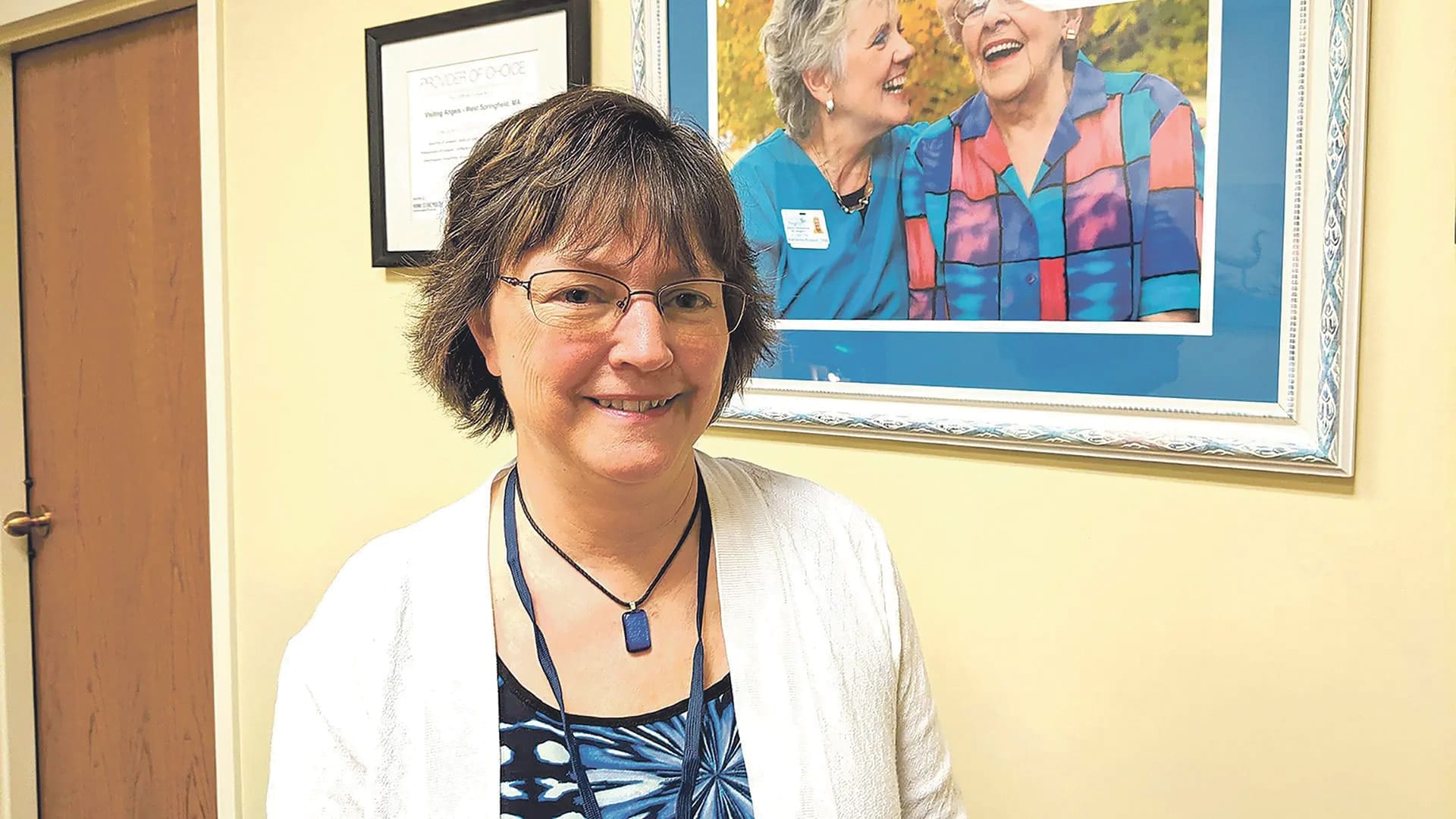
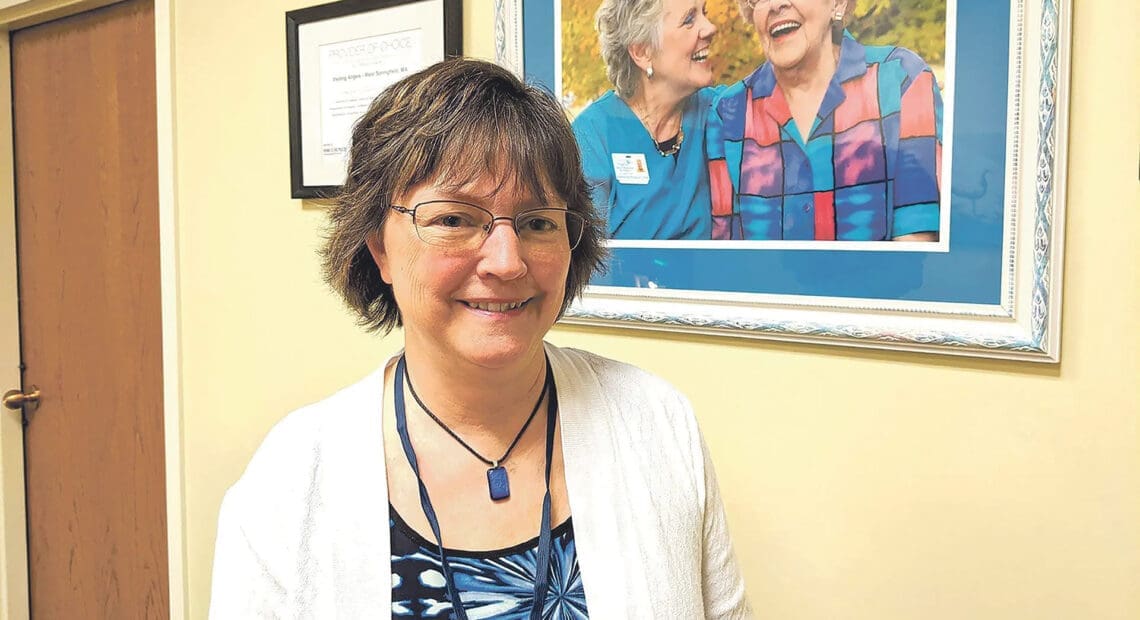
When Michele Anstett recently attended an Alzheimer’s Assoc. leadership luncheon called the Power of Now, speakers talked about how so many people with dementia are not identified as such because of a persistent fear of talking to a doctor — or even family members — and the general stigma that exists around those discussions.
It all hit home for Anstett, president of the home care agency Visiting Angels West Springfield, because her father, who lived in Florida and had dementia, recently passed.
“They talked about how people with Alzheimer’s hide it. And that’s exactly what my father did. But I knew. I tried to get him some help. He wouldn’t do it,” she said. “When you’re older, and you’re afraid of losing your independence, when your memory is going, a lot of people are going to try to stuff it away and be the same person they’ve always been.
“They’re scared of losing their independence, that their family members may find out and just stuff them away somewhere, and they’re afraid of losing their entire mind and not being able to recognize people. They’re scared to death.”
“It was frustrating for me, watching him go through each stage, and yet he still wasn’t fessing up to anybody. Even the VA didn’t know he had dementia. I got him to do the very first test, and they said there’s a probability of a memory issue, and we were supposed to go to a neurologist. But he knew, and he wouldn’t go any further because it would be like opening Pandora’s box.”
Mary-Anne Schelb, regional director of JGS Lifecare in Longmeadow, has encountered this reluctance to talk about dementia on numerous occasions.
“One family comes to mind immediately. Their father had passed away a few months earlier, and what they later realized was that he had quietly been compensating for their mother’s cognitive decline for quite some time. Once he was gone, the cracks began to show — but not right away,” she recalled.
The woman was living alone, and on the surface, everything appeared fine, Schelb said; the family visited weekly, prepared meals for her refrigerator, filled her pill boxes, and checked in by phone. Their mother was always well-dressed and could hold a pleasant conversation.
“To them, she seemed independent — until she wasn’t,” Schelb continued, explaining that a urinary tract infection — and resulting hospitalization — left her weak, dehydrated, confused, and no longer functioning at her baseline, and it eventually became clear she likely needed a secure memory-care setting. But even the family resisted that recommendation.
That is, until they learned from a neighbor that their mom had been feeding stray cats with the meals the family prepared, watering her plants instead of drinking enough fluids herself, and had a shoebox overflowing with untouched medications.
Mary-Anne Schelb
“We helped them understand that mom was not being difficult or stubborn intentionally. Her brain was changing.”

Today, she lives within the secure memory-care neighborhood at Ruth’s House Assisted Living at JGS Lifecare, and the family often visits. “They tell us they have never seen her happier. She participates in activities, engages socially, laughs, and has meaningful friendships. In many ways, she regained a quality of life the family did not even realize she had lost.”
They also expressed gratitude that the team there took the time to educate them — not only about memory care itself, but about dementia as a disease process, Schelb said. “We helped them understand that mom was not being difficult or stubborn intentionally. Her brain was changing.”
And that gets to the heart of what people with emerging dementia — and their families — fear when they’re avoiding those tough conversations.
“They’re scared of losing their independence, that their family members may find out and just stuff them away somewhere,” Anstett said. “And they’re afraid of losing their entire mind and not being able to recognize people. They’re scared to death.”
Accepting the Truth
For many families, the signs of dementia do not appear all at once. They emerge quietly — missed medications, forgotten meals, confusion disguised as normal aging, or subtle changes hidden behind familiar routines. Often, families are doing everything they can to support a loved one while still hoping life can continue as it always has.
“Accepting that a loved one has dementia can be one of the most emotional and difficult experiences a family will ever face,” said Kathy Walker, executive director of Ruth’s House Assisted Living. “Frequently, families are trying to balance what they are seeing with the hope that things have not truly changed. Many families wait until they are emotionally or physically exhausted before seeking outside support, and by that point, they are often carrying tremendous stress and uncertainty.”
When they seek help, Walker explained, many families initially focus on traditional assisted living rather than a memory support neighborhood because they are trying to preserve a sense of normalcy for as long as possible.
“There is often fear surrounding memory care because families are unsure what it will look like for their loved one. Part of our role is helping families understand that memory care is not about limiting independence — it is about supporting quality of life in a safe and meaningful way,” she said. “A large part of our role is helping families recognize the cognitive changes their loved one is experiencing while also educating them on how the right environment can do far more than simply keep someone safe — it can help them truly thrive.”
Families often struggle to accept these recommendations, said Stacy Kenworthy, Admissions director of the Jewish Nursing Home at JGS Lifecare — but that’s understandable.
“Dementia is complicated and deeply emotional. Families are often processing grief, denial, fear, and exhaustion all at once,” she explained. “Sometimes families become upset when we recommend a secure unit. Occasionally they tell us they no longer want admission. But many times, after speaking with other facilities or after difficult experiences elsewhere, they come back and realize we were trying to guide them toward the level of care their loved one truly needed.”
Kenworthy added that families sometimes think a secure memory care setting means someone is being restricted, when in reality it is about protection, supervision, and specialized support.
“Memory care units have higher staffing ratios, specialized programming, and activities designed specifically for residents living with cognitive impairment. These environments are created to reduce confusion, anxiety, wandering risks, and unsafe situations.”
Schelb said the team at JGS Lifecare understands families’ concerns and anxieties, and even empathizes with them.
“Families need patience, understanding, and grace — especially for themselves,” she told BusinessWest. “Almost every family experiences guilt. They say things like, ‘we should have known,’ or ‘how did we miss the signs?’ Sometimes siblings blame one another. One child may live closer and feel responsible, while another wonders why something wasn’t noticed sooner.
“But the truth is, families are not healthcare professionals,” she went on. “Dementia can be incredibly subtle in the beginning. Many individuals become experts at masking symptoms. A parent may still appear polished, conversational, and independent in public while internally struggling with confusion, medication management, nutrition, or safety concerns.”
Schelb noted that families also don’t always realize how much routine and muscle memory can compensate for cognitive decline. Someone may function well within the familiarity of their own home because they have repeated the same routines for years. But when they are suddenly hospitalized or moved into a rehabilitation setting, that familiarity disappears, which is often when families first witness behaviors such as increased confusion and wandering.
“We also spend time educating families about sundowning, which can be difficult to recognize if visits typically happen earlier in the day,” she said. “Many families tell us, ‘mom just gets tired early,’ without realizing that increased confusion, anxiety, agitation, or restlessness later in the afternoon and evening can be very common in individuals living with dementia.”
But importantly, she added, “we spend a great deal of time reassuring families that they should not blame themselves.”
Let’s Talk
The Alzheimer’s Assoc. luncheon got Anstett thinking about breast cancer 20 or more years ago, and how far that topic has come.
“I remember when nobody talked about breast cancer. Everyone was hush-hush about it,” she recalled. “And then suddenly, awareness was brought out, and the benefits of being aware and getting checked. Lives were saved, and that stigma was erased. Now, people want to make sure they get that diagnosis immediately while they can do something about it.
“That’s where we need to be with dementia. People now are afraid to get the diagnosis,” she went on, and one of the reasons is an image they have of what a memory care unit looks and feels like — not realizing that the model has come a long way, and there are many more options for care than there used to be.
“There are so many opportunities to keep this at bay and then, maybe in our lifetime, eradicate it,” she said, and in the meantime, it’s going to take a lot of people working together to create a climate in which people seek help earlier and wind up with longer life and better quality of life — not only for themselves, but for their family members.
Kathy Walker
“Frequently, families are trying to balance what they are seeing with the hope that things have not truly changed. Many families wait until they are emotionally or physically exhausted before seeking outside support, and by that point, they are often carrying tremendous stress and uncertainty.”

One of the luncheon speakers, Anstett recalled, was a man in his 50s who wound up with an early dementia diagnosis.
“He was telling us he’s going to fight this thing. He’s going to do every single thing he can do. I love his attitude. So, how can we switch the mindset? How can we do some kind of publicity campaign to say, ‘hey, we see you, we get you are scared to death. However, it is a better solution to tackle it head on right away.’”
After all, she added, “breast cancer was considered a death sentence, and now, how many people survive because women don’t hide it and disappear?”
As the average age of the U.S. population continues to creep up, dementia will only increase in prevalence, barring a cure, Anstett noted. “I don’t believe there’s a person who doesn’t know a person who’s been affected by this.”
And when they seek help? Walker said one of the biggest changes families notice is relief — for both themselves and their loved one.
“Families often tell us they finally feel at peace knowing their loved one is safe, socially engaged, and supported by people who understand dementia care. They are able to step back from the exhausting role of caregiver and return to simply being family again,” she said. “That emotional shift can be incredibly powerful.”